
Aboriginal Hollow-Log Coffins – Lorrkon, Larrakitj and Dupun
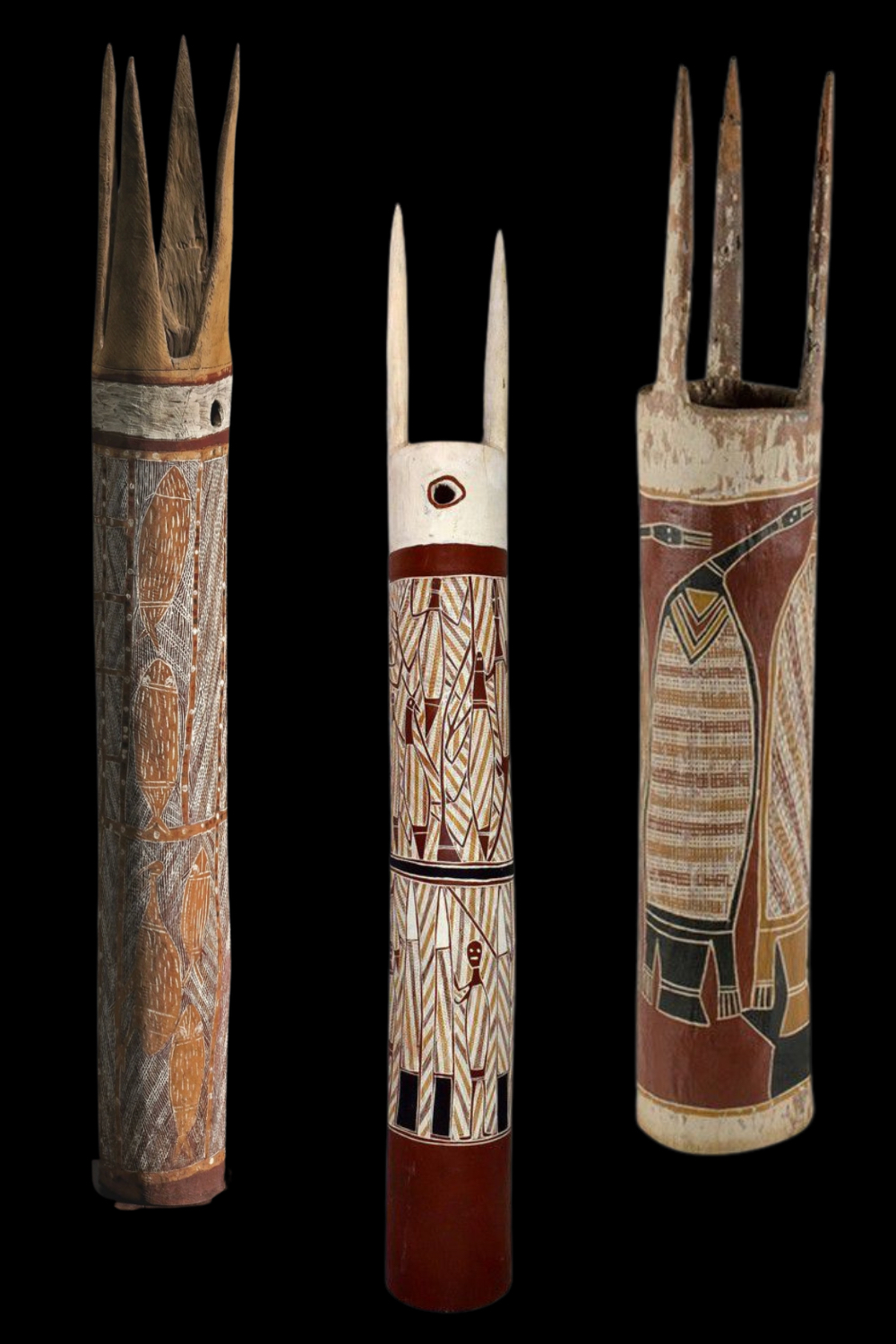
Aboriginal hollow-log coffins are painted wooden sculptures traditionally associated with mortuary ceremonies across Arnhem Land in northern Australia. Made from termite-hollowed tree trunks and decorated with ancestral designs, many were used to contain the prepared bones of deceased relatives during secondary burial ceremonies.
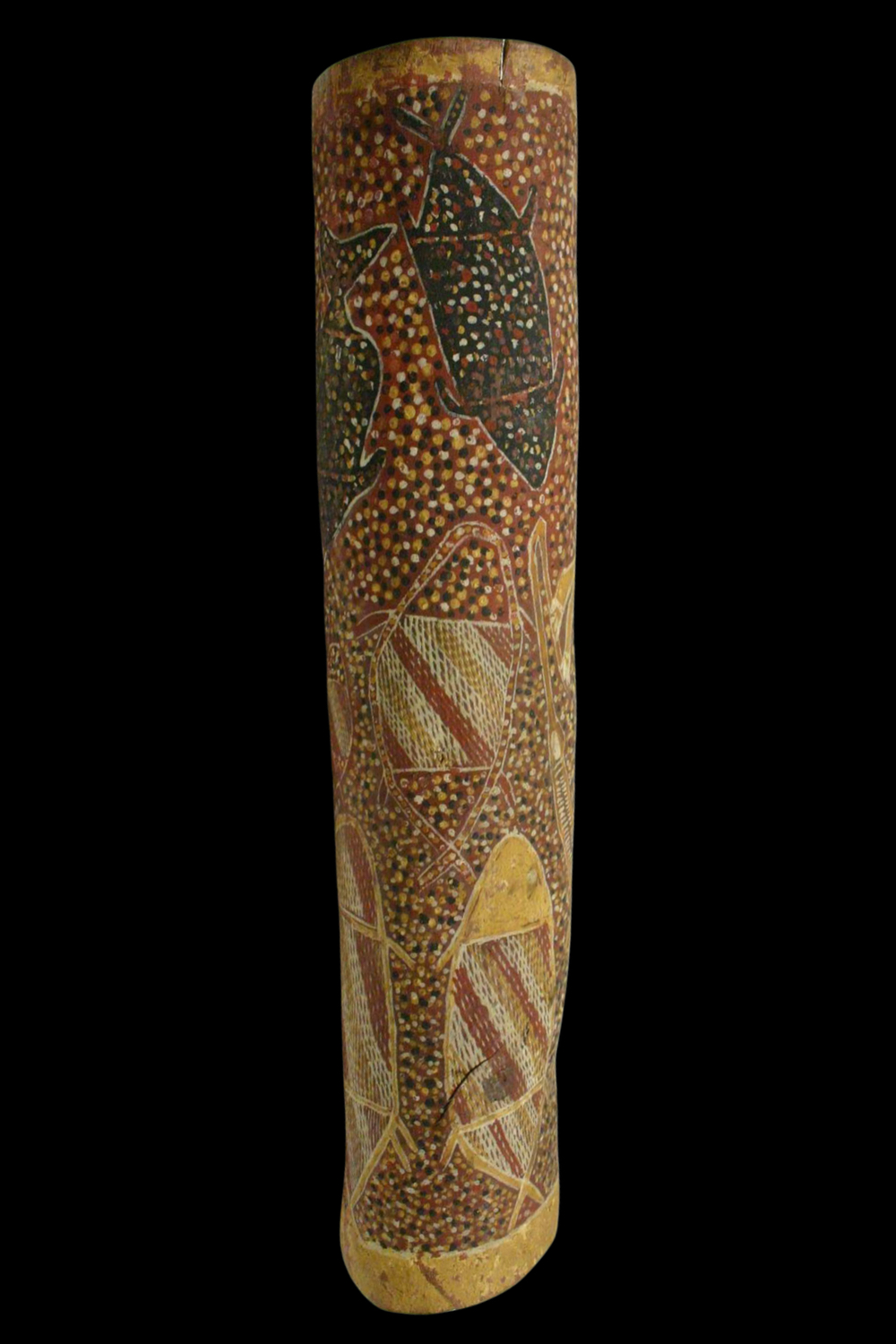
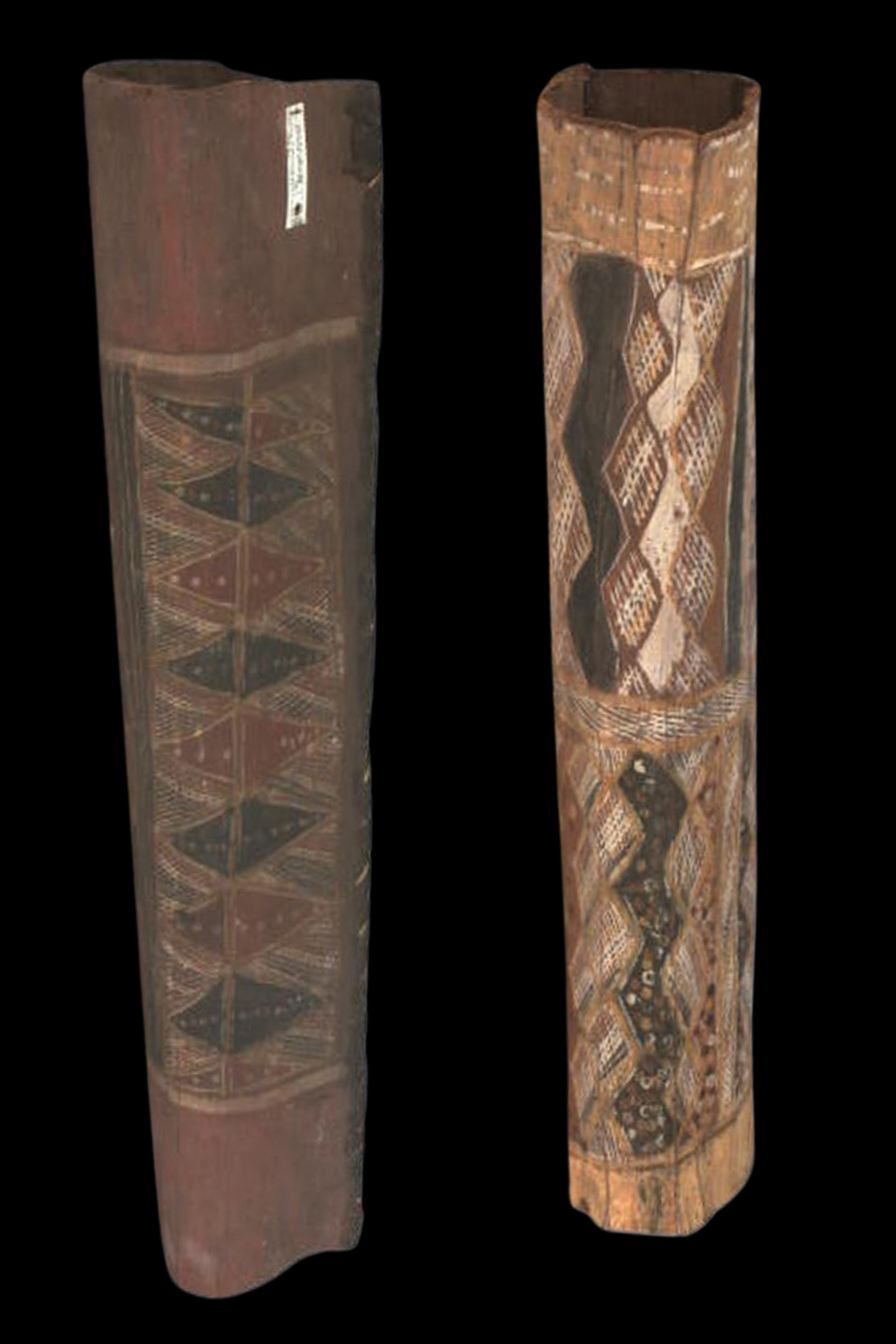
Known as lorrkon (hollow-log bone coffins) in western Arnhem Land, ḻarrakitj (hollow-log coffins or memorial poles) in north-east Arnhem Land and dupun (hollow-log coffins) around Ramingining, these objects express relationships between the deceased, their clan and ancestral Country.
Today, hollow logs are also an important form of contemporary Aboriginal sculpture, produced for exhibitions and collections without human remains. Their best-known collective expression is The Aboriginal Memorial (1987–88), an installation of 200 painted hollow logs held by the National Gallery of Australia.
What Is an Aboriginal Hollow-Log Coffin?
An Aboriginal hollow-log coffin is a section of tree trunk, usually naturally hollowed by termites, that is prepared and painted with designs belonging to particular ancestral traditions.
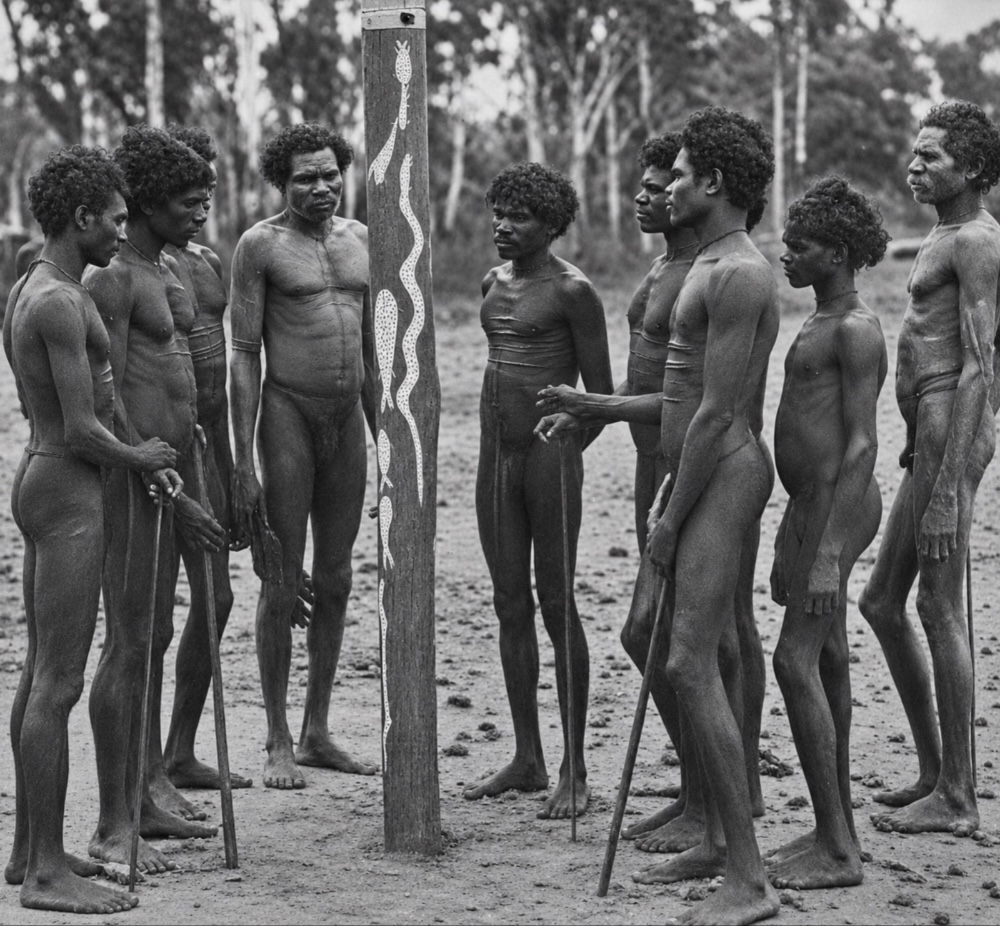
Unlike a conventional coffin used immediately following death, the traditional hollow log generally belonged to the final stages of mourning. Following an initial burial or exposure of the body, relatives could recover the bones and eventually place them inside the decorated log.
The completed coffin was commonly erected vertically on Country and left to weather naturally.
Although sometimes called burial poles or memorial poles, these objects had ceremonial meanings extending beyond their physical function as containers for human remains.
They are also distinct from Tiwi tutini (Pukumani ceremonial poles), which belong to a separate mortuary tradition on the Tiwi Islands.
Lorrkon, Larrakitj and Dupun – Regional Traditions
Hollow-log coffins occur across Arnhem Land, but their names, designs and ceremonial associations vary according to language group, clan and Country.
The three principal regional terms are:
Lorrkon – Western Arnhem Land
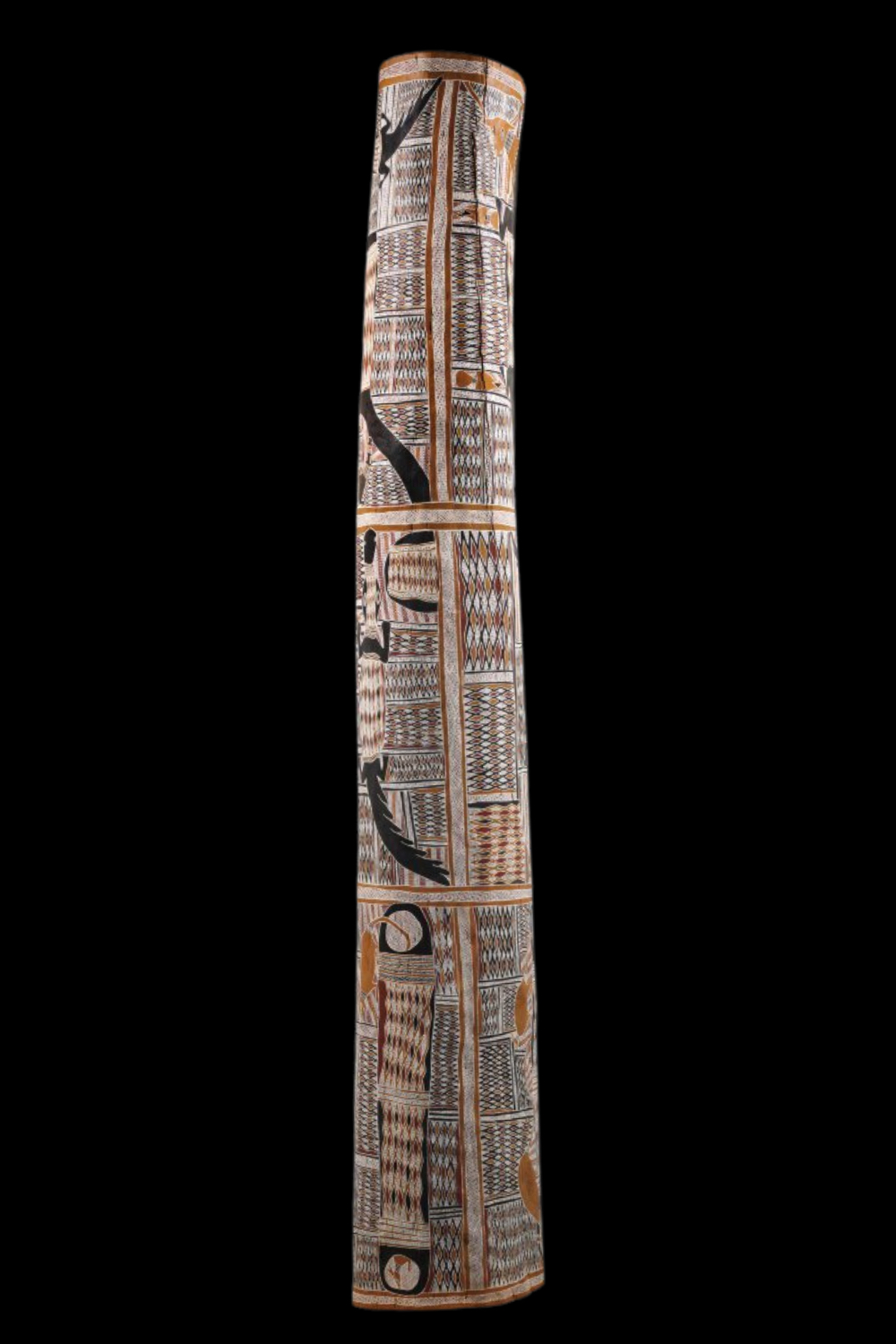
Lorrkon or lorrkkon (hollow-log bone coffin) is associated particularly with Kuninjku and Kunwinjku communities of western Arnhem Land, including the Maningrida region.
Traditional lorrkon were painted with inherited designs and used during the final ceremonies associated with the deceased.
In western Arnhem Land, ceremonies could involve ancestral singing accompanied by karlikarli (ceremonial boomerangs used as rhythm instruments). The completed coffin was erected following prescribed ceremonial performances.
Artists such as John Mawurndjul and Mick Kubarkku subsequently developed the lorrkon into highly accomplished sculptural artworks.
Larrakitj – North-East Arnhem Land
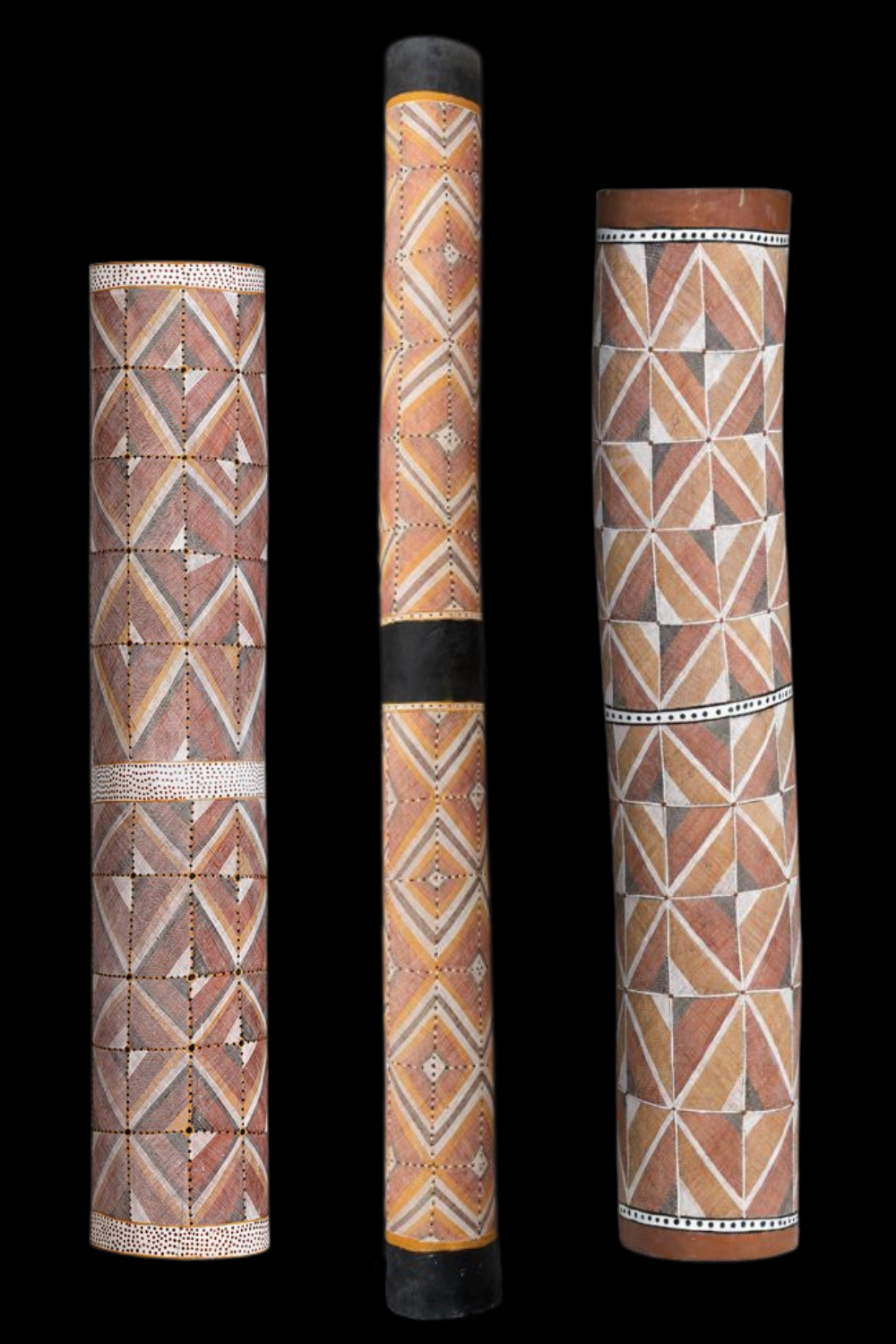
Ḻarrakitj (hollow-log coffin or memorial pole) is widely used among Yolŋu communities of north-east Arnhem Land, particularly around Yirrkala.
These sculptures commonly display miny’tji (inherited clan designs), including geometric patterns, crosshatching and imagery associated with ancestral Country.
Artists associated with Buku-Larrŋgay Mulka have transformed the ḻarrakitj into a major contemporary art form while retaining its cultural associations with ceremony, identity and ancestral knowledge.
Dupun or ḏupun (hollow-log coffin) is especially associated with central Arnhem Land, including Ramingining and the Arafura Swamp.
These decorated logs have traditionally formed part of secondary burial ceremonies and are associated with the ancestral traditions of participating clans.
The dupun became internationally recognised through The Aboriginal Memorial, created by artists from Ramingining and surrounding communities.
Other Aboriginal Names for Hollow-Log Coffins
|
Aboriginal name |
Documented association |
|
Lorrkon / Lorrkkon |
Kuninjku and Kunwinjku, western Arnhem Land |
|
Ḻarrakitj / Larrakitj |
Yolŋu, north-east Arnhem Land |
|
Dupun / Ḏupun |
Central Arnhem Land, particularly Ramingining |
|
Djalumbu |
Gupapuyŋu ceremonial traditions |
|
Badurru |
Liyagalawumirr, central Arnhem Land |
|
Lorrkun |
Documented among Garrawurra artists |
|
Larkan djammurmur |
Wullaki ceremonial tradition recorded at Katji |
Other regional names, including mudukundja, mululu and larajeje, appear in National Gallery documentation. Historical records sometimes use different spellings or identify particular ceremonial forms rather than interchangeable names for the same object.
Traditional Aboriginal Hollow-Log Burial Ceremonies
Hollow-log coffins traditionally belonged to a wider sequence of mortuary ceremonies extending over months or sometimes years.
These ceremonies fulfilled responsibilities to deceased relatives and helped maintain relationships between the living, ancestral beings and Country.
The First Burial and Preparation of Bones
Early ethnographic accounts describe the body being painted with appropriate ancestral designs, accompanied by mourning, singing and other prescribed ceremonies.
Depending on the community, the deceased might initially be buried in the ground or placed on an elevated platform.
After decomposition, designated relatives could recover the bones. These were cleaned, sometimes treated with red ochre and retained until the final mortuary ceremony.
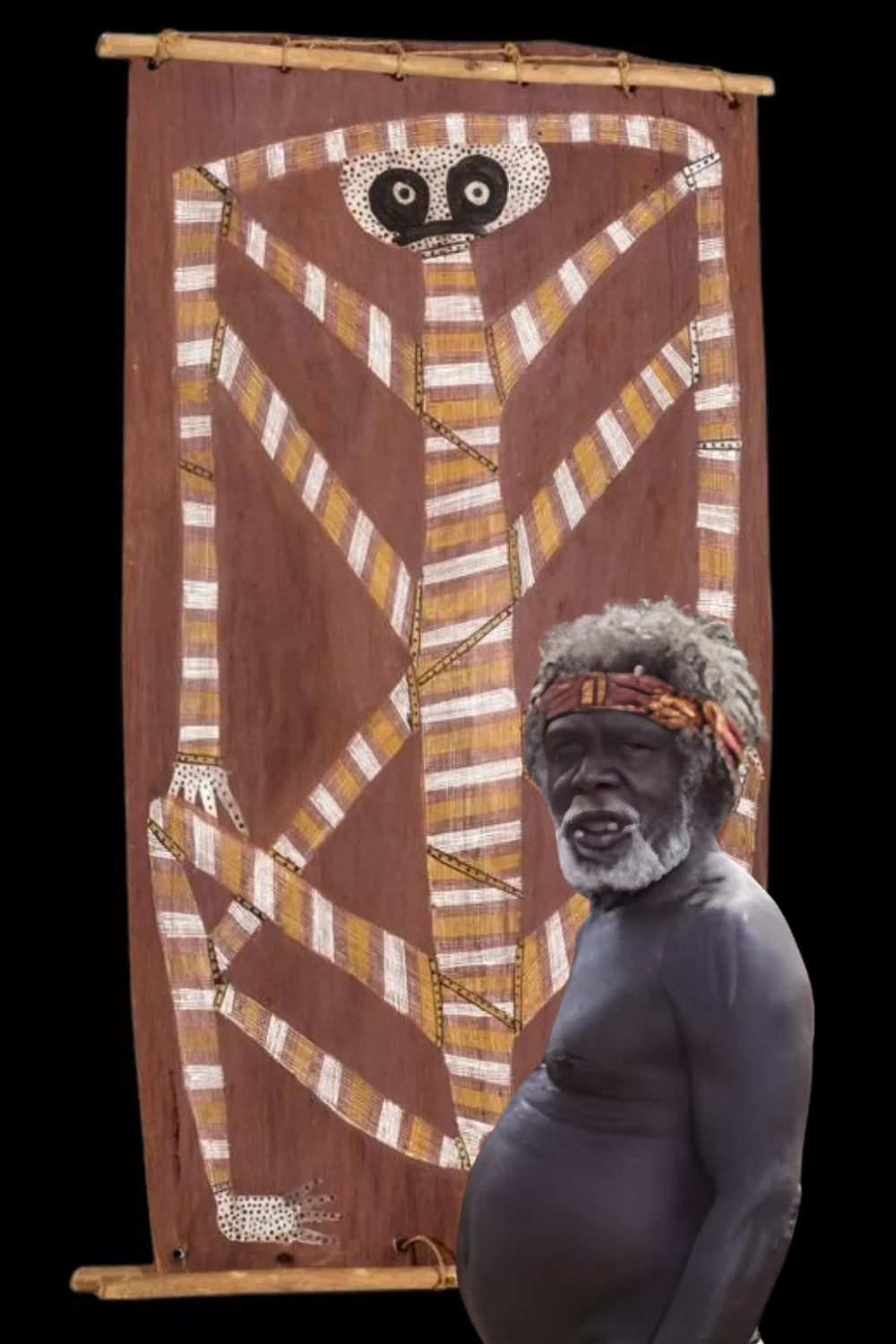
Donald Thomson recorded occasions when prepared bones were kept in tarra (painted bark containers) and transported between camps while ceremonial obligations continued.
The Final Hollow-Log Ceremony
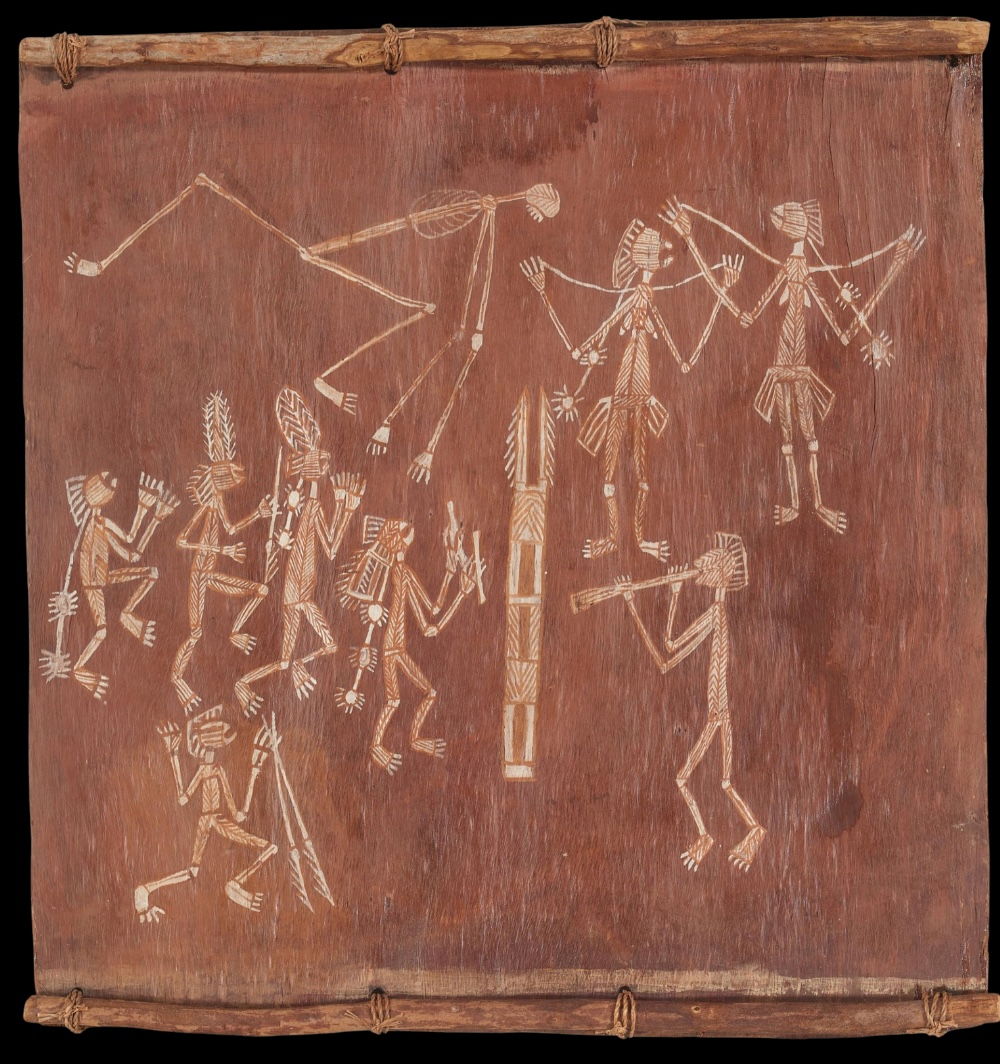
In one widely documented form of secondary burial, the prepared bones were placed inside a painted hollow log.
Participants performed the prescribed songs, dances and ceremonial actions associated with the deceased and their clan. The coffin was then erected in the ground.
In western Arnhem Land, accounts describe the lorrkon ceremony culminating in the presentation and erection of the decorated log following ceremonial performances involving particular kinship groups.
These ceremonies were not simply methods of disposing of human remains. They expressed obligations to the deceased and assisted the passage of the spirit while reaffirming ancestral relationships.
The precise sequence differed between communities. Not every Arnhem Land mortuary tradition followed the same procedures, and not every ceremonial hollow log contained cleaned bones.
From Ceremonial Coffins to Contemporary Aboriginal Sculpture
During the twentieth century, Arnhem Land artists increasingly produced painted hollow logs specifically for exhibition, sale and public collections.
Unlike traditional funerary objects, these contemporary sculptures were not intended to contain human remains.
This development transformed the expected lifespan of the work. While a ceremonial coffin might be left to decay outdoors, a sculpture made for a museum could be preserved indefinitely.
Artists explored the cylindrical form through increasingly ambitious compositions, extending patterns across curved surfaces and developing new relationships between painting and sculpture.
Maningrida, Ramingining, Milingimbi and Yirrkala became important centres for this development.
Contemporary hollow-log sculpture is consequently both a continuation of Arnhem Land artistic traditions and a distinctive field of modern Aboriginal art.
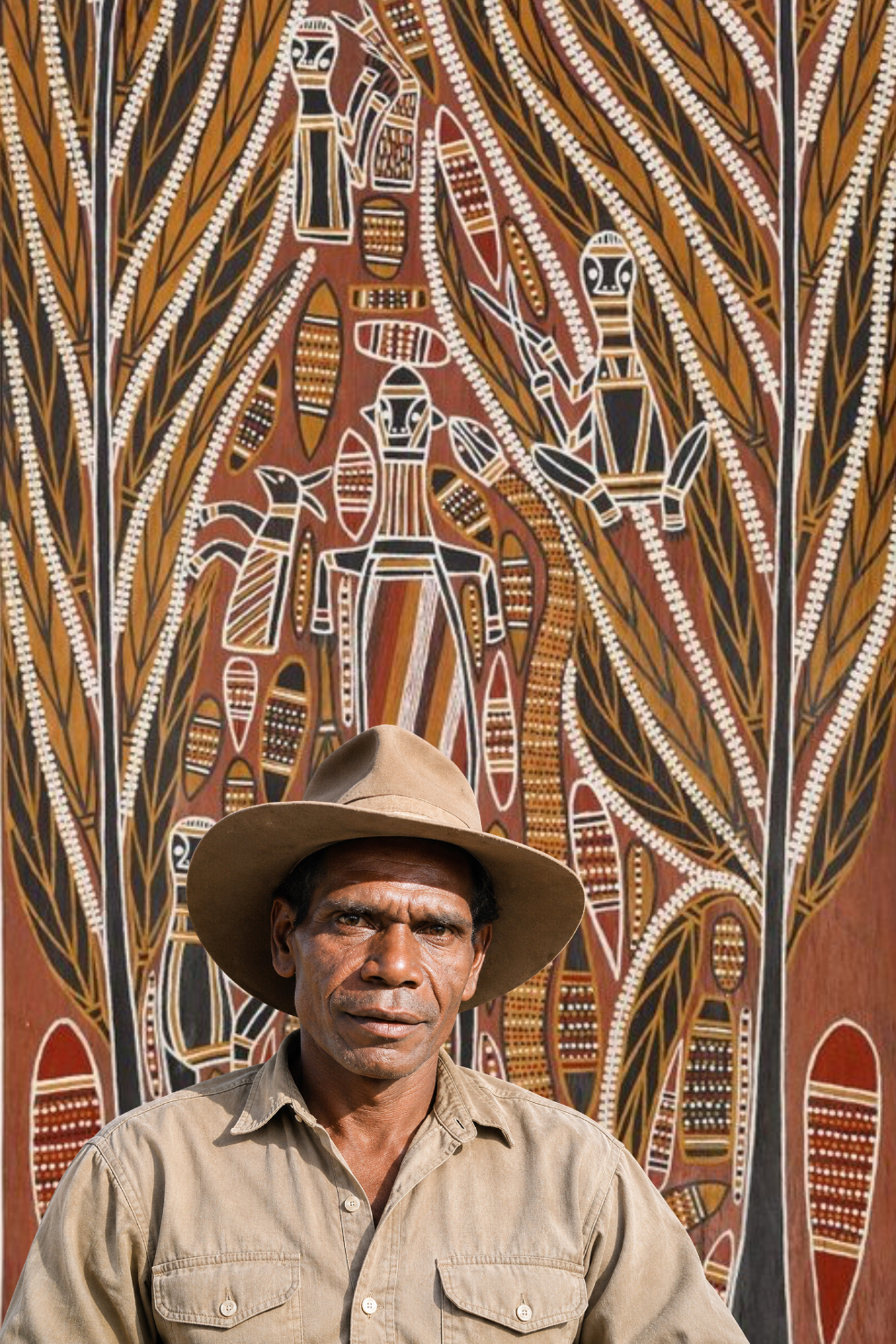
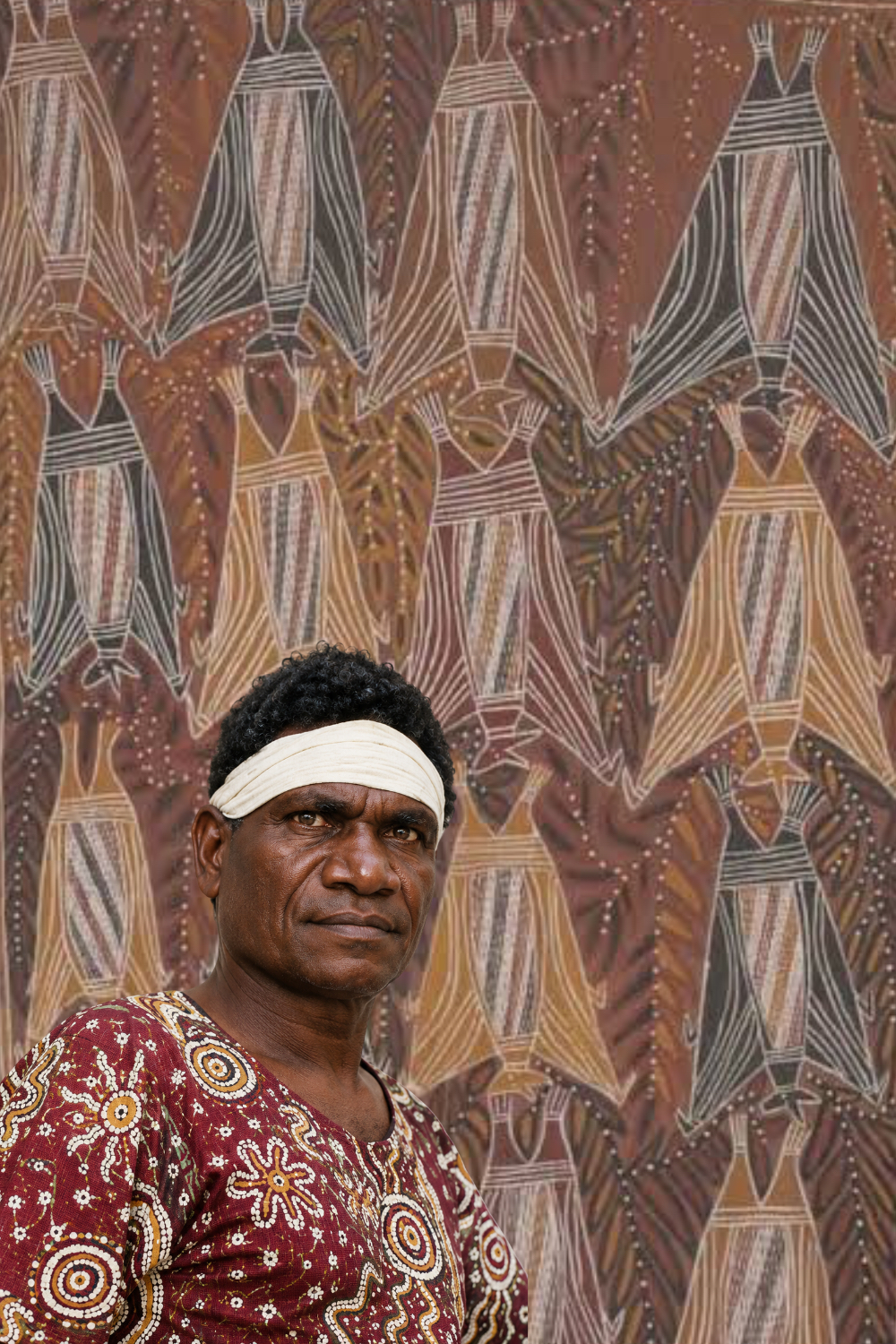
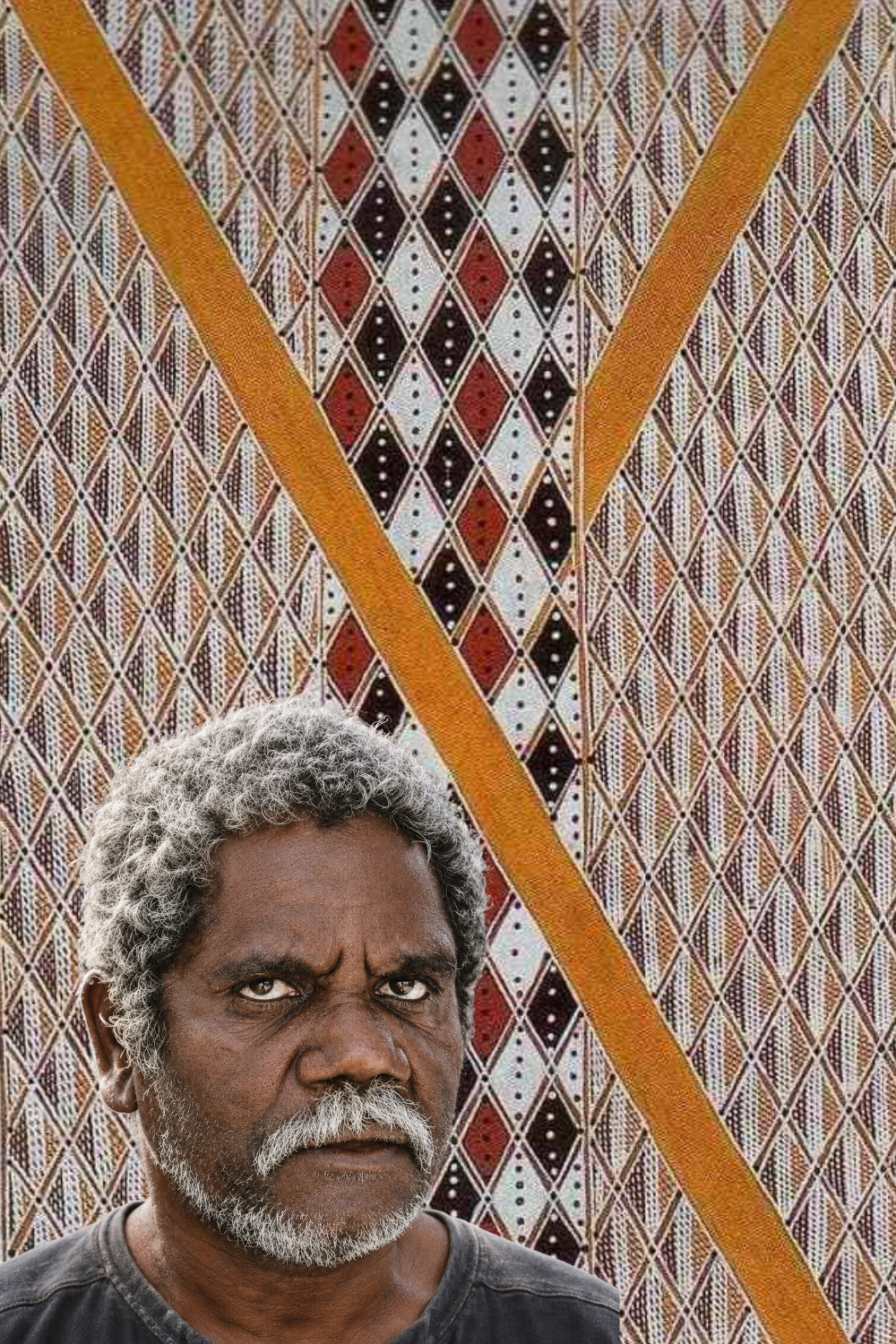
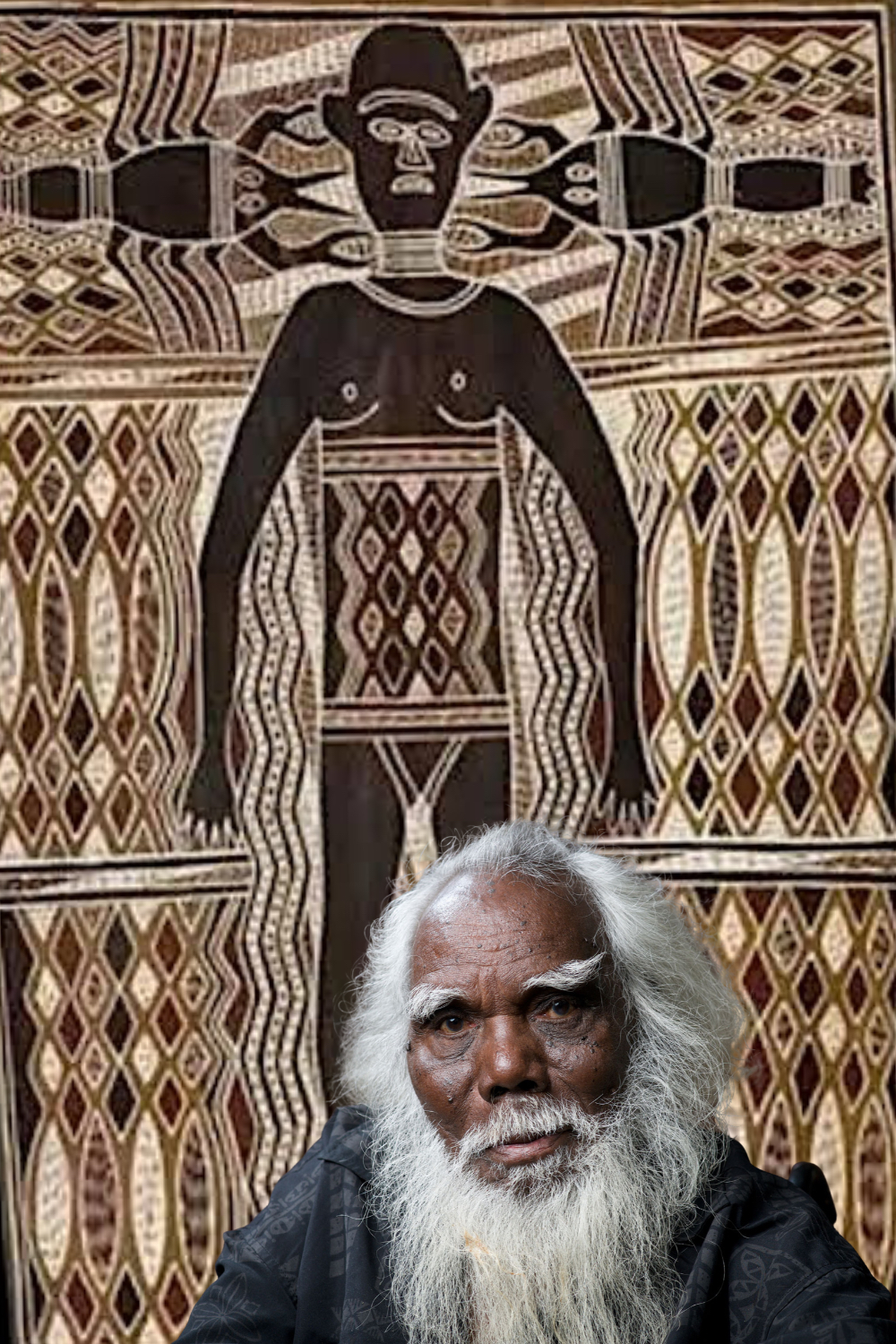
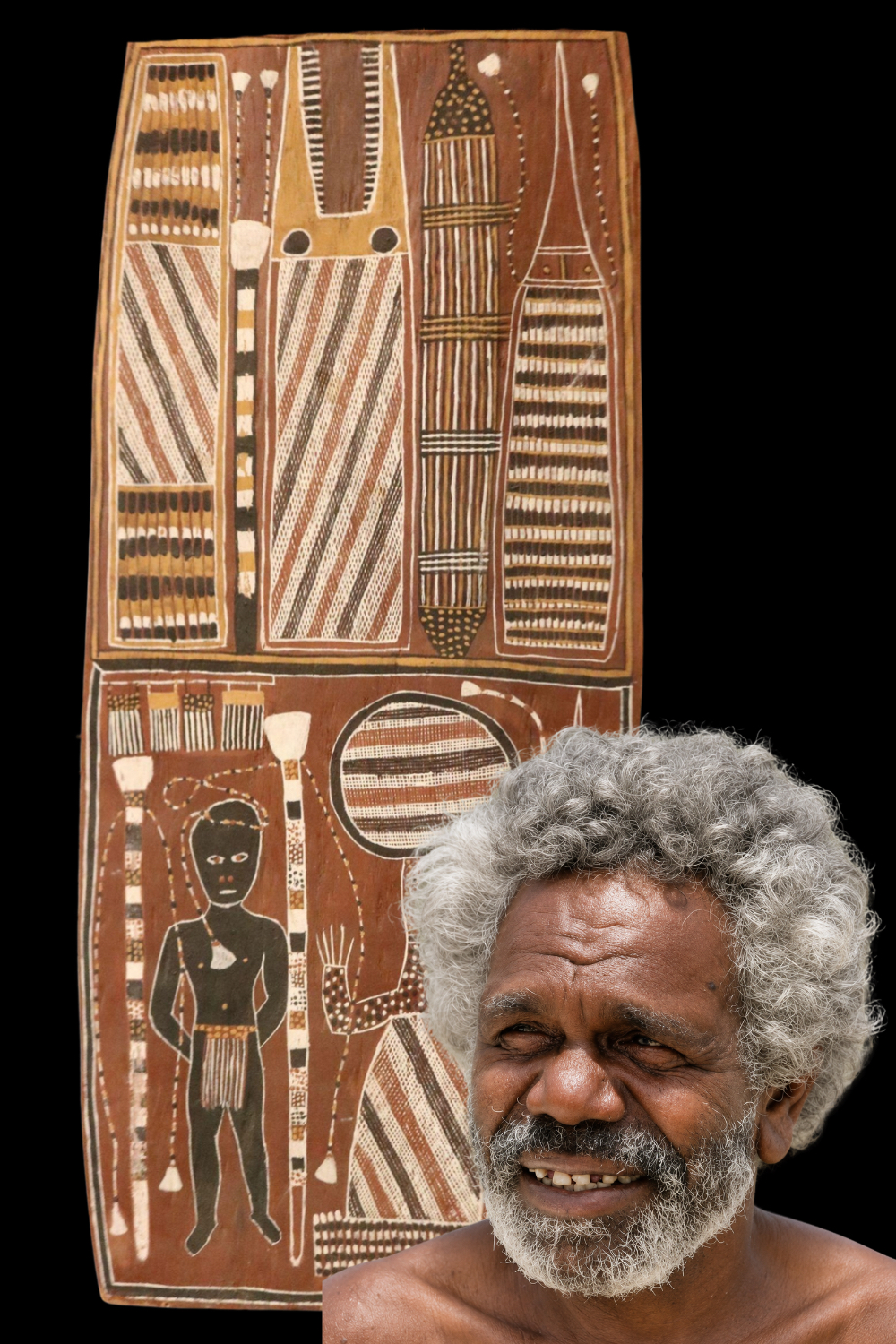
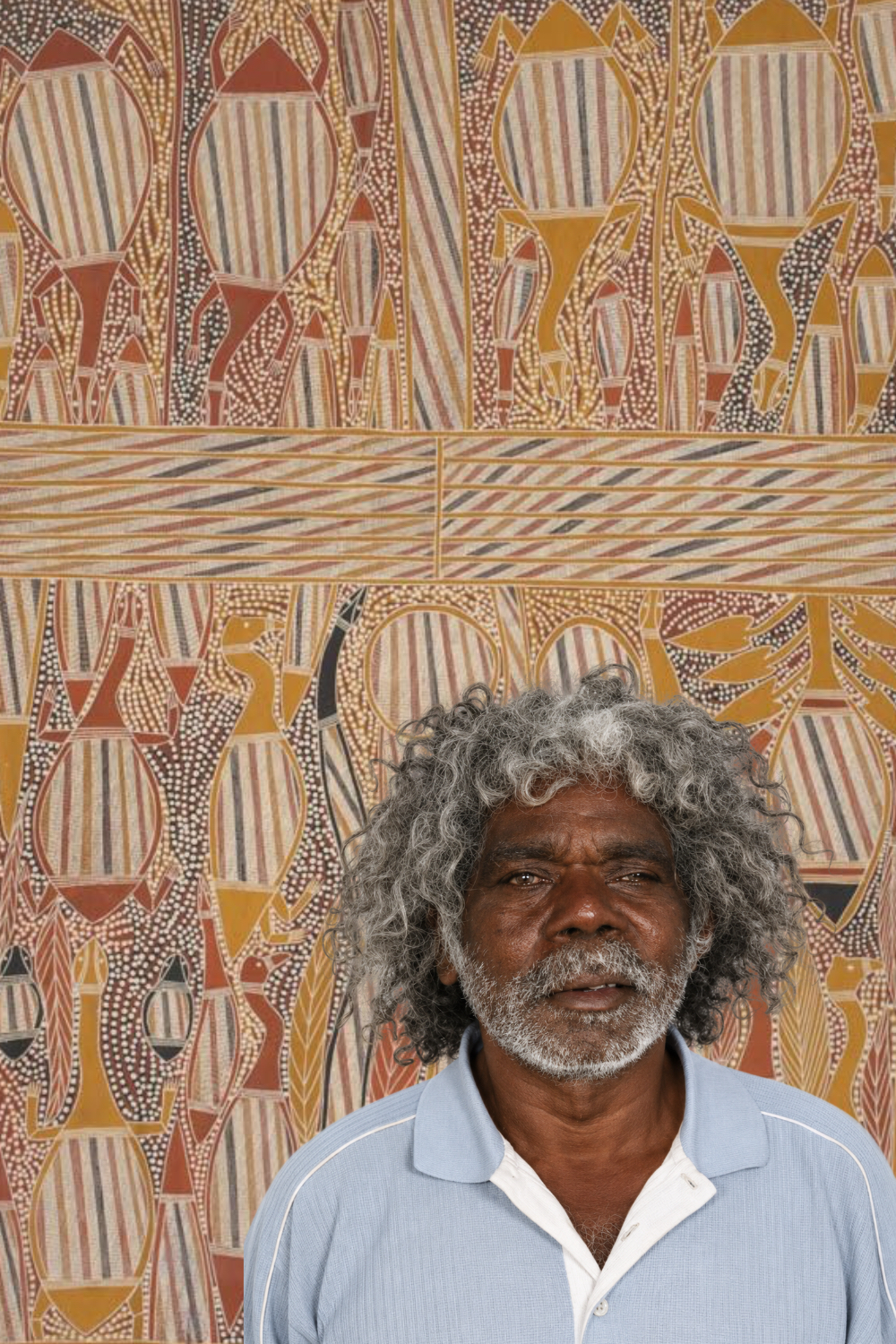
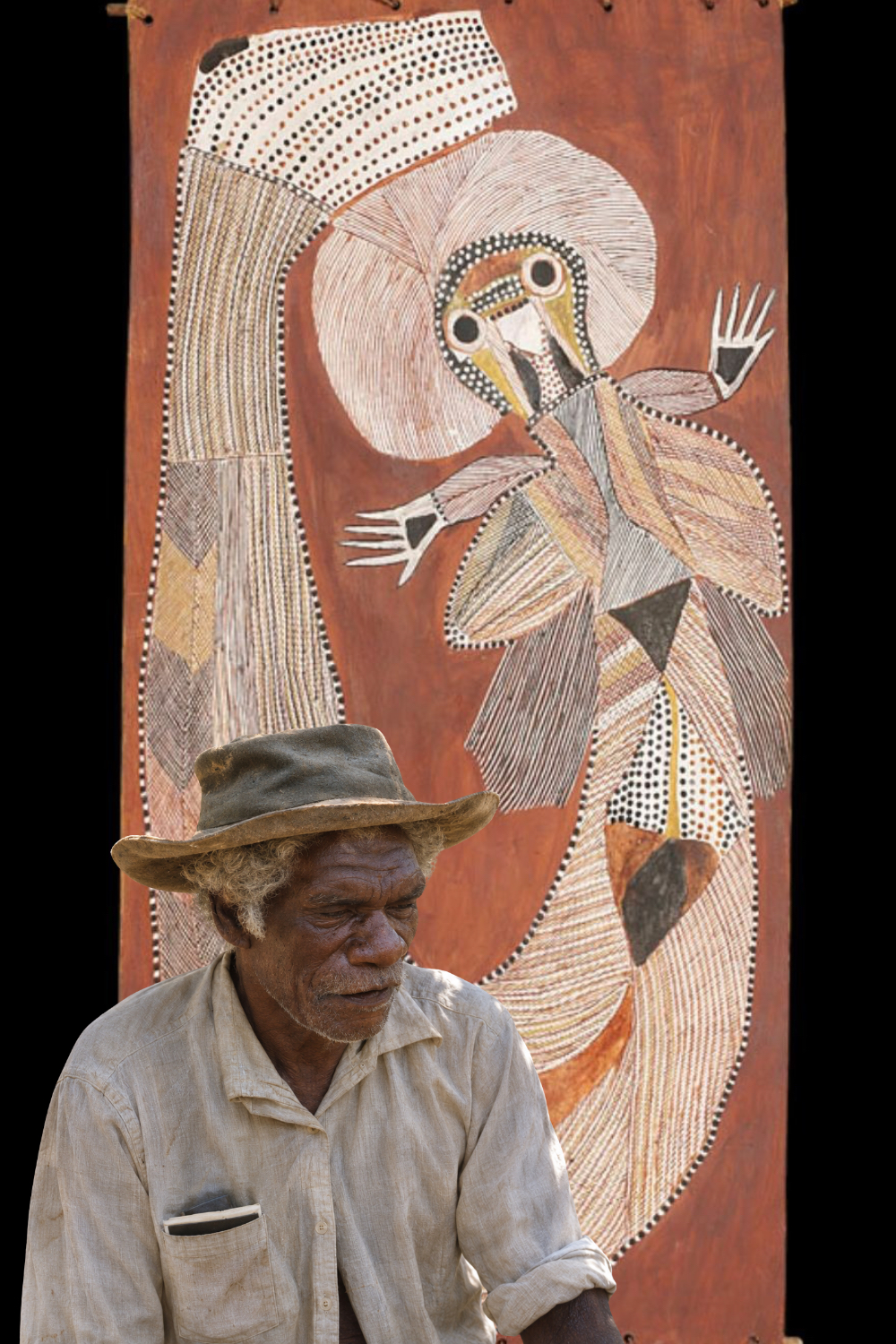
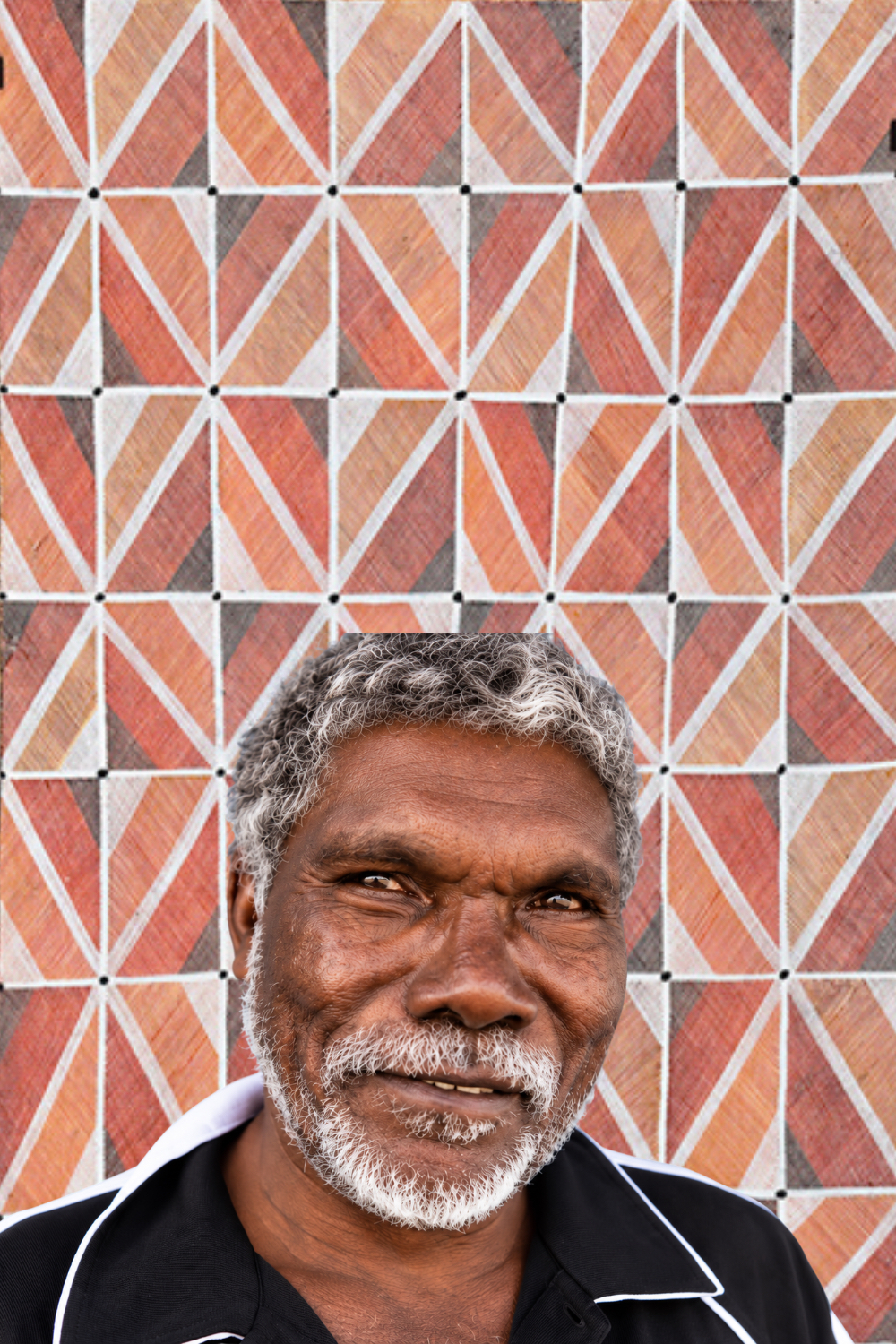
Ten Aboriginal Hollow Log Sculpture Artists
During the twentieth century, Arnhem Land artists increasingly produced painted hollow logs specifically for exhibition, sale and public collections.
Unlike traditional funerary objects, these contemporary sculptures were not intended to contain human remains.
This development transformed the expected lifespan of the work. While a ceremonial coffin might be left to decay outdoors, a sculpture made for a museum could be preserved indefinitely.
Artists explored the cylindrical form through increasingly ambitious compositions, extending patterns across curved surfaces and developing new relationships between painting and sculpture.
Maningrida, Ramingining, Milingimbi and Yirrkala became important centres for this development.
Contemporary hollow-log sculpture is consequently both a continuation of Arnhem Land artistic traditions and a distinctive field of modern Aboriginal art.

How Were Aboriginal Hollow-Log Coffins Made?
Artists selected suitable trees, particularly stringybark eucalypts, whose centres had been naturally hollowed by termites.
The trunk was cut to the required length, and its interior was cleaned, sometimes with fire. The exterior was prepared for painting with ancestral designs appropriate to the maker’s ceremonial authority.
Natural pigments included red and yellow ochres, white clay and dark mineral or charcoal-based colours. Fine lines were traditionally applied using brushes made from hair or plant fibres.
The resulting designs might include geometric patterns, crosshatching, ancestral beings and references to important places.
Some ceremonial logs recorded by Donald Thomson exceeded four metres in height. Contemporary sculptures range from small works to monumental installations.
Certain traditional coffins also incorporated carved grooves, small openings or projections associated with particular ancestral narratives. These features were not universal across Arnhem Land.
What Do the Painted Designs on Hollow-Log Coffins Mean?
The designs on Aboriginal hollow-log coffins are expressions of ancestral identity, clan affiliation and ceremonial authority.
They may reproduce imagery used in body painting, bark painting and other ceremonial contexts. Their significance depends upon the artist’s inherited relationships to Country and the ancestral traditions represented.
Among Yolŋu artists, miny’tji (inherited clan designs) can include intricate geometric structures associated with ancestral waters, plants, animals and important places.
In western Arnhem Land, rarrk (fine crosshatching) is a prominent painting technique. Repeated closely spaced lines can create a shimmering visual effect associated with ancestral power.
These patterns are not merely decorative. The relationship between the complete design, its maker and the relevant ancestral tradition is essential to its meaning.
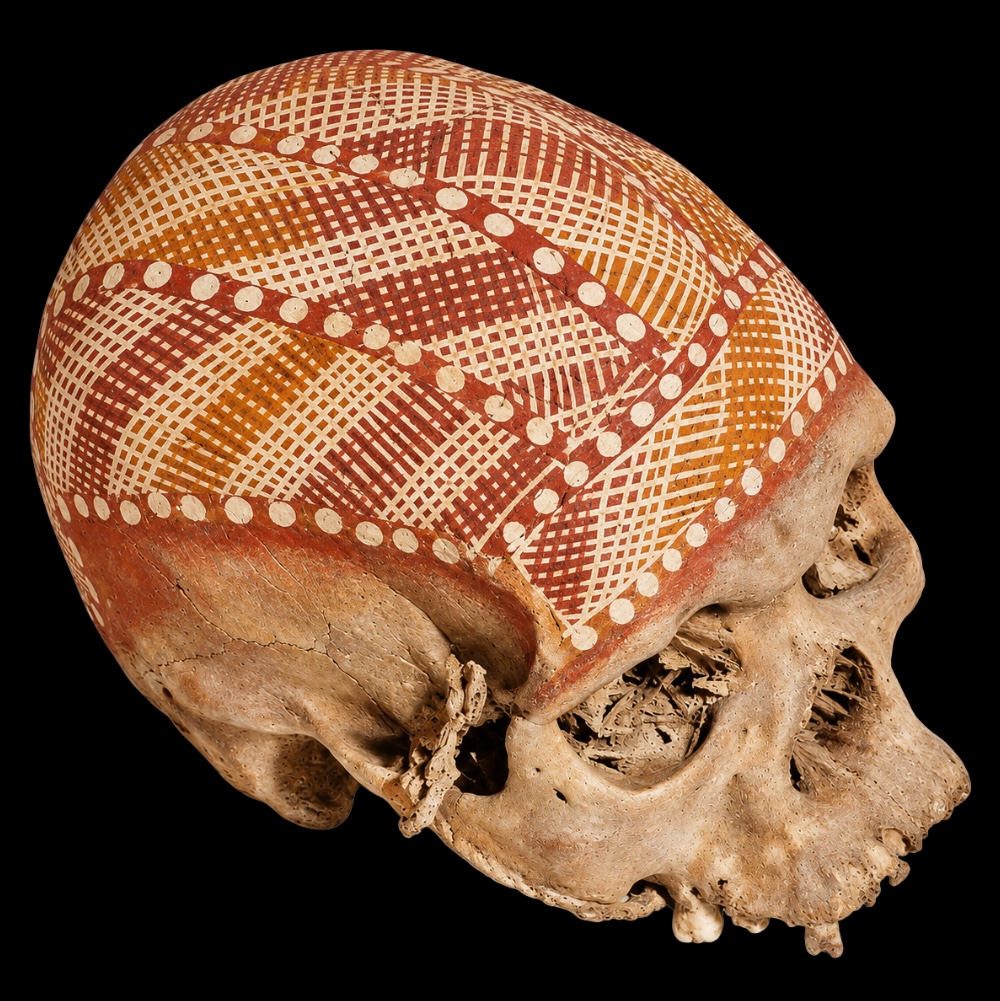
Painted human skulls were also associated with certain secondary burial traditions in Arnhem Land.
Historical accounts describe the application of ochre or ancestral designs to recovered remains. Research concerning Marrangu mortuary traditions has connected designs formerly painted on skulls with ancestral patterns subsequently represented on dupun.
The treatment of skulls varied between communities and ceremonies. These practices should therefore be understood through their particular historical and cultural contexts, not as a single custom observed throughout Arnhem Land.
Ancestral Origins – The Wullaki Hollow Log
Hollow-log traditions are connected with different ancestral narratives across Arnhem Land rather than one universally shared Dreaming story.
Donald Thomson recorded a Wullaki tradition at Katji involving the ancestral being Kanangalkngalk and a hollow tree.
According to the recorded account, the ancestral being felled the tree, releasing water from its trunk. The hollow log subsequently travelled across Country like a fish, forming channels and waterways before returning to a deep pool.
The travelling log identified itself as djammurmur larkan, a ceremonial hollow-log form.
Associated imagery included fish, water snakes and wild taro. Carved projections near the opening recalled features of the ancestral log.
This account demonstrates how a hollow-log coffin could embody an ancestral journey and the formation of particular places, rather than functioning only as a mortuary container.
Historical Mortuary Practices and Donald Thomson
Anthropologist Donald Thomson documented Arnhem Land mortuary ceremonies during the 1930s. His fieldnotes were subsequently edited by Nicolas Peterson and published in 1976 as Mortuary Customs of Northeast Arnhem Land.
The observations demonstrate considerable variation in the treatment of human remains and the ceremonial responsibilities surrounding hollow logs.
At Katji on 11 November 1936, Thomson observed Wullaki participants preparing a decorated log called larkan djammurmur.
His notes suggest that flesh separated from a deceased person during exhumation was wrapped and apparently deposited inside the log, while the bones were handled separately.
Peterson cautioned that the surviving evidence was not entirely unequivocal.
This example is important because it differs from the familiar description of hollow logs used to contain cleaned bones.
Further Reading
-
Nicolas Peterson (1976). Mortuary Customs of Northeast Arnhem Land: An Account Compiled from Donald Thomson’s Fieldnotes. Memoirs of the National Museum of Victoria, vol. 37, pp. 97–108. Important primary research documenting traditional mortuary ceremonies, the treatment of human remains and regional hollow-log practices.
-
W. Lloyd Warner (1937). A Black Civilization: A Social Study of an Australian Tribe. Harper & Brothers. Early anthropological study of north-east Arnhem Land, including kinship, ceremonial obligations and mortuary traditions.
-
Howard Morphy (1984). Journey to the Crocodile’s Nest. Australian Institute of Aboriginal Studies. Detailed examination of Yolŋu funerary ceremonies and their relationships to ancestral Country, ritual painting and social organisation.
-
National Gallery of Australia. The Aboriginal Memorial – Burial Ceremonies. Explains traditional hollow-log coffins, regional terminology and the ceremonies that inspired the landmark installation of 200 painted logs.
-
National Gallery of Australia. The Aboriginal Memorial – History. Documents Djon Mundine’s conception of the Memorial and its creation by Arnhem Land artists in 1987–88.
-
Maningrida Arts & Culture. About Sculpture. Aboriginal art-centre account of lorrkon (hollow-log bone coffins), their construction and ceremonial traditions in western Arnhem Land.
-
Buku-Larrŋgay Mulka Centre. Yolŋu Artworks – Ḻarrakitj. Explains the historical significance and contemporary artistic development of ḻarrakitj (hollow-log memorial poles) in north-east Arnhem Land.
-
Wesfarmers Arts (2021). Hollow Log Poles in the Wesfarmers Collection. Illustrated overview of contemporary hollow-log sculptures by artists from Maningrida and Yirrkala.
-
Kim McKenzie (1980). Waiting for Harry. Documentary film examining the preparations and cultural responsibilities surrounding a traditional hollow-log mortuary ceremony in the Maningrida region.