Freddie Timms – Gija Artist of the East Kimberley
1946–2017
Gija
Ngarrmaliny / Police Hole, East Kimberley
Warmun and Frog Hollow
East Kimberley Art / Kimberley Ochre Painting
Waringarri Aboriginal Arts / Jirrawun Arts
Natural earth pigments on canvas and linen
Freddie Ngarrmaliny Janama Timms was a Gija painter whose distinctive aerial landscapes grew from a lifetime spent travelling and working across the East Kimberley.
Born at Ngarrmaliny, or Police Hole, near Bedford Downs Station in 1946, Timms worked for many years as a stockman, fencer and mechanic. He knew the stations, stock routes, creeks, waterholes, yards and ranges of his Country through lived experience. These places later became the subjects of his paintings.
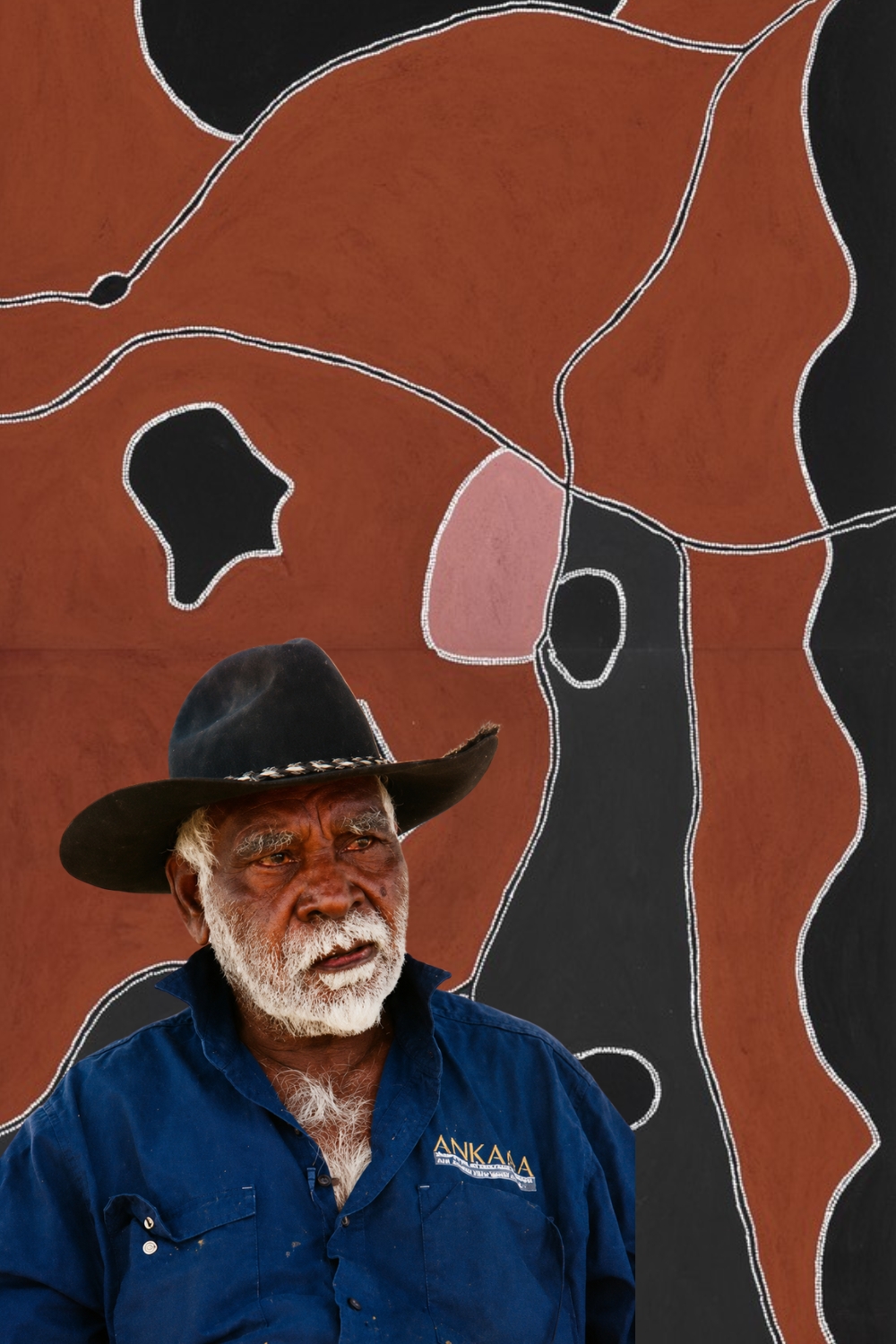
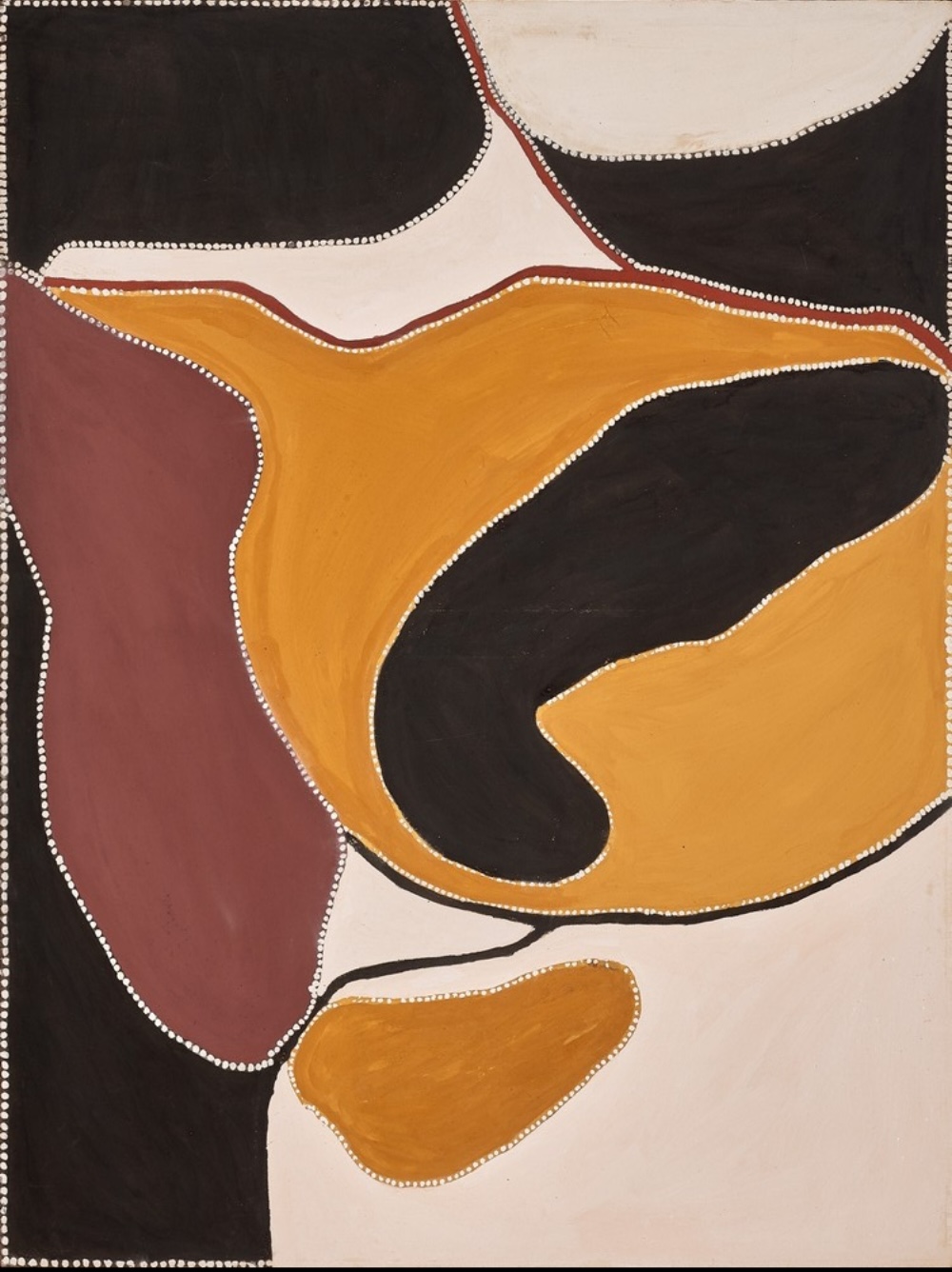
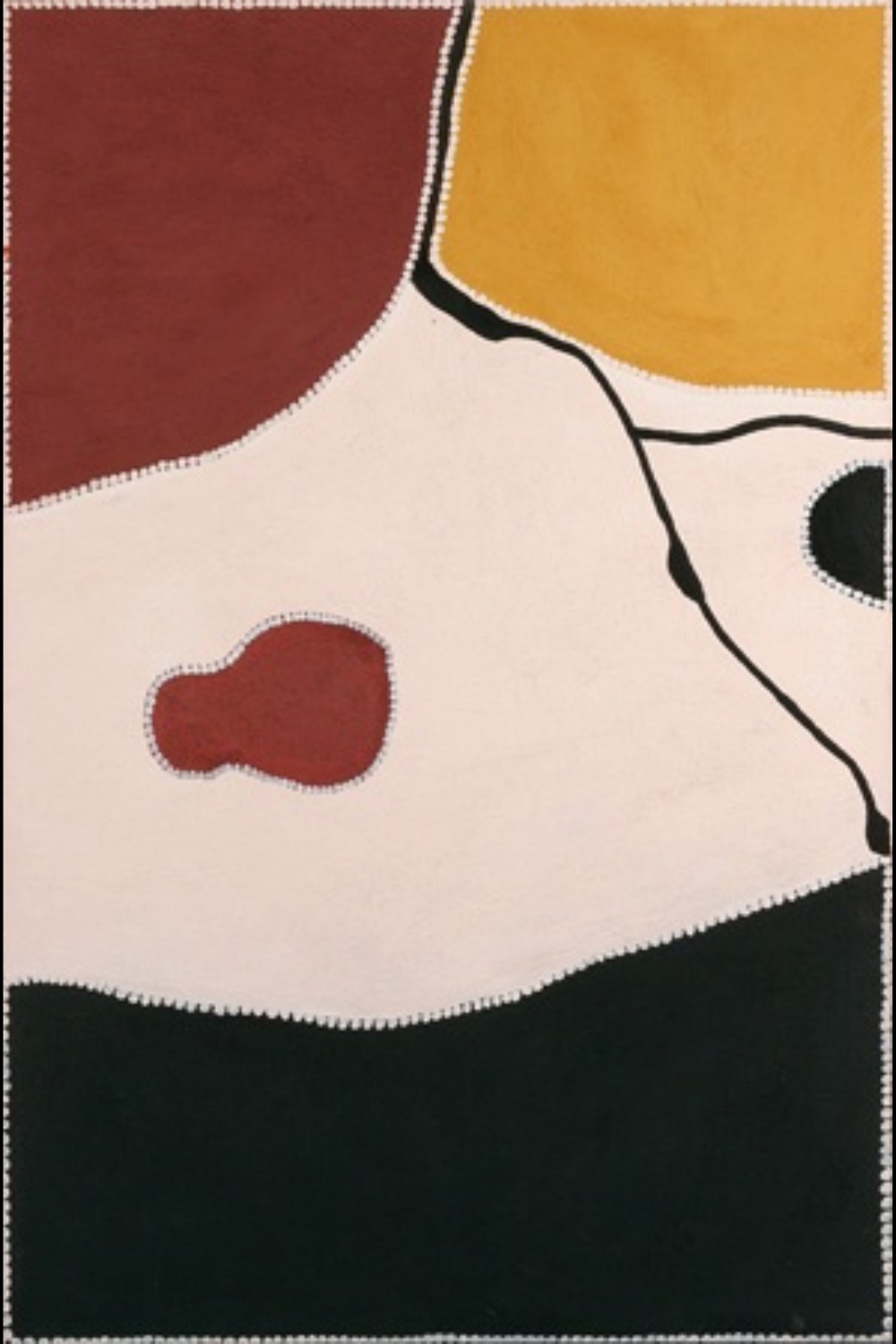
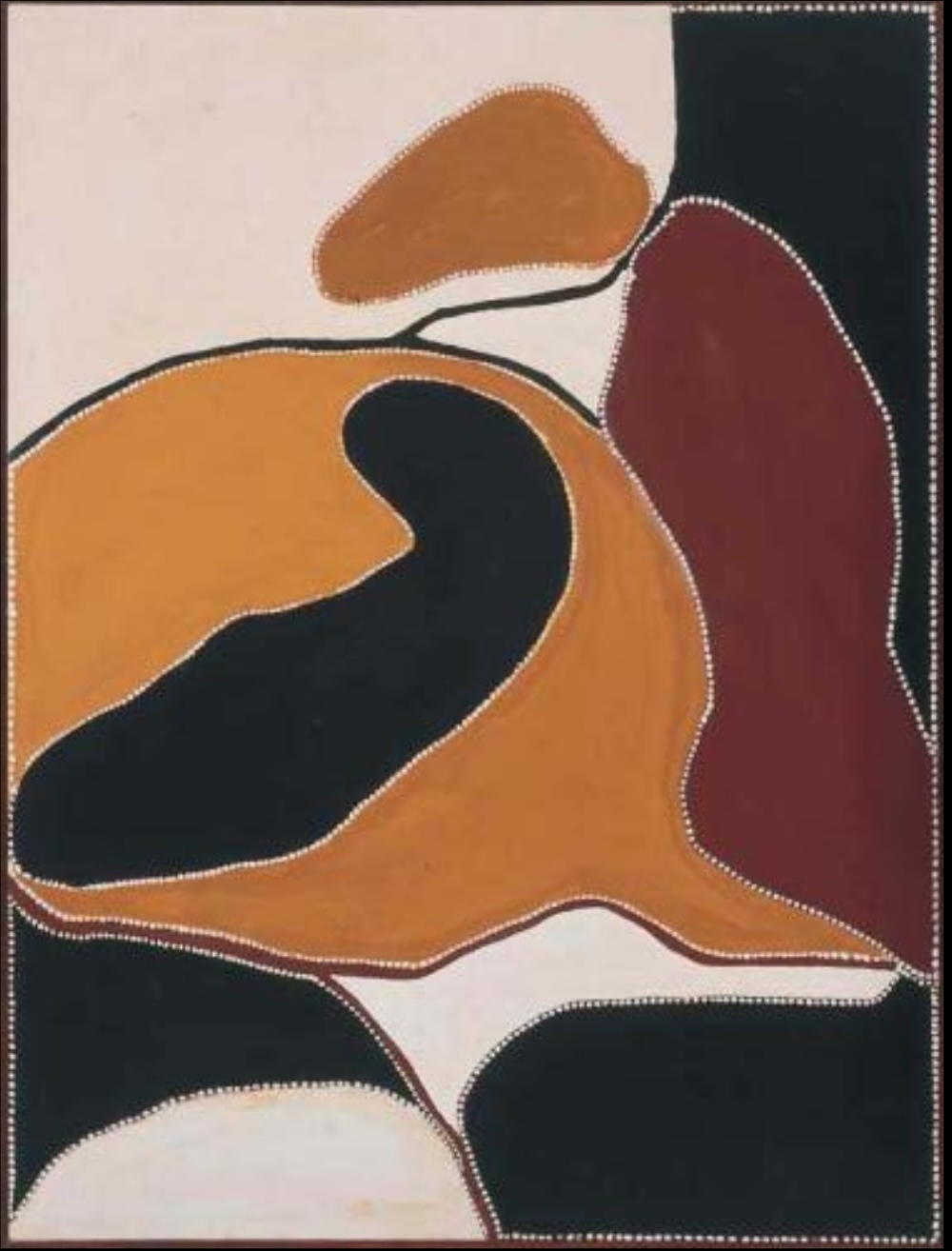
Using broad fields of ochre divided by lines, dots and simplified forms, Timms created paintings that can resemble maps viewed from above. Roads and waterways cross areas of black, red, yellow and pink earth; circles and irregular shapes mark waterholes, hills, stockyards and other features.
But Timms painted more than geography. His landscapes bring together Gija cultural knowledge, memories of station life, family history and the consequences of colonisation. Some record Country submerged beneath Lake Argyle; others identify places associated with killings and dispossession.
Freddie Timms Biography
Freddie Timms was born in 1946 at Ngarrmaliny, also known as Police Hole, near Bedford Downs Station. His Gija name Ngarrmaliny referred to this Country, while Janama was his skin name.
He spent part of his childhood at Bow River Station, where his uncle Timmy Timms, Kamiliny Palmentarri, was a senior lawman and head stockman. When Freddie was about ten, his father Harry was taken to the Derby Leprosarium, where he later died. The family moved to Lissadell Station, where an older man, Ben Boundy, became an important teacher.
By his twenties Timms was a stockman. He worked at Bow River, Lissadell, Texas Downs, Durham River, Mabel Downs and Old Argyle, as well as working as a fencer and mechanic. In 1976 he returned to Lissadell as head stockman. Years spent mustering cattle and travelling between camps, waterholes and yards gave him an intimate knowledge of the Country that would later become the subject of his paintings.
It was through station work that Timms came to know Rover Thomas. The two worked together at Bow River and Texas Downs before either became known as an artist. Timms later danced in early performances of Thomas’s Goorirr Goorirr ceremony and was close to the group producing its painted ceremonial boards, including Paddy Jaminji, Hector Jandany and George Mung Mung.
These artistic connections were also personal. Timms’s wife Beryline Mung was George Mung Mung’s daughter, while Jack Britten was his brother-in-law.
In 1985 Timms and Beryline moved to Warmun and later to Woorreranginy, or Frog Hollow, an outstation established by Britten. Rover Thomas, George Mung Mung and Britten were already painting there when Waringarri Aboriginal Arts coordinator Joel Smoker began supplying Timms with painting materials.
By 1989 Timms’s emergence as an artist is clearly documented. His Bulunyin Country appeared in the Melbourne exhibition Turkey Creek: Recent Work alongside works by Thomas, Paddy Jaminji, Mung Mung and Britten. Smoker described the two Timms works in the exhibition as his first canvases and recognised their distinctive quality.
Timms was already in his early forties. He was therefore both an insider and a late arrival: he had worked, lived and participated in ceremony alongside artists who established East Kimberley painting, but developed his own career only after the movement was underway.
Freddie Timms Painting Style and Subjects
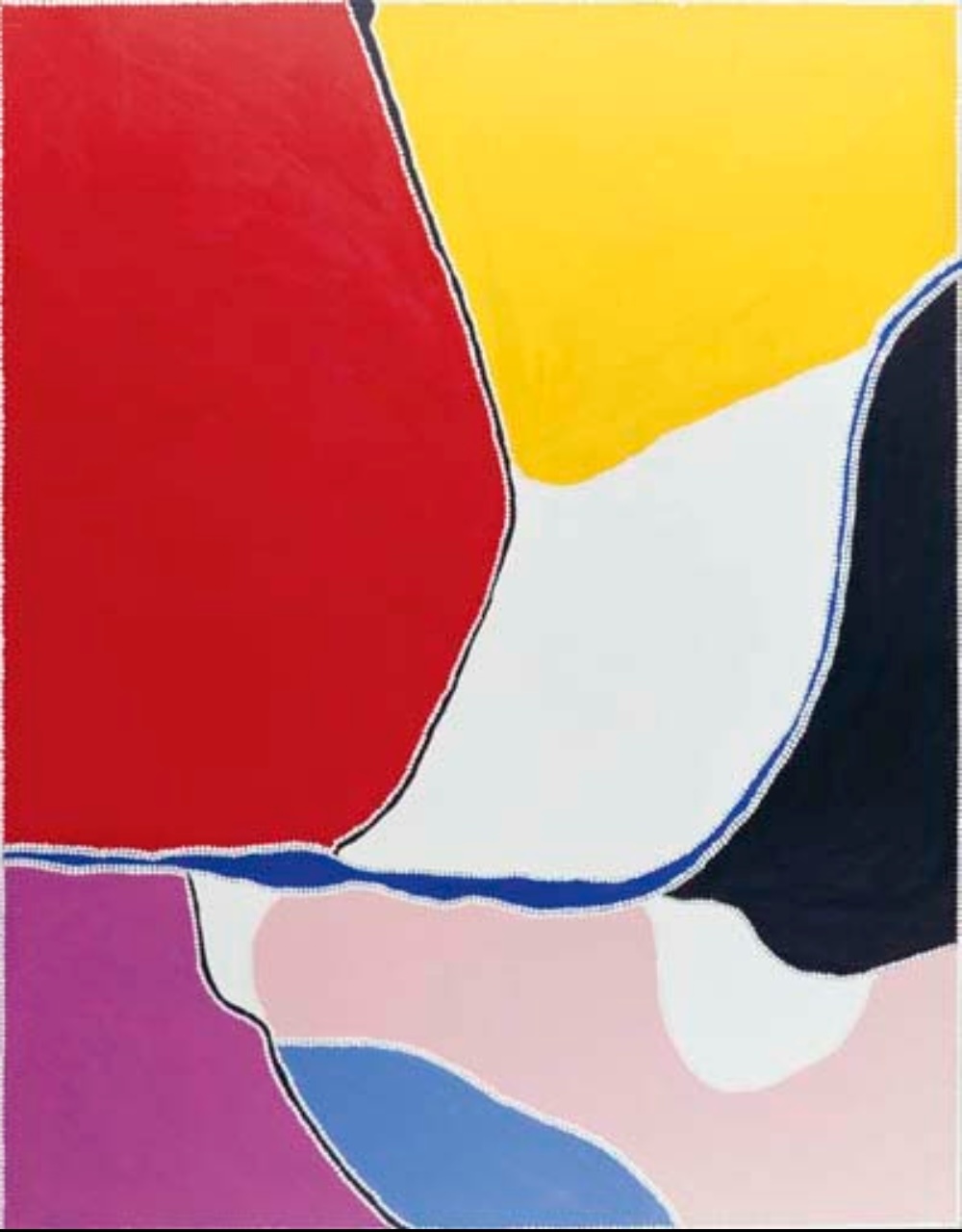
Freddie Timms developed one of the most distinctive approaches to landscape in East Kimberley art. His paintings are generally viewed as though from above, with broad irregular areas of colour representing different stretches or types of Country. Lines, dotted borders and isolated shapes can indicate roads, creeks, waterholes, ranges and stockyards.
They resemble maps, but they are not conventional maps. Distance and scale are flexible. Places physically far apart can be brought together through their relationship within Timms’s memory, while a cattle yard, waterhole or hill can become disproportionately large because of its importance.
His mature paintings are characterised by broad areas of natural earth pigment—black, white, red, yellow, pink and brown—often separated by thin lines or distinctive double rows of white dots. There is little unnecessary decoration. A handful of shapes can describe an enormous landscape.
Although the influence of Rover Thomas is evident, Timms developed a different visual language. Thomas often created monumental fields of ochre charged with ceremonial presence, while Jack Britten frequently emphasised recognisable topography.
The apparently abstract forms can be surprisingly specific. In Greenvale (2005), a V-shaped form represents roads meeting at Greenvale Station; black circles mark the station and Moat Creek stockyard; rivers and creeks cross the composition; and black and red areas represent mixed-soil plains Timms called “bulldust country”.
Timms repeatedly painted places he knew personally, including Lissadell, Bow River, Texas Downs, Police Hole, Blackfella Creek, Jack Yard, Mistake Creek and Greenvale. Jack Yard, for example, combines soils, hills, creeks and waterholes with roads, stockyards and buildings from Country he had known since childhood.
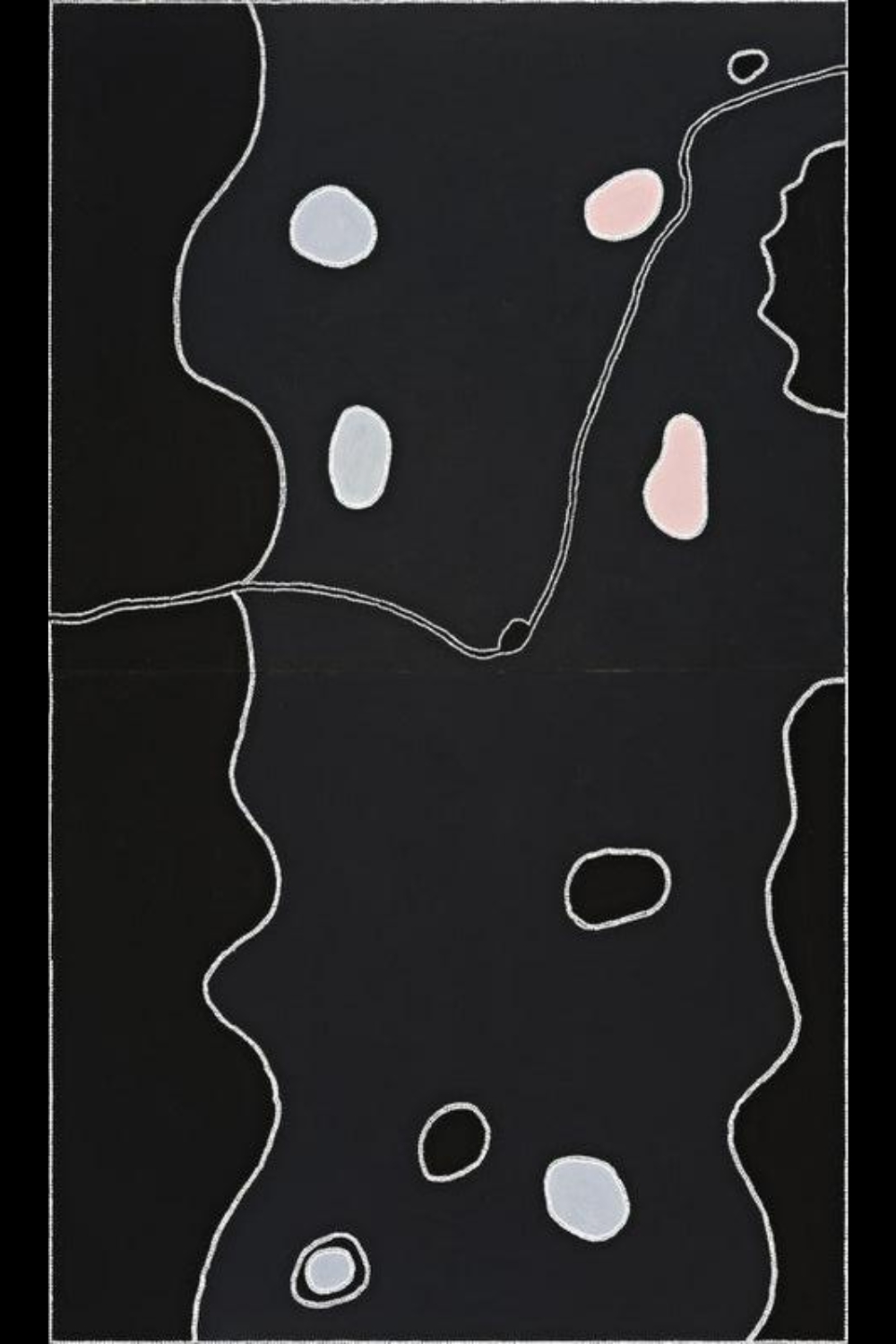
Some of this Country was radically transformed during his lifetime. Timms knew the landscape around Lissadell before construction of the Ord River Dam submerged vast areas beneath Lake Argyle. His Lake Argyle Triptych (1996) depicts Country containing ancestral places, burial grounds and significant sites that disappeared beneath the artificial lake. It is both a landscape painting and a painting about loss.
Other works record a darker history. Mistake Creek (1994) identifies a place where Aboriginal people were killed. Timms rarely illustrated the violent event itself.
This historical dimension also appears in his paintings of Major, a Wagiman man associated with resistance around Mistake Creek and Blackfella Creek. After encountering Sidney Nolan’s Ned Kelly paintings, Timms turned the idea of the Australian outlaw around, painting Major from a Gija perspective. The same approach informed Blood on the Spinifex, a Jirrawun project in which Timms and other Gija artists, includingPaddy Bedford, painted Country associated with killings and massacres remembered through local oral histories.
Why Freddie Timms Is Important
Freddie Timms connected two generations of East Kimberley painting. He had close personal ties to Rover Thomas, Paddy Jaminji, George Mung Mung, Hector Jandany and Jack Britten and began painting among them at Frog Hollow.
Yet Timms developed a visual language distinctly his own. Stock routes, cattle yards, waterholes and station buildings became simplified forms within landscapes that could also contain Gija cultural knowledge, personal memory and histories of dispossession.
Timms also helped shape what followed. In 1998 he helped establish Jirrawun Aboriginal Art Corporation and became its founding chairman. Jirrawun sought greater artistic and economic control for Gija artists and became associated with painters including Paddy Bedford, Hector Jandany, Rusty Peters, Goody Barrett and Peggy Patrick.
Timms therefore occupied an unusual position: connected to the generation that established East Kimberley painting, an important painter in his own right, and an advocate who helped another generation reach wider audiences.
Collections and Recognition
Freddie Timms is represented in major Australian public collections including the
Art Gallery of New South Wales
Art Gallery of Western Australia
Art Gallery of South Australia.
His early recognition included Turkey Creek: Recent Work in 1989 and Images of Power: Aboriginal Art of the Kimberley.
A particularly important early painting, Mandangala, North Turkey Creek (1990), was subsequently included in the major international exhibition Aratjara: Art of the First Australians, shown in Düsseldorf, London and Humlebæk. The work depicts Country around Glen Hill and the Argyle diamond mine north of Turkey Creek.
Later works including Violet Valley, Blackfella Creek, Blackfella–Whitefella, Jack Yard and the paintings associated with Blood on the Spinifex extended his reputation as one of the most individual painters to emerge from the East Kimberley.
Freddie Timms died in Halls Creek in March 2017.
His legacy is not simply the creation of another recognisable Kimberley painting style.
Timms demonstrated that Country could be painted simultaneously as geography, autobiography, cultural landscape and Australian history.
Further Reading
- Tony Oliver (ed.), Blood on the Spinifex, Ian Potter Museum of Art, University of Melbourne, 2002.
- Judith Ryan, Colour Power: Aboriginal Art Post 1984, National Gallery of Victoria, Melbourne, 2004.
- Judith Ryan with Kim Akerman (eds), Images of Power: Aboriginal Art of the Kimberley, National Gallery of Victoria, Melbourne, 1993.
All images featured in this article are presented strictly for educational and informational purposes.
This website may include copyrighted material for which specific authorization has not been obtained from the copyright owner.
All such images are presumed to be the intellectual property of the respective artist or their estate, and are used in accordance with principles of fair dealing or fair use under applicable copyright law.