The Meaning of Aboriginal Body Painting
Aboriginal Australians are not one cultural group. Before European settlement, hundreds of different languages and language varieties were spoken across Australia. Different Aboriginal societies had their own languages, ceremonies and beliefs and, although deeply interconnected, developed different traditions of body painting.
Aboriginal body painting is the painting of designs onto the human body for ceremonies, dances and other cultural purposes.
To understand why the body was painted, we need to look at individual Body painting traditions. Among the Yolŋu people of north-east Arnhem Land, for example, the designs painted onto a person were inherited from the ancestral past and were came about due to the actions of creator beings. They identified who that person was and where they belonged, but their purpose went much further: painting the body was part of the ceremony itself.
The Meaning of Yolŋu Body Painting
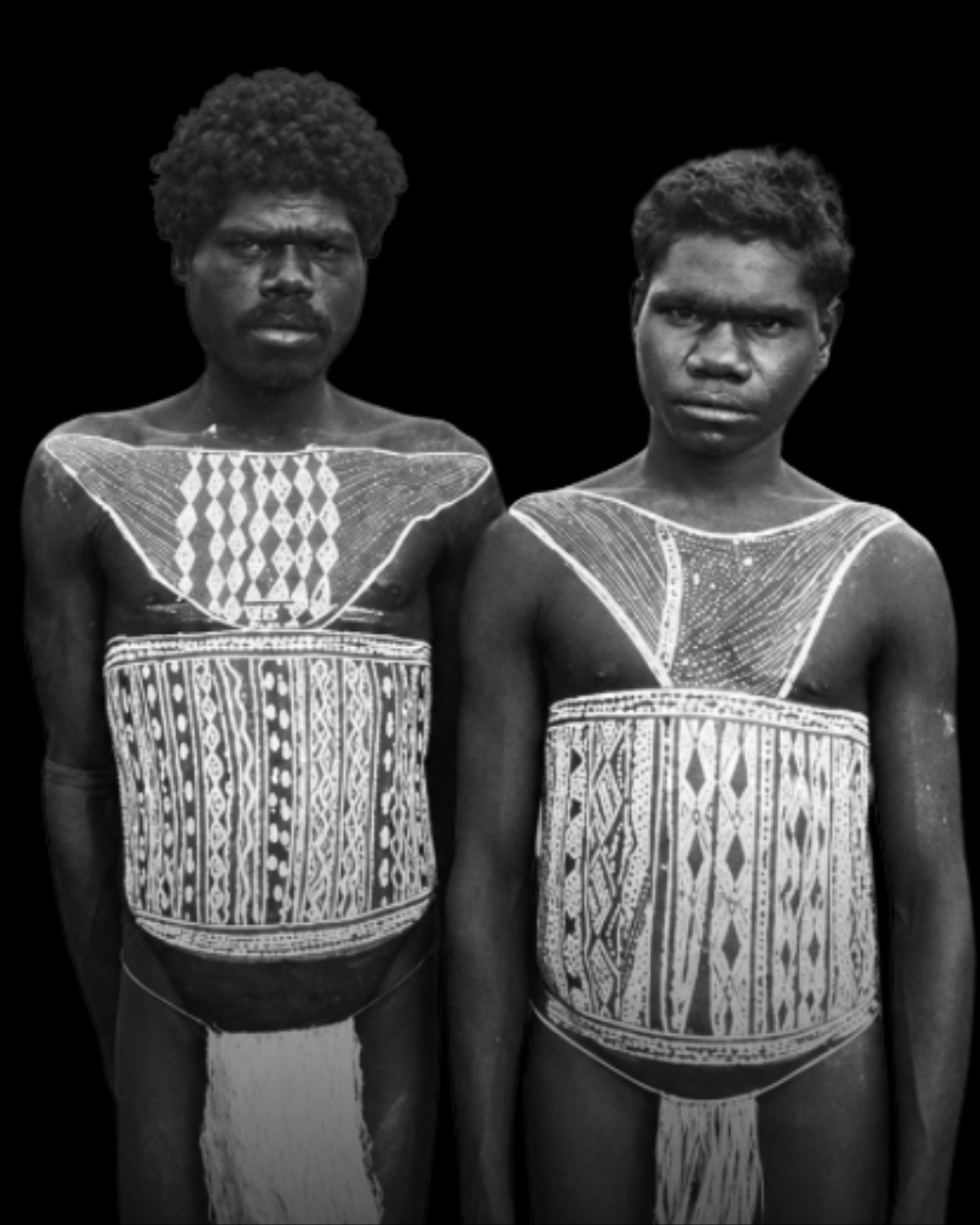
Yolŋu body painting uses miny’tji (clan designs). Different clans hold rights to particular miny’tji, which express social identity, ancestral law and ownership of land.
Their origin lies in the Wangarr (Yolŋu Dreaming). Wangarr ancestral beings travelled through the landscape, creating and transforming places and establishing law, ceremonies and sacred designs. Miny’tji therefore form part of the ancestral inheritance itself.
The Yirritja diamond designs associated with Gangan and Blue Mud Bay provide an example. Related designs connect different Yirritja clans and places through ancestral histories of fire, water and wild honey. Their variations identify particular clans and ancestral places.
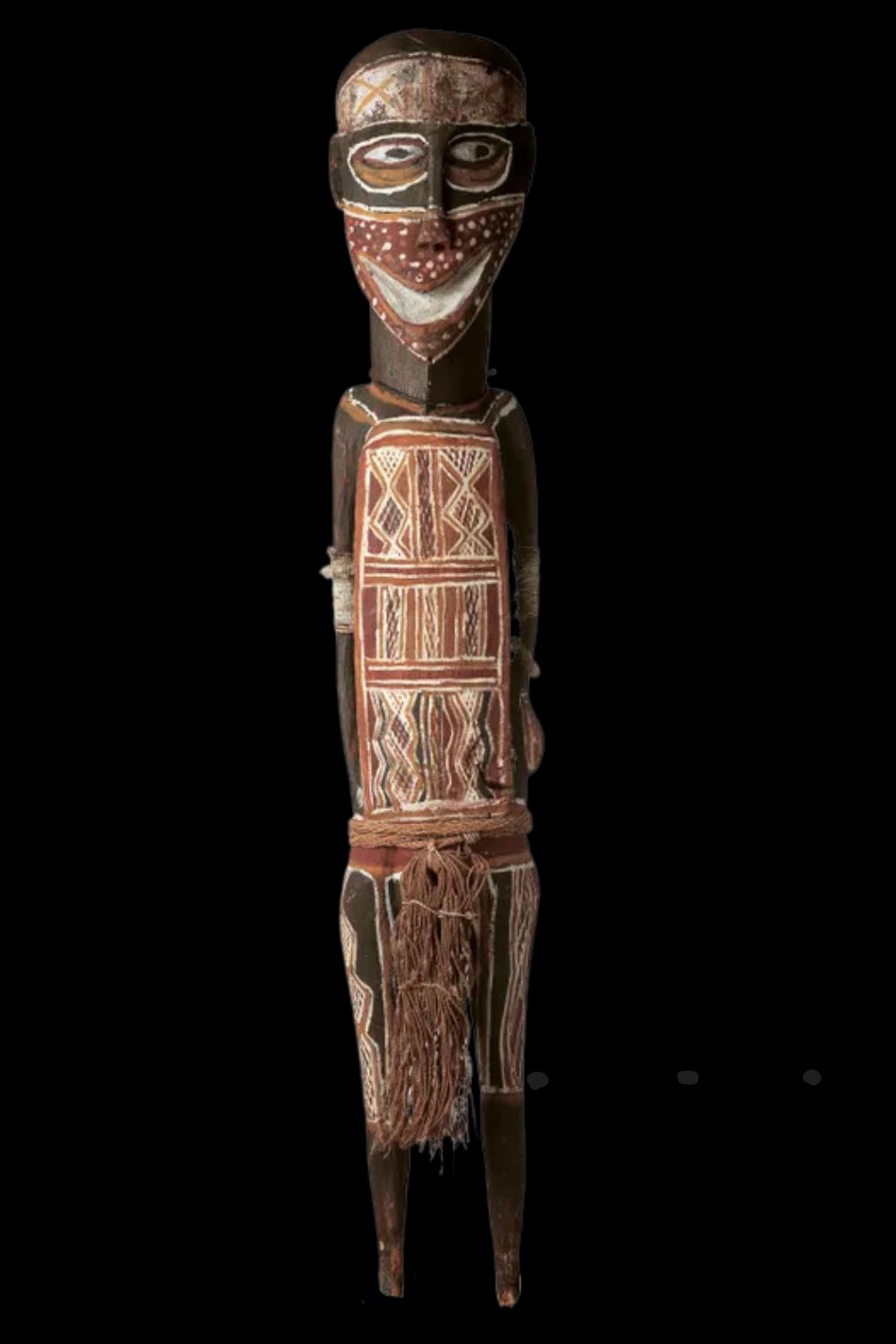
These designs are not confined to human skin. Miny’tji are painted onto ceremonial objects and ḻarrakitj (hollow-log coffins), as well as bark and sculpture. The surface changes, but the ancestral identity and power embodied in the design remain.
This helps explain why miny’tji are painted onto people.
During dhapi (initiation), an initiate may lie still for hours while knowledgeable men paint an ancestral design across his body. At the same time, associated ancestral songs are sung and dances performed. Painting, song and dance are parts of the same ceremony.
Howard Morphy describes Yolŋu initiation as involving the endowment and transfer of ancestral power from one generation to another. The initiate is therefore not simply being shown his ancestral inheritance. The ancestral design is placed directly onto his body as ancestral knowledge and power are passed to another generation.
The appearance of the painting reinforces this meaning. Fine cross-hatching produces bir’yun (shimmering brilliance). As the initiate breathes, moves and dances, light catches the closely painted lines and the design appears to shimmer across his skin. Yolŋu understand this brilliance as emanating from the Wangarr themselves.
Painting miny’tji onto the initiate therefore does more than identify who he is and where he belongs. It forms part of the ceremony through which ancestral knowledge and power are passed from one generation to the next.
Meaning of Tiwi Aboriginal Body Painting
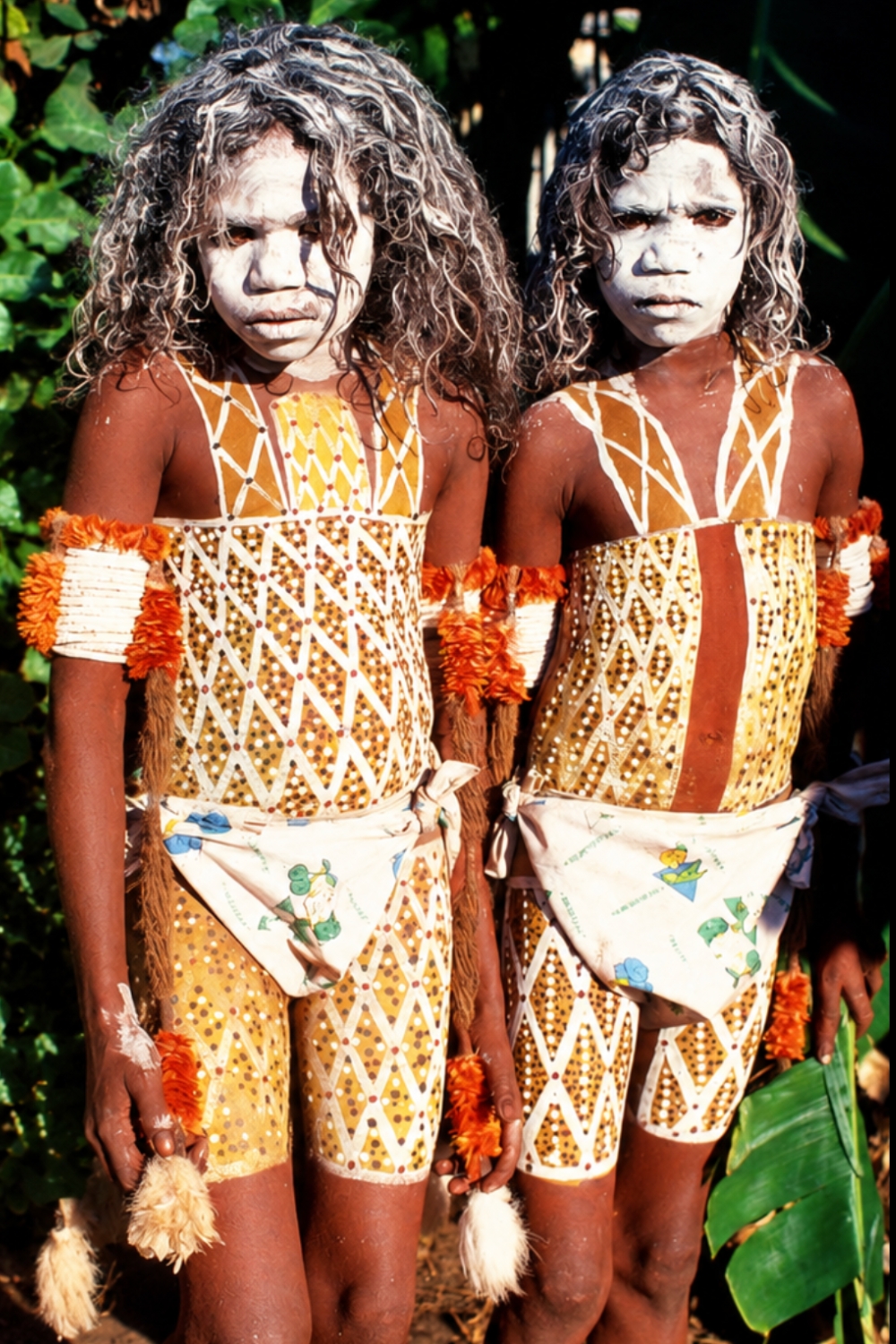
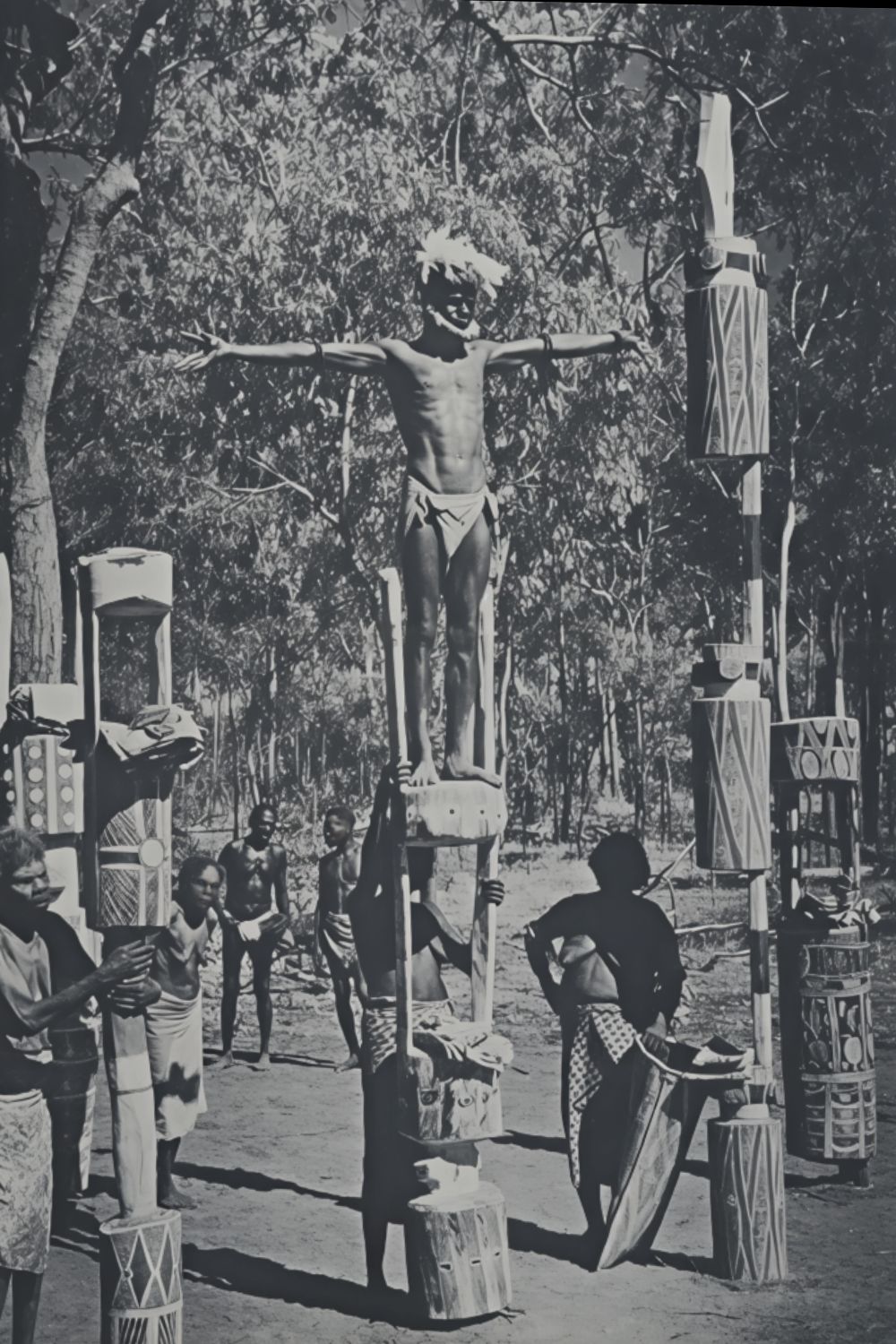
Among the Tiwi people of Bathurst and Melville Islands, jilamara (painting/design) is inseparable from ceremony, particularly Pukumani (mourning ceremony) and Kulama (coming-of-age/yam ceremony). Unlike Yolŋu miny’tji, Tiwi designs should not be understood simply as fixed clan designs: individual creativity and aesthetic skill are important parts of the tradition.
During Pukumani, mourners and dancers cover their faces and bodies with elaborate ochre designs. The painting disguises their ordinary appearance from the spirit of the deceased, helping protect close relatives during the dangerous period surrounding death.
The painted body forms part of a larger ceremonial environment. Related jilamara appear on tutini (Pukumani poles), tunga (bark containers) and other objects. Patterns of marlipinyini (lines), kurluwukari (circles) and pwanga (dots) later became important elements of Tiwi painting on bark, sculpture, paper and canvas.
Tiwi body painting therefore does more than decorate the body. It transforms the appearance of participants for ceremony and forms one of the foundations of the distinctive visual language of modern Tiwi art.
Meaning of Central Australian Aboriginal Body Painting
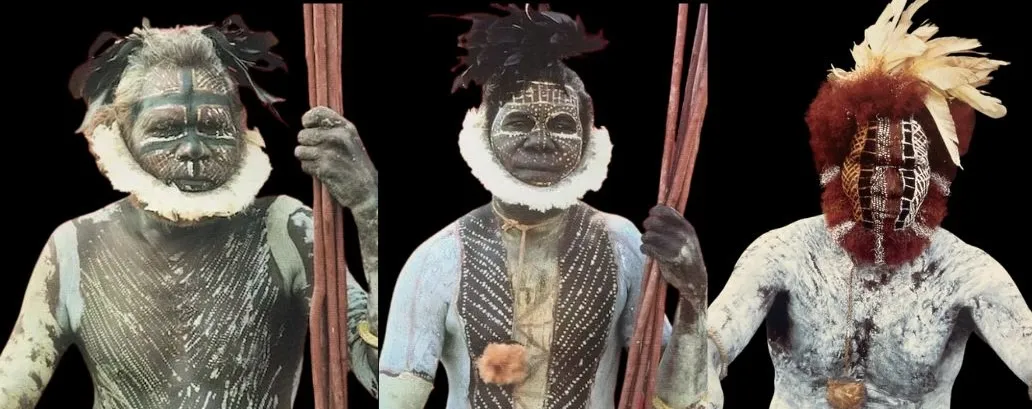
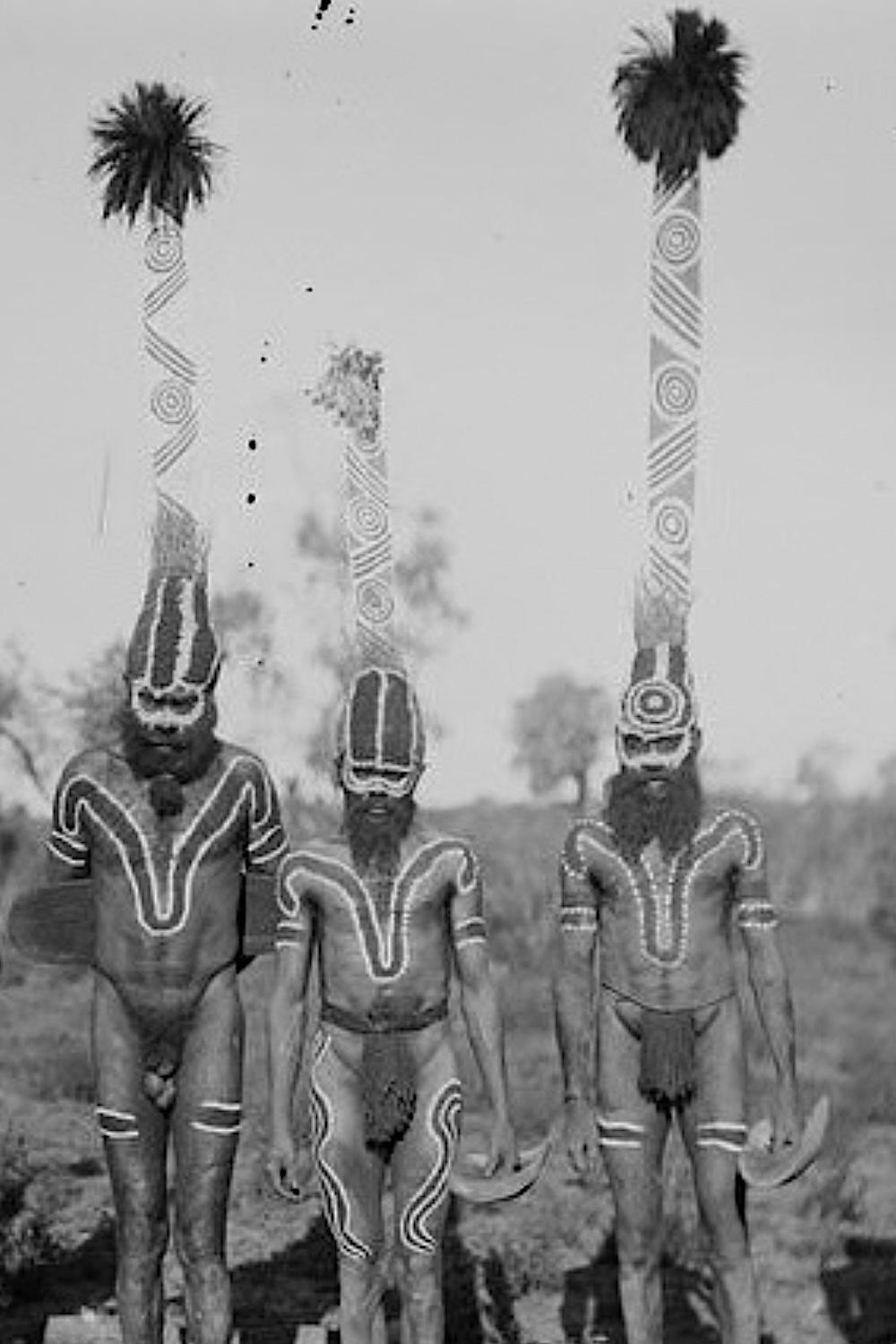
In Central Australia, ceremonial body painting could transform a person into the visible presence of ancestral beings and events. Spencer and Gillen’s photographs of Arrernte ceremonies in the 1890s and early 1900s show men covered with ochre, pipe clay, feather down and elaborate headdresses, with designs changing according to the ceremony being performed.
Meaning lay not simply in individual painted symbols, but in the combination of body painting, ceremonial dress, song, dance and performance. Museums Victoria’s interpretation of the Spencer and Gillen material explains that designs painted on the body represented ancestral beings manifested through ceremonial performance.
Their photographs record very different designs for ceremonies including Emu, rain and the travelling Tjitjingalla ceremony.
Central Australian Aboriginal body painting was therefore not a single decorative style. The painted body became part of the ceremony itself, transforming the performer according to the ancestral story, ritual and role being enacted.
The Meaning of Women’s Awelye Body Painting
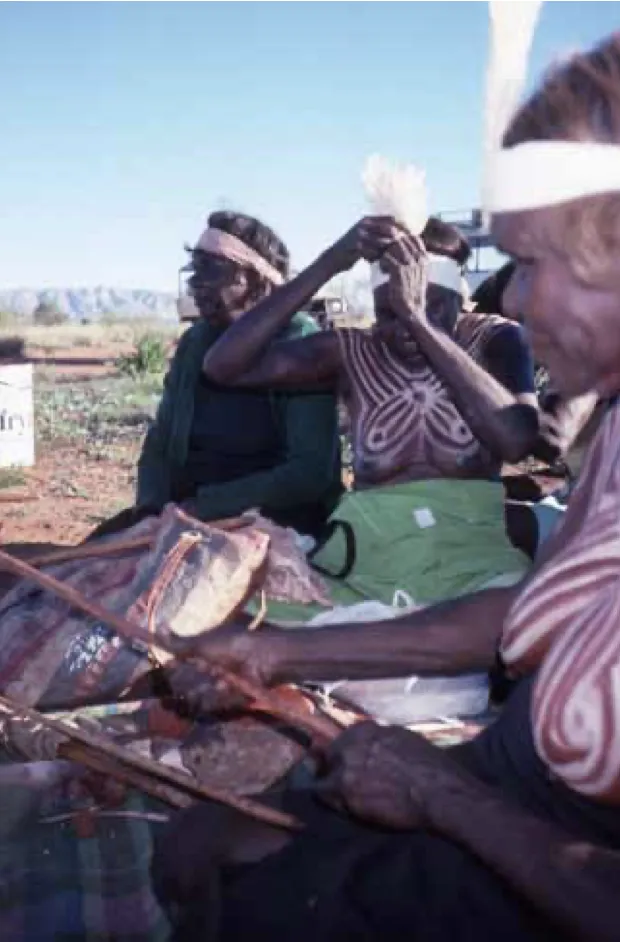
Among Anmatyerr and Alyawarr women of Utopia in Central Australia, awelye describes women’s ceremony and the body designs, songs and dances belonging to it. Women paint ochre designs across their breasts, bodies and thighs before performing together.
The designs relate to particular ancestral beings, plants, animals and places for which the women hold cultural knowledge and responsibility. Painting the body is therefore part of bringing this ancestral knowledge into ceremonial action through design, song and dance.
The designs also carry spiritual power. They are understood not merely as pictures of ancestral stories but as part of the ceremonial processes through which the natural and ancestral world is sustained.
This tradition is particularly important to the history of contemporary Aboriginal art. Emily Kam Kngwarray painted awelye designs on women’s bodies for decades before working with batik and canvas. When she later painted on silk and canvas, the surface was new, but her experience of making culturally powerful designs was not.
These four traditions show why there is no single meaning of Aboriginal body painting. Different peoples developed their own designs, ceremonies and purposes: identifying ancestral inheritance, transforming initiates, protecting mourners, or bringing ancestral beings and events into ceremonial performance.
Yet beneath these differences is a powerful shared principle. Painting the body is not simply decorative. It transforms the human body into a surface through which ancestral knowledge and power can become present. Through painting, song, dance and ceremony, that power is renewed in people and in the places and living world to which they belong.
Aboriginal Body Painting Materials and Techniques
Aboriginal body paint was traditionally made principally from materials available in the surrounding landscape. Ochres and other earth pigments provided reds, yellows and whites, while charcoal could provide black. The pigments might be ground into powder, mixed or applied over prepared skin. Techniques differed considerably between cultural traditions.
Among the Yolŋu, natural earth pigments are used to create miny’tji (clan designs). Fine brushes traditionally made from human hair allow artists to build the exceptionally fine cross-hatching that produces bir’yun (shimmering brilliance). The same technical tradition can be used on the body, bark and ceremonial objects. Howard Morphy describes the sheen of the red-ochred body and shimmering cross-hatching as integral to the visual manifestation of ancestral power.
In Central Australian women’s awelye, the body can first be prepared with fat or oil so that powdered pigments adhere to the skin. Designs are then applied across the breasts, chest, arms and thighs. Sources from Utopia record red and yellow ochre, charcoal and ash, applied using implements such as padded flat sticks as well as by hand.
Tiwi jilamara uses locally sourced ochres. Yellow ochre can be heated in a fire to produce red, white ochre is obtained from coastal cliffs, and charcoal may provide black. Particularly distinctive is the kayimwagakimi or pwoja (toothed painting comb), traditionally carved from ironwood or bloodwood. Dipped in ochre and pressed repeatedly against the surface, its teeth produce ordered rows of fine dots. Fine sticks or chewed pandanus can also be used as brushes.
In the Central Australian ceremonies recorded by Spencer and Gillen, painting was combined with other forms of bodily transformation: ochres and pale earth pigments were applied to the skin alongside feather-down decoration and elaborate ceremonial headdresses.
Body painting was therefore both painting and bodily transformation. Earth was collected, pigments prepared, skin treated and designs carefully applied until the ordinary appearance of the body was replaced by its ceremonial form.
All images featured in this article are presented strictly for educational and informational purposes.
This website may include copyrighted material for which specific authorization has not been obtained from the copyright owner.
All such images are presumed to be the intellectual property of the respective artist or their estate, and are used in accordance with principles of fair dealing or fair use under applicable copyright law.