Aboriginal Artifacts?
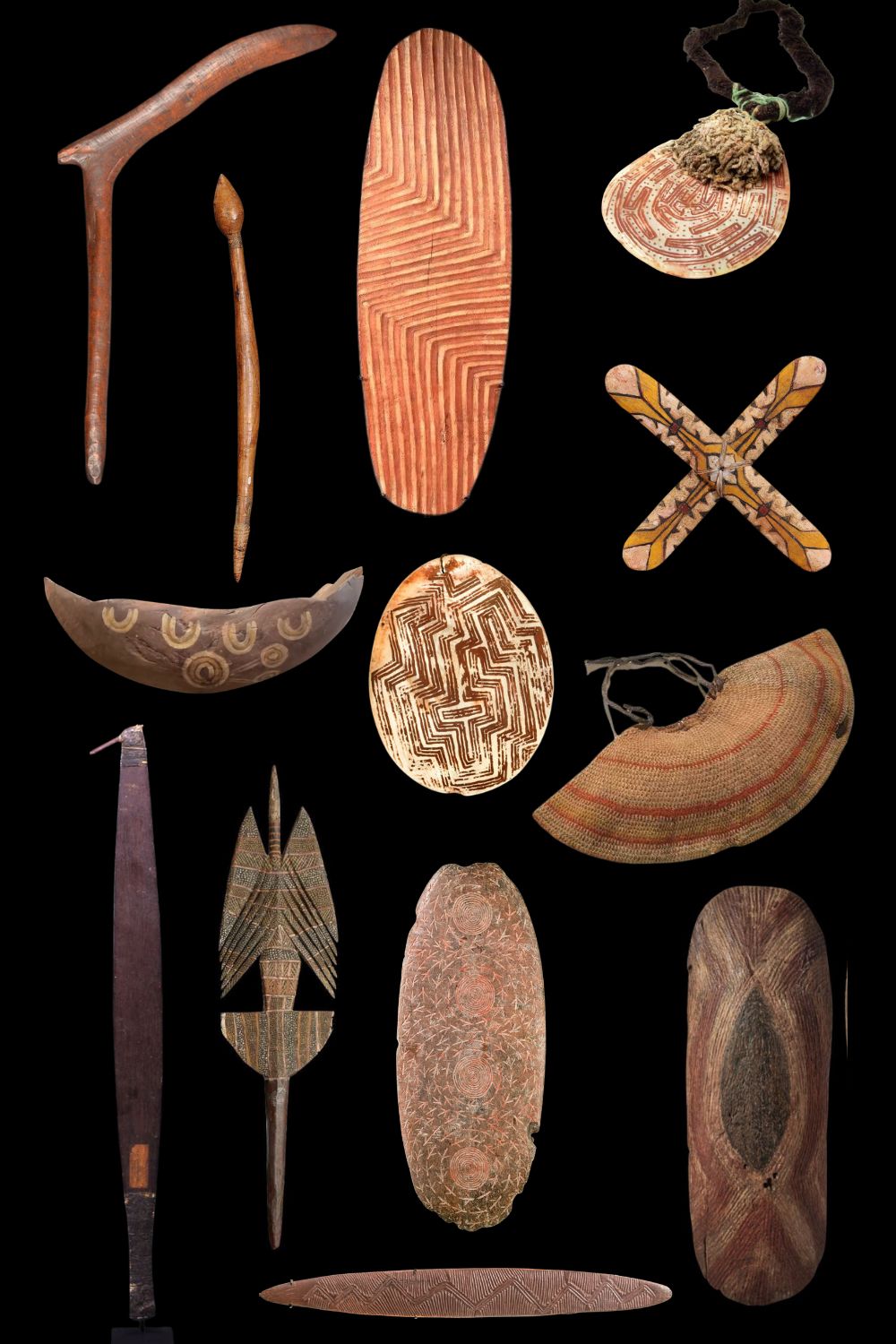
Aboriginal artifacts (also spelled artefacts) are physical objects made and used by Aboriginal Australians for hunting, gathering, ceremony, trade and everyday life. They include weapons, tools, containers, ornaments and ceremonial objects crafted from wood, stone, bark, shell, fibre, bone and natural pigments.
Unlike many historical objects displayed in museums, Aboriginal artifacts are not simply relics of the past. Many continue to hold deep cultural significance for Aboriginal communities today, connecting people with Country, ancestors, traditional knowledge and cultural identity.
Some artifacts were everyday tools used to obtain food or carry water. Others were ceremonial objects associated with important cultural practices and were only used by people with the appropriate cultural authority. Understanding an artifact therefore involves more than identifying what it is—it also means appreciating its place within Aboriginal culture.
Whether you have inherited an old boomerang, discovered an unusual carved object, or simply want to learn more about Australia’s oldest living culture, this guide provides an introduction to the major types of Aboriginal artifacts and how to identify them.
Are Aboriginal Artifacts Important?
Yes. Aboriginal artifacts are important because they provide a tangible connection to the cultures, technologies and histories of Aboriginal Australians. They are the physical evidence of one of the world’s oldest continuous living cultures and preserve knowledge that has been passed down through countless generations.
Broadly speaking, Aboriginal artifacts fall into two categories: those made by Aboriginal people for traditional Aboriginal use, and those produced for sale or exchange following European settlement. Both have historical value, but artifacts created for traditional use generally provide the greatest insight into Aboriginal life, regional traditions and cultural practices.
Not all artifacts are equally significant. Some, such as common tourist boomerangs or recently made souvenir items, are relatively abundant. Others are rare because they were used in ceremony, come from a particular region, have exceptional age or provenance, or represent traditional technologies that are no longer commonly made.
Beyond their monetary value, Aboriginal artifacts are important because they preserve the material culture of Aboriginal communities. They demonstrate how people adapted to different Australian environments, reveal sophisticated knowledge of natural materials, and provide a lasting record of hunting, food gathering, ceremony, trade and everyday life. For Aboriginal communities today, many artifacts also remain powerful cultural objects that embody connections to Country, ancestors and identity.
Major Types of Aboriginal Artifacts
Rather than representing a single tradition, Aboriginal artifacts vary enormously across Australia. Different environments and cultural groups developed distinctive forms suited to local materials and customs.
Aboriginal Weapons
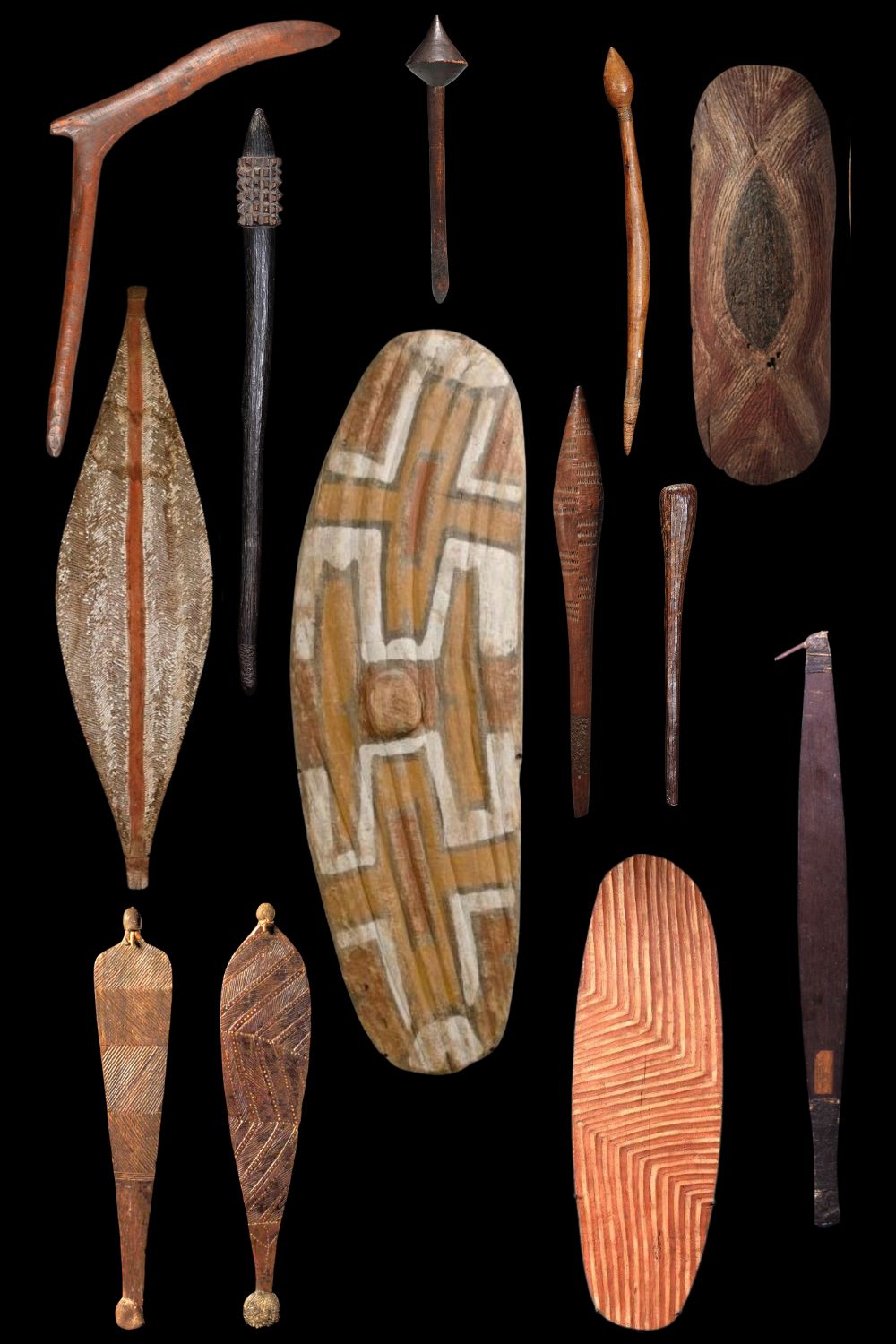
Spears, clubs, shields, boomerangs, spear throwers and fighting sticks were developed for hunting, defence and ceremony. Their designs differ greatly between regions, reflecting local resources and cultural traditions.
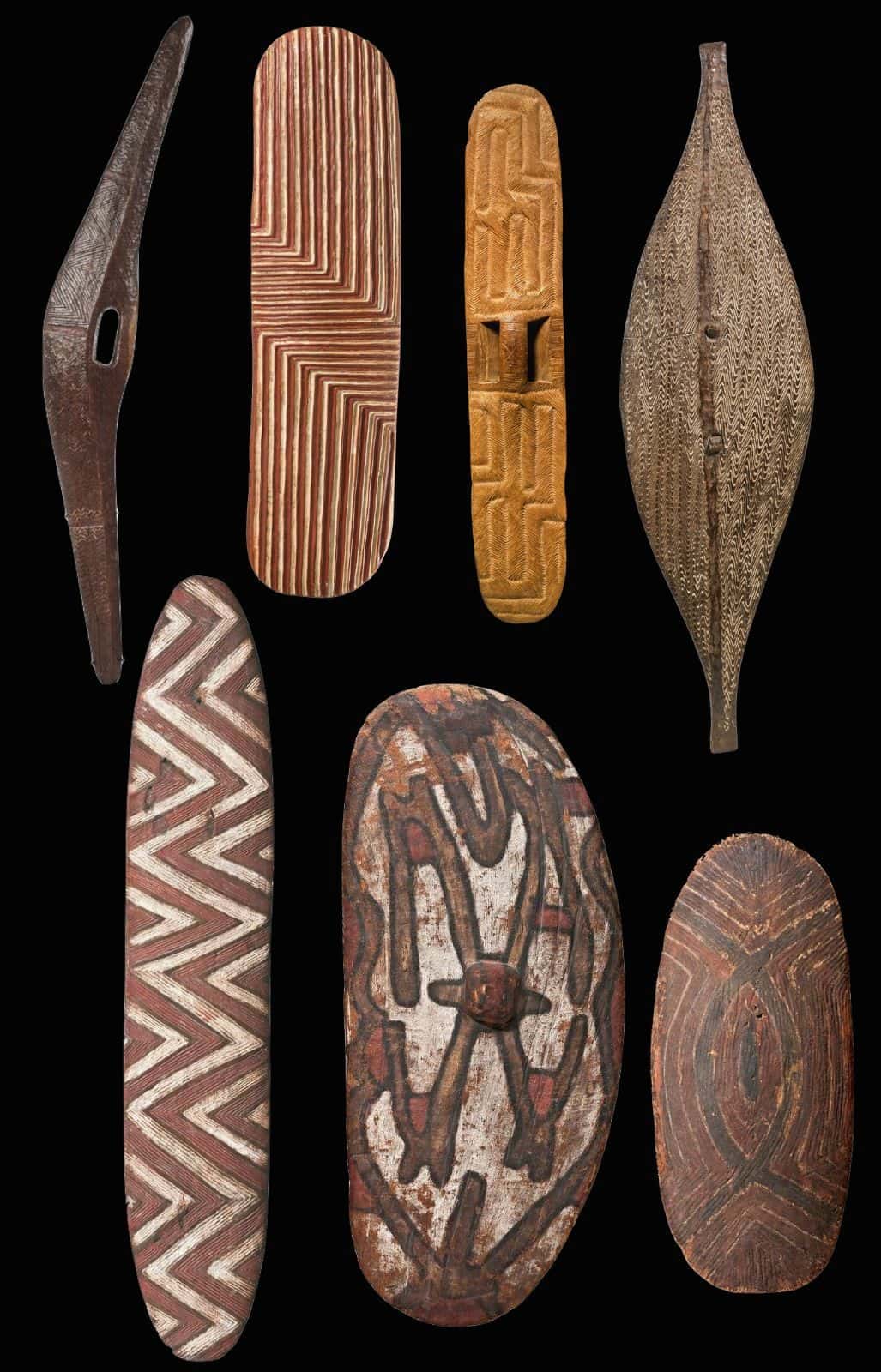
Aboriginal Shields
Aboriginal shields protected warriors during conflict while also displaying distinctive regional carving styles that today assist with identification.
Learn more: Aboriginal Shields
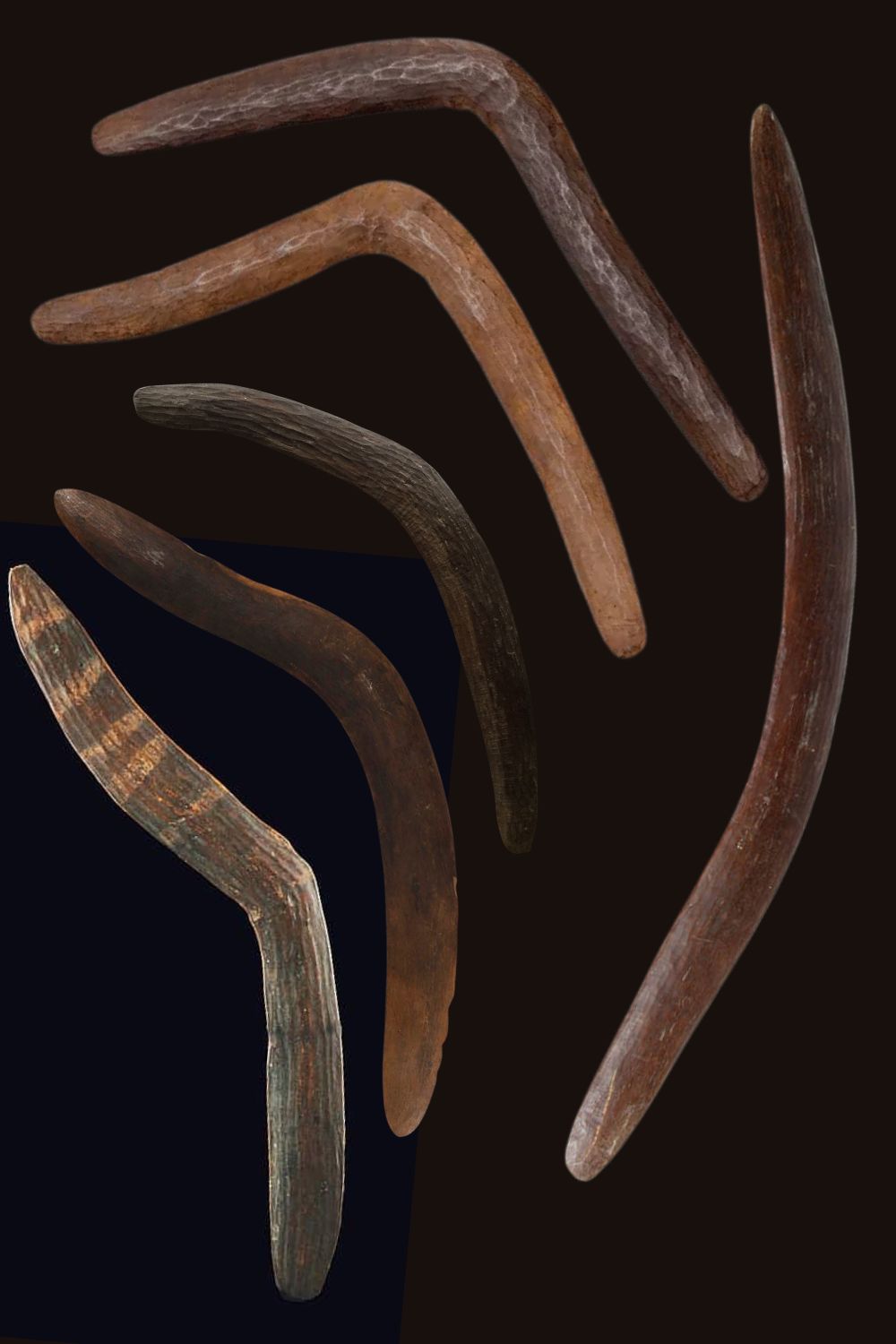
Aboriginal Boomerangs
Although often associated with returning boomerangs, most traditional Aboriginal boomerangs were designed for hunting, fighting, digging or ceremonial purposes rather than returning to the thrower.
Learn more: Aboriginal Boomerangs
Aboriginal Boomerangs
Although often associated with returning boomerangs, most traditional Aboriginal boomerangs were designed for hunting, fighting, digging or ceremonial purposes rather than returning to the thrower.
Learn more: Aboriginal Boomerangs
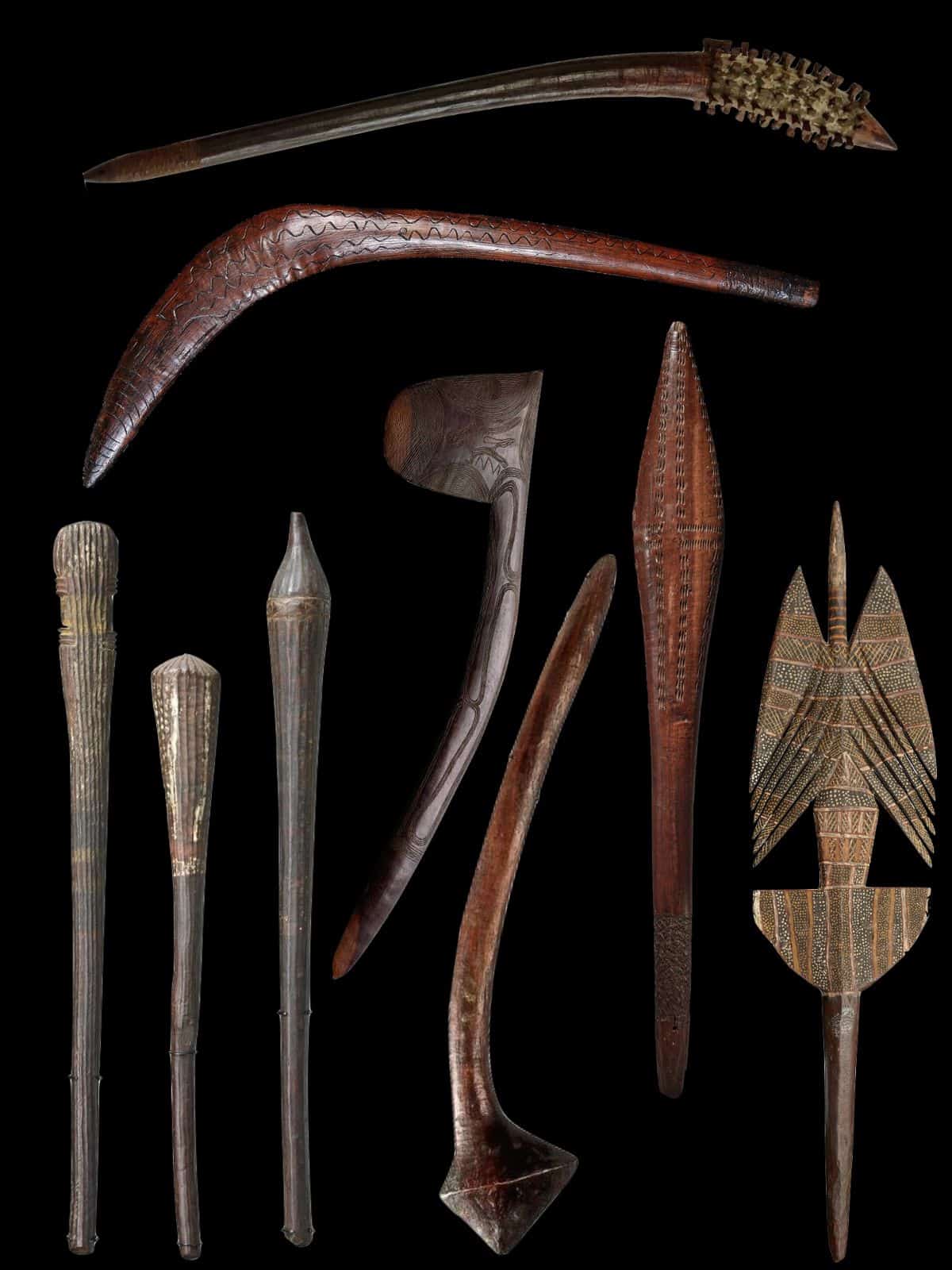
Aboriginal Clubs
Clubs were among the most versatile Aboriginal weapons, used for hunting, close combat and ceremonial purposes. Forms range from simple hardwood clubs to finely carved examples.
Learn more: Aboriginal Clubs
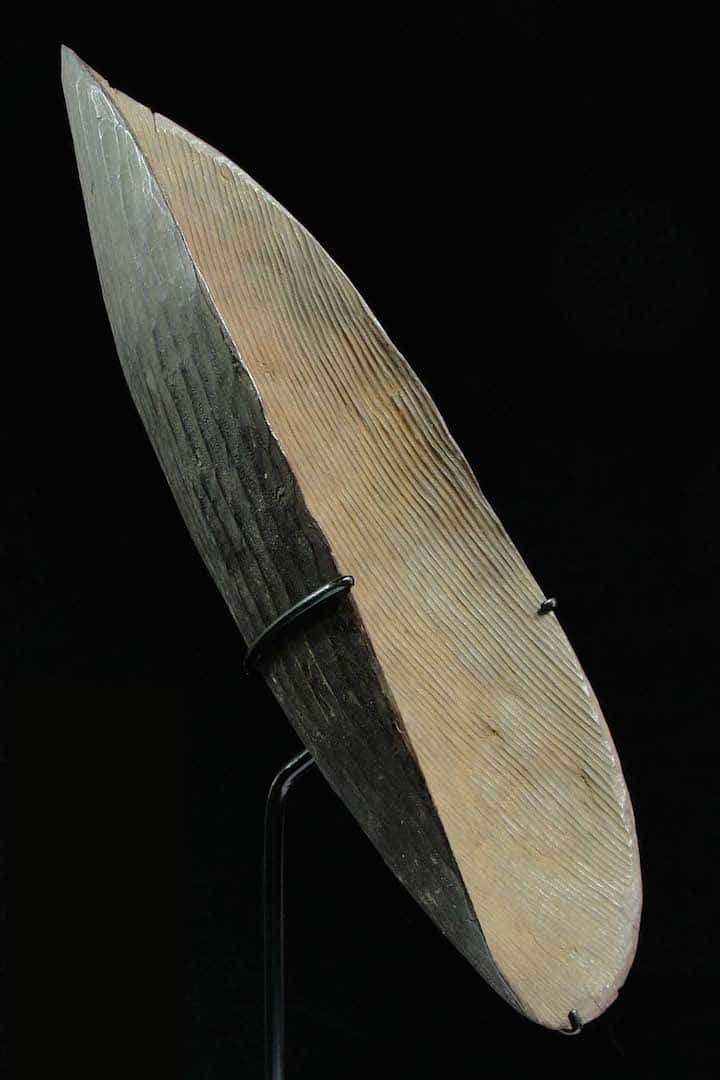
Coolamons
Coolamons are shallow wooden carrying vessels traditionally used by Aboriginal women for gathering food, carrying water, transporting babies and preparing bush foods.
Learn more: Aboriginal Coolamons
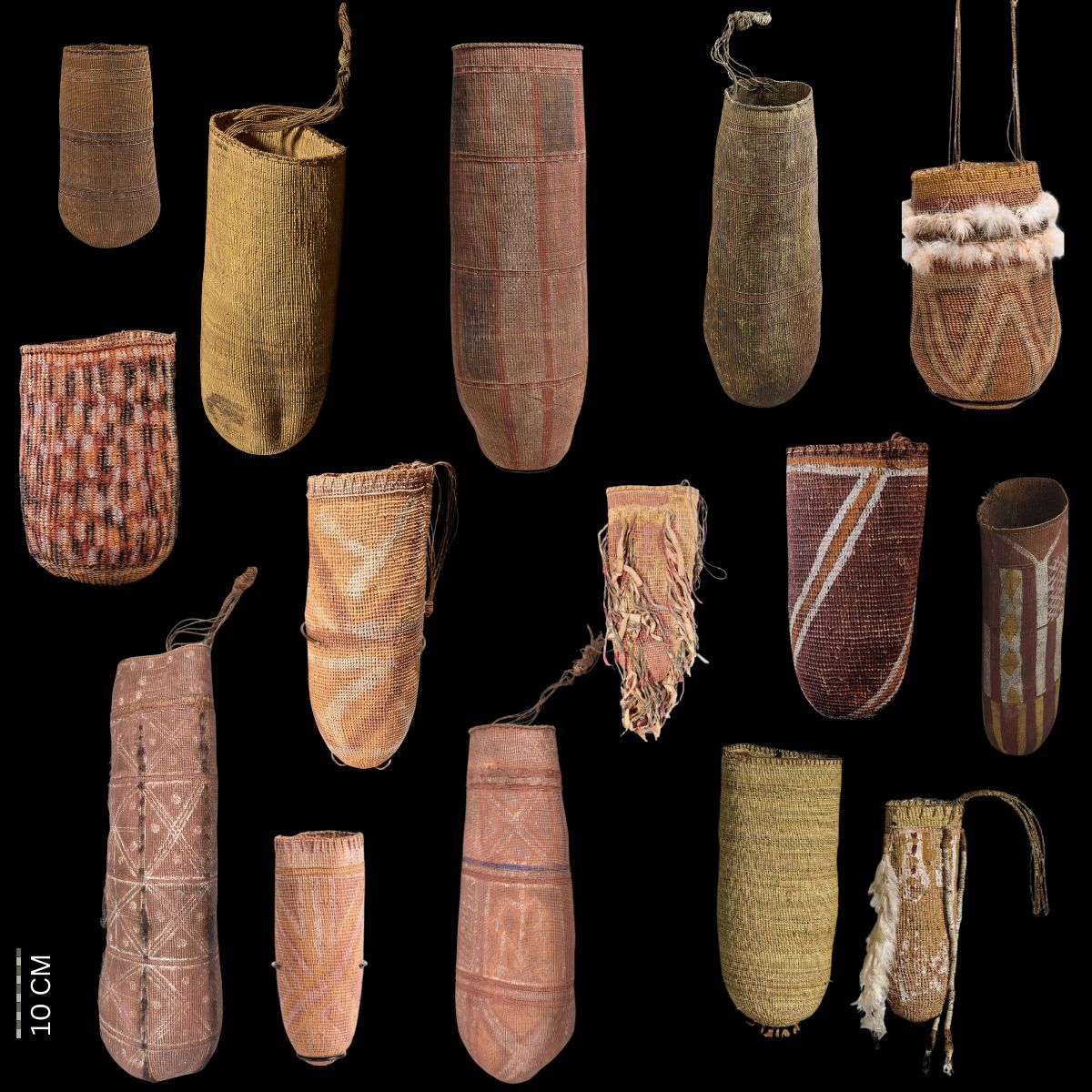
Aboriginal Baskets and Dilly bags
Aboriginal baskets demonstrate exceptional fibre-working skills and were woven from grasses, reeds, pandanus and other natural materials to suit different environments.
Learn more: Aboriginal Baskets
Aboriginal Sculpture
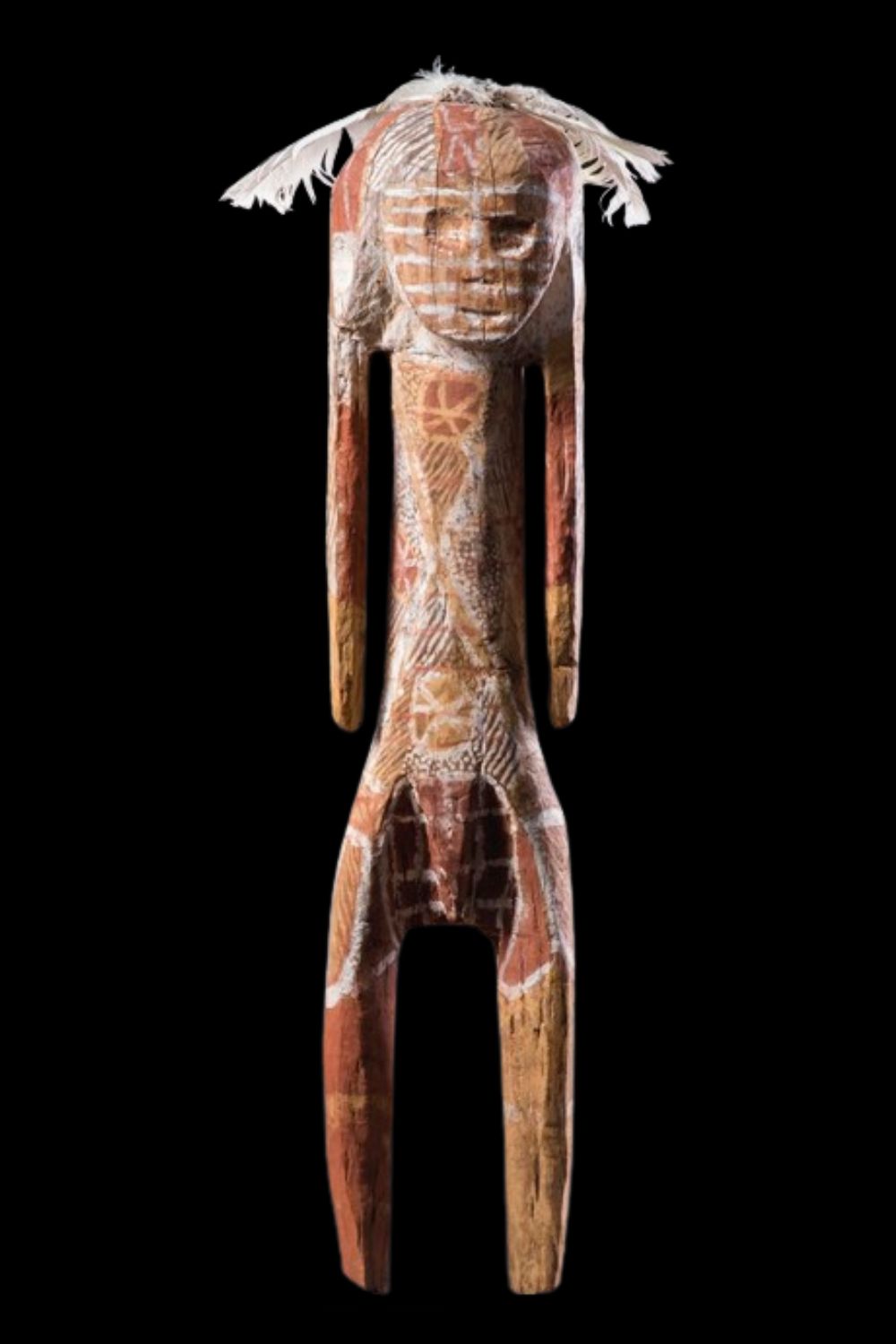
Traditional Aboriginal sculpture includes carved human figures, spirit beings, ceremonial poles and regional carving traditions that continue to evolve today.
Learn more: Aboriginal Sculpture
Aboriginal Pearl Shells
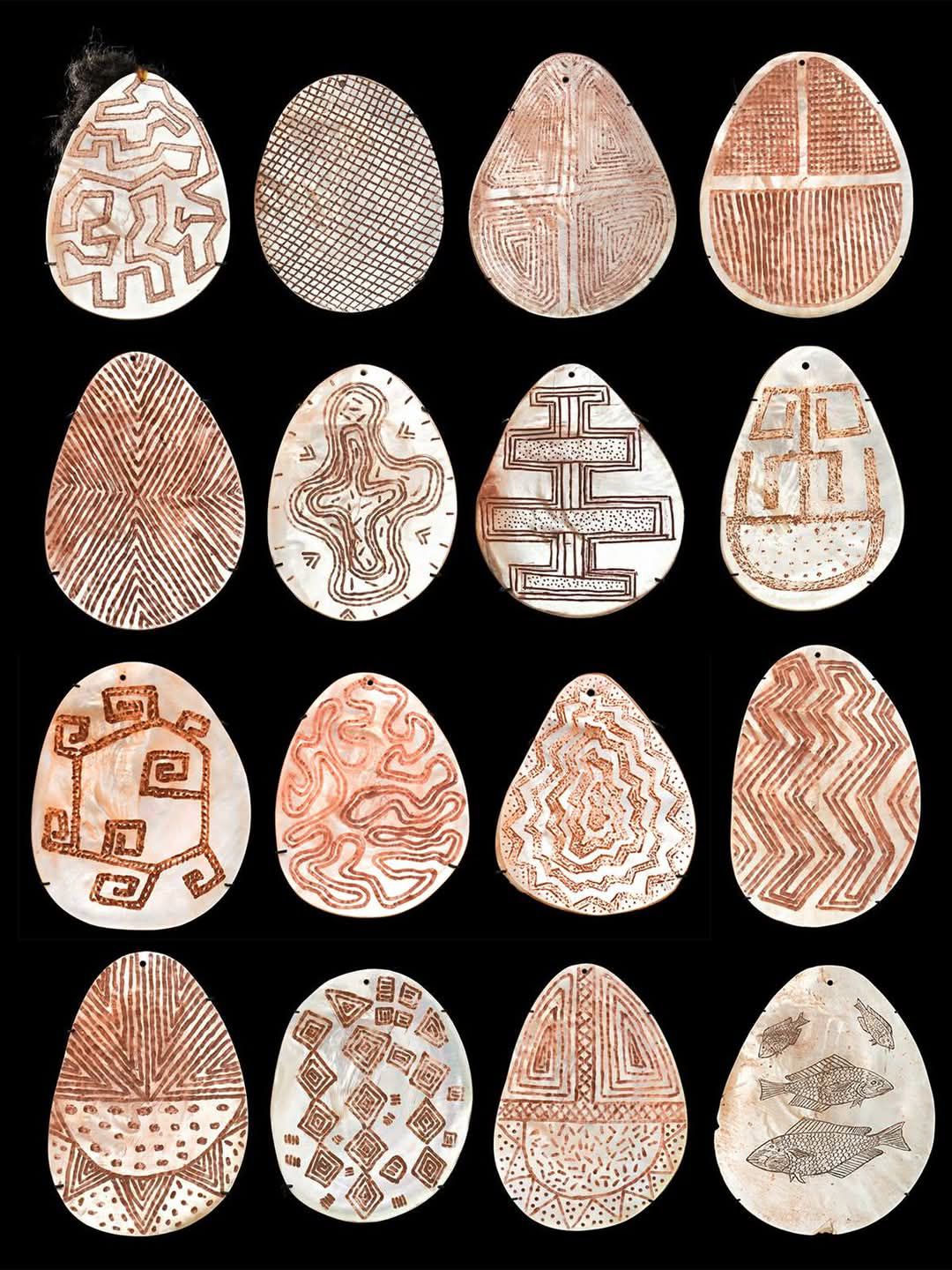
Decorated pearl shells were highly valued ceremonial objects across northern Australia and formed part of extensive Aboriginal trade networks extending far inland.
Learn more: Aboriginal Pearl Shells
Tjuringa (Churinga)
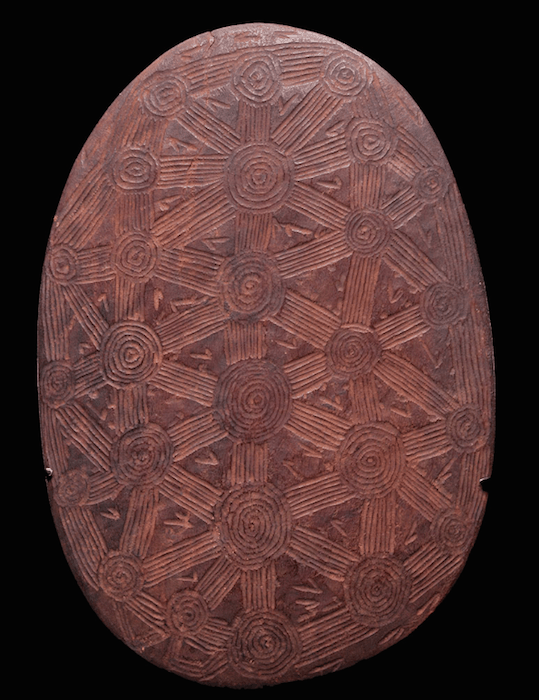
Tjuringa are among the most culturally significant ceremonial objects within parts of Central Australia. Traditionally associated with ancestral beings and ceremonial knowledge, they should always be understood respectfully and within their cultural context.
Learn more: Tjuringa
Traditional Adoriginal Adornments
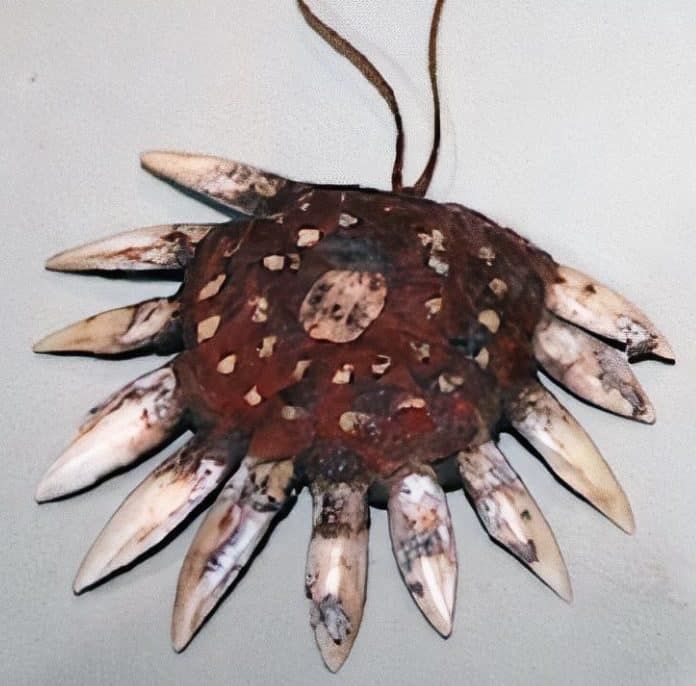
In general Aboriginal Adornments are quite rare in collections compared to other cultures. Many of these adornments are simple when seen by themselves. They were often a part of a decorated and painted body.
The reason these artefacts are rare is that many adornments were only made for ceremonial occasions so were not made to last or were signs of status and could not be traded.
Amongst the most beautiful of adornments is the Aboriginal pearl shell pubic covers of the Kimberley
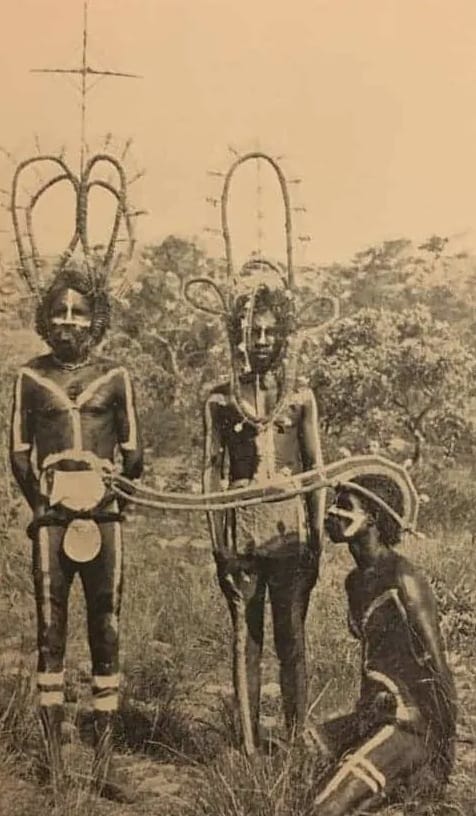
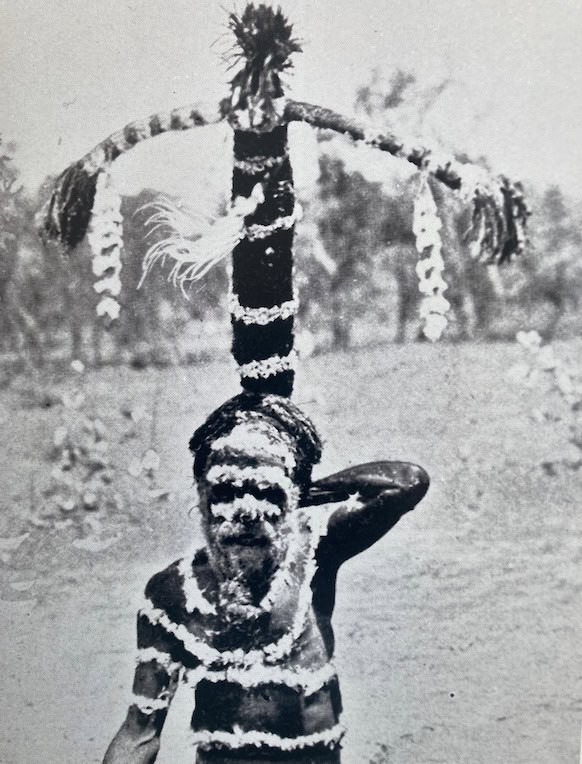
Ceremonial Head Dress
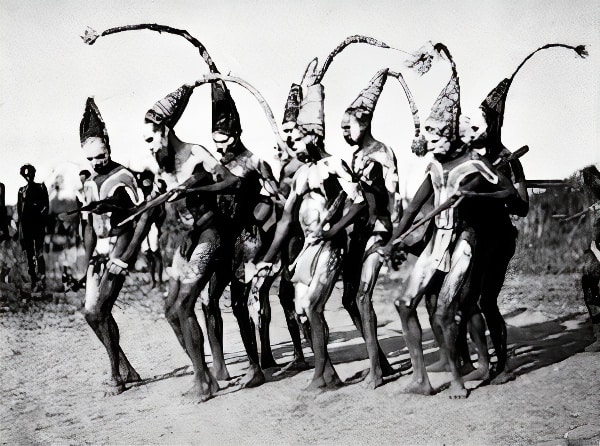
Several areas of Aboriginal Australia had head dresses used only for the most important ceremonial occasions. These were often destroyed after use and are extremely rare and quite collectable. These head dresses when combined with body painting and adornment were used in coroborree. Different areas had different head dresses or some none at all.
How Can You Identify an Aboriginal Artifact?
Correct identification usually depends on several factors rather than a single feature.
Experts typically consider:
- the type of object
- materials used
- carving style
- decoration
- evidence of use and wear
- regional characteristics
- age
- provenance or documented history
Many objects that appear old were produced during the twentieth century for trade or tourism, while others may be genuine ceremonial or utilitarian artifacts with significant historical importance.
Are Aboriginal Artifacts Valuable?
Value varies enormously.
Factors influencing value include:
- authenticity
- age
- rarity
- condition
- cultural significance
- provenance
- regional origin
- aesthetic quality
- collector demand
Common tourist pieces may have modest value often less than $100, while rare documented historical artifacts associated with particular regions or collections can be worth tens of thousands of dollars.
Sell an Aboriginal Artifact?
If you have inherited or found an Aboriginal artifact, good photographs are usually the first step towards identification.
Photograph:
- the front and back
- both sides
- close-ups of any carving or decoration
- any labels or inscriptions
- overall measurements
Send the images with the dimensions and I will be happy to help you identify what it is and what it might be worth to me
Traditional Aboriginal Artefacts as art
Many of the traditional Aboriginal Artefacts are art works in their own right. Those made for ceremonial occasions were often made and painted with the greatest of skill. If you have a traditional Aboriginal Artefact outside of Australia it would be nice to see it back in it’s country of origin. Please feel free to contact me and I may be able to find it a good custodian.
All images in this article are for educational purposes only.
This site may contain copyrighted material the use of which was not specified by the copyright owner.
Frequently Asked Questions
What is an Aboriginal artifact?
An Aboriginal artifact is a physical object made and used by Aboriginal Australians for everyday life, hunting, ceremony or cultural purposes.
Are all Aboriginal artifacts ancient?
No. Most aboriginal artifacts are made from wood and are less than 100 years old. Some stone artifacts are thousands of years old, but most were made during the nineteenth and twentieth centuries or continue to be produced today.
Can Aboriginal artifacts still be used today?
Yes. Some traditional objects continue to be made and used within Aboriginal communities for cultural purposes.
How do I know if my artifact is genuine?
Identification relies on materials, craftsmanship, age, provenance and regional characteristics rather than appearance alone.
Can I sell an Aboriginal artifact?
Yes most privately owned artifacts can be bought and sold, but some culturally significant objects may be subject to legal or ethical considerations depending on their provenance and status.