Aboriginal Art History
Aboriginal art is not a single movement that began in the twentieth century, but one of the world’s oldest continuing systems of visual expression. Its history reaches from ancient rock shelters and ceremonial body designs to bark painting, carved objects, desert ground paintings, early mission collections, Papunya boards, and contemporary works now held by major museums across the world.
This page explains how Aboriginal art developed through time. For the spiritual and cultural meaning behind these traditions, see Meaning of Aboriginal Art. For regional visual differences, see Aboriginal Art Styles. For ancestral narratives, see Dreamtime Stories. For motif interpretation, see Aboriginal Art Symbols.
Aboriginal Rock Art Traditions and Aboriginal Art Styles are related but distinct subjects. Aboriginal Rock Art Traditions refer to ancient paintings and engravings created on rock surfaces across Australia, while Aboriginal Art Styles generally describe regional painting movements that developed on bark, board, canvas, and other portable media. This page focuses on Aboriginal Art Styles. For information about ancient Aboriginal Rock Art Traditions, see our dedicated guide
Aboriginal Artists, Art Movements and Important Moments in History
Before 1788
Long before European settlement, Aboriginal people across Australia had developed a rich and sophisticated artistic tradition that had evolved over tens of thousands of years. Rock art, body painting, bark painting, ground sculptures, carved trees, shields, ceremonial objects, fibre works, and sand drawings formed part of a complex visual language used to transmit knowledge, record ancestral stories, teach cultural law, and maintain connections to Country. Archaeological evidence suggests Aboriginal people have occupied Australia for at least 65,000 years, while the oldest securely dated Aboriginal artwork currently known—a naturalistic kangaroo painting in the Kimberley—has been dated to approximately 17,500 years ago.
Art was not created solely for decoration or display. It was deeply embedded within ceremony, spirituality, identity, and everyday life. Designs painted onto bodies, carved into objects, or depicted on rock surfaces often represented ancestral beings, sacred sites, songlines, and relationships between people and the landscape. These artistic traditions varied across hundreds of Aboriginal nations, creating one of the most diverse cultural expressions anywhere in the world.
Rather than arriving with colonial settlement, Aboriginal art has existed and evolved since ancient times and remains part of the world’s oldest living cultural tradition. For Aboriginal people, art has always been a powerful way of expressing connection to Country, preserving cultural knowledge, and passing stories from one generation to the next. Many contemporary Aboriginal art movements can trace their origins to these much older traditions, demonstrating an extraordinary continuity of cultural knowledge across countless generations.
c. 1800–1900
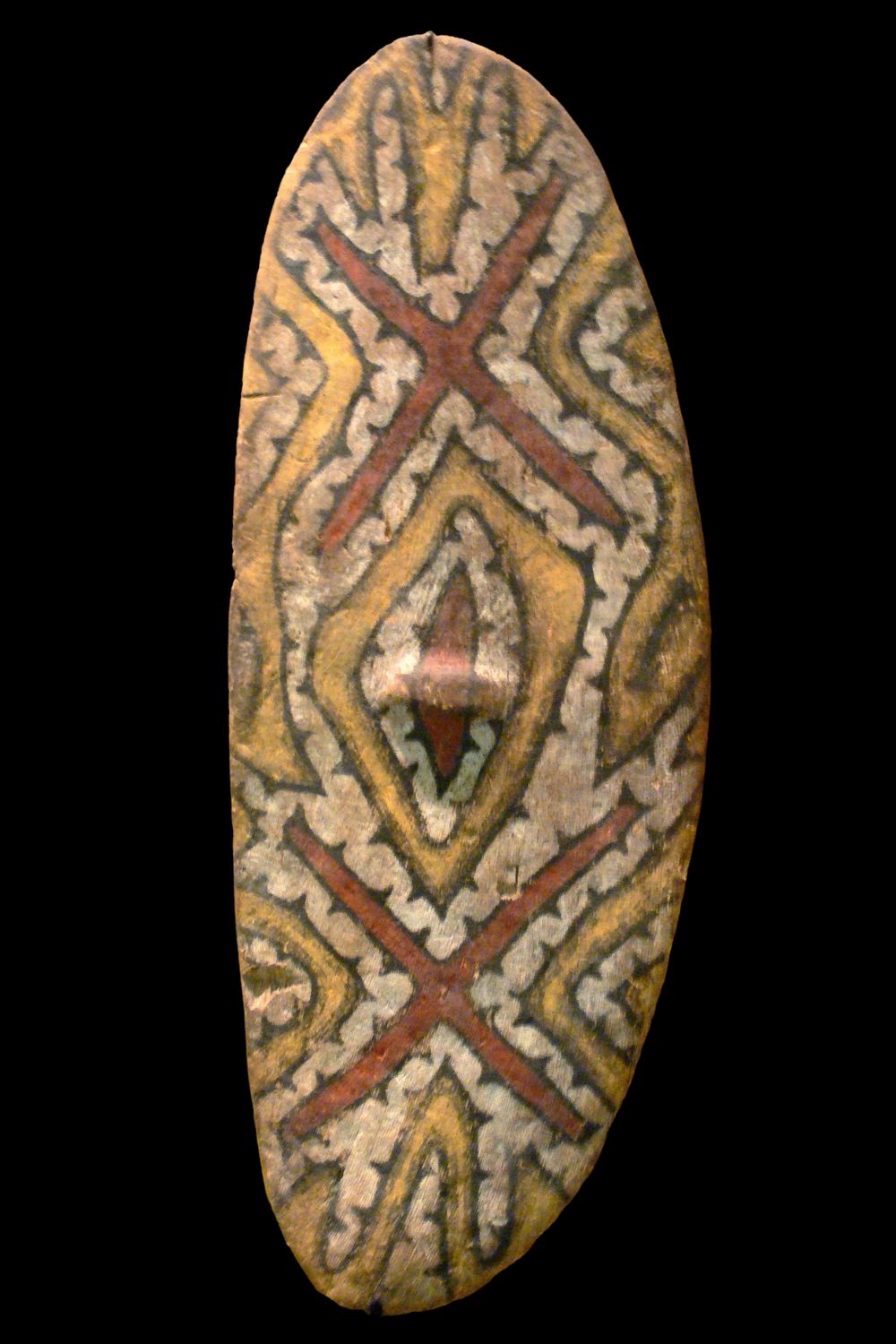
During the nineteenth century, increasing numbers of Aboriginal cultural objects entered European museums, private collections, and scientific institutions. Shields, weapons, ceremonial objects, baskets, carvings, and other artefacts were collected from communities across Australia. At the time, these works were generally regarded as ethnographic specimens rather than fine art, reflecting the attitudes of the colonial period.
As Aboriginal people adapted to the profound disruptions of settlement, some communities also began producing traditional objects for sale. At places such as Coranderrk in Victoria and La Perouse in New South Wales, Aboriginal artists carved and decorated shields, boomerangs, clubs, and other objects for tourists, travellers, and collectors. These works provided an important source of income while helping preserve artistic traditions during a period of rapid social and cultural change.
1860 – Tommy McRae
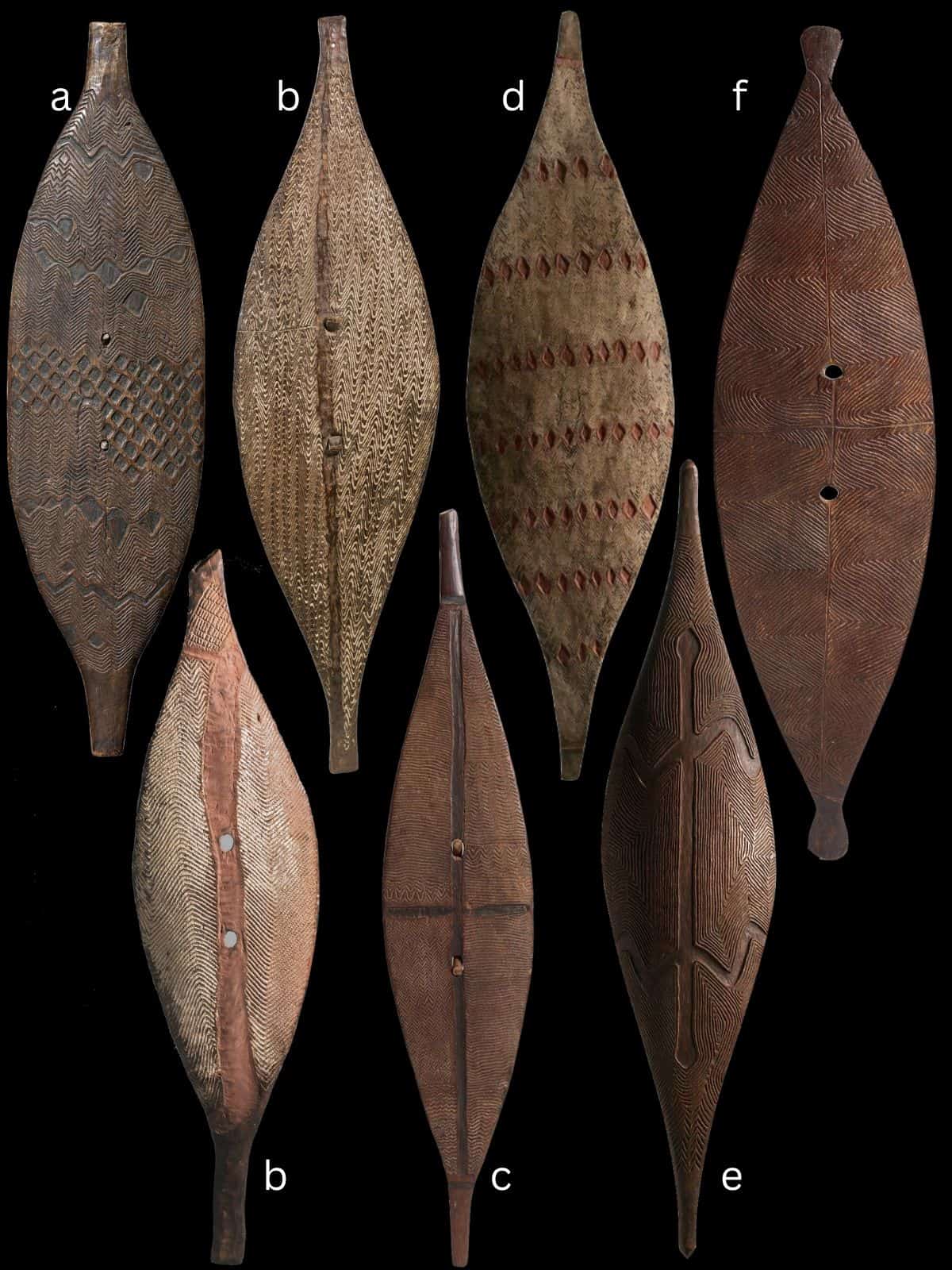
The significance of Tommy McRae’s art lies in its unique position between cultural continuity and colonial change. Working primarily as a sketch artist in pen and ink on paper—a medium introduced through European settlement—McRae created an extraordinary body of work that preserves traditional Aboriginal customs, ceremonies, hunting practices, and social life while also documenting the profound transformations occurring across south-eastern Australia during the colonial period.
His drawings offer a distinctly Aboriginal perspective on a rapidly changing world, making them among the most historically important visual records produced by an Indigenous Australian artist. Today, McRae is recognised not only as a pioneering Aboriginal artist but also as a key chronicler of cultural resilience during one of the most significant periods of change in Australian history.
1880 – William Barak
(Artworks between 1880-1903)
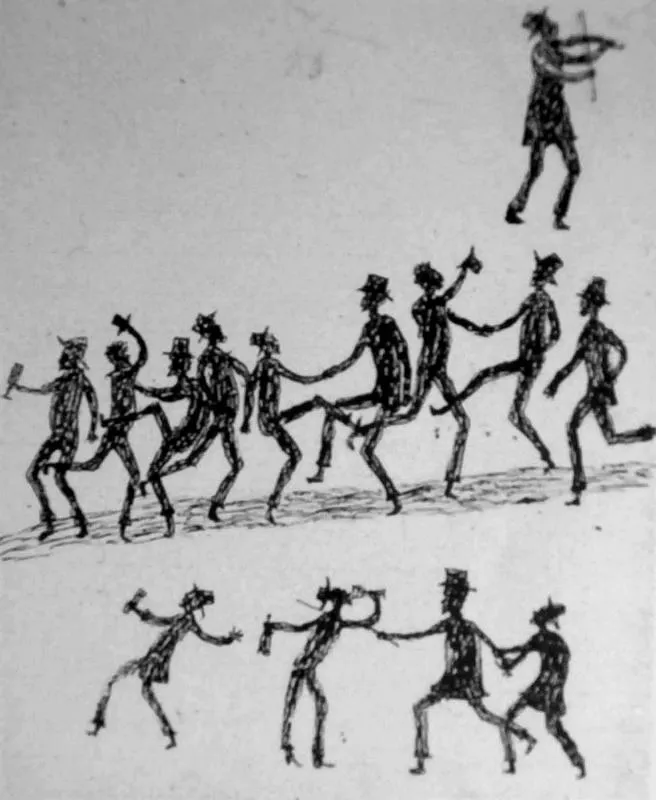
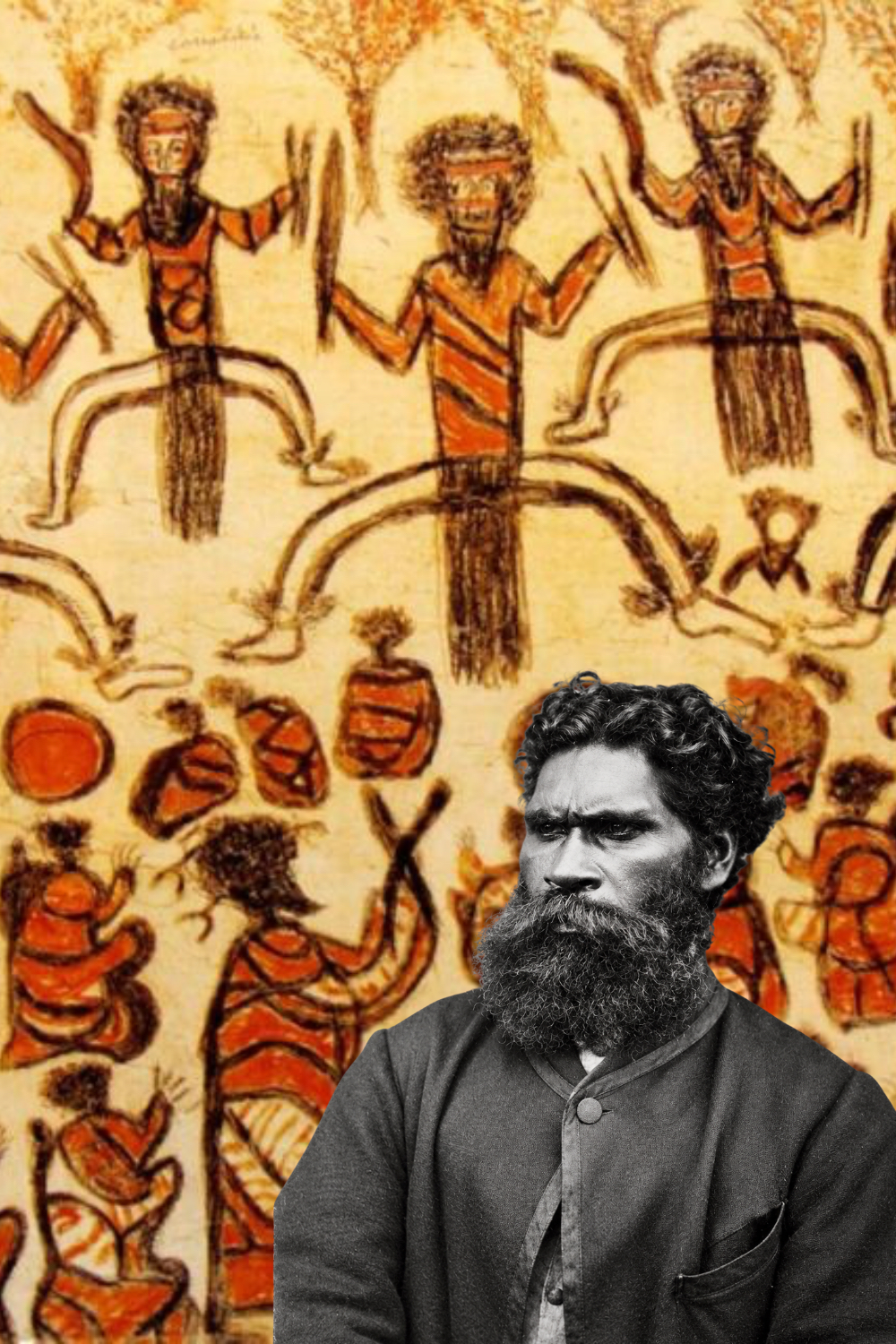
William Barak was one of the most important Aboriginal artists of the nineteenth century and a senior leader of the Wurundjeri people of Victoria. Working primarily in watercolour, pencil, and ochre on paper, Barak recorded ceremonial dances, cultural traditions, and daily life at a time when Aboriginal communities were under immense pressure from European settlement.
His artworks are historically significant because they preserve cultural knowledge that might otherwise have been lost and provide a rare Aboriginal perspective on life in south-eastern Australia during the colonial era. Today, William Barak is recognised as both a cultural leader and one of the founding figures of Aboriginal Australian art history.
1910- 1920’s Barambah Settlement
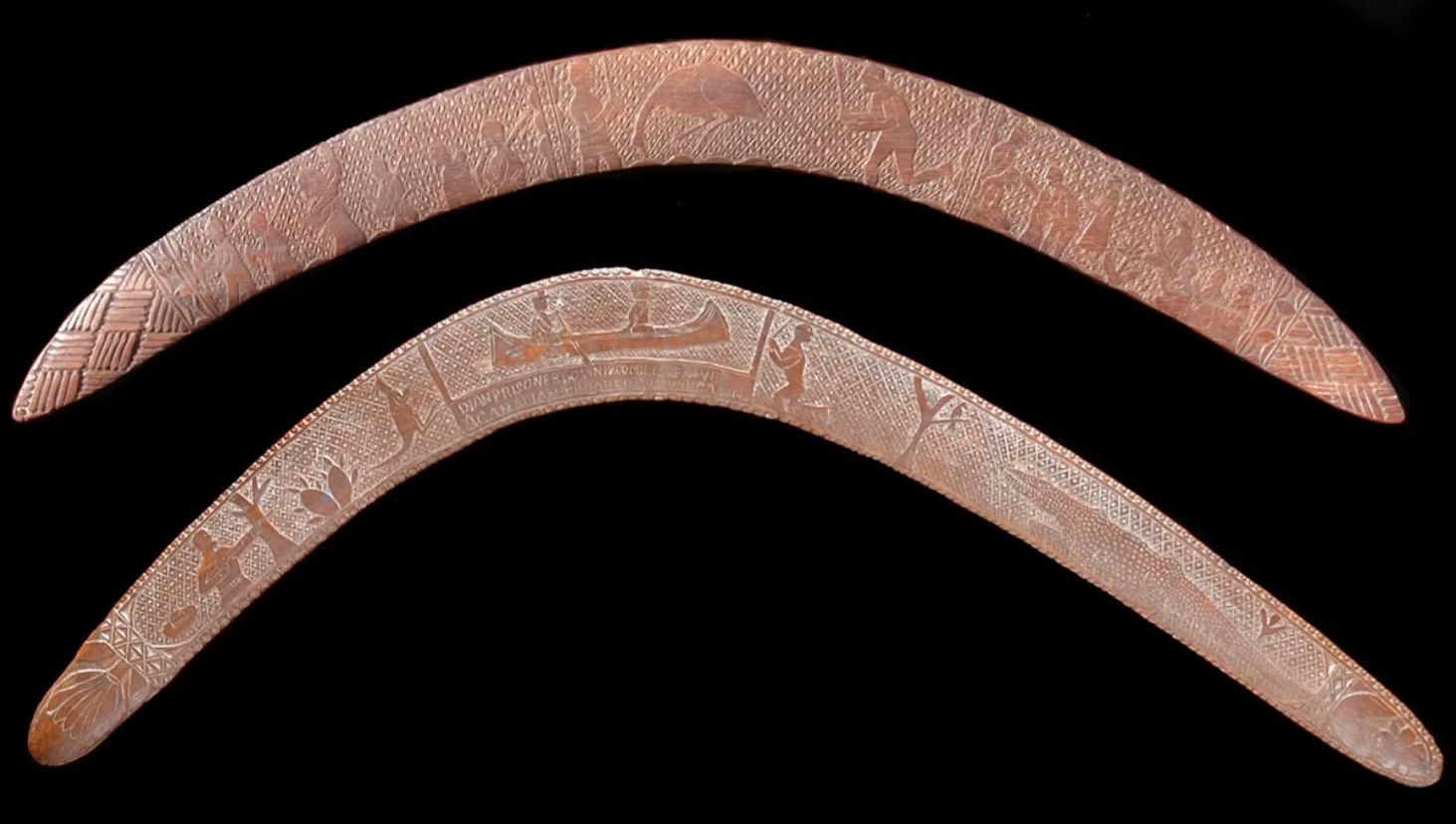
The Barambah Settlement (renamed Cherbourg in 1931) occupies an important place in Aboriginal art history because it produced one of Australia’s most distinctive forms of early transitional Aboriginal art. Established in 1904, the settlement brought together Aboriginal people from many different language groups. Artists decorated boomerangs, clubs, walking sticks and other objects with finely incised geometric patterns and detailed figurative scenes, creating a unique regional artistic tradition.
Unlike many earlier Aboriginal art forms, Barambah/Cherbourg artworks often recorded contemporary life as well as traditional culture. Hunting scenes, corroborees, stockmen, missionaries, police, horses and settlement life appear alongside kangaroos, emus and traditional weapons. These remarkable carvings provide a rare visual record of Aboriginal experiences during the early twentieth century and remain an important chapter in the history of Aboriginal art.
1918 – Major Collection of Arnhem Land Bark Paintings
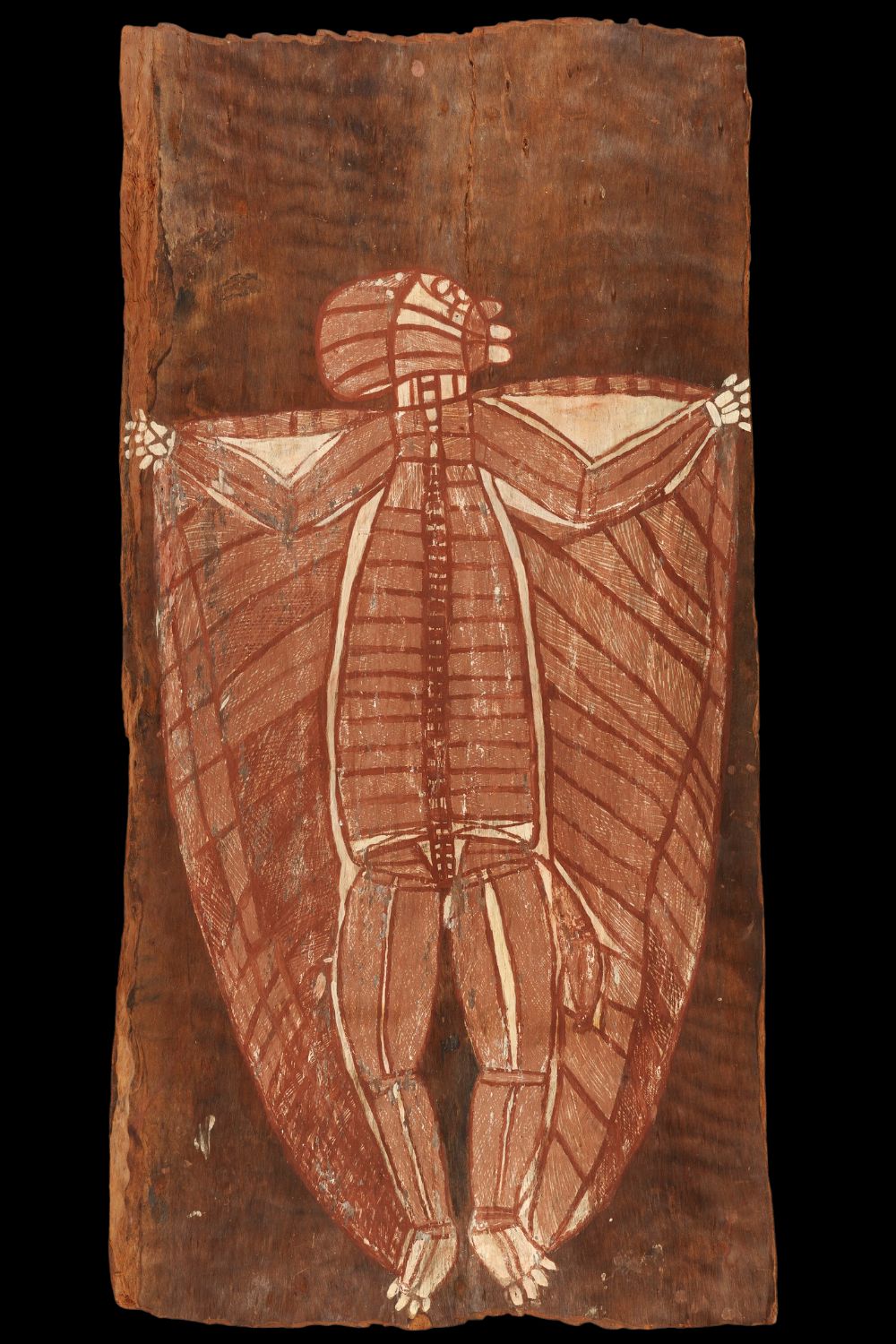
Anthropologist Baldwin Spencer collected a substantial group of Oenpelli bark paintings from Western Arnhem Land during expeditions to northern Australia. These works are among the earliest Aboriginal bark paintings preserved in museum collections and provide invaluable evidence of artistic traditions that long predate the contemporary Aboriginal art movement. The collection helped establish bark painting as one of Australia’s oldest continuous artistic traditions and remains an important record of cultural knowledge, ceremony, and ancestral narratives.
1920s–1960s – Tiwi Art Enters Museum and Private Collections
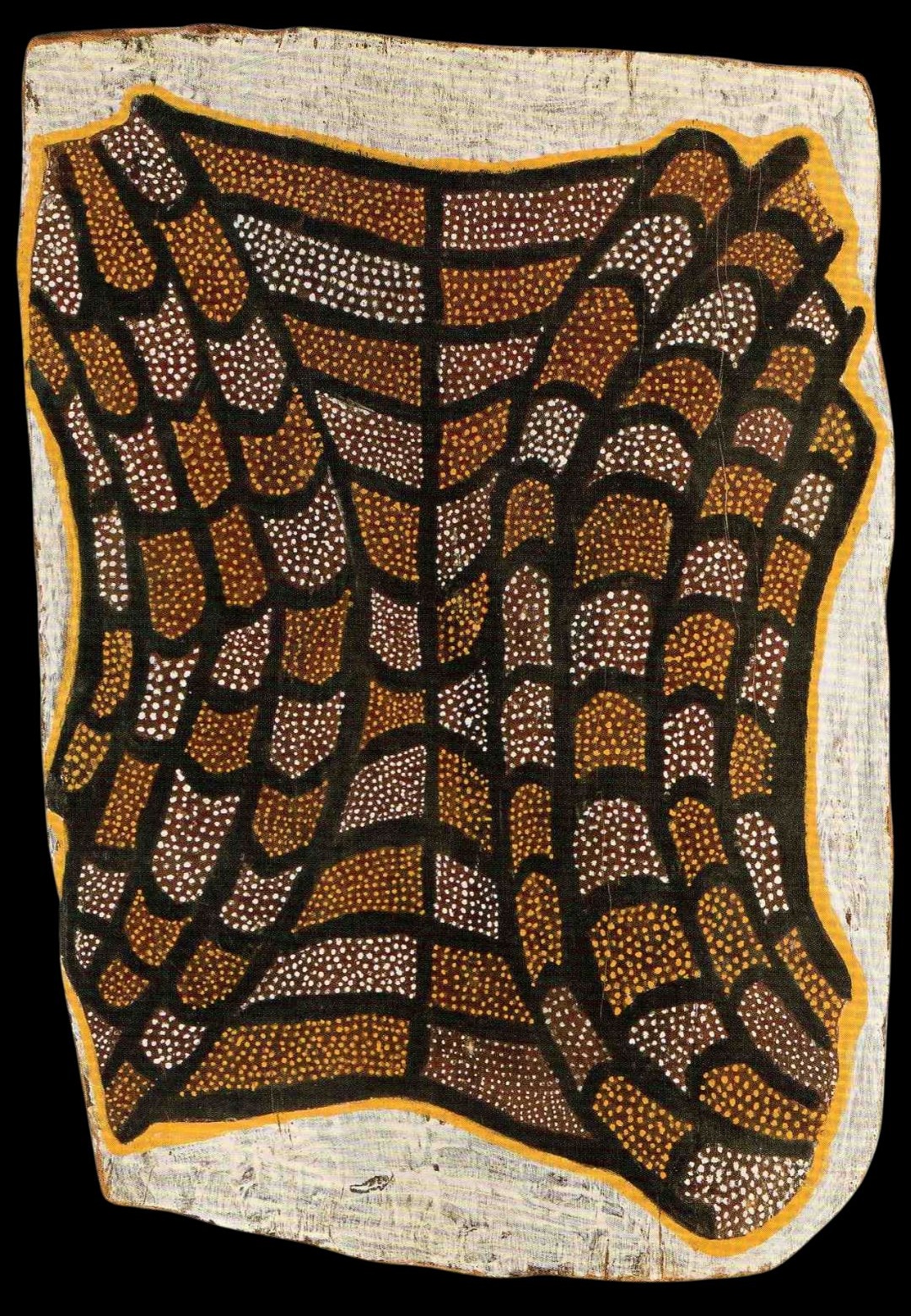
Following the establishment of the Bathurst Island Mission in 1911, anthropologists, missionaries, collectors, and museums began acquiring significant quantities of Tiwi ceremonial objects, carvings, baskets, weapons, and burial poles from Bathurst and Melville Islands. These collections introduced Tiwi art traditions to audiences in Australia and overseas and remain among the most important early records of Indigenous Australian material culture.
By the 1960s, Tiwi artists increasingly began producing carvings, painted objects, and sculptures specifically for sale, marking an important transition from the collection of ceremonial and cultural objects to the development of a contemporary Tiwi art market. This shift helped establish Tiwi art as one of Australia’s most distinctive and internationally recognised Indigenous art traditions.
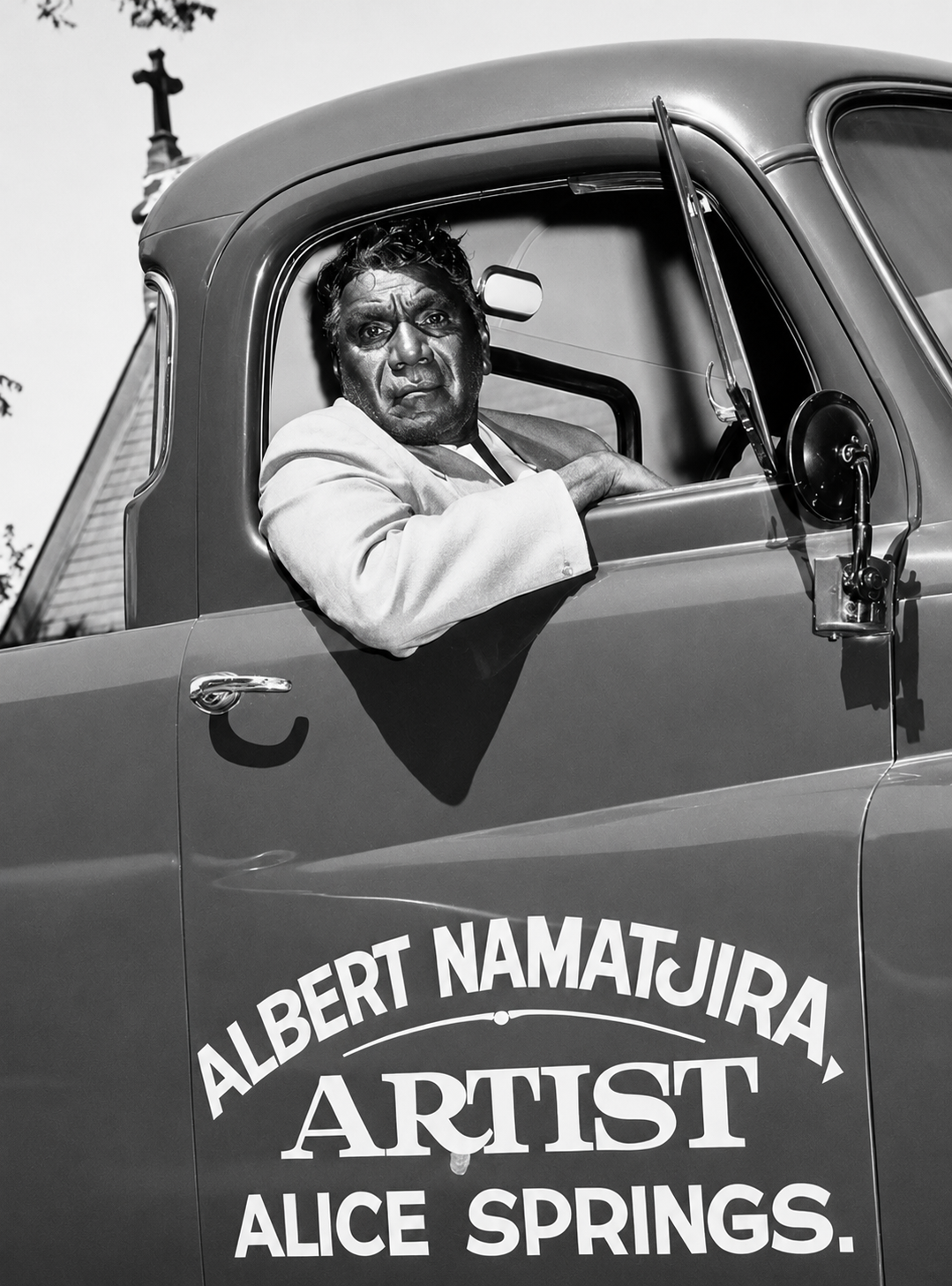
1936 – Albert Namatjira and the Hermannsburg School
Few Aboriginal artists have had a greater impact on Australian art history than Albert Namatjira. Born in 1902 at Hermannsburg (Ntaria) in Central Australia, Namatjira became internationally famous for his luminous watercolour paintings of the MacDonnell Ranges, ghost gums, riverbeds, and desert landscapes surrounding his Country.
At a time when Aboriginal art was rarely recognised as fine art, Namatjira’s paintings challenged prevailing attitudes and demonstrated that Aboriginal artists could achieve national and international acclaim. His work introduced many Australians to the beauty of the Central Australian landscape through an Aboriginal perspective while using a European watercolour technique.
Namatjira’s success inspired a generation of Western Arrernte artists, leading to the development of the Hermannsburg School, one of the first major Aboriginal art movements of the twentieth century. Today, he is remembered not only as a pioneering artist but also as a cultural figure who helped pave the way for the broader recognition of Aboriginal art throughout Australia and around the world.
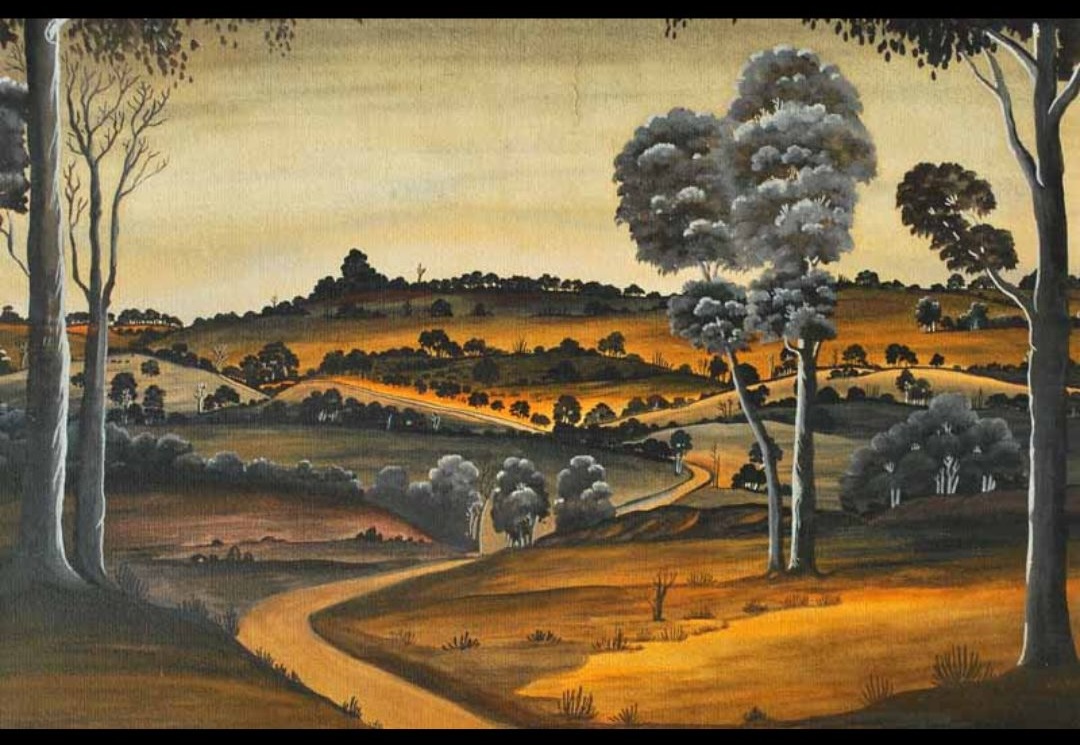
1946 – The Carrolup School
The Carrolup School Art Movement emerged at the Carrolup Native Settlement near Katanning in Western Australia during the 1940s. Under the encouragement of teachers Noel and Lily White, Aboriginal children produced distinctive landscape drawings characterised by dramatic light, silhouetted trees, and deep emotional connections to Country.
Although created by children, these works gained international attention and challenged widespread assumptions about Aboriginal artistic ability. Today, the Carrolup School is recognised as a significant chapter in Aboriginal art history, representing both artistic achievement and cultural resilience during an era of government control and forced assimilation.
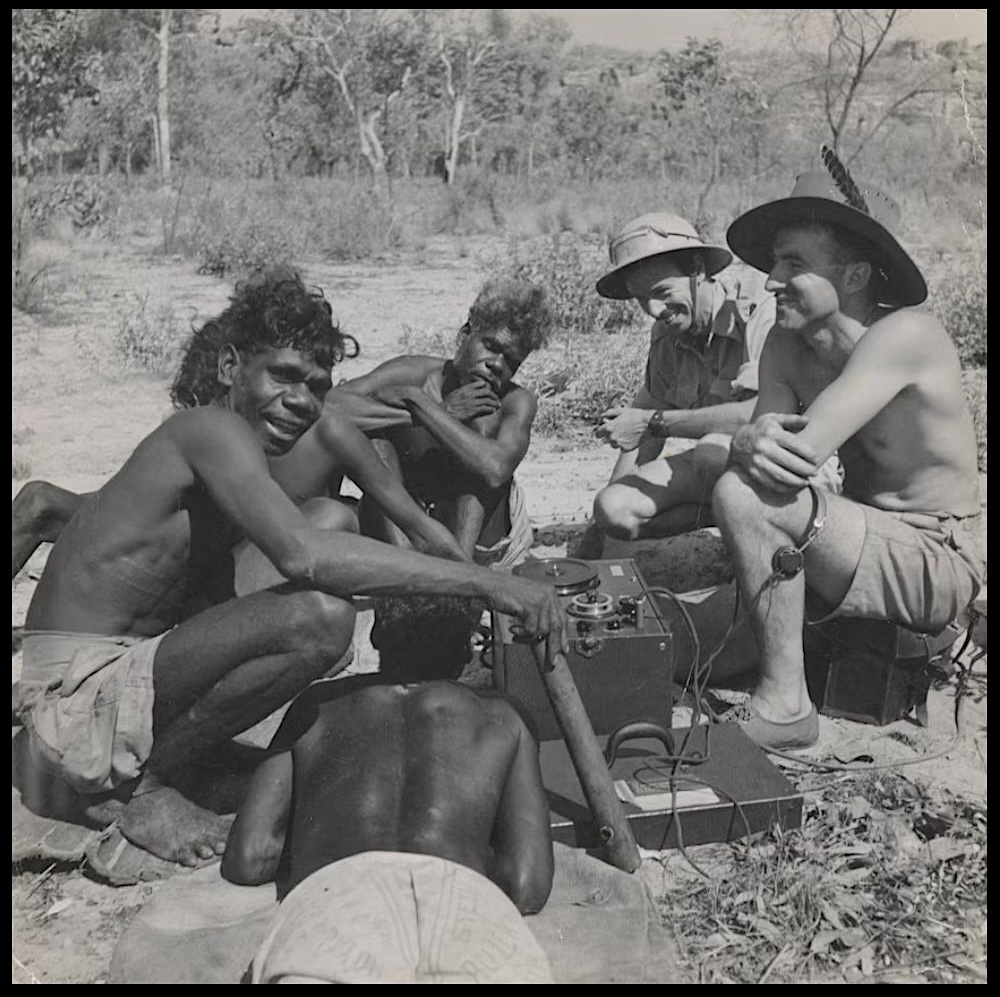
1948 – The Arnhem Land Expedition
The American-Australian Scientific Expedition to Arnhem Land, led by Charles Mountford in 1948, became one of the most important collecting projects in Aboriginal art history. The expedition acquired hundreds of bark paintings, sculptures, ceremonial objects, and recordings from communities across Arnhem Land including Yirrkala, and Oenpelli. These collections introduced Aboriginal art to museums and audiences around the world and helped preserve an invaluable record of cultural traditions, stories, and artistic practices at a pivotal moment in Australian history.
1950s – 1960’s Early Groote Eylandt Bark Painting
During the 1940s and 1950s, Aboriginal artists from Groote Eylandt began producing bark paintings for anthropologists, missionaries, and museum collections. These works depicted marine animals, ancestral beings, ceremonial designs, and clan traditions unique to the Anindilyakwa people, preserving important cultural knowledge at a time of rapid social change.
The early paintings from Groote Eylandt form an important part of Australia’s Aboriginal art history. Although many artists like Nandjiwarra and Nandabitta were not individually identified at that time, these works documented a distinctive island tradition closely connected to sea Country, ceremony, and ancestral law, helping introduce the cultural heritage of the Gulf of Carpentaria to national and international audiences.
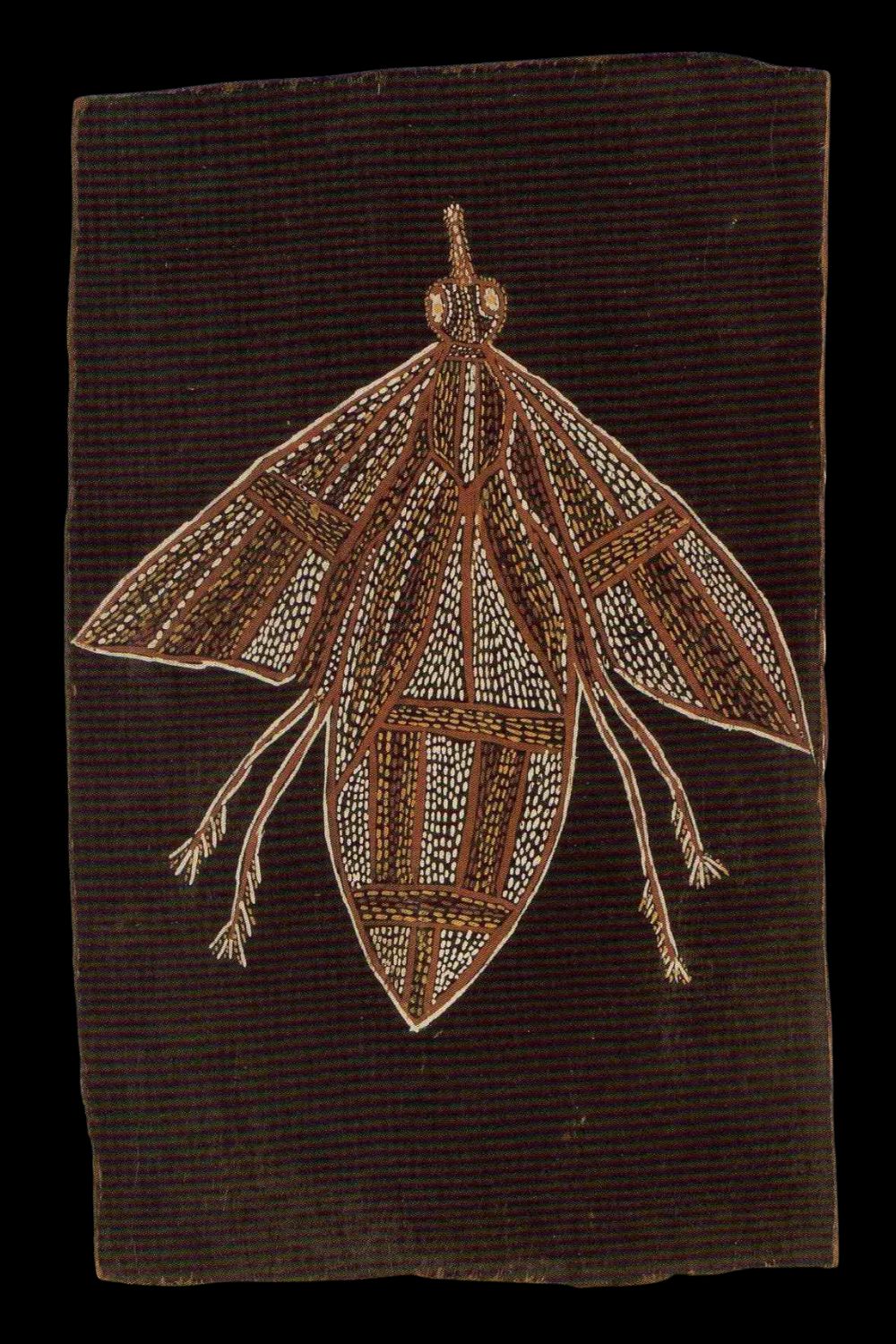
1950s-1960’s
During the 1950s and 1960s, Arnhem Land bark painting gained increasing recognition through major museum exhibitions, anthropological research, and growing collector interest in Australia and overseas. Many bark paintings entered public and private collections without the artists being individually identified, reflecting the collecting practices of the period. However, the distinctive styles of several important painters, including Diidja, Nym Djimungurr, and Paddy Compass Namadbara, gradually became recognised, helping establish the reputation of individual Aboriginal artists within the broader bark painting tradition.
This period also introduced international audiences to many of Arnhem Land’s most significant ancestral beings and Dreaming narratives. Through bark paintings, viewers encountered the elegant Mimih spirits of western Arnhem Land, Namarrkon the Lightning Spirit, the powerful Rainbow Serpent, and numerous other ancestral figures whose stories remain central to Aboriginal cultural and spiritual life.
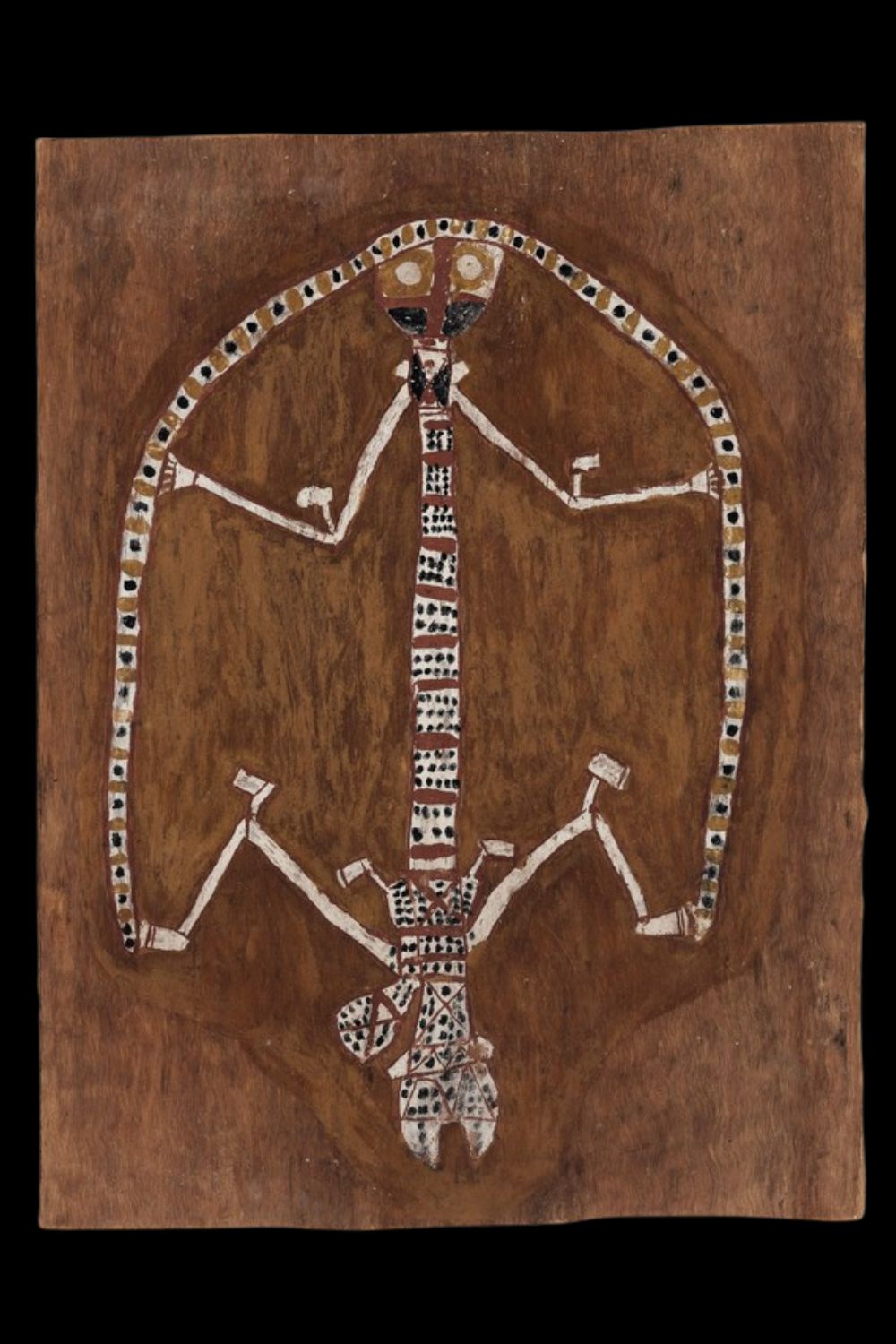
1958 – The Port Keats Painting Movement Emerges
Around 1958, Aboriginal artists at Port Keats (now Wadeye) in the Northern Territory began producing a distinctive style of bark painting that adapted ceremonial designs, ancestral narratives, and sacred iconography to a new artistic medium. Early works often featured powerful churinga-like designs and Dreaming imagery that differed markedly from the bark painting traditions of Arnhem Land.
Supported by collectors, researchers, and the Port Keats Mission, the movement gained national attention during the early 1960s through exhibitions and museum acquisitions. Today, the works of artists such as Nym Bundak, Charlie Mardigan, and Charlie Brinken (Newili) are recognised as an important chapter in the history of contemporary Aboriginal art.
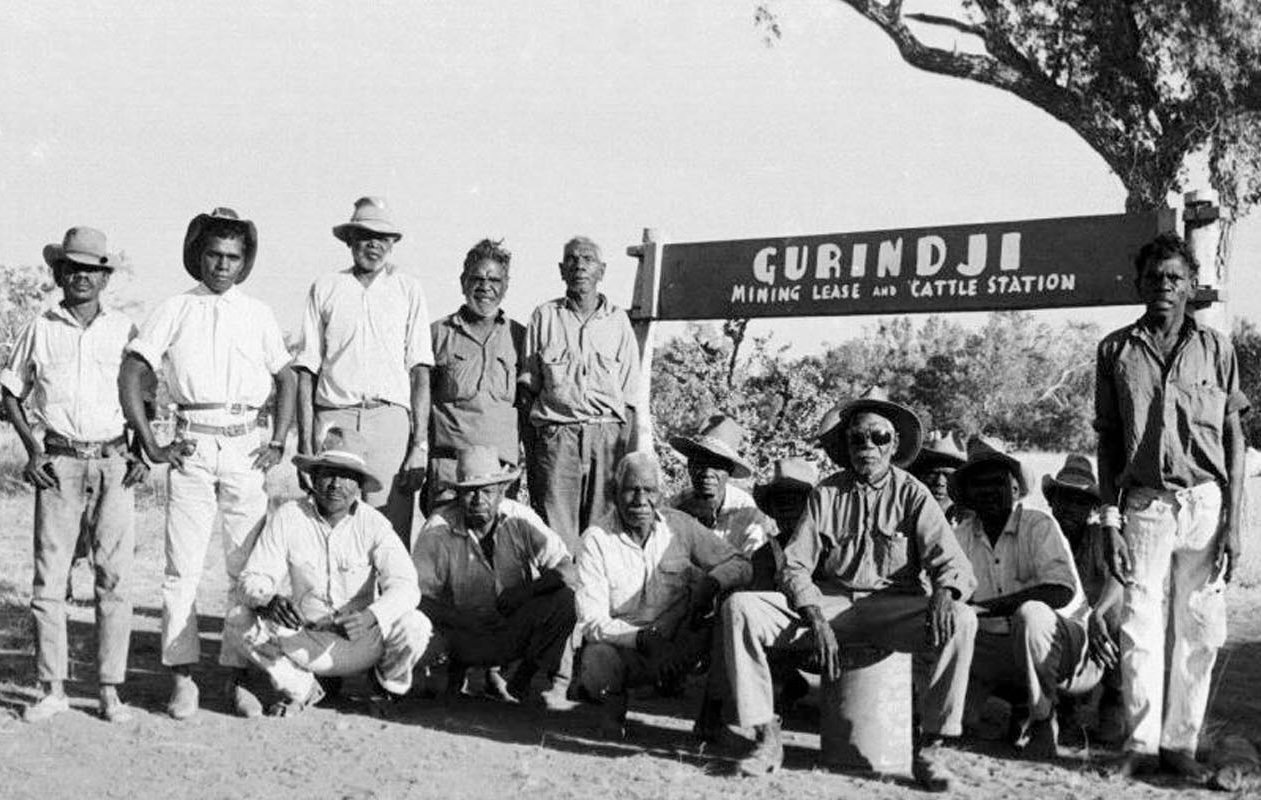
1966 – The Wave Hill Walk-Off
In 1966, Gurindji stockmen and their families, led by Vincent Lingiari, walked off Wave Hill Station in the Northern Territory in protest against poor wages and living conditions. What began as an industrial dispute soon evolved into one of the most important land rights movements in Australian history, drawing national attention to Aboriginal demands for recognition, justice, and the return of traditional lands.
Although not an art movement itself, the Wave Hill Walk-Off profoundly influenced the development of contemporary Aboriginal art. The growing land rights movement helped create a climate in which Aboriginal people increasingly asserted cultural identity, connection to Country, and ownership of ancestral knowledge. Many of the themes that later emerged in the Yirrkala Bark Petitions, Papunya paintings, and Native Title artworks were shaped by the broader struggle for land rights that the Gurindji helped bring to national attention.
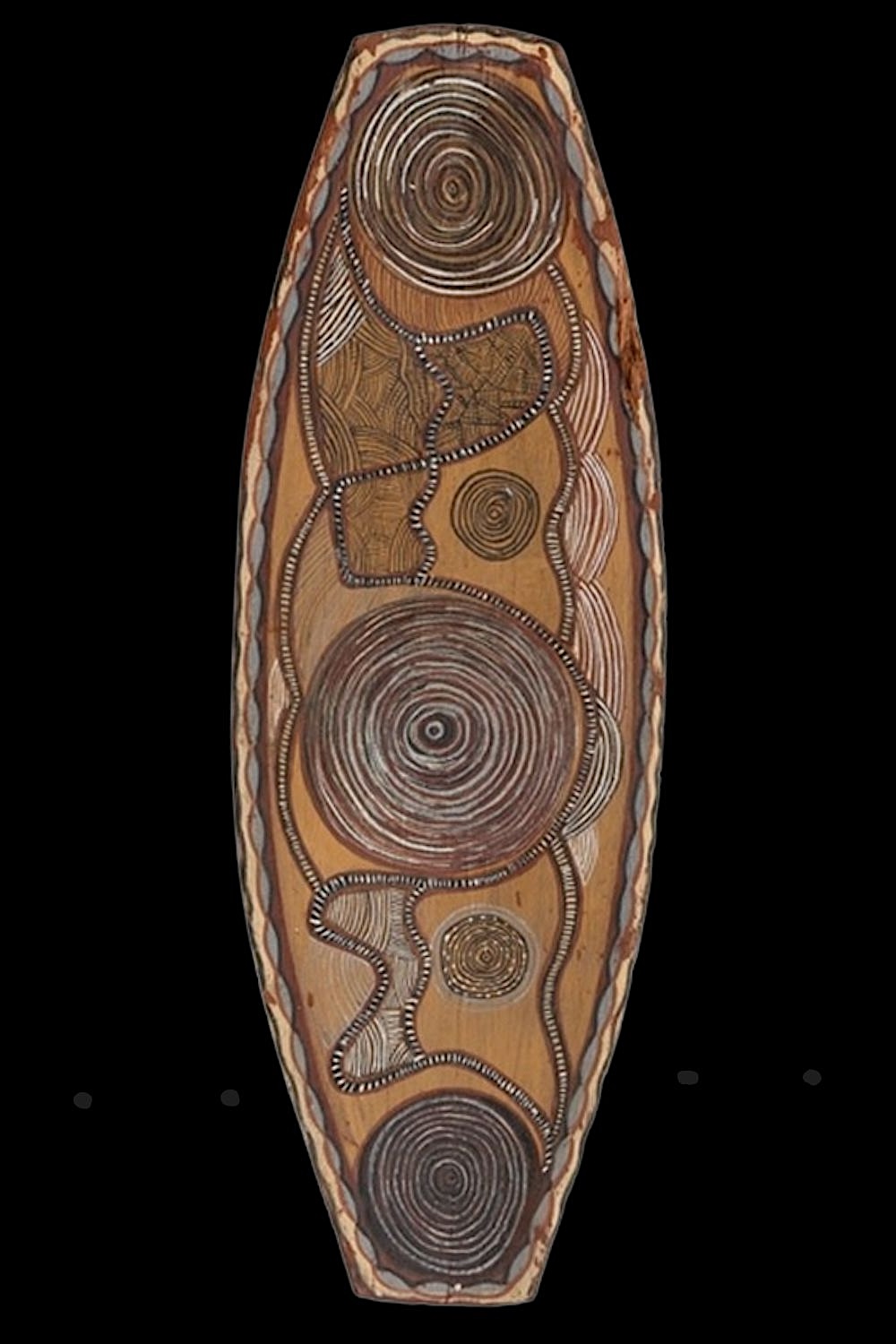
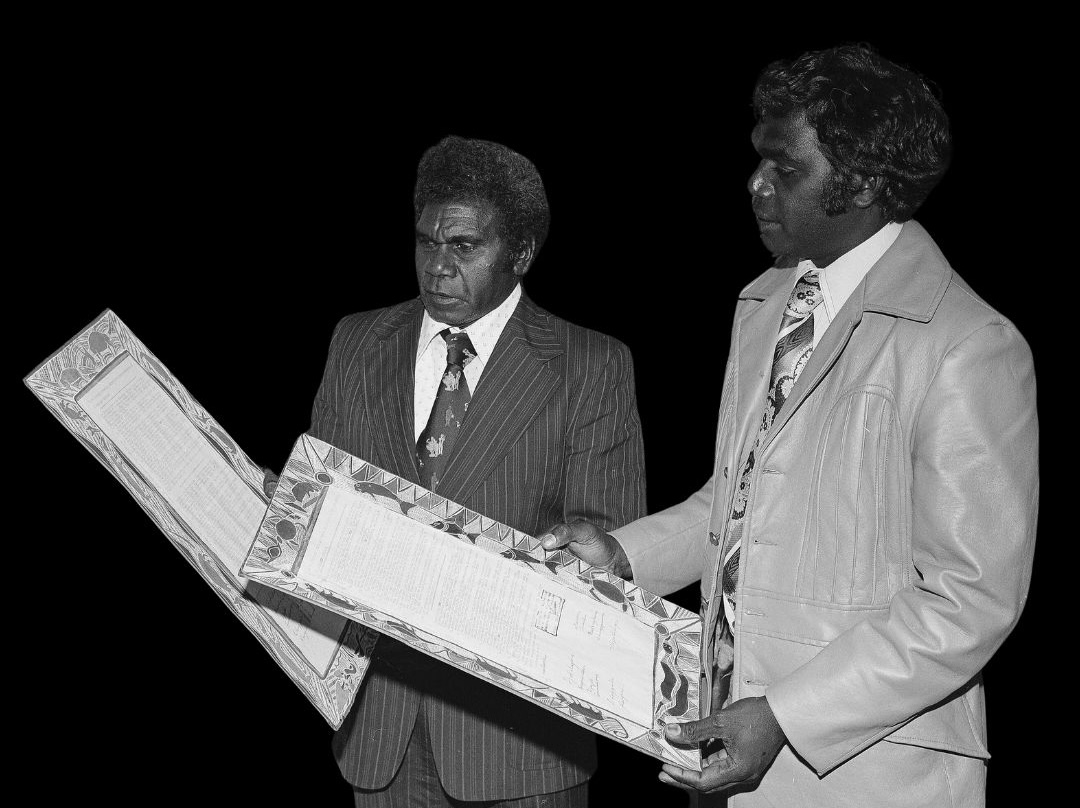
1963 – The Yirrkala Bark Petitions
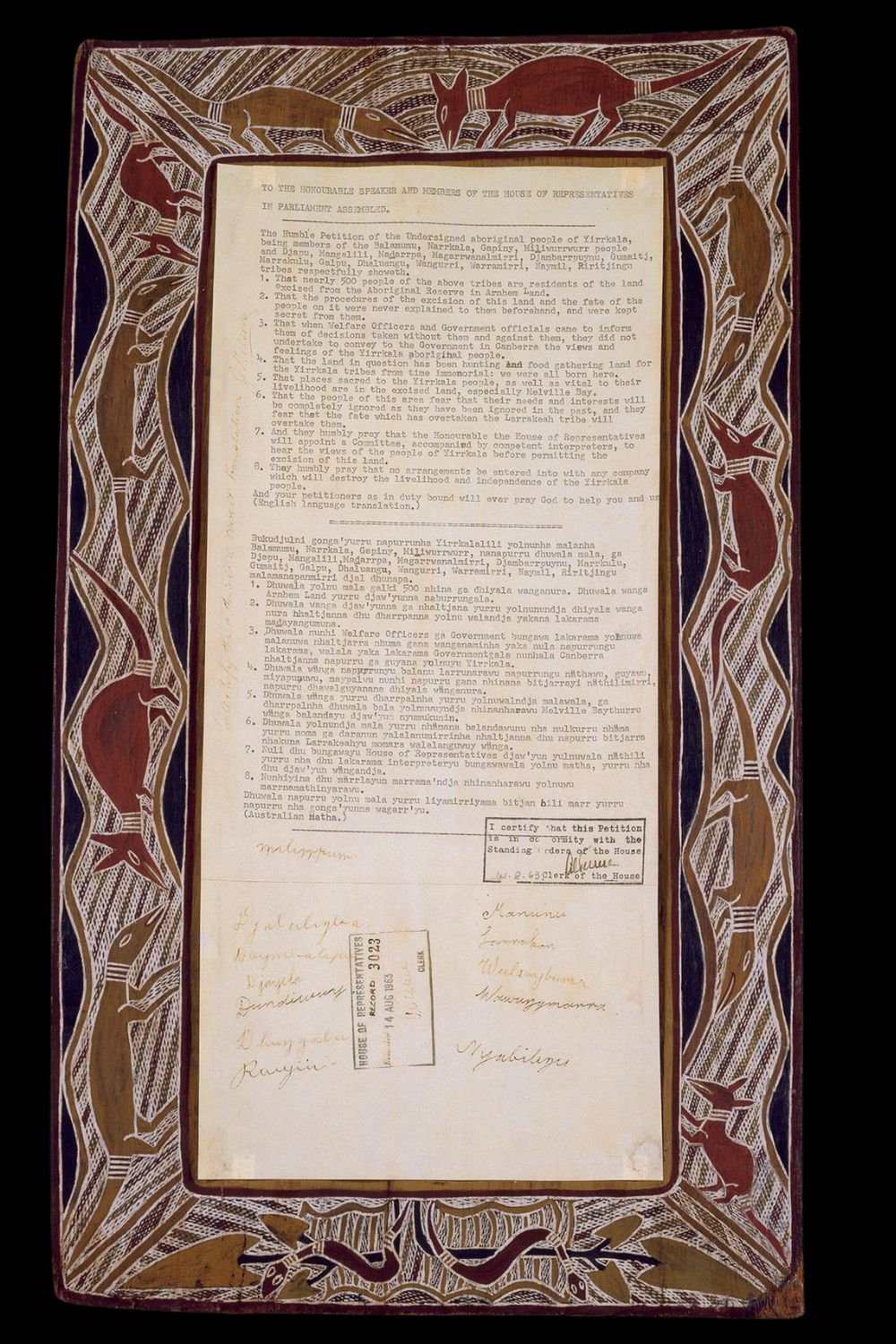
In 1963, Yolngu leaders from Yirrkala presented the Yirrkala Bark Petitions to the Australian Parliament in response to proposed mining on their traditional lands. Combining typed text with traditional clan designs painted on bark, the petitions became the first Indigenous documents recognised by the Australian Parliament and demonstrated that Aboriginal art could serve as law, diplomacy, political advocacy, and evidence of enduring connections to Country. The main Yirrkala Artists involved were Mawalan Marika and Birrikidji Gumana
1971 – The Beginning of the Papunya Art Movement
In 1971, senior Aboriginal men at Papunya in the Northern Territory began transferring ceremonial designs, body painting motifs, and sand drawing traditions onto portable boards using acrylic paint. Encouraged by schoolteacher Geoffrey Bardon, artists including Kaapa Mbitjana Tjampitjinpa, Tim Leura Tjapaltjarri, and Johnny Warangkula Tjupurrula helped establish what became known as the Papunya Art Movement and later evolved into the Western Desert Art movement.
This moment marked the beginning of contemporary Aboriginal art and the emergence of the broader Western Desert Art movement. By adapting ancient cultural knowledge to a new medium, Papunya artists created one of the most influential artistic developments in Australian history.
1972 – Papunya Tula Artists Established
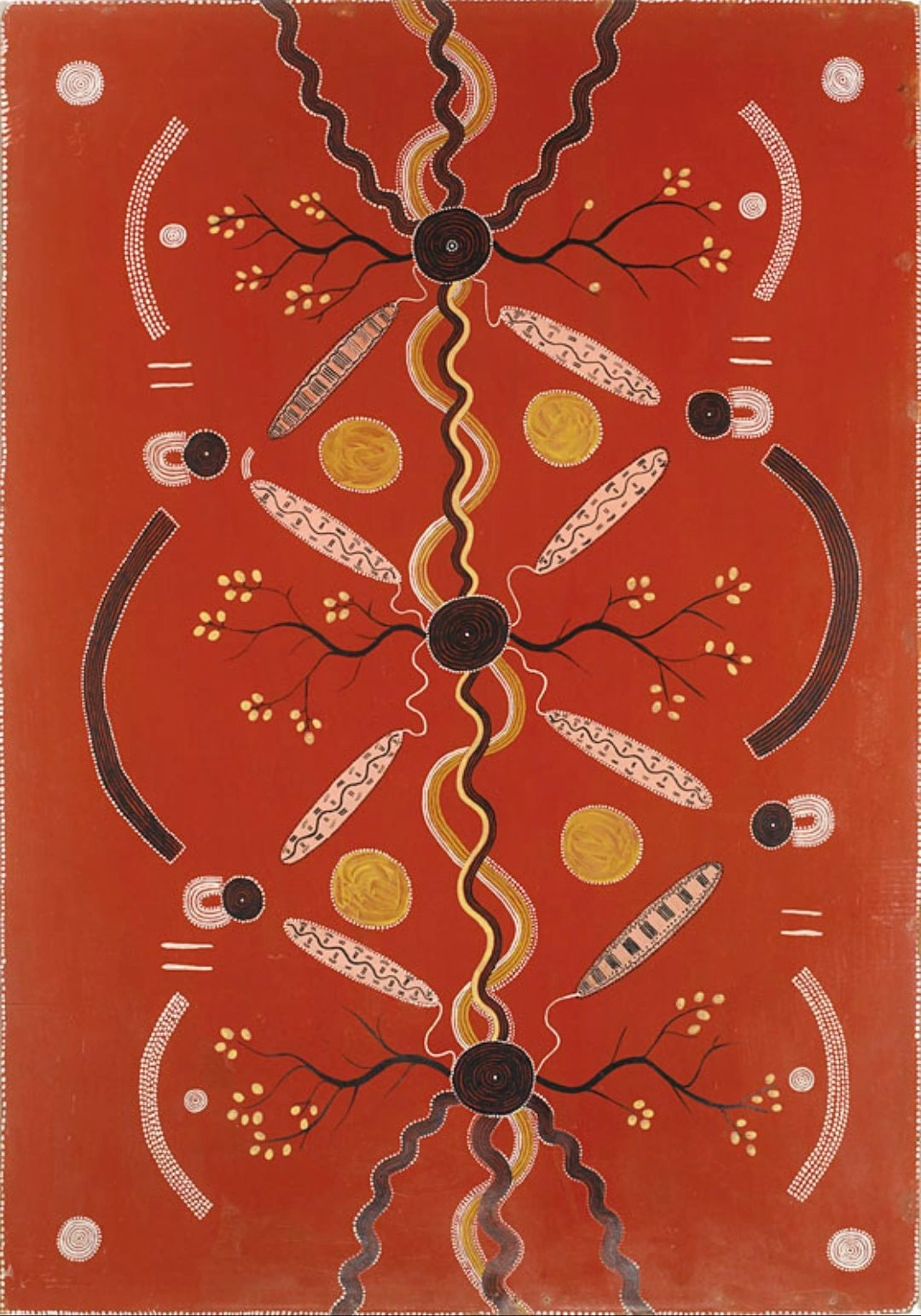
In 1972, Papunya Tula Artists was established as Australia’s first Aboriginal-owned art company. Formed by senior Western Desert artists following the success of the early Papunya paintings, the cooperative provided a way for artists to market their work while maintaining cultural authority over the stories, designs, and knowledge represented in their paintings. Founding artists included Kaapa Mbitjana Tjampitjinpa, Clifford Possum Tjapaltjarri, Johnny Warangkula Tjupurrula, Tim Leura Tjapaltjarri, Mick Namarari Tjapaltjarri, and many others who would become central figures in Aboriginal art history.
The establishment of Papunya Tula Artists transformed a small community painting movement into one of the most influential art movements of the twentieth century. Through exhibitions, museum acquisitions, and growing collector interest, Western Desert painting gained national and international recognition, helping change perceptions of Aboriginal art from ethnographic material to a major contemporary art form. Today, Papunya Tula remains one of the most important Aboriginal-owned art organisations in Australia and a cornerstone of the Western Desert Art movement.
1977 – The Utopia Batik Project Begins
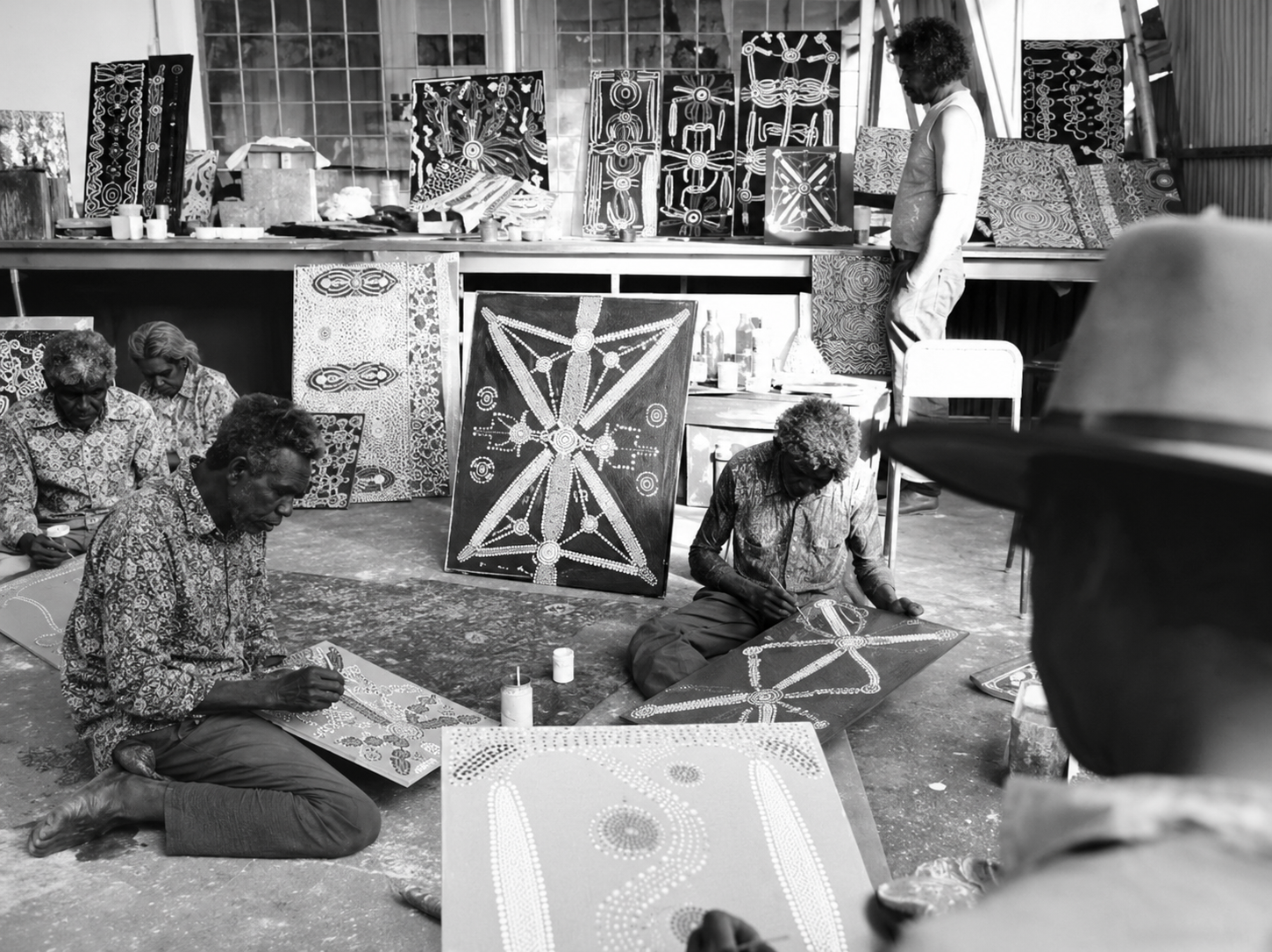
In 1977, Aboriginal women from the Utopia region of Central Australia began creating batik textiles through a community art project that adapted traditional ceremonial designs and cultural knowledge to fabric. The project provided a new artistic outlet while maintaining strong connections to Country, Dreaming, and ancestral traditions.
The success of the batik movement laid the foundation for the Utopia Art movement that emerged during the 1980s. It also launched the careers of many influential artists, including Emily Kame Kngwarreye, Minnie Pwerle and Kathleen Petyarre who helped establish Utopia as one of the most important centres of contemporary Aboriginal art in Australia.
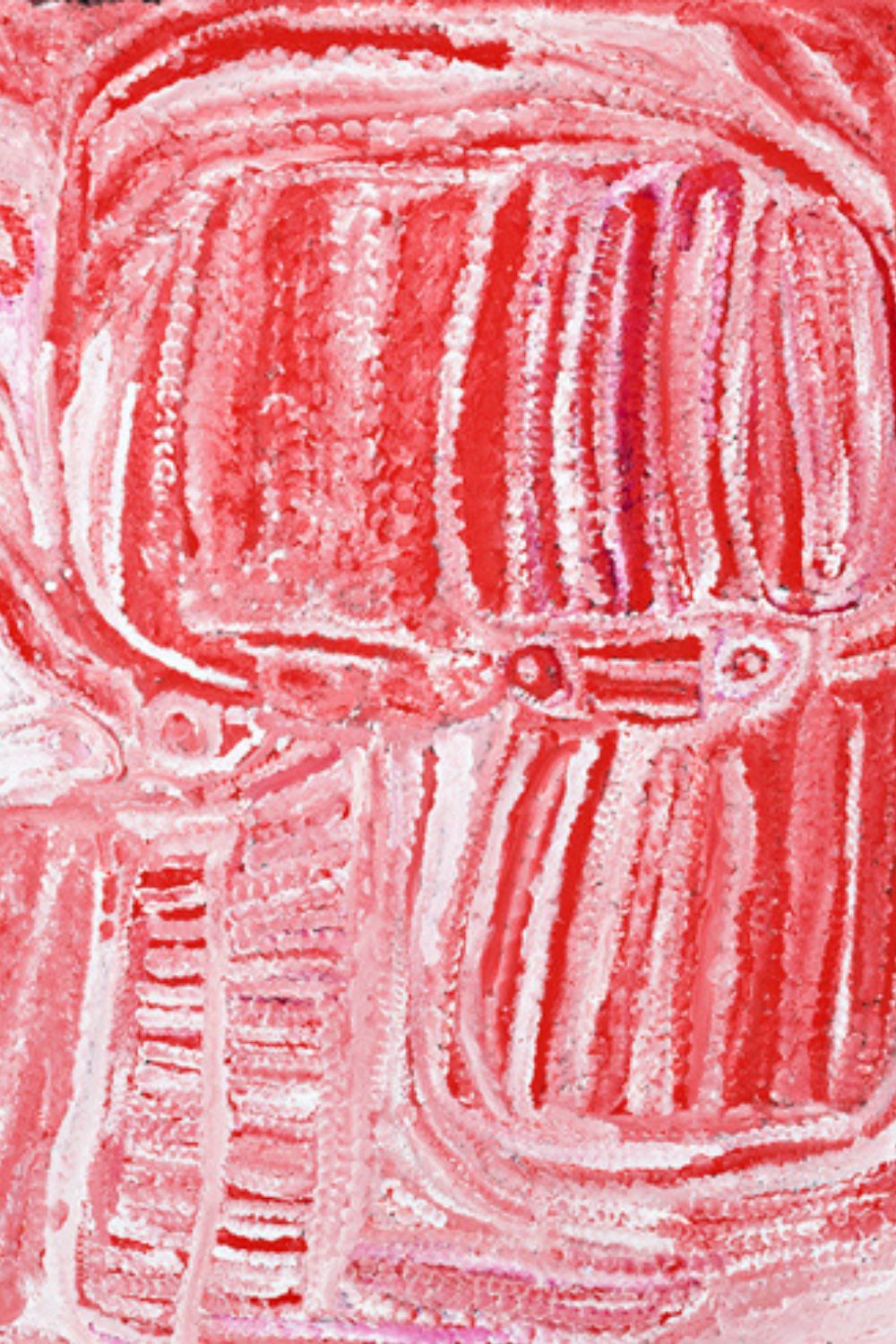
1981 – Warlayirti Artists Established at Balgo
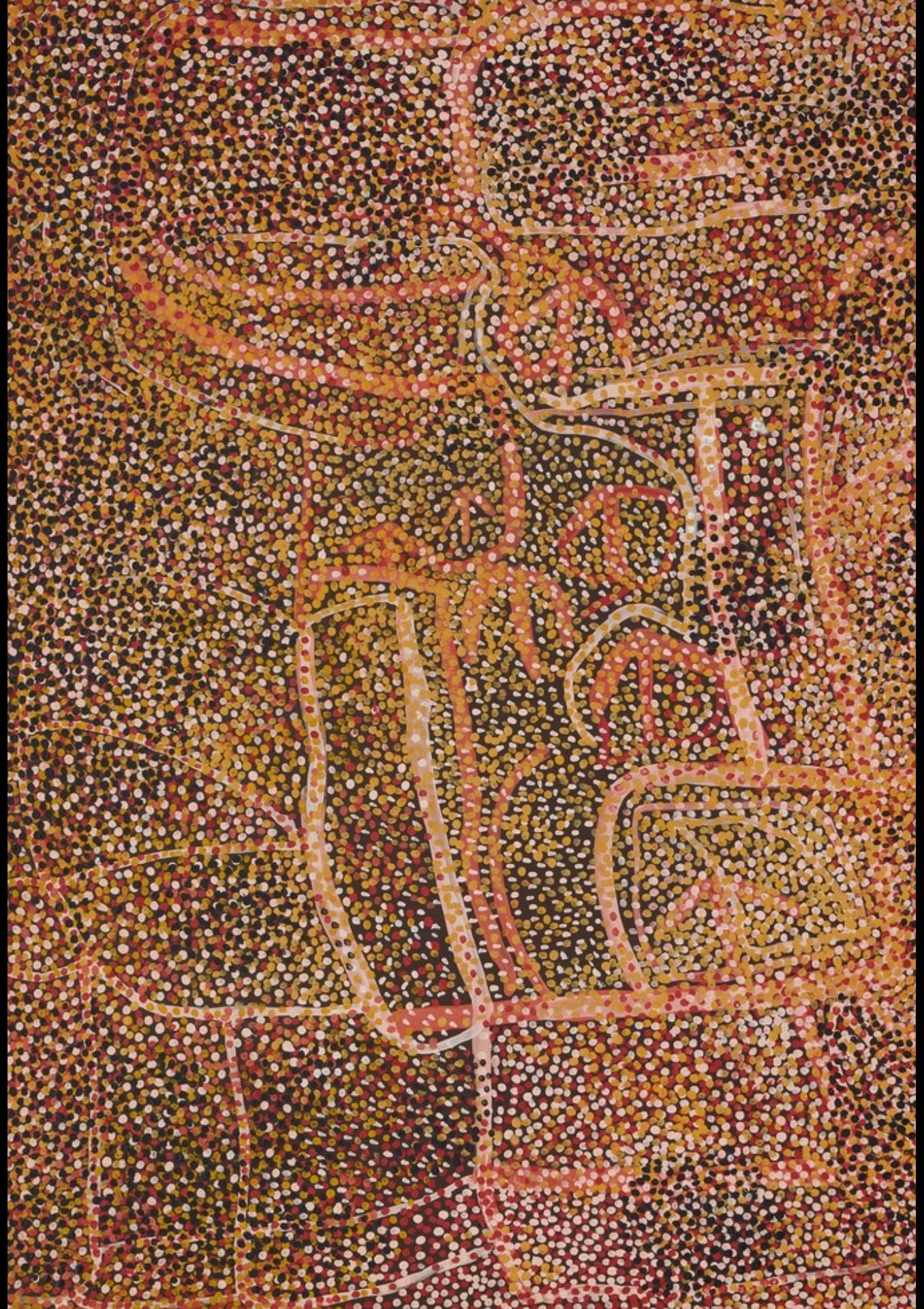
In 1981, Warlayirti Artists was established at Balgo (Wirrimanu) in the south-east Kimberley region of Western Australia. The art centre provided a platform for Aboriginal artists like Eubena Nampitjin Helicopter Tjungurrayi and Boxer Milner to record and share their cultural knowledge through painting while maintaining strong connections to Country and ceremony.
The Balgo Art movement soon became renowned for its vibrant colours, expressive brushwork, and highly individual artistic styles. Balgo painting emerged as one of the most distinctive regional traditions within contemporary Aboriginal art, gaining national and international recognition for its bold visual language and spiritual depth.
1980s
Major regional movements emerge including Warlpiri Art, and the expansion of Arnhem Land art centres.
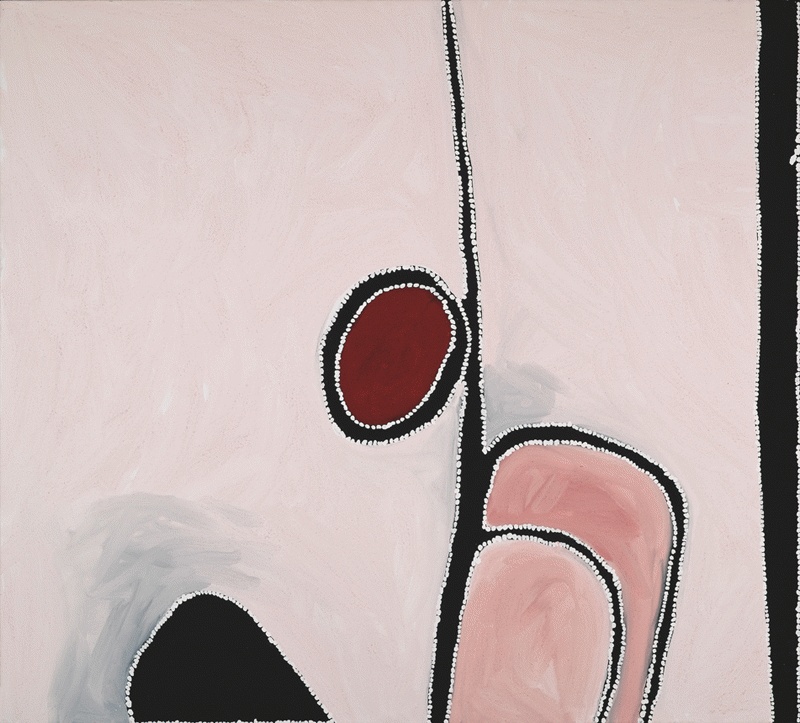
1981–1983 – The Emergence of the East Kimberley Art Movement
Between 1981 and 1983, art adviser Mary Macha of Aboriginal Arts Australia visited Turkey Creek (Warmun) and acquired painted Gurirr Gurirr dance boards created for ceremony. Recognising the artistic potential of the region, she encouraged senior artists including Rover Thomas and Paddy Jaminji to begin painting for a wider audience using portable materials.
This marked the beginning of the East Kimberley Art Movement, one of the most distinctive developments in contemporary Aboriginal art. Drawing upon ceremonial traditions, Dreaming narratives, and the dramatic landscapes of the Kimberley, artists developed a powerful visual style characterised by natural ochres, bold forms, and strong connections to Country. The movement would go on to gain national and international recognition, with Rover Thomas and Paddy Bedford becoming some of Australia’s most celebrated Aboriginal artists.
1988 – The Dreamings Exhibition
In 1988, The Dreamings exhibition toured major venues in the United States, introducing contemporary Aboriginal art to a large international audience for the first time. Featuring works by leading artists from Arnhem Land, the Western Desert, the Kimberley, and Central Australia, the exhibition demonstrated the diversity, sophistication, and cultural depth of Aboriginal artistic traditions.
The exhibition marked a turning point in the global recognition of Aboriginal art. Rather than being viewed primarily as ethnographic material, Aboriginal paintings were increasingly recognised as major contemporary artworks. The Dreamings helped establish international markets for Aboriginal art, encouraged museum acquisitions overseas, and paved the way for artists such as Rover Thomas, Emily Kame Kngwarreye, Clifford Possum Tjapaltjarri, and many others to gain worldwide recognition.
1998 – Spinifex Paintings Used in Native Title Proceedings
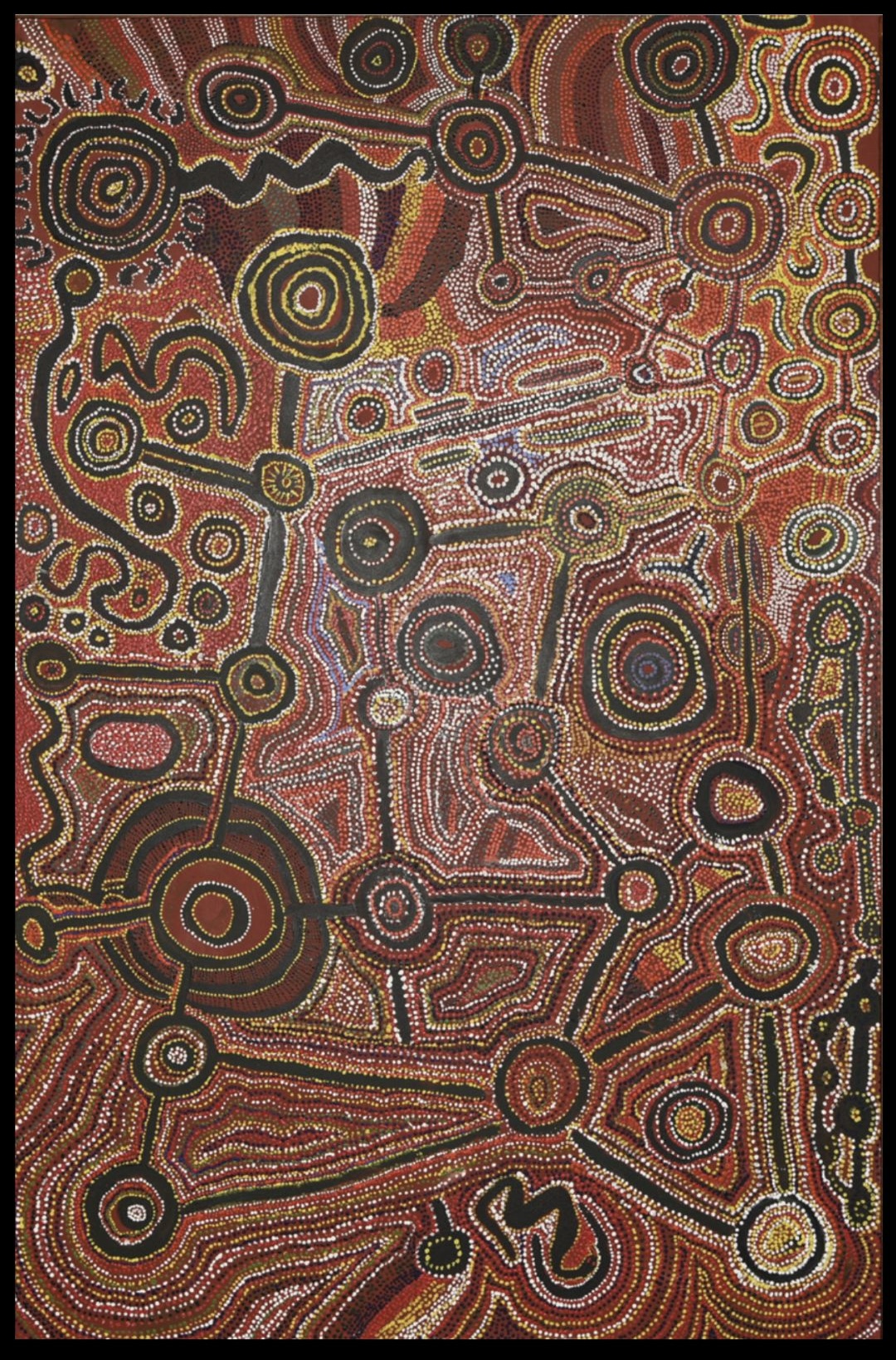
In 1998, the Spinifex people of the Great Victoria Desert created two extraordinary collaborative paintings to support their Native Title claim. Far more than artworks, the paintings functioned as detailed cultural maps recording sacred sites, ancestral journeys, water sources, and the enduring relationships between Spinifex people and their Country.
Presented as evidence in legal proceedings, the paintings helped demonstrate continuous connection to land under Australian law. Their use marked one of the most significant moments in Aboriginal art history, showing that Aboriginal painting could serve not only as cultural expression but also as a powerful statement of identity, history, and legal ownership. The Spinifex Art claim was ultimately successful, and the paintings remain among the most important examples of art being used to communicate Aboriginal knowledge within the Australian legal system.
2007 – Emily Kame Kngwarreye Redefines Aboriginal Art
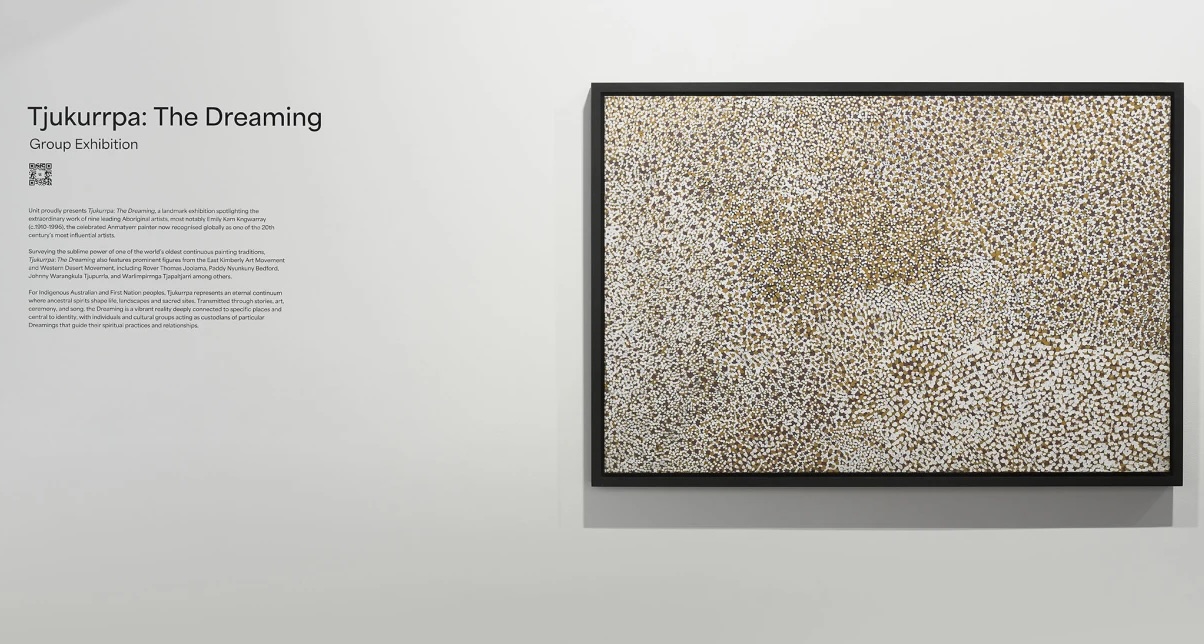
By 2007, Emily Kame Kngwarreye had become widely recognised as one of the most important artists in Australian history. A decade after her death, major exhibitions and growing international scholarship increasingly positioned her work alongside some of the most significant abstract painters of the twentieth century. Her paintings, inspired by her Yam Dreaming and the seasonal rhythms of Alhalker Country, challenged long-held assumptions that Aboriginal art should be viewed primarily through an ethnographic lens.
Emily’s rise marked a turning point in Aboriginal art history. Rather than being celebrated solely as an Aboriginal artist, she came to be recognised as one of Australia’s greatest artists, regardless of background. Her international reputation helped elevate Aboriginal art within museums, galleries, and the global art market, demonstrating that Indigenous Australian art could stand among the world’s most important contemporary artistic achievements.
2017 – Emily Kame Kngwarreye’s Earth’s Creation Sets a New Record
In 2017, Emily Kame Kngwarreye’s monumental painting Earth’s Creation sold for more than $2 million, setting a new auction record for an Aboriginal artwork at the time. The painting, created in 1994 during one of the most celebrated periods of her career, depicts the seasonal transformation of her Country at Alhalker through sweeping fields of vibrant colour and energetic brushwork.
The sale marked a significant moment in Aboriginal art history, confirming the growing international recognition of Aboriginal artists within the global art market. More than two decades after her death, Emily Kame Kngwarreye had become one of Australia’s most important artists, and the success of Earth’s Creation demonstrated that Aboriginal art was increasingly being valued alongside the world’s leading contemporary art traditions.
Frequently Asked Questions
How Old Is Aboriginal Art?
The deep history of Aboriginal art begins with the first occupation of Australia and the use of ochre, rock shelters, ceremony, and visual marking systems. Madjedbebe in Arnhem Land is one of Australia’s oldest known human occupation sites, with evidence suggesting human presence possibly around 65,000 years ago; the site also contains a large assemblage of rock art motifs, although the surviving paintings themselves are not all directly dated to that earliest occupation phase.
Australian rock art should therefore be understood as part of a very long cultural continuum rather than a single dated invention. Some motifs survive from the last few thousand years, while others belong to far older traditions, often layered across the same rock shelters as older images faded, were renewed, or were painted over.
Ancient Rock Art: The First Great Aboriginal Art Tradition
Rock art is the foundation of Aboriginal art history. Across Australia, paintings, engravings, stencils, and petroglyphs were created on cave walls, sandstone shelters, cliff faces, and exposed rock surfaces. These images record animals, ancestral beings, hand stencils, ceremony, contact history, and sacred relationships to Country.
In Arnhem Land, rock shelters preserve X-ray animals, Mimih figures, Rainbow Serpents, contact-period ships, and ancestral beings. In the Kimberley, rock art includes early figurative traditions, Gwion Gwion figures, and later Wandjina paintings. In the Pilbara, engraved petroglyphs form one of the great rock art landscapes of the world.
A Kimberley kangaroo painting has been radiometrically dated to between approximately 17,500 and 17,100 years ago, making it one of the oldest securely dated in situ rock paintings yet reported in Australia.
Ochre, Body Painting and Ceremony
Before Aboriginal art entered museums and galleries, it existed primarily within living cultural practice. Ochres were used on bodies, ceremonial objects, bark shelters, weapons, shields, rock walls, and sacred grounds.
In many regions, art was not separated from ceremony. Designs painted on the body could identify clan, moiety, ritual status, ancestral connection, or ceremonial role. These temporary forms were among the foundations from which later bark paintings, desert canvases, and ceremonial objects developed.
This is essential to understanding Aboriginal art history: many modern works are not new inventions, but translations of older ceremonial systems into portable, collectible, or public forms.
Bark Painting and Arnhem Land
Bark painting is one of the great historical developments in Aboriginal art. In Arnhem Land, artists painted on the inner surface of eucalyptus bark using natural ochres. These works continued visual systems already present in rock art, body painting, and ceremonial design.
The National Museum of Australia describes Arnhem Land bark painting as one of the great traditions of world art, carried into the modern era by senior painters including Yirawala, Mawalan Marika, Narritjin Maymuru, Muŋgurrawuy Yunupiŋu and Bardayal Nadjamerrek.
Early bark paintings were collected by missionaries, anthropologists, museums, and government expeditions. The 1948 Arnhem Land Expedition, led by Charles Mountford, collected hundreds of bark paintings and sculptures that were later distributed to Australian and international institutions
Yirrkala, Bark Painting and Land Rights
One of the most historically significant moments in Aboriginal art occurred at Yirrkala in 1963, when Yolngu people presented bark petitions to the Australian Parliament. These petitions combined written text with painted clan designs, asserting Yolngu relationships to land in a form grounded in Aboriginal law and visual authority.
The National Museum of Australia records the Yirrkala bark petitions as a formal attempt to have Yolngu land rights recognised, and as the first time documents incorporating First Nations ways of representing relationships to land were recognised by the Australian Parliament.
This moment is central to Aboriginal art history because it demonstrates that bark painting was not merely decorative or ethnographic. It could function as law, diplomacy, political testimony, and proof of Country.
The Rise of the Western Desert Art Movement
The modern Western Desert painting movement began at Papunya in 1971, when Aboriginal men began painting traditional designs using acrylic paint and small boards with the assistance of schoolteacher Geoffrey Bardon. The Papunya Tula Artists cooperative was established in 1972, becoming the first Aboriginal-owned arts business of its kind.
This moment transformed Australian art history. Ceremonial designs that had once been painted on bodies, sand, and ritual grounds were adapted onto portable boards and later canvas. Early Papunya paintings by artists such as Kaapa Tjampitjinpa, Johnny Warangkula Tjupurrula, Clifford Possum Tjapaltjarri, Tim Leura Tjapaltjarri and others became the foundation of one of the most important contemporary art movements of the twentieth century.
For a deeper specialist discussion, see Western Desert and Papunya Art.
From Papunya Boards to International Recognition
During the 1970s and early 1980s, a relatively small group of desert artists created a body of work that radically changed how Aboriginal art was understood. Museums now recognise early Papunya painting as a turning point in Australian art, where Dreaming stories, ceremonial designs, and acrylic media converged into a new public art form.
The significance of Papunya was not simply stylistic. It changed the status of Aboriginal art from something often classified as ethnographic material into a major contemporary art movement.
Contemporary Aboriginal Art
Contemporary Aboriginal art is not a break from tradition. It is a continuation, expansion, and transformation of older visual systems.
Some artists remain closely tied to inherited ceremonial designs, bark painting, rarrk, jilamara, dotting, or carving traditions. Others work in photography, printmaking, installation, metal, digital media, and urban art. Yet the deepest continuity remains the relationship between art, Country, story, and identity.
Recent exhibitions continue to show the strength of this continuity. Yolngu artists from Yirrkala, for example, remain central to Australian art through bark painting, larrakitj, sculpture, digital work, and new materials while maintaining relationships to clan design and ancestral law.
Why the History of Aboriginal Art Matters
The history of Aboriginal art is not a simple progression from “primitive” to “modern.” It is better understood as a series of transformations in medium, audience, and context.
Rock art became bark painting.
Ceremonial ground designs became Papunya boards.
Body painting became jilamara on Tiwi poles and bark.
Clan designs became legal documents at Yirrkala.
Ochre traditions entered museums without losing their connection to Country.
At every stage, Aboriginal artists adapted to new circumstances while maintaining powerful links to ancestral knowledge.
What is the history of Aboriginal art?
The history of Aboriginal art extends from ancient rock art and ceremonial body designs to bark painting, carved objects, Papunya acrylic painting, and contemporary Aboriginal art.
How old is Aboriginal art?
Aboriginal visual culture reaches deep into prehistory. Madjedbebe shows very early human occupation in Australia, and Australian rock art traditions include works dating back many thousands of years.
When did Aboriginal dot painting begin?
Contemporary Western Desert acrylic painting began at Papunya in 1971, with Papunya Tula Artists formed in 1972.
Why is bark painting important?
Bark painting carried Arnhem Land ceremonial, ancestral, and clan knowledge into portable form and became one of the major traditions through which Aboriginal art entered museums and collections.
Why were the Yirrkala bark petitions important?
The 1963 Yirrkala bark petitions were the first documents incorporating First Nations ways of representing relationships to land recognised by the Australian Parliament.