
Rosella Namok: Biography and painting style
Born 1979
Kanthanampu and Aangkum (Ungkum)
Lockhart River, eastern Cape York Peninsula, Queensland
Lockhart River / Cairns
Contemporary Aboriginal Art / Lockhart River Art
Lockhart River Art Gang / Lockhart River Arts
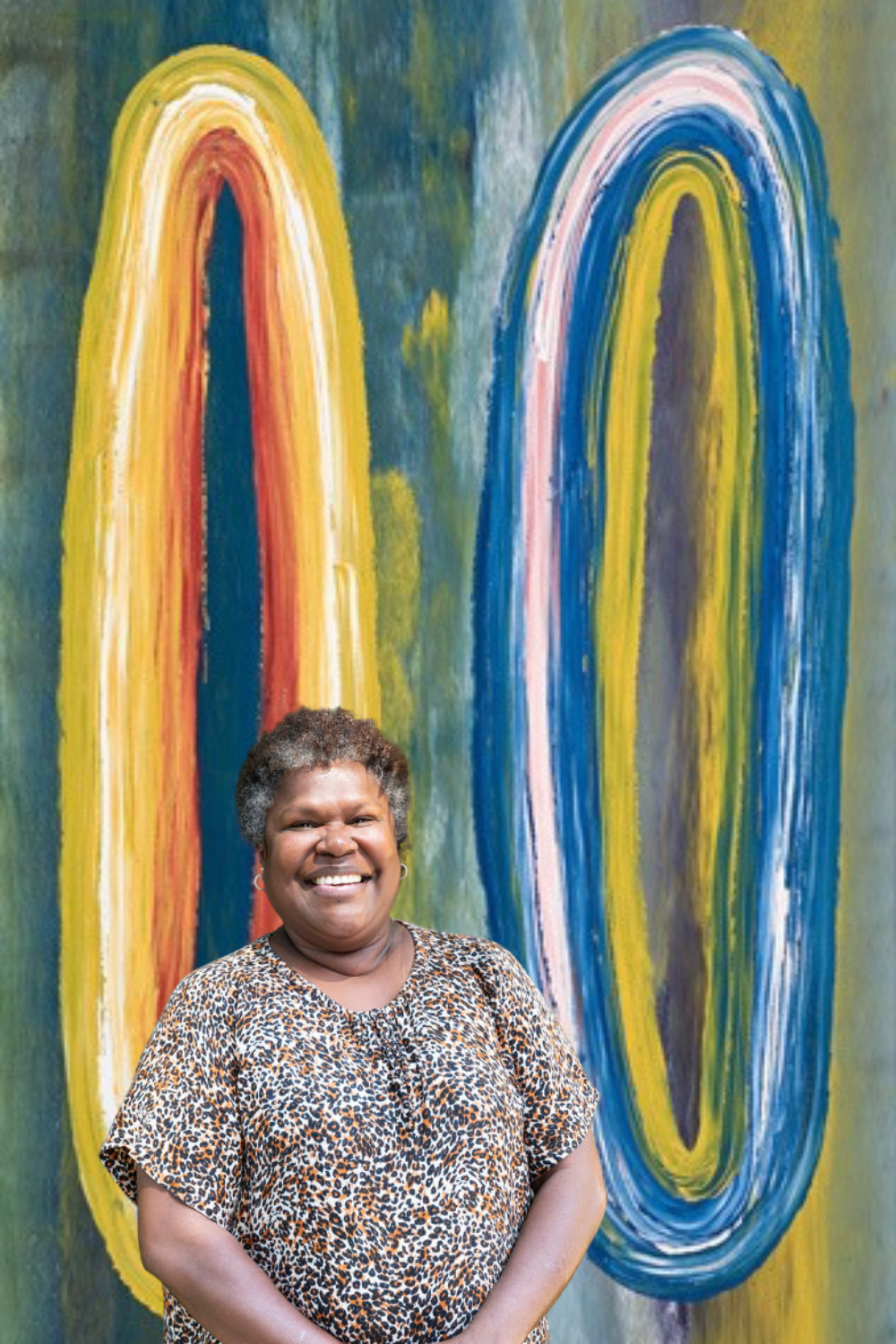
Rosella Namok (born 1979) is a leading contemporary Aboriginal artist and founding member of the influential Lockhart River Art Gang from eastern Cape York Peninsula, Queensland.
Renowned for her distinctive finger-painted abstractions, Namok creates atmospheric paintings of tropical rainstorms, coastal landscapes, paperbark trees and Aboriginal community life. Her technique developed from watching her grandmother draw stories in the sand and helping her father apply ceremonial body paintings.
Namok first attracted national attention with her 1999 solo exhibition at Sydney’s Hogarth Galleries. Her subsequent achievements include winning the High Court Centenary Art Prize in 2003 and the Gold Award at Rockhampton Museum of Art in 2024.
Although her paintings appear abstract, they remain deeply connected to Country, family and cultural knowledge. Through colour, gesture and layered paint, Namok transforms memories of Lockhart River into distinctive expressions of contemporary Aboriginal experience.
Rosella Namok Biography
Childhood at Lockhart River
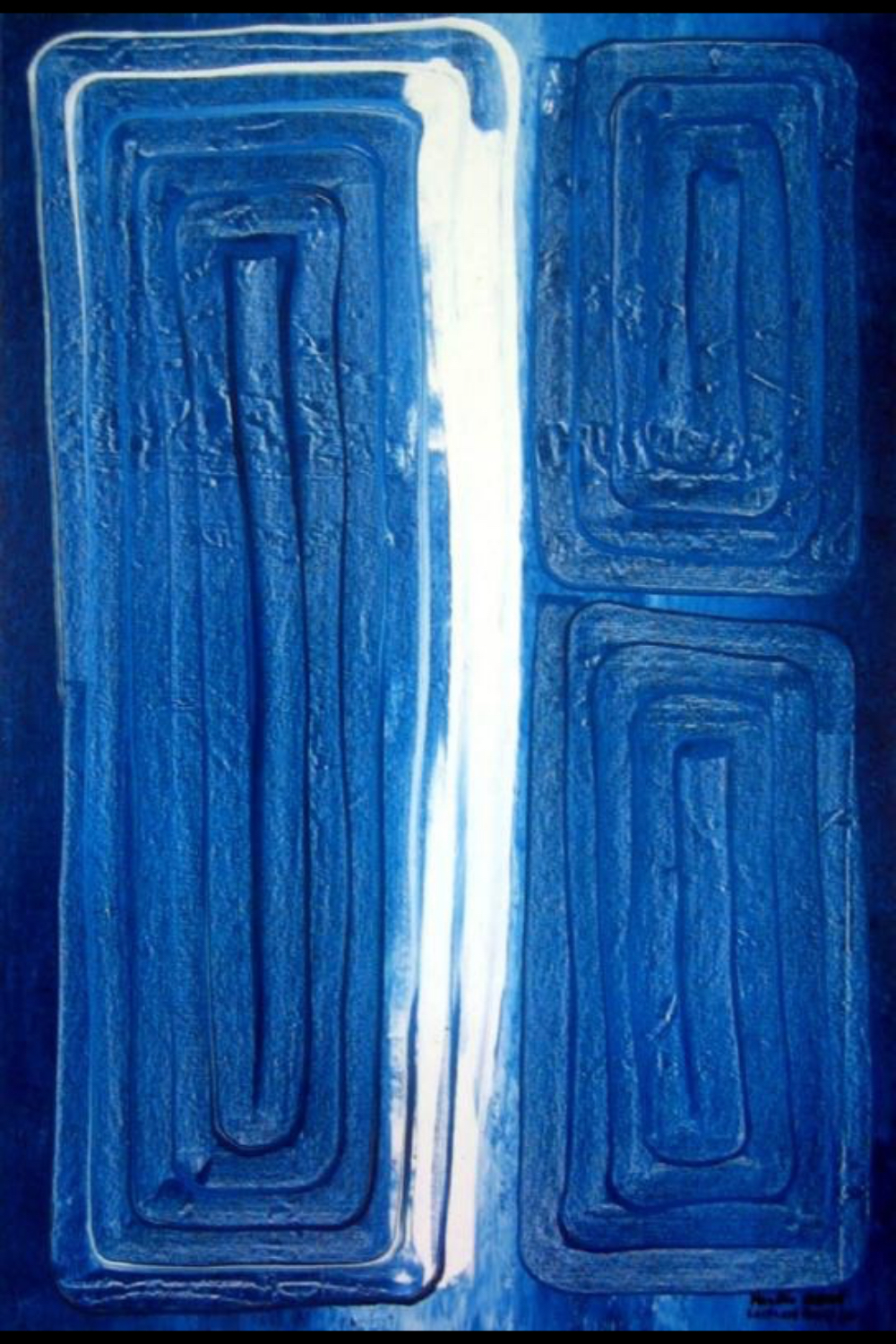
Rosella Namok was born in May 1979 and grew up at Lockhart River, an Aboriginal community on the eastern coast of Cape York Peninsula in far north Queensland.
She belongs to the Kanthanampu and Aangkum (Ungkum) language groups. Her mother, Irene Namok, is also a recognised Lockhart River artist, while her father’s Country lies south of the community.
Rosella grew up with six siblings, spending much of her childhood fishing, camping and gathering food with family around the Claudie River, Quintell Beach, Chilli Beach and the rainforest of Iron Range.
The region’s dramatic wet and dry seasons shaped her experiences. Torrential rain, flooded rivers, coastal waterways and familiar fishing grounds would later become recurring subjects in her paintings.
Equally important were the artistic traditions she encountered through her family.
Namok recalled watching her grandmother tell stories while drawing patterns in the sand with her fingers, wiping them away before beginning another illustration.
She also helped her father prepare dancers for ceremonies, applying clay and ochre to their bodies and using her fingers to create traditional designs.
These childhood experiences provided the foundation for her later painting technique, connecting the physical act of mark-making with storytelling and cultural knowledge.
The Lockhart River Art Gang
During the 1990s, Lockhart River became the centre of an innovative contemporary Aboriginal art movement.
Fran and Geoff Barker managed the community’s art centre, encouraging young artists to experiment with painting and printmaking. Visiting artists introduced techniques including etching and screenprinting, providing new ways to express personal and cultural experiences.
The emerging group became known as the Lockhart River Art Gang.
Its members included Rosella Namok, Fiona Omeenyo, Samantha Hobson, Silas Hobson, Patrick Butcher and Adrian King.
Unlike the better-known Western Desert Art movement, the Lockhart River artists did not develop a single shared visual style. Their work embraced bold colours, experimental compositions and individual interpretations of Country, family and contemporary Aboriginal life.
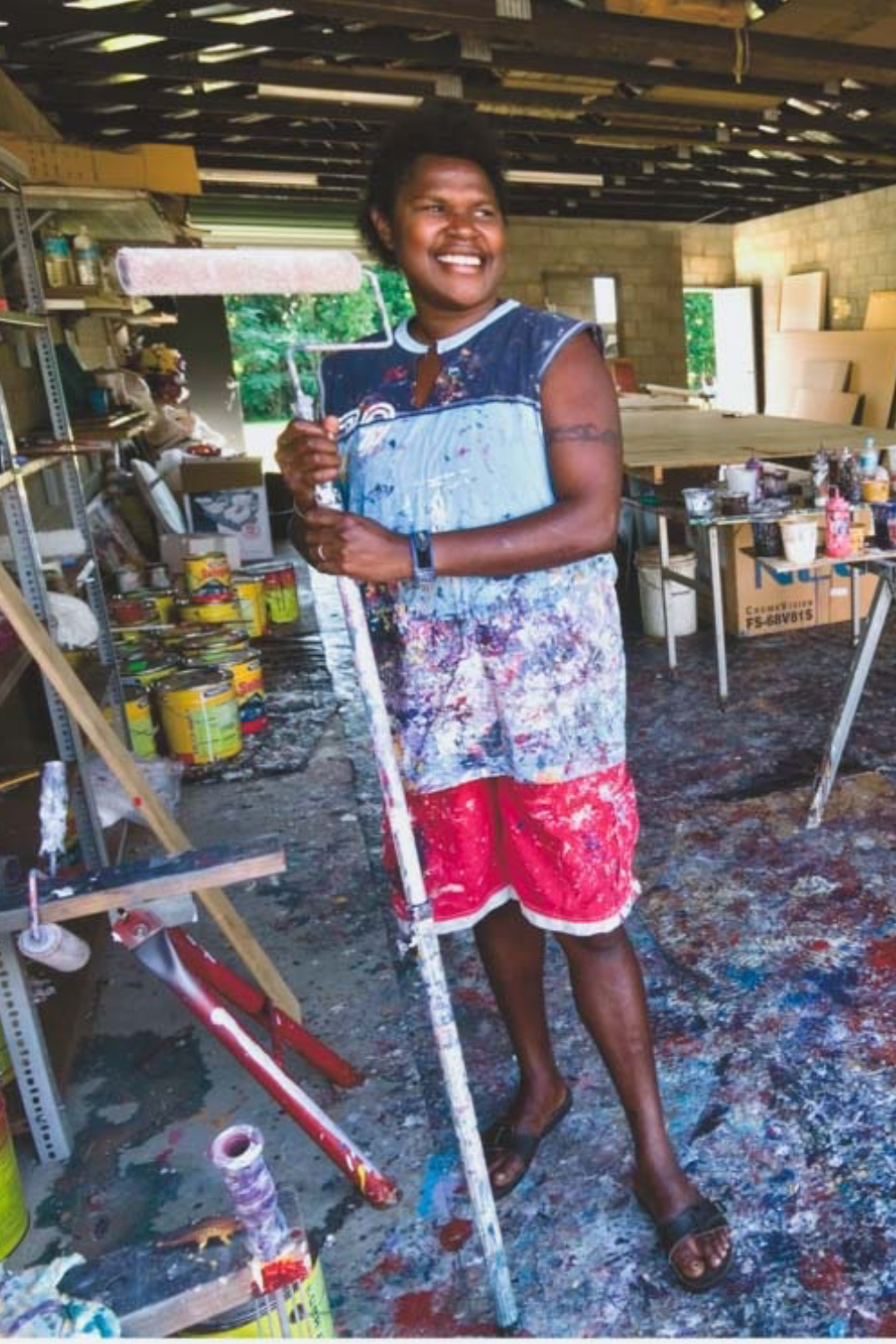
Namok began painting professionally while still in her teens.
In 1999, she became the first member of the Art Gang to hold a solo exhibition at Sydney’s Hogarth Galleries.
The exhibition, ’bout here… Lockhart River, attracted considerable attention and helped establish the reputation of the emerging movement.
An Established Contemporary Artist
Namok subsequently moved to Cairns, establishing a studio while maintaining close connections with her family and Country at Lockhart River.
Her visits to the community continued to inspire new paintings, particularly those concerned with fishing grounds, tropical weather and the changing appearance of familiar landscapes.
Her career also expanded beyond painting and printmaking.
In 2013, two works, Stinging Rain and Marks on Sand, After King Tide, were enlarged into monumental stage backdrops for the Houston Ballet production of The Rite of Spring.
Since 2019, she has also developed sculptures based on her painted designs, including bronze works exploring Country, family relationships and Aboriginal kinship.
Namok has continued working between Cairns and Lockhart River, supporting younger artists and maintaining connections with the community’s art centre.
Her 2025 exhibition, Rosella Namok: Sure Lines, reflected the development of an artistic practice spanning more than twenty-five years.
Rosella Namok Painting Style
Rosella Namok’s paintings are distinguished by flowing linear patterns, layered colour and an unusual finger-painting technique.
Working predominantly with acrylic and synthetic polymer paint on canvas, she applies successive layers of colour before dragging her fingers through the surface to reveal the paint underneath.
The method transforms the physical gestures of traditional sand drawing and Aboriginal body painting into a contemporary abstract technique.
Her compositions frequently contain parallel lines, undulating bands and subtle tonal transitions. These forms can suggest falling rain, moving water, tidal markings or the layered textures of tree bark.
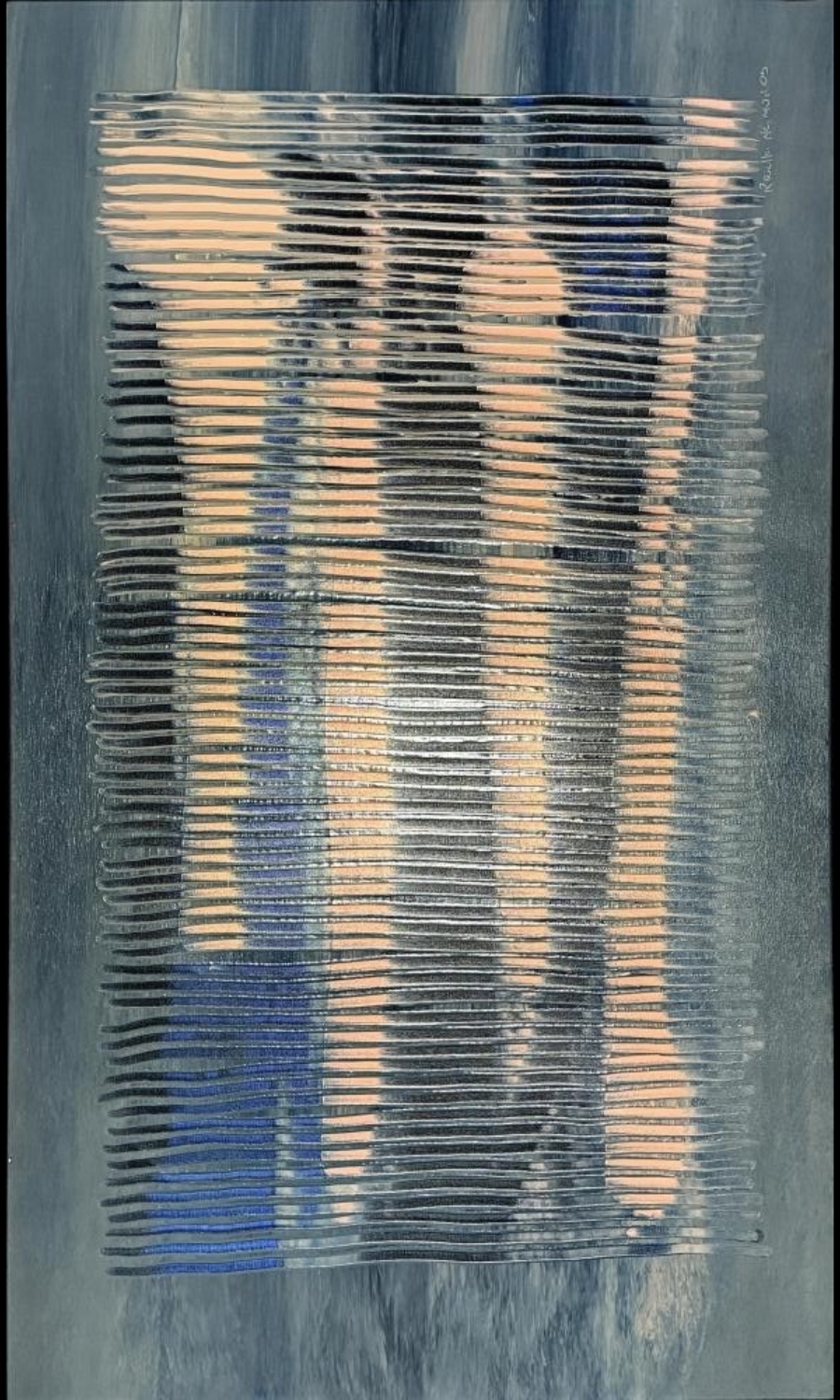
For her Stinging Rain paintings, Namok employs a different technique, applying layers of glossy paint and working through the final wet surface with long, thin sticks, sometimes made from bamboo.
Colour is equally important.
Closely related blues, greens and greys create atmospheric landscapes, while vivid oranges, yellows, pinks and purples evoke changing light, sunset and moonlight. In some compositions, brilliant colours emerge beneath contrasting layers of black.
Variations in colour, surface texture and reflected light create depth and movement without conventional perspective.
Art historian Sally Butler has described Namok as “one of Australia’s greatest colourists”, recognising her command of subtle tonal relationships.
In her 2025 exhibition essay for Sure Lines, Butler also emphasised the importance of Namok’s linear compositions. Beyond their resemblance to rain, horizons or vegetation, these lines suggest relationships connecting the artist to family, community and cultural history.
Namok’s paintings combine formal abstraction with personal observations, memories and culturally significant experiences.
Rosella Namok Painting Subjects
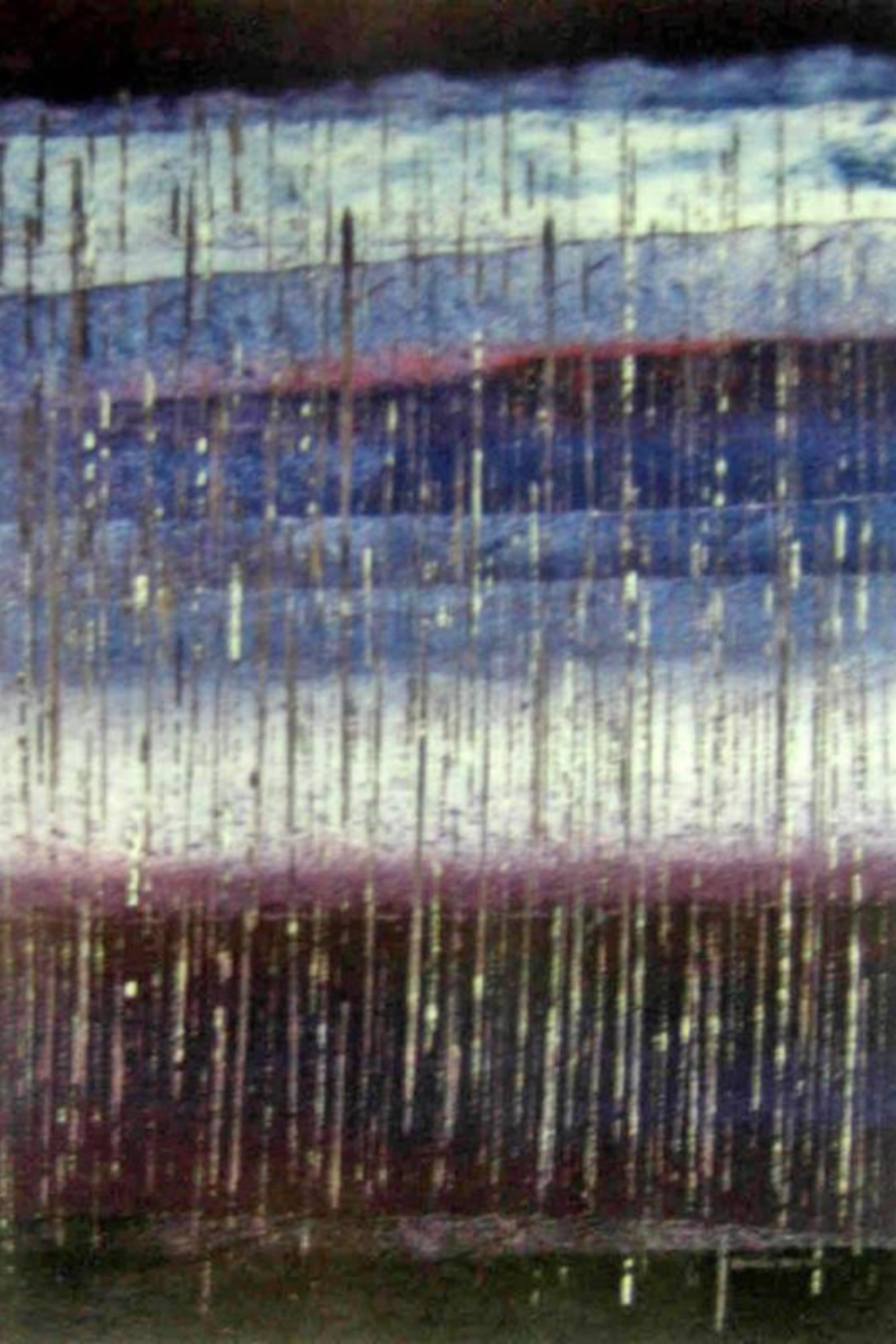
Stinging Rain — Tropical Storms at Lockhart River
One of Rosella Namok’s most recognisable subjects is the tropical rain that sweeps across the coastline of eastern Cape York.
Her Stinging Rain paintings recall childhood fishing expeditions and journeys by boat when sudden storms developed over the sea.
Namok has described being caught in heavy rain while night fishing, sheltering beneath towels as wind and rain struck the boat. The experience involved the painful sensation of rain hitting exposed skin, cold winds crossing the water and the difficulty of returning home through a storm.
In Stinging Rain (2021), broad horizontal fields of blue suggest the meeting of sea, sky and distant coastline. Fine vertical streaks interrupt these layers, capturing the movement of rain across the landscape.
Rather than depicting recognisable clouds, trees or coastlines, Namok concentrates on the changing atmosphere.
The contrast between the distant horizontal landscape and the repeated vertical marks conveys both the beauty and physical intensity of the tropical wet season.
Old Gals Yarnin’— Women’s Stories and Cultural Knowledge
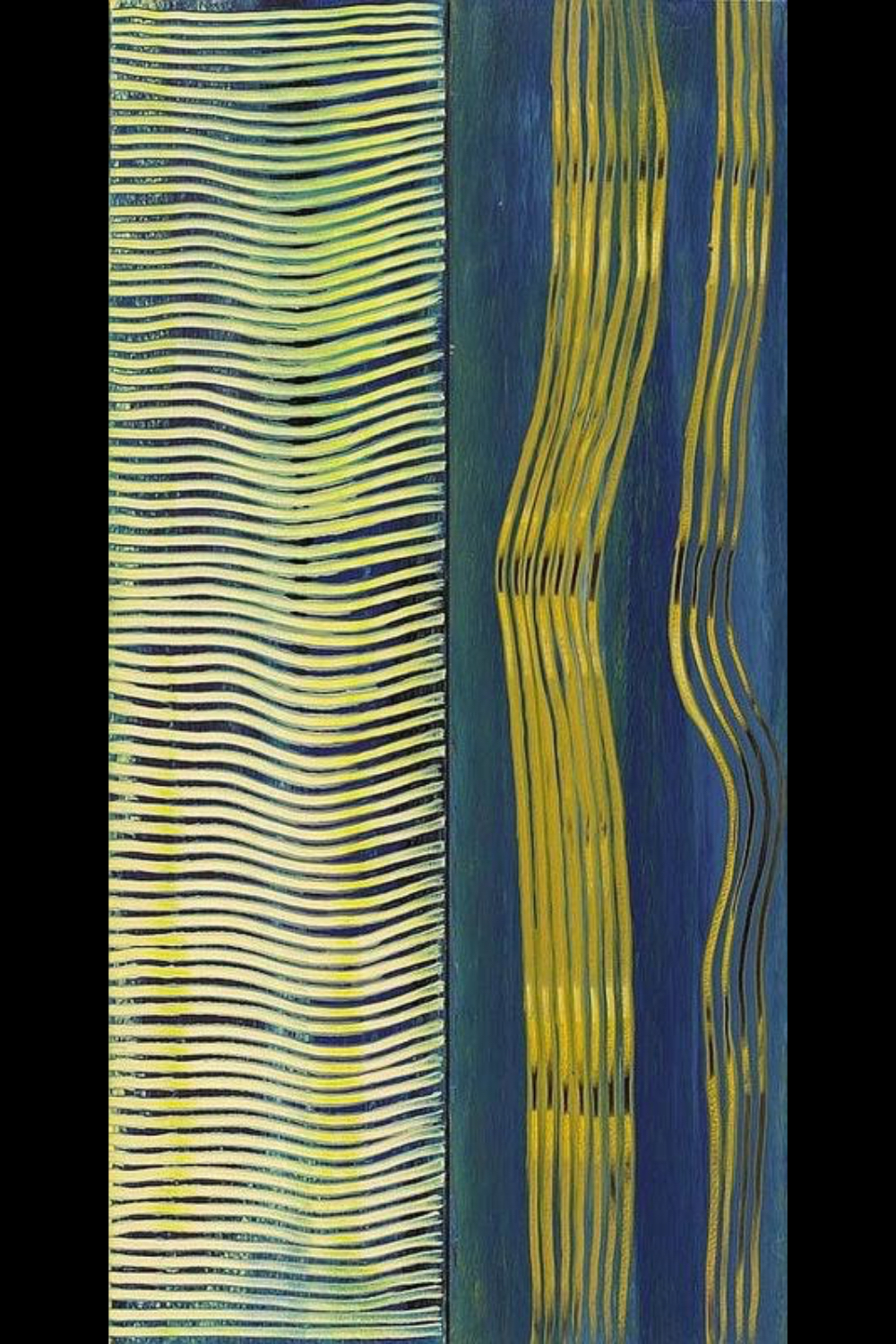
At Lockhart River, senior women traditionally gathered to talk about family, community life and stories associated with their Country. As they spoke, they sometimes drew lines and patterns in the sand to illustrate their narratives.
Namok’s painting commemorates this tradition of storytelling through flowing lines and changing fields of colour.
Warm yellows, oranges and pinks emerge through darker layers, recalling the changing light from sunset through the night and into the following morning.
The lines have a rhythmic, almost conversational quality, moving across the surface without forming conventional illustrations of the women themselves.
Their significance lies in the activity being remembered: women gathering together, exchanging stories and passing knowledge between generations.
The painting won the 2024 Gold Award at Rockhampton Museum of Art, one of Australia’s significant acquisitive painting prizes.
A related work, Old Girls Yarning into the Night (2024), was commissioned for the windows of the University of Queensland Art Museum.
Unchii: Regrowth after Bushfire — The Paperbark Tree
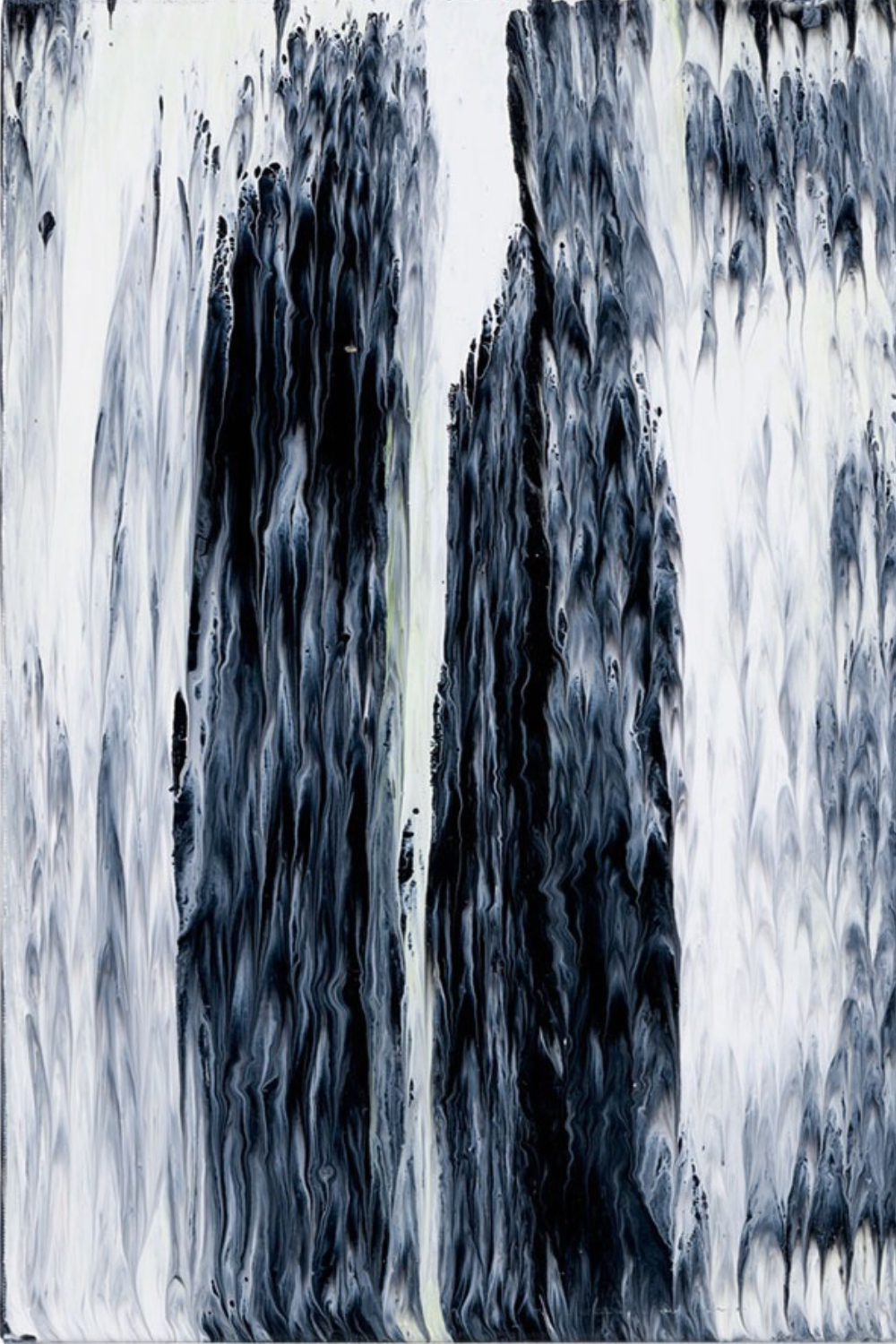
Unchii: Regrowth after Bushfire (Triptych), 2021
Acrylic on canvas, 180 × 190 cm
The unchii (paperbark tree) is another important subject in Rosella Namok’s paintings.
Paperbark trees grow throughout the wetlands and coastal landscapes of northern Queensland. Their layered bark, distinctive textures and ability to regenerate after fire provide Namok with a rich source of imagery.
In Unchii: Regrowth after Bushfire (2021), three vertical panels evoke the surfaces of tree trunks damaged by fire.
Dark areas of black and grey suggest charred bark, while passages of vivid green and blue emerge through the surrounding darkness, conveying the appearance of new growth.
Rather than illustrating individual trees, Namok isolates their textures, colours and vertical structure, transforming them into an abstract composition.
The subject also carries a broader significance.
For Namok, the regeneration of trees following bushfire becomes a metaphor for personal renewal, resilience and the continuation of cultural life.
Her 2022 exhibition Regrowth explored these connections between seasonal change and human experience.
Rosella Namok’s Value and Auction results
Works Offered at Auction: 206
Sale Rate: 58%
Highest Sale: $26,000 AUD
Median Sale Price: $1,600 AUD
Rosella Namok’s Artistic Importance
Rosella Namok played an important role in establishing the Lockhart River Art Gang as a significant movement within contemporary Aboriginal Australian art.
Her distinctive painting techniques challenged expectations that Aboriginal art should follow established regional styles or rely upon recognisable ceremonial imagery.
She demonstrated how inherited cultural practices could inform an innovative abstract language while retaining their connections to Country and community.
Her paintings also extend beyond environmental subjects to explore changing Aboriginal society.
Works concerned with Kaapay and Kuyan (the two social divisions, or moieties, of her community) examine traditional kinship responsibilities, while her New Villages paintings address changes to housing and community life.
One of her most historically significant works is Today Now… We All Got to Go by Same Laws (2003).
This monumental nine-panel painting, now in the High Court of Australia, considers the relationship between traditional Aboriginal law and the legal system of contemporary Australia.
Namok explained that although Australians now live under a common legal system, traditional Aboriginal law continues to exist beneath the surface.
The work demonstrates that her abstract compositions can communicate complex social and political ideas as effectively as they represent the natural environment.
Her artistic importance lies in combining technical originality with personal experience and continuing Aboriginal cultural knowledge.
Public Collections
Rosella Namok’s paintings are represented in major Australian public collections, including:
- National Gallery of Australia, Canberra
- National Gallery of Victoria, Melbourne
- Art Gallery of New South Wales, Sydney
- Queensland Art Gallery | Gallery of Modern Art, Brisbane
- Art Gallery of South Australia, Adelaide
- Art Gallery of Western Australia, Perth
- International holdings include the Kluge-Ruhe Aboriginal Art Collection at the University of Virginia, United States.
Further Reading
Sally Butler, Our Way: Contemporary Aboriginal Art from Lockhart River (2007). An important study of the Lockhart River Art Gang and contemporary Aboriginal painting in eastern Cape York.
Sally Butler, Rosella Namok: Sure Lines (2025). Rockhampton Museum of Art. Exhibition essay examining Namok’s use of colour, linear compositions and cultural relationships.
FireWorks Gallery, Rosella Namok: Regrowth & Other Stories (2022). Commentary on painting techniques, paperbark imagery, kinship and sculpture.
University of Queensland Art Museum, Old Girls Yarning into the Night (2024). Interpretation of women’s storytelling and Namok’s finger-painting technique.
High Court of Australia, Today Now… We All Got to Go by Same Laws (2003). Documentation explaining the painting’s relationship to Aboriginal law and contemporary Australia.
Japingka Aboriginal Art Gallery, Rosella Namok: Reflections on My Life. Interviews discussing family, fishing, tropical weather and childhood at Lockhart River.
All images featured in this article are presented strictly for educational and informational purposes.
This website may include copyrighted material for which specific authorization has not been obtained from the copyright owner.
All such images are presumed to be the intellectual property of the respective artist or their estate, and are used in accordance with principles of fair dealing or fair use under applicable copyright law.