
Possum Tree Dreaming
The Possum Tree Dreaming belongs to the Dhuwa moiety of the Yolngu people of north-east Arnhem Land and is best known through the bark paintings of Narritjin Maymuru. The story centres on a sacred tree at Djeragbi on Cape Shield, which connects the people of Earth with Barama, the great creator and lawgiver of the Sky World.
Among the Dhuwa clans, three important ancestral lawgivers are remembered: Barama, the most powerful, together with Laindjung and his son Banaidja. Living within the sacred tree is Marngu the possum, who acts as a messenger between Barama and the people, carrying sacred knowledge and law between the Earth and Sky Worlds.
Like the sacred world trees found in many cultures, the Possum Tree represents a spiritual link between human life and the ancestral realm. In Aboriginal art and Dreaming stories, it is a powerful symbol of law, communication, and the ongoing relationship between people, Country, and the spirit world.
Animals in Aboriginal art often relate to particular dreamtime stories.
This is the story of Marngu the Possum
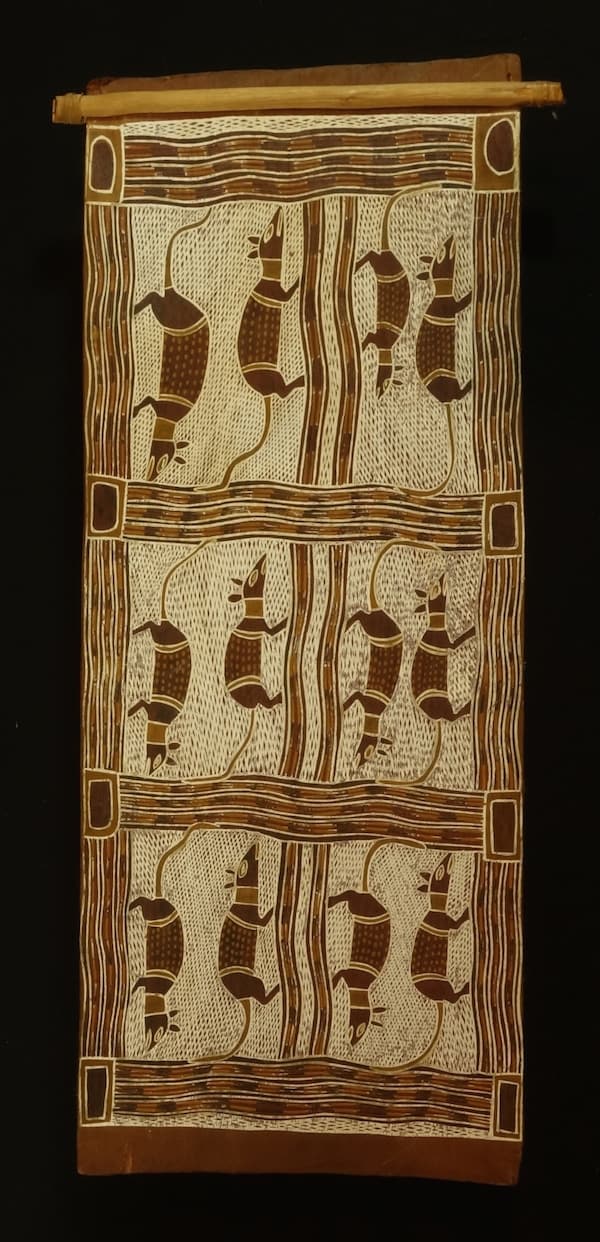
Possum tree Dreaming
Long ago, the Manggalilji people of north-east Arnhem Land lived peacefully together. One day a visitor from another tribe arrived. His name was Borok, and he sang gossip songs around the campfire, becoming popular with the unmarried girls. Soon he noticed Kulta, a married woman, and she returned his glances. One evening she quietly left the campfire and walked away alone. A few minutes later, Borok also departed.
The next morning Kulta’s husband confronted her angrily.
“You went to lie with the stranger, Borok,” he accused.
“I did not!” Kulta replied. “You are jealous. You invent tales.”
Her husband refused to believe her, and Kulta appealed to her kinfolk for support. The quarrel continued for many days. Soon the shouting reached the ears of Borok. Both sides confronted him with threats and harsh words, and Borok eventually left the camp. The following morning Kulta also disappeared.
Fighting soon broke out between the opposing groups. Spears flew and blood was spilled. A vengeance party set out in pursuit of Borok and found him camping alone that night.
“He has had his satisfaction with the woman and sent her away,” they concluded before killing him.
The party then tracked Kulta and found her digging yams for a meal.
“You have done wrong and must die,” they cried, and they speared her to death.
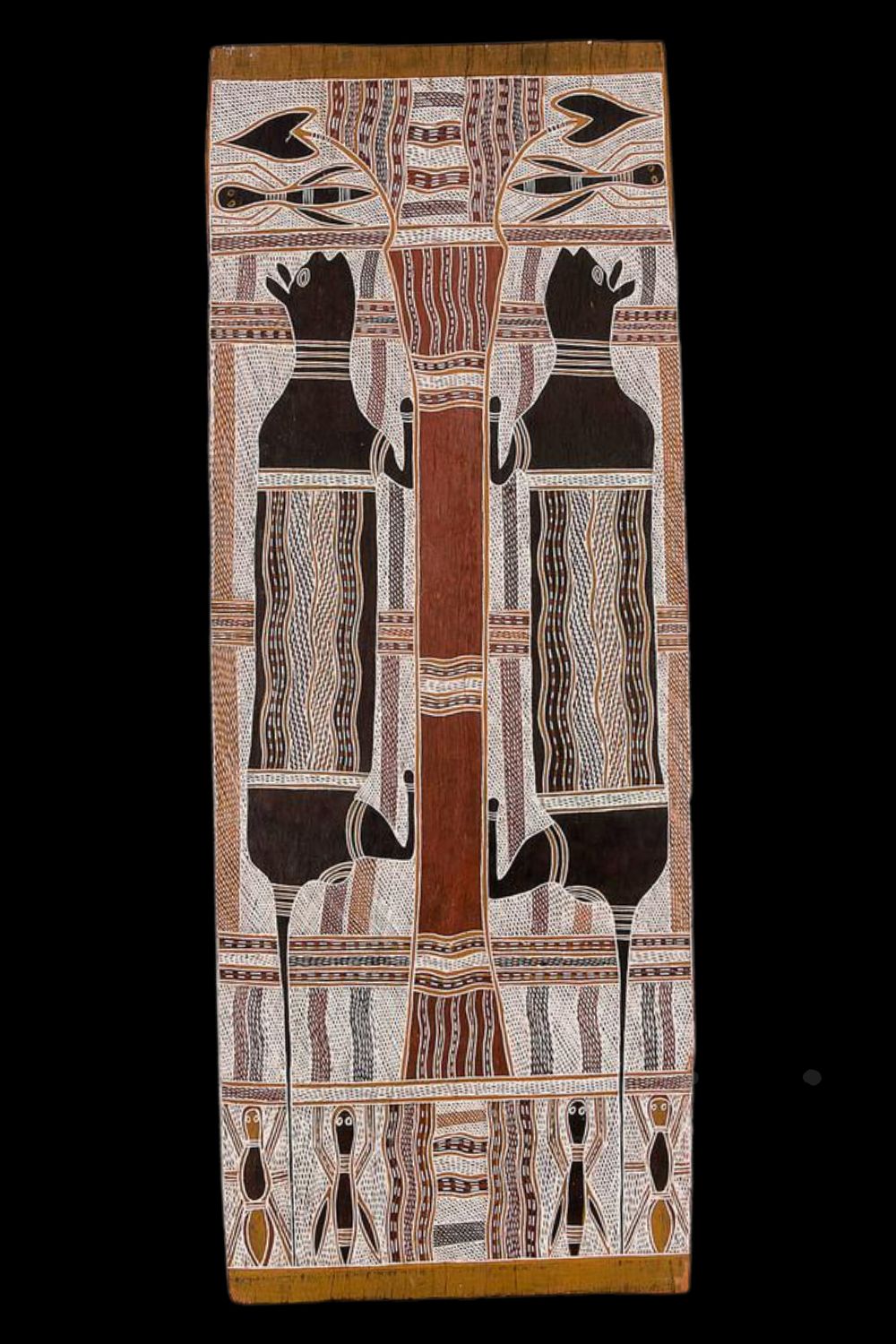
When the killers returned to camp, Kulta’s relatives were outraged and immediately planned revenge. They formed a separate camp and lay in ambush, spearing Kulta’s killers one by one. Soon a murderous feud consumed the community.
From the Sky World, the creator spirit Barama watched sadly. He spoke to his companion Munjurr:
“The people have forgotten my teachings. They quarrel among themselves and bring unhappiness. Go to the earth below and find Marngu the possum. Tell him to remind the people of my law. Those who quarrel must declare their grievances before everyone. The people shall judge who is at fault, and the guilty person shall be speared so that blood is shed but life is not taken. The blood that falls to the ground shall atone for the wrongdoing, and peace shall return.”
Munjurr agreed and transformed himself into Guwarg, a bird with black feathers and red eyes. He flew across the coast, forests, and swamps searching for Marngu the possum. Everywhere he travelled he heard shouting and fighting. Women argued, men lay in ambush with spears, and even the children threw stones at one another.
Greatly troubled, Guwarg continued his search. Finally, as the day grew hot, he glimpsed Marngu climbing a tree. By the time Guwarg swooped down, the possum had vanished.
As evening approached, Guwarg rested in the sacred tree Waligul beside the beach at Djeragbi. The tree grew so tall its upper branches reached toward the Sky World. While Guwarg sat brooding over his failed mission, a flock of cicadas flew around him.
“Help me find Marngu the possum,” Guwarg called. “I come from the Sky World with important words for him.”
“We will help,” the cicadas replied, flying off in every direction, though their search also failed.
As night fell, Guwarg heard scratching inside the tree. Soon a possum pushed his nose through an opening in the trunk.
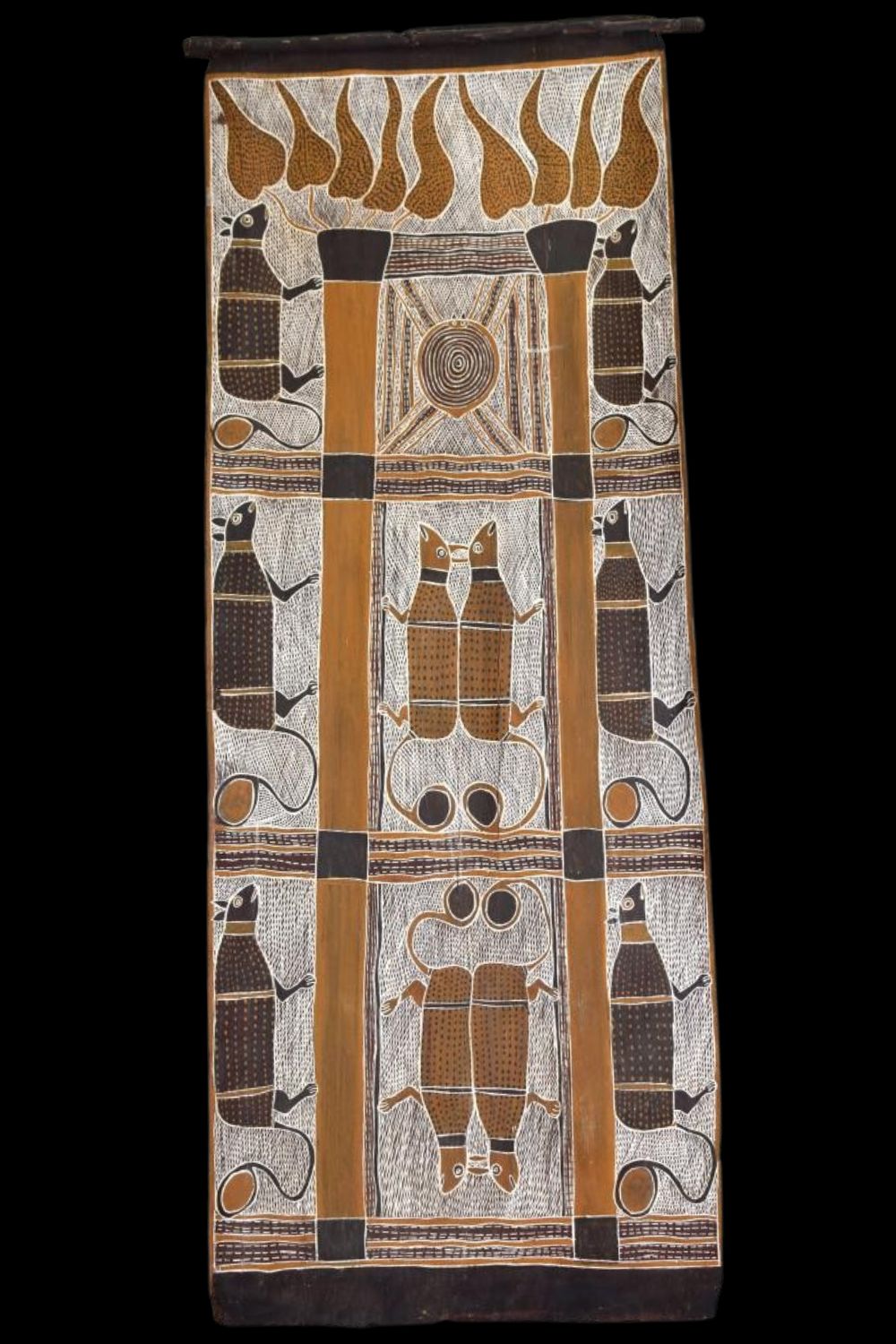
“Is that you, Marngu?” Guwarg called. “Come speak with me. I am Guwarg from the Sky World.”
Marngu studied the bird before quietly sitting beside him.
“I have searched everywhere for you,” said Guwarg. “I bring a message from Barama. Where have you been?”
“I sleep during the day,” replied the possum. “I come out only at night.”
Guwarg then explained Barama’s teachings. They spoke together through the night as the moon lit the beach and the sea urchins lying upon it. Crabs emerged from their burrows, leaving long tracks across the white sand.
The next morning Marngu transformed himself into a man and gathered the Manggalilji people together. He delivered Barama’s message. Since neither side could agree who was at fault, each group chose three representatives to be ritually speared in the thigh as a peace offering. The people danced and sang as the blood flowed, joyful that the fighting had ended.
From that day onward the people learned to live peacefully with one another. To this day they settle disputes according to Barama’s law. Guwarg still flies only at night so he may visit his friend Marngu. The sacred tree at Djeragbi still stands tall, the possum still lives within it, and the cicadas continue to carry messages between the people. Even the tracks left by crabs in the sand became sacred clan designs painted onto bodies and bark paintings to commemorate the story of the possum tree.
All images featured in this article are presented strictly for educational and informational purposes.
This website may include copyrighted material for which specific authorization has not been obtained from the copyright owner.
All such images are presumed to be the intellectual property of the respective artist or their estate, and are used in accordance with principles of fair dealing or fair use under applicable copyright law.