
Dinny Nolan Tjampitjinpa
Dinny Nolan Tjampitjinpa is one of the most respected senior Warlpiri artists of the Papunya movement. Renowned for his powerful Water Dreaming and Rainmaking paintings, he is recognised not only as an accomplished Western Desert artist but also as a senior ceremonial leader whose authority extended far beyond the canvas. His paintings combine artistic excellence with profound cultural knowledge, making them highly sought after by collectors and represented in major public museums throughout Australia and overseas.
Dinny Nolan Tjampitjinpa is one of the lesser-known artists of the Papunya movement. Like Old Tutuma Tjapangati, Charlie Egalie Tjapaltjarri and Charlie Ward Tjakamarra, his contribution to the birth of Western Desert Art has often been overshadowed by more widely recognised pioneers such as Johnny Warangkula Tjupurrula Kaapa Mbitjana Tjampitjinpa, and Shorty Lungkata Tjungurrayi
If you own a painting by Dinny Nolan Tjampitjinpa and would like to know its value or are considering selling it, please feel free to contact me.
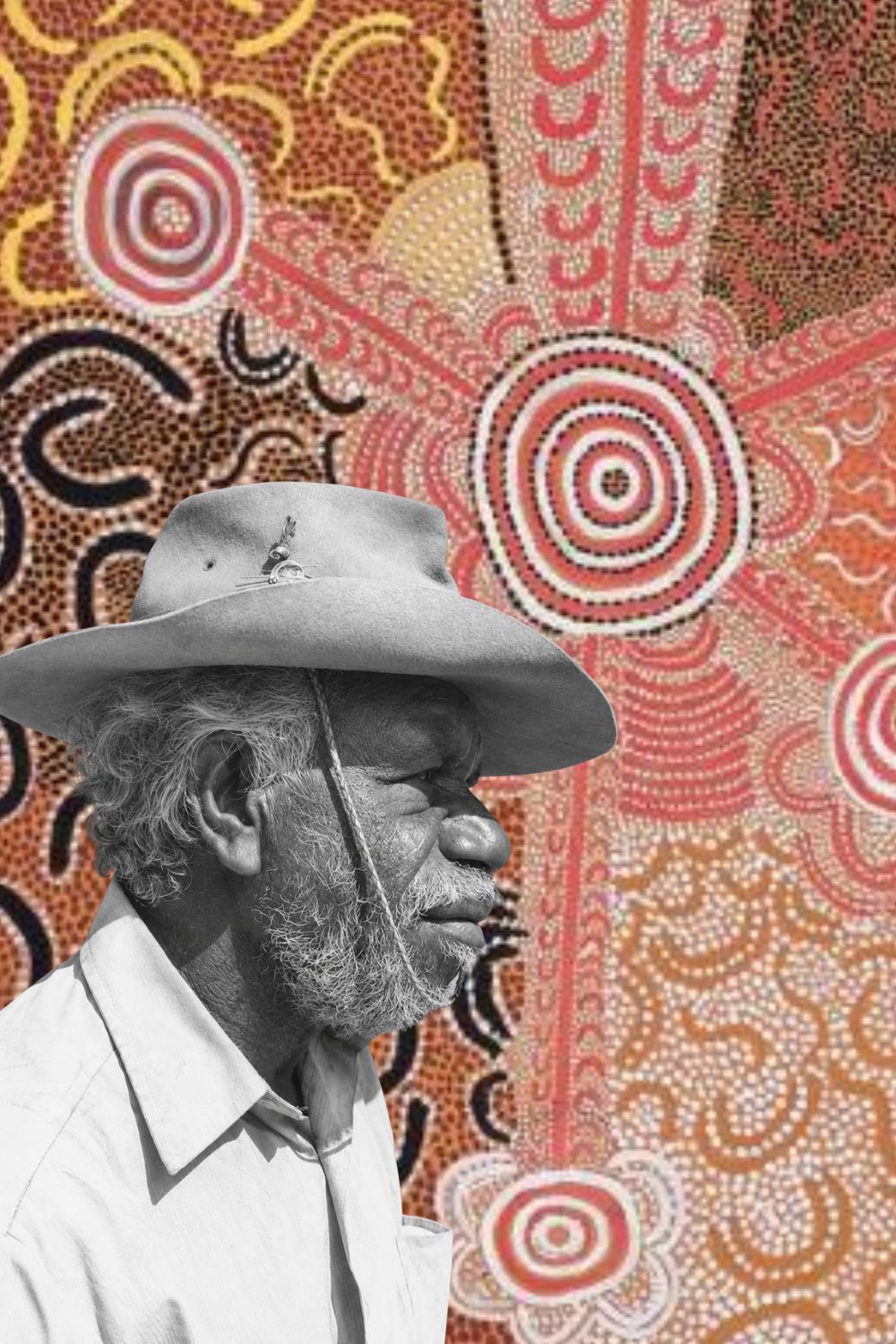
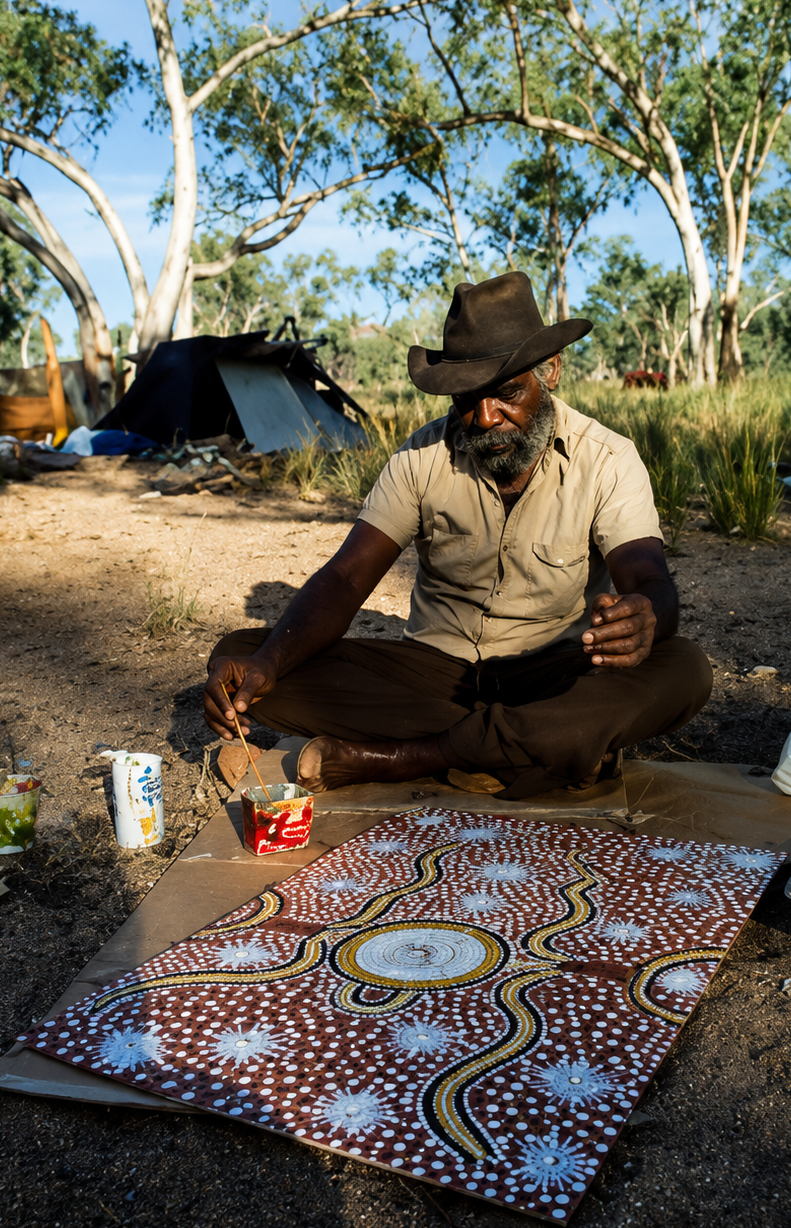
Who is Dinny Nolan Tjampitjinpa?
Dinny Nolan Tjampitjinpa was a senior Warlpiri artist born west of Mount Allan, near present-day Yuendumu in the Northern Territory, probably during the late 1920s or early 1930s. He grew up at Napperby Station and later spent many years working as a stockman across the Northern Territory before settling at Papunya.
Dinny came from the same remarkable family circle that produced several of the founding painters of Western Desert Art. He grew up at Napperby with his older “brother” Kaapa Mbitjana Tjampitjinpa and his cousins Clifford Possum Tjapaltjarri, Tim Leura Tjapaltjarri and Billy Stockman Tjapaltjarri. By the time Dinny began painting, these men were already closely involved in the new painting movement at Papunya.
Kaapa, Clifford Possum and Billy Stockman encouraged Dinny to join the Papunya painters, and he began painting for Papunya Tula during the mid-1970s. He was therefore not one of the original artists who began painting in 1971, but entered the movement through men with whom he had grown up and shared family, Country and ceremonial life. Dinny brought to painting his own Warlpiri knowledge, particularly that associated with Water and Rainmaking Jukurrpa.
Dinny Nolan Tjampitjinpa’s Painting Style
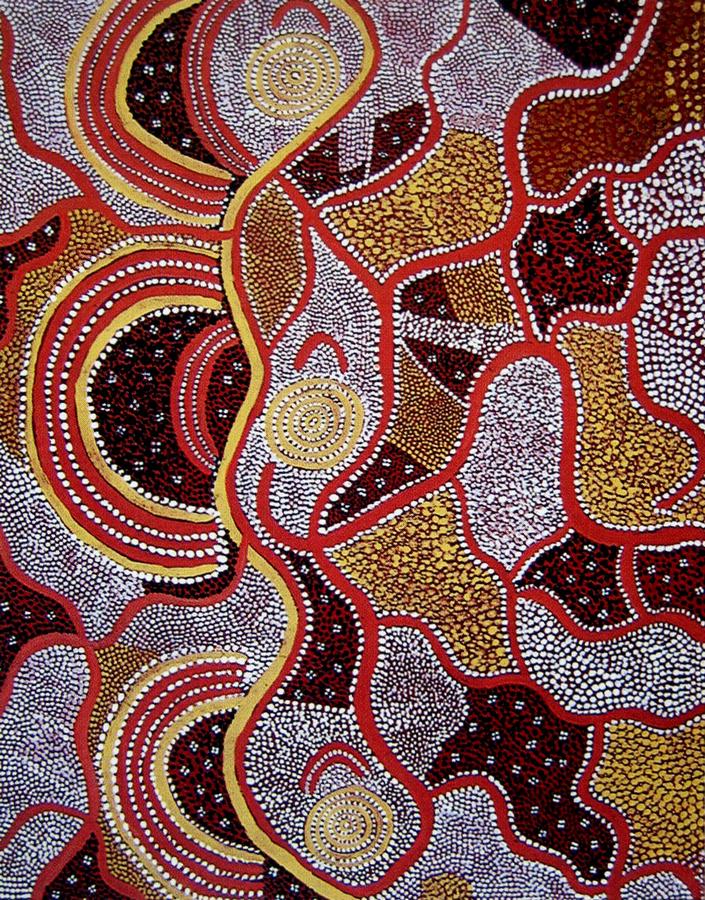
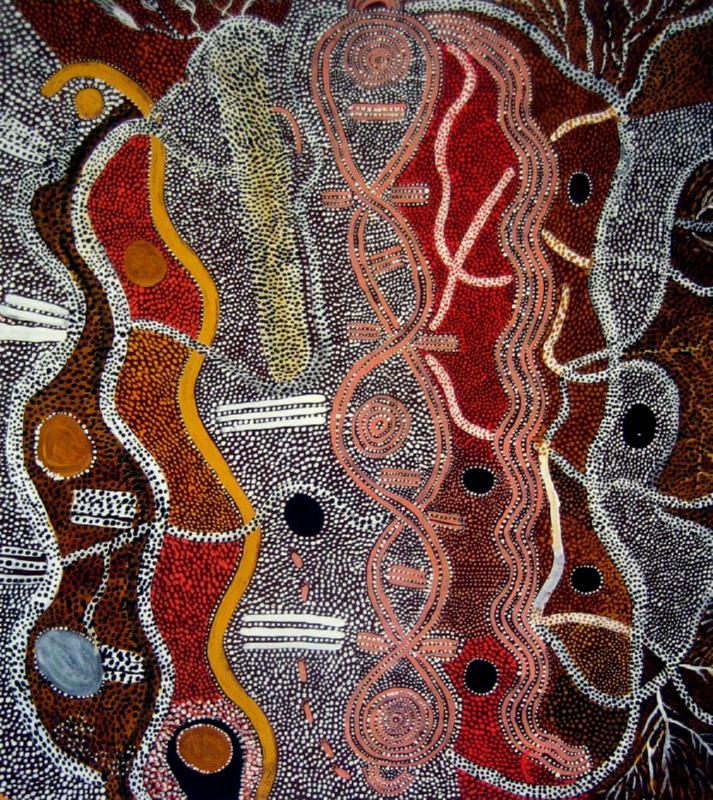
Dinny’s paintings are immediately recognisable through their confident use of traditional Western Desert iconography. Throughout his career he painted:
- Water Dreaming
- Rainmaking Dreaming
- Emu Dreaming
- Bush Turkey Dreaming
- Willy Willy (Whirlwind) Dreaming
- Pelican Dreaming
- Goanna Dreaming
- Bushfire Dreaming
His paintings commonly feature:
- concentric circles representing waterholes and ceremonial sites
- flowing lines symbolising rivers, rain and ancestral travel
- emu tracks and other animal footprints
- rhythmic dotting creating movement across the landscape
- warm earth-coloured palettes of ochre, white, black and red
Many of his works depict Country from above, presenting an Aboriginal conceptual map rather than a conventional landscape. The paintings combine geography, ceremony and Dreaming into a single visual language.
The First Public Ground Painting
One of Dinny Nolan’s most significant contributions to Australian art occurred in 1981.
Together with fellow Papunya artist Paddy Carroll Tjungurrayi, he created one of the first ceremonial sand paintings ever publicly constructed outside Central Australia at Sydney’s SH Ervin Gallery.
The event introduced many Australians to an important ceremonial art form that had previously remained within Aboriginal communities and demonstrated that Aboriginal art extended far beyond paintings on canvas.
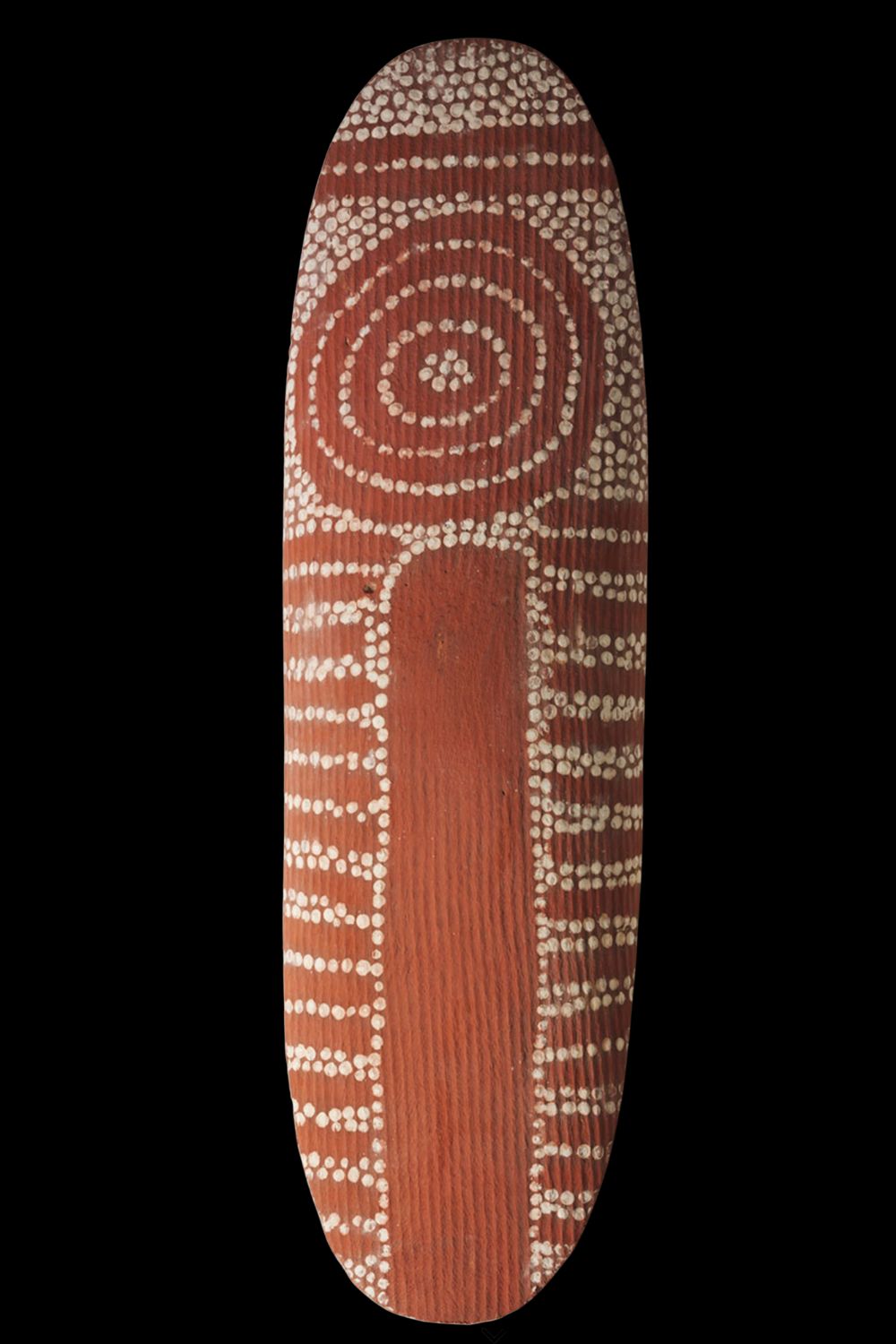
Dinny Nolan also painted on Aboriginal shields and Coolamon
National and International Recognition
During the late 1970s Dinny travelled with Papunya Tula Artists to exhibitions in Melbourne, helping introduce Western Desert Art to a wider audience.
He later travelled extensively in the United States, participating in exhibitions and Indigenous cultural exchanges where he shared Warlpiri traditions with Native American communities.
His paintings are now represented in many important public collections, including:
- National Gallery of Australia
- National Gallery of Victoria
- National Museum of Australia
- Museum of New Zealand Te Papa Tongarewa
- Art Gallery of Western Australia
- Artbank
- University of Western Australia collections
What are Dinny Nolan Tjampitjinpa Paintings Worth?
Works Offered at Auction: 116
Sale Rate: 59%
Highest Sale: $36,000 AUD
Median Sale Price: $1,800 AUD
Early Papunya-period works and paintings with strong provenance generally command the highest prices. Later paintings remain highly sought after because of Dinny’s importance as both a senior ceremonial leader and an influential Western Desert artist.
Want to Sell a Dinny Nolan Tjampitjinpa Painting?
I am always interested in purchasing early original paintings by Dinny Nolan Tjampitjinpa.
If you have a work you would like to sell or simply want to know what it may be worth, please email clear photographs of the front and back together with the dimensions and any known provenance. I am happy to provide an honest assessment without obligation.
Frequently Asked Questions
When did Dinny Nolan Tjampitjinpa begin painting?
Dinny joined Papunya Tula Artists prior to 1973, several years after the first Papunya Boards were painted in 1971.
What Dreamings did Dinny Nolan paint?
His principal subjects include Water Dreaming, Rainmaking, Emu Dreaming, Bush Turkey Dreaming, Pelican Dreaming, Willy Willy Dreaming, Goanna Dreaming and Bushfire Dreaming.
Why is Dinny Nolan Tjampitjinpa important?
He is recognised not only as an accomplished Western Desert artist but also as a senior Warlpiri ceremonial leader responsible for important Rainmaking and Water Dreaming ceremonies.
Are Dinny Nolan Tjampitjinpa paintings valuable?
Yes. Paintings with strong provenance, especially earlier works from the Papunya period, are highly sought after by collectors and museums.
Where are Dinny Nolan Tjampitjinpa’s paintings held?
His works are represented in major public collections including the National Gallery of Australia, National Gallery of Victoria, National Museum of Australia, Museum of New Zealand Te Papa Tongarewa and Art Gallery of Western Australia.
All images in this article are for educational purposes only.
This site may contain copyrighted material the use of which was not specified by the copyright owner.