
Tiger Palpatja: The Painter and the Rainbow Serpent
c. 1920–2012
Pitjantjatjara
Piltati Country | Wanampi
Amata / Nyapari
APY Lands Art / Western Desert Art
Painting on canvas
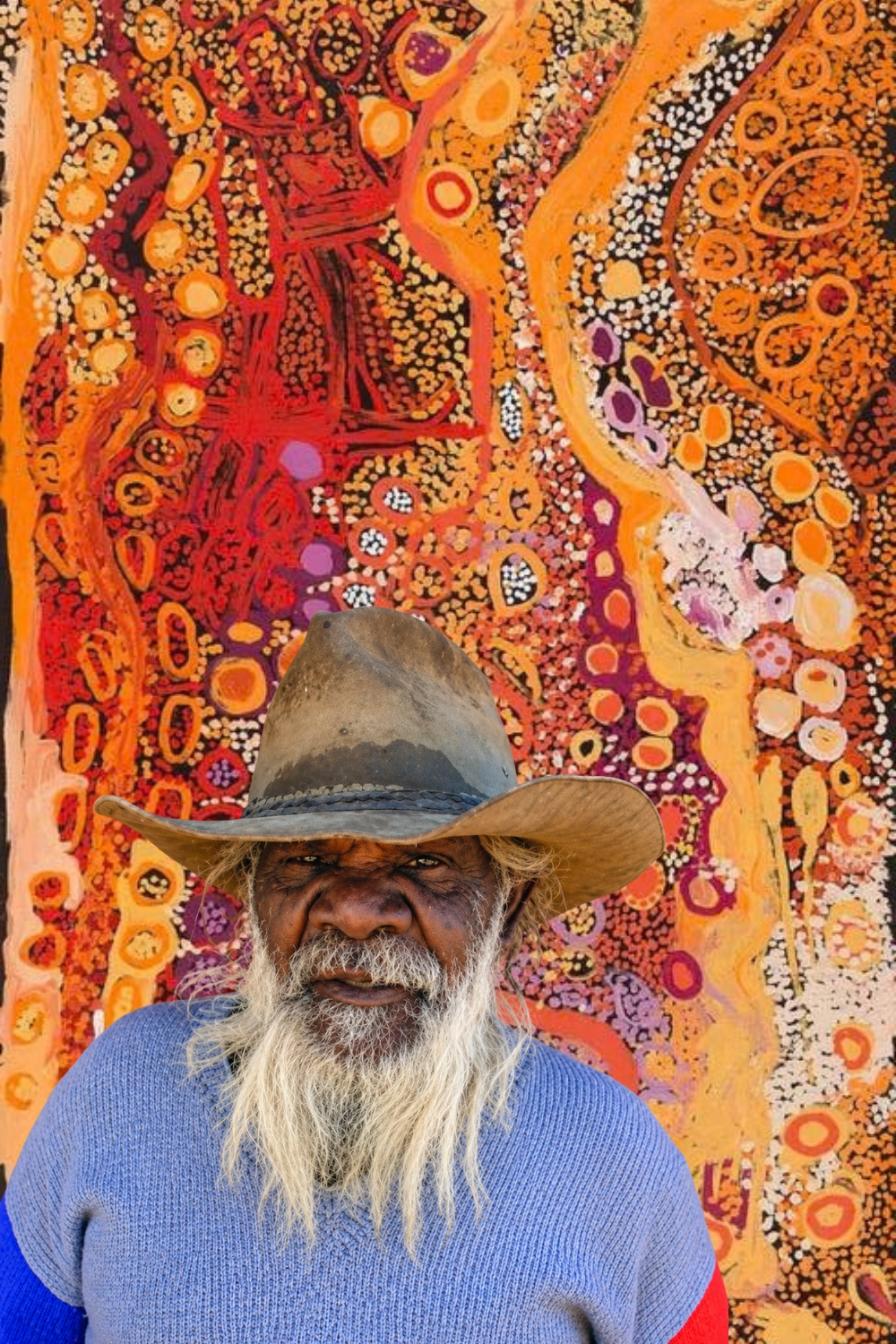
Kunmanara Tiger Palpatja (c.1920–2012) was a senior Pitjantjatjara Law man and traditional healer who became one of the most distinctive painters of the APY Lands after taking up canvas at about eighty-four.
His great subject was Wanampi, the ancestral serpent or Rainbow Serpent. For Tiger, Wanampi belonged to Piltati, his birthplace and family Country in the far north-west of South Australia, where the ancestral story is embedded in the waterholes, gorge and surrounding landscape.
Tiger’s connection with Wanampi was intensely personal. He described feeling the serpent entering and leaving his body, as though at times it became part of him.
In less than a decade of painting, he developed an unmistakable style of brilliant colour, vigorous brushwork and great serpentine forms. Through Wanampi, Tiger painted the ancestral history of Piltati, the formation of its Country and his own place within it.
Tiger Palpatja Biography
Tiger Palpatja was born around 1920 at Piltati Creek or Piltati rockhole, his father’s Country near present-day Nyapari in the far north-west of South Australia.
He spent his early childhood on Country and was selected while still a young boy to become a traditional healer. His family later moved to Ernabella, now Pukatja, where he attended some school and learned basic English.
As a young man Tiger worked as a stockman and shepherd and became a skilled shearer. During the 1970s he moved with his family to Amata, closer to his traditional Country. By then he was a senior Law man with extensive knowledge of Piltati and the surrounding Mann Ranges.
Long before he painted on canvas, Tiger made spears and carved wooden objects decorated with designs burnt into their surfaces. This earlier mark-making would later find a very different expression in paint.
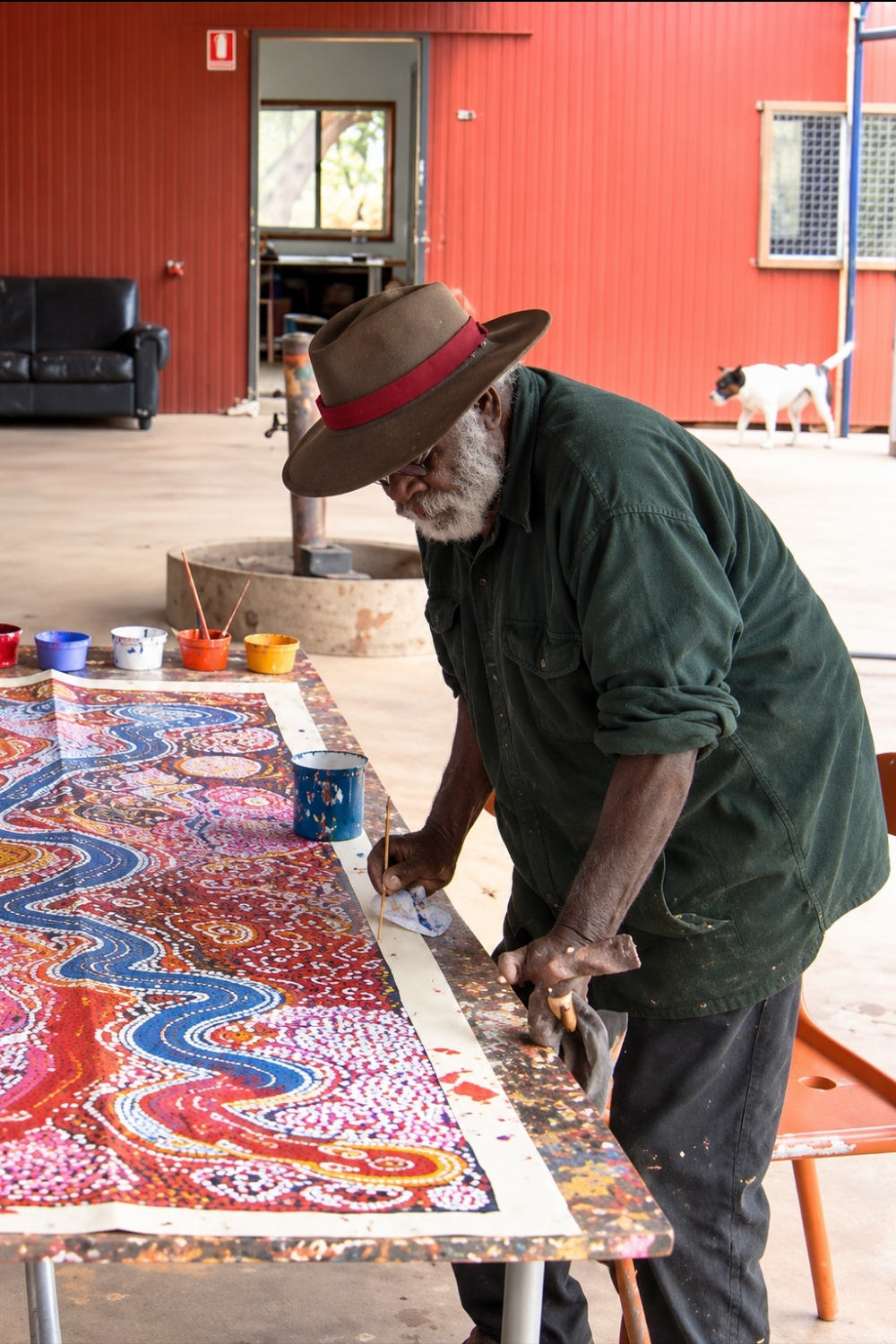
Tiger began painting at Tjala Arts in Amata in 2004, when he was about eighty-four. His work developed rapidly from relatively direct early compositions into increasingly confident paintings characterised by intense colour, energetic marks and sweeping movement.
Around 2009 he returned to Nyapari, close to Piltati, where he also painted through Tjungu Palya. He continued working until shortly before his death in 2012.
Painter of Wanampi — the Rainbow Serpent of Piltati
The defining subject of Tiger Palpatja’s art was Rainbow serpent dreaming or Wanampi Tjukurpa, the ancestral Rainbow Serpent story of Piltati. Tiger returned to this story throughout his painting career, with different paintings revealing different parts of the same ancestral narrative.
The story concerns two brothers and their wives, who were sisters. The women went out each day to gather food while the men remained at camp performing ceremony. Eventually the sisters became angry at continually providing for their husbands and decided to eat what they had gathered rather than share it.
Enraged, the brothers transformed themselves into Wanampi, enormous ancestral water serpents, and travelled beneath the ground. The sisters pursued them with their digging sticks, digging furiously as they tried to uncover the serpents.
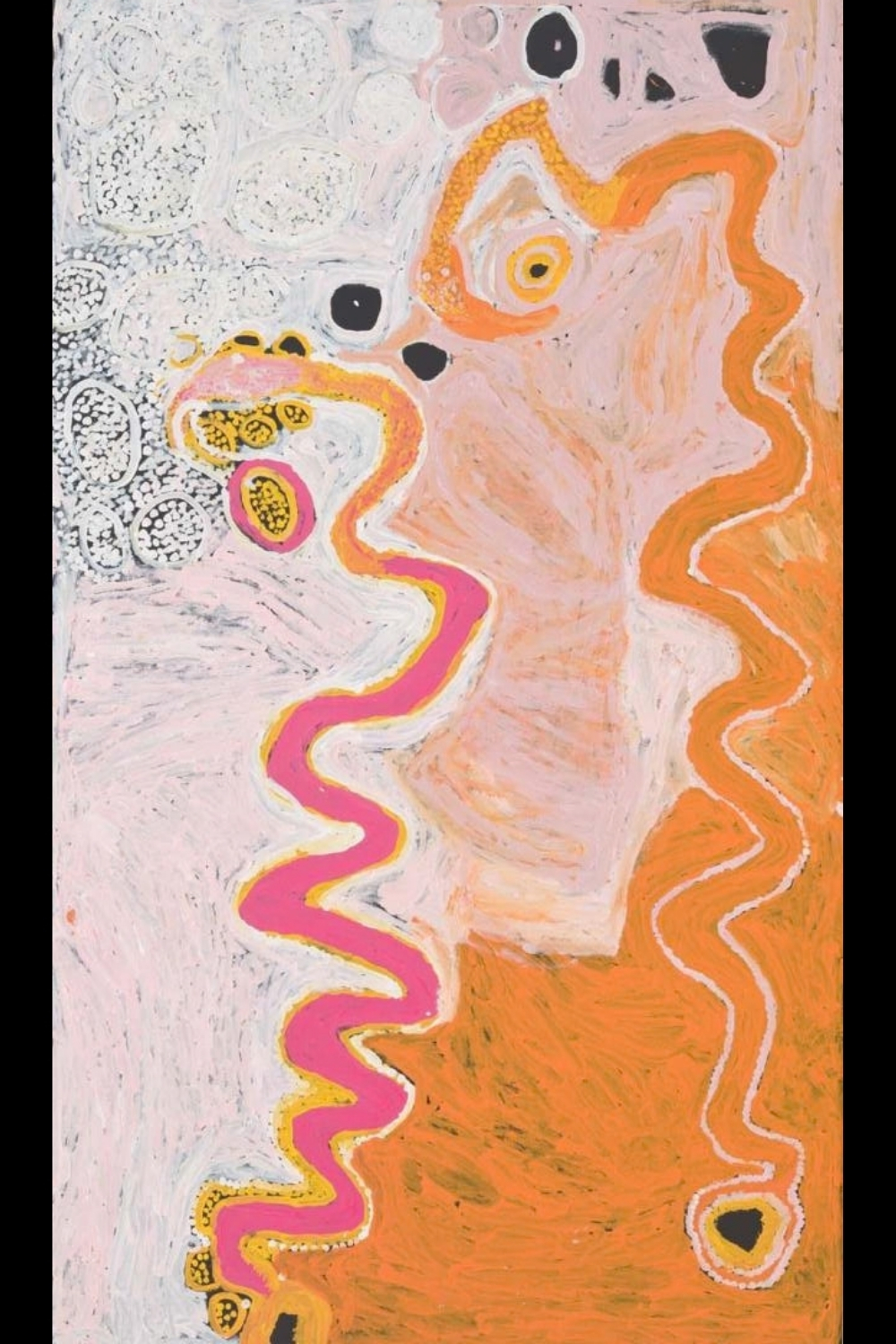
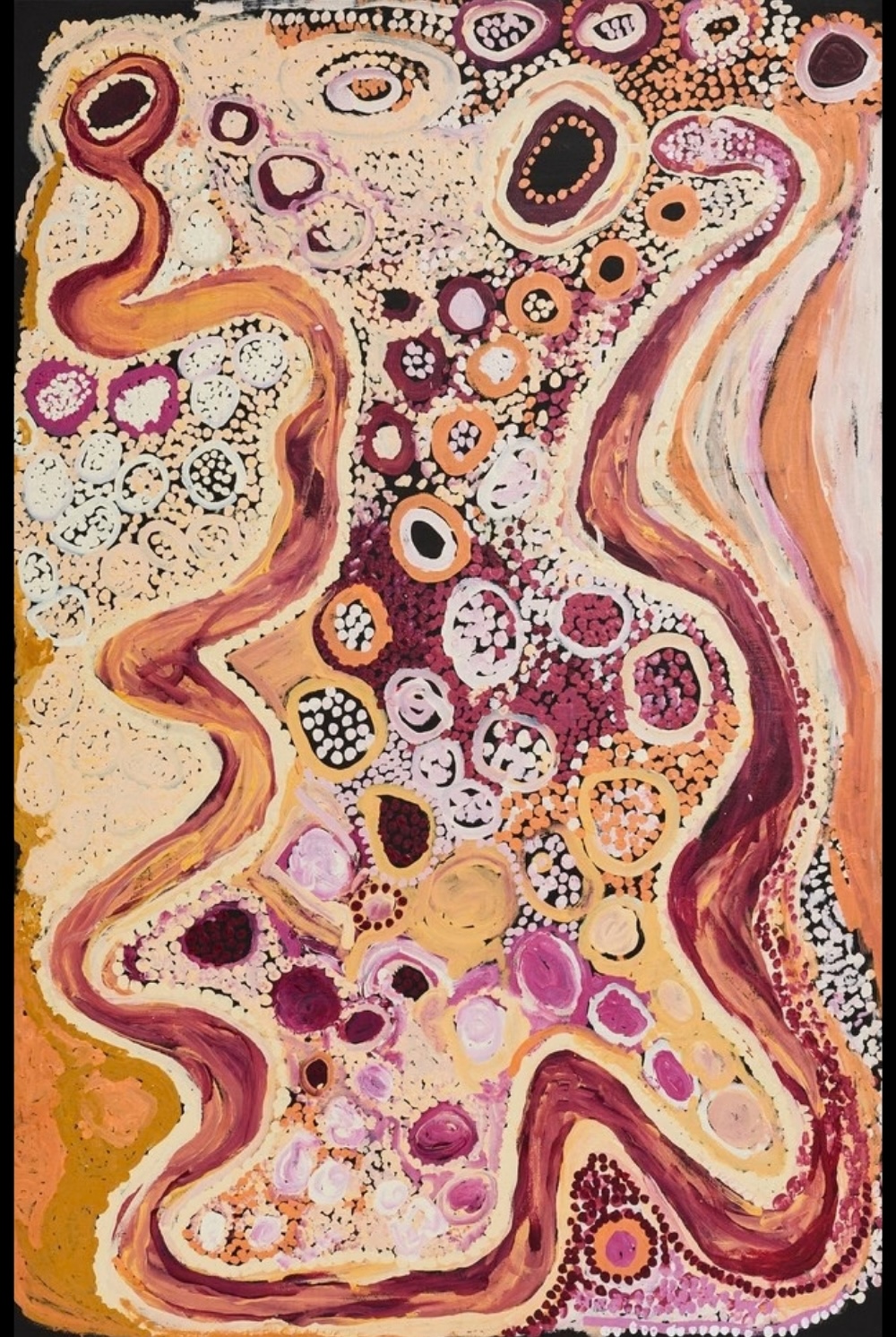
The pursuit continued for approximately 25 kilometres from Aparatjara towards Piltati. As the sisters dug after the Wanampi, the great trench they opened through the Country became a watercourse. At Piltati their digging formed the rocky gorge and its water sources, while other features of the landscape became part of the same ancestral journey.
At Piltati, one of the sisters struck a Wanampi with her digging stick. The brothers emerged from beneath the ground, caught the women and swallowed them. The elder Wanampi is now a bloodwood tree at Piltati.
The story explains why Wanampi, water and landscape are inseparable in Tiger’s paintings. The serpents do not simply travel through an existing landscape: the actions of the two Wanampi brothers and the sisters create and give meaning to the watercourse, gorge and rockholes of Piltati. The National Gallery of Victoria describes the story as being “embedded in the land.”
What has been made public is only part of a culturally complex Dreamtime story. Yet it reveals why Tiger returned to the story throughout his short painting career. Piltati was his birthplace and family Country, and he held senior responsibility for its Law.
Wanampi belong to Pitjantjatjara and neighbouring Western Desert traditions and are closely associated with waterholes, underground water and particular places in the landscape. Aboriginal ancestral serpent traditions vary across Australia, with different names, stories and relationships to Country. Tiger’s Rainbow Serpent was Wanampi of Piltati.
Tiger Palpatja Painting Style and Subjects
Tiger’s paintings are distinguished by brilliant colour, vigorous brushwork, repeated marks and large serpentine forms.
His style had roots in his earlier carved work. Before taking up canvas, he decorated spears and wooden objects with designs burnt into their surfaces. Curatorial writing for the Western Australian Indigenous Art Awards observed that these earlier marks seemed to “leap into new life” when he began painting.
As his painting developed, his compositions became freer and increasingly painterly. Reds, yellows, pinks, purples, oranges and whites are often held together by darker lines and broad underlying forms. The Art Gallery of Western Australia described him as a “daring colourist of painterly flair.”
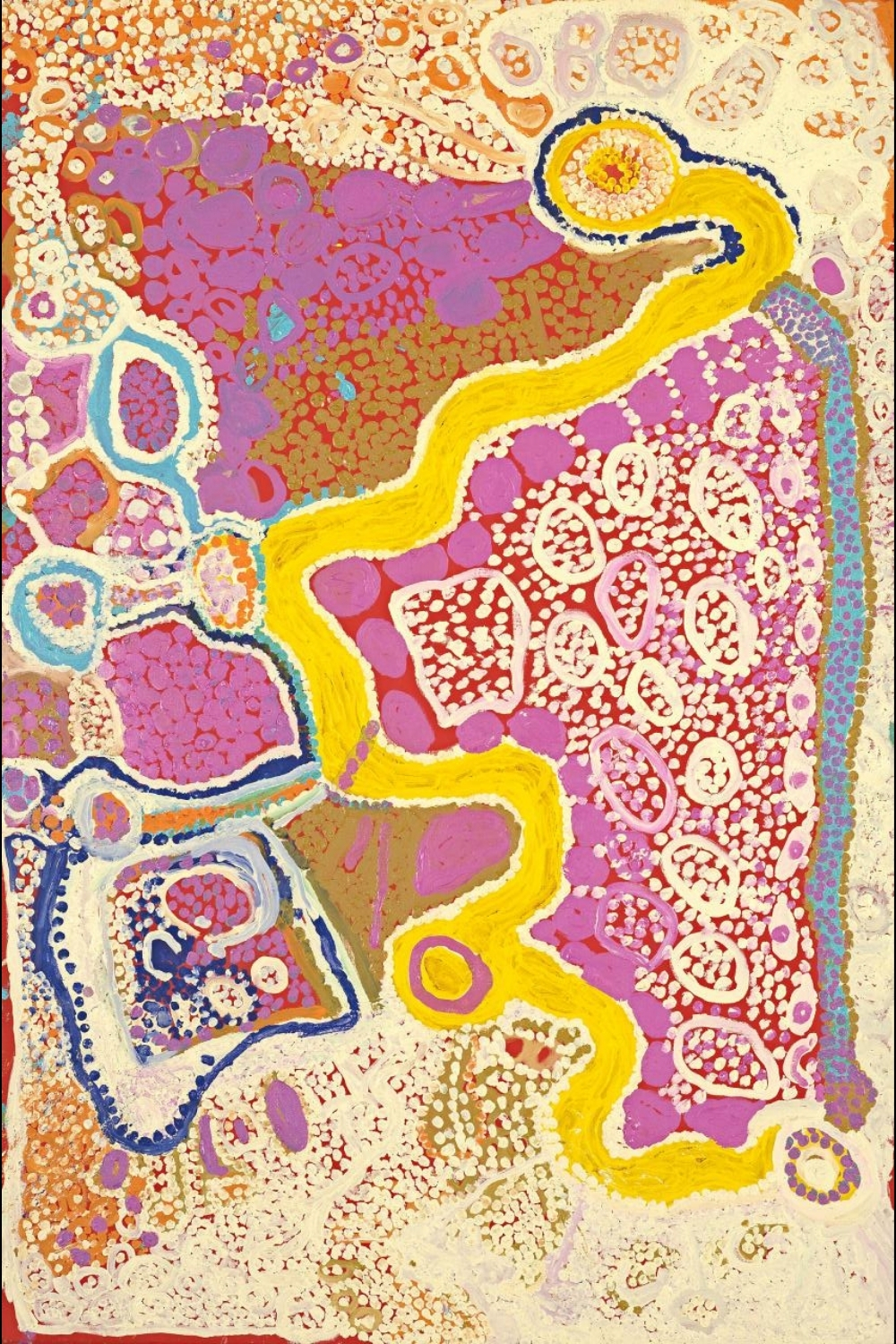
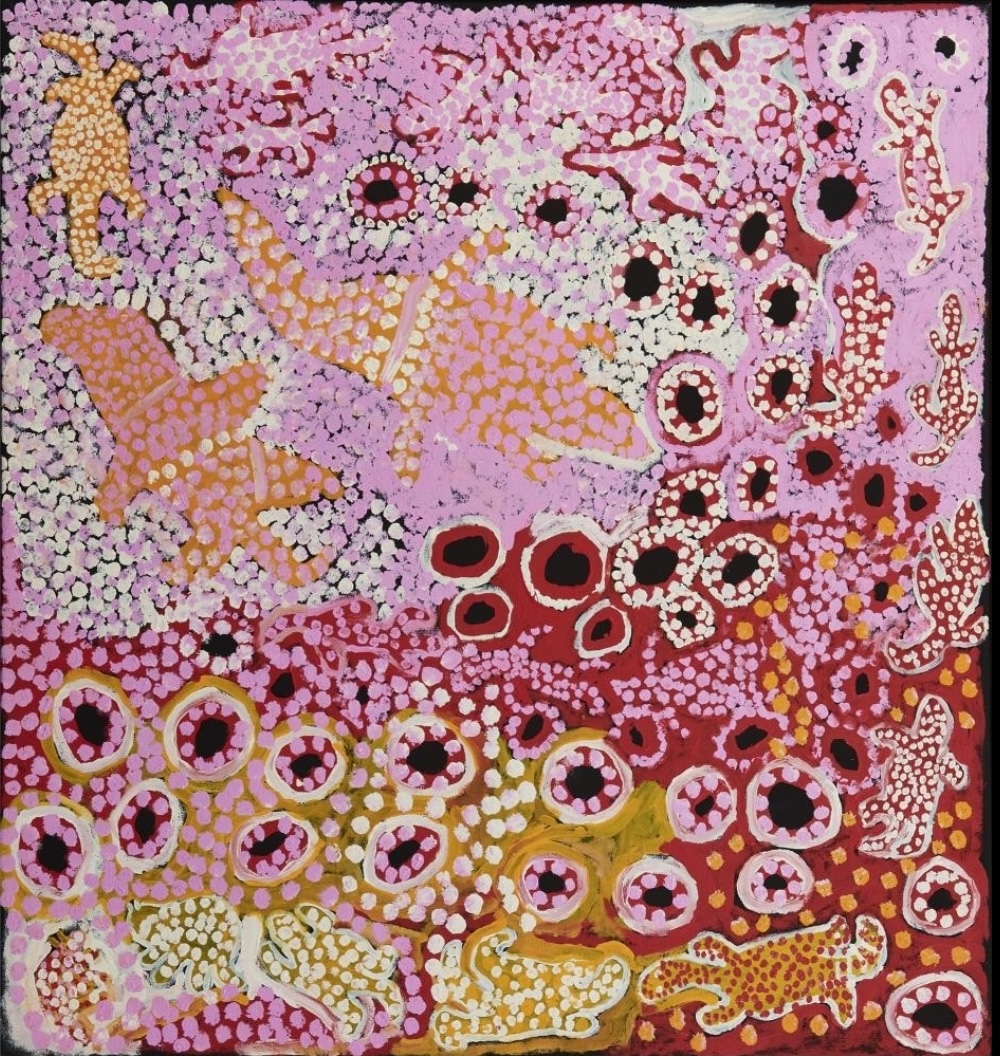
His brushwork gives these paintings much of their energy. Lines twist, intersect and move across broad fields of colour. In the Piltati paintings, those forms can simultaneously describe Wanampi, ancestral movement, tracks and features of Country.
Tiger’s subjects were broader than Wanampi. His paintings also record rockholes, bush foods and desert animals, as well as other ancestral narratives associated with the Mann Ranges. These include the ancestral Ngintaka, or Perentie Man, while works titled Mai Tjuta and Mai Pulka – Plenty Food concern foods traditionally gathered and hunted on Country.
Wanampi nevertheless remained central from the beginning. One of Tiger’s earliest recorded works, Wanampi – Water Snake, dates from 2004, the year he began painting.
Tiger Palpatja value and auction results
Works Offered at Auction: 63
Sale Rate: 56%
Highest Sale: $20,000 AUD
Median Sale Price: $3,000 AUD
For individual artworks, sizes provenance and more please visit the Tiger Palpatja values support page (not yet constructed)
Why Is Tiger Palpatja Important?
Tiger Palpatja had only about eight years to establish himself as a painter, yet developed one of the most distinctive bodies of work to emerge from the APY Lands. He brought to canvas decades of experience as a senior Law man, traditional healer, spear maker and woodcarver.
His paintings are particularly important for understanding Wanampi of Piltati. Rather than presenting the Rainbow Serpent as a single Aboriginal story, Tiger painted ancestral beings belonging to his own Country, connected with particular water sources, landforms and cultural responsibilities. The National Gallery of Victoria has described this imagery as expressing “his identity in the land.”
Tiger’s cultural role also continued beyond painting. In 2010 he was among the senior Pitjantjatjara men who established the Kulata Tjuta (Many Spears) Project at Tjala Arts, bringing senior and younger men together through spear making and the transmission of cultural knowledge.
There is a powerful continuity across Tiger’s life: he made spears long before he painted on canvas, became one of the most distinctive senior painters of the APY Lands, and later helped pass those earlier skills to another generation.
Tiger Palpatja in Public Collections
Despite painting on canvas for only about eight years, Tiger Palpatja is represented in many of Australia’s major public collections. The National Gallery of Victoria holds ten works, while important paintings are also held by:
- National Gallery of Australia, Canberra
- National Gallery of Victoria, Melbourne
- Art Gallery of South Australia, Adelaide
- Art Gallery of New South Wales, Sydney
- Queensland Art Gallery | Gallery of Modern Art, Brisbane
- University of Canberra Art Collection
- Australian National University, Canberra
His Wati Wanampi Tjukurpa (2010) was also selected for The Stars We Do Not See: Australian Indigenous Art, bringing his work into an international survey of major Aboriginal and Torres Strait Islander art.
Further Reading
The National Gallery of Victoria collection records provide detailed accounts of Tiger’s Piltati and Wanampi paintings and the relationship between ancestral narrative and the physical landscape.
D’Lan Contemporary’s Clever Men catalogue places Tiger alongside Harry Tjutjuna and Dickie Minyintiri, examining the relationship between painting, cultural authority and their roles as traditional healers.
The National Gallery of Australia documents Tiger’s involvement in establishing the Kulata Tjuta Project and the importance of spear making and intergenerational cultural transmission.
All images featured in this article are presented strictly for educational and informational purposes.
This website may include copyrighted material for which specific authorization has not been obtained from the copyright owner.
All such images are presumed to be the intellectual property of the respective artist or their estate, and are used in accordance with principles of fair dealing or fair use under applicable copyright law.