
Paddy Japaljarri Stewart: Biography of an Aboriginal Artist
c. 1940–2013
Warlpiri
Mungapunju / Jukurrpa Country
Yuendumu / Papunya
Warlpiri Art / Western Desert Art
Warlukurlangu Artists
Painting, etching and ceremonial ground painting
Paddy Japaljarri Stewart (c.1940–2013), widely known as “Cookie” Stewart, was a senior Warlpiri artist, cultural teacher and ceremonial leader who became one of the foundational figures in the development of contemporary Warlpiri Art at Yuendumu. He was a principal contributor to the Yuendumu School Doors, helped establish Warlukurlangu Artists and later represented Warlpiri art internationally.
Stewart painted Jukurrpa for which he held inherited knowledge and cultural responsibilities. His historical importance, however, extends beyond his paintings. As a teacher, artist and community leader, he helped connect older Warlpiri ceremonial traditions with the emergence of Yuendumu as a major centre of contemporary Aboriginal art.
Although Stewart continued painting in later life, by the 2000s a younger generation—particularly Warlpiri women such as Maggie Watson Napangardi, Dorothy Napangardi and Judy Watson Napangardi, —had achieved far greater international recognition. This can obscure Stewart’s historical importance. He belonged to the pioneering generation that helped create the cultural and institutional foundations upon which the later success of Yuendumu painting was built.
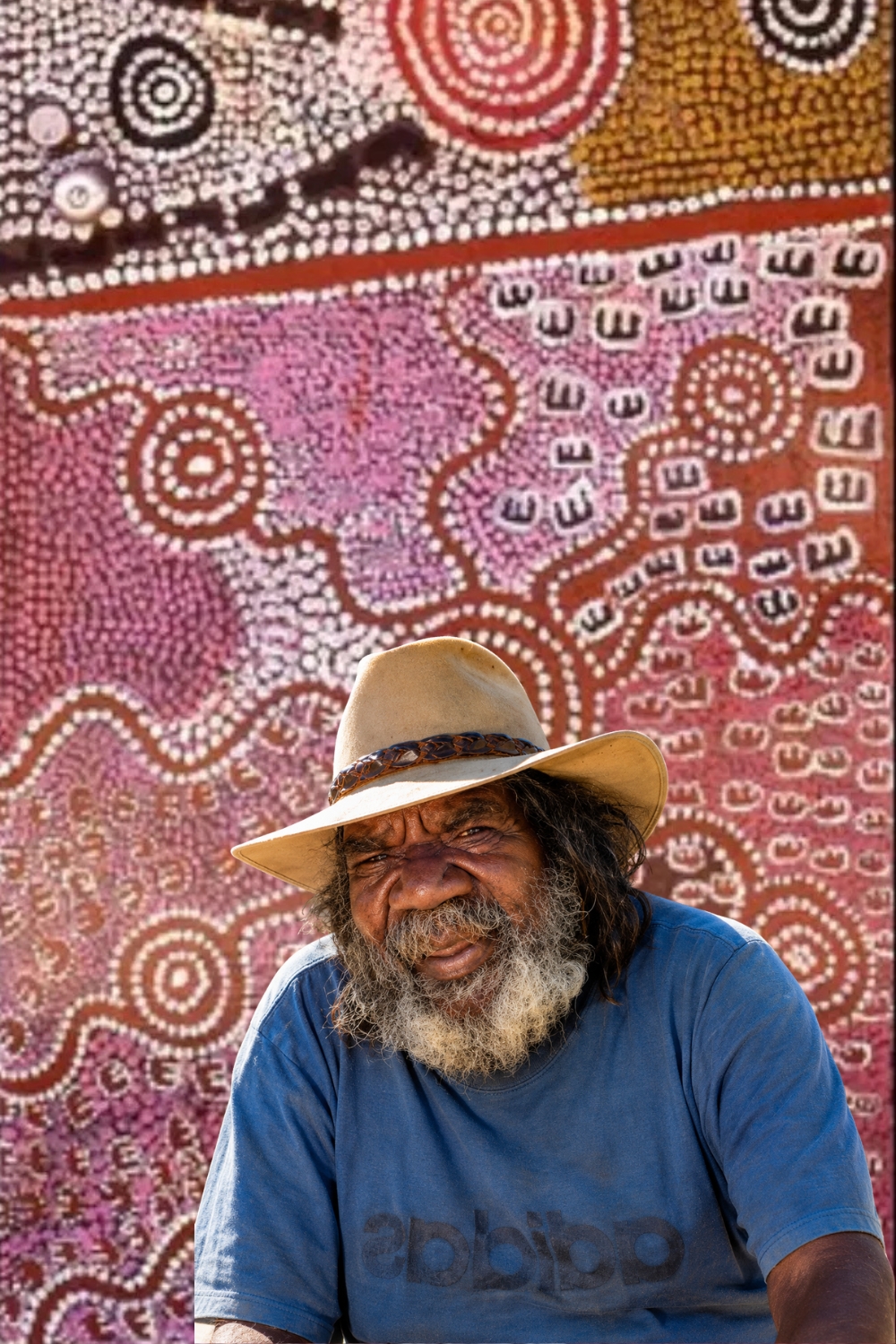
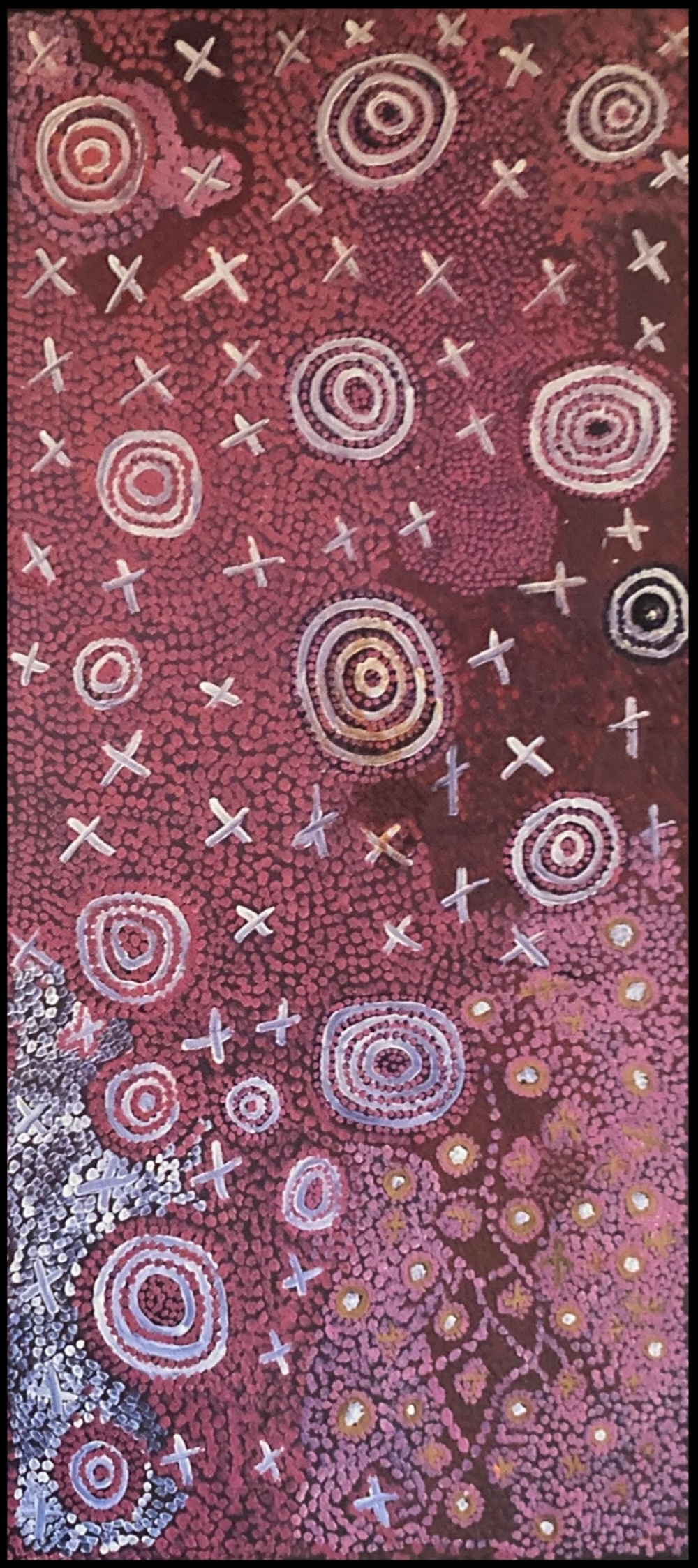
Biography
Paddy Japaljarri Stewart was born around 1940 at Mungapunju, south of Yuendumu in the Northern Territory, although some sources give his birth date as approximately 1935.
As a young man he worked on cattle stations before travelling to Papunya, where he worked as a cook and became known as “Cookie”. He was living there during the formative years of the Western Desert Art movement and was associated with men involved in discussions about painting a mural for the Papunya School. However, he is not documented among the artists who subsequently painted in Geoffrey Bardon’s painting room.
Stewart later returned to Yuendumu, where he became an important cultural teacher. At the local school he taught younger Warlpiri people Jukurrpa, tracking, dancing, sand drawing and traditional skills including boomerang making.
In 1983 Stewart became one of the senior men involved in creating the Yuendumu School Doors. Two years later he was among the senior artists who helped establish Warlukurlangu Artists and subsequently served as chairman of its artists’ committee.
Stewart also represented Warlpiri art internationally. He was included in Dreamings: The Art of Aboriginal Australia, which toured the United States in 1988–89. In 1989 he travelled to Paris with five other Warlpiri men for Magiciens de la Terre, where the group created a large ceremonial ground painting.
Later in his career Stewart and Paddy Japaljarri Sims revisited Jukurrpa represented on the Yuendumu Doors in a suite of 30 etchings produced around 2000–01.
Stewart remained closely associated with Yuendumu and Warlukurlangu Artists throughout his life. He died on 30 November 2013.
Paddy Japaljarri Stewart and the Yuendumu Doors
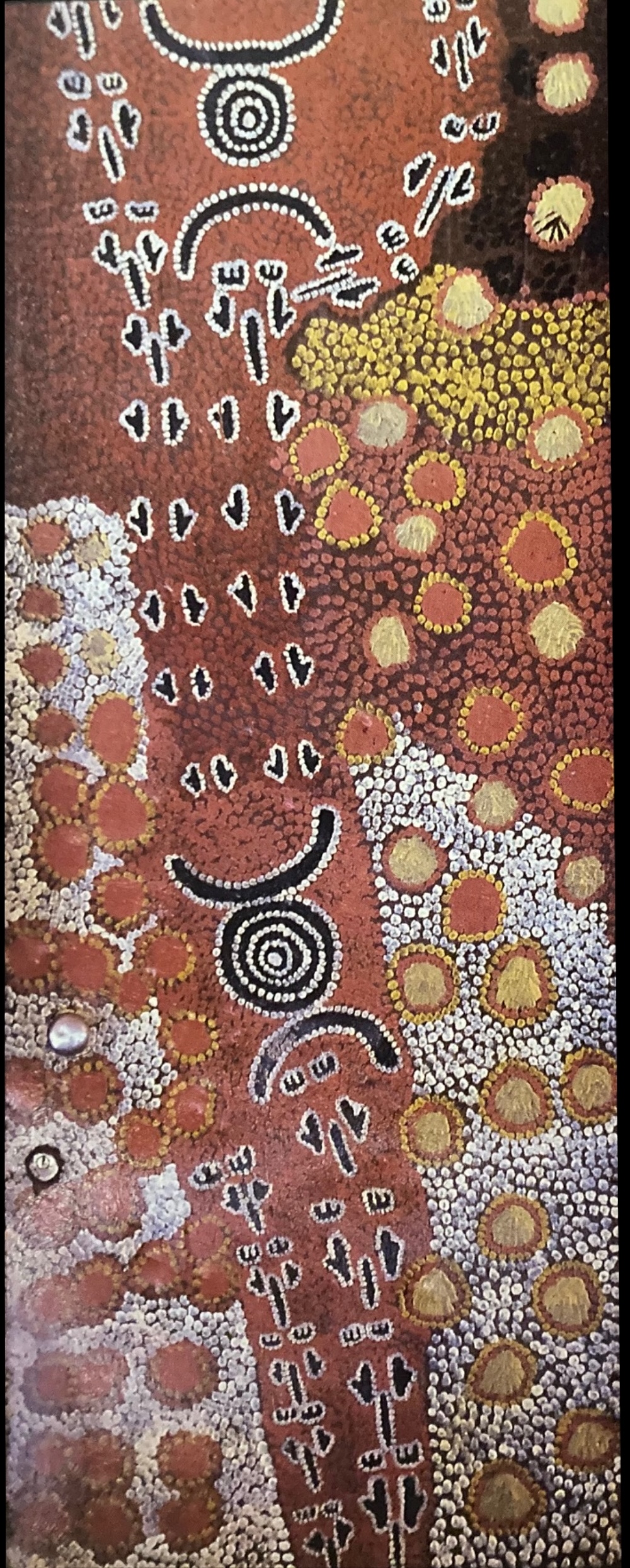
The Yuendumu School Doors are central to understanding Stewart’s importance. In 1983 senior Warlpiri men painted Jukurrpa designs directly onto the doors of the local school, with Stewart becoming one of the principal contributors.
The project brought together his roles as artist and cultural teacher. Created within the community, the Doors helped communicate knowledge of Jukurrpa and Country to younger Warlpiri people attending the school.
They also provide insight into Stewart’s subject matter. Jukurrpa documented in connection with his work include Kangaroo, Budgerigar, Wedge-tailed Eagle, Possum, Rain, Snake, Honey Ant and Yam.
These were not simply representations of animals or plants. Jukurrpa connects ancestral events with places, ceremony, kinship and responsibilities to Country. Stewart used established symbolic forms, including tracks, circles and repeated patterns, to express these relationships.
The continuing importance of the Doors to Stewart is demonstrated by the 30-print etching suite he later produced with Paddy Japaljarri Sims. The original project therefore connects his cultural teaching with his emergence as a contemporary artist.
.
Paddy Japaljarri Stewart’s Legacy
Paddy Japaljarri Stewart’s greatest legacy is his contribution to the Yuendumu School Doors and the development of contemporary Warlpiri painting at Yuendumu. The Doors brought together his roles as a senior Warlpiri man, cultural teacher and artist, using permanent painting to communicate Jukurrpa and knowledge of Country within the community.
This legacy continued with the establishment of Warlukurlangu Artists in 1985, in which Stewart was one of the senior artists involved. He later served as chairman of the artists’ committee. The Aboriginal-owned organisation provided a community-controlled structure through which Yuendumu artists could produce and sell paintings while maintaining connections with Country and cultural authority. It subsequently supported generations of internationally recognised artists, including Maggie Watson Napangardi, Dorothy Napangardi and Judy Watson Napangardi.
Stewart also participated in Dreamings: The Art of Aboriginal Australia and Magiciens de la Terre as Warlpiri painting began reaching major international audiences. His importance, however, rests less on developing an individual painting style than on his role in the emergence of painting at Yuendumu.
Stewart should therefore be remembered as one of the foundational figures of contemporary Warlpiri art, with theYuendumu School Doors at the centre of his artistic and cultural legacy.
For these reasons, Stewart should be remembered as one of the foundational figures in the history of contemporary Warlpiri art at Yuendumu.
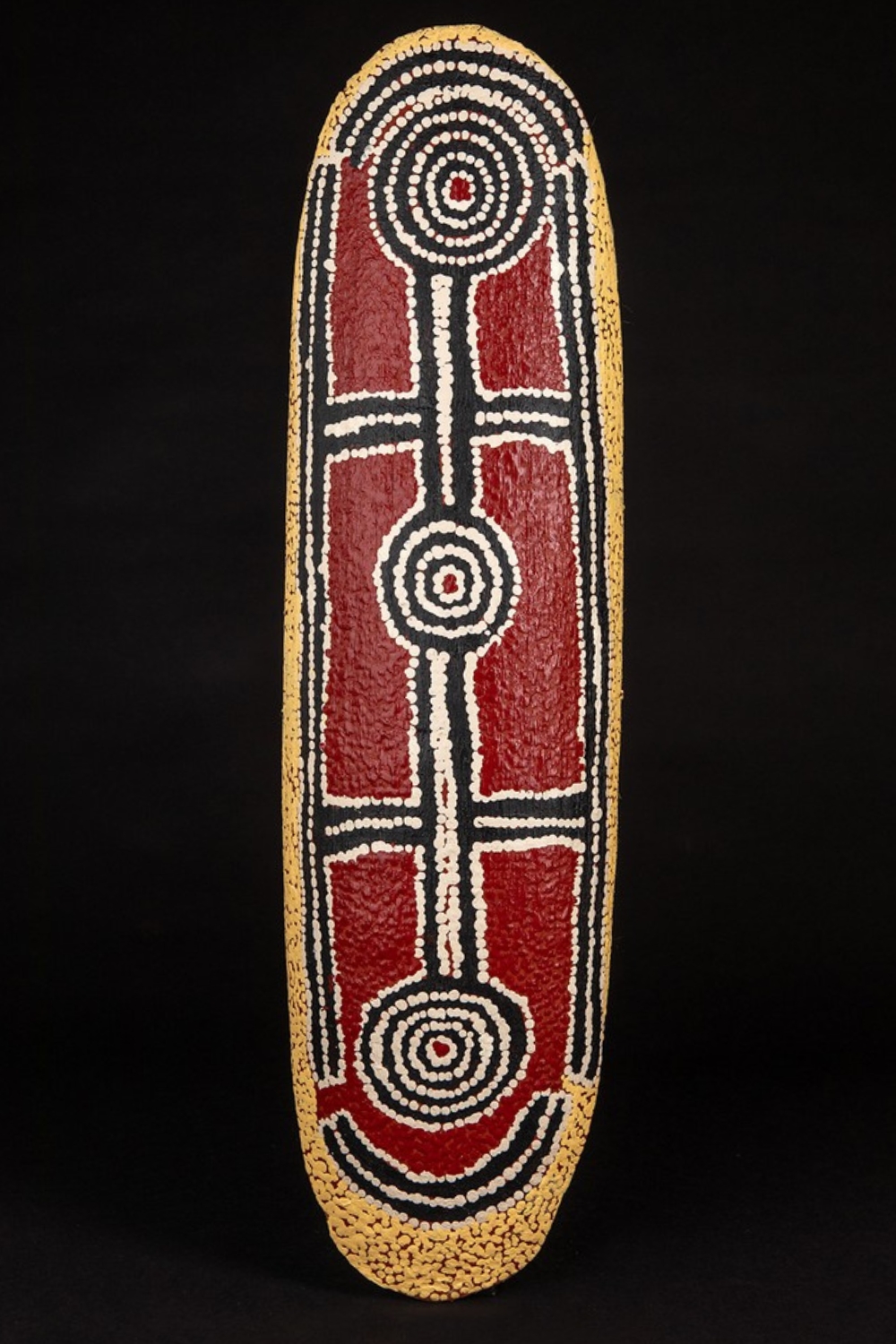
Paddy Japaljarri Stewart Values
Works Offered at Auction: 12
Sale Rate: 58%
Highest Sale: $6,000 AUD
Median Sale Price: $400 AUD
Further Reading
For readers interested in Paddy Japaljarri Stewart and the emergence of contemporary Warlpiri painting at Yuendumu, the following sources are particularly useful:
Warlukurlangu Artists, Kuruwarri: Yuendumu Doors (Australian Institute of Aboriginal Studies, 1987).
All images featured in this article are presented strictly for educational and informational purposes.
This website may include copyrighted material for which specific authorization has not been obtained from the copyright owner.
All such images are presumed to be the intellectual property of the respective artist or their estate, and are used in accordance with principles of fair dealing or fair use under applicable copyright law.