Barbera Weir: Biography, Painting Style and Importance
c. 1922–2006
Anmatyerre / Alyawarre
Atnwengerrp Country, Utopia
Utopia / Central Australia
Utopia Art / Western Desert Art
Painting on canvas
Barbara Weir (1940–2023) was an Anmatyerre and Alyawarre artist associated with Atnwengerrp Country in the Utopia region of Central Australia. The daughter of Minnie Pwerle and great-niece of Emily Kame Kngwarreye, she was removed from her family as a child and spent many years away from her Country and languages before eventually returning to Utopia.
Her life connects several important chapters in modern Aboriginal art. Barbara lived at Papunya as its painting movement emerged in the early 1970s and later worked in batik and painting at Utopia, where Emily became one of Australia’s most celebrated Aboriginal artists. Barbara established her own career before Minnie began painting seriously around 1999–2000, reportedly with her encouragement.
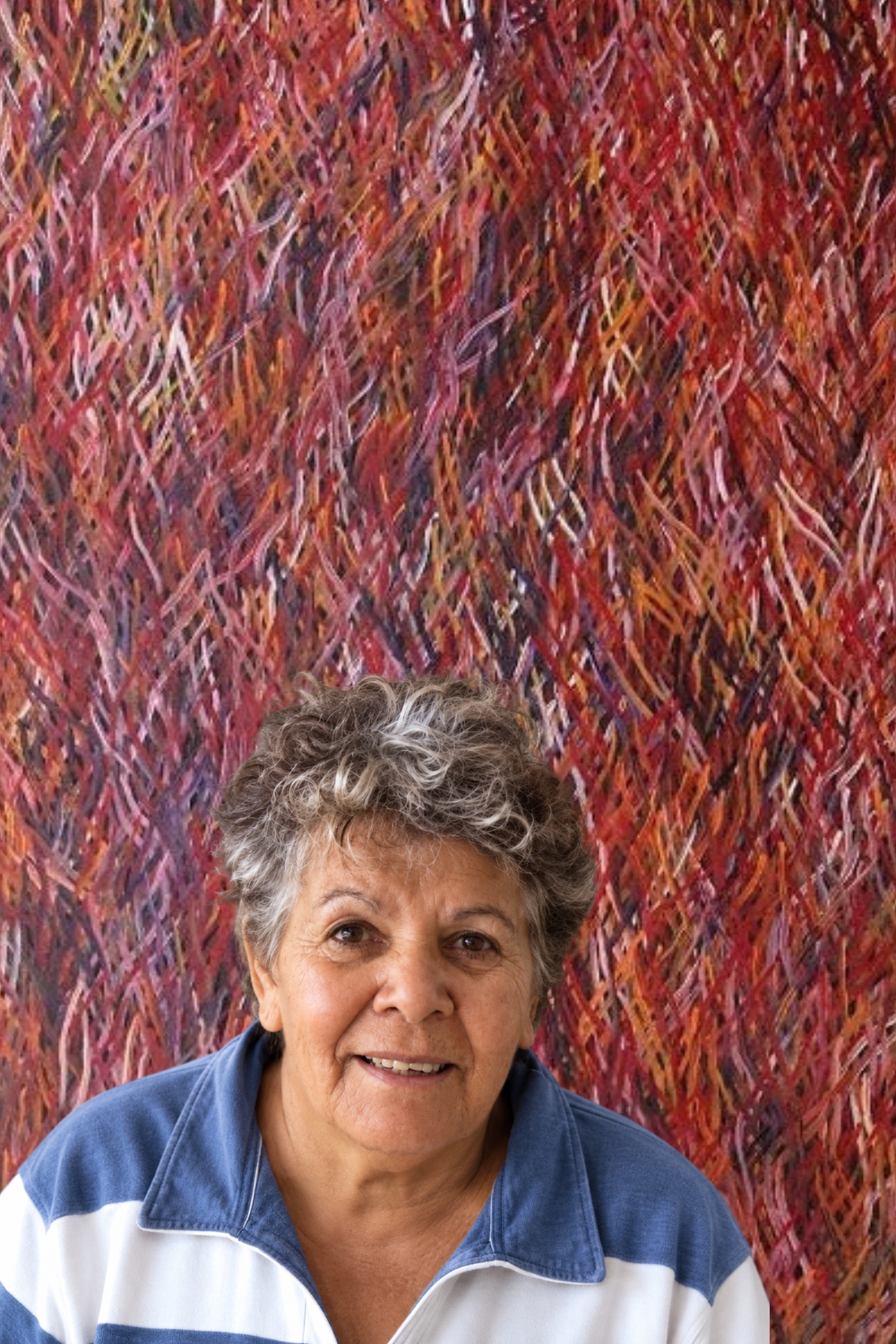
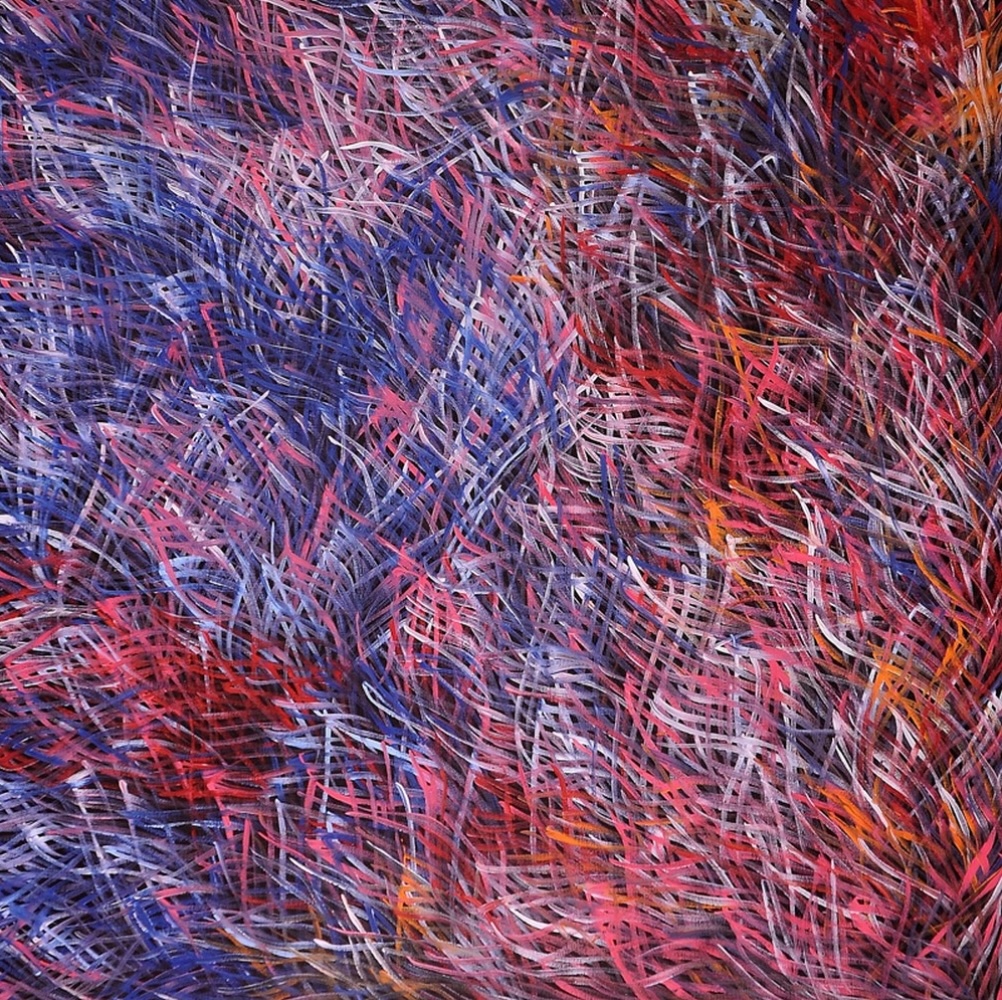
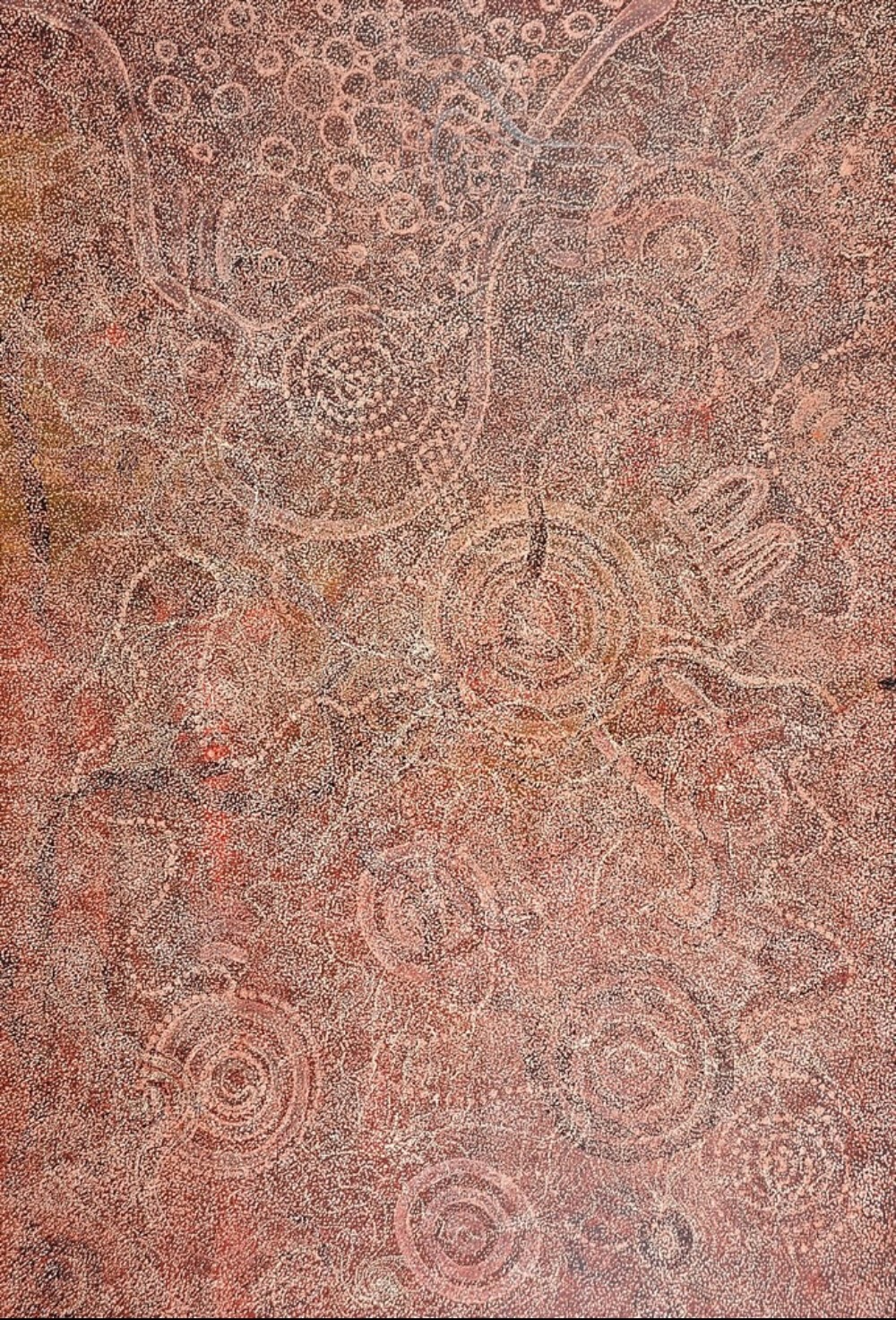
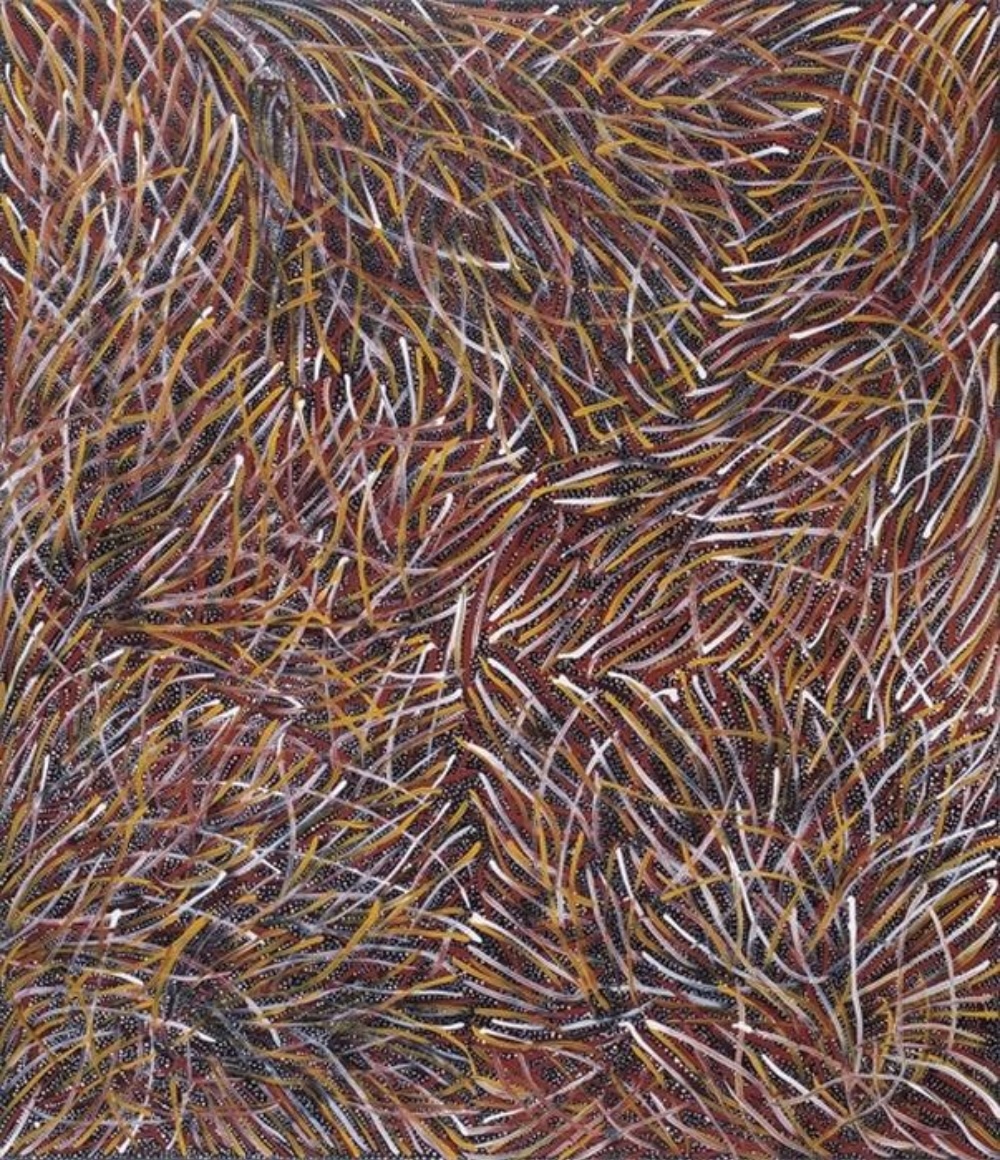
Barbara’s best-known works, including My Mother’s Country and Grass Seed, developed into two distinctive styles: extraordinarily fine fields of dots through which traditional forms subtly emerge, and dense layers of flowing coloured lines associated with the grasses of her Country.
Barbara Weir Biography
Barbara Weir was born in 1940 in the Utopia region northeast of Alice Springs, the daughter of Minnie Pwerle and non-Indigenous station owner Jack Weir. An Anmatyerre and Alyawarre woman associated with Atnwengerrp Country, her precise birthplace is variously recorded as Bundy River Station and Derry Downs Station.
Raised within her extended family, including her great-aunt Emily Kame Kngwarreye, Barbara was hidden from welfare patrols before being taken from Utopia at around nine or ten. She was sent first to Alice Springs, including the Bungalow and St Mary’s Children’s Home, and later to placements in Victoria, Darwin and the Good Shepherd Home at Ipswich. During this long separation Barbara lost her Aboriginal languages, while her family at Utopia came to believe she had died.
After marrying Mervyn Torres, Barbara moved to Papunya around 1968–69, where Torres worked as a field officer. She was living there when the Papunya painting movement emerged in 1971, witnessing artists including Kaapa Tjampitjinpa, Johnny Warangkula Tjupurrula, and Mick Namarari Tjapaltjarri, begin painting Papunya boards.
While at Papunya Barbara discovered that her Utopia family was still alive. She gradually re-established contact, reunited with her mother Minnie Pwerle and continued visiting Utopia before returning permanently in 1977. There she renewed her connection with Atnwengerrp Country, relearned Anmatyerre and Alyawarre and recovered cultural and ceremonial knowledge interrupted by her removal. Emily Kame Kngwarreye again became an important presence in her life.
Barbara became active in community affairs and land rights and later became the first woman president of the Urapuntja Council. She also entered Utopia’s developing artistic world, alongside women including Emily Kame Kngwarreye, Gloria Petyarre, Kathleen Petyarre and Ada Bird Petyarre.
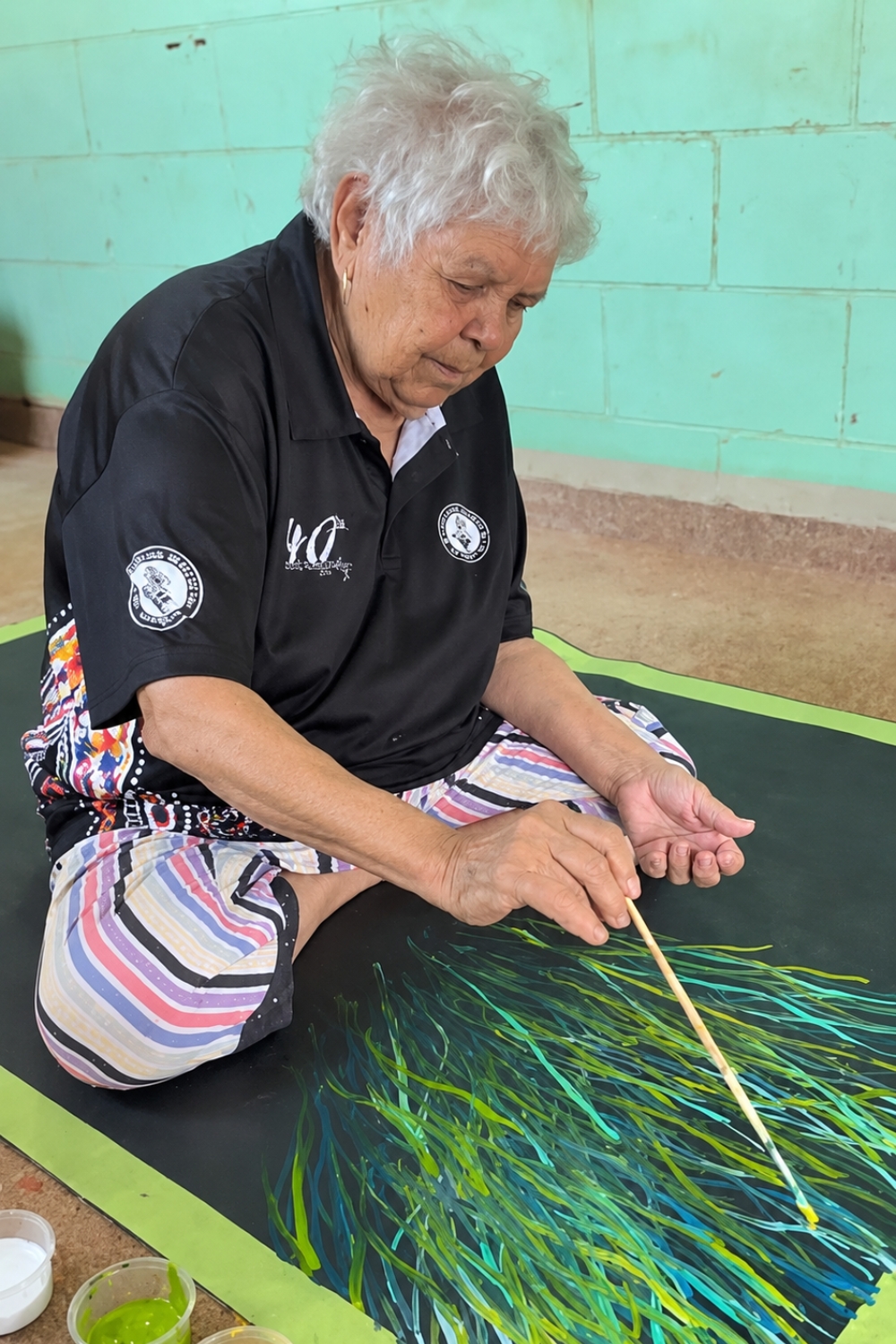
Barbara worked in batik before becoming best known as a painter. A batik attributed to her is dated 1988, she participated in a Utopia-Indonesian batik exchange in 1994, and the Art Gallery of South Australia holds her 1999 silk batik Grass seed. Sources differ over exactly when she began painting in acrylics, placing the transition between the late 1980s and early 1990s. By 1997, however, both Grass Seed Dreaming and My Mother’s Country are documented.
As Emily’s international career developed, family accounts describe Barbara helping her navigate the commercial art world. Barbara was herself already established when Minnie Pwerle began painting seriously around 1999–2000, reportedly with Barbara’s encouragement. Minnie’s later Awelye and Bush Melon paintings consequently followed Barbara’s own development through batik and painting.
Barbara remained closely connected with the wider Utopia artistic community. Kathleen Petyarre was a close relative, while Ada Bird Petyarre, Gloria Petyarre and other Petyarre artists formed part of the artistic world around her. In 2001 Barbara and Gloria exhibited together in Two Women – Dreamings in Santa Fe, New Mexico.
Barbara Weir Painting Style and Subjects
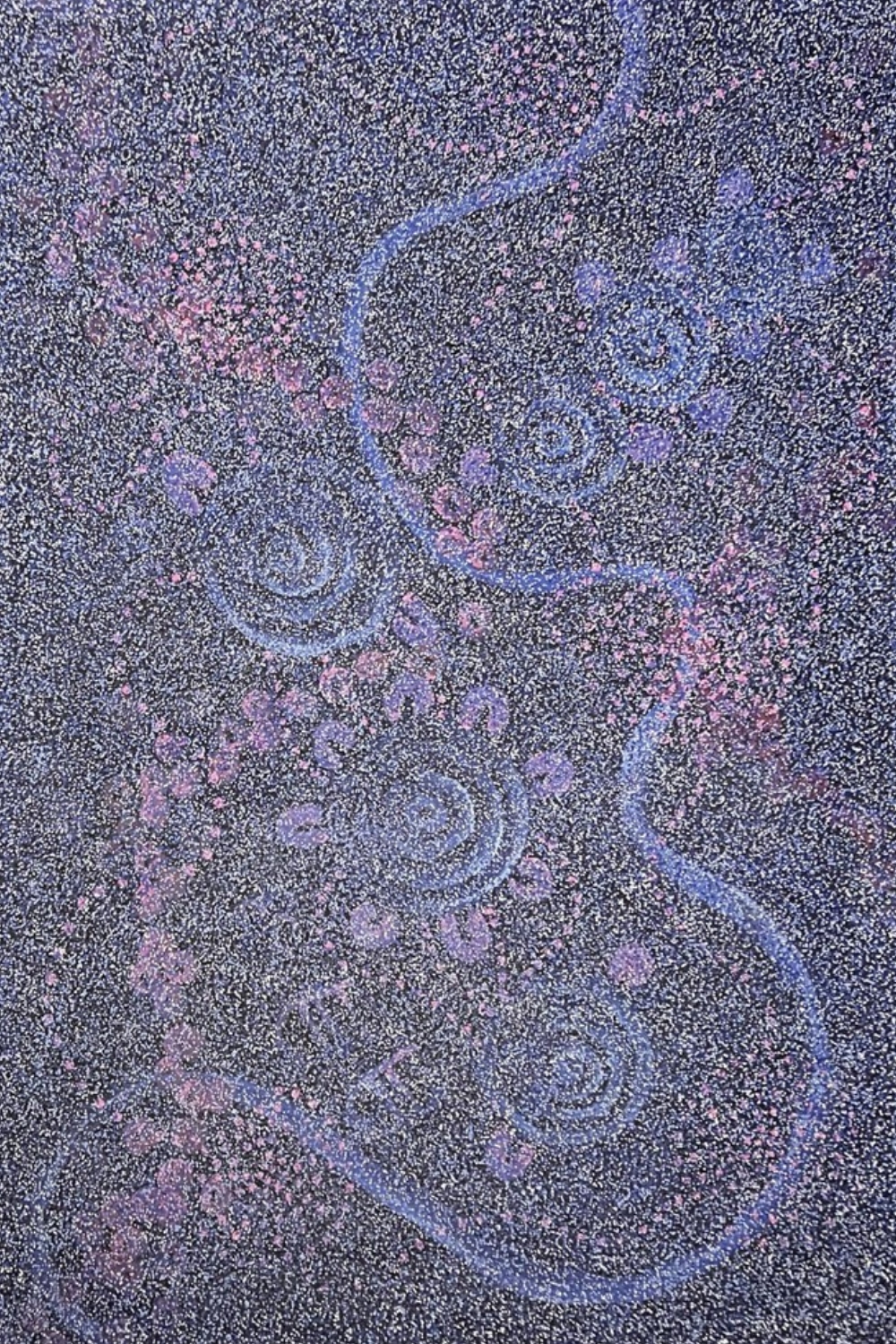
Barbara Weir developed two distinct and immediately recognisable painting styles, both grounded in her relationship with Atnwengerrp Country. Her My Mother’s Country paintings are built from extraordinarily fine fields of dots through which traditional forms appear almost like shadows, while her Grass Seed paintings use thousands of fine overlapping lines of colour to create dense, flowing surfaces.
Although these became her best-known bodies of work, Barbara also painted Awelye, Bush Berry, Wildflowers and subjects concerned with women’s ceremonial knowledge, plants and the creation and regeneration of Country. Her paintings can appear highly abstract, but their origins lie in Country, cultural knowledge and the natural environment of Utopia.
My Mother’s Country
My Mother’s Country became one of Barbara Weir’s most important subjects. The paintings relate to Atnwengerrp Country and carry particular biographical significance because this was the Country from which Barbara had been removed as a child and to which she eventually returned.
Barbara covered these paintings with thousands of extremely fine dots. Traditional Western Desert forms, including concentric circles, pathways and other underlying structures, remain visible but are rarely strongly outlined. Instead, they emerge through subtle changes in the colour and density of the dots, appearing almost like shadows beneath the surface.
Awelye and women’s ceremonial knowledge also informed aspects of this imagery. Designs associated with women’s ceremony and body painting connected Barbara’s work with cultural practices she renewed after returning to Utopia.
Grass Seed
Grass Seed and Grass Seed Dreaming became Barbara’s other major body of work. Their subject comes from the native grasses and plant life associated with her Country, but Barbara did not depict individual plants as conventional botanical images.
Instead, she developed a dramatically different visual language based on masses of thin, elongated lines of colour. These marks are repeatedly layered over one another, curving and changing direction across the canvas. Different colours intermingle to create dense surfaces filled with movement, suggesting grasses bending, overlapping and moving across Country.
The contrast between the two bodies of work is striking: My Mother’s Country is constructed from minute dots and subtle traditional forms, while Grass Seed is built from layer upon layer of flowing coloured lines. Despite looking very different, both are fundamentally paintings of Barbara Weir’s relationship with Country rather than abstract pattern for its own sake.
Why Is Barbara Weir Important?
Barbara Weir occupies an unusual position in the history of modern Central Australian Aboriginal art. She lived at Papunya as its painting movement emerged in the early 1970s, years before becoming a professional artist herself. After returning to Utopia, she worked in batik and became part of the artistic environment from which one of the most important groups of Aboriginal women artists would emerge.
Her relationships add another dimension to that history. Emily Kame Kngwarreye had helped care for Barbara as a child and later became one of Australia’s most celebrated Aboriginal artists. Barbara established her own career before her mother, Minnie Pwerle, began painting seriously around 1999–2000. Barbara’s life therefore connects Papunya, the Utopia batik movement, Emily Kame Kngwarreye and the later emergence of Minnie Pwerle without her work being simply an extension of any of them.
Most importantly, Barbara’s biography and her art are unusually closely connected. She was removed from Utopia as a child, spent many years away from her family and languages, rediscovered her family as an adult and eventually returned permanently to her Country.
That history gives My Mother’s Country particular significance. For Barbara Weir, Country was not merely a subject to be represented on canvas. It was something from which she had been separated, returned to, and rebuilt her relationship with.
Barbera Weir Value and Auction results
Works Offered at Auction: 192
Sale Rate: 65%
Highest Sale: $26,000 AUD
Median Sale Price: $2,200 AUD
To view individual select artworks along with dimensions provenance and sales prices please ivsit the Barbera Weir value page
Further Reading
- Utopia Revisited
- Minnie Pwerle — illustrated publication exploring the artist and her work.
- Lisa Congdon, A Glorious Freedom: Older Women Leading Extraordinary Lives (Chronicle Books, 2017)
All images featured in this article are presented strictly for educational and informational purposes.
This website may include copyrighted material for which specific authorization has not been obtained from the copyright owner.
All such images are presumed to be the intellectual property of the respective artist or their estate, and are used in accordance with principles of fair dealing or fair use under applicable copyright law.