Mawalan Marika: Master of the Bark Painting Tradition and Rirratjingu Leader
1908–1967
Yolŋu
Rirratjingu clan, Dhuwa moiety
Rirratjingu Country, North-East Arnhem Land
Yirrkala
Yirrkala Art / North-East Arnhem Land Art
Bark painting and sculpture
Mawalan Marika was one of the foundational figures in the history of Yirrkala Art and is widely regarded as one of the great masters of Aboriginal bark painting. Senior leader of the Rirratjingu clan of north-east Arnhem Land, Mawalan combined artistic authority, ceremonial knowledge, and political leadership at a pivotal moment in the emergence of Yolŋu bark painting onto the national and international stage. His influence extended across an entire generation of artists, including his younger brother Mathaman Marika, his son Wandjuk Marika, and contemporaries such as Birrikidji Gumana and Mithinari Gurruwiwi, all of whom helped establish Yirrkala as one of the great centres of Aboriginal Australian art.
Born before sustained European presence in his Country, Mawalan became one of the most important Yolŋu cultural intermediaries of the twentieth century. He worked closely with anthropologists including Charles Mountford and Ronald Berndt, contributing to some of the earliest documented studies of Arnhem Land ceremony, song, and sacred clan design. His bark paintings were among the first commissioned for wider audiences and entered major institutional collections during the 1950s through figures such as Tony Tuckson at the Art Gallery of New South Wales.
Mawalan’s bark paintings are celebrated for their refined rarrk crosshatching, restrained ochre palette, and powerful compositional structure balancing ceremonial geometry with figurative ancestral imagery. As senior director of the Dhuwa moiety section of the monumental Yirrkala Church Panels and a leading figure behind the Yirrkala Bark Petitions, Mawalan helped establish bark painting not only as a major artistic tradition, but also as a profound expression of Yolŋu law, identity, and land ownership.
This page provides guidance for collectors, researchers, and art owners seeking to identify and assess bark paintings by Mawalan Marika, with particular focus on early works, stylistic characteristics, and factors influencing value. If you own a bark painting or sculpture by Mawalan Marika and are considering selling, or would like to know its value, you are welcome to send images together with dimensions for a confidential assessment.
The Style of Mawalan Marika: Innovation Within the Bark Painting Tradition
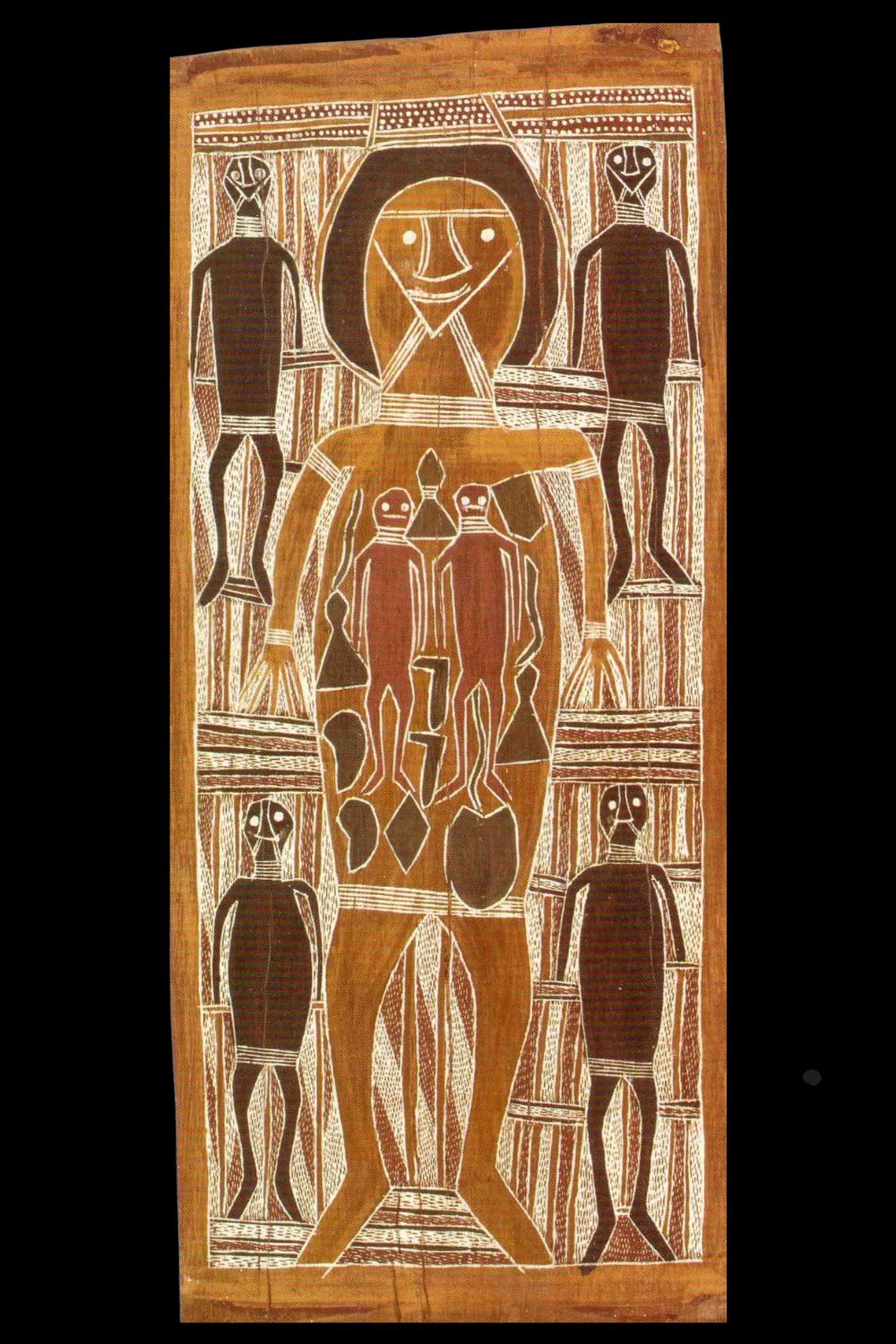
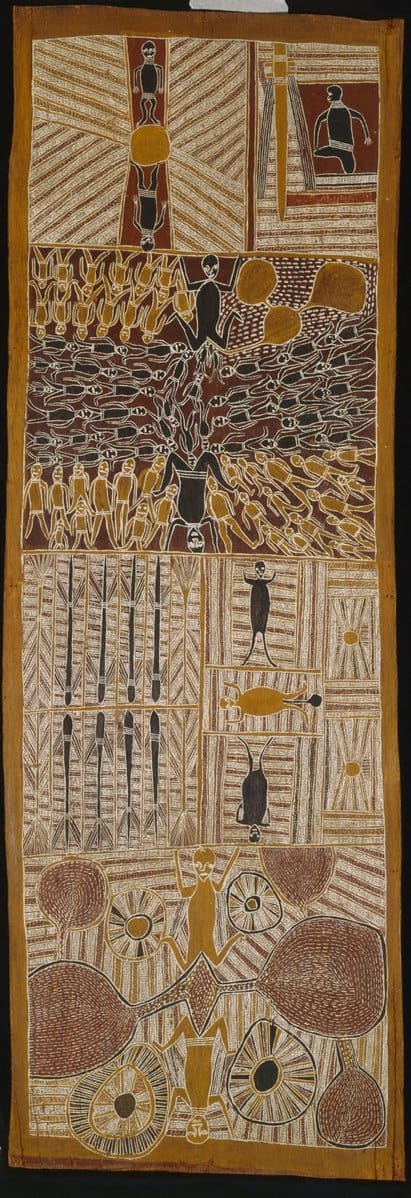
The artistic style of Mawalan Marika, senior leader of the Rirratjingu clan and one of Arnhem Land’s most important bark painters, is distinguished by its balance of ceremonial authority and visual innovation. His paintings are characterised by delicate rarrk (cross-hatching), meticulously applied in fine yellow ochres, whites, and reds. Typically, these fields of rarrk are divided into interrelated sections by straight or diagonal lines, creating a rhythmic geometric structure across the bark surface. Within these lattices, Marika incorporated motifs of ancestral figures, totemic animals, and abstract clan designs, weaving together sacred narratives with a remarkable sense of order and clarity.
Left: Milky Way Creation Story
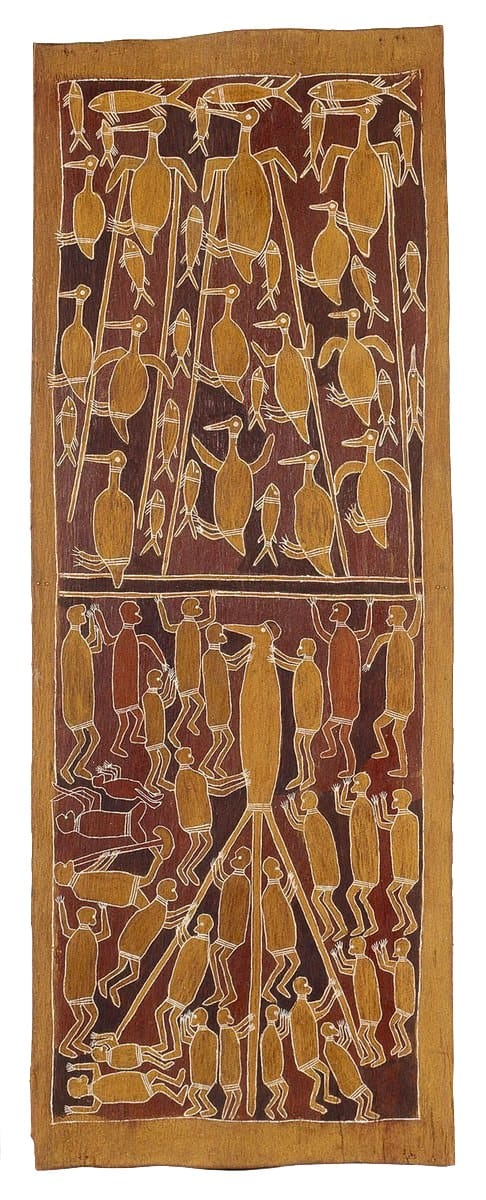
A hallmark of Mawalan Marika’s oeuvre is his masterful use of yellow ochre, a tonal preference that imbues his works with a luminous warmth. His early aboriginal bark paintings often focus solely on rarrk clan patterns, with little or no figuration, emphasising the primacy of sacred design. However, as the Aboriginal art market developed in the mid-20th century and collectors sought figurative imagery, Marika increasingly integrated larger human and animal forms into his compositions. These later works highlight a striking contrast: the intricate precision of his rarrk set against the bold simplicity of his figures.
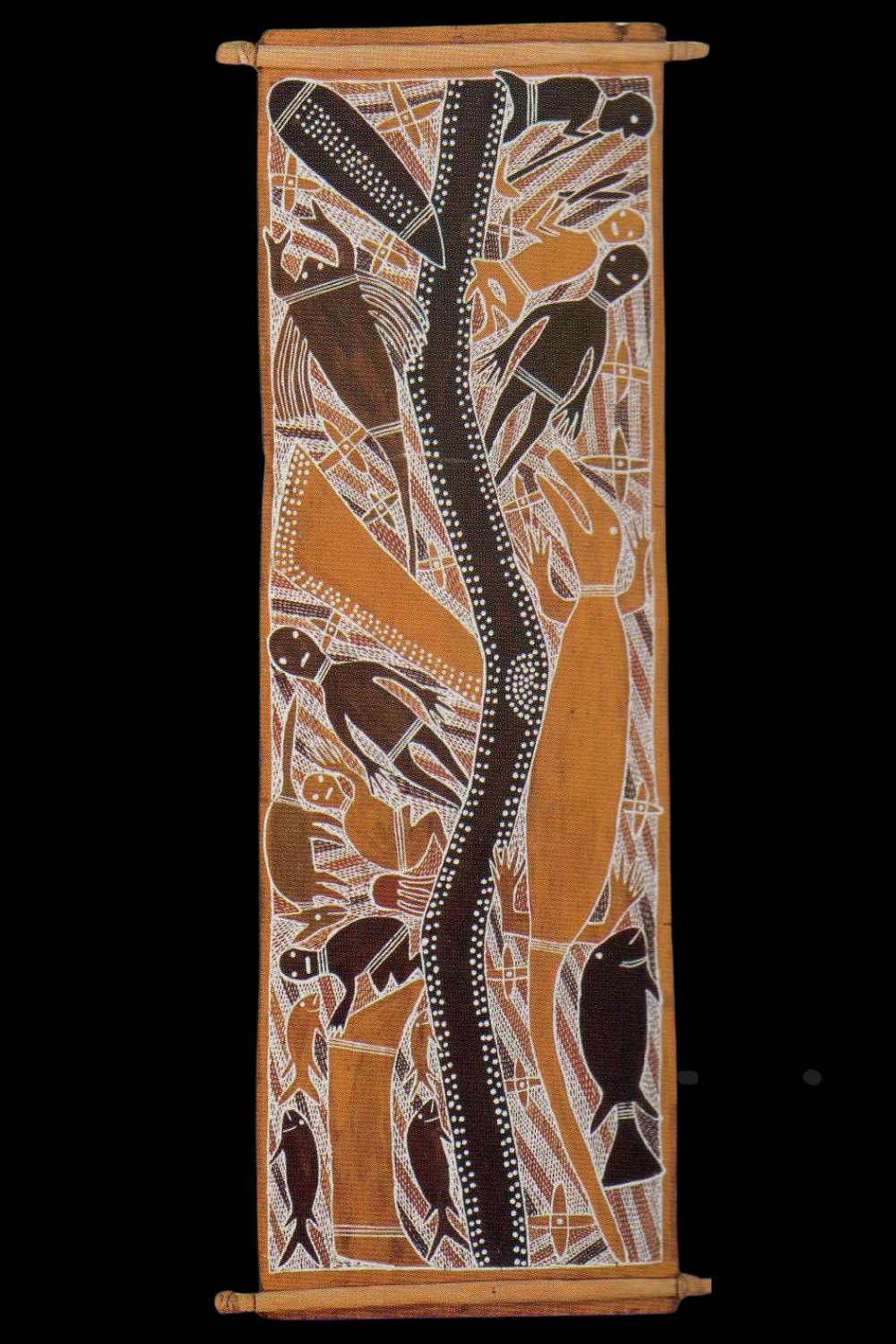
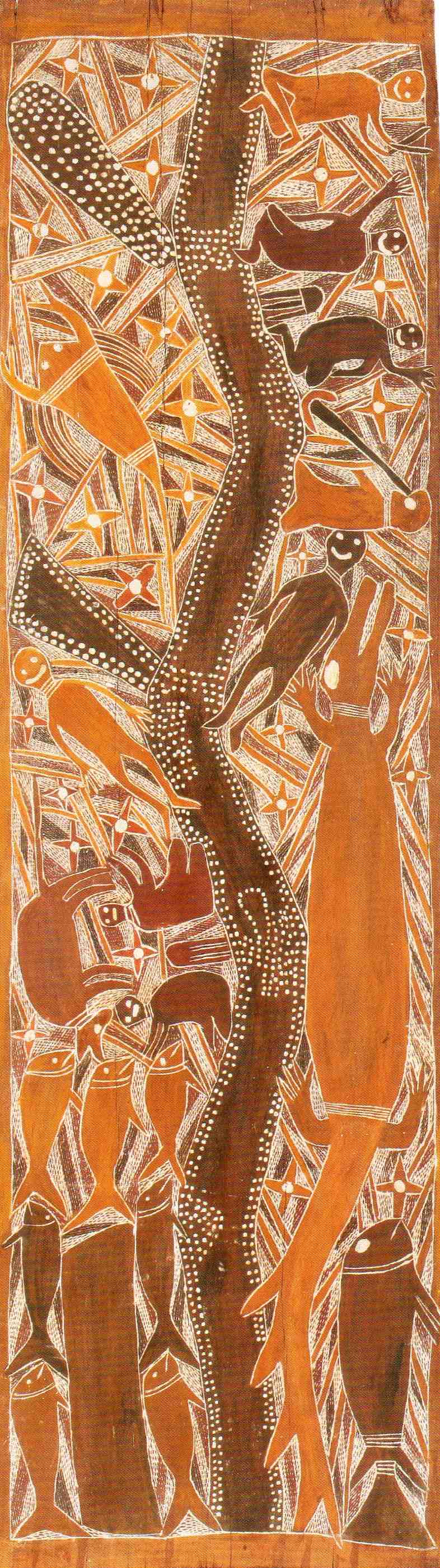
Marika was also a revolutionary artist who, while grounded in tradition, was not afraid to push beyond customary conventions. Some of his late paintings abandon rarrk altogether, adopting broader compositional fields and, at times, introducing dotting techniques more commonly associated with Central Arnhem Land. He also painted some biblical stories such as that on the Right. Alongside contemporaries such as Munggurrawuy Yunupingu, he pioneered episodic or panel-style bark paintings, creating sequential narrative formats that expanded the possibilities of the medium.
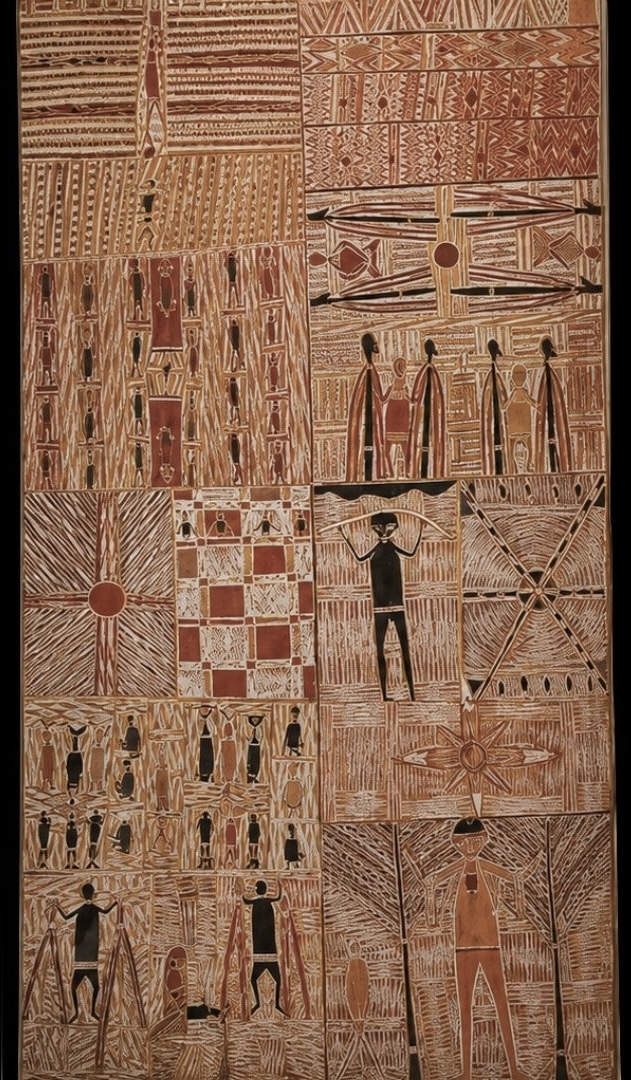
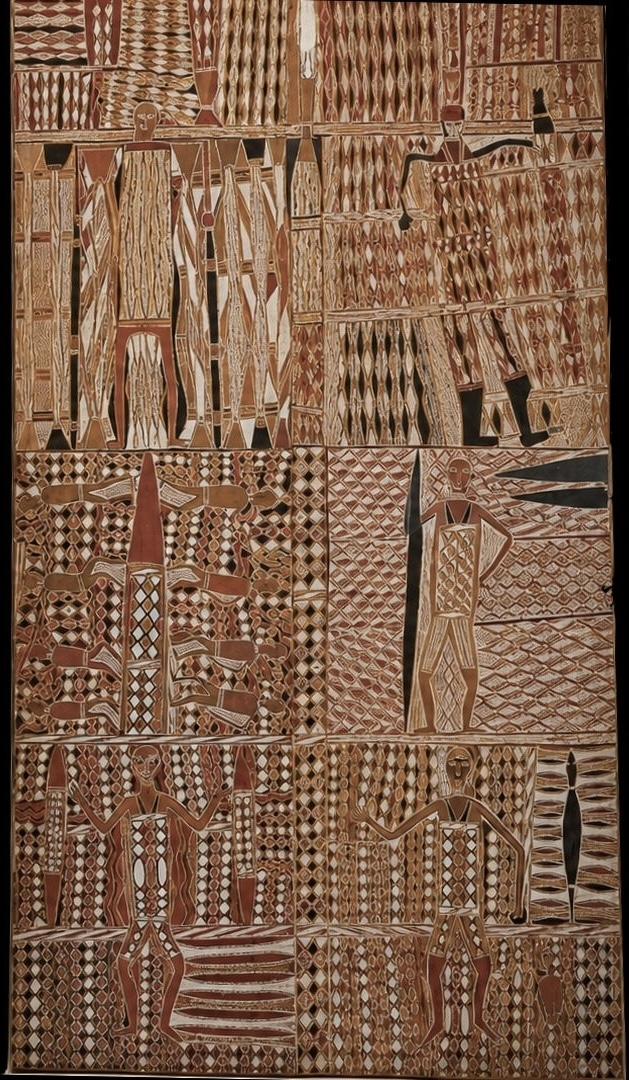
The Yirrkala Church Panels
The Yirrkala Church Panels created in 1962–63 are among the most important works in the history of Yirrkala Art and Aboriginal Australian art more broadly. Painted for the new Methodist church at Yirrkala, the panels represented a groundbreaking assertion of Yolŋu cultural authority, embedding sacred clan designs and ancestral law within a Christian religious setting. Today they are recognised not only as masterpieces of bark painting, but also as foundational political and ceremonial statements preceding the Yirrkala Bark Petitions and the Aboriginal land rights movement.
The two panels were divided according to the two great Yolŋu ceremonial moieties:
- Dhuwa
- Yirritja
This division was not simply organisational but reflected the fundamental structure of Yolŋu society itself. Every Yolŋu clan, ancestral being, ceremony, song, and sacred design belongs to either the Dhuwa or Yirritja moiety. Together the two moieties create balance within Yolŋu law, ceremony, kinship, and cosmology. The Church Panels therefore functioned not merely as artworks, but as visual declarations of the entire Yolŋu sacred and social order.
The Dhuwa Panel was directed primarily by Mawalan Marika and included artists such as Mathaman Marika, Wandjuk Marika, Mithinari Gurruwiwi, Larrtjanŋa Ganambarr, Mutitjpuy Munuŋgurr, Munaparriwi, and Gunguyama. These artists painted sacred Dhuwa clan designs, ancestral narratives, and ceremonial imagery associated with their respective clan estates and Dreamings.
The Yirritja Panel was directed primarily by Birrikidji Gumana and included Gawirrin Gumana, Munggurrawuy Yunupingu, Narritjin Maymuru, Yanggarriny Wunungmurra, Watjun Marika, Jarrkujarrku, and Nanyin. Their contributions incorporated sacred Yirritja clan designs, miny’tji patterns, and ancestral narratives linked to sea Country, ceremonial law, and the Laintjun traditions.
The Church Panels were revolutionary because they publicly revealed aspects of sacred clan identity and ceremonial law through monumental collaborative painting. They also demonstrated that Yolŋu bark painting was not simply decorative art, but a sophisticated intellectual, spiritual, and legal system encoded through rarrk crosshatching, clan designs, and ancestral imagery.
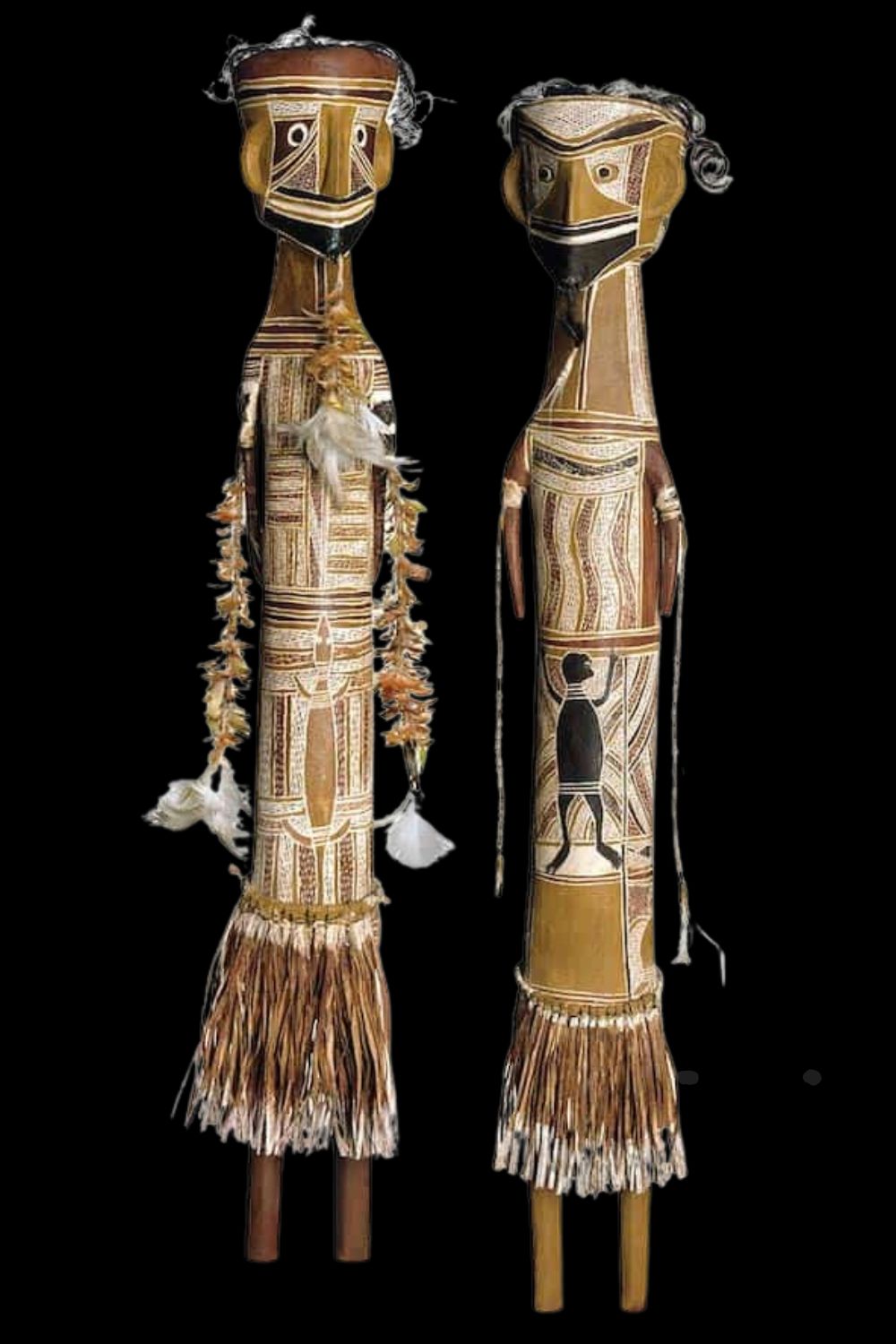
Aboriginal Sculpture
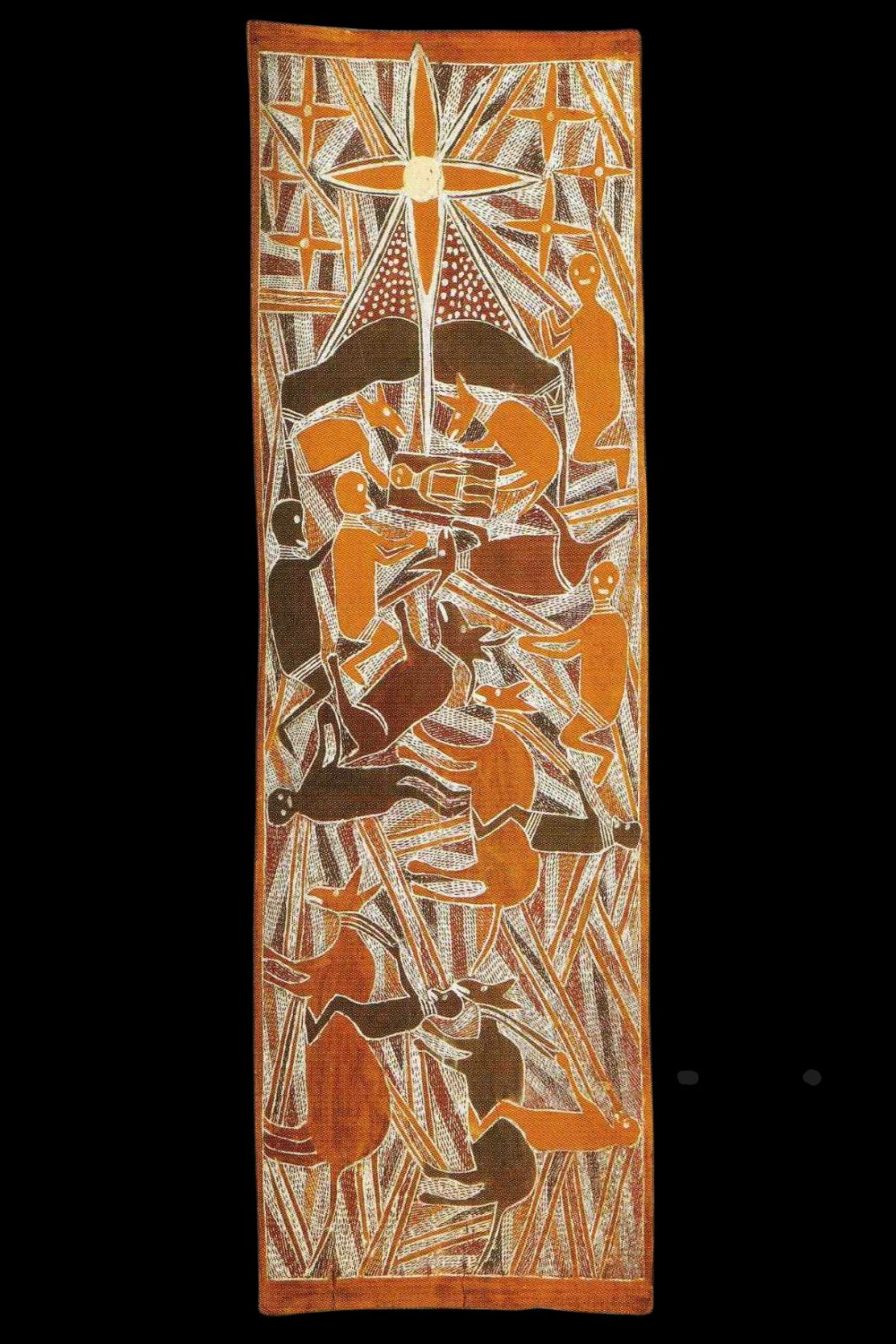
Although known as a Bark Painter Mawalan created some of the greatest painted sculpture in Arnhem Land. These figures have great clarity and form. They are often superbly painted and finished with feather attachments.
Yirrkala Aboriginal Sculptures are very collectible in their own right and were also made by Birrikidji Gumana and Narritjun Maymura
Opposite two ancestral dieties from the Sisters of the Sun dreamtime story
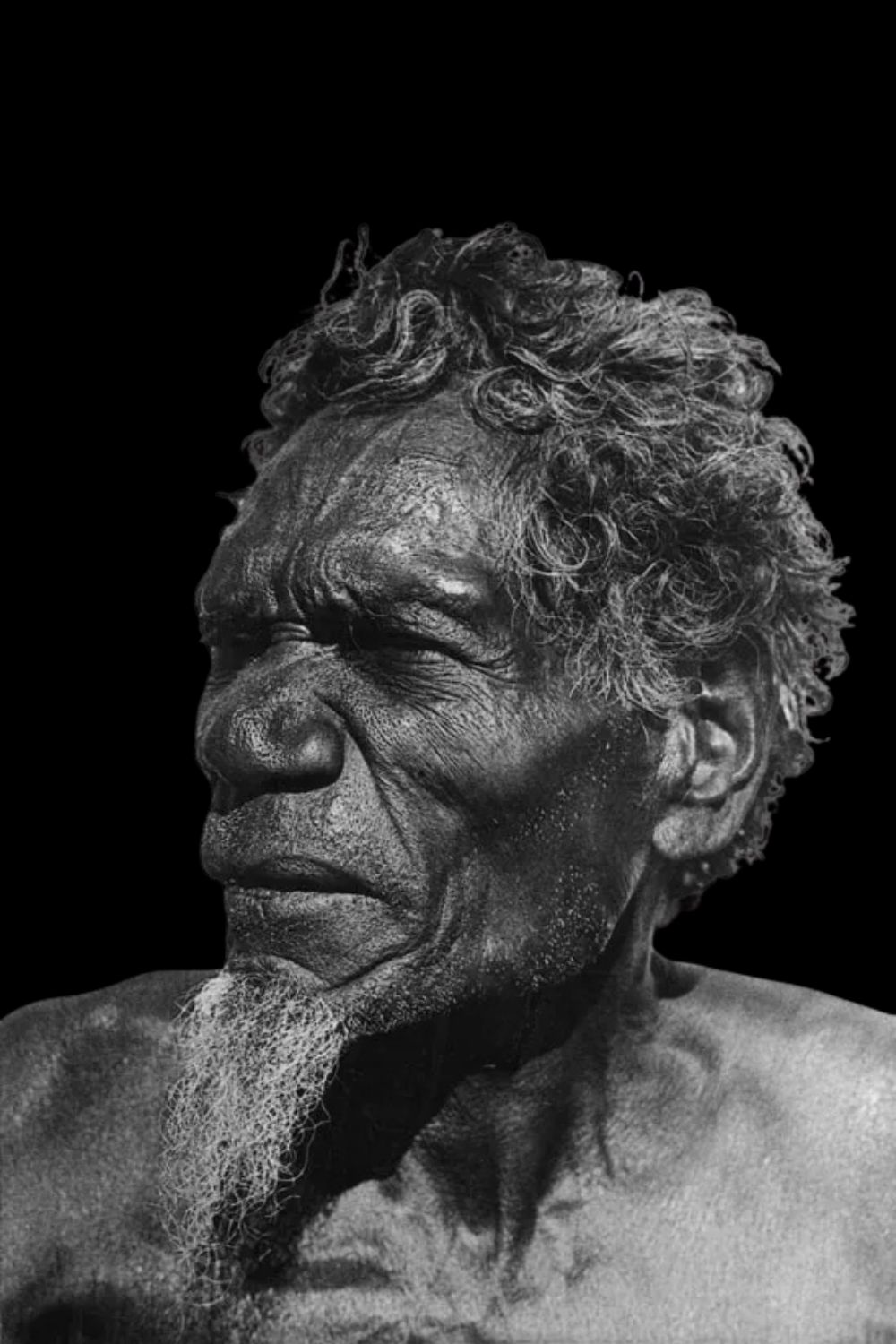
Biography of Mawalan Marika: Rirratjingu Leader, Bark Painter, and Land Rights Pioneer
Mawalan Marika (1908–1967), senior leader of the Rirratjingu clan of North-East Arnhem Land, occupies a central place in the history of Aboriginal bark painting and the political struggle for land rights. Born before the pressures of intensive European colonisation transformed his homeland, Marika embodied both the preservation of ancestral law and the adaptation of Yolŋu art to new contexts. His deep ceremonial authority made him a principal informant for pioneering anthropologists including Charles Mountford and Ronald and Catherine Berndt, whose foundational studies of Arnhem Land song poetry and cosmology relied heavily on his knowledge.
As one of the first Yolŋu artists commissioned by missionary Wilbur Chaseling, and later by Dr. Stuart Scougall and Tony Tuckson of the Art Gallery of New South Wales, Marika’s paintings became some of the earliest bark works to enter major institutional collections. His artistry was shared within a remarkable lineage: his younger brother, Mathaman Marika, and his son, Wandjuk Marika, both became highly respected painters, continuing the family’s artistic legacy.
Beyond art, Marika was a statesman and activist. He played a defining role in the fight for Aboriginal land rights in the 1960s, helping to draft the historic Yirrkala Bark Petition (1963). This document, presented to the Commonwealth Parliament, remains a landmark in Australian history—the first formal assertion of Indigenous land ownership, articulated through the medium of bark painting. His progressive vision extended to gender roles in art: in the 1960s he taught his daughters Banduk Marika and Dhuwarrwarr Marika to paint sacred clan designs, a bold departure from tradition that reshaped the trajectory of Yolŋu women in the arts.
Today, the enduring significance of Mawalan Marika’s bark paintings is celebrated in public collections worldwide, including the acclaimed Old Masters: Australia’s Great Bark Artists exhibition at the National Gallery of Australia. His legacy unites artistry, cultural authority, and political vision.
Mawalan’s younger brother Mathaman Marika and son Wandjuk were also well-respected bark Painters
The Market for Mawalan Marika: Collectability and Auction History
The market for Mawalan Marika, one of the great pioneers of bark painting from North-East Arnhem Land, reflects both the historical importance of his career and the evolving recognition of Aboriginal art as fine art rather than ethnography. Painting actively across two decades during the mid-20th century, Marika’s work paralleled that of his Western Arnhem Land contemporary Yirawala, and together with leaders such as Munggurrawuy Yunupingu and his son Wandjuk Marika, he helped position Yolŋu art at the centre of Australia’s cultural identity. His output is comparatively rare: only 43 paintings by Mawalan Marika have appeared at auction, yet an impressive 80% have sold, underscoring consistent demand among collectors.
Record prices have been achieved for works of strong provenance and narrative complexity. Notable examples include The Seagull (1962), collected by Dr. Stuart Scougall and exhibited internationally at the Qantas Gallery in New York in 1963, and The Milky Way, later illustrated in Lewis Allan’s Time Before Morning and John Rudder’s An Introduction to Arnhem Land Bark Paintings. Sotheby’s sold both works in 2005, confirming renewed market confidence in Marika’s oeuvre. His previous record, Warrana (c. 1960), had stood since 1999 when it surpassed its $15,000–$25,000 estimate to realise $34,500 for the Kerry Stokes Collection.
As with many Yirrkala bark painters, price performance varies according to subject and complexity. Works conveying sacred stories with intricate rarrk cross-hatching and layered composition attract significantly higher prices than those with simpler figurative imagery. Maruma – Story of a Burial (c. 1960), for example, Daymirri (The Whale) (c. 1964) sold for $4,800 in 1997 and $4,600 in 2003.
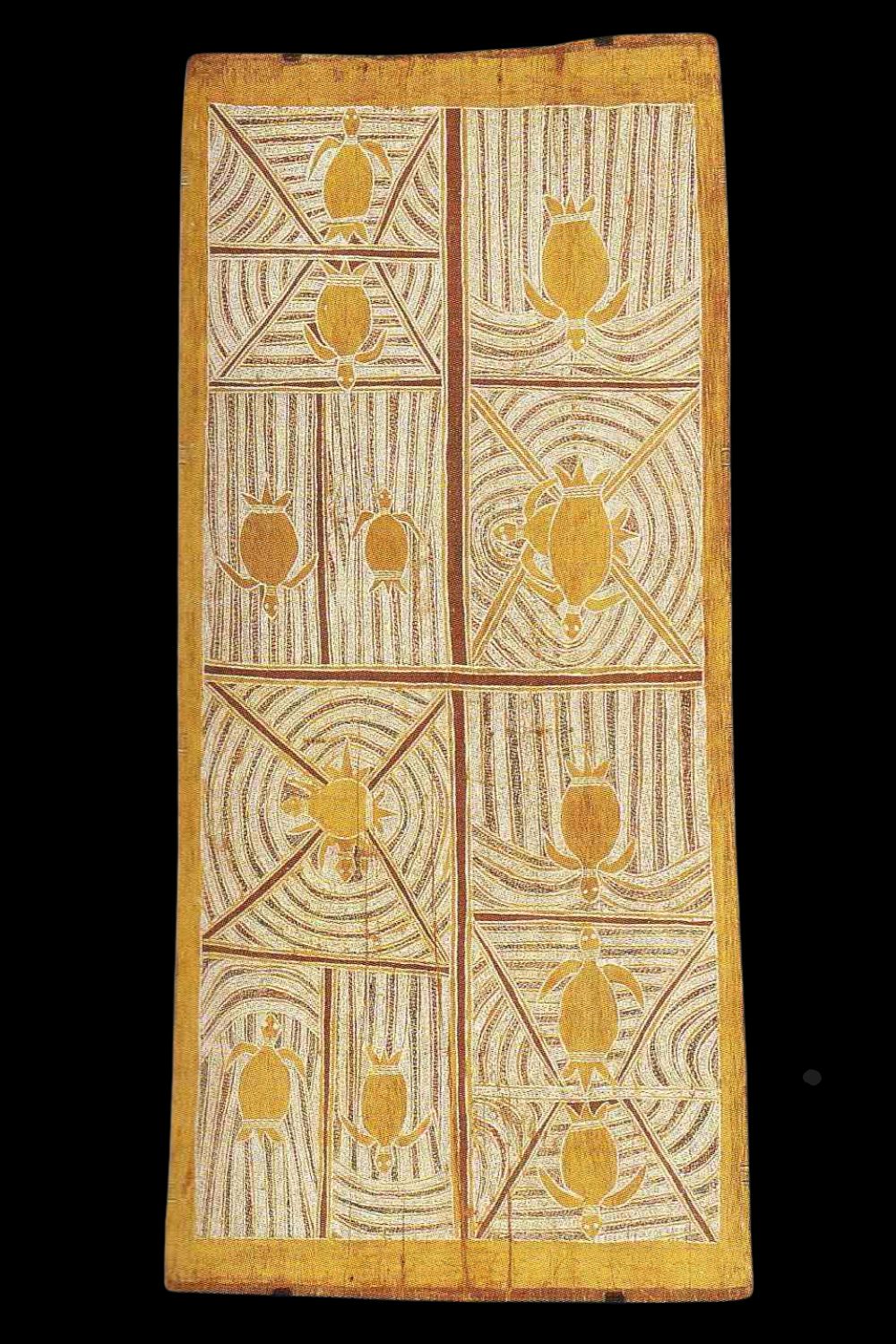
Three Mawalan Marika Artworks explained
Click on image
All images featured in this article are presented strictly for educational and informational purposes.
This website may include copyrighted material for which specific authorization has not been obtained from the copyright owner.
All such images are presumed to be the intellectual property of the respective artist or their estate, and are used in accordance with principles of fair dealing or fair use under applicable copyright law.
Frequently Asked Questions About Mawalan Marika
Who was Mawalan Marika?
Mawalan Marika (1908–1967) was a senior Yolŋu leader of the Rirratjingu clan from north-east Arnhem Land and one of the most important early bark painters of the Yirrkala region. He combined artistic mastery with ceremonial authority and political leadership, playing a key role in shaping both Aboriginal art and the early Indigenous land rights movement.
Why is Mawalan Marika important in Aboriginal art?
Mawalan Marika is significant because he was among the first artists to translate sacred clan designs onto bark for wider audiences while maintaining their cultural integrity. His work helped establish Arnhem Land bark painting as a major art form and influenced later generations of artists from Yirrkala and beyond.
What is the Yirrkala Bark Petition and what was his role?
The Yirrkala Bark Petitions were presented to the Australian Parliament in 1963 to protest mining on Yolŋu land. Mawalan Marika was a leading figure behind these petitions. They are historically important because they combine art and law—using bark painting as evidence of land ownership and cultural authority.
How can I identify a bark painting by Mawalan Marika?
Paintings by Mawalan Marika can often be recognised by:
- finely executed rarrk (cross-hatching)
- a strong use of yellow ochre tones
- structured, balanced compositions divided into distinct sections
- imagery relating to clan stories, often tied to creation narratives and ancestral beings
Comparing known works is essential, as many Arnhem Land artists share similar visual languages but differ in execution and detail.
What stories did Mawalan Marika paint?
Mawalan Marika painted important clan narratives from Rirratjingu Country, including creation stories, ancestral journeys, and cosmological themes such as the Milky Way. These paintings are not simply decorative—they encode knowledge, law, and identity connected to specific land and ceremony.
Are Mawalan Marika paintings valuable?
Yes, bark paintings by Mawalan Marika are highly collectible. Value depends on factors such as:
- age (earlier works are generally more important)
- provenance (museum or collection history)
- condition
- size and complexity of the composition
Works with strong provenance and early dates are particularly sought after by collectors and institutions.
What is rarrk cross-hatching?
Rarrk is a traditional Arnhem Land painting technique involving fine cross-hatched lines applied with a thin brush. It creates a shimmering optical effect and is used to convey both aesthetic refinement and cultural meaning. Mawalan Marika was a master of this technique.
Can I sell a Mawalan Marika bark painting?
Yes. If you own a painting that you believe may be by Mawalan Marika, you can send clear images (front and back), dimensions, and any known history for assessment. Expert evaluation can help determine authenticity and market value
Mawalan Marika Bark painting Images
The following images are not a complete list of works. The images give a good idea of the style and variety of the artist.