Wingu Tingima: Biography and Painting style
c. 1920–2010
Pitjantjatjara
Nyumun / Kuru Ala, Seven Sisters Country
Irrunytju / Nyapari
APY Lands Art / Western Desert Art
Painting on canvas
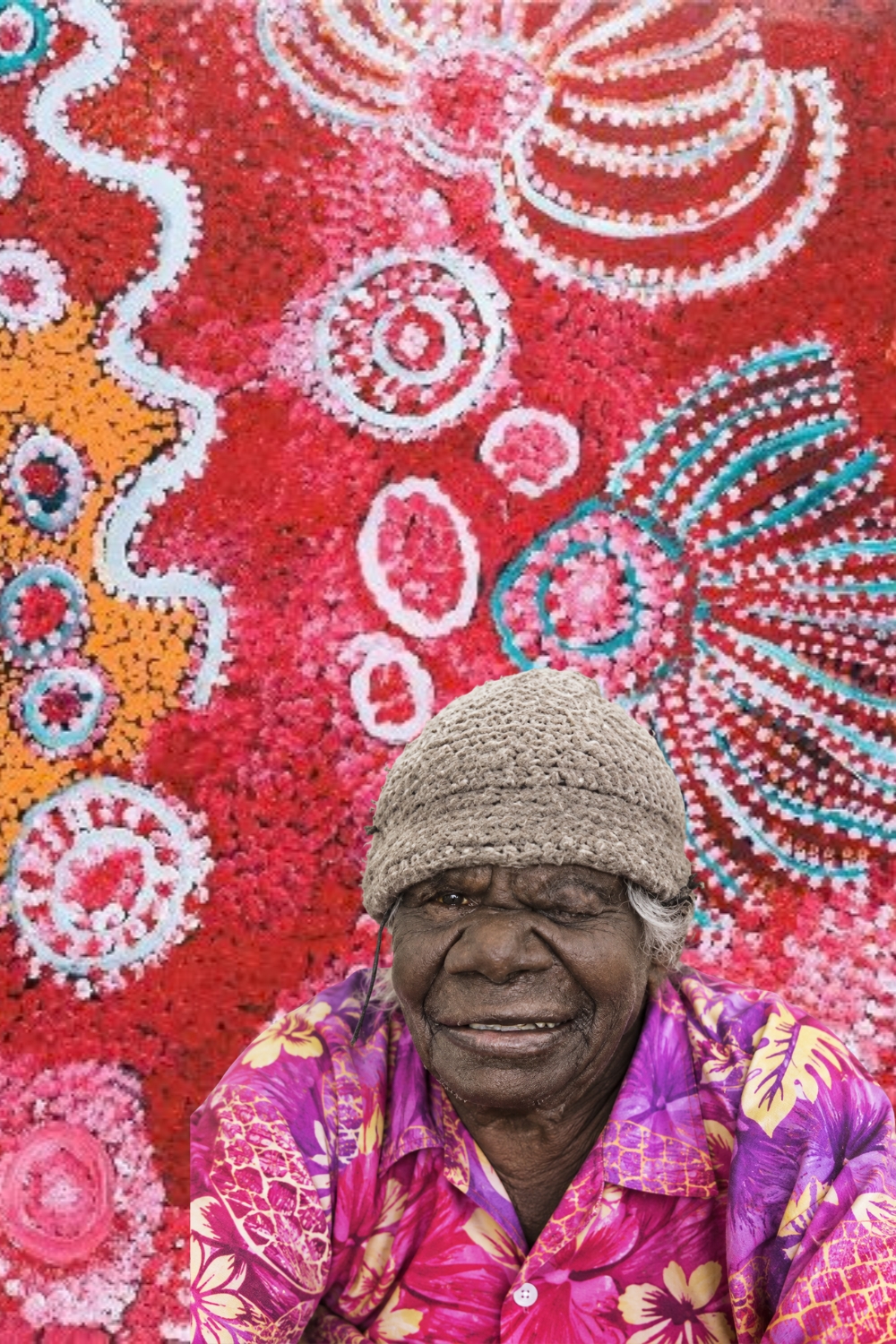
Wingu Tingima was a senior Pitjantjatjara woman and one of the most distinctive painters to emerge from the western APY Lands and adjacent Western Desert region. Born at Nyumun, a rockhole near Kuru Ala in Western Australia, she began painting on canvas late in life, bringing to it decades of knowledge of Country, Tjukurpa, ceremony and women’s artistic practice.
Her principal subject was Kungkarrakalpa, the Seven Sisters Dreaming, particularly the important women’s site of Kuru Ala. She also painted Nyumun, Pukara, Nyapari and other places and Tjukurpa connected with her Country.
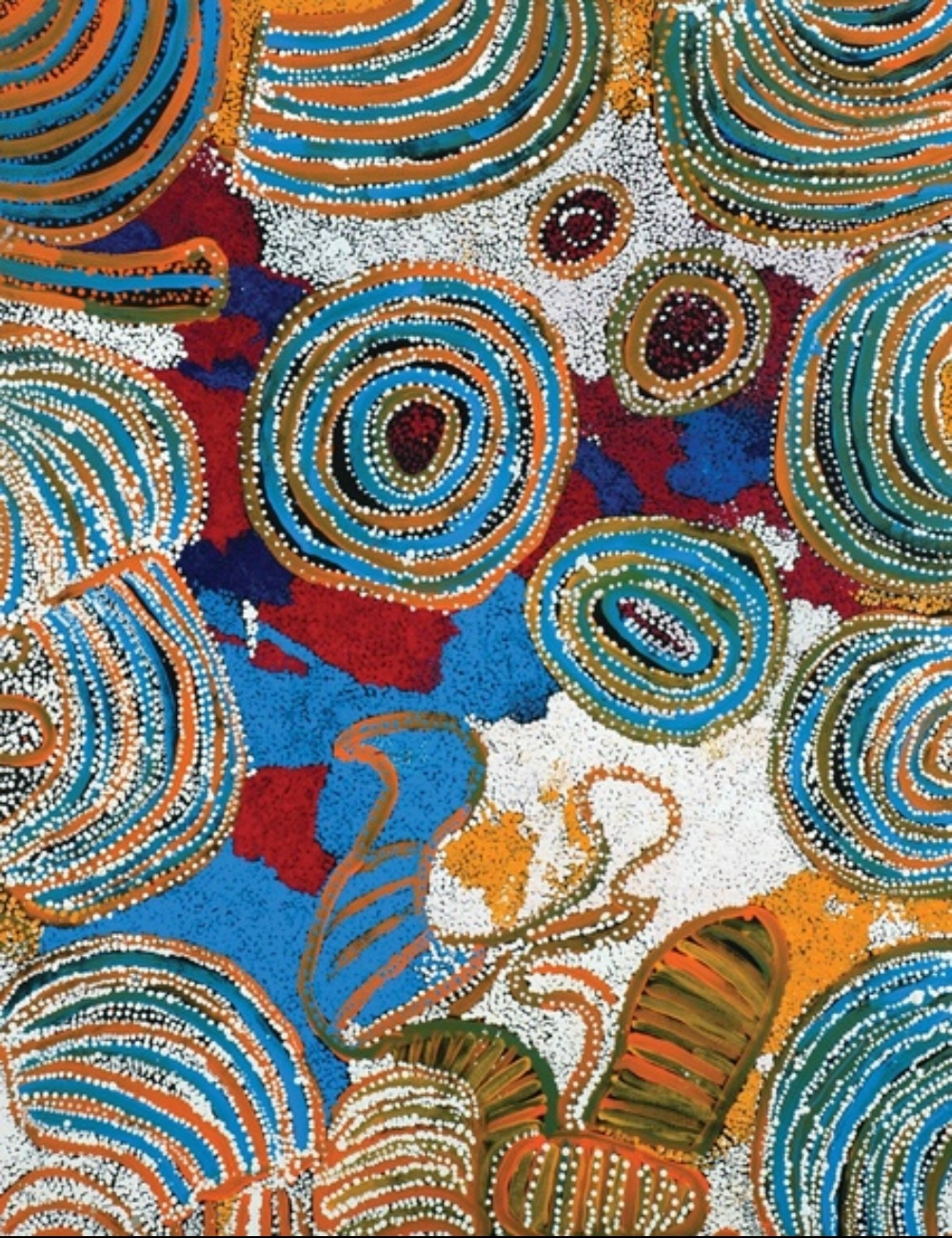
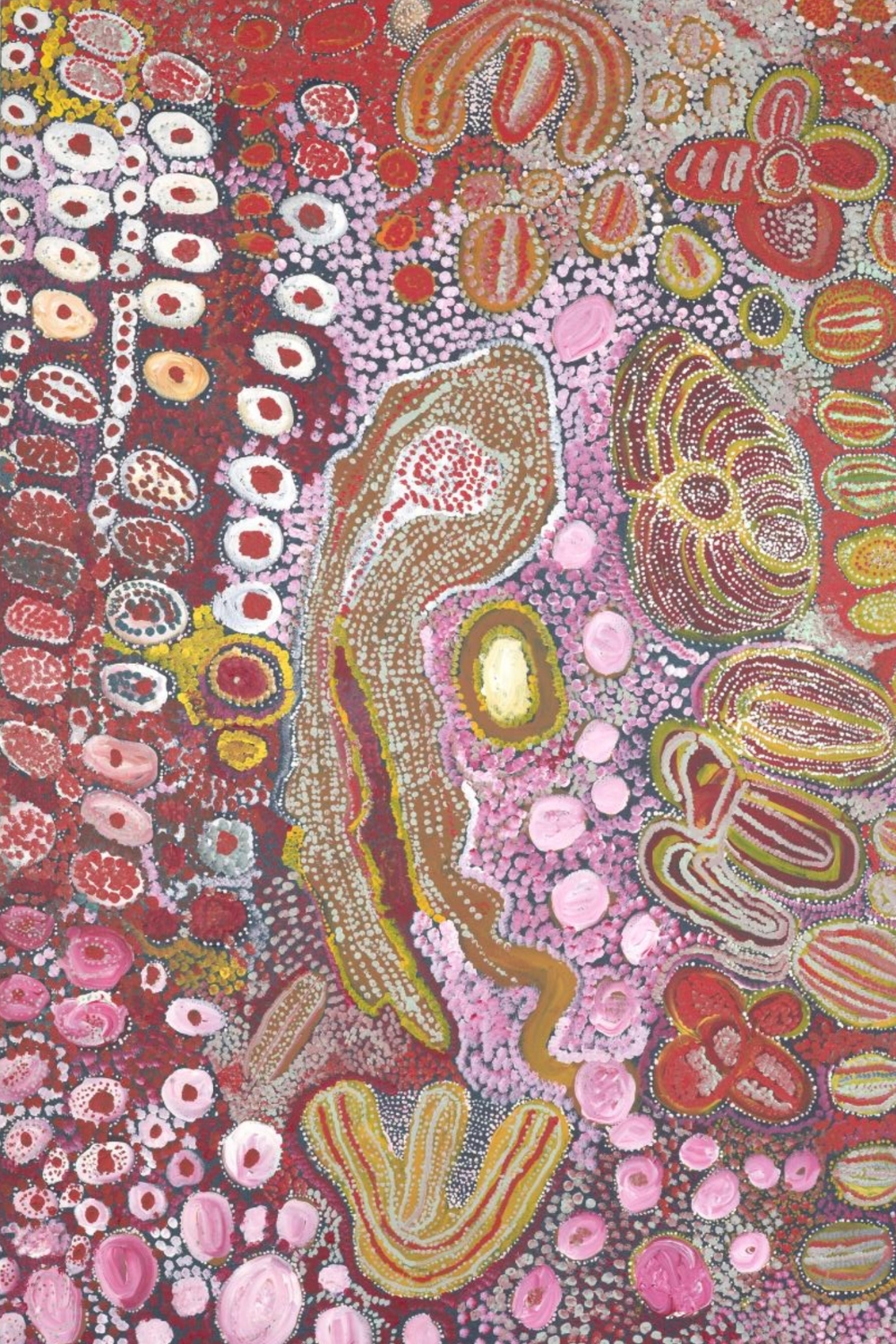
Wingu developed a highly individual painting language of flowing lines, concentric forms, repeated tracks, dense dotting and often remarkable colour. Artist and curator Jonathan Jones described her paintings as “expressive eruptions of country.”
Although her professional painting career lasted less than a decade, Wingu helped establish Irrunytju Arts and later joined the senior artists who established Tjungu Palya. Her Western Desert paintings were repeatedly selected for the National Aboriginal and Torres Strait Islander Art Awards and entered major Australian public collections.
Wingu Tingima Biography
Wingu Tingima was born around 1920 at Nyumun, a rockhole in the Great Victoria Desert of Western Australia, close to Kuru Ala. Her exact birth year was not recorded and published estimates vary considerably. She died on 8 March 2010.
Wingu grew up travelling through Country with her family. Looking back on these early years, she recalled:
“I didn’t go to school. I was a bush girl!”
Her artistic education began long before acrylic paint and canvas. Her mother and aunties instructed her in Law, Tjukurpa and inma—ceremonial song and dance. She learned to spin hair-string, make ceremonial hair belts and manguri head rings, carve wooden implements and participate in ceremonial body painting.
When Wingu was about thirteen or fourteen, she walked with her parents to the Presbyterian mission at Ernabella. She later married and raised a family there. Along with other Anangu women she worked at Ernabella Arts, where established fibre skills were adapted to spinning sheep’s wool, knitting and crochet.
At Ernabella she formed an enduring friendship with Eileen Yaritja Stevens. Their relationship later became one of family as well as friendship when Wingu’s son Winmati Roberts married Eileen’s daughter Yaritji Stevens. The two senior women therefore shared grandchildren.
After she was widowed, Wingu moved west to Irrunytju (Wingellina), closer to her home Country. When Irrunytju Arts was established in 2001, she was among its first artists and was instrumental in developing the centre.
Recognition came quickly. By 2002 she was exhibiting in Melbourne and at Desert Mob in Alice Springs, and in 2003 one of her paintings was selected as a finalist in the National Aboriginal and Torres Strait Islander Art Award.
Wingu later increasingly worked at Nyapari, beneath the Mann Ranges in South Australia. In 2005 she joined senior Anangu artists including Jimmy Baker, Ginger Wikilyiri and Eileen Yaritja Stevens in establishing Tjungu Palya, meaning “good together”. Although principally associated with Irrunytju and Tjungu Palya, surviving paintings were also documented through Ninuku Artists and Papulankutja Artists, reflecting the interconnected artistic communities of the WA–SA borderlands.
Wingu and Eileen frequently painted together, exchanged ideas and travelled to exhibitions. After Eileen died in 2008, Wingu left Nyapari and returned to Irrunytju, where she continued painting until near the end of her life.
Wingu Tingima Painting Style and Subjects
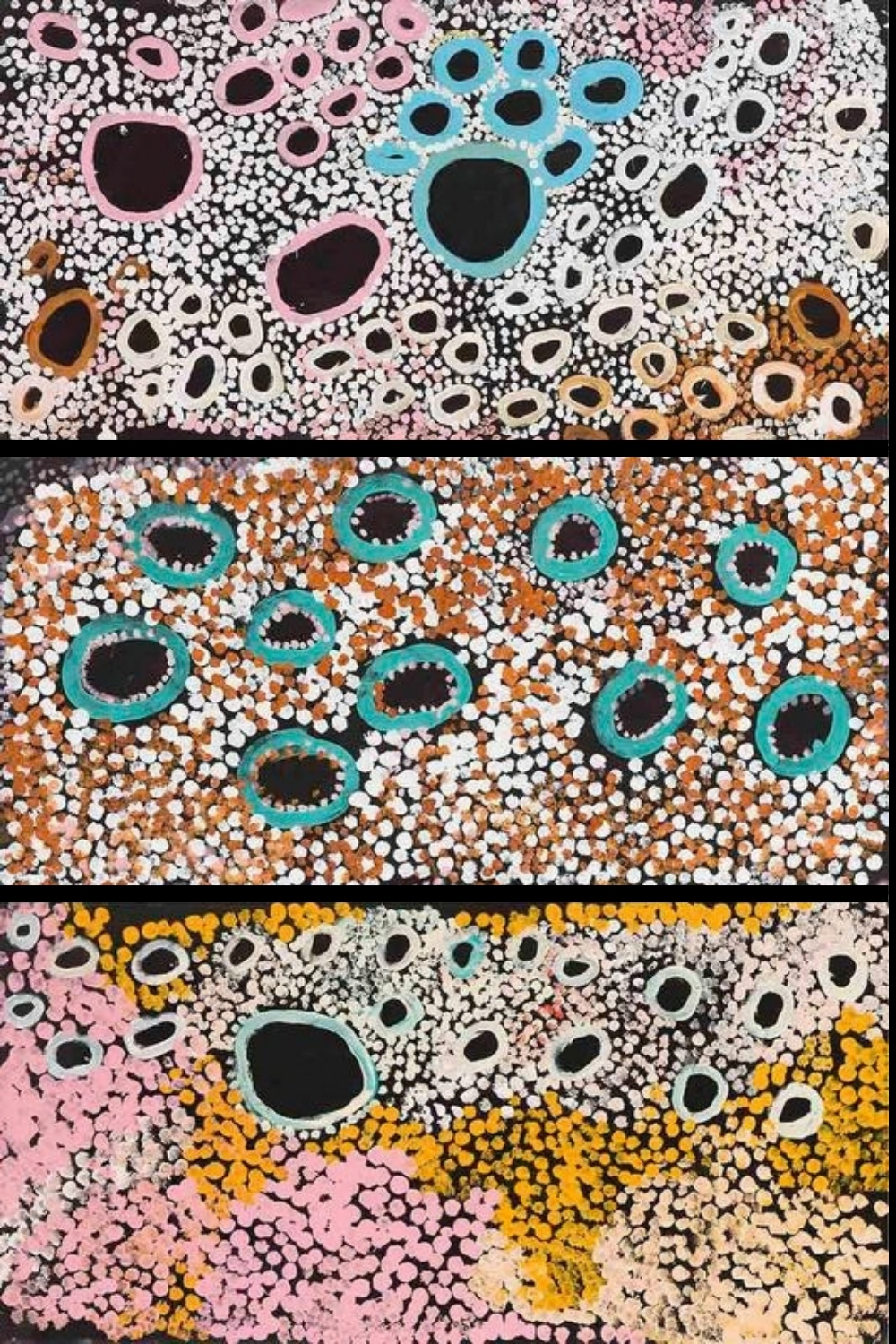
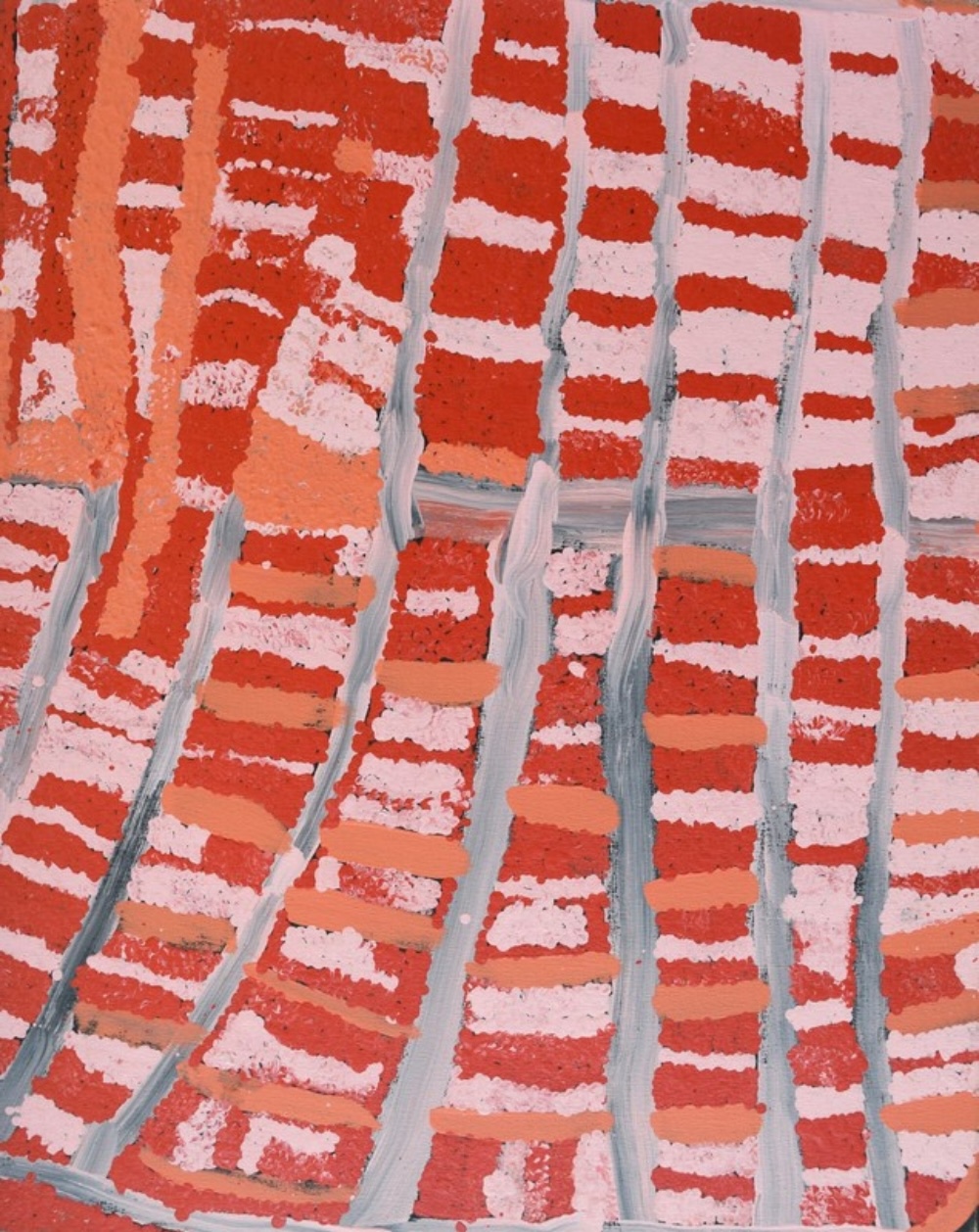
Wingu Tingima did not work to a single visual formula. Her paintings range from sweeping linear structures and concentric forms to interconnected fields, repeated tracks and dense accumulations of dots. Her palette could move from restrained pinks, creams and earth reds to brilliant orange, green, blue and purple.
Her individuality was apparent in her earliest Irrunytju paintings. Contemporary documentation notes her preference for lighter colours and curving lines at a time when other artists at the centre were experimenting with brighter colours and more strongly blocked forms. Her brushwork and palette also changed according to where she was painting.
Jonathan Jones described Wingu’s paintings as: “expressive eruptions of country” and connected their underlying linear structures with inma body painting and ceremonial hair-string belts. These were not remote visual references for Wingu: they were practices she had learned from senior women decades before she began painting on canvas.
Seven Sisters Songline
The central subject of Wingu’s career was Kungkarrakalpa, also called Minyma Tjuta—the Seven Sisters Dreaming.
Kuru Ala, close to her birthplace, is an important women’s site within this extensive ancestral journey. The sisters travel through Country while pursued by Nyiru, an older man who wants one of the women for his wife. At Kuru Ala he transforms himself into a wayanu, or quandong tree, attempting to deceive them. The sisters taste the fruit, recognise the trick and flee.
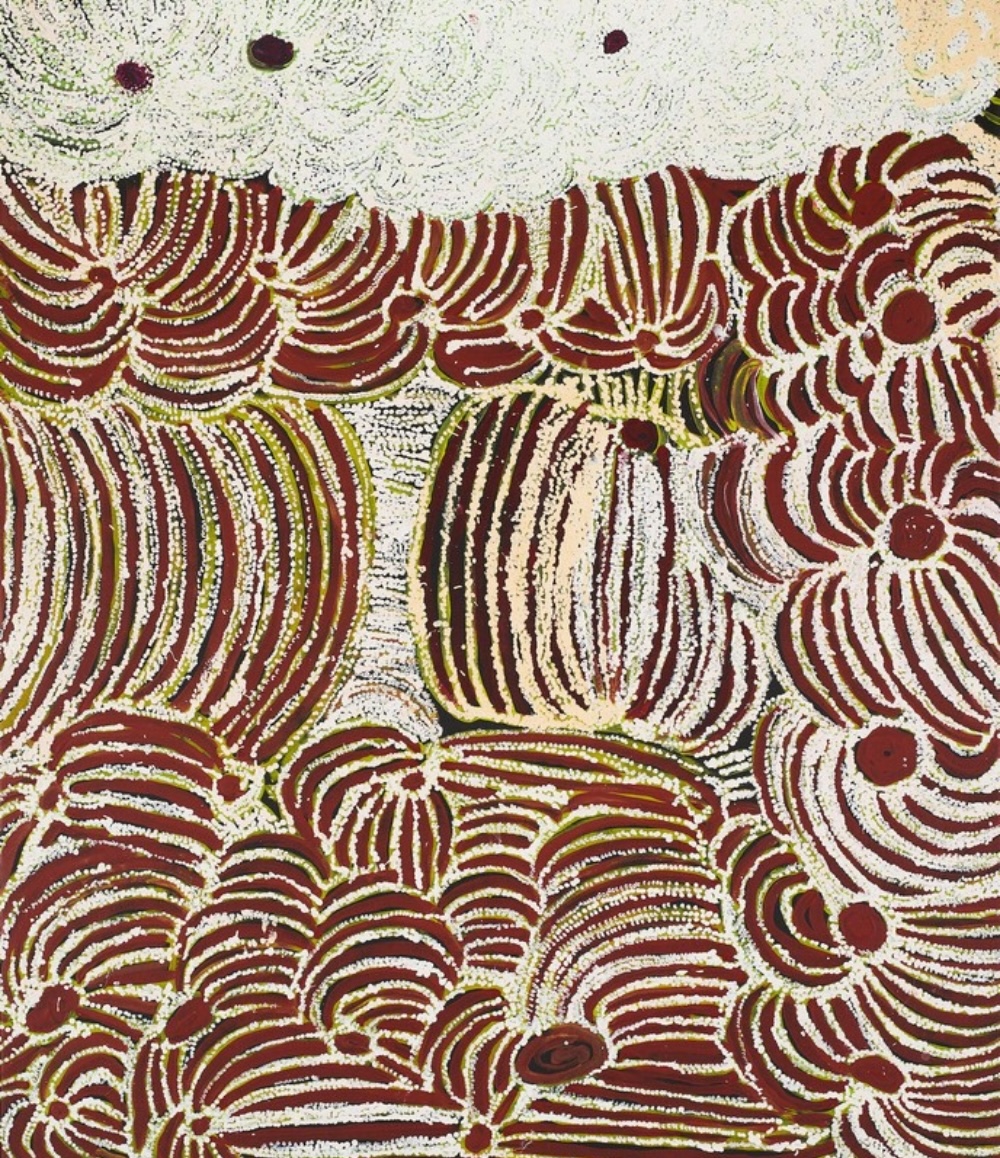
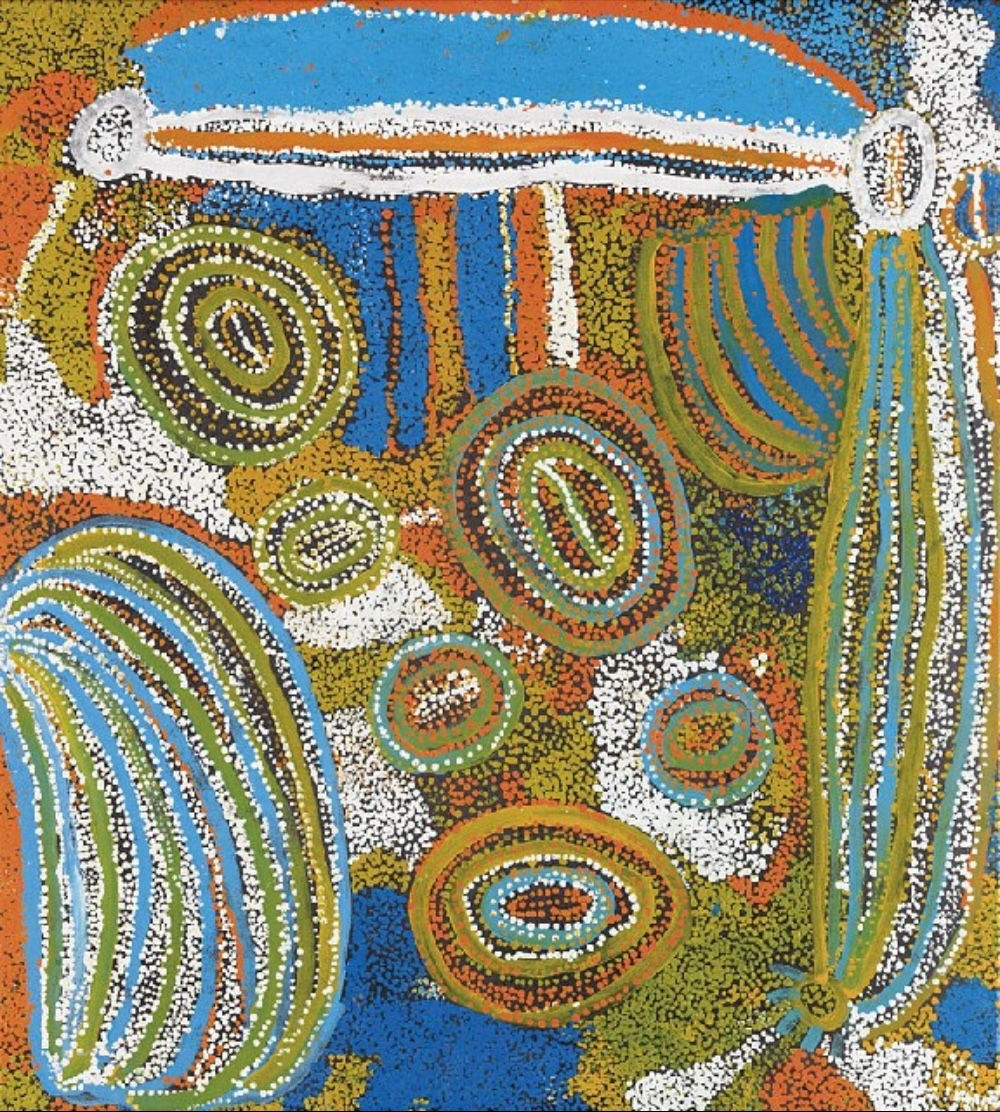
Art-centre documentation accompanying a 2003 Kungkarrakalpa records further episodes in which the sisters encounter Nyiru transformed as a kuniya, or python, before dancing. The account ends:
“There’s a song about this.”
That simple statement points to the larger cultural world surrounding Wingu’s paintings, in which Country, image, narrative, song, dance and ceremony are interconnected.
Wingu returned to Kuru Ala and Kungkarrakalpa throughout her career, but these paintings should not be read as literal illustrations of the Seven Sisters story. She drew upon forms associated with sand drawing, rock imagery and ceremonial body painting while meanings could remain obscured, transformed or withheld. Her paintings evoke Country and Tjukurpa rather than providing a diagram intended to be completely decoded by an outside viewer.
Country Beyond Kuru Ala
Although Kungkarrakalpa dominated Wingu’s work, her paintings reveal a broader personal and cultural geography. She painted Nyumun, her birthplace, as well as Nyapari, Pukara, Kapi Piti and Mother’s Country, among other subjects.
Nyumun was particularly important. It connected Wingu’s paintings directly with the Country of her childhood and is associated with Walawuru Tjukurpa, the Eagle Creation Story. Documentation accompanying Nyumun (2003) describes Wingu as a “master of colour”, praising her use of layering and texture. It also records that ideas for paintings sometimes came through dreams and visitations from Eagle Ancestors.
Tjungu Palya documentation records an important restriction concerning this Tjukurpa: Wingu could paint it, but could not speak publicly about it.
This distinction is important to understanding her work. What could be represented visually and what could be explained verbally were not necessarily governed by the same cultural permissions. Her paintings could therefore evoke Country and Tjukurpa while leaving aspects of their meaning undisclosed.
Wingu Tingima value and auction results
Works Offered at Auction: 69
Sale Rate: 48%
Highest Sale: $25,500 AUD
Median Sale Price: $3,000 AUD
For individual artworks, sizes provenance and more please visit theWingu Tingima values support page (not yet constructed)
Why Is Wingu Tingima Important?
Wingu Tingima achieved remarkable recognition during a professional painting career of less than a decade. Her Kungkarrakalpa paintings were selected as finalists in the National Aboriginal and Torres Strait Islander Art Awards in 2003, 2006 and 2008, while her work entered many of Australia’s major public collections.
She was also important to the development of contemporary art in the western APY and neighbouring Western Desert communities. Wingu was instrumental in establishing Irrunytju Arts and subsequently joined the senior generation responsible for establishing Tjungu Palya.
What distinguishes her work, however, is the transformation of a lifetime of cultural knowledge into an individual painterly language. Body painting, hair-string designs, Country, Tjukurpa and inma provided foundations, but Wingu did not simply reproduce inherited designs on canvas. Colour, line, texture and movement became means of evoking Country while respecting limits on what could be publicly revealed.
Her influence also continued through family, with several descendants becoming painters.
Wingu Tingima in Public Collections
Wingu Tingima’s work is represented in major Australian public collections including:
- National Gallery of Australia
- National Gallery of Victoria
- Art Gallery of New South Wales
- Art Gallery of South Australia
- Art Gallery of Western Australia
Her work has also been held in significant private and corporate collections including the Corrigan Collection, Kerry Stokes Collection and Macquarie Bank.
Further Reading
Elizabeth Tregenza (ed.), Tjukurpa Pulkatjara: The Power of the Law. Wakefield Press, 2010.
Mary Knights, Wingu Tingima. Irrunytju Arts, Alice Springs, 2006.
Wingu Tingima, Wingu Tingima. Tjungu Palya, 2011.
Design & Art Australia Online, “Wingu Tingima”.
Museum and Art Gallery of the Northern Territory, National Aboriginal & Torres Strait Islander Art Award archives.
All images featured in this article are presented strictly for educational and informational purposes.
This website may include copyrighted material for which specific authorization has not been obtained from the copyright owner.
All such images are presumed to be the intellectual property of the respective artist or their estate, and are used in accordance with principles of fair dealing or fair use under applicable copyright law.