
Jimmy Baker Aboriginal Artist
c.1915–2010
Pitjantjatjara
Malumpa / Kanpi Country | Kalaya (Emu), Wanampi (RainbowSerpent)
Kanpi / Nyapari
APY Lands Art / Western Desert Art
Painting on canvas
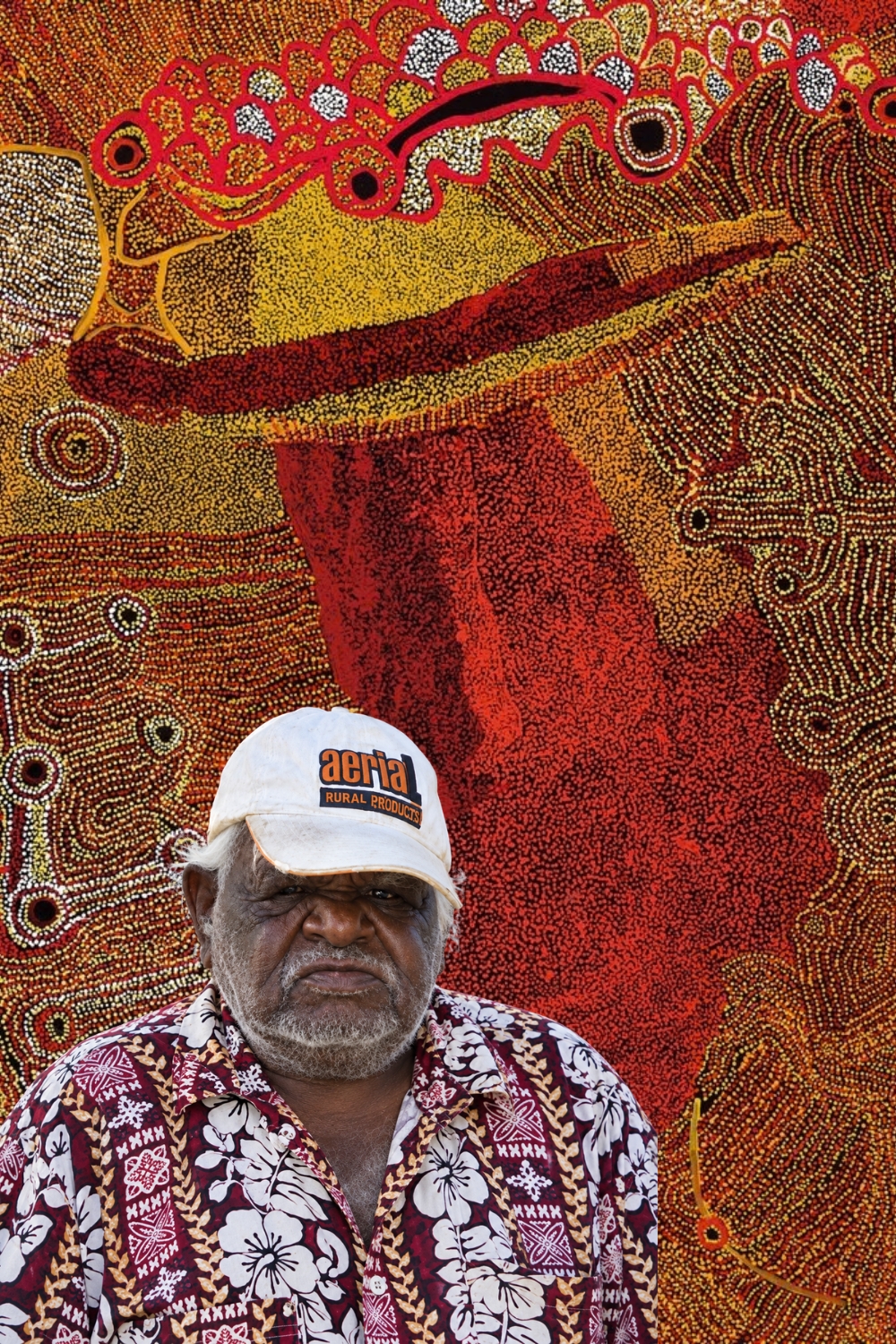
Kunmanara Jimmy Baker (c.1915–2010) was a senior Pitjantjatjara man, ngangkari (traditional healer), law man and painter associated with Kanpi in the APY Lands Art of north-west South Australia.
Born at Malumpa, a rockhole on the Kalaya Tjukurpa (Emu Dreaming) track near present-day Kanpi, Baker spent most of his life as a cultural authority rather than a professional artist. He worked at Ernabella and on surrounding stations, travelled widely as a ngangkari (traditional healer) and held responsibility for important Tjukurpa (ancestral law and creation narratives) associated with Emu, Bush Turkey, Piltati and Rainbow Serpent.
Remarkably, like Tiger Palpatja, Jimmy did not begin painting until 2004, when he was already around ninety years old. Yet within a year his work was appearing at Desert Mob, and in 2007 three of his paintings were selected for the inaugural National Indigenous Art Triennial, Culture Warriors at the National Gallery of Australia.
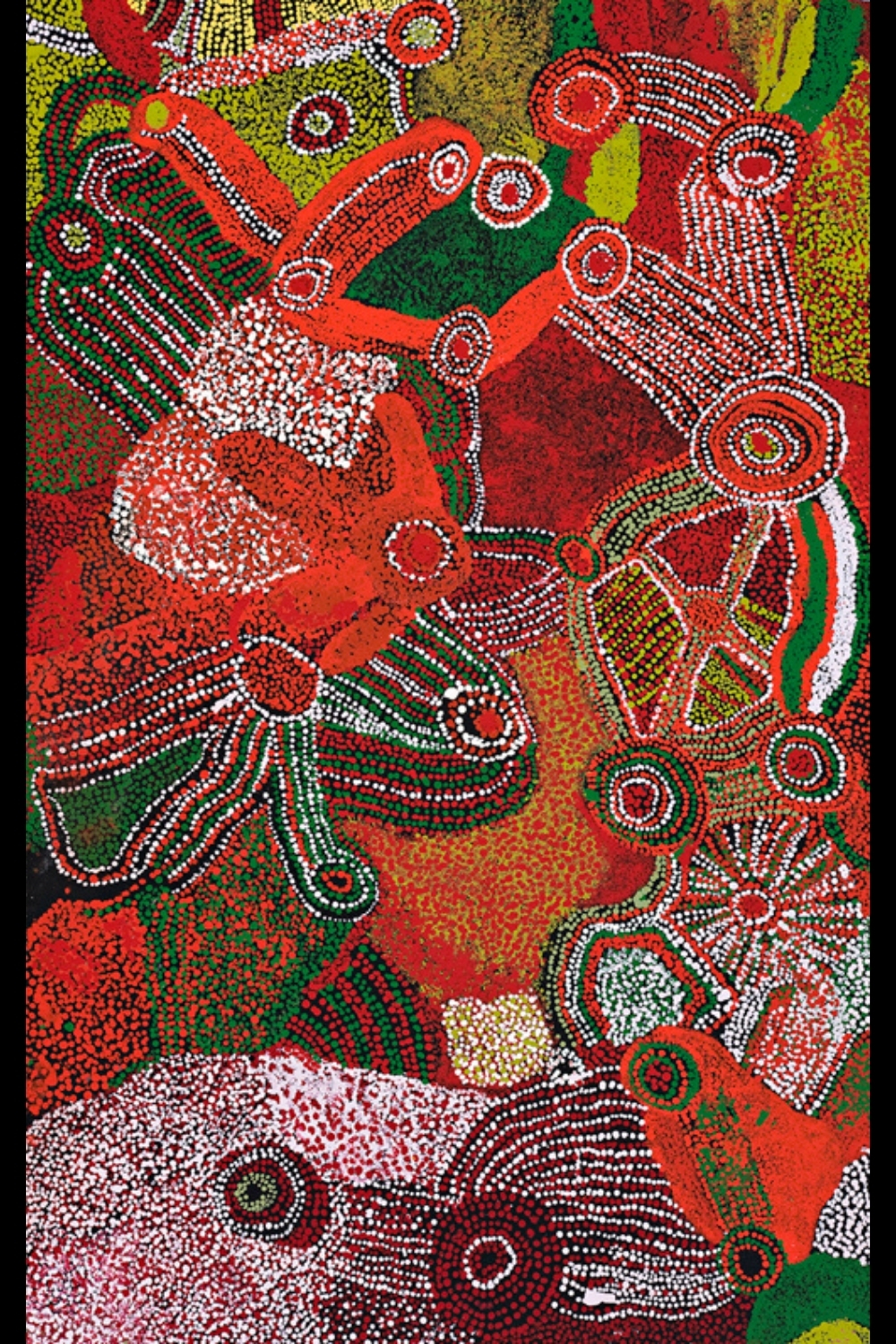
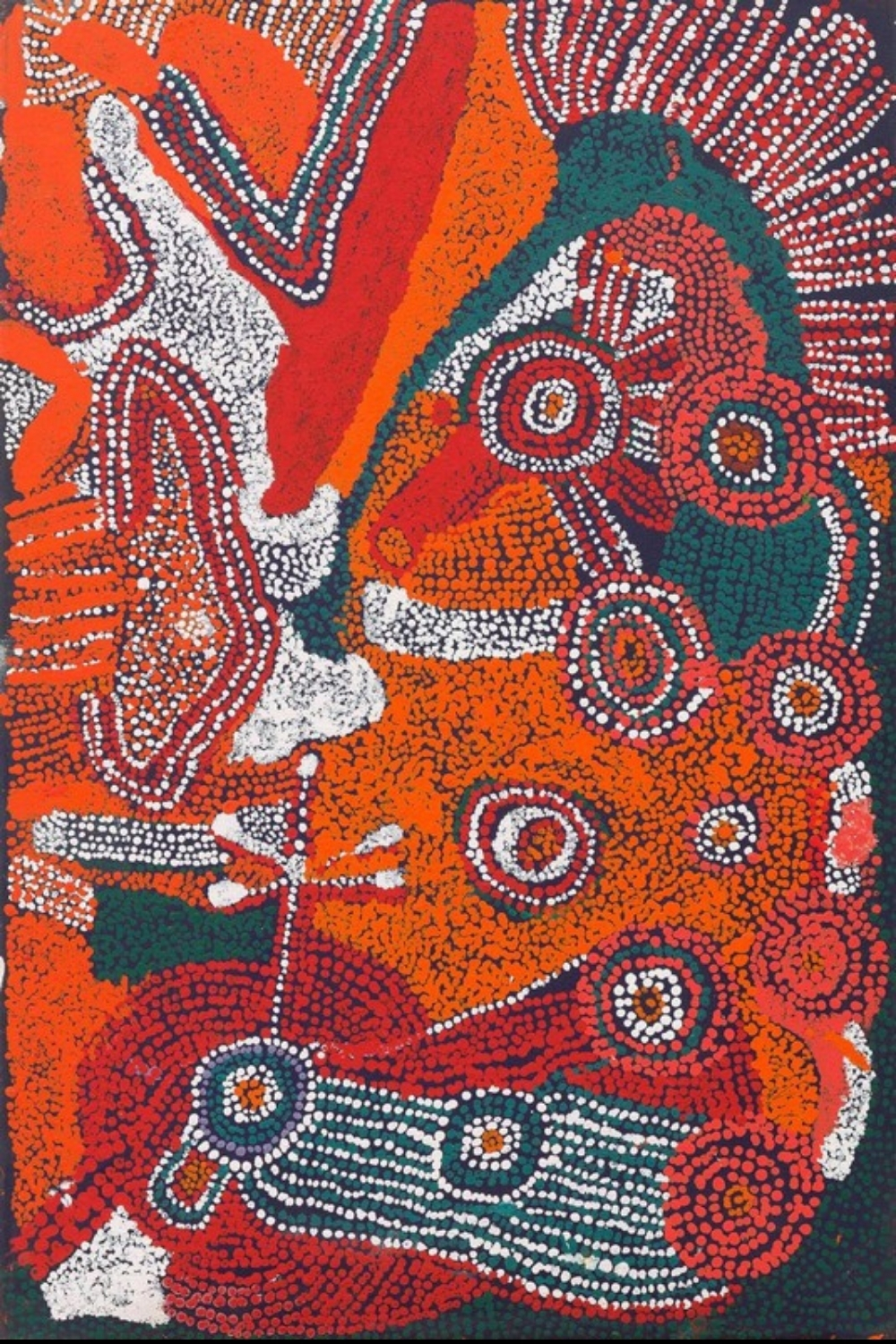
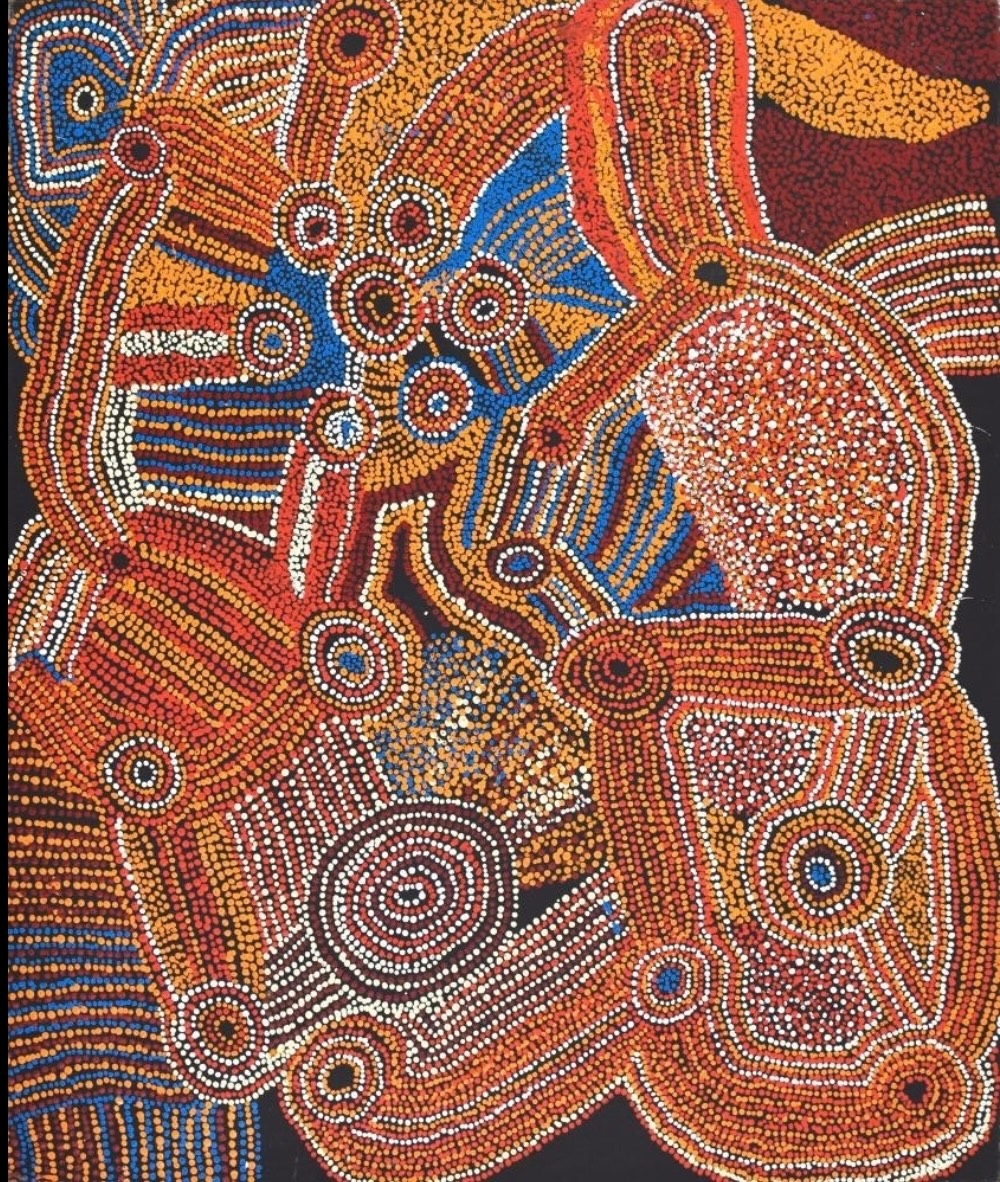
His paintings range from densely dotted fields of colour to compositions dominated by bold ancestral forms, tracks, waterholes and circular motifs. What unites them is their grounding in Kanpi Country and the cultural knowledge Baker had accumulated over a long lifetime.
Jimmy Baker Biography
Jimmy Baker was born around 1915 at Malumpa, close to what is now Kanpi. His birthplace lies on the Kalaya Tjukurpa(Emu Dreaming) track, establishing a relationship with the Emu story that remained central to his life and later became one of the principal subjects of his paintings.
His father, Tjuwintjara, was himself a man of considerable cultural knowledge. In 1939 he encountered anthropologist T. G. H. Strehlow and doctor and Aboriginal-rights campaigner Charles Duguid at Piltati Rockhole and acted as a guide during their journey towards the Petermann Ranges. Duguid later recorded the episode in Doctor and the Aborigines.
After moving to Ernabella, Baker worked as a shearer, repaired fences, sank bores and mustered livestock. Another account records that one of his first jobs involved grinding flour and making bread and damper, from which the surname Baker is said to have originated. He later worked fencing around Kenmore Park and across the country towards Fregon and Mimili.
As a mature man, Baker became a highly respected ngangkari (traditional healer), travelling through South Australia, Western Australia and the Northern Territory. He was also an accomplished craftsman who made traditional implements to a high standard.
Baker remained closely attached to Malumpa and Kanpi and encouraged members of his extended family to return to their traditional Country. His family subsequently became closely associated with painting at Kanpi and Tjungu Palya. His children included artists Anton Baker, Kay Baker and Marita Baker, while his nephew Douglas Baker married senior artist Maringka Baker.
Remarkably, Baker did not begin painting until 2004, when he was already around ninety years old. Although new to acrylic paint and canvas, he brought to painting a lifetime’s knowledge of Country and Tjukurpa (ancestral law and creation narratives).
Baker became one of the early senior painters associated with Tjungu Palya, based at Nyapari, while paintings were also documented through Ninuku Artists and Maruku Arts. Recognition came quickly. His work appeared at Desert Mob in 2005, only about a year after he began painting.
In 2007, just three years after taking up painting, Baker was selected for the National Gallery of Australia’s inaugural National Indigenous Art Triennial, Culture Warriors. Three works represented him: Katatjita, 2006; Wanampi Kutjara(Two Water Serpents), 2006; and Piltati, 2007.
Baker continued painting until shortly before his death in 2010. His professional career lasted only about six years, leaving a relatively small but distinctive body of paintings grounded in the Country and cultural knowledge he had carried throughout his life.
Jimmy Baker Painting Style and Subjects
Jimmy Baker painted Country and Tjukurpa (ancestral law and creation narratives) for which he held cultural knowledge and authority. His paintings bring together named places, ancestral journeys, waterholes, campsites, travelling tracks and ceremony.
His style is distinguished by bold colour and strongly organised compositions, but is considerably more varied than the description “dot painting” suggests. An auction catalogue described “tightly placed dots creating fields of colour” alongside “clearly defined lines and roundels”. In some works dotting dominates; in others Baker uses broad lines, circular forms and strongly defined ancestral figures.
These forms are closely connected with subject. Paths can represent ancestral movement, while circular and enclosed forms can identify significant places and waterholes. Graeme Marshall described Baker’s paintings as “multi-layered”, carrying physical, geographical, spiritual and ceremonial significance.
Documentation accompanying the paintings also makes clear that not everything was made public. Certificates describe places, tracks, foods and ancestral journeys while noting that Baker did not elaborate upon restricted Creation Law.
Kalaya Tjukurpa (Emu Dreaming)
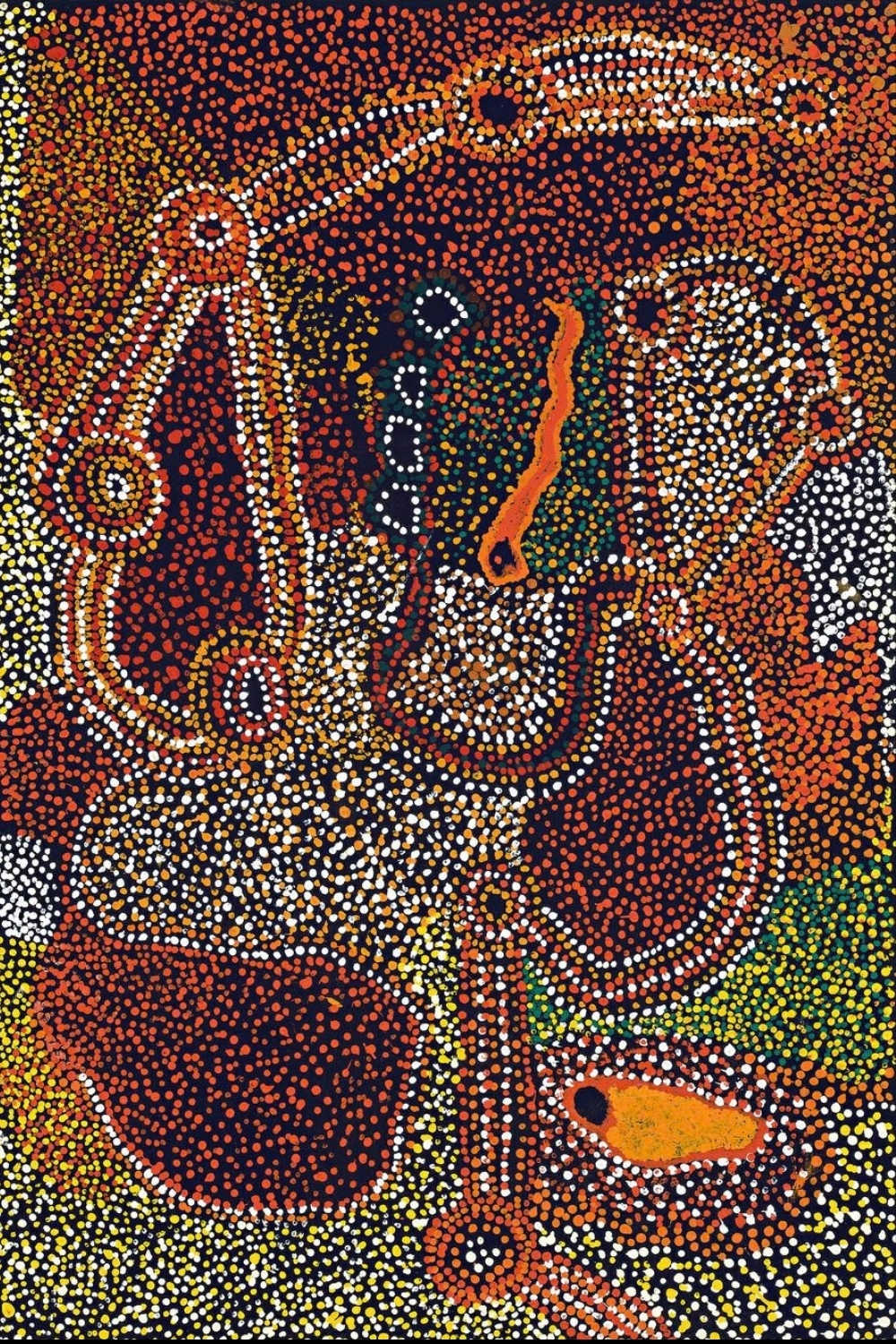
Kalaya Tjukurpa (Emu Dreaming) was one of Baker’s defining subjects. He was born at Malumpa on the Emu Dreaming track and was a custodian of the story.
When discussing Kalaya (Emu), Baker reportedly made little distinction between himself and the ancestral being:
“Me, I’m the emu. Me.”
Pointing to a scar on his chest as he recounted the ancestral events, Baker revealed a relationship with Emu grounded in identity, ancestry and Country rather than simply artistic subject matter.
In Kalaya Tjukurpa (Emu Dreaming), 2008, Baker painted an ancestral episode involving Emu and Kipara (Bush Turkey) associated with Kanpi. The narrative involves deception, death and ceremony at Kanpi rockhole before the Emu children travel towards Watarru. The accompanying account concludes:
“This is the true story for Kanpi.”
Piltati
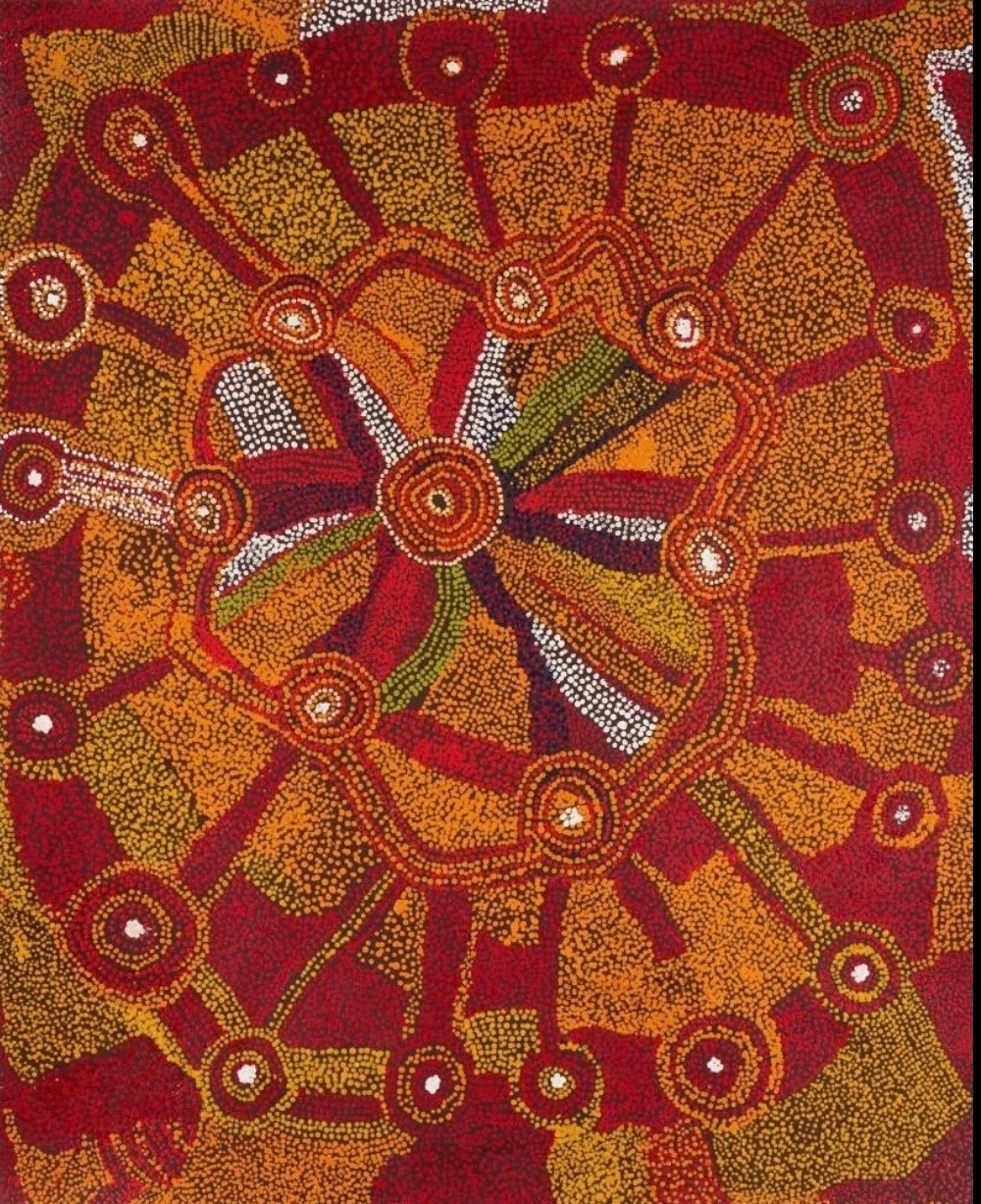
Piltati was another recurring subject with a long family association. Baker’s father Tjuwintjara was documented at Piltati Rockhole during his 1939 encounter with T. G. H. Strehlow and Charles Duguid, connecting Baker’s family with a place he would paint many decades later.
Known works include Piltati Tjukurpa (Piltati Dreaming), 2005, Piltati, 2006 and several paintings titled Piltati Tjukurpa (Piltati Dreaming), 2007. Their compositions range from circular forms and dense dotting to stronger linear structures and broad areas of colour. A major Piltati, 2007 was selected for the National Gallery of Australia’s Culture Warriors exhibition.
Wanampi (Rainbow Serpent)
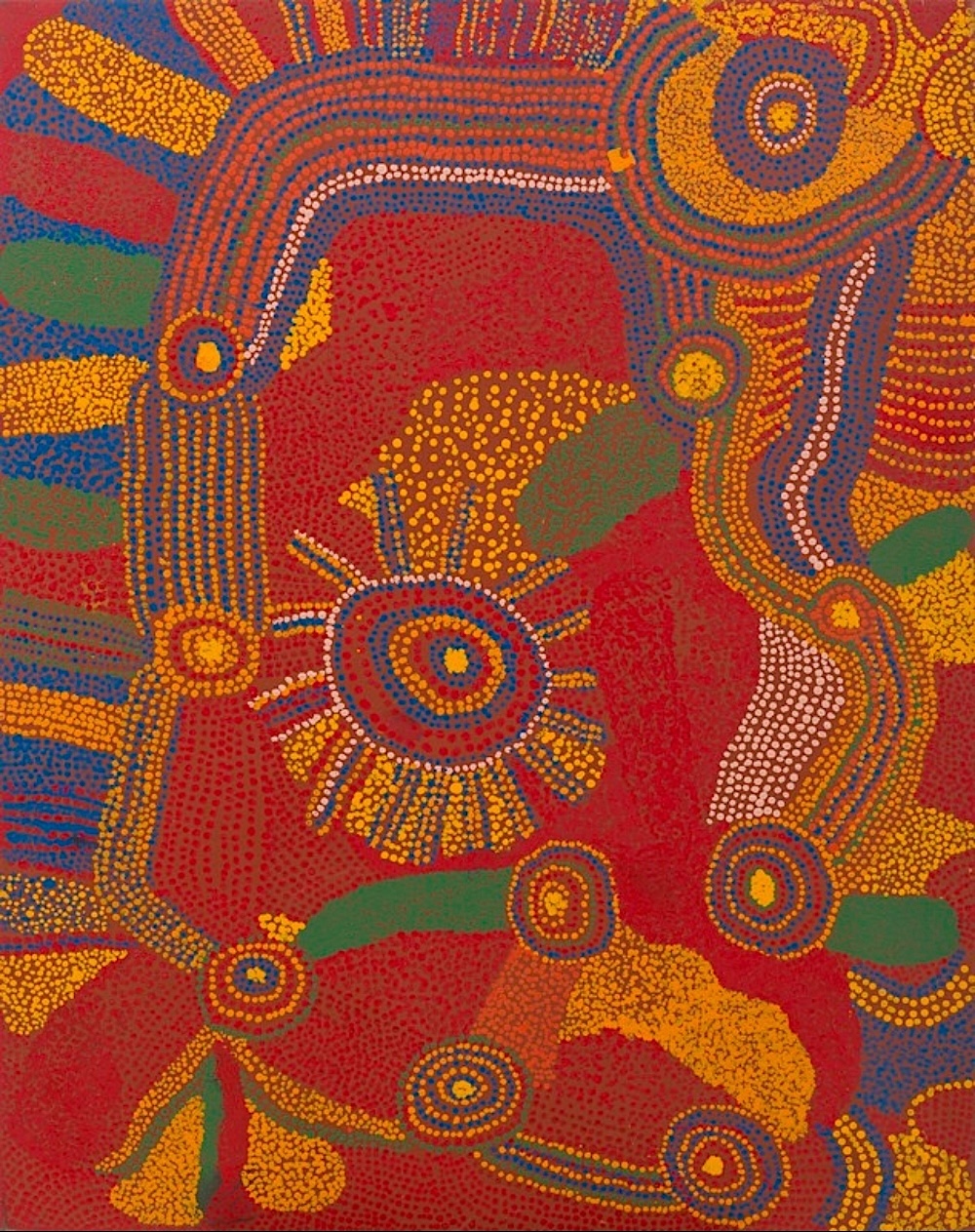
Wanampi (Rainbow Serpent) was another important subject associated with Baker’s Country. He produced several Wanampi (Rainbow Serpent) paintings during 2007, as well as Wanampi Kutjara (Two Rainbow Serpents), 2006. The latter concerns the Two Serpent Men’s Creation Story and was selected alongside Katatjita and Piltati for Culture Warriors. It subsequently entered the collection of the Art Gallery of South Australia.
The same Wanampi (Rainbow Serpent) ancestral narrative was also painted by Tiger Palpatja, but the two artists approached the subject differently. Palpatja could represent the Rainbow Serpent as a more immediately recognisable snake-like ancestral form. In Baker’s paintings, its presence can be less literal: interconnected waterholes, circular sites and pathways of dots evoke the movement of Wanampi through Country rather than simply depicting the serpent’s physical body.
This approach is characteristic of Baker’s work more broadly. The ancestral being can be understood through the landscape it travelled through and transformed, with waterholes and pathways carrying the narrative across the painting.
Katatjita
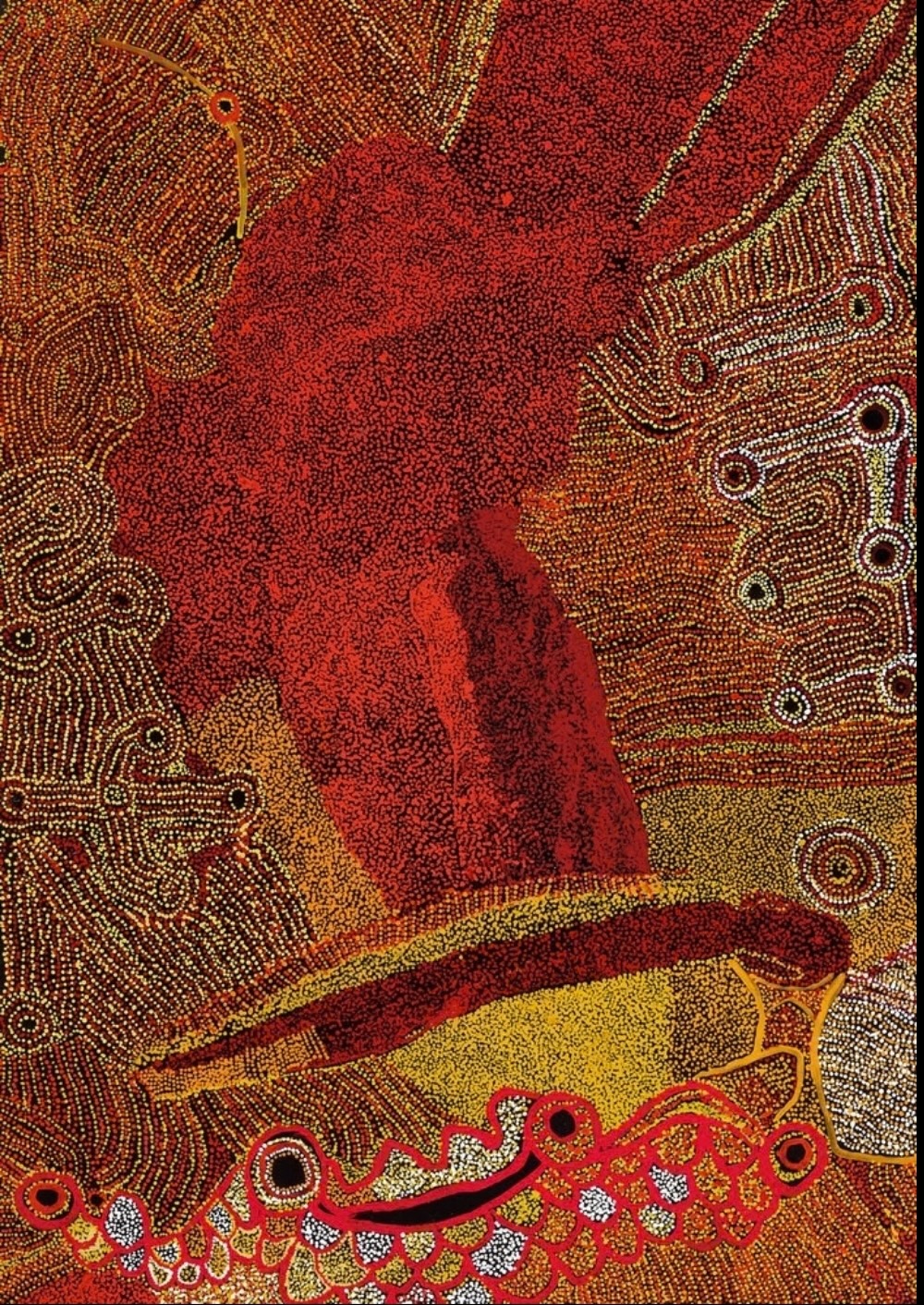
Katatjita, 2006 is one of the major paintings of Baker’s short career.
Katatjita is a rockhole with a large underground cave west of Nyapari. The painting concerns Malilu, an ancestral woman who sought refuge there after rejecting a man’s advances. According to the accompanying account, she was repeatedly speared before escaping into the cave.
The painting was selected for Culture Warriors in 2007 and subsequently travelled with the exhibition to Adelaide, Perth and Brisbane.
The differences between Katatjita, Baker’s Emu paintings, his Piltati works and the more strongly figurative Water Serpent paintings demonstrate why his style cannot be reduced to dot painting. As Graeme Marshall observed:
“His work depicts the cultural landscape, his Tjukurrpa, with authority and integrity.”
Jimmy Baker value and auction results
Works Offered at Auction: 34
Sale Rate: 47%
Highest Sale: $50,000 AUD
Median Sale Price: $3,200 AUD
For individual artworks, sizes provenance and more please visit the Jimmy Baker values support page (not yet constructed)
Why Is Jimmy Baker Important?
Jimmy Baker achieved national recognition remarkably quickly. He began painting in 2004, appeared at Desert Mob in 2005, and by 2007 had three works selected for the National Gallery of Australia’s inaugural National Indigenous Art Triennial.
Baker brought to painting a lifetime’s knowledge as a senior law man and ngangkari (traditional healer). Graeme Marshall described his work as encapsulating “the essence of culture, country and Indigenous pride” and Baker as possessing “a rare artistic gift”.
Baker was also important to the early history of Tjungu Palya and the emergence of Kanpi and Nyapari as centres of contemporary APY Lands painting. His achievement is particularly striking because his recognised painting career lasted only about six years.
Jimmy Baker Public Collections
Jimmy Baker’s work entered important Australian public collections despite his short painting career.
Verified collections include:
- Art Gallery of South Australia
- National Gallery of Victoria
- National Gallery of Australia
- Parliament House Art Collection
His work was also prominently represented in the National Gallery of Australia’s Culture Warriors exhibition.
Further Reading
National Gallery of Australia — Culture Warriors: National Indigenous Art Triennial 2007
Graeme Marshall — “Jimmy Baker,” in Culture Warriors
All images featured in this article are presented strictly for educational and informational purposes.
This website may include copyrighted material for which specific authorization has not been obtained from the copyright owner.
All such images are presumed to be the intellectual property of the respective artist or their estate, and are used in accordance with principles of fair dealing or fair use under applicable copyright law.