Aboriginal Bark Paintings
Aboriginal bark paintings are among Australia’s oldest and most important artistic traditions. Created on sheets of eucalyptus bark using natural ochres, pipeclay, and charcoal, bark paintings preserve ancestral stories, cultural knowledge, ceremonial traditions, and connections to Country that have been maintained for countless generations.
Many bark painting traditions are closely connected to Aboriginal Rock Art, from which subjects, techniques, and ancestral narratives evolved over thousands of years. These artworks may depict important spirit beings such as the Rainbow Serpent, Namarrkon the Lightning Spirit, Mimih Spirits, and Wandjina, as well as animals, ceremonial subjects, and clan designs associated with particular regions and cultural groups.
This guide explores the history of Aboriginal bark painting, how bark paintings are made, the major bark painting regions of northern Australia, and the factors that influence authenticity, collectability, and value. Whether you are interested in Aboriginal Art History, Aboriginal X-Ray Art, Arnhem Land Rock Art, or collecting Aboriginal bark paintings, understanding the regional diversity of bark painting is the key to understanding one of Australia’s most significant artistic traditions.
I have been collecting Aboriginal bark paintings for many years, and they remain one of my favourite areas of Aboriginal art. I am particularly interested in early bark paintings from Arnhem Land, including the Oenpelli and Yirrkala traditions, as well as works from the Tiwi Islands, Groote Eylandt, Port Keats, and the Kimberley Wandjina region.
If you have a bark painting and would like assistance identifying it, estimating its age, understanding its subject matter, or obtaining an informal assessment of its value, please feel free to send clear photographs of both the front and back of the painting, together with its dimensions and any known provenance or history.
I am always interested in purchasing significant Aboriginal bark paintings and am particularly keen to see early examples, unusual subjects, and works with good provenance. Simply send me an image and I will happily provide my opinion and let you know what the painting would be worth to me as a collector.
What Are Aboriginal Bark Paintings?
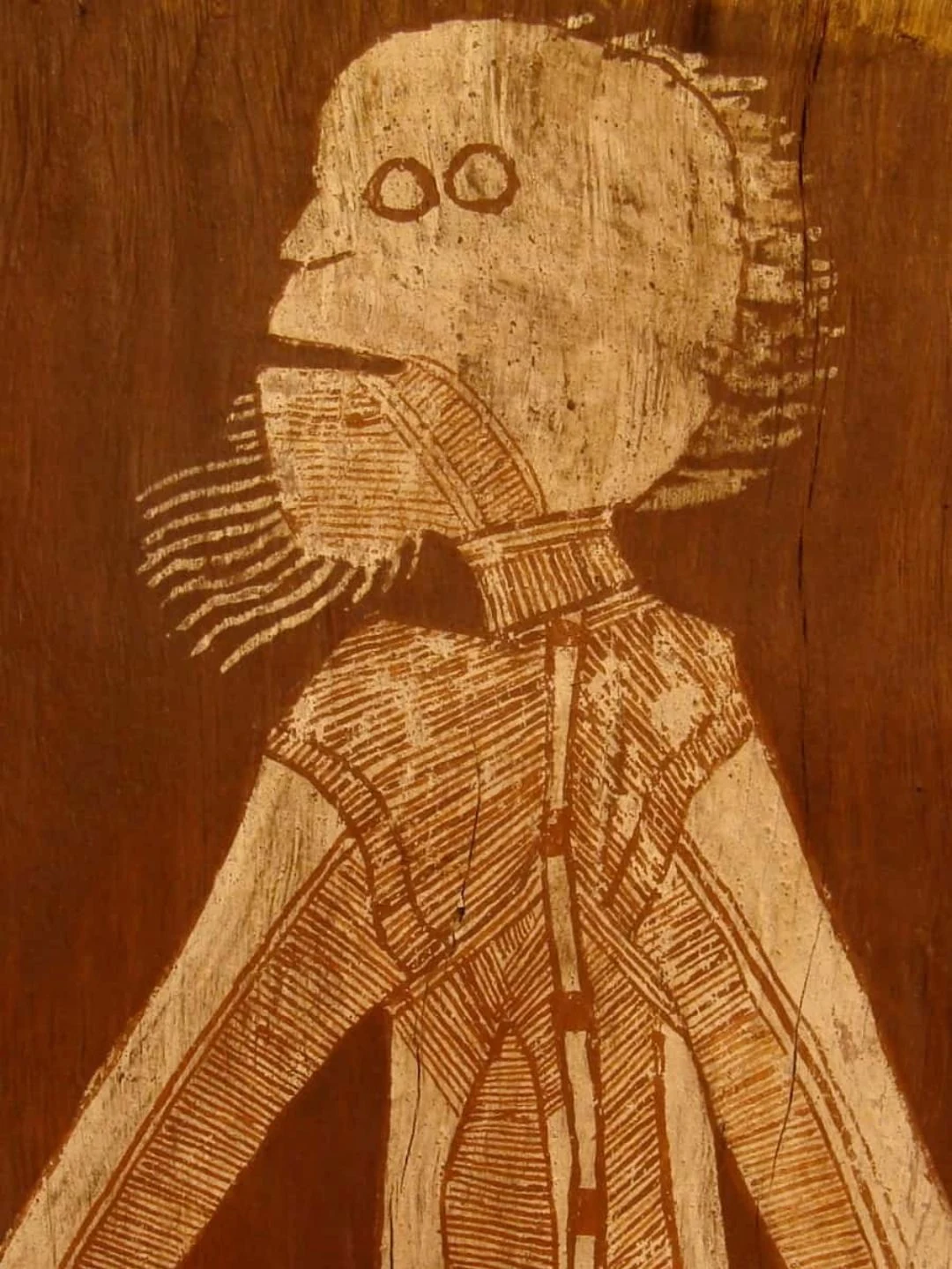
Aboriginal bark paintings are artworks created on sheets of eucalyptus bark using natural ochres, pipeclay, and charcoal by Aboriginal artists from northern Australia, particularly Arnhem Land in the Northern Territory.
Importantly, Aboriginal bark painting is not a single Aboriginal art style. Rather, it is a collection of many different regional and cultural art traditions that share a common painting surface. Just as oil paintings can be created in many different artistic styles, bark paintings can vary enormously depending on where they were produced and the cultural traditions of the artists who created them.
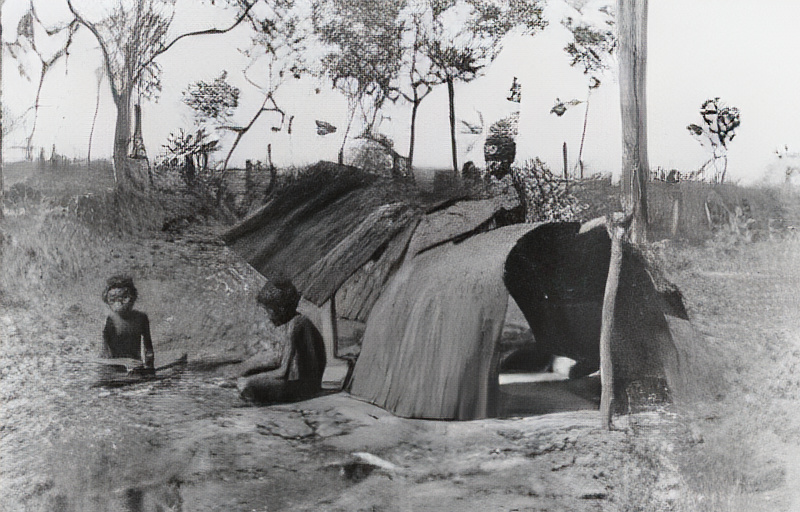
The use of bark as a painting surface developed naturally because Aboriginal people were already using sheets of bark for shelters, containers, and other practical purposes. During the wet season, the interiors of bark shelters were often decorated with paintings depicting ancestral beings, animals, and cultural narratives. These painted shelters provided the foundation for the portable bark paintings that would later be collected by museums and galleries.
Today, bark paintings are recognised as some of Australia’s most important cultural artworks and provide a unique record of Aboriginal knowledge, spirituality, and connections to Country.
History of Aboriginal Bark Painting
The origins of Aboriginal bark painting extend far beyond the arrival of Europeans and are closely connected to the painting traditions found on the walls of rock shelters throughout Arnhem Land. Like rock art, early bark paintings often depicted ancestral beings, animals, and ceremonial subjects and were used to communicate cultural knowledge and Dreaming stories.
One of the earliest major collections of bark paintings was assembled in 1918 when anthropologist Baldwin Spencer acquired a substantial group of paintings from Oenpelli (Gunbalanya) in Western Arnhem Land. These works remain among the earliest examples of Aboriginal bark paintings preserved in museum collections and provide valuable evidence of artistic traditions that long predate the contemporary Aboriginal art movement.
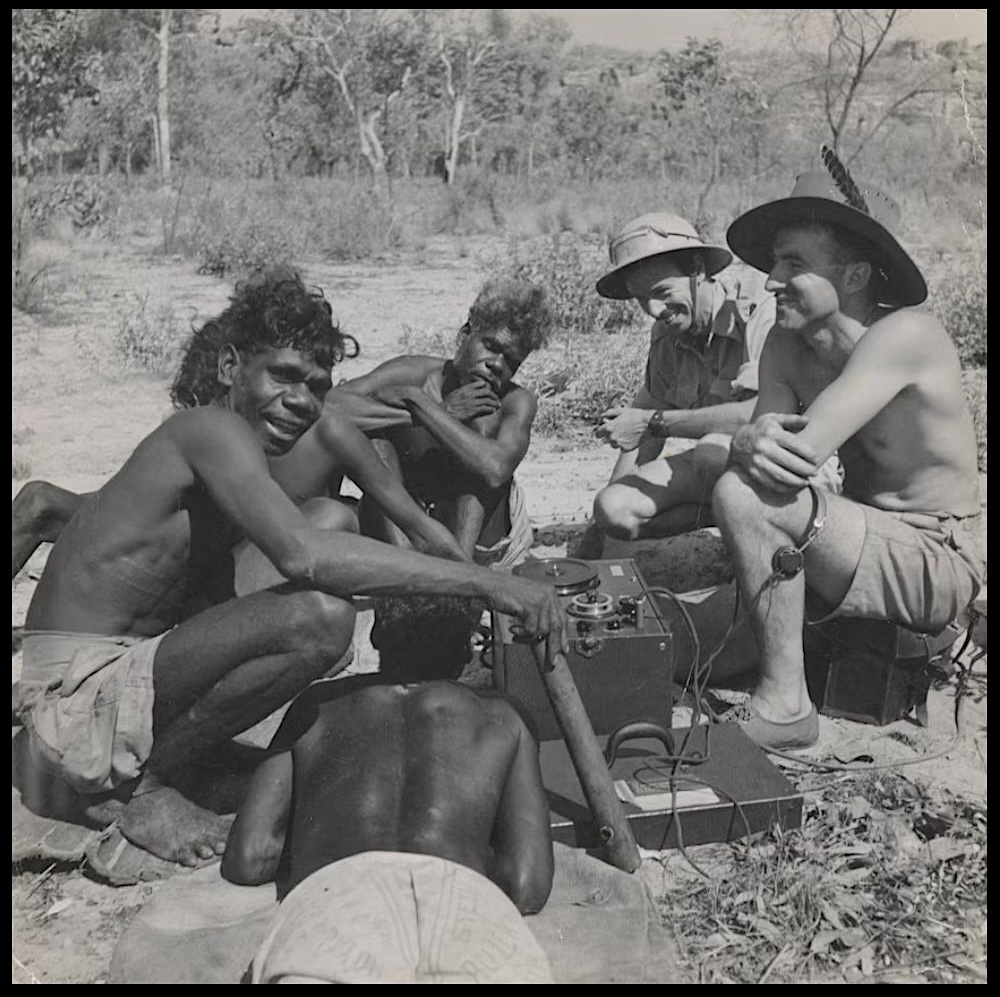
Bark painting gained further international recognition following the American-Australian Scientific Expedition to Arnhem Land in 1948. Led by Charles Mountford, the expedition collected hundreds of bark paintings and other cultural objects from communities across Arnhem Land. These collections introduced Aboriginal bark painting to museums and audiences around the world and remain an important record of cultural traditions, stories, and artistic practices.
The popularity of bark as a painting surface was partly practical. Artists were already familiar with working on bark through shelter decoration, and before the widespread availability of canvas and board there were few other flat, lightweight, and transportable materials available.
How Aboriginal Bark Paintings Are Made
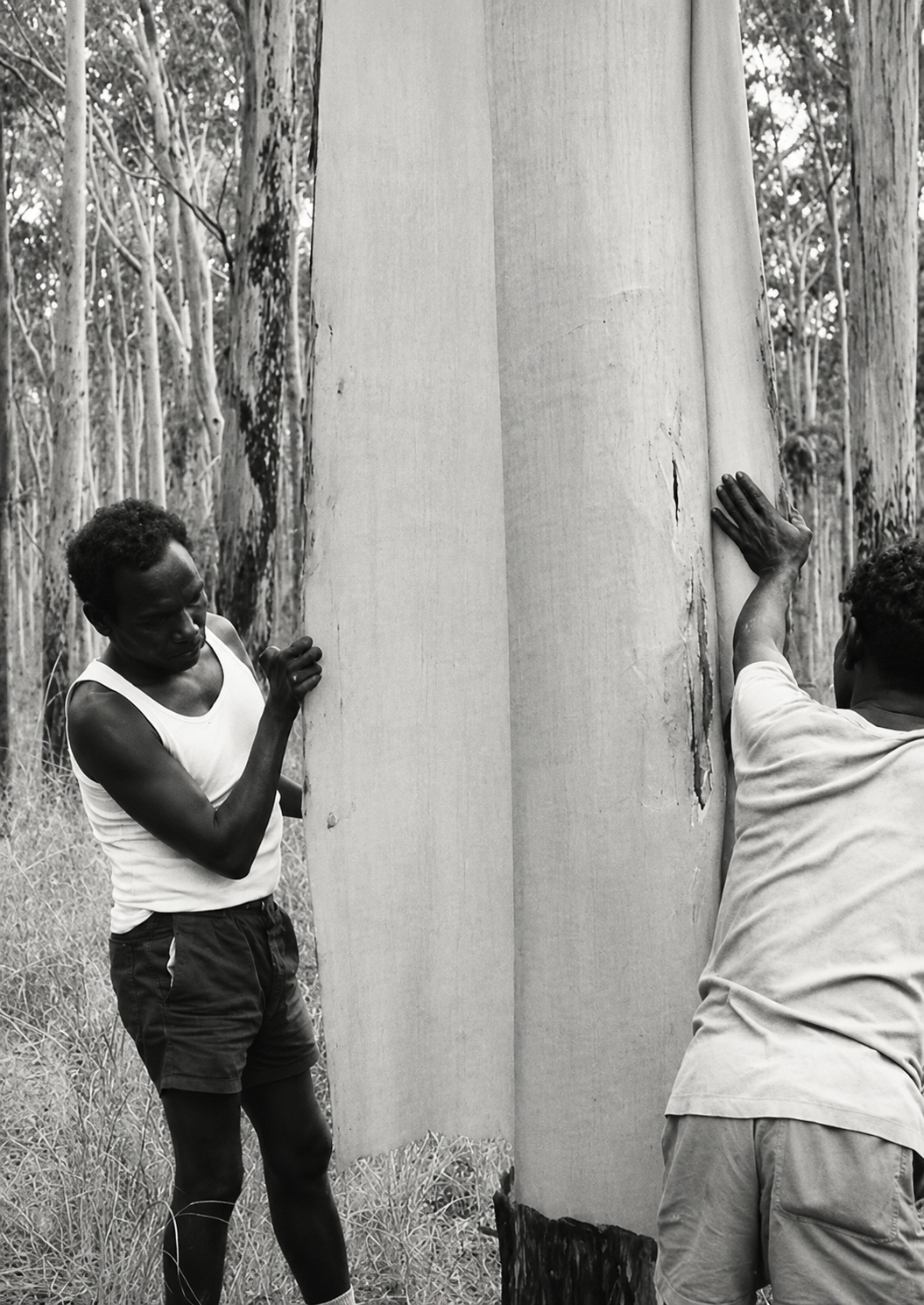
Most bark paintings are created on sheets of stringybark harvested during the wet season when the bark can be removed without splitting. The bark is carefully cut from the tree, heated over a fire, flattened, and weighted until it dries into a stable painting surface.
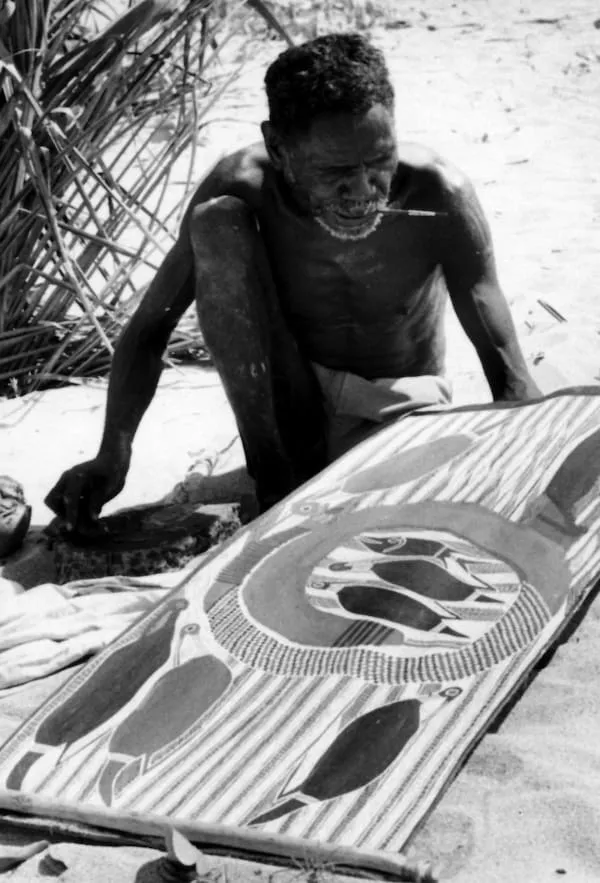
Artists traditionally use natural pigments sourced from the local environment. Red, yellow, and brown ochres provide colour, while white pipeclay and black charcoal are used for highlights and outlines. These pigments are ground into fine powders and mixed with natural binders to create paint.
Brushes are often handmade from natural materials including human hair and plant fibres. Depending on the regional tradition, artists may apply broad areas of colour, intricate cross-hatching, geometric clan designs, or highly detailed figurative imagery.
Although some contemporary artists incorporate modern materials, many continue to use techniques that remain closely connected to long-established cultural practices.
Aboriginal Bark Painting Regions and Styles
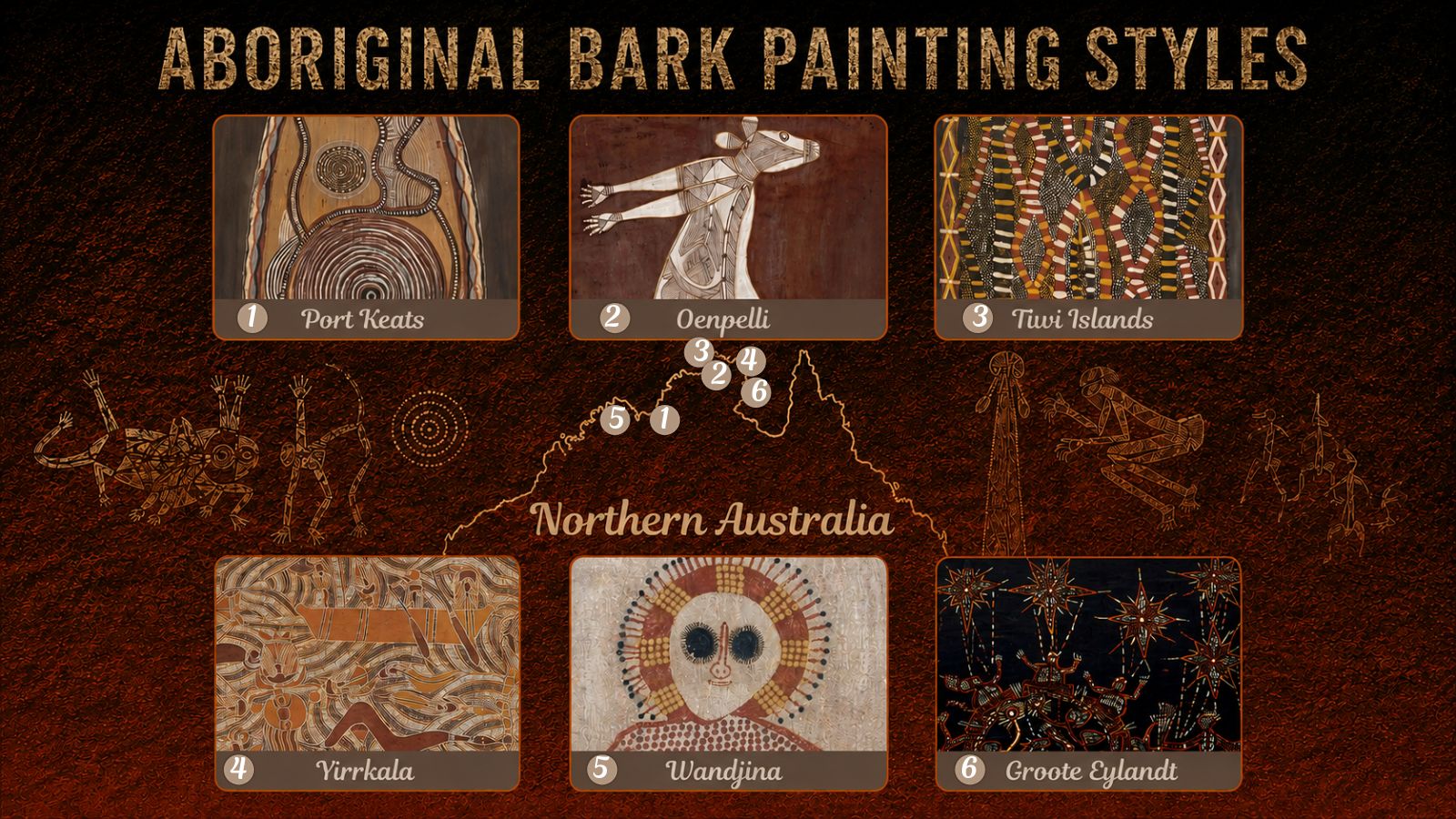
Perhaps the most important thing to understand about Aboriginal bark paintings is that bark is a surface, not a style.
A bark painting from one region may look completely different from a bark painting produced elsewhere. The artistic traditions, subjects, and visual languages represented on bark vary enormously across northern Australia.
Oenpelli (Gunbalanya)
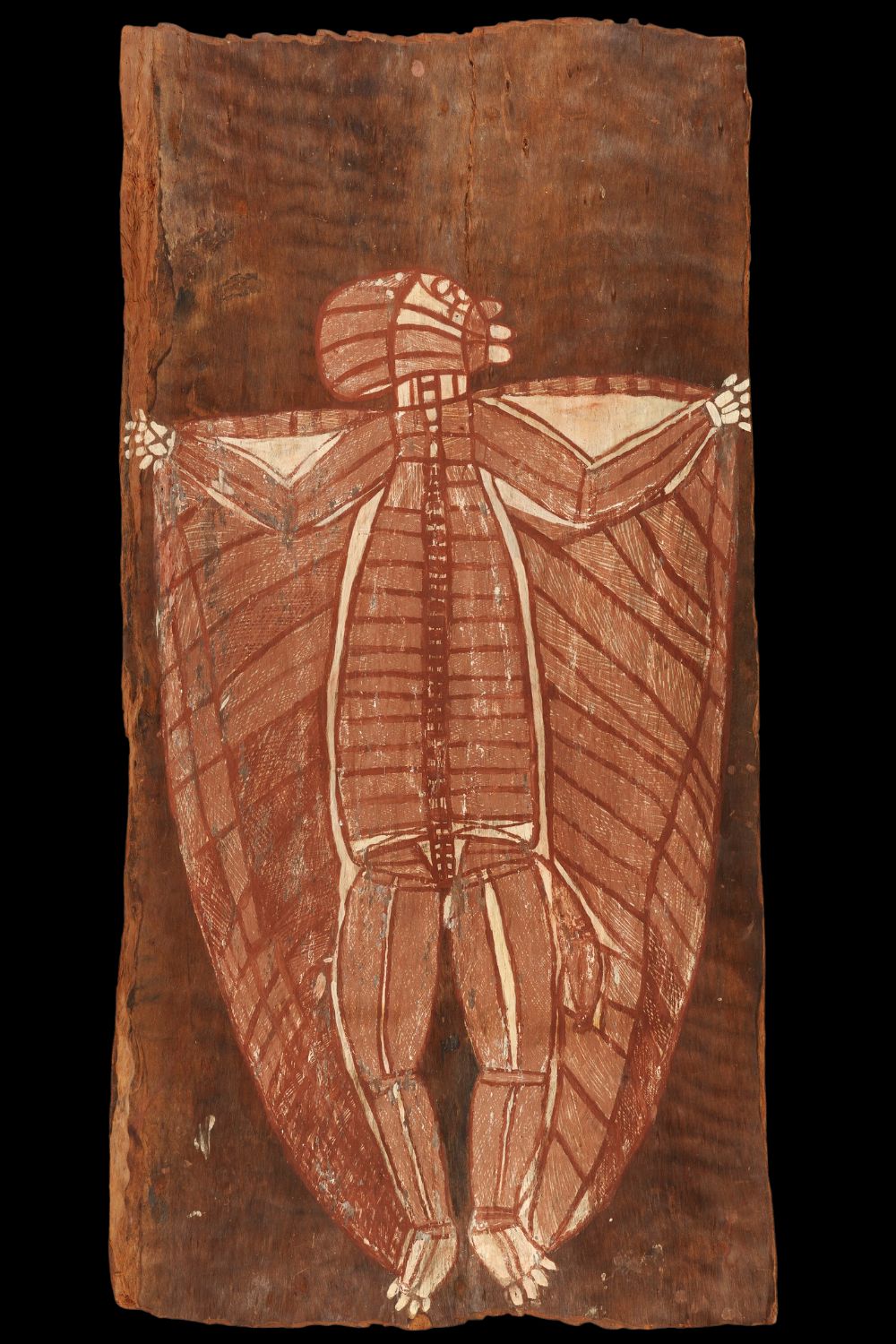
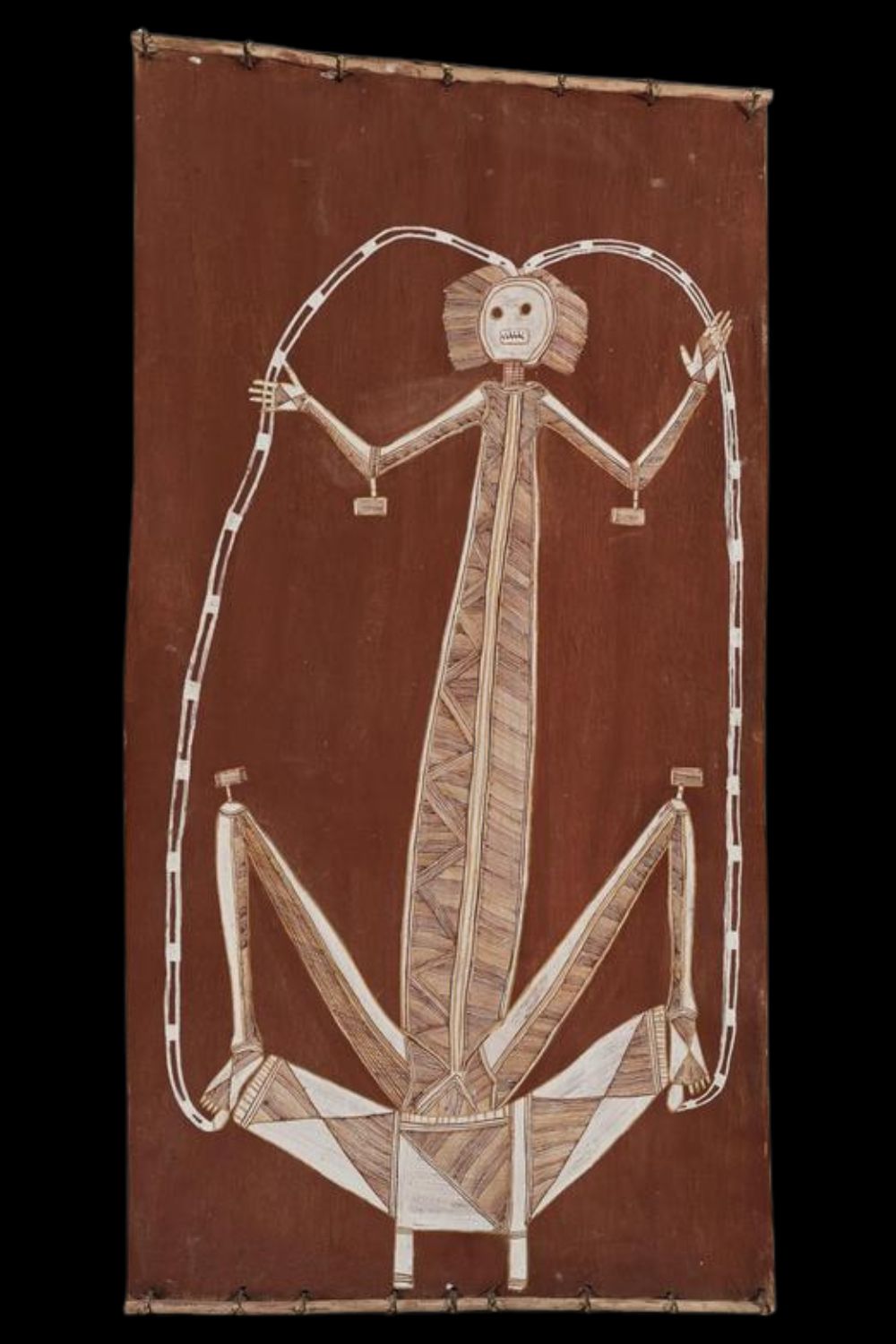
Oenpelli Art originates from the Gunbalanya region of western Arnhem Land and is one of the most influential bark painting traditions in Australia. Closely connected to the ancient rock art of Arnhem Land, Oenpelli artists are particularly renowned for the Aboriginal X-Ray Art style, in which the internal anatomy of animals is depicted alongside their external form. Common subjects include barramundi, turtles, kangaroos, Rainbow Serpents, Namarrkon the Lightning Spirit, and Mimih spirits associated with the stone country of western Arnhem Land. The tradition draws upon some of the oldest continuous artistic practices in the world, with its roots extending back thousands of years through the region’s rock art heritage.
Traditional Oenpelli bark paintings are usually characterised by a monochromatic background with a single dominant figure painted in white pipeclay and natural ochres. Unlike the densely patterned clan designs often seen in eastern Arnhem Land, western Arnhem Land artists generally favoured bold isolated figures against open backgrounds. Early bark paintings from the region were among the first Aboriginal artworks collected by museums, with major collections assembled by Baldwin Spencer and later the 1948 Arnhem Land Expedition. Today, Oenpelli bark paintings remain highly regarded for their strong connection to ancestral stories, distinctive visual style, and historical importance within Australian art.
Yirrkala (North East Arnhem Land)
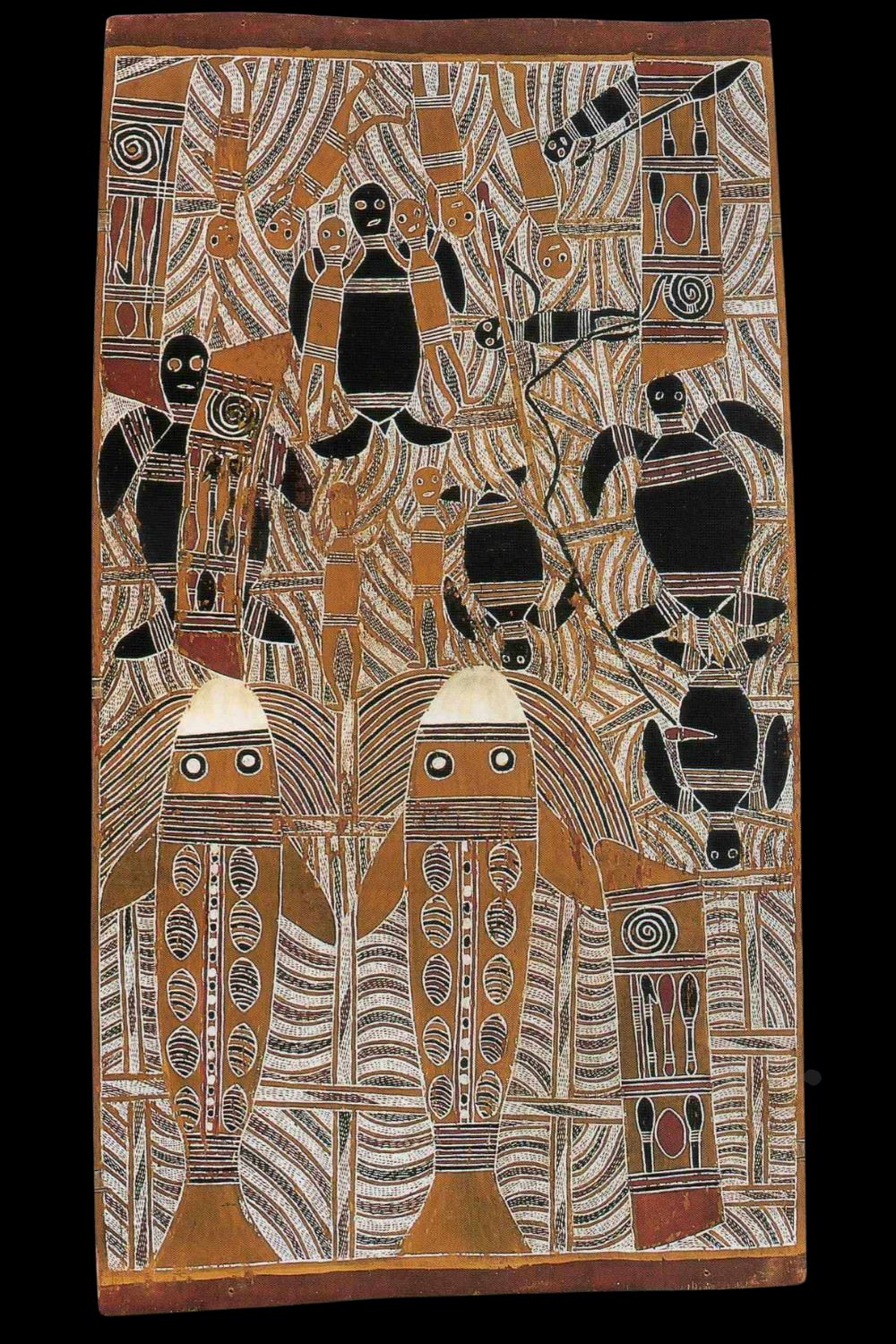
Yirrkala Art originates from the Yolngu communities of North East Arnhem Land and represents one of the most sophisticated bark painting traditions in Australia. Unlike the bold isolated figures often associated with western Arnhem Land, Yirrkala bark paintings are characterised by highly structured compositions filled with intricate rarrk crosshatching and sacred clan designs. Subjects commonly include ancestral creation stories, sea-country narratives, ceremonial imagery, native animals, and the long historical relationship between Yolngu people and Macassan traders. The paintings serve not only as artistic expressions but also as visual statements of clan identity, cultural authority, and connections to Country.
A defining feature of Yirrkala bark painting is the extraordinary refinement of rarrk, the fine crosshatched patterning that covers much of the bark surface. These geometric designs are far more than decoration, often representing ancestral power, sacred geography, and clan ownership of particular stories and places. The region gained national significance through works such as the 1963 Yirrkala Bark Petitions, which combined traditional bark painting with political advocacy and became a landmark in the Aboriginal land rights movement. Today Yirrkala remains one of Australia’s leading centres of Indigenous art, renowned for bark paintings that combine remarkable technical skill with deep cultural meaning.
Groote Eylandt (Anindilyakwa Country)
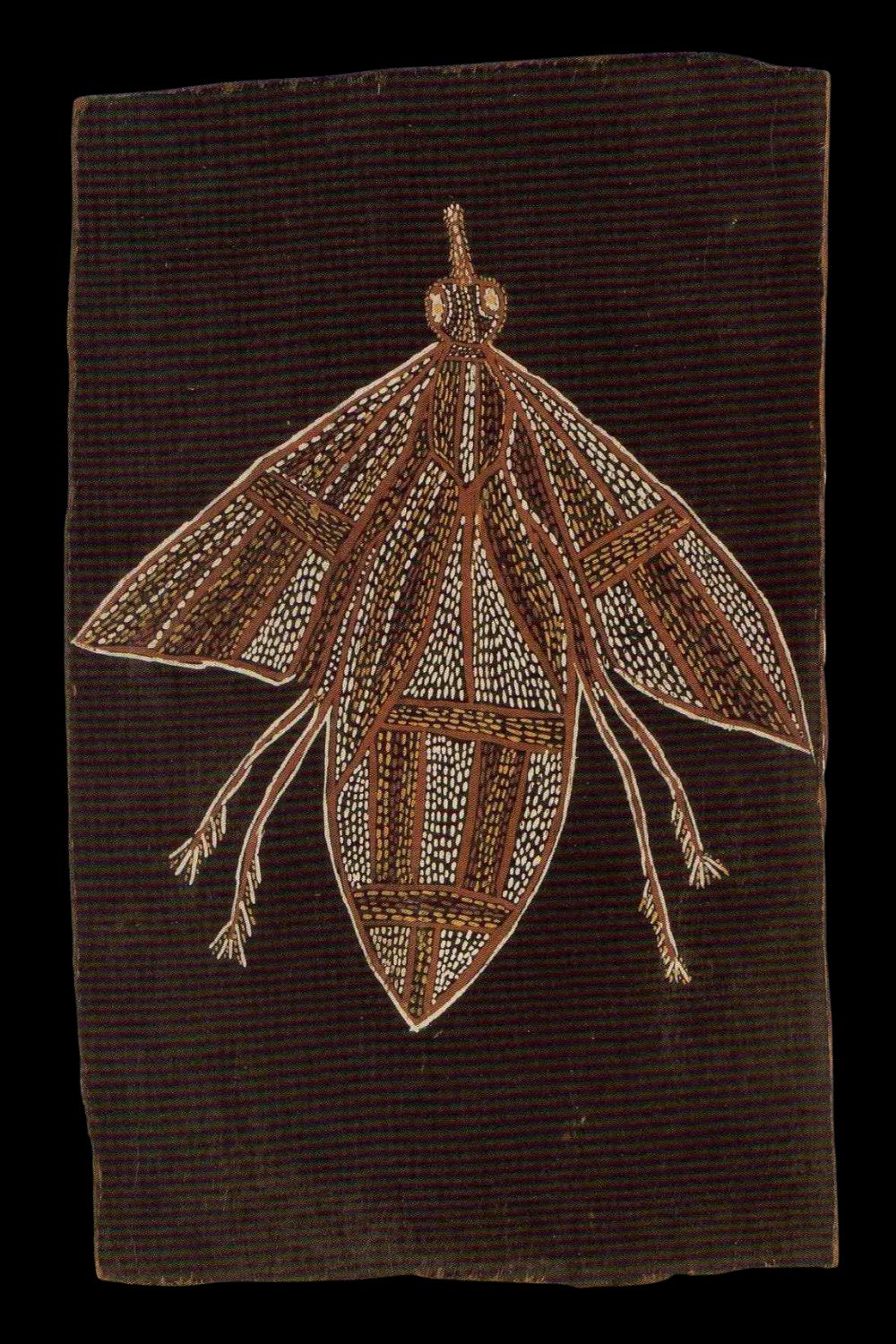
Groote Eylandt Art originates from the Anindilyakwa people of Groote Eylandt in the Gulf of Carpentaria and is one of the most visually distinctive bark painting traditions in Arnhem Land. Unlike the X-ray imagery of Oenpelli or the intricate rarrk crosshatching of Yirrkala, Groote Eylandt bark paintings are characterised by bold black backgrounds, strong figurative imagery, and distinctive dotted or dash-pattern infill. Early works often depict a single ancestral being, totemic animal, marine creature, or sacred motif isolated against a dark field, creating a striking graphic simplicity unique within Aboriginal Australian art. Common subjects include turtles, dugongs, fish, sharks, shell species, insects, Banumbirr the Morning Star, Walu the Sun Woman, and other ancestral beings associated with Anindilyakwa traditions.
Traditional Groote Eylandt bark paintings are usually painted using red, white, and yellow ochres over a monochrome black ground. While early examples often focused on individual totemic figures, later works became increasingly narrative, depicting ceremonial gatherings, Dreaming stories, Macassan contact histories, and clan traditions. The movement reached its peak during the 1960s and 1970s through artists such as Nandjiwarra, Nandabitta, and Jabarrgwa before declining following the social disruption associated with manganese mining on the island. Today, Groote Eylandt bark paintings are highly regarded for their powerful design, distinctive regional identity, and importance within the broader history of Arnhem Land art.
Tiwi Islands
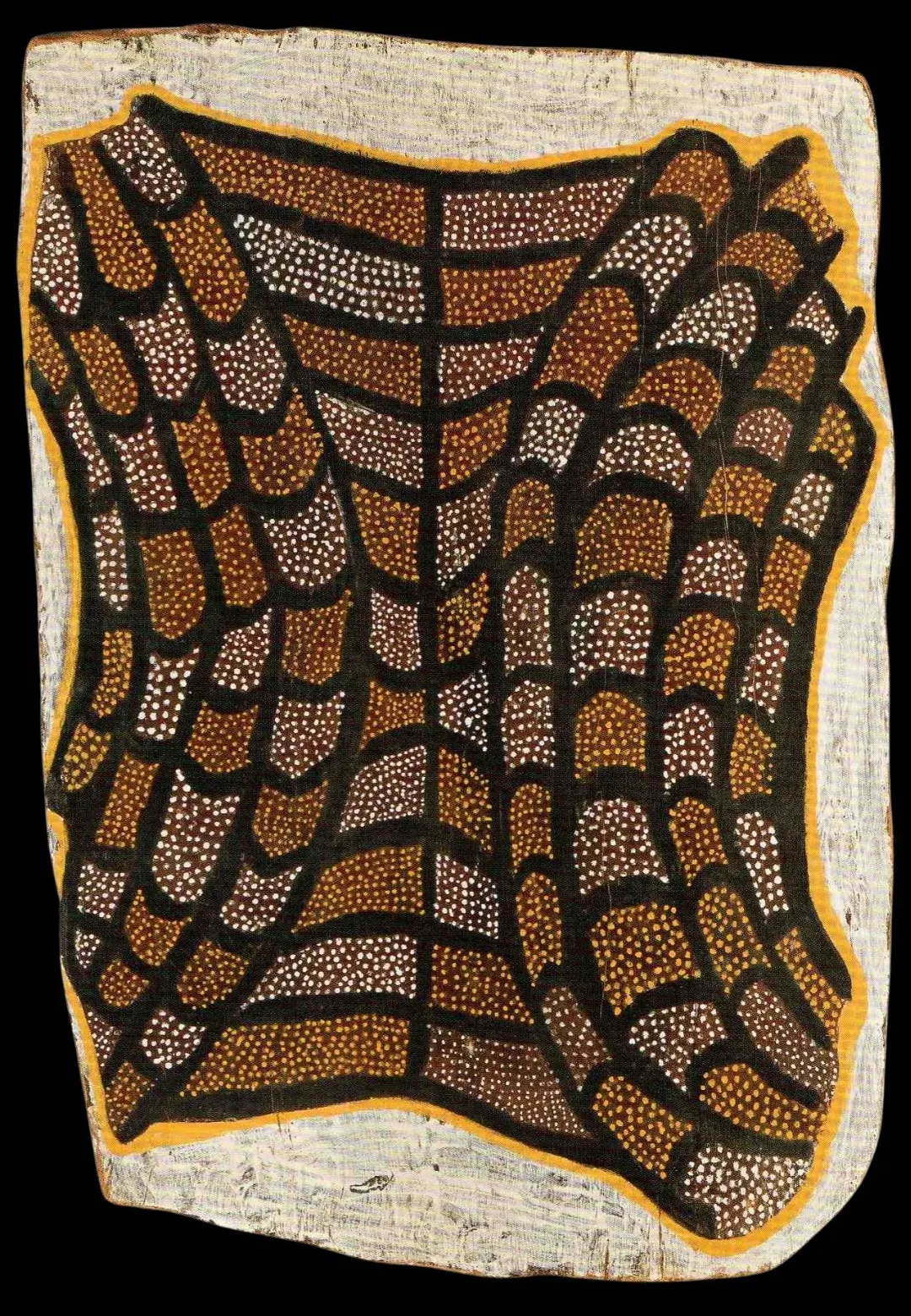
Tiwi bark painting developed on the Tiwi Islands north of Darwin and differs significantly from the bark painting traditions of Arnhem Land. Whereas Oenpelli paintings are known for X-ray imagery and Yirrkala paintings for intricate rarrk crosshatching, Tiwi painting is distinguished by its bold geometric jilamara designs derived from ceremonial body painting and mortuary traditions. The circles, dots, bands, and crosshatched motifs that dominate Tiwi paintings originated as designs painted onto the bodies of participants in Pukumani and Kulama ceremonies and remain closely connected to kinship, ceremony, and ancestral identity. Early bark paintings emerged during the 1950s and 1960s when artists began transferring these ceremonial designs onto sheets of eucalyptus bark for collectors and museums.
Traditional Tiwi bark paintings are often characterised by rhythmic geometric patterns painted in natural ochres, creating compositions that appear highly abstract to non-Indigenous viewers. Unlike many Arnhem Land bark paintings, which frequently depict animals, spirit beings, and narrative scenes, Tiwi paintings generally focus on the power and symbolism of jilamara design itself. Important early artists included Ali Mungatopi and Deaf Tommy Mungatopi, while later painters such as Kitty Kantilla and Timothy Cook transformed these ceremonial traditions into internationally recognised forms of contemporary Aboriginal art. Today, Tiwi painting remains one of Australia’s most distinctive regional art traditions, combining ancient ceremonial design systems with a striking visual language of abstraction and pattern.
Port Keats (Wadeye)
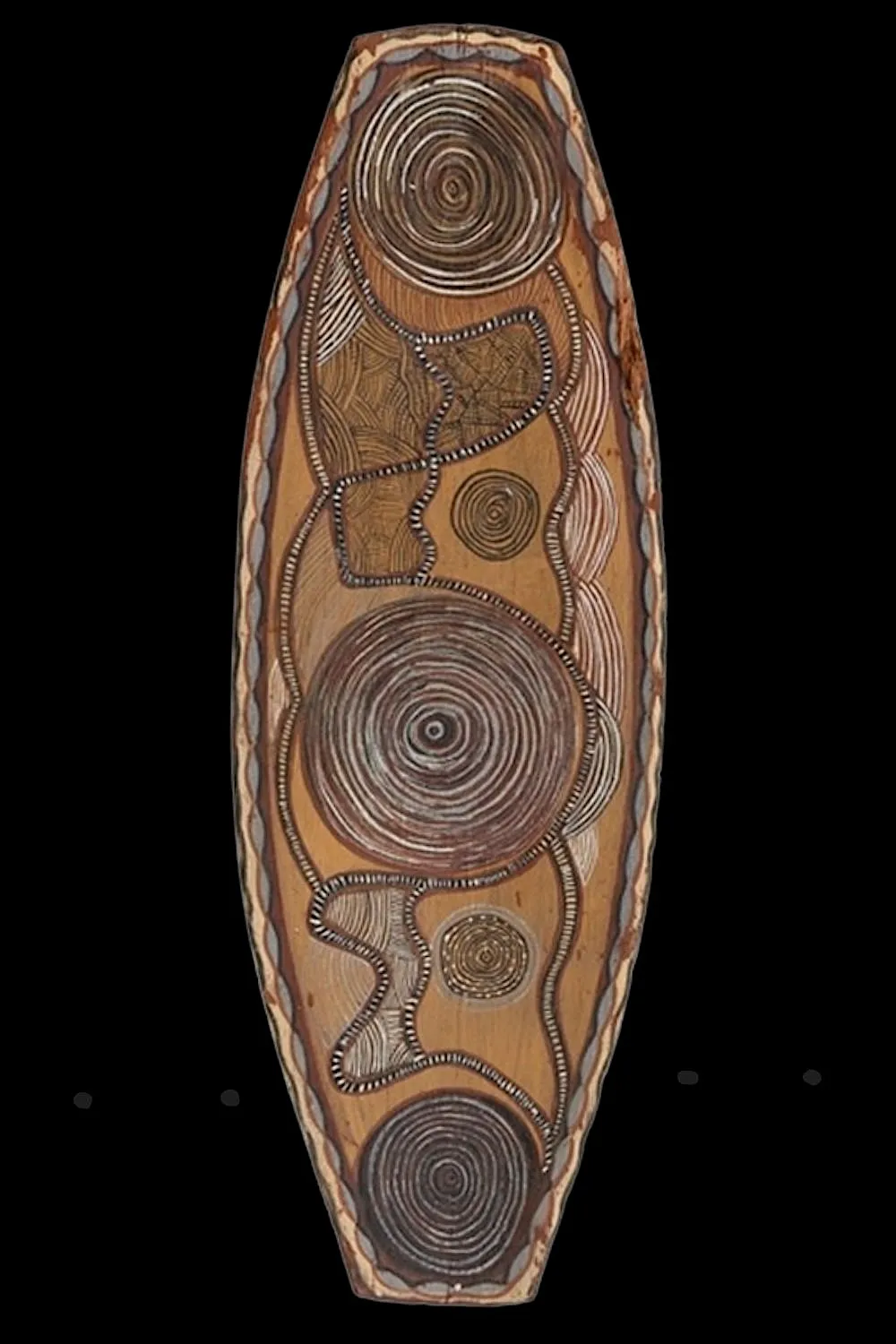
Port Keats Art originates from Wadeye on the western coast of the Northern Territory and represents one of the most distinctive regional bark painting traditions outside Arnhem Land. Unlike many bark painting traditions that evolved directly from rock art, early Port Keats paintings were closely connected to ceremonial board designs and sacred ritual imagery. Emerging as a bark painting movement during the late 1950s and early 1960s, the style is characterised by highly abstract compositions featuring concentric circles, journey lines, geometric forms, and ceremonial symbols associated with ancestral Dreaming narratives. Many early examples were painted on elongated oval bark panels and possess a visual language that shares certain similarities with the symbolic imagery later seen in Western Desert Art.
Over time, Port Keats bark painting evolved from these highly abstract ceremonial designs into more figurative depictions of animals, ancestral beings, ceremonial activities, and everyday life. Unlike Western Desert painting, which increasingly obscured sacred imagery through dense dotting, Port Keats artists generally moved towards more descriptive imagery while continuing to paint primarily on bark. As a result, Port Keats remains one of the lesser-known but historically important Aboriginal bark painting traditions, valued today for its strong ceremonial origins, distinctive visual style, and important place in the development of contemporary Aboriginal art.
Kimberley Wandjina Bark painting
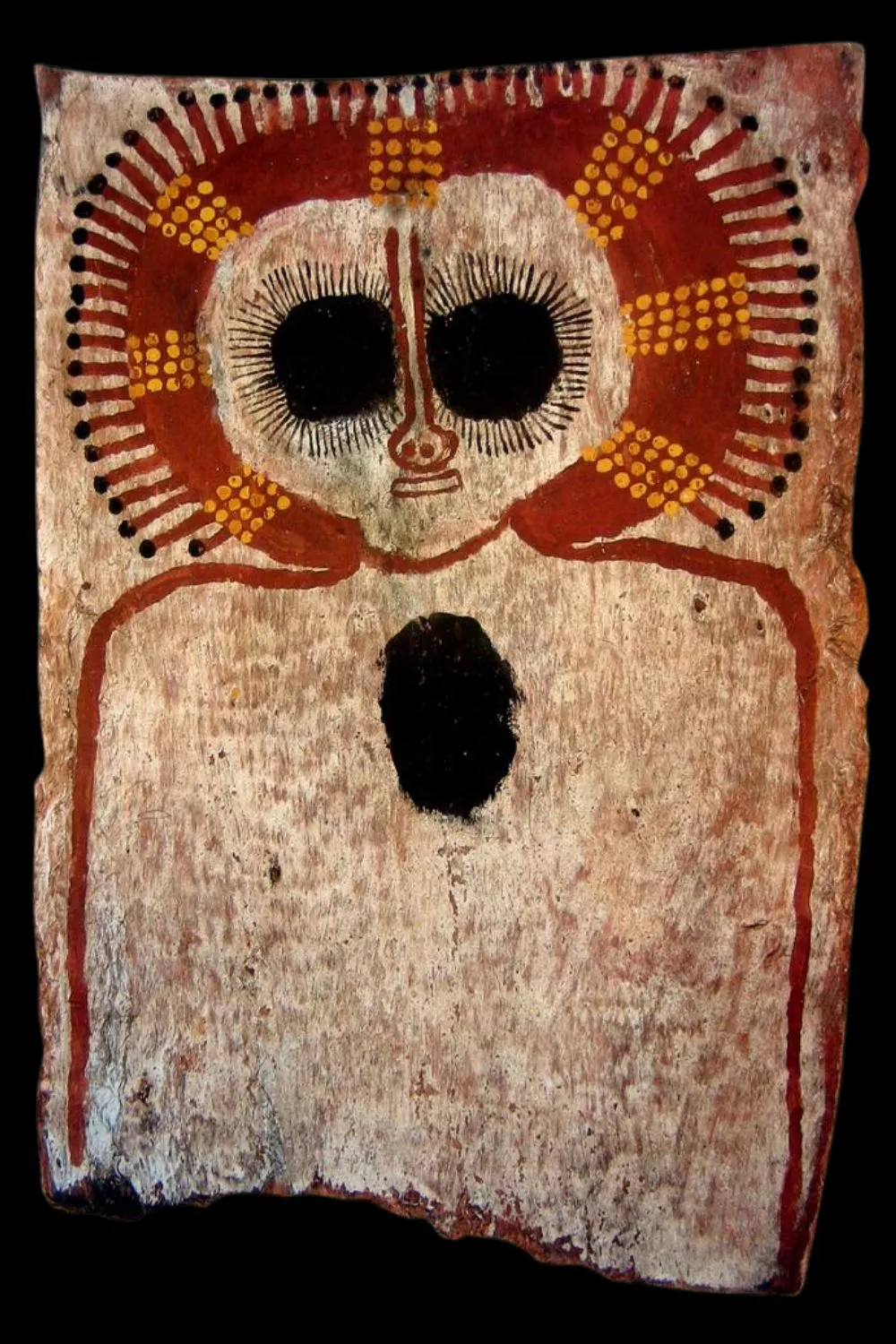
Wandjina Art originates from the north-west Kimberley region of Western Australia and is centred on the sacred ancestral spirit beings known as the Wandjina. Unlike the bark painting traditions of Arnhem Land, which often focus on animals, clan designs, or X-ray imagery, Kimberley Wandjina paintings are dominated by powerful spirit figures with large eyes, halo-like headdresses, and distinctive mouthless faces. The Wandjina are regarded as ancestral rainmakers and creators who shaped the landscape during the Dreaming and continue to maintain the fertility, seasonal cycles, and spiritual balance of Country. Associated closely with the Worrorra, Ngarinyin, and Wunambal peoples, Wandjina imagery remains one of the most recognisable and culturally significant traditions within Aboriginal Australian art.
Although Wandjina imagery has been painted on Kimberley rock shelters for thousands of years, portable paintings on bark and board emerged primarily during the twentieth century. Early artists translated the sacred figures from rock surfaces onto bark, composition board, and later canvas while maintaining strong ceremonial connections to the original traditions. Unlike Yirrkala bark paintings with their intricate rarrk crosshatching or the black-background style of Groote Eylandt, Wandjina paintings are generally figurative and visually direct, focusing on the spiritual presence of the ancestral beings themselves. Today, Wandjina paintings remain an important expression of Kimberley identity and continue to preserve one of Australia’s most enduring living artistic traditions.
Collecting Aboriginal Bark Paintings: Authenticity, Provenance and Value
Aboriginal bark paintings have been collected by museums, anthropologists, private collectors, and art galleries for more than a century. As with most forms of art, rarity, provenance, condition, subject matter, and artistic significance all influence collectability and value. However, bark paintings possess several unique characteristics that collectors should understand before purchasing.
Age
In general, earlier bark paintings are more collectable than later examples.
Bark paintings produced before the 1960s were typically collected as ethnographic specimens rather than works of fine art. Many were commissioned by anthropologists, missionaries, and museums seeking to document Aboriginal culture and ceremonial traditions. These early works are often relatively small, commonly measuring less than 50 cm by 50 cm, and usually lack the wooden battens later used to prevent curling. The bark sheets are frequently irregularly shaped with rough-cut ends and a more organic appearance.
Because relatively few early bark paintings were collected and many have not survived, they are often considerably rarer than later examples and can be highly sought after by collectors and institutions.
During the 1960s, Aboriginal missions and emerging art centres increasingly encouraged artists to produce bark paintings for sale. As a result, bark paintings became larger, more formalised, and were often fitted with wooden supports at the top and bottom to help keep the bark flat. Artistic styles also evolved during this period, although these changes varied significantly between regions and are best understood within the context of individual bark painting traditions.
Artist
For bark paintings produced after the 1960s, the artist is usually the single most important factor influencing value.
Works by highly regarded artists generally command significantly higher prices than comparable paintings by lesser-known artists. As Aboriginal art developed into an internationally recognised fine art movement, artist reputation became increasingly important, much as it is in the broader art market.
This is often less relevant for early bark paintings, many of which were collected as ethnographic objects without the artist’s name being recorded. In these cases, age, rarity, subject matter, provenance, and historical importance may become more significant than attribution.
Subject Matter
The subject depicted can also influence desirability and value.
In many bark painting traditions, images of important ancestral beings, spirit figures, ceremonial subjects, and major Dreaming narratives tend to attract stronger collector interest than more common depictions of animals. Subjects such as Wandjina figures, Mimih spirits, Namarrkon, Rainbow Serpents, and significant clan narratives are often particularly sought after because of their cultural importance and visual impact.
That said, exceptional examples depicting animals can still be highly valuable, especially when painted by important artists or representing classic regional styles.
Provenance
Provenance can have a substantial impact on both value and authenticity.
Bark paintings collected by respected anthropologists, missionaries, museums, or well-known private collectors often command stronger prices than comparable works with little documented history. A clear ownership history helps establish authenticity, provides historical context, and can connect an artwork to important periods in the development of Aboriginal art.
Labels, collection records, exhibition histories, photographs, and supporting documentation can all contribute significantly to provenance.
Condition
Condition is a critical consideration when collecting bark paintings.
As a natural material, bark is vulnerable to splitting, cracking, warping, insect damage, pigment loss, and environmental deterioration. While specialist conservators can often stabilise or restore damaged bark paintings, conservation work is frequently expensive and may not be economically viable except for particularly important examples.
Collectors generally seek bark paintings that retain strong pigment, stable bark surfaces, minimal repairs, and good overall structural integrity. As a result, two otherwise similar bark paintings can vary considerably in value depending on their condition.
How Much Are Aboriginal Bark Paintings Worth?
The value of an Aboriginal bark painting can vary enormously depending on its age, artist, subject matter, provenance, condition, and historical significance. While exceptional examples can achieve tens of thousands of dollars, the reality is that most bark paintings are relatively modest in value.
As a general guide, approximately 95% of Aboriginal bark paintings are worth less than $1,000. Many bark paintings were produced for the tourist market during the second half of the twentieth century and, although culturally significant and visually appealing, are not necessarily rare or highly sought after by collectors.
At the other end of the market are bark paintings by important artists, particularly those associated with major Arnhem Land, Tiwi, and Kimberley traditions. Works depicting significant ancestral beings, ceremonial subjects, or important Dreaming stories are often more desirable than decorative animal studies, especially when combined with strong visual impact and excellent provenance.
The most valuable bark paintings are typically those that combine several desirable factors: an important artist, a significant subject, good condition, early age, strong provenance, and outstanding artistic quality. Museum-quality bark paintings meeting these criteria can be worth $25,000 or considerably more, while exceptional examples by leading artists may achieve substantially higher prices at auction.
Because bark paintings vary so greatly between regions and artists, accurate valuation generally requires consideration of the individual artwork rather than broad market averages. If you have a bark painting and would like an informal opinion, simply send me clear photographs of the front and back, together with the dimensions and any known history. I will happily identify the likely region, explain the subject matter where possible, and let you know what the painting would be worth to me as a collector.
Care for Aboriginal Bark Paintings
Most structural movement in a bark painting occurs during the first few decades after it is created. As many bark paintings encountered by collectors today are already more than twenty years old, a bark that has remained relatively flat over this period will often remain stable if stored and displayed appropriately.
The greatest conservation concern is usually not the bark itself but the stability of the pigments. Traditionally, natural ochres were mixed with organic binding agents such as orchid fibre juice, plant gums, and other natural materials. Over time these binders can deteriorate, causing pigments to become powdery, fragile, or prone to flaking. In some cases specialist conservators can stabilise unstable pigments, but such work should only be undertaken by experienced professionals familiar with Aboriginal bark paintings.
Missing or flaking pigment can often be repaired by a skilled conservator, particularly on important artworks. However, conservation treatment is highly specialised, time-consuming, and expensive. As a result, restoration is generally only economically viable for historically significant or high-value bark paintings.
For most owners, the best form of conservation is prevention. Bark paintings should be kept in a stable environment away from excessive heat, direct sunlight, high humidity, and damp conditions. They should also be protected from dust, insects, and rapid fluctuations in temperature and moisture. Proper storage and display will do far more to preserve a bark painting than any later conservation treatment.
Frequently Asked Questions
How can I identify where a bark painting comes from?
One of the first clues is often the shape of the bark itself. Early Port Keats (Wadeye) bark paintings are frequently painted on elongated oval bark panels, making them relatively easy to distinguish from most Arnhem Land traditions. Oenpelli and Groote Eylandt bark paintings are commonly painted on rectangular sheets of bark and often feature monochromatic backgrounds without decorative borders around the edge of the composition.
Border treatment can also provide important clues. Central Arnhem Land bark paintings commonly have painted borders across the top and bottom of the bark but often leave the sides unframed. Yirrkala bark paintings, by contrast, frequently have borders along all four edges of the bark and are characterised by intricate rarrk crosshatching and clan designs that often cover much of the surface.
The imagery and painting technique are often the most reliable guides. Oenpelli paintings commonly feature X-ray depictions of animals and spirit beings filled with fine parallel linework or rarrk crosshatching. Groote Eylandt paintings often use black backgrounds with distinctive dotted or dash-pattern infill. Tiwi bark paintings are dominated by bold geometric jilamara designs derived from ceremonial body painting, while Kimberley bark paintings frequently depict Wandjina ancestral figures with their characteristic halo-like headdresses and mouthless faces.
While these characteristics can help identify the likely region, there are always exceptions. Artists travelled, styles evolved, and some works incorporate features from multiple traditions. Age, provenance, materials, and subject matter should also be considered when attributing a bark painting.
Are Aboriginal bark paintings still being made today?
Yes. Bark painting remains a living artistic tradition in many communities across Arnhem Land and parts of northern Australia. Contemporary artists continue to create bark paintings using traditional materials and techniques while also responding to modern audiences and markets.
Why are most Aboriginal bark paintings from northern Australia?
Suitable stringybark trees grow across northern Australia, particularly Arnhem Land, making bark readily available as a painting surface. In many southern parts of Australia, Aboriginal artistic traditions developed around other materials including rock engraving, shields, carved trees, possum skin cloaks, and ceremonial objects.
Can Aboriginal bark paintings be legally exported overseas?
In most cases, yes. However, older bark paintings and works that meet certain cultural significance criteria may require export permits under Australian cultural heritage legislation. Buyers should always check current regulations before exporting important artworks.
Why do some bark paintings curl?
Bark is a natural material that expands and contracts as humidity changes. Over time, fluctuations in temperature and moisture can cause a bark painting to warp or curl. This is one reason many bark paintings produced after the 1960s were fitted with wooden battens to help keep them flat.
How should Aboriginal bark paintings be displayed?
Bark paintings should be displayed away from direct sunlight, excessive heat, high humidity, and rapidly changing environmental conditions. Proper framing and conservation-quality mounting can help protect the bark and pigments from long-term deterioration.
What is the difference between a bark painting and a canvas painting?
The main difference is the painting surface. Bark paintings are created on sheets of eucalyptus bark using techniques developed over many generations in northern Australia. Canvas paintings are generally associated with more recent movements such as Western Desert Art and are painted on commercially manufactured surfaces.
Are old bark paintings rare?
Yes. Bark paintings produced before the 1960s are generally much scarcer than later examples because relatively few were collected and many have not survived. Early bark paintings with documented provenance are often highly sought after by museums and collectors.
Can damaged bark paintings be restored?
In some cases, yes. Professional conservators can stabilise cracks, repair damage, and consolidate loose pigments. However, conservation work can be expensive and is usually only economically justified for particularly important or valuable artworks.
What is the oldest known Aboriginal bark painting?
While bark painting traditions are much older, the oldest surviving bark paintings in museum collections generally date from the late nineteenth and early twentieth centuries. Earlier examples rarely survive because bark is a natural and perishable material.
Are all Aboriginal bark paintings painted with ochres?
Traditionally, yes. Most bark paintings were created using natural pigments including red and yellow ochres, white pipeclay, and black charcoal. Some contemporary artists may incorporate modern materials, but natural earth pigments remain central to the bark painting tradition.
Further Reading
For readers interested in learning more about Aboriginal bark painting traditions, the following books provide excellent introductions to the history, artists, and regional styles of northern Australia:
- Bark Paintings of North Australia — Karel Kupka
- Crossing Country: The Alchemy of Western Arnhem Land Art — Hetti Perkins
- Aboriginal Artists of the Northern Territory — Hetti Perkins and Hannah Fink
Together these works explore the major bark painting traditions of Arnhem Land, the Tiwi Islands, Groote Eylandt, Port Keats, and the Kimberley, while providing important historical context and artist biographies.