
Dorothy Napangardi: Biography, Painting Style and Importance
c. 1950s–2013
Warlpiri
Mina Mina, Women’s Digging Stick Dreaming Country
Yuendumu / Alice Springs
Warlpiri Art / Western Desert Art
Painting on canvas
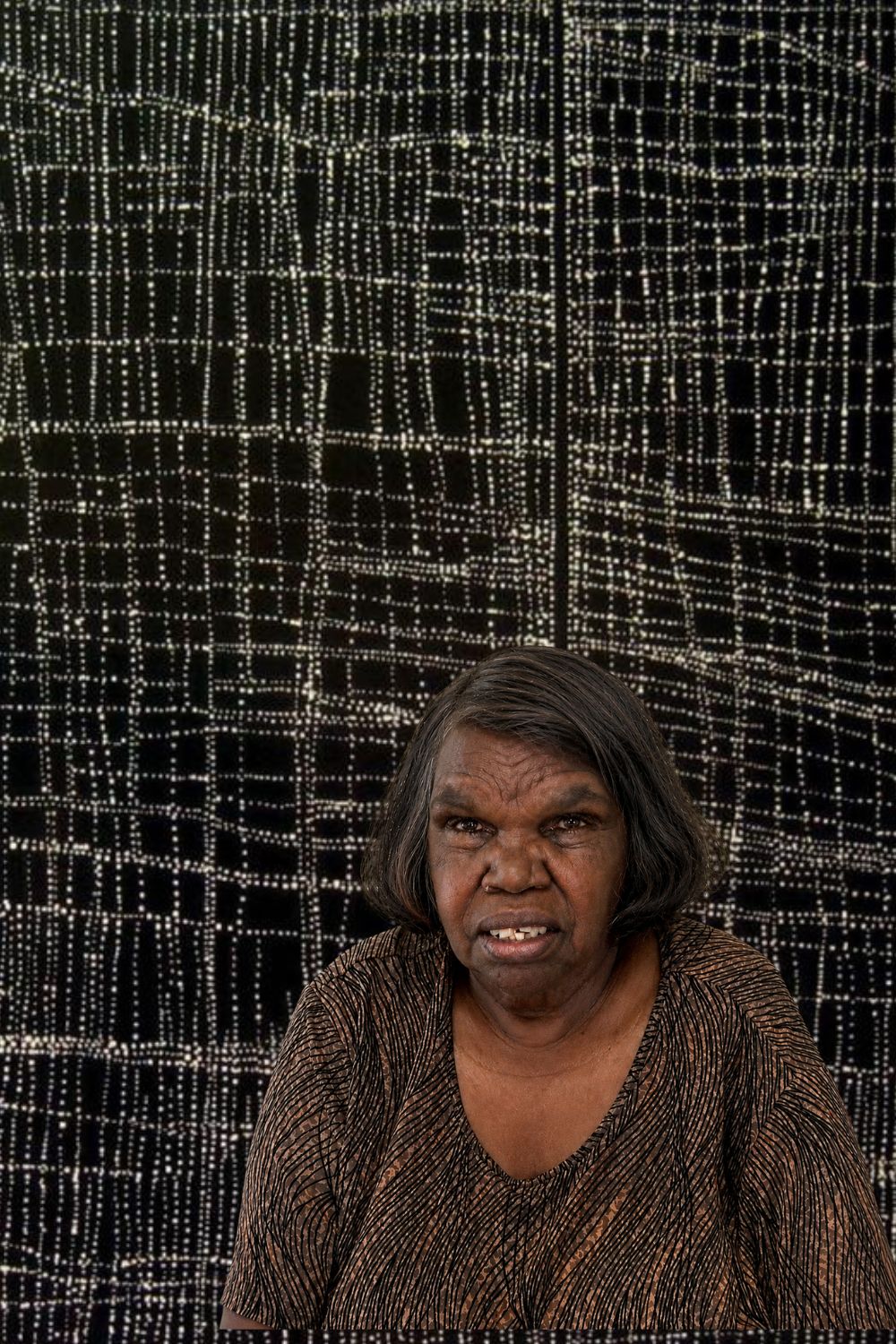
Dorothy Napangardi (c.1950s–2013) was one of the most innovative painters of Warlpiri art and a major figure in the Western Desert Art movement. Her great subject was Mina Mina Jukurrpa, associated with the journeys of ancestral women across her Warlpiri Country. Dorothy knew this Country intimately, having travelled through it when she was young, and in her mature paintings transformed its ancestral journeys and landscape into extraordinary networks of fine dots, intersecting lines and rhythmic linear structures.
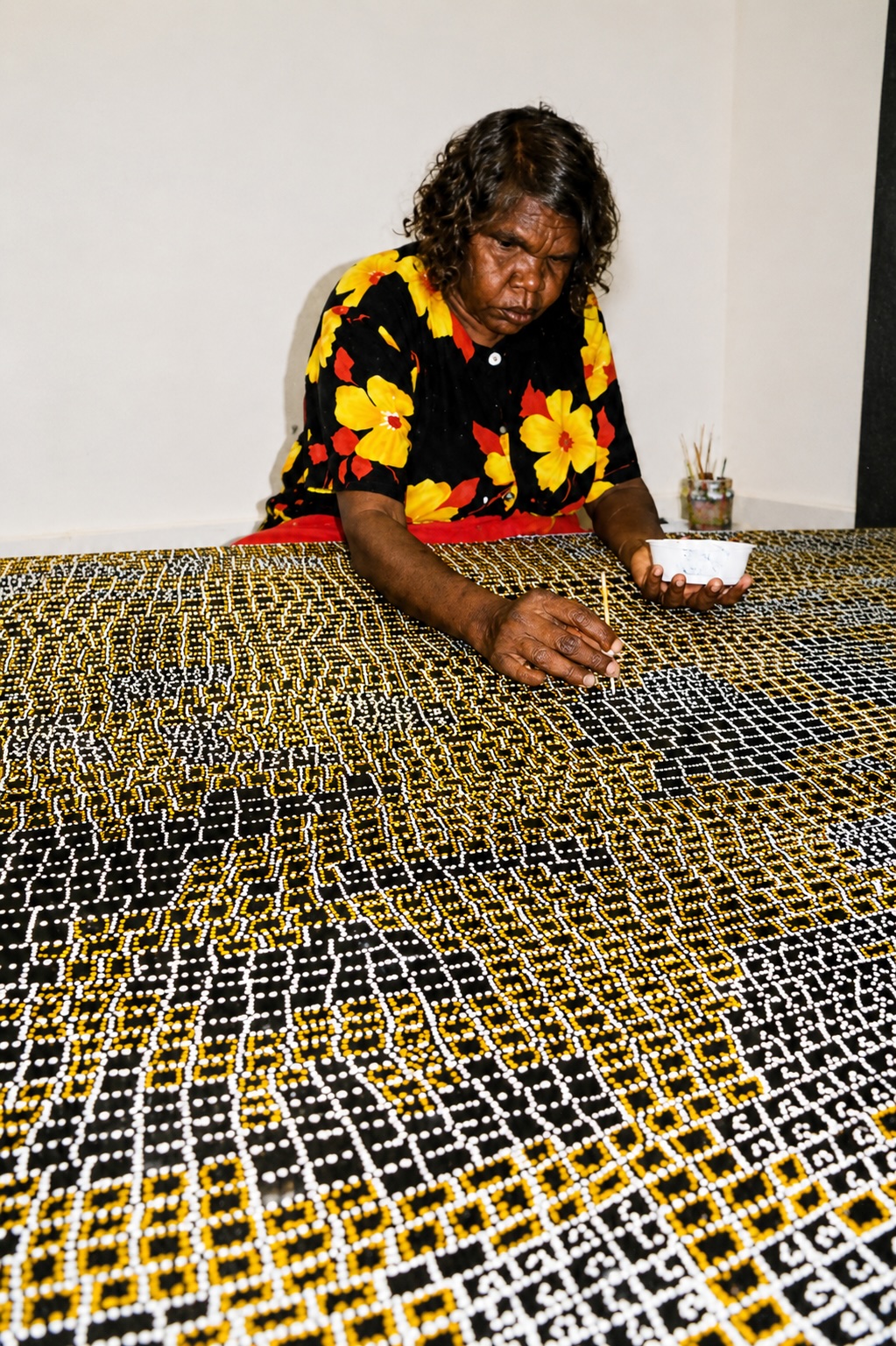
Mina Mina also connected Dorothy with other Warlpiri women painters. Her cousin Judy Watson Napangardi, who became part of Dorothy’s family and was regarded as another sister, painted the same broad ancestral world in a dramatically different way. Where Judy developed brilliant colour and energetic dragged dotting, Dorothy increasingly stripped her paintings back to finely articulated fields of lines and dots.
At first glance Dorothy’s mature paintings can appear almost completely abstract, yet their structures remain grounded in Mina Mina Jukurrpa and the movement of ancestral women across Country. Through rhythm, space and optical movement, she developed a visual language unlike that of her contemporaries, creating one of the most distinctive bodies of work to emerge from contemporary Western Desert art.
If you own a Dorothy Napangardi painting and would like to know its value, or are considering selling, see our Dorothy Napangardi Painting Values guide. It explains how collectors assess quality, rarity, provenance, condition and size, and includes auction results to help place individual works into context.
Early Life
Dorothy Napangardi was born around the early 1950s at Mina Mina, an important ceremonial site west of Yuendumu in the Tanami Desert. Like many Aboriginal people of her generation, she spent her early childhood living on Country before government policies led her family into settlement life. Although she later lived at Yuendumu and eventually Alice Springs, Mina Mina remained the spiritual and cultural centre of her life.
Mina Mina is one of the most significant Women’s Dreaming places in Warlpiri Country. According to Jukurrpa, ancestral Napangardi and Napanangka women gathered there to collect ceremonial digging sticks (Karlangu) before travelling east across the desert, performing ceremonies, singing and dancing as they created the landscape. The claypans of Mina Mina, edged by brilliant white salt encrustations, and the journeys of these ancestral women became the subject that defined almost her entire artistic career.
Dorothy began painting professionally in Alice Springs in 1987. Her earliest paintings depicted bush foods and ceremonial subjects using the colourful iconography characteristic of many Warlpiri artists. Although accomplished, these works remained firmly within the established visual language of the Western Desert movement.
Painting Style
Few Aboriginal artists experienced such a profound artistic evolution.
During the late 1990s Dorothy deliberately abandoned the richly coloured, symbol-filled compositions of her early career and began reducing her imagery to its essential elements. One painting from 1997 was retained by her agent because both recognised it marked a decisive turning point in her artistic development. Over the following three years her work became progressively more restrained as colour disappeared, circles dissolved, and almost every conventional symbol was stripped away.
What emerged was unlike anything previously seen in Aboriginal art.
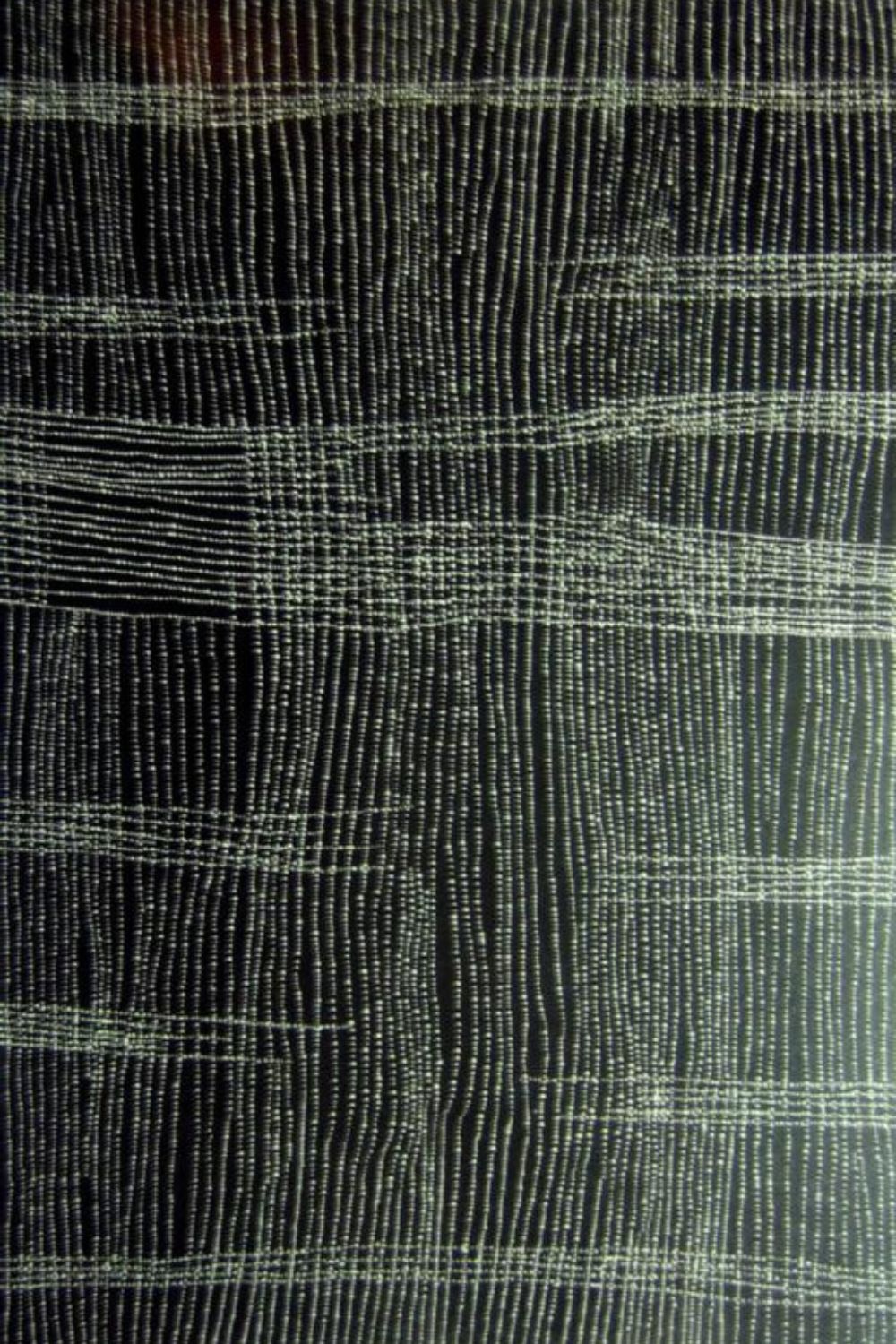
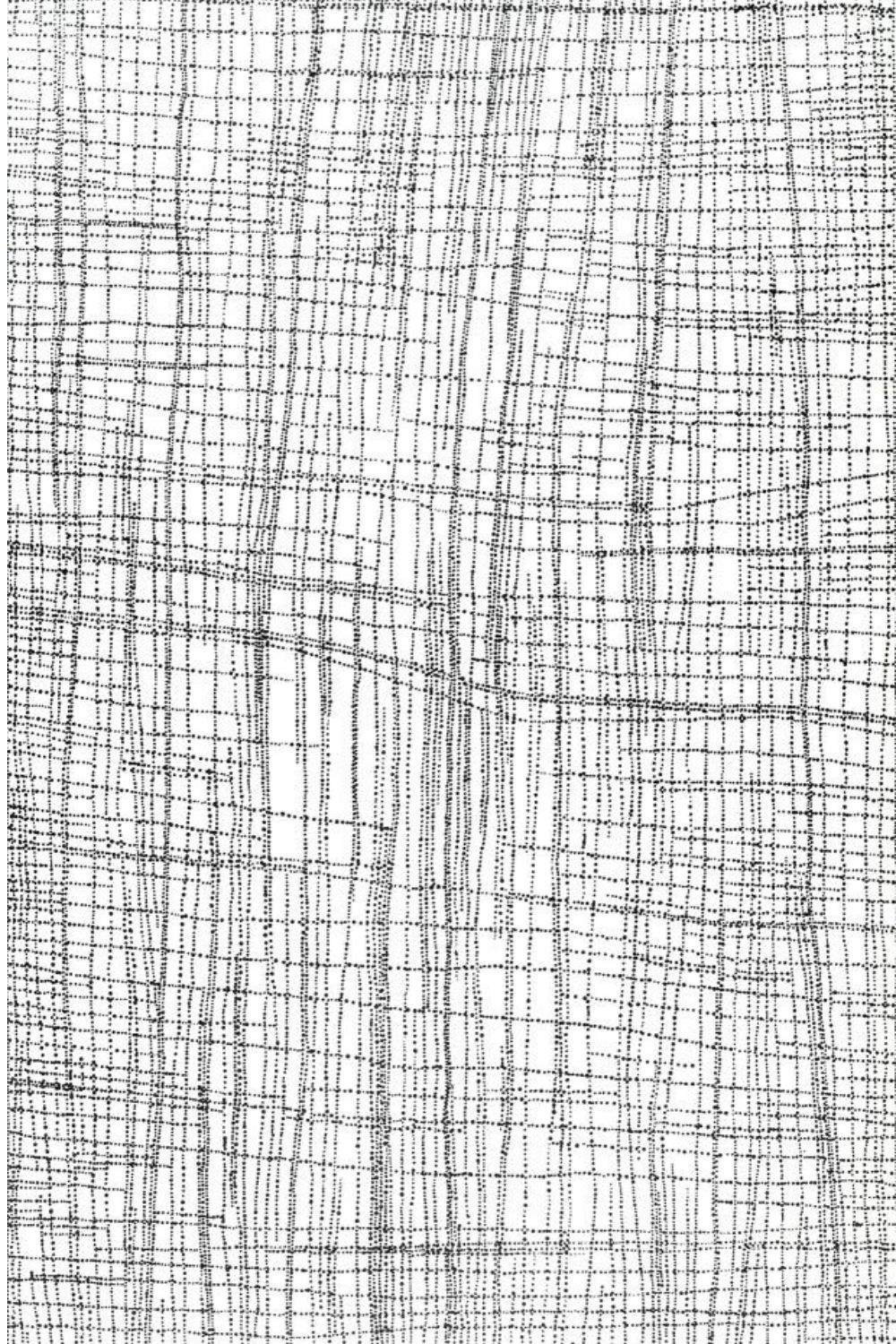
Across immense black, cream or earth-coloured grounds, Dorothy constructed intricate networks of finely balanced white dots that formed shimmering grids, flowing lines and subtle geometric structures. These paintings possess remarkable visual tension. They appear ordered yet constantly shifting, with the eye drawn across the canvas in multiple directions before settling nowhere for long.
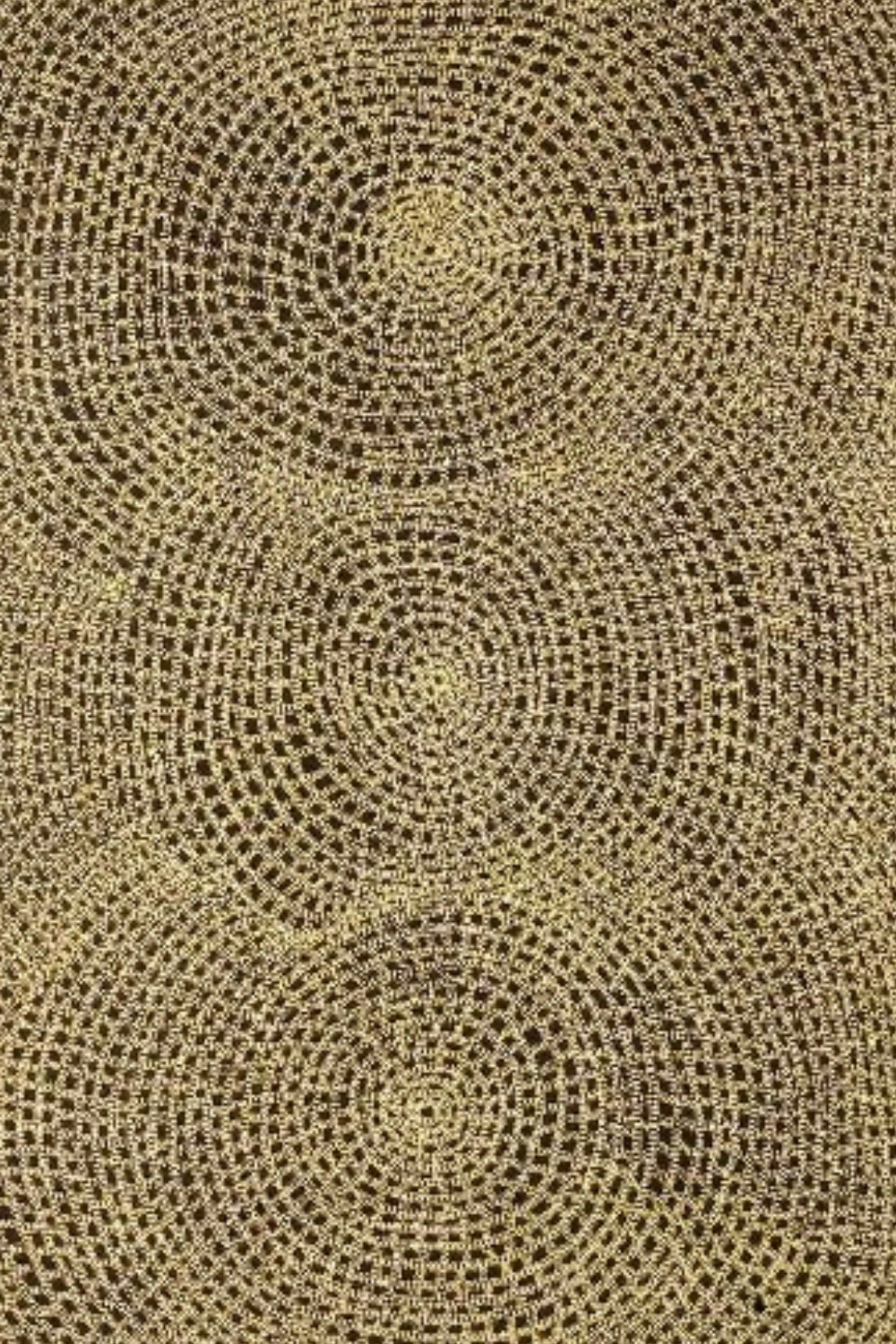
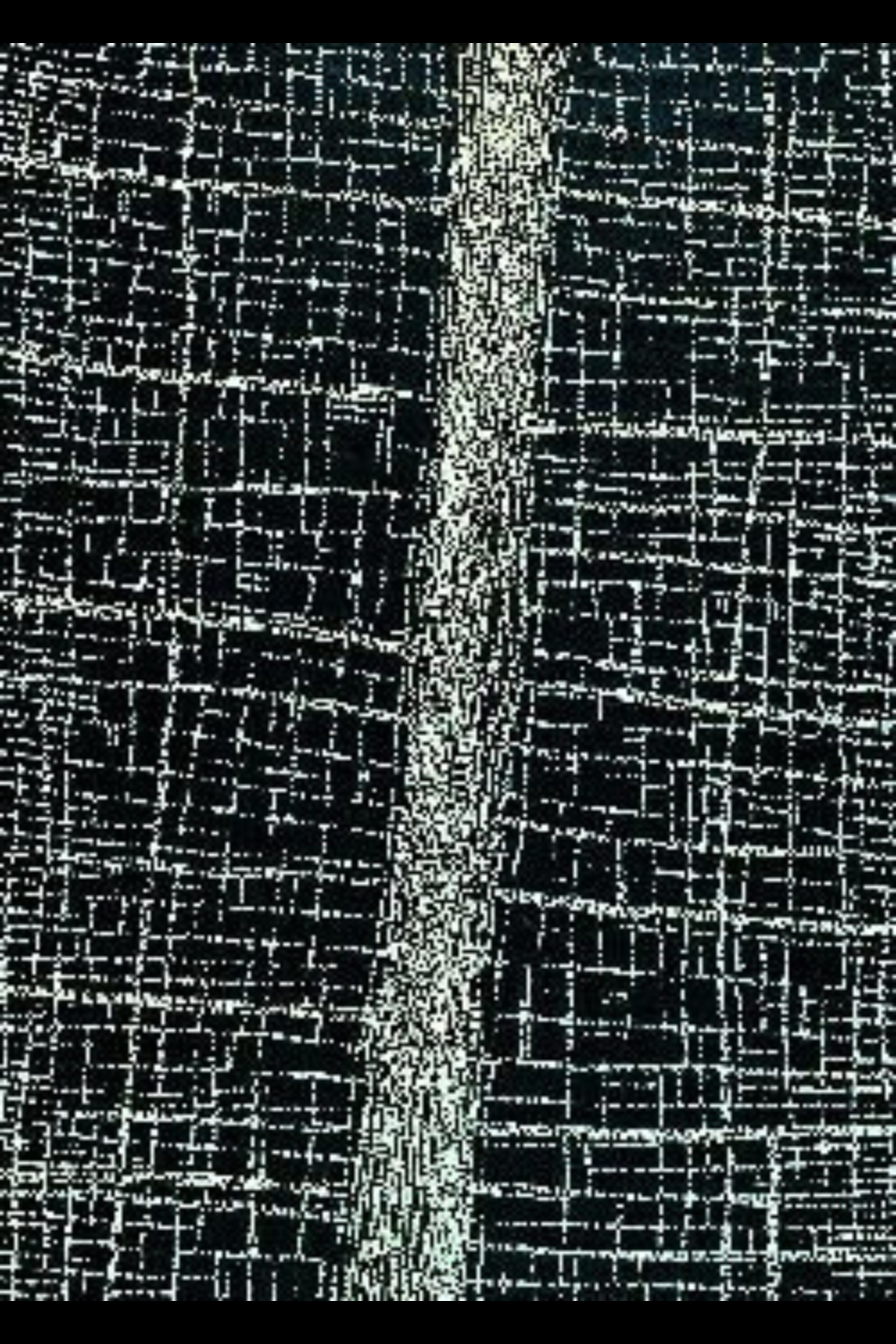
Art historian Vivienne Webb observed that Dorothy’s mature paintings are built upon a “distorted grid structure” in which intersecting dotted lines create compositions animated by “tension, compression and movement”. Rather than leading the viewer towards a single focal point, the paintings encourage the eye to follow dotted pathways as they emerge, disappear, converge and diverge across the canvas. Webb argued that despite their abstract appearance, these works retain a powerful narrative foundation because the linear tracings simultaneously repeat the natural formations of Mina Mina and the movements of the ancestral women who danced across Country.
This dual meaning is fundamental to understanding Dorothy’s paintings. The white dotted grids represent both the salt encrustations that form around the claypans after water evaporates and the ceremonial paths of the Napangardi and Napanangka women as they travelled through the landscape carrying digging sticks, singing and dancing during the Creation period. The paintings therefore describe both the physical appearance of Mina Mina and the ancestral events that give the landscape its enduring significance.
Dorothy’s paintings are therefore not abstract in the modernist sense. Rather, they transform lived experience, ceremony and landscape into rhythm and movement. The apparent simplicity of her compositions conceals extraordinary precision, with countless individually placed dots creating subtle optical vibrations that continually animate the painted surface.
Mina Mina
Nearly every major painting Dorothy produced returns to Mina Mina.
Her work rarely attempts to illustrate Dreaming stories literally. Instead, it evokes the shimmering salt lakes, expansive claypans, rolling sandhills and ceremonial journeys that define the site. The intersecting lines and flowing grids become visual equivalents of movement through Country rather than maps of fixed locations.
Dorothy’s father, Paddy Lewis Japanangka, described Mina Mina as a place of exceptionally white salt lakes and fresh soak waters, recalling that “the water found there was fine to drink, beautiful water, fresh and clear—not salty like now.” His description provides a vivid reminder that Dorothy’s paintings emerge directly from intimate family knowledge of this remarkable landscape.
Importance
Dorothy Napangardi occupies a unique place in the history of Australian art.
Earlier generations of Western Desert painters established a powerful visual language built around concentric circles, travelling lines and ceremonial motifs. Dorothy demonstrated that this symbolic language could be reduced almost to disappearance while preserving its cultural meaning. Rhythm replaced iconography. Movement replaced description. Space itself became a vehicle for expressing Country.
Former Museum of Contemporary Art director Bernice Murphy captured this achievement when she observed that Dorothy’s paintings lift “the topographical plain of country” and transform it “conceptually into the optical plane of the painting.” Rather than producing aerial maps of Mina Mina, Dorothy translated the experience of moving through Country into rhythm, optical vibration and spatial relationships.
Her paintings are frequently compared with international abstract art because of their visual sophistication. Yet these similarities are coincidental rather than influential. Every aspect of Dorothy’s imagery derives from Warlpiri cultural knowledge, ceremonial practice and lived experience of Country rather than European or American modernism.
This ability to unite profound cultural specificity with universal visual power made her one of the defining Aboriginal artists of her generation.
Recognition
Dorothy’s artistic achievements were recognised remarkably quickly.
In 1998 she won the Northern Territory Art Award with one of the first paintings to employ the grid as a major structural device, signalling the emergence of her mature style. Three years later she received the Telstra National Aboriginal and Torres Strait Islander Art Award for Salt on Mina Mina, one of Australia’s most prestigious art prizes. The following year, the Museum of Contemporary Art in Sydney mounted Dancing Up Country, a major retrospective that firmly established her reputation nationally and internationally.
Today her paintings are held in the collections of the National Gallery of Australia, National Gallery of Victoria, Museum of Contemporary Art Australia, Art Gallery of South Australia, the British Museum and the Metropolitan Museum of Art, New York. They are widely regarded as among the finest examples of contemporary Aboriginal painting.
Legacy
Dorothy Napangardi fundamentally expanded the possibilities of Western Desert painting.
She did not invent a new Dreaming or a new subject. Instead, she reinvented how Country could be painted. By reducing the visual language of Western Desert art to finely balanced rhythms of dots, grids and movement, she created a body of work that remains unmistakably Warlpiri while engaging with some of the most sophisticated ideas in contemporary abstraction.
Few Aboriginal artists have developed a visual language that is both so culturally grounded and so instantly recognisable. Her paintings continue to demonstrate that abstraction and tradition are not opposing ideas but complementary ways of expressing the enduring presence of Country.
Further Reading
Dorothy Napangardi’s career has attracted considerable scholarly attention, particularly following her rapid rise to prominence during the late 1990s. The publications below provide the most authoritative discussions of her life, painting style and artistic significance.
Museum of Contemporary Art
Gates, Merryn (ed.). Dancing Up Country: The Art of Dorothy Napangardi. Museum of Contemporary Art, Sydney, 2002.
The essential publication on Dorothy Napangardi and the single most important reference for understanding her work. Produced to accompany her landmark retrospective at the Museum of Contemporary Art, Sydney, it contains high-quality colour illustrations, a chronology, and essays by leading Aboriginal art scholars. Highly recommended.
Vivienne Webb
Webb, Vivienne. “Form and Content.” In Dancing Up Country: The Art of Dorothy Napangardi. Museum of Contemporary Art, Sydney, 2002.
Perhaps the finest analysis of Dorothy Napangardi’s painting technique. Webb explains the development of her distinctive grid structures, the role of movement, tension and optical rhythm, and demonstrates why her paintings are far more than abstract compositions.
Christine Nicholls
Nicholls, Christine. “Thinking Big: Spatial Conception in the Art of Dorothy Napangardi.” Artlink, Vol. 23, No. 3, September 2003.
One of the most insightful essays on Dorothy’s mature paintings. Nicholls explores her extraordinary understanding of space and scale, showing how the artist transformed Warlpiri conceptions of Country into monumental contemporary paintings.
Bernice Murphy
Murphy, Bernice. Telstra National Aboriginal & Torres Strait Islander Art Award, Exhibition Catalogue, 2001.
Written following Dorothy’s winning of the 2001 Telstra Art Award for Salt on Mina Mina, Murphy’s essay contains one of the most frequently quoted observations about the artist, describing how “the topographical plain of country is lifted and transformed conceptually into the optical plane of the painting.”
Wally Caruana
Caruana, Wally. Essays in Beyond Sacred: Recent Painting from Australia’s Remote Aboriginal Communities (2008) and Beyond Sacred: Australian Aboriginal Art (2011).
Caruana traces Dorothy’s stylistic evolution from her early colourful bush-food paintings to the refined black-and-white works that established her international reputation. His essays provide an excellent overview of her career within the broader history of contemporary Aboriginal art.
National Gallery of Australia. Know My Name: Dorothy Napangardi.
A concise institutional biography outlining her life, artistic development and importance within Australian art. Useful as an introductory overview and for collection information.
Museum Collections
The following museums hold important examples of Dorothy Napangardi’s work and provide collection notes or catalogue essays:
- National Gallery of Australia
- Museum of Contemporary Art Australia
- National Gallery of Victoria
- Art Gallery of South Australia
- Metropolitan Museum of Art, New York
- British Museum
Exhibition Catalogues
Several exhibition catalogues contain valuable essays and high-quality reproductions of Dorothy’s paintings, including:
- Dancing Up Country: The Art of Dorothy Napangardi (Museum of Contemporary Art, 2002)
- Telstra National Aboriginal & Torres Strait Islander Art Award (2001)
- Black & White (Lauraine Diggins Fine Art, 2009)
- And They Danced Their Way Across Country (Cooee Art, 2018)
General Aboriginal Art References
Readers seeking broader context may also consult:
- Wally Caruana, Aboriginal Art (Thames & Hudson).
- Howard Morphy, Aboriginal Art (Phaidon).
- Susan McCulloch, McCulloch’s Contemporary Aboriginal Art: The Complete Guide.
- Hetti Perkins and Hannah Fink (eds.), Papunya Tula: Genesis and Genius.
Together these works place Dorothy Napangardi’s achievement within the wider history of Australian Aboriginal art while demonstrating why she is regarded as one of the leading innovators of the contemporary Western Desert movement.
All images featured in this article are presented strictly for educational and informational purposes.
This website may include copyrighted material for which specific authorization has not been obtained from the copyright owner.
All such images are presumed to be the intellectual property of the respective artist or their estate, and are used in accordance with principles of fair dealing or fair use under applicable copyright law.