
Namarrkon the lightning Spirit
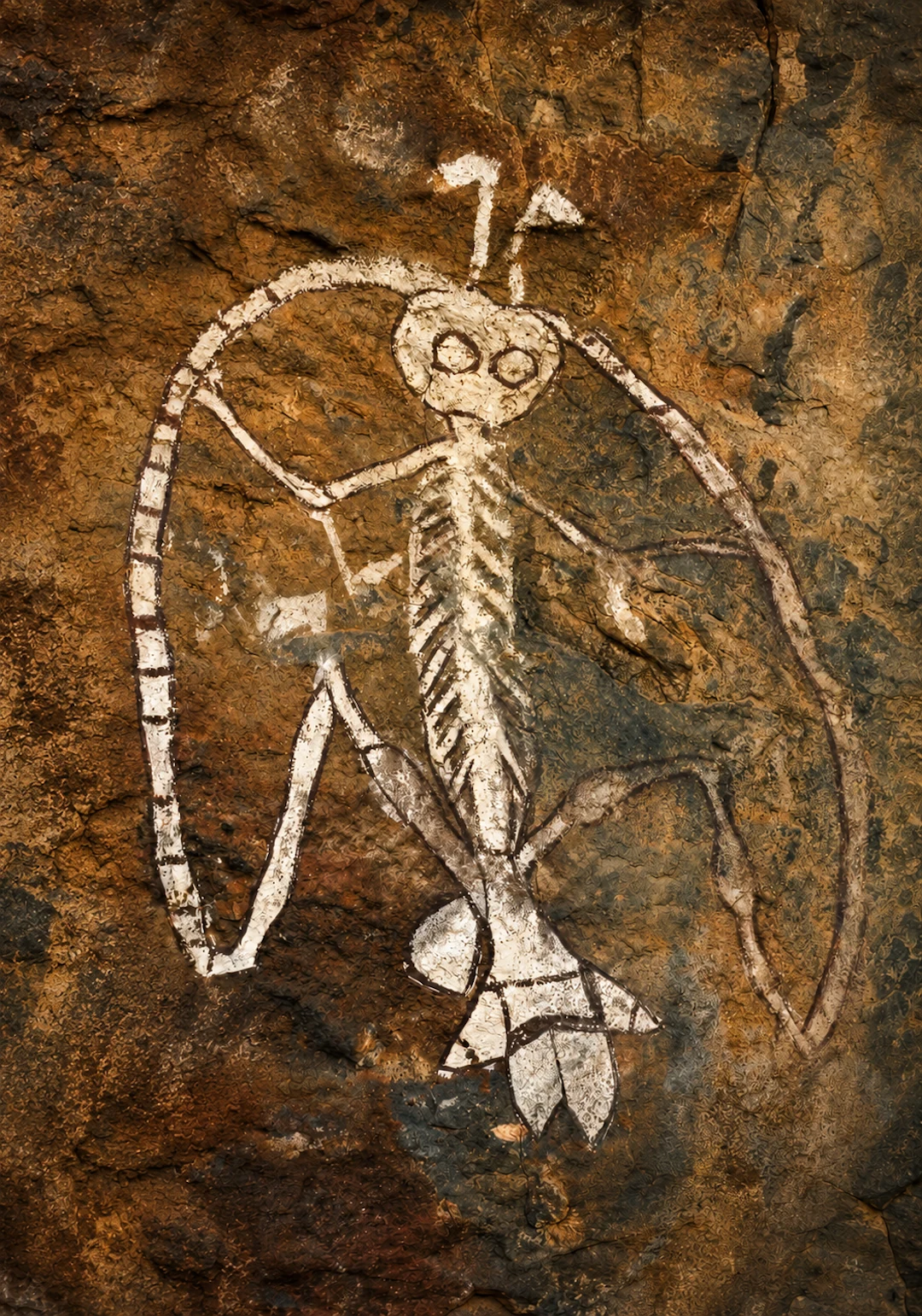
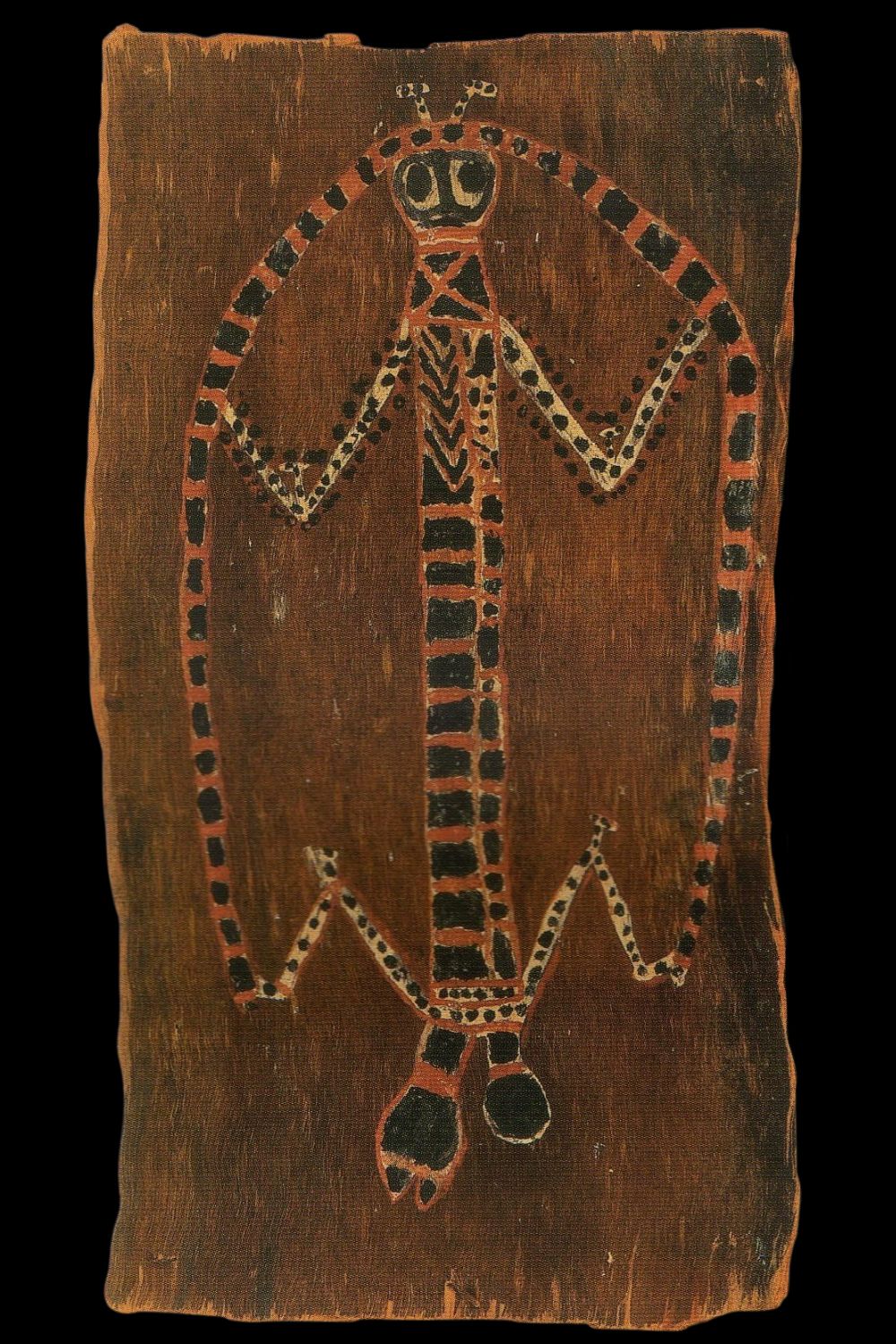
Namarrkon (also called Nammargon and Mamaragan) is the great Lightning Spirit of the Kunwinjku people of Oenpelli (Gunbalanya) in Western Arnhem Land and one of the most powerful ancestral beings depicted in Aboriginal bark paintings and Aboriginal Rock art. Associated with the violent monsoon storms of the wet season, Namarrkon creates thunder by striking the stone axes attached to his knees and elbows, while lightning flashes from the top of his head and across the sky.
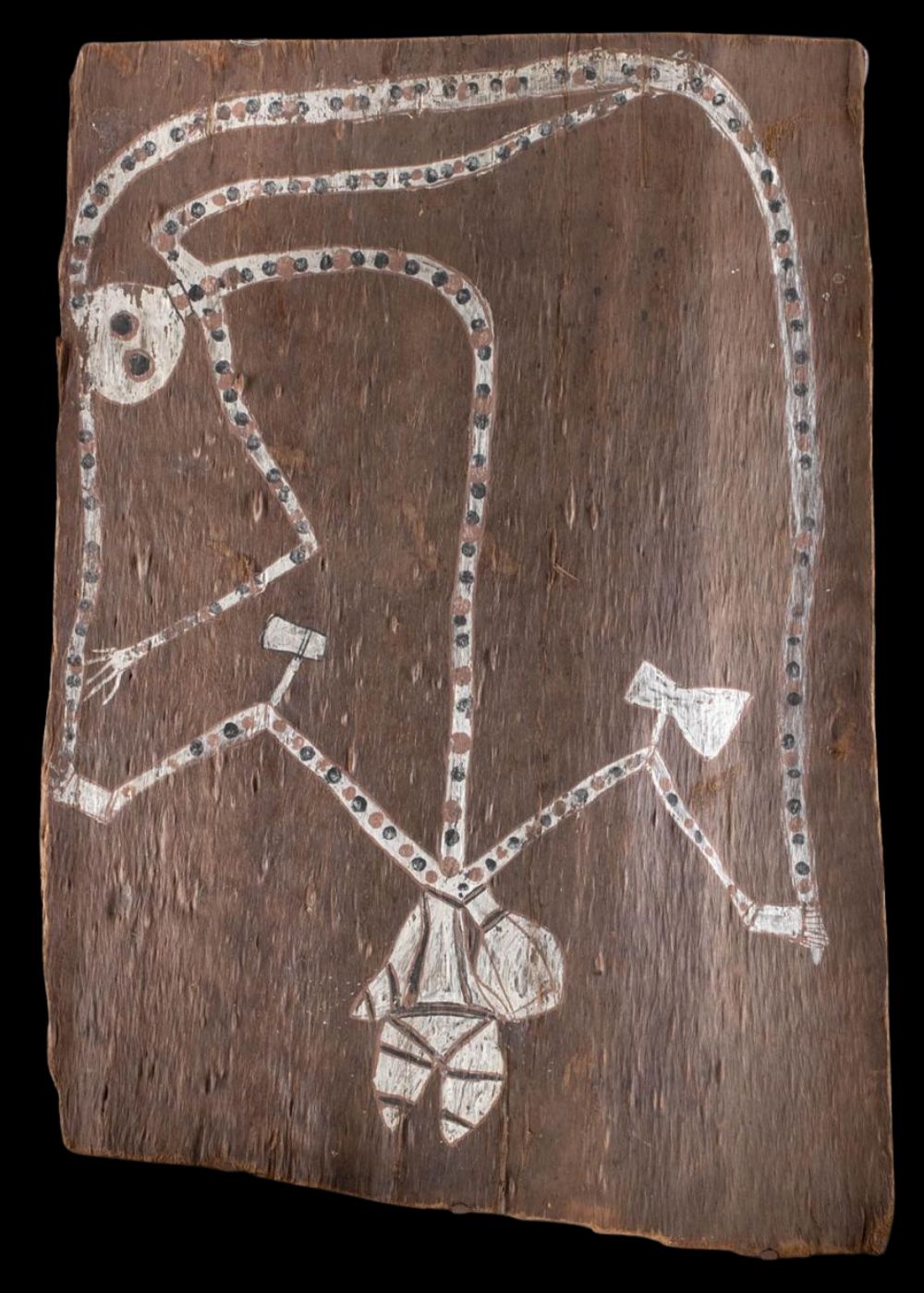
Namarrkon is the subject of many bark paintings and ancient Arnhemland Rock Art by Oenpelli artists. Although artists depict the Lightning Spirit in different ways, certain features remain consistent, particularly the stone axes and the streams of lightning surrounding the figure. The spirit is commonly portrayed as both powerful and dangerous, embodying the force of the tropical storms that sweep across Arnhem Land during the wet season.
The Lightning Spirit has been painted by some of the most important artists of Western Arnhem Land including John Mawurndjul, Lofty Nadjamerrek, Mick Kubarkku, and Nym Djimungurr. Their works vary stylistically but all draw upon the same powerful ancestral tradition.
If you have a Namarrkon bark painting to sell, or would simply like to know what your painting may be worth, please feel free to send me a JPEG image. I would be very interested to see it.
Who is Namarrkon the spirit
Namarrkon is the Lightning Spirit, the source of the fierce tropical storms of Western Arnhem Land during the wet season. During the dry season he lives in a billabong not far from Numbulwar, a sacred rock site in Western Arnhem Land. Namarrkon’s dreaming site (djadjan) is a slight projection in the outline of the Arnhem Land escarpment. It consists of three fused pillars, one with a circular hole near the top. The site lies a few kilometres north-east of the Nourlangie Rock tourist area, to the east of Koongarra Saddle.
Namarrkon left one eye — represented by the hole in the rock — to watch for the coming monsoon, but also to watch his estranged wife, whose home is a cave in a nearby pillar close to Koongarra. Namarrkondjadjan is well named, as the promontory is associated with the earliest intense lightning storms of the season.
During the monsoon, Namarrkon ascends into the clouds. There he creates thunder by striking the stone hammers attached to his elbows and knees while releasing flashes of lightning. From the clouds he watches the people below. When angered, he creates lightning, loud thunder, and torrential rain. From late October onwards, his thunder signals that bush foods are becoming ready to harvest. This marks the beginning of the “build-up” season before the full monsoon rains arrive.
The blue and orange Leichhardt’s grasshoppers are regarded as his spirit children, appearing as the monsoon approaches. Namarrkon’s presence grows stronger throughout the wet season. During January and February he is believed to strike trees and split them with his axes. His power, and the monsoon season itself, begins to subside in early March.
Lightning is said to radiate around Namarrkon’s body in arcs extending from his ears to his genitals. Because of his spiritual power, people traditionally avoid approaching the lagoon near his camp or disturbing the bush foods growing nearby. He remains undisturbed and content unless someone comes too close, at which point he growls in his “thunder voice.” Namarrkon is also celebrated through ceremonial song and dance traditions.
As described by George Merwulunulu Djaygurrnga (c.1930–c.1987).
The Namarrakon Dream Time Story
This dream Time Story comes from the Gunwinggu people of the western region of Arnhemland.
IN THE DREAMTIME, Namarragon, the Lightning Man, lived in the Sky World. In each hand he carried a spear of lightning, and on knees and elbows he fastened stone clubs within easy reach for throwing. Most of the year Namarragon lurked far from sight in the reaches of the sky, where he basked in the beams of the Sun Woman, absorbing her radiance until he, too, shone like fire.
When the wet season came, Namarragon dropped down and rode the masses of clouds that moved from the sea toward the land. From this vantage point, he kept watch on the people below. When he saw a man and woman in adultery or brothers attacking one another in hot blood, the voice of Namarragon rolled in thunder across the sky. “Do no evil,” he said.
But sometimes the people forgot.
Then the voice of the Lightning Man would hiss and crackle, and he would hurl his spear in a streak of fire across the sky. Sometimes it split a great tree; other times it shattered the ground. The people, seeing the warning, would grow fearful and cease to do evil. But occasionally a warning was not enough. Then Namarragon would aim his mighty axe at the guilty one, take aim, and strike him dead.
Among the Gunwinggu lived a medicine man, Marili. The people said he was a special friend of Namarragon, the Lightning Man, for at one time he was possessed by spirits that carried him into the Sky World. There Namarragon had greeted him and shown him a great magic, and from that time, Marili was able to call Namarragon to earth when he wished.
Marili had found a hidden cave near the Gunwinggu camp. He took earth colors to his cave and over them sang the magic words Namarragon had taught him. With the colors he painted the figure of the Lightning Man on the wall of the cave; he painted the lightning bolts and the axes, and with each line he chanted the magic words of Namarragon. The people knew of this; they whispered to one another and looked at Marili with respect. “Namarragon comes at the bidding of Marili. Marili has great power,” they said.
But Marili used his power only rarely, for he knew the sudden anger of the Lightning Man and he feared to call him except when his need was very great.
Such a time soon came, for there was in the Gunwinggu country an old man called Namool, who was married to a young woman. Namool’s beard was white, his limbs withered, his strength spent. He was beyond the years of satisfying his young wife. Namool slept so often alone that the young woman grew restless and began to look elsewhere for a man to share her bed.
It was not long before the strength and vigor of the young hunter Manjuga filled her thoughts. And it was not long before the two were meeting secretly in the bush.
Namool knew. He knew and felt the weight of obligation to accost Manjuga and reprove him; but the fire had died in the old man, and when he went to Manjuga he growled with little conviction. However, other men of the camp knew of the affair between Manjuga and the wife of Namool. They came to the old man and began to taunt him.
“You are weaker than a woman, for your wife cheats and you do nothing,” they said, hoping to arouse him to revenge, for if Namool’s wife went unpunished, their own women might do as she.
Again Namool bowed to custom and confronted his wife’s lover. But Manjuga saw Namool’s blunt spears, his broken club. The hunter threw back his head and laughed.
Humiliation awakened Namool’s slumbering anger. But he was shrewd in his age and weakness; patiently he waited and watched. He found the place where his wife and Manjuga met. He saw where their bodies had crumpled and twisted the grass. He took a handful of this grass and then another, and these he brought to the cave of Marili the medicine man, the cave where the figure of the Lightning Man was painted on the wall.
The medicine man took the grass and walked to the image of Namarragon. He began to sing. He sang a magic song. As he sang, he folded and twisted the grass. He bent it this way and that, and he tied it with banyan string so that its form came to resemble the figure of Namarragon.
He took twigs and pebbles and these he fashioned into axes, which he tied to the knees and shoulders of the figure. Into the figure the magician sang the spirit of Namarragon. Into the figure he sang the lightning bolt that kills. Into the figure he sang the sheet lightning that blinds, the hiss and crackle of the voice of lightning.
As Marili sang for Namool, Namarragon, the Lightning Man, came. The air crackled when he came. The grass burned and the earth turned black. The magician sang words of power against the wife of Namool. He sang words of power against her lover. He sang words that called Namarragon to seek the woman and the hunter.
The Lightning Man searched the grassy banks of the water hole, and he looked in the hidden places of the bush where the couple often met. In these places he did not find them, for they had gone off to hunt. They had killed a wallaby; they had skinned it and lit a camp fire to cook it. Now the rich smell of roasting meat rose from the fire that the wife of Namool tended. It drifted past a bark container of water and a pile of water-lily bulbs and berries placed nearby. It drifted toward Manjuga as he lay on soft bark pads and waited for the food that Namool’s wife prepared.
Here Namarragon found them. Like a great snake he came, snatching the stone axe from his right knee. A sheet of fire leaped from his hand and struck Manjuga in the head. His face blackened; his body burned.
Namarragon unfastened the axe tied to his left knee. His voice crackled through the bush as a bolt of fire found its mark, cleaving the body of Namool’s wife. Only the sizzling of the meat broke the silence that followed.
Though Namool is older and feebler than ever, the men of his camp taunt him no more.
Painters of the Namarrkon Lightning spirit
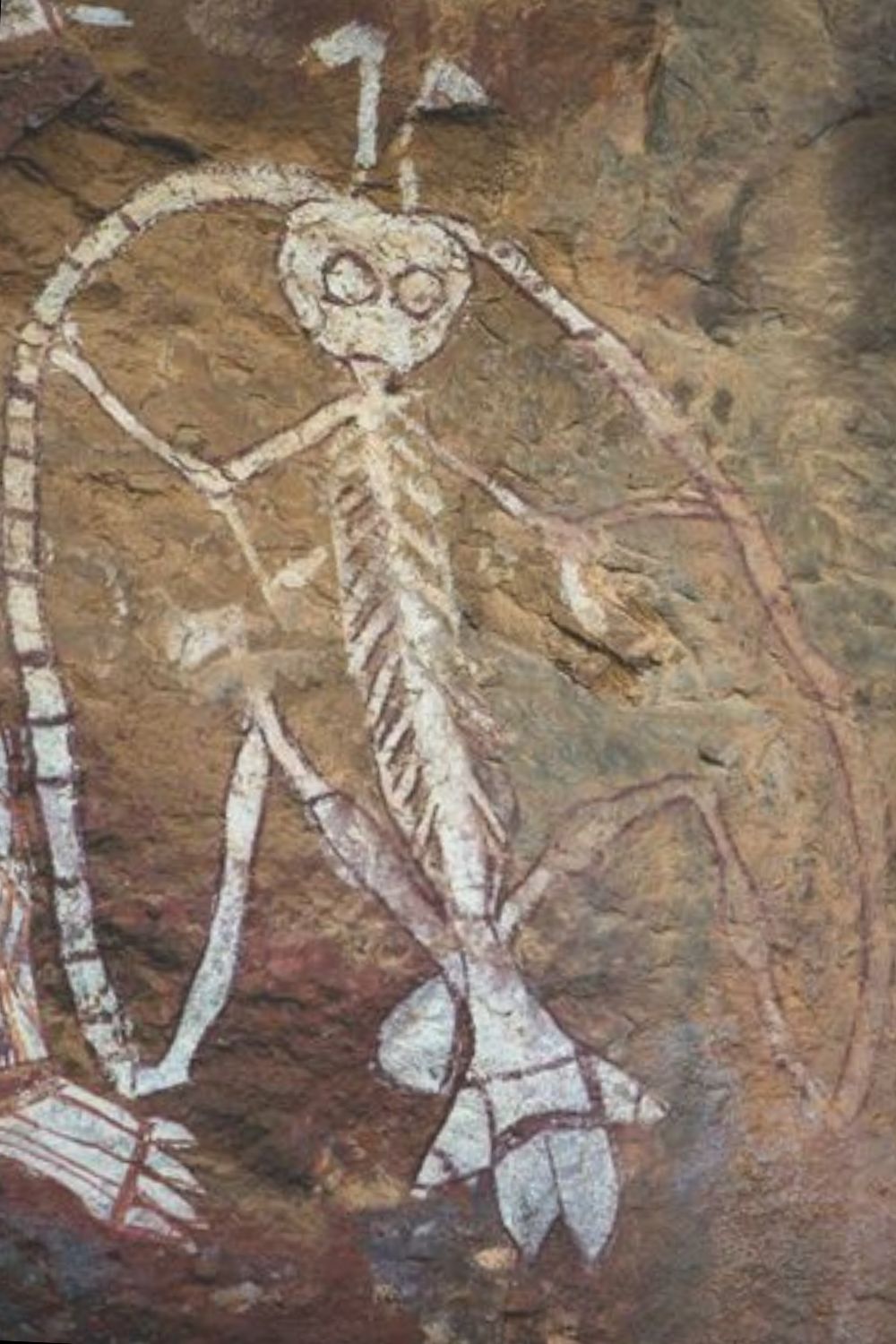
Namarrkon is depicted in Arnhemland Rock artand likely has been for thousands of years. Xray rock art is the most recognized form of art from Arnhem land. X-ray art has been around for the last 8000 years and is one of the oldest art traditions in the world.
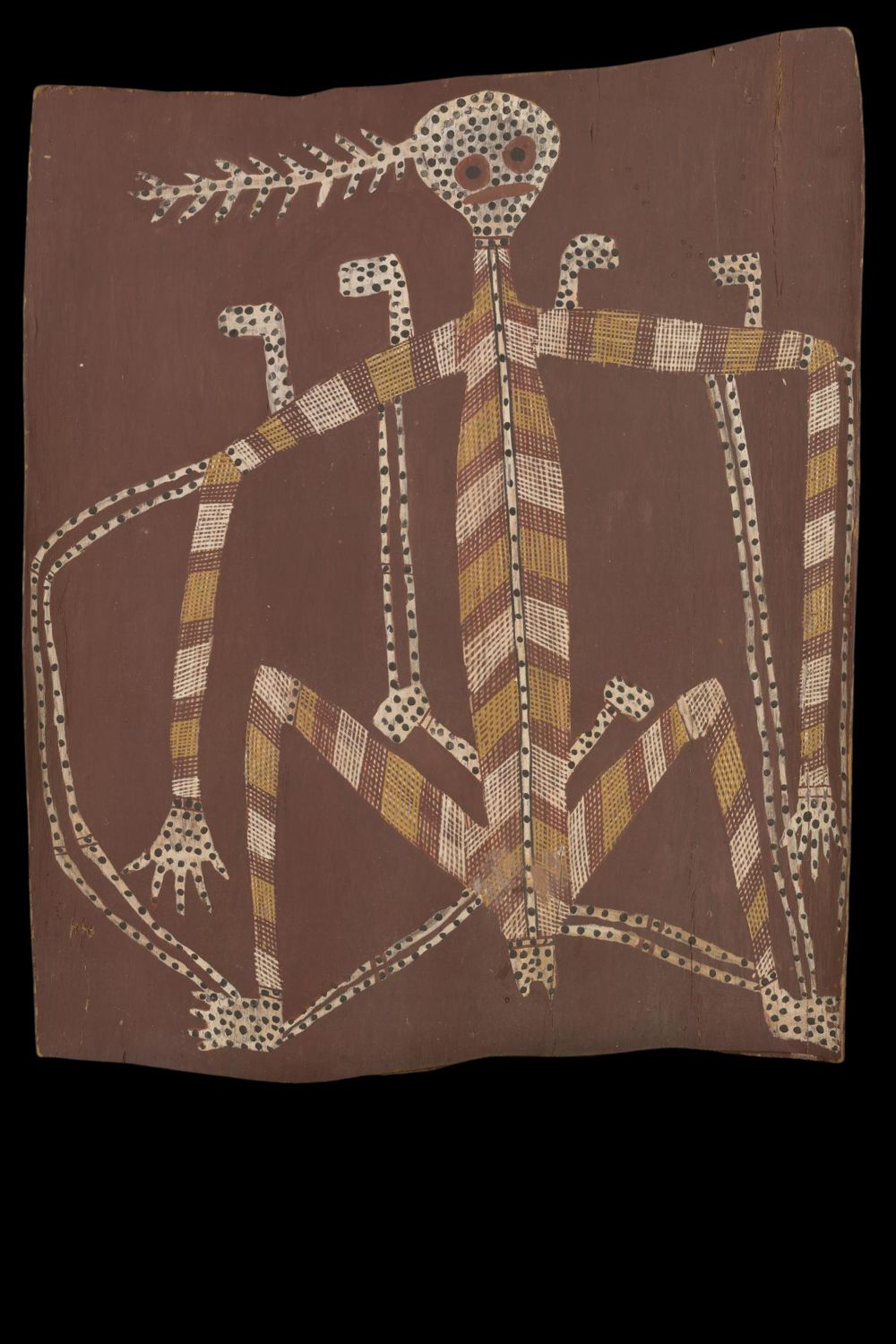
Among the great painters of Western Arnhem Land, Mick Kubarrku (also spelled Kuparrku or Kubarrku) stands as a visionary custodian of rock art tradition—an artist whose works bridge the sacred and the contemporary, the ceremonial and the collectible.
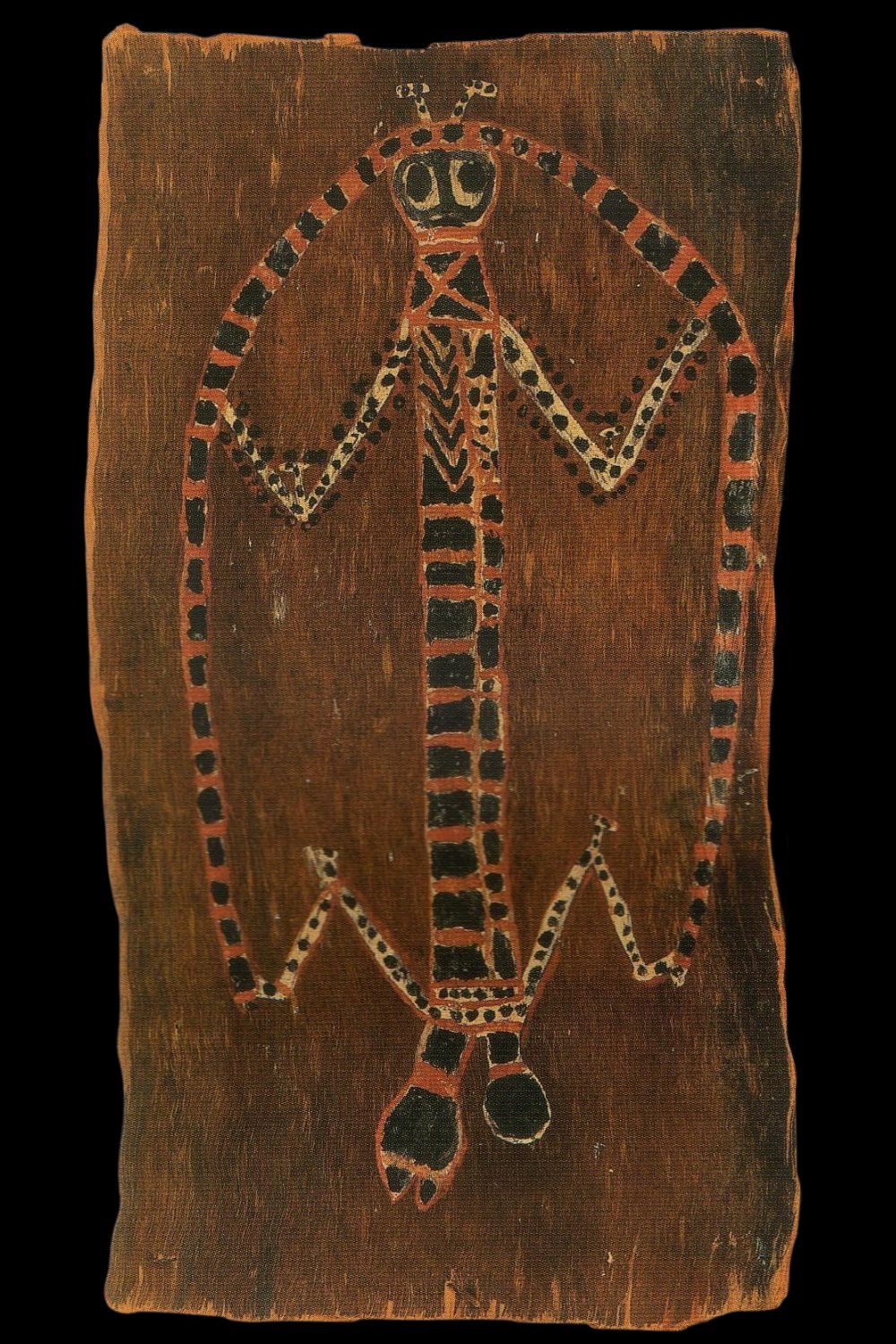
Nym Djimurrgurr is probably my favorite artist for depicting Namarrkon. He depicts the spirit with enormous genitals and in a rough archaic manner. His depictions are full of energy and menace. (Left).
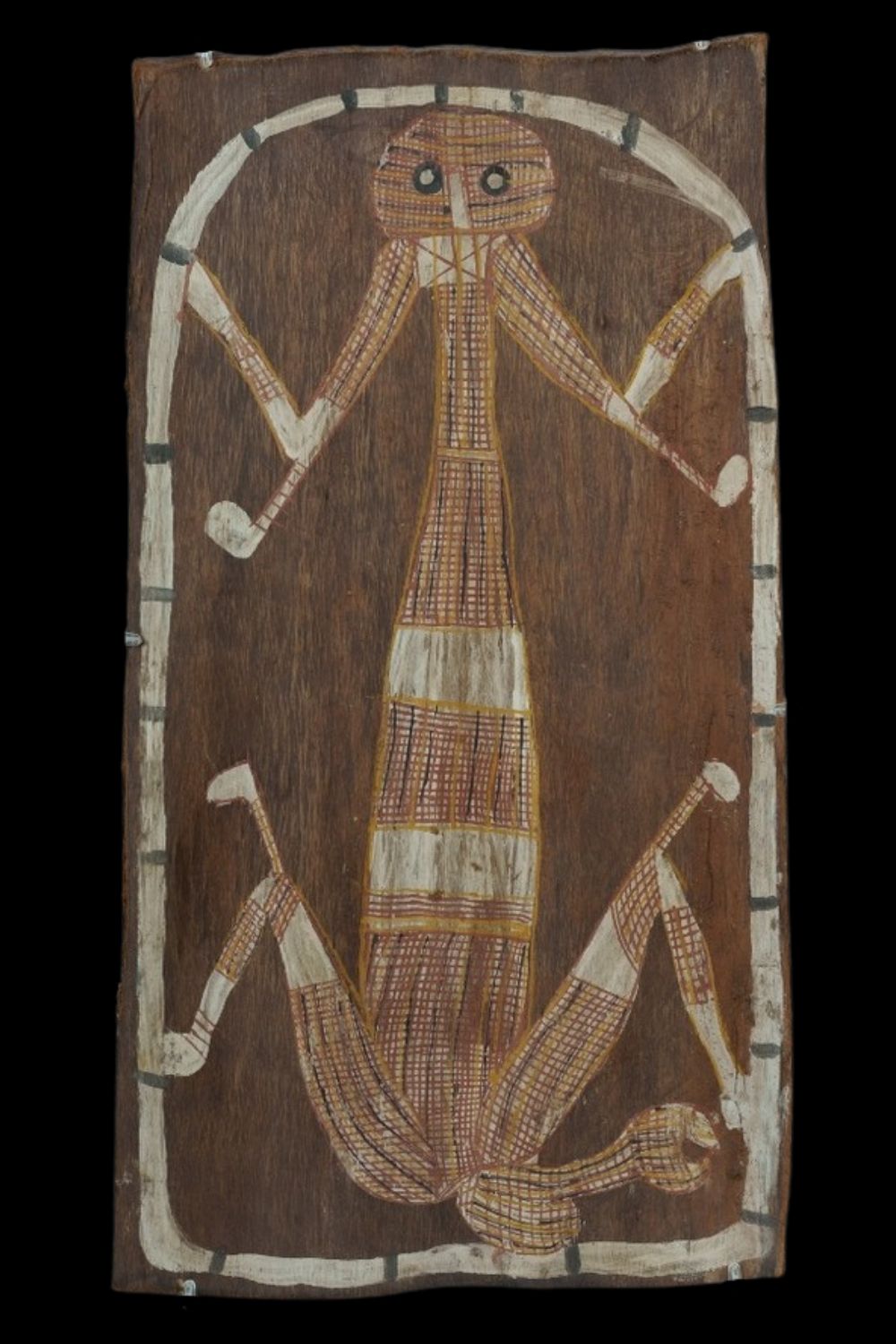
Jimmy Midjau Midjau, whose name appears in various historical records as Jimmy Mijau Mijau, Midjaw Midjaw, Midjau Midjau, and Jimmy Midjawmidjaw, was born around 1897 in Minjilang on Croker Island, off the coast of Western Arnhem Land.
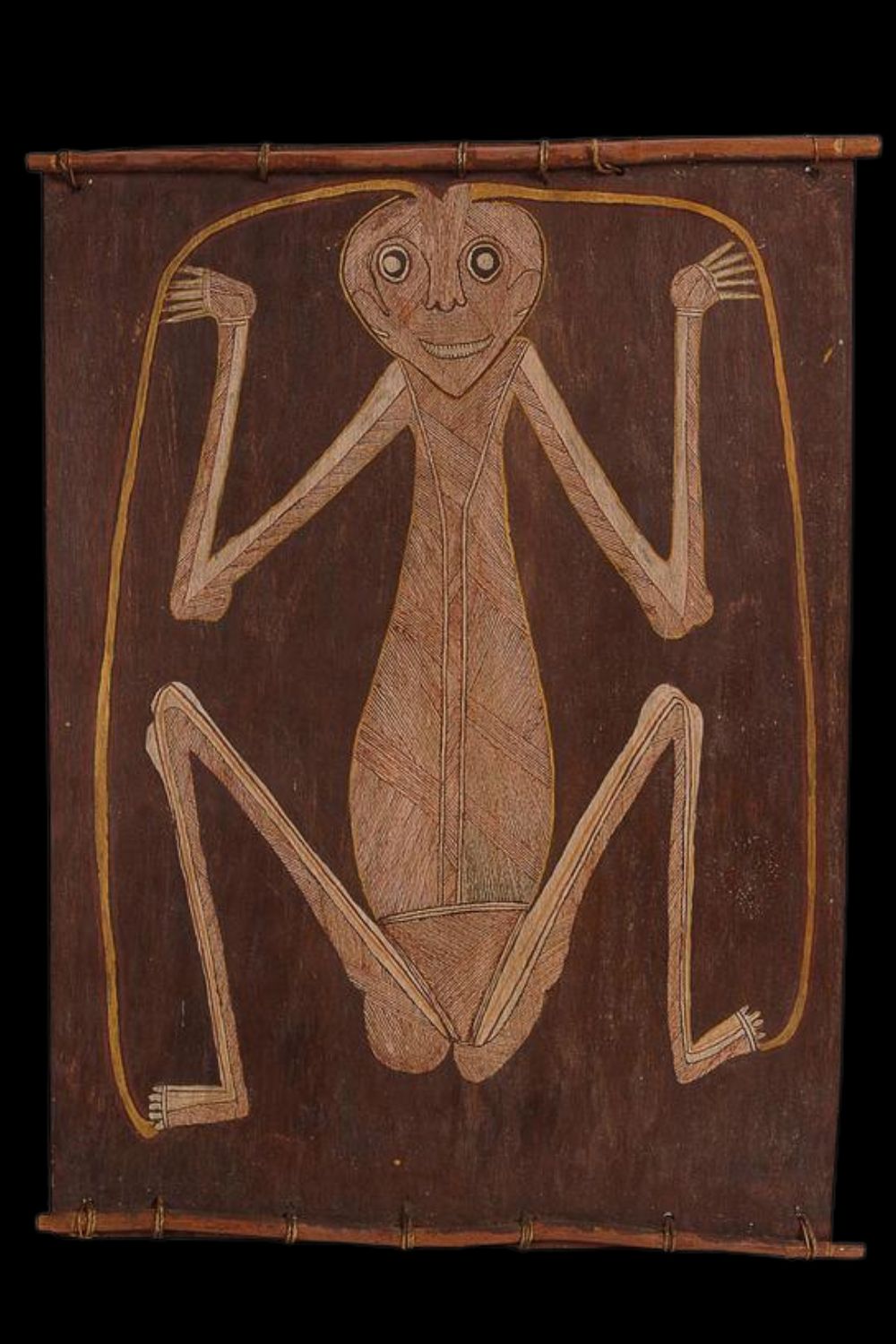
Born circa 1920 at Kukadjerri, Dick Murrumurru Ngueleinguelei spent his formative years immersed in the stone escarpments and rugged sandstone country at the headwaters of the Liverpool River in Western Arnhem Land.
Note that Namarrkon has features that look like a cricket.
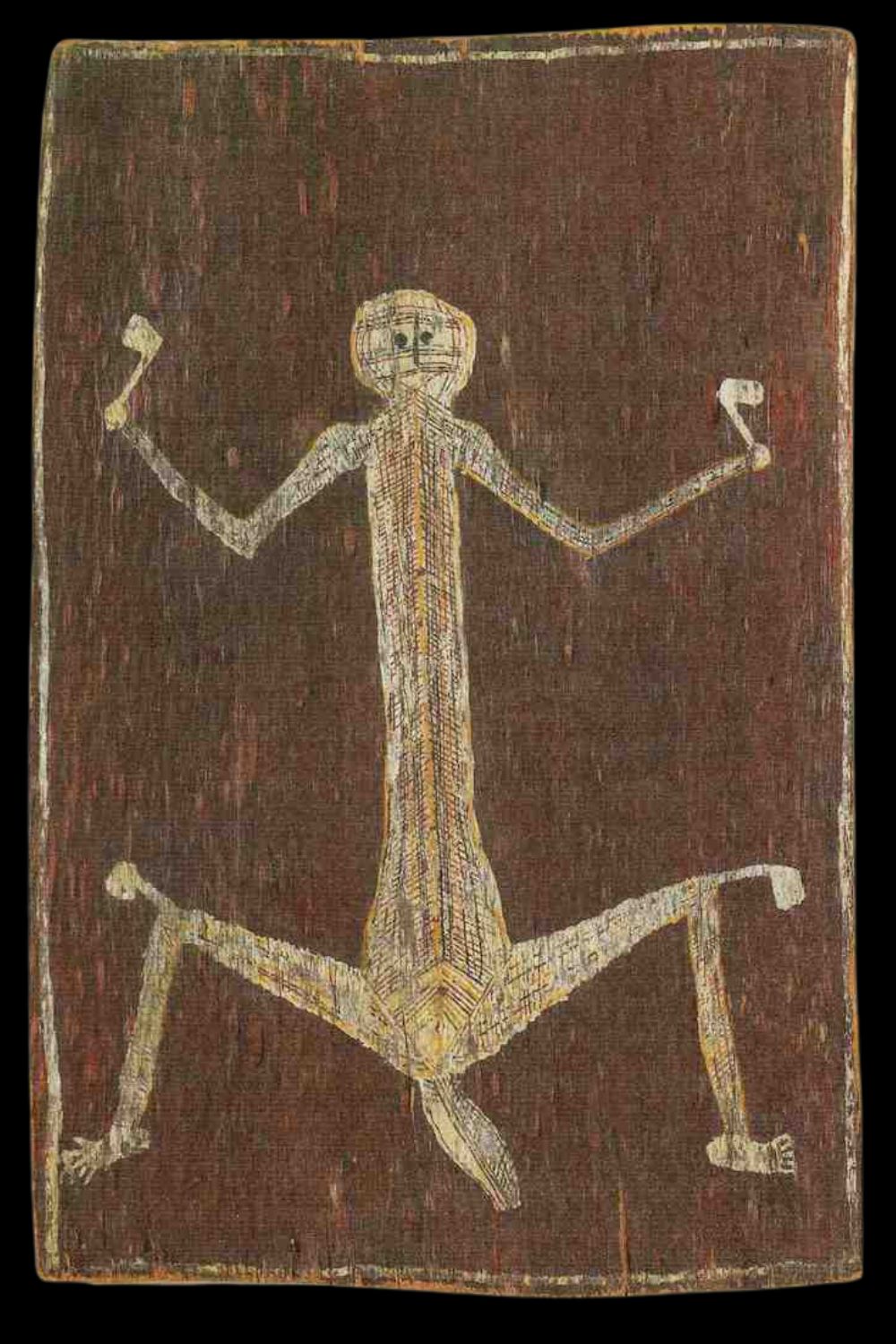
I have only one image of a Namarrkon depicted by Djambalula It lacks the ring of lightning but still has the distinctive stone axes. Djambalula was born around 1910 and died in the early 1960’s. He spoke Maung and was from Yiwaidja cultural area. Along with many other Arnhem Land Artists who did bark paintings, there is not a lot of information available about Djambalula
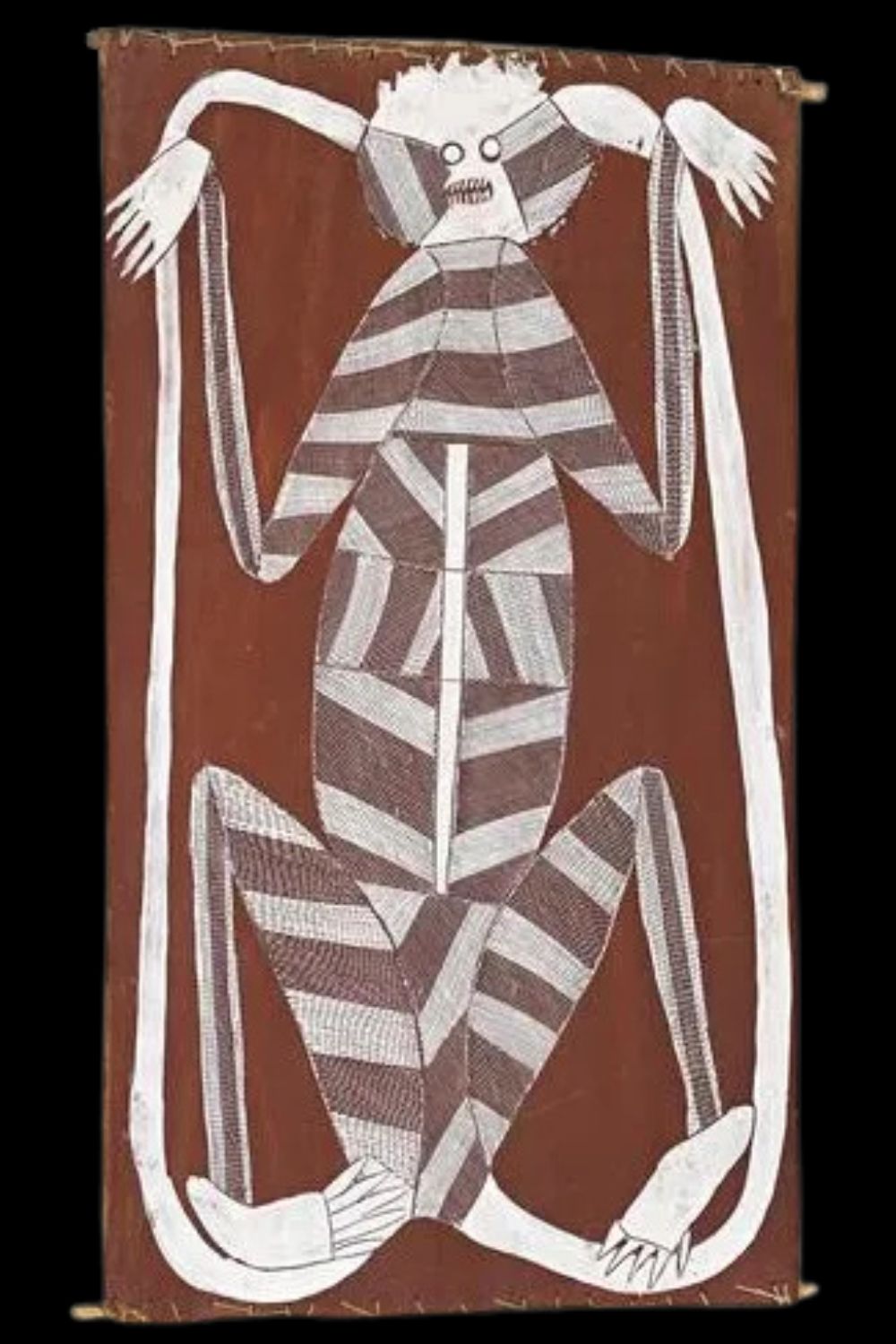
John Mawurndjul depiction of the Lightning spirit lacks the stone axes on the knees. It does however still have the halo of lightning from the top of the head. John started painting figurative works of Kuninjku mythological creatures and totemic animals. These included the Rainbow Serpent as well as local natural species, such as barramundi, bandicoots, and possum.
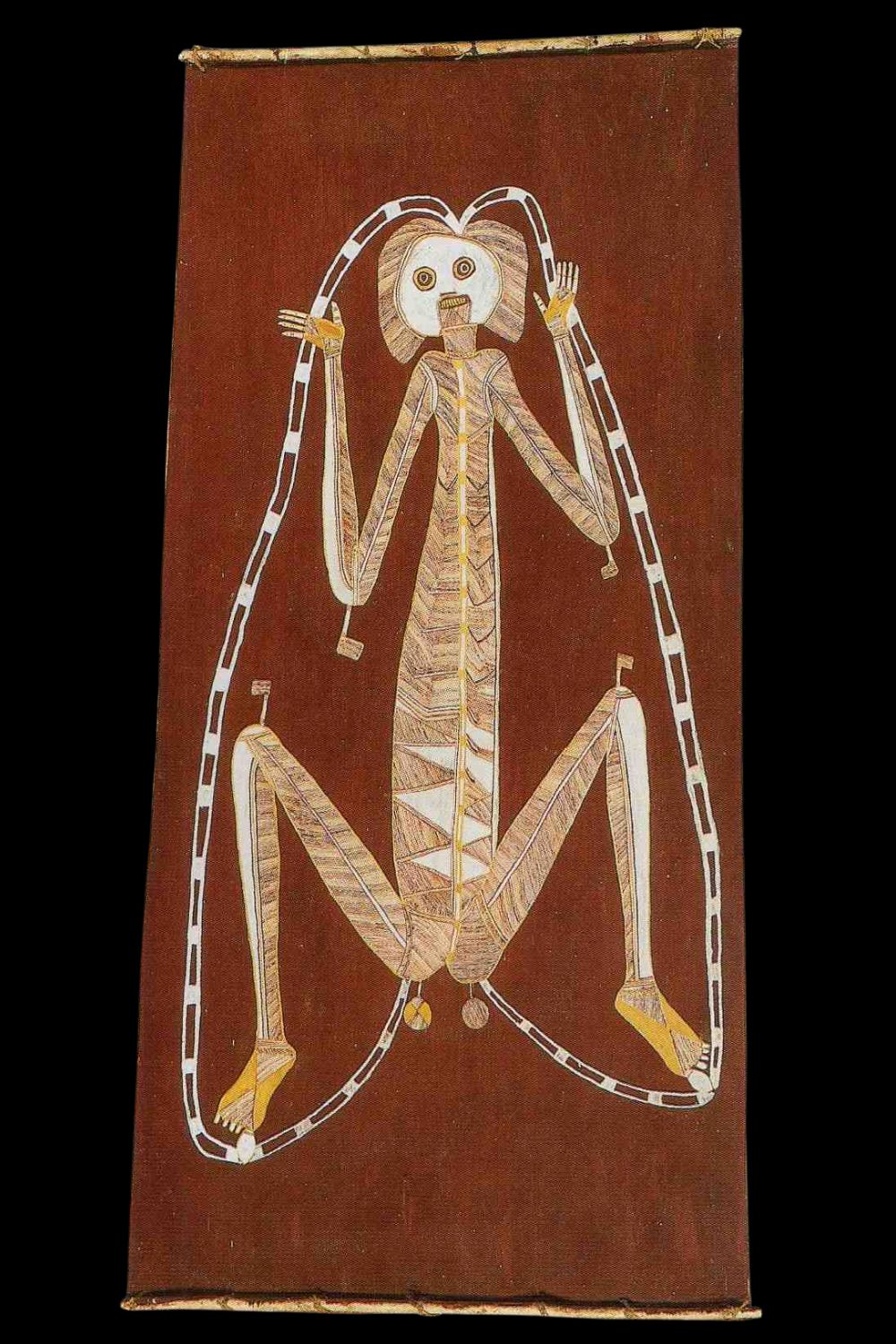
A senior cultural custodian and initiated elder, Lofty Nadjamerrek was not educated in European institutions but instead received the full ceremonial instruction of his people. He held deep knowledge of ancestral stories and songlines, and was widely respected for his role as a traditional leader and teacher across the Stone Country of Western Arnhem Land.
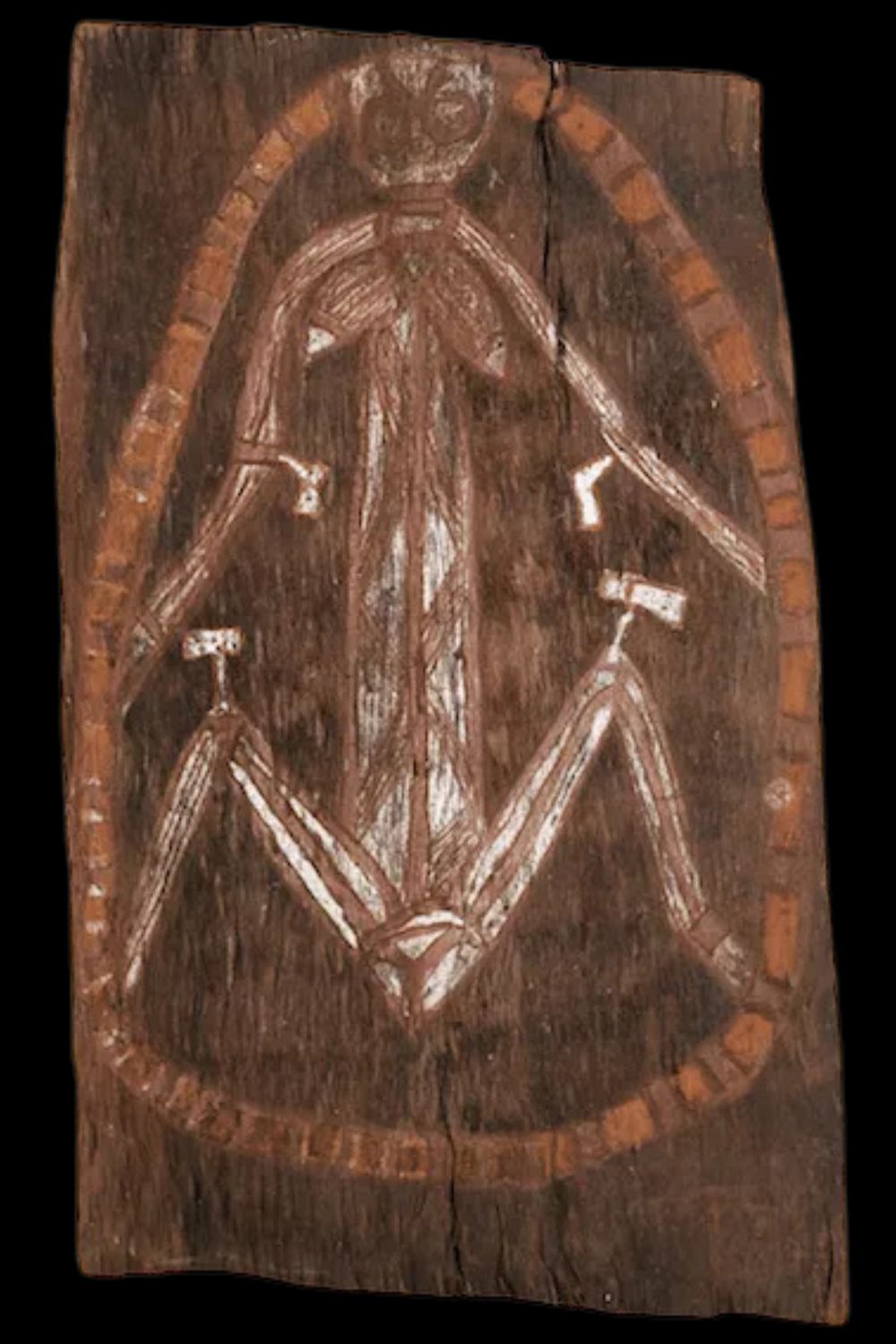
Nadjombolmi depiction of Namarrkon as a female spirit. Lightning coming from the head and axes on knees and elbows. (Right)
Nadjombolmi Charlie Barramundi (c. 1895–1967), a revered senior artist of the Badmardi clan from western Arnhem Land, stands among the most prolific and culturally significant Aboriginal painters in Australian history.
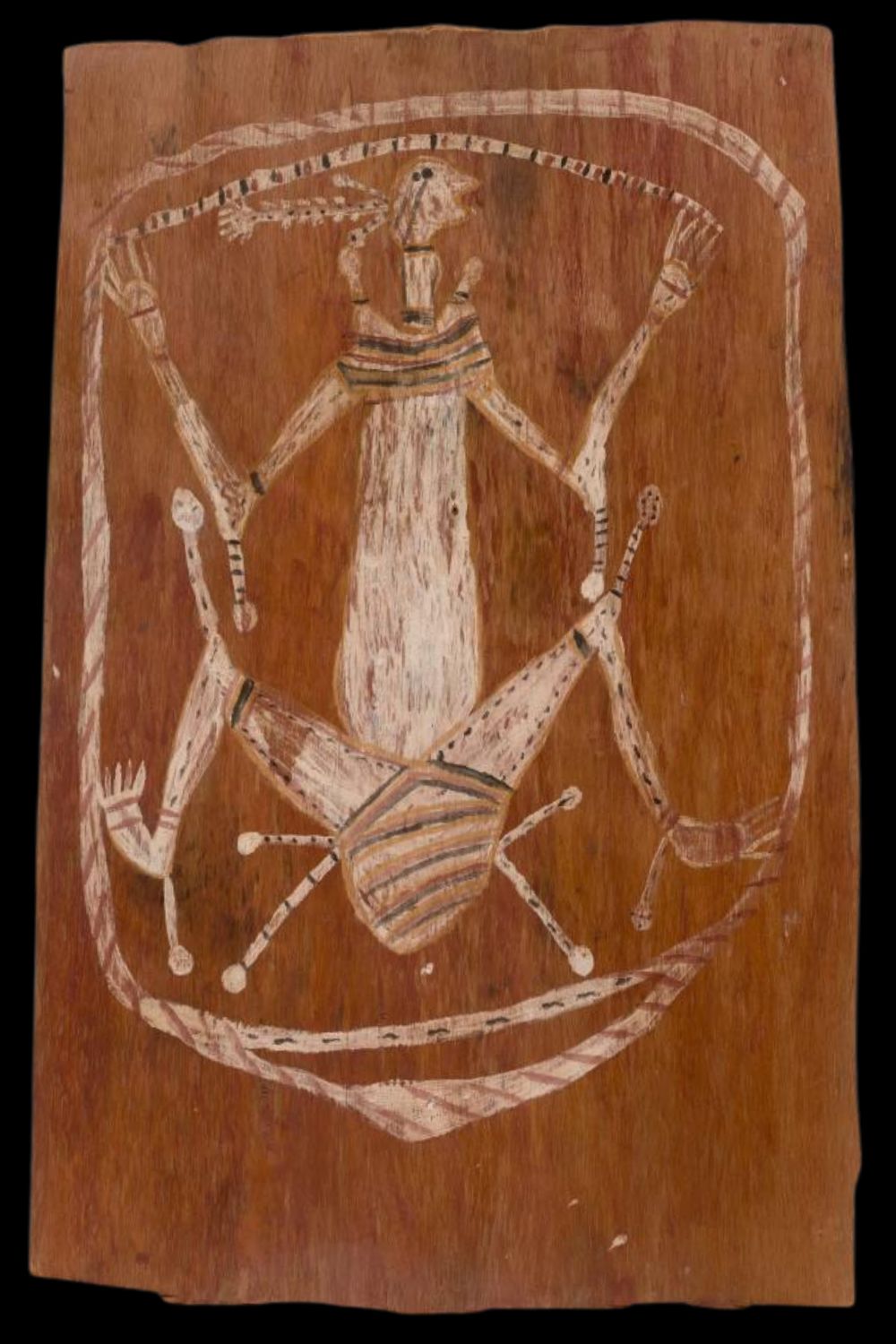
Yirawala is one of the most prolific and respected Aboriginal bark Painters. His works are unique because he does not stick to a particular regional style. Due to his travels, he had many regional influences. He manages to blend those into a style unique amongst bark painters. His depictions of Namarrkon are rare and tend to be from his earlier period
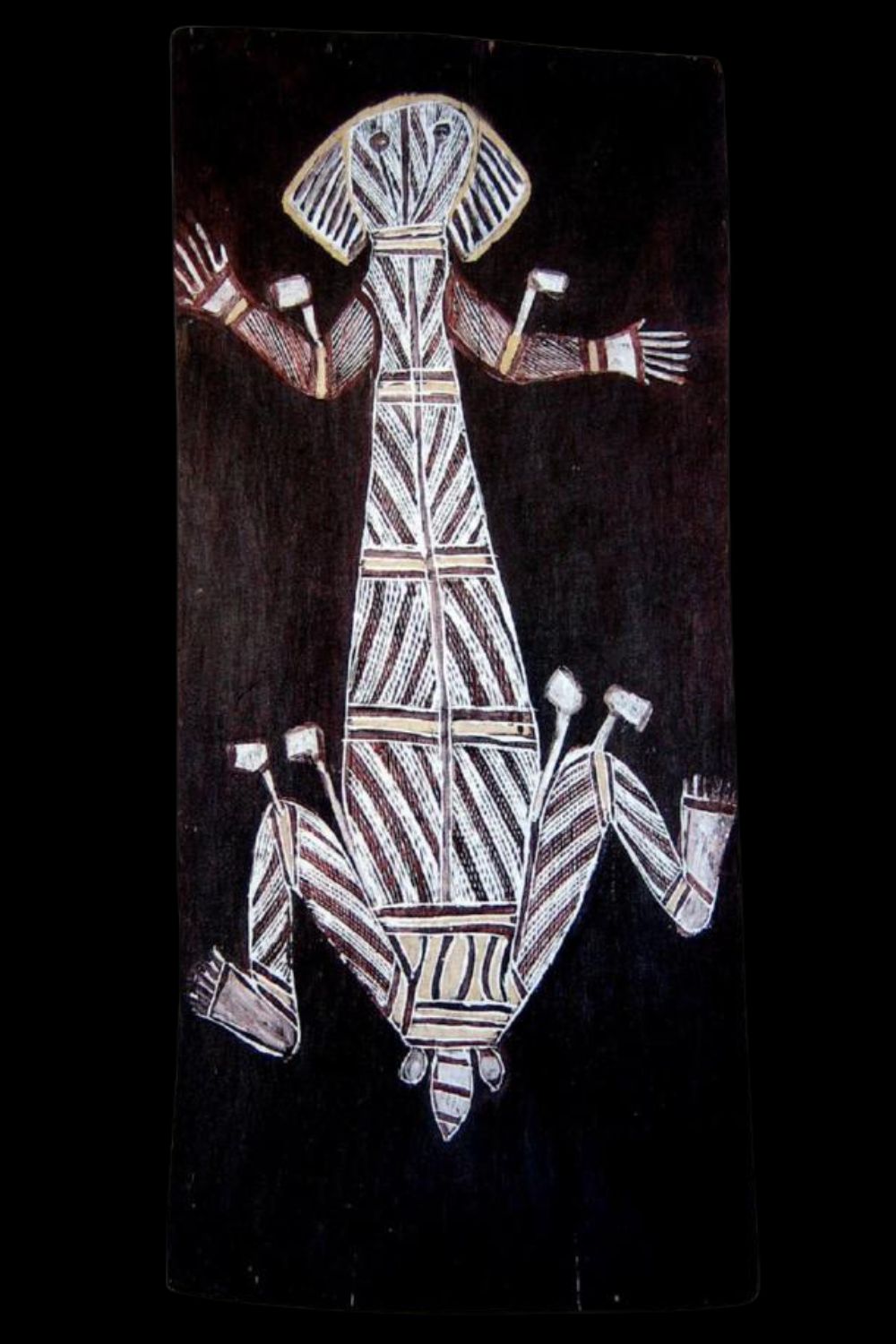
Jackie Madagarlgarl is a lesser know artist who painted spirit figures people and Namarrkon
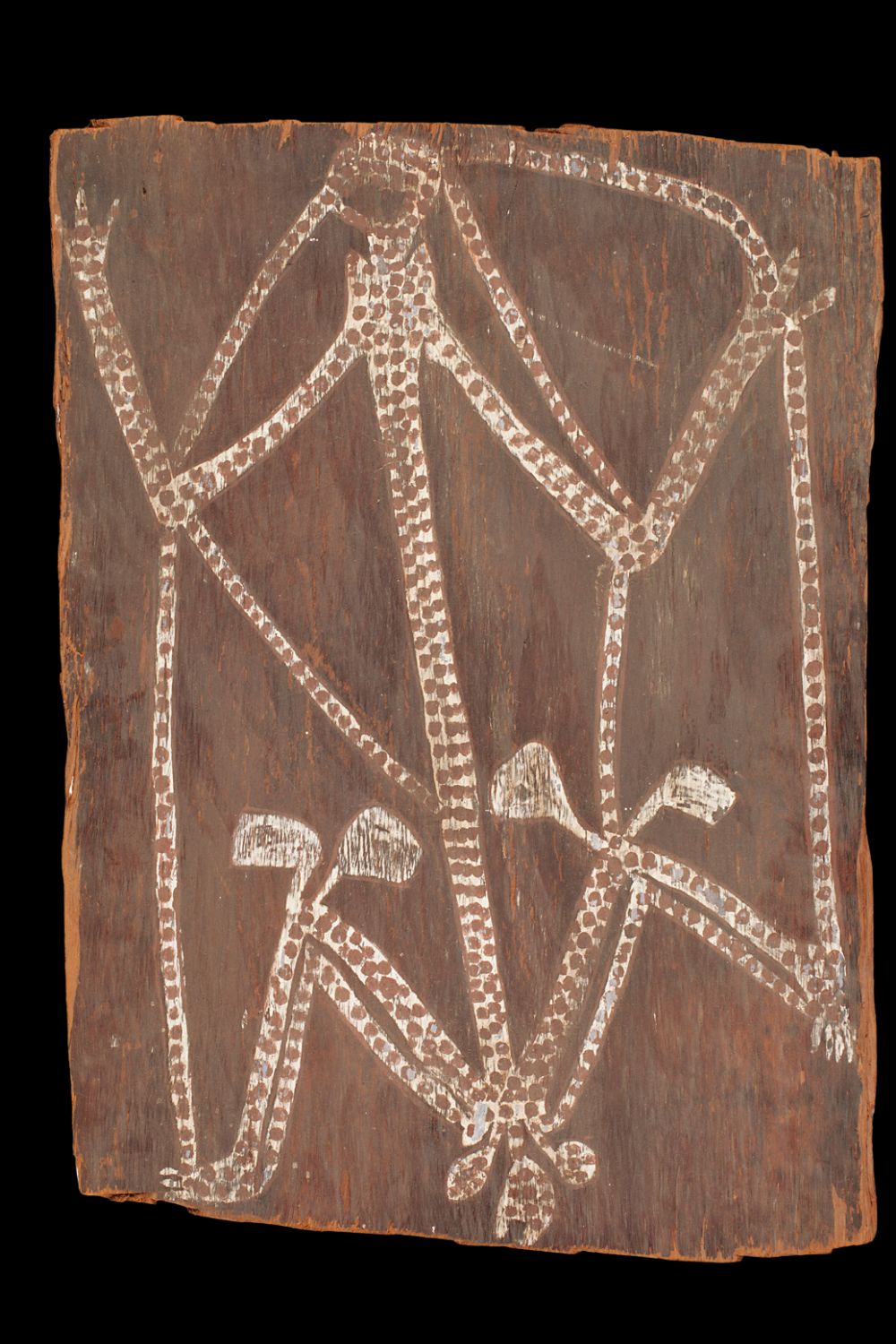
Diidja also known as Madidja Mandidi or Mandidaidai was a powerful and deeply spiritual artist whose bark paintings reflect the archaic Arnhemland rock art traditions of Western Arnhem Land. Executed with remarkable freedom and fluidity, his works often feature white kaolin figures filled with fine red dotting. Although this bark painting is by an unknown artist it has been attributed based on style to Diidja
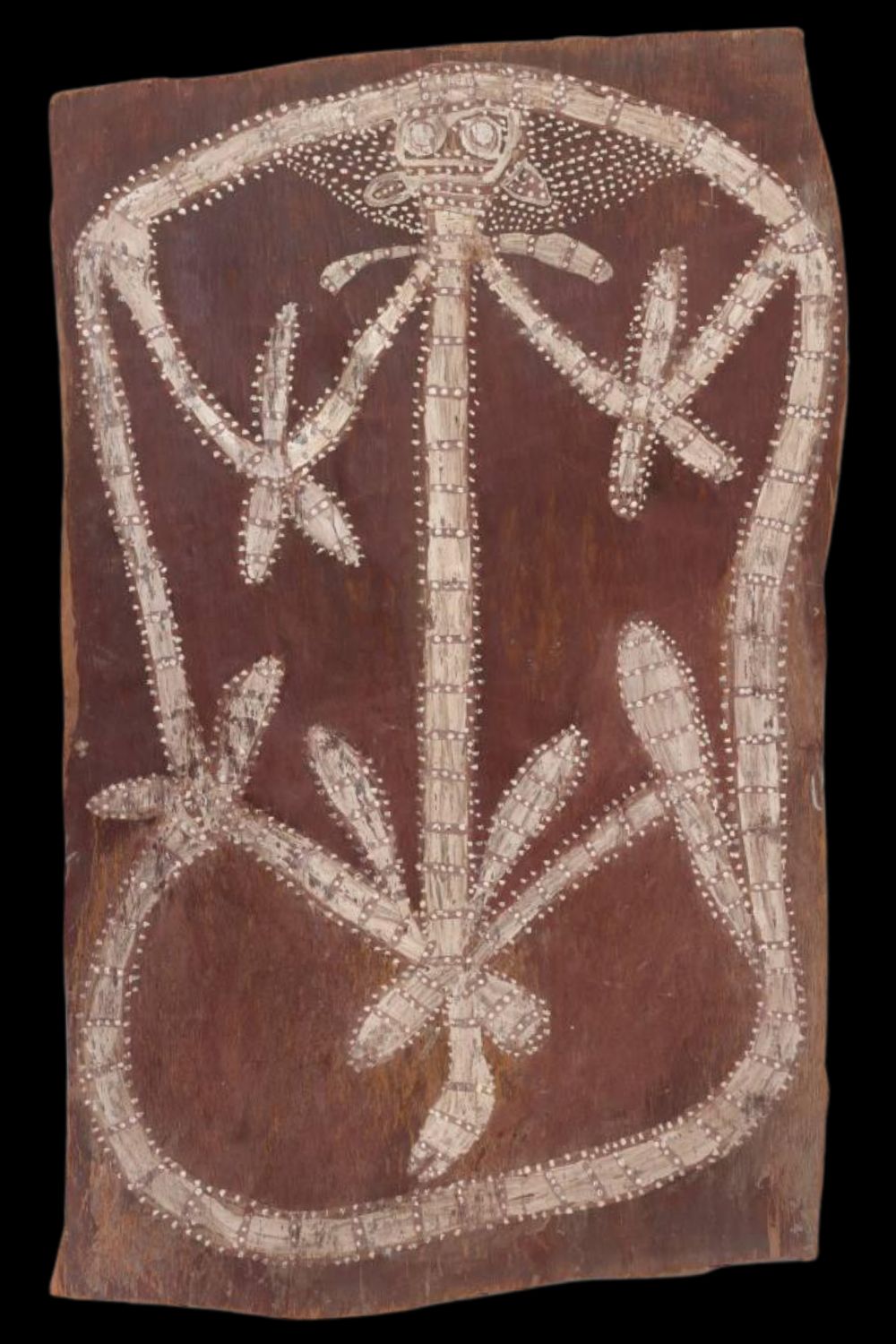
Many images of Namarrkon are by unrecorded artists especially in the 1950’s -1960’s. Many of these Oenpelli barks were collected by anthropologists who were more interested in collecting ethnographic specimins and therefore did not record the names of the artists.
All images in this article are for educational purposes only.
This site may contain copyrighted material the use of which was not specified by the copyright owner.
Frequently Asked Questions About Namarrkon
Who is Namarrkon?
Namarrkon is the great Lightning Spirit of the Kunwinjku people of Western Arnhem Land. He is associated with the violent monsoon storms of the wet season and is one of the most important ancestral beings depicted in Aboriginal bark painting and rock art.
What does Namarrkon represent?
Namarrkon represents the immense power of thunderstorms, lightning, and the monsoon season. He is both a creator and a dangerous spiritual force connected to weather, seasonal change, and ceremonial law.
Why does Namarrkon have stone axes on his elbows and knees?
In Kunwinjku belief, Namarrkon creates thunder by striking the stone axes attached to his elbows and knees. These axes are one of the defining features used by artists to identify the Lightning Spirit in bark paintings and cave art.
How does Namarrkon create lightning?
Lightning is believed to radiate from Namarrkon’s body as he moves through the storm clouds. In many depictions, streams or arcs of lightning extend from his head and body across the sky.
Where does Namarrkon live?
During the dry season, Namarrkon is believed to live in a sacred billabong near his dreaming site in Western Arnhem Land. During the wet season he ascends into the clouds and travels with the monsoon storms.
What is Namarrkon’s dreaming site?
Namarrkon’s dreaming site, known as Namarrkondjadjan, is a sacred formation in the Arnhem Land escarpment near Nourlangie and Koongarra. It is associated with the first intense lightning storms of the wet season.
Which Aboriginal artists painted Namarrkon?
Many important Arnhem Land artists have painted Namarrkon, including John Mawurndjul, Lofty Nadjamerrek, Mick Kubarkku, Nym Djimungurr, and Jimmy Midjau Midjau.
Where can Namarrkon rock art be found?
Namarrkon rock art can be found in Western Arnhem Land, particularly around the Nourlangie region within Kakadu National Park and nearby sacred rock shelters.
What is the connection between Namarrkon and the wet season?
Namarrkon is closely associated with the build-up and monsoon seasons. His thunder and lightning are believed to announce the arrival of rain, storms, and the seasonal renewal of bush foods.
What are the lightning lines around Namarrkon?
The lightning lines represent the electrical power and energy radiating from Namarrkon’s body. Artists often depict these as streams or arcs extending from the spirit’s head, ears, or body.
What is the difference between Namarrkon and Namorrodor?
Namarrkon is the Lightning Spirit associated with storms and monsoon power, while Namorrodor is a different spiritual being connected to dangerous night spirits and sorcery traditions in Arnhem Land mythology.
What is the meaning of Namarrkon bark paintings?
Namarrkon bark paintings represent the spiritual power of storms, the arrival of the wet season, and the continuing connection between ancestral beings, Country, ceremony, and Kunwinjku cultural law.