Jack Britten: Biography and paintings
1921–2002
Gija
Tickelara / Purnululu / Frog Hollow / Ord River Country
East Kimberley Art/ Warmun Art
Waringarri Aboriginal Arts/ Warmun
Natural earth pigments on board and canvas
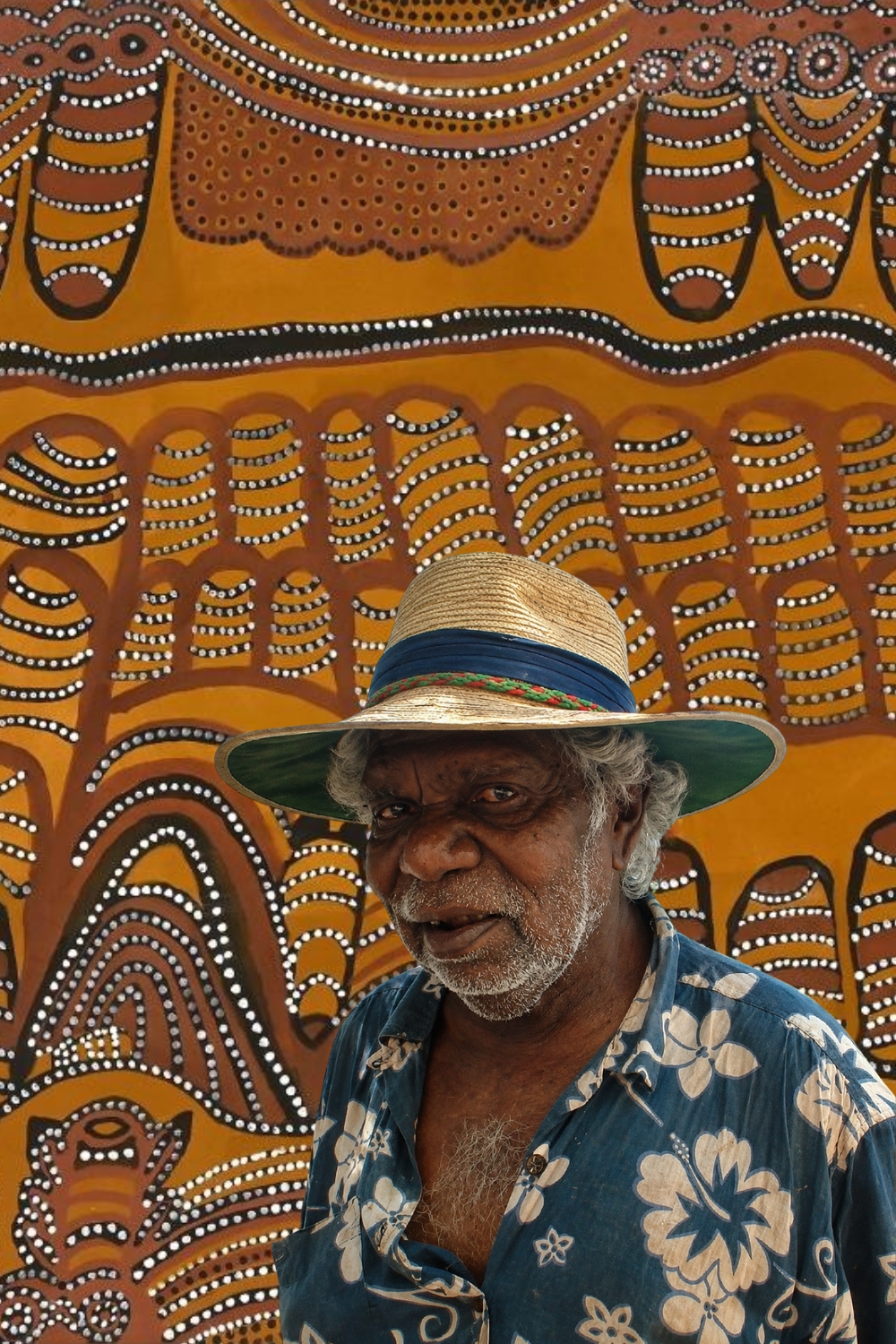
Jack Britten was a senior Gija man, stockman, lawman and an important first-generation painter of East Kimberley Art. Born around 1921, he spent decades travelling and working across the Kimberley before becoming known for ochre paintings of Purnululu, Frog Hollow, the Ord River and surrounding Gija Country.
Britten belonged to the generation that included Rover Thomas, Paddy Jaminji, George Mung Mung and Hector Jandany. He contributed painted boards to Gurirr Gurirr performances and later painted alongside many of these artists at Warmun and Frog Hollow.
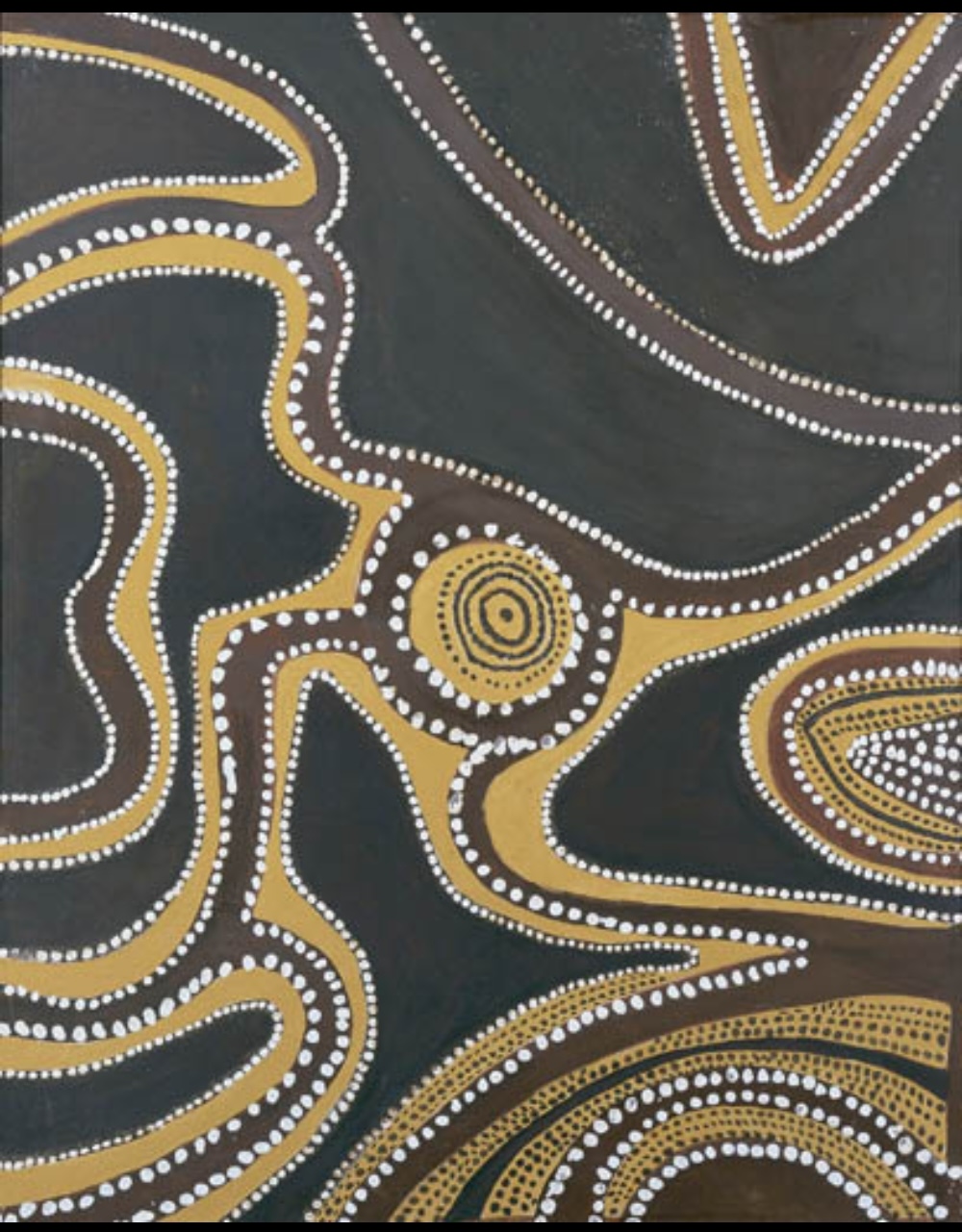
His best-known works depict Purnululu as sequences of rounded hills rising across dark ochre grounds, but his paintings encompass a much larger geography shaped by a lifetime of knowing Gija Country.
Jack Britten has a substantial auction history, with 273 works offered at auction and prices ranging from under $1,000 to $70,000. His strongest results have generally been achieved by major early ochre paintings, particularly important depictions of Purnululu.
For detailed auction records, sale rates, median prices and an explanation of the factors that influence his market, see Jack Britten Values and Auction Results.
Jack Britten Biography
Jack Britten was born around 1921 in the East Kimberley. Sources differ over his birthplace, identifying either Tickelara or Garnawarranginy in the hills north of Alice Downs, where his family had gone to avoid Europeans.
His childhood belonged to a generation still living with frontier violence. Britten later recalled Aboriginal people being killed around Halls Creek and Chinaman’s Garden. While young, he was separated from his family and taken towards Fitzroy Crossing by a European stockman named Ted Britten, whose surname he subsequently carried. He worked on several stations before returning to his mother at Tickelara in his late teens.
Britten became an accomplished stockman and horseman, working across the East Kimberley at places including Mabel Downs, Bow River, Lissadell, Texas Downs, Hann Springs and Bungle Bungle. This gave him intimate knowledge of the ranges, rivers, water sources and travelling routes that would later dominate his paintings. During wet seasons he also prospected around Halls Creek and trapped dingoes. His pastoral career appears to have ended following the introduction of equal wages for Aboriginal workers in the late 1960s.
Although painting became a public career relatively late, Britten recalled learning traditional methods from his grandparents. He collected earth pigments from Country and used natural binders including bloodwood gum and spinifex sap and, according to some accounts, kangaroo blood.
By the late 1970s Britten was involved in the cultural activity from which contemporary Warmun painting emerged. Rover Thomas’s Gurirr Gurirr combined song, dance and painted boards carried by performers. Britten contributed paintings alongside George Mung Mung, Hector Jandany, Jock Mosquito and Timmy Timms.
Moving ochre painting onto portable surfaces required experimentation. Britten remembered wet ochre shrinking and buckling canvas and recalled Rover Thomas chewing grass and mixing it into poor-quality ochre to give the pigment body. Britten, Thomas and Hector Jandany were among the senior painters using natural binders before acrylic binders became readily available.
Around 1982 Britten helped establish Wurreranginy, known as Frog Hollow, about 35 kilometres south of Warmun. Associated with his mother’s Country, it had an older history as a place where Gija families sought food and relative refuge. Britten became chairman and was eventually known as the “old man from Frog Hollow.”
Frog Hollow became important to East Kimberley painting. Britten painted there with Henry Wambini and Beerbee Mungnari, while Rover Thomas and other Warmun painters also worked or visited there. By 1984 Britten was producing substantial portable paintings, including an early Purnululu – Bungle Bungles more than 180 centimetres across.
His brother-in-law Freddie Timms moved to Frog Hollow with Beryline Mung in 1986. Timms found Britten, Rover Thomas, Hector Jandany and his father-in-law George Mung Mung already receiving canvases from Waringarri. He asked for canvases himself, beginning his own major painting career. Britten and Timms were commissioned to produce paintings together in 1991.
Britten and George Mung Mung also recorded Ngarranggarni narratives in Gija language during the 1980s. Meanwhile, the establishment of Waringarri Aboriginal Arts in 1985 helped bring Britten to wider attention. His Turkey Creek Dreamtime appeared in Aboriginal Art of the East Kimberley in Sydney in 1988, followed by ten paintings in Turkey Creek: Recent Work in Melbourne in 1989.
Britten also passed knowledge to younger artists. His niece Shirley Purdie remembered him encouraging her to paint, while Charlene Carrington recalled learning traditional methods by watching Britten and her grandfather Hector Jandany. June Peters is likewise recorded as learning from senior ochre painters including Britten.
Britten therefore connected the Gurirr Gurirr generation and early portable ochre painting with Frog Hollow, Waringarri and the younger Gija artists who carried Warmun Art forward.
What Jack Britten Painted
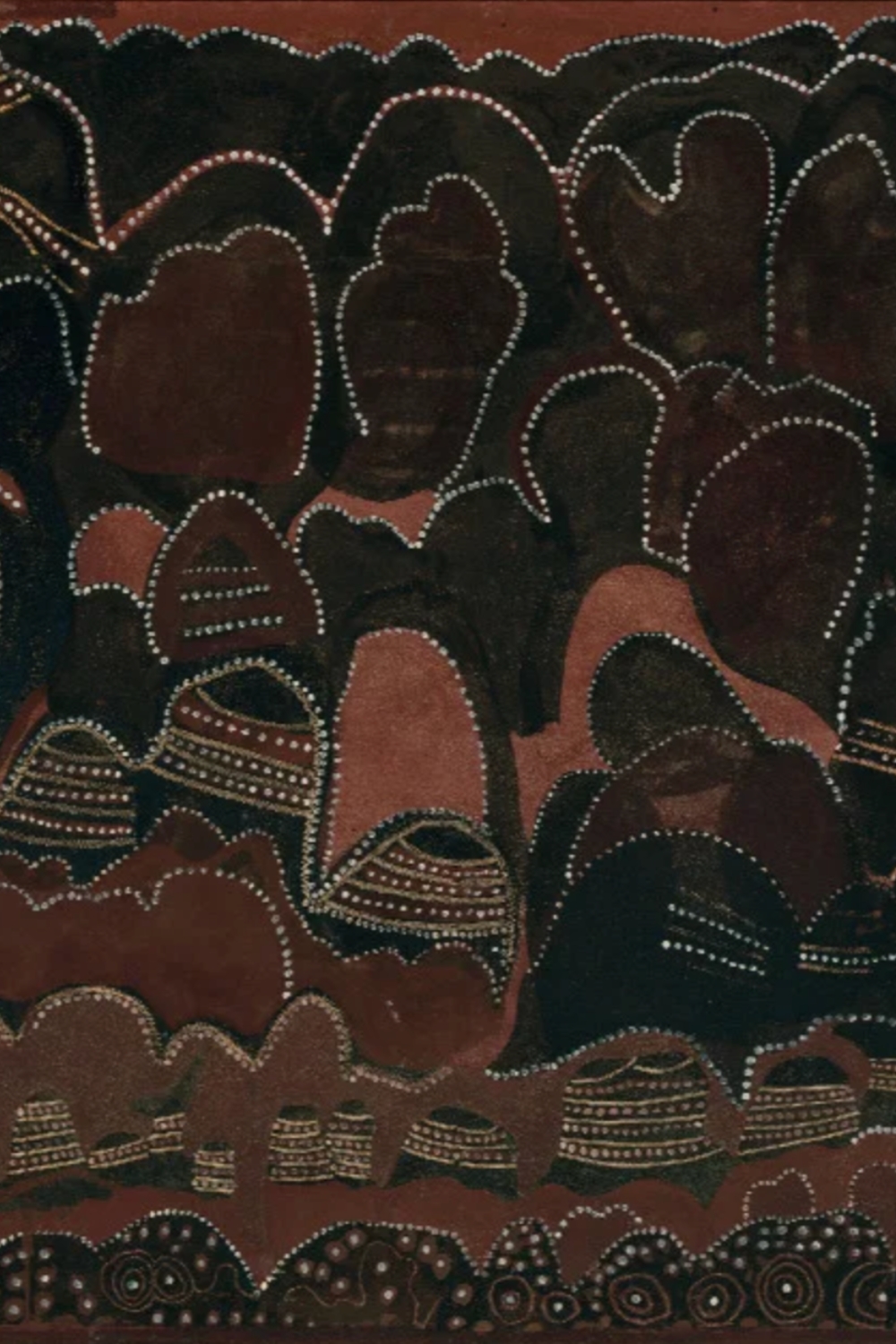
Purnululu became Jack Britten’s signature subject, but his paintings describe a much larger geography of Gija Country. He painted Frog Hollow, Tickelara, Hann Springs, Turkey Creek, Bull Creek, the Ord and Chamberlain rivers, the Carr Boyd Ranges and other places he knew intimately. His subjects also included Plains Kangaroo, Eagle, Owl and Crocodile Dreamings, Ground Sugar Bag Dreaming, barramundi, ancestral figures and ceremonial designs.
His paintings often bring Ngarranggarni, observation and personal experience together. In Redback Country, Britten painted spider webs covered with morning dew, which he remembered appearing to stretch across the landscape for miles. Jarlinji, Plains Kangaroo (1990) follows an ancestral kangaroo travelling towards Gija Country while also showing a highway and railway crossing the landscape.
Toolookininji – Looking Out is even more directly connected with Britten’s life. It depicts Hann Springs, where he worked as a stockman, including grazing country, the Booloo limestone ridge and Nawanji caves containing ritually interred ancestors. Personal memory, station history and ancestral significance occupy the same Country.
Painting Purnululu
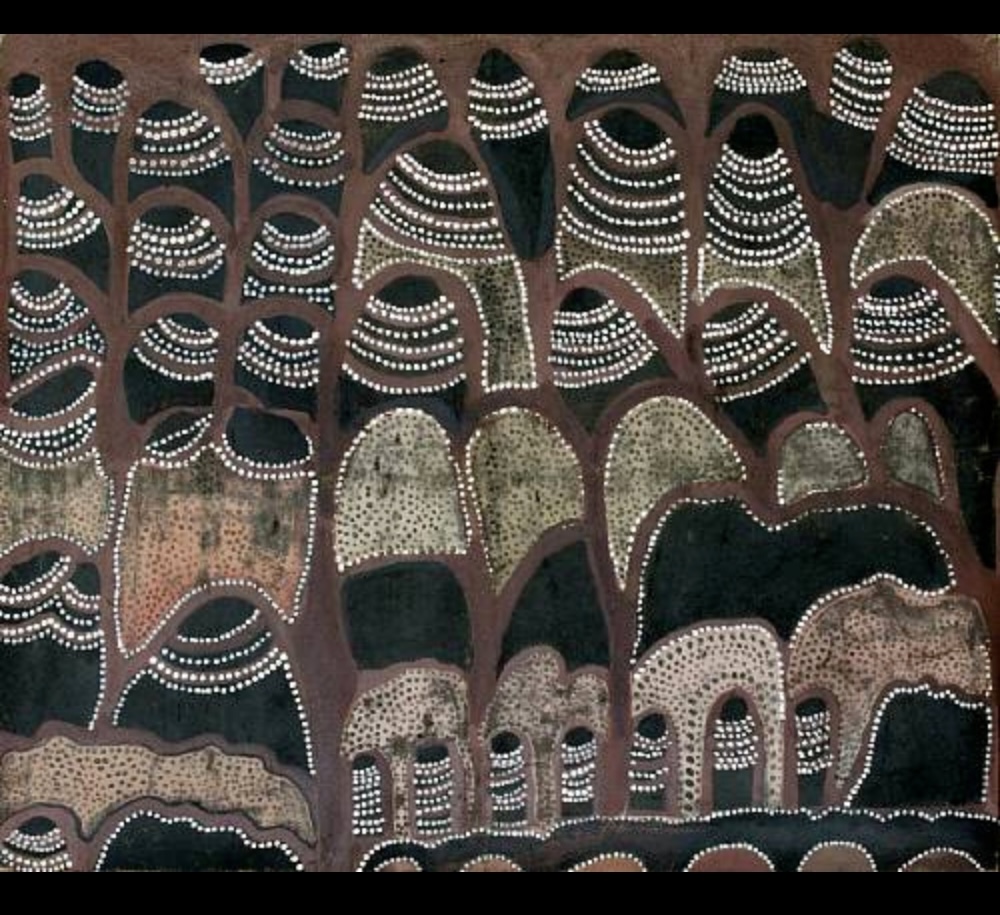
Purnululu, the Bungle Bungle Range, gave Britten his most recognisable imagery. He often represented its sandstone formations laterally, with rounded hills rising from dark grounds. Yet these are not conventional European landscapes: the hills belong to Gija cultural geography and Ngarranggarni and can embody ancestral beings and events.
His monumental Purnu Lulu, the Bungle Bungles (1989), measuring 160 × 200 centimetres, shows how complex this imagery could become. Red-brown and black earth pigments form the hills, while white dots trace their contours and horizontal dotted bands relate to ceremonial body-painting designs. Incised zigzags across the surface further connect his canvas paintings with older Kimberley practices of decorating bodies and objects.
Jack Britten’s Painting Style and Materials
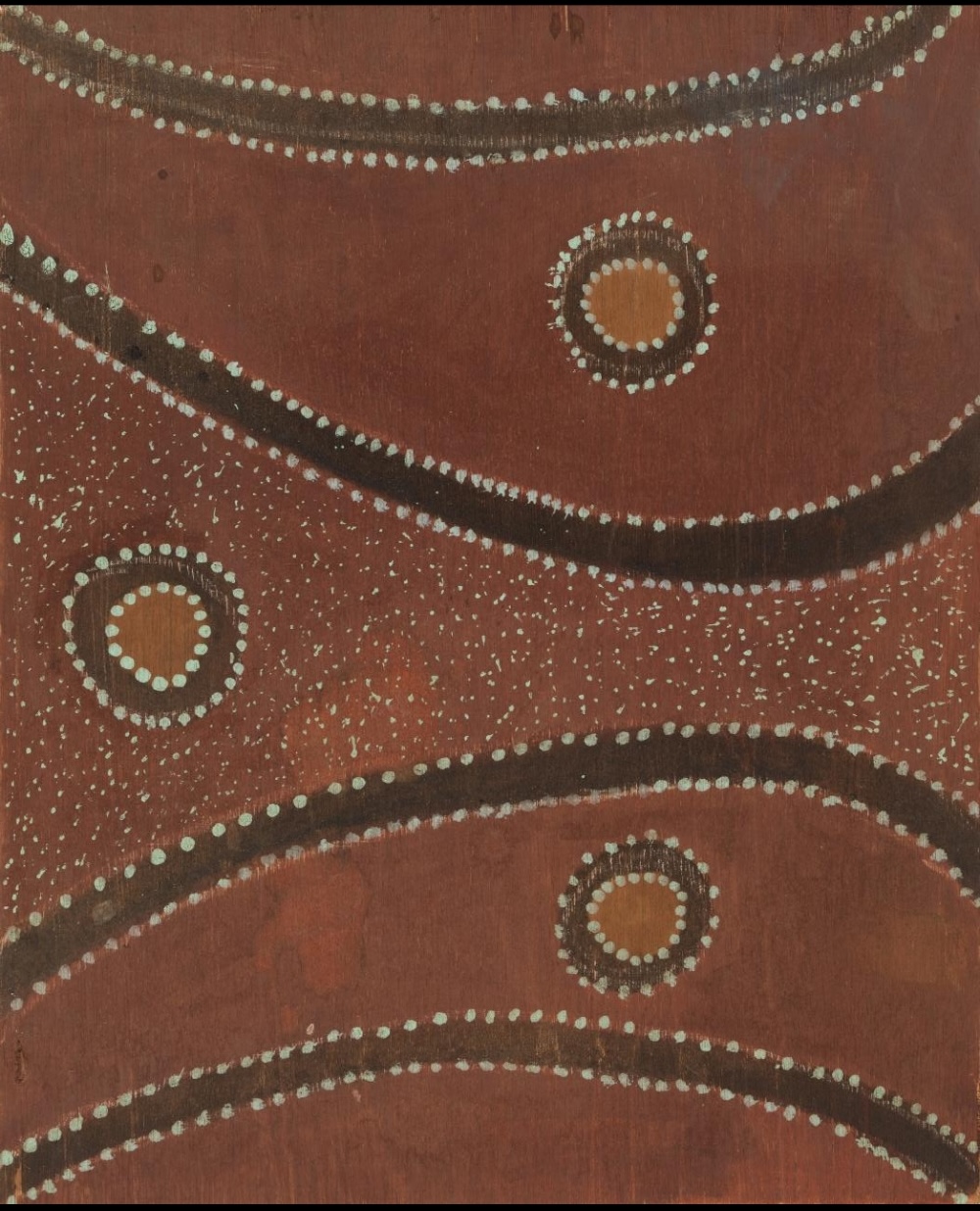
Natural earth pigments are fundamental to Britten’s art. Ochres were collected and ground, then mixed with locally available binders including bloodwood gum, bush gum and spinifex sap; documentation for some paintings also records kangaroo blood and charcoal.
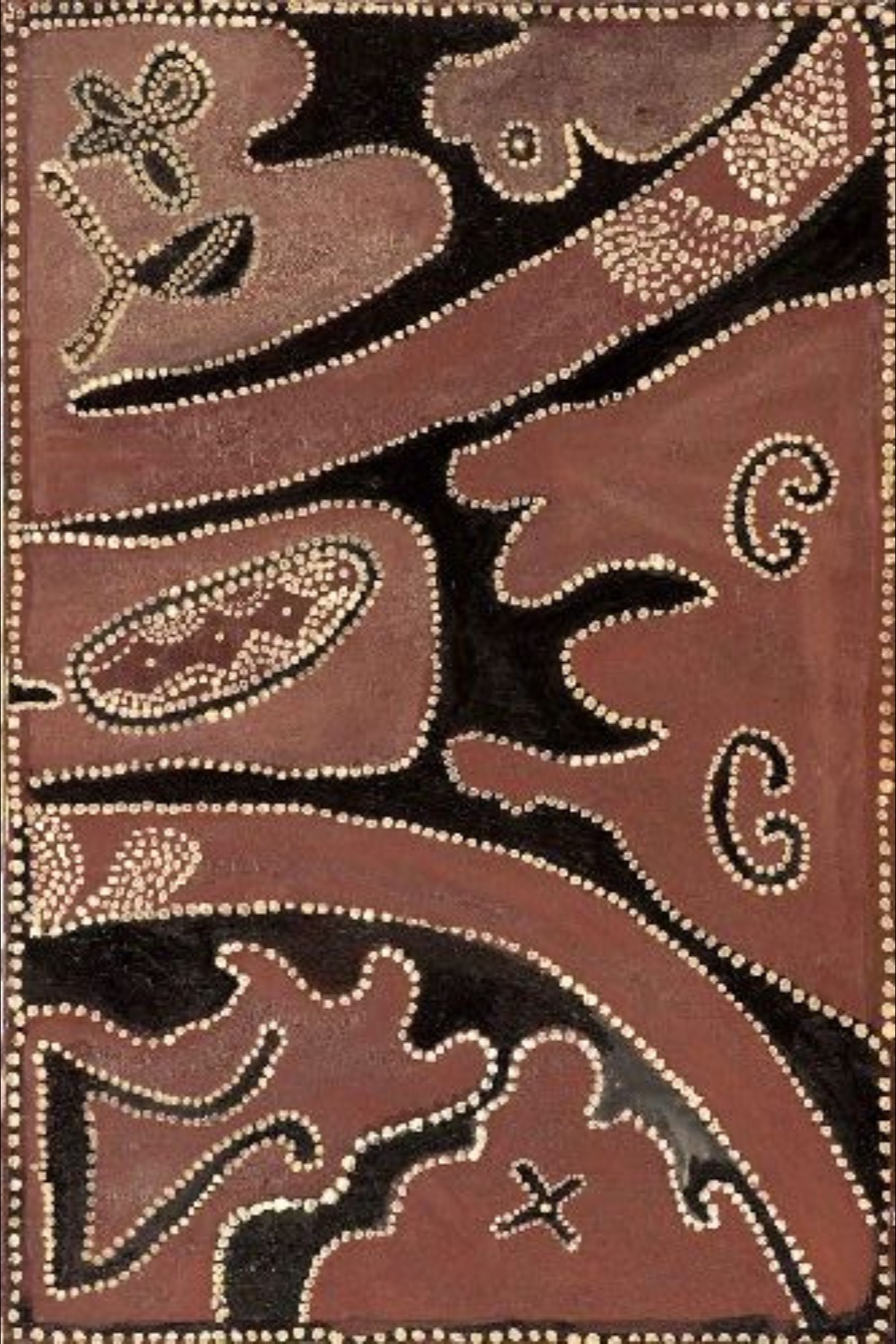
These materials create surfaces ranging from dry and powdery to dark, resinous and faintly glossy. Britten generally worked with deep blacks and browns against reds, yellows and whites, often using remarkably few forms to establish an entire landscape.
White dots are selective rather than all-over, tracing hills and ridges or forming ceremonial bands. Incised lines and zigzags cut through wet or resinous pigment, creating a physical texture difficult to appreciate in reproductions and connecting his paintings with older traditions of decorating bodies and objects.
Later paintings sometimes combine earth pigments with synthetic binders or acrylic paint. This should not be understood simply as a progression from “traditional” to “modern” materials. Britten and his contemporaries continually experimented with ways of making locally sourced pigments adhere to board, canvas and linen while preserving the qualities they valued in ochre.
Further Reading
All images featured in this article are presented strictly for educational and informational purposes.
This website may include copyrighted material for which specific authorization has not been obtained from the copyright owner.
All such images are presumed to be the intellectual property of the respective artist or their estate, and are used in accordance with principles of fair dealing or fair use under applicable copyright law.