Aboriginal Art Styles
Aboriginal art styles vary enormously across Australia, reflecting the cultural diversity of hundreds of Aboriginal nations and language groups. This page focuses on regional traditions of Aboriginal painting, bark painting, sculpture, carving, weaving, and ceremonial art. It does not examine the many distinct traditions of Aboriginal rock art, which developed separately across Australia over thousands of years and are explored in our guide to Aboriginal Rock Art Styles.
From the X-ray bark paintings of Arnhem Land to the dot paintings of the Western Desert, Aboriginal art is not a single style but a rich network of regional artistic traditions shaped by Country, ceremony, ancestral law, environment, and local history.
Some of the best-known Aboriginal art styles include Western Desert Art, Oenpelli Art and Aboriginal X-Ray Art, Yirrkala Art, Wandjina Art, Tiwi Art, East Kimberley Art, and Groote Eylandt Art. Each developed through a unique relationship between people, place, and ancestral knowledge.
In some regions this connection to Country was expressed through symbolic mapping systems and aerial perspectives, while elsewhere it emerged through sacred clan designs, figurative ancestral beings, geometric aboriginal body paint traditions, or highly refined bark painting techniques. Western Desert artists often depict Country through symbolic geography and dotting systems, while Yolŋu artists from Arnhem Land developed intricate rarrk crosshatching linked to clan identity and ceremonial law. Tiwi Art evolved from jilamara body painting traditions associated with Pukumani ceremony, while Wandjina painting focuses on powerful ancestral rainmaking beings connected to the Kimberley landscape.
This guide explores the major Aboriginal art styles found across Australia, examining their origins, defining characteristics, cultural significance, and the artists who helped shape them. It focuses on visual and material traditions including painting, bark painting, sculpture, carving, weaving, and ceremonial objects, while recognising that music, dance, language, oral storytelling, and ceremony are equally important expressions of Aboriginal culture.
For readers interested in the broader development of Indigenous visual culture, we also explore the history of Aboriginal Art, the meaning of Aboriginal Art, Aboriginal Art Symbols, and the ancestral narratives that underpin many artistic traditions in our guide to Aboriginal Dreamtime Stories.
Main Aboriginal Art Styles at a Glance
| Style | Region | Famous For |
|---|---|---|
| Western Desert Art | Central Australia | Dot Painting |
| Yirrkala Art | NE Arnhem Land | Rarrk Crosshatching |
| Oenpelli Art | Western Arnhem Land | X-Ray Art |
| Wandjina Art | Kimberley | Creator Spirits |
| Tiwi Art | Tiwi Islands | Jilamara |
| East Kimberley Art | Warmun | Ochre Painting |
| Groote Eylandt Art | Gulf of Carpentaria | Black Backgrounds |
| Hermannsburg Art | Central Australia | Watercolours |
| Carrolup Art | South-West WA | Landscape School |
What Are the Main Styles of Aboriginal Art?
Western Desert Art Styles
Western Desert Art is one of the most internationally recognised traditions within Aboriginal Australian art.Western Desert Art emerged at Papunya in 1971 before spreading across Central and Western Australia, where it developed into a network of distinctive regional painting traditions.
Best known for its intricate dot painting, aerial perspectives, and ceremonial mapping systems, Western Desert painting translates ancestral journeys, sacred sites, and Dreaming tracks into highly structured symbolic compositions. Early Western Desert Art is characterised by concentric circles, journey lines, rhythmic dotting, and abstracted geographic forms representing waterholes, campsites, sandhills, and ceremonial places viewed from above.
Deeply connected to Tjukurrpa (Dreaming law) and ceremonial knowledge, Western Desert painting evolved from body painting, ground mosaics, and carved sacred objects associated with songlines, ritual, and ancestral law.
The movement became internationally recognised following the emergence of the Papunya Art movement during the early 1970s. Papunya Art is not in itself should not be perceived as an Aboriginal Art Style so much as the birth of Western Desert Art.
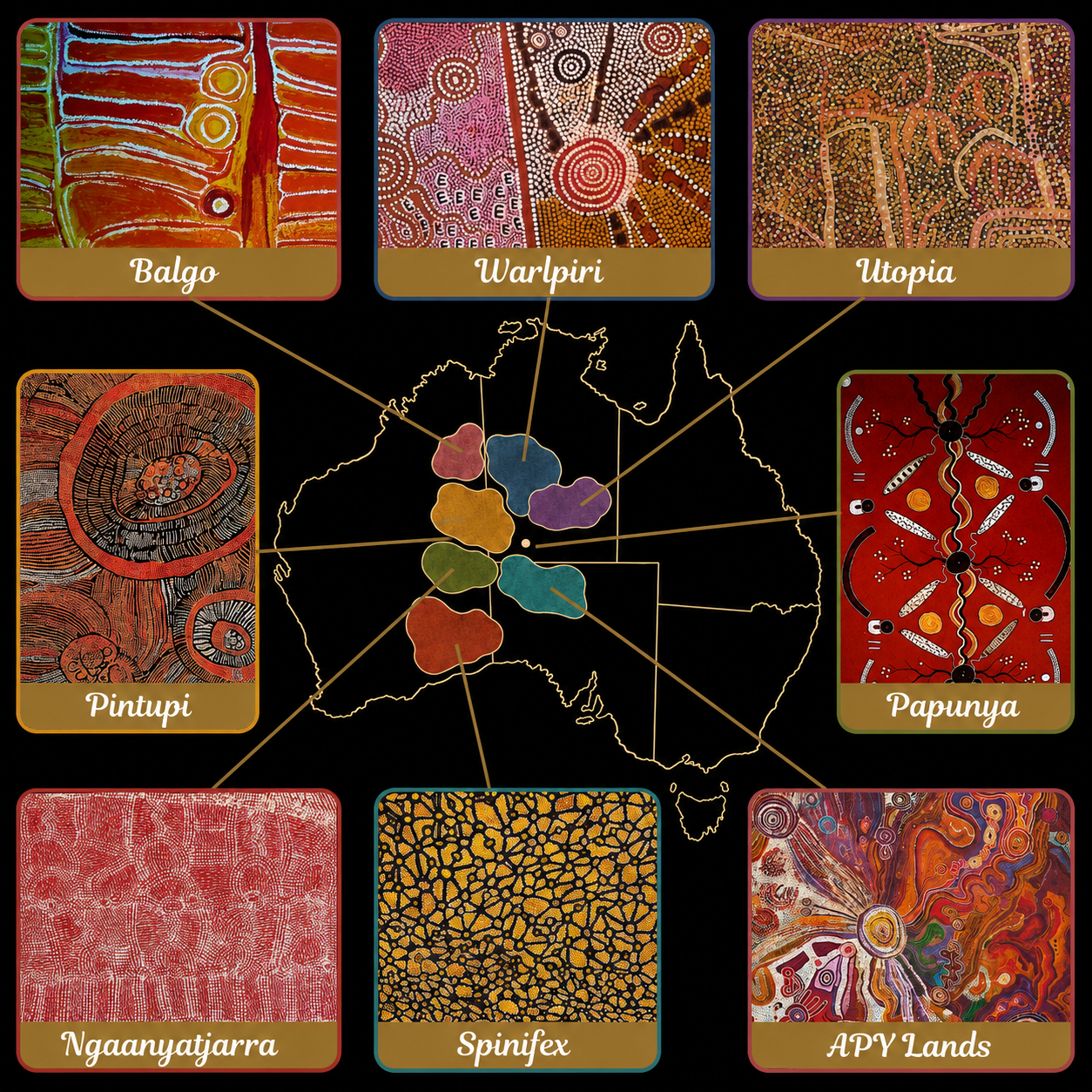
Major Western Desert Regional Styles
| Style | Famous For |
|---|---|
| Papunya | Origins of the movement |
| Pintupi | Tingari traditions |
| Warlpiri | Strong ceremonial iconography |
| Utopia | Individual artistic expression |
| Balgo | Vibrant colour |
| APY Lands | Seven Sisters narratives |
| Spinifex | Native title mapping |
| Ngaanyatjarra | Atmospheric abstraction |
Papunya Art
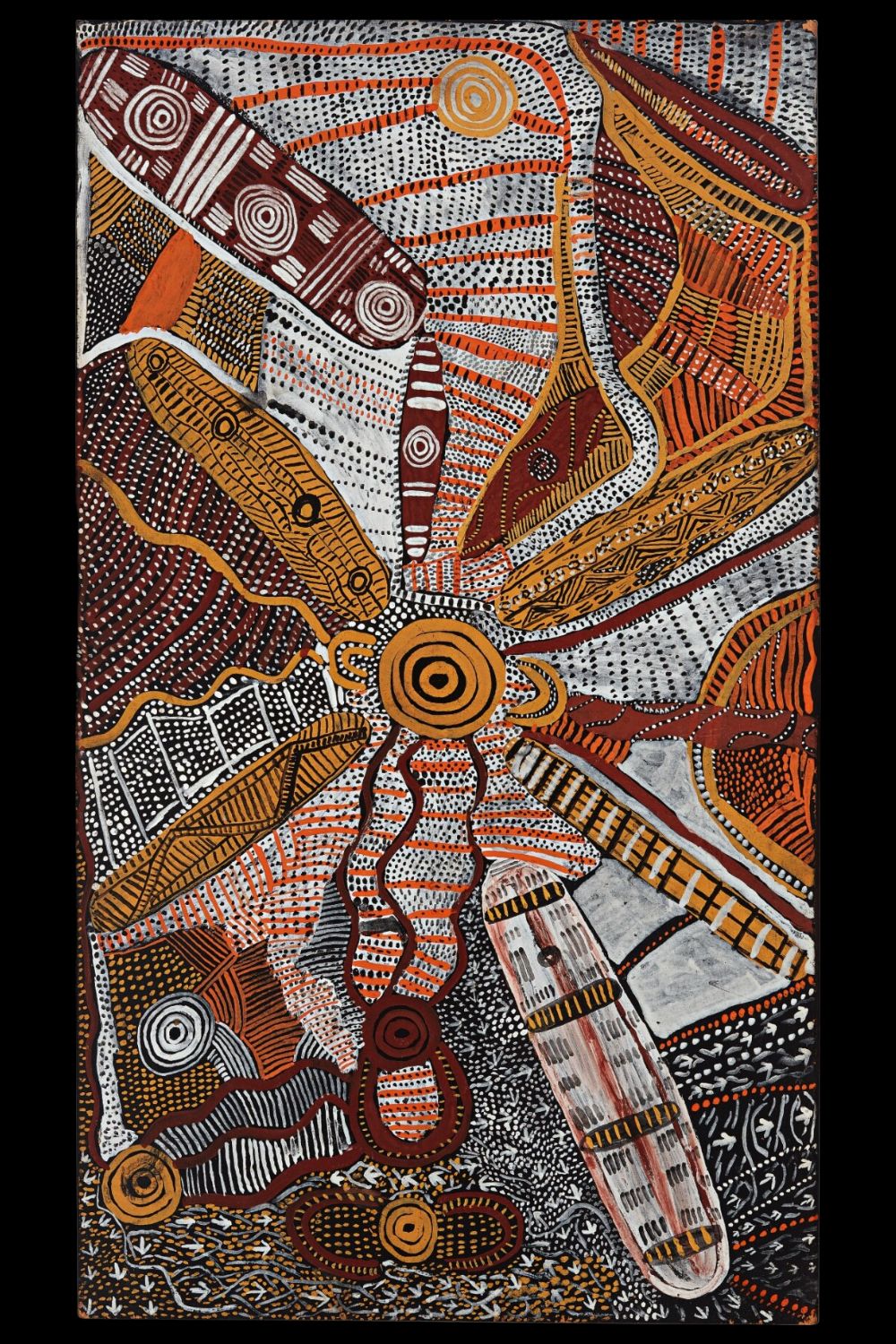
Although often described as a style, Papunya Art is more accurately understood as the movement from which contemporary Western Desert Art emerged. Beginning in the early 1970s, senior Aboriginal men transferred ceremonial body painting, sand mosaics, and Dreaming designs onto boards and canvas using acrylic paint. Papunya paintings are recognised for their concentric circles, journey lines, symbolic iconography, and aerial perspectives representing ancestral journeys, sacred sites, and waterholes. The movement established the visual foundations of Western Desert Art and launched the careers of artists such as Kaapa Tjampitjinpa, Johnny Warangkula Tjupurrula, Clifford Possum Tjapaltjarri, and Tim Leura Tjapaltjarri.
Utopia Art
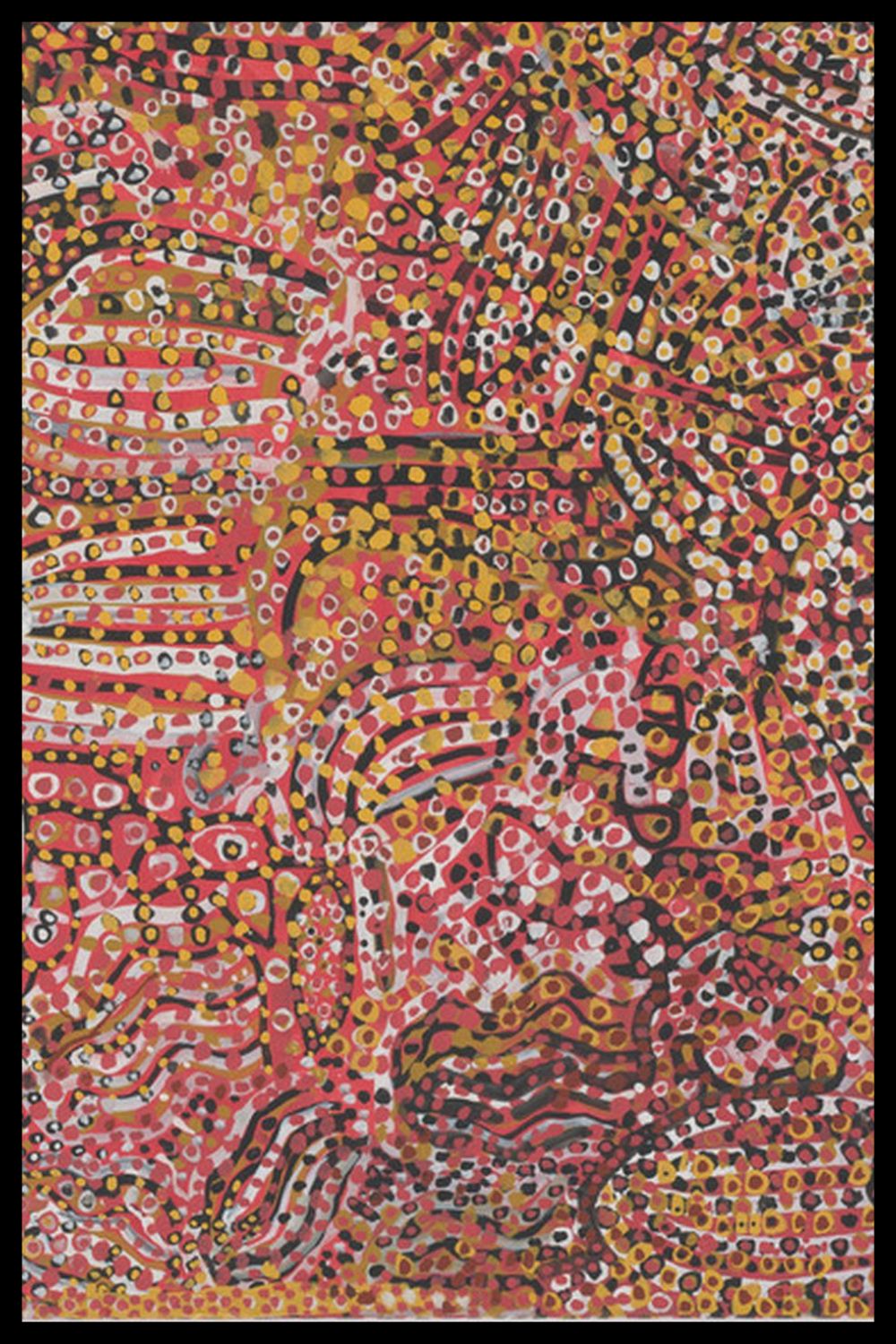
Utopia Art emerged from the Utopia region north-east of Alice Springs and is one of the most influential regional traditions within Western Desert Art. Unlike the highly structured geometry of early Papunya painting, Utopia artists developed highly individual styles inspired by ancestral Country, ceremonial knowledge, and the changing rhythms of desert life.
Utopia paintings are renowned for their expressive colour, layered dotting, gestural brushwork, and abstract depictions of Dreaming tracks, bush foods, water sources, and sacred sites. The movement achieved international recognition through artists including Emily Kame Kngwarreye, Gloria Petyarre, Kathleen Petyarre, Ada Bird Petyarre, and Minnie Pwerle, helping redefine perceptions of contemporary Aboriginal art worldwide.
Warlpiri Art
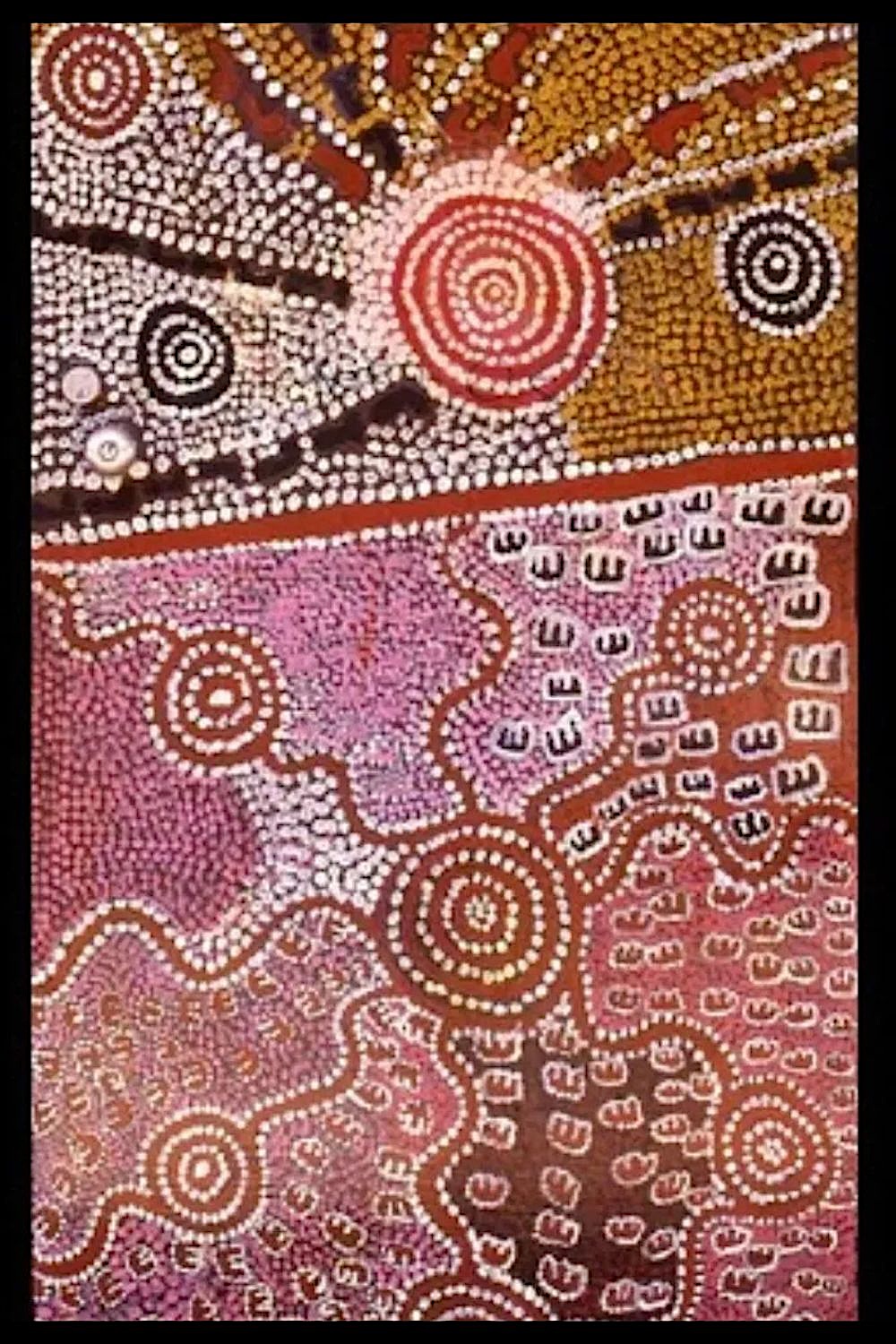
Warlpiri Art is a major regional tradition within Western Desert Art, created by Warlpiri artists from communities including Yuendumu, Lajamanu, Nyirripi, and Willowra in Central Australia. Emerging from ancient ceremonial traditions and Dreaming knowledge, Warlpiri painting is renowned for its sophisticated symbolic imagery, strong geometric structure, and enduring connection to Country.
Warlpiri paintings frequently depict ancestral journeys, sacred sites, water sources, and ceremonial narratives through concentric circles, travelling lines, and intricate fields of dotting. The movement gained international recognition through artists including Paddy Japaljarri Sims, Dorothy Napangardi, Judy Watson Napangardi, and Turkey Tolson Tjupurrula, and remains one of the most influential traditions within contemporary Aboriginal Australian art.
Balgo Art
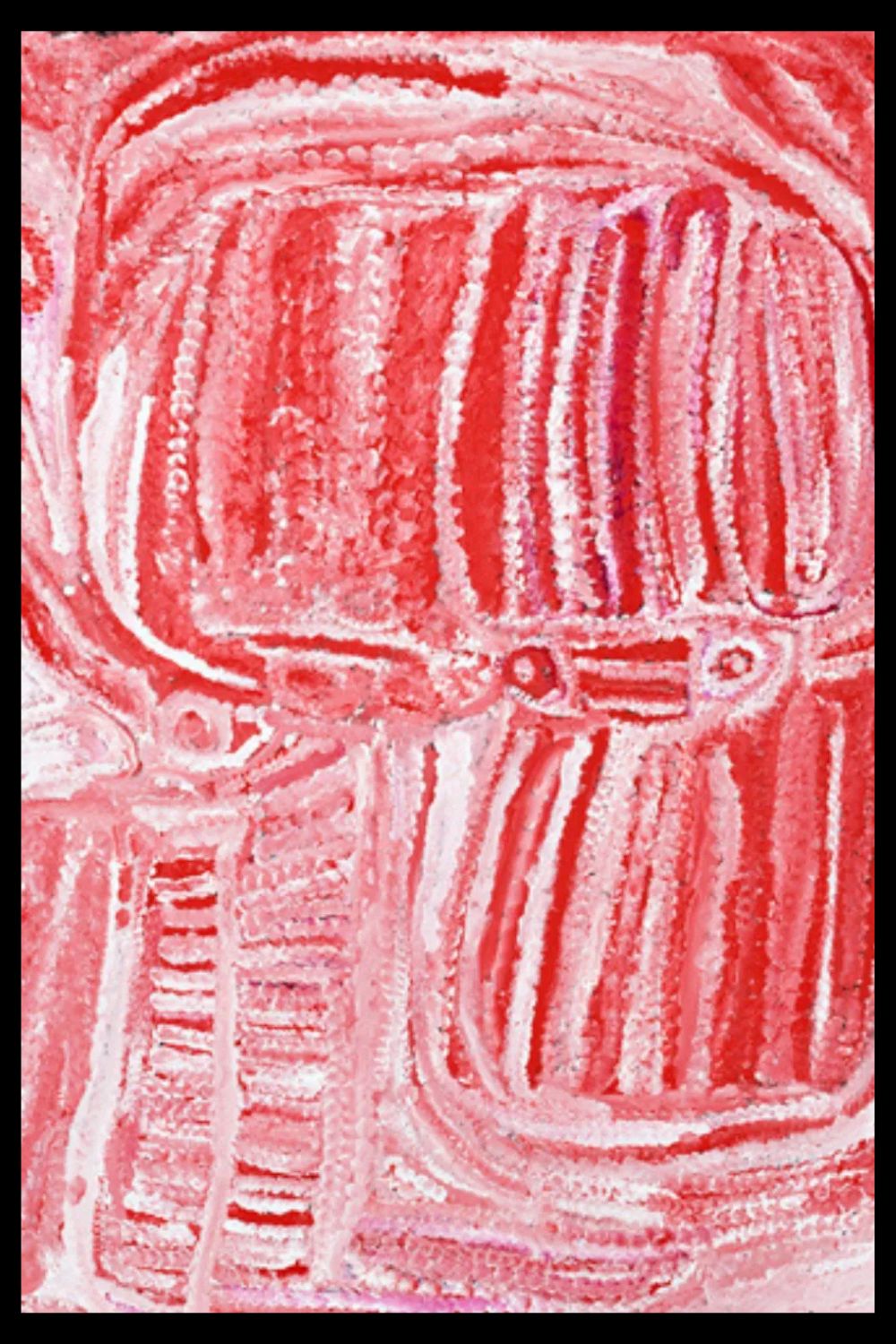
Balgo Art emerged from the remote community of Wirrimanu (Balgo) in the south-east Kimberley and is one of the most distinctive regional traditions within Western Desert Art. The movement brought together artists from several language groups, creating a diverse artistic tradition grounded in shared connections to Country and ancestral law.
Balgo paintings are renowned for their luminous colour, expressive brushwork, and dynamic compositions. Unlike the more structured geometry of early Papunya painting, Balgo artists often employ sweeping forms and vibrant palettes of pinks, oranges, yellows, and violets to depict Dreaming narratives and sacred landscapes. Major artists include Eubena Nampitjin, Boxer Milner Tjampitjin, John Mosquito Tjikila, and Helicopter Tjungurrayi.
Pintupi Art
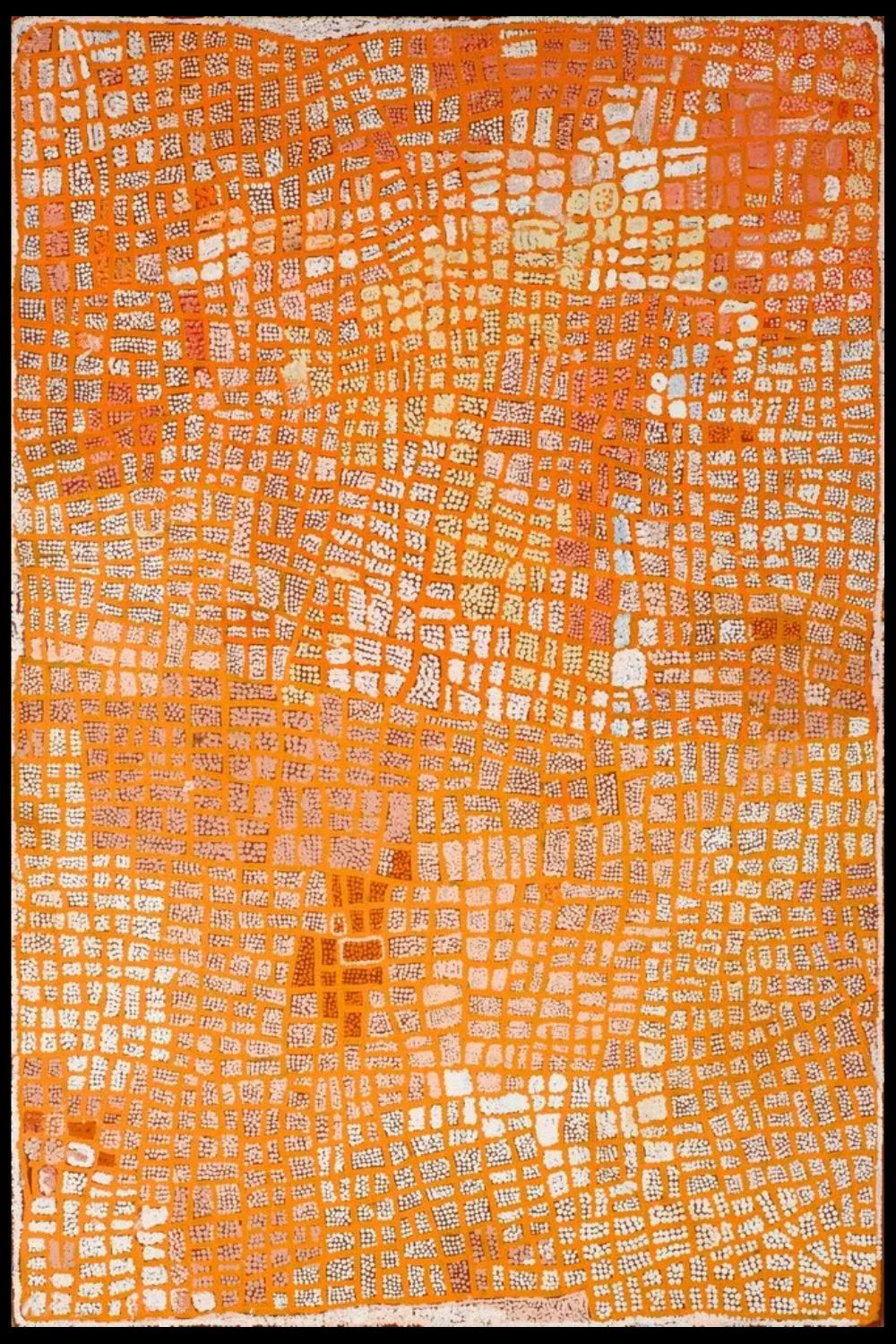
Pintupi Art is one of the most influential traditions within Western Desert Art, created by Pintupi artists from communities including Kintore, Kiwirrkurra, and the Gibson Desert region of Central Australia. Closely connected to the origins of the Papunya movement, Pintupi painting is renowned for its sophisticated ceremonial imagery and enduring connection to ancestral Country.
Many Pintupi paintings depict Tingari journeys, sacred sites, water sources, and Dreaming tracks through concentric circles, travelling lines, and intricate fields of dotting. Major artists include Anatjari Tjakamarra, Uta Uta Tjangala, Shorty Lungkata Tjungurrayi, Naata Nungurrayi, and George Tjungurrayi. Today Pintupi Art remains one of the most respected traditions within contemporary Aboriginal Australian art.
APY Lands Art
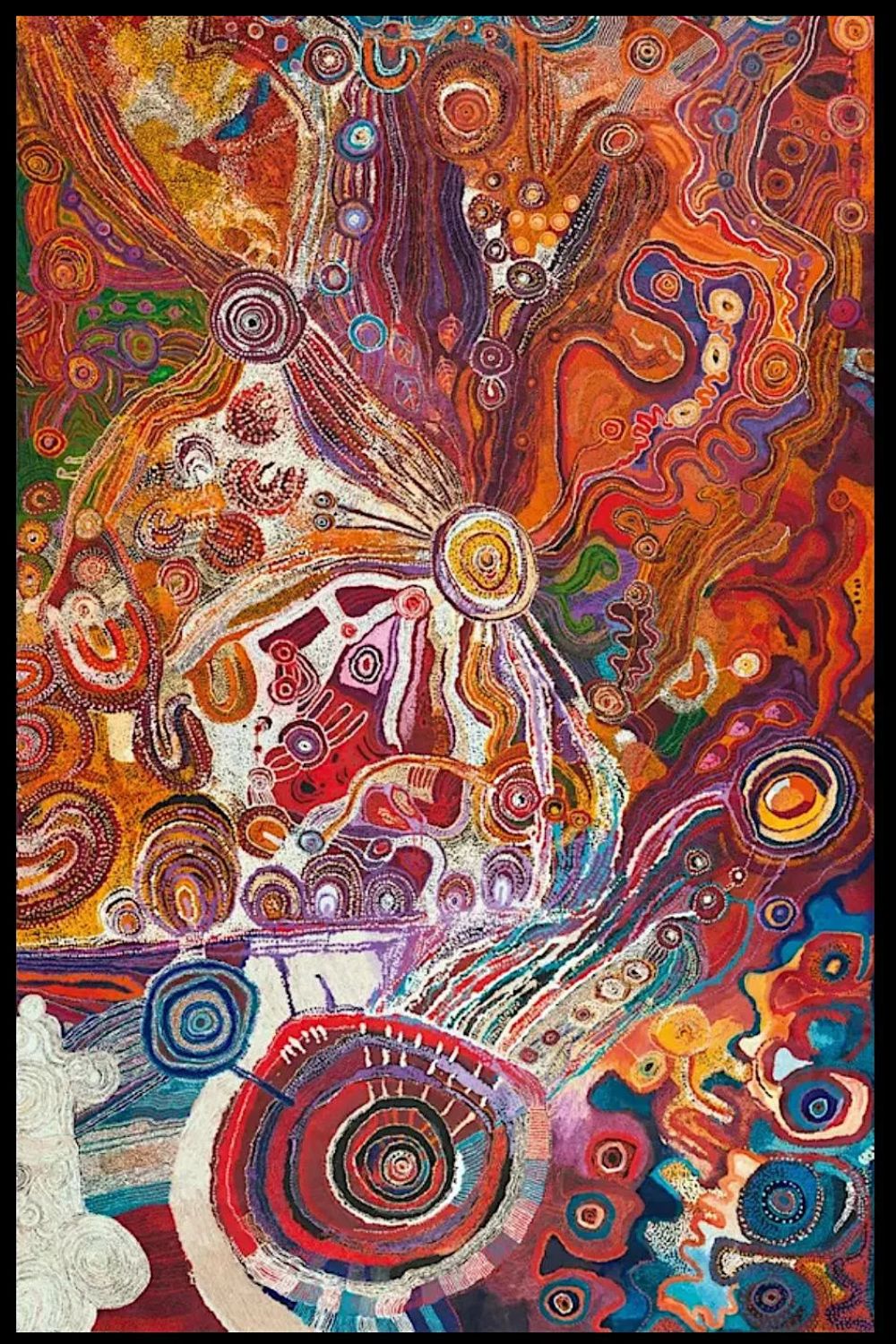
APY Lands Art is a major contemporary tradition within Western Desert Art, created by Aṉangu artists from the Anangu Pitjantjatjara Yankunytjatjara (APY) Lands of north-west South Australia. Deeply connected to Tjukurpa (Dreaming law), ceremony, and ancestral Country, the movement emerged through community art centres and has become one of the most influential forces in contemporary Aboriginal art.
APY paintings are renowned for their vibrant colour, expressive mark-making, and powerful depictions of ancestral narratives, particularly the Seven Sisters Tjukurpa. Major artists include Tjungkara Ken, Betty Kuntiwa Pumani, Yaritji Young, Sandra Ken, and Maringka Tunkin. Today APY Lands Art remains one of the most dynamic and culturally significant traditions within Aboriginal Australian art.
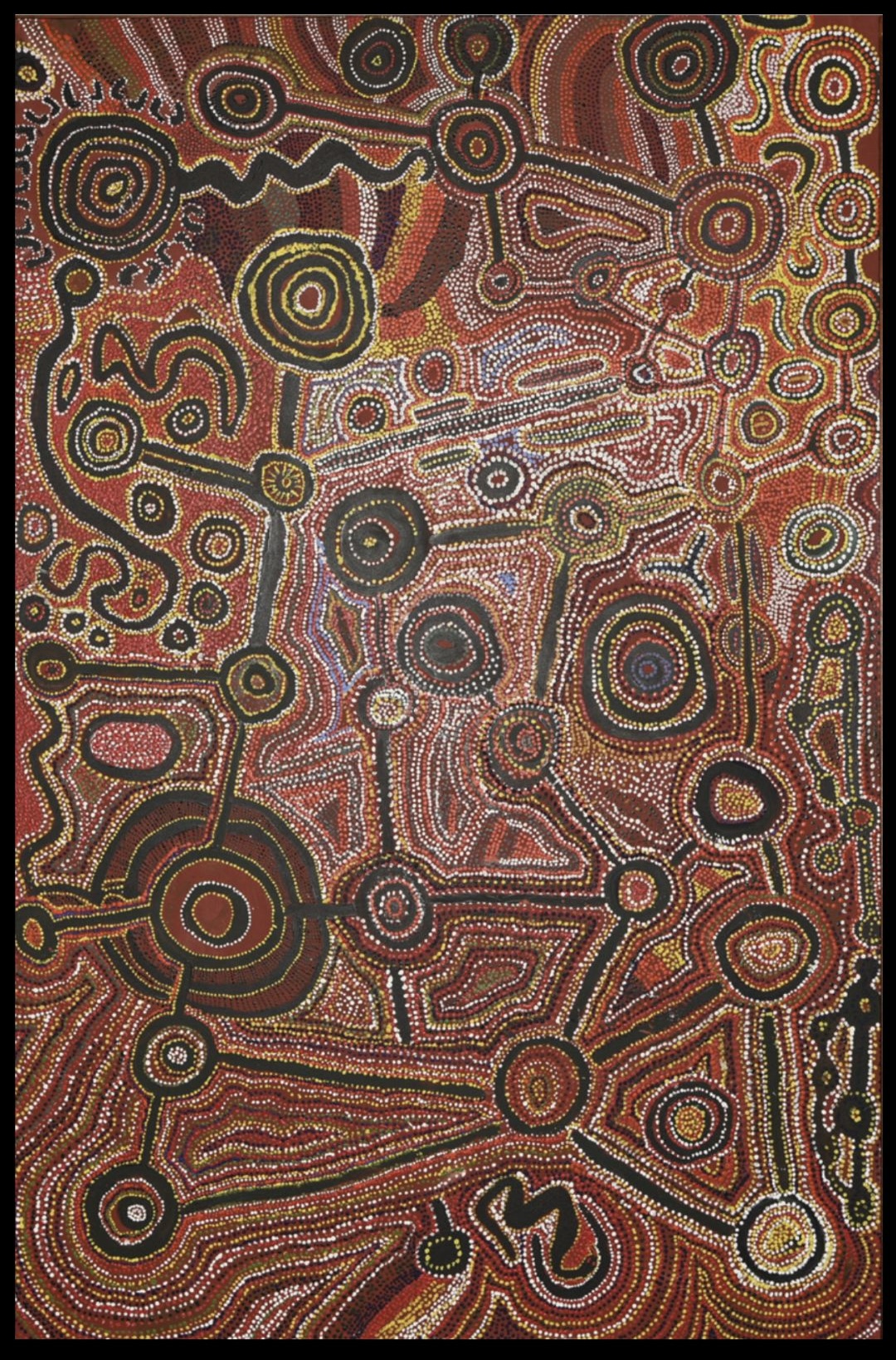
Spinifex Art
Spinifex Art is a distinctive regional tradition within Western Desert Art, created by Spinifex artists from the Great Victoria Desert of Western Australia. Emerging during the 1990s alongside the Spinifex Native Title movement, the paintings express deep cultural connections to Country and played an important role in documenting traditional land ownership and ancestral knowledge.
Spinifex paintings are renowned for their intricate symbolic mapping, dense fields of dotting, and expansive depictions of sacred sites, travelling routes, and Dreaming narratives extending across vast desert landscapes. Major artists include Roy Underwood, Lawrence Pennington, Ned Grant, and Tommy Donnegan. Today Spinifex Art is celebrated for its cultural authority and for providing one of the clearest visual expressions of the relationship between Aboriginal people and Country.
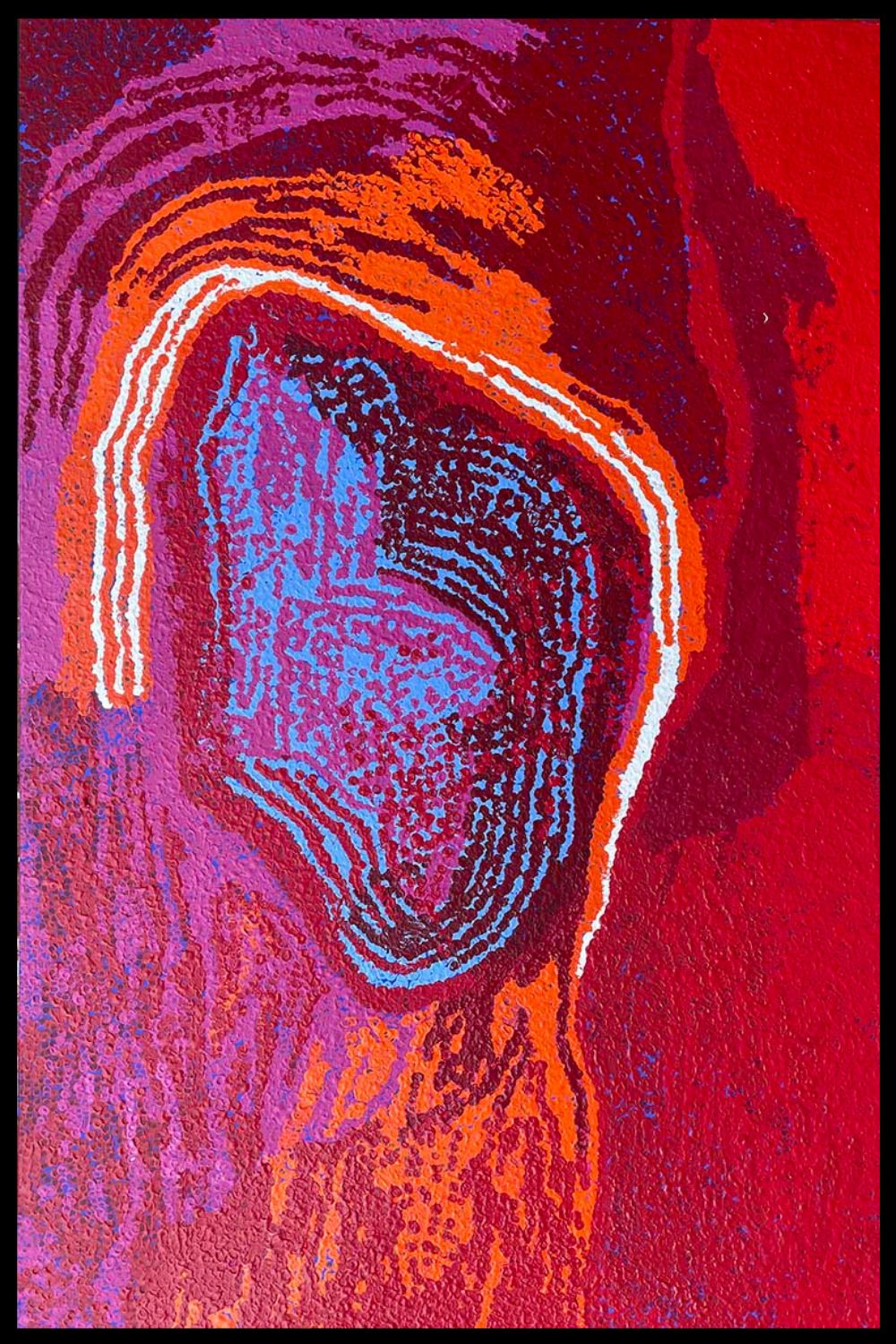
Ngaanyatjarra Art
Ngaanyatjarra Art is a distinctive regional tradition within Western Desert Art, created by Aboriginal artists from the vast Ngaanyatjarra Lands of remote Western Australia. Deeply connected to Country, Dreaming, and ancestral law, the movement reflects the cultural traditions of one of Australia’s largest and most remote desert regions.
Unlike some Western Desert styles that emphasise dense symbolic mapping, Ngaanyatjarra paintings are often characterised by atmospheric compositions, luminous colour, and a strong sense of landscape. Artists depict sacred sites, ancestral journeys, and ceremonial knowledge through flowing forms, layered colour, and expansive visual fields. Major artists include Tommy Watson, George Tjungurrayi, and Nora Wompi. Today Ngaanyatjarra Art is celebrated for its cultural depth and highly individual artistic expression.
Northern Australian Art Styles
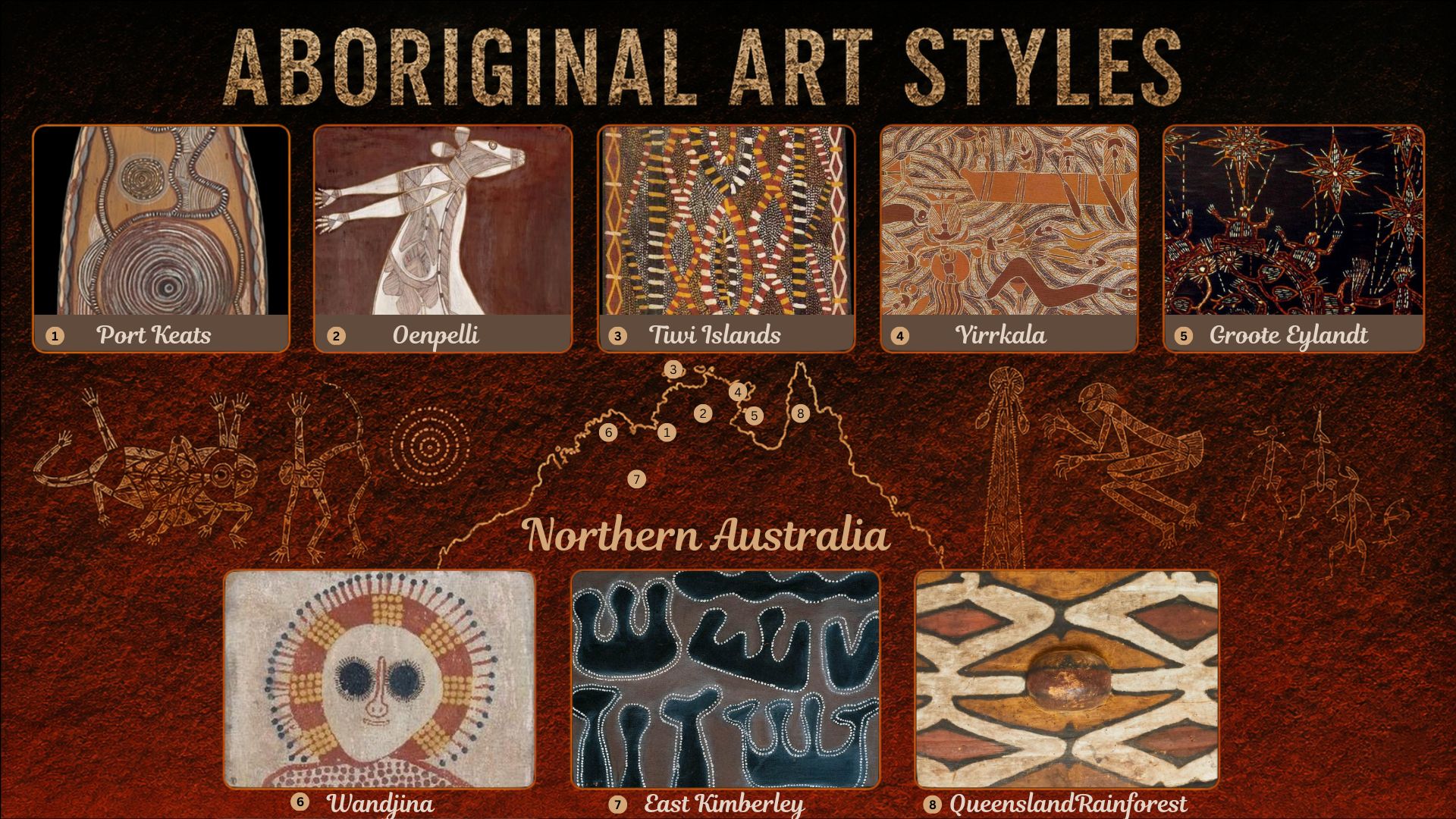
Northern Australia contains some of the oldest and most diverse Aboriginal art traditions in the world. Major regional styles include Oenpelli X-Ray Art, Yirrkala bark painting, Tiwi Art, Groote Eylandt Art, Wandjina Art, East Kimberley Art, Port Keats Art, and Queensland Rainforest Art, each reflecting distinct cultural traditions, ceremonial practices, and relationships to Country.
Aboriginal Art Styles Featured in Northern Australia
| Style | Region | Best Known For |
|---|---|---|
| Port Keats Art | Wadeye, NT | Ceremonial Geometric Designs |
| Oenpelli Art | Western Arnhem Land | X-Ray Painting |
| Tiwi Art | Tiwi Islands | Jilamara Body-Paint Designs |
| Yirrkala Art | Northeast Arnhem Land | Rarrk Crosshatching |
| Groote Eylandt Art | Gulf of Carpentaria | Black Backgrounds & Totemic Imagery |
| Wandjina Art | Kimberley, WA | Creator Spirits & Rainmaking Ancestors |
| East Kimberley Art | Warmun, WA | Ochre Colour Fields |
| Queensland Rainforest Art | Far North Queensland | Geometric Shield Designs |
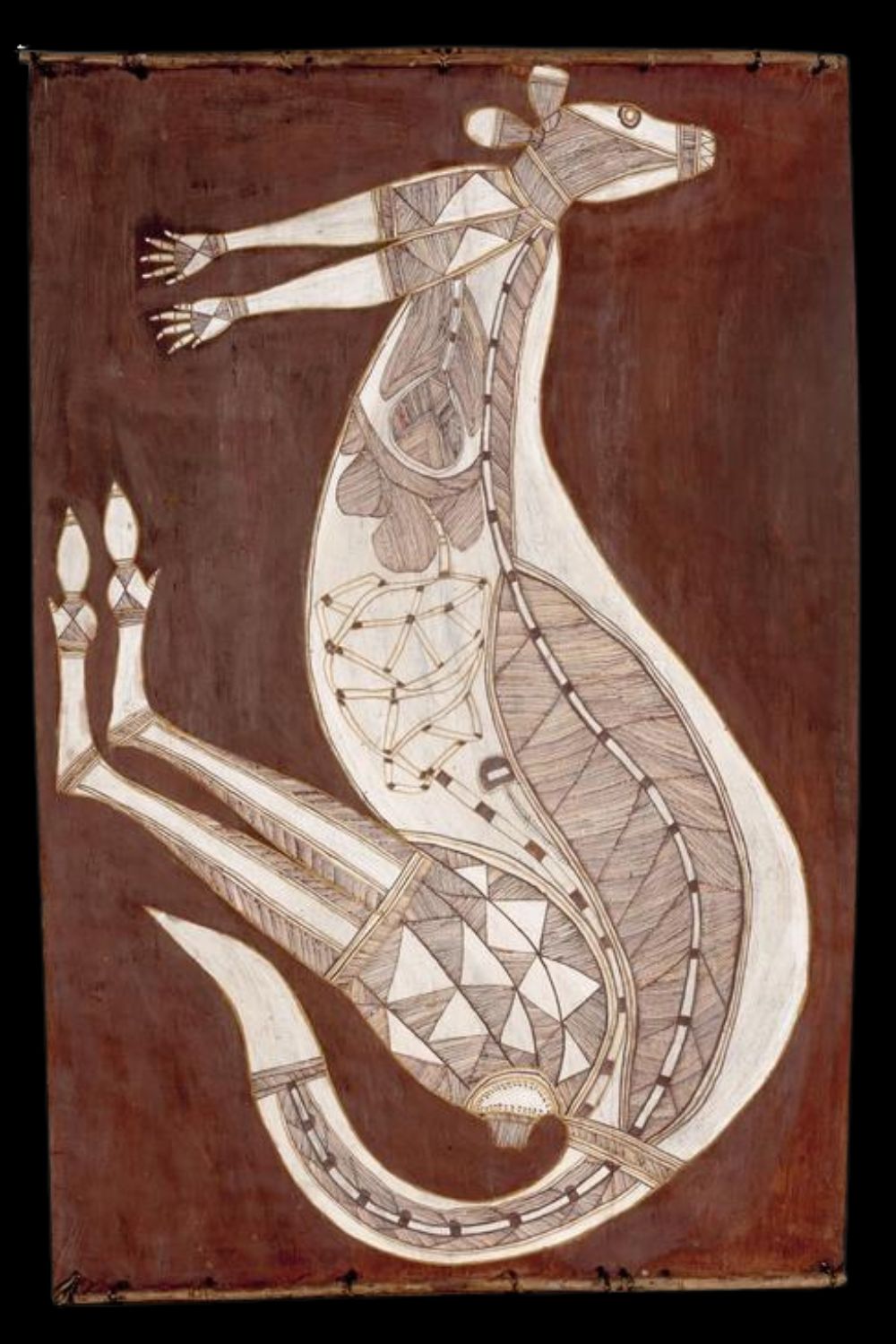
Oenpelli Art and Aboriginal X-Ray Painting
Oenpelli Art refers to the bark painting tradition of western Arnhem Land centred on Gunbalanya (formerly Oenpelli) in the Northern Territory. Closely connected to some of Australia’s oldest rock art traditions, Oenpelli painting is best known for Aboriginal X-Ray Art, in which artists reveal the internal anatomy and spiritual essence of animals, ancestral beings, and powerful Dreaming figures.
Unlike the geometric clan designs of Yirrkala Art, Oenpelli paintings typically feature bold figurative imagery painted against monochrome ochre backgrounds using natural pigments and fine rarrk infill. Fish, turtles, kangaroos, barramundi, Mimih spirits, Namarrkon the Lightning Spirit, and the Rainbow Serpent are among the most important subjects depicted by artists from the region.
X-Ray painting originated within the ancient rock art traditions of Arnhem Land and is distinguished by its depiction of bones, organs, and internal structures. Rather than simply showing how an animal appears externally, these paintings reveal deeper ideas relating to life force, ancestral power, hunting knowledge, and spiritual relationships to Country.
Major artists associated with Oenpelli Art include Yirawala, Lofty Nadjamerrek, Dick Murrumurru , John Mawurndjul, and John Namerredje Guymala. Today Oenpelli Art and Aboriginal X-Ray painting remain among the most distinctive and internationally recognised traditions within Aboriginal Australian art.
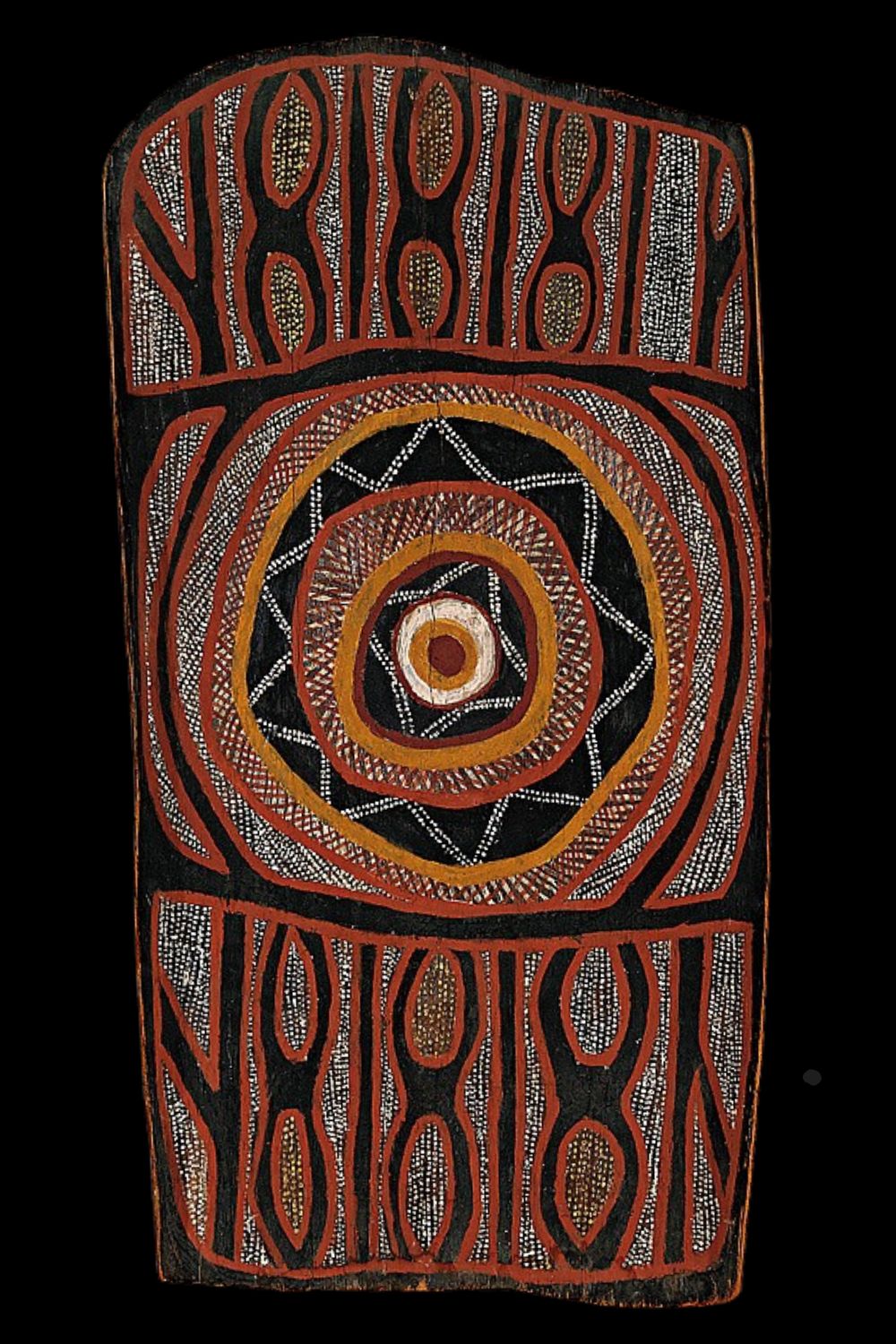
Tiwi Art
Tiwi Art is one of the most distinctive traditions within Aboriginal Australian art, created by Tiwi artists from Bathurst and Melville Islands north of Darwin. Unlike the symbolic landscape imagery of Western Desert painting, Tiwi art is centred on ceremonial body-paint designs known as jilamara, featuring bold geometric patterns painted in natural ochres of white, red, yellow, and black. Deeply connected to Pukumani mortuary ceremony and ancestral law, Tiwi art includes bark paintings, tutini (Pukumani poles), figurative sculpture, ceremonial weapons, and painted tungas (bark baskets). The tradition is renowned for its strong rhythmic abstraction, monumental sculptural forms, and continuing connection to ceremony, identity, and spiritual authority.
For a deeper exploration of jilamara designs, Pukumani ceremony, and Tiwi bark painting traditions, see our guide to Tiwi Art.
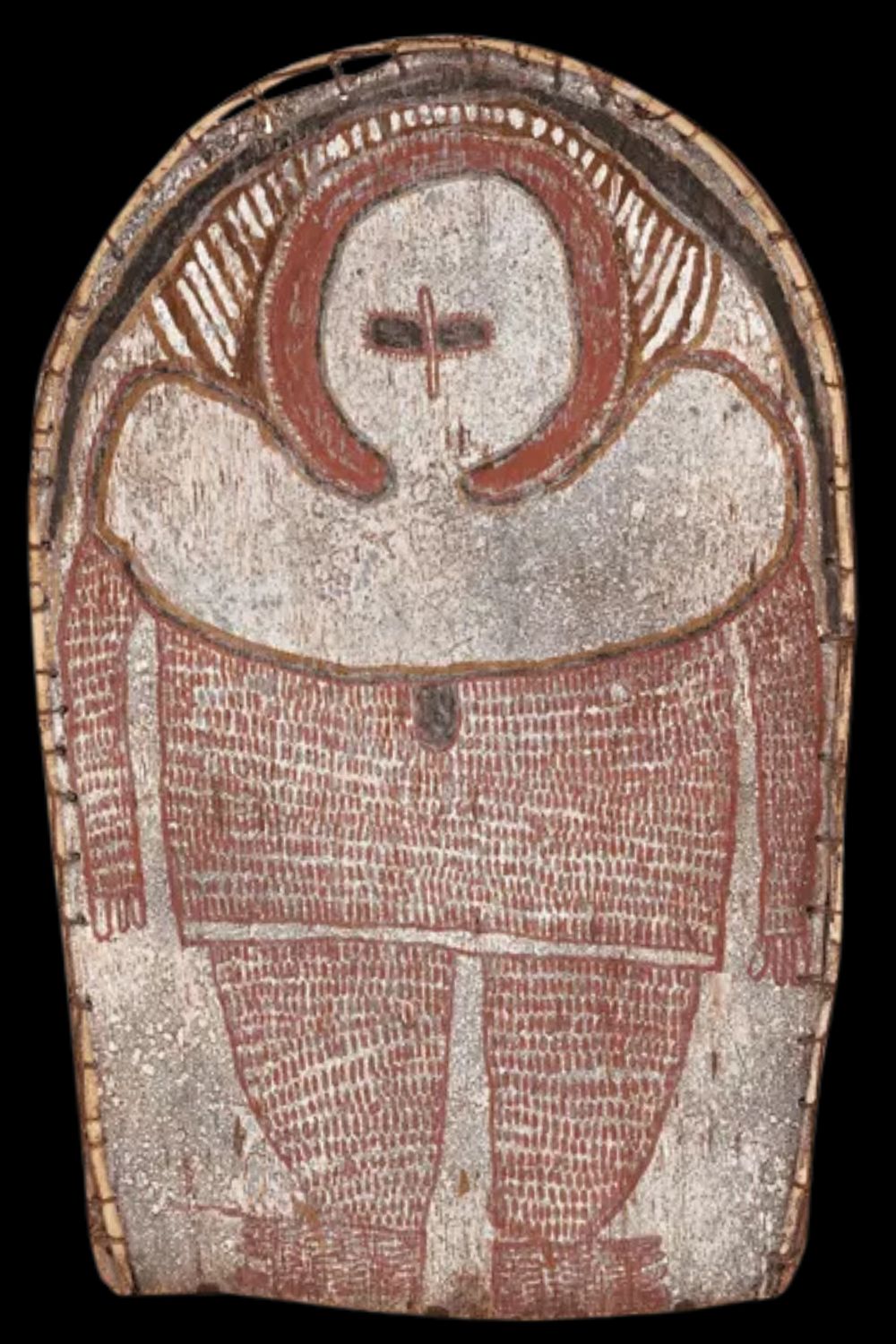
Wandjina Art
Wandjina Art is one of the most spiritually powerful traditions within Aboriginal Australian art, created by Worrorra, Ngarinyin, and Wunambal artists from the Kimberley region of north-western Australia. Centred on the Wandjina ancestral beings, the tradition is distinguished by large round eyes, halo-like headdresses, bold white forms, and mouthless faces associated with rainmaking, creation, fertility, and sacred law.
The Wandjina are regarded as ancestral creator spirits who shaped the Kimberley landscape during the Dreaming and continue to maintain the seasonal cycles, monsoonal rains, and spiritual balance of Country. Wandjina paintings frequently incorporate cloud motifs, lightning forms, serpents, rain imagery, and ceremonial symbolism connected to the spiritual power of the wet season and ancestral law.
Traditionally painted using natural ochres on rock shelters, bark, and ceremonial objects, Wandjina imagery later evolved into bark paintings, board paintings, and canvas works during the twentieth century. Major Wandjina artists including Alec Mingelmanganu, Charlie Numbulmoore, Lily Karedada, Jack Karedada, Waigin Djanghara, and Mickey Bungkuni helped establish Wandjina painting as one of the most recognisable styles within contemporary Aboriginal art.
Explore the history, symbolism, and continuing cultural significance of the Wandjina painting tradition in our full guide to Wandjina Art.
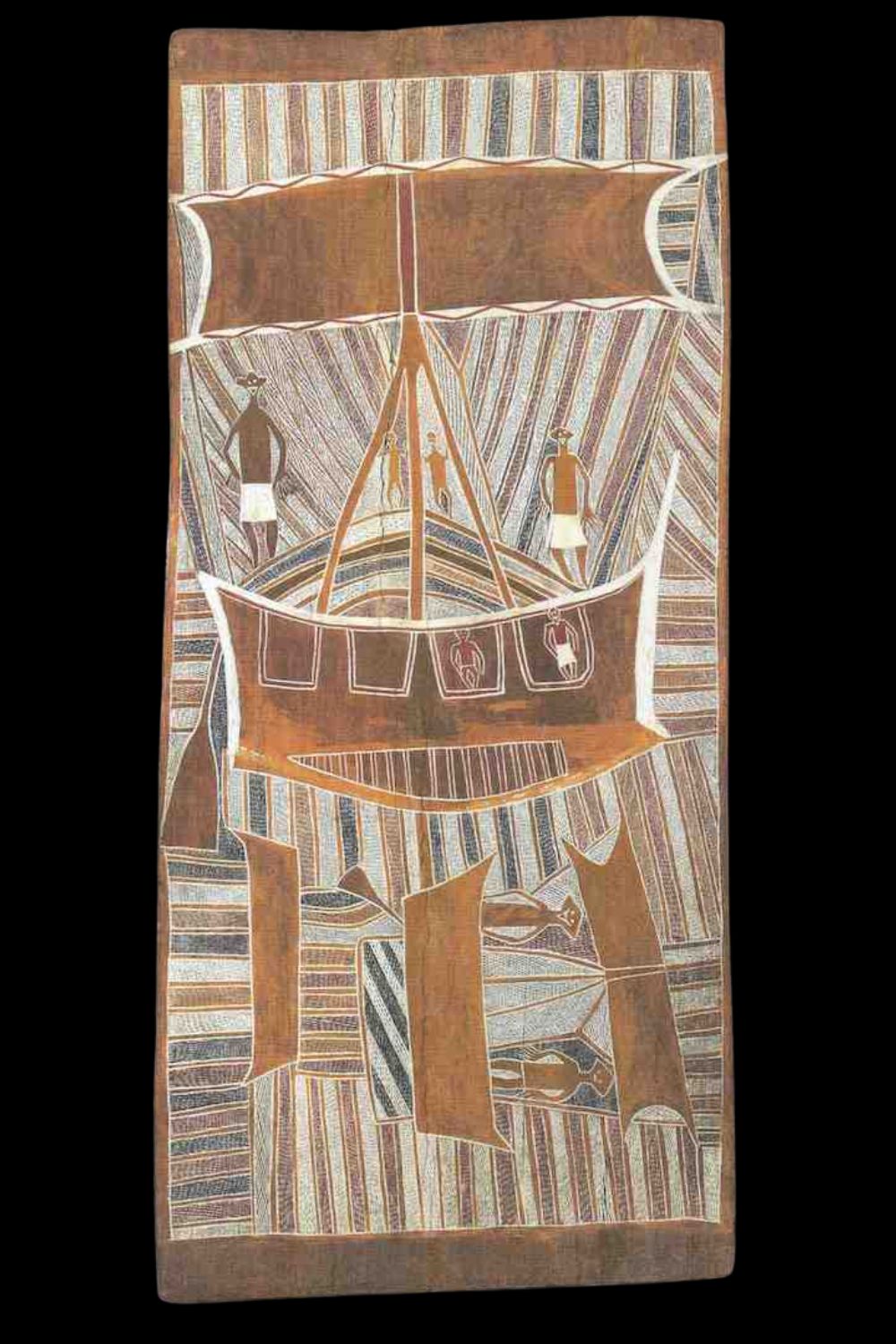
Yirrkala Art
Yirrkala Art is one of the most sophisticated traditions within Aboriginal Australian art, created by Yolŋu artists from North East Arnhem Land in the Northern Territory. Renowned for extraordinarily fine rarrk crosshatching, sacred clan designs, and complex ancestral narratives, Yirrkala bark paintings are deeply connected to Yolŋu law, ceremony, and relationships to land and sea Country. Unlike the looser figurative traditions of western Arnhem Land, Yirrkala Art is characterised by highly structured compositions densely filled with geometric miny’tji patterning in natural ochres of white, red, yellow, and black. The tradition includes bark paintings, larrakitj memorial poles, sculpture, ceremonial objects, and collaborative works such as the Yirrkala Church Panels and Bark Petitions. Celebrated for both its artistic refinement and profound ceremonial authority, Yirrkala Art stands at the centre of Aboriginal bark painting and the modern history of Indigenous land rights in Australia.
For a more comprehensive discussion of Yolŋu clan designs, bark petitions, and the Yirrkala painting movement, visit Yirrkala Art
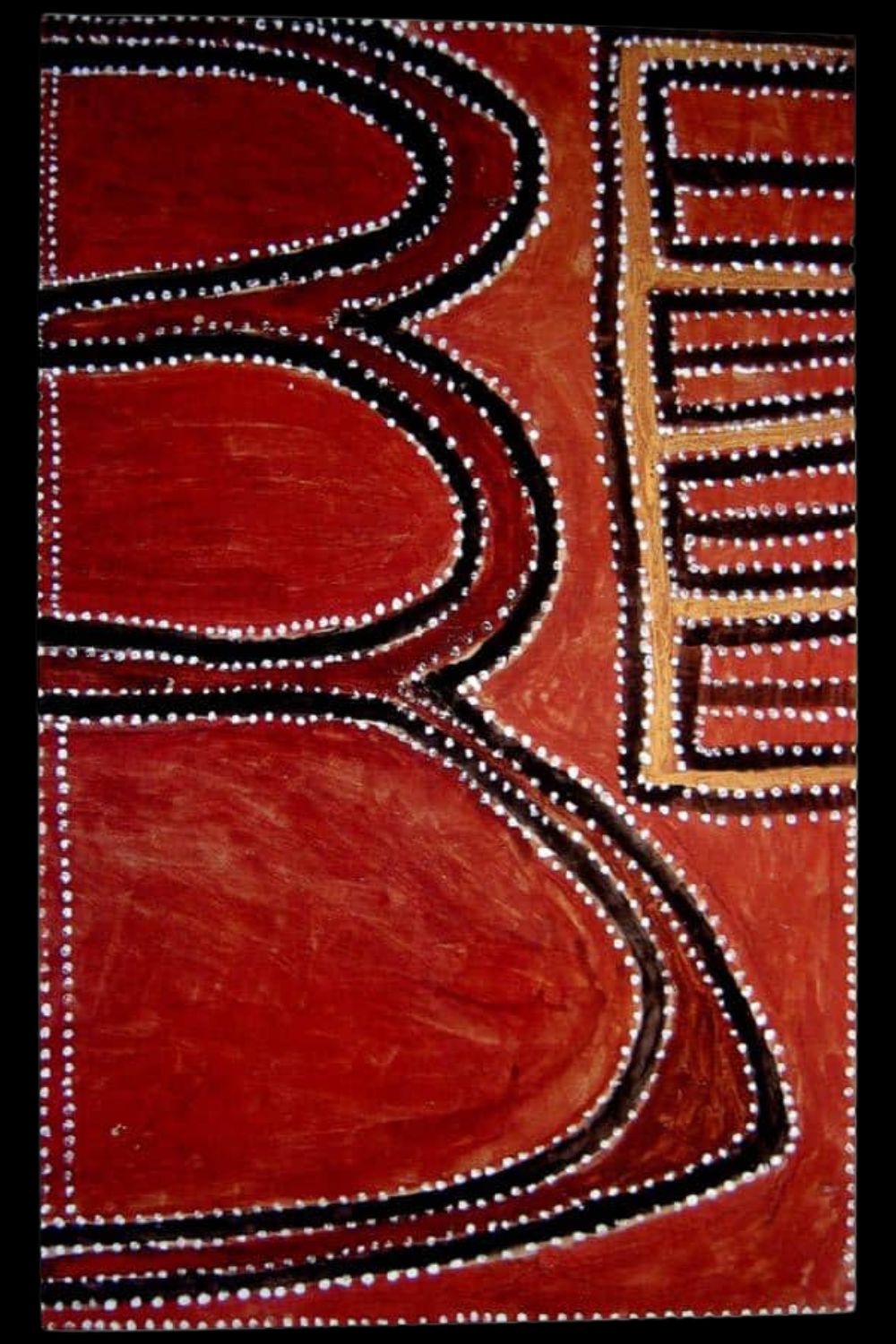
East Kimberley Art
East Kimberley Art is one of the most important regional movements within contemporary Aboriginal Australian art, emerging from the Warmun and Turkey Creek communities during the 1970s. Distinguished by large blocks of natural ochre colour separated by rows of white dots, the style developed from ceremonial body painting, sacred boards, and the painted dance boards used in the Krill Krill ceremony.
The movement began after Rover Thomas received visionary dreams connected to the death of his aunt, leading to the creation of ceremonial dance boards by artists including Paddy Jaminji. These boards depicted spirit journeys, sacred sites, and ancestral events and later became the foundation of the East Kimberley painting movement.
East Kimberley paintings are renowned for their ochre colour fields, simplified aerial landscapes, and strong spiritual relationship to Country. Major artists including Rover Thomas, Paddy Jaminji, Paddy Bedford, Queenie McKenzie, Jack Britten, and Hector Jandany each developed highly individual approaches while maintaining strong connections to Kimberley ceremonial traditions and ancestral geography. Early works were often painted on builder’s board using natural pigments before later transitioning onto canvas
Explore the history and artistic development of the East Kimberley movement, including artists such as Rover Thomas and Paddy Bedford, in East Kimberley Art.
Groote Eylandt Art
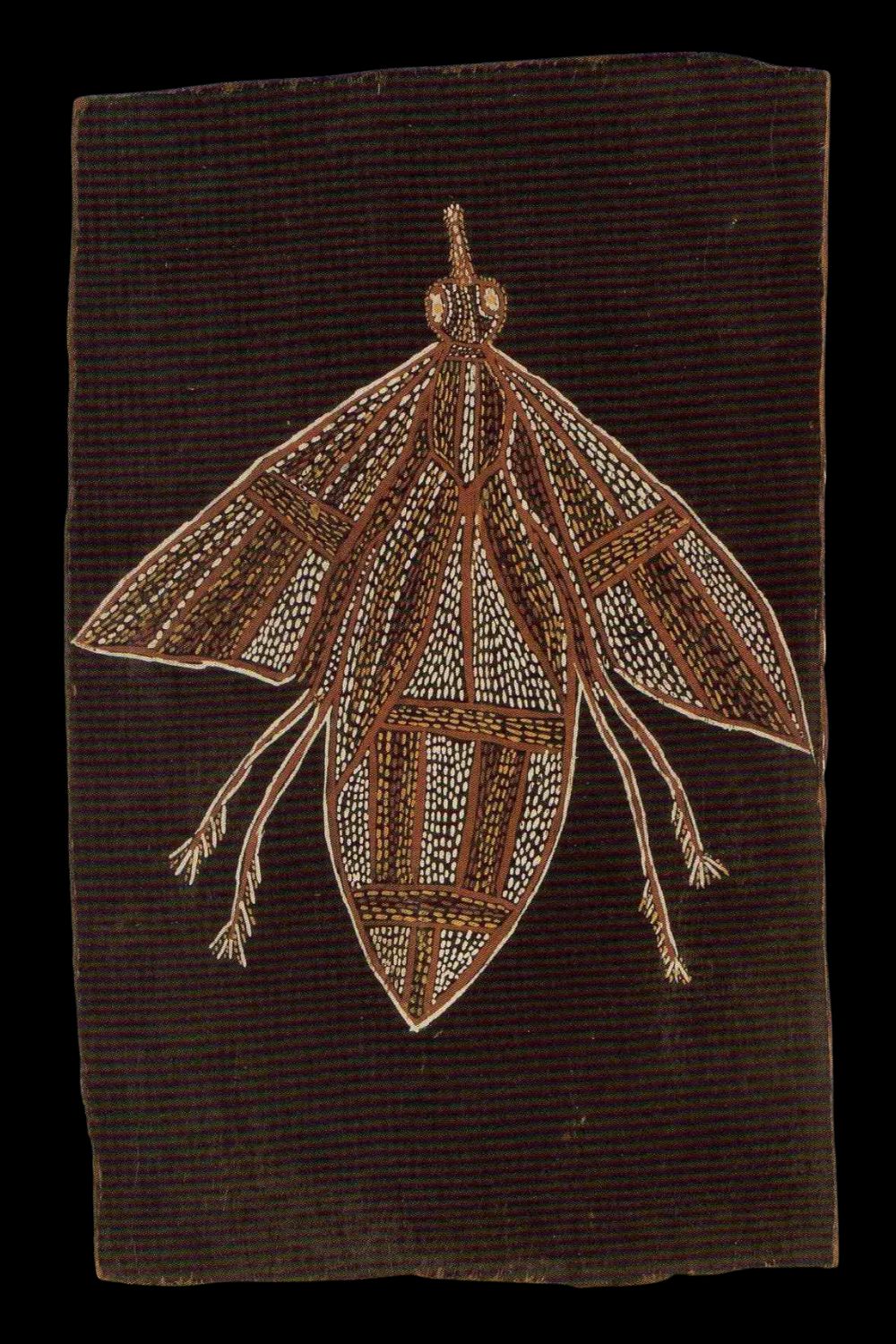
Groote Eylandt art is one of the most distinctive regional traditions within Arnhem Land Aboriginal art. Created by Anindilyakwa artists from Groote Eylandt in the Gulf of Carpentaria, the tradition is best known for bark paintings featuring monochrome black backgrounds, geometric dotted infill, and boldly simplified totemic imagery. Unlike the dense crosshatching associated with Oenpelli Art or Yirrkala bark painting, Groote Eylandt art possesses a striking graphic clarity often focused on isolated animals, insects, marine life, and ancestral beings. The tradition developed from older Anindilyakwa rock art and ceremonial painting practices and reached its peak during the 1960s and 1970s before declining following the social disruption associated with manganese mining. Important subjects include Dreamtime stories, ceremonial imagery, and Macassan praus reflecting centuries of contact between Groote Eylandt people and Indonesian trepang fishermen.
For a deeper exploration of ceremonial bark painting and sculpture traditions from the Gulf of Carpentaria, see our guide to Groote Eylandt Art.
Port Keats Art
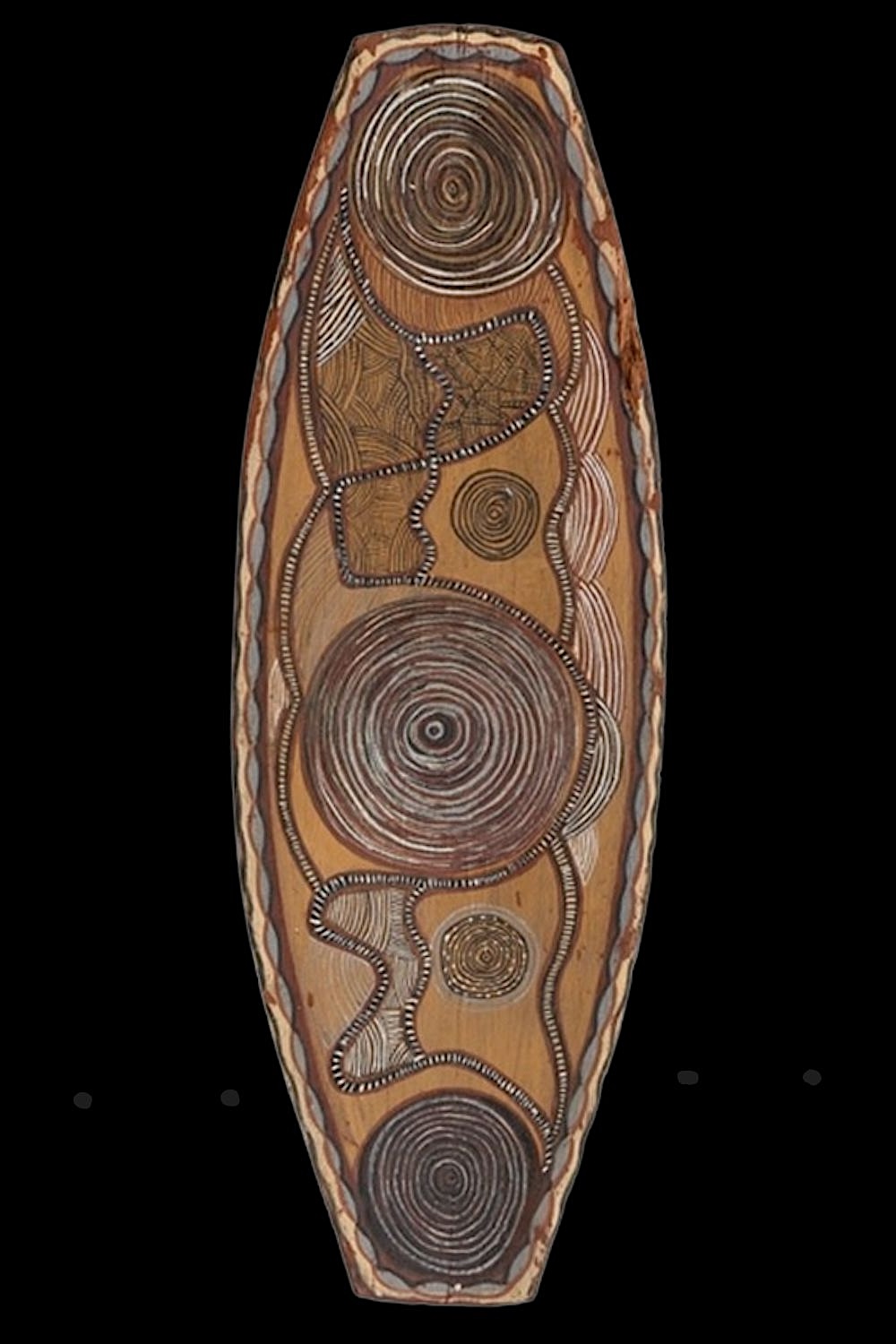
Port Keats Art, originating from Wadeye in the Northern Territory during the late 1950s and 1960s, represents one of the lesser-known but historically important regional movements within Aboriginal Australian art. Early bark paintings are distinguished by highly abstract ceremonial imagery featuring concentric circles, journey lines, and sacred geometric forms closely related to ceremonial board traditions and ancestral Dreaming narratives.
Unlike Western Desert painting, which evolved towards dense dotting and symbolic aerial mapping, Port Keats painting gradually developed into a more figurative tradition depicting animals, ancestral beings, and ceremonial scenes. Major artists including Charlie Mardigan, Nym Bunduk, and Charlie Brinken produced bark paintings that combined strong ceremonial symbolism with a distinctive regional visual language rooted in the cultural traditions of Wadeye.
Explore the history and ceremonial symbolism of this distinctive Northern Territory movement in our detailed guide to Port Keats Art.
Queensland Rainforest Art
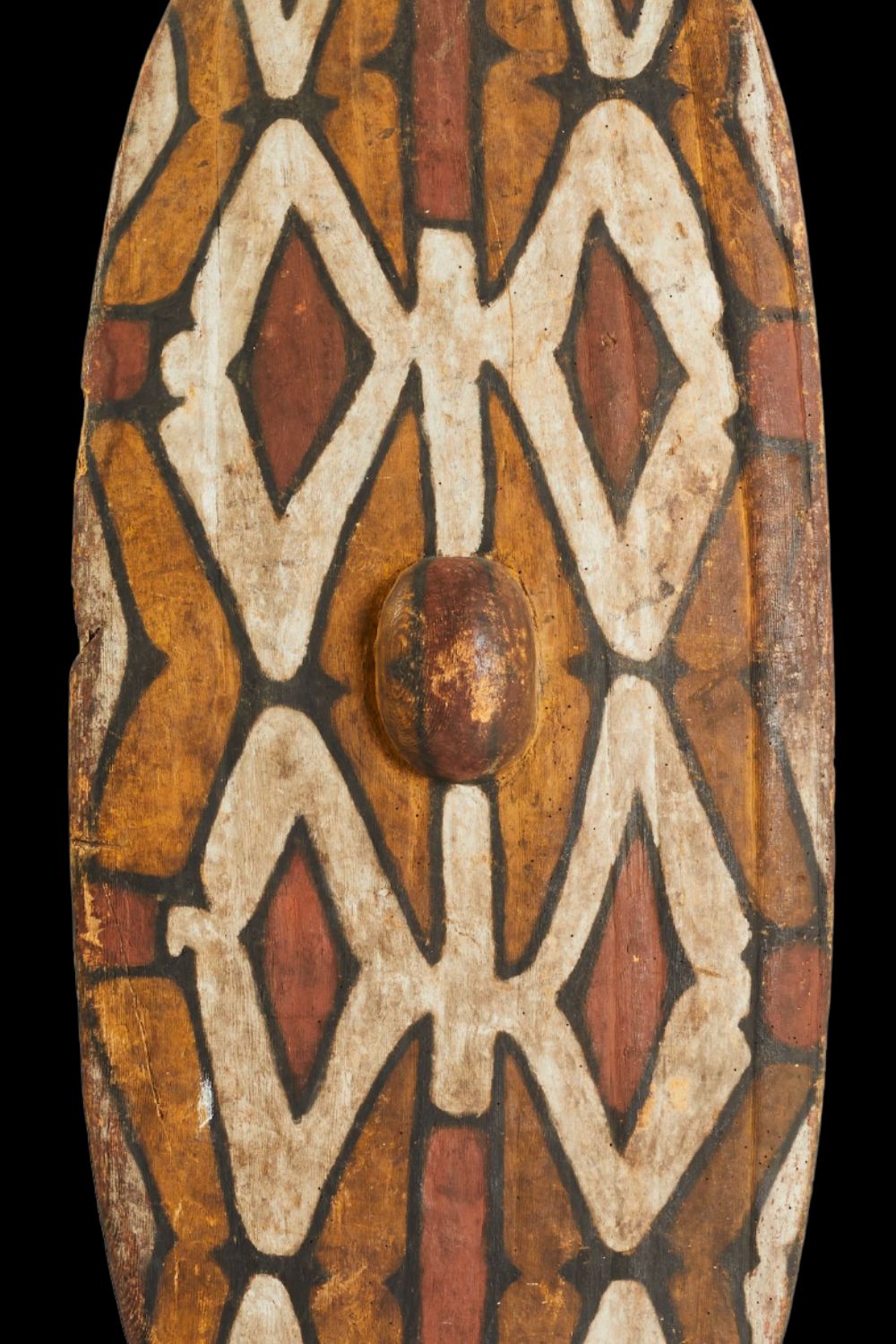
Queensland Rainforest Art is one of the most distinctive regional traditions within Aboriginal Australian art. Developed by Aboriginal groups from the tropical rainforest regions of Far North Queensland, the style is especially renowned for its painted shields, swords, baskets, and ceremonial objects decorated with bold geometric ochre designs.
Unlike Western Desert painting, Queensland Rainforest Art is not based on dotting or aerial landscape imagery. Instead, artists used strong abstract patterns including diamonds, chevrons, zig-zags, radiating bands, and mirrored linear motifs arranged in highly symmetrical compositions. Many rainforest shields display remarkable optical intensity through the repetition of contrasting white, red, yellow, and black ochre pigments. The designs themselves often reflected clan affiliations and regional aesthetic traditions rather than narrative storytelling.
Today, historic North Queensland rainforest shields are among the most recognisable forms of Aboriginal material culture held in museum collections. Their sophisticated geometric abstraction is increasingly appreciated not only as ethnographic material, but also as a major artistic tradition within the broader history of Aboriginal Australian art.
For a deeper look at the geometric designs, ceremonial significance, and regional variations of North Queensland shields, see our guide to Queensland Rainforest Shields
Other Important Aboriginal Art Styles
Hermannsburg Art
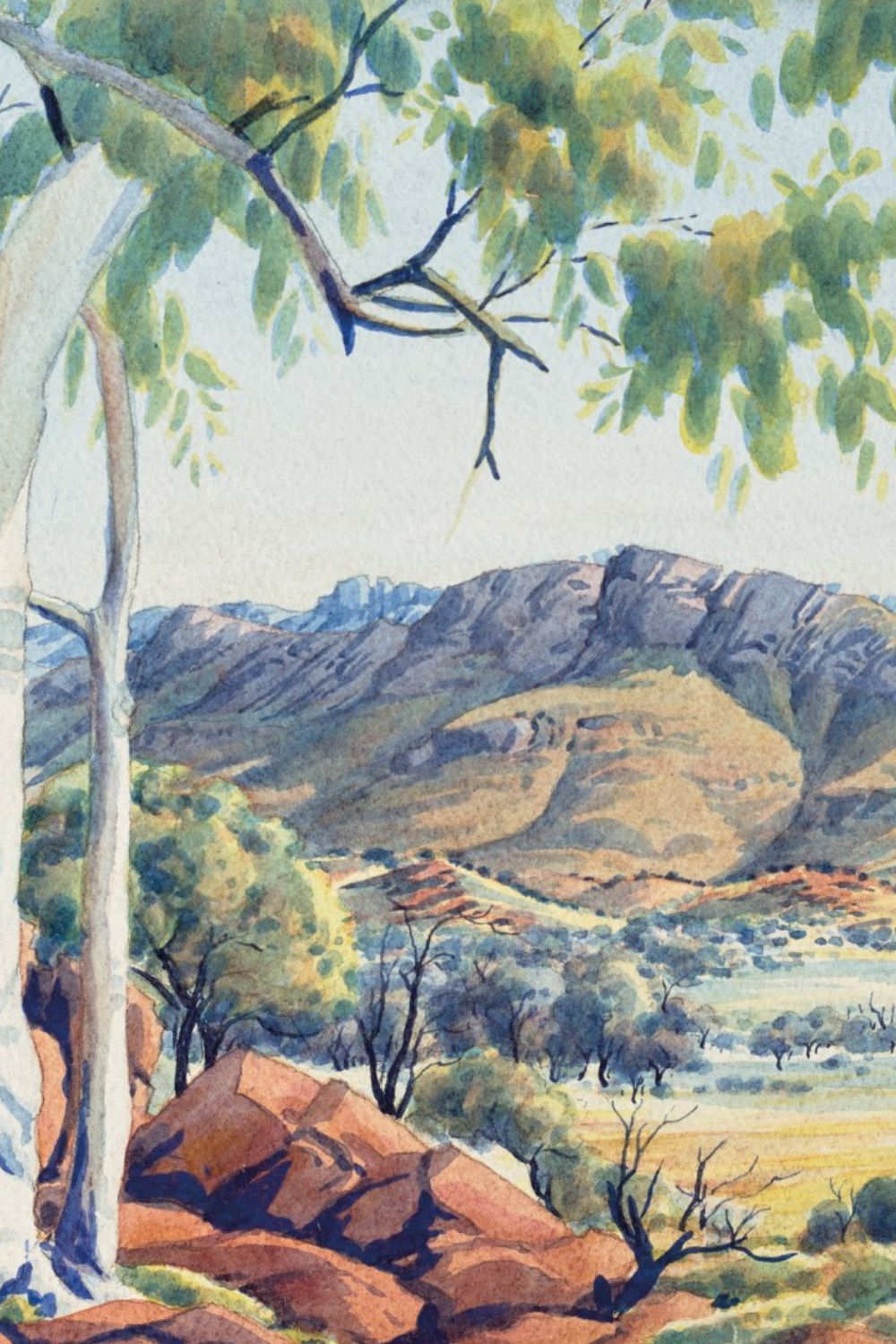
Hermannsburg Art is a distinctive Aboriginal painting tradition that emerged from the Hermannsburg (Ntaria) Mission in Central Australia during the early twentieth century. Unlike the symbolic dot painting traditions of the Western Desert, Hermannsburg artists worked primarily in watercolour, creating detailed landscapes of the MacDonnell Ranges, river gums, mountain ranges, and desert Country.
The movement achieved national and international recognition through artists such as Albert Namatjira and Otto Pareroultja, whose paintings introduced many Australians to the beauty of Central Australia and helped establish one of the first major Aboriginal fine art movements. Celebrated for its realism, technical skill, and deep connection to Country, Hermannsburg Art remains one of the most important and influential traditions in Aboriginal Australian art history.
Carrolup Art
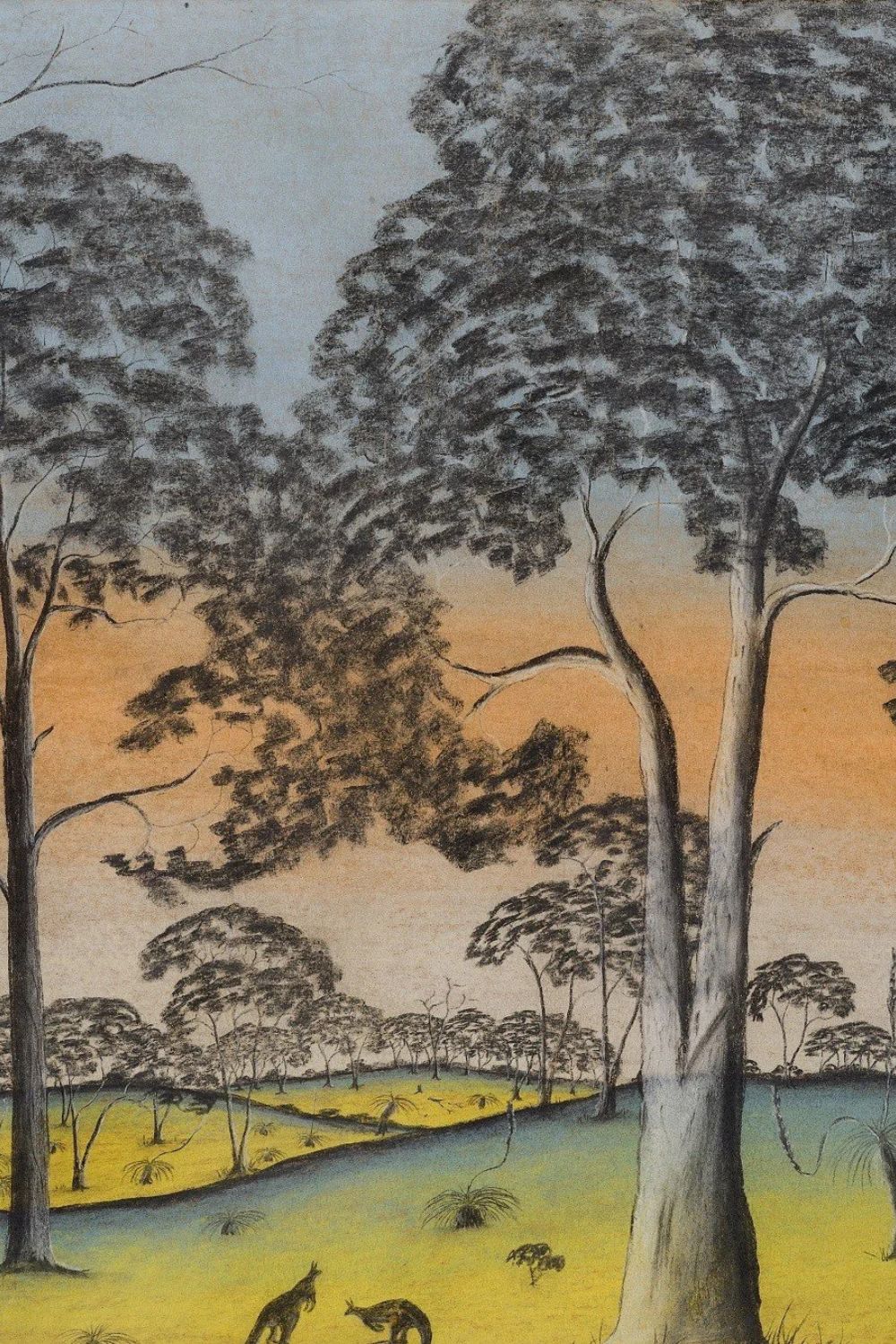
Carrolup Art emerged from the Carrolup Native Settlement in south-west Western Australia during the 1940s and is one of the most significant Aboriginal art movements in Australian history. Created by Noongar children who had been separated from their families under government policies, the paintings are renowned for their atmospheric depictions of forests, rivers, and moonlit landscapes.
Working under teacher Noel White, the young artists developed a distinctive style characterised by silhouetted trees, dramatic light effects, and a profound connection to Country. Artists such as Reynold Hart gained international recognition, and today Carrolup Art stands as both an important artistic achievement and a powerful testament to Aboriginal resilience.
How To identify Aboriginal Art Styles
| Visual Feature | Likely Style |
|---|---|
| Dot Painting | Western Desert |
| Fine Crosshatching | Yirrkala |
| Internal Organs | Oenpelli X-Ray |
| White Creator Figures | Wandjina |
| Geometric Ochre Patterns | Tiwi |
| Black Backgrounds | Groote Eylandt |
| Watercolour Landscapes | Hermannsburg |
| Silhouetted Trees | Carrolup |
| Ochre Colour Blocks | East Kimberley |
Frequently Asked Questions About Aboriginal Art Styles
What are the main Aboriginal art styles?
Major Aboriginal art styles include Western Desert Art, Oenpelli Art and Aboriginal X-Ray Art, Yirrkala Art, Wandjina Art, Tiwi Art, East Kimberley Art, Groote Eylandt Art, Hermannsburg Art, Carrolup Art, and Queensland Rainforest Art. Each developed within a particular region and reflects distinct cultural traditions, artistic conventions, and relationships to Country.
Is all Aboriginal art dot painting?
No. Dot painting is primarily associated with Western Desert Art and its regional traditions including Papunya, Pintupi, Warlpiri, Utopia, Balgo, APY Lands, Spinifex, and Ngaanyatjarra Art. Many other Aboriginal art traditions use entirely different visual systems such as bark painting, crosshatching, figurative imagery, watercolour landscapes, sculpture, and geometric ochre designs.
Which Aboriginal art style uses dot painting?
Dot painting is most strongly associated with Western Desert Art. While some artists from other regions occasionally use dots, the dense symbolic dotting systems developed in Central Australia remain one of the defining characteristics of the Western Desert painting movement.
What is the difference between X-Ray Art and Western Desert Art?
Aboriginal X-Ray Art from Arnhem Land depicts the internal anatomy and spiritual essence of animals, ancestral beings, and Dreaming figures. Western Desert Art, by contrast, generally uses symbolic aerial perspectives, concentric circles, journey lines, and dotting systems to represent Country, sacred sites, and ancestral pathways.
What is rarrk crosshatching?
Rarrk is a fine crosshatching technique used by Arnhem Land artists, particularly in Yirrkala and western Arnhem Land bark painting traditions. Created using carefully applied natural pigment lines, rarrk expresses clan identity, ancestral power, and ceremonial knowledge.
Why do Wandjina paintings look different from desert paintings?
Wandjina paintings are strongly figurative and depict ancestral creator beings associated with rain, fertility, and the Kimberley landscape. Western Desert paintings are generally more abstract and focus on symbolic representations of Country, Dreaming tracks, sacred sites, and ceremonial knowledge.
Why are Aboriginal art styles different across Australia?
Aboriginal art styles developed within hundreds of different Aboriginal nations and language groups across Australia. Each region possessed its own ceremonies, ancestral stories, artistic traditions, materials, and relationships to Country, resulting in a remarkable diversity of artistic styles.
Are traditional Aboriginal art styles still practised today?
Yes. Aboriginal artists across Australia continue to create works within inherited regional traditions while also experimenting with new materials, techniques, and contemporary forms of artistic expression. Many art centres remain important places for maintaining and transmitting cultural knowledge through art.
Further Reading
- Berndt, R.M. & Berndt, C.H. The World of the First Australians (Aboriginal Studies Press).
- Caruana, W. Aboriginal Art (Thames & Hudson).
- Morphy, H. Aboriginal Art (Phaidon).
Teacher Resources
Teaching Aboriginal Art Styles in the Classroom
This lesson introduces students to four major Aboriginal art traditions:
- Wandjina Art
- Western Desert Art
- Tiwi Art
- X-Ray Arnhem Land Art
Students first examine examples of each style and identify visual characteristics before completing the worksheet activities.
Aboriginal Art Style powerpoint
https://www.slideshare.net/slideshow/aboriginal-art-styles-worksheets-and-powerpoint-for-naidoc-week/287968765