Paddy Bedford: Subtle Power
c. 1922–2007
Gija
Bedford Downs / Gija Country, East Kimberley
Warmun (Turkey Creek)
East Kimberley Art / Kimberley Art
Jirrawun Aboriginal Arts
Natural ochre painting on canvas and gouache on paper
Paddy Bedford (c.1922–2007) is widely regarded as one of the most important artists to emerge from East Kimberley Art. A senior Gija lawman and stockman, he spent much of his life between traditional culture and the cattle stations of the East Kimberley before beginning his painting career in his late seventies.
Despite starting late, Bedford quickly became one of the leading figures of contemporary Aboriginal art. Alongside Rover Thomas and Queenie McKenzie, he helped establish the Kimberley as one of Australia’s most significant artistic regions. His paintings combine Gija oral history, ancestral Country, and personal experience with remarkable subtlety and emotional power. Today his works are held in major museums and are highly sought after by collectors.
Bedford is perhaps best known for Blood on the Spinifex, a landmark exhibition exploring the Bedford Downs massacre and Gija accounts of frontier violence. Through these paintings, he demonstrated the power of Aboriginal oral history as a record of Australia’s colonial past.
This page helps collectors identify Paddy Bedford paintings through an examination of his life, style, major works, and the factors that influence their value and collectability. Readers interested in the broader development of East Kimberley Art may also wish to explore Rover Thomas and Queenie McKenzie.
If you own a Paddy Bedford painting and would like an opinion on its authenticity, provenance, or market value, please feel free to contact me. I am always interested in seeing examples of his work and discussing East Kimberley Art.
Paddy Bedford Values
Paddy Bedford has a strong and well-established secondary market. 207 works have been offered at auction, with a 74% sale rate, a median sale price of $30,000 AUD and a highest recorded sale of $260,000 AUD.
Prices vary considerably according to size, date, quality, provenance and exhibition history. Major Jirrawun paintings with strong provenance are the most sought after, particularly substantial works from Bedford’s mature period.
For individual auction results, market analysis and examples of paintings at different price levels, see Paddy Bedford Values Page
Who was Paddy Nyunkuny Bedford
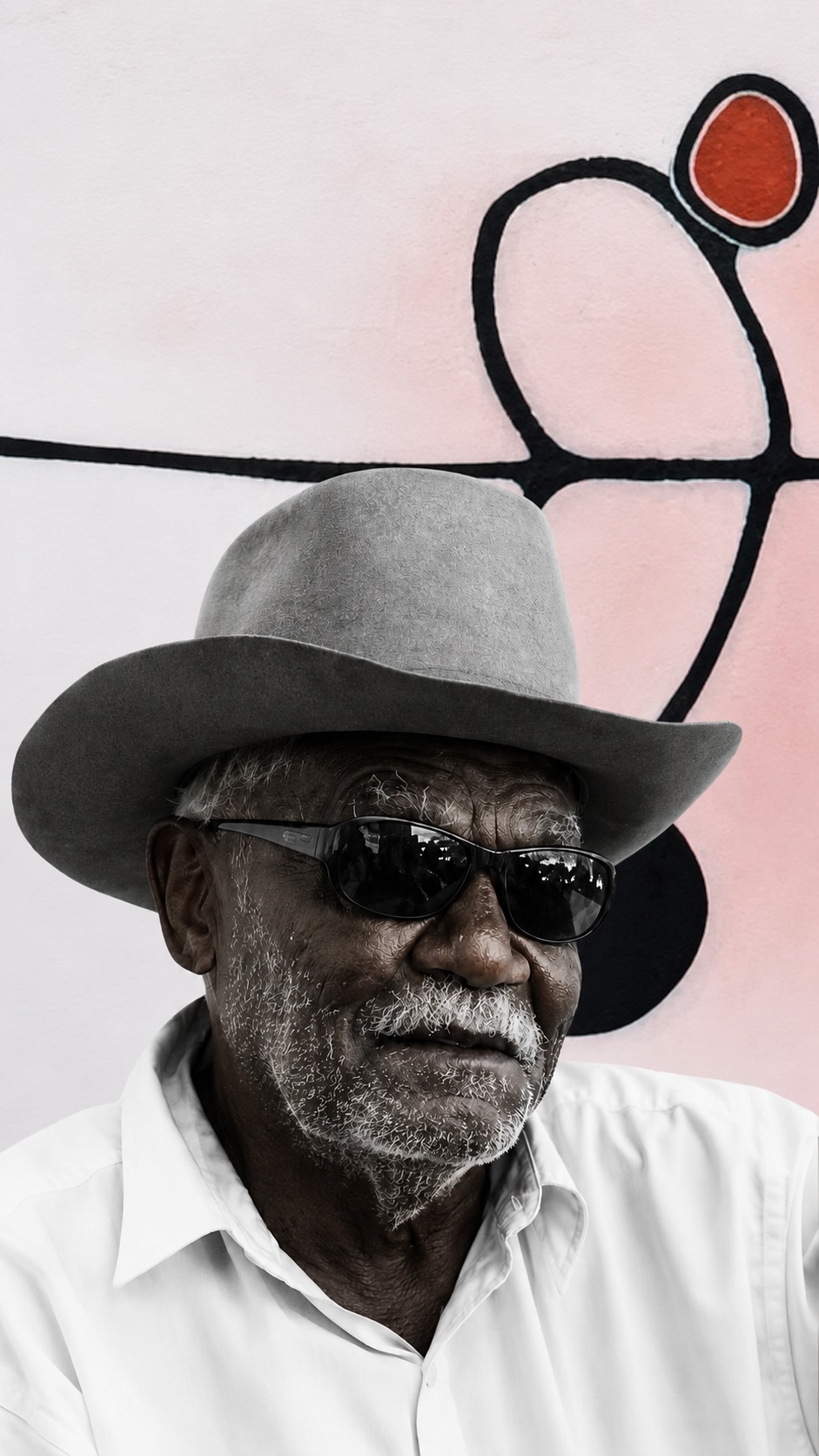
Paddy Nyunkuny Bedford (c.1922–2007) was a senior Gija lawman from the East Kimberley whose life bridged traditional Aboriginal culture and the pastoral industry of northern Australia. Born on Bedford Downs Station, he grew up at a time when many Aboriginal families maintained strong cultural traditions while also working on cattle stations throughout the region.
Named after station manager Paddy Quilty, Bedford spent much of his life around stations including Bedford Downs, Greenvale, and Bow River. Like many Aboriginal stockmen, he worked during the dry season and returned to Country and cultural responsibilities during the wet season. This lifestyle allowed him to retain a deep knowledge of Gija law, ceremony, and ancestral landscapes.
Initiated into Gija traditions from an early age, Bedford became a respected custodian of Country and ceremonial knowledge. In later life he settled at Warmun, where he was known as a senior lawman whose artistic practice centred on ceremonial body painting and cultural performance.
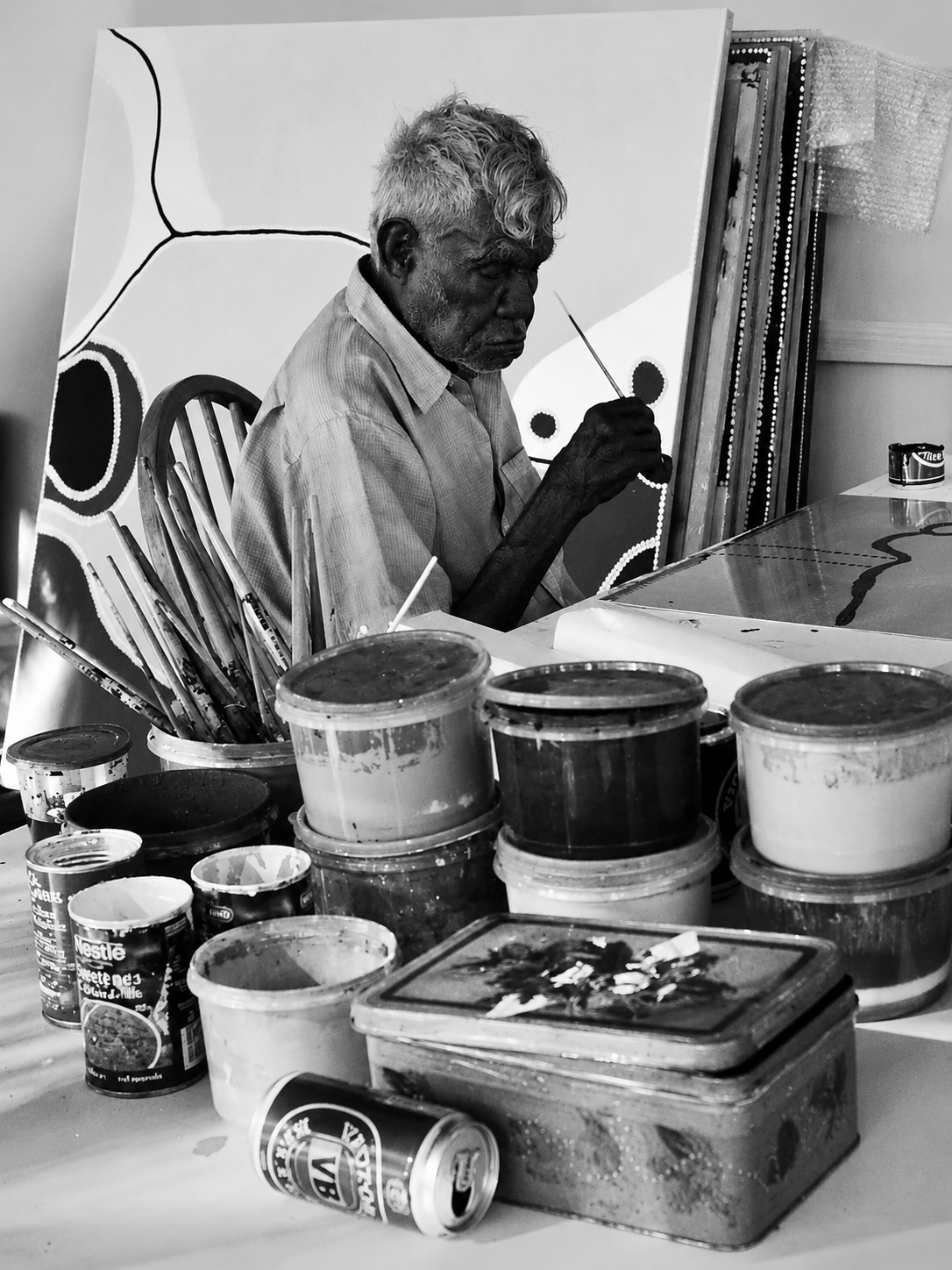
His transition into fine art came unexpectedly in the late 1990s when painted boards he had produced attracted the attention of an Aboriginal art dealer. Encouraged to work on canvas, Bedford began painting commercially in 1997 through Jirrawun Aboriginal Arts. Despite being in his late seventies, he quickly emerged as one of the most important artists of the East Kimberley movement.
Major exhibitions, including Blood on the Spinifex and True Stories, brought his work national and international recognition, while paintings by Bedford entered major public collections, including the Musée du Quai Branly in Paris. Although his painting career lasted little more than a decade, it was informed by a lifetime of cultural knowledge, lived experience, and connection to Gija Country, helping establish him as one of the most influential Aboriginal artists of his generation.
Why Is Paddy Bedford Important?
Paddy Bedford is important because he helped transform the way Aboriginal history, memory, and Country could be represented through contemporary art. Although he began painting on canvas relatively late in life, he quickly emerged as one of the most influential artists of the East Kimberley and one of the most significant Aboriginal painters of his generation.
What distinguishes Bedford from many other Aboriginal artists is his ability to combine ancestral knowledge, personal experience, and historical events within a highly sophisticated visual language. His paintings are not simply depictions of landscape or Dreaming narratives. They are complex statements about Country, cultural continuity, and the lived experiences of Gija people during a period of enormous change across northern Australia.
Bedford’s work also played an important role in bringing wider recognition to Aboriginal oral history. Through paintings connected to events such as the Bedford Downs massacre, he demonstrated that stories passed down through generations could preserve powerful historical knowledge that had often been overlooked in written accounts of Australia’s frontier past. In doing so, he helped broaden public understanding of Aboriginal perspectives on history and settlement in the Kimberley.
Artistically, Bedford developed one of the most distinctive styles in contemporary Aboriginal art. His subtle arrangements of ochre, carefully balanced compositions, and restrained use of imagery challenged assumptions about what Aboriginal painting could be. Beneath their apparent simplicity, his works contain layers of meaning connected to place, ceremony, memory, and cultural authority.
Today Paddy Bedford is regarded as one of the defining figures of East Kimberley art. His paintings are held in major public collections in Australia and overseas, and remain highly sought after by collectors for both their artistic achievement and their cultural significance.
Blood on the Spinifex and the Bedford Downs Massacre
One of the most important themes in Paddy Bedford’s art is the history of frontier violence in the East Kimberley, particularly events associated with Bedford Downs Station. According to Gija oral history, a group of Gija men were poisoned after being accused of killing a bullock. Those who survived the poisoning were allegedly chained by the neck and forced to walk many kilometres before being killed and their bodies burned. The incident became one of the most enduring and traumatic stories passed down through generations of Gija people.
Bedford grew up in the shadow of these events. Born at Bedford Downs Station only a few years after the massacre is believed to have occurred, he inherited detailed knowledge of the story from older Gija people who had either witnessed the events or lived through their immediate aftermath. For Bedford, these histories were not distant episodes from the colonial past. They were part of the living memory of his Country and community.
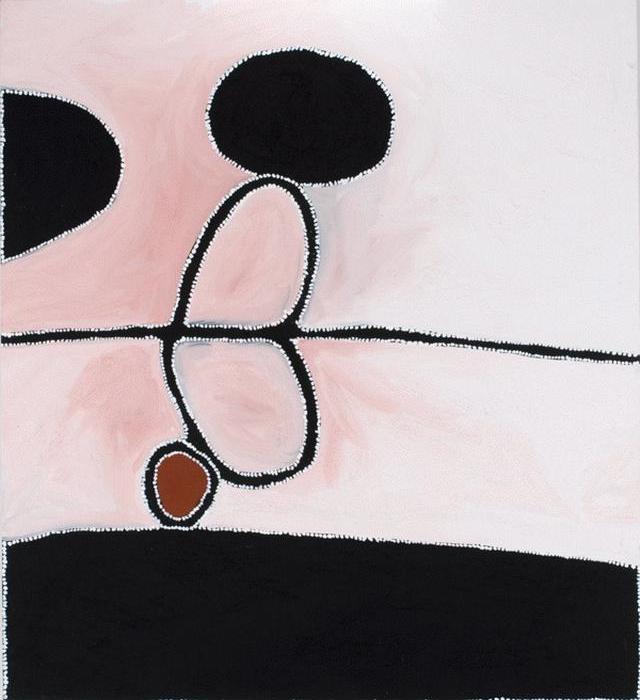
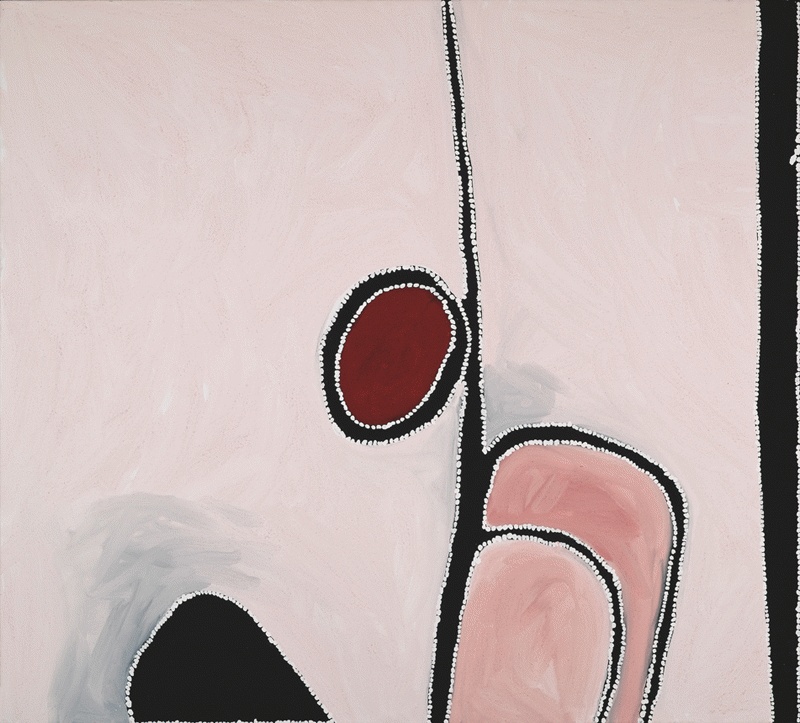
This history became the foundation of Blood on the Spinifex, a landmark body of work first exhibited at the National Gallery of Victoria in 2002. Rather than depicting violence directly, Bedford used a remarkably restrained visual language of ochre fields, subtle colour shifts, tracks, waterholes, and landscape forms to represent places connected to the events. The emotional power of the paintings lies partly in what is left unsaid. Their quiet surfaces conceal stories of profound loss, survival, and resilience.
The exhibition attracted widespread attention because it demonstrated how Aboriginal oral history could preserve detailed historical knowledge over many generations. At a time when aspects of Australia’s frontier history were still being debated, Bedford’s paintings provided a powerful Indigenous perspective on events that had long remained absent from mainstream historical narratives.
Today Blood on the Spinifex is regarded as one of the most important exhibitions in the history of contemporary Aboriginal art. It helped establish Paddy Bedford as a major Australian artist while bringing national attention to Gija history and the experiences of Aboriginal people during the expansion of the pastoral industry across the Kimberley. The paintings remain significant not only as works of art but also as enduring records of memory, Country, and cultural truth.
Paddy Bedford’s Painting Style
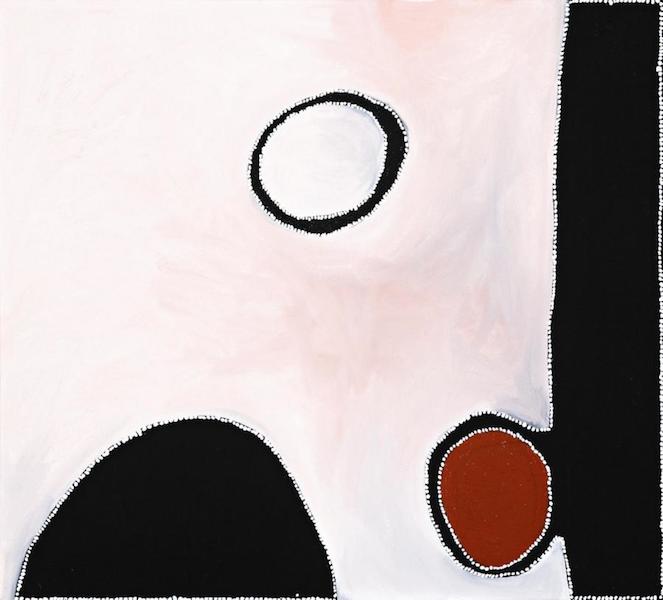
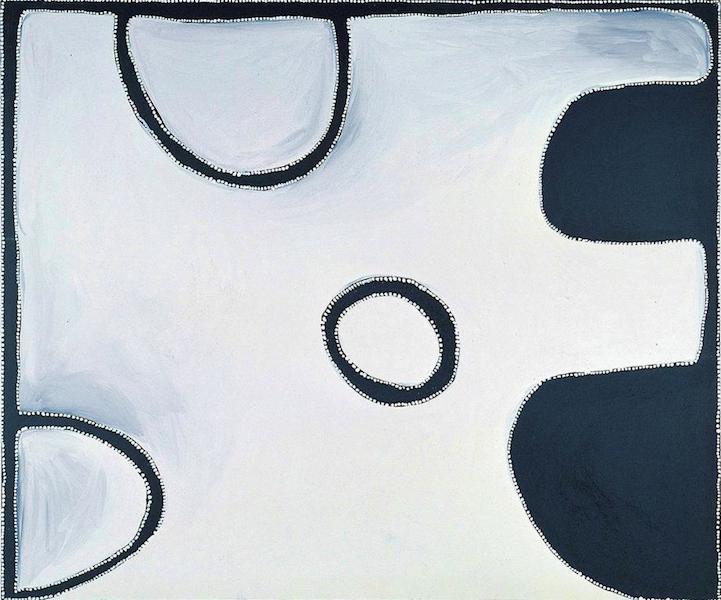
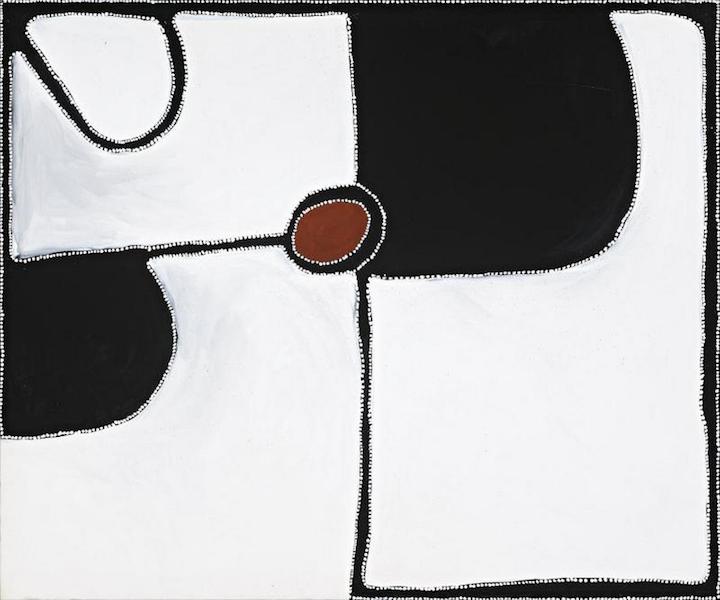
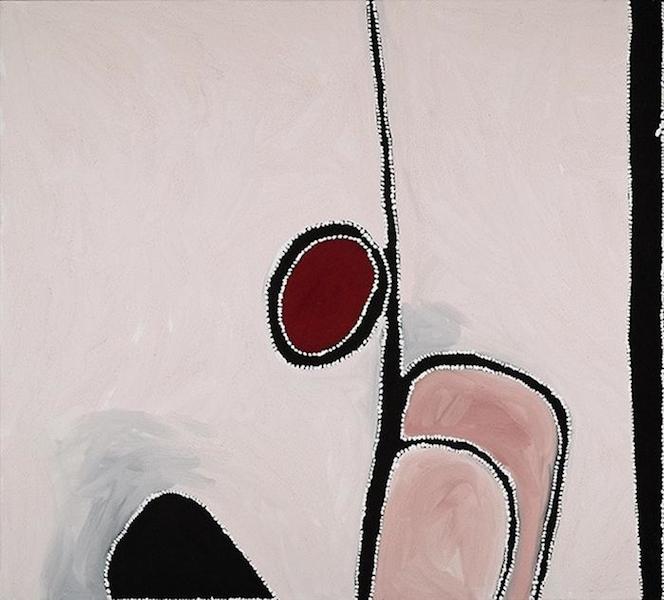
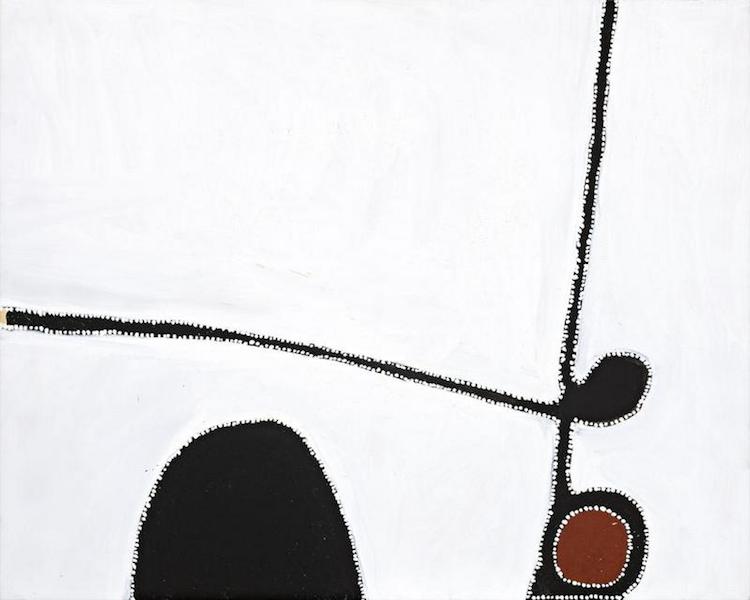
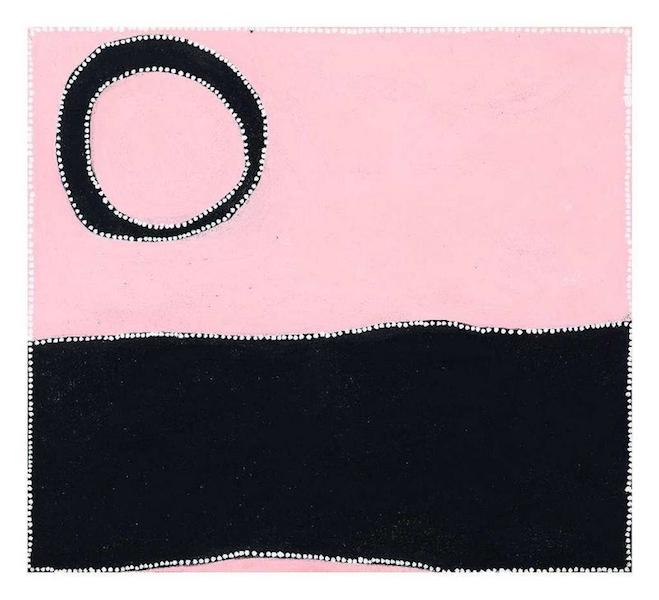
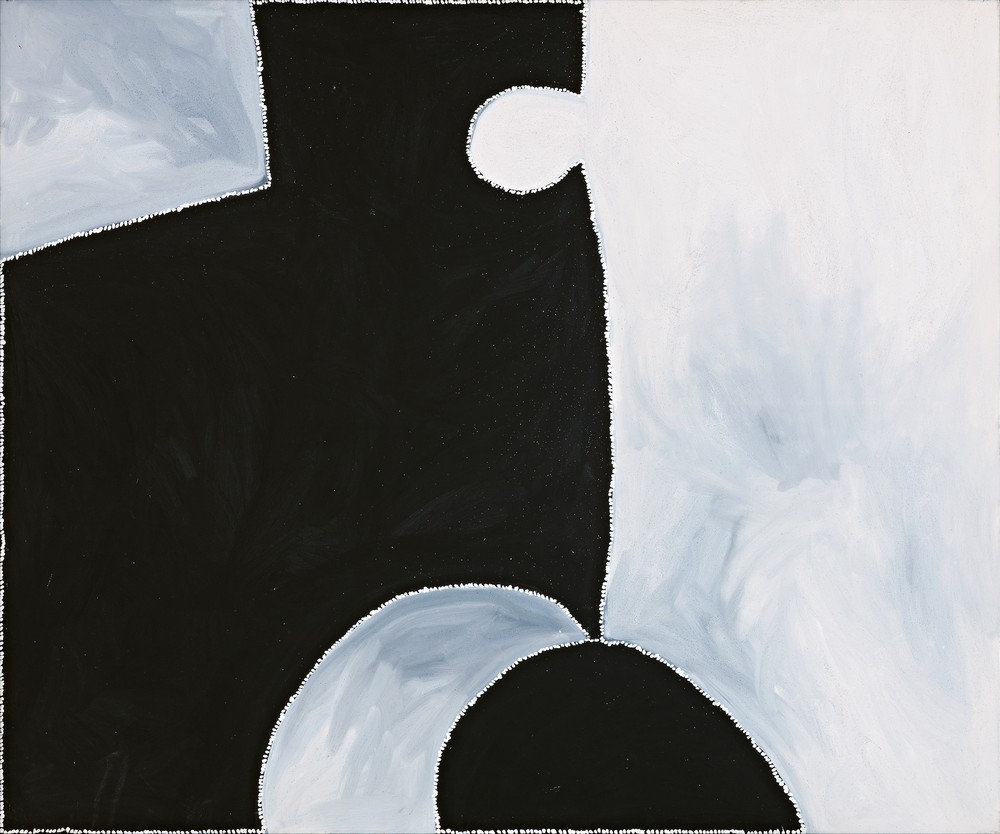
Paddy Bedford developed one of the most distinctive visual languages in contemporary Aboriginal art. At first glance, his paintings can appear remarkably simple, consisting of broad fields of ochre, isolated circular forms, and carefully balanced geometric shapes. Closer examination, however, reveals a sophisticated understanding of colour, composition, and the symbolic representation of Country.
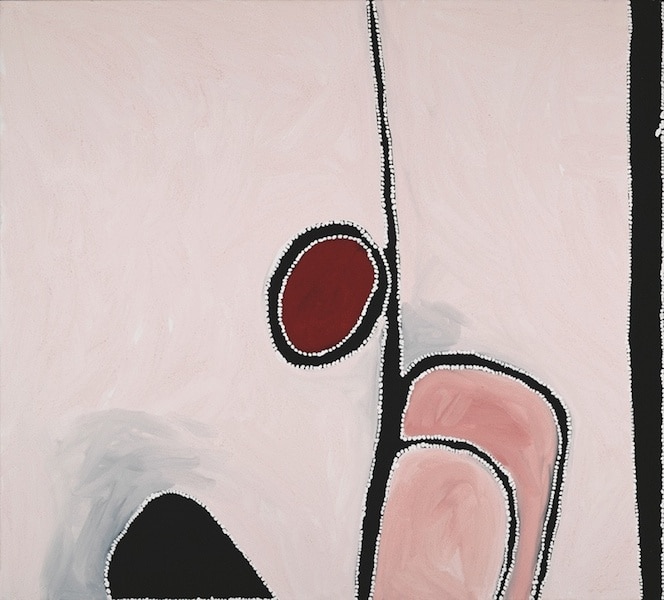
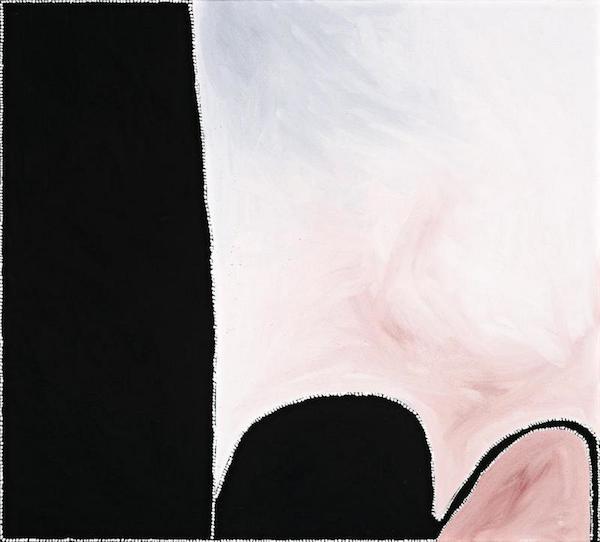
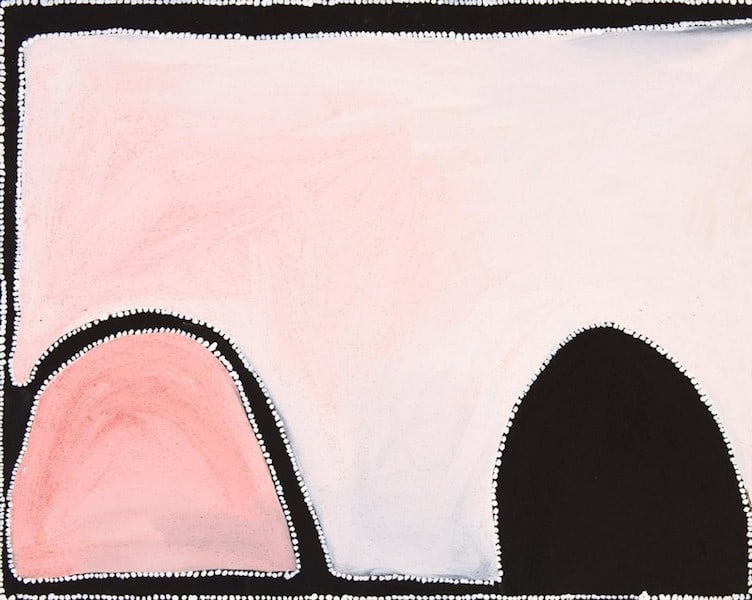
Many of Bedford’s paintings are characterised by richly layered ochre surfaces containing subtle variations of cream, grey, pink, brown, yellow, and white. Rather than filling the entire canvas with intricate detail, he often created expansive semi-monochromatic areas that evoke the vast landscapes of the East Kimberley. These fields of colour are typically divided by black lines edged with delicate white dotting, creating a sense of structure and movement across the composition.
Circular forms, pathways, and blocks of colour frequently appear within his paintings, although they are usually reduced to their essential elements. This restrained approach gives Bedford’s work a powerful sense of balance and quiet authority. Unlike many Aboriginal artists whose paintings are densely patterned, Bedford often relied on the tension between occupied and empty space, allowing the composition to breathe and encouraging viewers to contemplate the landscape beneath the surface.
His earliest paintings tend to be darker and more monochromatic, reflecting a closer relationship to traditional ochre painting practices. As his style developed, he introduced increasingly subtle tonal shifts that became a hallmark of his mature work. Some of his most sought-after paintings use delicate combinations of white, grey, and pale pink ochres to create a remarkable sense of atmosphere, light, and depth.
Although often described as minimalist, Bedford’s paintings are rich with meaning. Beneath their elegant simplicity lie references to Gija Country, ceremonial knowledge, historical events, and ancestral narratives. The apparent economy of imagery is therefore deceptive; each shape, colour, and mark contributes to a deeply layered portrait of place and memory.
For many collectors, this combination of visual restraint and cultural depth is what makes Paddy Bedford’s paintings so compelling. His ability to communicate complex histories through a remarkably pared-back visual language helped establish him as one of the defining artists of the East Kimberley movement.
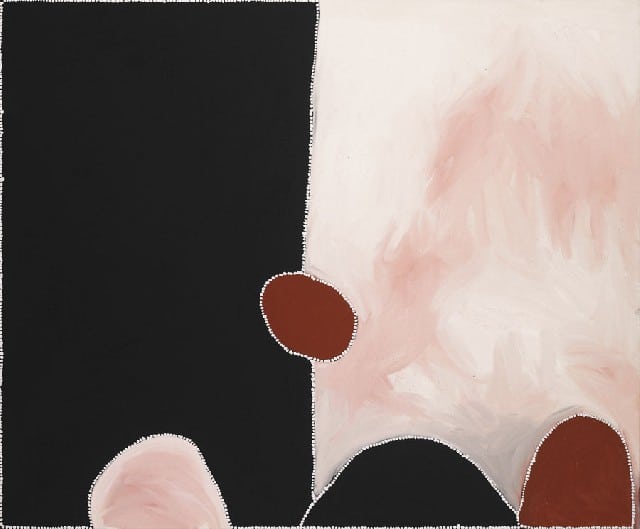
How Paddy Bedford’s Style Differs from Other East Kimberley Artists
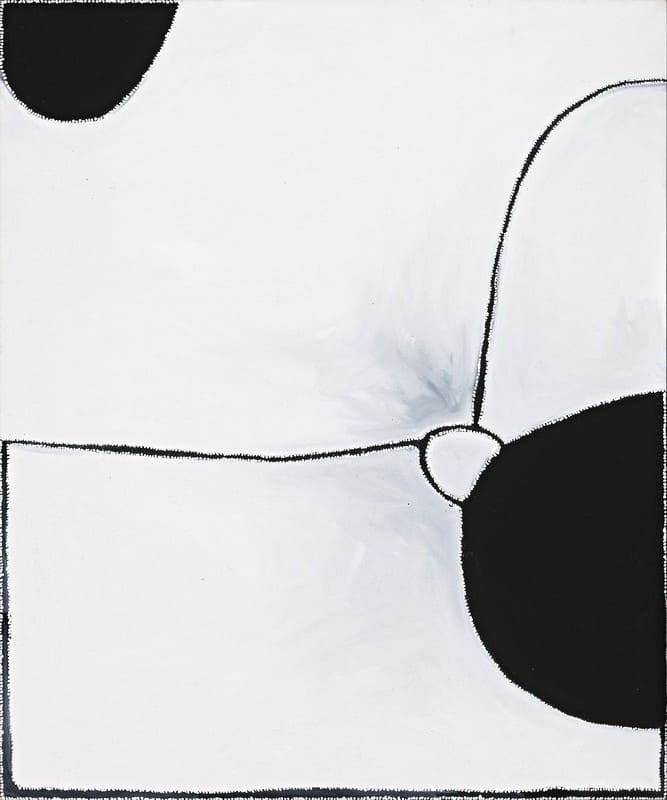
Paddy Bedford’s paintings are often compared with those of fellow East Kimberley artists such as Paddy Jaminji and Rover Thomas. His earliest works share the darker, more monochromatic appearance often associated with traditional ochre painting and can sometimes resemble the restrained compositions of Paddy Jaminji.
There are also similarities between Bedford’s early paintings and those of Rover Thomas, particularly in their use of simplified forms, powerful compositions, and strong connections to Country. However, Bedford gradually developed a distinctly lighter palette. Whereas Rover Thomas frequently employed deep blacks, reds, and earth colours, Bedford often worked with softer whites, greys, creams, and subtle pink ochres. These lighter tonal variations allowed him to create a greater sense of atmosphere and depth, giving many of his paintings a quiet luminosity that is immediately recognisable to experienced collectors.
This subtle handling of colour, combined with his minimalist approach to composition, helped establish Paddy Bedford as one of the most distinctive voices within the East Kimberley painting movement.
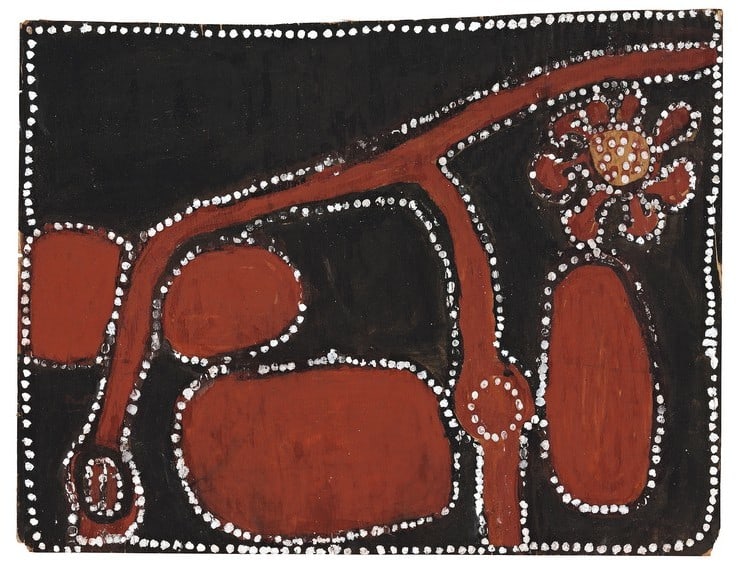
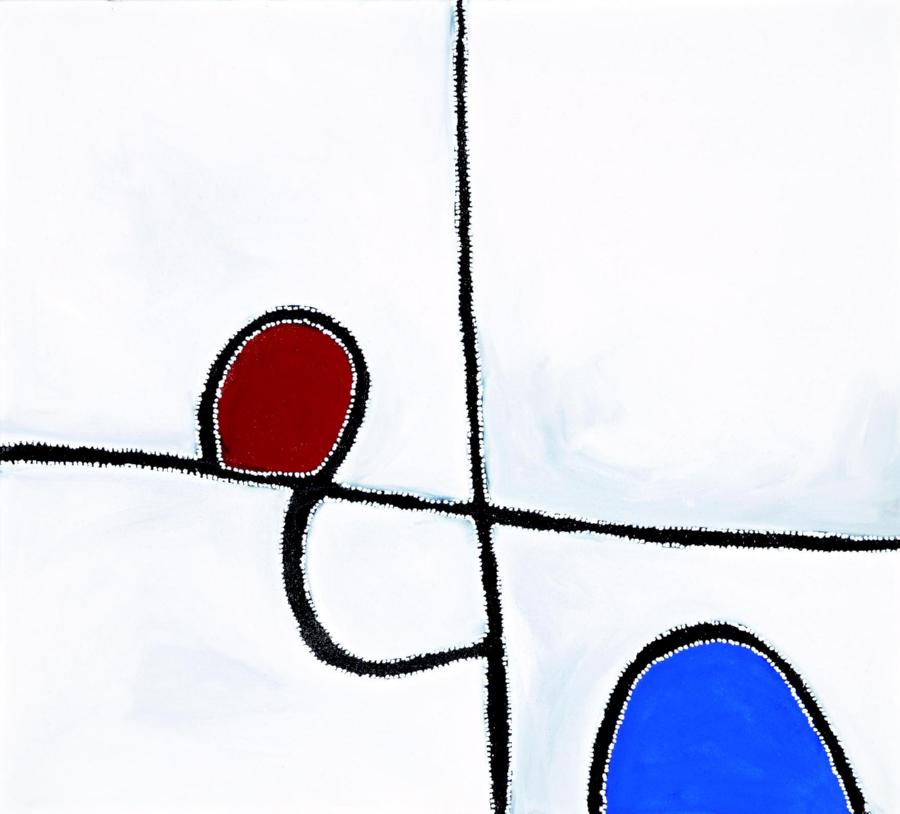
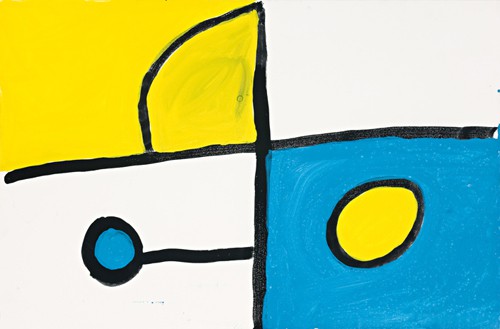
What Are Paddy Bedford Paintings Worth?
Paddy Bedford is regarded as one of the most important artists of the East Kimberley movement, and his best paintings are among the most sought-after works in the Aboriginal art market. Values vary considerably depending on period, size, subject matter, exhibition history, and provenance.
The most valuable works are generally large ochre paintings on canvas produced between 2000 and 2006, particularly those associated with major exhibitions or significant bodies of work. Paintings connected to the themes explored in Blood on the Spinifex, important Dreaming narratives, or key locations within Bedford’s Country are especially sought after by collectors. Early Jirrawun Arts paintings are also highly regarded because they document the rapid development of Bedford’s unique visual language during the first years of his painting career.
Mid-sized ochre paintings and composition board works remain popular with collectors and can offer a more accessible entry point into Bedford’s work. These paintings often display the same sophisticated use of colour, balance, and spatial relationships that characterise his larger canvases.
Generally speaking, gouache works on paper command lower prices than major ochre paintings on canvas. Produced primarily after 2000, these intimate works reveal Bedford’s experimentation with colour and composition on a smaller scale. Although highly respected by scholars and collectors, they are typically valued below his major exhibition canvases and large ochre works.
Several factors influence the value of a Paddy Bedford painting. Provenance is particularly important, with works retaining original Jirrawun Arts documentation often attracting stronger interest. Exhibition history can also have a significant impact, especially if a painting appeared in major exhibitions or is illustrated in publications. Size, condition, subject matter, and the quality of the composition all play an important role in determining market value.
As with many leading Aboriginal artists, exceptional works by Paddy Bedford can achieve values many times greater than average examples. For this reason, individual assessment is essential. Two paintings of similar size may have dramatically different values depending on their provenance, exhibition history, rarity, and position within the artist’s career.
If you own a Paddy Bedford painting and would like an opinion regarding authenticity, provenance, or current market value, feel free to contact me. I am always interested in seeing examples of his work and discussing East Kimberley paintings.
References and recommended reading
Frequently Asked Questions About Paddy Bedford
Was Paddy Bedford a Stockman?
Yes. Before becoming an artist, Paddy Bedford spent much of his life working as a stockman on cattle stations throughout the East Kimberley, including Bedford Downs, Greenvale, and Bow River. Like many Aboriginal stockmen of his generation, he balanced station work with traditional cultural responsibilities and maintained a deep connection to Gija Country.
What Language Group Was Paddy Bedford From?
Paddy Bedford was a Gija man from the East Kimberley region of Western Australia. The Gija people are the Traditional Owners of a large area of Country around Warmun, Bedford Downs, and the Bungle Bungle Range. Much of Bedford’s art is connected to Gija history, cultural knowledge, and ancestral landscapes.
Did Paddy Bedford Know Rover Thomas?
Yes. Paddy Bedford and Rover Thomas were both senior Gija men from the East Kimberley and played important roles in the development of contemporary Kimberley painting. Although each developed a distinctive artistic style, both artists helped establish East Kimberley Art as one of the most significant regional movements in Aboriginal Australian art.
Where Can I See Paddy Bedford Paintings?
Paddy Bedford’s paintings are held in major public and private collections throughout Australia and overseas. His work has been exhibited by institutions including the National Gallery of Victoria, the Art Gallery of New South Wales, and the Musée du Quai Branly in Paris. His paintings also regularly appear in specialist Aboriginal art auctions and commercial gallery exhibitions.
What Materials Did Paddy Bedford Use?
Paddy Bedford is best known for his ochre paintings on canvas, which often feature subtle fields of colour divided by black linework and delicate white dotting. Later in life he also produced gouache paintings on paper, creating smaller and more intimate works while maintaining his distinctive visual language.
Are Paddy Bedford Paintings a Good Investment?
Paddy Bedford is widely regarded as one of the leading artists of the East Kimberley movement, and his best works are highly sought after by collectors. As with any artwork, value depends on factors such as provenance, condition, size, rarity, exhibition history, and subject matter. Major ochre paintings from his most important periods generally attract the strongest collector interest.
How Can I Identify a Paddy Bedford Painting?
Many Paddy Bedford paintings are characterised by large areas of ochre, simplified geometric forms, black dividing lines, and fine white dot edging. His mature works often use subtle combinations of white, grey, cream, pink, and black. Provenance and documentation remain critical when identifying or authenticating a painting, particularly works produced through Jirrawun Aboriginal Arts.
Why Did Paddy Bedford Start Painting So Late?
Unlike many contemporary artists, Bedford did not begin painting on canvas until his late seventies. Before becoming an artist he was a stockman, ceremonial leader, and respected Gija lawman. When encouraged to transfer his designs onto canvas in the late 1990s, he quickly developed one of the most distinctive and influential artistic careers in contemporary Aboriginal art.
All images in this article are for educational purposes only.
This site may contain copyrighted material the use of which was not specified by the copyright owner.
Paddy Nyunkuny Bedford Images
The following images of the Artworks of Paddy Nyunkuny Bedford are not a complete list of his works. They do however give a good idea of the style and variety of this Aboriginal Artist.