
Dreamtime Story: Aboriginal Dreaming Meaning, Creation Stories & Cultural Significance
DRAFT
Dreamtime stories—also known as the Dreaming or Tjukurrpa—are the foundation of Aboriginal culture, law, and spiritual belief. They describe how ancestral beings created the land, formed rivers and mountains, and established the rules that govern life. These stories passed down in song and also called songlines are not myths or legends in the Western sense. They are living knowledge systems, continuously passed down through generations, connecting people to Country, identity, and responsibility.
Aboriginal Dreamtime stories explain the origins of sacred sites, track the journeys of powerful ancestral beings, and encode cultural law within narrative and symbol. Often expressed through art, ceremony, and song, they function as both history and guidance—mapping relationships between people, land, and spirit. What may appear as storytelling is, in fact, a sophisticated system of knowledge that defines how the world is understood, cared for, and maintained.
What is a Dreamtime Story?
A Dreamtime story is a narrative that describes events from the time of creation, when ancestral beings travelled across the land shaping its physical and spiritual form. These stories are tied to specific places and are owned and maintained by particular groups, carrying deep cultural authority.
This page explains ancestral narratives songlines and dreaming. For the spiritual and cultural meaning behind these traditions, see Meaning of Aboriginal Art. For regional visual differences, see Aboriginal Art Styles. For history of aboriginal art see Aboriginal art History and for details of the symbols used in aboriginal art see Aboriginal Art symbols
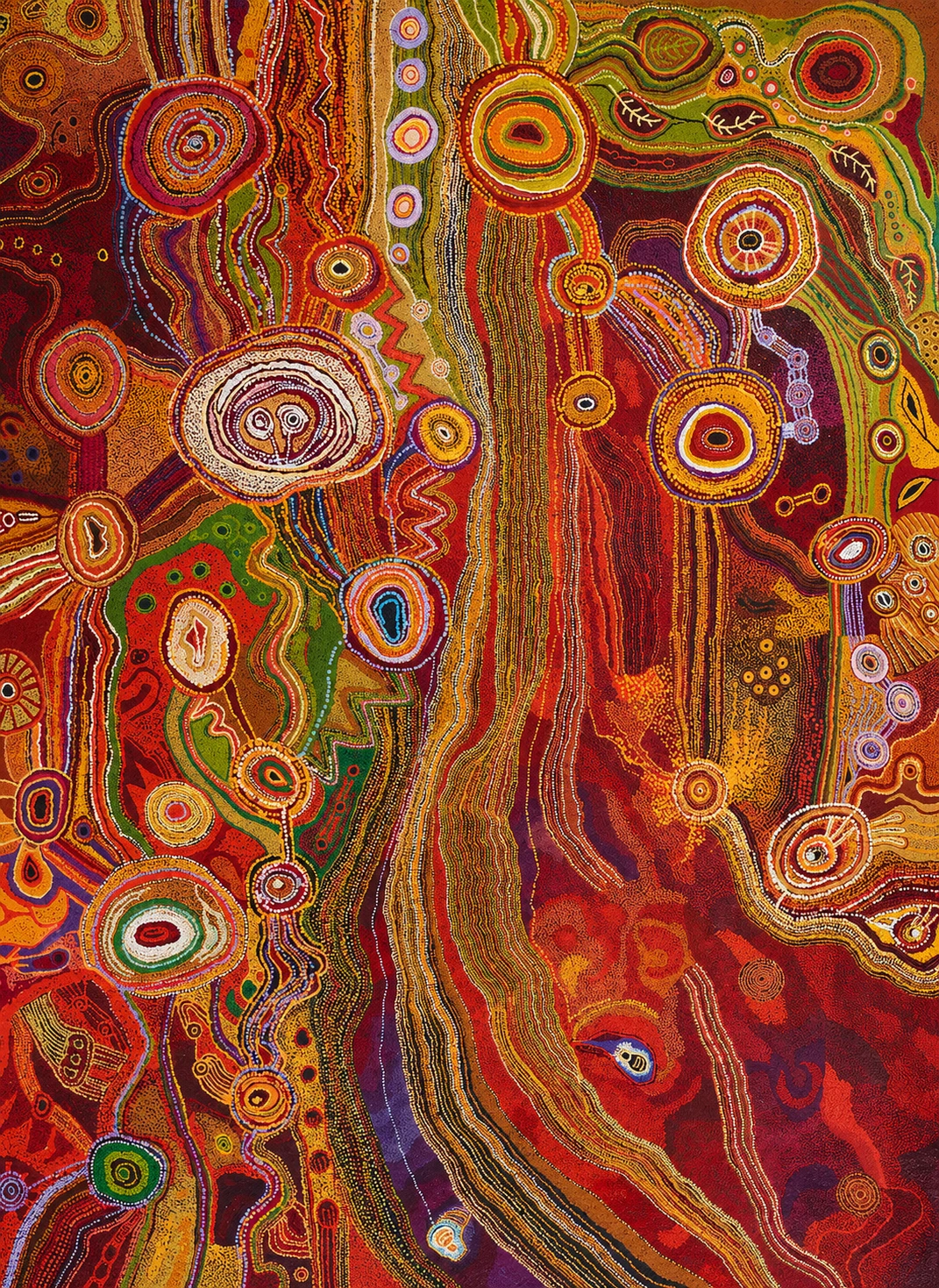
Dreamtime Stories
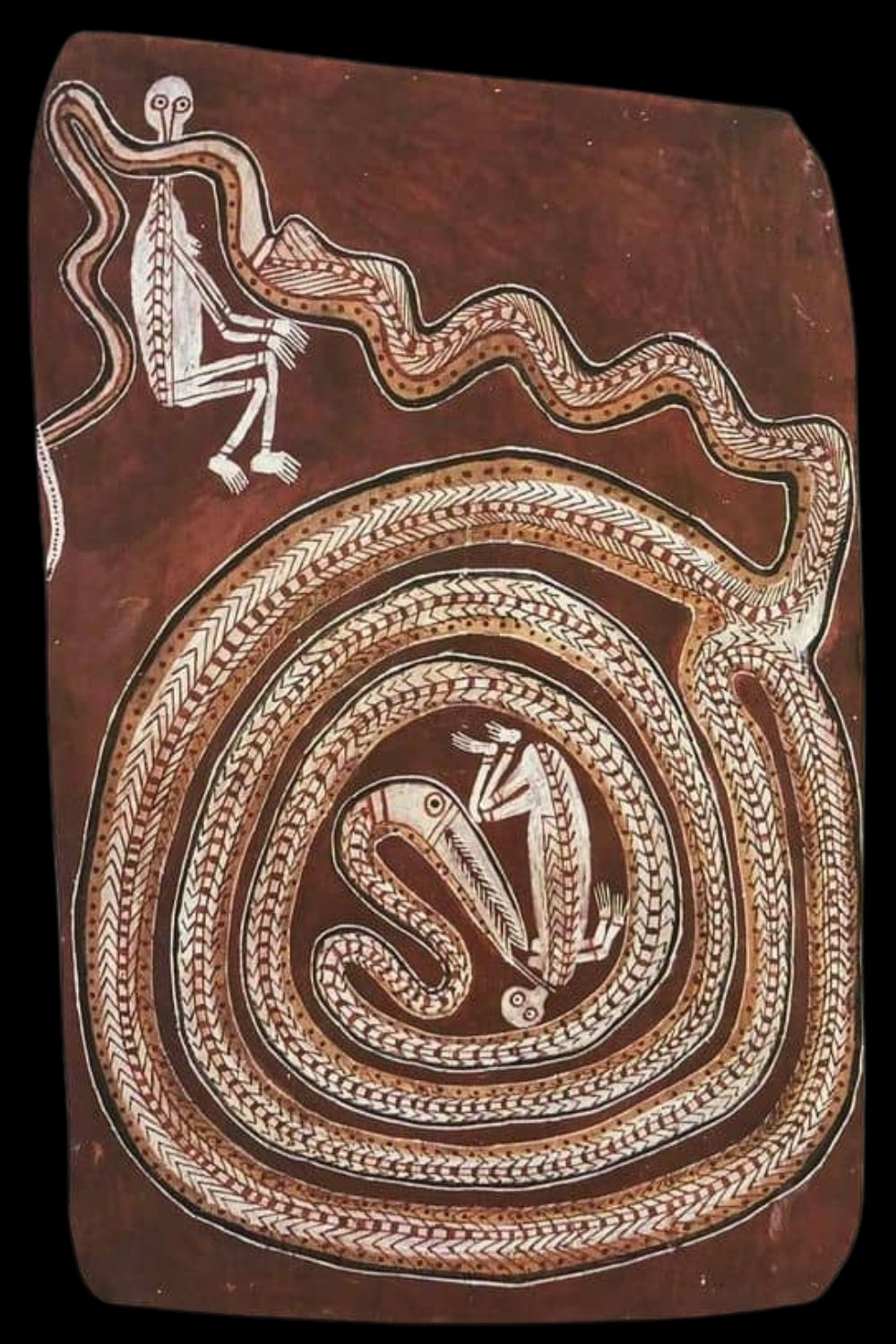
Rainbow Serpent Dreaming
In the Dreaming, when the land lay flat and silent, the great Rainbow Serpent rose from beneath the earth and began to move across Country. As she travelled, her vast body carved rivers, formed waterholes, and raised hills and ridges. Water followed in her path, bringing life—plants grew, animals emerged, and the world awakened. She gave each living thing its place and established the first laws, teaching people how to live with and respect the land.
Later, the Wagilag Sisters journeyed across Arnhem Land, naming and shaping Country. When they unknowingly entered a sacred waterhole, they disturbed the Rainbow Serpent. Rising in power, she swallowed them, and from this act came important law—governing fertility, life, and the sacred nature of water. Today, the rainbow in the sky is understood as the Serpent moving between waterholes, renewing the land and reminding people of the enduring law of the Dreaming.
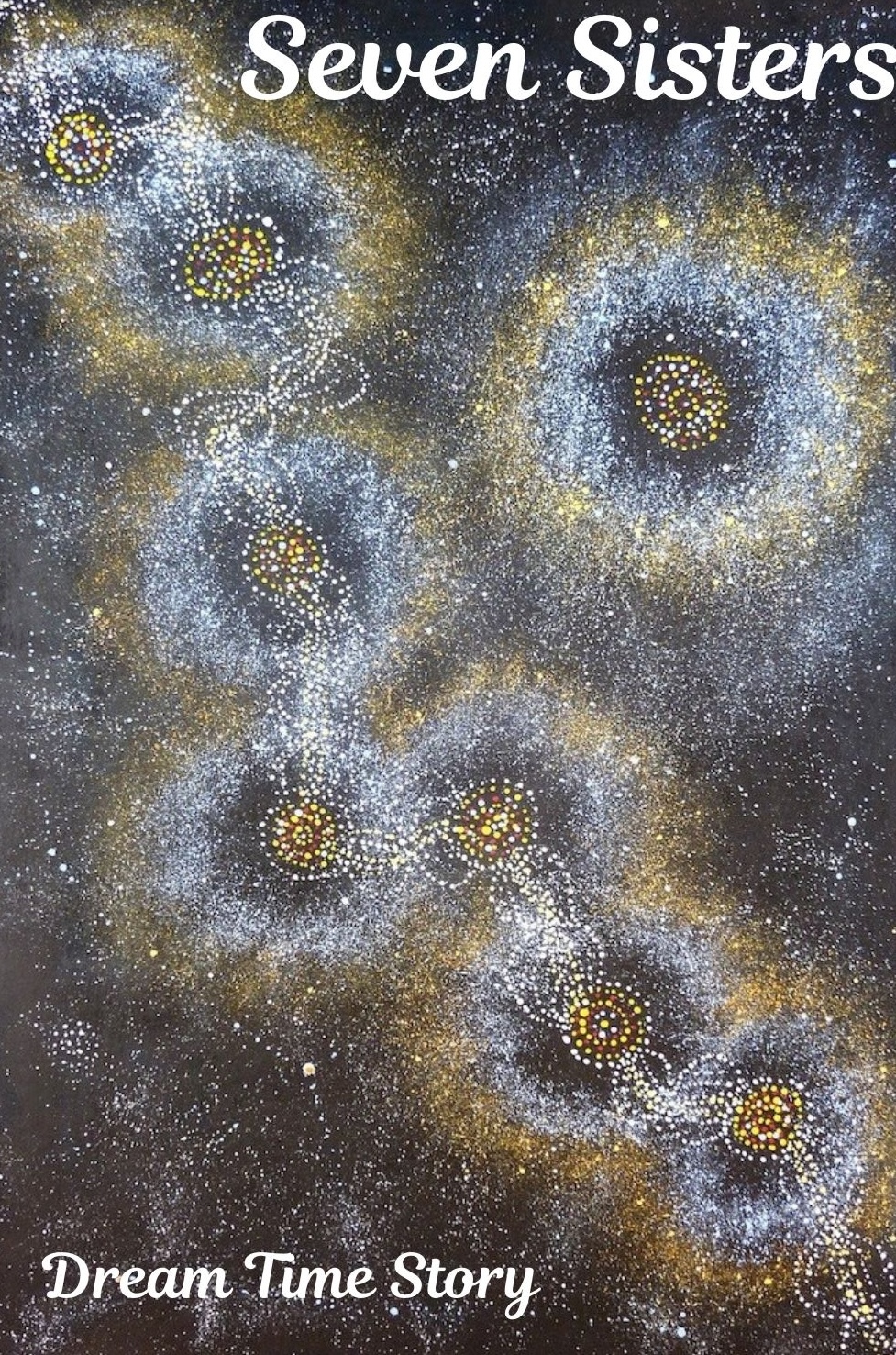
Seven Sisters Dreaming
The Seven Sisters Aboriginal Dreamtime story tells of seven ancestral women travelling across the desert, moving from waterhole to waterhole as they shaped the land. As they journeyed, they were pursued by Wati Nyiru, a powerful man who sought to capture the youngest sister. Using cunning and strength, he followed their tracks across Country, but the sisters stayed together, protecting one another and never allowing themselves to be separated.
The Seven Sisters is not just a dreamtime story it is a songline. A songline is where the same story is repeated across language boundaries and has numerous sacred sites associated with the same but varied story.
As they moved, they created rockholes, caves, and sacred sites, forming a vast songline that stretches across Australia. In the end, to escape Wati Nyiru, the sisters rose into the sky and became the Pleiades star cluster, while he became the constellation Orion, forever chasing them. This Aboriginal Dreamtime story remains a powerful expression of law, kinship, and connection to both land and sky.
The seven sisters dreaming is a commonly depicted by APY Lands Artists through Western Desert Art

Lumah Lumah Dreaming
In the Dreaming, a powerful ancestral being named Luma Luma came to Gunwinggu Country with his family, carrying sacred totems and great spiritual knowledge. He taught the people songs, dances, and ceremonies that would bring abundance, health, and connection to the spirit world. However, Luma Luma misused his power, seducing the wives of the men, who grew fearful but did not challenge him at first.
Eventually, the men plotted against him. After a failed attempt using ceremony, they set a trap and attacked Luma Luma with spears, mortally wounding him. As he lay dying, he offered to share his deepest knowledge in exchange for his life. The men agreed, and Luma Luma revealed sacred rituals, invocations, and the powerful Rainbow Serpent totem.
After teaching the final ceremonies, Luma Luma walked into the sea and transformed into a whale. The barramundi became his companion, and both remain sacred totems, remembered in ceremony and law
Full story about Lumah Lumah
Lumah Lumah is most commonly painted in X-Ray Art in Oenpelli Art
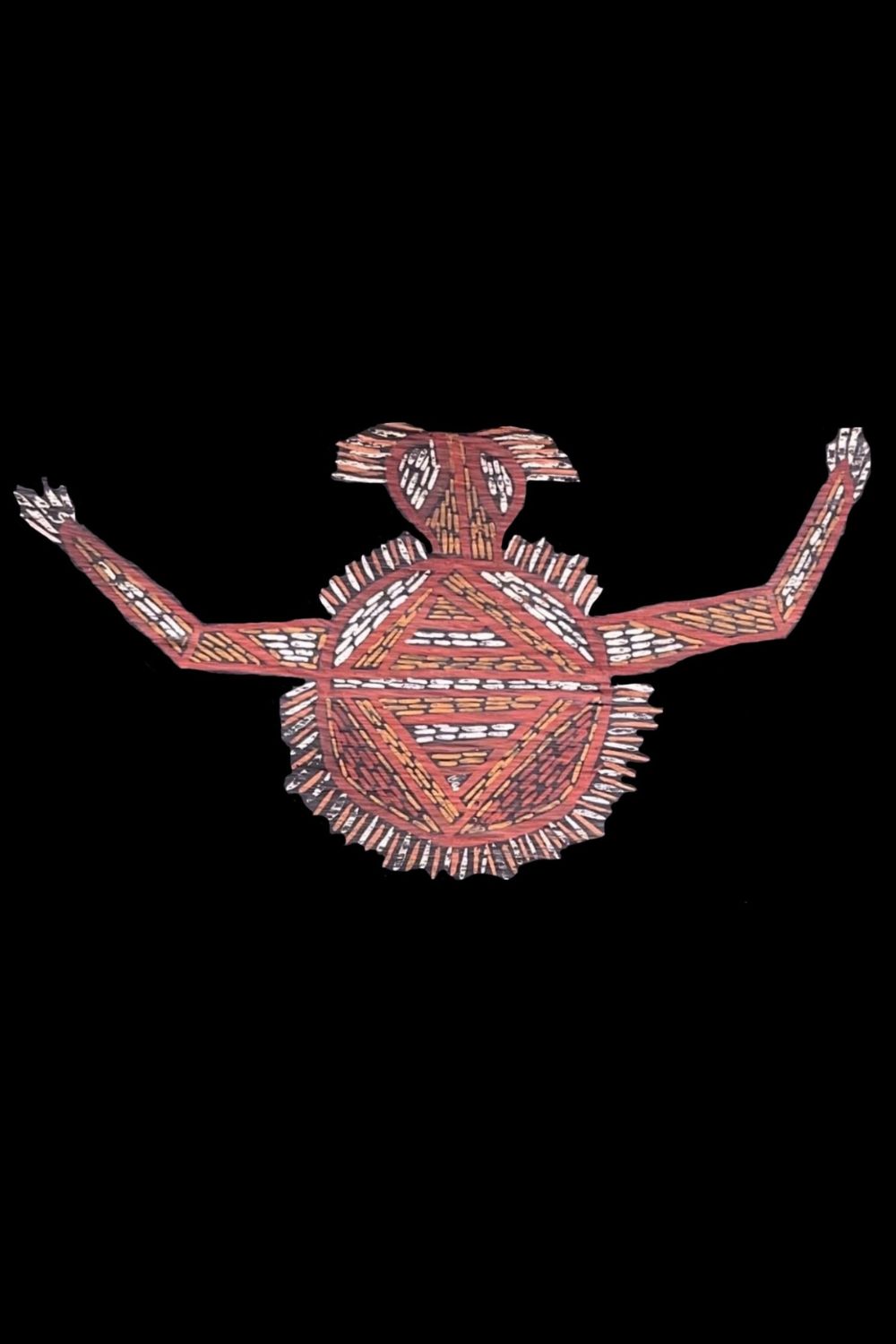
Walu dream Time Story – the sun woman
In the Dreaming, when the world lay dark and without form, Walu, the Sun Woman, slept beneath the earth. When she awoke, she rose into the sky and brought light to the world for the first time. As she travelled across the heavens, warmth followed her, and the land responded—plants grew, rivers flowed, and life began. Each day she rose in the east, painting her body with red ochre, carrying fire across the sky before returning to rest at night.
Walu did more than create light; she watched over the world and the ancestral beings who shaped the land. From the sky, she saw serpents carve rivers, spirits raise the landscape, and life spread across Country. She also followed Barnumbirr, the Morning Star, who guided the connection between the spirit world and the living. Through her daily journey, Walu established the rhythm of day and night, sustaining life and order in the world.
This depiction of Walu the Sum woman was painted in Groote Eylandt Art style.
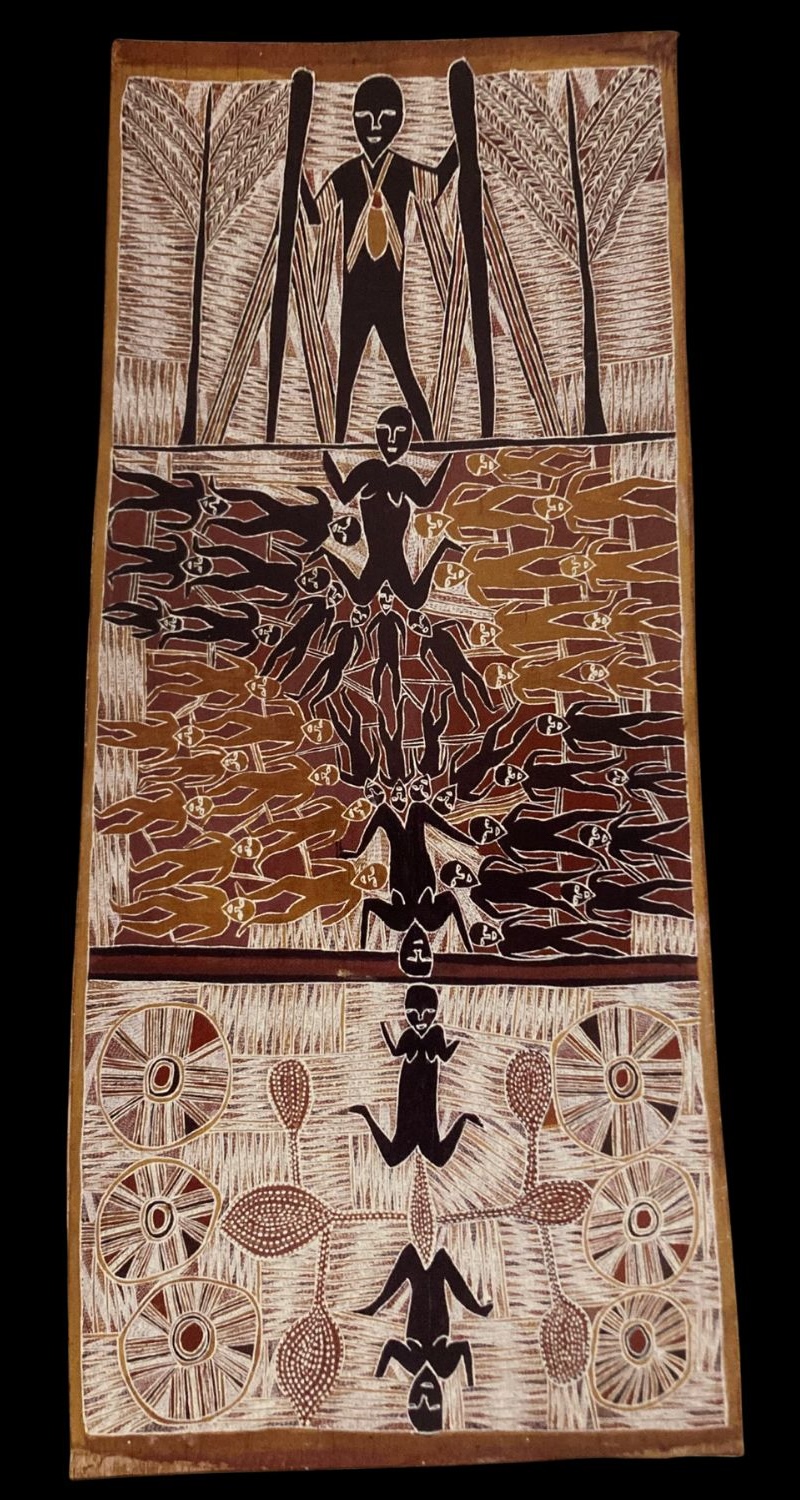
Sisters of the Sun Dreaming
In the Dreaming, the world lay dark and formless until Walu, the Sun Woman, rose from beneath the earth, bringing light, warmth, and life. As she travelled across the sky, the land awakened—plants grew, waters flowed, and ancestral beings shaped the landscape.
From across the sea came the Djanggawul—two sisters and their brother, Ganjudingu—carrying sacred knowledge, ceremony, and the power to create life. As they journeyed inland, they formed waterholes, trees, and sacred places, and gave birth to the first people.
As the population grew, conflict arose, and the Djanggawul established law, defining boundaries and responsibilities. However, balance shifted when men took sacred ceremonial knowledge from the sisters. In response, the sisters affirmed their enduring power—the ability to create life. From this moment, cultural roles were established, and the law of the land was set, remaining embedded in Country and ceremony.
Full version of Sisters of the Sun
The Sisters of the Sun dreaming is found in Yirrkala Art
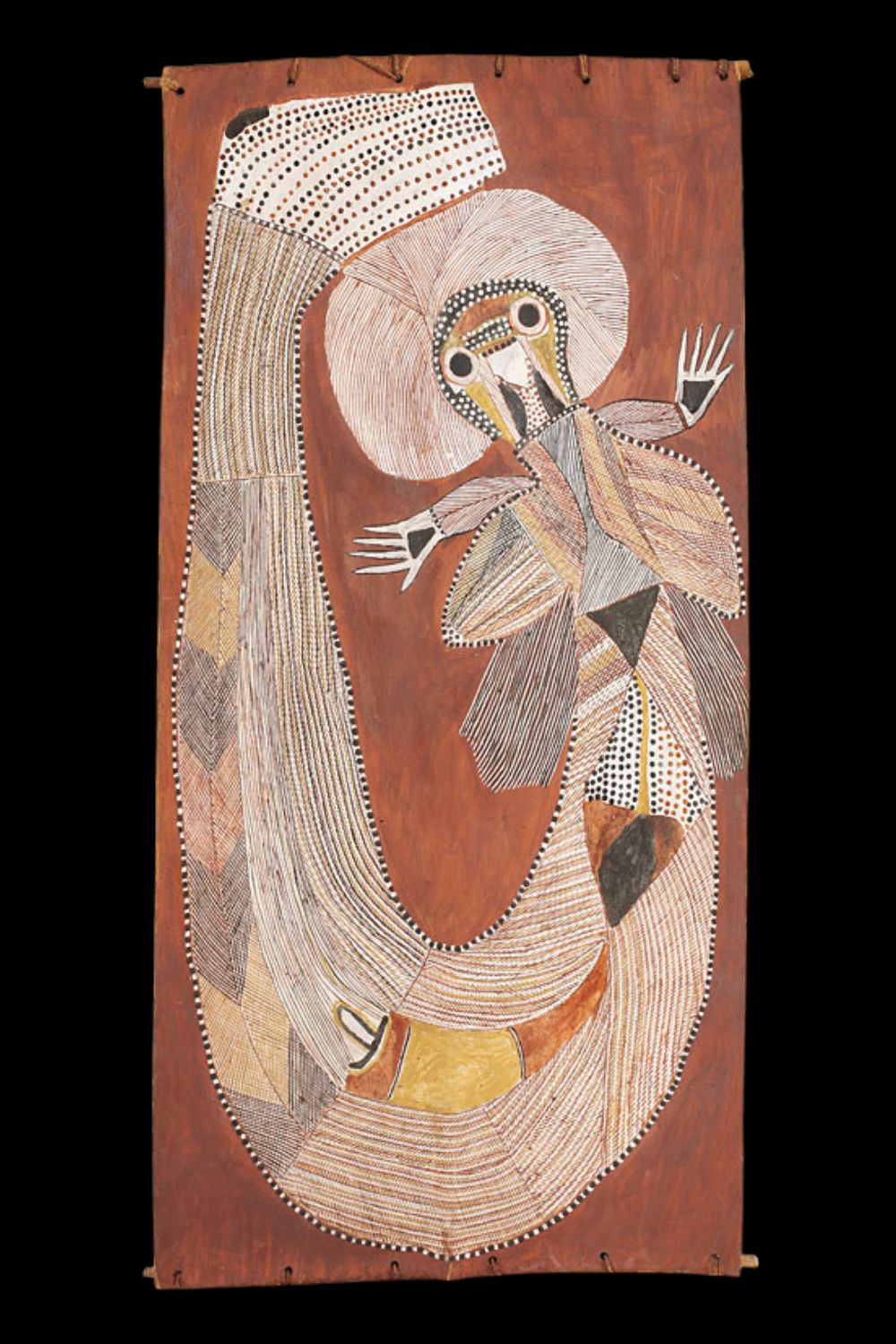
Yawkyawk Dreaming
Half-human, half-fish, Yawkyawk are feminine ancestral spirits often depicted with flowing hair made from Lillies or waterweed and the sinuous tails of aquatic creatures. They are guardians of water sources and totemic icons of fertility, both human and ecological. These dieties are shapeshifters and can appear as frogs or even the waterhole itself with only the Lily hair appearing above the waters surface.
Full Story about Yawkyawk
Yawkyawk are normally painted in Oenpelli Art Style
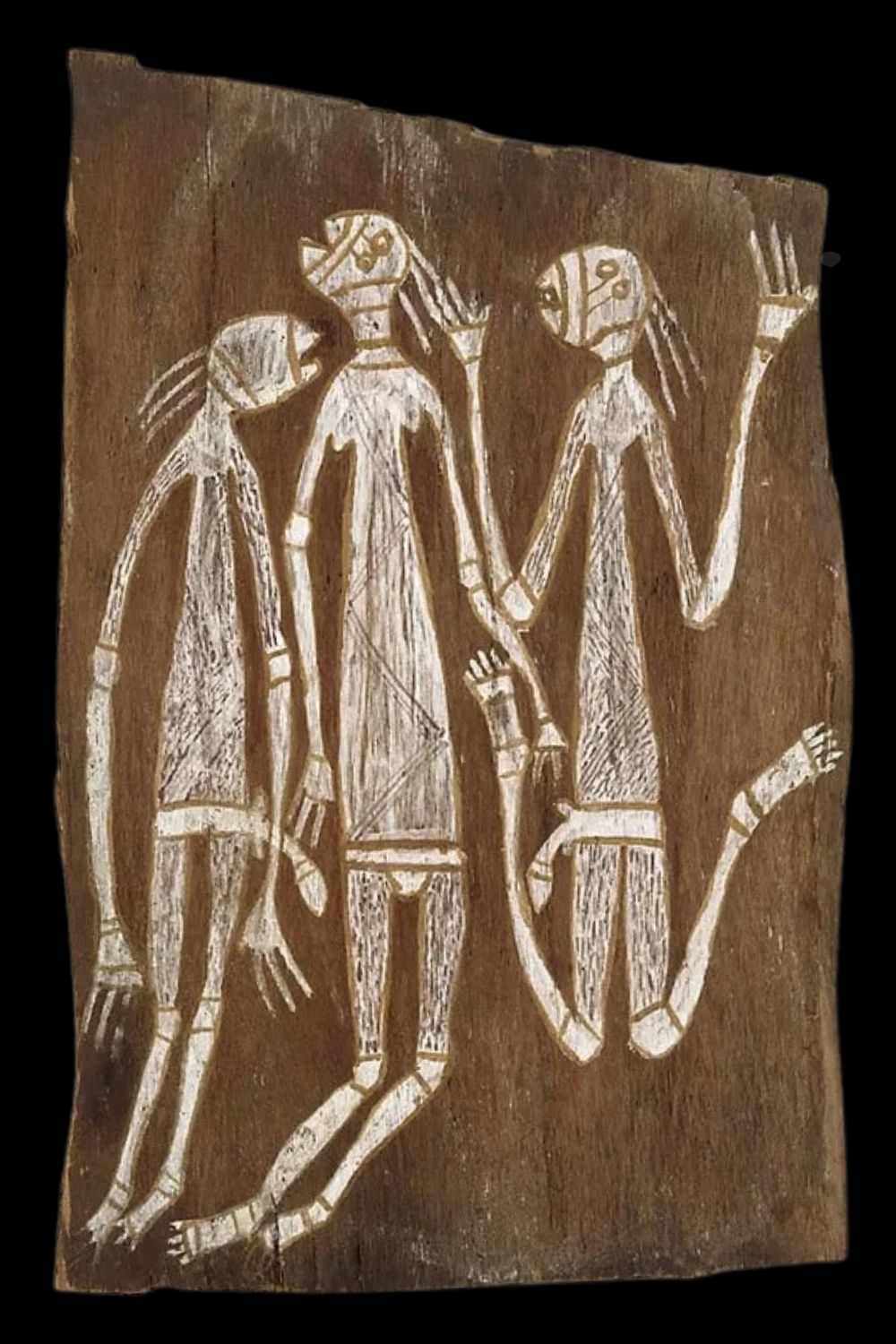
Mimih Dreaming
Mimih spirits are often painted as extremely thin human-like beings. They are extremely flexible and agile and small. It was the Mimih who taught the Aboriginal people to paint and how to dance. They are often depicted wearing headdresses and carrying weapons and tools. The Mimih Dreaming is a fascinating story about the accounted between a mimih Clan and a famous hunter.
Full story about Mimih
Mimih are depicted in Arnhem land Rock Art and Oenpelli Art
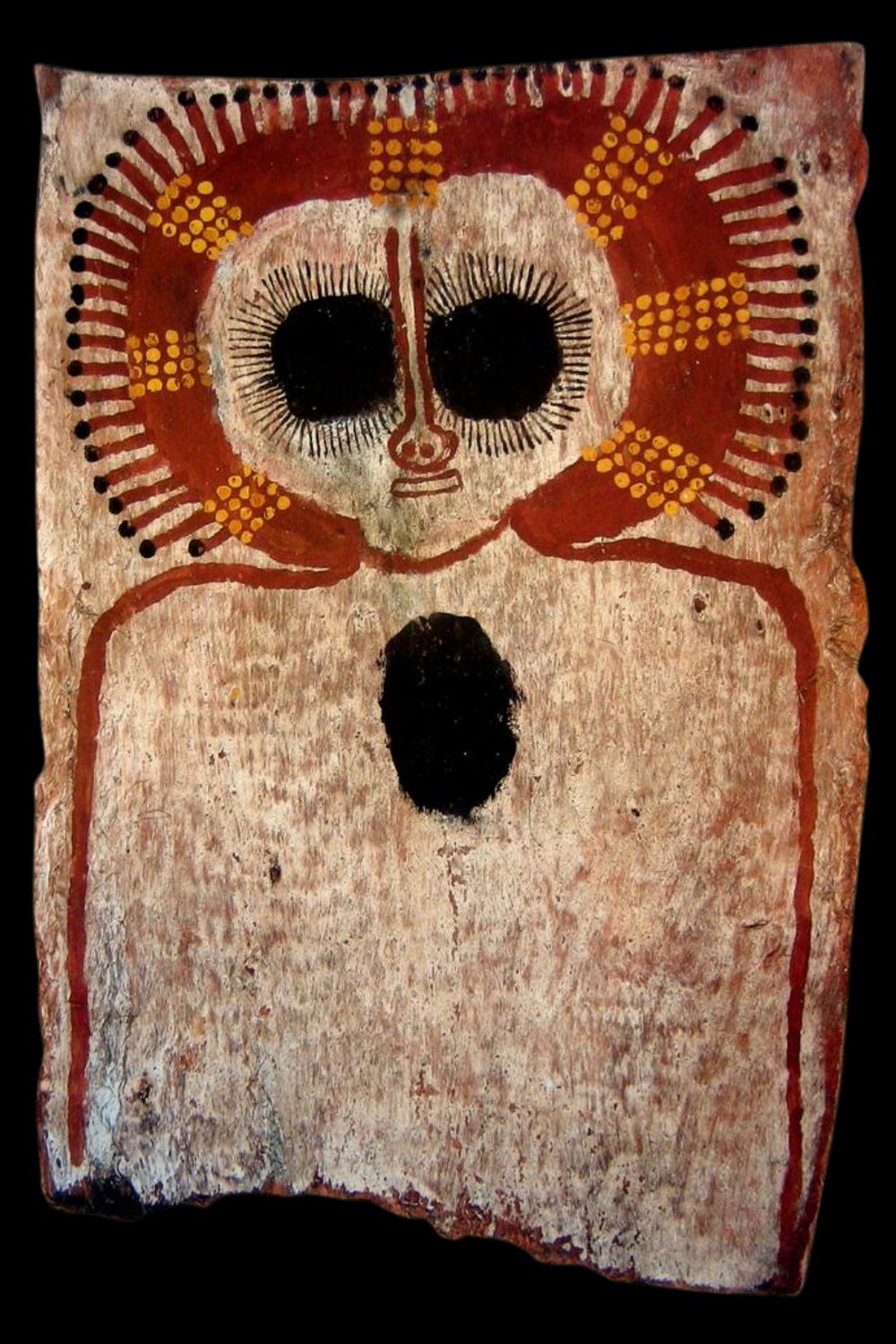
Wandjina Dreaming
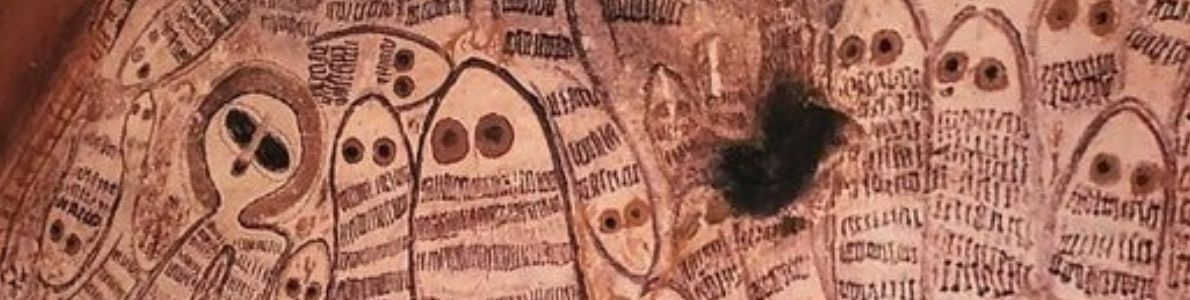
Few cultural expressions in Australia match the enduring power and mystique of the Wandjina (also spelt Wondjina or Wanjina) the iconic spirit beings of the north-western Kimberley region of Western Australia. The Wandjina are ancestral spirits and rainmakers, deeply embedded in the cosmology and environmental cycles of the Kimberley. Their presence ensures the fertility of the land, the reproduction of plants and animals, and the seasonal arrival of monsoonal rains.
Full Dream time Story of Wandjina
Wandjina are a part of the Kimberley Rock Art sequence.
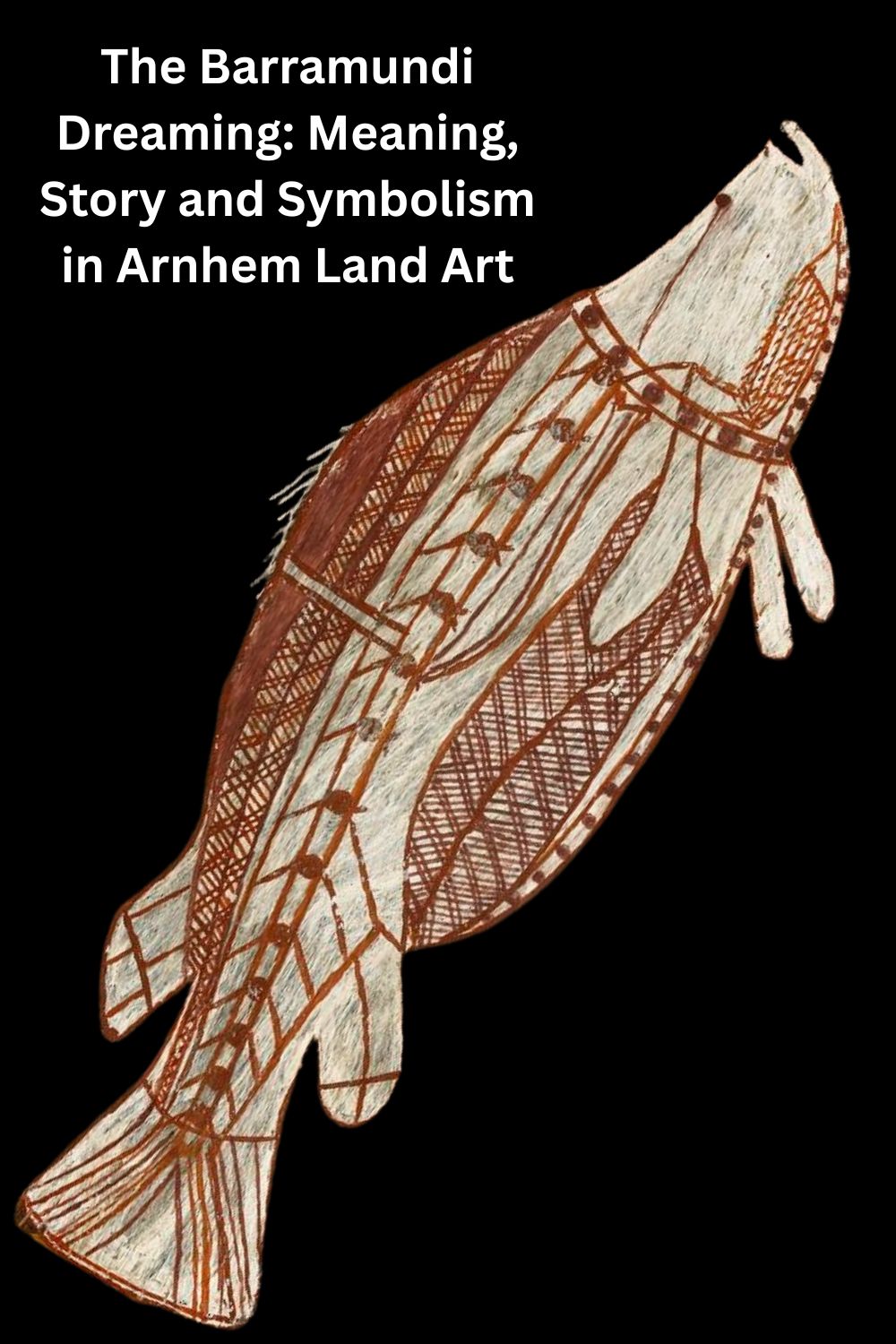
Laindjung Barramundi Dreaming
At the heart of this Arnhem Land narrative lies a moment of transformation: a barramundi rises from the water and takes human form as Laindjung also spelled Lany’tjung, an ancestral lawgiver. In Yolŋu cosmology, water is not simply a physical resource but a generative realm of spirit and origin. Laindjung’s emergence marks the passage of knowledge from this unseen domain into the human world.
Full Dream time Story of Barramundi dreamtime story
The Laindjung dreaming comes from Blue Mud Bay and is painted in Yirrkala Art
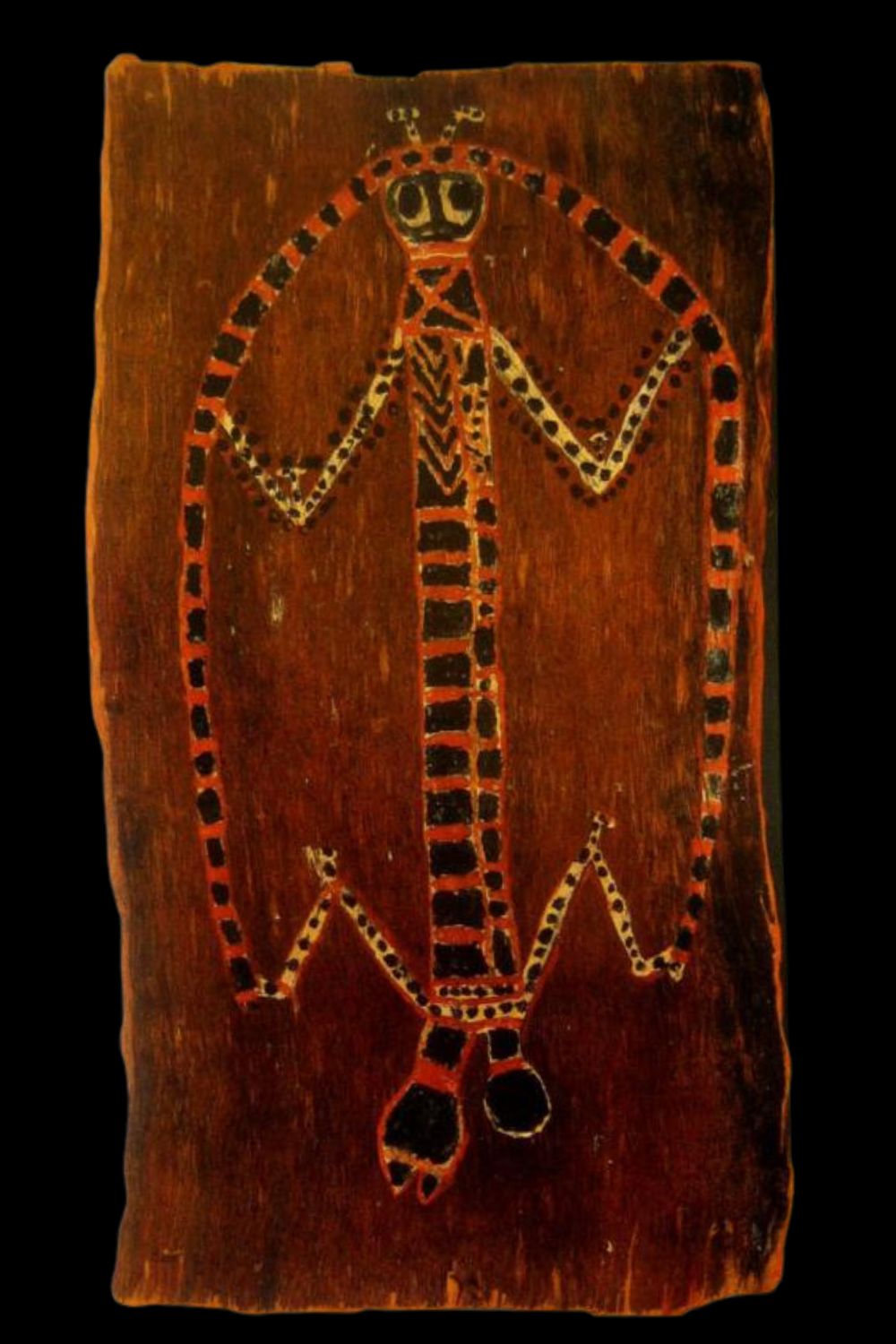
Namarrkon Dreaming
Namarrkon the lightning spirit is usually depicted with stone axes on their knees and elbows to make thunder. They often have lightning extending from the top of their heads. In some ways they are the aboriginal equivilent to Thor or Zeus. During the monsoon, Namarrkon ascends into the clouds. Here he creates thunder by striking the hammers attached to his elbows and knees and ejaculates lightning.
Full Story about Namarrkon
Namarrkon can be forund in Arnhem Land Rock art sequence and in Oenplelli Art
Why Dreamtime Stories Are Important in Aboriginal Culture
A Dreamtime story is central to Aboriginal identity. It connects individuals to their Country, their ancestors, and their obligations within a complex cultural and ecological system.
For those asking “why are Dreamtime stories important?”, the answer lies in their function. They are not simply stories—they are law. They guide behaviour, regulate relationships, and encode environmental knowledge, including water sources, seasonal cycles, and land management practices.
They are also among the oldest continuing cultural narratives in the world, leading to the question: “how old are Dreamtime stories?” While not measurable in Western chronological terms, they extend back tens of thousands of years through continuous oral transmission.
Within Aboriginal art, these stories are preserved and renewed. Painting becomes a means of maintaining connection to Country and ensuring the continuity of knowledge across generations.
Dreamtime Stories in Aboriginal Art
For those asking “how are Dreamtime stories used in Aboriginal art?”, the answer lies in a highly sophisticated visual language. Aboriginal paintings do not simply illustrate stories—they encode them.
Symbols such as concentric circles, lines, and cross-hatching represent waterholes, pathways, and ancestral journeys. What may appear abstract is often a precise mapping of Country and narrative. A painting can simultaneously function as geography, ceremony, and law.
This leads to another key question: “can anyone paint Dreamtime stories?” The answer is no. The right to depict specific Dreamtime stories is governed by custodianship, kinship, and initiation. Only those with the appropriate cultural authority may paint particular stories.
For collectors, this is critical. Authentic Dreamtime Aboriginal art is not simply aesthetic—it is an authorised expression of cultural knowledge, making provenance, artist identity, and region essential considerations.
Conclusion: Dreamtime Story and Aboriginal Art
The Dreamtime story in Aboriginal art represents one of the most sophisticated and enduring systems of cultural expression in the world. It is at once ancient and contemporary, symbolic and real, spiritual and ecological.
Across Australia—from Arnhem Land bark paintings to Western Desert painting traditions—Dreamtime stories form the foundation of artistic practice. They link diverse regions through shared principles of creation, law, and connection to land.
For collectors and scholars, these works are far more than visual compositions. They are cultural documents that encode identity, authority, and ancestral knowledge within their forms.
Ultimately, the Dreamtime in Aboriginal culture is not simply a concept to be defined—it is a living system to be understood. Through Dreamtime stories, Aboriginal art continues to express a profound and enduring relationship between people, Country, and law—one of the oldest continuous cultural traditions on earth.
All images featured in this article are presented strictly for educational and informational purposes.
This website may include copyrighted material for which specific authorization has not been obtained from the copyright owner.
All such images are presumed to be the intellectual property of the respective artist or their estate, and are used in accordance with principles of fair dealing or fair use under applicable copyright law.
Recommended Reading