Aboriginal Sand Painting: Meaning and Ceremonial Art
Aboriginal sand paintings (also called Aboriginal sand mosaics) are ceremonial artworks created directly on the ground using coloured sand, ochre, charcoal, clay, feathers and other natural materials. They include painted designs on prepared earth and elaborate arrangements of coloured materials, often described as sand mosaics or ground paintings.
In many Aboriginal religious traditions, these artworks were not simply pictures of ancestral beings, sacred places or events. Their creation formed part of ceremonies through which people sought to exercise ancestral powers and influence the living world. A painting might be made to increase the numbers of a particular animal, renew relationships with ancestral beings or fulfil religious obligations associated with initiation and death.
The designs were often inseparable from the songs, body painting, dances and sacred objects used in the same ceremony. Their religious significance lay not only in what they represented, but also in what their creation was believed to accomplish.
Aboriginal societies developed distinct religious traditions, and sand paintings did not have one universal meaning. The following examples illustrate different ways in which ceremonial ground art connected people, ancestral beings and the natural world.
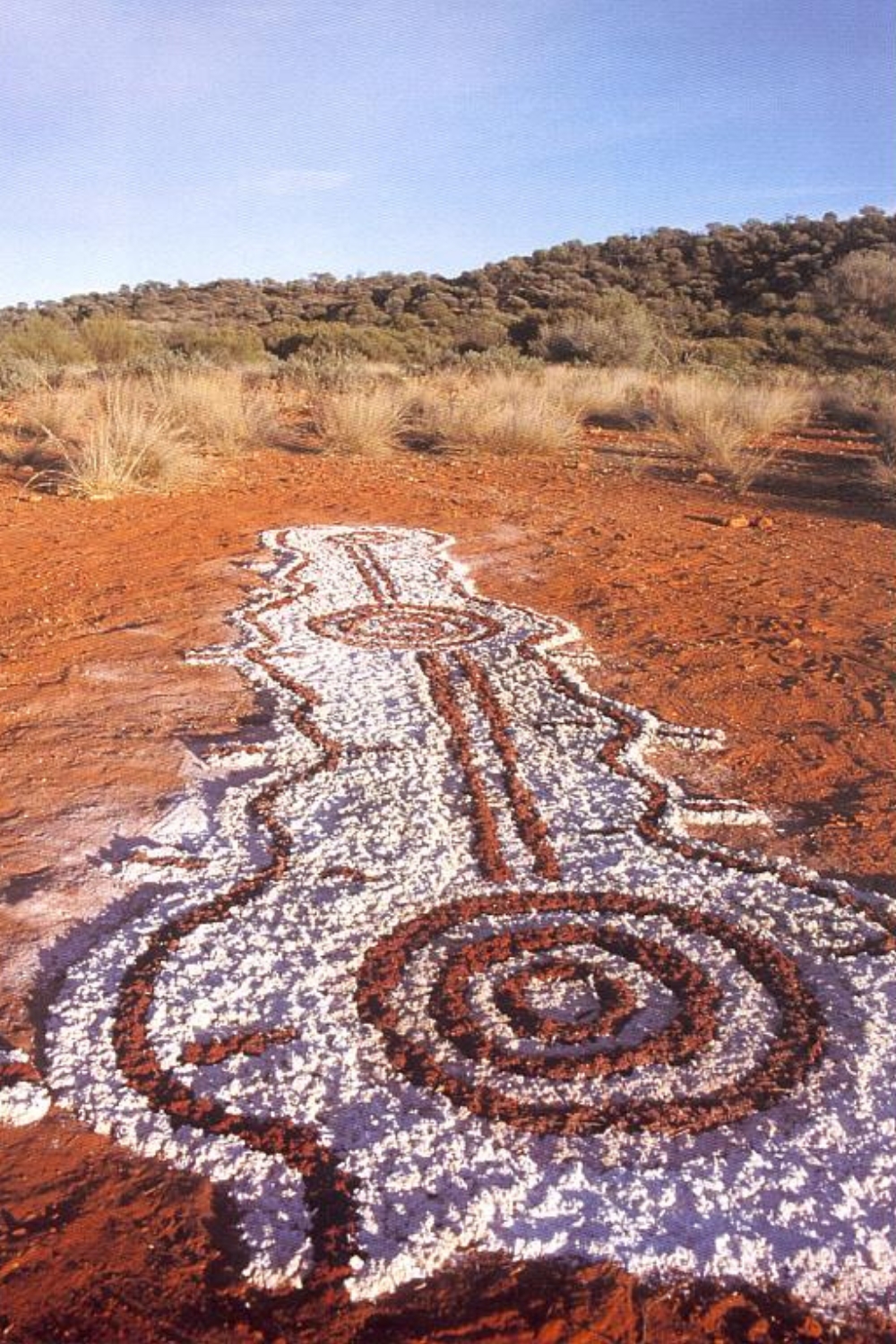
Arrernte Emu Ilpintira: A Painting Made to Increase Emus
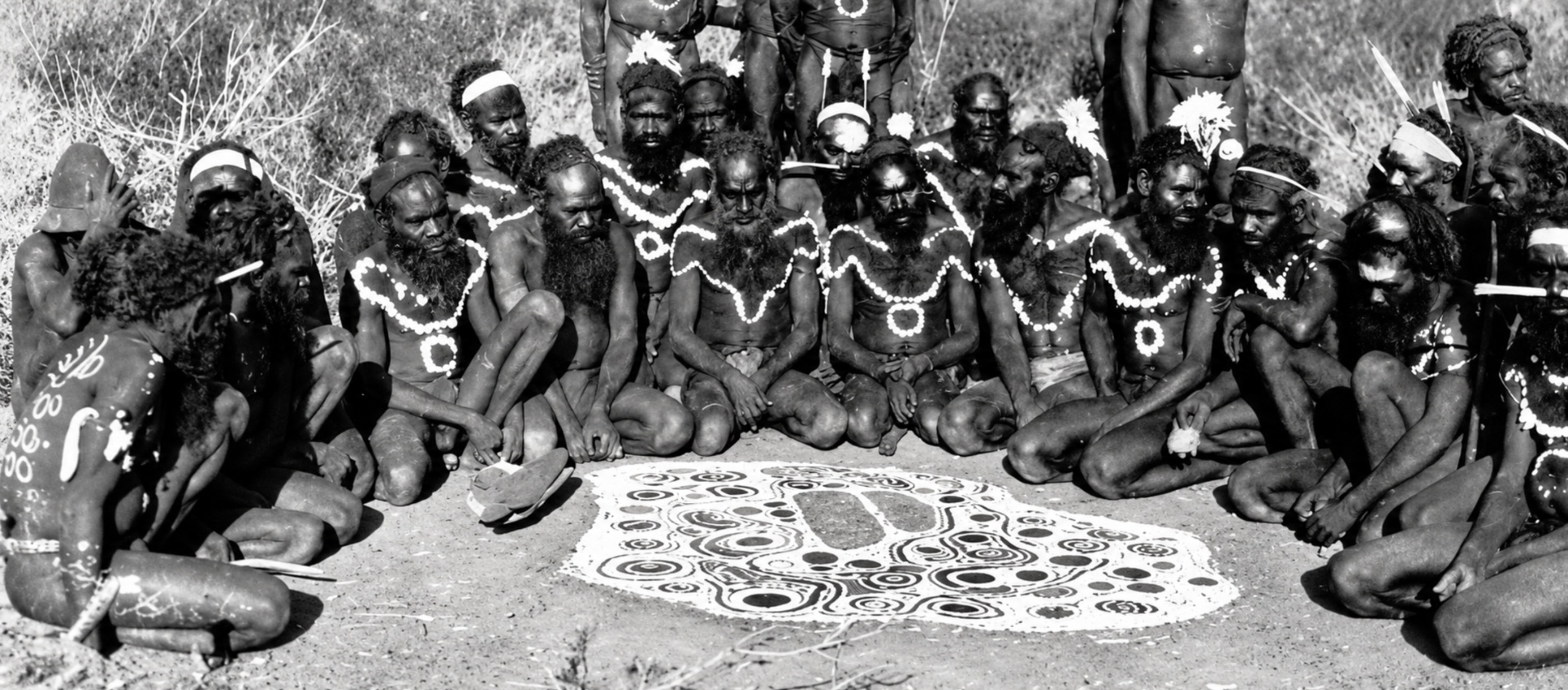
One of the most detailed historical accounts of Aboriginal sand painting concerns the Emu Ilpintira, recorded by anthropologists Baldwin Spencer and Francis Gillen in Central Australia during the 1890s.
The Ilpintira was a sacred ground painting created by Arrernte men as part of an Intichiuma ceremony believed to increase the number of emus.
The ceremony rested on the belief that ancestral Emu beings had established the religious practices through which the continued reproduction of emus could be maintained. By recreating ancestral designs and actions, the participants sought to exercise those powers in the living world.
What Did the Emu Ground Painting Represent?
The men prepared the painting surface by clearing and levelling an area of ground. Blood drawn from their arms was allowed to soak into the earth, producing a firm surface on which the design could be made.
The painting was constructed using white pipeclay, red and yellow ochre, and powdered charcoal mixed with grease.
Rather than depicting the outward appearance of an emu, the design represented aspects of its internal anatomy and reproductive processes.
Large yellow areas represented fat, while smaller circles represented immature eggs. Concentric circles depicted an egg containing a developing chick. Winding lines represented intestines, black dots represented excrement, and white markings represented feathers.
The painting brought together the animal’s body and its capacity for reproduction in a single ceremonial design.
The Ancestral Emu Men
The ground painting was only one element of the ceremony.
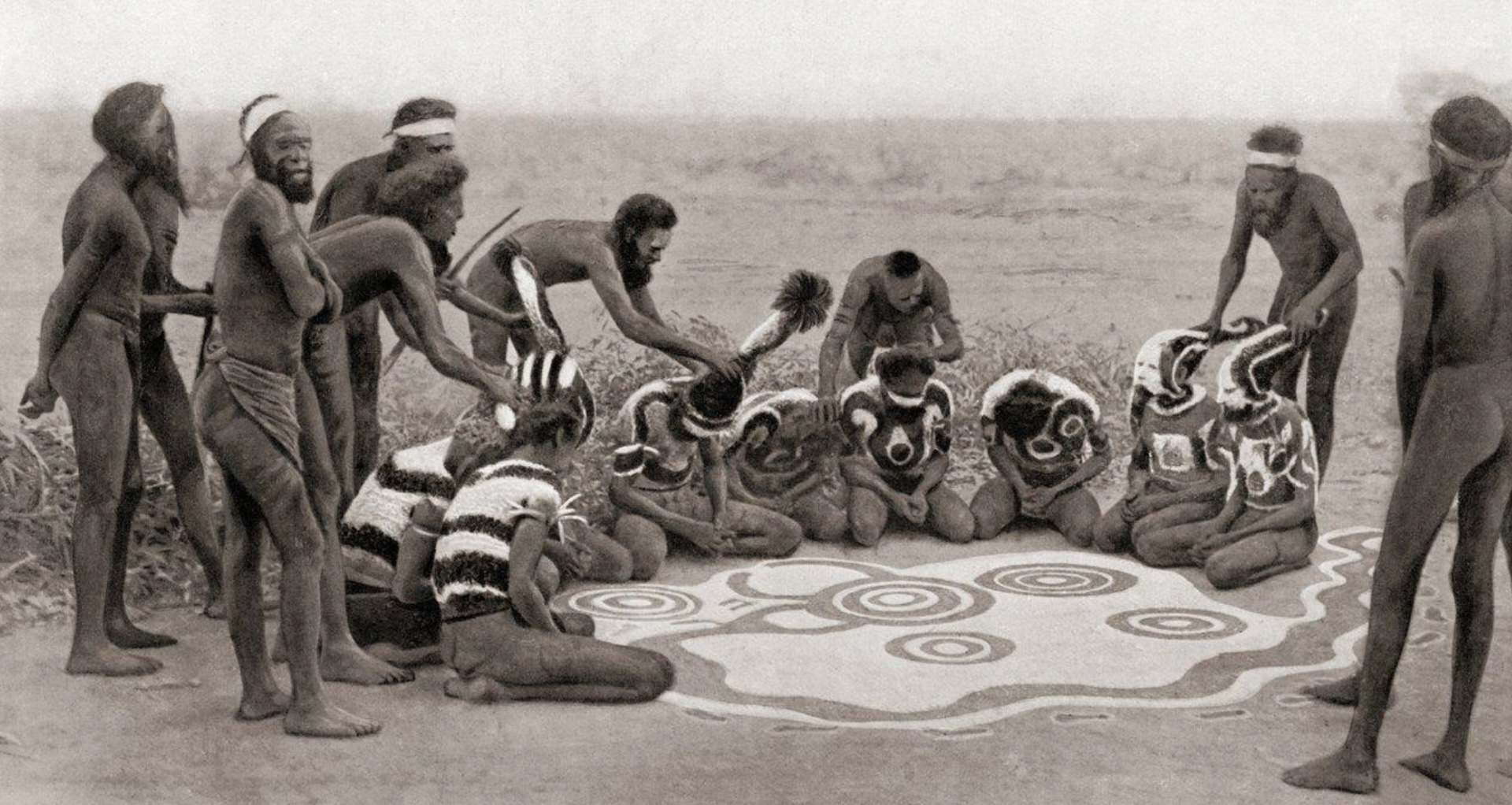
Three older men represented ancestral Emu beings, wearing large decorated wooden churinga (sacred ceremonial objects) attached to their heads. Younger men represented their descendants.
The participants also painted their bodies with designs associated with the ancestral Emu. Gillen’s field notes record that some of these markings were copied directly from the Ilpintira.
Through singing and movements imitating emus, the men enacted the relationships between the ancestral beings and their descendants.
The ground painting, body decoration, sacred objects and ceremonial performance were therefore parts of a single religious act. The painting was made not merely to describe the Emu ancestor, but as part of a ceremony believed to influence the reproduction of living emus.
Why Was the Painting Destroyed?
At the conclusion of the ceremony, the ceremonial leader and his sons deliberately obliterated the Ilpintira.
Its destruction was not evidence that the painting lacked artistic or religious value. The artwork had fulfilled its ceremonial purpose.
Unlike a painting created for permanent display, the Ilpintira derived its significance from its prescribed creation and use.
The Emu Ilpintira is therefore a particularly clear historical example of Aboriginal ceremonial art made in the belief that it could act upon the natural world.
Yolŋu Yiŋapuŋapu: Sand Sculpture and Mortuary Ceremony
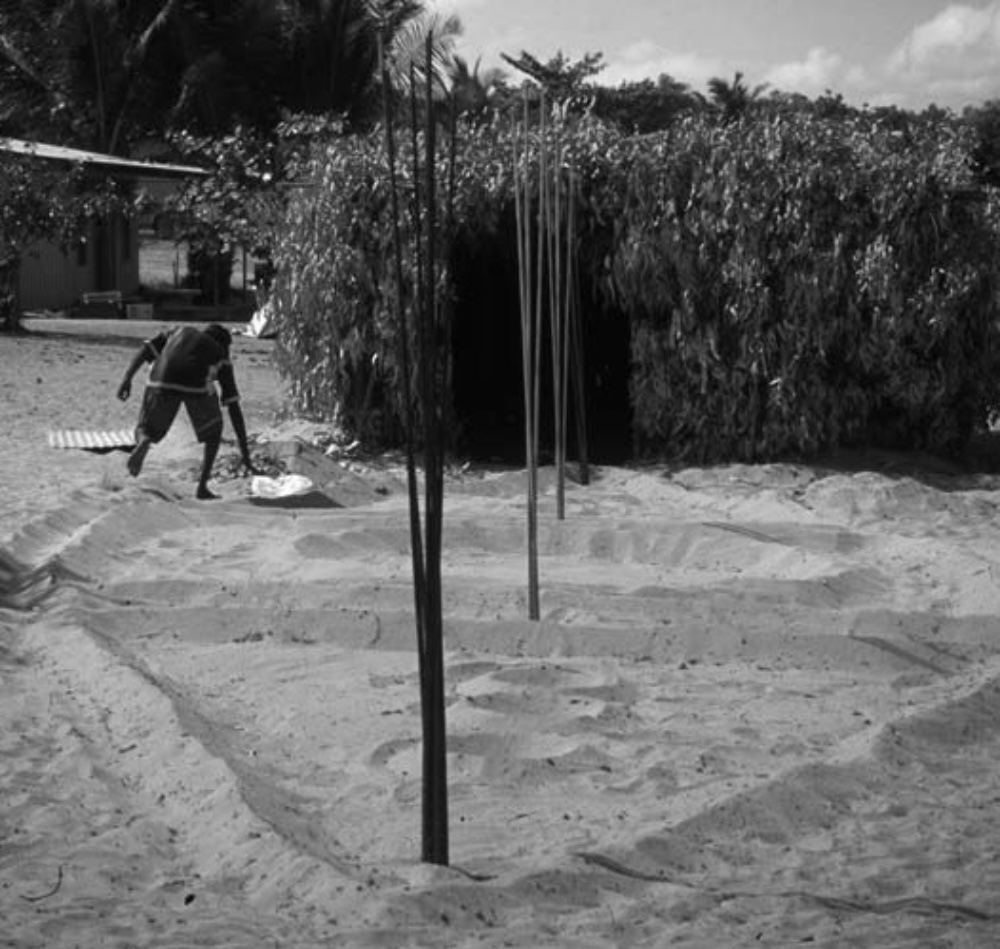
In north-east Arnhem Land, Yolŋu people developed elaborate ceremonial forms using sand and earth, including the yiŋapuŋapu (a ceremonial sand structure associated with mortuary ritual).
Unlike a flat sand painting, a yiŋapuŋapu is a raised construction, often oval in form. It belongs to a different artistic and religious tradition from the Central Australian sand mosaics.
Among the Maŋgalili people, the yiŋapuŋapu is associated with ancestral events at Djarrakpi involving the Guwak ancestral men, Munuminya and Yakawanga.
Its significance is connected with death, purification and the renewal of relationships between the living, the deceased and ancestral Country.
The structure is not simply an illustration of an ancestral story. It forms part of the ceremonial treatment of death, providing a prescribed setting in which religious obligations are performed.
Its inclusion alongside sand paintings demonstrates that Aboriginal ceremonial ground art encompassed more than two-dimensional images. The shaping of the earth itself could have religious significance.
Aboriginal Bora Bora Ceremonial Earthworks and Initiation
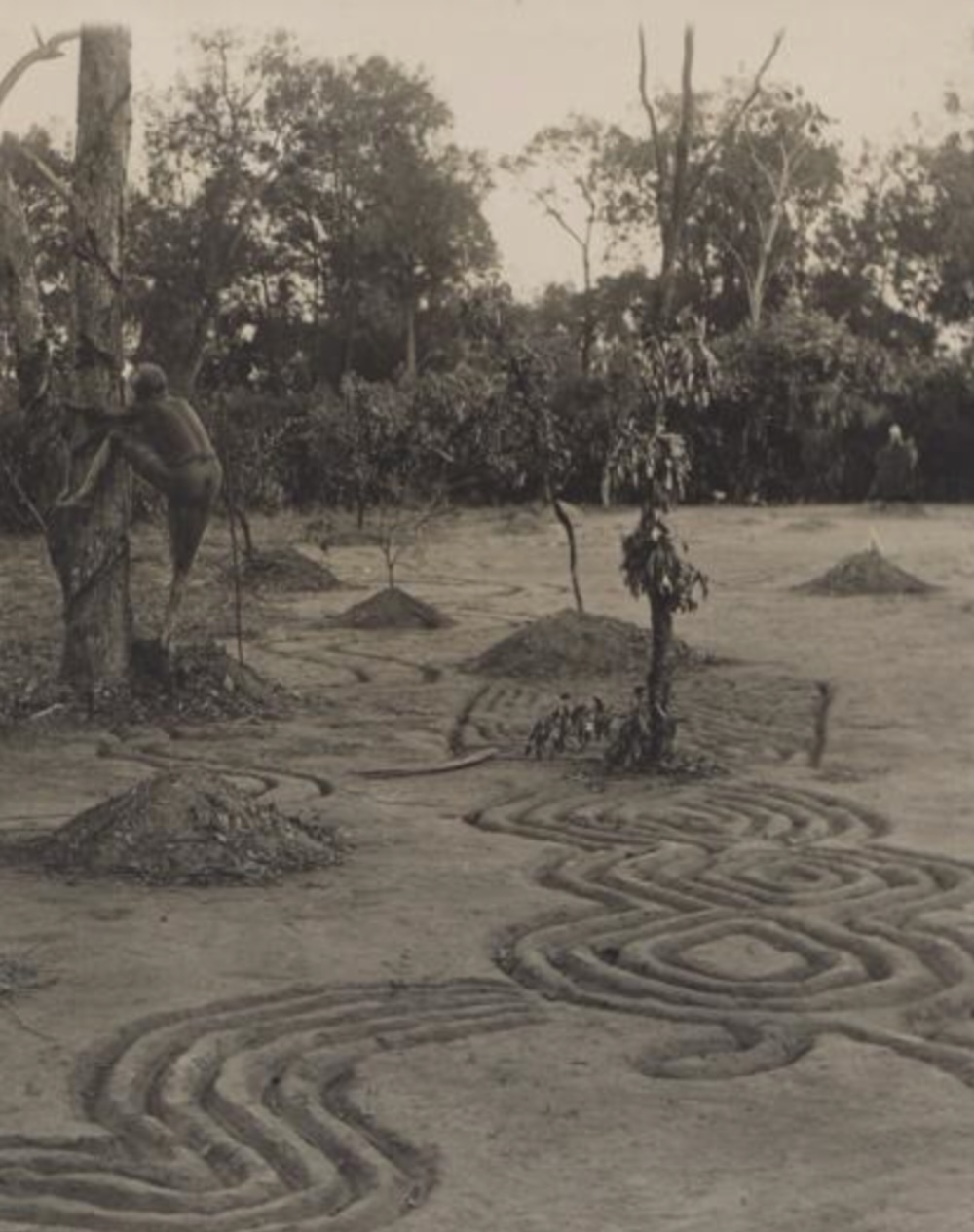
In parts of eastern Australia, Aboriginal initiation ceremonies involved elaborate arrangements of earth, cleared ceremonial grounds and sculpted representations of people or animals.
Historical descriptions of Kamilaroi or Gamilaraay Bora ceremonies record ceremonial grounds containing figures modelled in earth or formed from the surrounding landscape.
These constructions were associated with the initiation of young men and the transmission of religious and social knowledge.
They differed materially from the coloured sand paintings of Central Australia. Nevertheless, they demonstrate another way in which the ground could be transformed into a ceremonial environment.
The figures were not intended simply as decorations for an initiation gathering. They belonged to a religious process through which participants were introduced to new responsibilities, knowledge and relationships within their community.
Materials and Techniques Used in Aboriginal Sand Painting
The materials and methods varied between regions and ceremonies.
In Central Australia, artists could prepare a firm ground surface before applying powdered ochres, pipeclay and charcoal. Coloured earth could also be arranged directly on the ground to create intricate designs.
Some ceremonial works incorporated feathers, plant materials or other objects, while others involved raised forms constructed from sand and earth.
The Emu Ilpintira provides an unusually detailed account of preparation, including the use of blood to consolidate the ground and pigments mixed with grease.
These materials were not necessarily interchangeable. Their selection, arrangement and application could be prescribed by the particular ceremonial tradition.
The process of making the artwork was itself part of the religious performance.
The Meaning of Aboriginal Sand Painting
Aboriginal sand painting cannot be explained through a universal dictionary of symbols. Its meaning depended on the religious traditions, ancestral relationships and ceremonial responsibilities of the people who created it.
The Arrernte Emu Ilpintira was made during a ceremony intended to increase emus. Warlpiri ground paintings could express and enact relationships with ancestral Country. Yolŋu sand structures formed part of mortuary ceremonies, while eastern Australian ceremonial earthworks could contribute to initiation.
These artworks had different purposes, but they reveal a broader understanding of religious art.
The creation of an image or ceremonial structure could be an action through which people sought to maintain, renew or influence their relationship with the ancestral and natural world.
For that reason, the significance of Aboriginal sand painting lies not simply in the appearance of the finished design, but in the religious knowledge, authority and ceremonial actions through which it was made.
Historical and Anthropological Sources
- Baldwin Spencer and Francis J. Gillen, The Native Tribes of Central Australia (1899), Chapter VI, particularly pp. 179–185.
- Ronald M. Berndt, Aboriginal Art of Western Australia (1979).
- Howard Morphy, Ancestral Connections: Art and an Aboriginal System of Knowledge (1991).
- R. H. Mathews, The Bora of the Kamilaroi Tribes (1896).
- Jens Kreinath, “Discursive Formation, Ethnographic Encounter, Photographic Evidence,” Visual Anthropology, 25(5), 2012, pp. 367–420.
All images featured in this article are presented strictly for educational and informational purposes.
This website may include copyrighted material for which specific authorization has not been obtained from the copyright owner.
All such images are presumed to be the intellectual property of the respective artist or their estate, and are used in accordance with principles of fair dealing or fair use under applicable copyright law.