Kaapa Mbitjana Tjampitjinpa
c. 1920s–1989
Warlpiri
Warlurkulangu, ancestral bushfire Country
Napperby / Papunya
Papunya Art / Western Desert Art
Papunya Tula Artists
Painting on board and canvas
Kaapa Mbitjana Tjampitjinpa stands among the founding pioneers of the Papunya movement and is widely regarded as one of the most historically important figures in Australian Aboriginal art. In 1971, working alongside schoolteacher Geoffrey Bardon and senior ceremonial leaders at Papunya, Kaapa helped create the famous Honey Ant mural—an event now recognised as the beginning of the contemporary Western Desert art movement and the eventual formation of Papunya Tula Artists. His paintings introduced sacred Western Desert imagery into a new artistic medium and helped transform Aboriginal art into one of the most important movements in modern aboriginal art history.
Kaapa achieved national recognition in 1971 when he became the first Aboriginal artist to win a contemporary art award, receiving first prize in the Caltex Art Award in Alice Springs for his painting Gulgardi. This moment marked a major turning point in the public recognition of Aboriginal painting as fine art rather than ethnographic artefact. Today his works are held in major public and institutional collections including the National Gallery of Australia, the Art Gallery of New South Wales, and important private collections devoted to early Papunya painting.
In the early phase of his career, Kaapa painted primarily on small composition boards, often less than 60 cm in size. These early works possess an extraordinary intensity and authority. Many are deeply ritual in nature and contain imagery associated with restricted ceremonial knowledge intended only for initiated men. Characterised by strong symmetry, ancestral iconography, ceremonial structure, and powerful sacred imagery, these early boards are now regarded among the most culturally significant and collectible paintings produced during the formative years of the Western Desert movement.
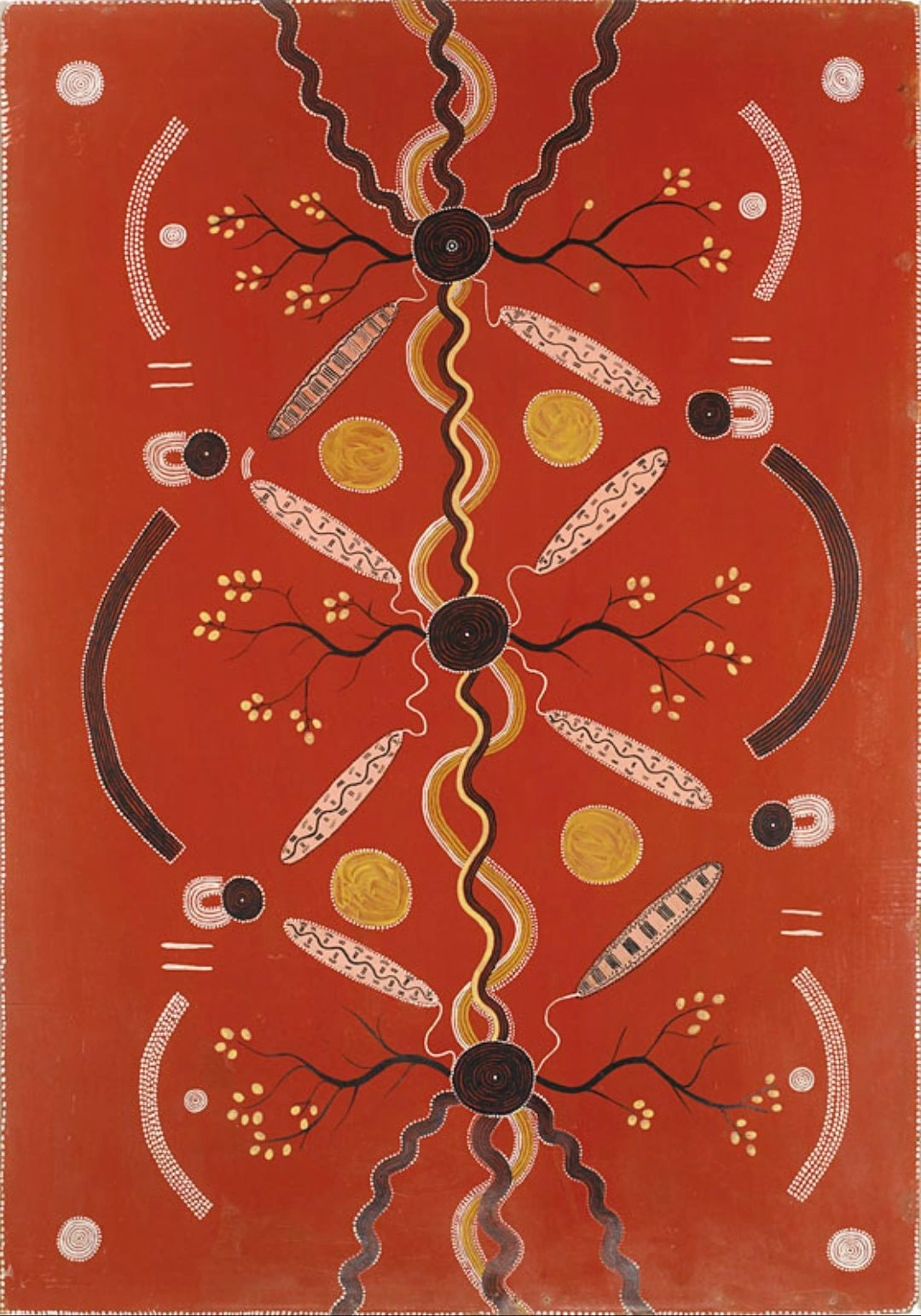
During later years Kaapa transitioned increasingly to canvas painting. While these later works retain considerable technical skill and aesthetic power, collectors and scholars generally regard the early boards as his most important achievements because of their closer connection to ceremony, story, and Country. Their historical importance is amplified by Kaapa’s central role in the emergence of Papunya Tula Artists and the transformation of contemporary Aboriginal painting onto the international stage.
This page provides expert guidance on identifying paintings by Kaapa Mbitjana Tjampitjinpa, comparing his early boards with later canvases while examining the characteristics that distinguish his most important works. Particular emphasis is placed on recognising the visual authority, ceremonial intensity, and compositional qualities that define exceptional early Kaapa paintings.
If you own a painting you believe may be by Kaapa Mbitjana Tjampitjinpa, you are welcome to send images for a confidential assessment. I am always interested in viewing works by this major Papunya master and can provide guidance regarding attribution, authenticity, historical significance, and current market value.
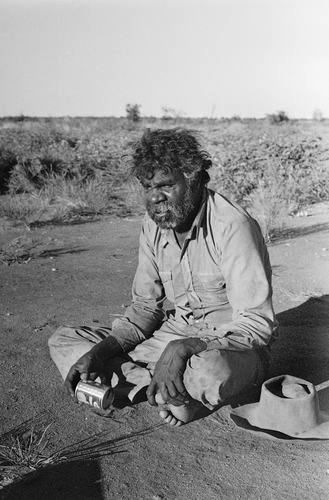
Early Life Kaapa Mbitjani Tjampitjinpa
Kaapa Mbitjani Tjampitjinpa was born west of Napperby at the Emu Dreaming site of Altijir in the 1920’s. Kaapa’s clans country was around Warlurkulangu, the ancestral bushfire site in Warlpiri country.
Mbitjani Tjampitjinpa underwent full initiation at Napperby. As a young man, he became a stockman like Tim Leura, Clifford Possum, and Billy Stockman.
He worked at Mount Allan station and spent a period droving cattle between the Tanami desert and Mount Isa in North Queensland. In the 1950’s he settled for a time in Haasts Bluff .
In the late 1950’s his entire community was moved to Papunya due in part to the lack of potable water. Papunya was a troubled settlement and Kaapa became renowned to Europeans as a disruptive influence and a grog runner.
To his community, he was a well known traditional artist and respected elder. Like Timmy Payunga he was often called upon to carve and paint important ceremonial objects for tribal purposes. He had also done some Hermannsburg School painting in watercolor.
Early painting
In 1971 Geoff Bardon became a local school teacher at Papunya Primary. He had been unsuccessfully trying to encourage the school children to paint their traditional patterns. He had seen them drawing these patterns in the playground sand but they would not draw them on paper
When he was told only older men were allowed to draw these designs he came up with the idea of a mural.
He soon realized he had to be given permission for a design by the tribal lawgivers. After discussion between the elders like Old Mick and Old Walter, it was decided Kaapa should be the lead artist in making the mural. The mural was painted by Kaapa with assistance from Long Jack and Billy Stockman. The mural was of the honey ant dreaming and caused quite a stir in the small community. The honey ant dreaming was a story common to all the different tribes gathered in Papunya.
After the success of the Mural Bardon decided to start a men’s painting group. Kaapa was at first reluctant to join. As soon as he joined though he committed himself completely to the group. The men’s painting group would meet in an old shed and it was Kaapa who held the keys.
He would be the first to arrive to check on supplies and setting himself up at his regular spot facing the door. He was the only one of the artists to use the table and chair. Kaapa knew he was an artist and the men’s painting group gave him direction. He often sought out the best materials, and asserted his position. Unlike the other artists, Kaapa signed his works from the very start.
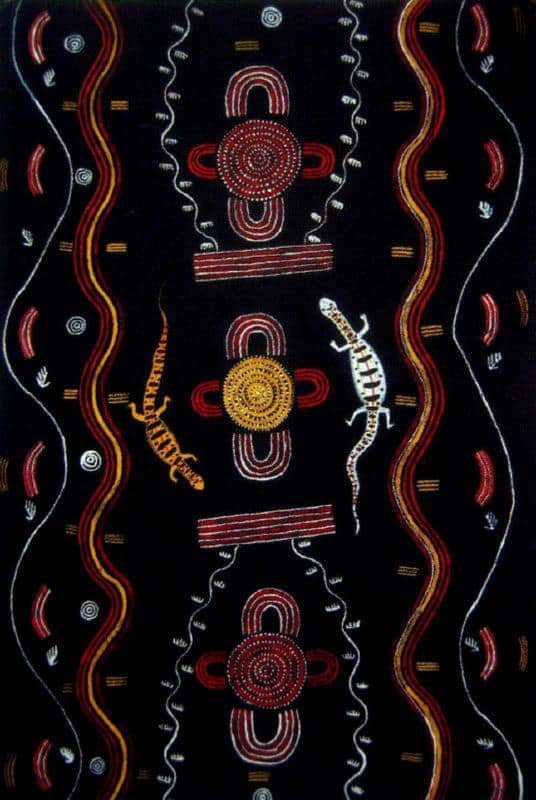
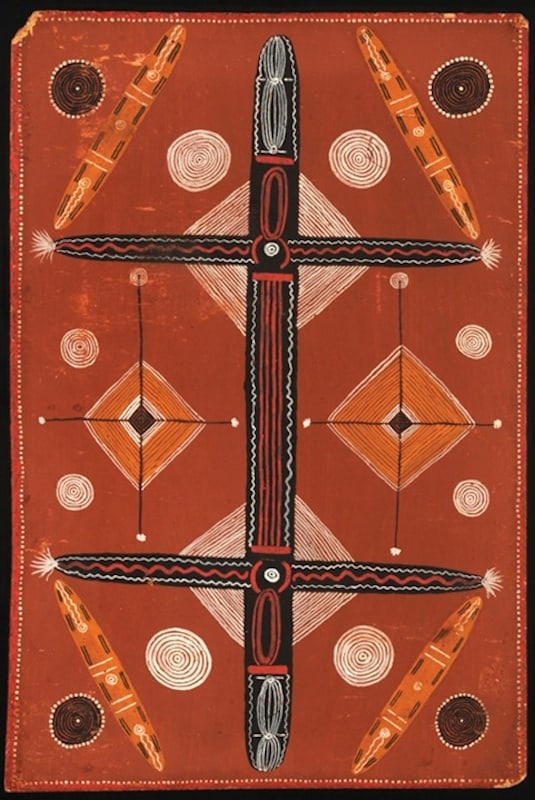
Kaapa Mbitjani Tjampitjinpa Peak Period
In 1972 and 1973 Kaapa Mbitjani produced some of his greatest art. In particular, he produced several paintings of the Budgerigar dreaming. These negotiated a very close line between the secret and the secular. A characteristic dynamic of balance and counterbalance magnifies a powerful sense of presence in these paintings
His detailed brushwork laid down a precise visual vocabulary full of vibrancy and purpose. These barks are a tangible link between aboriginal art and the songlines of his country. These works are in my opinion Kaapa at his best. He has not yet been restricted by the opinions of others and his works are a direct reflection of his ancestral stories and beliefs
1972 was also a prolific year for him. A spate of sales followed his winning the Alice Springs Caltex Golden Jubilee Art Award. The jubilant painting group decided to start their own artists business. They elected Kaapa Mbitjani Tjampitjinpa as founding chairman of Papunya Tula Artists.
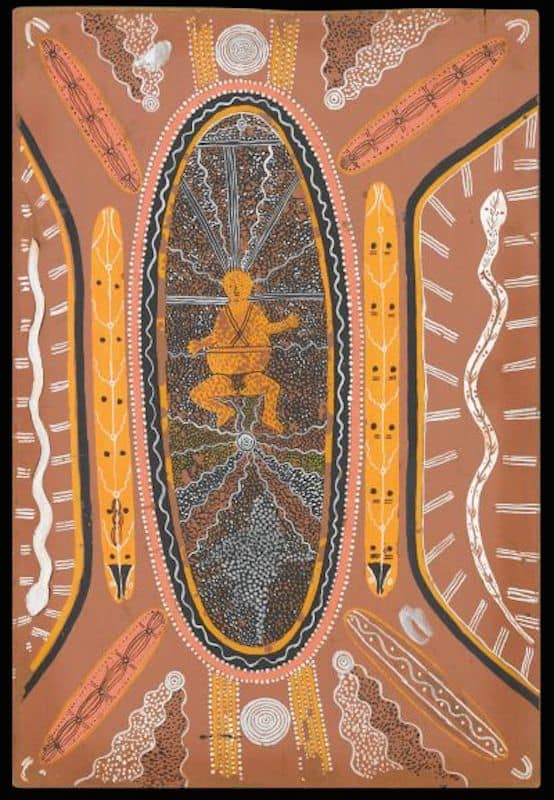
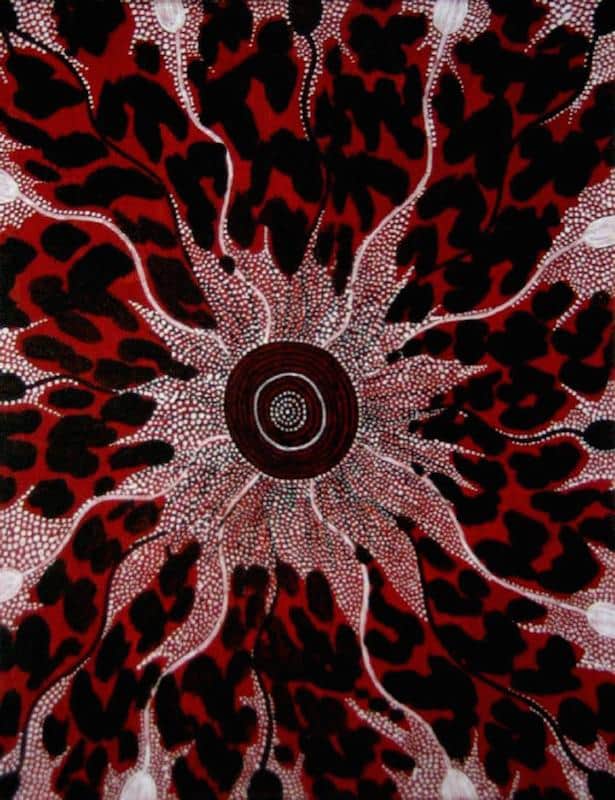
Kaapa Mbitjana Tjampitjinpa Later paintings
In 1974 Papunya artworks for sale in Alice springs cause upset with other aboriginal groups. The paintings were seen as revealing too many secrets and sacred imagery.
To keep the peace Papunya artists started over dotting areas of an artwork that might cause offense. They also decided to paint increasingly less important stories.
The dots used to conceal sacred references soon became design elements. This dot style of painting caused some artists like John Tjakmarra and Clifford Possum to flourish.
The though dots didn’t suit Kaapas style and much of the power and authority inherent in Kaapa’s subsequent works were dissipated under a veil of dots. Kaapa was at odds with the majority of the painting group. He wanted to paint what was important and sacred as he always had.
These subsequent works were popular at the time as Kaapa’s renown grew, but they were far less powerful and he felt artistically stifled.
These later 1980’s works often have floral backgrounds and decorative content. These paintings have lost the soul of his early works and are not as popular with collectors.

Kaapa died in Alice Springs in 1989. His art though endures and are held in major collections throughout Australia and overseas. Like so many great artists his influence and art works persist long after his death.
Kaapa Mbitjani Tjampitjinpa has variations on his skin name so it can be spelled Kaapa Mbitjani Jampijinpa, Kaapa Mbitjani Djambidjimpa or Kaapa Mbitjani Tjambitjimba.
Kaapa is also sometimes spelled Karpa and Mbitjani can be spelled Mbitjana, Mbijana,or Mbijani.
Kaapa Mbitjana Tjampitjinpa references
Papunya: A place made after the Story
Papunya Tula: Genesis and Genius
All images in this article are for educational purposes only.
This site may contain copyrighted material the use of which was not specified by the copyright owner.