Quinkan Rock Art
Quinkan Rock Art is one of Australia’s most distinctive Aboriginal rock art traditions. Found among the sandstone escarpments and rock shelters of Cape York Peninsula in far north Queensland, Quinkan Country is renowned for its animated spirit figures, ceremonial scenes, and elegant red ochre paintings created over thousands of years. Alongside Kimberley Rock Art and Arnhem Land Rock Art, Quinkan painting forms one of the great regional traditions of Australian Aboriginal rock art.
More than 1,000 Aboriginal rock art sites have been recorded across the Laura sandstone region, making it one of the richest prehistoric art landscapes in Australia. Quinkan paintings are especially recognised for their elongated human forms, flowing movement, and powerful spiritual imagery. Unlike the detailed X-ray art of Arnhem Land, Quinkan figures are often painted in a single colour with sparse but expressive detail, creating a highly graphic and dynamic visual style.
Many surviving Quinkan paintings are believed to date from around 5,000 years ago, although Aboriginal occupation of the region extends back more than 37,000 years. While parts of the deeper ceremonial meaning were disrupted following the Cape York gold rushes of the 1870s and the displacement of Aboriginal communities, Quinkan Rock Art remains one of the most important surviving artistic traditions in Australia and continues to hold profound cultural significance for Traditional Owners today.
What is Quinkan Rock Art?
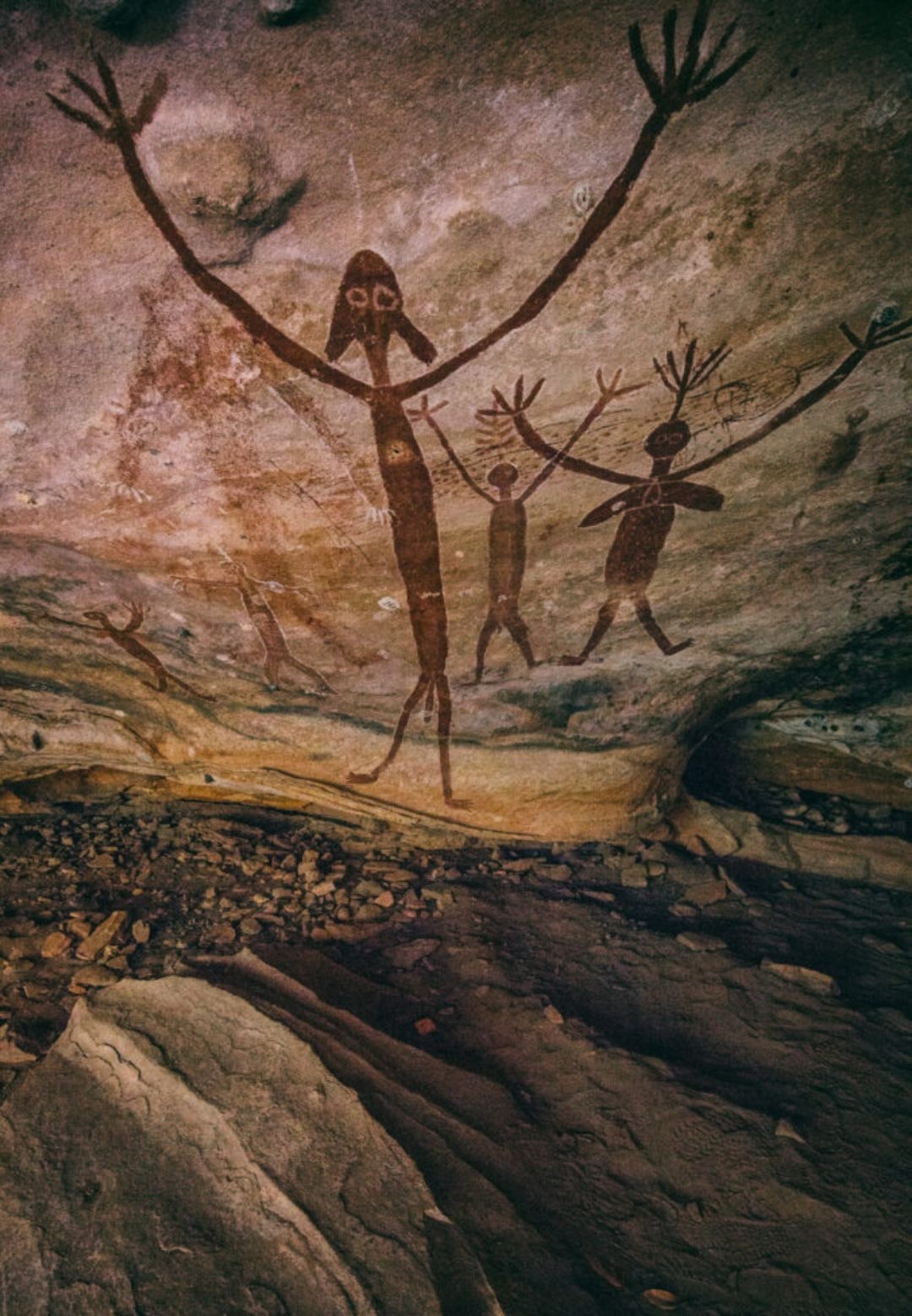
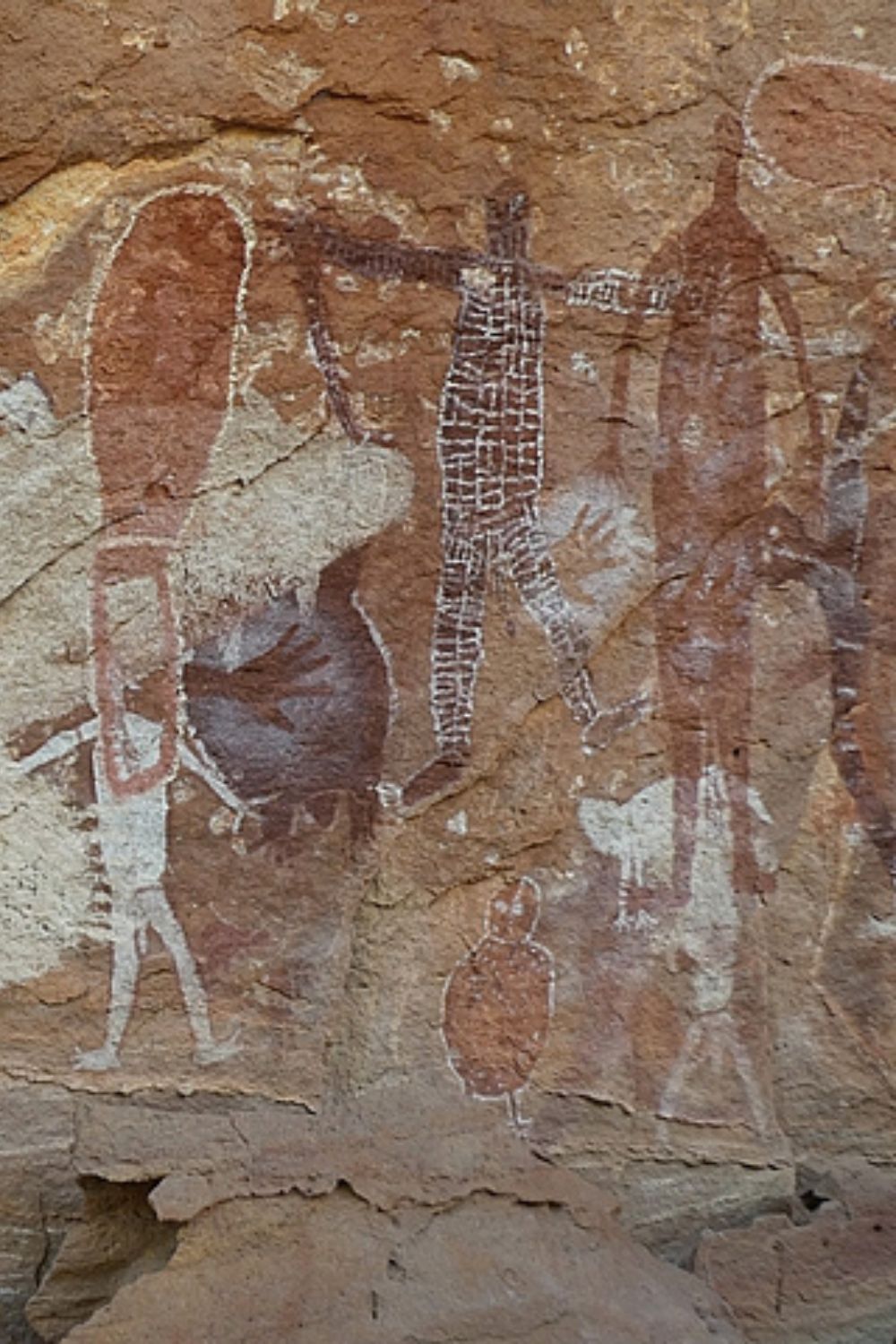
Quinkan Rock Art refers to a major Aboriginal cave painting tradition centred around the Laura region of Cape York Peninsula in Queensland. The art is named after the Quinkan spirit beings represented throughout many of the galleries. These spirit figures are often shown as elongated anthropomorphic beings with exaggerated limbs, animated gestures, and ceremonial poses.
Quinkan art includes paintings, engravings, stencils, and ceremonial imagery. Most paintings were created using red ochre, although white, yellow, black, and even rare blue pigments also occur. The imagery includes spirit beings, humans, animals, tracks, weapons, and sacred motifs associated with ritual life and Dreaming traditions.
The dramatic sandstone escarpments of Cape York created ideal natural galleries for preserving these ancient paintings. Many rock shelters contain multiple layers of imagery created across thousands of years, forming one of the richest rock art landscapes in Australia.
Where is Quinkan Country?
Quinkan Country is located around the small town of Laura in southern Cape York Peninsula, Queensland. The rock art region extends across rugged sandstone plateaux, escarpments, caves, and rock shelters between Laura and Cooktown.
The area was officially added to the Australian National Heritage List in 2018 because of its extraordinary archaeological and cultural significance.
Some sites can be visited through guided tours run by Aboriginal custodians and the Quinkan Regional Cultural Centre. Split Rock is among the best-known publicly accessible sites and contains some of the region’s most famous spirit figures.
Quinkan Spirit Figures and Their Meaning
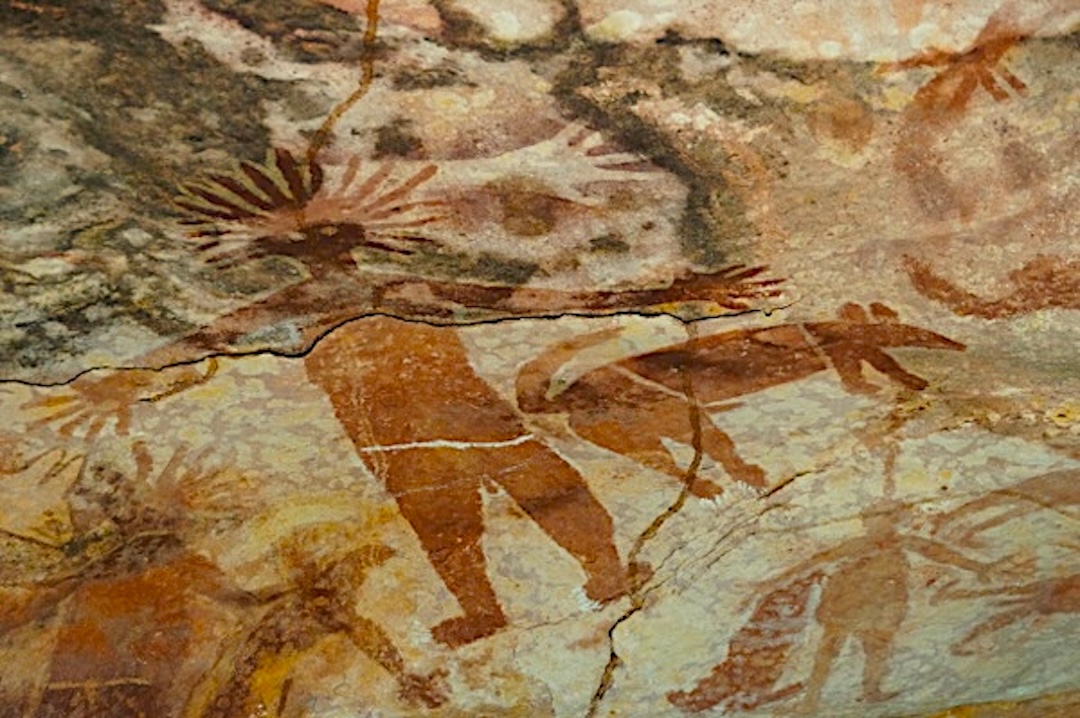
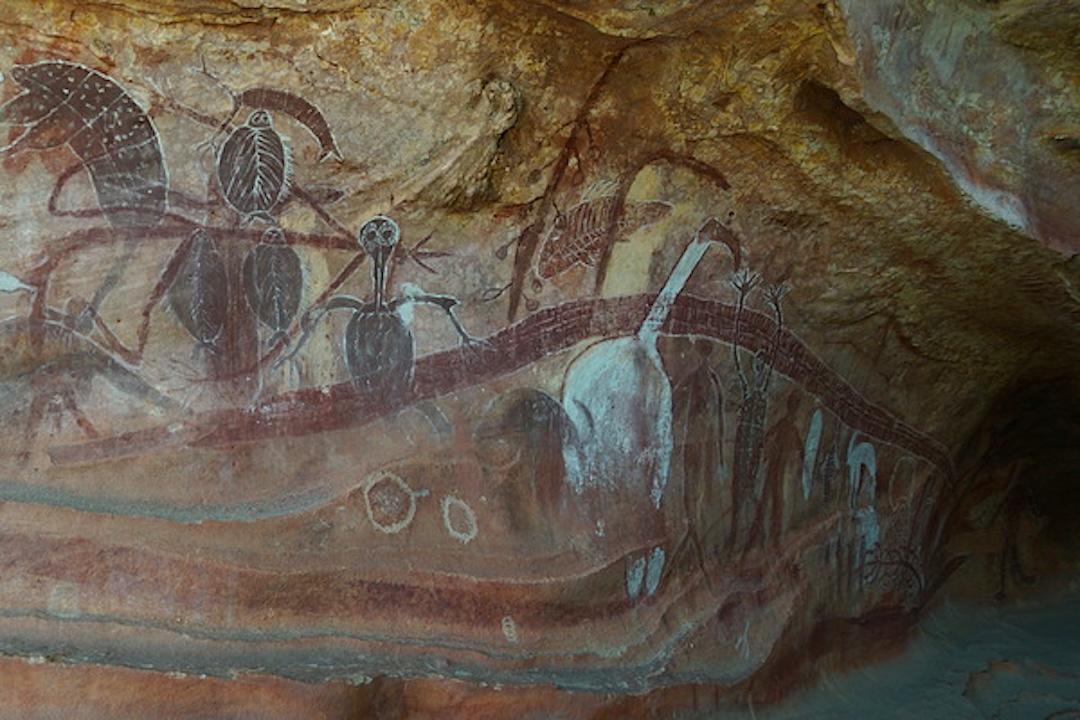
The Quinkan spirit figures are among the most recognisable images in Australian Aboriginal rock art. These elegant anthropomorphic beings are often painted with elongated bodies, flowing limbs, expressive gestures, and dynamic ceremonial movement.
In Aboriginal traditions of Cape York, Quinkans are spirit beings associated with the sandstone escarpments and rocky country of the region. Some traditions distinguish between benevolent spirits and more dangerous supernatural beings inhabiting caves and crevices within the landscape.
Many Quinkan paintings appear highly animated and theatrical compared with the more static forms of other Australian rock art traditions. Some scenes depict ceremonial gatherings, dancing figures, hunting scenes, or interactions between humans and spirit beings.
Although parts of the deeper ceremonial meaning have been lost through colonisation and displacement, the paintings still preserve powerful visual traces of ancient spiritual traditions connected to Country.
How Quinkan Rock Art Differs from Arnhem Land and Kimberley Rock Art
Quinkan Rock Art differs significantly from the major cave painting traditions of Arnhem Land and the Kimberley. Arnhem Land Rock Art is especially famous for sophisticated X-ray imagery showing the internal anatomy of animals and spirit beings, including ribs, organs, and backbones rendered in fine detail. Quinkan paintings, by contrast, are generally far more simplified and monochromatic in design.
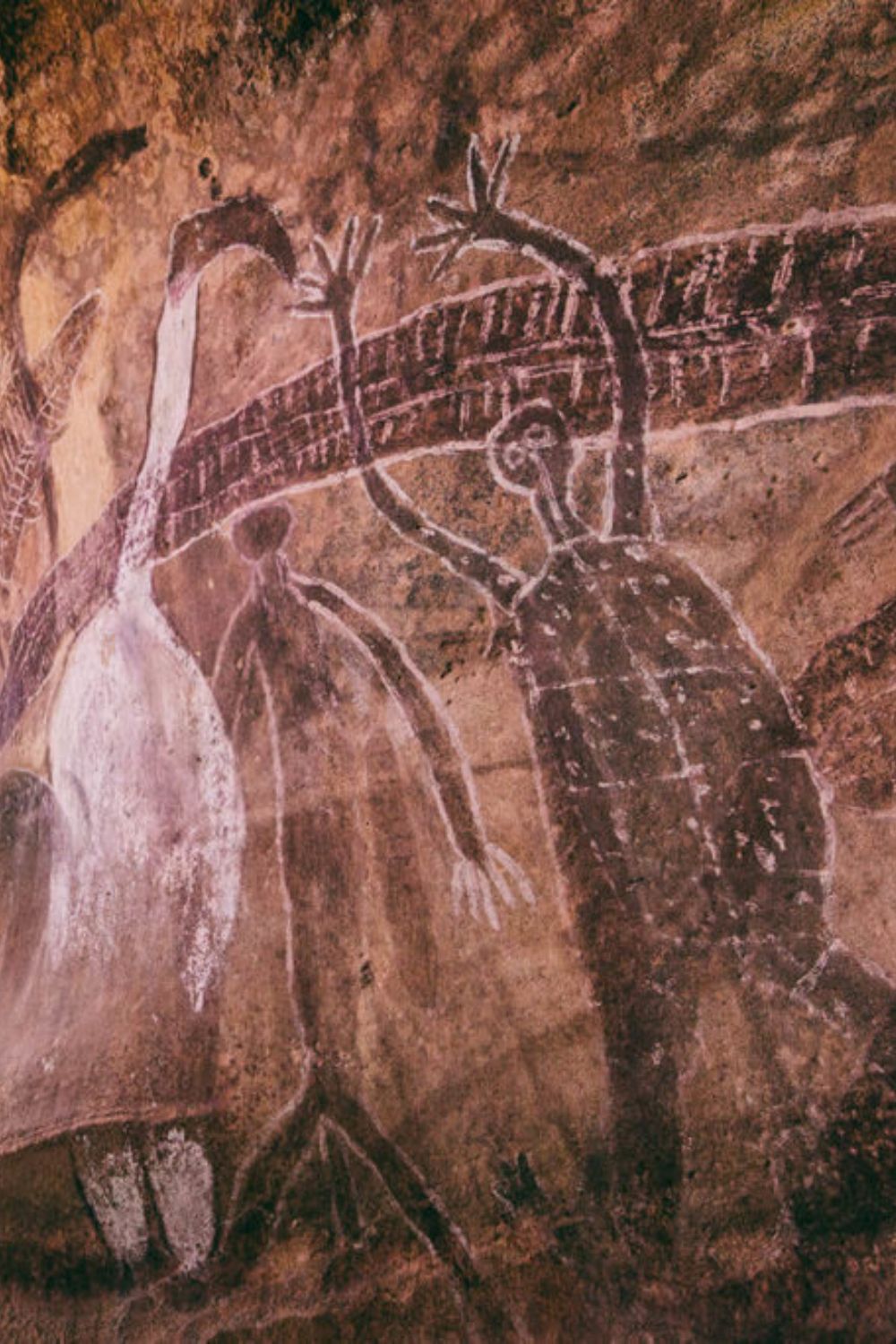
Many Quinkan spirit figures are painted almost entirely in a single red ochre tone, sometimes outlined with a second contrasting colour such as white. Unlike Arnhem Land X-ray paintings, Quinkan figures often contain little or no internal anatomical structure or decoration. Where internal markings do occur, they are usually simple symbolic motifs such as dots, lines, rectangles, or clan-based geometric patterns rather than detailed skeletal or anatomical forms.
Animals in Quinkan Rock Art are also commonly rendered as elegant monochrome silhouettes or simple outlined forms rather than anatomically descriptive X-ray figures. This gives Quinkan painting a highly graphic and animated appearance characterised by flowing outlines, elongated movement, and sparse but expressive detail.
While Kimberley Rock Art often emphasises ceremonial adornment and Arnhem Land painting emphasises anatomy and spiritual essence, Quinkan Rock Art is particularly recognised for its dynamic spirit imagery, simplified ceremonial forms, and striking use of minimal line and colour.
Further Reading
- Quinkan Country — Percy Trezise
- Dream Road: The Journey of B. Wongar — Percy Trezise illustrations and Cape York imagery
- Rock Art of the Quinkan Country — Percy Trezise and Dick Roughsey
- Cape York Rock Art and Culture — George Musgrave & Percy Trezise
- Aboriginal Rock Art of Australia — Robert G. Bednarik
- Reading the Rocks: Aboriginal Rock Art in Kakadu — George Chaloupka
- Australian Indigenous Art — Wally Caruana
- The Prehistory of Australia — John Mulvaney & Johan Kamminga
- The Archaeology of Rock-Art — Christopher Chippindale & Paul Taçon
- Ancestral Connections: Art and an Aboriginal System of Knowledge — Howard Morphy
Threats and Preservation of Quinkan Rock Art
Like many Aboriginal rock art traditions, Quinkan galleries remain highly fragile. Water erosion, flooding, insects, weathering, vandalism, uncontrolled visitation, and climate change all threaten the survival of ancient paintings.
Many paintings have already faded significantly over thousands of years, while some exist only as faint traces of pigment. Researchers and Aboriginal custodians continue to document, monitor, and preserve important sites throughout the Laura sandstone region.
Modern conservation increasingly recognises that Quinkan Rock Art is not simply archaeological evidence, but part of a living cultural landscape connected to Aboriginal identity, oral tradition, and Country.
Why Quinkan Rock Art is Important
Quinkan Rock Art is internationally important because of its artistic sophistication, immense age, and cultural significance. The galleries preserve one of the largest surviving bodies of prehistoric art in Australia and form part of a continuous Aboriginal cultural tradition extending back tens of thousands of years.
The paintings are also important because they preserve traces of ancient spiritual systems, ceremonial practices, and relationships between Aboriginal people and the Cape York landscape. Even where parts of the original meanings have been lost, the imagery still conveys extraordinary visual power and cultural depth.
Today Quinkan Country remains one of the great surviving rock art regions of the world — a remarkable record of Australia’s ancient Aboriginal cultures and their enduring connection to Country.