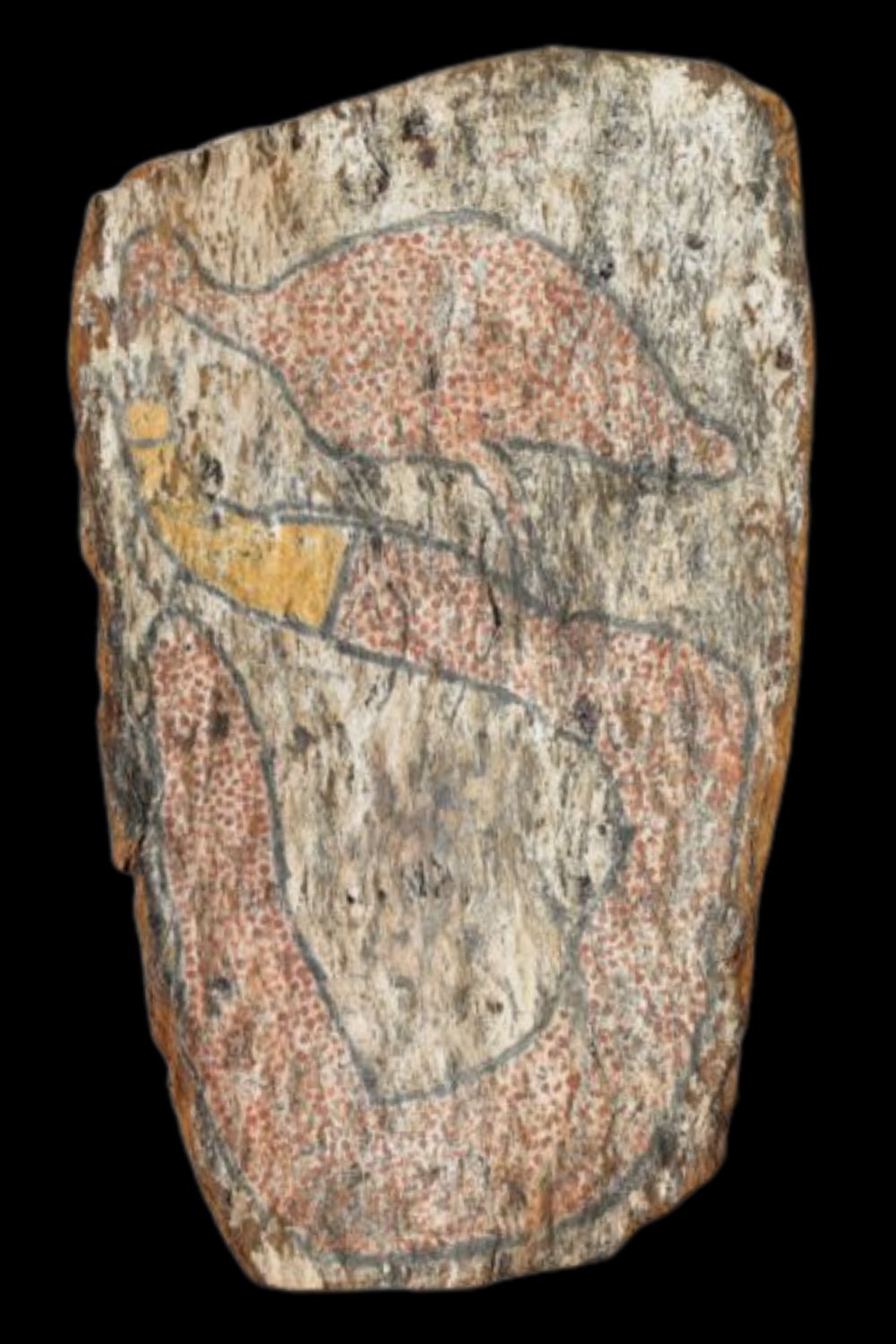
Mickey Bungkuni: Old School Wandjina Bark Painting in the Wunambal Tradition
c. 1902–1978
Wunambal
Landar clan
Hunter River region, north-west Kimberley
Mowanjum
Wandjina Art / Kimberley Art
Bark painting, coolamons and carved boab nuts
Mickey Bungkuni was one of the most important early Wandjina artists from the Kimberley region of Western Australia and a senior Wunambal lawman closely associated with the ceremonial traditions of the Hunter River region. His Aboriginal bark paintings are among the earliest portable expressions of inland Wandjina imagery and preserve a direct connection to the ancestral beliefs, repainting ceremonies, and sacred sites of Kimberley rock Art.
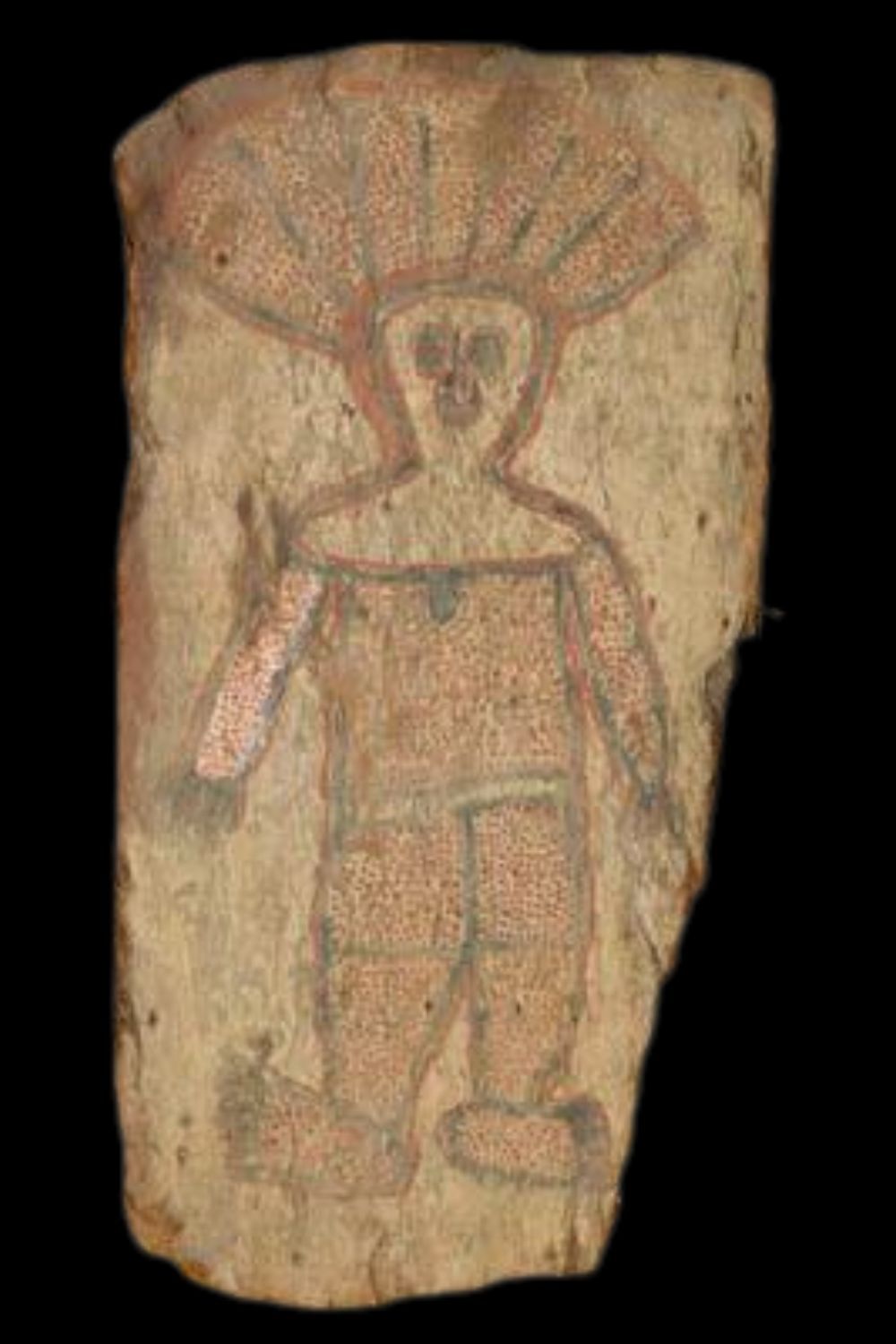
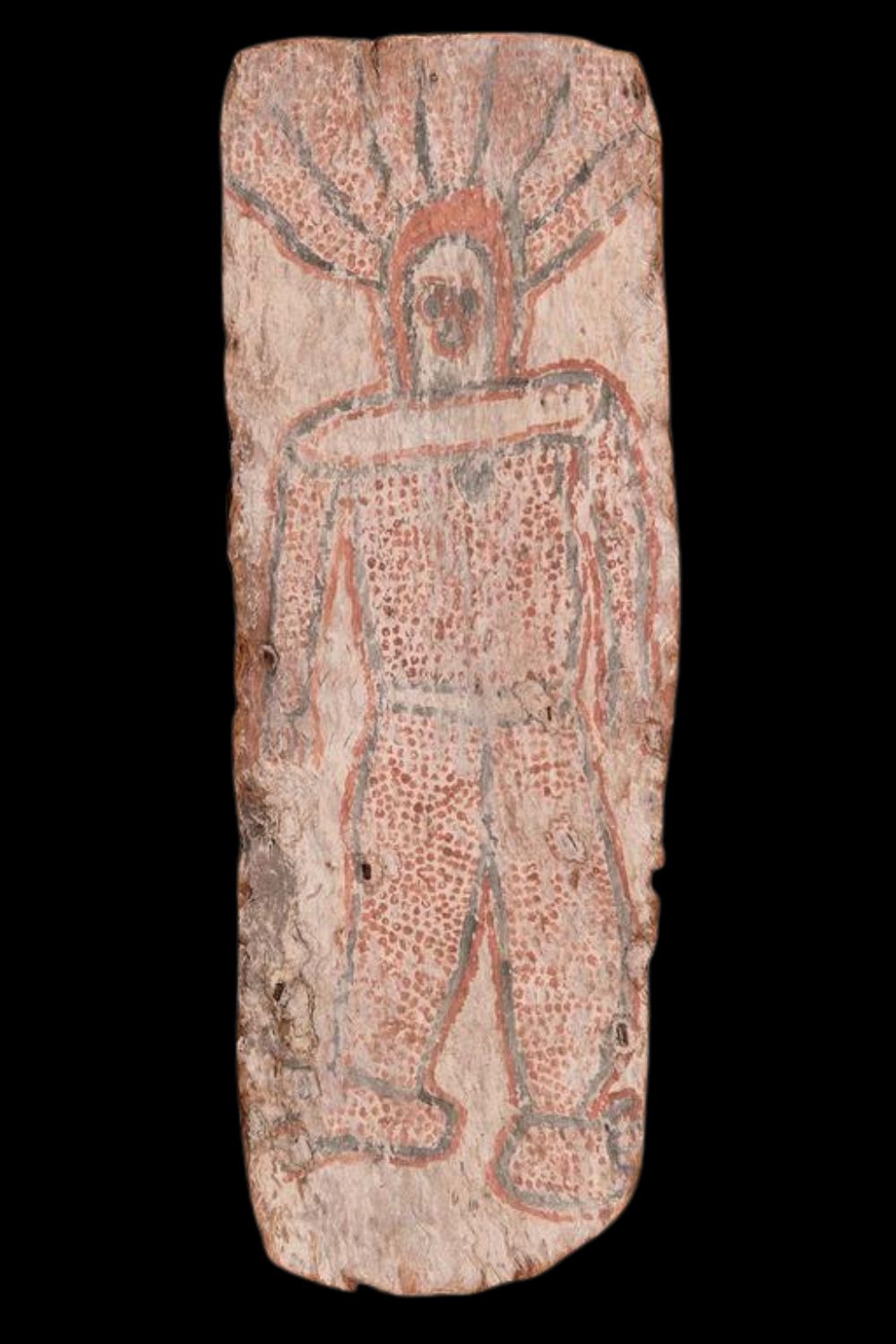
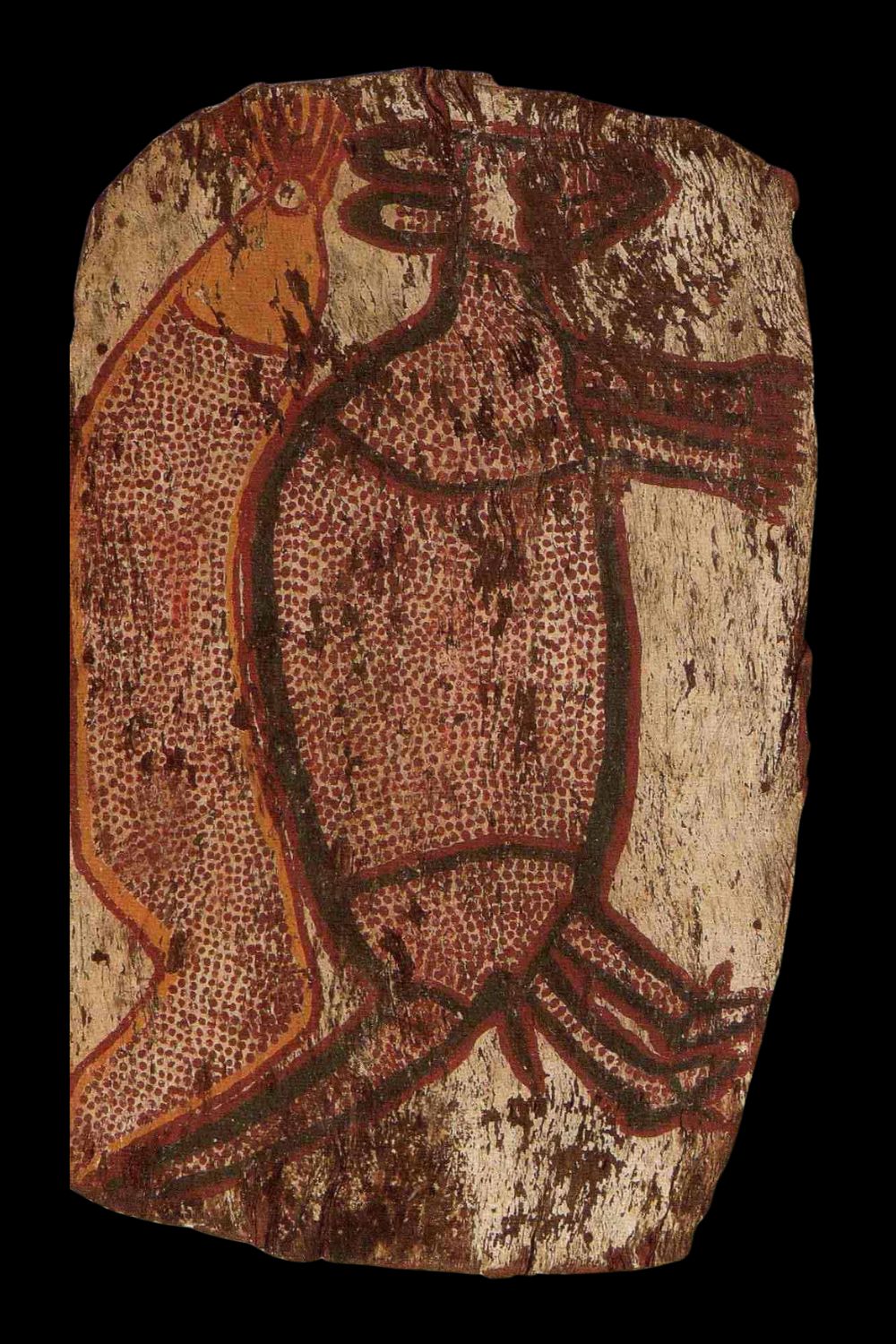
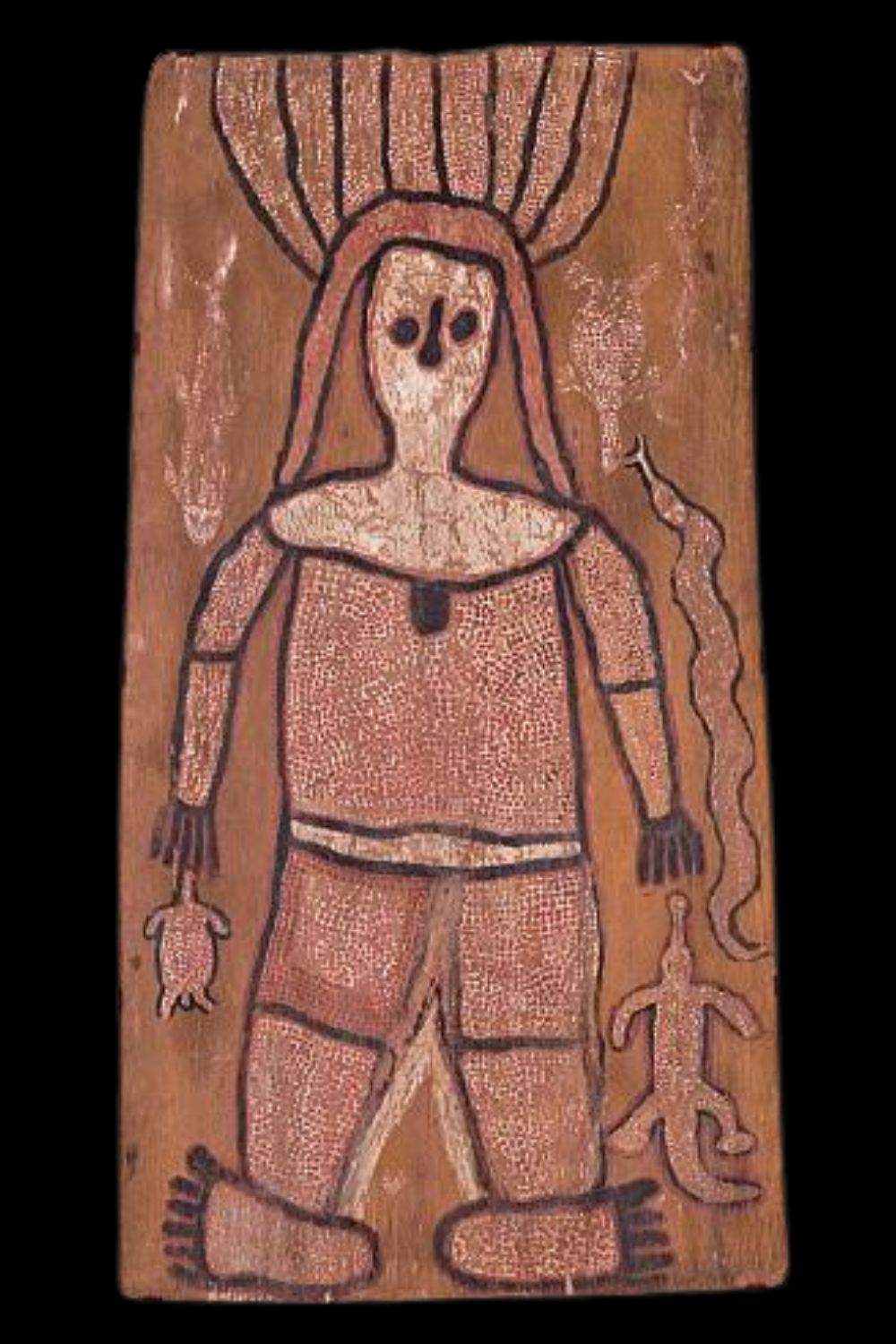
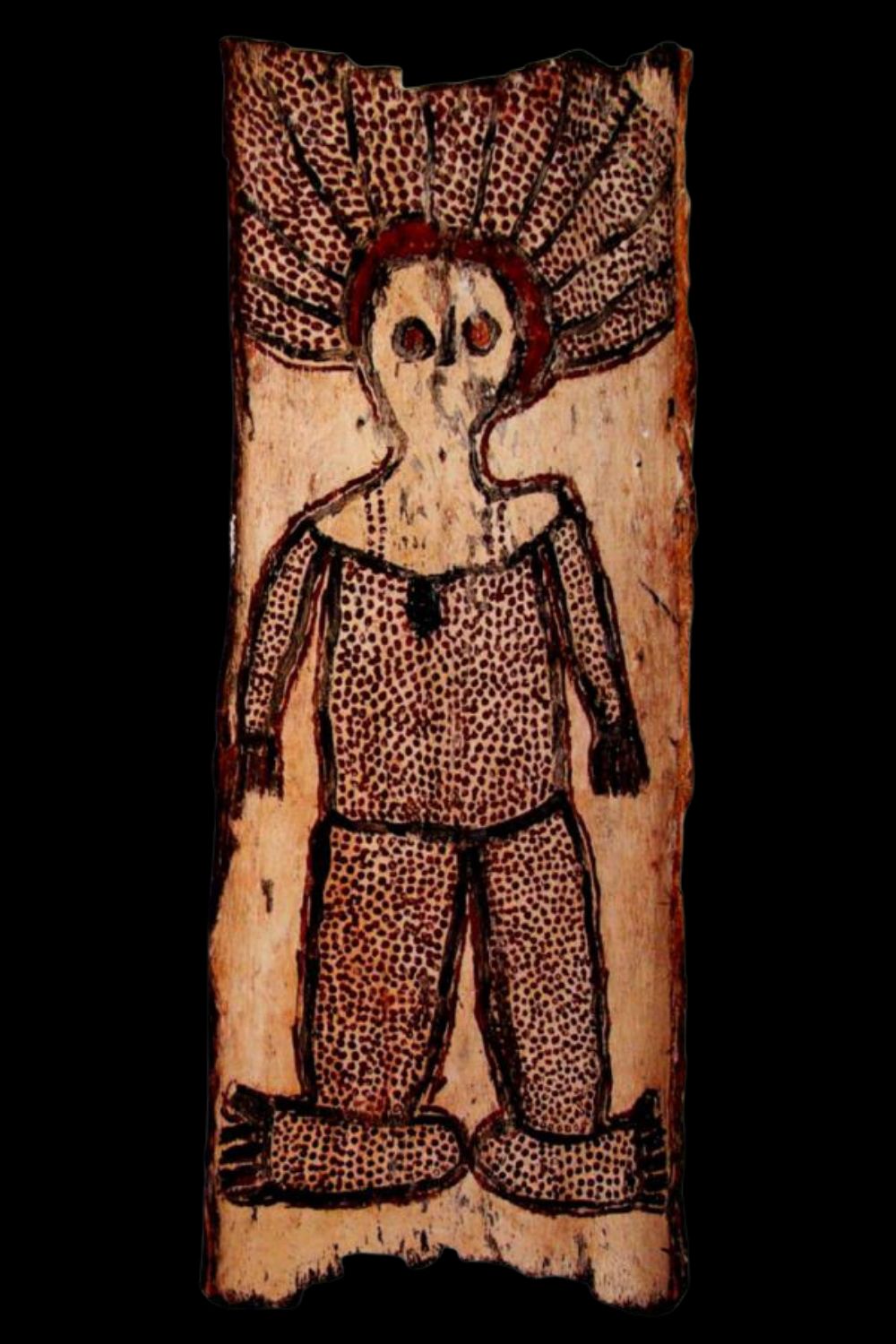
Mickey Bungkuni’s paintings are instantly recognisable for their full-bodied Wandjina figures, dense red ochre dotting, and large fan-shaped feather headdresses associated with inland Wunambal traditions rather than the circular halo forms more commonly found in coastal Wandjina imagery. Painted on thick rough-cut bark using natural ochres, his works possess a powerful ceremonial presence that reflects both cultural authority and great age.
As an Elder at Mowanjum, Bungkuni played an important role in preserving Wandjina traditions during a period of enormous cultural disruption in the Kimberley. He was also an important influence on later artists including his nephew Wattie Karruwara, helping establish one of the foundational family lineages within early contemporary Wandjina painting.
Today genuine Mickey Bungkuni bark paintings are exceptionally rare and highly sought after by collectors. If you believe you have an example of this artists work feel free to contact me.
Identifying an Authentic Mickey Bungkuni Bark Painting
For those who suspect they may possess an original bark painting by Mickey Bungkuni, careful stylistic comparison is the most reliable method of attribution. Bungkuni’s work is notable for its adherence to the inland Wunambal Wandjina style, distinct from the more coastal variations.
Stylistic Characteristics
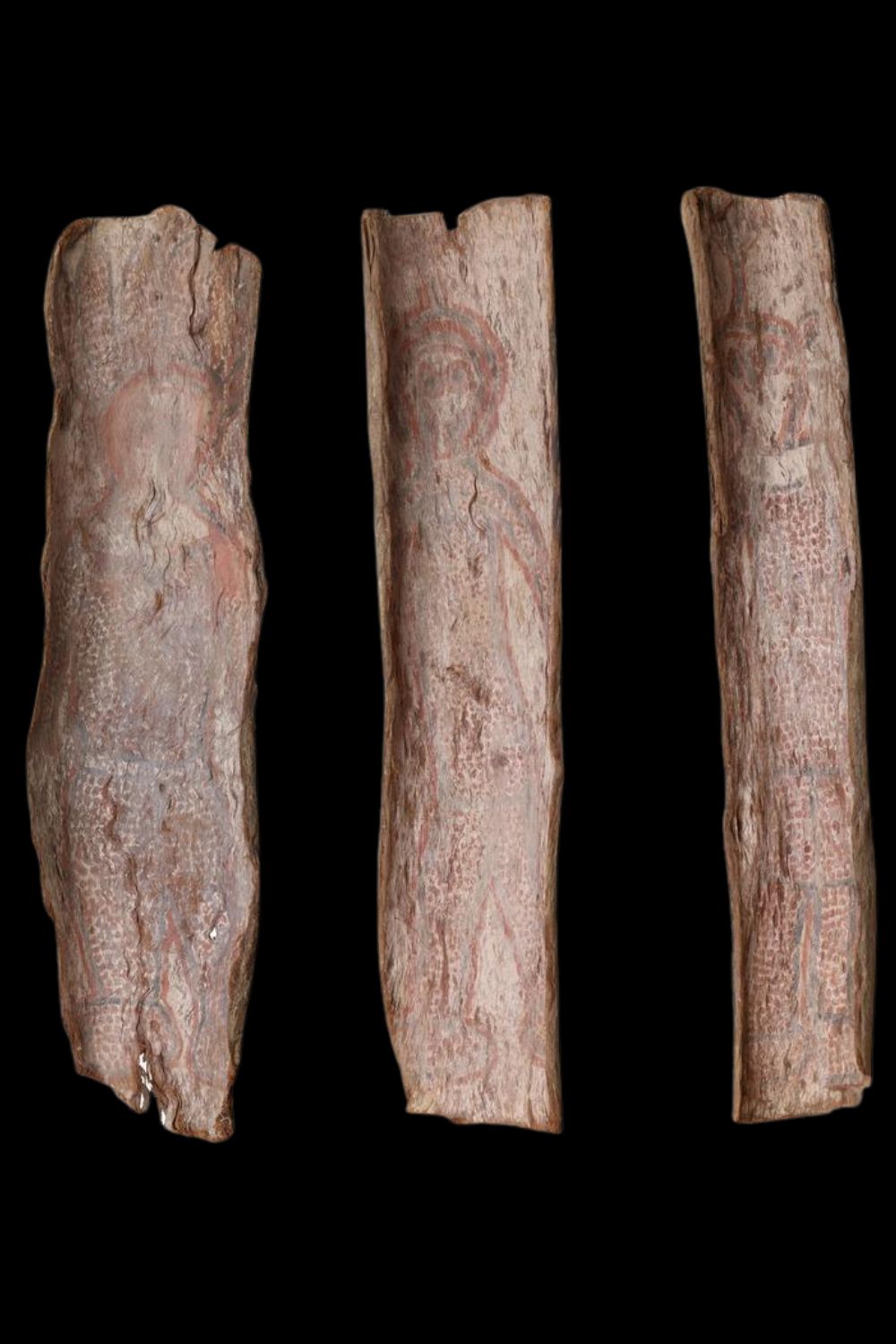
- Wandjina Iconography: Bungkuni’s Wandjina figures are rendered with a striking balance of refinement and spiritual power. They are typically full-bodied, standing in solemn stillness, their forms coated in dense patterns of red ochre dots—a signature element across many of his works.
- Headdress Motifs: Perhaps the most distinctive aspect of his Wandjina paintings is the large fan-shaped headdress, radiating vertical lines of ochre and white. This differs markedly from the rounded halos common in coastal Wandjina representations, and reflects the inland traditions of the Hunter River basin, from which Bungkuni drew cultural authority.
- Facial Features: Bungkuni’s figures often display small, tightly drawn eyes and noses, with finely articulated hands and feet. Unlike some related artists, his Wandjina figures typically omit eyelashes, while occasionally including softly arched eyebrows, giving his subjects a quiet, dignified presence.
- Ground and Medium: His barks are painted with natural ochres on a white background, using thick, rough-cut bark, typical of the Kimberley region. This thick bark often has knots and a crinkled texture. This physicality lends the work an earthy authenticity prized by collectors.
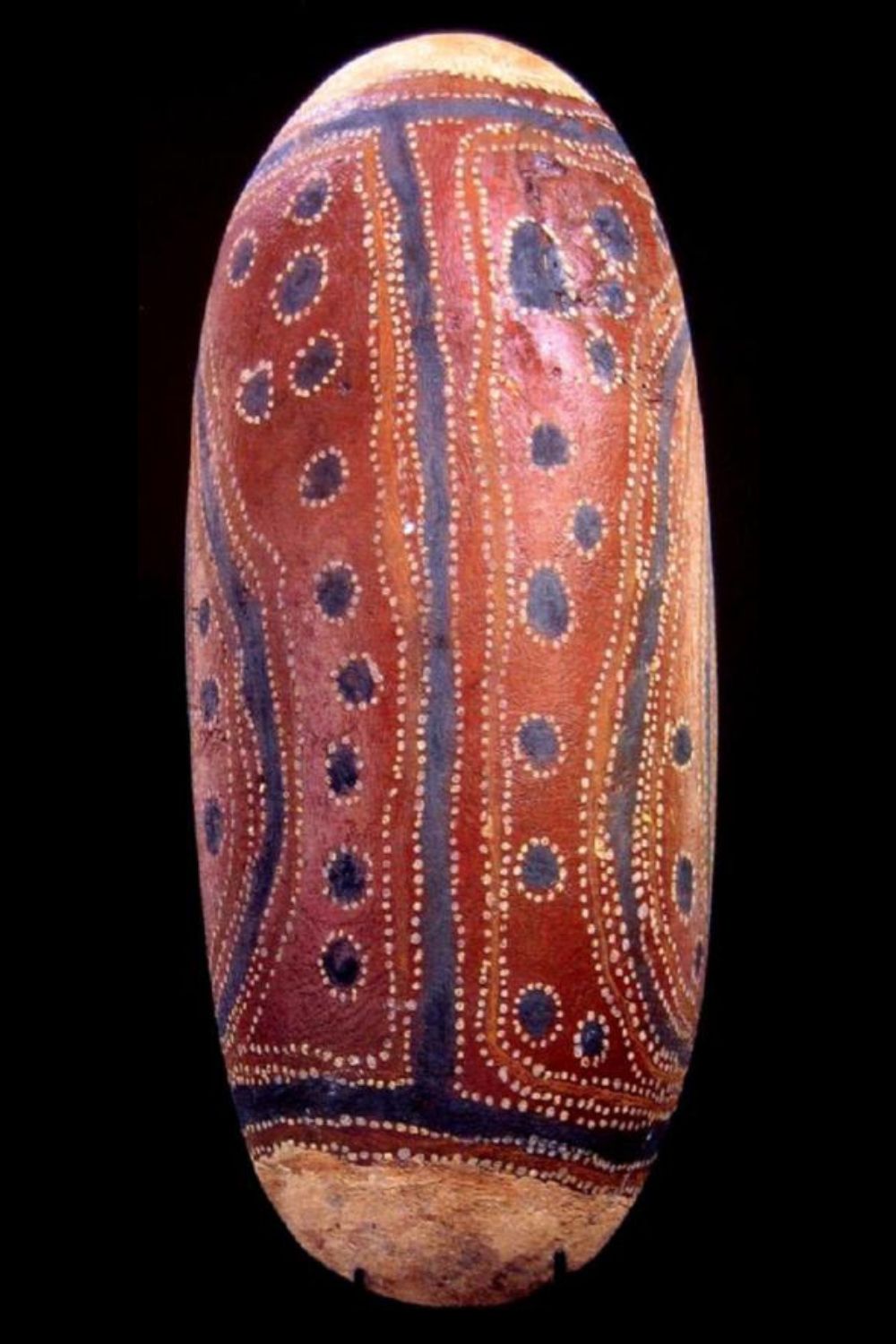
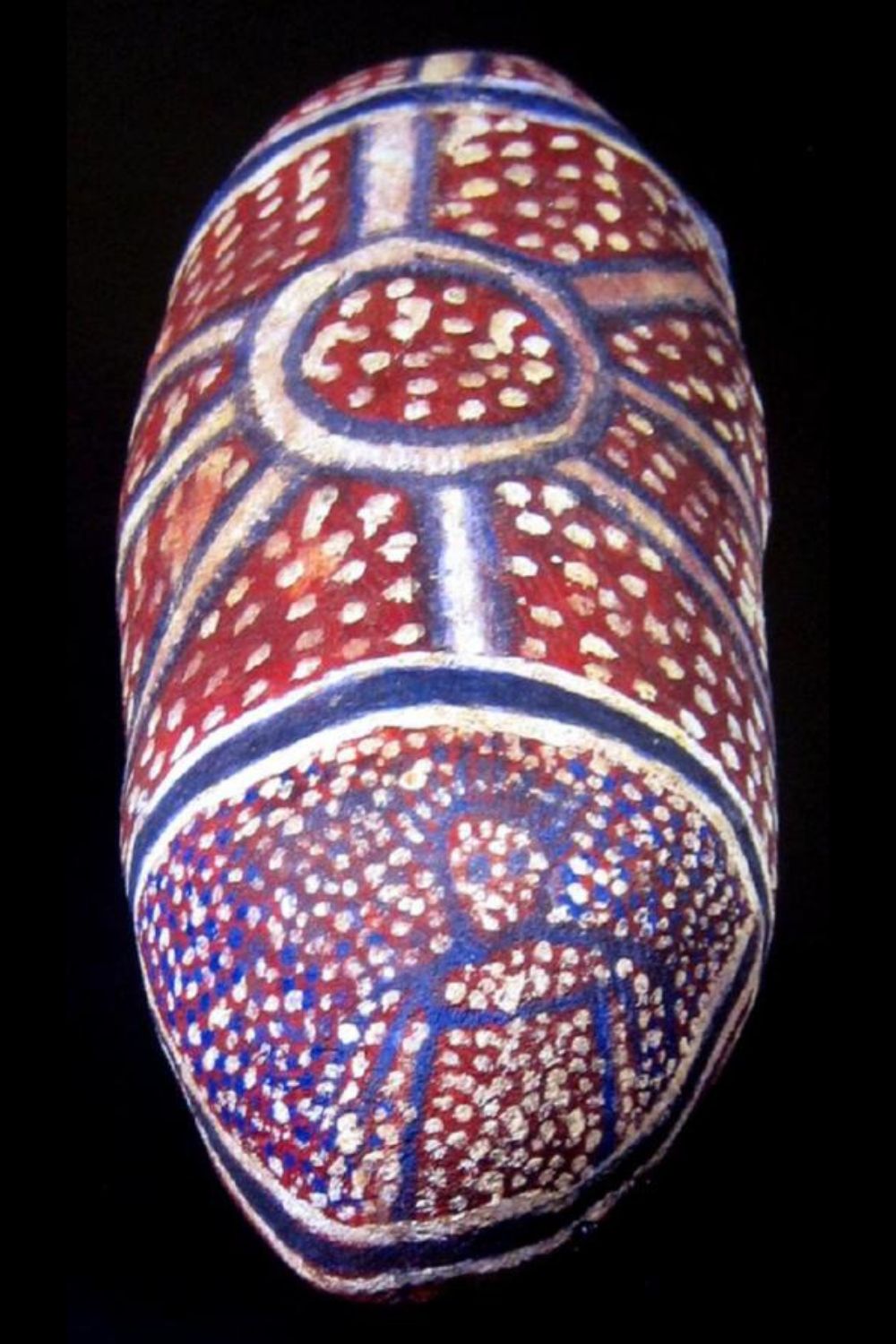
- Other Mediums In addition to bark, Bungkuni also painted on coolamons, and carved boab nuts, expanding his expression of Wunambal cosmology into other media.
Comparison With Other Wandjina Artists
Mickey Bungkuni was Wattie Karruwara’s father’s brother and, under Wunambal kinship systems, would have been regarded socially and culturally as a “father” rather than simply an uncle. As a result, the paintings of Wattie Karruwara and Mickey Bungkuni can sometimes be difficult to distinguish. Mickey Bungkuni’s bark paintings, however, are often older and frequently display weaker pigment binders and greater surface deterioration.
Because of their close family and ceremonial connections, both artists share the distinctive inland Wunambal tradition of depicting Wandjina with large fan-shaped feather headdresses rather than the circular halo forms more commonly associated with coastal Wandjina imagery. This elongated radiating headdress style is strongly connected to inland Wunambal Wandjina rock art traditions and the Hunter River region.
This distinctive inland headdress tradition makes Wattie Karruwara’s paintings easily distinguishable from artists such as Ignatia Djanghara, Jack Karedada, and Alec Mingelmanganu, whose Wandjina figures typically possess evenly balanced halo forms extending as far from the sides of the head as the top.
Cultural and Ancestral Legacy
Born circa 1902 and passing in 1978, Mickey Bungkuni lived much of his life in and around Mowanjum, an important Aboriginal community near Derby in Western Australia. He was a fully initiated man and a senior Elder within the Wunambal tradition, actively involved in repainting Wandjina figures in remote rock shelters for ceremonial renewal.
Bungkuni’s Wandjina paintings were not created purely for aesthetic purposes—they are spiritual documents, bearing the ancestral presence of beings believed to have shaped the land and later become part of it. In the Wunambal worldview, these ancestral spirits lay down in rock shelters, merging with the landscape, and Bungkuni’s practice of transferring this sacred imagery onto bark reflects both reverence and innovation.
This floral reference is not incidental; in Aboriginal cosmology, clan identities are often rooted in specific landscape features, flora, or fauna, each carrying ancestral narratives and spiritual obligations. The Landar name thus speaks to Bungkuni’s custodianship of specific ecological and mythological knowledge within the Wunambal cultural bloc of the northwest Kimberley.
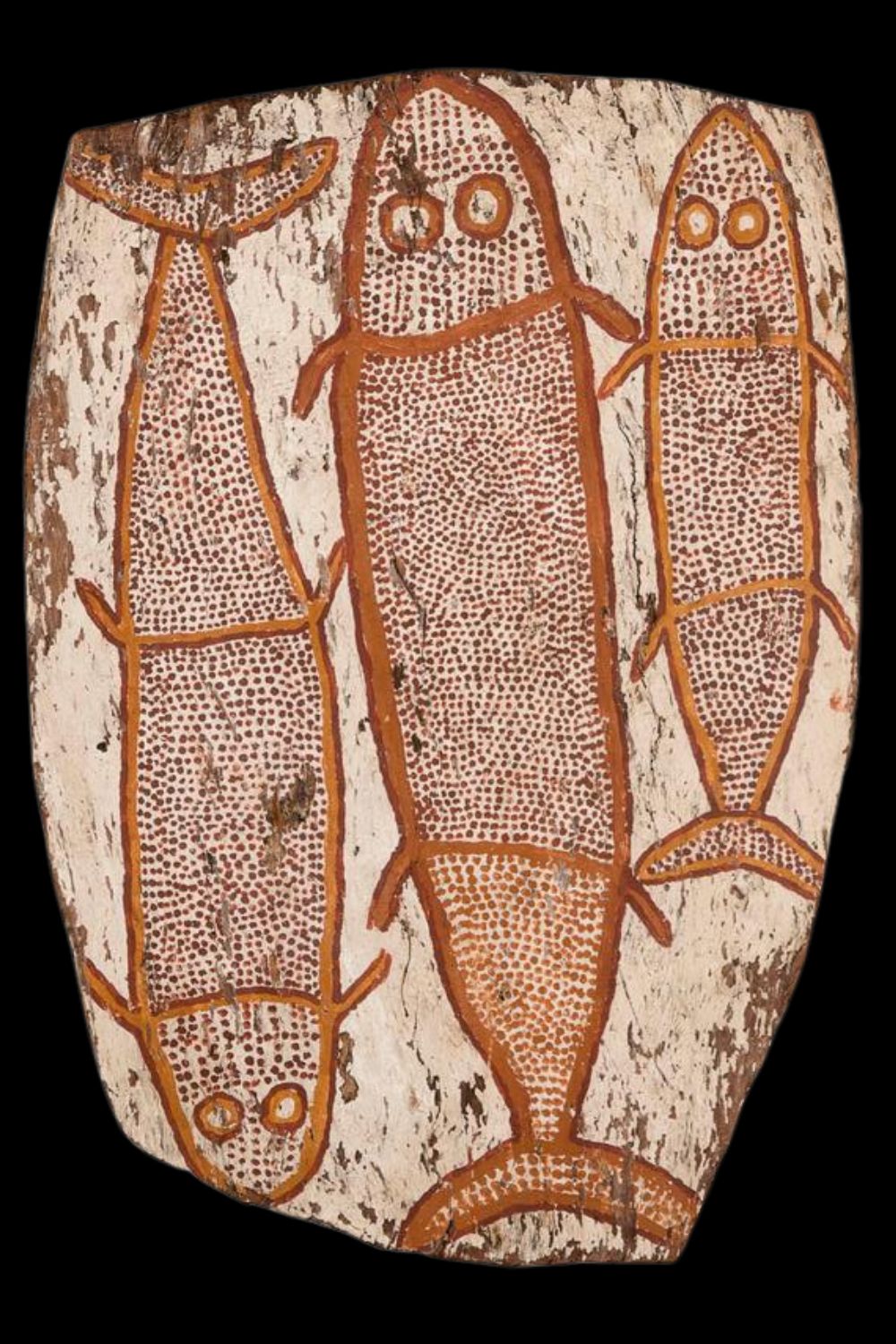
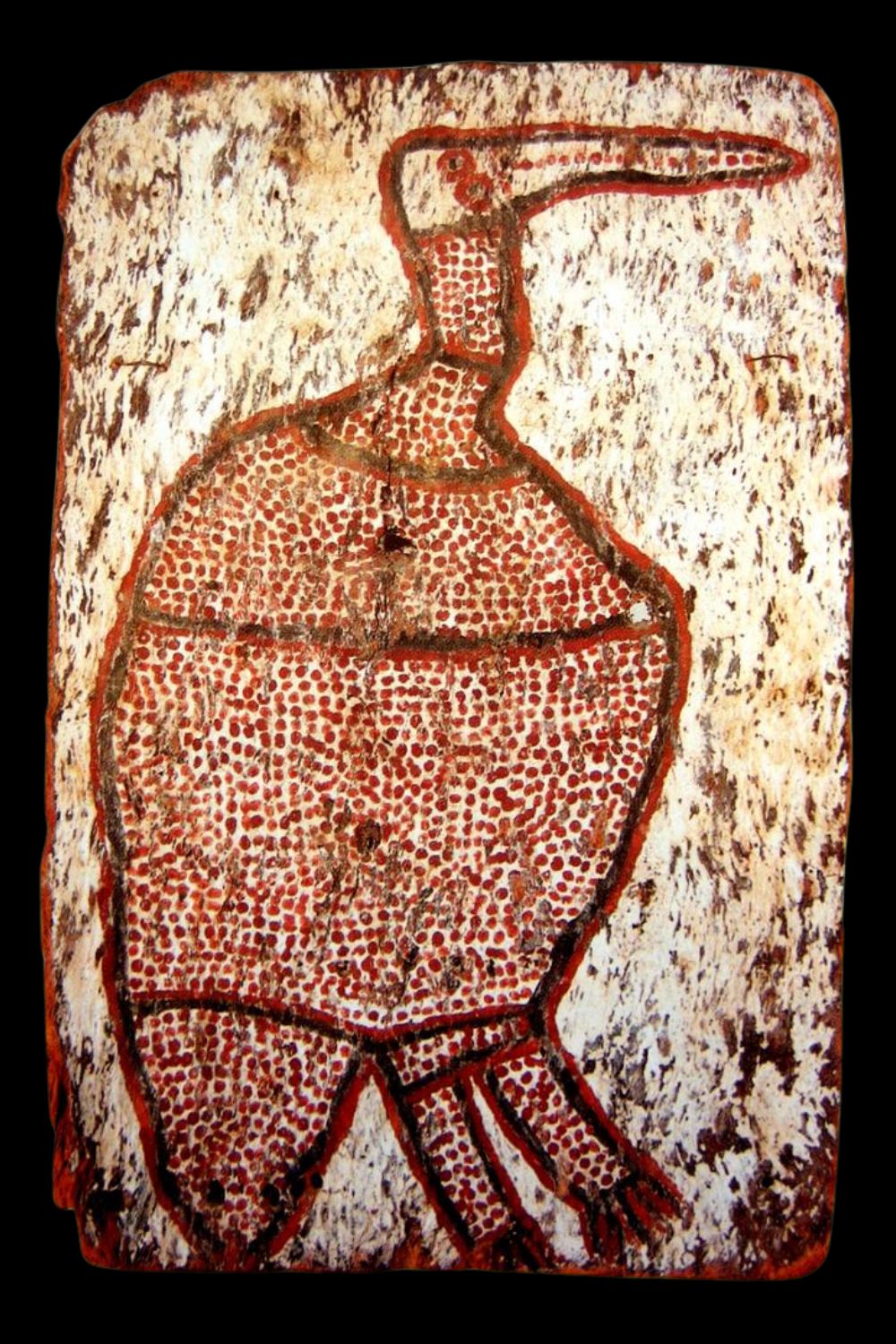
In addition to his clan identity, Mickey Bungkuni held the Brolga (karangkuli) as his patrilineal moiety totem—a core spiritual identity inherited through his father’s line. The Brolga, celebrated for its stately dance and long-legged elegance, features prominently within ceremony, Dreaming narratives, and animals in Aboriginal art across northern Australia. For Bungkuni, this ancestral being represented not merely symbolic affiliation but an important spiritual presence connected to ceremonial responsibility, identity, and cultural authority.
Bungkuni also played an important role in influencing the next generation of Wandjina painters. Wattie Karruwara, who referred to him as a second father under Wunambal kinship traditions, was strongly influenced by both his ceremonial knowledge and artistic practice. The visual similarities between their paintings reflect a direct lineage of cultural transmission and mentorship within the inland Wunambal tradition.
As one of the earliest generations of portable Wandjina bark painters, Mickey Bungkuni was working before later artists such as Charlie Numbelmoore and Alec Mingelmanganu achieved broader recognition within the developing Kimberley Aboriginal art movement.
Mickey Bungkuni is also sometimes called Mickey Bunguna
All images in this article are for educational purposes only.
This site may contain copyrighted material the use of which was not specified by the copyright owner.
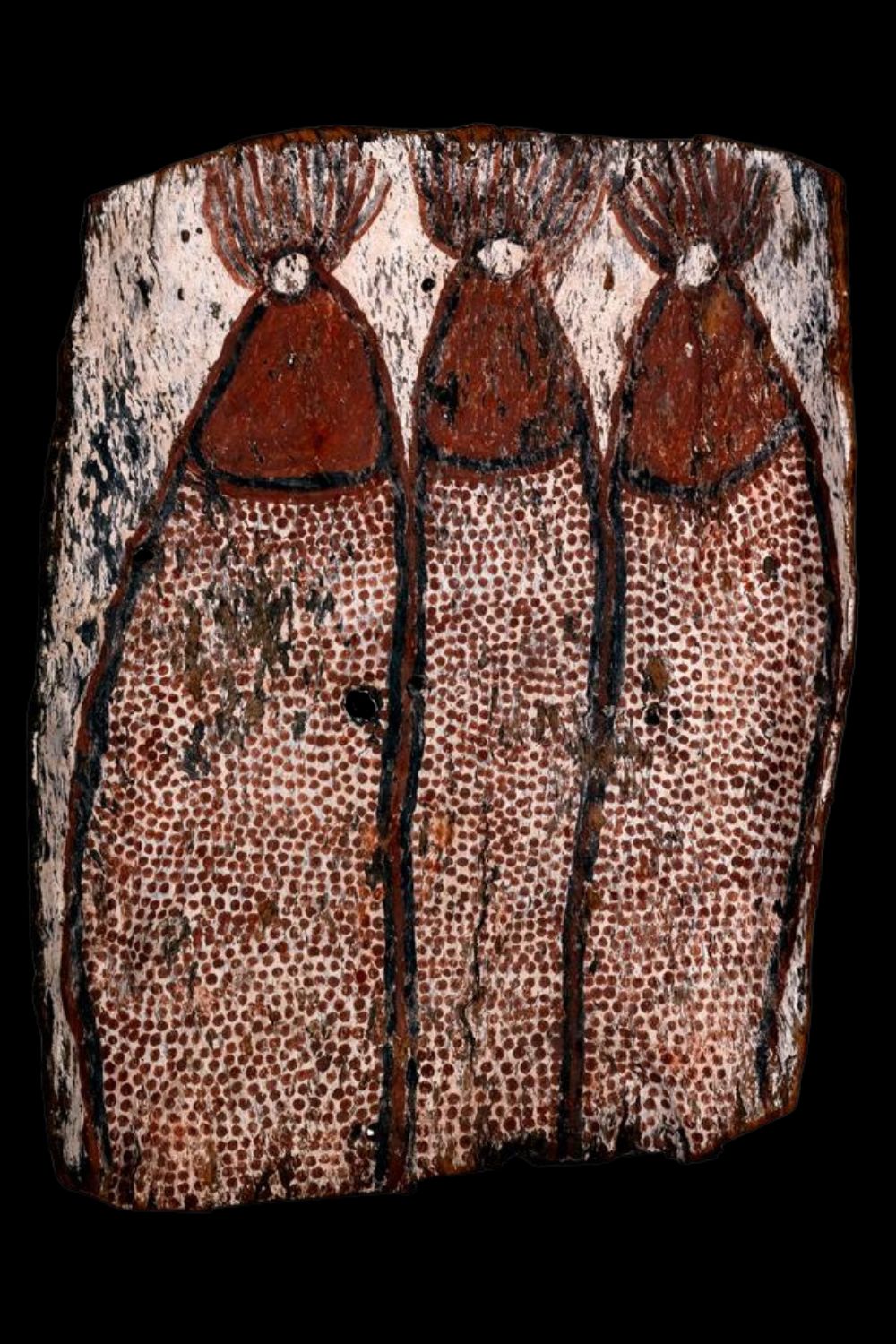
Yam Bark painting
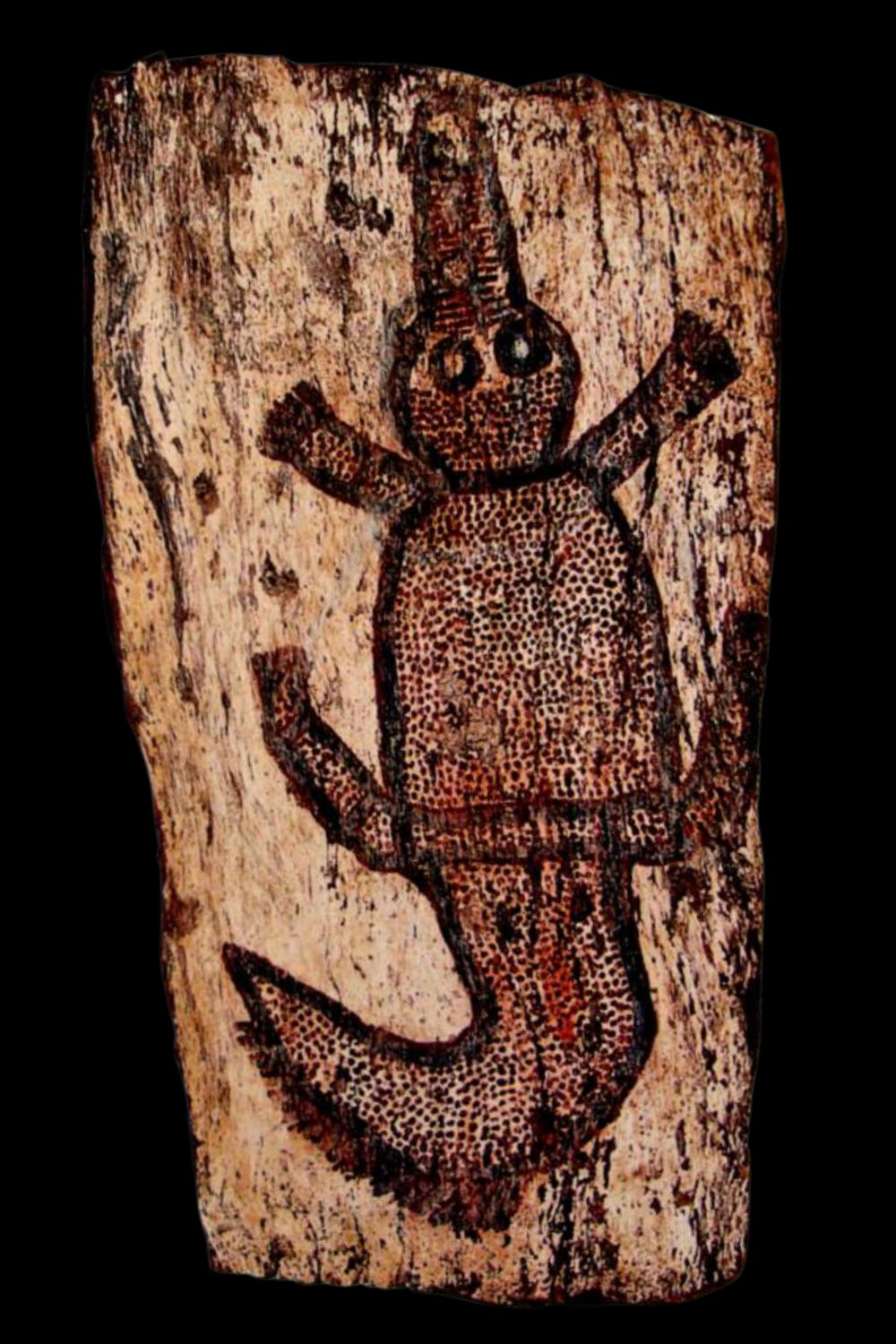
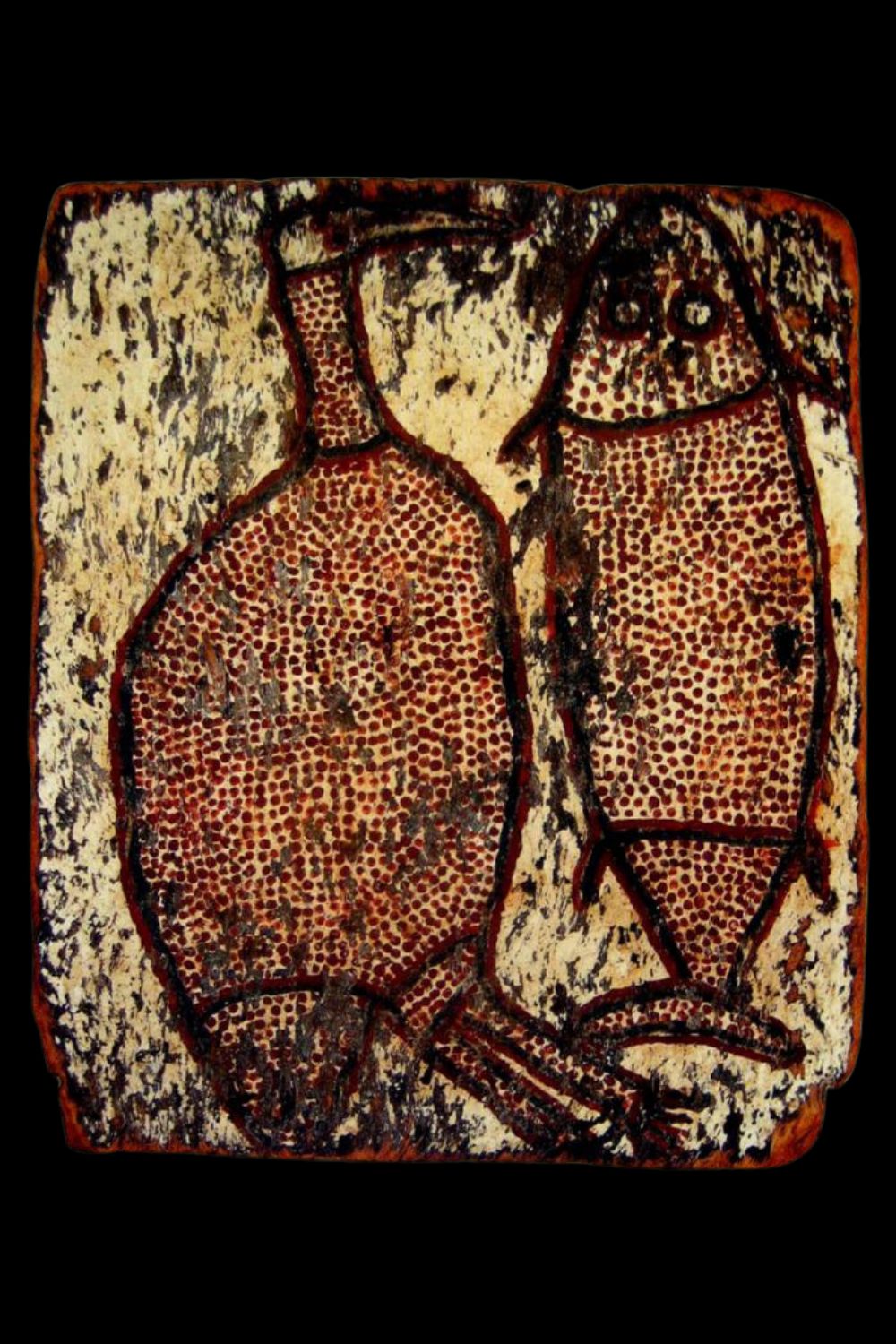
This rare Yam Painting by Mickey Bungkuni, senior Wunambal lawman and renowned Wandjina painter, dates to the early 1960s. The irregular, rough-cut bark surface—typical of pre-1964 works—suggests it was created before anthropologist John McCaffrey introduced prepared boards to artists in the Mowanjum community.
Stylistically, the composition closely echoes a work by Bungkuni’s nephew, Wattie Karruwarra, painted for McCaffrey and sold at Sotheby’s (2003, Lot 17). Both depict karnmangku yams (Dioscorea transversa), a staple bush food and spiritually significant plant. Similar yam forms appear in Kimberley Rock Art, reinforcing the cultural continuity between sacred sites and portable art.
As a senior custodian, Bungkuni held the right to depict ancestral plant beings. This piece—expressed in delicate ochre forms—blends ecological knowledge with ceremonial importance.
The Aboriginal artefact value of this work is enhanced by its age, rarity, and cultural authenticity. Early bark paintings by Bungkuni are exceptionally scarce and increasingly sought after by collectors and institutions.
All images featured in this article are presented strictly for educational and informational purposes.
This website may include copyrighted material for which specific authorization has not been obtained from the copyright owner.
All such images are presumed to be the intellectual property of the respective artist or their estate, and are used in accordance with principles of fair dealing or fair use under applicable copyright law.
Frequently Asked Questions About Mickey Bungkuni
Are Mickey Bungkuni bark paintings rare?
Yes. Genuine Mickey Bungkuni bark paintings are now exceptionally rare, particularly early examples painted on thick rough-cut bark with strong provenance. Because many works were created during the formative years of portable Wandjina painting, surviving examples are often fragile and highly sought after by collectors and institutions.
Did Mickey Bungkuni repaint Wandjina rock shelters?
Yes. As a senior Wunambal lawman and ceremonial Elder, Mickey Bungkuni was involved in the repainting and maintenance of Wandjina figures within Kimberley rock shelters. These repainting ceremonies were spiritually important acts connected to maintaining the power and presence of the Wandjina ancestral beings.
Why do Mickey Bungkuni’s Wandjina have fan-shaped headdresses?
Mickey Bungkuni’s Wandjina paintings belong to the inland Wunambal tradition associated with the Hunter River region. In this style, Wandjina are frequently depicted with elongated feather-like headdresses rather than the circular halo forms more commonly associated with coastal Wandjina imagery.
What materials did Mickey Bungkuni paint on?
Although best known for bark paintings, Mickey Bungkuni also painted on coolamons and carved boab nuts. His works were usually created using natural ochres applied to thick Kimberley bark with rough textured surfaces.
Are Mickey Bungkuni paintings valuable?
Yes. Mickey Bungkuni paintings are highly regarded within the market for early Kimberley Aboriginal art because of their rarity, age, ceremonial significance, and strong connection to early Wandjina painting traditions. Works with strong provenance, early collection history, or unusual subjects are especially sought after.
What is the difference between Mickey Bungkuni and Wattie Karruwara paintings?
Because Mickey Bungkuni and Wattie Karruwara were closely related and shared the same inland Wunambal traditions, their paintings can sometimes appear similar. However, Mickey Bungkuni’s works are often older and frequently display weaker pigment binders, heavier surface deterioration, and a more weathered appearance than later paintings by Wattie Karruwara.
Mickey Bungkuni Bark Painting Images
The following images are not a complete list of works by Mickey Bungkuni but give a good feel for the variety and style of this artist.