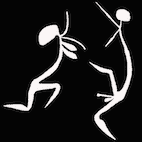
January Nangunyari Namiridali Bark Painter
1918–1973
Kunwinjku
Djalama clan, Yirridjdja moiety
Croker Island / Western Arnhem Land
Minjilang (Croker Island)
Oenpelli Art / Western Arnhem Land Art
Bark painting
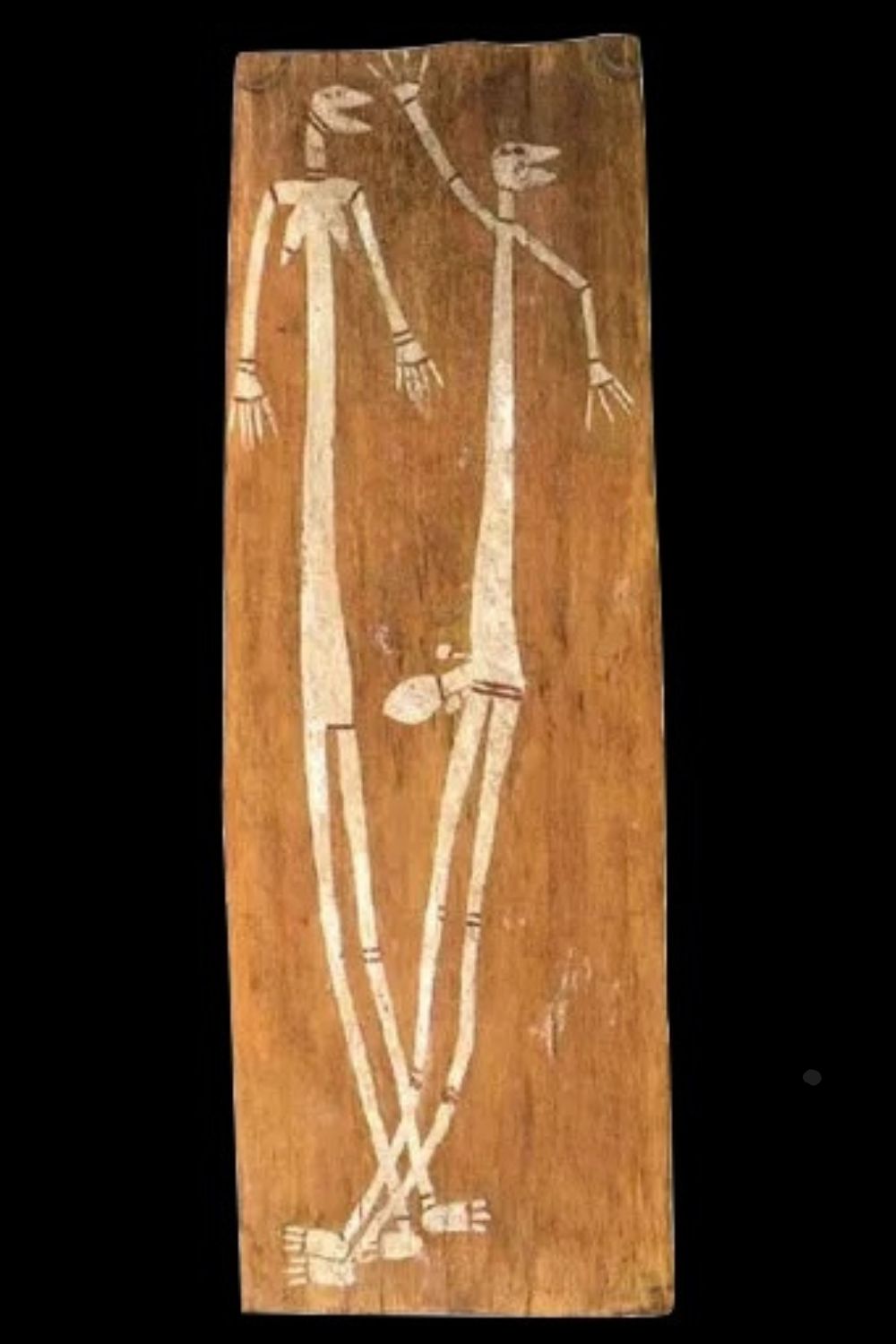
January Nangunyari Namiridali (1918–1973) (also spelled Nongunyari, Nanganyari, and Nangunjari) was a pioneering Aboriginal bark painter from Croker Island in western Arnhem Land, celebrated for the bold simplicity and animated vitality of his animated Mimih spirit paintings. A member of the Djalama clan, Yirridjdja moiety, and a speaker of the Kunwinjku language, Nangunyari developed a highly distinctive style that preserved the raw immediacy of early Croker Island bark painting traditions. His works are instantly recognisable for their minimal use of rarrk, open compositions, and spirited figures painted with remarkable freedom and confidence.
Working at Minjilang Mission during the same formative period as important western Arnhem Land artists such as Jimmy Midjaumidjau and Paddy Compass Namatbara, Nangunyari helped shape what collectors now recognise as the early Oenpelli style of bark painting. Unlike the densely crosshatched traditions that later emerged across Arnhem Land, his paintings emphasise the vitality and movement of the figure itself rather than intricate internal patterning. Many of his Mimih spirits possess a playful elegance and fluidity closely connected to the ancient Arnhem Land rock art traditions of the stone country escarpments.
If you have a January Nangunyari bark painting to sell, please contact me. If you would like an indication of its value, feel free to send clear JPEG images of the front and back. Early Croker Island barks remain highly important within the history of western Arnhem Land painting and are particularly admired for their expressive freedom and strong connection to early ceremonial and rock art traditions.
Artistic Style and Subjects
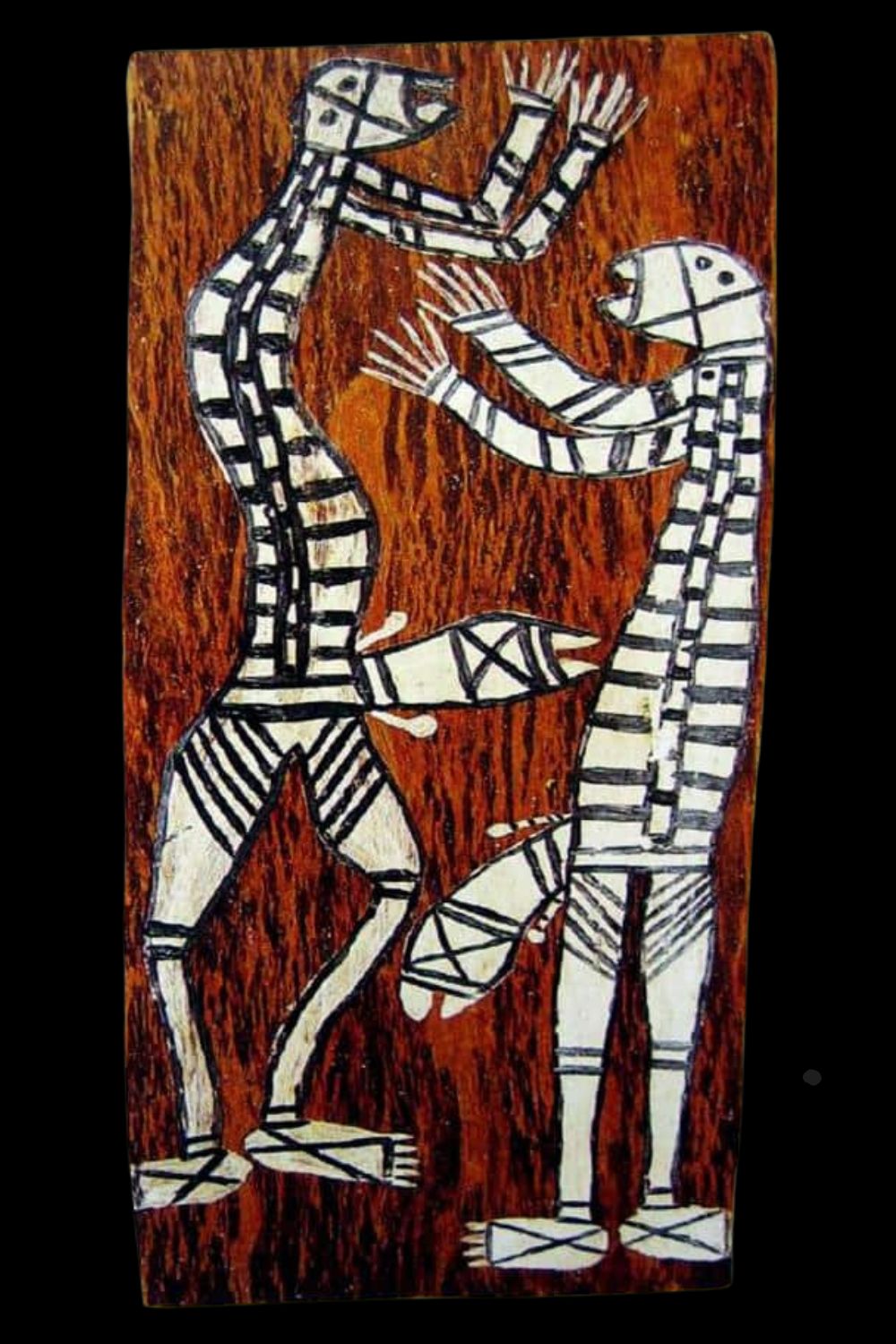
Nangunyari’s paintings typically feature tall, slender Mimi spirits—mischievous ancestral beings central to Western Arnhem Land mythology—often depicted mid-gesture, appearing to wave or dance. His figures are rendered predominantly in white, with black or red detailing, set against a flat monochrome ground of deep ochre red or warm yellow. Some works carry a distinctive “zebra-stripe” quality, created through parallel lines or bold blocks of colour in place of cross-hatching (rarrk), which he never adopted. His compositions are deliberately sparse, with no unnecessary elements, allowing the subject’s personality and ceremonial significance to dominate the viewer’s attention.
While his most collected works focus on Mimi spirits, Nangunyari also painted important totemic animals, including Namanjwarre, the saltwater crocodile. For the Yirridjdja moiety, Namanjwarre is a ceremonial guardian—protector of the sacred objects of the Mardayin ceremony, an important initiation ritual for Kunwinjku speakers. This totem is danced in restricted ceremonial contexts and linked to sacred sites near Kurrindin in the Liverpool River District.
Biography and Legacy
Documented by anthropologists in the 1960s as part of the first group of Croker Island artists to receive formal recognition, January Nangunyari Namiridali’s work is sometimes misattributed to contemporaries such as Paddy Compass Namatbara, Jimmy Mijaumijau, or Wagbara. Today, his bark paintings are prized in the art market for their historical importance, expressive freedom, and authentic reflection of Western Arnhem Land’s pre-contact artistic traditions.
Collectors seeking to authenticate or value a January Nangunyari Namiridali bark painting are encouraged to compare stylistic traits—particularly the minimalism of his Mimi figures, monochrome ochre backgrounds, and absence of rarrk—with known works held in museum and private collections.
Meaning of January Nangunyari Namiridali Bark paintings
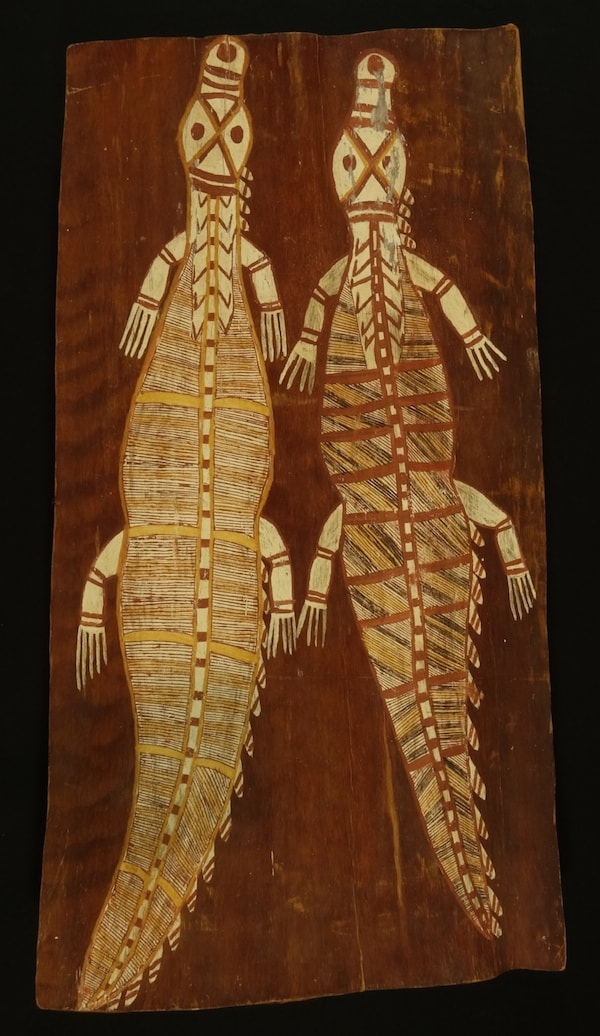
Namanjwarre The Crocodile
Namanjwarre, the saltwater crocodile, Corcodylus porosus. The crocodile Namanjwarre is a Yiridja moiety totem.
The estuarine crocodile or Namanjwarre is the protector of the sacred objects of the Mardayin ceremony. The Mardayin ceremony is an important rite of passage for Kuninjku language speakers of Western Arnhem Land. Namanjwarre would devour anyone who transgressed from the correct ceremonial protocol.
Crocodiles are rarely killed for food but their eggs are sought after during the wet season when the females are nesting. A major crocodile sacred site exists near the outstation of Kurrindin, in the Liverpool River District.
Namanjwarre is an important totem and is danced in the sacred and secret ritual of the Mardayin ceremony.
Like many animals portrayed in Aboriginal art it isn’t just an animal but has an entire Dream Time Story associated with it.
Other artists who paint nandjiwarra include Mick Kubarrku, Yirawala and Mawurndjul
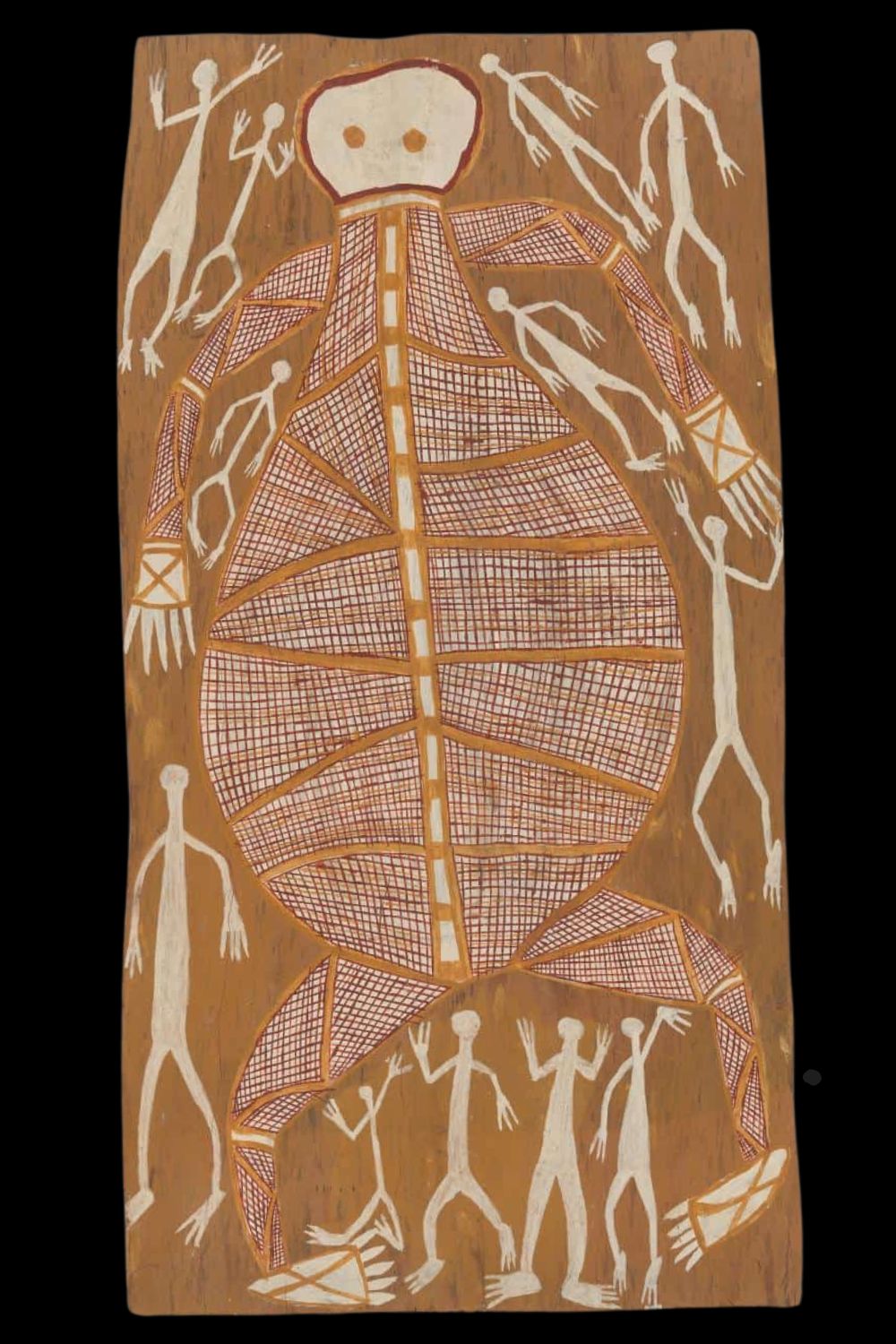
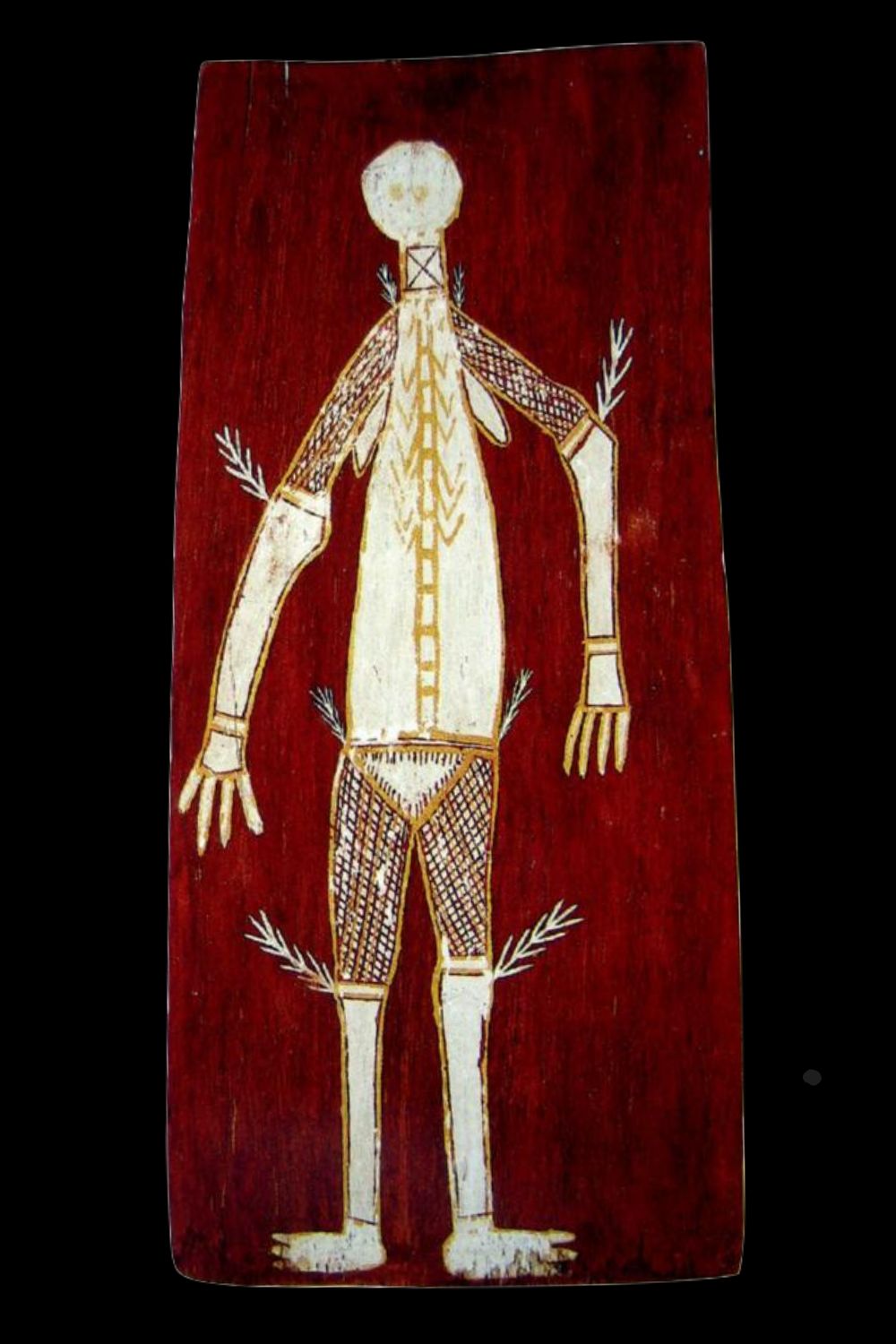
Above Lumaluma by Nonganyari
Other artist known to Paint Lumahlumah include Dick Murrumurru and Yirawala
Luma Luma – The Powerful Giant of the Mardayin Ceremony
In Kunwinjku and Kuninjku ancestral tradition, Lumah Lumah was a formidable giant whose authority was matched only by his greed. Whatever food his wives gathered, or the men hunted, he declared taboo, denying others sustenance. In the absence of the hunters, he took their wives for himself. While Luma Luma prospered, the people starved.
Determined to end his tyranny, the clans laid a trap. Luma Luma was engulfed in fire, his great body pierced with spears. In his final moments, he pleaded to teach the men the sacred rarrk — ancestral cross-hatched designs — by carving them into his own flesh. When this act was complete, he returned to the sea, transforming back into a marine creature, the realm from which he came.
Luma Luma in the Mardayin Ceremony
As the principal creator figure of the Mardayin ceremony, Luma Luma is said to have created the other Ancestral Beings and placed Aboriginal people within their rightful clan territories. He established the ceremonial paintings worn by dancers, their designs glistening with ancestral power.
These Mardayin belly designs, painted onto initiates, transfer a measure of Luma Luma’s original authority to the wearer. He also fashioned all sacred objects for the ceremony, his own body transformed into these ritual instruments after his death.
Luma Luma’s story is more than myth — it is an origin account for some of Arnhem Land’s most profound ceremonial art. Bark paintings depicting the giant, his rarrk designs, or the Mardayin ceremony remain highly sought after by collectors, embodying both artistic mastery and deep cultural heritage.
Further Reading on January Nangunyari Namiridali and Western Arnhem Land Bark Painting
The following publications, exhibition catalogues, anthropological studies, and historical sources are among the most important resources on January Nangunyari Namiridali, Croker Island bark painting, western Arnhem Land ceremonial traditions, and the emergence of modern Aboriginal bark painting from earlier Arnhem Land rock art traditions.
McCulloch, Susan, et al. Old Masters: Australia’s Great Bark Artists. National Museum of Australia, Canberra, 2013.
Perkins, Hetti, ed. Crossing Country: The Alchemy of Western Arnhem Land Art. Art Gallery of New South Wales, Sydney, 2004.
Kupka, Karel. Dawn of Art: Australian Aboriginal Painting. Angus & Robertson, Sydney, 1965.
Caruana, Wally. Windows on the Dreaming: Aboriginal Paintings in the Australian National Gallery. Australian National Gallery, Canberra, 1989.