Murujuga Rock Art (Burrup Peninsula Petroglyphs)
Murujuga Rock Art, also known as the Burrup Peninsula Petroglyphs, is one of the most extraordinary surviving concentrations of ancient Aboriginal Rock Art in the world. Located within the Pilbara region of Western Australia, the Murujuga Cultural Landscape contains more than one million petroglyphs engraved across the volcanic rocks of the Burrup Peninsula and the islands of the Dampier Archipelago. Murujuga is widely regarded as preserving some of the oldest surviving rock engravings in Australia and possibly the world, with parts of the engraving tradition potentially extending back more than 40,000 years.
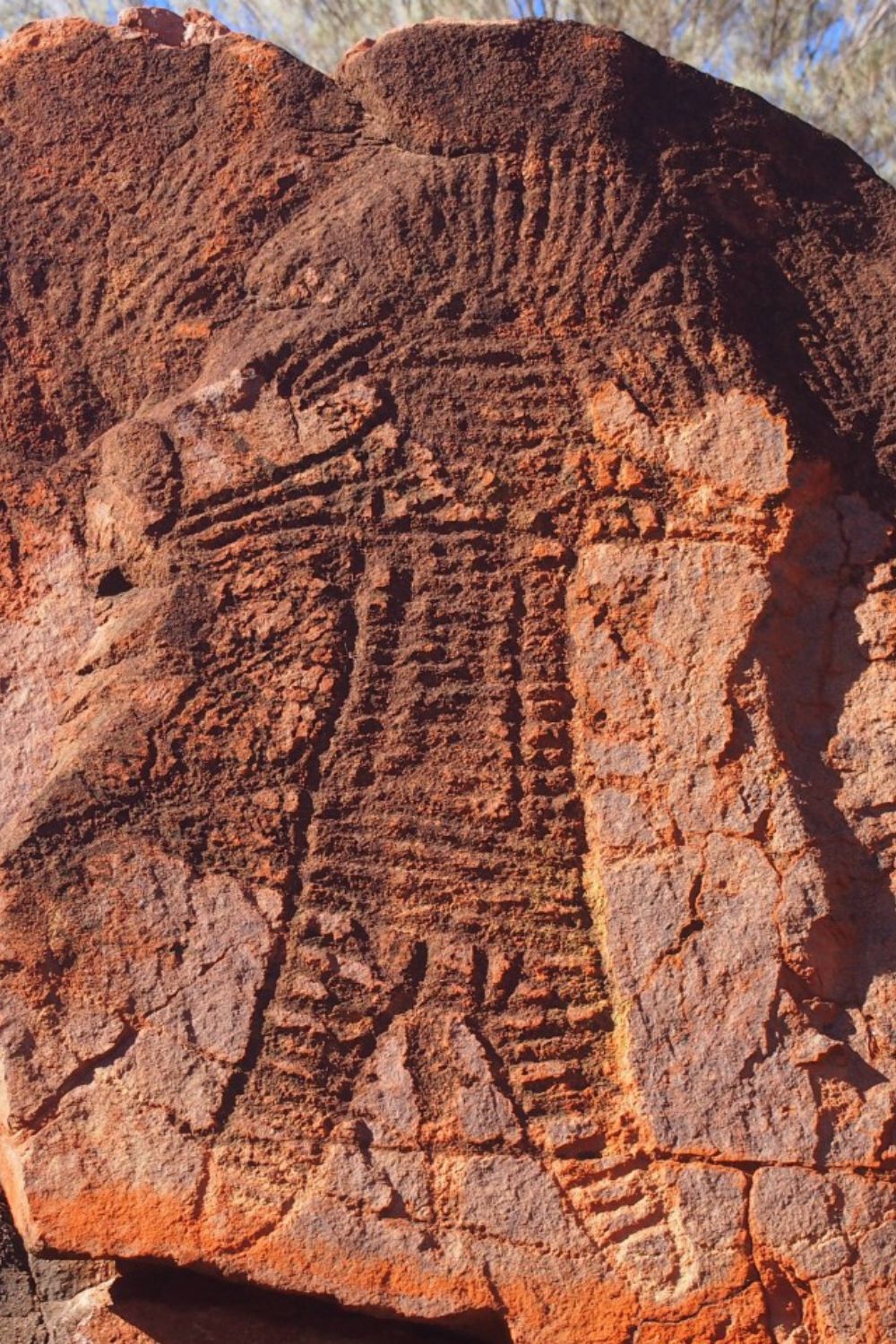
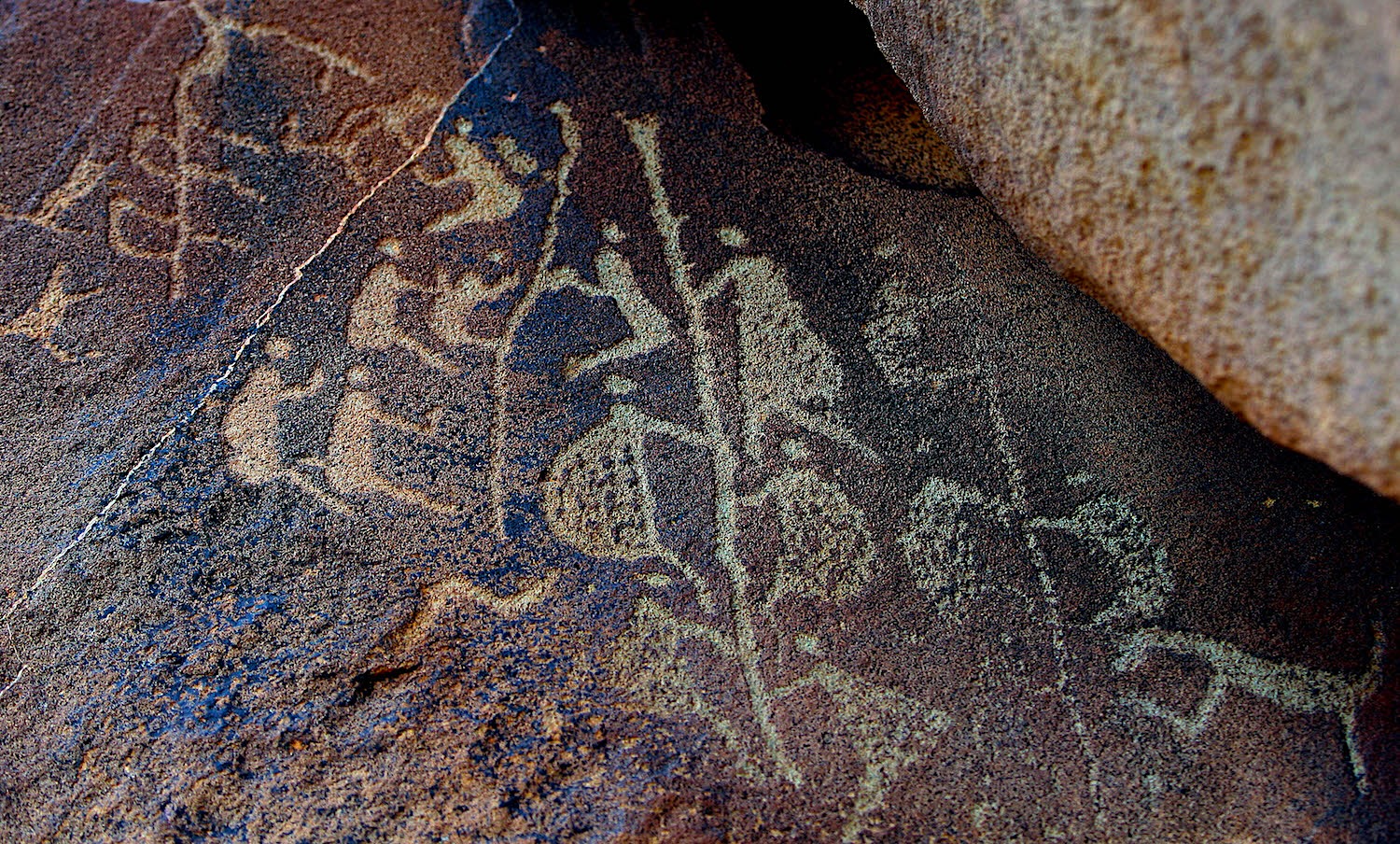
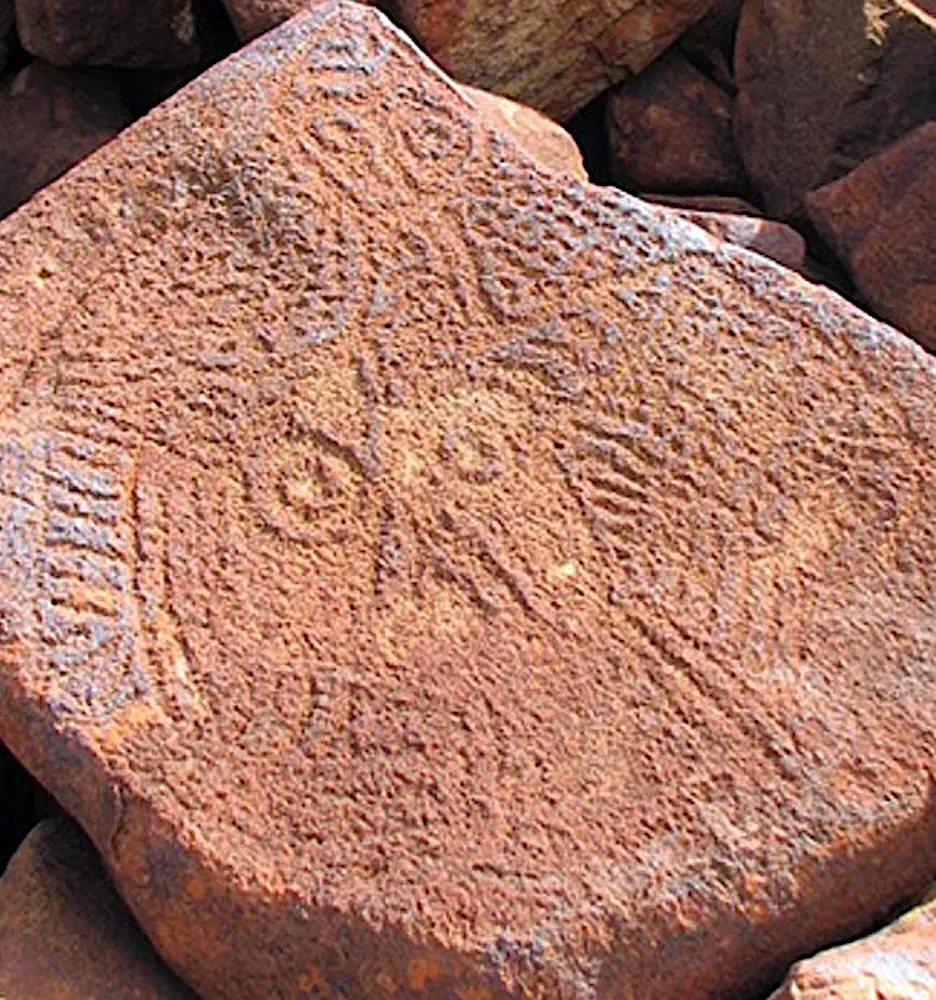
Unlike the painted traditions associated with Arnhem Land Rock Art and Kimberley Rock Art, Murujuga is primarily an engraving tradition. Petroglyphs are images carved directly into rock by pecking and abrading the stone surface to expose the lighter rock beneath. The engravings depict animals, marine life, human figures, ceremonial motifs, spirit beings, and possible extinct megafauna connected to Aboriginal Lore and ancestral traditions.
In 2025, the Murujuga Cultural Landscape was granted UNESCO World Heritage status in recognition of both its immense antiquity and its continuing cultural significance to Traditional Owners. The engravings also form part of a broader Australian tradition of sacred rock art that includes Sydney Basin Rock Art, Quinkan Rock Art, and Tasmanian Rock Art.
Animals, Human Figures, and Symbols in Murujuga Petroglyphs
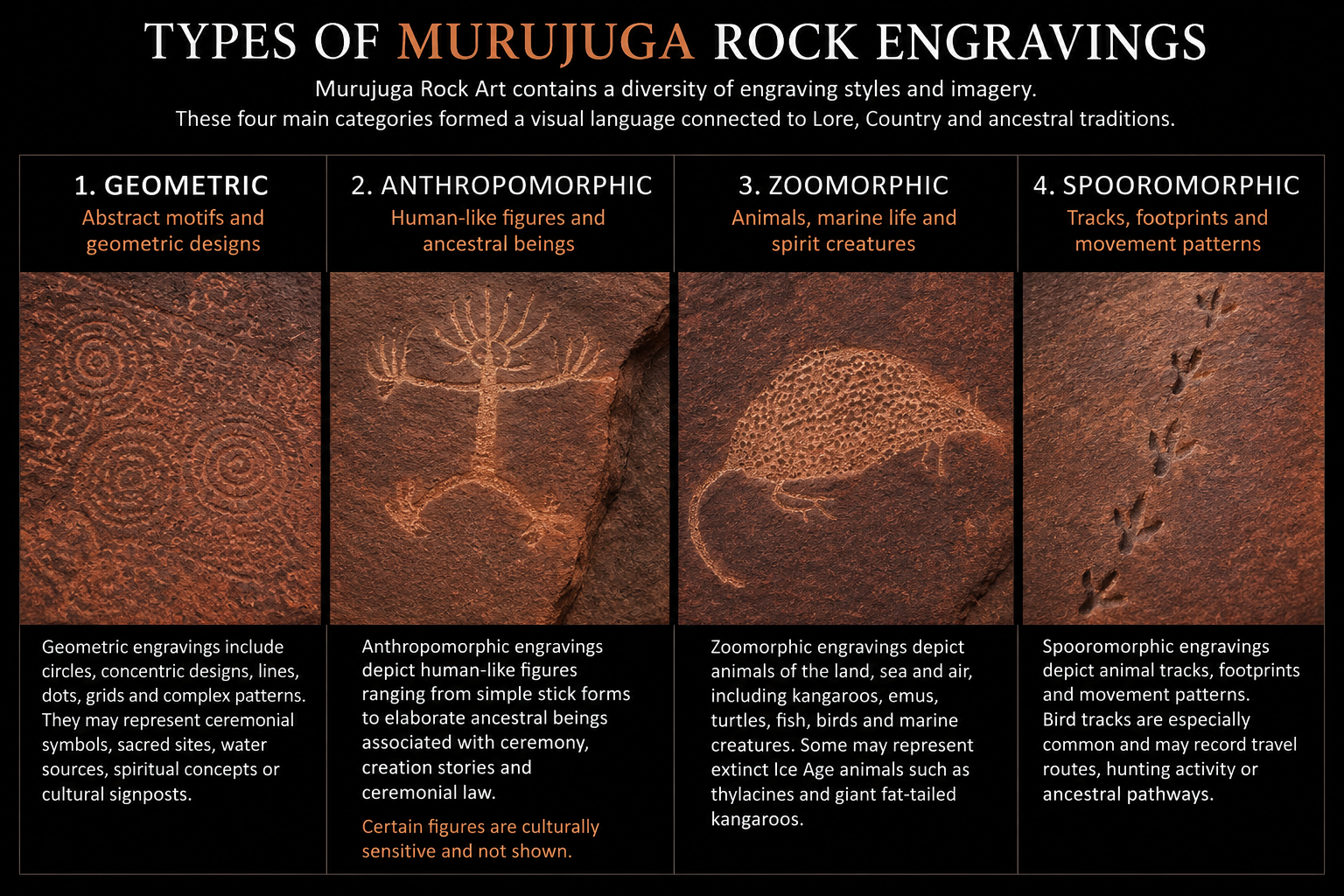
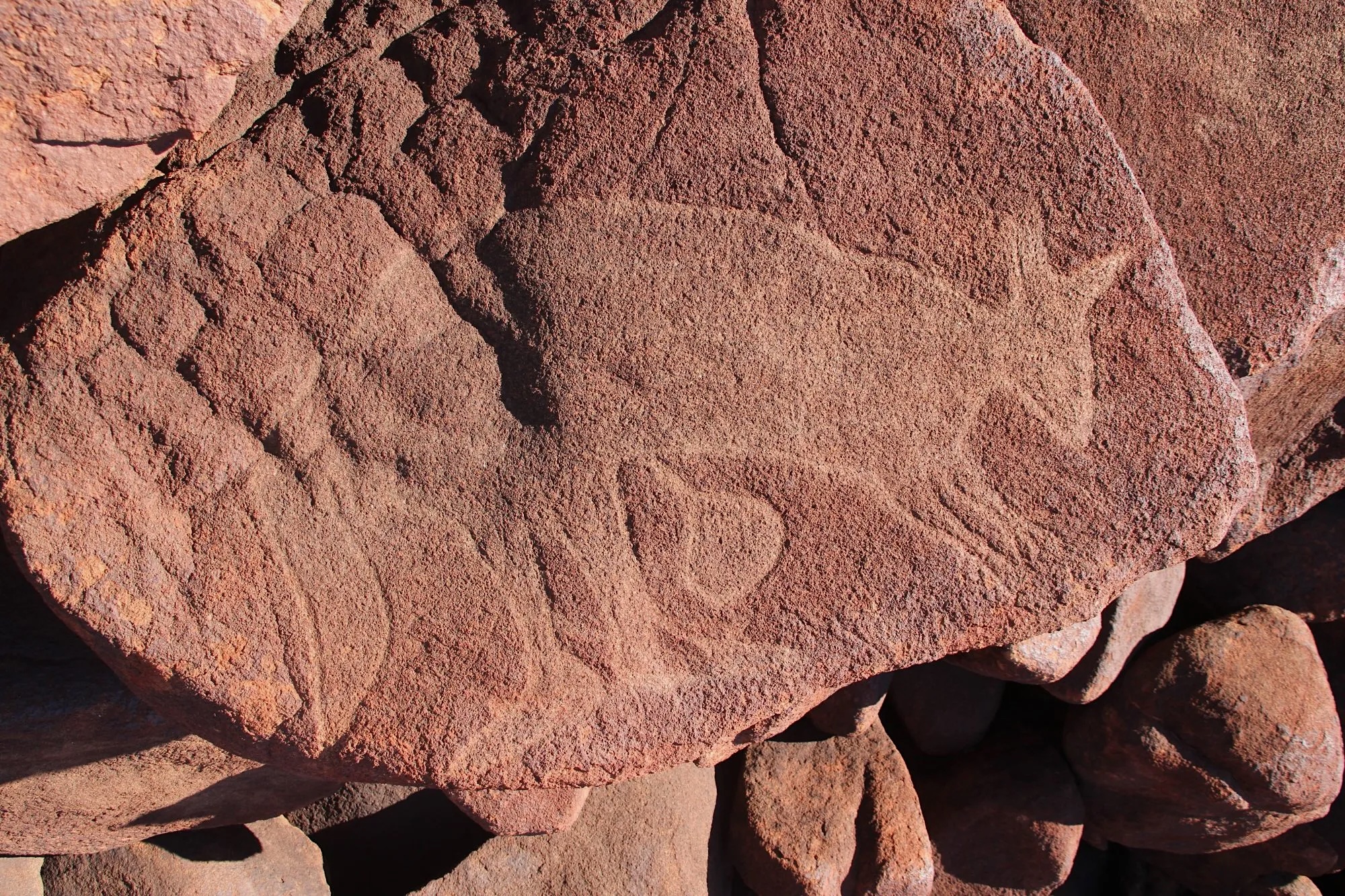
The Murujuga petroglyphs preserve an extraordinary visual record of Aboriginal cultural history. Engravings depict kangaroos, emus, turtles, fish, birds, marine creatures, spirit beings, and ceremonial imagery associated with the Pilbara environment.
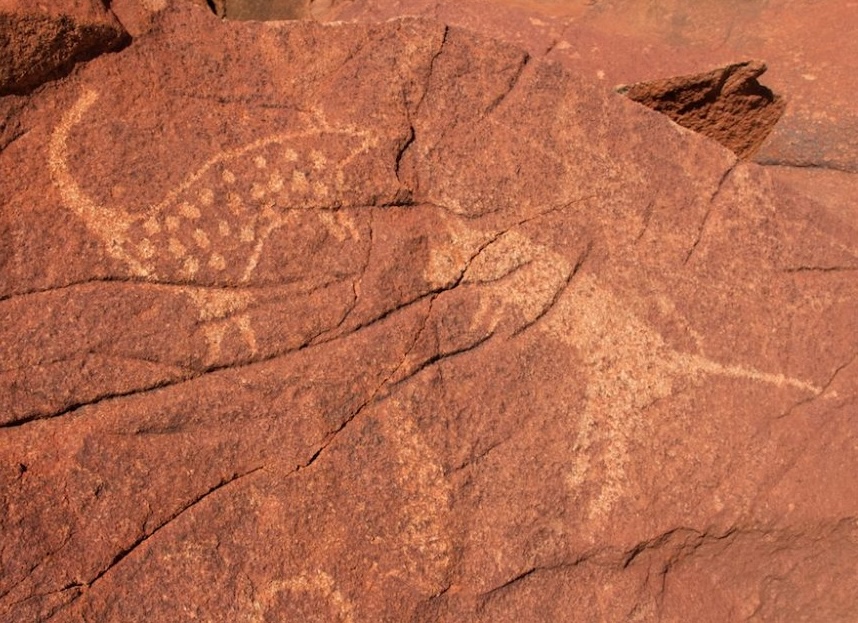
Some images may represent extinct animals from Ice Age Australia, including thylacines (Tasmanian Tigers) and giant fat-tailed kangaroo species no longer found on the continent. These engravings form part of the evidence suggesting portions of the Murujuga engraving tradition may like other animals in aboriginal art extend back tens of thousands of years. Traditional custodians explain that certain animal engravings also functioned as teaching tools connected to hunting, seasonal movement, and ceremonial responsibilities.
Human figures range from simple stick-like forms to highly significant ancestral beings associated with ceremonial law. Certain humanoid engravings remain culturally sensitive and are traditionally not photographed or publicly reproduced.
What Is Murujuga Rock Art?
Murujuga Rock Art refers to one of the world’s largest surviving collections of Aboriginal petroglyphs. Aboriginal artists created the engravings across thousands of years by pecking, hammering, and abrading the dark outer surfaces of volcanic rocks. These petroglyphs formed a vast visual archive recording animals, spirit beings, ceremonial imagery, tracks, symbols, and stories connected to Country.
For the Ngarda-Ngarli peoples, Murujuga is not simply an archaeological site but a sacred cultural landscape connected to songlines, ancestral beings, ceremony, and continuing custodianship. Traditional custodians describe many engravings as cultural signposts recording sacred knowledge and guiding movement across Country.
Where Is Murujuga Rock Art Located?
Murujuga is located within the Pilbara region of north-west Western Australia near Dampier and Karratha, approximately 1,500 kilometres north of Perth. The Murujuga Cultural Landscape includes the Burrup Peninsula together with 42 islands of the Dampier Archipelago.
Many accessible engraving sites are located within Murujuga National Park, including Nganjarli (Deep Gorge), where visitors can walk among dense concentrations of petroglyphs depicting animals, marine life, human figures, and ceremonial imagery. Guided cultural tours are also available through Aboriginal tour operators.
Visitors are encouraged to remain on designated pathways and respect cultural protocols surrounding sacred sites and culturally sensitive engravings.
Why Murujuga Is One of the World’s Most Important Rock Art Sites
Murujuga is widely regarded as one of the world’s most important rock art landscapes because of its immense scale, antiquity, and continuing cultural significance. Some engravings may date back more than 40,000 years, with certain motifs believed to depict extinct megafauna from the Ice Age period.
The petroglyphs preserve a remarkable record of Aboriginal cultural knowledge, depicting kangaroos, turtles, fish, birds, spirit beings, ceremonial imagery, and symbolic motifs associated with seasonal movement, hunting, and ancestral traditions.
Unlike many archaeological sites elsewhere in the world, Murujuga remains connected to living Aboriginal traditions and continuing custodianship. Sacred places, pathways, water sources, and ceremonial areas across the landscape continue to hold cultural meaning for Traditional Owners today.
How Old Are the Murujuga Petroglyphs?
The Murujuga Petroglyphs are regarded as some of the oldest surviving rock engravings in the world. Aboriginal occupation of the Pilbara extends back more than 50,000 years, and researchers believe parts of the Murujuga engraving tradition may exceed 40,000 years in age.
Dating petroglyphs is difficult because engravings contain no organic pigments suitable for radiocarbon analysis. Researchers instead examine weathering, rock patination, mineral accretions, archaeological deposits, and changing sea levels to estimate antiquity.
Some deeply weathered engravings are now barely visible against the dark volcanic surfaces, demonstrating the immense age of parts of the tradition. Although precise chronologies remain debated, there is broad agreement that Murujuga preserves one of the longest continuous artistic traditions in human history.
Aboriginal Meaning and Cultural Significance of Murujuga
For Traditional Owners, Murujuga is a sacred ancestral landscape connected to creation beings, ceremony, songlines, and Lore. The engravings record cultural knowledge passed between generations for thousands of years.
Traditional custodians describe the petroglyphs, known as Marni, as cultural signposts marking sacred places, pathways, ceremonial grounds, and important water sources. Other engravings recorded hunting knowledge, seasonal movement, and spiritual relationships between people and Country.
Many engravings are connected to stories from the ancestral period “when the world was soft,” when creation beings shaped the landscape and established cultural law. One important figure described by Traditional Owners is the Marrga, a spirit being represented with six fingers and six toes.
Murujuga also preserves evidence of long-standing trade, ceremony, and cultural exchange across the Pilbara region. For custodians today, protecting Murujuga remains deeply connected to cultural identity, spiritual responsibility, and continuing connection to Country.
Murujuga, UNESCO World Heritage Status, and Industrial Threats
In 2025, UNESCO formally inscribed the Murujuga Cultural Landscape on the World Heritage List, recognising the Burrup Peninsula petroglyphs as one of the world’s most significant cultural landscapes.
The listing followed decades of campaigning by Traditional Owners seeking international recognition and stronger protection for the site. UNESCO recognised Murujuga not only for its antiquity but also for preserving a continuing Aboriginal cultural tradition connected to Lore, ceremony, and Country.
Despite this recognition, Murujuga remains at the centre of ongoing debate surrounding industrial development within the Pilbara. Heavy industry, including gas processing and fertiliser plants, surrounds parts of the Burrup Peninsula. Environmental groups, archaeologists, and some Traditional Owners have raised concerns that industrial emissions may gradually damage the fragile rock surfaces over time.
UNESCO advisory bodies recommended continued scientific monitoring and stronger long-term protection measures for the landscape.
Preservation and Protection of Murujuga Rock Art
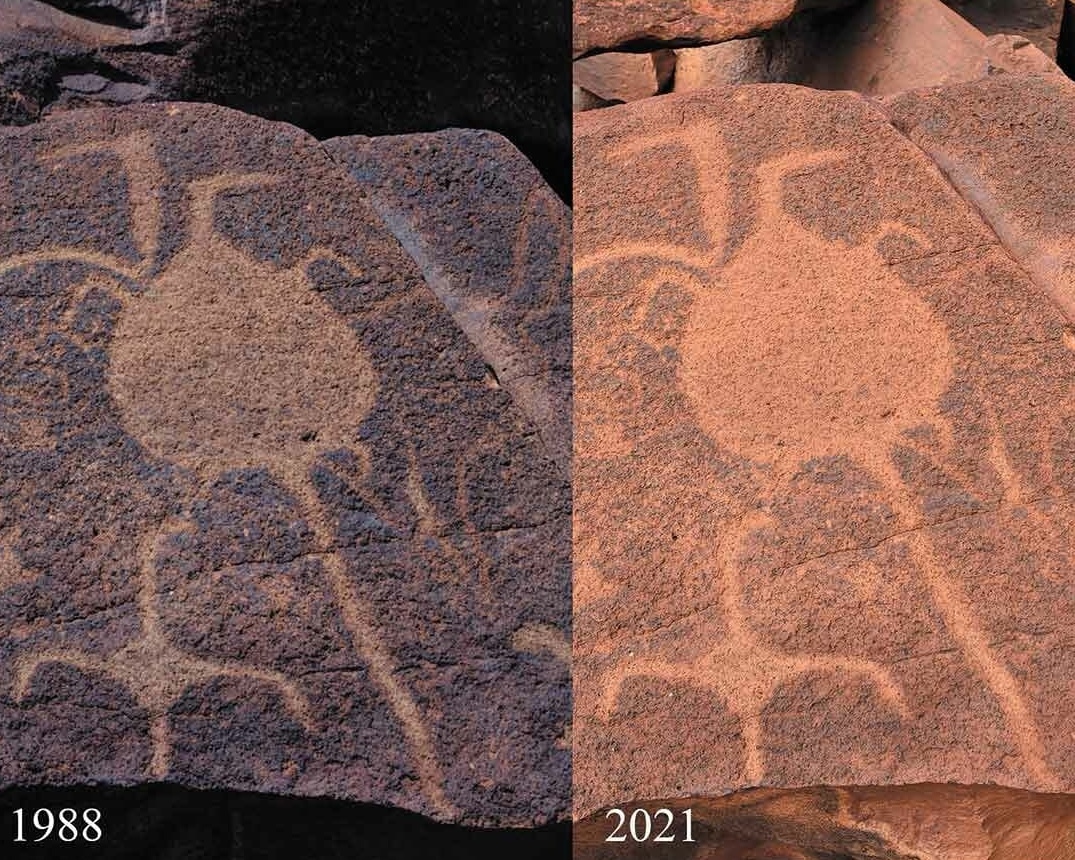
The preservation of Murujuga has become one of Australia’s most significant cultural heritage challenges. The engravings remain vulnerable to natural weathering, industrial emissions, land clearing, vandalism, theft, and increasing tourism pressures. Scientists and Traditional Owners have expressed particular concern regarding acidic industrial emissions because Murujuga petroglyphs were created by removing the dark mineralised rock patina covering the volcanic rocks to expose the lighter stone beneath. Researchers warn that acidic pollution may gradually erode this fragile surface and accelerate deterioration of the engravings over time.
A 2022 study published in Conservation and Management of Archaeological Sites compared archival photographs of Murujuga petroglyphs with recent images and identified visible signs of deterioration on several engravings located near industrial areas.
Traditional Owners continue to play the central role in protecting the landscape through cultural custodianship and the maintenance of Aboriginal Lore connected to Murujuga. For custodians, preservation is not simply about protecting archaeological remains but safeguarding sacred places, ancestral knowledge, and continuing spiritual relationships with Country.
The future protection of Murujuga will depend upon balancing cultural heritage preservation, environmental management, scientific monitoring, tourism, and industrial activity within one of the world’s oldest surviving artistic landscapes.