
Elizabeth Nyumi: The Complete Guide to the Artist and Her Paintings
c. 1947–2019
Pintupi
Parwalla (Jupiter Well), Great Sandy Desert
Balgo
Balgo Art / Western Desert Art
Warlayirti Artists
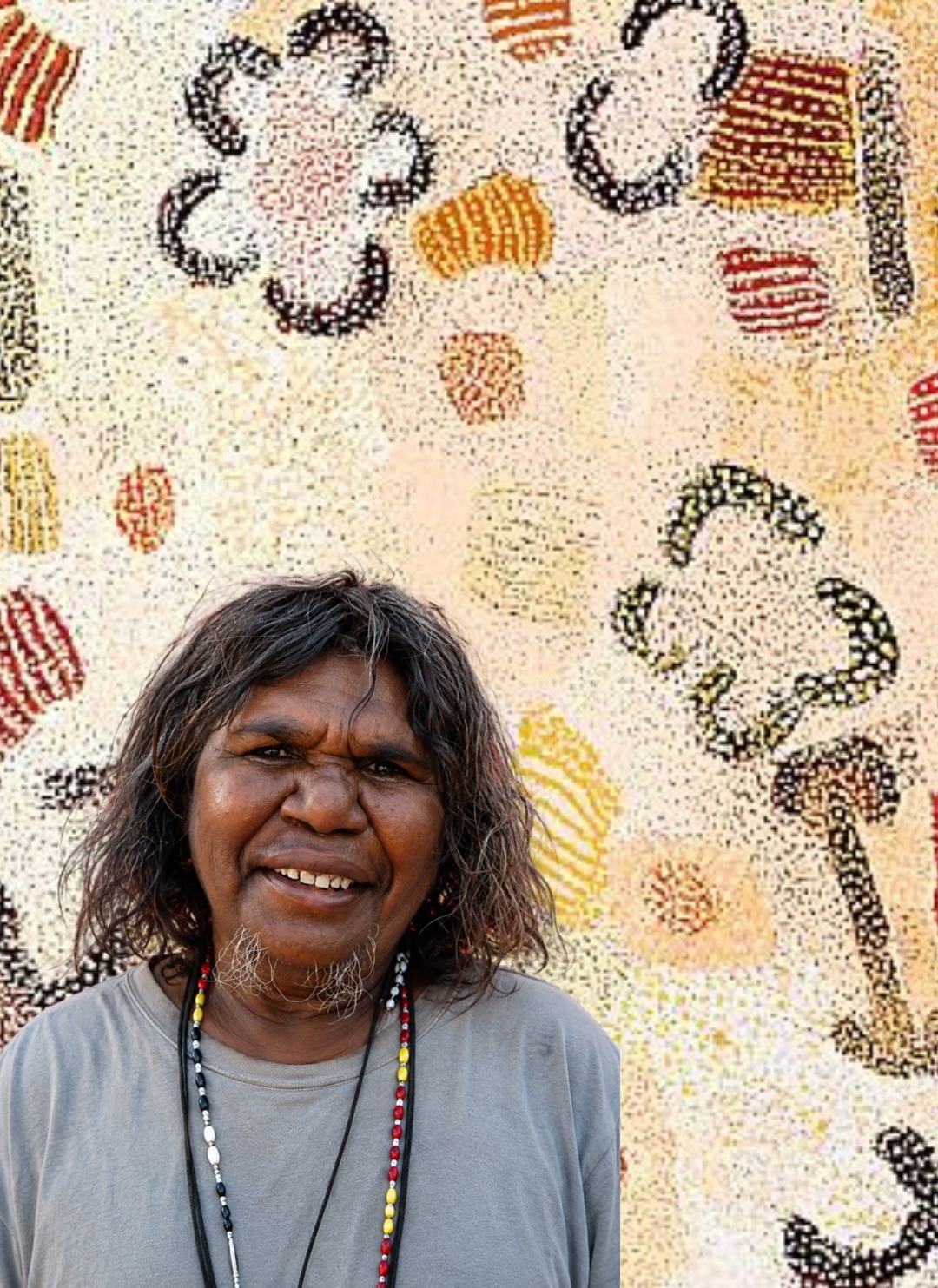
Elizabeth Nyumi (c.1947–2019) was one of the leading painters associated with Balgo Art and an important artist within the wider Western Desert Art movement. As a young girl she travelled through the desert with her older brothers Brandy Tjungurrayi and Patrick Tjungurrayi, before later raising a family at Billiluna with her husband, the senior Law man Palmer Gordon Tjapanangka.
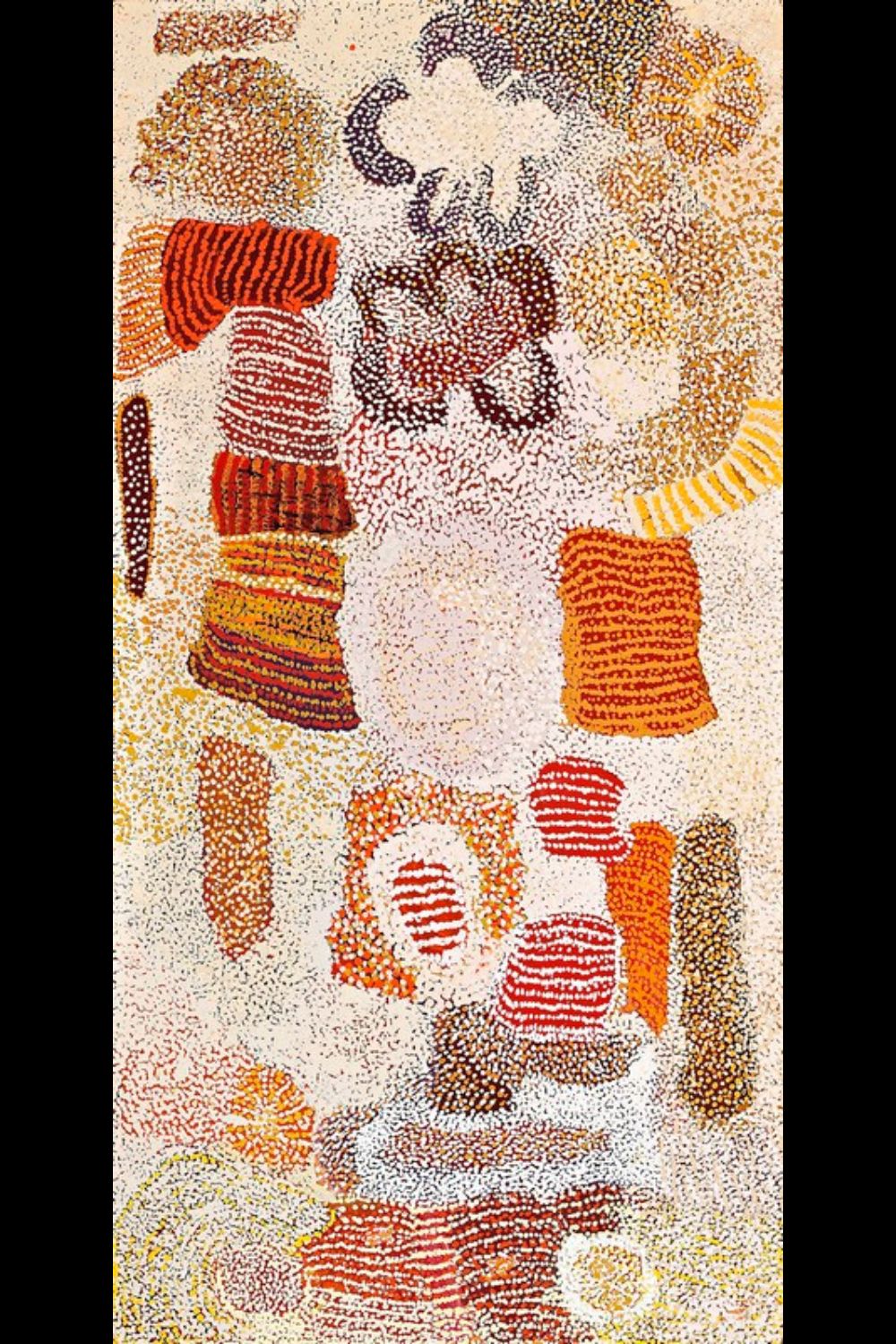
Working with Warlayirti Artists for more than three decades, Nyumi became celebrated above all for paintings of Parwalla, her father’s Country in the Great Sandy Desert south of Balgo. She returned repeatedly to its seasonal transformation after rain, when water fills the claypans, spinifex produces masses of pale seed and women gather bush foods across the sandhills.
Nyumi developed a distinctive visual language for this Country. Increasingly luminous fields of fine white dots spread across her paintings, creating shimmering surfaces through which plants, water and other features of Parwalla emerge. Rather than simply depicting a desert landscape, these paintings grew from her knowledge of Country, family and women’s cultural life, transforming Parwalla into one of the most recognisable bodies of work in contemporary Balgo painting.
While collectors prize her finest paintings for their beauty, the value of individual works varies considerably according to size, date, provenance, exhibition history and overall quality. If you would like to learn more, see Elizabeth Nyumi Artwork Values for auction results and market trends, or visit Sell an Elizabeth Nyumi Painting if you own a work and would like an appraisal or are considering selling it.
Early Life and Cultural Authority
Elizabeth Nyumi was born around 1947 at Parwalla (Jupiter Well) in the Great Sandy Desert of Western Australia. She belonged to the Pintupi cultural world and spent her early childhood living traditionally on Country before sustained contact with Europeans. After her mother died near Kanari Soak, Nyumi travelled with her father and extended family through the desert before eventually walking into Balgo Mission via the Canning Stock Route during the late 1950s. She later recalled seeing a helicopter in 1957 as her first encounter with white people. As a young woman she worked on Kimberley cattle stations before returning to Balgo.
Nyumi belonged to one of Balgo’s most important artistic and ceremonial families. Her elder brothers, Brandy Tjungurrayi and Patrick (Olodoodi) Tjungurrayi, were respected senior Law men and accomplished painters, while her husband, Palmer Gordon, was also a senior cultural leader. Several of her daughters later became artists through Warlayirti Artists, continuing the family’s artistic tradition.
Although internationally recognised as a painter, Nyumi’s importance within her own community extended far beyond art. She was a respected custodian of women’s cultural knowledge, teaching ceremony, dance, song, bush medicines, seasonal food gathering and the making of coolamons and digging sticks. This knowledge was inseparable from her paintings. The landscapes she depicted were not simply places she remembered, but Country for which she held inherited cultural responsibility, giving her work both artistic significance and deep cultural authority.
Painting Career
Elizabeth Nyumi began painting with Warlayirti Artists in the late 1980s. During the following decade she established herself as one of the leading painters of the Balgo movement, exhibiting nationally and internationally. In 2004 she became the first artist from Warlayirti Artists selected for the Sydney Biennale, introducing her work to an international audience. Her paintings are now represented in major collections including the National Gallery of Australia, National Gallery of Victoria, Art Gallery of Western Australia, Museum and Art Gallery of the Northern Territory, Museum of Contemporary Art Australia and Artbank.
Her career was also marked by the highly successful Parwalla solo exhibition at Raft Artspace, Darwin, in 2001, while later works appeared in major exhibitions including the Sydney Biennale and the Metropolitan Museum of Art in New York.
Elizabeth Nyumi’s Painting Style
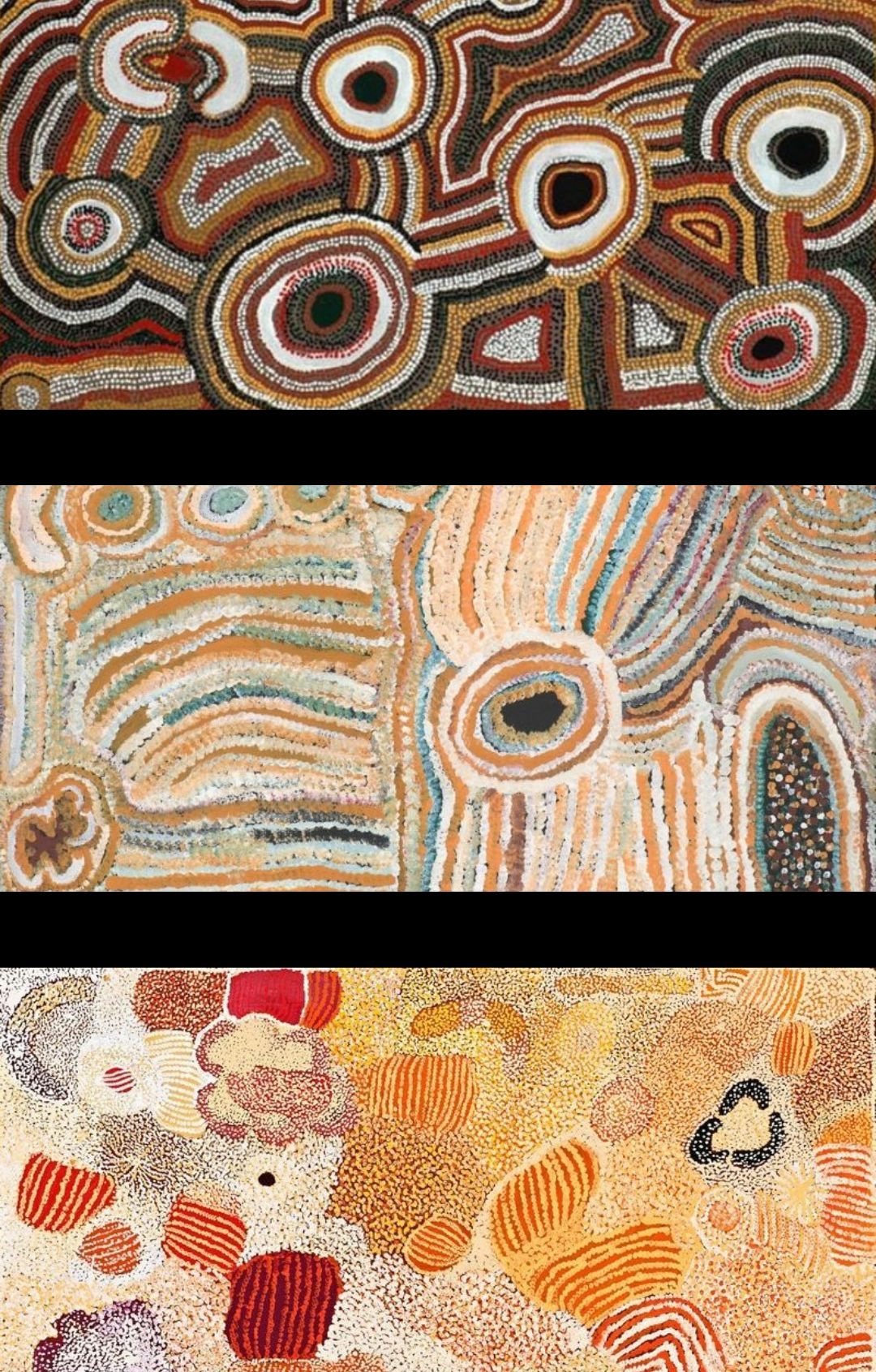
Elizabeth Nyumi’s painting style underwent a remarkable evolution while remaining consistently devoted to Parwalla, her father’s Country in the Great Sandy Desert. Rather than changing subject matter, she progressively simplified her visual language, transforming descriptive depictions of Country into luminous, atmospheric compositions.
Her earliest paintings are comparatively structured, reflecting the visual language of the emerging Balgo movement. Concentric circles, travelling lines and bush food forms are clearly defined, while the palette is dominated by rich ochres, reds, browns, black and white. The dotting is also distinctive. Individual dots remain largely separate, only occasionally touching one another, creating crisp edges and clearly articulated forms that read almost like a map of Country.
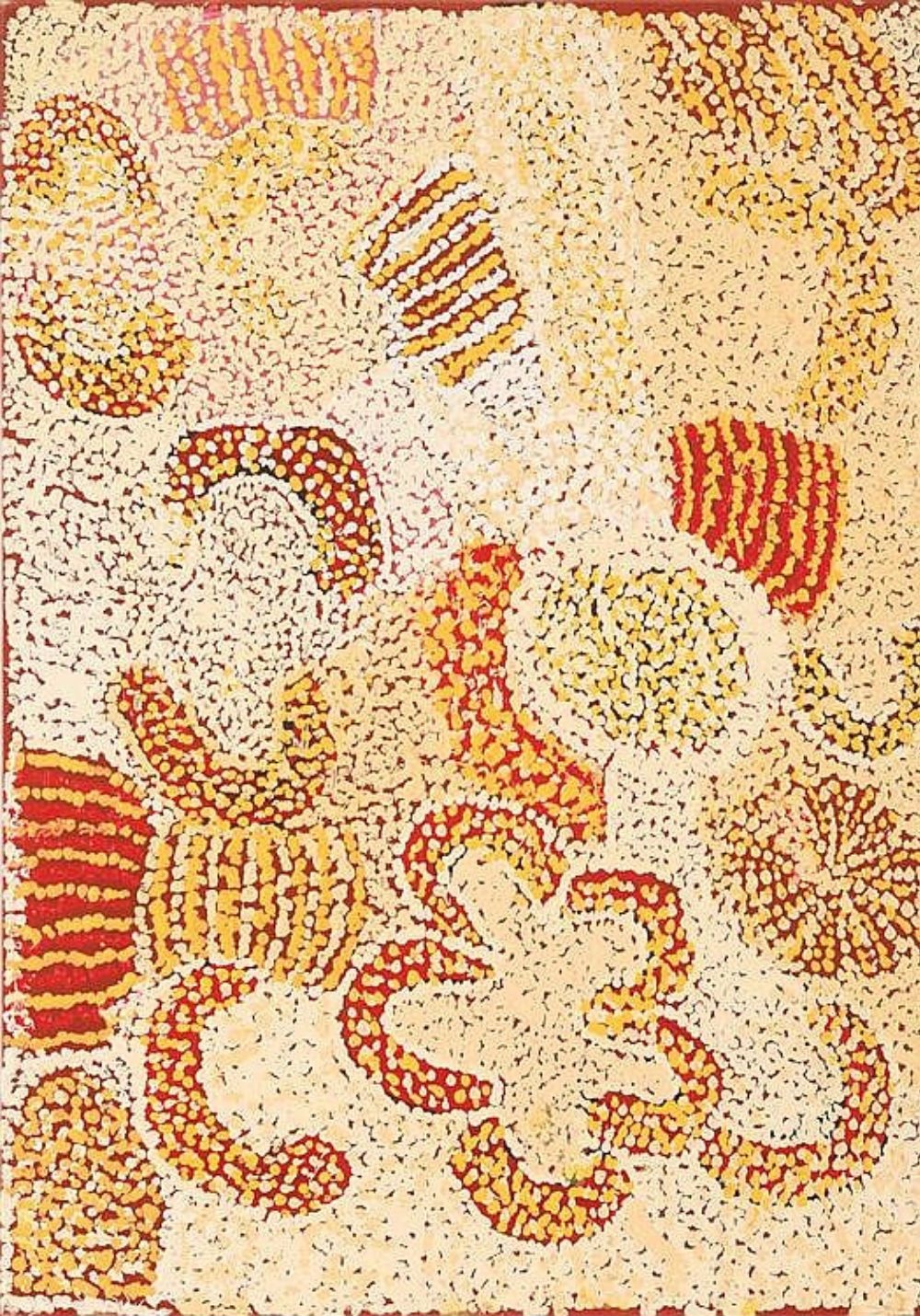
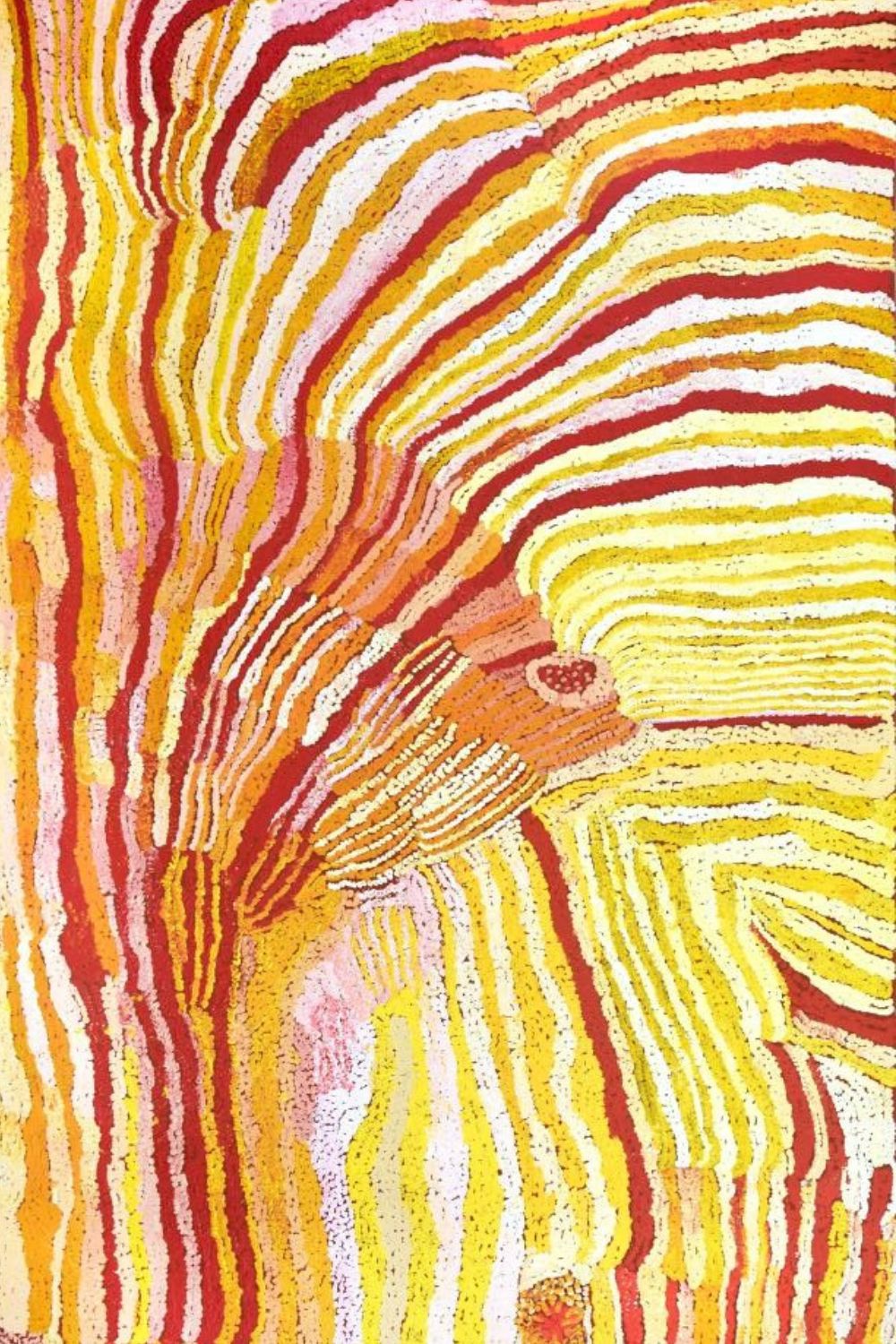
During the late 1990s, Nyumi’s work entered a transitional phase. Concentric circles became less dominant as flowing bands and organic forms replaced rigid structures, and the palette lightened with increasing use of creams, pale yellows and soft oranges. Her handling of paint also changed. Instead of isolated dots, they frequently merged into irregular, ragged lines that followed the contours of the composition. These broken ribbons softened the boundaries between forms and introduced a stronger sense of movement across the canvas.
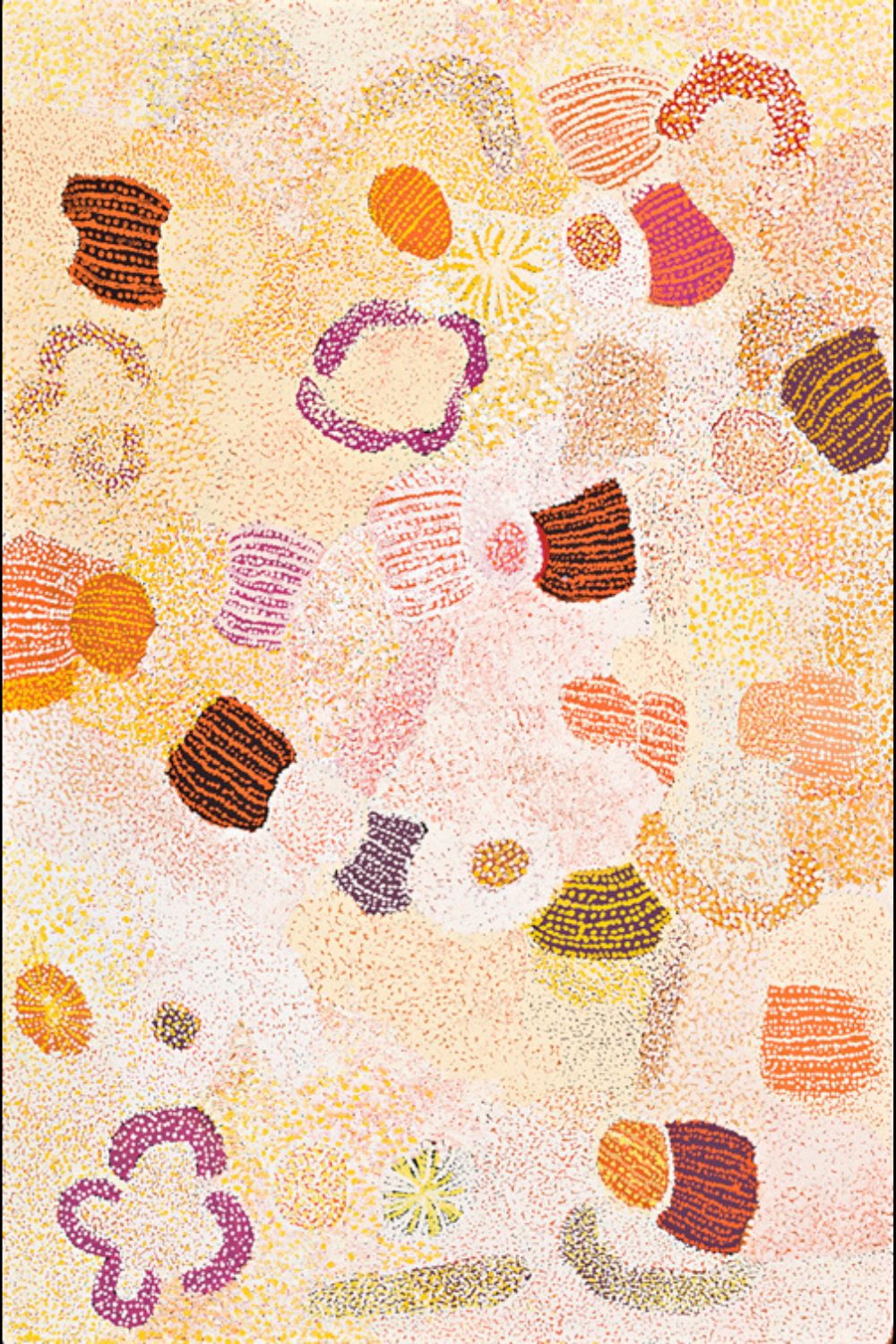
By the early 2000s, Nyumi had developed the mature style for which she is best known. Large fields of cream and white dots spread across the surface, creating a luminous veil over the landscape. The dots once again became largely separate, but now functioned collectively as expansive dot fields rather than individual marks. Red, burgundy and orange dots placed over white and cream grounds create subtle optical mixtures that read as soft pinks, warm peaches and pale apricots. Increased spacing between the dots allows more of the underlying white to remain visible, producing the extraordinary light-filled quality that distinguishes her later paintings.
The documentation accompanying Nyumi’s paintings explains that these extensive white passages represent the dense seed heads of spinifex after the wet season, when the grasses become so abundant they partially obscure the ground beneath. Rather than depicting an abstract landscape, her mature paintings capture the seasonal transformation of Parwalla. Thousands of carefully placed dots invite slow observation as bush foods, sandhills and pathways gradually emerge from the luminous surface, creating one of the most distinctive and recognisable painting styles to emerge from the Balgo movement.
Parwalla: Painting the Seasonal Abundance of Country
The defining subject of Elizabeth Nyumi’s career was Parwalla, her father’s Country south of Balgo near Kiwirrkurra. Rather than depicting an empty desert, her paintings celebrate the extraordinary abundance that follows the wet season. As floodwaters spread across the swampy country between the sandhills, the landscape produces bush tomatoes (pura), bush raisins (kantjilyi) and minyili seeds. Women carrying digging sticks and coolamons gather these foods while the surrounding spinifex produces masses of pale seed that blanket the landscape. These seasonal events form the visual language that appears throughout Nyumi’s mature work.
By repeatedly returning to Parwalla over nearly twenty years, Nyumi achieved something remarkable. Rather than exhausting the subject, she continually discovered new ways to express its changing light, colours and rhythms. Each painting presents another interpretation of the same Country, creating a body of work that is unified by place yet endlessly varied in mood and execution.
Artistic Significance
Elizabeth Nyumi occupies an important place within the history of Western Desert art because she transformed the seasonal abundance of a single landscape into one of the most distinctive visual languages of the Balgo movement. While many artists explored numerous places and narratives, Nyumi devoted herself to Parwalla, refining its colours, vegetation and cycles of renewal through increasingly subtle and luminous compositions. The result is a body of work that combines deep cultural knowledge with exceptional painterly restraint.
Auction catalogues have described her as the foremost of the second generation of Balgo artists and credit her with extending the reputation of Balgo women painters through her distinctive depictions of Country. While this reflects curatorial opinion rather than objective fact, it illustrates the esteem in which her work has long been held.
Further Reading & Sources
Exhibition Catalogues and Museum Publications
Carlos, Isabel (ed.). On Reason and Emotion. Biennale of Sydney, 2004. (Includes Hetti Perkins, “Elizabeth Nyumi Nungurrayi”.)
Perkins, Hetti & Fink, Hannah (eds.). Beyond Sacred: Recent Painting from Australia’s Remote Aboriginal Communities: The Collection of Colin and Elizabeth Laverty. Melbourne: Hardie Grant Books, 2008.
Togni, Samantha & Williamson, Stephen J. (eds.). Balgo 4-04: New Paintings from the Kutjungka Region. Wirrimanu (Balgo): Warlayirti Artists Aboriginal Corporation, 2004.
Selections from the Austcorp Group Limited Collection of Aboriginal Art. Sydney: The Deloitte Foundation, 2007.
Books
Caruana, Wally. Aboriginal Art. London: Thames & Hudson.
Cowan, James. Balgo: New Directions. Sydney: Craftsman House.
Perkins, Hetti & West, Margie (eds.). One Sun One Moon: Aboriginal Art in Australia. Sydney: Art Gallery of New South Wales.
Ryan, Judith & Batty, Philip (eds.). Balgo: Creating Country. Melbourne: National Gallery of Victoria.
Auction Catalogues
Bonhams. Australian & Aboriginal Art and The Laverty Collection auction catalogues.
Christie’s. Australian Aboriginal Art and Modern Aboriginal Art auction catalogues.
Deutscher and Hackett. Important Australian Indigenous Art, Important Aboriginal + Oceanic Art and The Laverty Collection auction catalogues.
Lawsons and Lawson~Menzies. Aboriginal Art and Fine Aboriginal Art auction catalogues.
Leonard Joel. Australian Indigenous Art auction catalogues.
Mossgreen. Fine Aboriginal Art and Australian Indigenous & Oceanic Art auction catalogues.
Shapiro Auctioneers. Indigenous Art and Modern + Contemporary auction catalogues.
Sotheby’s. Important Aboriginal Art, Aboriginal Art and Aboriginal & Oceanic Art auction catalogues.
Art Centre Documentation
Warlayirti Artists Aboriginal Corporation.
Certificates of Authenticity and accompanying documentation for paintings depicting:
- Parwalla
- Minjali
- Minyilli
- Wirripi Rockhole
- Food Gathering at Wirripi
- Hunting at Wirripi Rockhole
- Ngungkupa
- Snake Dreaming
- Tapinna (Jupiter Well)
- Artist’s Mother’s Country
These certificates provide artist-approved descriptions of Parwalla and surrounding Country, explaining the significance of the sandhills (tali), spinifex, bush foods including kantjilyi, pura and minyili, women’s food gathering, and Elizabeth Nyumi’s inherited connection to her father’s Country. They also document the seasonal changes that underpin her paintings, particularly the transformation of the landscape following the wet season.
Public Collections
Art Gallery of New South Wales
Art Gallery of South Australia
Art Gallery of Western Australia
Museum and Art Gallery of the Northern Territory
National Gallery of Australia
National Gallery of Victoria
Museum of Contemporary Art Australia
Research Used in Preparing This Page
This biography draws upon:
- public museum collection records
- exhibition catalogues and collection publications
- Biennale of Sydney publications
- Warlayirti Artists documentation and Certificates of Authenticity
- curatorial essays by Hetti Perkins, Wally Caruana, Judith Ryan and other leading Aboriginal art scholars
- more than 60 documented auction records dating from 1998–2026, including provenance, exhibition history, literature references and original art centre documentation where available.
All images featured in this article are presented strictly for educational and informational purposes.
This website may include copyrighted material for which specific authorization has not been obtained from the copyright owner.
All such images are presumed to be the intellectual property of the respective artist or their estate, and are used in accordance with principles of fair dealing or fair use under applicable copyright law.