
Spinifex Art
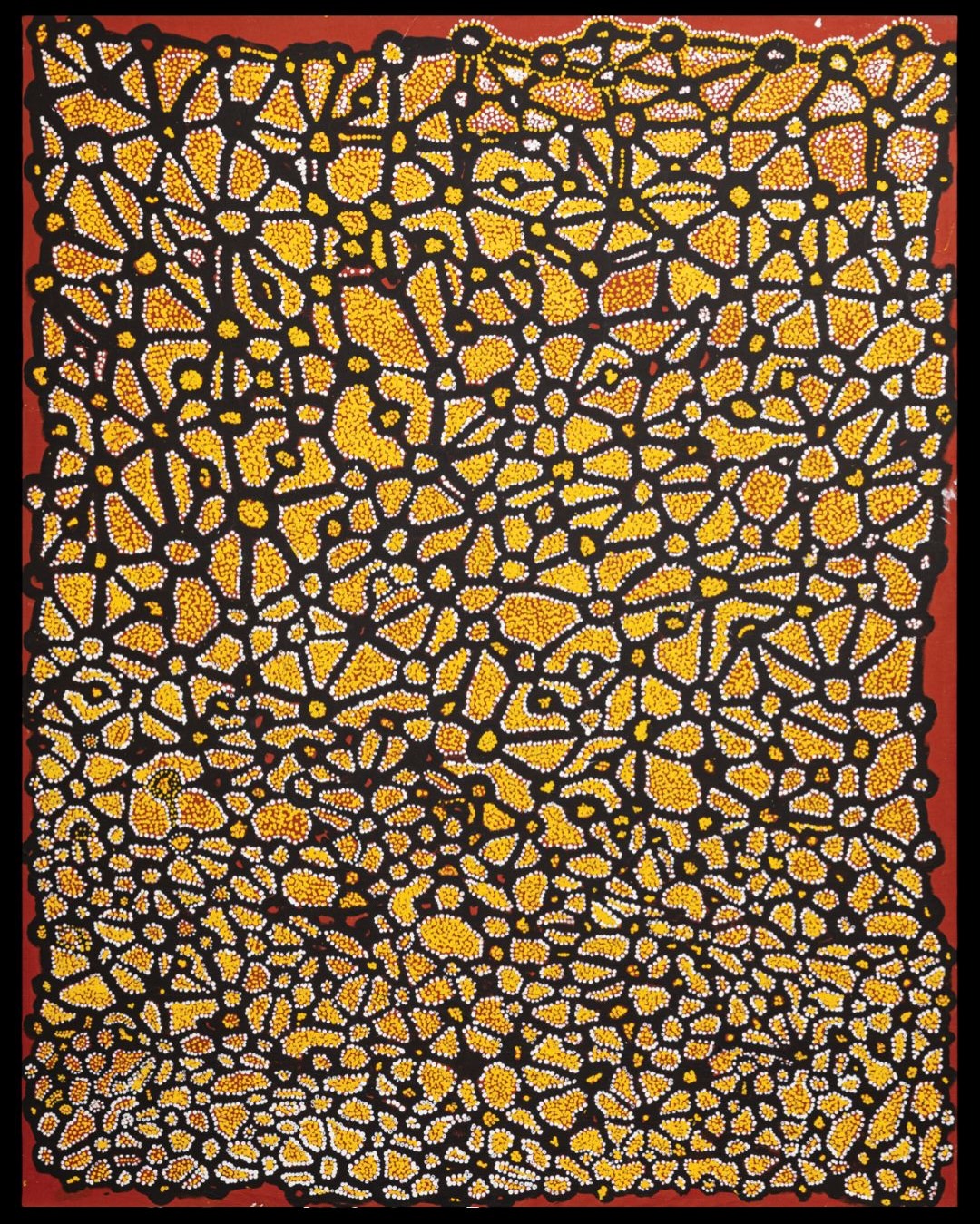
Spinifex Art is one of the most historically significant traditions within Western Desert Art, emerging from the Great Victoria Desert of Western Australia and South Australia. Created by the Spinifex people, these paintings record profound relationships with Country, Dreaming, and cultural law that have been maintained across countless generations.
Unlike the intricate dotting often associated with Pintupi Art, the vibrant colour of Balgo Art, or the atmospheric landscapes of Ngaanyatjarra Art, Spinifex paintings are renowned for their large collaborative compositions and powerful representations of desert Country.
Today, Spinifex Art is internationally recognised for its artistic achievement and its unique contribution to contemporary Aboriginal Australian art.
What Is Spinifex Art?
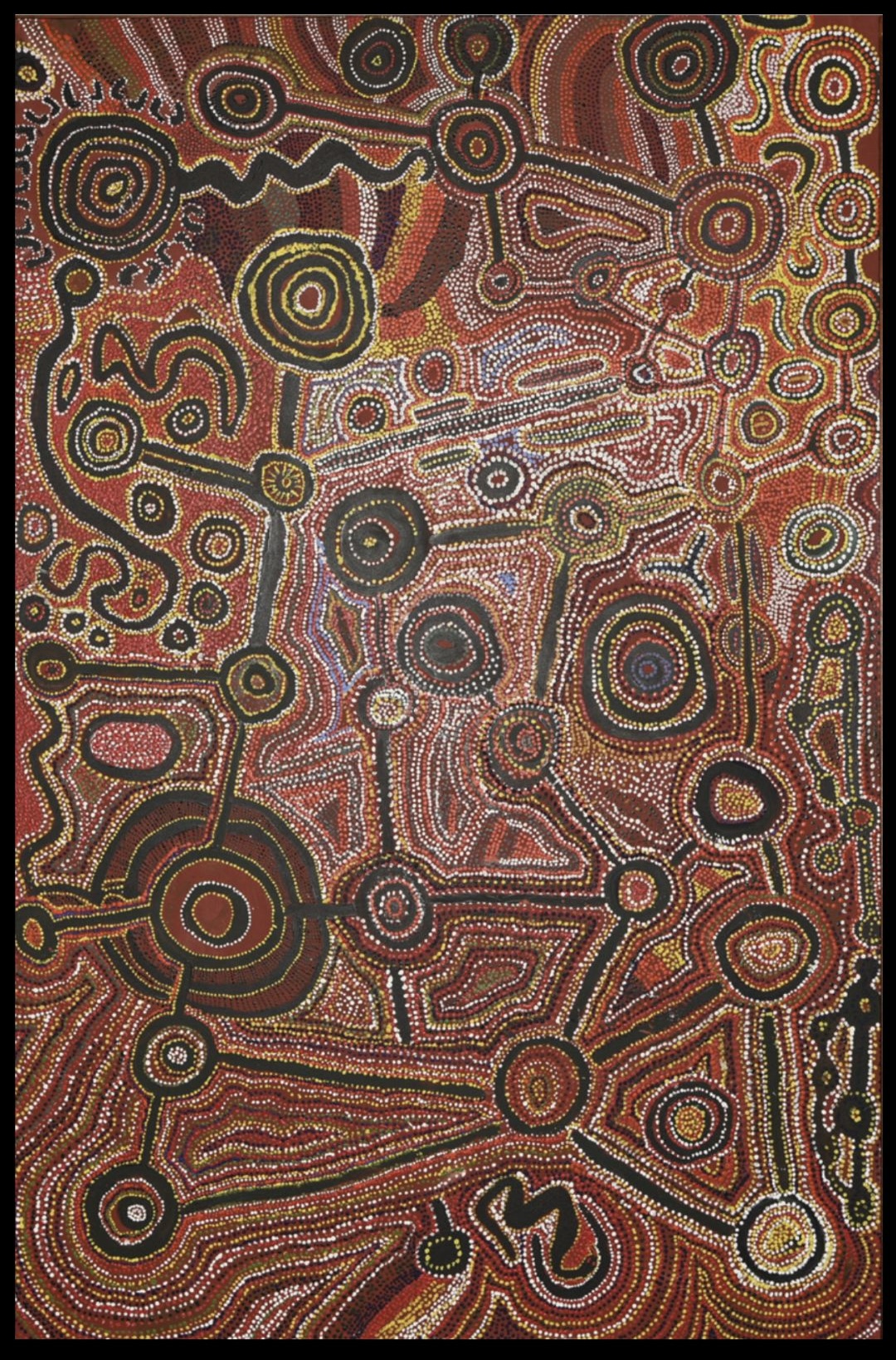
Spinifex Art refers to the contemporary painting tradition of the Spinifex people of the Great Victoria Desert, one of the most remote regions of Australia. The movement is particularly known for its large collaborative paintings that record knowledge of ancestral landscapes, sacred sites, travelling routes, and Dreaming narratives across vast areas of desert Country.
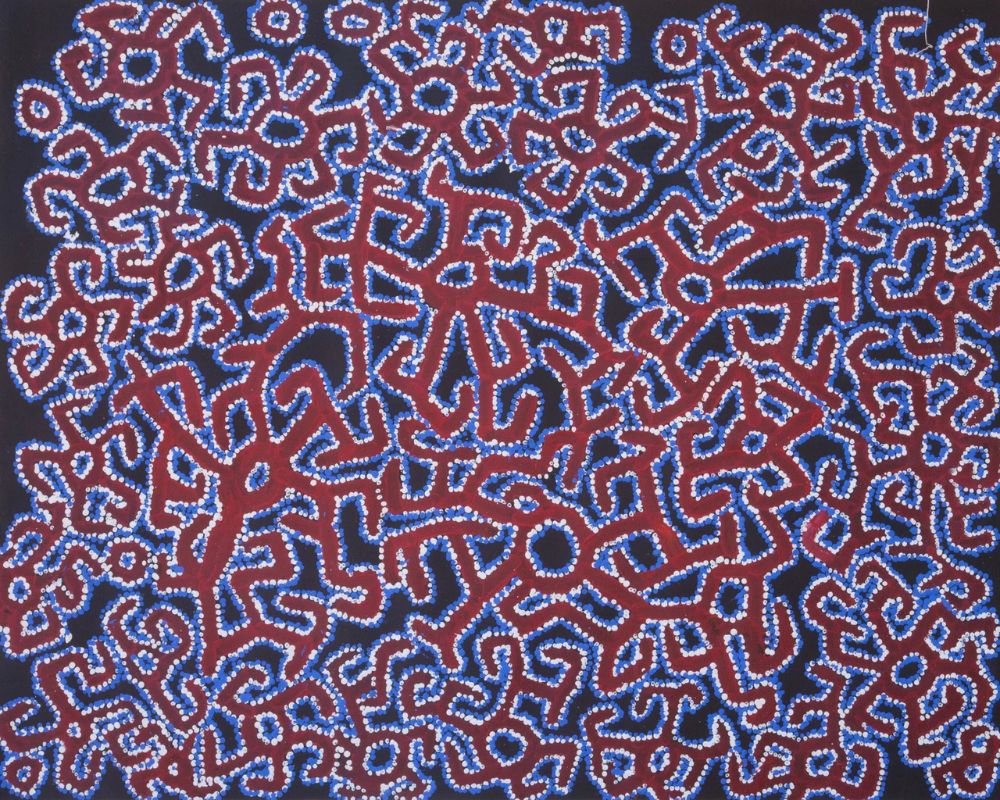
Created by artists whose ancestral lands extend across the Western Australian and South Australian border, Spinifex paintings employ aerial perspectives, interconnected site networks, and complex patterns of dots and lines to represent relationships between people, place, and ancestral history. Many works have a distinctly map-like appearance, reflecting the movement’s strong emphasis on geography, cultural responsibility, and the interconnected nature of the desert landscape.
The movement emerged during the late twentieth century through the establishment of the Spinifex Arts Project, which provided a means for senior men and women to record, share, and preserve knowledge connected to their traditional lands. While Spinifex Art forms part of the broader Western Desert tradition, it developed a distinctive identity through large-scale collaborative works that bring together the knowledge of multiple custodians within a single composition.
Like other forms of Aboriginal art, Spinifex painting is not primarily decorative. Each artwork reflects inherited responsibilities to place and the continuing significance of ancestral narratives. Waterholes, ceremonial sites, travelling routes, and important cultural locations are often represented through sophisticated visual systems developed over countless generations. As a result, Spinifex paintings function not only as works of art but also as enduring expressions of cultural knowledge and connection to the Great Victoria Desert.
Where Is Spinifex Country?
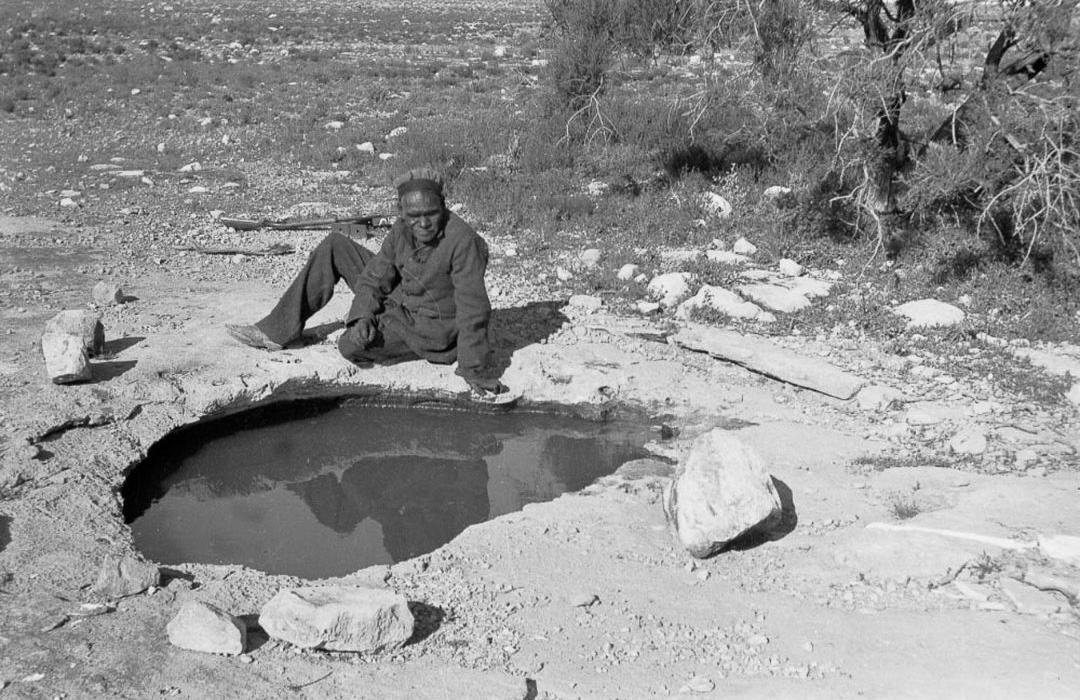
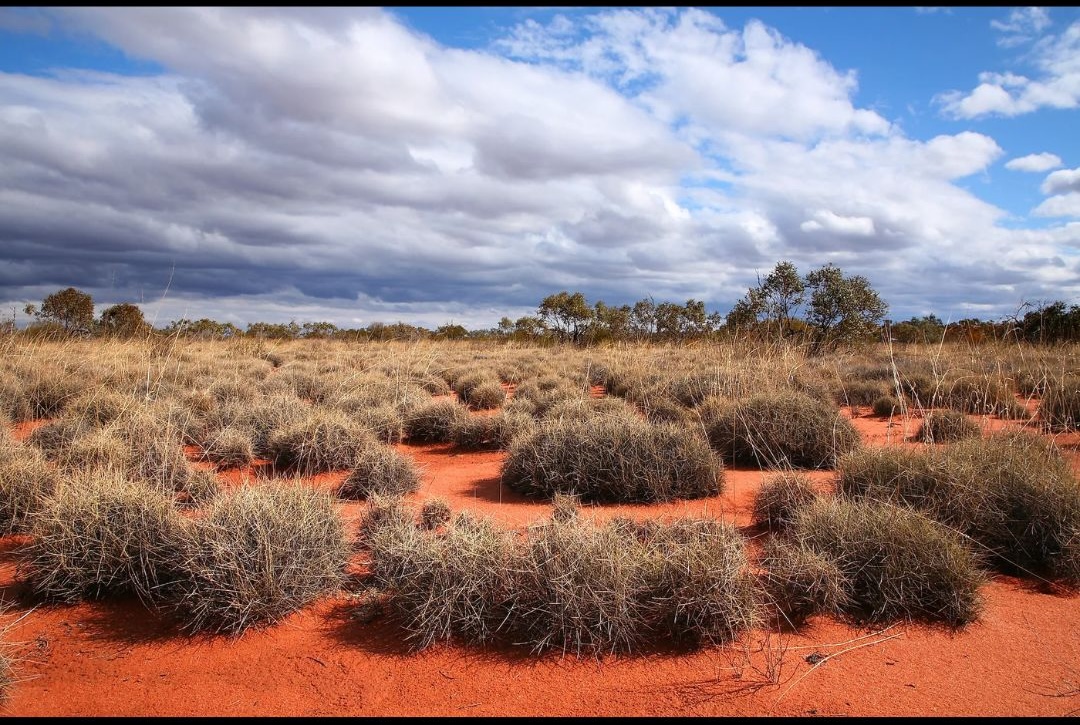
Spinifex Country lies within the vast Great Victoria Desert of Western Australia and South Australia, one of the largest and most remote arid regions in Australia. The traditional lands of the Spinifex people encompass thousands of square kilometres of desert landscapes characterised by sandhills, rocky outcrops, claypans, salt lakes, and extensive spinifex grasslands from which the people derive their contemporary name.
For countless generations, Spinifex families maintained a deep relationship with this desert environment through complex systems of kinship, ceremony, and cultural law. Knowledge of water sources, travelling routes, sacred sites, hunting grounds, and ancestral places was passed from one generation to the next, creating an intimate understanding of Country that remains central to Spinifex identity today.
Many Spinifex people were displaced from their traditional lands during the twentieth century following the establishment of the Woomera Rocket Range and the British nuclear weapons testing program at Maralinga. Despite this disruption, cultural knowledge and connections to Country endured. During the late twentieth century, many families re-established a permanent presence on their ancestral lands, leading to the development of communities such as Tjuntjuntjara in Western Australia.
Understanding the geography of Spinifex Country is essential to understanding Spinifex Art. The paintings remain deeply connected to this desert landscape and frequently reference places, travelling routes, and cultural responsibilities associated with the Great Victoria Desert.
How Spinifex Art Helped Secure Native Title
Spinifex Art occupies a unique place within Aboriginal Australian art because the movement emerged directly from the Spinifex people’s efforts to demonstrate their continuing ownership and custodianship of Country.
After returning to their homelands in the Great Victoria Desert and establishing the community of Tjuntjuntjara, Spinifex people sought formal recognition of their traditional lands through the Native Title Act. To succeed, they needed to demonstrate an enduring connection to Country, detailed knowledge of sacred sites, and agreement about the boundaries of their nation.
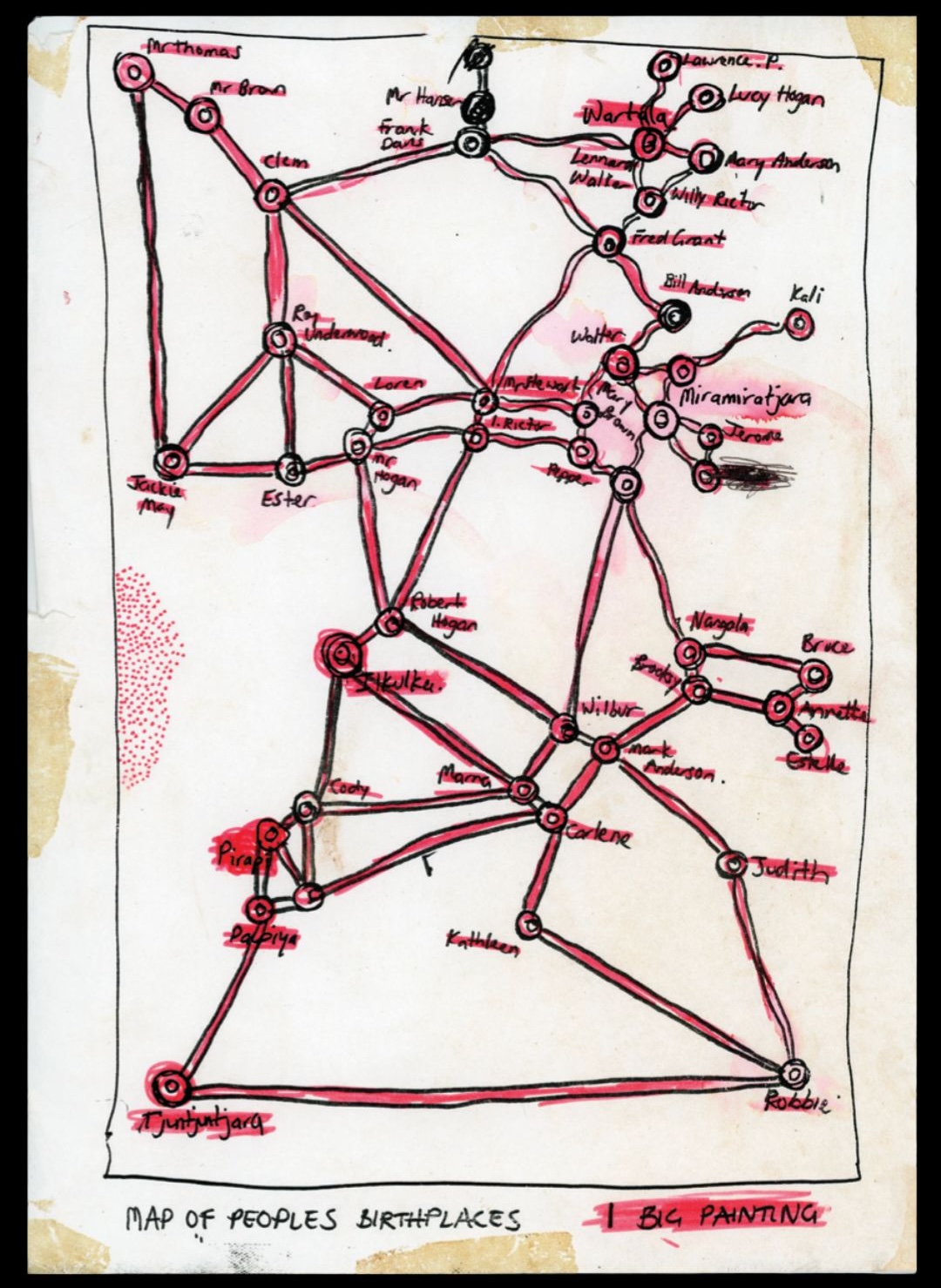
One of the first steps was the creation of a remarkable map recording the birthplaces of senior Spinifex men and women throughout their traditional lands. These birthplaces were not merely locations on a map. They represented places of identity, responsibility, ceremony, and Tjukurpa. The map demonstrated that senior people across the community retained intimate knowledge of Country despite decades of displacement during the twentieth century.
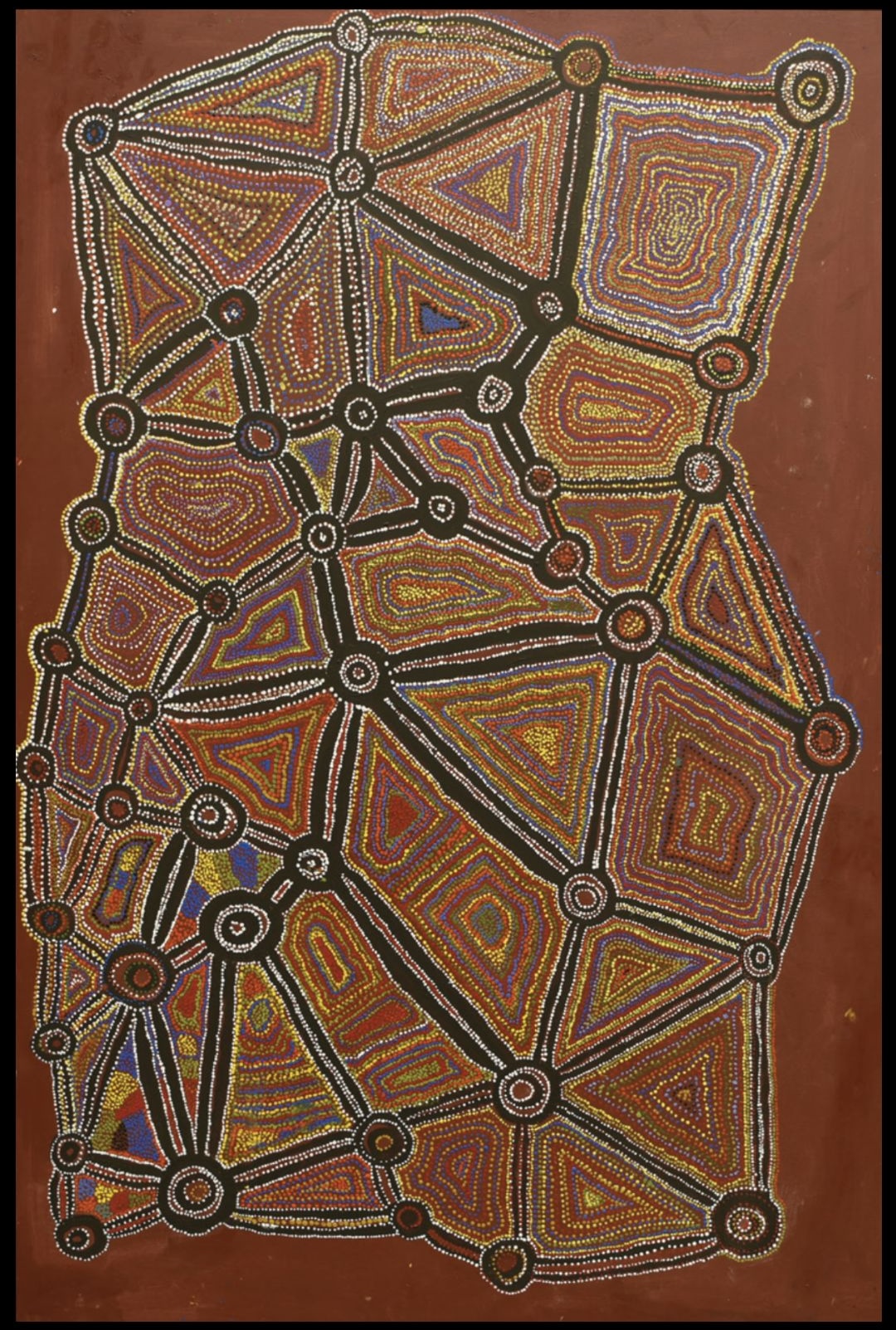
From this process emerged two extraordinary collaborative works: the Women’s Native Title Painting (1998) and the Men’s Native Title Painting (1998). Because Spinifex cultural knowledge is divided between men’s and women’s Law, separate paintings were required. Together they mapped ancestral journeys, sacred sites, waterholes, travelling routes, and the responsibilities held by different custodians across the Great Victoria Desert.
These paintings were far more than artworks. They were visual statements of law, memory, and ownership. They demonstrated that the knowledge connecting people to Country had remained intact despite removal to missions, the disruption caused by the Maralinga nuclear testing program, and decades spent away from their traditional lands. As anthropologist John Carty observed, Spinifex painting was aligned from the beginning with ideas of evidence.
The Native Title application was lodged in 1995 and successfully determined in 2000. The Spinifex people were granted exclusive possession over most of their claimed lands, one of the most significant Native Title outcomes achieved in Australia. The paintings became internationally recognised examples of Aboriginal art functioning simultaneously as cultural record, legal evidence, historical testimony, and an affirmation of continuing custodianship.
The success of the claim also marked the birth of the contemporary Spinifex Art movement. What began as a process of documenting Country evolved into one of Australia’s most important Aboriginal art traditions. Today Spinifex paintings continue to record Tjukurpa, preserve cultural knowledge, reinforce connections to ancestral places, and assert an enduring relationship between people and Country.
Meaning of Spinifex Art
To understand the meaning of Spinifex Art, it is important to understand that the paintings are not simply pictures of the desert. They are expressions of a living relationship between people, Country, ancestors, and Tjukurpa (Dreaming).
For the Spinifex people, Country is much more than land. A waterhole, rockhole, claypan, breakaway, or salt lake is not simply a geographical feature. It may also be connected to ancestral beings, Songlines, ceremonies, family histories, and cultural responsibilities passed from one generation to the next. Many places are linked through networks of stories and travelling routes that stretch across the Great Victoria Desert.
Knowledge of these places was essential for survival. In one of the most remote deserts in Australia, people needed to know where water could be found, how to travel safely between important sites, and which stories, songs, and ceremonies were associated with each location. This knowledge was carefully transmitted through initiation, ceremony, and oral tradition. Art often functioned as a teaching tool, helping younger generations visualise and remember complex Songlines and relationships across the landscape.
Many Spinifex paintings can therefore be understood as cultural maps. Concentric circles may represent waterholes, camps, or important sites. Lines can indicate travelling routes, ancestral journeys, or connections between places. Networks of interconnected forms often represent relationships between people, Country, and Tjukurpa. However, these meanings are rarely simple or fixed. A symbol may possess multiple layers of meaning depending on who is viewing it and the level of cultural knowledge they possess.
Only senior custodians entrusted with particular stories and ceremonies understood the deepest meanings contained within many paintings. What appears to an outside viewer as a waterhole, pathway, or ceremonial object may also refer to ancestral events, sacred knowledge, kinship relationships, or responsibilities connected to specific places. In this sense, Spinifex paintings do not merely describe Country; they embody knowledge about Country.
This connection between people and place became especially important during the Spinifex Native Title claim. The paintings demonstrated that cultural knowledge of waterholes, sacred sites, travelling routes, and ancestral landscapes had been maintained despite decades of displacement from traditional lands. The works showed that Country continued to live within the memories, ceremonies, and responsibilities of the Spinifex people.
For this reason, the meaning of Spinifex Art extends far beyond aesthetics. The paintings are records of knowledge, expressions of identity, statements of custodianship, and affirmations of an enduring relationship between people and Country that has survived across countless generations.
Major Spinifex Artists
While collaborative paintings occupy an important place within the movement, a number of individual artists have also gained recognition for their contributions to Spinifex Art.
Simon Hogan
Simon Hogan is regarded as one of the most important artists of the Spinifex movement and played a leading role in both the Native Title campaign and the development of contemporary Spinifex Art. Born in the Great Victoria Desert around 1930, Hogan spent his early life living traditionally on Country before relocating with his family to Cundeelee Mission during the late 1950s. A senior Pitjantjatjara man and respected custodian of cultural knowledge, he was among the key traditional owners who successfully secured Native Title recognition over more than 55,000 square kilometres of Spinifex Country in 2000. Since the emergence of Spinifex Art in the late 1990s, Hogan has become renowned for his richly detailed paintings that map ancestral journeys, sacred sites, and the interconnected landscape of the desert. His work has been exhibited throughout Australia and internationally, including at the British Museum in London, and is widely regarded as among the finest and most significant examples of contemporary Spinifex Art.
Lawrence Pennington
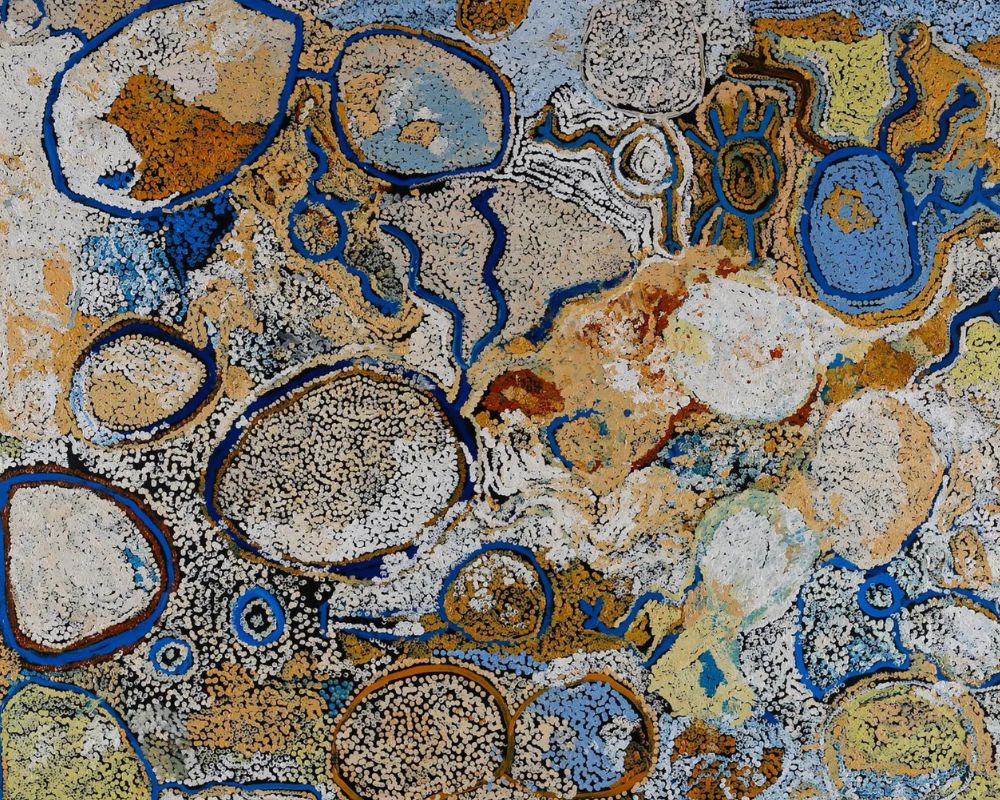
Lawrence Pennington is one of the senior founding artists of the Spinifex movement and among the last generation of Spinifex people to spend their early lives living entirely traditionally in the Great Victoria Desert. Born around 1934 at Urlu near the northeastern boundary of Spinifex Country, Pennington was initiated on his ancestral lands and possesses deep cultural knowledge of the sites, stories, and Dreamings associated with the region, particularly the Walawuru (Wedge-tailed Eagle) Tjukurpa that traverses his Country. His paintings are immediately recognisable for their bold iconography, strong use of colour, and highly individual visual language that differs from the more cartographic style often associated with Spinifex Art. Following displacement to Cundeelee Mission during the late 1950s, Pennington later became an important contributor to the emergence of Spinifex Art and the cultural revival associated with the return to Country. His works combine personal authority, ceremonial knowledge, and a powerful sense of place, making him one of the most distinctive and respected artists of the Spinifex movement.
Roy Underwood
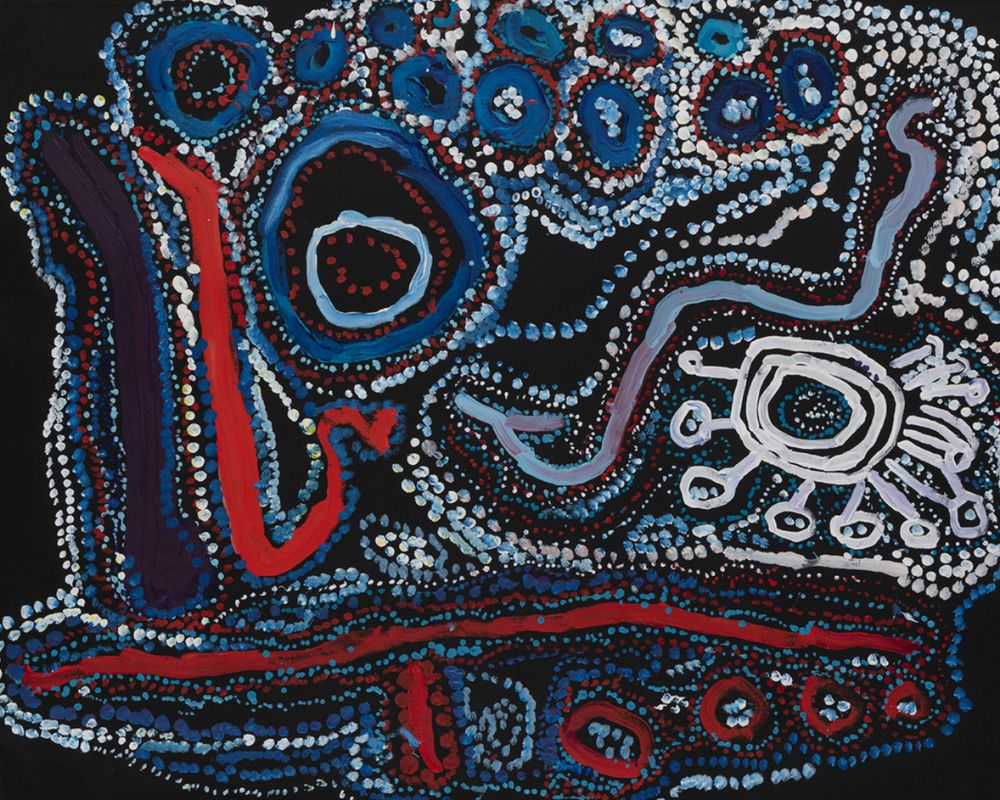
Roy Underwood was one of the most influential senior artists of the Spinifex movement and a key figure in the return of the Spinifex people to their traditional lands in the Great Victoria Desert. Born around 1937 in north-western Spinifex Country, Underwood spent his early life living traditionally before being removed to Cundeelee Mission during the late 1950s. A respected elder, cultural leader, and Native Title advocate, he played an important role in demonstrating the Spinifex people’s continuing connection to Country during the successful Native Title claim that secured exclusive possession over more than 55,000 square kilometres of desert land in 2000. His paintings are renowned for their bold geometric structures, powerful iconography, and aerial depictions of sand dune systems, rockholes, and ancestral pathways. Widely regarded as one of the defining artists of the Spinifex Arts Project, Underwood helped shape the visual identity of the movement and remains one of the most important figures in the history of contemporary Spinifex Art.
Why Spinifex Art Is Important
Spinifex Art is important because it provides one of the clearest visual explanations of how Aboriginal people understand Country. Through the Native Title process, Spinifex artists created paintings that documented not only sacred sites and ancestral journeys, but also the relationships connecting people, places, Songlines, memory, and cultural responsibility across the Great Victoria Desert.
For many non-Indigenous viewers, these works help explain the difference between land and Country. What may first appear to be an aerial view of the desert is often a sophisticated cultural map recording waterholes, travelling routes, ceremonial sites, ancestral histories, and the obligations that connect people to particular places. The paintings reveal that Country is not simply geography but a living network of relationships linking people, ancestors, law, and landscape.
Spinifex Art also provides an important key for understanding many earlier Western Desert paintings, including the great Tingari traditions of the Pintupi. By showing how sites, journeys, and cultural knowledge can be represented visually, Spinifex paintings help reveal the deeper meanings that often lie behind the seemingly abstract forms of Western Desert Art.
Ultimately, the significance of Spinifex Art extends far beyond aesthetics. More than perhaps any other regional painting movement, it demonstrates that Aboriginal art is not simply about depicting the landscape. It is about expressing a relationship with Country. In doing so, Spinifex Art offers one of the most powerful insights into the cultural knowledge systems that have connected people to the Western Desert for countless generations.