Ada Bird Petyarre: Biography, Painting Style and Importance
c. 1930–2009
Anmatyerre
Atnangkere Country, Utopia
Utopia / Central Australia
Utopia Art / Utopia Art Movement
Batik on silk, painting on canvas and printmaking
Ada Bird Petyarre (c.1930–2009) was an important Anmatyerre artist from Atnangkere Country in the Utopia region of Central Australia. One of the seven Petyarre sisters, she belonged to the generation of senior Utopia women who helped establish the region as one of the most important centres of contemporary Aboriginal art.
Ada was a founding member of the Utopia Women’s Batik Group in the late 1970s and was among the artists who made the historic transition from batik to painting on canvas during the CAAMA Summer Project of 1988–89. Her paintings are particularly recognised for their strong linear structures derived from Awelye women’s ceremonial body painting, together with subjects associated with Atnangkere Country, Arnkerrthe (Mountain Devil Lizard), grasses, plants and other Dreamings.
Her career places her alongside artists such as Emily Kame Kngwarreye and her sisters Kathleen and Gloria Petyarre in the formative history of the Utopia art movement.
Ada Bird Petyarre Biography
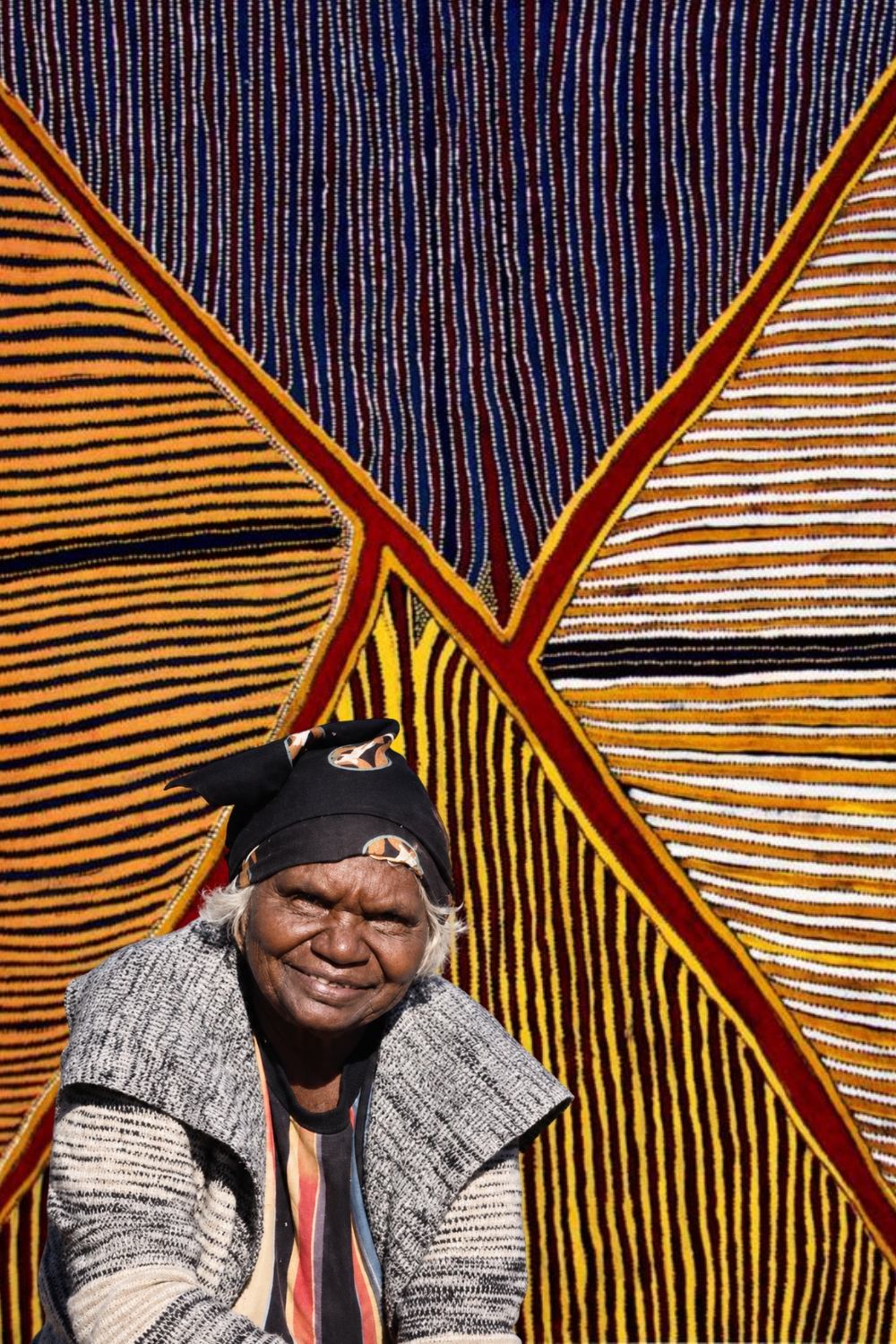
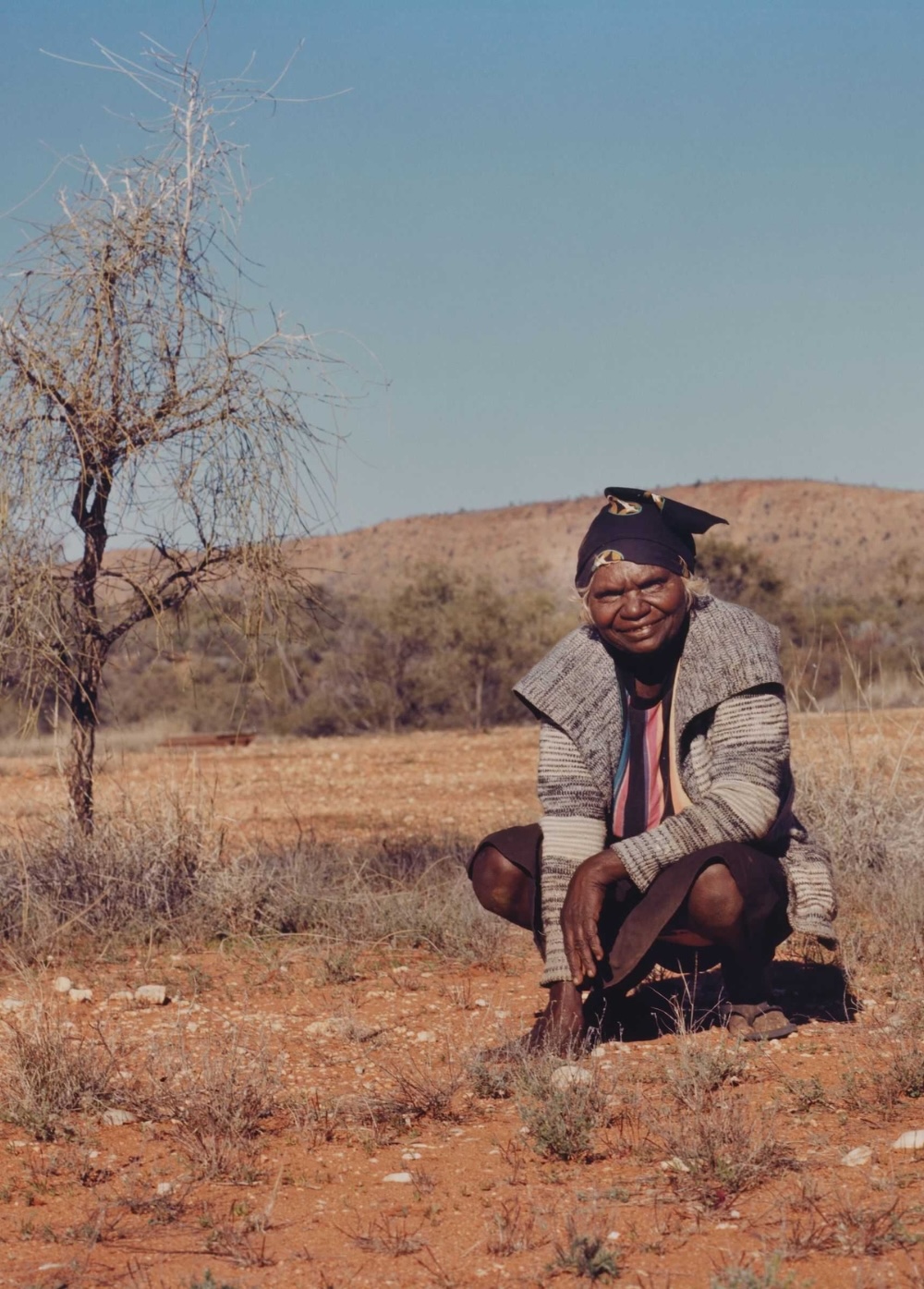
Ada Bird Petyarre was born around 1930 at Atnangkere on the old Utopia pastoral lease, northeast of Alice Springs. An Anmatyerre woman, Atnangkere was her Country, and its places, plants and ceremonial knowledge became central to her art. She later lived at Mulga Bore, also known as Akaye Soakage.
Ada was one of the seven Petyarre sisters, a remarkable family of artists that included Kathleen Petyarre and Gloria Petyarre. Although they shared connections to Country and ceremony, each developed a distinctive artistic style.
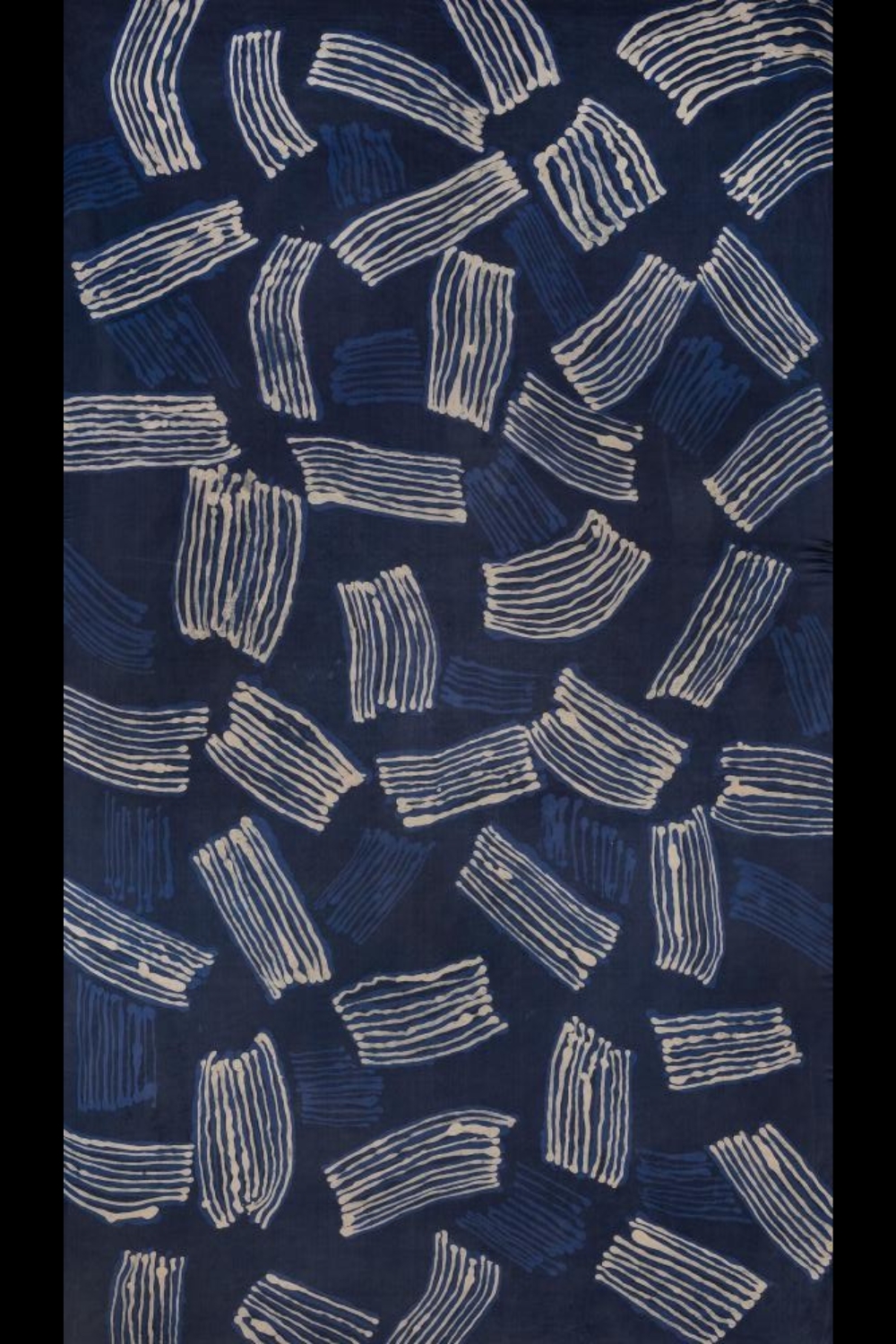
Ada’s artistic career began before painting on canvas became established at Utopia. In the late 1970s she became a founding member of the Utopia Women’s Batik Group, transferring designs associated with Country and ceremony onto silk using wax-resist techniques.
Batik helped lay the foundations of the Utopia art movement. Ada’s work was among the Utopia batiks that attracted national attention during the 1980s, and she continued working in batik after becoming an established painter. Large works such as Bush Grasses show that it remained part of her practice into the late 1990s.
The major transition came with the CAAMA Summer Project of 1988–89, when Utopia artists began working with acrylic paint on canvas. Ada participated in the project, with surviving works including Ceremony for Endunga: Sacred Grass(1988–89) and Endunga (Sacred Grass) (1989), which retains CAAMA provenance.
By 1990 Ada was producing ambitious paintings. Atnangkere Country, 1990, measuring 245 × 145 cm, passed through CAAMA and Utopia Art, Sydney, and was later exhibited alongside work by Gloria Petyarre in New York.
Her work soon appeared in important Australian and international exhibitions. Atnangkere (Awelye), 1990, retained exhibition labels from the Hayward Gallery, London, Kunstsammlung Nordrhein-Westfalen, Düsseldorf, and Gallery Gabrielle Pizzi, Melbourne. Her monumental Women’s Ceremony for the Mountain Desert Lizard, 1992, was exhibited in the inaugural Asia Pacific Triennial at Queensland Art Gallery in 1993.
Ada continued painting through the 1990s and early 2000s. She died in 2009.
Early Ada Bird Batik
Ada Bird Petyarre Painting Style and Subjects
Ada Bird Petyarre’s paintings are remarkably varied. She worked with dense fields of dots, parallel lines, plant forms, concentric circles and figurative imagery, adapting her approach to different subjects connected with Atnangkere Country, ceremony and ancestral knowledge.
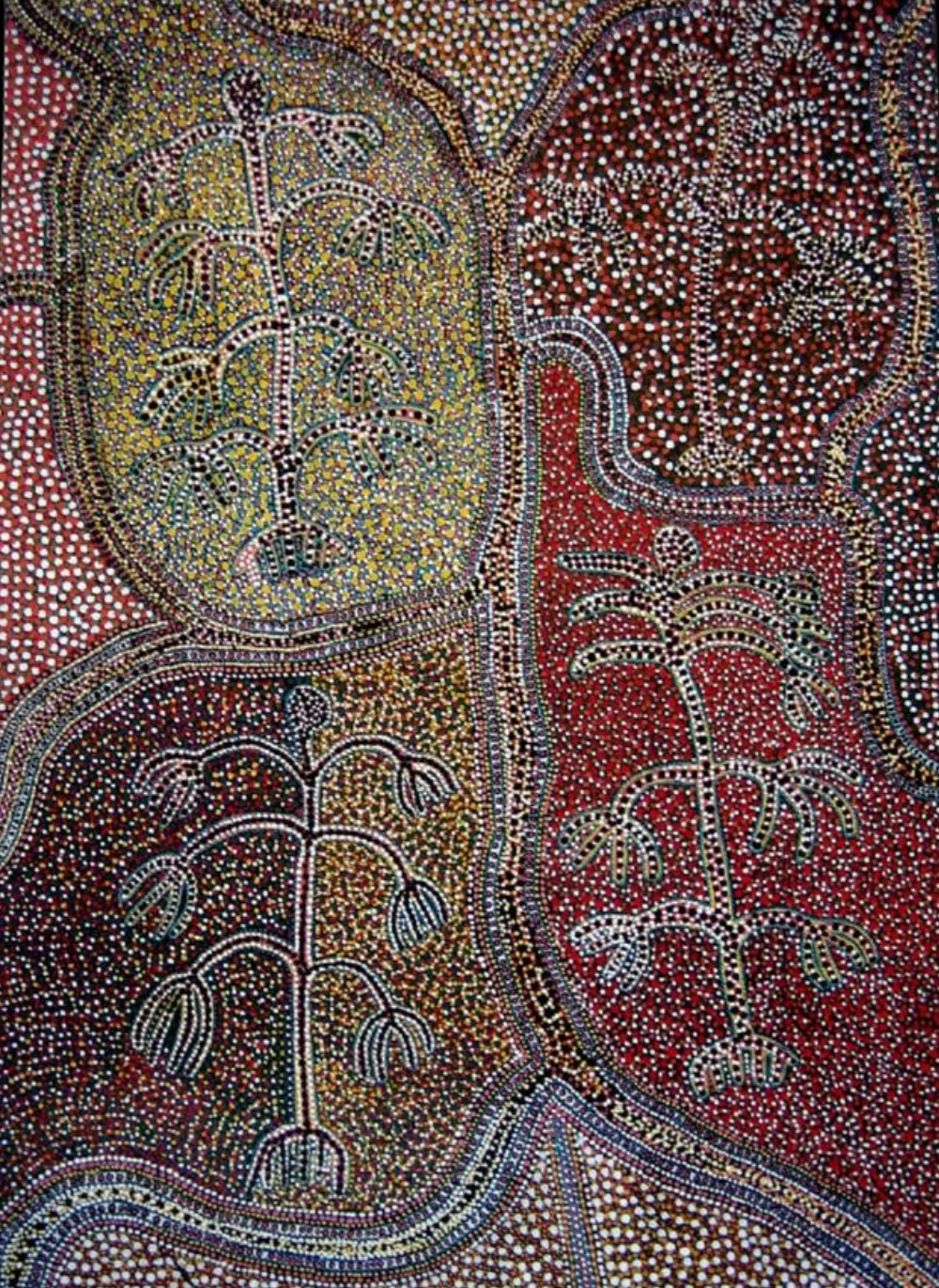
Some paintings are dominated by dots. Thousands of small coloured marks create dense surfaces from which larger botanical forms emerge. Plants may be clearly outlined, while surrounding dots produce changes in colour, texture and depth.
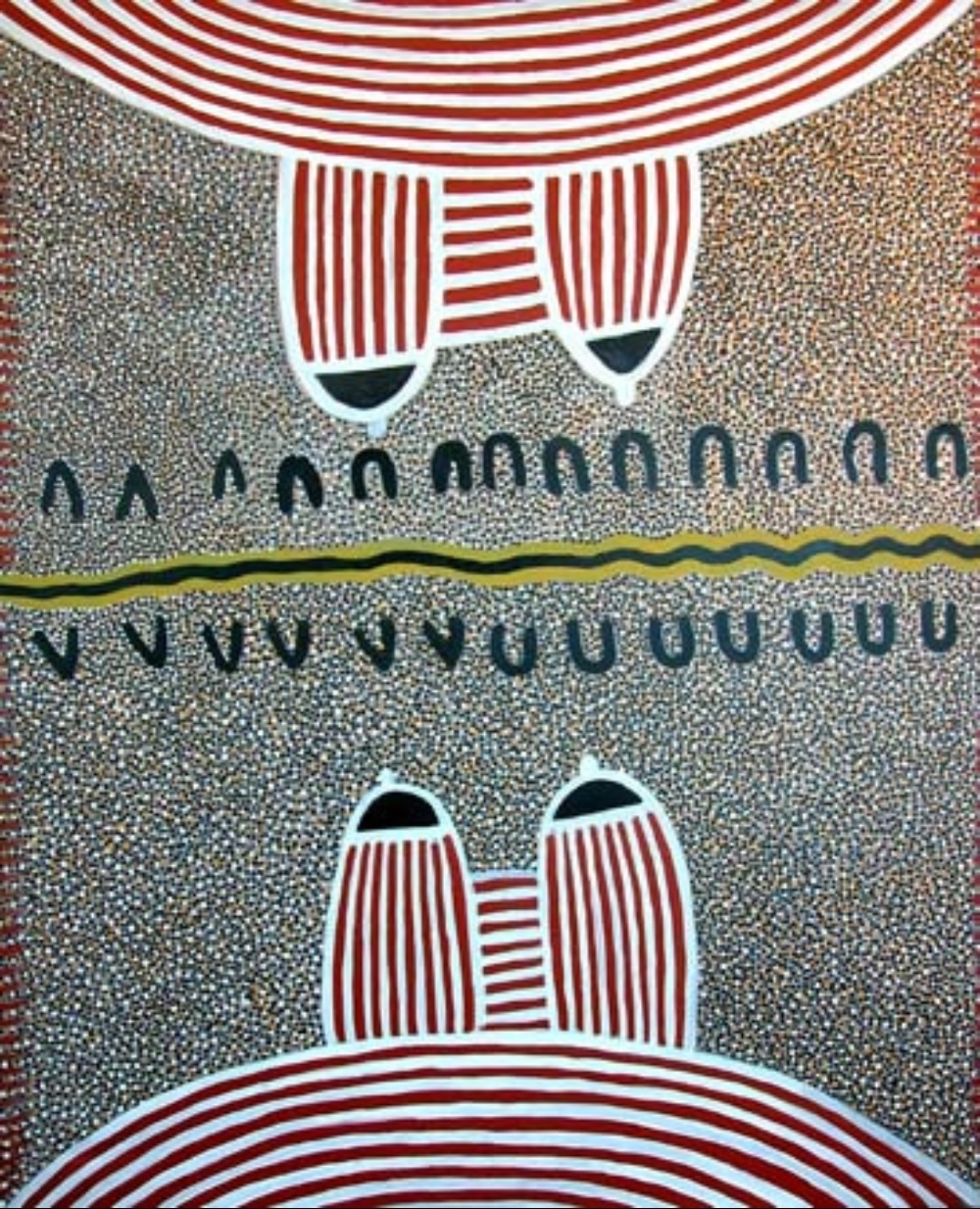
Other works are dominated by line. Large areas are divided by sweeping curved bands and filled with closely spaced parallel lines in contrasting colours. These bold compositions are particularly associated with Awelye, women’s ceremony and body painting.
Ada’s principal subjects included Awelye, Arnkerrthe (Mountain Devil Lizard) and Atnangkere Country. Other recorded subjects include Sacred Grass or Endunga, Emu, Bush Flowers, Bush Banana, Women’s Dreaming, Women’s Business and Spear Dreaming.
Her Sacred Grasses paintings combine plant forms with extensive dotted fields and ceremonial imagery. Other paintings are more complex, bringing together concentric circles, figures, plants and irregular areas of colour.
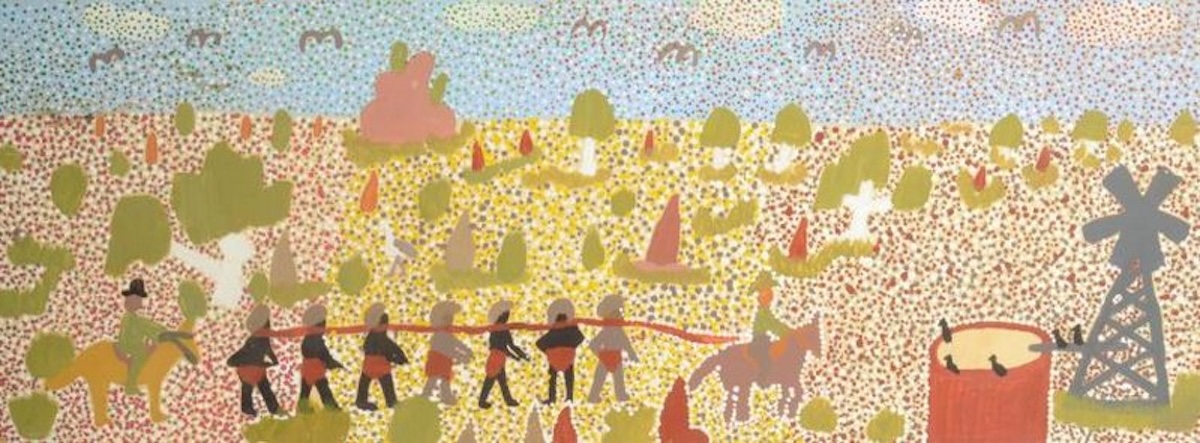
Ada also produced unusual historical narrative paintings. Military Rounding Up Aboriginal Camp, Amaroo Station 1903, painted in 1998, uses recognisable figures to address remembered Aboriginal history rather than the ceremonial subjects for which she is best known.
Ada’s work therefore cannot be reduced to either “dot painting” or linear abstraction. Dots, lines, plants, body-paint designs, circles and figures all formed part of her visual language.
Her Sacred Grasses paintings combine plant forms with extensive dotted fields and ceremonial imagery. Other paintings are more complex, bringing together concentric circles, figures, plants and irregular areas of colour.
Ada also produced unusual historical narrative paintings. Military Rounding Up Aboriginal Camp, Amaroo Station 1903, painted in 1998, uses recognisable figures to address remembered Aboriginal history rather than the ceremonial subjects for which she is best known.
Ada’s work therefore cannot be reduced to either “dot painting” or linear abstraction. Dots, lines, plants, body-paint designs, circles and figures all formed part of her visual language.
Ada Bird Petyarre Value and Auction results
Works Offered at Auction: 160
Sale Rate: 46%
Highest Sale: $24,000 AUD
Median Sale Price: $750 AUD
To view individual select artworks along with dimensions provenance and sales prices please Visit the Barbera Weir value page
Why Ada Bird Petyarre Is Important
Ada Bird Petyarre’s importance lies partly in her position at the beginning of the modern Utopia art movement. She participated in both of its formative stages: the development of the Utopia Women’s Batik Group from the late 1970s and the transition to acrylic painting on canvas during the CAAMA Summer Project of 1988–89.
She therefore belongs to the first generation of Utopia artists rather than to the later commercial expansion of the movement.
Her early paintings also received significant recognition. A major 1990 Atnangkere (Awelye) travelled through important Australian and European exhibition venues, while her monumental 1992 Women’s Ceremony for the Mountain Desert Lizard appeared in the inaugural Asia Pacific Triennial in 1993. A 1997 Atnankere Dreaming was subsequently associated with the 14th National Aboriginal and Torres Strait Islander Art Award and its 1998 tour.
Ada is also important for understanding the extraordinary diversity of Utopia painting. Her work provides a visible connection between ceremonial body painting, batik and canvas. Rather than abandoning one medium as another appeared, she carried elements of the same visual and cultural vocabulary between them.
Within the celebrated Petyarre family, her work also remained distinct. Kathleen Petyarre became particularly renowned for sophisticated paintings associated with Arnkerrthe and Country, while Gloria Petyarre later became famous for the sweeping rhythms of her Bush Medicine Leaf paintings. Ada’s mature work often remained more directly grounded in the strong linear structures and bodily forms of Awelye.
Seen within the broader history of Utopia, Ada Bird Petyarre was not simply the sister of better-known artists. She was one of the women who helped create the conditions from which the Utopia painting movement emerged.
Further Reading
All images featured in this article are presented strictly for educational and informational purposes.
This website may include copyrighted material for which specific authorization has not been obtained from the copyright owner.
All such images are presumed to be the intellectual property of the respective artist or their estate, and are used in accordance with principles of fair dealing or fair use under applicable copyright law.