Ngaanyatjarra Art
Ngaanyatjarra Art is one of the most distinctive and visually diverse traditions within Western Desert Art. Created by Aboriginal artists from the vast Ngaanyatjarra Lands of remote Western Australia, these paintings express profound connections to Country, Dreaming, and cultural knowledge passed down through countless generations.
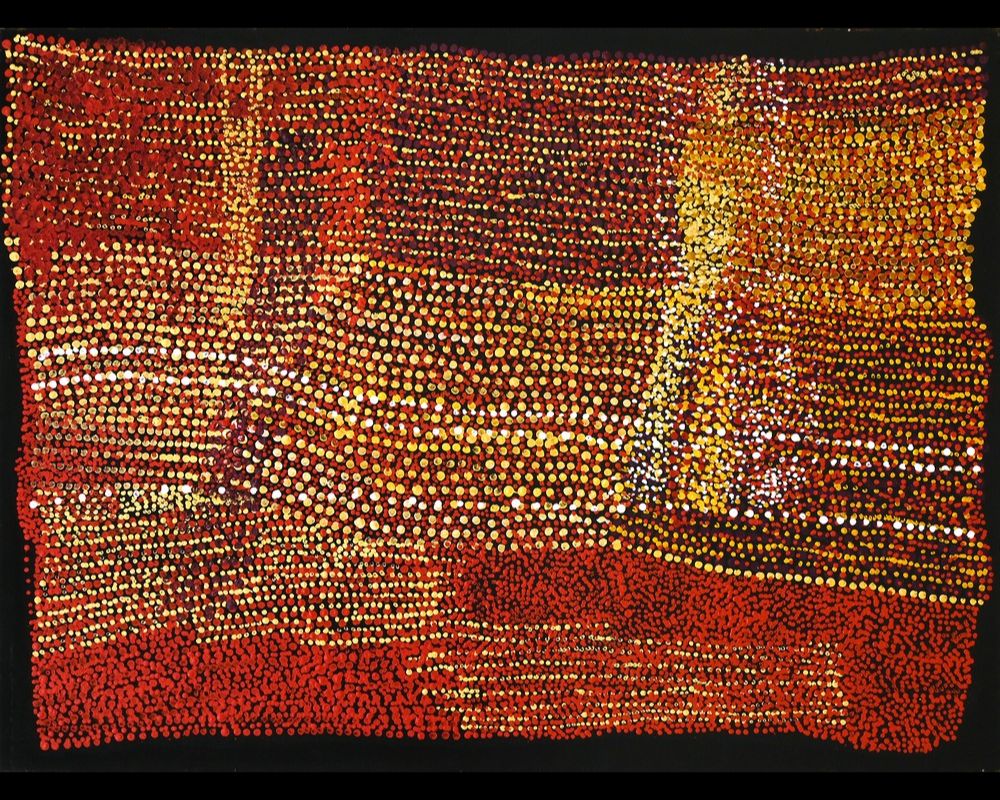
Unlike some regional Aboriginal art movements that developed highly recognisable visual styles, Ngaanyatjarra Art encompasses an extraordinary range of individual artistic approaches. From the luminous colour fields of Tommy Watson to the mesmerising linear paintings of George Tjungurrayi, artists have transformed ancestral stories, sacred sites, and desert landscapes into works that are both deeply traditional and strikingly contemporary.
Today, Ngaanyatjarra paintings are celebrated in major museums, galleries, and private collections around the world. Their success reflects not only their visual power but also the enduring cultural traditions of one of Australia’s largest and most remote Aboriginal regions.
This guide explores the history of Ngaanyatjarra painting, its most important artists, the cultural significance of the Ngaanyatjarra Lands, and what makes this remarkable movement unique within Aboriginal Australian art.
What Is Ngaanyatjarra Art?
Ngaanyatjarra Art is a regional tradition within Western Desert Art created by Aboriginal artists from the vast Ngaanyatjarra Lands of Western Australia. This remote desert region extends across thousands of square kilometres near the borders of the Northern Territory and South Australia.
Like other Western Desert painting traditions, Ngaanyatjarra Art is deeply connected to Dreaming, Country, ancestral law, and cultural knowledge passed down through generations. Artists paint inherited stories associated with sacred sites, water sources, ancestral journeys, and ceremonial pathways, expressing enduring relationships between people and the land.
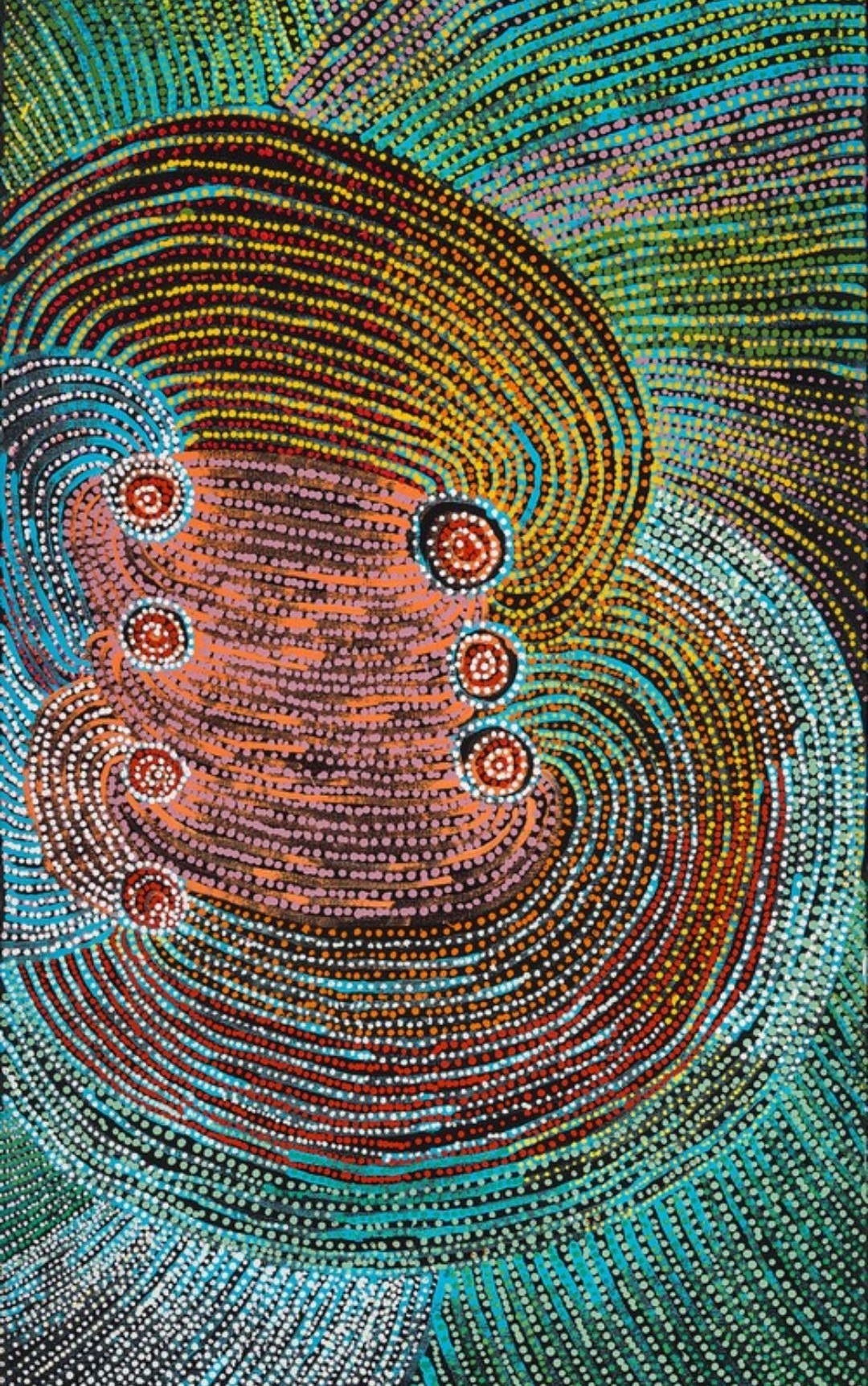
What distinguishes Ngaanyatjarra Art is its visual language. While many Western Desert paintings emphasise intricate symbolic mapping and dense dotting, Ngaanyatjarra artists often create expansive compositions that capture the scale, colour, and atmosphere of the desert itself. Soft colour transitions, luminous surfaces, and sweeping fields of paint evoke the experience of travelling through Country and experiencing the changing light of the Western Desert.
Artists such as Tommy Watson and George Tjungurrayi helped bring international recognition to the movement. Today, Ngaanyatjarra Art is regarded as one of the most distinctive regional traditions within Aboriginal Australian art, celebrated for its cultural depth, contemporary visual language, and powerful connection to Country.
Where Are The Ngaanyatjarra Lands?
The Ngaanyatjarra Lands occupy one of the largest and most remote Aboriginal-owned regions in Australia, covering approximately 250,000 square kilometres across the far east of Western Australia. The region stretches from the Northern Territory border in the north to the Great Victoria Desert in the south and forms part of the vast Western Desert cultural area.
The lands are home to a network of remote Aboriginal communities including Warburton, Warakurna, Blackstone (Papulankutja), Wingellina (Irrunytju), Wanarn, and Tjukurla. Despite their geographical isolation, these communities remain important centres of Ngaanyatjarra culture, language, and artistic practice.
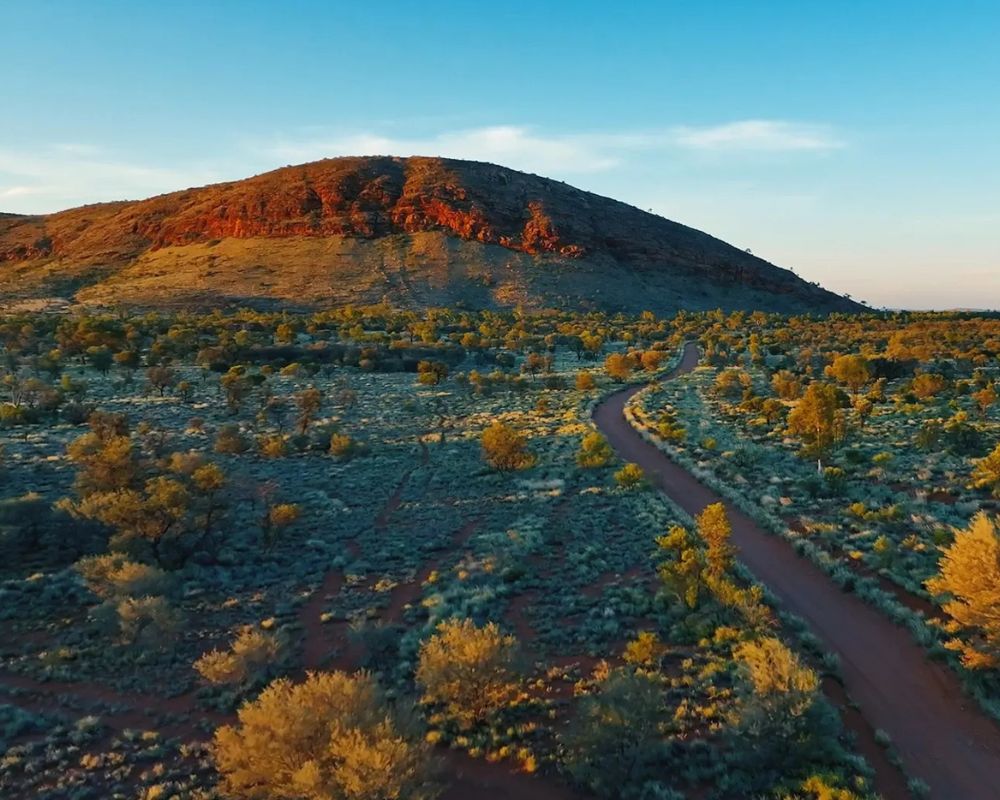
The landscape is characterised by red sandhills, rocky ranges, spinifex plains, dry river systems, waterholes, and sacred sites connected to ancestral Dreaming stories. Many of the paintings produced by Ngaanyatjarra artists are inspired by these desert environments and the cultural knowledge embedded within them.
What Makes Ngaanyatjarra Art Distinctive?
Ngaanyatjarra Art is among the most distinctive traditions within Western Desert Art because it often moves beyond the symbolic aerial mapping associated with early Papunya painting. While ancestral stories, sacred sites, and cultural knowledge remain central, many Ngaanyatjarra artists place greater emphasis on the experience, atmosphere, and emotional presence of Country rather than the depiction of identifiable symbols and ceremonial iconography.
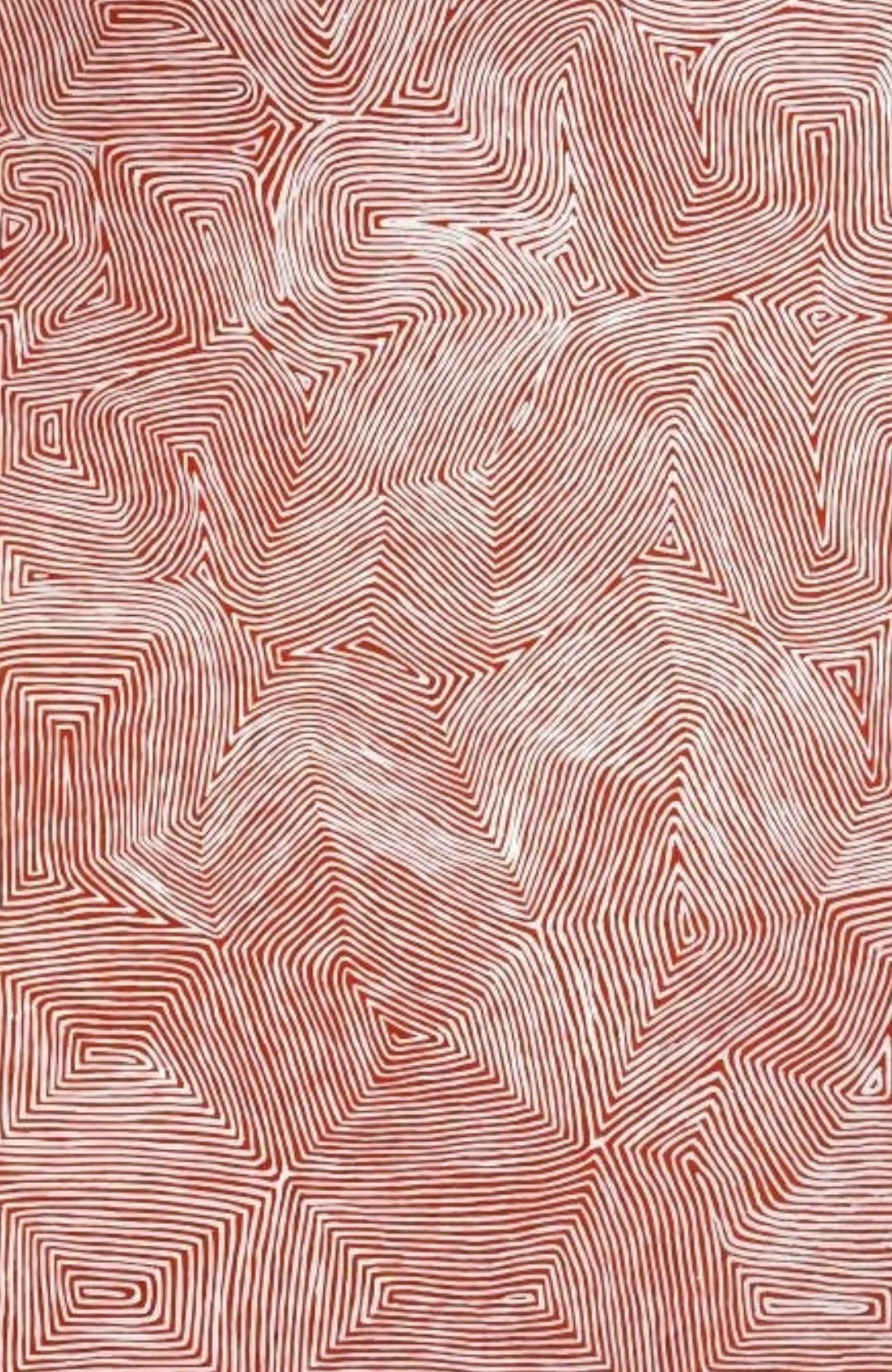
One of the defining characteristics of Ngaanyatjarra painting is its strong linear quality. Artists frequently use flowing lines, rhythmic mark-making, and repeated patterns to create movement across the canvas. These lines can suggest ancestral pathways, desert winds, travelling routes, or the contours of the landscape itself. In the hands of artists such as George Tjungurrayi, line becomes the dominant visual element, producing mesmerising optical effects that are unlike any other regional Aboriginal painting tradition.
Ngaanyatjarra Art is also generally more abstract than many other Western Desert styles. Traditional Papunya symbols such as concentric circles, U-shapes, and overt ceremonial mapping often play a less prominent role. Instead, artists use dots, lines, colour, and texture to evoke the feeling of being within the landscape rather than simply representing it from above.
The movement is notable for its highly contemporary visual language. Paintings by artists such as Tommy Watson demonstrate how ancestral knowledge can be expressed through expansive colour fields and gestural abstraction that resonate with international contemporary art while remaining deeply connected to Country.
Perhaps most significantly, Ngaanyatjarra Art resists simple stylistic definition. Unlike several other regional schools within Western Desert Art, there is no single visual formula that unites all Ngaanyatjarra artists. From Tommy Watson’s luminous abstractions to George Tjungurrayi’s precise linear compositions, artists have developed remarkably individual approaches. This diversity has become one of the movement’s greatest strengths, creating a body of work that is united less by a common style than by a shared cultural landscape and enduring connection to the Western Desert.
Important Ngaanyatjarra Artists
Ngaanyatjarra Art is unusual among regional Aboriginal painting traditions because it encompasses an extraordinary diversity of individual artistic styles. Rather than being defined by a single visual approach, the movement is best understood through the achievements of a number of influential artists whose works helped bring international attention to the Ngaanyatjarra Lands.
Patju Presley
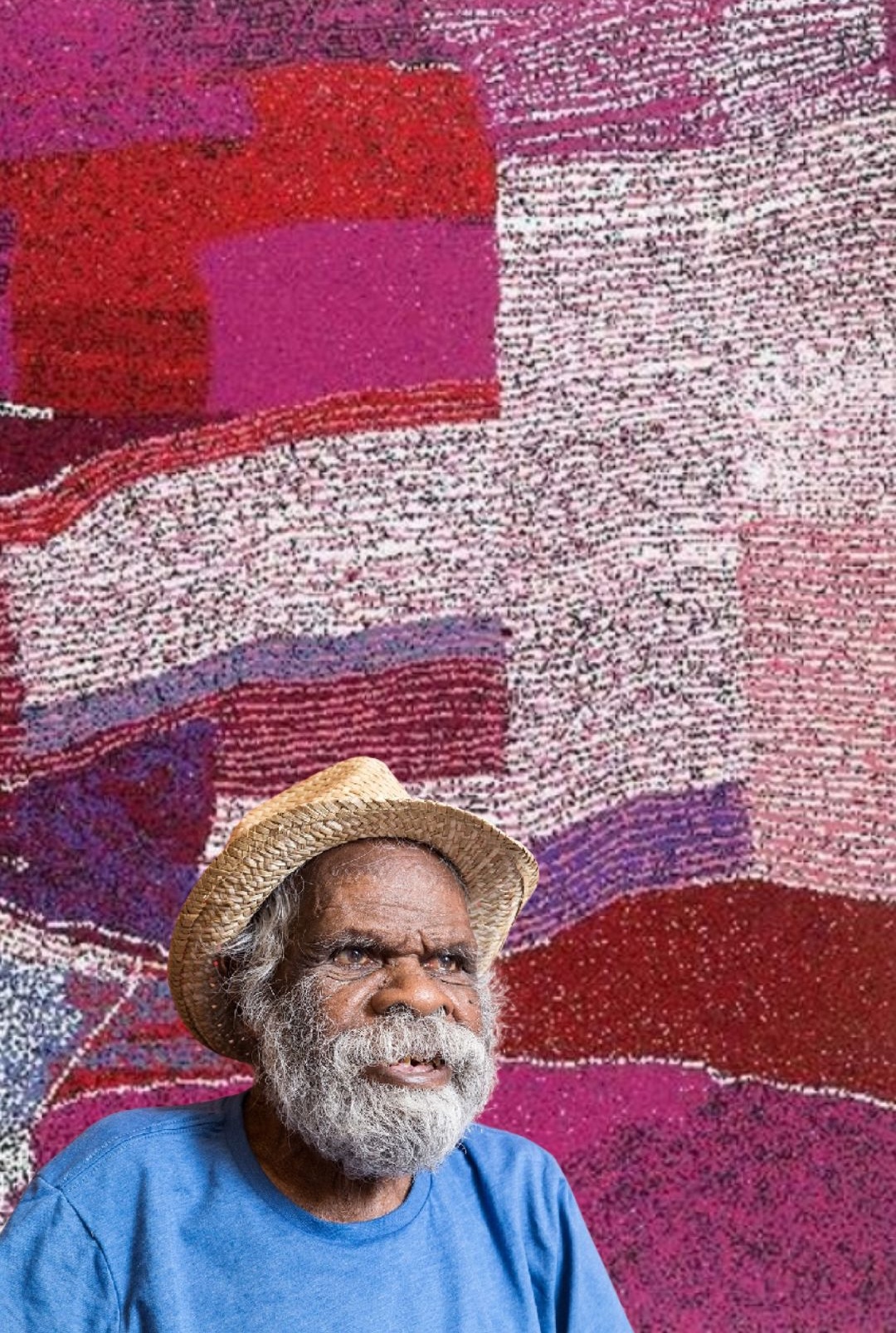
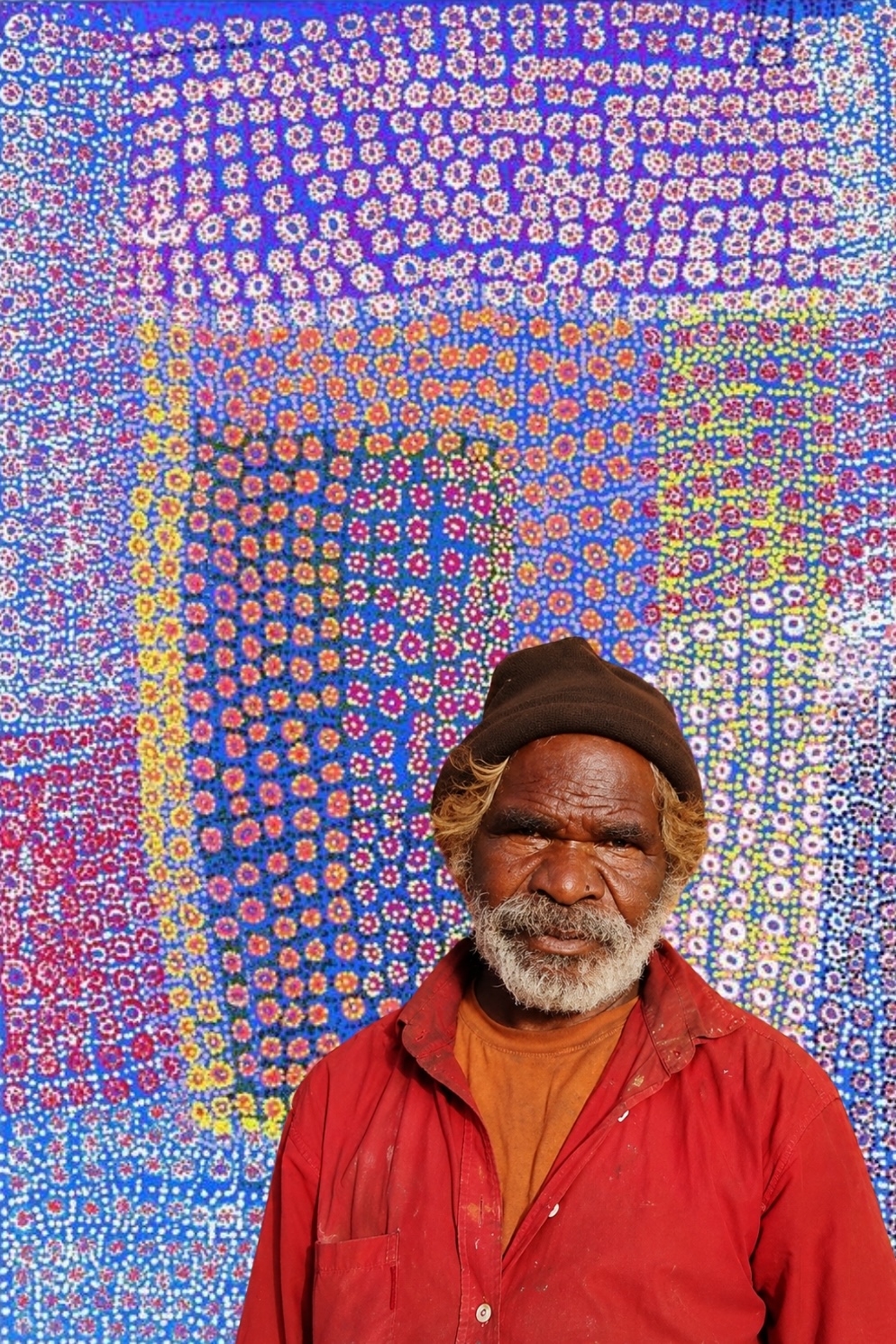
Patju Presley is one of the most respected senior artists from the Ngaanyatjarra Lands and played an important role in the development of contemporary painting in the Western Desert. His works are deeply connected to ancestral Country, Dreaming narratives, and the cultural traditions of the region. Characterised by rich desert colours, intricate dotting, and carefully structured compositions, his paintings often depict sacred sites, travelling routes, and significant ceremonial landscapes. Through his distinctive visual language and strong cultural authority, Presley helped bring wider recognition to the artistic traditions of the Ngaanyatjarra people and remains an important figure within contemporary Aboriginal Australian art.