Rammey Ramsey: Aboriginal Artist
c.1935/1939–2021
Gija
East Kimberley, Western Australia
Warlawoon Country, near Elgee Cliffs
East Kimberley Art
Ochre painting / contemporary Gija painting
Rammey Ramsey was a senior Gija artist whose paintings of Warlawoon Country are among the most distinctive works of later East Kimberley art. His Country lies west of Bedford Downs around Elgee Cliffs, a landscape of rugged gorges, waterholes, cliffs and rock-wallaby places that became the central subject of his paintings.
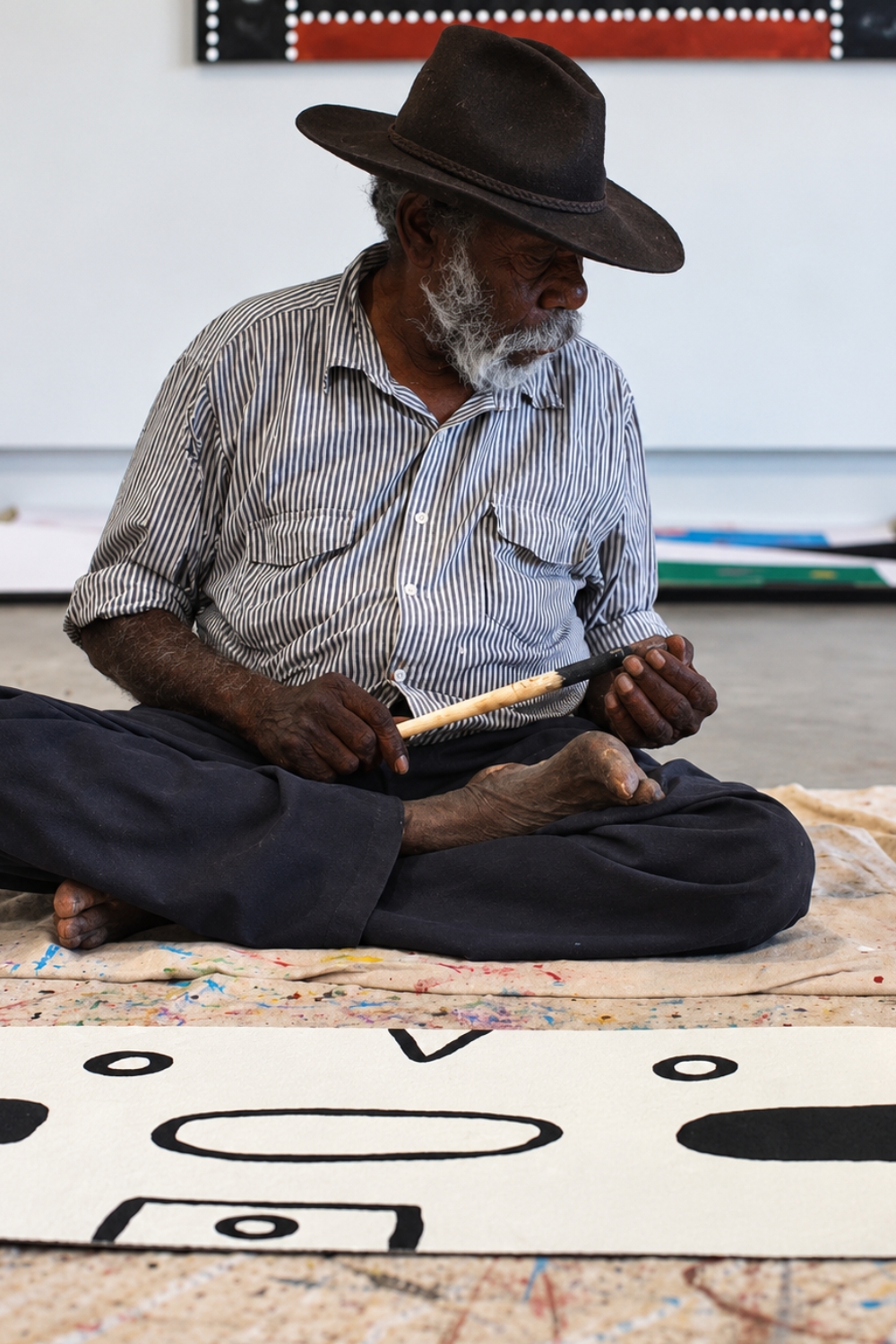
Ramsey began painting professionally with Jirrawun Arts in 2000, when he was already in his mid-sixties. This was not, however, the beginning of his artistic practice. Painting had long formed part of his ceremonial life through body painting, ceremonial objects and dance poles.
His paintings transformed Warlawoon Country into a distinctive visual language of bold forms, dotted outlines and fields of colour. From an initially restrained East Kimberley palette, his work became increasingly expressive, using wet-in-wet paint and brilliant colour to evoke wind, dust, rain, heat, fire and water. His work subsequently became much more expressive, using wet-in-wet paint and increasingly brilliant colour to evoke the physical experience of Country—wind, dust, rain, heat, fire and water.
For additional images of Rammey Ramsey’s art, together with auction results, prices and provenance, see the Rammey Ramsey Value support page.
Rammey Ramsey Biography
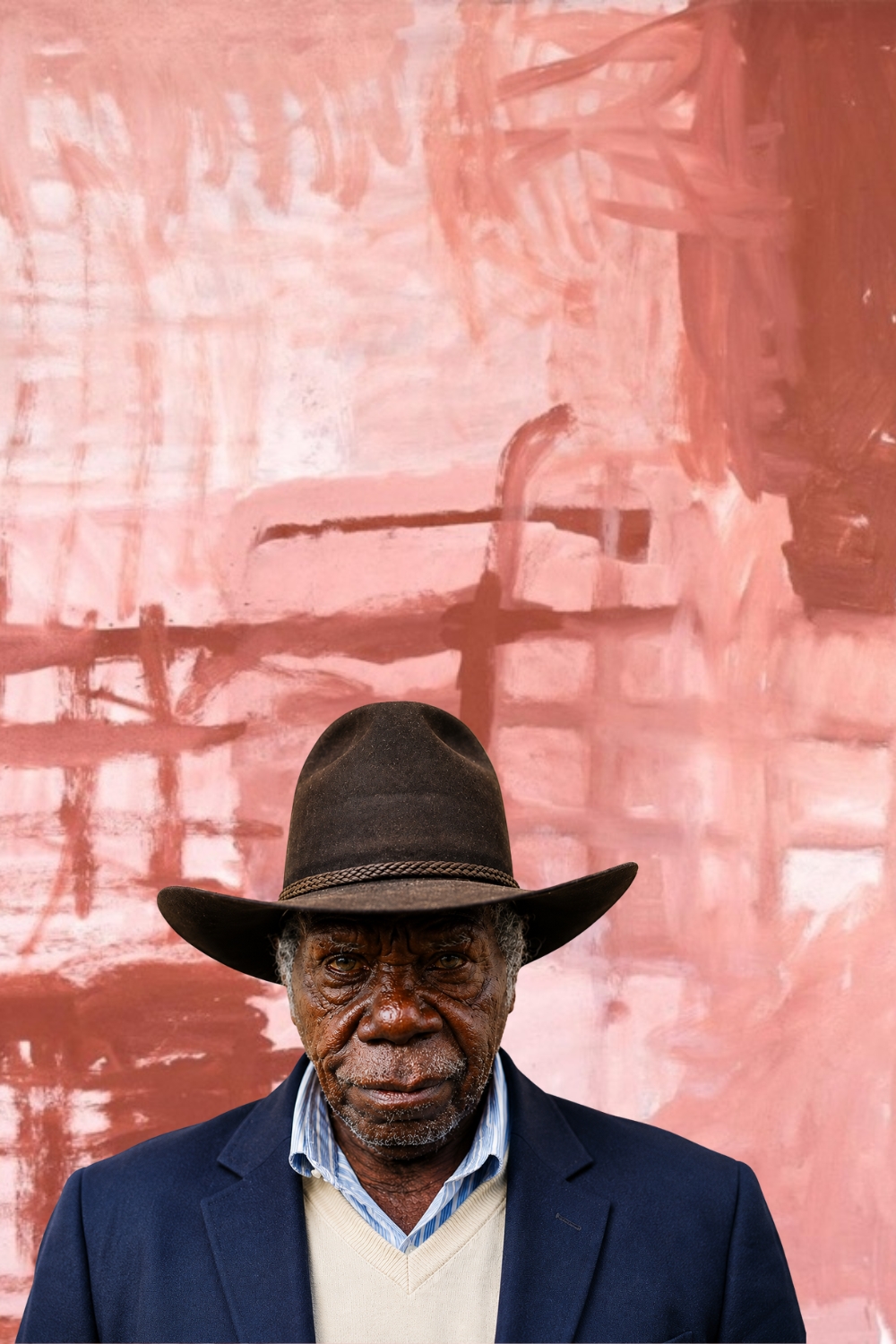
Rammey Ramsey was a senior Gija man of Jungurra skin, born at Old Greenvale Station, now part of Bow River Station, in the East Kimberley. Sources vary on his birth year, giving either about 1935 or 1939. His Country was Warlawoon, west of Bedford Downs near Elgee Cliffs. Warlawoon was also his Gija name and was the Country of both his mother and father.
Ramsey spent his early childhood travelling through Warlawoon Country with his family. He later worked as a stockman at Bedford Downs, Lansdowne Station and Bow River Station, where he eventually settled. This long working life in the cattle industry later entered his paintings through roads, crossings, stockyards, branding imagery and other traces of station life.
His parents died when he was very young. One biographical source records that his father died before he was born and that his mother died from snakebite while he was still a baby. Ramsey nevertheless became an important family and cultural figure—a husband, father, grandfather and great-grandfather who passed knowledge to younger generations through family and ceremony.
Some accounts suggest that Ramsey came to art late in life, more accurately, he came to painting on canvas late in life. Throughout adulthood he painted for ceremony, practised body painting, made ceremonial objects and dance poles, and trained younger dancers. Moving onto board and canvas continued this established visual and ceremonial practice.
Ramsey joined Jirrawun Arts in 2000, with his work immediately included in Gaagembi — Poor Things at William Mora Galleries alongside Hector Jandany, Timmy Timms and Paddy Bedford. The title expressed sorrow for Country, earlier generations and a way of life partly lost.
In 2001 he participated in Four Men Paintings at Raft Artspace in Darwin, followed by a solo exhibition that reportedly sold out. His recognition was remarkably rapid for an artist newly painting for the public market.
Ramsey remained deeply involved in cultural transmission. He was a key figure in the Bedford Downs massacre joonba presented at the 2000 Telstra Art Award, trained young dancers and made dance poles with Rusty Peters. He also performed in Fire, Fire Burning Bright with the Neminuwarlin Performance Group, premiering at the 2002 Perth International Arts Festival before travelling to Melbourne.
Ramsey continued painting through Jirrawun and later Warmun Art Centre, sustaining a professional painting career of at least seventeen years.
Rammey Ramsey Painting Style and Subjects
Warlawoon Country is the central subject of Rammey Ramsey’s art. This rugged gorge country around Elgee Cliffs, northwest of Halls Creek, includes cliffs, hills, riverbeds, rocks, waterholes, caves, camping places and areas associated with rock wallabies. His paintings also contain roads, crossings, stockyards and other features created during the pastoral era.
Ramsey did not paint conventional landscape views. Instead, he reduced Country to a remarkably economical vocabulary of lines, circles, rectangles, dots and fields of colour. A line might indicate a road or river, a circle a waterhole, cave or important place, and a rectangle a stockyard or hill. Different viewpoints could coexist within a single work, bringing together natural features, culturally significant places and the infrastructure Ramsey knew from his years as a stockman.
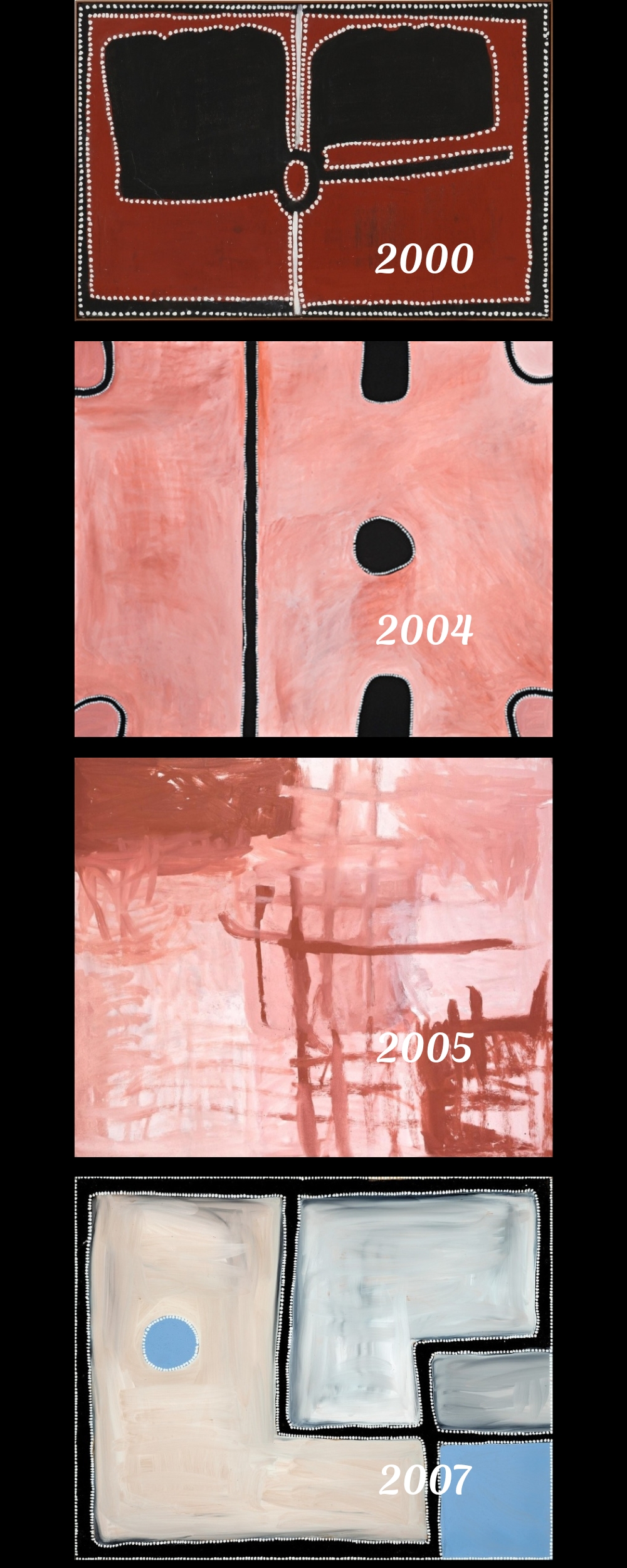
His earliest professional paintings, around 2000–03, generally employed the restricted palette associated with East Kimberley ochre painting. Black structures appear against red or brown grounds and are frequently edged with rows of white dots. Examples include Cross Roads in Barlngarndin Country, Wularrngayan Country, Barlngoolin – Pelican Holeand Balngandin – Saddler’s Jump Up.
A More Expressive Style
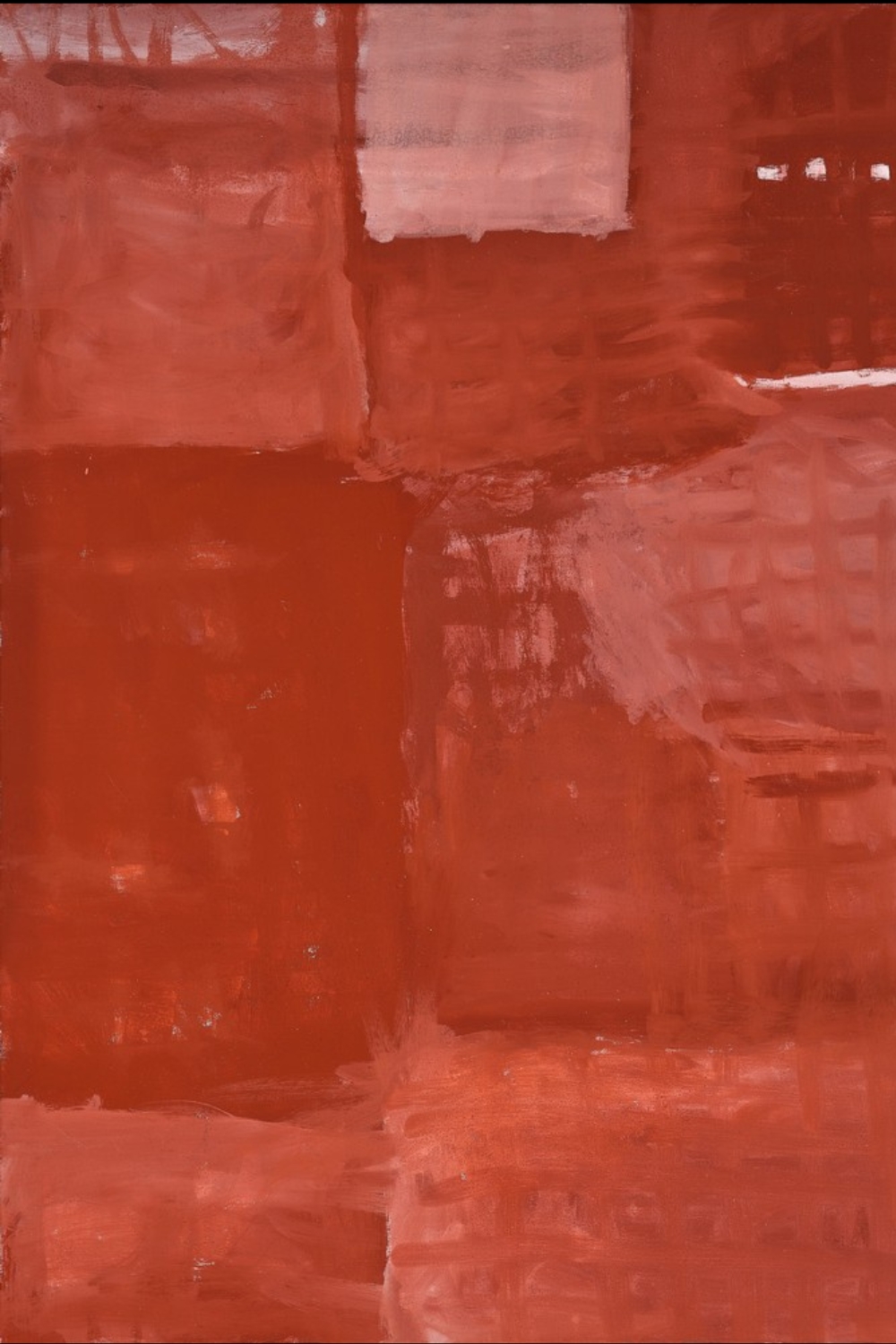
Around 2004, Ramsey’s painting changed markedly. He increasingly mixed colours wet into wet, creating broad gestural areas in which colour communicated the physical character of Country rather than simply delineating particular landmarks.
Earth, wind, water, dust, rain, heat, smoke and fire could become part of the visual experience of the painting.
The important 2004 exhibition Deeper Than Paint on Canvas captures this development particularly well. Large paintings including Ragiban (Rocky Bar), Doowoon Country – Tranie Gorge and Geminymiyan Country – Bull Holecombine identifiable places with atmospheric fields of red, pink, white and black.
By around 2007, Ramsey was bringing the two approaches together. Black forms and white dotted outlines from his earlier paintings reappeared over softer fields of colour, while brilliant blues, yellows and pinks became increasingly prominent. The result was a distinctive synthesis of East Kimberley structural forms with Ramsey’s increasingly expressive treatment of colour.
What the Experts Say About Rammey Ramsey
Commentators have particularly recognised Ramsey’s inventiveness and the physical quality of his painting. Although grounded in the East Kimberley ochre tradition, he was prepared to experiment dramatically with colour, surface and abstraction.
An important influence was his friend Paddy Bedford. Frances Kofod and Tony Oliver recorded that, after watching Bedford paint, Ramsey wanted to work in what he called the “Ngarranggarni way.” Rather than simply copying Bedford’s style, Ramsey incorporated the freer wet-in-wet approach into his own established visual vocabulary of Warlawoon Country.
One contemporary account consequently described Ramsey as a “trailblazer”, emphasising his willingness to innovate despite beginning his professional painting career only in his mid-sixties.
Frances Kofod was particularly responsive to the sensual surface of Ramsey’s paintings. She described his paint as being applied with “love and vigour” and compared his dots to “pearls stitched” against fields of pink and black. Her description is useful because it draws attention to the paintings as physical objects—the dots, brushstrokes, colour contrasts and painted surfaces are important aesthetic elements in themselves.
Other commentary stresses that Ramsey’s apparent abstraction remains anchored in particular Country. His experimentation with colour and form did not depend upon abandoning cultural meaning. Instead, it developed within an existing framework of Country, Ngarranggarni, ceremony and inherited Gija knowledge.
Rammey Ramsey value Artworks and Auction results
Works Offered at Auction: 99
Sale Rate: 64%
Highest Sale: $28,000 AUD
Median Sale Price: $8,000 AUD
For additional images of Rammey Ramsey’s art, together with values sizes and provenance, see the Rammey Ramsey Value support page.
Rammey Ramsey in Public Collections
Rammey Ramsey’s work is represented in significant Australian and international public collections, including:
- Museum of Contemporary Art Australia, Sydney
- National Gallery of Victoria, Melbourne
- Ian Potter Museum of Art, University of Melbourne
- Auckland Art Gallery Toi o Tāmaki, New Zealand
The Museum of Contemporary Art’s collection includes three gouaches by Ramsey, while the Art Gallery of Western Australia’s State Art Collection includes Warlawoon Country, 2011.
His work is also represented in the Wesfarmers Collection of Australian Art, an important corporate rather than public museum collection.
Rammey Ramsey Exhibitions
Solo Exhibitions
- 2001 — Rammey Ramsey, Raft Artspace, Darwin
- 2003 — Rammey Ramsey, Raft Artspace, Darwin
- 2004 — Deeper Than Paint on Canvas, William Mora Galleries, Melbourne
- 2009 — Rammey Ramsey: Small Boards, Raft Artspace, Alice Springs
- 2009 — Rammey Ramsey, Grantpirrie Gallery, Sydney
- 2011 — Rammey Ramsey, Seva Frangos Art, Perth
Selected Group Exhibitions
- 2000 — Gaagembi (Poor Things), William Mora Galleries, Melbourne — with Paddy Bedford, Hector Jandany and Timmy Timms
- 2001 — Four Men Paintings, Raft Artspace, Darwin
- 2006 — Jirrawun Artists Group Show, Melbourne Art Fair, presented with William Mora Galleries
- 2008 — Jirrawun Colour: Rammey Ramsey & Freddie Timms, Raft Artspace, Darwin
- 2008 — Paintings from Remote Communities: Indigenous Australian Art from the Laverty Collection, Newcastle Region Art Gallery
- 2012 — Heart and Soul: The Laverty Collection, AAMU – Museum of Contemporary Aboriginal Art, Utrecht
- 2014 — In the Saddle, On the Wall
- 2017 — TARNANTHI, Art Gallery of South Australia, Adelaide
- 2018 — Looking Forward – Looking Back: Contemporary Works from the East Kimberley, Bathurst Regional Art Gallery
- 2019 — Desert River Sea: Portraits of the Kimberley, Art Gallery of Western Australia, Perth
Awards and Recognition
- 2014 — Alice Prize, finalist
- 2015 — National Aboriginal and Torres Strait Islander Art Awards (NATSIAA), finalist
Additional Reading
- Marcia Langton, Hungry Ghosts — Landscape and Memory, in Blood on the Spinifex, 2002 — useful for understanding landscape, memory and the wider cultural context of the Jirrawun artists.
- Marcia Langton and Judith Ryan (eds), 65,000 Years: A Short History of Australian Art, Thames & Hudson, 2024, p. 284 — a major scholarly survey of Aboriginal and Torres Strait Islander art that includes Rammey Ramsey within the broader history of Indigenous Australian artistic practice and its recognition as contemporary art
- Elizabeth Ann Macgregor (foreword) and Glenn Barkley (ed.), Volume One: MCA Collection, Museum of Contemporary Art Australia, Sydney, 2012, p. 185 — a major catalogue of the MCA collection that includes Rammey Ramsey and places his work within the broader development of contemporary Australian and Indigenous art.
- Frances Kofod, Rammey Ramsey: Deeper Than Paint on Canvas, William Mora Galleries, Melbourne, 2004 — an important Ramsey-specific publication accompanying his pivotal 2004 exhibition and including Ramsey’s explanations of individual paintings
- Beyond Sacred: Recent Painting from Australia’s Remote Aboriginal Communities — The Colin and Elizabeth Laverty Collection, Hardie Grant Books, 2008 — includes Ramsey’s Warlawoon Country Series #1, 2005, illustrated on p. 241. The expanded 2011 edition, Beyond Sacred: Australian Aboriginal Art, also illustrates Ramsey’s work.
All images in this article are for educational purposes only.
This site may contain copyrighted material the use of which was not specified by the copyright owner.