Prince of Wales Midpul Aboriginal Artist
c. 1935-2002
Midpul / Mitbul
Larrakia – Danggalaba clan
Darwin Harbour and Cox Peninsula, Northern Territory
Larrakia Art / Top End Aboriginal Art
Ceremonial body painting and contemporary painting
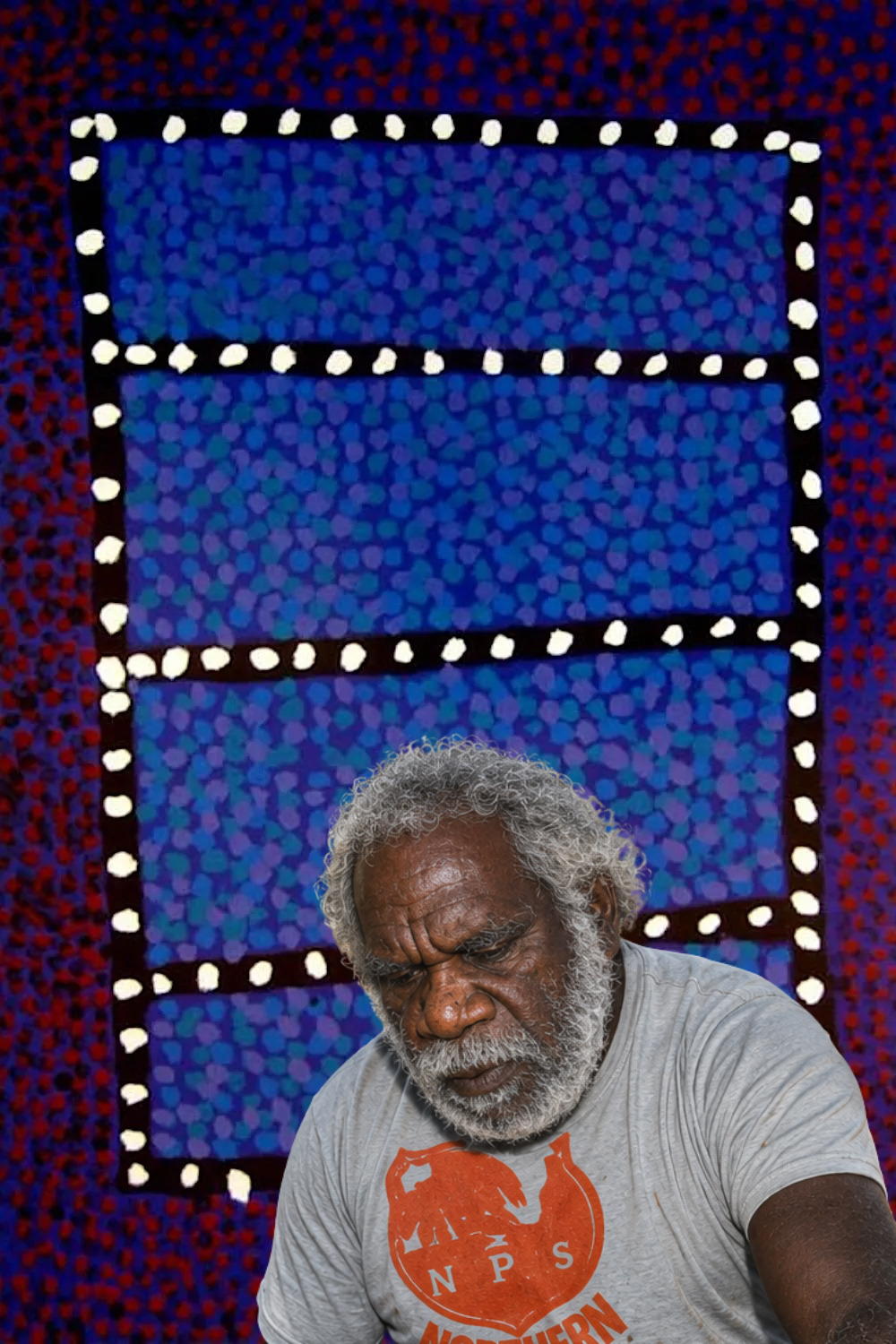
Prince of Wales, also known by his Larrakia name Midpul or Mitbul, was a senior ceremonial leader, singer, dancer and body painter who became one of the most distinctive Aboriginal artists to emerge from Darwin. Beginning his public painting career at about sixty, he transferred designs associated with Larrakia ceremony from the human body onto cardboard and canvas.
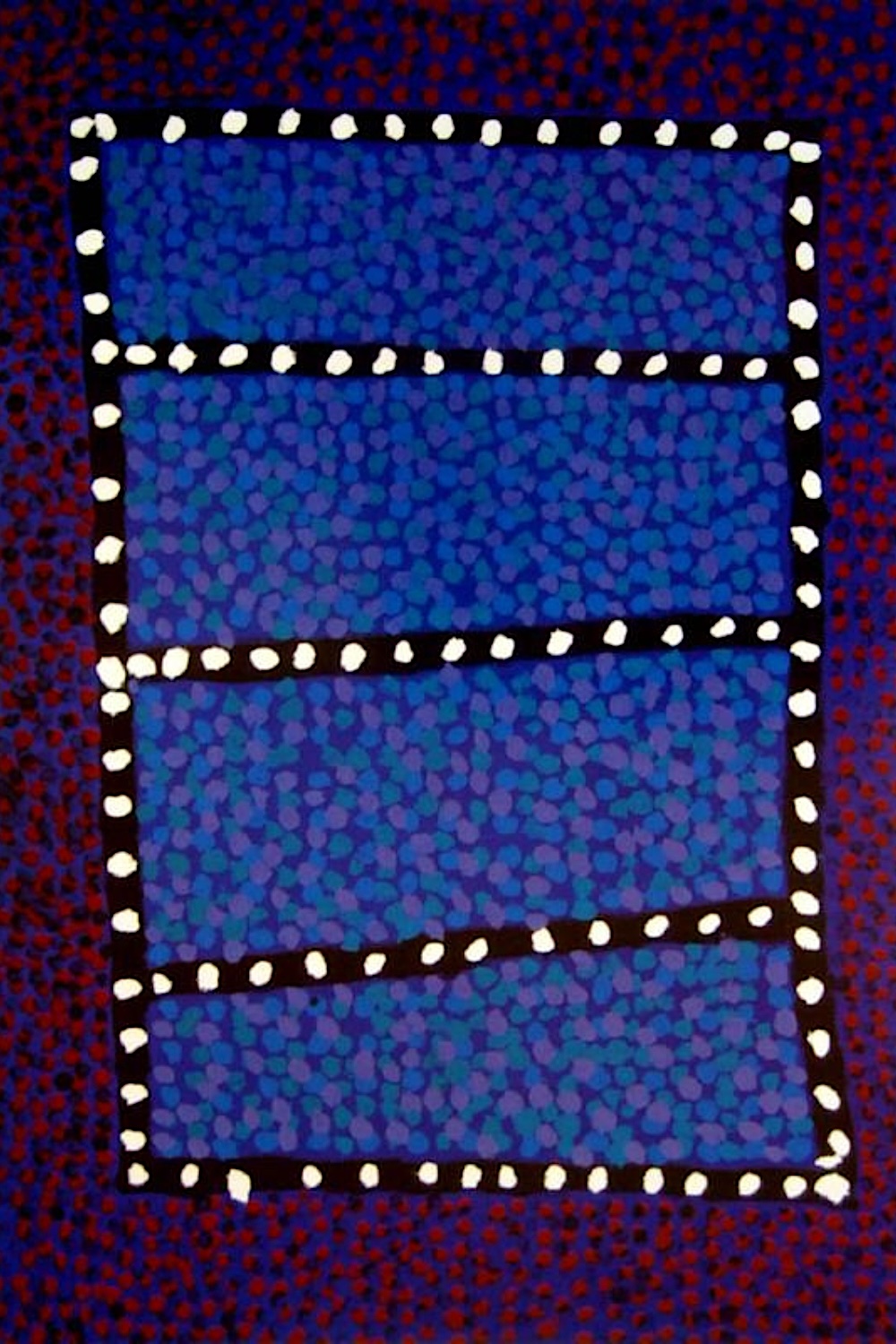
His paintings, usually titled Body Marks, are immediately recognisable. Large dots, short bars and geometric marks move across areas of open colour with a strong sense of rhythm. Although they can appear strikingly contemporary, their origins lie in Larrakia ceremonial body painting rather than the dot-painting tradition that developed at Papunya and across the Western Desert.
His recognised career lasted only about seven years, yet within that short period Prince of Wales progressed from tiny paintings on found materials to monumental canvases, major exhibitions, public collections and national recognition.
Prince of Wales Art Values
For auction prices, market history and examples of works sold, see
Prince of Wales Biography
Prince of Wales was born Midpul around 1935 at Kahlin, now Cullen Bay, in Darwin. His traditional name is also recorded as Mitbul.
He was a senior Larrakia man of the Danggalaba clan. His father, Imabul, also known as Ichungarrabilluk and King George, was an important traditional landowner, ceremonial leader and advocate for Larrakia people during a period of increasing displacement from their Country.
Imabul died when Midpul was young, and he grew up among his mother’s people, the Wadjigiyn, on the Cox Peninsula across Darwin Harbour. Midpul became a Law and Song Man, ceremonial leader, singer, dancer, didgeridoo player and ceremonial body painter.
The origin of his English name is uncertain. One account connects Prince of Wales with his father being known as King George; another relates it to Midpul performing as a lead dancer for Queen Elizabeth II during a royal visit.
Much of Midpul’s adult life was spent around Kahlin/Cullen Bay, where he and his family camped on Larrakia Country. During his lifetime the area was transformed from a place associated with Aboriginal camps and the former Kahlin Compound into a marina and waterfront development.
Midpul’s responsibilities also extended to Country. As a Danggalaba Larrakia man, he was one of the original claimants in the 1977 Kenbi Land Claim, part of the long struggle for recognition of Aboriginal ownership of the Cox Peninsula. He died before the claim was finally resolved.
After suffering a stroke that restricted his movement, Midpul moved to the Kulaluk beach community. Around 1995, at approximately sixty, he began transferring ceremonial body designs he had known and painted for much of his life onto portable surfaces.
Art dealer Karen Brown encountered him at a Darwin market with small ochre paintings on cardboard. She supplied him with eight small canvases and acrylic paint, beginning an extraordinary late career.
Brown represented Prince of Wales until his death. He exhibited in 1996, followed in 1997 by his first solo exhibition, Prince of Wales: Body Marks, at Gallery Gabrielle Pizzi in Melbourne.
Within only a few years, the ceremonial body painter working with ochre on cardboard was producing monumental Body Marks paintings more than two metres high.
In 2001, only six years after beginning to paint for the contemporary art market, Prince of Wales won the General Painting Award at the National Aboriginal and Torres Strait Islander Art Awards (NATSIAA).
Prince of Wales died in Darwin on 27 December 2002, aged about 67. His recognised career as a contemporary painter had lasted only about seven years, but the cultural and artistic authority behind those paintings belonged to a lifetime of Larrakia ceremony, Country, song, dance and body painting.
Prince of Wales Painting Style and Subjects
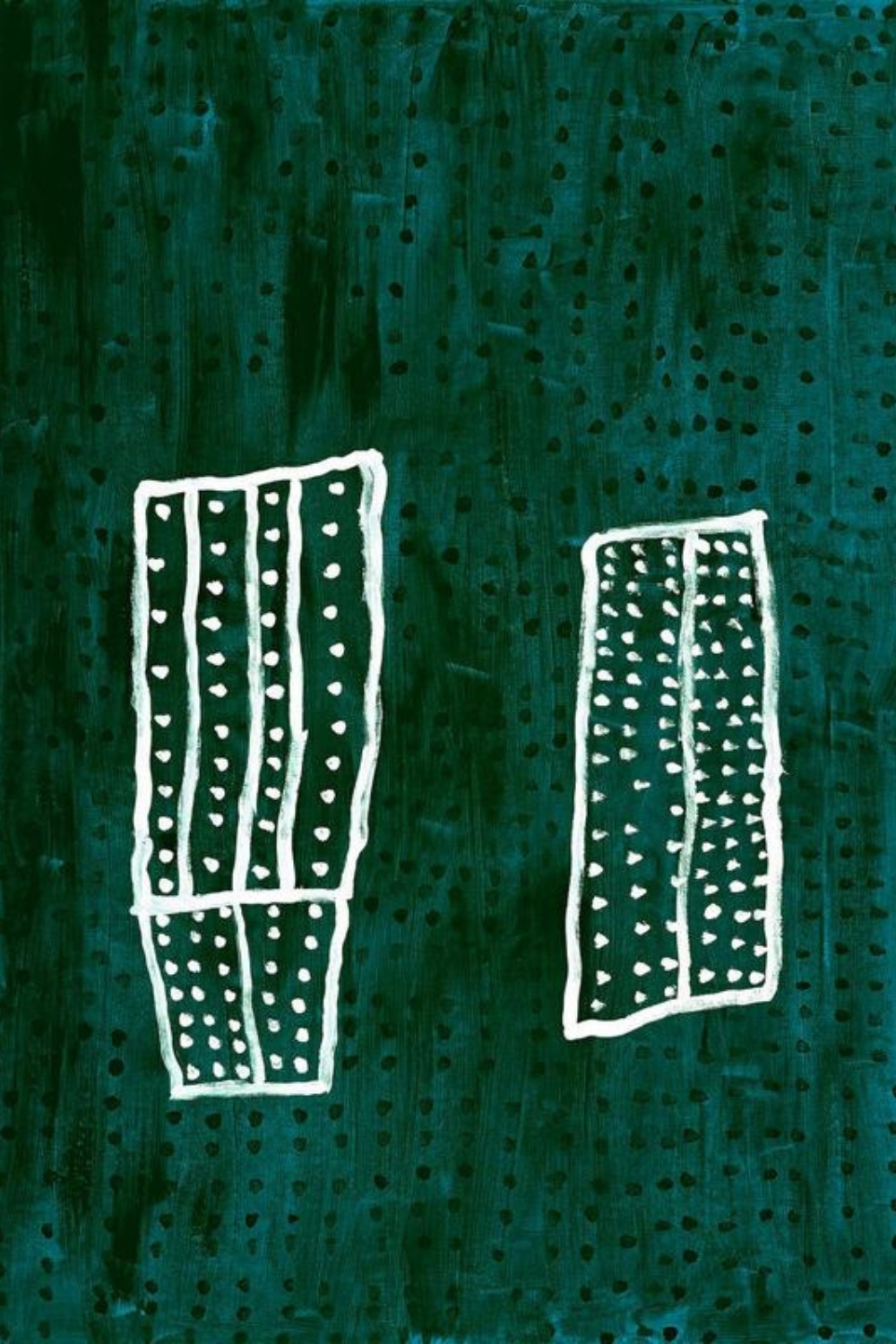
Almost the entire painting career of Prince of Wales revolves around a deceptively simple subject: Body Marks. These paintings developed from Larrakia ceremonial designs traditionally painted onto the bodies of participants.
Prince of Wales described the connection directly:
“These paintings. I paint them on bodies… young people and old. ceremony for singing. dance. I make the marks.”
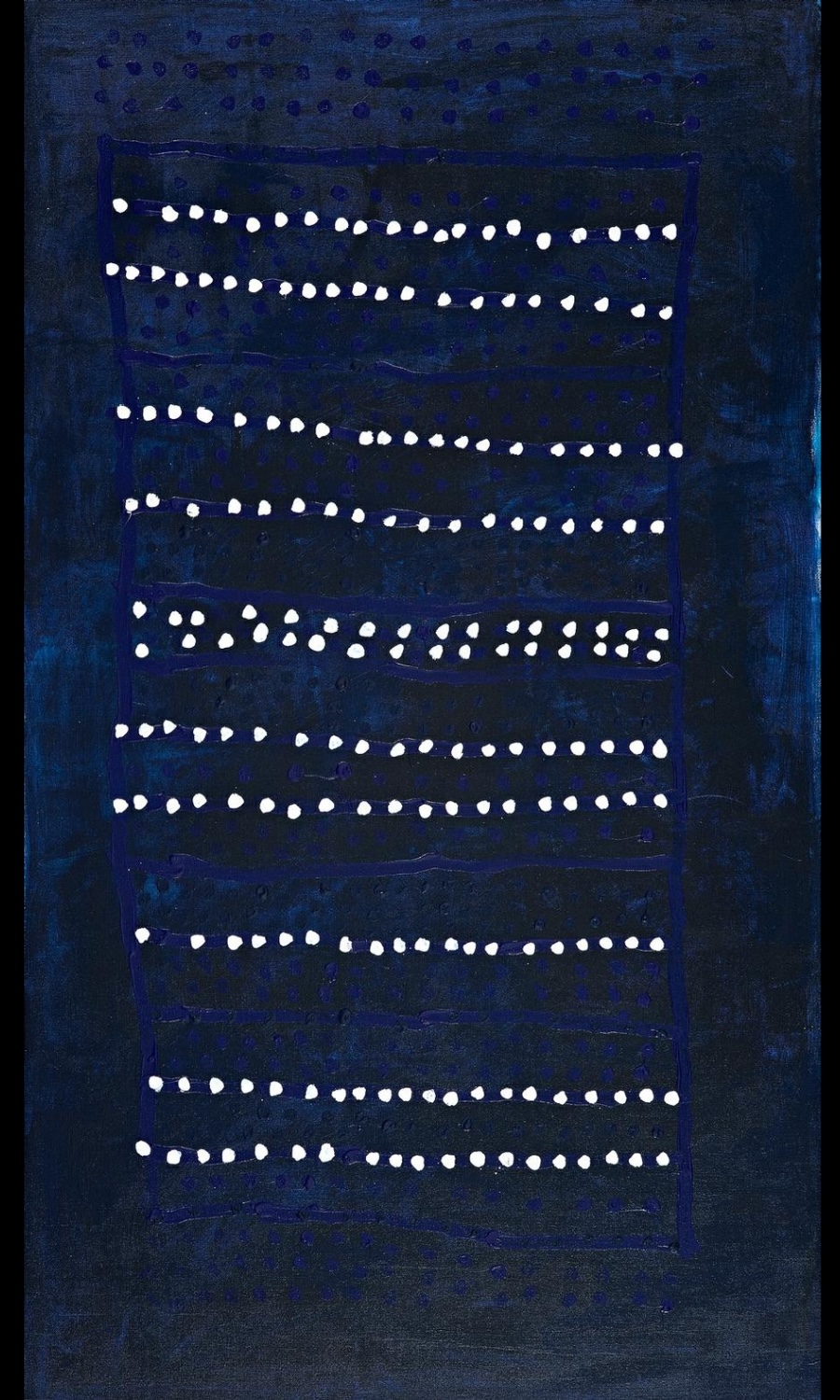
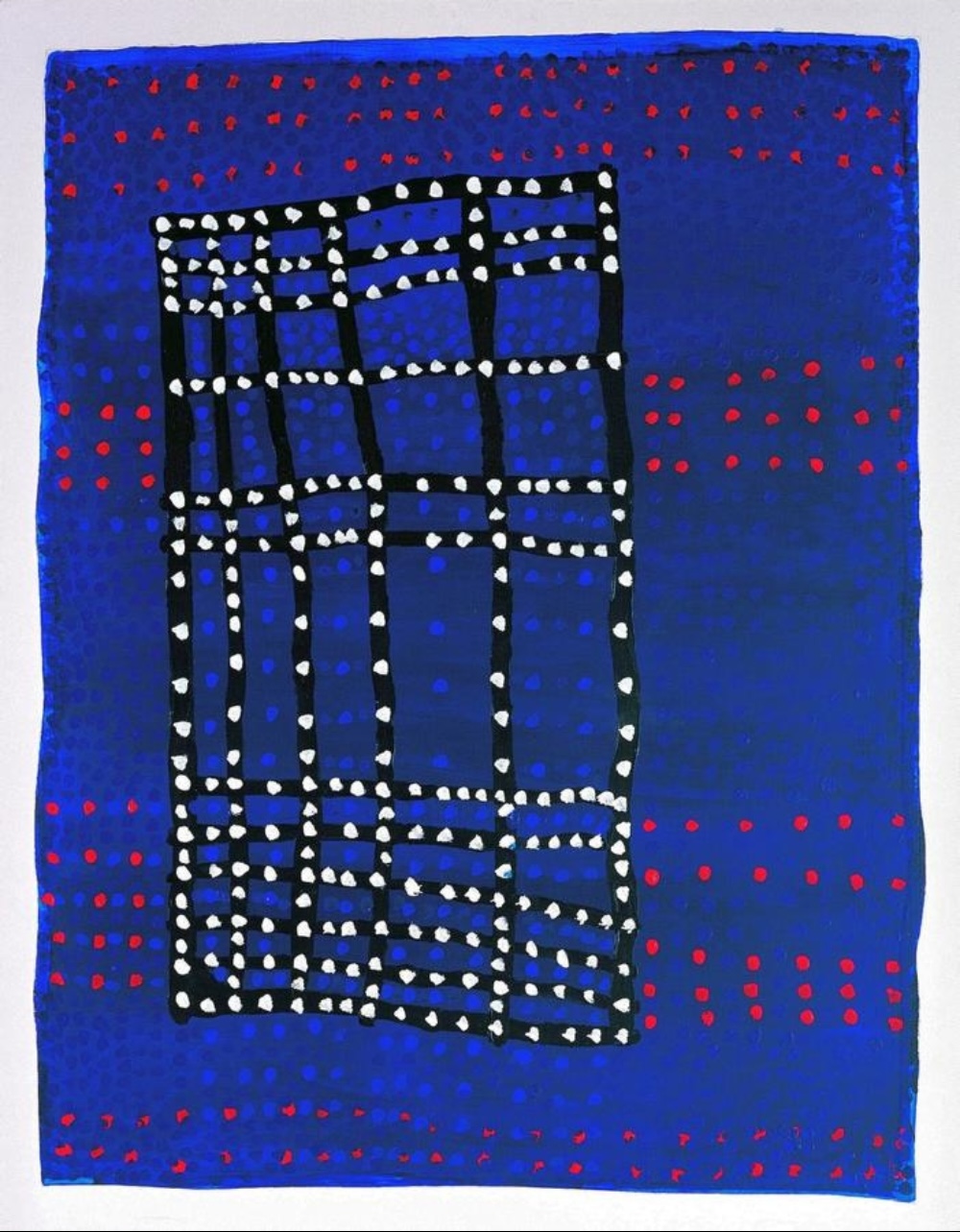
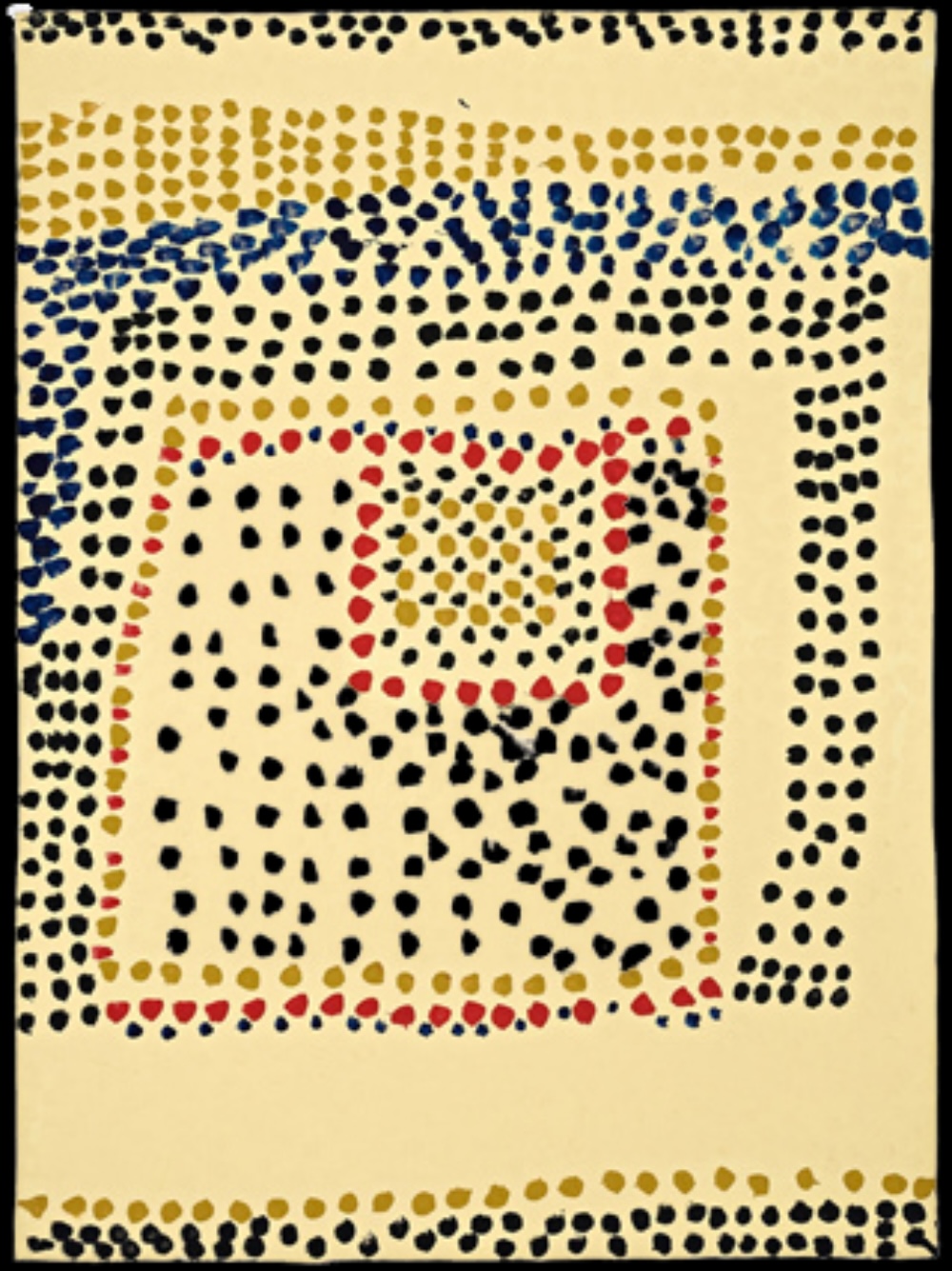
From this ceremonial source he developed a highly recognisable style using a restricted vocabulary of large dots, short rectangular bars and broken sequences of marks moving across open ground. Whites, reds, yellows and ochres contrast with dark blue, black, ochre or brightly coloured backgrounds.
Unlike the dense fine dotting associated with some Central and Western Desert painting, Prince of Wales allowed individual marks and large areas of empty ground to remain visible. Yet Body Marks paintings are rarely static. Dots and bars repeat, stop and change direction, creating shifting rhythms across the canvas.
Art curator Hetti Perkins, writing with Cara Pinchbeck, described this as a:
“musicality imparted by the lively staccato-effect of dots and intermittent bars”
They compared the marks to the sheet music of an improvised symphony. The comparison is particularly appropriate because Midpul was a singer, dancer, didgeridoo player and ceremonial body painter. His designs had previously existed on moving bodies participating in ceremony, song and dance, giving their visual rhythm a deeper ceremonial context.
Writing about the monumental Body Marks, 1999, Lara Nicholls described its white dots as appearing “almost ghost-like” against an inky blue ground, evoking the memory of ceremonial dance. Crispin Gutteridge similarly noted the energy created in another 1999 work by alternating red, yellow and white dots against a dark ground. Colour, repetition and open space therefore work together to create paintings that are visually economical without being quiet.
Scale was another important development. Prince of Wales’s earliest portable works were made on cardboard, wood and other found materials. Perkins and Pinchbeck observed that their compact dimensions echoed the proportions of the human body from which the designs originated.
By the end of the 1990s he was producing monumental works such as Body Marks, 1999, measuring approximately 223 × 132 cm. His development can be traced as:
ceremonial body painting → small found surfaces → body-scale paintings → monumental canvas.
Perkins interpreted this increase in scale as an assertion of Prince of Wales’s cultural authority as a Larrakia elder. Marks once painted across a dancer’s body could now extend across more than two metres of canvas while retaining their ceremonial connection.
Although Prince of Wales used repeated dots, his paintings do not belong to the Western Desert dot-painting tradition that developed from Papunya. Midpul was a Larrakia ceremonial body painter whose dots, bars and geometric marks came from a different cultural and visual tradition.
Body Marks transformed this ceremonial practice into contemporary painting while retaining its connections to body, song, dance and Larrakia cultural authority
Why Prince of Wales Is Important
Prince of Wales occupies an unusual place in contemporary Aboriginal Australian art. Rather than founding a large community-based movement, he brought a distinctly Larrakia ceremonial visual tradition into contemporary painting and became one of the first Larrakia artists to achieve widespread national recognition.
His authority preceded his art-market career. Midpul was already a senior ceremonial leader, songman, dancer, didgeridoo player and body painter. His paintings therefore transferred an existing Larrakia ceremonial practice onto permanent surfaces rather than creating a new decorative style late in life.
Unlike the community-based movements at Papunya, Yuendumu, Utopia and Balgo, Prince of Wales emerged individually in Darwin and had a recognised contemporary painting career of barely seven years.
His importance to Larrakia art has been recognised by Dr Joanna Barrkman, Curator of the Charles Darwin University Art Collection and Midpul Art Gallery:
“Midpul laid the foundations for the emergence of a contemporary Larrakia art movement.”
His legacy is also recognised in Charles Darwin University’s Midpul Art Gallery, named in his honour on Larrakia Country.
Prince of Wales also holds an intriguing place within contemporary abstraction. His paintings appeared in No Boundaries: Aboriginal Australian Contemporary Abstract Painting, which toured institutions including the Nevada Museum of Art, Portland Institute for Contemporary Art, Pérez Art Museum Miami and the Herbert F. Johnson Museum of Art at Cornell University.
His open spaces, repeated dots, isolated bars and strong fields of colour can appear remarkably compatible with international minimalist and abstract art. But the resemblance conceals a fundamental difference.
Midpul did not arrive at abstraction through European or American modernism. His visual language emerged from Larrakia ceremonial knowledge and decades spent painting bodies, singing and dancing. What may appear to an outside viewer as contemporary abstraction therefore has its own cultural history.
Prince of Wales transferred marks once painted onto moving bodies onto permanent surfaces that entered galleries and international exhibitions while remaining grounded in Larrakia cultural authority. His own explanation was simpler:
“I make the marks.”
Those marks became one of the most distinctive visual languages in contemporary Larrakia art, establishing Midpul’s importance far beyond his remarkably short painting career.
Prince of Wales in Public Collections
Despite the brevity of his career, paintings by Prince of Wales entered important Australian public collections.
His work is recorded in collections including:
National Gallery of Australia, Canberra
National Gallery of Victoria, Melbourne
Charles darwin University
Further Reading
An important critical source on Prince of Wales. Perkins and Pinchbeck discuss the “musicality” of his dots and intermittent bars, the relationship between his early paintings and the proportions of the human body, and the increasing scale of his later work.
A substantial essay devoted specifically to Prince of Wales, examining his paintings in relation to Larrakia history, Country, ceremonial authority and contemporary abstraction.
The publication accompanying the international exhibition that placed Prince of Wales alongside other major Aboriginal Australian painters and subsequently toured museums in the United States.
Useful for understanding the broader Larrakia historical and cultural context within which Prince of Wales lived.
Caruana, Wally. Catalogue essays on Prince of Wales (Midpul), Sotheby’s.
Useful discussions of individual Body Marks paintings, Larrakia saltwater Country, Midpul’s family history and the scale and colour of his work.
All images featured in this article are presented strictly for educational and informational purposes.
This website may include copyrighted material for which specific authorization has not been obtained from the copyright owner.
All such images are presumed to be the intellectual property of the respective artist or their estate, and are used in accordance with principles of fair dealing or fair use under applicable copyright law.