
Queenie McKenzie: Paintings, Biography, Style & Values
c. 1930–1998
Gidja
Old Texas Station / Ord River, East Kimberley
Warmun (Turkey Creek)
East Kimberley Art / Kimberley Art
Waringarri Arts
Natural ochre and pigment painting on canvas
Queenie McKenzie Nakarra (c.1915–1998) was one of the most important Aboriginal artists to emerge from the East Kimberley Art Movement and is widely regarded as the first female painter to achieve national recognition within the Warmun (Turkey Creek) art movement. A senior Gija woman, cultural leader, and close contemporary of Rover Thomas, she helped transform Kimberley Aboriginal art by introducing a distinctive artistic voice characterised by soft pinks, mauves, and subtle purple ochres that remain instantly recognisable today.
Although Queenie McKenzie began painting relatively late in life, she quickly established herself as one of the leading figures of East Kimberley Art. Her paintings document ancestral Country, important Dreaming sites, and significant historical events affecting Gija people, most notably the Mistake Creek Massacre. Through her work she preserved cultural knowledge while also recording histories that had rarely been represented in Australian art.
Today Queenie McKenzie paintings are highly sought after by collectors and are held in major Australian museums and public collections. Her unique use of colour, recurring termite mound imagery, and powerful depictions of Country make her work among the most distinctive of all Kimberley artists.
For more artworks with provenance dimensions and values please see the support page Queenie Mckenzie Values Page
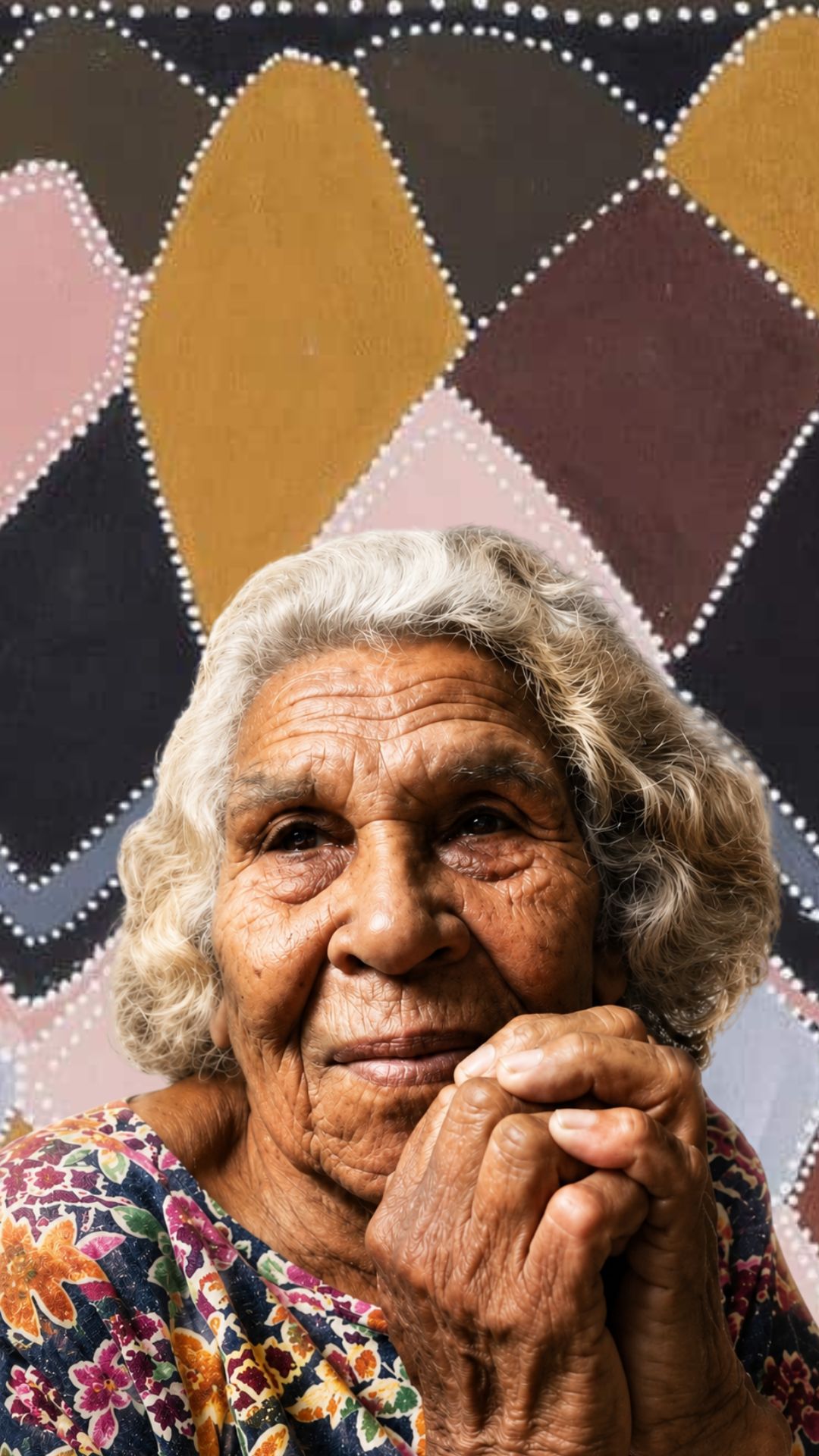
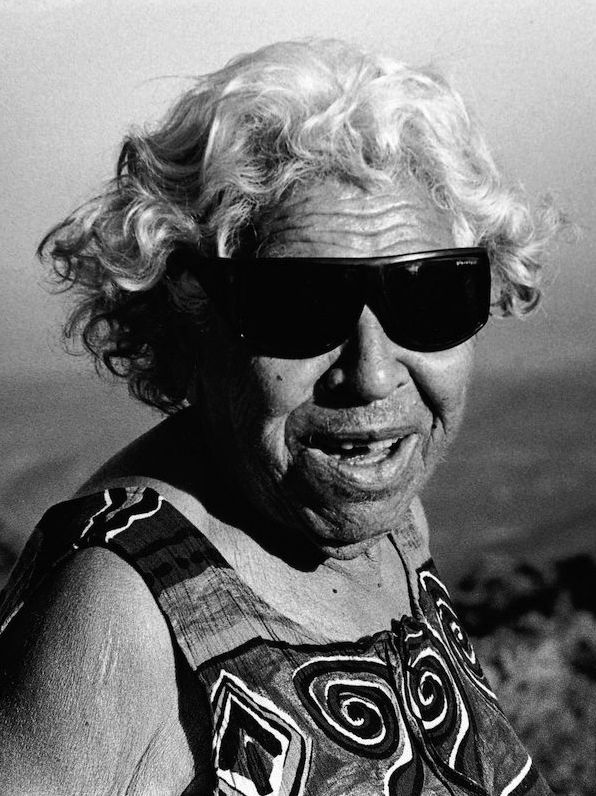
Who Was Queenie McKenzie and Why Is She Important?
Queenie McKenzie Nakarra (c.1915–1998) was a senior Gija woman from the East Kimberley and one of the most important Aboriginal artists of the twentieth century. Widely regarded as the first female artist to achieve national recognition within the East Kimberley painting movement, she helped expand a style that had initially been dominated by male artists and became an important cultural bridge between traditional Gija knowledge and contemporary Australian art.
Born at Old Texas Station on the Ord River, Queenie grew up during a period of profound change for Aboriginal people in the Kimberley. Her early life was closely connected to the cattle industry, where she worked around stations, travelled through Gija Country, and learned the stories, sacred sites, and cultural responsibilities that would later inform her paintings.
One of the most significant relationships in her life was with fellow Gija artist Rover Thomas. The two had known each other since their station days and remained close throughout their lives. After Rover Thomas achieved national recognition, he encouraged Queenie to begin painting, helping launch one of the most influential artistic careers in Kimberley Aboriginal art.
By the 1970s Queenie was living at Warmun (Turkey Creek), which would become one of Australia’s most important Aboriginal art communities. Beyond her role as an artist, she was a respected cultural leader, teacher, and custodian of Gija law. She possessed extensive knowledge of women’s ceremonial traditions, language, and Country, and played an important role in passing this knowledge to younger generations.
Although she began painting professionally later in life, Queenie quickly established herself as one of the leading figures of the East Kimberley movement. Her success helped open opportunities for later generations of Kimberley women artists, including artists such as Shirley Purdie, and demonstrated that women’s cultural knowledge could play a central role in contemporary Aboriginal art.
Today Queenie McKenzie is recognised as a pioneer of Australian Indigenous art. Her paintings are held in major public collections and her influence continues to shape the Warmun painting tradition. More than a successful artist, she helped ensure that important Gija histories, cultural traditions, and connections to Country would be preserved through art for future generations.
What Makes Queenie McKenzie’s Painting Style Distinctive?
Queenie McKenzie developed one of the most distinctive artistic styles to emerge from the East Kimberley painting movement. Although her early work was influenced by fellow Gija artists Rover Thomas and Paddy Jaminji, she gradually moved beyond their visual approach to create a highly individual interpretation of Country that remains instantly recognisable today.
One of the defining characteristics of Queenie’s paintings is her use of colour. Unlike many East Kimberley artists who relied primarily on strong ochres and earthy tones, Queenie enjoyed mixing her own pigments and developed a palette dominated by soft pinks, mauves, purples, and subtle earth colours. These delicate tones became a hallmark of her work and helped distinguish her paintings from those of her contemporaries.
Her handling of materials was equally distinctive. Queenie often mixed natural ochres with bush gum binders, creating a textured yet translucent surface. While Rover Thomas generally favoured a dense matte finish, Queenie’s paintings possess a softness and luminosity that gives them a more atmospheric quality. This subtle treatment of pigment remains one of the defining features of her mature style.
As her career progressed, Queenie also moved away from the aerial mapping perspective that characterised much early East Kimberley painting. Rather than depicting Country solely from above, she increasingly painted landscapes from ground level, incorporating horizon lines and a stronger sense of spatial depth. Although firmly grounded in Gija cultural knowledge and connection to Country, this approach gave many of her paintings a more landscape-based appearance than those of earlier Warmun artists.
Termite mounds became one of her favourite and most recognisable subjects. Appearing repeatedly across many compositions, these distinctive forms often create rhythmic patterns that transform the landscape into fields of colour and shape. In some works, the repetition of termite mounds gives the paintings an almost abstract quality while remaining deeply connected to specific places within Gija Country.
Alongside depictions of Country, Queenie painted sites associated with significant events in Gija history. The most important of these was the Mistake Creek Massacre, a tragic episode that became one of the defining themes of her career. Through these paintings, Queenie preserved memories of places that carried both cultural and historical significance, ensuring that important stories would not be forgotten.
The combination of luminous colour, translucent ochres, termite mound imagery, landscape-based compositions, and powerful historical narratives ensured that Queenie McKenzie developed a visual language unlike any other artist of the East Kimberley movement. Today her paintings remain among the most distinctive and recognisable works produced by the Warmun school of Aboriginal art.
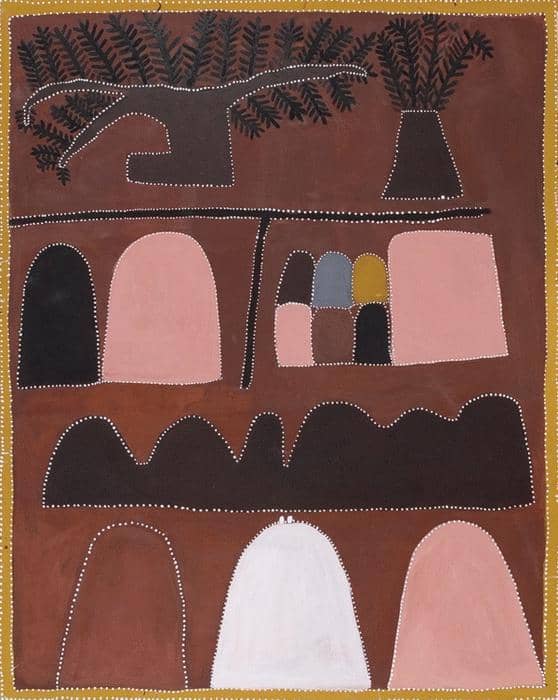
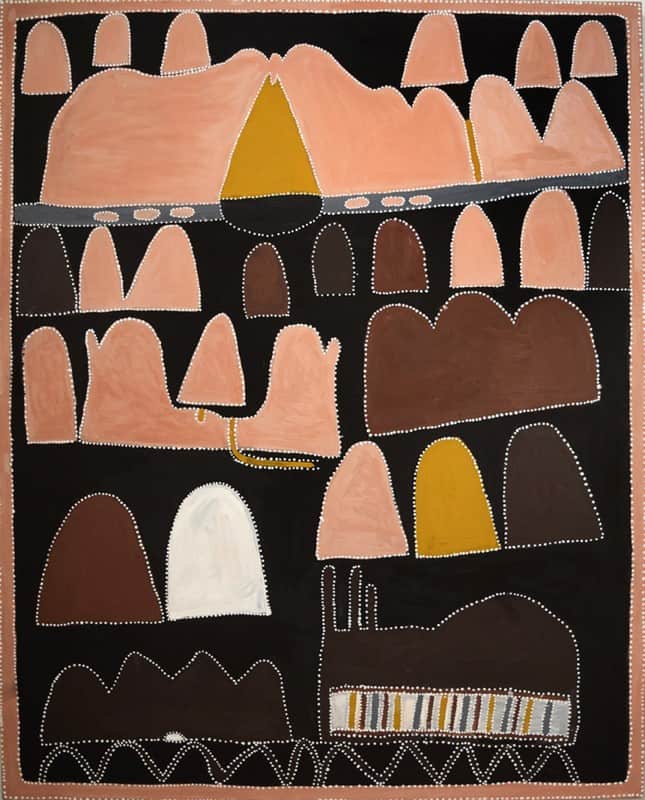
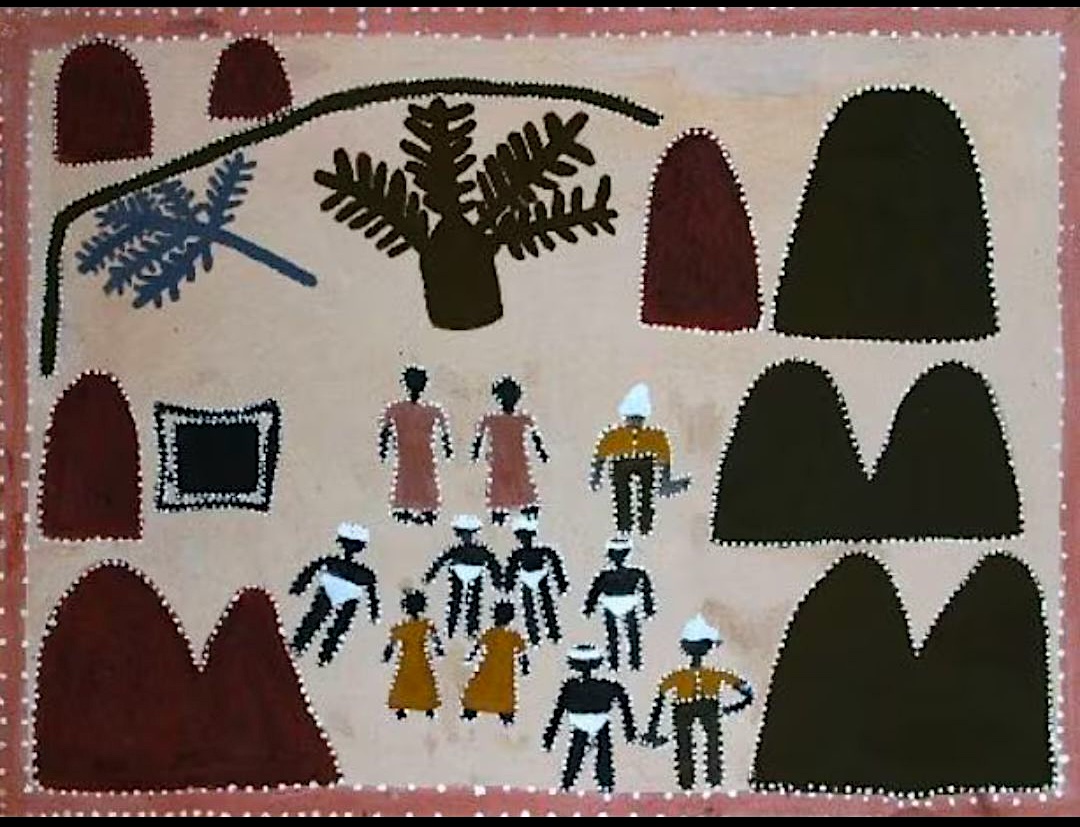
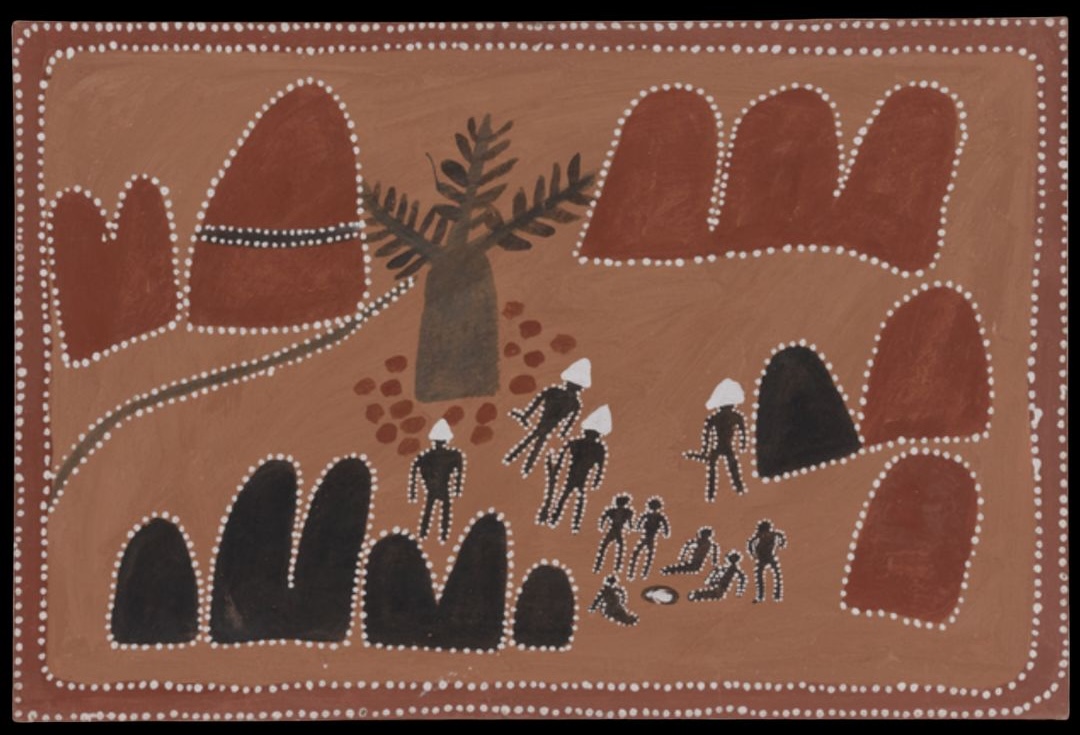
Mistake Creek, Texas Downs and the Stories Behind Queenie McKenzie’s Art
Queenie McKenzie’s paintings were far more than representations of landscape. Through her art she recorded important places, preserved community memory, and documented events that shaped the lives of Gija people. Her paintings combined ancestral knowledge, personal experience, and historical testimony, creating a powerful visual record of East Kimberley Country.
One of the locations most frequently depicted in her work was Texas Downs (Old Texas Station), where she was born and spent much of her early life. The station and surrounding landscapes provided inspiration for many paintings, reflecting her deep connection to Country and the memories associated with it. Horse Creek was another important location that appeared throughout her career, linking family history, cultural knowledge, and lived experience.
Among her most significant works are those dealing with the Mistake Creek Massacre, sometimes known as the Blackfella Massacre. In 1915, a group of Aboriginal people were killed near Mistake Creek after being wrongly accused of killing cattle. Although Queenie was born after the event, she grew up hearing accounts from survivors and relatives, and the tragedy became one of the defining subjects of her career.
Her Mistake Creek paintings are now regarded as some of the most important works produced by the East Kimberley movement. Rather than relying on written history, Queenie used painting to preserve an Aboriginal perspective on the massacre, ensuring the memory of the event would endure for future generations.
Another recurring subject was the owl, a bird with important cultural associations in Gija tradition. Alongside her paintings of Country, termite mounds, and historical sites, these works reveal the breadth of subjects that informed her art.
Today Queenie McKenzie’s paintings are held in major Australian public collections, including the National Gallery of Australia, the Art Gallery of Western Australia, and the National Gallery of Victoria. Whether depicting Texas Downs, Mistake Creek, or ancestral places across Gija Country, her paintings remain important records of history, memory, and cultural continuity.
What Are Queenie McKenzie Paintings Worth?
Works Offered at Auction: 343
Sale Rate: 63%
Highest Sale: $85,000 AUD
Median Sale Price: $7,000 AUD
For individual artworks with images dimensions provenance and auction results please visit the Queenie McKenzie Value Page
Where Are Queenie McKenzie Paintings Held?
The importance of Queenie McKenzie’s art is reflected in the number of major museums and public institutions that have acquired her work. During the 1990s, as the East Kimberley painting movement gained national recognition, Queenie’s paintings were increasingly collected by Australia’s leading galleries and cultural institutions. Today her works are regarded as an essential part of the history of contemporary Aboriginal art.
Examples of Queenie McKenzie paintings can be found in the collections of the National Gallery of Australia, the Art Gallery of New South Wales, the Art Gallery of Western Australia, and the National Gallery of Victoria. Her work is also represented in significant private and international collections, including the Holmes à Court Collection and the Kluge-Ruhe Aboriginal Art Collection.
Many of the paintings held in these collections focus on the themes that defined Queenie’s career, including Texas Downs, Gija Country, termite mounds, Dreaming sites, and historical events such as the Mistake Creek Massacre. Their inclusion in major institutions reflects both their artistic quality and their importance as records of Gija history and cultural knowledge.
For collectors, museum representation is often an indicator of long-term significance. The fact that Queenie McKenzie’s paintings are held alongside many of Australia’s most celebrated Aboriginal artists confirms her position as one of the key figures of the East Kimberley movement. More than two decades after her death, her works continue to be exhibited, researched, and collected, ensuring that her contribution to Australian art remains widely recognised.
All images featured in this article are presented strictly for educational and informational purposes.
This website may include copyrighted material for which specific authorization has not been obtained from the copyright owner.
All such images are presumed to be the intellectual property of the respective artist or their estate, and are used in accordance with principles of fair dealing or fair use under applicable copyright law.