
George Jomeri Wandjina Paintings
Dates not stated
Language not stated
Clan not stated
Kimberley region, Western Australia
Mowanjum
Wandjina Art / Kimberley Art
Bark painting
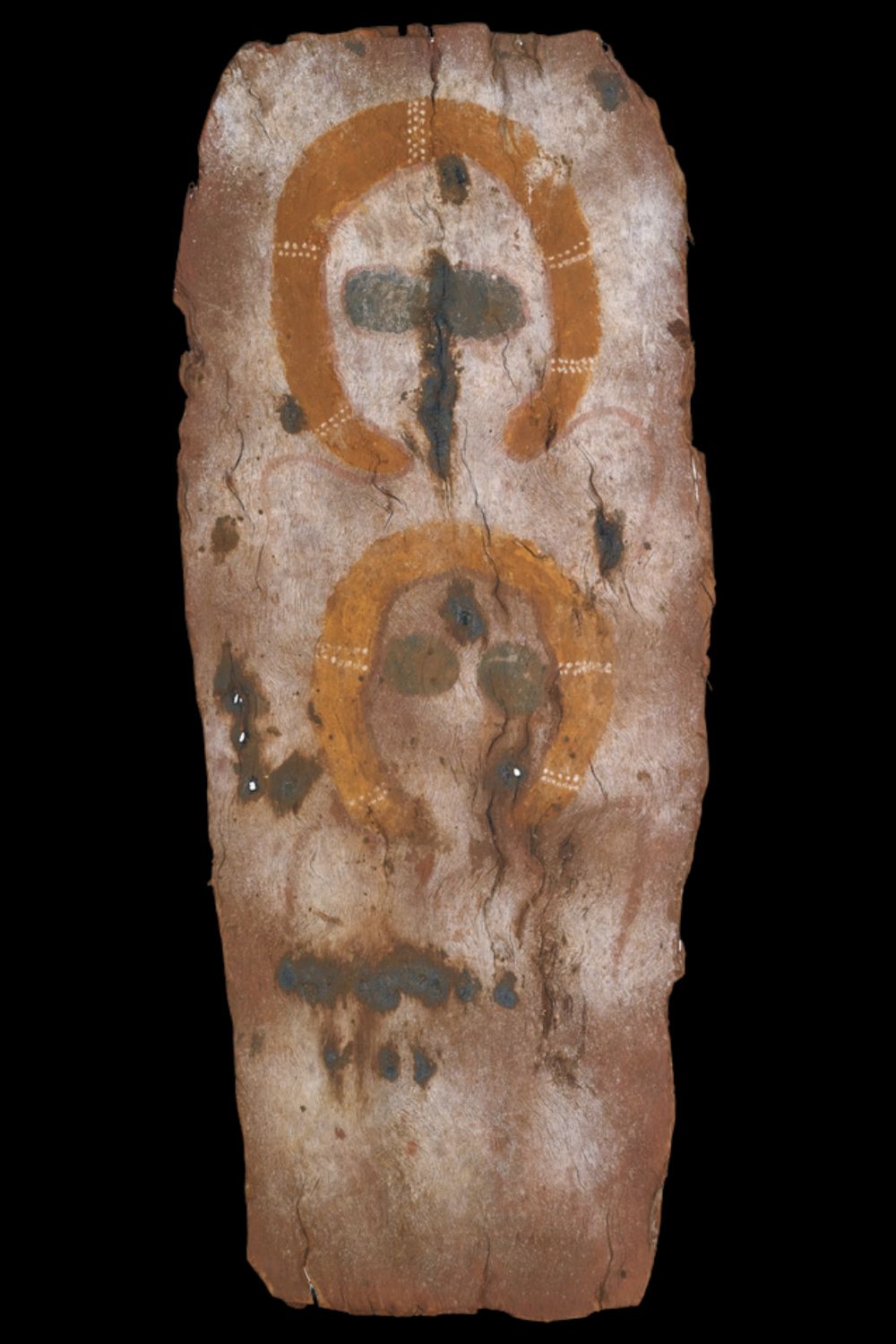
Aboriginal artist George Jomeri was one of the earliest Wandjina painters associated with the Mowanjum community in the Kimberley region of Western Australia. His surviving bark paintings are among the most historically important examples from the transitional period when ancient Wandjina cave painting traditions first began moving onto portable bark paintings intended for museums, anthropologists, and collectors.
Unlike later Kimberley artists working within a more established Aboriginal art market, George Jomeri belonged to the pioneering generation experimenting with transferring sacred Wandjina imagery from cave walls and ceremonial contexts onto portable surfaces. As a result, his paintings often retain a raw ceremonial immediacy and visual fragility much closer in feeling to ancient Kimberley rock art traditions than to later commercial Wandjina paintings.
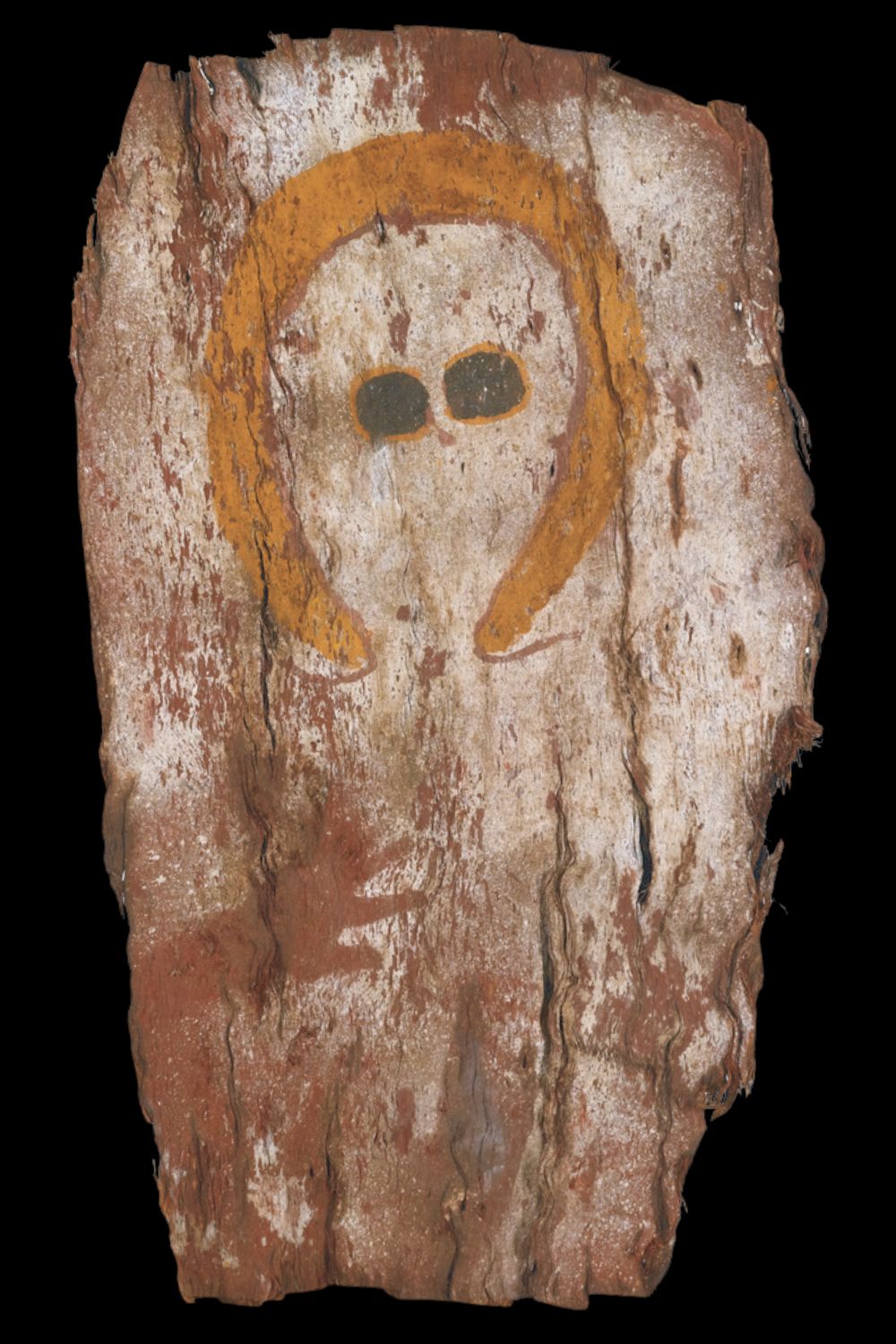
George Jomeri is also associated with the documentary Floating, Like Wind Blow’em About, directed by Michael Edols. The film captured an important transitional moment within Kimberley Aboriginal art history as Wandjina imagery moved from sacred rock shelters onto portable bark paintings. In one memorable sequence, Jomeri creates a hand stencil beneath a Wandjina figure by blowing white pigment over a child’s hand pressed against raw bark, directly linking one of the world’s oldest artistic traditions with the emergence of contemporary Kimberley bark painting.
Today genuine George Jomeri bark paintings appear only rarely on the market and are regarded as important historical examples of the pioneering generation of Wandjina artists responsible for the emergence of contemporary Kimberley Aboriginal art. If you are interested in buying, identifying, valuing, or selling a George Jomeri bark painting, feel free to contact me with clear images of the front and back of the artwork, dimensions, and any available provenance or collection history.
Identifying George Jomeri Bark Paintings
George Jomeri’s bark paintings possess several unusual characteristics that distinguish them from later Kimberley Wandjina works.
Hand Stencils
One of Jomeri’s most distinctive features is his incorporation of hand stencil imagery into Wandjina bark paintings, directly linking portable bark painting with ancient Kimberley rock art traditions. In Floating, Like Wind Blow’em About, he is filmed creating a hand stencil beneath a Wandjina figure using blown white pigment.
Fragile Early Surfaces
Many surviving George Jomeri paintings are fragile due to unstable early pigments and binders. Collectors commonly encounter:
- flaking ochres
- faded surfaces
- powdering pigments
- brittle bark
These weathered surfaces often indicate an early work from the pioneering years of the Mowanjum art movement.
Faint Facial Features
Unlike later Kimberley artists who used strong graphic facial structures, Jomeri frequently painted the nose only faintly or omitted it entirely, giving his Wandjina figures an ethereal appearance closer to weathered cave paintings.
Sparse Ceremonial Style
Jomeri’s paintings are often asymmetrical, lightly rendered, and minimally decorated. This sparse ceremonial quality gives his works a closer relationship to rock wall imagery and early Wandjina painting traditions than later commercial Kimberley art.
George Jomeri Compared With Other Wandjina Artists
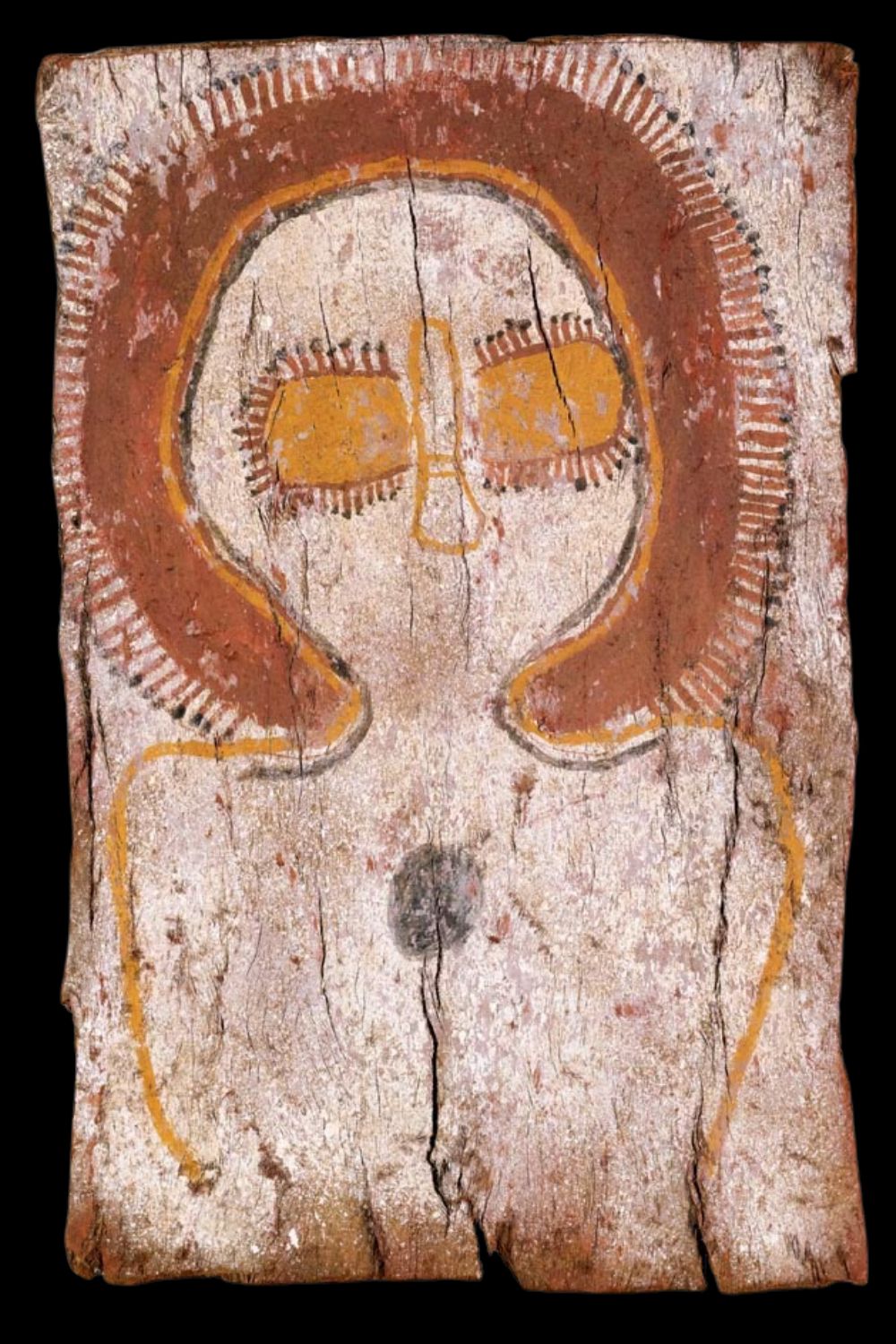
Compared with Alec Mingelmanganu and later Mowanjum Wandjina painters, George Jomeri’s bark paintings generally appear far more fragile, sparse, and experimental. Alec Mingelmanganu developed a highly recognisable style characterised by strong Wandjina faces, balanced compositions, and increasingly refined surface treatment, whereas Jomeri’s paintings often retain the raw immediacy of ceremonial and cave painting traditions. One of the clearest distinctions is Jomeri’s treatment of the face. Many of his Wandjina figures possess only faintly rendered noses or omit the nose almost entirely, giving the figures an ethereal appearance closer in feeling to weathered Kimberley cave paintings than to the bold graphic Wandjina imagery associated with later Kimberley art.
Compared with Lily Karedada, or Ignatia Djanghara, George Jomeri’s works generally feel less decorative, less formally resolved, and more transitional in character. The use of rough barks and traditional pigment binders result in a surface more like those on Mickey bungkuni‘s earlier works.
Jomeri also appears unique among Wandjina bark painters in incorporating hand stencil imagery into portable bark paintings, directly linking ancient rock art traditions with the emerging contemporary bark painting movement at Mowanjum.
Floating, Like Wind Blow’em About and George Jomeri
George Jomeri’s connection to the documentary Floating, Like Wind Blow’em About gives his surviving paintings unusual historical significance.
Directed by Michael Edols, the film documented the cultural pressures experienced by Aboriginal elders as traditional Kimberley life was increasingly disrupted by the modern world. The documentary captured Wandjina painters working at Mowanjum during an important transitional moment within Aboriginal art history.
One of the most important sequences shows George Jomeri painting a Wandjina bark while creating a hand stencil beneath the figure using blown white pigment. The moment visually connects contemporary bark painting directly to ancient Kimberley cave painting traditions.
Some bark paintings created during filming were reportedly later abandoned in bushland behind Mowanjum before eventually being rediscovered. Today these surviving works represent important historical records documenting the emergence of the contemporary Wandjina art movement.
Collectability and Value
Today George Jomeri bark paintings are highly important to collectors interested in early Kimberley Aboriginal art and the origins of the contemporary Wandjina movement.
Several factors contribute to their significance:
- their rarity
- their connection to the earliest Mowanjum painting movement
- the unusual incorporation of hand stencil imagery
- their strong relationship to ceremonial cave painting traditions
- their documentation within early anthropological and documentary records
Because many surviving works are now fragile due to unstable early pigments and bark supports, examples in good condition are uncommon.
Unlike later highly commercialised Wandjina paintings, George Jomeri’s works often retain a direct ceremonial and experimental quality that many collectors regard as historically important.
Frequently Asked Questions About George Jomeri
Why are George Jomeri paintings often badly weathered?
Many George Jomeri bark paintings were created during the earliest experimental phase of contemporary Kimberley bark painting. Early binders and pigments were often unstable, resulting in flaking ochres, faded surfaces, and brittle bark supports over time.
Did George Jomeri paint hand stencils?
Yes. George Jomeri is unusual among Wandjina bark painters for incorporating hand stencil imagery directly into portable bark paintings. This practice closely connects his works to ancient Kimberley cave painting traditions.
Why are George Jomeri paintings historically important?
George Jomeri’s works document one of the earliest stages in the transition of Wandjina imagery from sacred cave walls onto portable bark paintings intended for museums, anthropologists, and collectors.
Are George Jomeri bark paintings rare?
Yes. Genuine George Jomeri bark paintings appear only rarely on the market today. Many surviving examples are fragile, and comparatively few works appear to have survived from this important early period of Kimberley Aboriginal art history.
All images featured in this article are presented strictly for educational and informational purposes.
This website may include copyrighted material for which specific authorization has not been obtained from the copyright owner.
All such images are presumed to be the intellectual property of the respective artist or their estate, and are used in accordance with principles of fair dealing or fair use under applicable copyright law.