
Walangkura Napanangka : Biography, Painting Style and Importance
- c.1946–2014
- Pintupi Tjitururrnga Country, west of Kintore
- Kintore / Kiwirrkura, Western Desert
- Pintupi Art / Western Desert Art
- Acrylic painting on linen and canvas
Walangkura Napanangka was a senior Pintupi Aboriginal artist and one of the pioneering women of the Papunya Tula painting movement. Born at Tjitururrnga, west of Kintore in the Western Desert, she spent her childhood travelling with her family through ancestral Country before moving to Haasts Bluff in 1956.
She began painting independently in the mid-1990s, becoming known for her powerful depictions of sandhills, rockholes, women’s ceremonies and the travels of the ancestral woman Kutungka Napanangka. Her compositions combine densely layered dots, concentric forms and energetic linear designs, frequently employing rich oranges, reds, yellows and black.
Alongside Makinti Napanangka, Naata Nungurrayi and Ningura Napurrula, Walangkura belonged to the generation of Pintupi women who transformed the Western desert painting movement during the 1990s, bringing women’s ancestral narratives and ceremonial knowledge into the public painting tradition. In 2009, she participated alongside Ronnie Tjampitjinpa, Naata Nungurrayi and other senior Pintupi artists in a major printmaking project exploring traditional Dreaming stories through new techniques.
Her work is represented in major Australian collections, including the National Gallery of Australia, National Gallery of Victoria and Queensland Art Gallery.
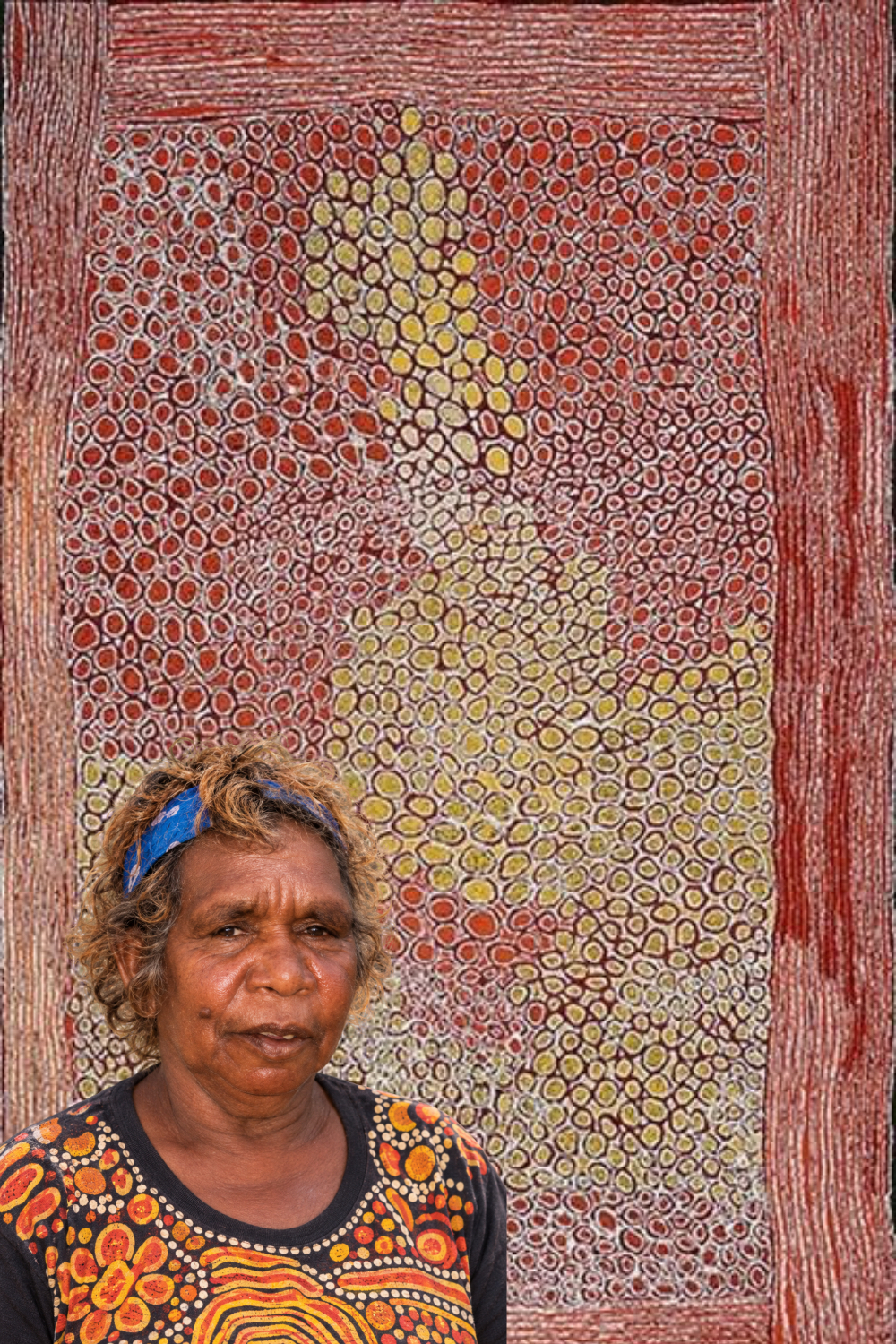
Walangkura Napanangka Biography
Walangkura Napanangka was born around 1946 at Tjitururrnga, west of Walungurru (Kintore), near the Northern Territory–Western Australian border. Her father, Rantji (Rarji) Tjapangati, was a senior custodian of Country west of Karrkurutinjinya (Lake Macdonald), and her mother was Inyuwa Nampitjinpa.
She grew up travelling through the Gibson Desert, learning the locations of waterholes, the availability of bush foods and the ancestral narratives associated with particular places. Her early life belonged to the last period when many Pintupi families continued living independently on their traditional lands.
In December 1956, Walangkura and her family joined other Pintupi people walking hundreds of kilometres east to the government settlement at Haasts Bluff. They were attracted by the availability of food and water, but settlement life brought unfamiliar conditions and significant changes to their traditional way of living.
Following the death of her father, her mother married Tutuma Tjapangati, who became Walangkura’s adoptive father. Tutuma was among the early Papunya painters, as were Inyuwa and Walangkura’s half-sister, Pirrmangka Napanangka.
The establishment of Kintore in 1981 enabled Pintupi families to return to Country west of the earlier settlements. Walangkura subsequently lived between Kintore and Kiwirrkura with her husband, artist Johnny Yungut Tjupurrula, and their family.
Her artistic career began through the historic Minyma Tjukurrpa women’s painting project at Kintore and Haasts Bluff in 1994. Senior women came together to produce large collaborative paintings representing ancestral Country and women’s ceremonial knowledge.
The project marked a turning point in Papunya painting. Previously, women had often assisted their husbands and male relatives, but rarely received independent recognition for their work. The collaborative paintings established an important foundation for the emergence of senior Pintupi women as artists in their own right.
Walangkura began painting individually for Papunya Tula Artists around 1996. That year an early painting was exhibited in Papunya Women at Utopia Art Sydney, one of the first exhibitions to bring the work of these women to audiences outside Central Australia.
Her reputation grew rapidly. She held her first solo exhibition at Gallery Gabrielle Pizzi in Melbourne in 2003, followed by another at Utopia Art Sydney in 2004. She continued painting throughout the following decade and died in 2014.
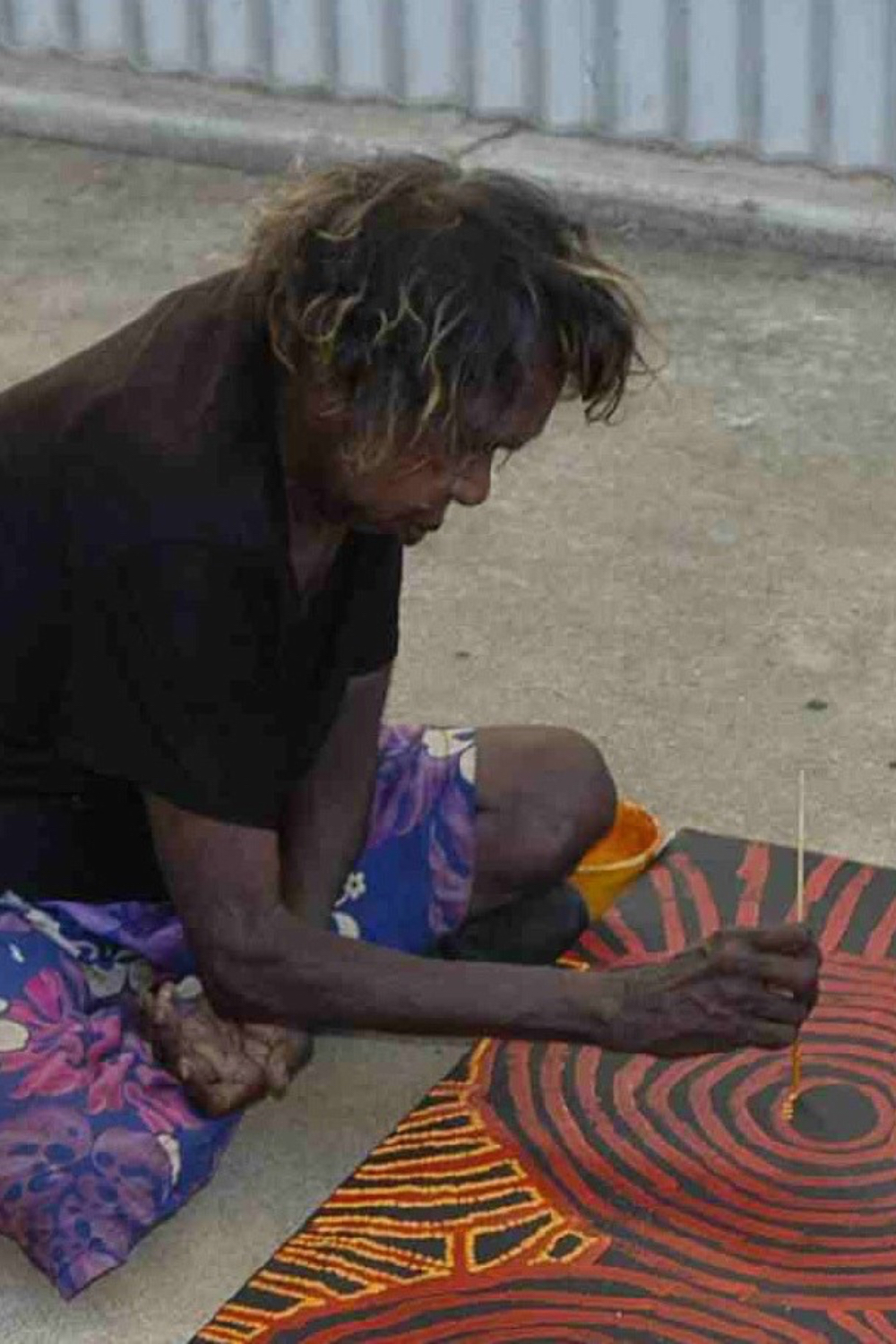
Walangkura Napanangka Painting Style and Dreamings
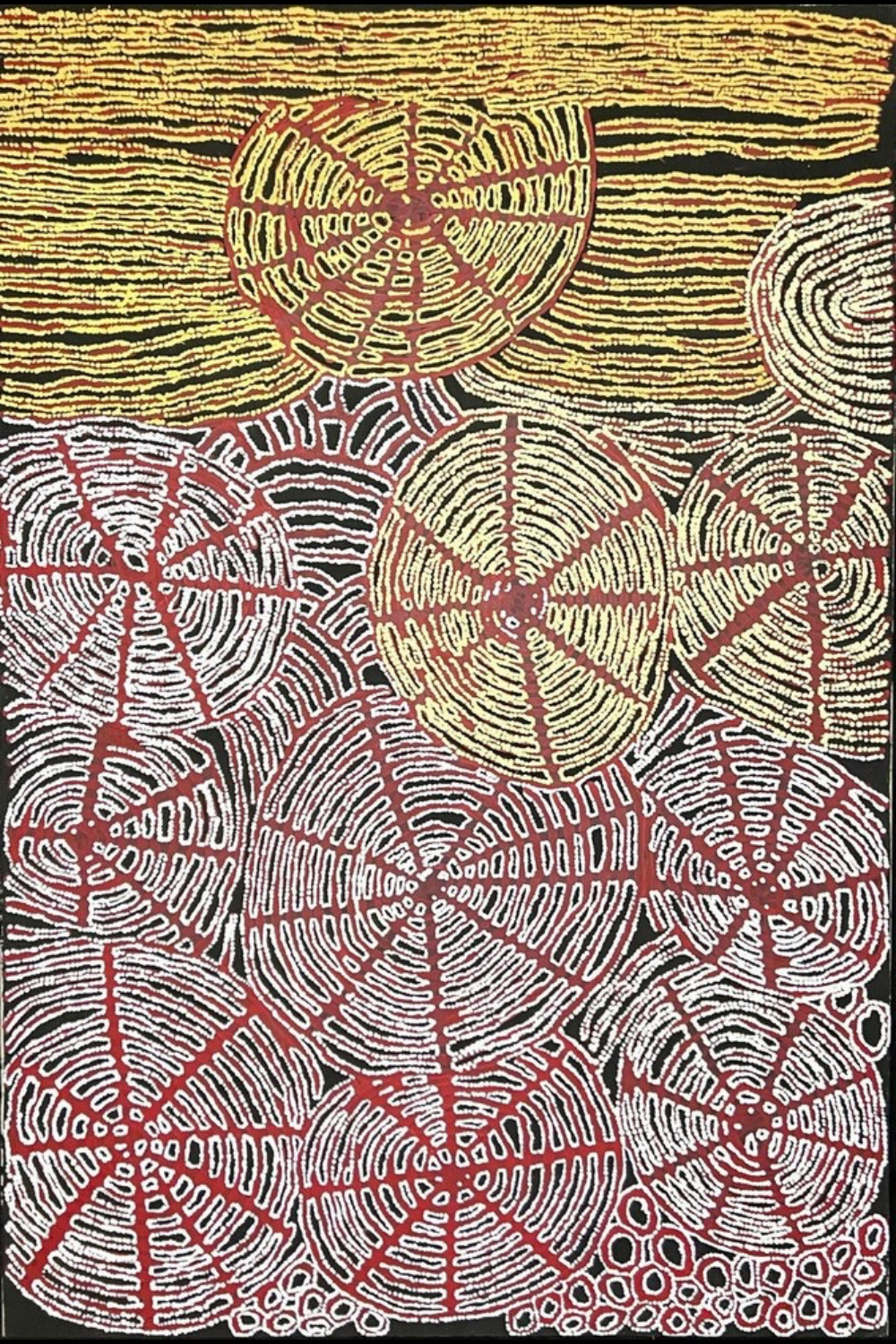
Walangkura developed a distinctive style within Western Desert painting, characterised by powerful circular forms, tightly packed markings and irregular bands of colour. Her paintings depict the ancestral Country west of Kintore and around Kiwirrkura, particularly the journeys of ancestral women, ceremonial gatherings, rockholes, soakages and sandhills.
Her earliest independent paintings often contain numerous small motifs distributed across the canvas. As her work developed, these became increasingly expansive compositions in which circles, arcs and parallel lines form dense, interlocking arrangements. Her preferred colours included sandy orange, ochre yellow, rust red, white and black, with contrasting colours creating a strong sense of movement and visual rhythm.
Art dealer and historian Adrian Newstead identifies similarities between her mature paintings and the linear compositions of George Ward Tjungurrayi, Turkey Tolson Tjupurrula and Willy Tjungurrayi. However, Walangkura’s paintings are frequently less symmetrical, with forms expanding and contracting across the surface.
Although apparently abstract, her paintings contain considerable narrative detail. Concentric circles represent particular rockholes, parallel lines describe sandhills, arcs indicate rocky outcrops and U-shaped forms identify ancestral women. These elements are arranged to communicate the journeys, ceremonies and events associated with specific places.
Sophia Nampitjimpa Sambono, writing for the Queensland Art Gallery, identifies the densely layered iconography of Walangkura and other Pintupi women as bringing a new tactile quality to the Papunya Tula movement.
This approach is particularly evident in Walangkura’s large paintings, where the entire canvas becomes an interconnected arrangement of ancestral sites and landscape features. Through their rhythmic patterns and densely worked surfaces, her paintings communicate both the physical character of her Country and the ancestral events that give it cultural significance.
Kutungka Napanangka — The Old Woman Dreaming
One of Walangkura’s most important subjects is the journey of Kutungka Napanangka, a powerful ancestral woman who travelled across the Gibson Desert.
According to Papunya Tula documentation, Kutungka travelled east from Malparingya, north-west of Kintore, visiting the cave site of Tjintjintjin and the nearby soakages of Ngutan and Yaranga.
At Tjintjintjin she searched underground for an ancestral kunia (snake), eventually locating, killing and cooking it.
She continued east towards Muruntji, south-west of Mount Liebig, where a boy from a group of young men accosted her. Kutungka pursued the boys, capturing and killing all except the original offender, who escaped. She then travelled to Kaltarra, where she entered the earth.
Walangkura repeatedly painted locations along this journey. Rather than illustrating Kutungka as a recognisable human figure, she represented the geographical features associated with her passage.
In Travels of an Old Woman (2000), the circles represent rock formations and the linear designs describe the surrounding sandhills. The painting was exhibited in Kintore and Kiwirrkura Women’s Exhibition at Papunya Tula Artists in November 2000.
Her monumental Tjintjintjin (2007), measuring 183 × 244 cm, demonstrates how this ancestral narrative could be translated into a complex composition of concentric forms and densely layered markings.
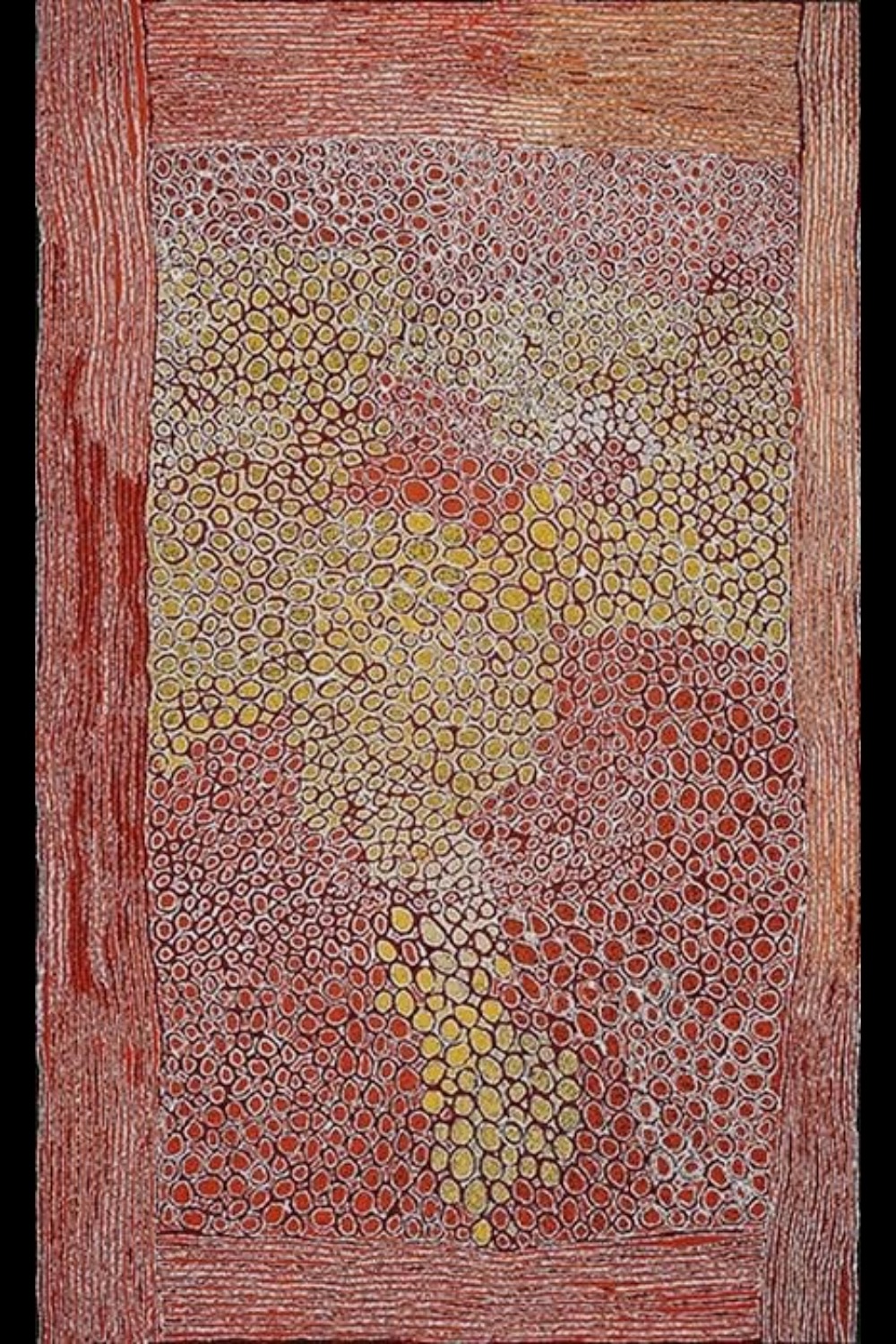
Women’s Ceremony at Lupul
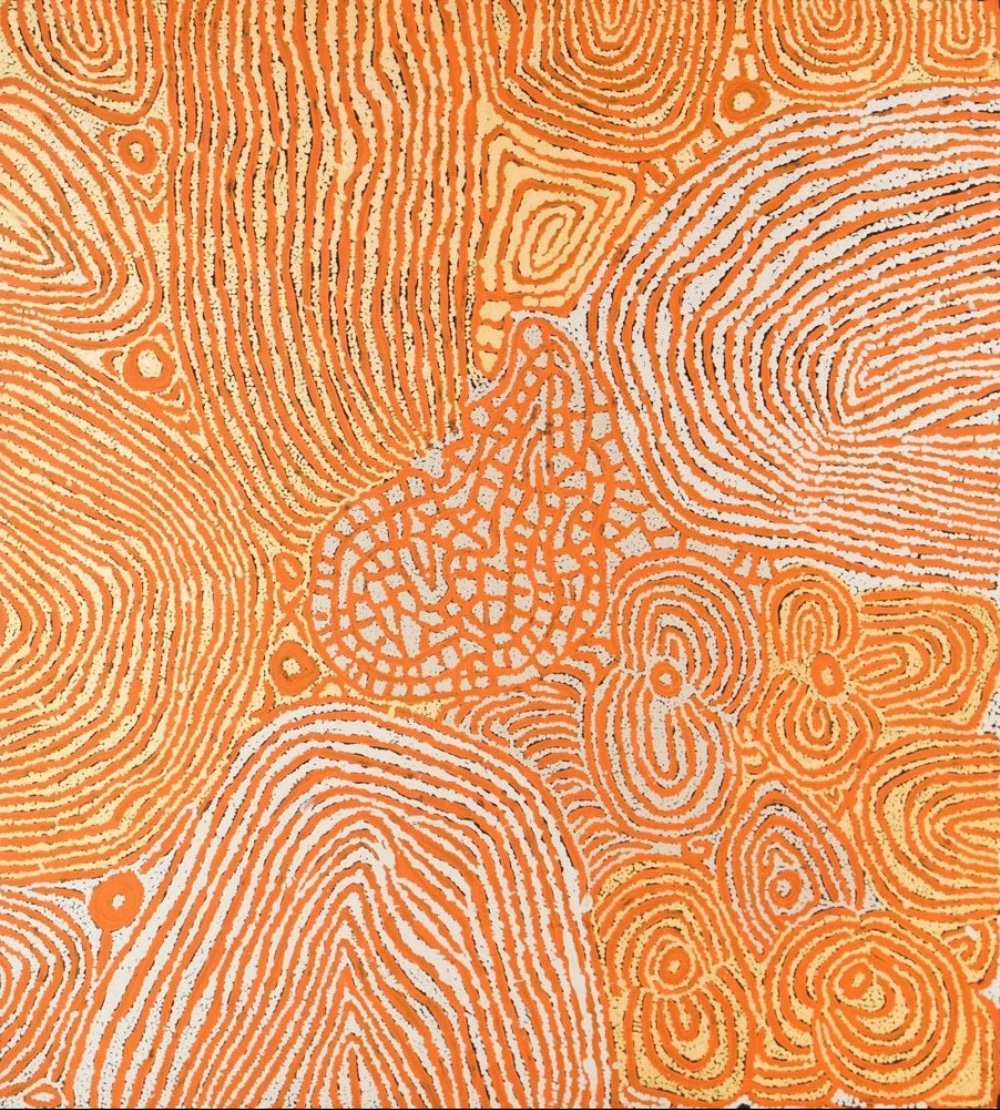
Rockhole and Soakage of Lupul (2003) provides a particularly detailed example of Walangkura’s representation of women’s ceremonial activity.
The painting depicts Lupul, south of Kintore, where a large group of ancestral women gathered to sing, dance and perform ceremonies.
While there, the women manufactured hair-string for nyimparra, the skirts worn during ceremonial performances.
The original Papunya Tula documentation identifies U-shaped forms as the assembled women, a large kidney-shaped form as the rockhole, linear designs as the surrounding tali (sandhills) and arcs as puli (rocky outcrops).
Following their ceremonies, the women travelled north towards Nyirrpi, collecting mangata (quandong) along the way.
The painting therefore combines ceremonial activity, the preparation of ceremonial clothing, the gathering of food and the physical geography of a particular place.
Wirrulnga — Women’s Gathering and Bush Foods
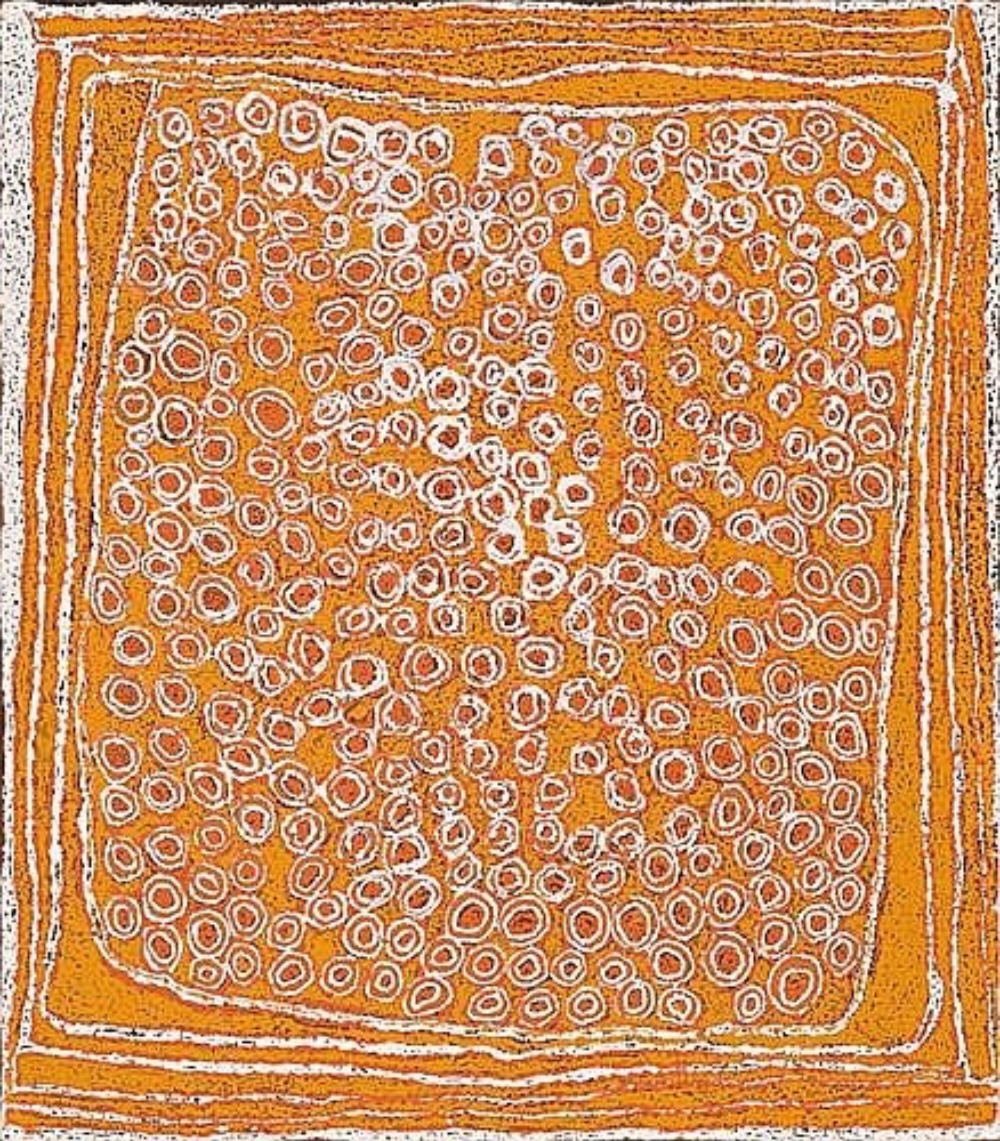
In Wirrulnga (1999), Walangkura depicted a site containing two rockholes near Kiwirrkura.
The associated narrative concerns ancestral women who travelled east from Marrapinti, stopping at Wirrulnga to gather edible fruits.
These included ngamunypurru (conkerberries), from the shrub Carissa lanceolata, and kampurarrpa (desert raisins), from Solanum centrale.
The painting connects the women’s journey with the location of important food resources. It also establishes the ancestral relationship between Marrapinti and Wirrulnga, two places that recur in Western Desert women’s painting.
Winparrku — Women’s Dreaming at Mount Webb
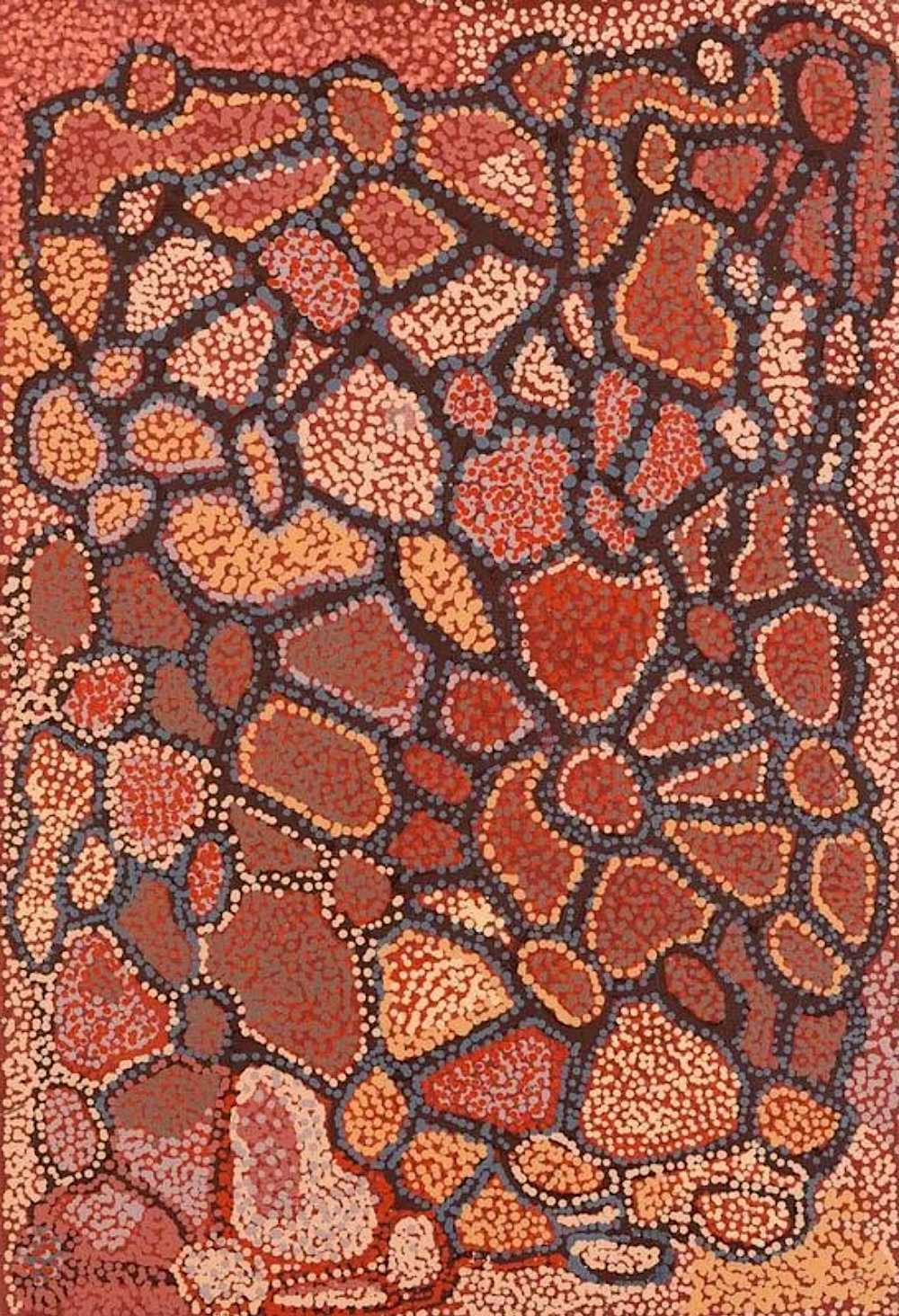
An early painting from 1997, catalogued by Papunya Tula Artists as WN970241, depicts Winparrku (Mount Webb) in Western Australia.
According to its certificate, a large group of ancestral women travelled from the west and camped beside a rockhole at Winparrku. While there, they gathered edible seeds and berries before continuing east.
The painting is significant because it demonstrates that Walangkura was representing several distinct ancestral journeys during the earliest years of her independent career, rather than concentrating exclusively on Kutungka Napanangka.
Women’s Dreaming at Tjukurla
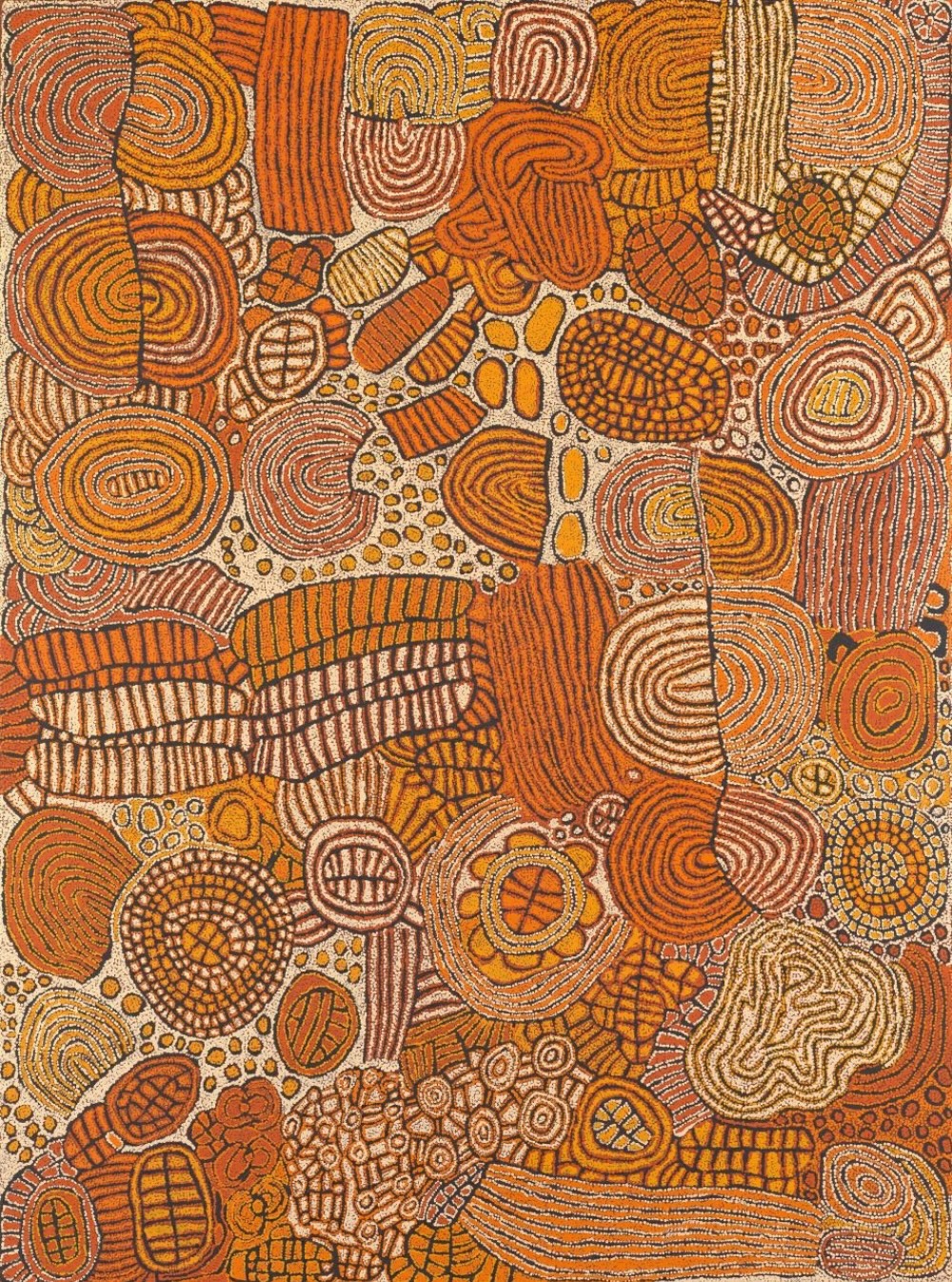
One of Walangkura’s most important late paintings is Women’s Dreaming at Tjukurla (2007), measuring 180.5 × 243.5 cm, acquired by the National Gallery of Victoria through the Felton Bequest in 2011.
The painting depicts the lake at Tjukurla and associated ancestral events.
According to an interpretation published by NGV curator Luke Scholes, an ancestral snake entered the earth, leaving its ribbed skin upon the surface and transforming the landscape into a salt lake.
Ancestral women subsequently travelled to the site, undertaking ceremonial preparations, manufacturing hair-string skirts and gathering bush foods.
The composition also includes references to dingoes, black ducks, owls and blue-tongue lizards inhabiting the surrounding Country.
Judith Ryan, then Senior Curator of Indigenous Art at the National Gallery of Victoria, encountered the painting while it was being created. She was struck by its extraordinary density and the way individual lines and motifs contributed to a unified composition.
Unlike a conventional map, the painting brings together the creation of the landscape, ancestral journeys, ceremonial activity and the continuing life of Country.
Walangkura Napanangka’s Artistic Importance and Legacy
Walangkura Napanangka belonged to the first generation of senior Pintupi women to achieve widespread recognition as independent artists through Papunya Tula. Alongside other pioneering women, she helped transform a painting movement initially dominated by men, bringing women’s ancestral narratives and ceremonial knowledge into the public art tradition.
Her recognition came quickly. She exhibited Water Dreaming at Tjintjintjinna in the 1997 National Aboriginal and Torres Strait Islander Art Award and Women Travelling to Tjintjintjinna in 1998. Her work was subsequently included in the landmark exhibition Papunya Tula: Genesis and Genius at the Art Gallery of New South Wales in 2000. In 2009, she also produced Tjintjintjin, a sugar-lift aquatint now represented in the Art Gallery of South Australia.
Walangkura died in 2014, leaving paintings that connect two profoundly different periods of Pintupi history. Born into a family living independently in the Western Desert, she experienced the transition to government settlements and the eventual return to ancestral Country. Her paintings drew upon knowledge acquired through living in that landscape, recording the rockholes, sandhills, ancestral journeys and ceremonial places she had known since childhood.
Her legacy lies in both the strength of her distinctive visual language and her contribution to establishing Pintupi women’s painting as a major expression of Western Desert art.
Walangkura Napanangka Value and Auction results
Works Offered at Auction: 256
Sale Rate: 54%
Highest Sale: $44,000 AUD
Median Sale Price: $3,400 AUD
To view individual select artworks along with dimensions provenance and sales prices please ivsit the Walangkura Napanangka Value page (not yet constructed)
Exhibitions and Collections
Selected Exhibitions
- 1996 – Papunya Women, Utopia Art Sydney.
- 1997 – 14th National Aboriginal and Torres Strait Islander Art Award, Darwin.
- 1998 – 15th National Aboriginal and Torres Strait Islander Art Award, Darwin.
- 2000 – Papunya Tula: Genesis and Genius, Art Gallery of New South Wales, Sydney.
- 2001 – Dreamscapes: Contemporary Desert Art, Frederiksberg, Denmark.
- 2003 – Walangkura Napanangka: Recent Paintings, Gallery Gabrielle Pizzi, Melbourne.
- 2004 – Walangkura Napanangka, Utopia Art Sydney.
- 2004 – Mythology and Reality, Heide Museum of Modern Art, Melbourne.
- 2007–2008 – Paintings from Remote Communities, Govett-Brewster Art Gallery, New Zealand, and Newcastle Art Gallery.
Selected Collections
- National Gallery of Australia, Canberra
- National Gallery of Victoria, Melbourne
- Art Gallery of New South Wales, Sydney
- Queensland Art Gallery | Gallery of Modern Art, Brisbane
- Art Gallery of South Australia, Adelaide
- Museum and Art Gallery of the Northern Territory, Darwin
- Artbank, Australia
- Kelton Foundation, United States
Further Reading
- Johnson, Vivien. Lives of the Papunya Tula Artists. IAD Press, Alice Springs, 2008.
- Perkins, Hetti, and Hannah Fink (eds). Papunya Tula: Genesis and Genius. Art Gallery of New South Wales, Sydney, 2000.
- Scholes, Luke. Land, Loss and Identity: Art of a Great Pintupi Lineage. National Gallery of Victoria, 2013.
- Scholes, Luke. “Kiwirrkura Women: The Shifting Shape of Western Desert Painting.” Art & Australia, vol. 46, no. 3, 2009, pp. 498–505.
- Newstead, Adrian. Walangkura Napanangka — Artist Profile.
- Queensland Art Gallery | Gallery of Modern Art. Untitled (Tjintjintjin), 2006.
- National Gallery of Victoria. Women’s Dreaming at Tjukurla, 2007.
All images featured in this article are presented strictly for educational and informational purposes.
This website may include copyrighted material for which specific authorization has not been obtained from the copyright owner.
All such images are presumed to be the intellectual property of the respective artist or their estate, and are used in accordance with principles of fair dealing or fair use under applicable copyright law.