
Warlpiri Art Movement
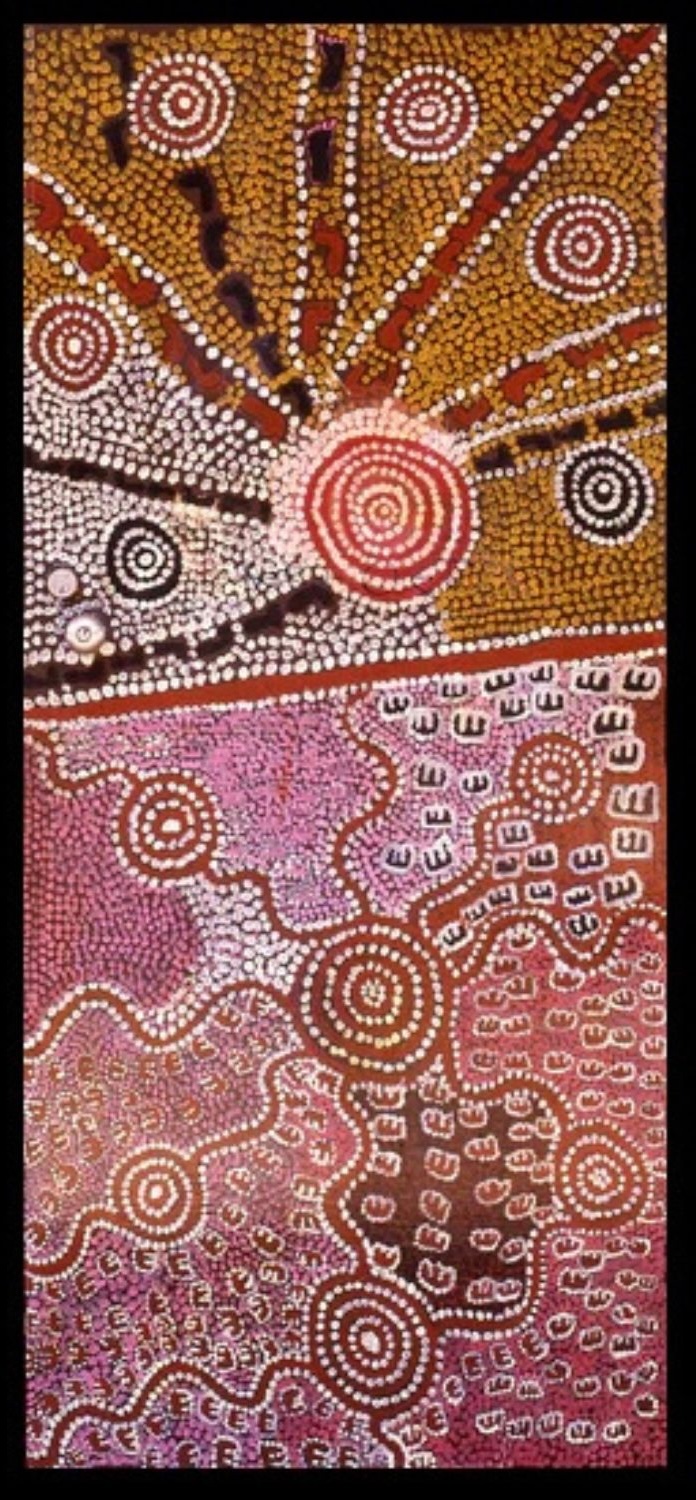
Warlpiri Art is an important tradition within Western Desert Art, grounded in the Country, ceremony and ancestral narratives of the Warlpiri people of Central Australia. Although often associated with dot painting, Warlpiri artists have developed remarkably diverse styles using lines, circles, tracks, dots and repeated patterns to express relationships between people, ancestral events and places.
Contemporary Warlpiri painting developed within the wider Western Desert painting movement that began at Papunya in 1971. A major turning point came with the Yuendumu School Doors of 1983–84, followed by the establishment of the Aboriginal-owned Warlukurlangu Artists at Yuendumu in 1985. Together these developments helped create the foundations for one of Central Australia’s most important painting movements.
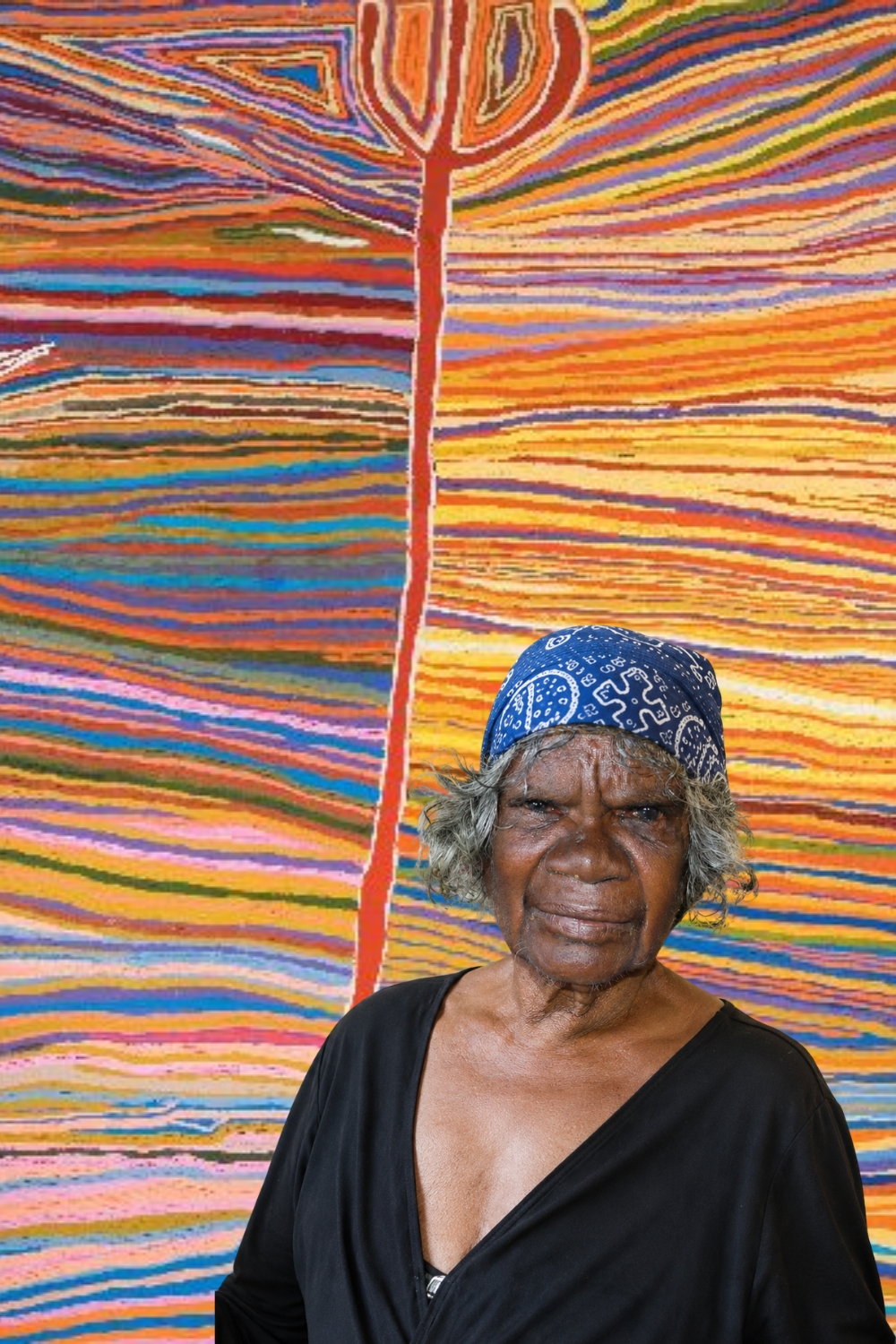
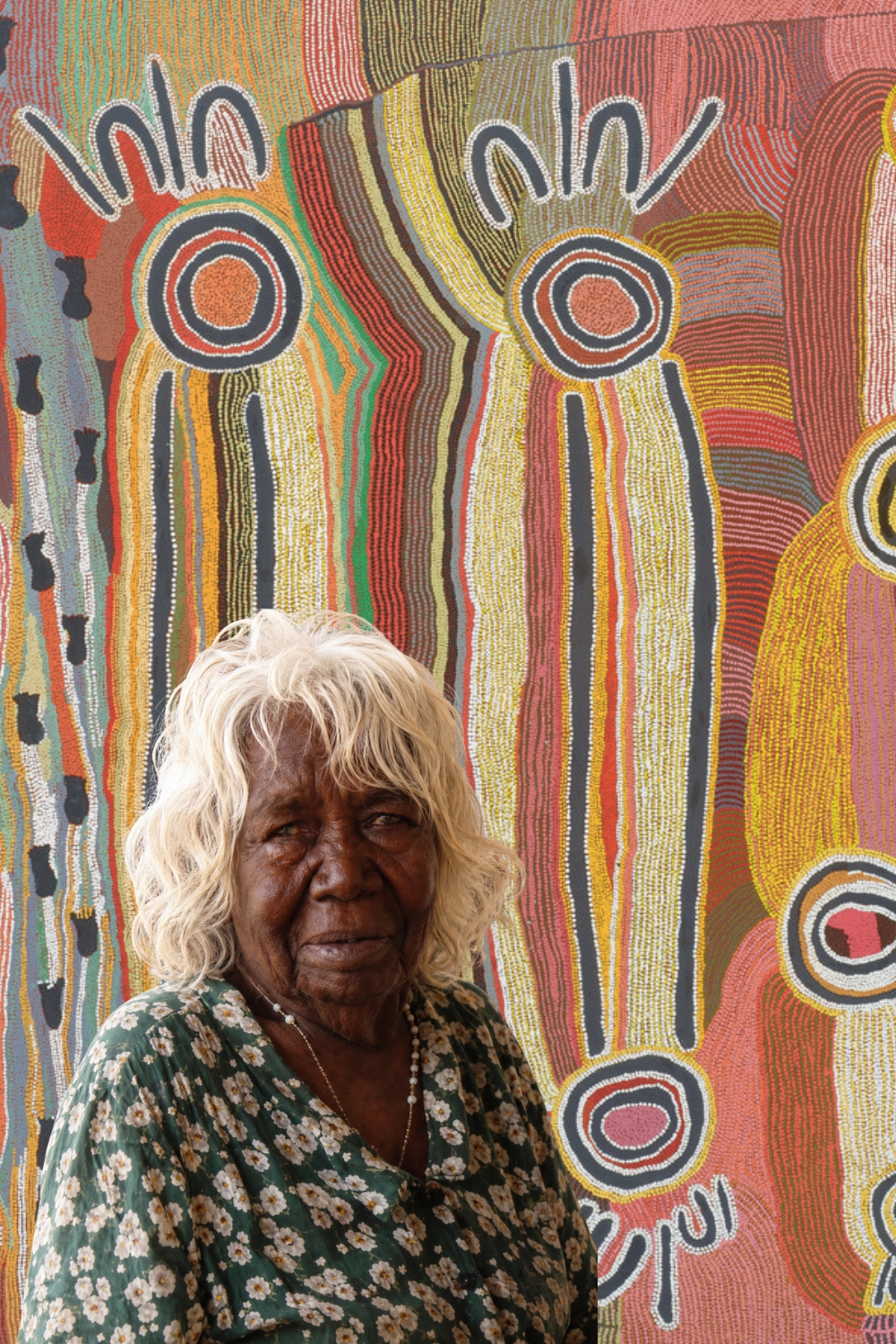
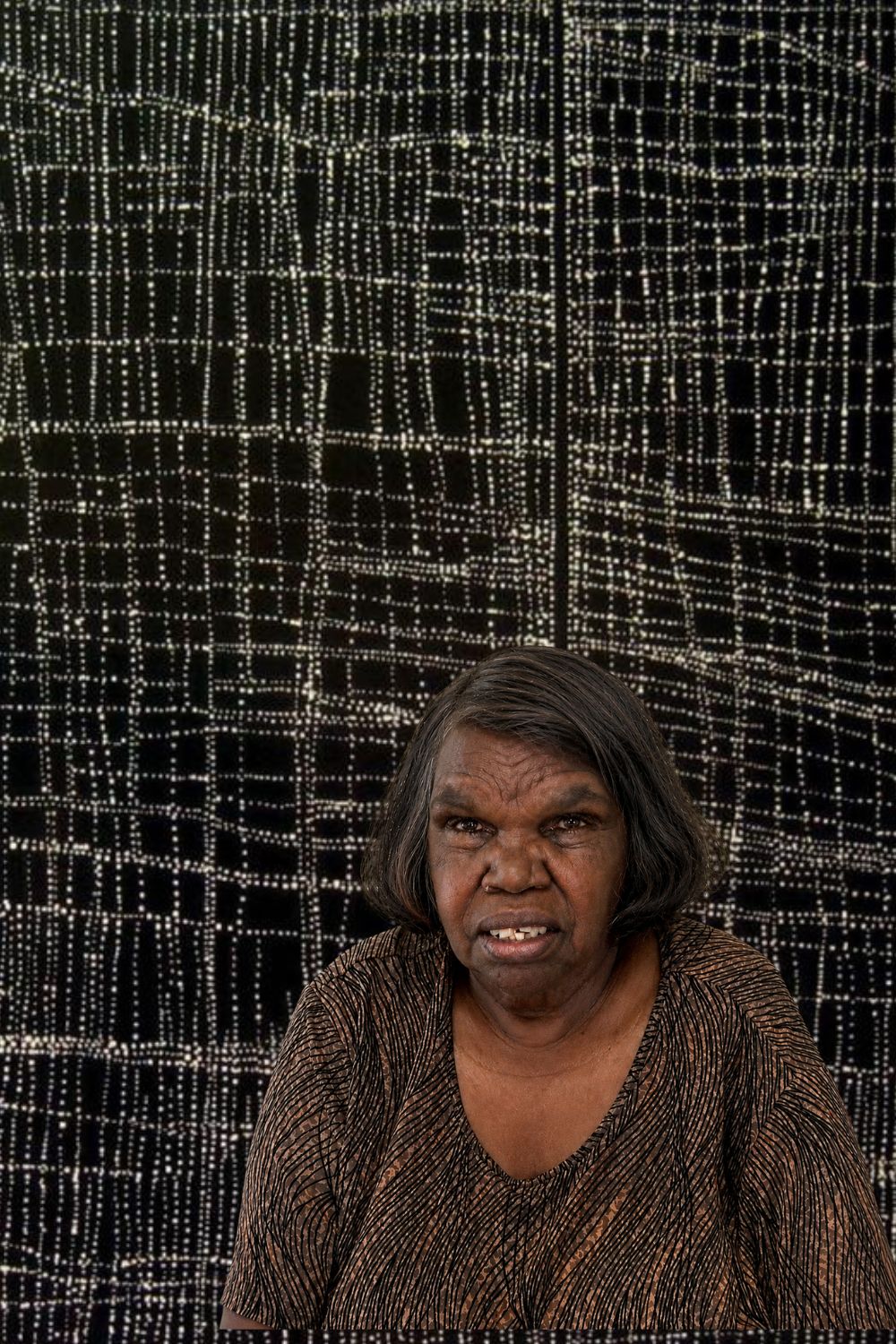
From the late 1980s onward, women became a major force in Warlpiri Art. Maggie Watson Napangardi, Judy Watson Napangardi and Dorothy Napangardi became internationally recognised for highly individual interpretations of women’s Country and the Mina Mina Dreaming, demonstrating that Warlpiri Art is not a single visual style but a diverse contemporary expression of living cultural traditions.
Today Warlpiri Art forms one of the major regional traditions within Western Desert Art, alongside Utopia Art, Balgo Art, and Pintupi Art. Each developed through different communities and cultural histories, while together demonstrating the remarkable diversity of contemporary Western Desert painting.
Major Warlpiri Artists
Major Warlpiri Artists
The careers of major Warlpiri artists connect two important centres of Western Desert painting: Papunya and Yuendumu. David Corby Tjapaltjarri and Dinny Nolan Tjampitjinpa belonged to the early generations of painters working at Papunya, while Paddy Japaljarri Stewart participated in the formative Papunya period before becoming an important figure in the emergence of painting at Yuendumu.
At Yuendumu, Maggie Watson Napangardi became one of the senior women painters associated with Warlukurlangu Artists and taught her younger sister Judy Watson Napangardi to paint. Judy was also closely connected to Dorothy Napangardi, her cousin who was raised within the family as a sister. All three women painted Jukurrpa associated with Mina Mina, yet developed strikingly different visual languages.
These relationships help explain why Warlpiri painting cannot be reduced to a single style. Its artists were connected through family, kinship, Country, ceremony and the developing art communities of Papunya and Yuendumu, while remaining highly individual painters.
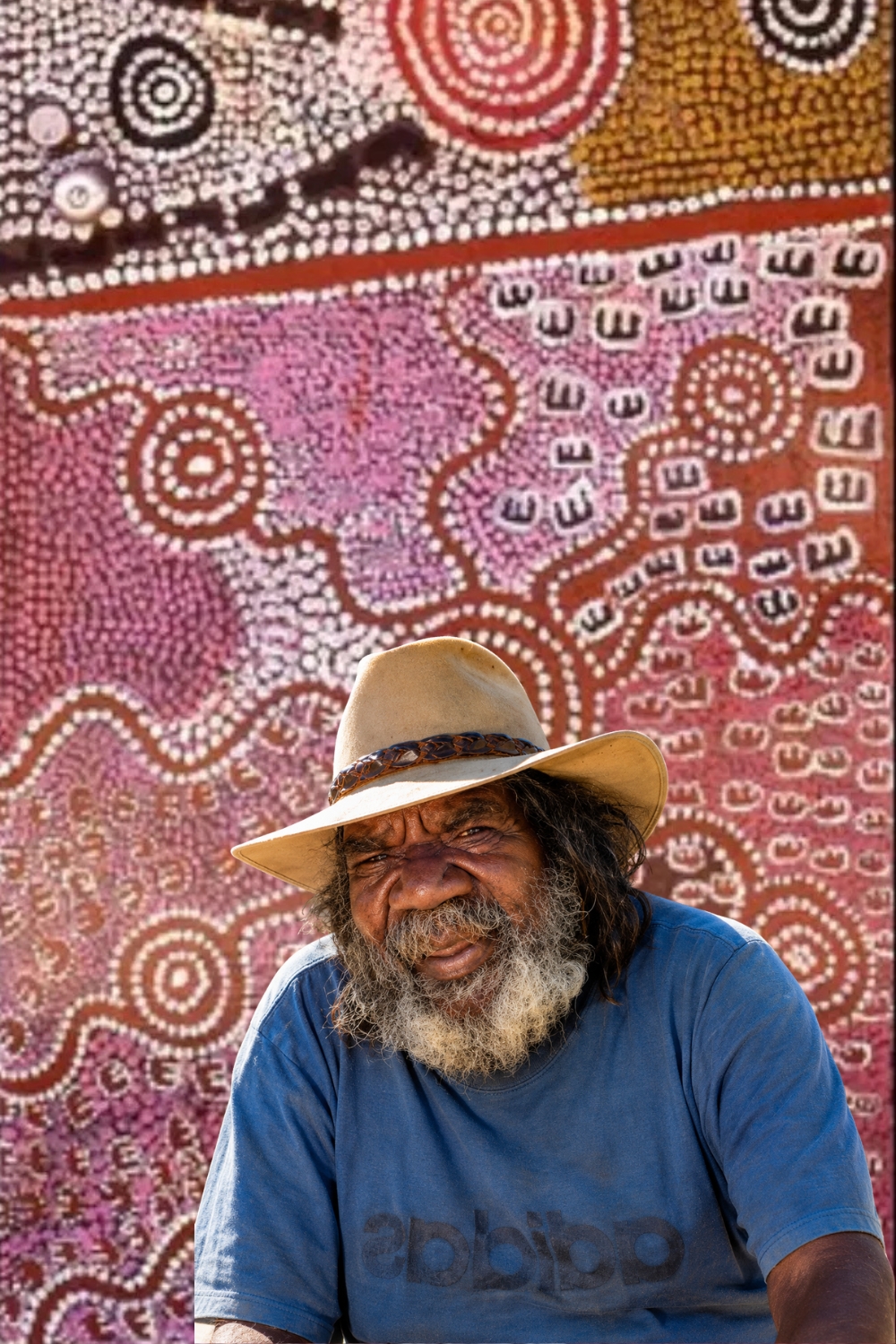
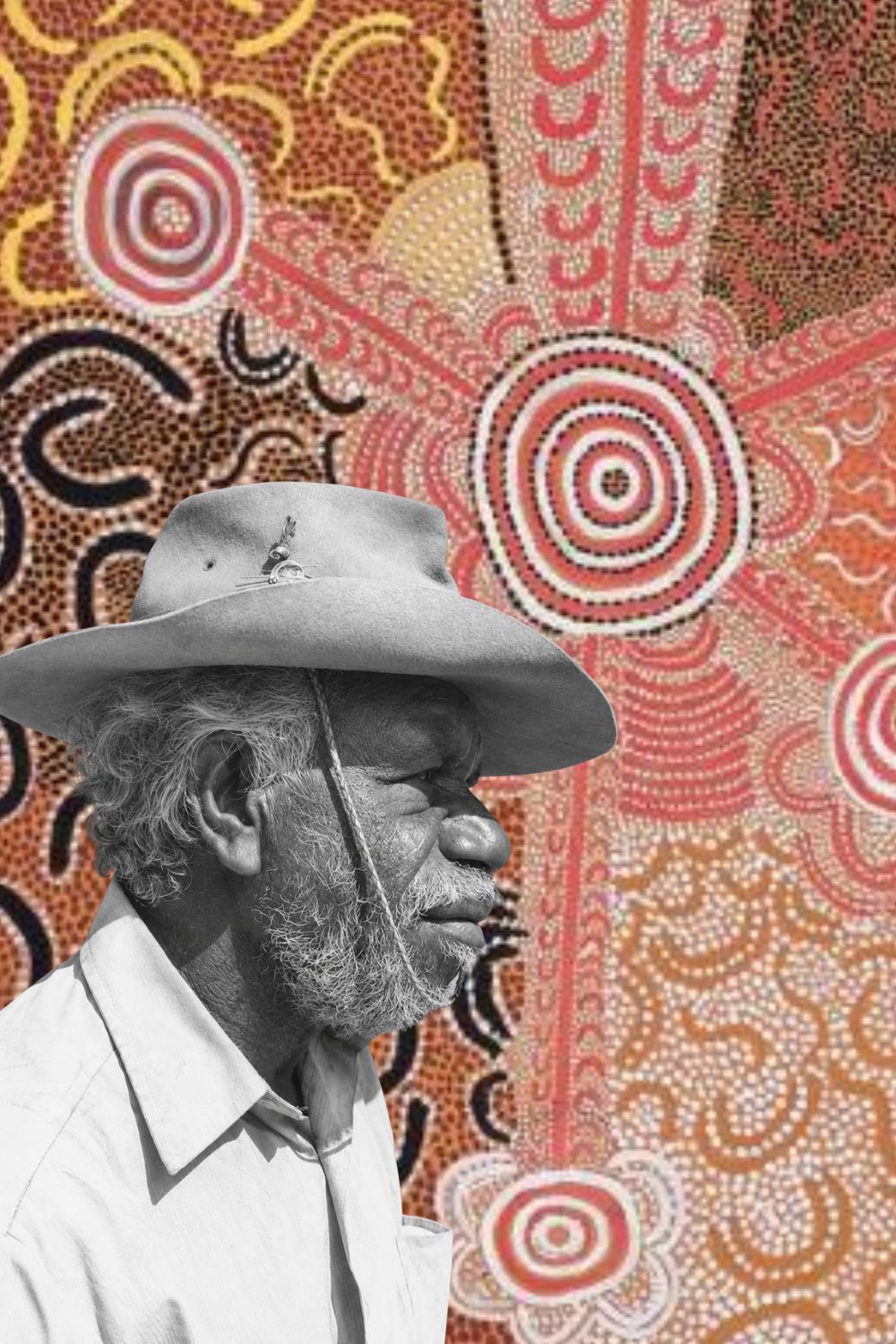
Who Are the Warlpiri People?
The Warlpiri are one of the largest Aboriginal cultural groups in Central Australia, with traditional lands extending across much of the Tanami Desert.
Warlpiri culture is grounded in kinship, ceremony and customary law, which connects people to Country, ancestral narratives and inherited cultural responsibilities. Knowledge has long been expressed through song, dance, body painting, sand drawing and ceremony, traditions that strongly influenced the development of contemporary Warlpiri painting.
Warlpiri also remains one of Australia’s strongest Aboriginal languages, supporting the continuing transmission of culture, ceremony and knowledge across generations.
How Warlpiri Art Emerged Within Western Desert Painting
The modern Western Desert painting movement began at Papunya in 1971, when Aboriginal men began transferring imagery associated with Country, ceremony and ancestral narratives onto painted boards. By the mid-1970s many artists were returning to their traditional lands as part of the outstation movement, while knowledge of the new painting movement spread throughout Central Australia.
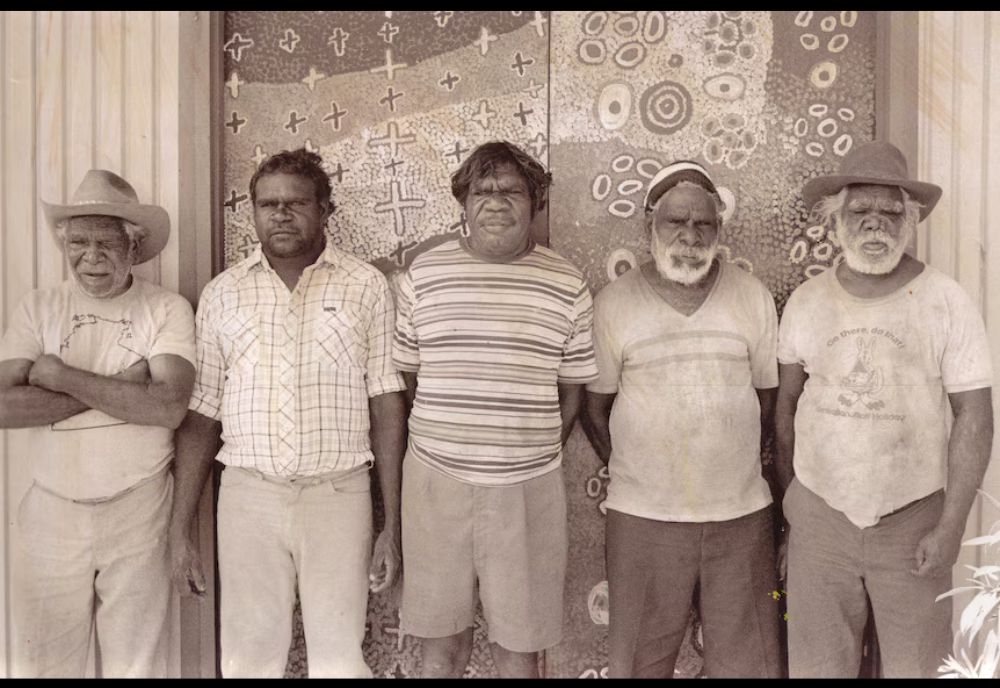
An important development at Yuendumu came with the Yuendumu School Doors of 1983–84. Senior Warlpiri custodians, including Paddy Japaljarri Stewart, painted Jukurrpa narratives on the school doors as a way of recording and teaching cultural knowledge to younger generations. The project demonstrated how imagery previously expressed through ceremony, body painting and ground designs could be adapted to permanent painted surfaces while retaining its connection to Country and cultural authority.
In 1985 Warlpiri people established Warlukurlangu Artists, an Aboriginal-owned and community-controlled art centre at Yuendumu. With government and other forms of support, the organisation provided artists with materials, professional assistance and access to the art market while control of the organisation and authority over the cultural knowledge represented in paintings remained with the community.
The new art centre also created important opportunities for Warlpiri women to paint. Maggie Watson Napangardi and her daughter Judy Watson Napangardi became two of its most significant artists, building upon the foundations established by an earlier generation that included Paddy Japaljarri Stewart while developing very different visual approaches to women’s Jukurrpa. Their success, together with that of later internationally recognised Warlpiri painters such as Dorothy Napangardi , helped establish Warlpiri painting as one of the major traditions within contemporary Western Desert Art.
The Yuendumu Doors and Their Importance
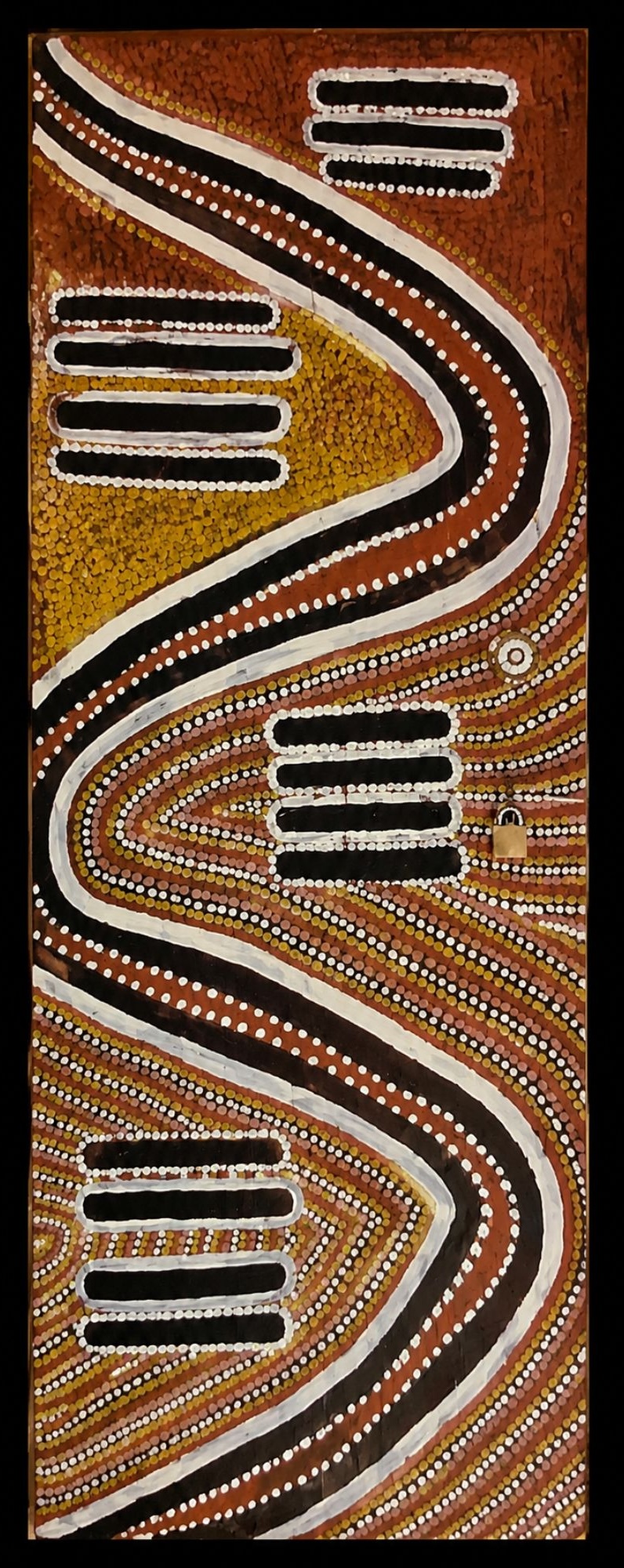
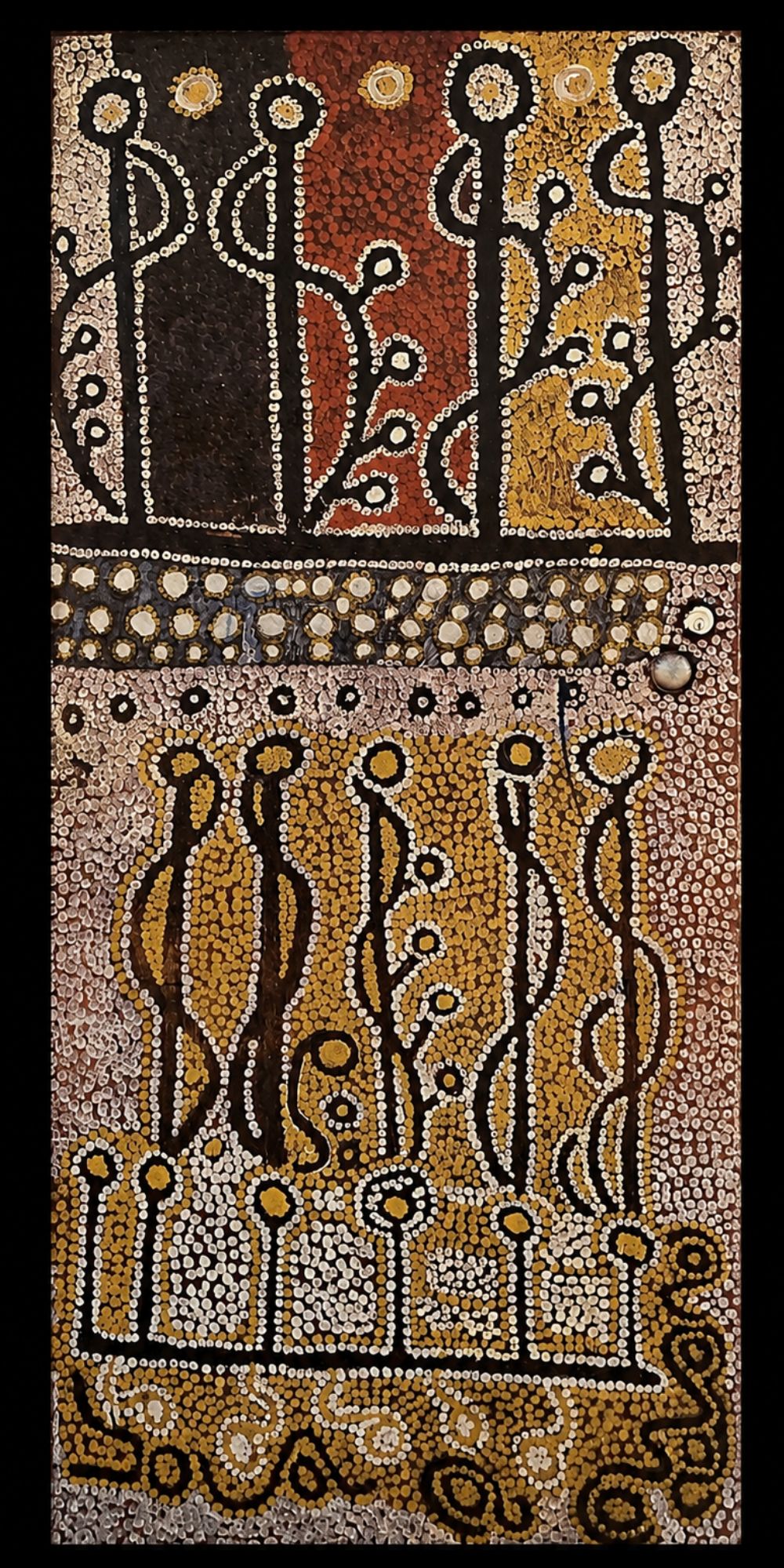
Created in 1983–84 at Yuendumu, the Yuendumu Doors involved senior Warlpiri custodians painting Dreaming narratives directly onto the doors of the local school. The paintings represented ancestral journeys, ceremonial sites, waterholes and places across Warlpiri and neighbouring Anmatyerre Country. Many were painted by senior custodians responsible for the stories represented, giving the project considerable cultural authority.
The doors were created primarily for the community. As younger generations increasingly participated in Western schooling, they provided a way of teaching knowledge of Country, ceremony and cultural responsibilities through visual form. They also demonstrated how designs associated with body painting, sand drawing and ceremonial ground designs could be adapted to permanent painted surfaces while retaining their cultural meaning.
The project marked an important transition in Warlpiri Art. Concentric circles, travelling lines, repeated patterns and symbolic mapping evident on the doors would also become prominent features of later painting at Yuendumu.
The success of the Yuendumu Doors helped establish Yuendumu as an important centre of contemporary Aboriginal painting and provided an important foundation for the establishment of Warlukurlangu Artists in 1985.
Warlpiri Dreaming Stories, Symbols, and Iconography
Jukurrpa, often translated as the Dreaming, is fundamental to Warlpiri Art. It connects ancestral narratives with Country, ceremony, law and the responsibilities linking people to particular places. Paintings may relate to Jukurrpa associated with animals, water, fire, plants and men’s or women’s ceremonial traditions.
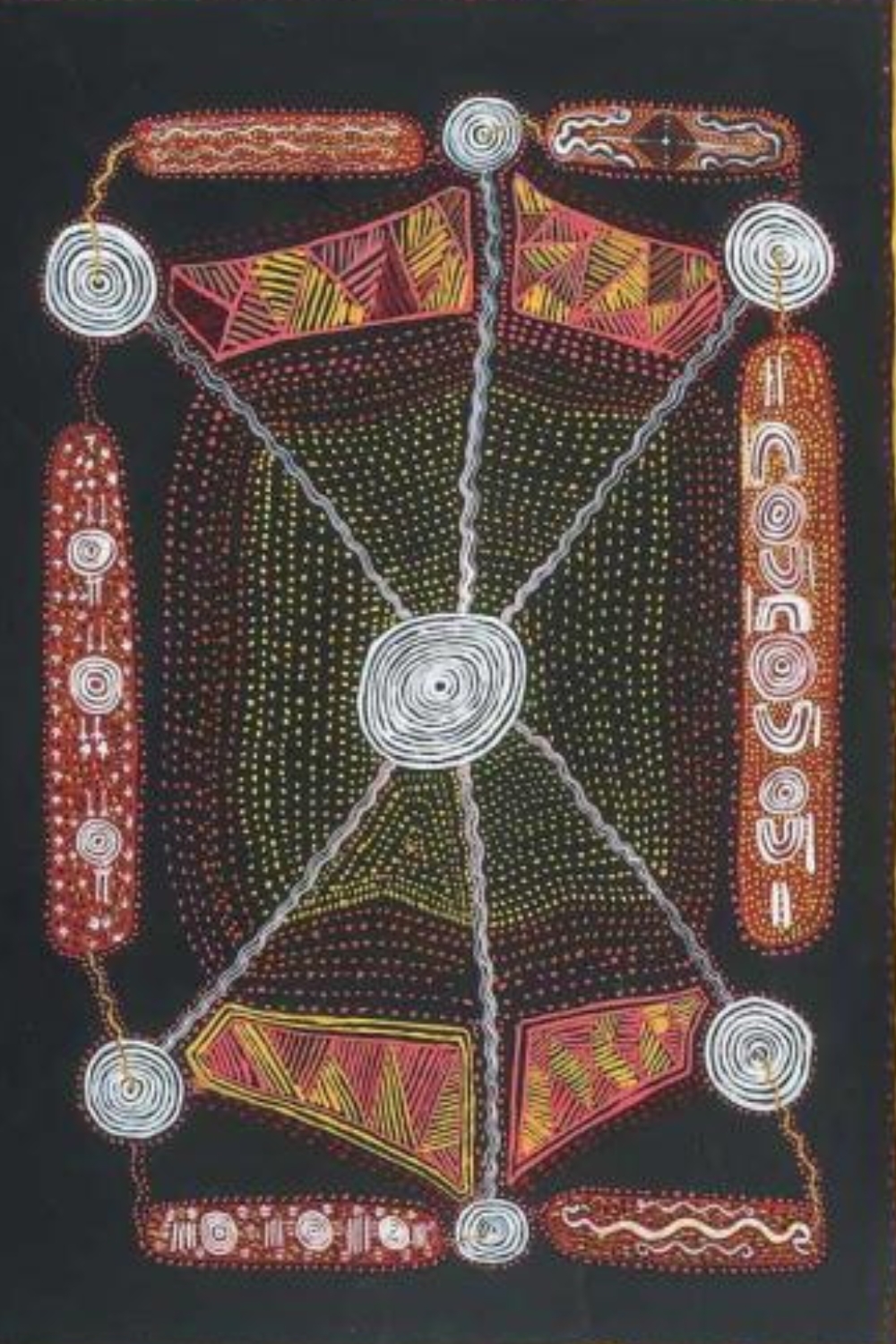
Rather than illustrating these narratives literally, Warlpiri artists use pattern, line and movement to express relationships between ancestral events, journeys and places. Concentric circles may indicate waterholes, camps or ceremonial sites, while connecting lines and tracks can represent journeys and ancestral movement across Country.
These symbols do not have fixed meanings. Their interpretation depends upon the particular dreaming, artist, Country and cultural context. Warlpiri painting draws upon older traditions of body painting, sand drawing and ceremonial ground designs, while transforming them through contemporary painting.
Unusually, the meanings of many early Warlpiri paintings were recorded in considerable detail. The Yuendumu School Doors project brought paintings, symbols and the associated Jukurrpa narratives together, and these were later documented in the important book Yuendumu doors. This provides an exceptional record in which individual designs can be considered alongside Warlpiri explanations of the Country, ancestral events and stories to which they relate.
A work may contain several levels of meaning: artists may provide a public interpretation while deeper ceremonial knowledge remains culturally restricted. Warlpiri paintings are therefore best understood not as collections of fixed symbols, but as expressions of the continuing relationships between people and Country.
Women’s Ceremonial Painting Traditions in Warlpiri Art
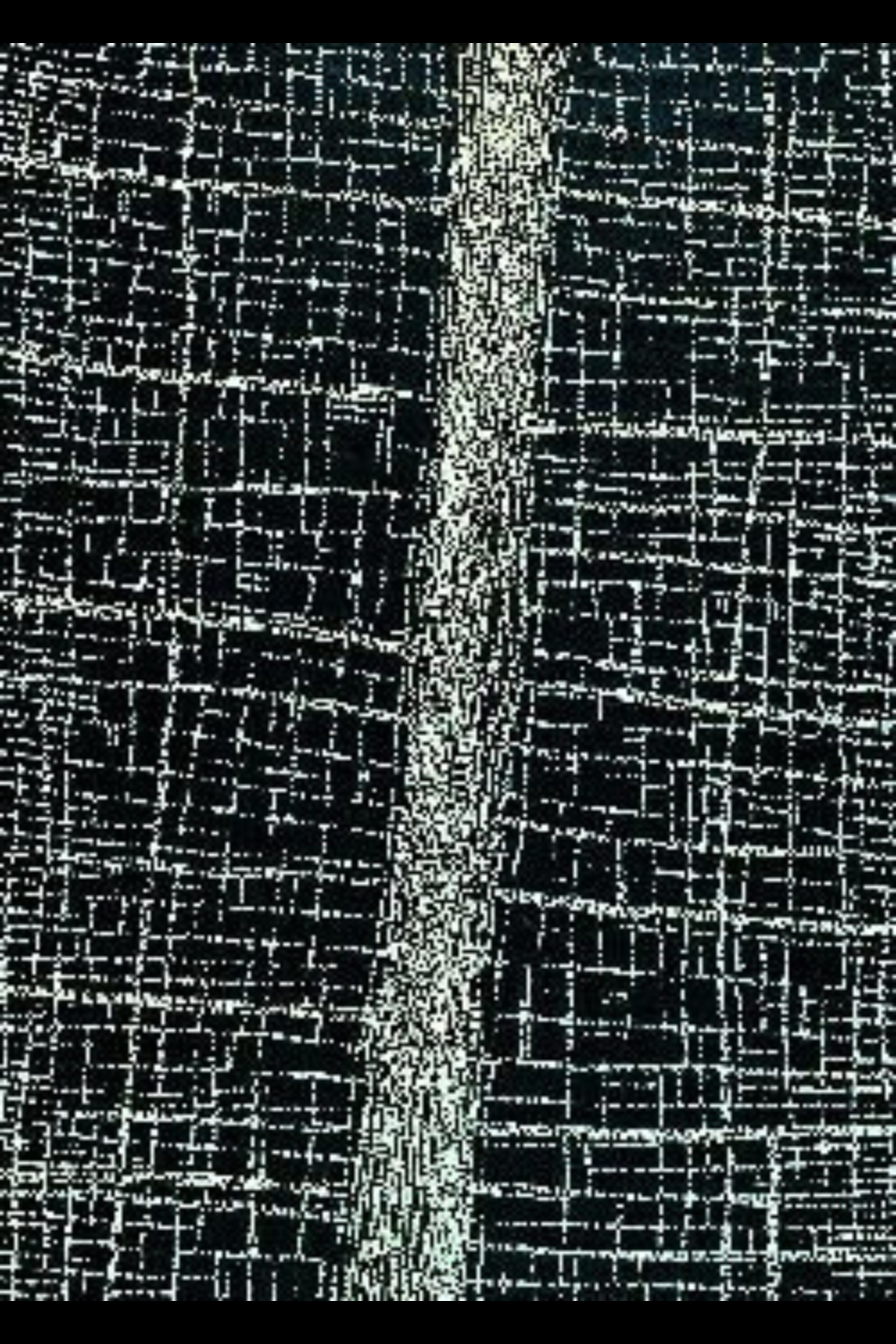
The establishment of Warlukurlangu Artists in 1985 helped open new opportunities for Warlpiri women to paint on canvas. Although senior men had played a major role in the early development of painting at Yuendumu, women soon became a dominant force in Warlpiri painting, drawing upon traditions of body painting, ground designs, song, ceremony and ancestral stories connected to women’s Country.
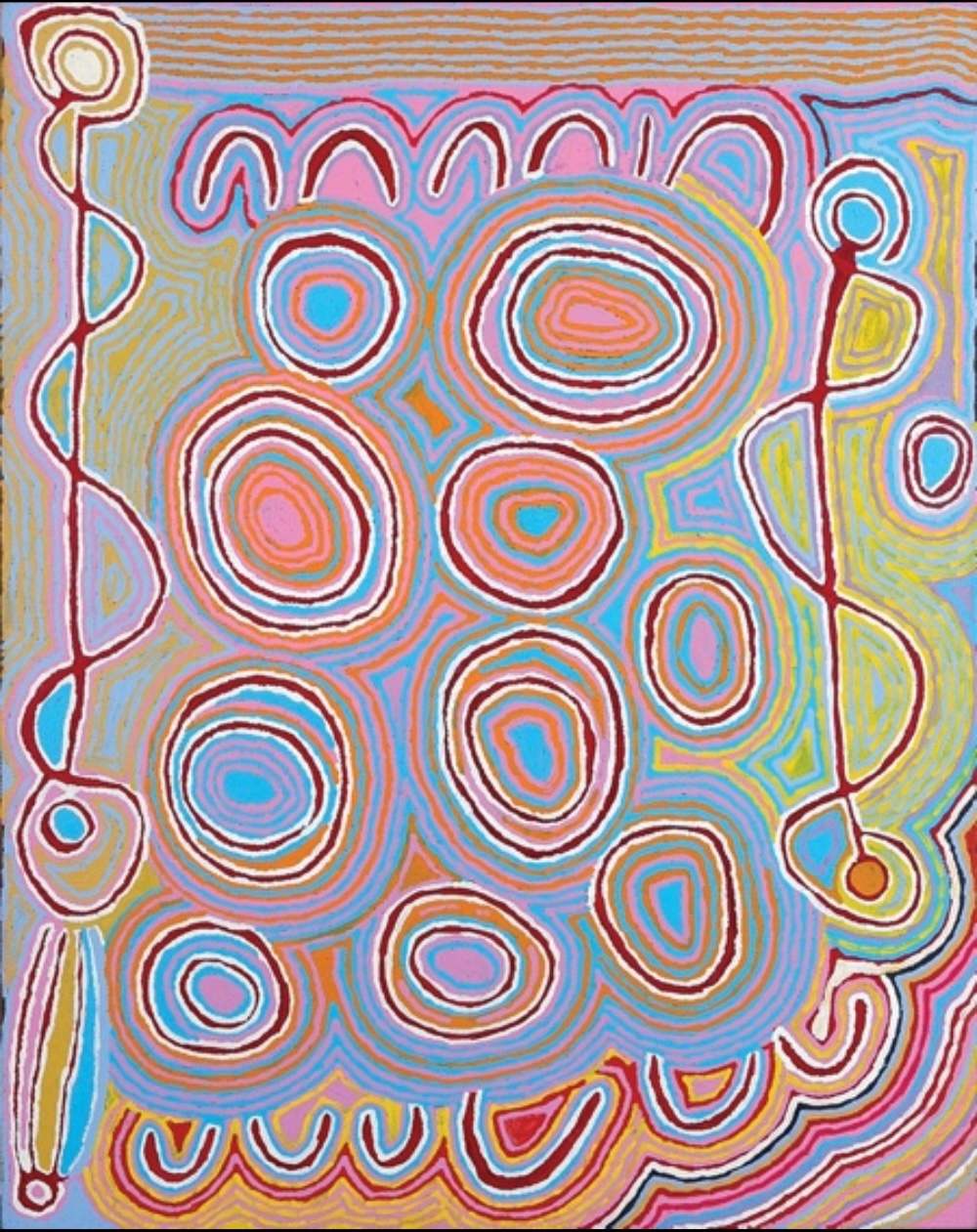
One of their most important subjects was the Mina Mina Dreaming, associated with an area of women’s Country west of Yuendumu. In the ancestral narrative, Napangardi and Napanangka women travelled from Mina Mina across the desert, singing, dancing and performing ceremony. Karlangu (digging sticks) are central to the story: they are said to have emerged from the ground at Mina Mina and were carried by the women during their journeys. Their travels connect a network of places, plants and features of Country.
From the late 1980s through the 1990s, women increasingly came to the forefront of Warlpiri painting. Maggie Watson Napangardi, Judy Watson Napangardi and Dorothy Napangardi became among its most internationally recognised artists, with Mina Mina providing an important subject for all three. Yet each developed a radically different visual language, demonstrating the diversity possible within a shared ancestral and ceremonial tradition.
The rise of these women transformed Warlpiri Art. What had begun with an earlier generation of predominantly male painters developed into a movement in which senior women produced many of its most distinctive and internationally celebrated works.
Warlukurlangu Artists and the Global Rise of Warlpiri Art
Warlukurlangu Artists at Yuendumu became one of the most influential Aboriginal-owned art centres in Australia.
Established during the 1980s, the organisation helped support artists professionally while preserving cultural authority over Dreaming stories and ceremonial imagery. Unlike many commercial galleries, Warlukurlangu remained community controlled.
As international interest in Aboriginal Art increased during the late twentieth century, Warlukurlangu Artists helped introduce Warlpiri painting to museums, collectors, and galleries across Europe, Asia, and the United States.
The success of artists such as Dorothy Napangardi and Maggie established Warlpiri painting as one of the most respected forms of contemporary Indigenous abstraction.
Why Warlpiri Art Became Internationally Important
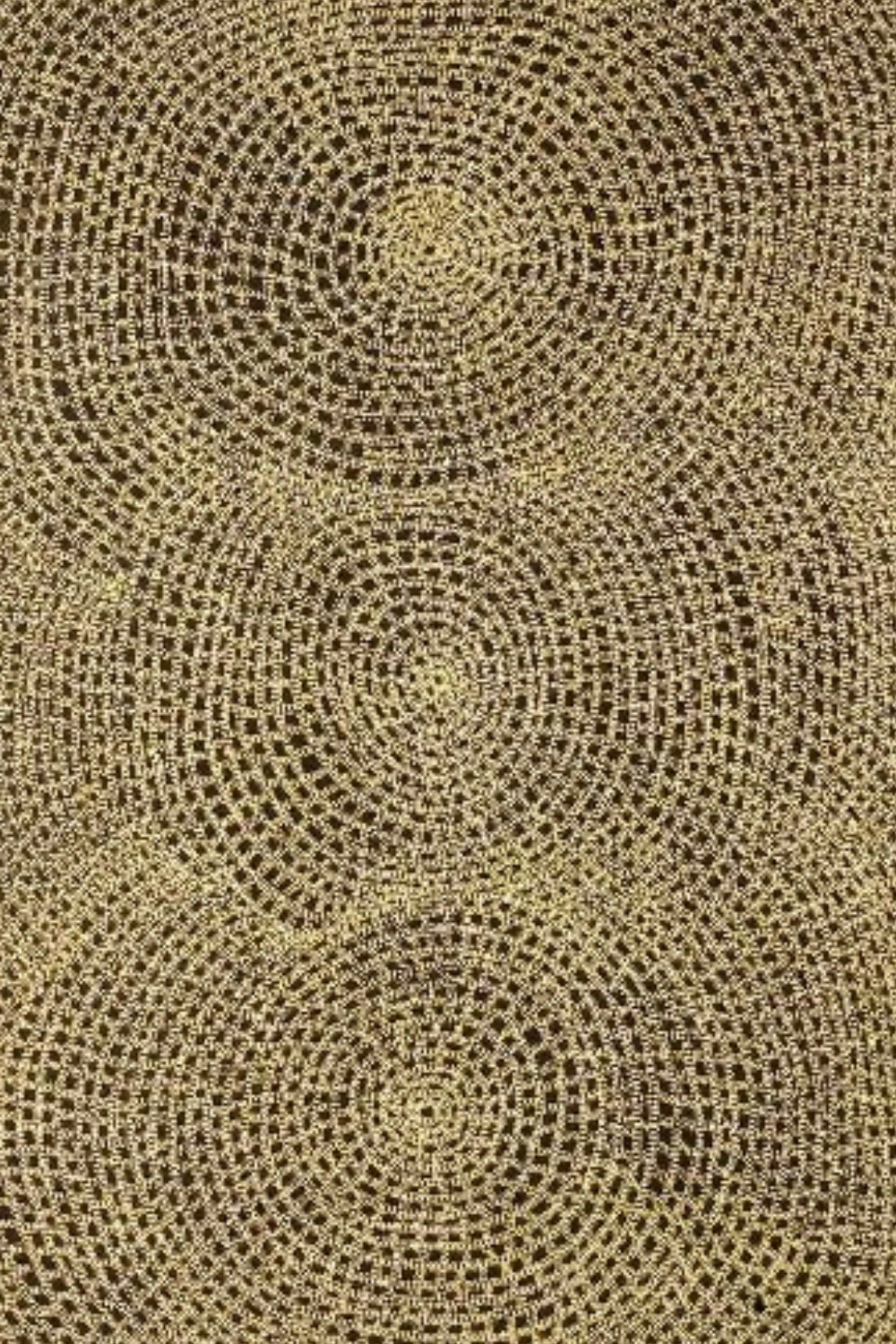
Warlpiri Art gained international recognition because artists transformed living traditions of Country, ceremony and ancestral knowledge into remarkably diverse forms of contemporary painting.
From the late 1980s onward, exhibitions and the growing success of artists such as Maggie Watson Napangardi, Judy Watson Napangardi and Dorothy Napangardi brought Warlpiri painting to wider national and international audiences. Their work demonstrated how paintings grounded in shared cultural traditions could also develop into highly individual forms of contemporary abstraction.
Today Warlpiri painting is recognised as an important tradition within both Western Desert Art and contemporary Australian art.
Further Reading on Warlpiri Art and Culture
Books on Warlpiri Art and Western Desert Painting
- Icons of the Desert: Early Aboriginal Paintings from Papunya
- Yuendumu Doors: Paintings and Stories from the Central Australian Desert
- Warlpiri Women’s Voices
- Dreamings: The Art of Aboriginal Australia
- Papunya: A Place Made After the Story
- The Art of the Western Desert
Warlpiri Paintings and Dreaming
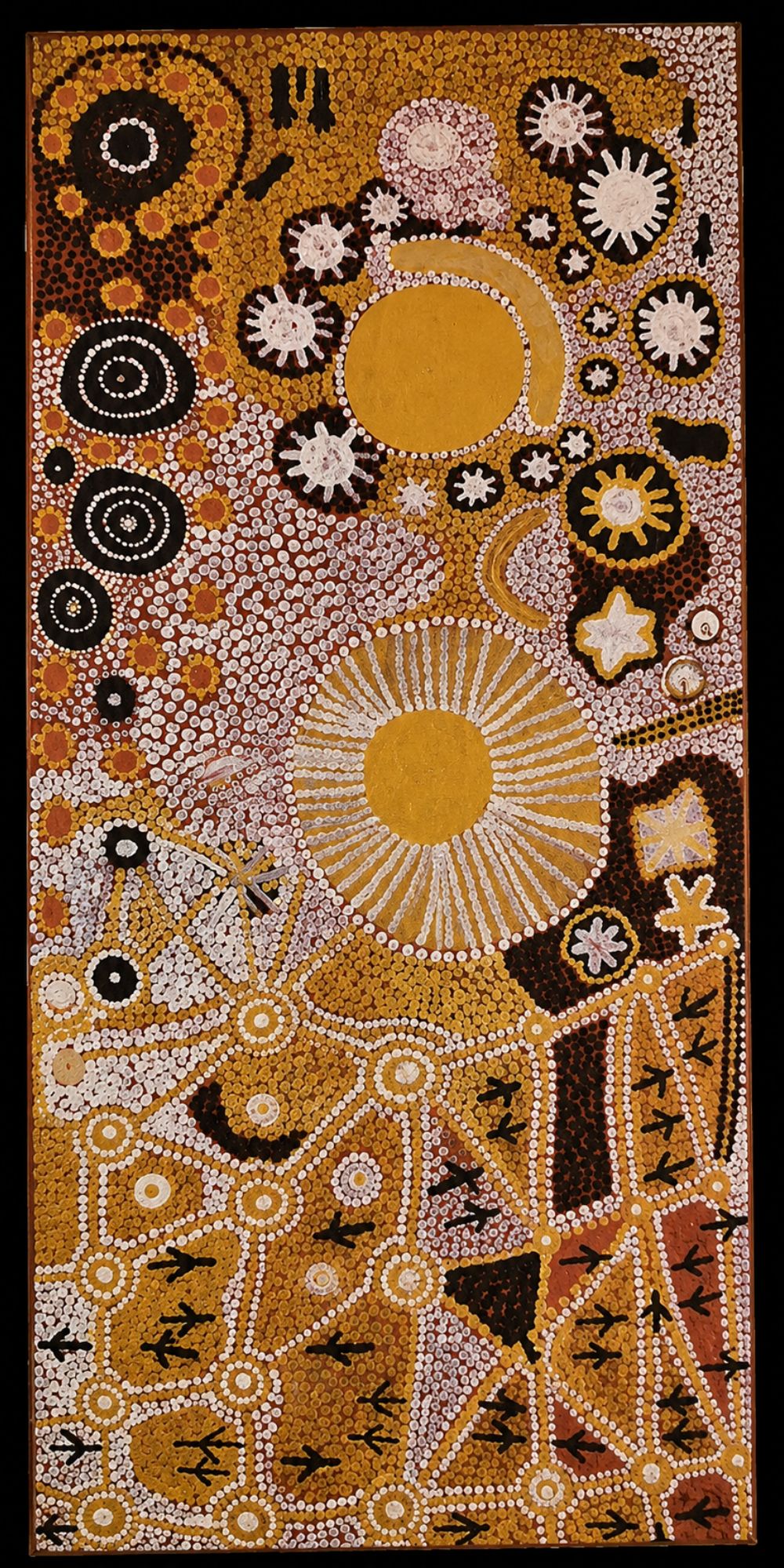
Bush Turkey and Emu Dreaming
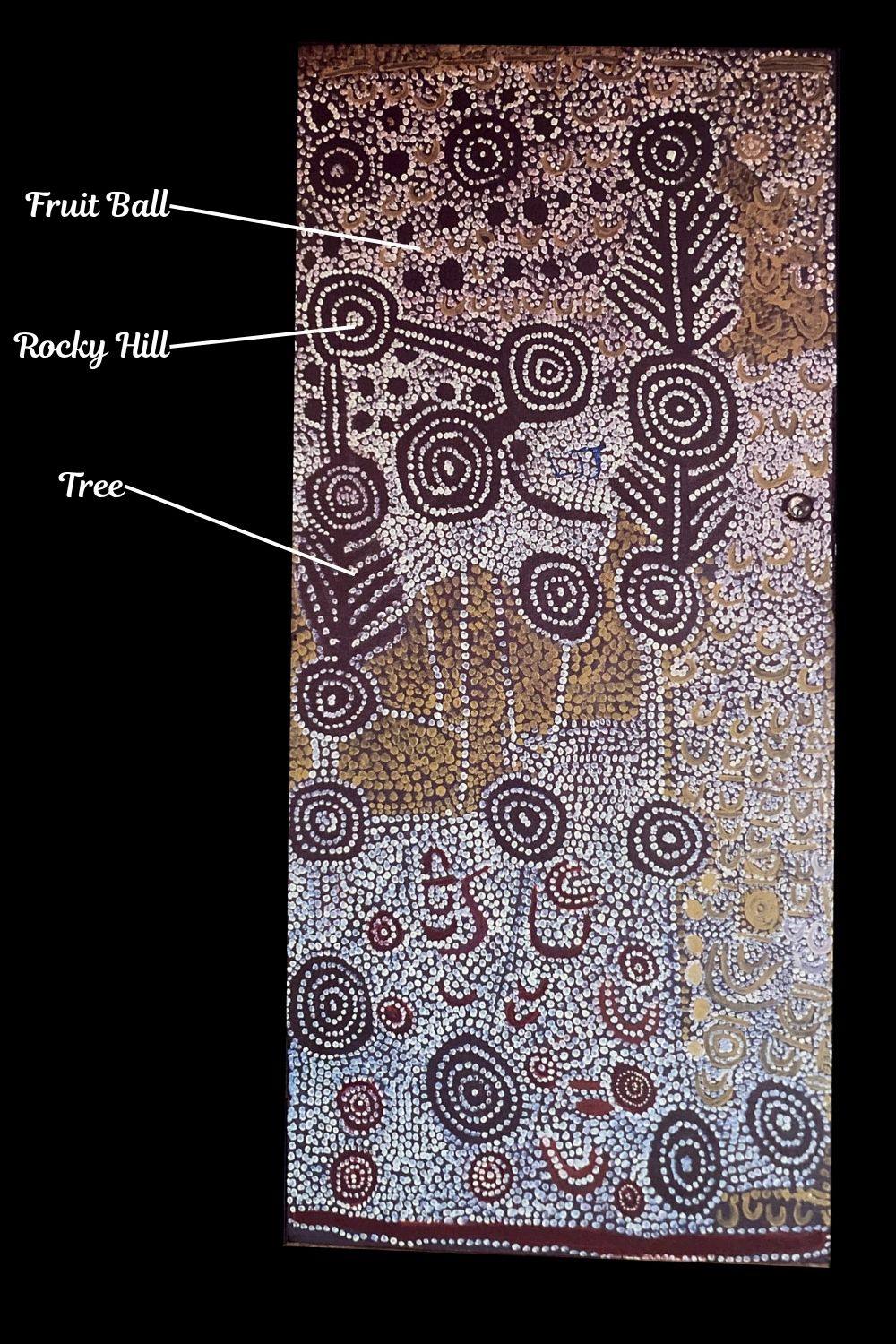
This painting depicts the Dreaming story of Bush Turkey and Emu, an important ancestral narrative associated with the country around Parirri rockhole.
In the Dreamtime, Bush Turkey lived at Parirri, where he gathered large quantities of yakajirri berries. He carefully selected the ripest and sweetest fruit, mashing them together to form large fruit balls. The country around Parirri belonged to the ancestors of today’s Jangala and Jampijinpa people and remains their country today.
To the west, at Walangkamirirri, lived Emu. Both Bush Turkey and Emu gathered fruit around Ngarliyikirlangu, but neither realised at first that the other was collecting berries in the same area. One day Bush Turkey caught sight of Emu in the distance. Fearing that Emu might steal his fruit, he hid his berries by burying them in the ground. He continued gathering more berries, filling wooden dishes and making many large fruit balls from the best fruit he could find.
Soon Emu noticed Bush Turkey gathering berries on his country. Watching from behind a tree, he became increasingly angry. Bush Turkey was taking all the ripest and juiciest berries, leaving only sour fruit behind. Emu believed Bush Turkey was helping himself to fruit that belonged to him.
Filled with anger, Emu travelled east to confront Bush Turkey. The two argued loudly, hurling insults at one another. In his rage, Emu seized Bush Turkey’s fruit balls and smashed them apart with his feet and digging stick. Fragments of fruit scattered across the landscape.
According to the Dreaming, the fruit balls that Emu smashed became the large rounded boulders and rocky hills that can still be seen throughout the country today.
After destroying the fruit balls, Emu departed. Bush Turkey was devastated. Crying over the loss of his carefully gathered fruit, he set off in pursuit of Emu, determined to take revenge. When he finally caught up with him, a fierce fight broke out. During the struggle Emu threw dirt into Bush Turkey’s eyes, blinding him. Unable to see, Bush Turkey flew north across the sky, dropping berries, wooden dishes and a shield as he travelled.
These ancestral actions transformed the landscape. The smashed fruit balls became boulders and rocky hills, while the objects left behind by Bush Turkey created features of the country that remain visible today.
This is a true Dreaming story handed down through generations by Aboriginal elders. It explains the origins of important landmarks and preserves the ancestral knowledge and responsibilities associated with this country.
Told by Darby Jampijinpa