
Barramundi Dreaming: the Laindjung Dream time story
Yirritja Moiety
Eastern Arnhemland
At the heart of this Arnhem Land Dream time story lies a moment of transformation: a barramundi rises from the water and takes human form as Laindjung (also called Laintjung or Lany’tjung), an ancestral lawgiver. In Yolŋu cosmology, water is not simply a physical resource but a generative realm of spirit and origin. Laindjung’s emergence marks the passage of knowledge from this unseen domain into the human world.
What he brings is foundational. Song cycles, ceremonial structures, and totemic relationships are revealed through him—not created, but uncovered as part of an existing order of law. These elements continue to define Yirritja identity, binding people to country, kinship, and responsibility.
The cycle does not end with Laindjung. His death and return through his son, Banaidja, establish a pattern of renewal in which knowledge endures beyond individual form. Variations of the narrative—including the presence of figures such as Barama or the interchangeability of ancestral identities—reflect a living tradition, shaped by place and custodianship rather than fixed in a single version.
Within Aboriginal art, this story is not illustrated but encoded. Bark paintings carry authority through their forms, whether figurative or abstract, asserting connections to land, ceremony, and law. For collectors, such works are not representations of a story, but manifestations of an active and enduring cultural system.
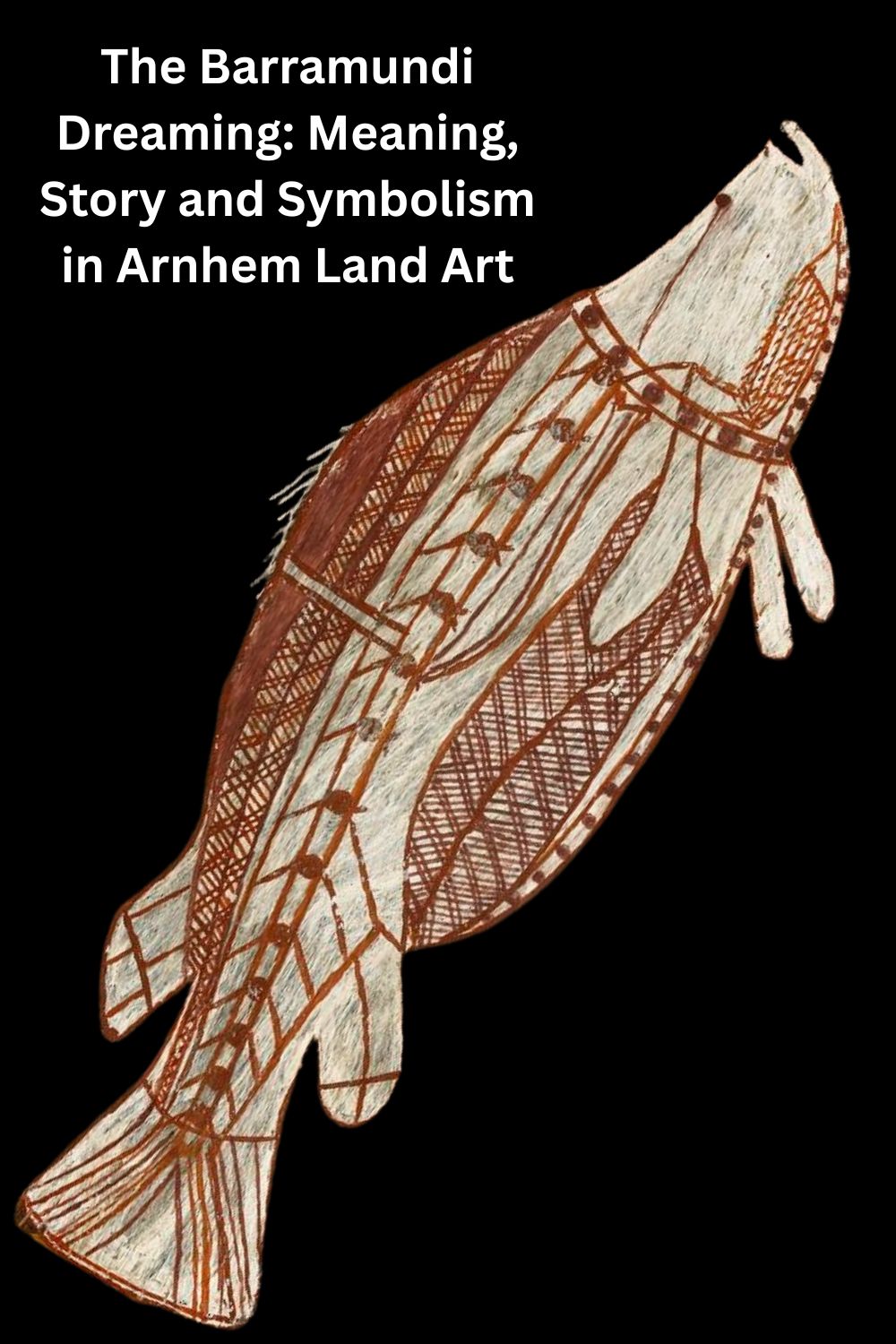
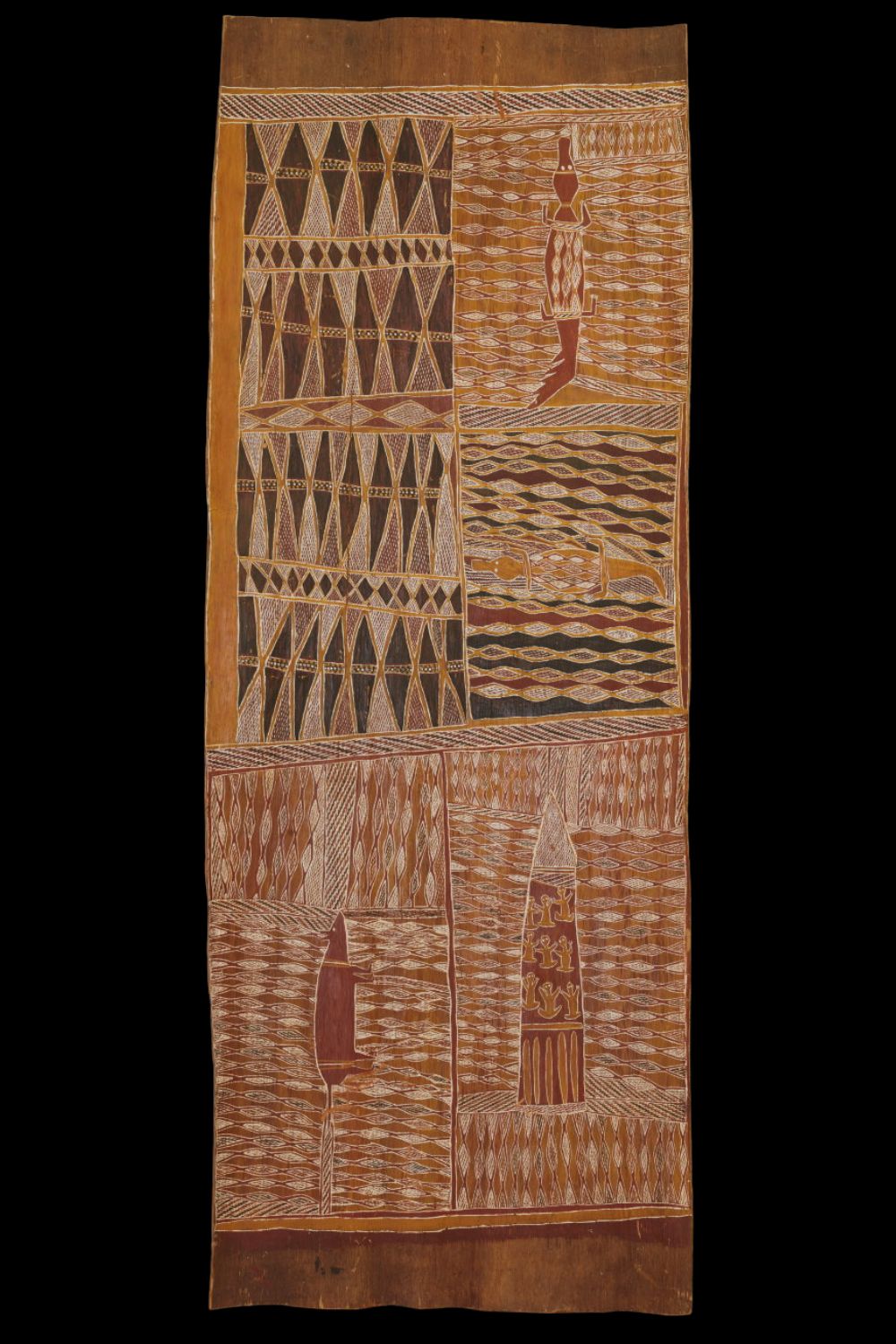
The Dream Time Story of the spirit Barramundi Laindjung
(As told in the tradition of the Dali people)
Long, long ago, in the ancient country of the Dali people who live by the sea, the land lay under a great and punishing drought. The trade winds blew without pause, licking every drop of moisture from the earth. Day after day the Sun Woman strode across the sky, her fiery steps turning the grass brittle and the leaves brown. The billabongs shrank, the creeks dried, and the game moved far away to places where water still lay cool and deep.
Roots and berries—once gathered easily by women and children—grew scarce. The people searched in vain for food, but their bellies remained empty, and the cries of hungry children carried on the wind. The mothers had no milk to give.
Yet one river still ran strong—the Koolatong. Fed by deep, hidden springs high in the hills, its waters flowed cool and constant, widening at last into the bays that met the sea. In its depths swam many fish: great barramundi hiding in the tangled roots at the banks, smaller fish darting and flashing in the shallows. But the Dali people had no skill to catch them. They threw spears into the ripples, but the fish were never where the spear struck. They lunged with bare hands, but the fish were too swift. So the river teemed with life, while the people went hungry.
Far downstream, where the Koolatong widens before emptying into Blue Mud Bay, lay a deep and shaded lagoon known as Gululdji. In those still waters dwelt a powerful spirit. He could take any form he wished, but most often he appeared as a mighty barramundi, silver-scaled and strong. Even from the cool depths, he heard the cries of the children and the low moans of the mothers. These were people of his totem, and his heart grew heavy with grief.
One day, he swam from Gululdji into the Koolatong River, then down to the wide waters of Blue Mud Bay. There, where the great ocean swells rolled towards the shore, he changed his form into that of a tall, broad-shouldered man. His name was Laindjung. In his arms he carried rangga—sacred totems—each holding the spirit of a living being: the tortoise, the kangaroo, the wild bee, the orchid, and the lily. He had come to share these gifts with the Dali people, so that the totem spirits might help them in their need.
That same morning, a man named Galbarimun was fishing in the tide pools along the shore. His long spear was fixed to a spear-thrower decorated with a tassel of human hair—the hair of his own father, given to him by his father’s spirit after death. The magic of this hair made the spear fly straight and true. But this day, even Galbarimun’s skill had brought him little—only one small, bony groper.
As he searched the rocks for another chance, Galbarimun saw a figure rise from the surf. The stranger’s head, shoulders, and thighs broke through the foam. White feathers bound his arms and decorated his face, and sea foam clung to his hair and beard. He walked with the easy stride of one who carried great power.
“This is magic,” Galbarimun thought. He held his spear ready, but as the man approached, he saw the rangga cradled in his arms and knew he was a spirit man.
“Your face is welcome,” Galbarimun said in formal greeting.
“I am Laindjung. I come in friendship,” the stranger replied, his voice warm and steady.
Galbarimun invited him to share the small groper he had caught. They walked to Galbarimun’s camp, where his wife Neiri tended the fire. Their young son, Nguni, arrived just then, proudly showing honey he had found. He pointed to the salt patterns drying on Laindjung’s chest.
“It looks like the honeycomb,” Nguni said.
Laindjung smiled. “Yes, and from now on, this honeycomb pattern will be sacred. It shall be your totem, and through it, the turtle and fish will multiply.”
From that day, Laindjung sang the power songs of the rangga so the fish, tortoise, and kangaroo would increase. But some men grew uneasy—especially Muru, a strong man with three wives. “The women must not see the sacred rangga or hear the songs,” he said. “This is taboo. Send him away.”
Galbarimun refused. “He is my brother in totem. He will bring us food.”
But Muru gathered men to his side. One night they came to Galbarimun’s fire, shaking their spears. Galbarimun handed Laindjung his prized spear-thrower so that the others would hesitate. They did, and left without fighting.
The next day Laindjung invited Galbarimun and Neiri to Gululdji. There he showed them how to make a fish trap of stakes and paperbark, and soon they caught more fish than they could carry. Laindjung gave them one of the stakes—the golertji—as a sacred totem, along with a song to teach their children.
Food became plentiful. The children grew plump, the people laughed again, and Laindjung taught them ceremonies, dances, and ways to live in peace. But Muru’s jealousy burned hotter.
One day, as Laindjung walked alone to Gululdji, Muru and his men lay in wait. From the branches above, Muru thrust a spear deep into Laindjung’s back. More spears followed, until he staggered to the pool’s edge and, with a final cry, leapt into the water.
But Laindjung did not die. The tortoise, frog, and barramundi tended him, and in time his strength returned. He rose again in the form of a man, calling himself Banaidja, son of Laindjung, and returned to the people with more gifts—ways to prepare bitter yams, build bark shelters, and gather food.
The people welcomed Banaidja, but Muru’s hatred deepened. One day, when the air was soft with the monsoon wind, Banaidja walked again to Gululdji. Muru and his men struck swiftly, driving spear after spear into him until he fell dead. They hid his body deep in the mangroves, but Banaidja’s spirit returned to the sacred pool, taking once more the form of a barramundi.
Where Banaidja fell, a paperbark tree took root, and it grows there to this day. The people remember him when they take bark for their shelters, seeing the honeycomb pattern inside. In ceremony, they beat bundles of bark to echo the splash of the barramundi, honoring Laindjung and Banaidja, whose spirits still live in Gululdji, guarding the Dali people and the gifts they gave.
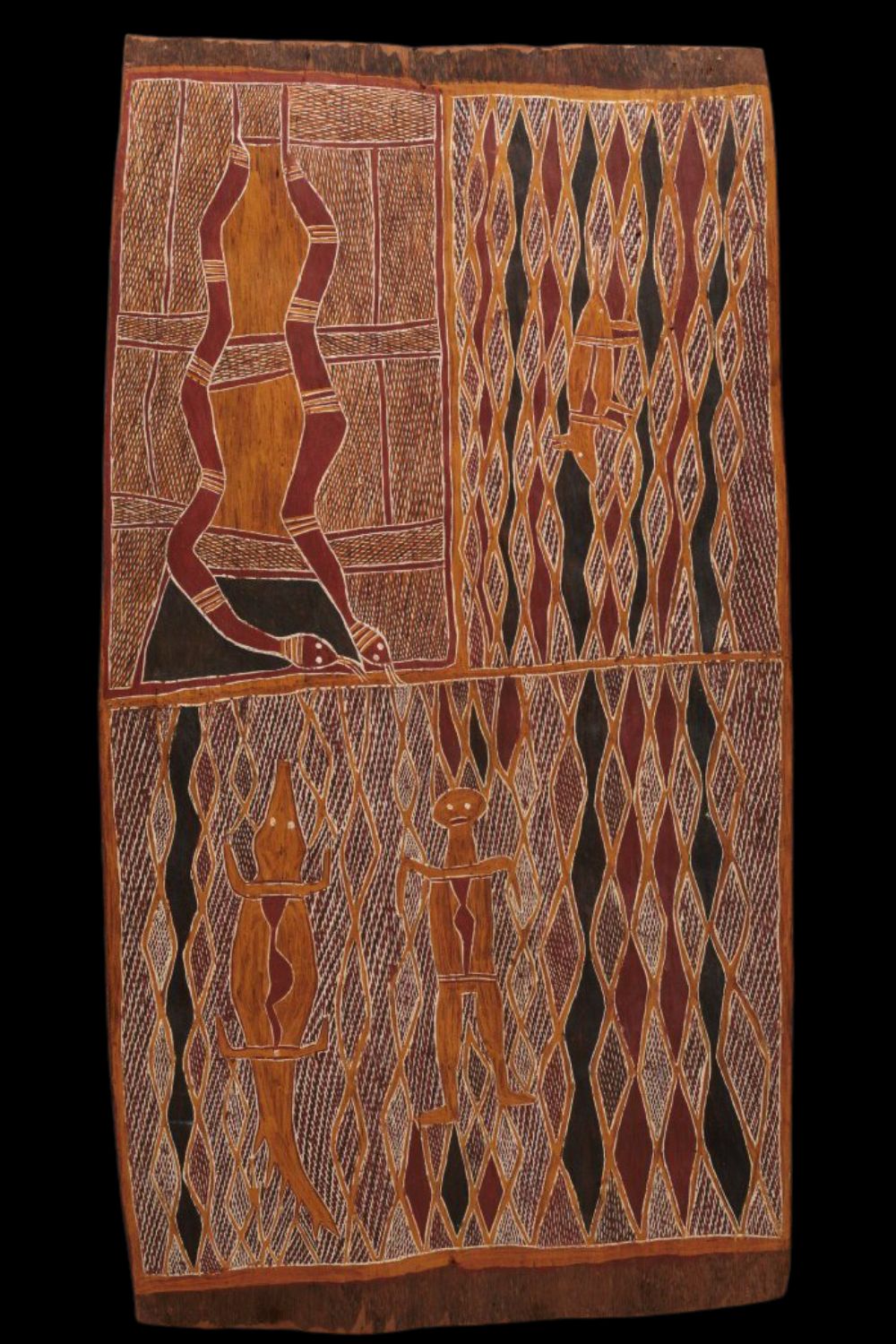
All images featured in this article are presented strictly for educational and informational purposes.
This website may include copyrighted material for which specific authorization has not been obtained from the copyright owner.
All such images are presumed to be the intellectual property of the respective artist or their estate, and are used in accordance with principles of fair dealing or fair use under applicable copyright law.
Painters of the Landjung Barramundi dreamtime Story
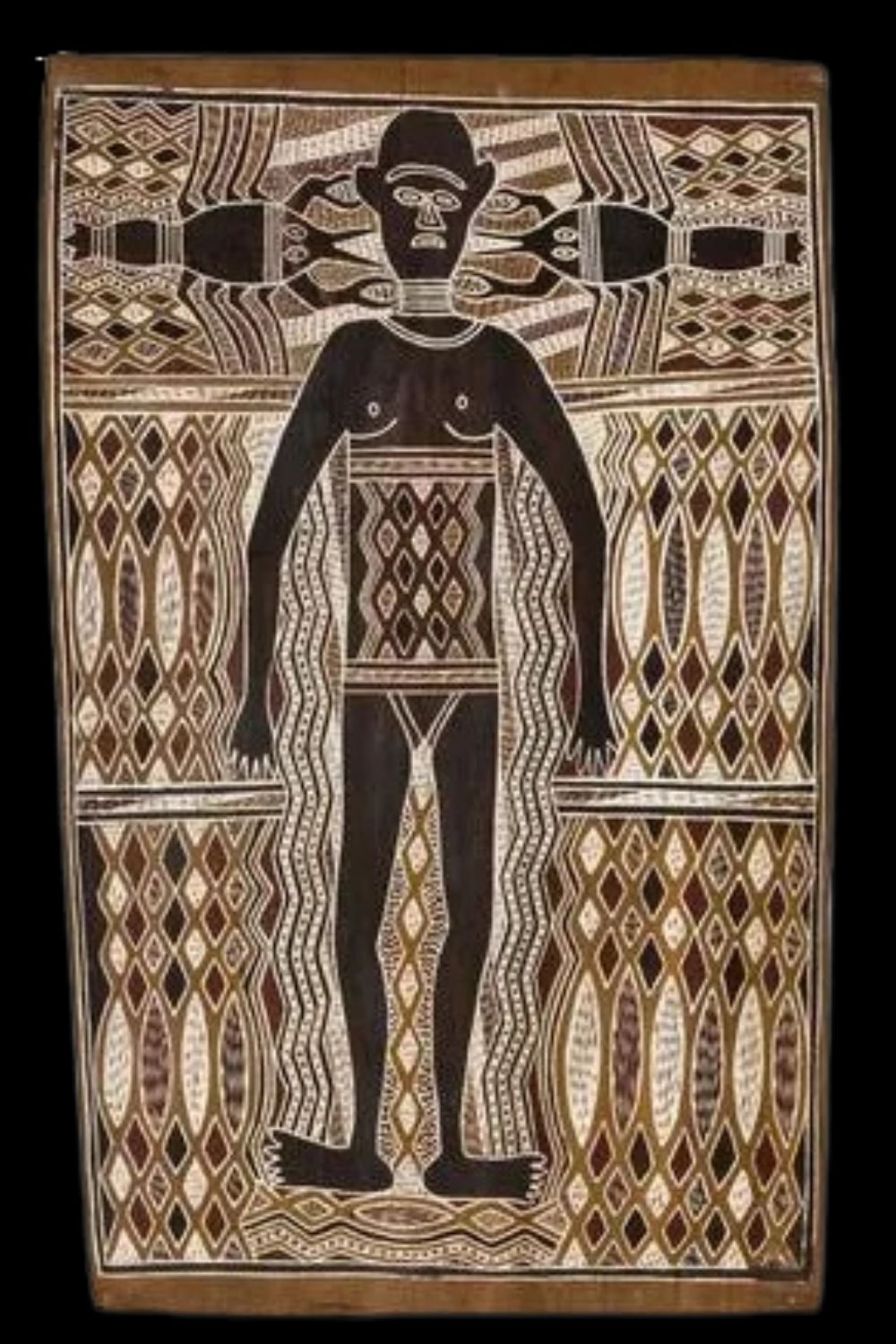
There is a strong connection between Laindjung and Baru Dream time stories. Both these dreamtime stories explain the use of diamond shaped rarrk in not only bark paintings but painted on the bodies of initiates.
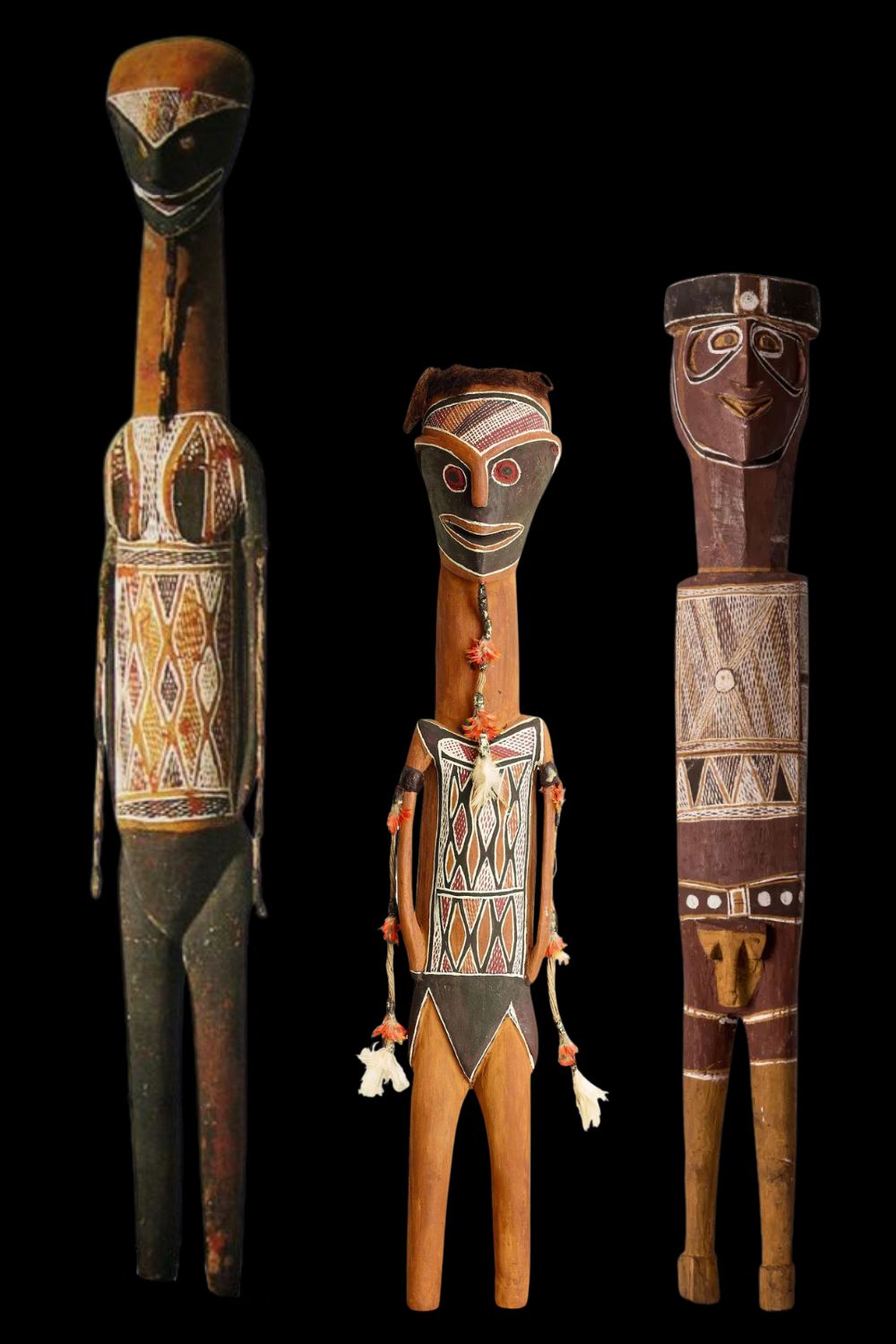
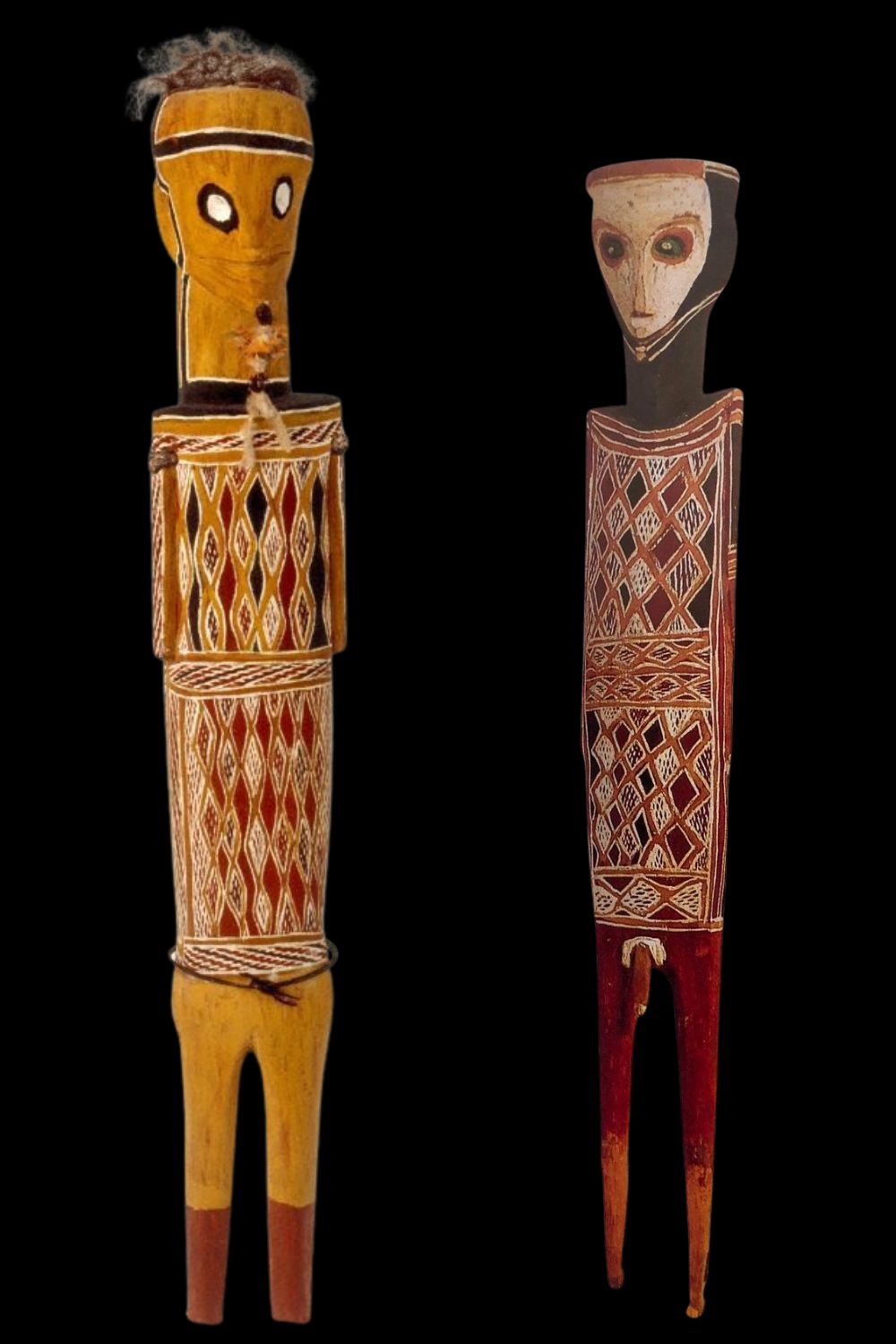
Munggurrawuy Yunupingu
Sculptures by Munggurrawuy Yunupingu depicting Laindjung with designs painted on the bodies
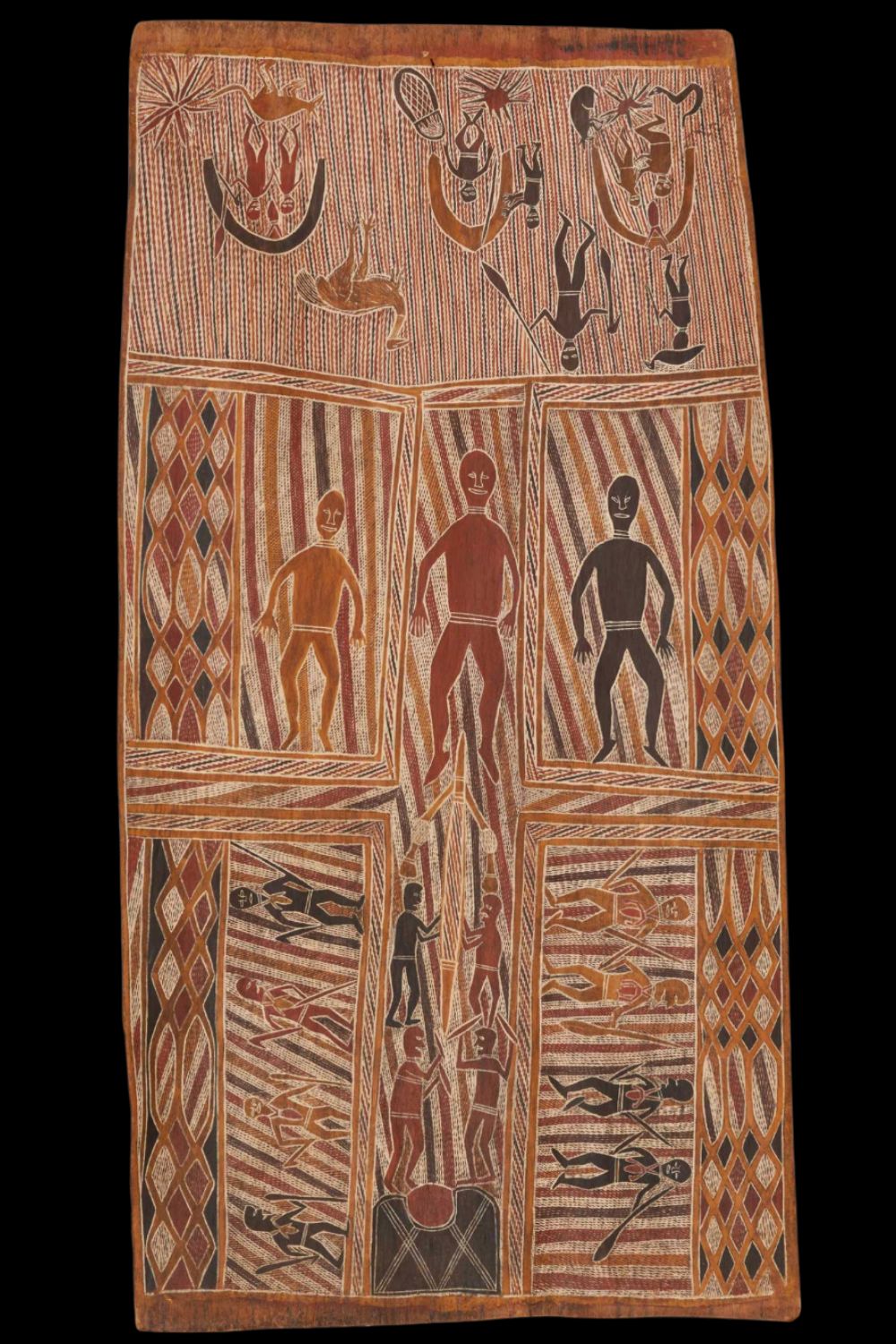
Birrikidji Gumana
Aboriginal bark painting by Birrikidji Gumana depicting Burama the reincarnation of Laindjung
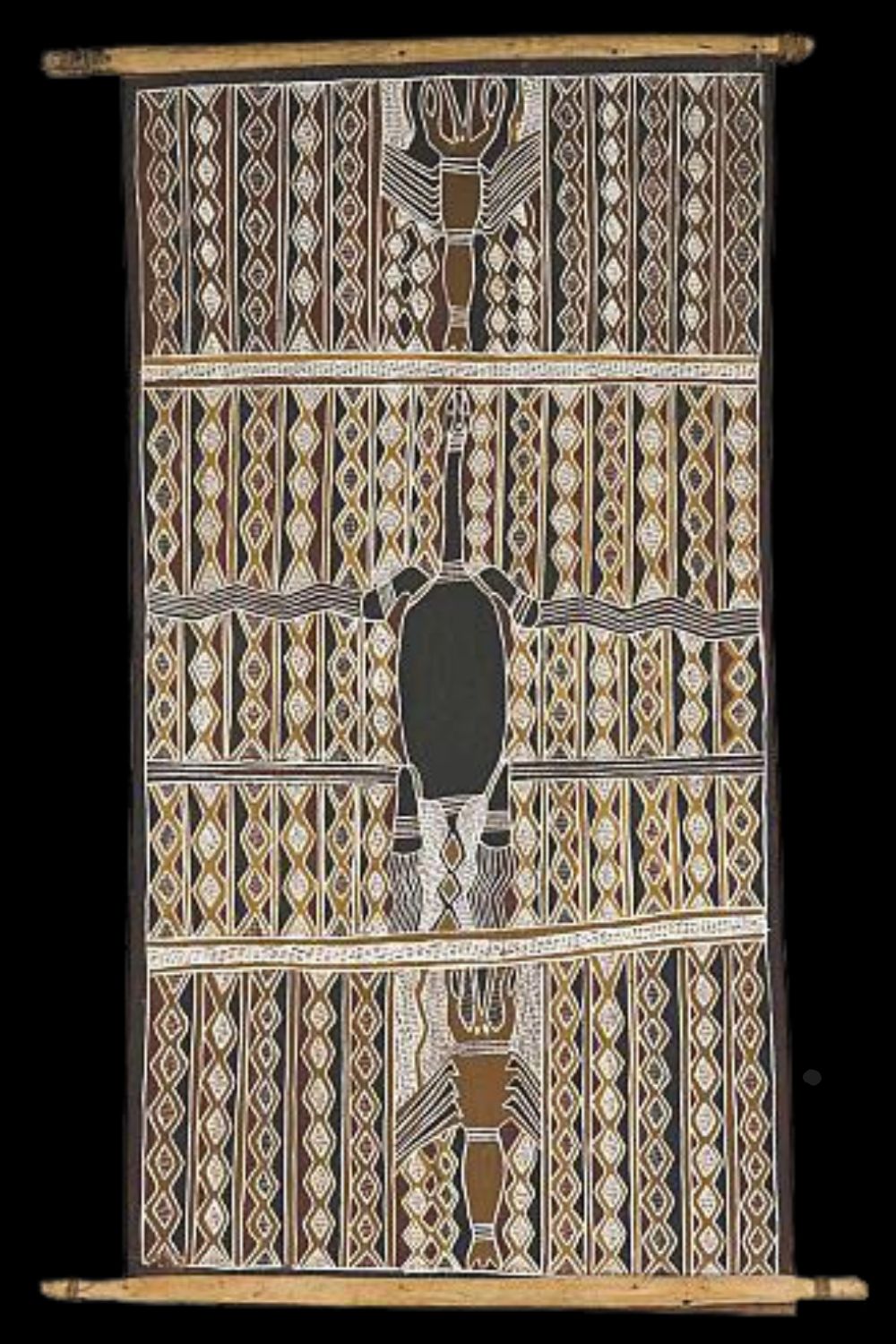
Gawarrin Gumana
Aboriginal bark painting by Gawarrin Gumana depicting the freshwater animals which repaired Laintjuns body allowing him to become Burama
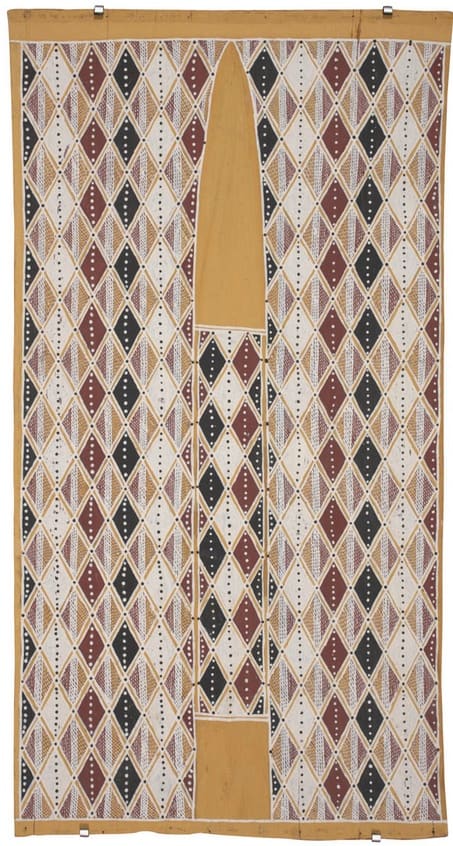
Jimmy Wululu
Aboriginal bark painting by Jimmy Wululu depicting the diamond shaped rarrk which is associated with Laindjung and Baru