Aboriginal Rock Art
Aboriginal rock art is imagery created by Aboriginal people on natural rock surfaces across Australia. It includes paintings and drawings made with pigments such as ochre and charcoal, hand and object stencils and prints, and engravings or petroglyphs made by marking the rock surface.
It is one of the world’s longest continuing artistic traditions. Surviving Aboriginal rock art has been securely dated to tens of thousands of years ago, but there is no single date for when it began. Different sites and images belong to different periods, and dating individual paintings and engravings can be difficult.
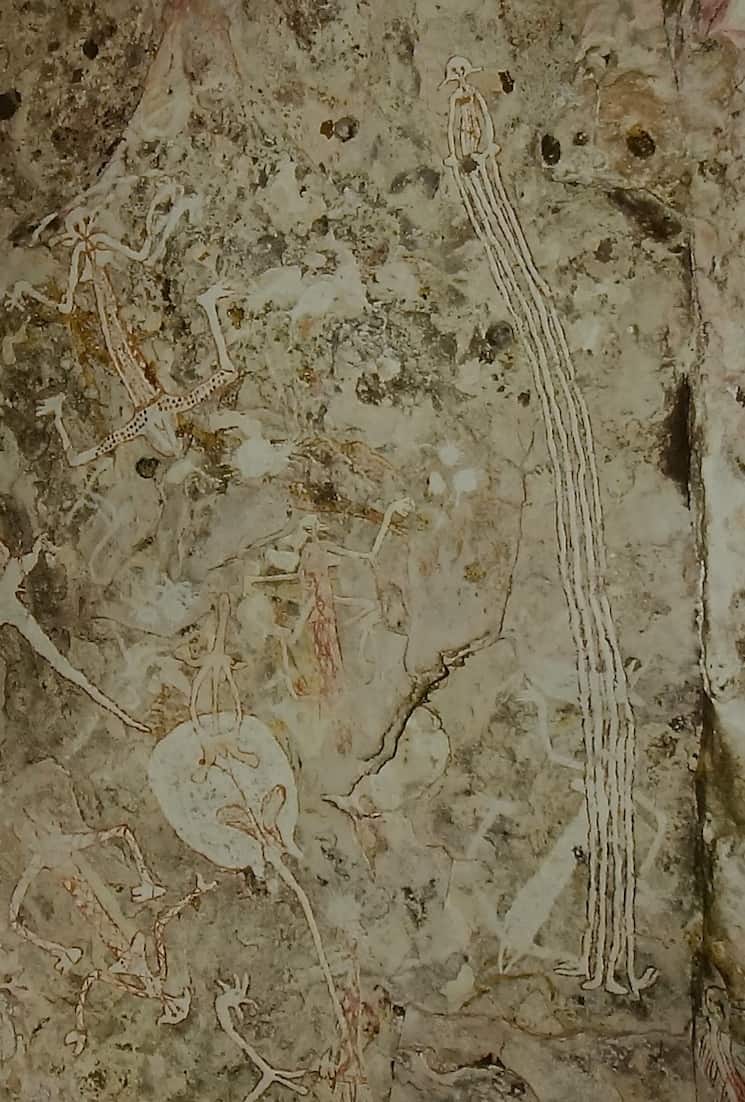
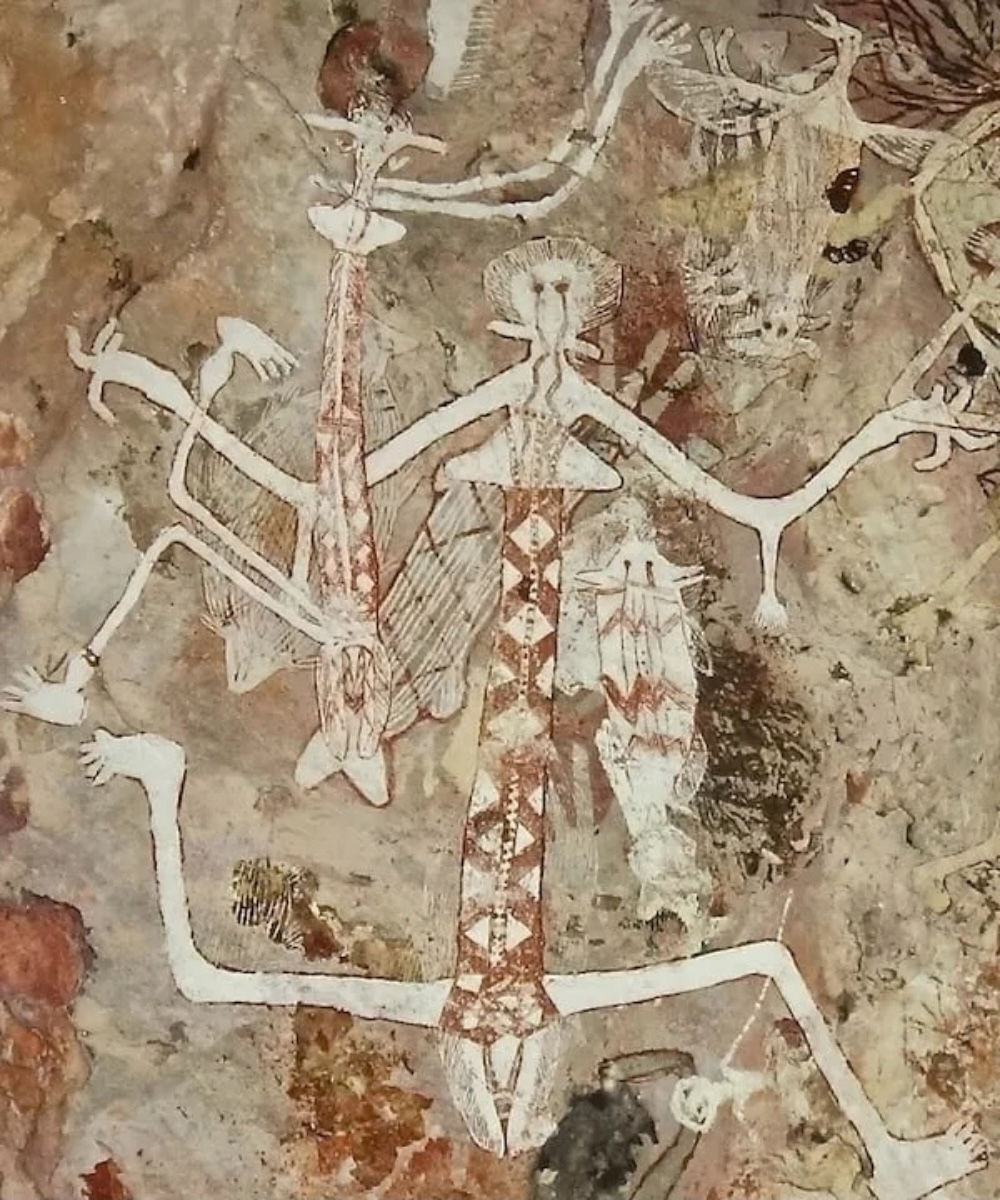
There is no single Aboriginal rock art style. Different peoples developed their own traditions, techniques and imagery, depicting human and ancestral figures, spirit beings, animals, tracks, hands, objects, geometric designs and scenes of ceremony and everyday life. Some shelters contain successive layers of imagery created over long periods.
Aboriginal rock art was not simply decoration. In some traditions, paintings and engravings formed part of ceremonial life and expressed relationships between people, Country and ancestral beings. Ethnographic accounts record paintings being renewed during ceremonies and painted designs being used to teach initiates ancestral knowledge.
Meaning varied between peoples, places and periods, and knowledge associated with some images and sacred places was restricted. Many rock art places remain culturally and spiritually significant to Aboriginal communities today.
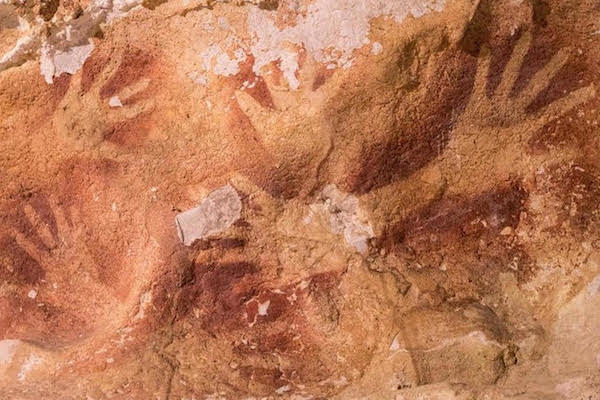
Hand stencils from Sulawesi Indonesia.
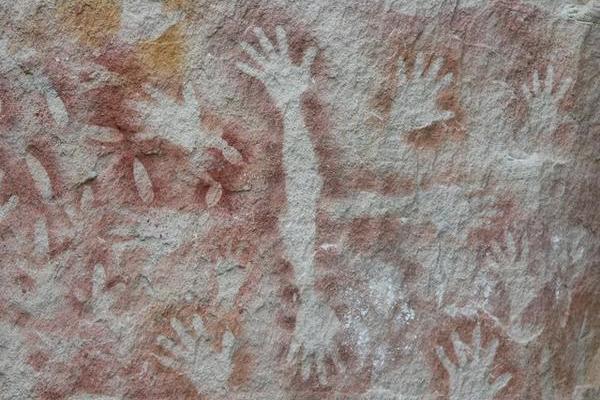
Hand stencils from Kimberley Australia
How Old Is Aboriginal Rock Art?
Aboriginal rock art may extend back to the earliest Aboriginal occupation of Australia, around 65,000 years ago, but no surviving Australian rock image has yet been securely dated to that period. At Madjedbebe, a rockshelter on Mirarr Country in western Arnhem Land occupied about 65,000 years ago, archaeologists found ground ochre, pigments and grinding stones used to process red pigment. We cannot know whether these pigments were used for rock painting, body painting or other purposes, but people elsewhere in the region were certainly making rock art at this time: a hand stencil in Liang Metanduno cave on Sulawesi has now been dated to at least 67,800 years ago. Much of Australia’s earliest evidence may also be inaccessible, because sea levels were far lower during the first occupation of Sahul as ancient coastlines are now submerged. The oldest confirmed Australian pictograph is a charcoal design from Nawarla Gabarnmang, about 28,000 years old. The oldest Aboriginal rock painting with secure dating (≈17,300 year old) provides another important part of the evidence for the antiquity of Australia’s rock-art traditions.
In the author’s opinion, Aboriginal rock art is likely to be at least 65,000 years old. The 67,800-year-old hand stencil from Sulawesi shows that the tradition of making hand stencils was already present in Wallacea before the earliest known occupation of Australia. When the first Aboriginal people reached Australia, they are therefore likely to have brought this artistic tradition with them; the ochre, ground pigments and pigment-processing tools from the earliest levels at Madjedbebe are consistent with that interpretation.
Types of Aboriginal Rock Art
Aboriginal rock art was created using several different techniques. Archaeologists broadly distinguish between pictographs, where pigment or another material was added to the rock, and petroglyphs, where the rock surface itself was cut, pecked, scratched or abraded.
Rock Paintings
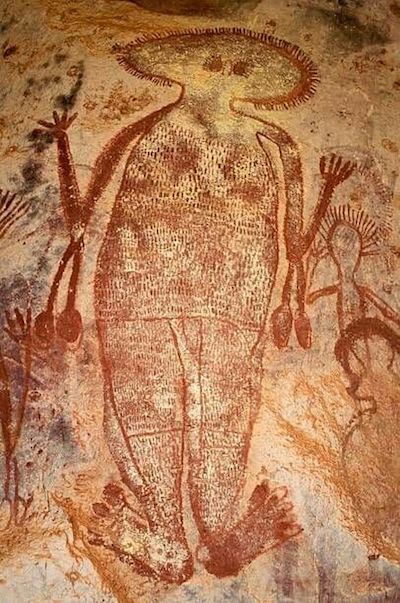
Rock paintings were made by applying pigment to the rock surface, using ochres and other mineral pigments to produce reds, yellows, whites and other colours.
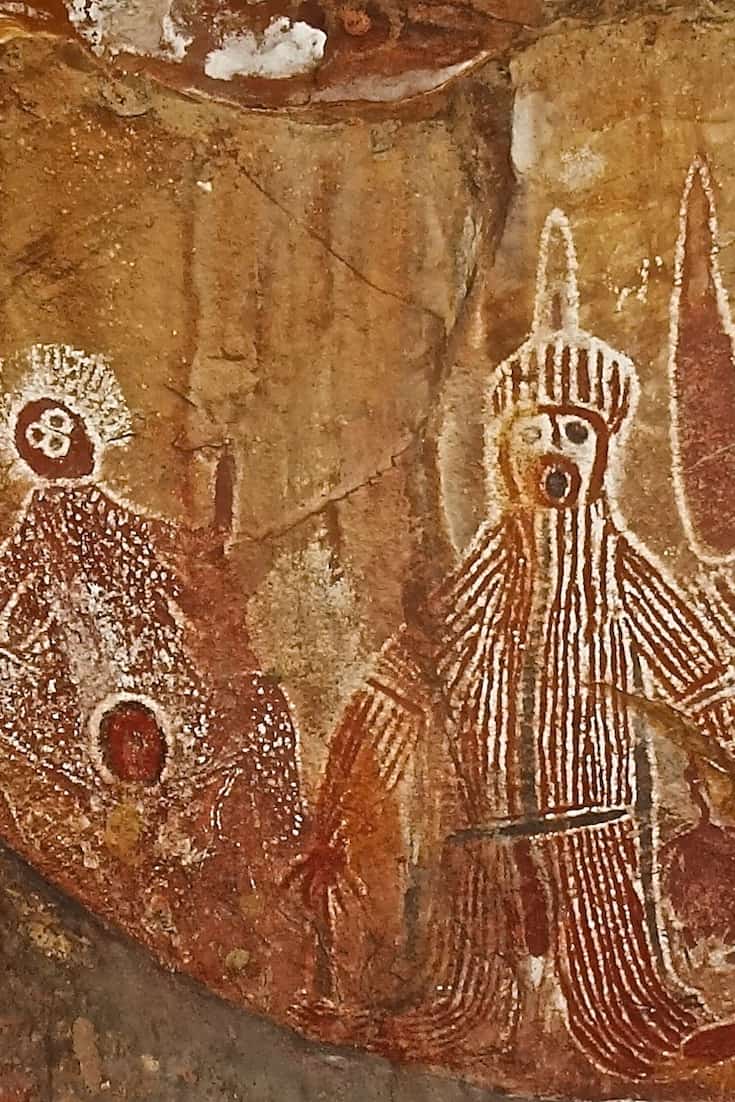
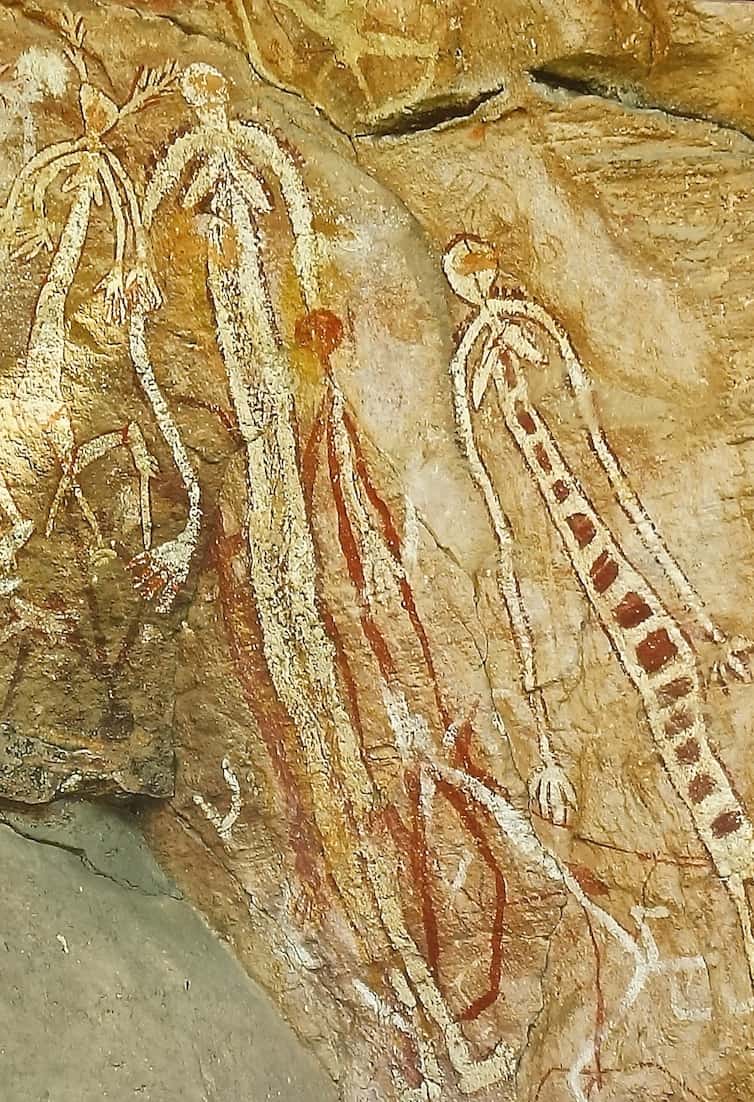
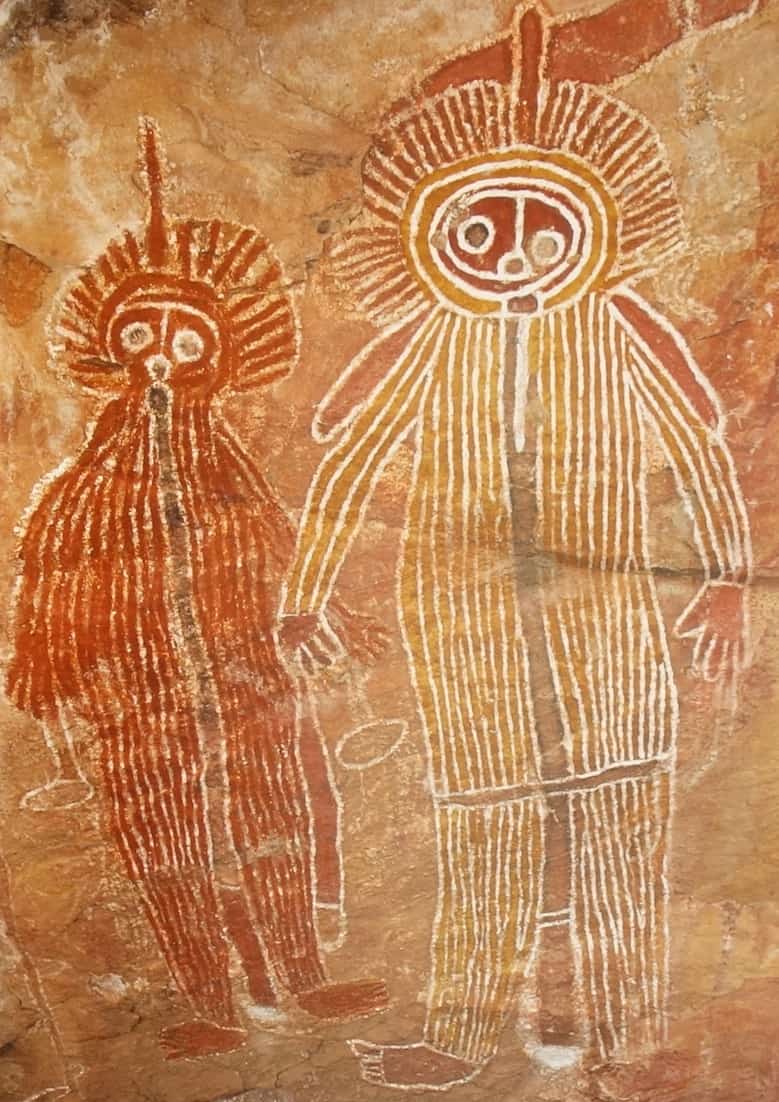
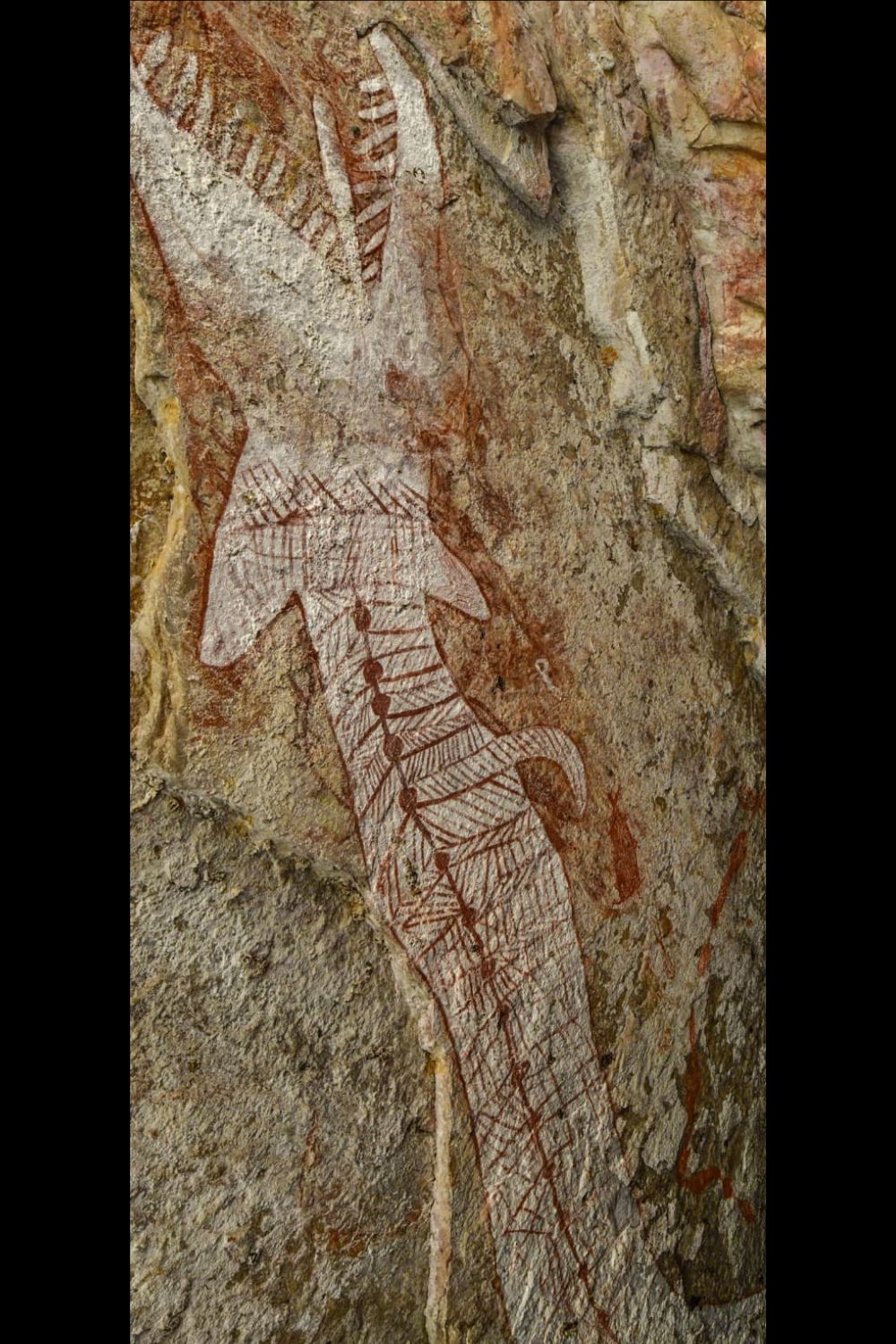
Painting traditions vary considerably across Australia. Arnhem Land rock art includes Dynamic Figures, X-ray imagery and later contact-period works. Kimberley rock art includes the distinctive Gwion and Wandjina traditions, while Cape York preserves the striking figures associated with Quinkan rock art.
Rock Drawings
Drawings were made by applying dry material such as charcoal or ochre directly to the rock surface. Charcoal is particularly important archaeologically because it can sometimes provide material suitable for radiocarbon dating.
The approximately 28,000-year-old pictograph recovered from Nawarla Gabarnmang was a charcoal drawing rather than an ochre painting.
Hand and Object Stencils
Stencils were produced by holding a hand, arm or object against the rock and spraying pigment around it, leaving an unpainted silhouette surrounded by colour.
Hand stencils are found across Australia, with important examples surviving in the Kimberley, Arnhem Land, Central Australia and Cape York.
Hand and Object Prints
Prints reverse the stencil process. Pigment was applied directly to a hand or object and then pressed against the rock.
A stencil leaves an unpainted hand surrounded by pigment, while a print leaves the pigmented hand itself on the rock. Positive hand prints occur in Kimberley rock art, including unusual examples in which designs were drawn through pigment on the hand before it was pressed against the rock.
Rock Engravings and Petroglyphs
Rock engravings, or petroglyphs, were created by removing or altering the rock surface through techniques including pecking, pounding, incising and abrasion.
They range from tracks and geometric designs to representations of people and animals. Murujuga rock art in Western Australia contains an extraordinary concentration of petroglyphs created over a very long period.
Cupules, Grooves and Other Rock Markings
Cupules are small depressions repeatedly pounded into rock, while grooves and other markings were produced through incising or abrasion.
Australian rock art also includes finger flutings, made by drawing fingers through soft mineral surfaces, and beeswax figures, formed by attaching shaped beeswax directly to rock walls and ceilings.
Together, these techniques show that Aboriginal rock art encompasses much more than painting: it includes drawings, stencils, prints, engravings and other ways of marking and transforming rock surfaces.
The meaning of Aboriginal Rock Art
There is no single meaning of Aboriginal rock art. Its significance varies between Aboriginal peoples, places, periods and individual images. In some traditions, rock paintings and engravings are connected with ancestral beings, ceremony, cultural law and relationships to Country; other images record animals, people, objects and events.
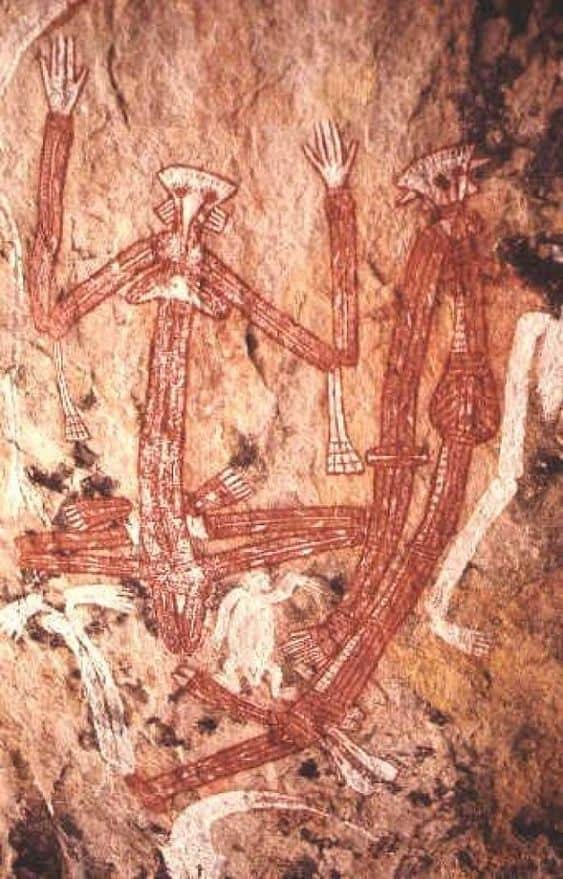
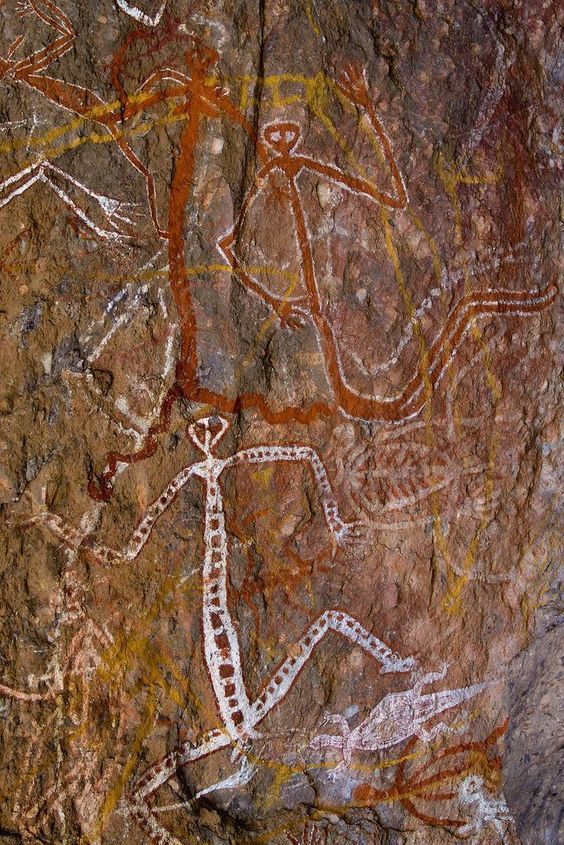
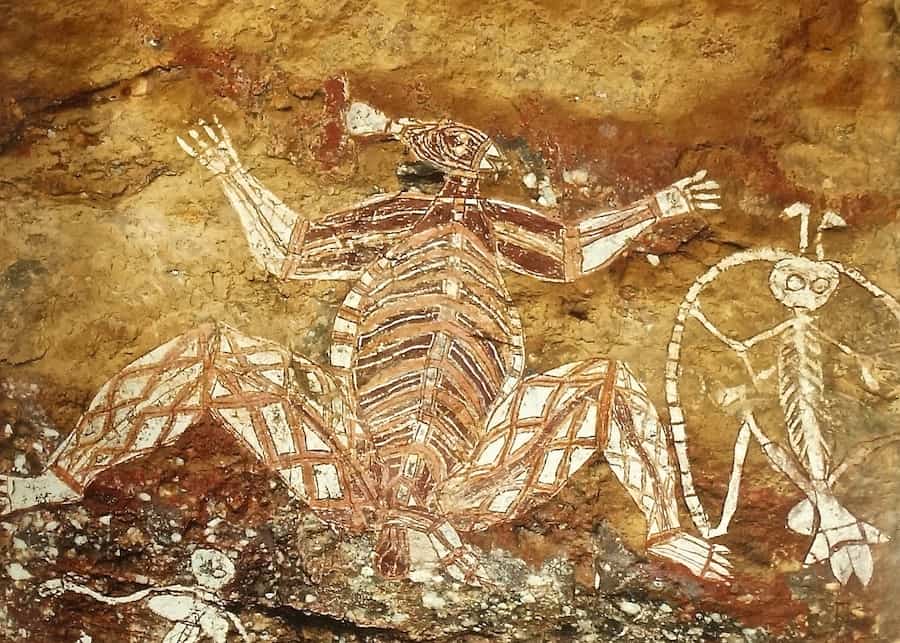
Rock art can form part of a much larger cultural landscape. Rock shelters, escarpments, waterholes and other places may be associated with ancestral narratives, songlines and ceremonial knowledge. In Arnhem Land, for example, paintings of Mimih spirits, Namarrkon and the Rainbow Serpent belong to particular cultural traditions and places rather than representing a universal system of Aboriginal symbolism.
Some rock paintings also played an active role in ceremony and teaching. Ethnographic accounts record paintings being renewed during ceremonies and painted designs being used in the instruction of initiates. Knowledge associated with particular images could be restricted according to age, gender, initiation or cultural authority, meaning that not every painting was intended to communicate the same information to every viewer.
The meanings of some ancient images are no longer known, while knowledge associated with others continues to be held by Aboriginal custodians. This distinction is important: archaeologists can study the age, technique and sequence of a painting without necessarily knowing what it meant to the people who created it.
Aboriginal rock art should therefore not be treated simply as prehistoric illustration or decoration. In many places it forms part of continuing relationships between people, ancestral beings, cultural knowledge and Country.
Major Aboriginal Rock Art Traditions
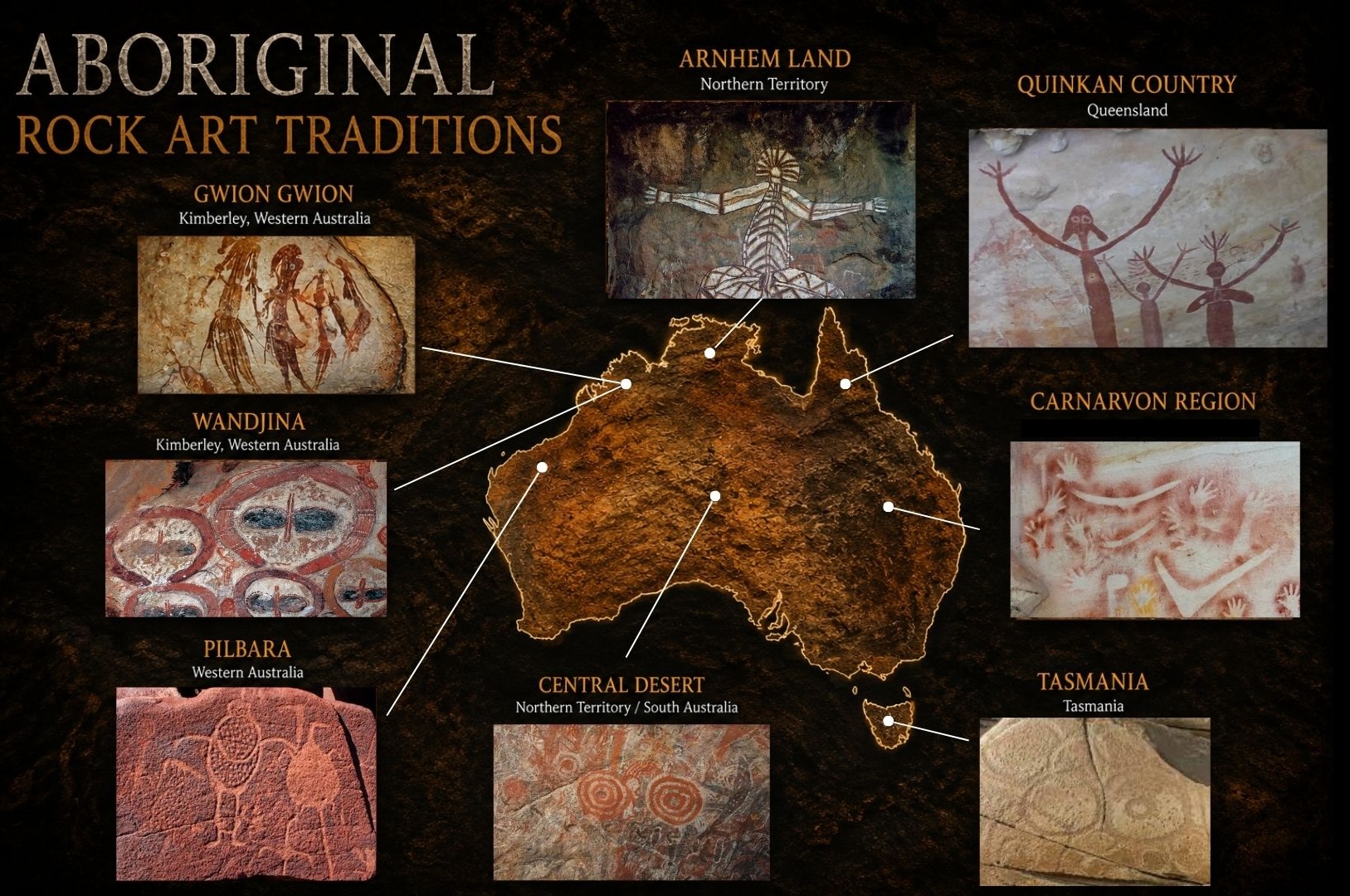
Researcher Mike Donaldson recognises eighteen major Aboriginal rock art provinces across Australia. These regions range from painted cave galleries to vast petroglyph landscapes and are distributed across every part of the continent, reflecting the immense diversity of Aboriginal artistic and ceremonial traditions. This article covers the most recognised styles.
Kimberley Rock Art
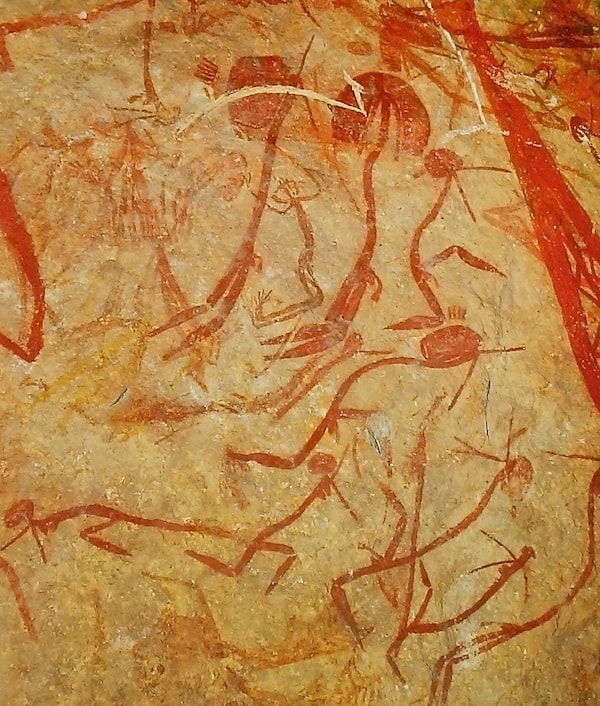
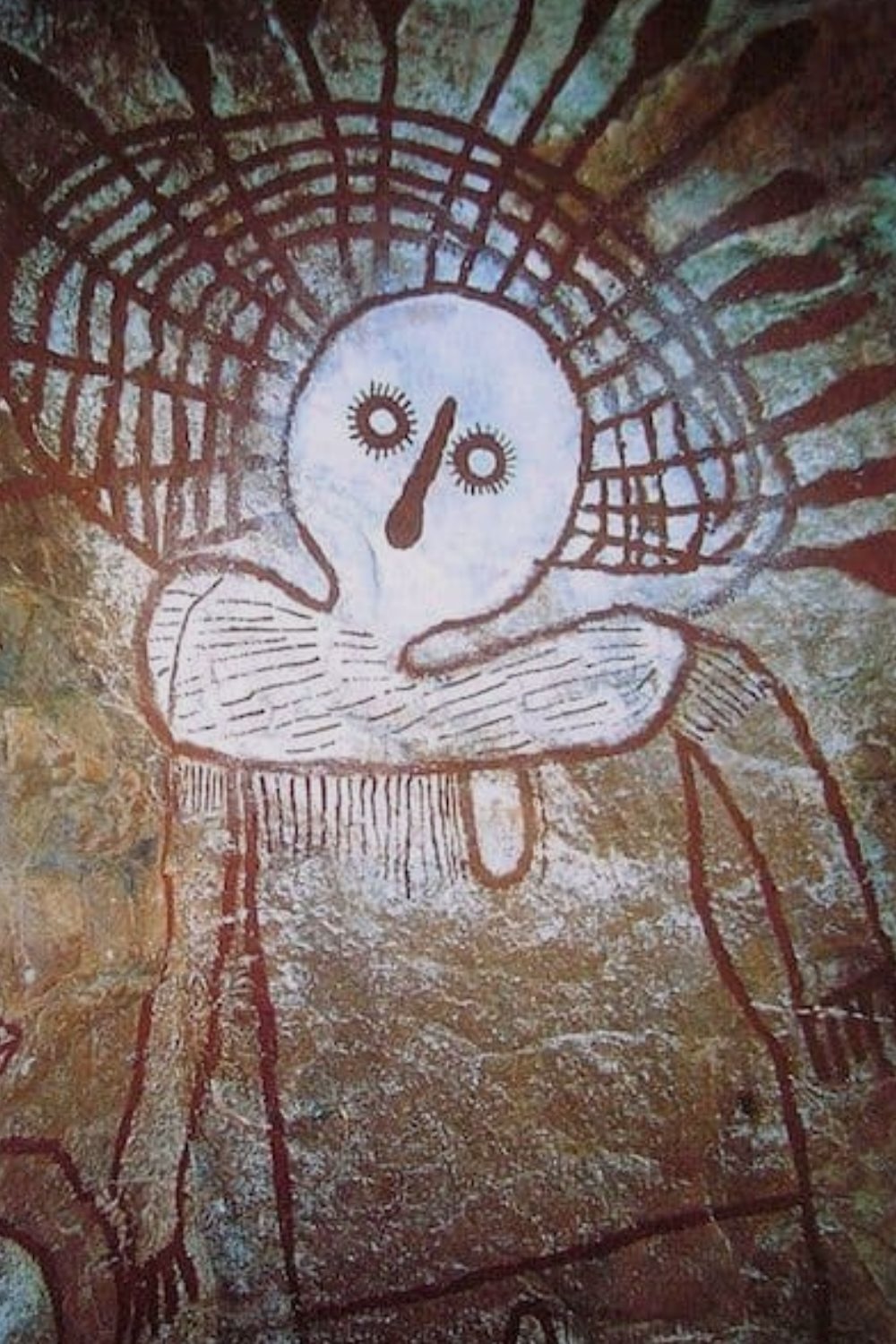
Kimberley Rock Art preserves one of Australia’s longest and most distinctive rock art sequences. Across the sandstone shelters of the north-west Kimberley are successive painting traditions ranging from early animal imagery and human figures to the celebrated Gwion Gwion and Wandjina traditions.
Wandjina paintings are associated particularly with Worrorra, Ngarinyin and Wunambal peoples and remain part of living cultural traditions connected with Country, ancestral beings and rainmaking.
Separate articles explore Kimberley Rock Art and Gwion Gwion Art and Wandjina Art in greater detail.
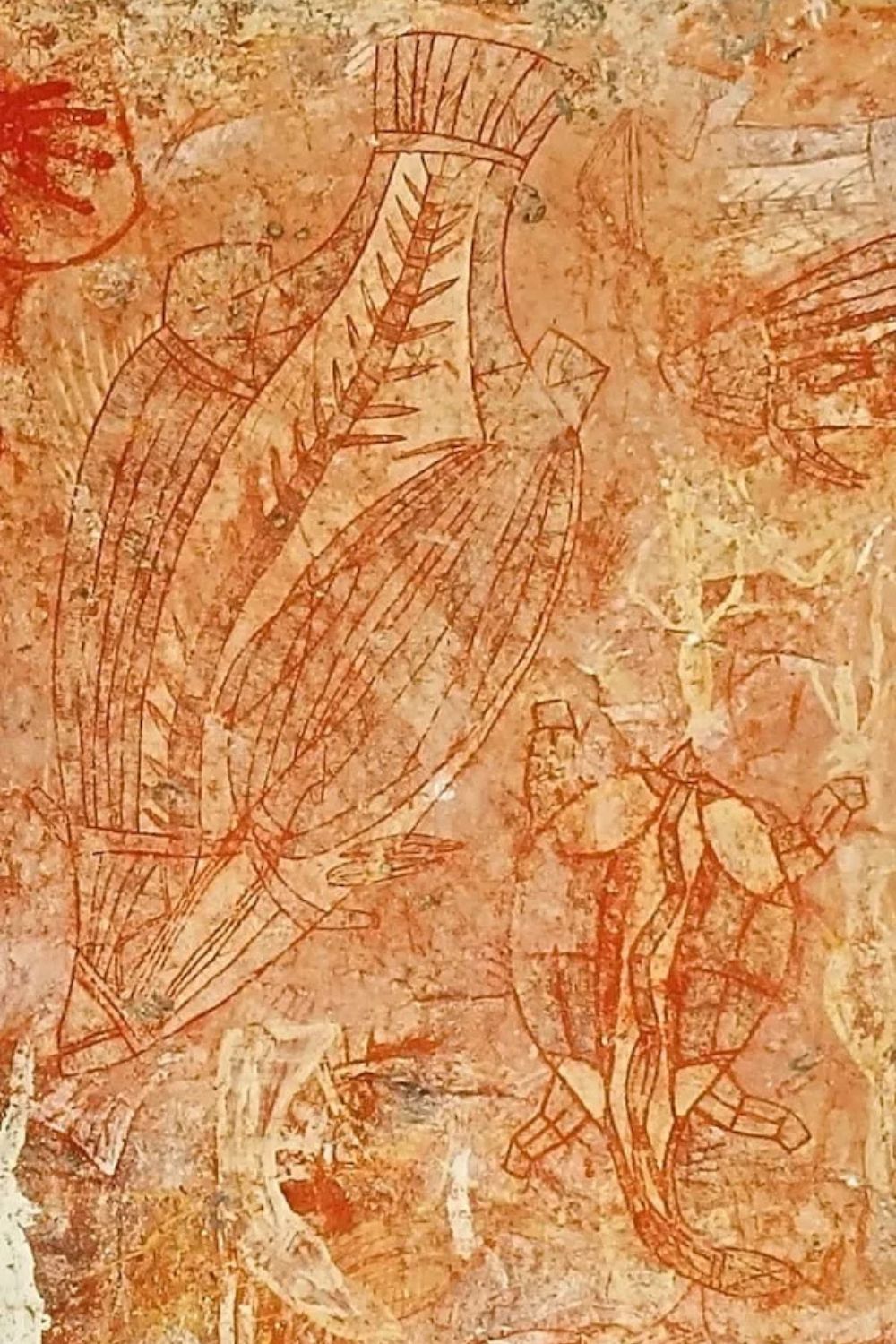
Arnhem Land Rock Art
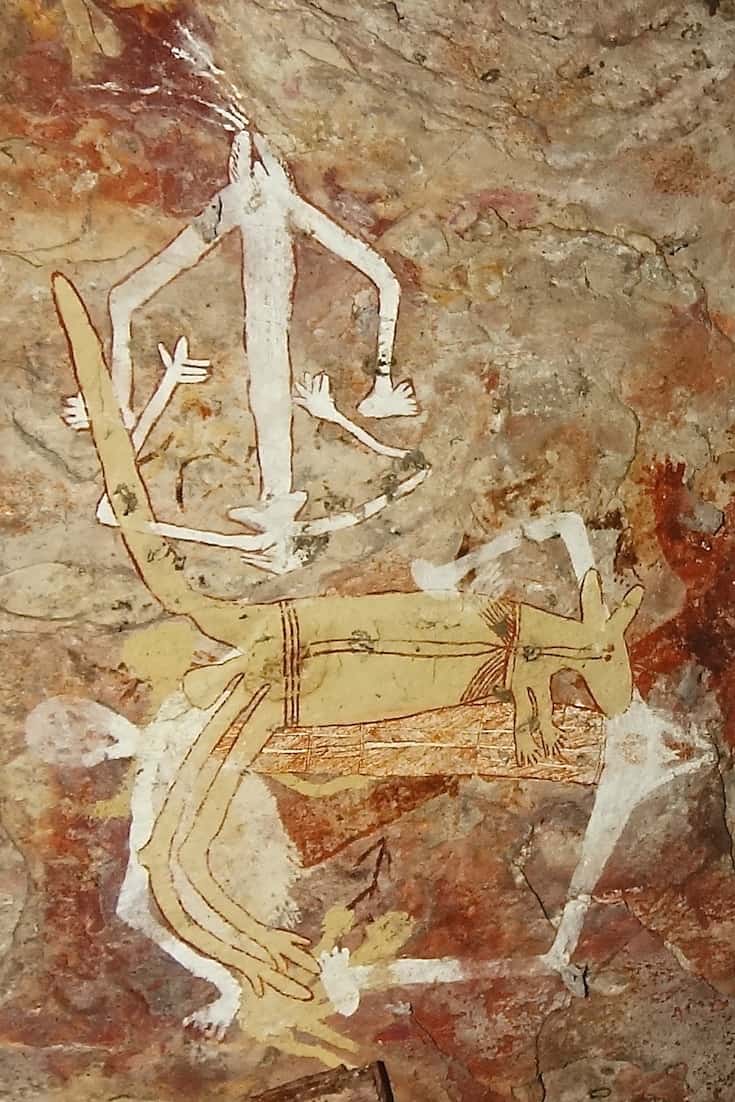
Arnhem Land Rock Art preserves one of Australia’s longest and most complex rock art sequences. Its sandstone shelters contain successive traditions including large naturalistic animals, Dynamic Figures, Mimih figures, X-ray paintings, ceremonial scenes and later contact imagery depicting Macassan vessels and European ships.
The region is particularly renowned for Aboriginal X-ray Art, in which fish, turtles, kangaroos and other subjects may be shown with internal anatomical features. Arnhem Land rock art also remains closely connected with living Aboriginal cultural traditions, while related imagery later became prominent in bark painting from western Arnhem Land.
Separate articles explore Arnhem Land Rock Art, Aboriginal X-Ray Art and Mimih Spirits in greater detail.
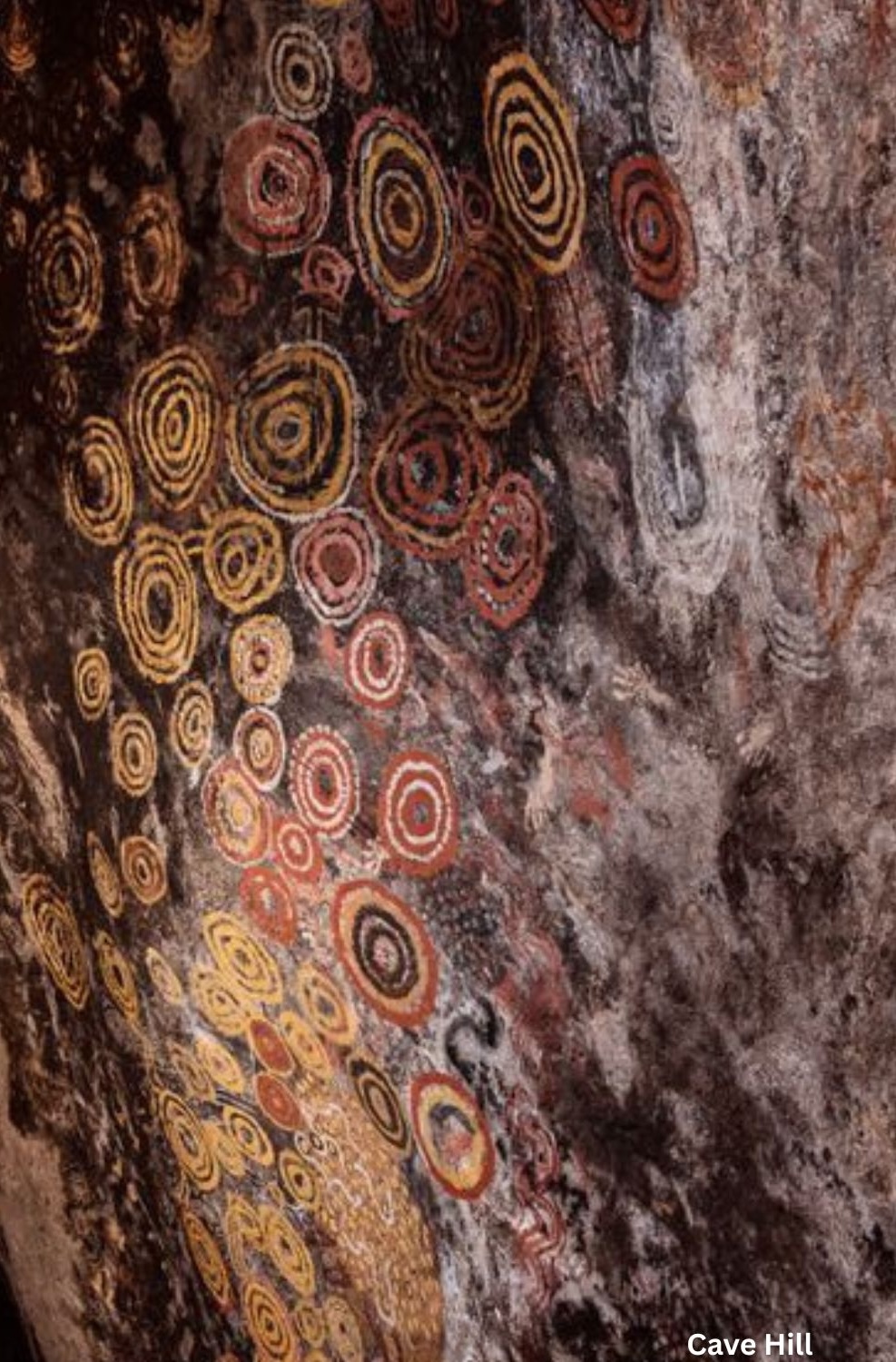
Central Australian Rock Art
Central Australian Rock Art, includes paintings, engravings and other markings found on rock shelters, caves and exposed rock surfaces across the arid interior. Geometric imagery is particularly important, including circles, lines, tracks and other designs, alongside human and animal figures.
Some rock-art places are associated with ancestral narratives, ceremony and culturally significant features of Country. Similar geometric forms also occur in other Central and Western Desert cultural contexts, including ceremonial objects, body painting and later Western Desert painting, although their meanings vary between peoples and places.
Separate article explore Central Australian Rock Art,
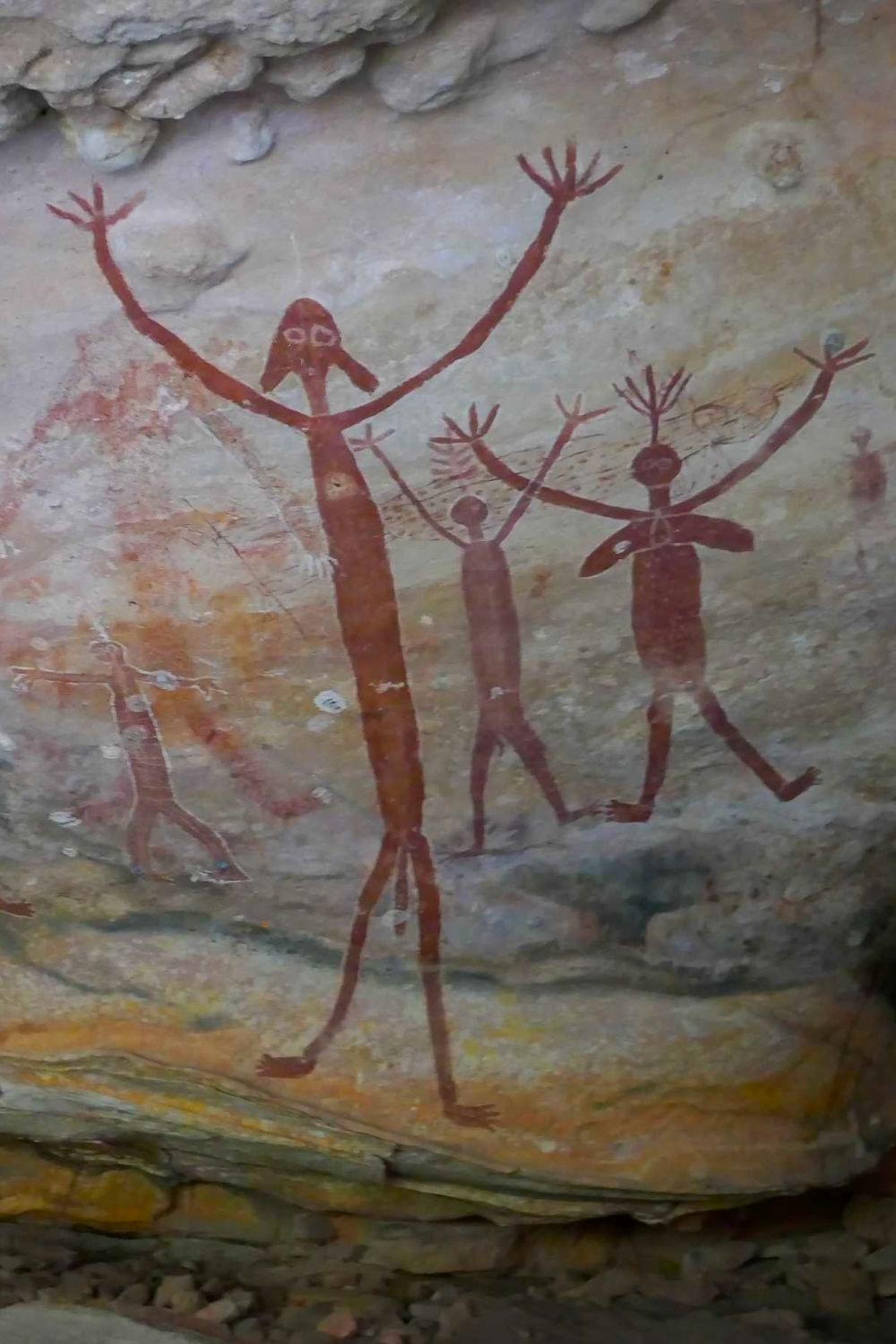
Quinkan Rock Art
is a distinctive painting tradition of the sandstone escarpments and rock shelters around Laura in Cape York Peninsula, Queensland. The region is particularly known for anthropomorphic figures commonly described as Quinkans, alongside human figures, animals, hand stencils and scenes involving groups of figures.
Paintings accumulated across the region over long periods and include different styles and phases rather than a single uniform Quinkan tradition. Red ochre is prominent in many galleries, although other pigments also occur.
The extensive rock-art landscapes around Laura preserve an important record of Aboriginal occupation, artistic practice and cultural life in Cape York. A separate article explores Quinkan Rock Art and the spirit figures of Cape York in greater detail.
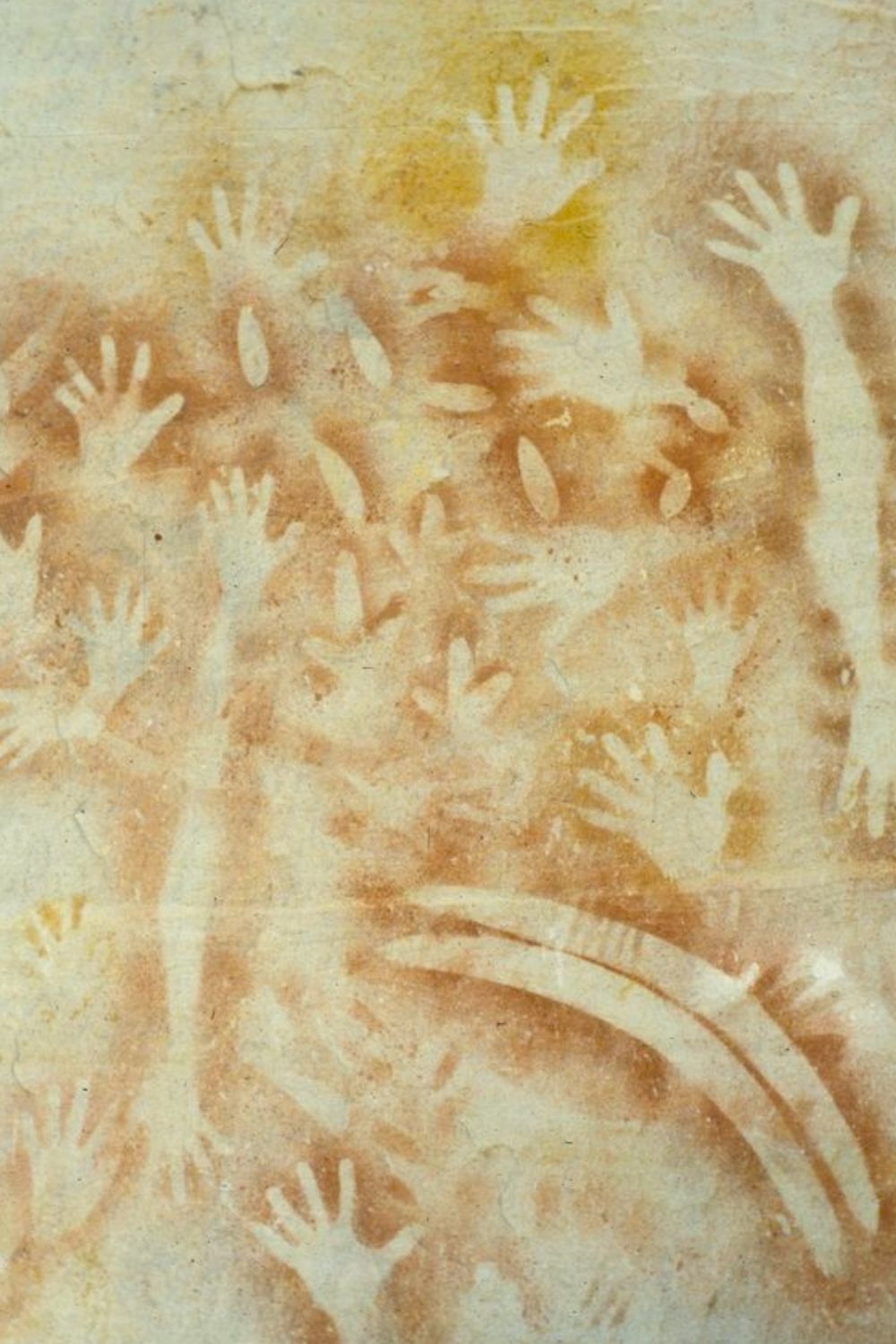
Carnarvon Gorge Rock Art
preserves an important concentration of paintings, stencils and engravings within the sandstone landscapes of central Queensland. Its rock shelters are particularly noted for extensive stencil galleries containing hands and objects including boomerangs and other material culture, alongside painted and engraved imagery.
These galleries form part of a broader Aboriginal cultural landscape in which rock shelters and other places have been used over long periods. The density and variety of stencils make Carnarvon Gorge particularly important within the wider history of Australian stencil art.
A separate article explores Carnarvon Gorge Rock Art and Australian stencil art traditions in greater detail.
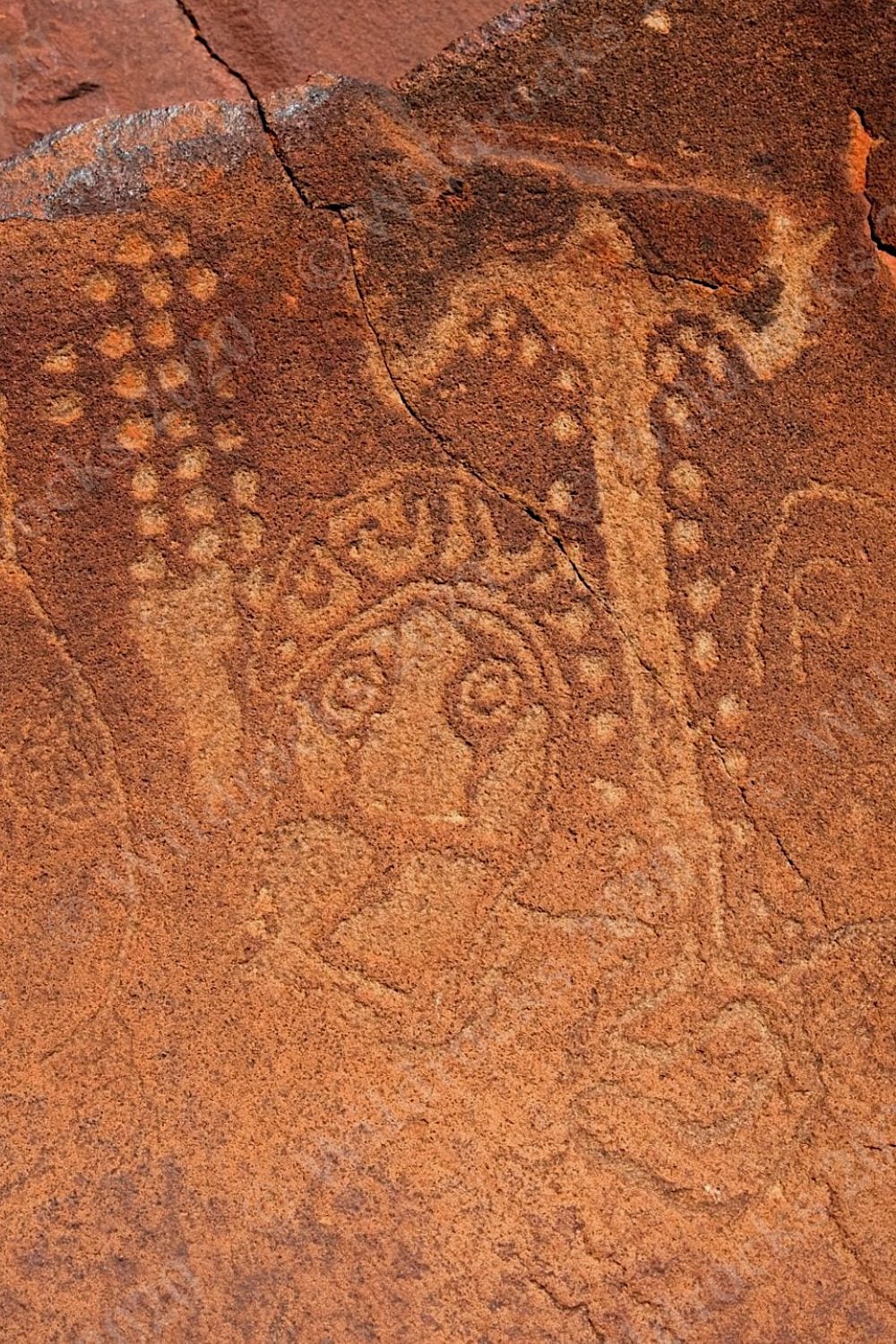
Murujuga Rock Art (Burrup Peninsula Petroglyphs)
in the Pilbara region of Western Australia preserves one of the world’s great concentrations of Aboriginal petroglyphs. Across the rocky landscape are extensive open-air galleries created by pecking, pounding and engraving the weathered surfaces of the stone.
The petroglyphs depict human figures, animals, tracks and geometric forms, with imagery accumulated over a long period. Changes in the animals and environments represented in the engravings contribute to Murujuga’s archaeological importance, while the rock-art landscape remains culturally significant to Aboriginal custodians today.
A separate article explores Murujuga Rock Art (Burrup Peninsula Petroglyphs), and Aboriginal engraving traditions in greater detail.
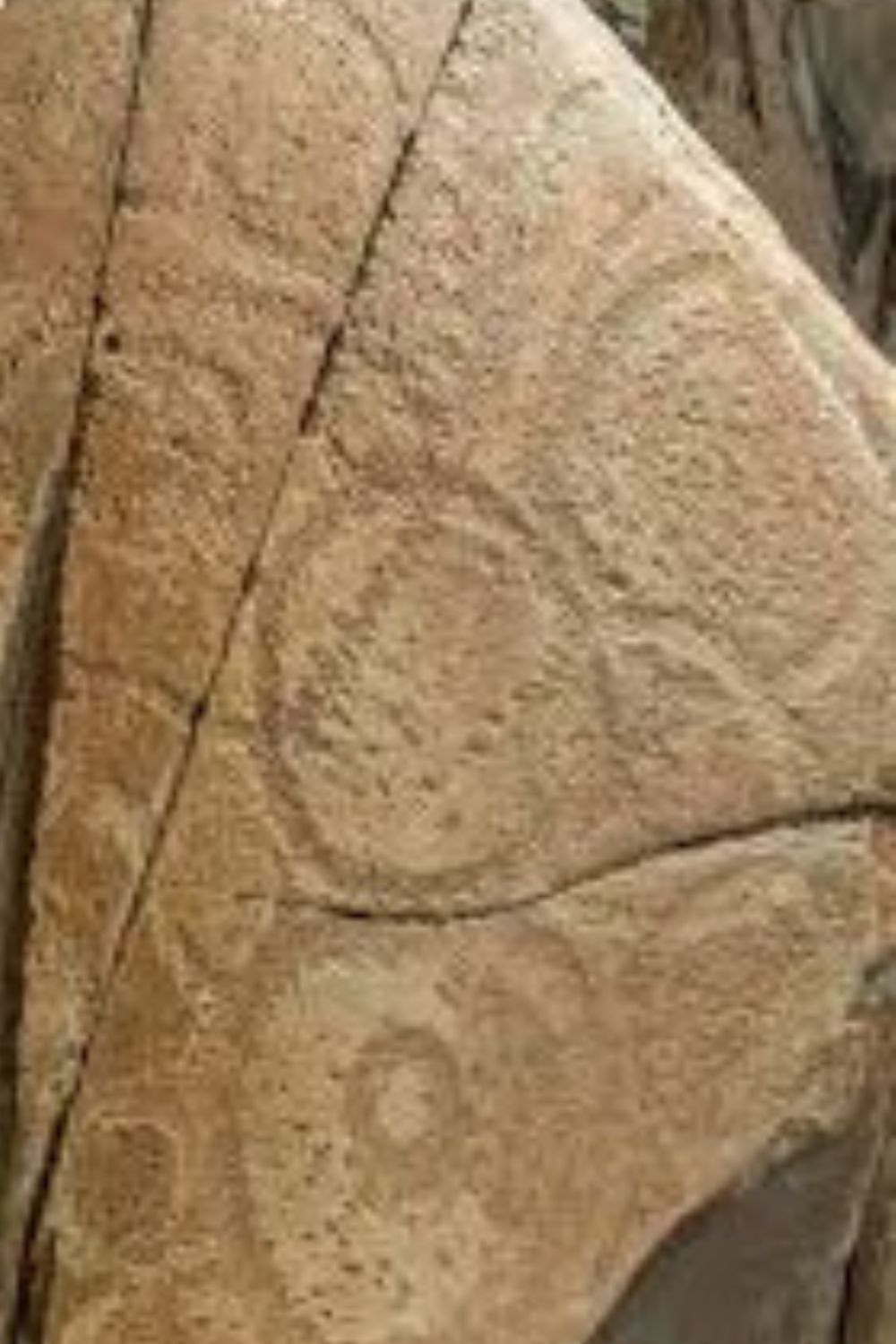
Tasmanian Rock Art
Tasmanian Aboriginal rock markings include both engravings and paintings recorded across lutruwita/Tasmania. Engravings are particularly distinctive, with recurring ovals and circles, concentric forms, lines, cupules and other geometric markings, alongside rarer representations of hands, bird tracks and human-like figures.
Engravings were created by techniques including pecking, abrading, hammering and grinding, while painted sites include pigment applied directly to rock and hand stencils. More than sixty Aboriginal rock-marking sites have been recorded across Tasmania, although their specific meanings and functions are generally unknown.
These culturally significant places form a distinctive part of Tasmania’s continuing Aboriginal heritage.
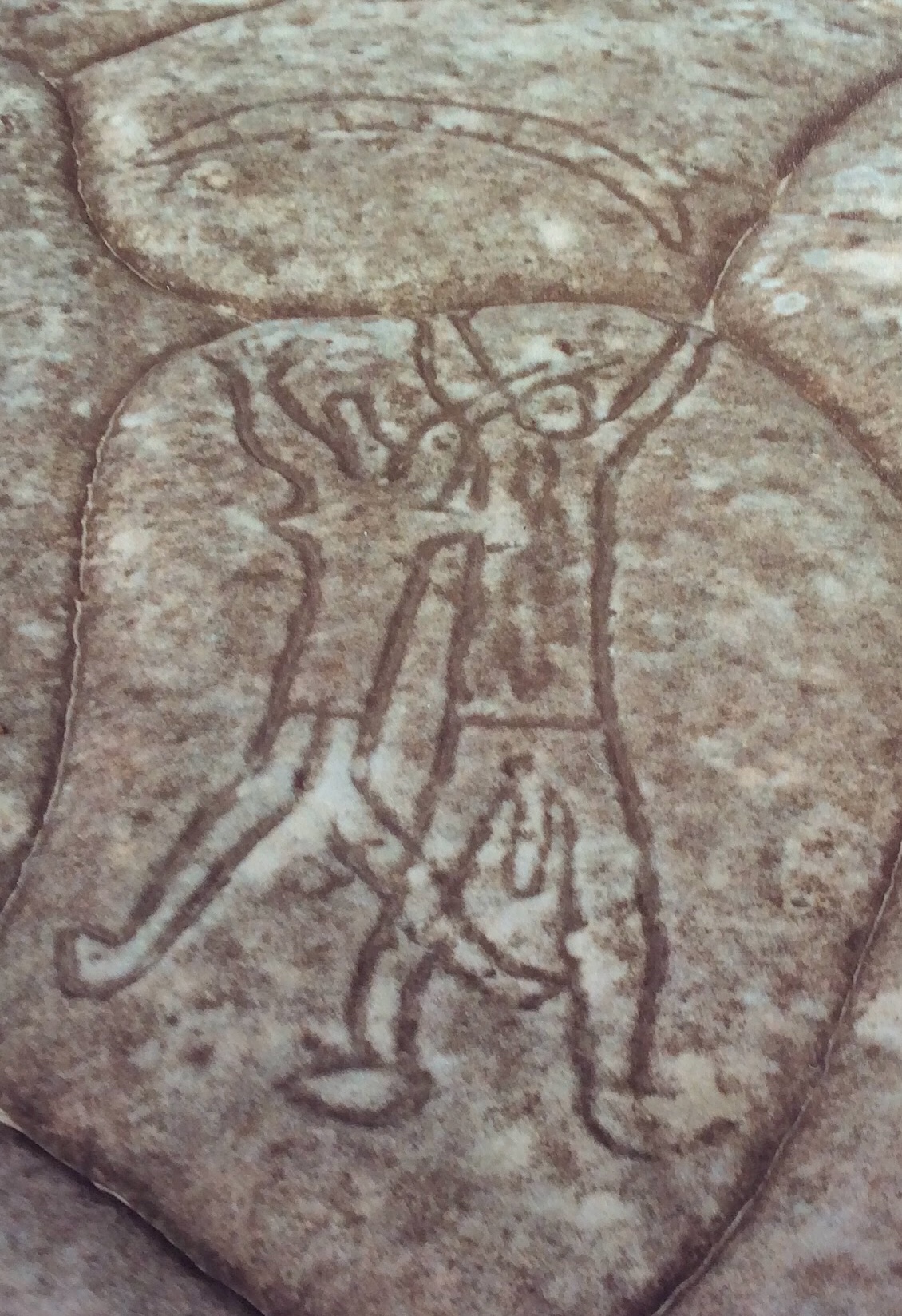
Sydney Basin Rock Art
Sydney Basin Rock Art is particularly known for extensive Aboriginal engravings carved into the sandstone landscapes surrounding Sydney and the Central Coast of New South Wales. Images include human and ancestral figures, kangaroos, fish, whales, birds, tracks and other forms.
Many were created by pecking and then grooving the sandstone surface, producing distinctive outlined figures on exposed rock platforms. Paintings, stencils and other forms of rock art also occur within shelters across the region.
Together, these sites form an important part of the continuing Aboriginal cultural landscapes of coastal New South Wales, and many remain culturally significant to Aboriginal communities today.
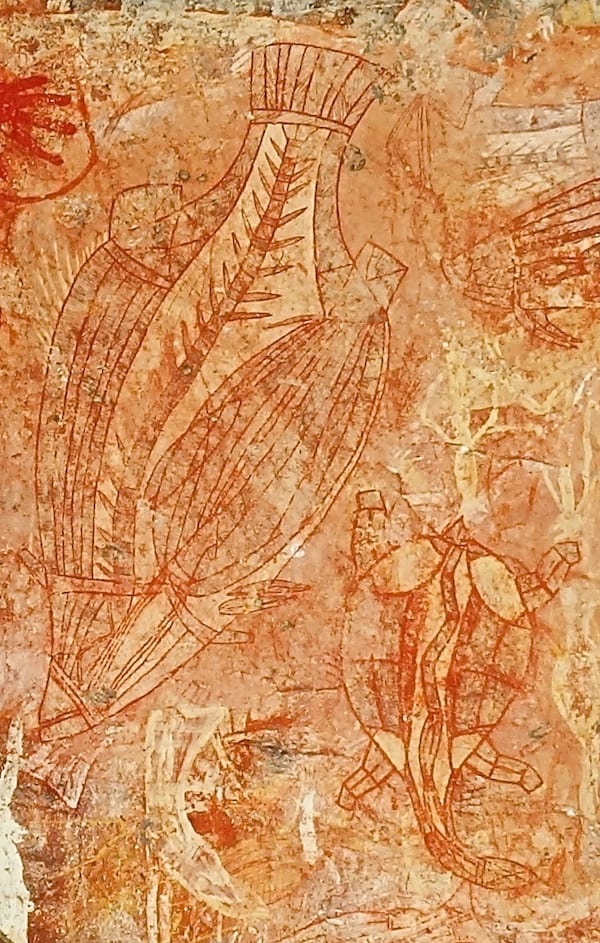
Animals in Aboriginal Rock Art
Animals are among the most important subjects in Australian Aboriginal rock art and appear throughout cave paintings across Arnhem Land Rock Art, Kimberley Rock Art, Cape York, and many other regions. These figures are far more than simple depictions of wildlife. Animals may represent totemic ancestors, ceremonial beings, clan identities, hunting traditions, and ecological knowledge connected to Country.
Different regions developed highly distinctive ways of depicting animals. In Aboriginal X-Ray Art, Arnhem Land artists painted the internal anatomy of fish, turtles, crocodiles, barramundi, and kangaroos with extraordinary precision. Other regions developed more symbolic or stylised animal imagery associated with ritual traditions, songlines, and mythological narratives.
Crocodiles, snakes, turtles, kangaroos, emus, and fish frequently appear as powerful beings linked to ceremonial sites and cosmological traditions. Some rock art galleries may also preserve imagery of extinct Ice Age fauna, reflecting the deep antiquity of Aboriginal artistic traditions and long-standing relationships with the natural world.
A more detailed guide to the symbolism and meaning of these figures can be found in Animals in Aboriginal Art.
Aboriginal Rock Art as a Living Tradition
Aboriginal rock art is not simply a record of the distant past. In many parts of Australia, rock art places remain culturally significant and connected to Country, ancestral beings, ceremony and cultural knowledge.
This continuity is particularly evident in Arnhem Land and the Kimberley, where Traditional Owners maintain strong relationships with important rock art places. Some paintings have been renewed or repainted across generations, while Wandjina paintings in the Kimberley remain connected with living cultural traditions, rainmaking and Country.
Rock art also has important relationships with other Aboriginal art forms. In Arnhem Land, imagery seen on rock surfaces has parallels in bark painting and ceremonial body painting, while elsewhere ancestral designs and cultural narratives continue to be expressed through painting, sculpture and other media.
Continuity, however, varies between places and traditions. Some ancient styles are no longer practised, the meanings of some images are no longer known, and knowledge associated with others remains restricted. Aboriginal rock art therefore encompasses both ancient images whose original context may be uncertain and places that remain part of living Aboriginal cultural traditions today.
Protecting Aboriginal Rock Art
Aboriginal rock art can be remarkably durable, but individual paintings, engravings and rock surfaces are often extremely fragile. Natural threats include weathering, erosion, water, fire and changes to the surrounding environment.
Human activity can cause more immediate damage. Graffiti, vandalism, uncontrolled visitation, mining and industrial development have affected rock-art places in different parts of Australia. Even touching or walking across decorated surfaces can contribute to deterioration.
Unlike portable artworks such as bark paintings or contemporary canvases, rock art is generally inseparable from the place in which it was created. Its significance may extend beyond the image itself to the surrounding rock shelter, landscape, Country and cultural knowledge associated with the site. Access to some places is therefore restricted for cultural reasons as well as to protect fragile paintings and engravings.
Aboriginal custodians work with archaeologists, heritage specialists and conservation programs to document and protect rock art while maintaining its relationship with Country and living cultural traditions.
All images featured in this article are presented strictly for educational and informational purposes.
This website may include copyrighted material for which specific authorization has not been obtained from the copyright owner.
All such images are presumed to be the intellectual property of the respective artist or their estate, and are used in accordance with principles of fair dealing or fair use under applicable copyright law.
Recommended Reading
Robert Layton, Australian Rock Art: A New Synthesis (Cambridge University Press, 1992).
A major scholarly overview of Australian rock art, examining regional traditions, archaeology, cultural meaning and the relationship between rock art and living Aboriginal communities.
Josephine Flood, Rock Art of the Dreamtime: Images of Ancient Australia (Angus & Robertson, 1997).
A broad survey of Australian rock art covering paintings, engravings, hand stencils, regional traditions, archaeological research and approaches to dating.
Darrell Lewis, The Rock Paintings of Arnhem Land, Australia (BAR International Series 415, 1988).
An important study of the rock-art sequence of Arnhem Land and changes in imagery, material culture and society represented in its paintings.
Mike Donaldson, Kimberley Rock Art, Volumes 1–3 (Wildrocks Publications, 2012–2013).
An extensively illustrated three-volume survey covering the Mitchell Plateau, North Kimberley, and the rivers and ranges of the Kimberley.
Mike Donaldson, Burrup Rock Art: Ancient Aboriginal Rock Art of Burrup Peninsula and Dampier Archipelago(Wildrocks Publications, 2010).
A detailed photographic record of the petroglyphs of Murujuga and the Dampier Archipelago.
Images of Aboriginal cave paintings