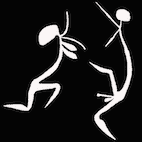
Aboriginal X-Ray Art: Meaning, Style and Arnhem Land Bark Painting Tradition
Aboriginal X-Ray Art is one of the most intellectually sophisticated traditions in Indigenous Australian painting, originating within the ancient cultural landscape of Aboriginal Rock Art in northern Australia. This unique aboriginal art style is distinguished by its unique depiction of internal organs, skeletal structures, and spiritual anatomy, this remarkable style reveals far more than outward appearance—it expresses the inner essence and life force of animals, ancestral beings, and the natural world itself.
Rooted in Arnhem land rock art traditions that extend back thousands of years, X-Ray imagery was later adapted onto eucalyptus bark using natural ochres, forming the foundation of what is now recognised as Oenpelli Art and the broader Arnhem Land bark painting tradition. Today, it remains a living ceremonial practice in which each painting encodes layers of cultural knowledge relating to hunting traditions, seasonal cycles, ancestral law, and Dreaming narratives.
The X-Ray tradition was carried into the modern era by some of the greatest artists of Western Arnhem Land including Lofty Nadjamerrek, whose exquisitely refined depictions of barramundi, turtles, kangaroos, and spirit beings drew directly upon ancient cave painting traditions, and Dick Murrumurru, whose powerful bark paintings preserved the archaic ceremonial intensity of the Arnhem Land escarpment. Alongside artists such as Yirawala and John Marwurndjul, these painters ensured the continuity of one of the world’s oldest surviving artistic traditions.
For collectors, curators, and scholars alike, Aboriginal X-Ray art offers a rare insight into a visual system where body, spirit, and Country are inseparably linked—an enduring expression of knowledge shaped over millennia.
If you would like an opinion on an X-Ray bark painting, or are considering selling one, please feel free to contact me.
What Is Aboriginal X-Ray Art and Where Does It Come From?
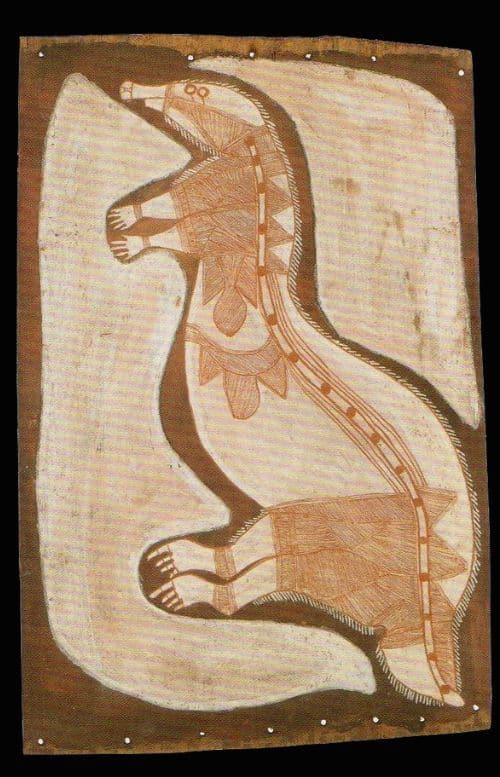
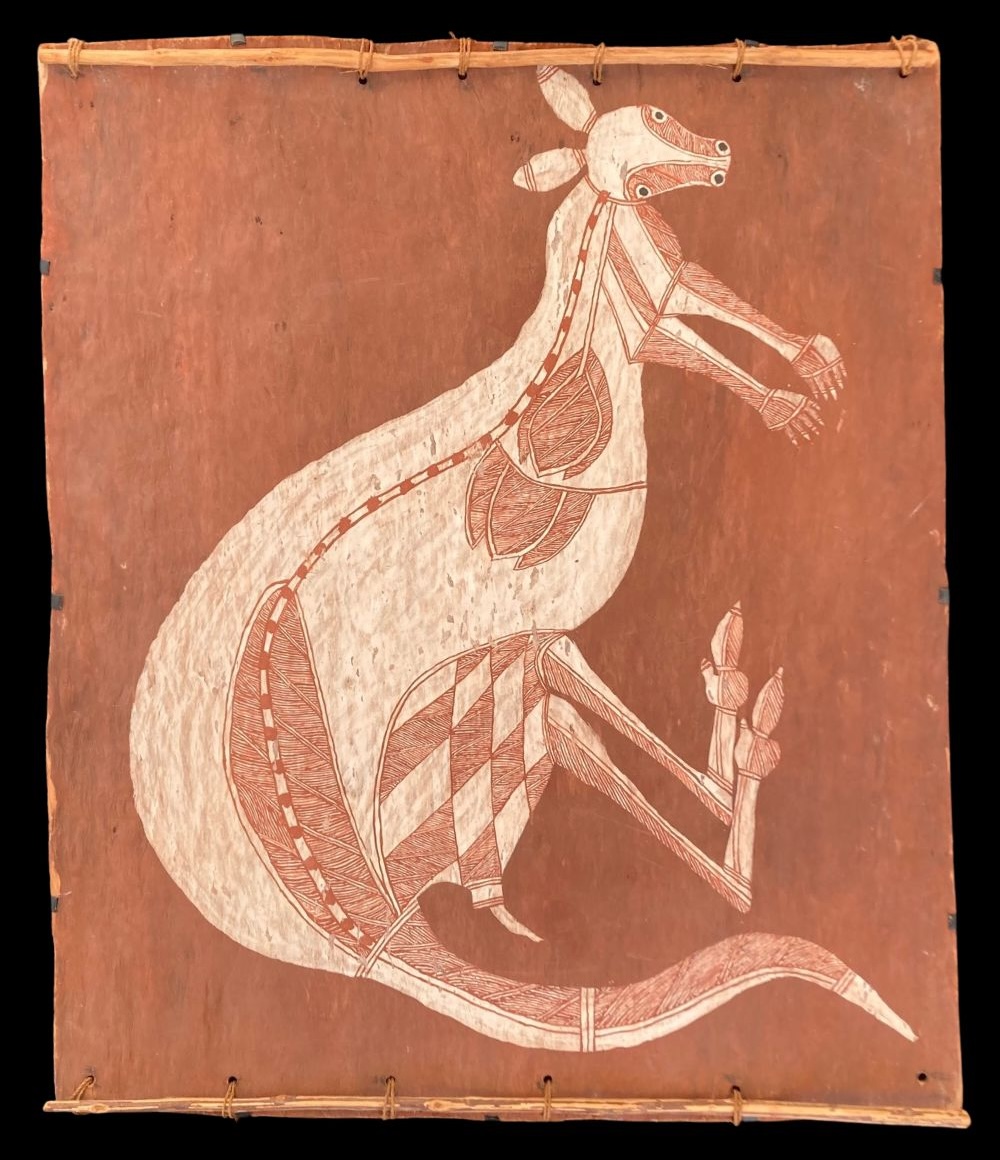
Aboriginal X-ray art is one of the most distinctive painting traditions of northern Australia, in which animals, ancestral beings, and occasionally human figures are depicted with their internal organs and skeletal structures visible. This approach shifts attention away from surface appearance to reveal the inner essence of the subject, describing not how a figure looks, but how it exists—structurally, spiritually, and culturally. The tradition originates in the ancient rock art of Arnhem Land, where similar imagery has been painted on stone surfaces for thousands of years and is directly related to Dream time stories. Over time, this visual language was adapted onto sheets of eucalyptus bark using natural ochres, allowing artists to create portable works while maintaining their cultural authority.
Today, X-ray art remains deeply connected to Dream time Stories where the visible and invisible worlds are understood as part of a single, interconnected reality
What Does Aboriginal X-Ray Art Represent?
Aboriginal X-ray art is not simply a method of depiction, but a way of understanding the world. At its core lies the idea of the body as an ordered system of interconnected parts. Organs and bones are revealed to express how life is structured from within, transforming the figure into a map of relationships rather than a surface image.
This internal structure reflects a deeper connection to Country. In many works, anatomical elements correspond to features of the landscape—waterholes, pathways, and sacred sites—demonstrating that body and land are conceptually linked.
The presence of the ancestral realm is equally central. Figures rendered in X-ray form often relate to Ancestral beings whose actions shaped the land and continue to resonate within it. These meanings operate on multiple levels: an outer reading visible to all, and an inner layer of knowledge known through cultural authority. What appears to be anatomy may in fact encode ancestral narratives, including those associated with the rainbow-serpent
How Aboriginal X-Ray Art Differs from Arnhem Land Rock Art
Although closely related, Aboriginal X-Ray Art and Arnhem Land rock art are not identical terms.
Arnhem Land rock art is the broader painting tradition of Western Arnhem Land, encompassing tens of thousands of years of imagery including naturalistic animals, Dynamic Figures, Mimih spirits, Rainbow Serpents, and contact-period art.
Aboriginal X-Ray Art refers specifically to a style depicting the internal anatomy of animals and spirit beings that emerged from Arnhem Land rock art traditions thousands of years ago
As a result, all Aboriginal X-Ray Art derives from Arnhem Land artistic traditions, but not all Arnhem Land rock art is X-ray art.
For a broader overview of the ancient escarpment painting traditions from which this style emerged, see Arnhem Land Rock Art.
The Three Types of X-Ray Art Explained
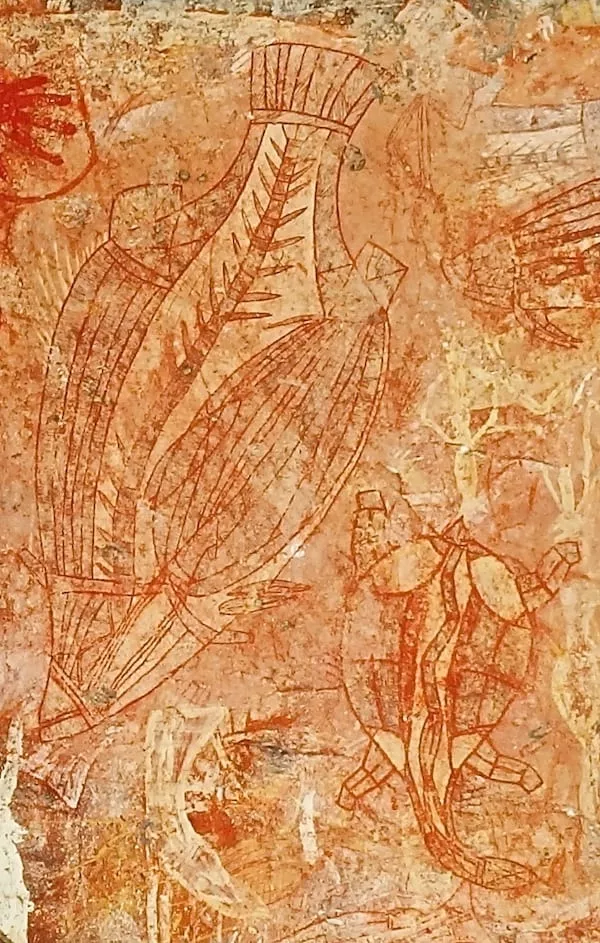
Aboriginal X-ray art is best understood as a flexible system with three primary modes of representation, each carrying distinct meanings.
Iconic X-Ray Art – Food Animals and Hunting Culture
This form depicts animals with clearly defined internal organs and skeletal features and is closely associated with food species. Particular emphasis is often placed on valued cuts of meat and fat, reflecting the importance of hunting, sharing, and kinship relationships. These images relate not only to sustenance but also to social structure and land stewardship.
Rarrk X-Ray Art – Ancestral Beings and Sacred Landscapes
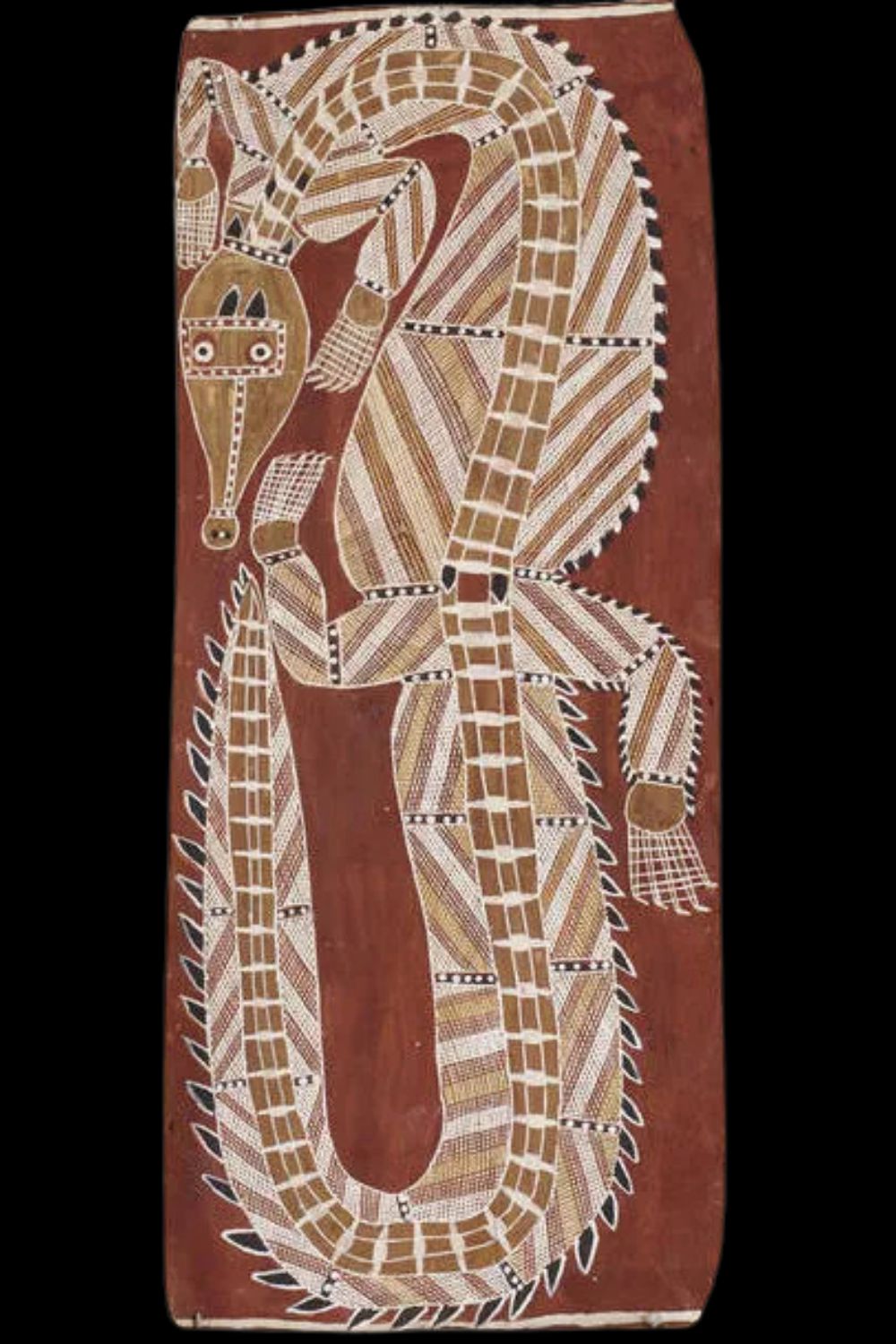
Rarrk X-ray art is characterised by fine cross-hatched infill derived from ceremonial body painting. Within these works, the interior of the figure becomes a conceptual landscape, with designs representing waterholes, underground channels, and sacred sites.
These paintings often depict Ancestral beings in states of transformation, linking human, animal, and spiritual identities. While they may appear anatomical, they encode deeper knowledge about Country, identity, and ancestral law.
Skeletal X-Ray Art – Death, Spirit and Transformation
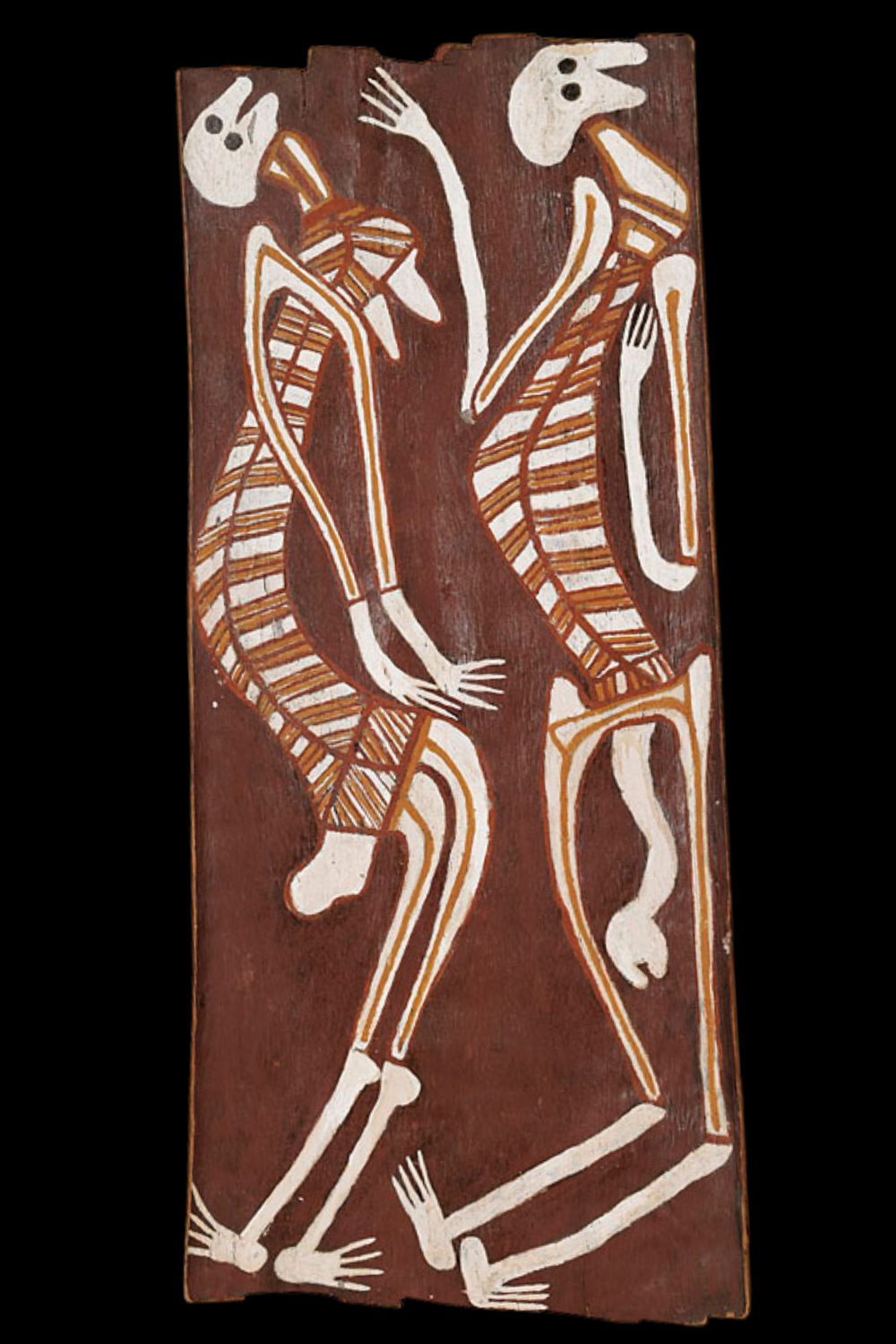
Skeletal X-ray imagery focuses on bones and structural frameworks and is associated with death and spiritual transition. These works do not depict an end, but a transformation, emphasising the enduring presence of spirit within the bones.
They are closely connected to mortuary traditions, where the movement of the spirit from the physical world to the ancestral realm is understood as part of a continuous cycle.
X-Ray Art and Aboriginal Ceremony
The meaning of X-ray art is fully realised within ceremonial life. These paintings reflect systems of knowledge that are activated, performed, and transmitted through ritual.
In Mardayin ceremonies, fine cross-hatched designs are applied to the bodies of initiates, linking them to clan identity, ancestral law, and sacred Country. The same visual language appears in bark paintings, reinforcing these ceremonial relationships and connections to the ancestral realm.
Lorrkkon ceremonies focus on death, spiritual transformation, and the return of the spirit to its ancestral origins, where skeletal imagery reflects the enduring presence of spirit within the bones. Many bark paintings associated with these traditions depict ancestral beings such as Lumahlumah, whose skeletal form embodies themes of death, regeneration, ceremony, and moral law within Arnhem Land traditions.
Wubarr ceremonies extend these ideas to seasonal cycles, fertility, and renewal, emphasising the continuity of life through both the natural and spiritual worlds. At the centre of these interconnected ceremonial systems is the Rainbow Serpent, a foundational ancestral force governing cycles of creation, destruction, and regeneration.

Key Characteristics and How to Identify Aboriginal X-Ray Art
Aboriginal X-ray art is distinguished by its emphasis on internal anatomy, with organs, bones, and skeletal structures clearly articulated. This approach reveals the subject’s inner essence rather than its external appearance, shifting the focus from surface to structure.
Fine cross-hatching, known as rarrk, is often used to fill the body, encoding layers of ceremonial and geographic meaning. Figures are constructed using a “divided body” framework, where each internal element contributes to a coherent system. In many works, these internal forms extend beyond anatomy to function as symbolic maps of Country, with motifs representing waterholes, pathways, and sacred sites.
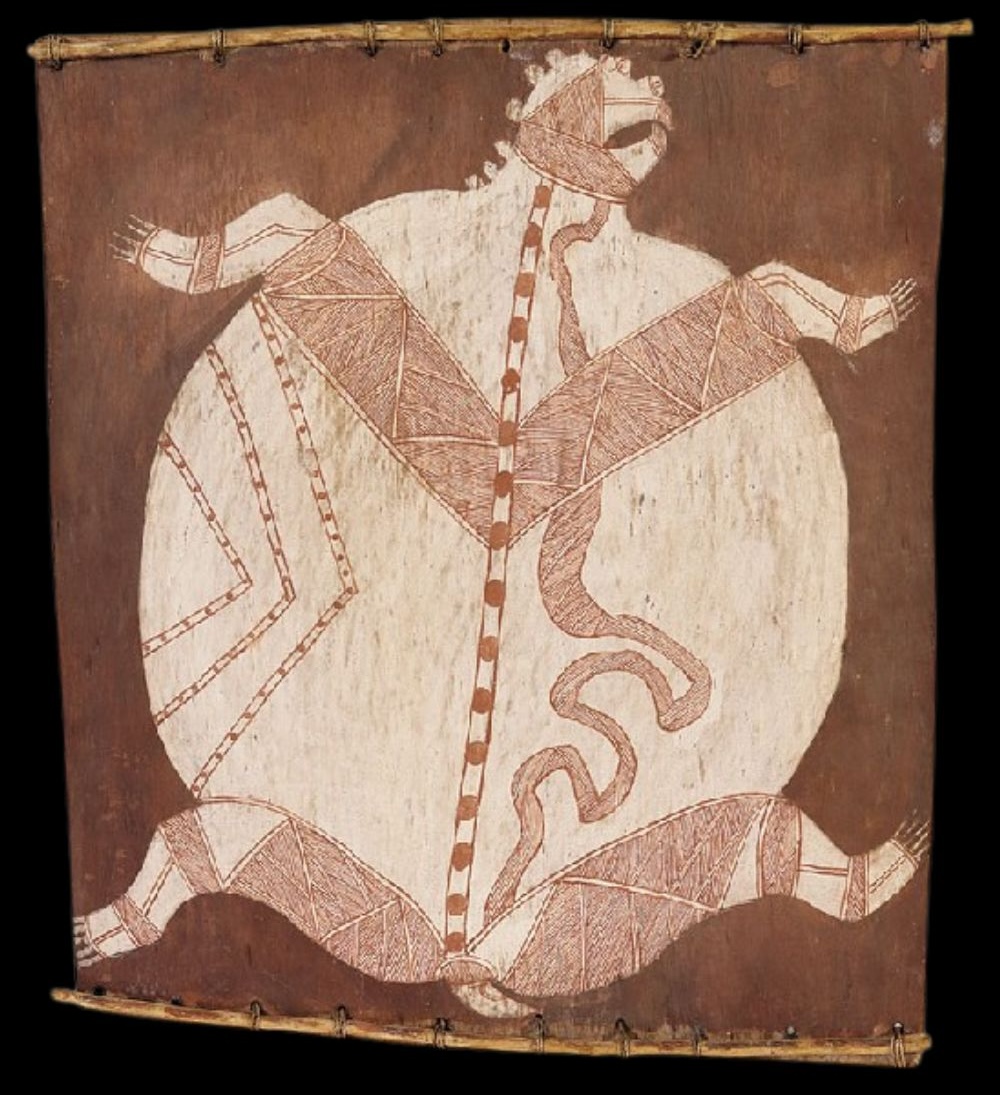
Identification rests on these defining features. Figures—most commonly fish, turtles, and kangaroos—are rendered with visible internal structures, distinguishing them from other Aboriginal styles that prioritise surface pattern. Works are typically executed in natural ochres on eucalyptus bark and originate from Arnhem Land traditions.
For collectors, correct identification depends not only on visual characteristics, but also on provenance and cultural context, where artistic form and knowledge are inseparably linked.
Aboriginal X-Ray Art in the Market
Aboriginal X-ray art occupies a distinguished position within the market for Indigenous Australian art, particularly among collectors focused on the bark painting traditions of western Arnhem Land. The most sought-after works are those that combine cultural authority, aesthetic refinement, and well-documented provenance.
Subject matter plays a decisive role in desirability. Paintings depicting spirit figures or Ancestral beings are generally more highly valued than those of food animals, reflecting their deeper ceremonial and cultural significance. Works that show people engaged in ceremony or that reference mortuary traditions are especially regarded, offering a direct and compelling connection to ritual life.
Execution is equally critical. Collectors favour finely controlled rarrk linework and balanced composition. Paintings that display clarity of form and confidence of line consistently attract stronger interest. Works with clear connections to Dreamtime stories are also more desirable, as narrative depth reinforces cultural and scholarly significance.
Condition remains a key determinant of value. Bark paintings are inherently fragile; they can bend or warp over time, and professional flattening is often costly. Pigment loss is another common issue, and restoration is frequently uneconomic due to the time and specialist skill required. Consequently, well-preserved examples command a premium.
Particular emphasis is often placed on bark paintings produced from the 1950s through to the 1970s, which represent the formative period of the modern movement and are widely regarded as among its most important works.
Frequently Asked Questions About Aboriginal X-Ray Bark Painting
What is Aboriginal X-ray art?
Aboriginal X-ray art is a distinctive painting tradition in which animals, ancestral beings, and sometimes humans are depicted with their internal organs and skeletal structures visible. Rather than focusing on external appearance, it reveals the inner essence of the subject and expresses cultural knowledge about life, spirit, and connection to Country.
Why do Aboriginal artists show bones and organs?
The depiction of bones and organs reflects a deeper understanding of how life is structured. It can relate to hunting knowledge, the sharing of food, and spiritual beliefs about the enduring presence of life within the body. In many cases, these internal elements also encode cultural and ceremonial meanings.
Where does Aboriginal X-ray art come from?
Aboriginal X-ray art originates in Arnhem Land in northern Australia. It developed from ancient rock art traditions that are thousands of years old and later evolved into bark painting using natural ochres on eucalyptus bark.
What does X-ray art represent in Aboriginal culture?
X-ray art represents the interconnected relationship between body, spirit, and land. It often encodes ancestral knowledge, ceremonial law, and the structure of Country, where internal forms may correspond to sacred sites, waterholes, and pathways.
Is X-ray art only found in Arnhem Land?
Yes, Aboriginal X-ray art is primarily associated with Arnhem Land, particularly western Arnhem Land. It is a defining feature of this region’s bark painting tradition and is not commonly found in other Aboriginal art styles.
How old is Aboriginal X-ray art?
The origins of X-ray art date back thousands of years to ancient rock art sites in Arnhem Land. These early forms laid the foundation for the bark painting tradition that continues today.
What animals are commonly shown in X-ray bark paintings?
Common subjects include fish, turtles, and kangaroos. These animals are often depicted with internal organs and bones visible, reflecting their importance in hunting, food systems, and cultural knowledge.
What is the difference between Aboriginal X-Ray Art and Arnhem Land rock art?
Arnhem Land rock art is the broader ancient painting tradition of western Arnhem Land, including many different styles such as Dynamic Figures, Mimih spirits, Rainbow Serpents, and contact-period imagery.
Aboriginal X-Ray Art refers specifically to the style in which animals, spirit beings, and sometimes humans are depicted with visible internal anatomy such as bones and organs. This tradition emerged within Arnhem Land rock art and later became one of the defining styles of Arnhem Land bark painting.
What is rarrk in Aboriginal art?
Rarrk refers to the fine cross-hatching technique used in Arnhem Land bark painting. It is created using a brush made from natural fibres and encodes layers of ceremonial, geographic, and cultural meaning within the artwork.
How can you identify an Aboriginal X-ray bark painting?
X-ray bark paintings can be identified by their depiction of internal structures such as organs, bones, and spine formations. They are typically painted in natural ochres on eucalyptus bark and originate from Arnhem Land traditions, often featuring fine cross-hatched infill.
Are Aboriginal X-ray bark paintings valuable?
Yes, Aboriginal X-ray bark paintings can be highly valuable, particularly works by recognised artists from Arnhem Land. Value depends on factors such as the artist, provenance, age, condition, and cultural significance.
All images featured in this article are presented strictly for educational and informational purposes.
This website may include copyrighted material for which specific authorization has not been obtained from the copyright owner.
All such images are presumed to be the intellectual property of the respective artist or their estate, and are used in accordance with principles of fair dealing or fair use under applicable copyright law.
Recommended reading