
Harry Tjutjuna – “I Am the Spider Man”
Harry Tjutjuna (c.1930–2019) was a senior Pitjantjatjara Law man, ngangkari (traditional healer) and one of the most distinctive painters of the APY Lands Art movement in South Australia.
Best known for his powerful paintings of Wati Wanka (Spider Man), Tjutjuna brought a lifetime of ceremonial knowledge to contemporary Western Desert Art. His exuberant compositions combine boldly striped ancestral figures, irregular circular patterns and intense colour to express his relationship with Country and Tjukurpa (ancestral Law and creation narratives).
Like fellow senior Pitjantjatjara artists Tiger Palpatja and Jimmy Baker, Tjutjuna was a respected traditional healer who began his sustained professional painting career late in life. He joined Ernabella Arts in 2005, aged approximately 75, before working with Ninuku Arts at Kalka.
His paintings were intensely personal. When asked about the ancestral Spider Man, Tjutjuna declared, “I am the Spider Man.” This relationship between the ancestral being, the artist’s identity and his healing powers became the defining theme of his art.
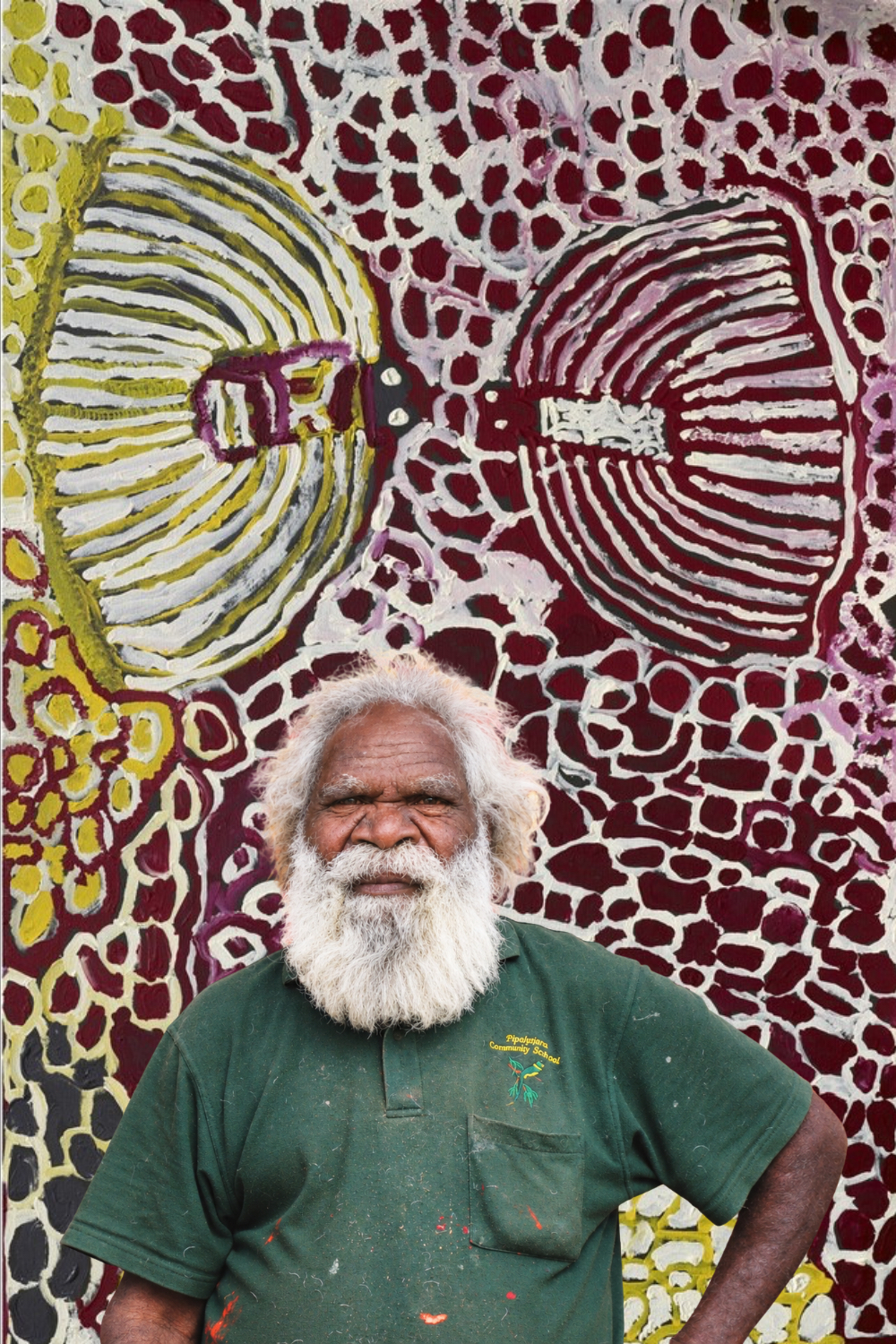
“I am the Spiderman”
“I am the Spider Man,” declared Harry Tjutjuna, a senior Pitjantjatjara Law man, ngangkari (traditional healer) and one of the most distinctive painters of the APY Lands.
He was speaking of Wati Wanka (Spider Man), a powerful ancestral being who created the Country around Tjutjuna’s birthplace and whose healing powers he possessed. To understand why Tjutjuna said he was the Spider Man, rather than simply a man who painted Spider Man, we must understand the relationship between ancestral beings, spiritual conception and human identity.
In The Native Tribes of Central Australia (1899), anthropologists Baldwin Spencer and Francis Gillen recorded that, among Arrernte people, a child was understood to originate from an ancestral spirit associated with a particular place. The spirit entered the mother, giving the child an ancestral identity determined by its place of spiritual conception. In their account, sexual intercourse could prepare the mother to receive the spirit-child, but the ancestral spirit, rather than the human father, determined this aspect of the child’s identity.
The place of conception was therefore fundamental. Spencer and Gillen described how a child could be conceived near a Witchetty Grub ancestral centre, subsequently born in Emu Country, yet remain spiritually a Witchetty Grub person. The ancestral being was not merely an animal to which the individual felt attached. It was part of who that person was.
These ancestral powers also remained active in the world. Spencer and Gillen documented ceremonies in which sacred designs were painted, ancestral songs sung and ritual actions performed to increase the numbers of animals and plants or bring rain. Art was not simply a representation of ancestral power. Under the proper ceremonial conditions, it was a means of exercising that power and making things happen.
Although Spencer and Gillen were describing Arrernte traditions rather than Tjutjuna’s own Pitjantjatjara conception, their research helps explain the extraordinary depth of his declaration. Among Pitjantjatjara people, such relationships between ancestral beings, people and Country are understood through Tjukurpa, which encompasses creation, Law, ceremony and inherited responsibilities.
When Harry Tjutjuna painted Wati Wanka, he was painting a spiritual self-portrait. Spider Man was not simply an ancestral being whose story he illustrated. Tjutjuna declared that he was Spider Man, a healer whose powers came from the ancestral being responsible for creating his Country.
Harry Tjutjuna Biography
Harry Tjutjuna was born around 1930 at Walytjatjara, near Mount Davies in the remote desert Country north-east of Pipalyatjara, close to the borders of South Australia, Western Australia and the Northern Territory.
He grew up speaking Pitjantjatjara, acquiring knowledge of the ancestral places, ceremonies and responsibilities associated with his family’s Country.
As a young man, he moved to Pukatja (Ernabella), where a Presbyterian mission had been established in 1937. He attended the mission school before undertaking various forms of manual labour.
Tjutjuna sank water bores, erected fences, maintained gardens and cared for animals. He also worked for many years as a stockman, mustering cattle across the region.
He eventually returned west with his large family, living around Irrunytju (Wingellina) in Western Australia and Pipalyatjara in South Australia.
Irrunytju later became an important centre of contemporary Aboriginal painting, particularly through artists such as Tommy Watson, whose remarkable fields of colour expressed the ancestral Country of the western desert.
For Tjutjuna, however, life was principally concerned with maintaining his ceremonial responsibilities.
Harry Tjutjuna – The Traditional Healer
Tjutjuna became one of the most senior Pitjantjatjara Law men of the western APY Lands and a respected ngangkari, practising traditional healing.
His authority came from his knowledge of Tjukurpa and the responsibilities he maintained for the ancestral beings and places of his Country.
An Ernabella Arts certificate accompanying Wangka Tjukurpa (2007) records that Tjutjuna used spiderwebs in treating cuts and skin injuries, directly connecting his healing practices with Wati Wanka.
In statements recorded by Ninuku Arts, Tjutjuna described Spider Man as a powerful and clever male healer who sheltered in his nest when rain approached and changed colour at night.
The relationship between ancestral identity and healing was also central to other senior Pitjantjatjara artists. Tiger Palpatja, another important ngangkari, was intimately connected with Wanampi, the ancestral water serpent of Piltati.
Like Jimmy Baker and Palpatja, Tjutjuna brought decades of cultural authority to a painting career begun late in life.
Becoming an Artist
Tjutjuna’s sustained career as an acrylic painter began at Ernabella Arts in 2005, but recent research suggests that his experiments with the medium started considerably earlier.
In 2026, anthropologist Dr Diana James reported that Tjutjuna and Jimmy Yanyatjari Donegan were producing acrylic paintings on boards around Docker River and Blackstone as early as 1972.
According to James, the men sold their paintings directly to Alice Springs dealer Pat Hogan. She identifies an early Ngintaka painting by Tjutjuna and reports that examples of these works entered the Museum and Art Gallery of the Northern Territory.
This places Tjutjuna among the early Pitjantjatjara men experimenting with acrylic painting during the formative years of the Western Desert art movement.
The widespread emergence of APY Lands acrylic painting came much later.
During the 1970s, senior Anangu had objected to the public display of restricted ceremonial imagery by some Papunya painters. Consequently, many artists at Ernabella concentrated on batik and designs that avoided revealing ancestral Law.
By the early 2000s, senior custodians increasingly regarded appropriate public paintings of Tjukurpa as a way of preserving and transmitting knowledge.
Tjutjuna became part of this development in 2005. In 2008, he moved permanently to Pipalyatjara and continued painting through Ninuku Arts, based at nearby Kalka.
His confidence, humour and distinctive imagery quickly established him as one of the art centre’s leading painters.
Harry Tjutjuna Painting Style
Tjutjuna developed an extraordinarily individual style that moved freely between recognisable ancestral figures and fields of apparently abstract markings.
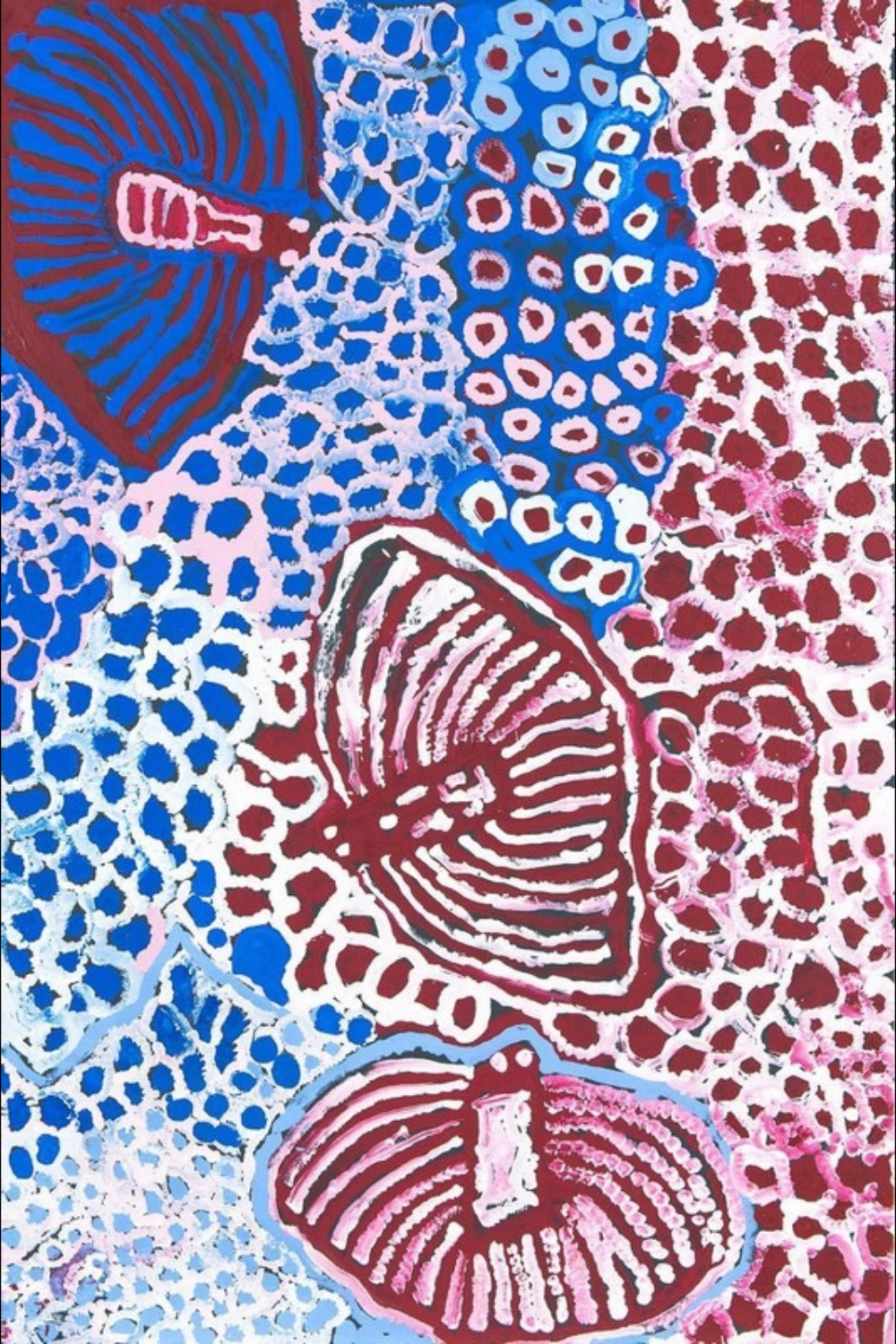
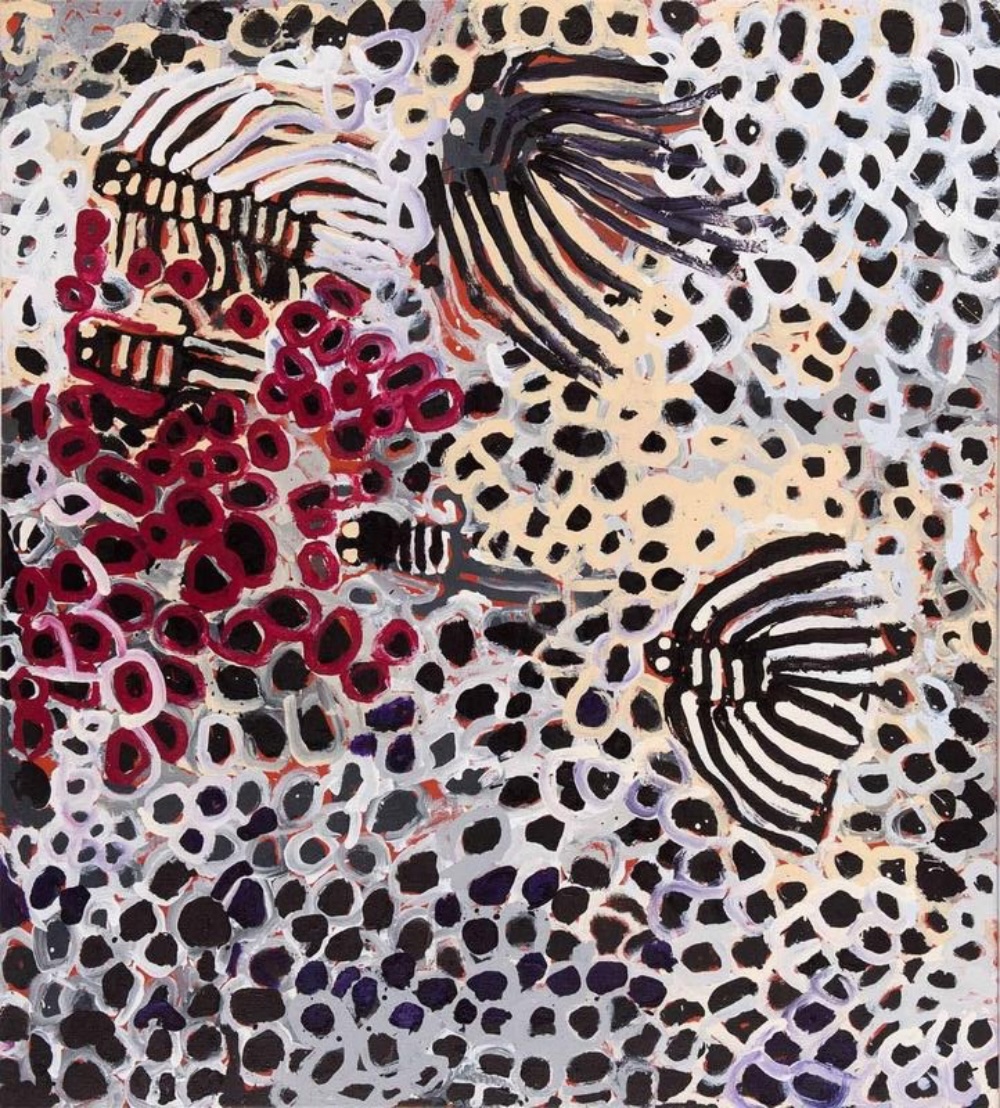
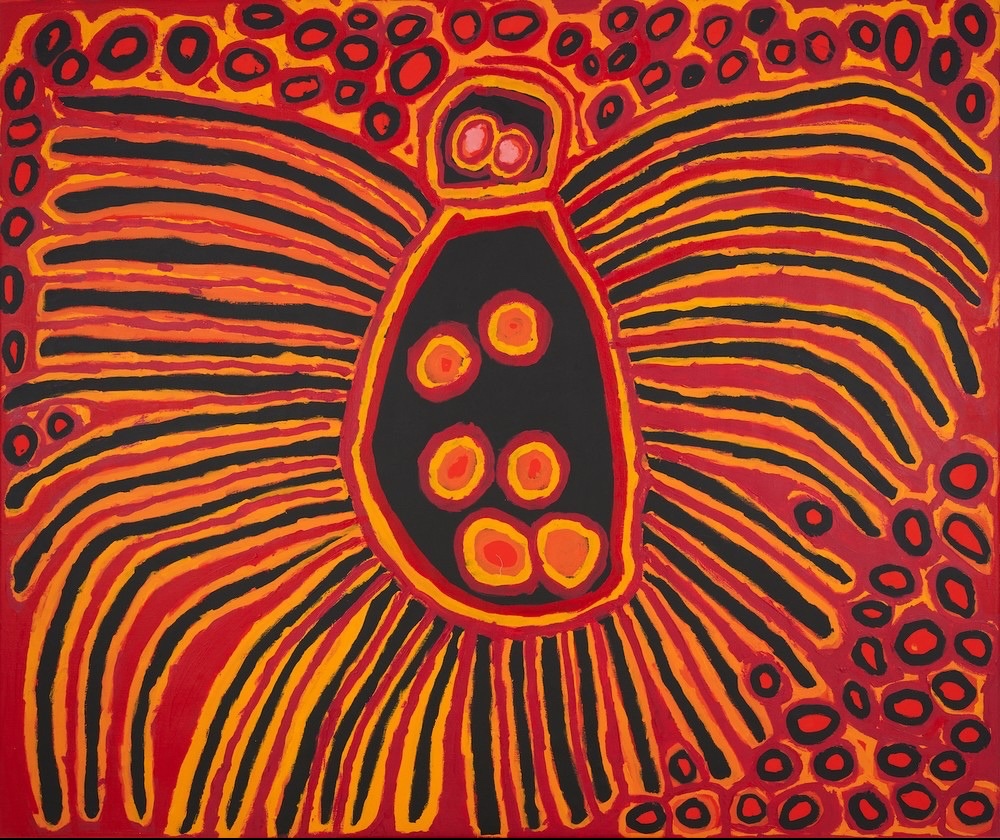
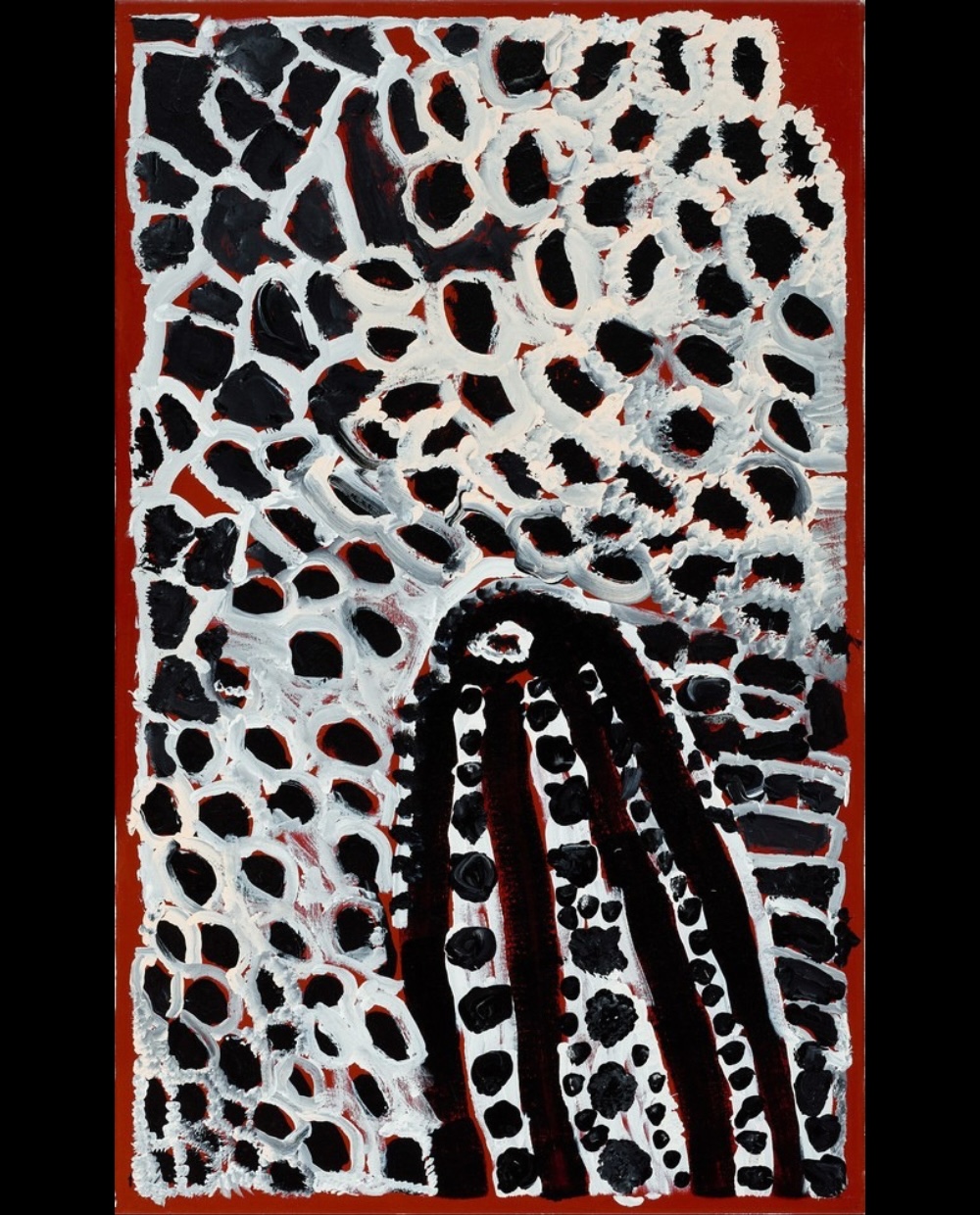
His Spider Man paintings frequently feature a central oval body with enormous radiating limbs, decorated with thick, irregular stripes. Repeated circles, spots and overlapping forms surround the figure.
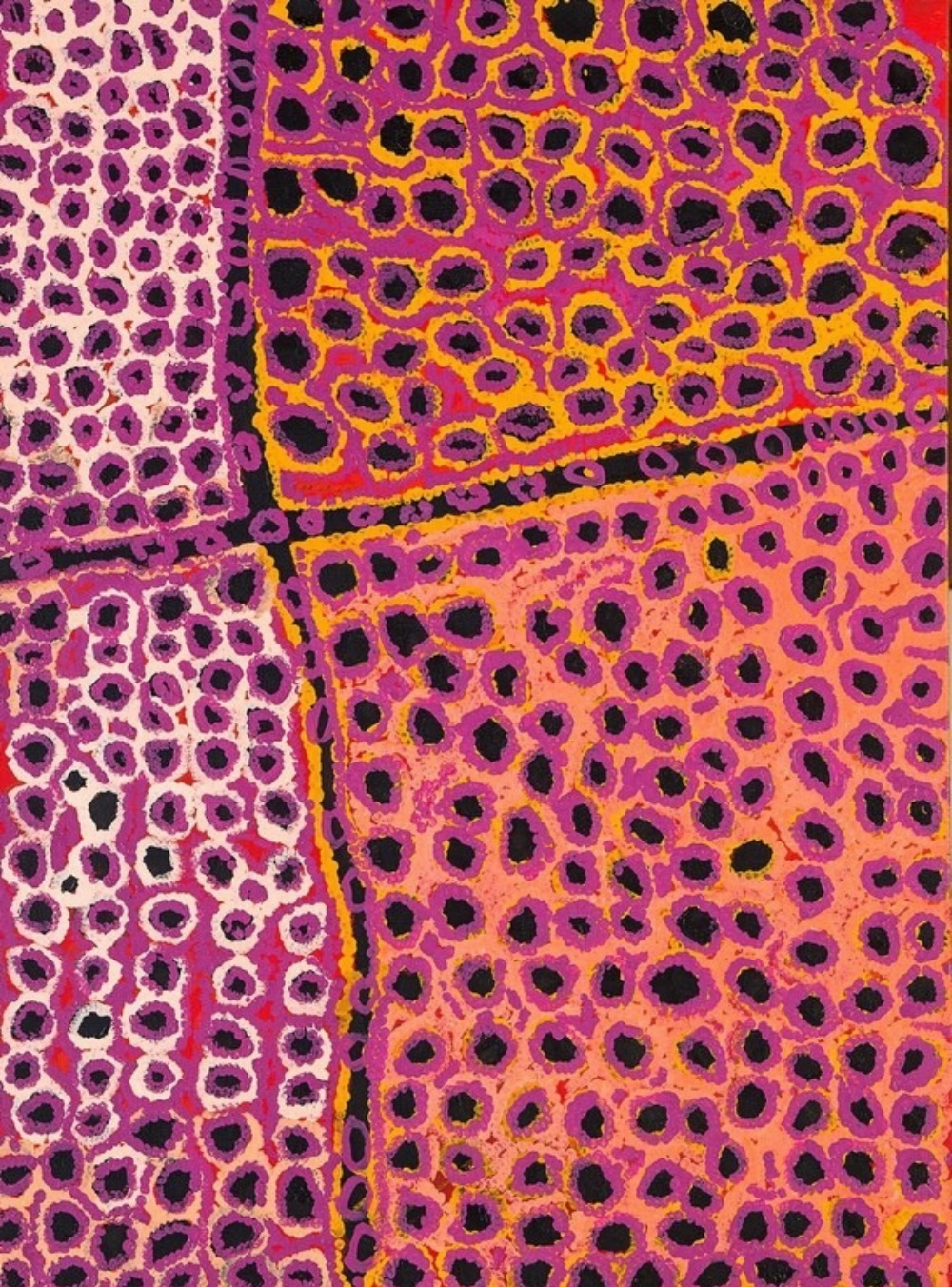
He used intense reds, oranges and yellows alongside black, white, pink, purple and blue. His brushwork was energetic and often deliberately uneven.
Unlike the carefully ordered dotting associated with some Pintupi painters, Tjutjuna’s marks were frequently large, irregular and loosely arranged. His compositions have an immediate vitality, with ancestral beings appearing to move across the surface.
Curator Bruce Johnson McLean, writing for the Queensland Art Gallery in 2014, challenged the suggestion that Tjutjuna’s paintings were not particularly traditional.
He recognised affinities between these apparently unconventional images and the older figurative painting traditions preserved in Anangu rock shelters.
Tjutjuna’s paintings were therefore innovative in appearance without being detached from their ancestral foundations.
The Meaning of Harry Tjutjuna’s Paintings
Wati Wanka – Spider Man
Spider Man remained Tjutjuna’s defining subject throughout his career.
In many paintings, Wati Wanka appears surrounded by numerous circular forms. Tjutjuna explained that these represent Minyma Wanka Tjuta, the ancestral female spiders, and Spider Man’s women and children.
Bruce Johnson McLean discusses this iconography in relation to Wanka (Spider) (2011), now in the Queensland Art Gallery collection.
The circles are therefore not merely decorative marks or conventional representations of waterholes. They belong to a particular ancestral family.
For Tjutjuna, every painting of Wati Wanka returned to the relationship between his own existence, his healing powers and the ancestral being of his Country.
Wati Nyiru and The Seven Sisters
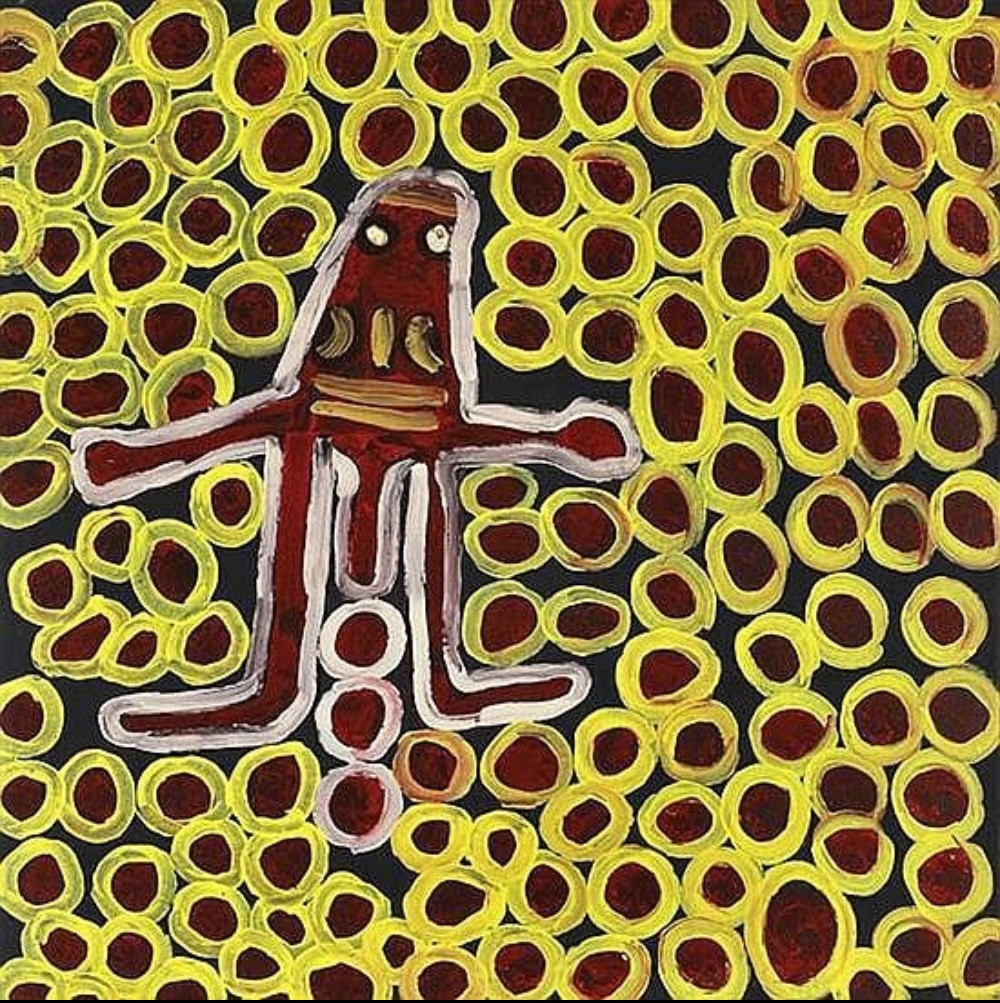
Tjutjuna frequently painted Wati Nyiru, the ancestral Magician who pursues the Seven Sisters.
The Seven Sisters dreaming extends across large areas of Aboriginal Australia, connecting ancestral journeys, places and ceremonial knowledge.
Tjutjuna’s paintings often emphasise Wati Nyiru’s pursuit of the women, with recognisable human forms embedded within fields of circular markings.
His Wati Nyiru Munu Wati Wangka (2011) brings together the Seven Sisters and Spider Man narratives.
Other APY artists, including Wingu Tingima and Tjungkara Ken, also painted the Seven Sisters Tjukurpa, interpreting the ancestral journeys through their own relationships with Country.
Kungka Tjuta – Women Drawing in the Sand
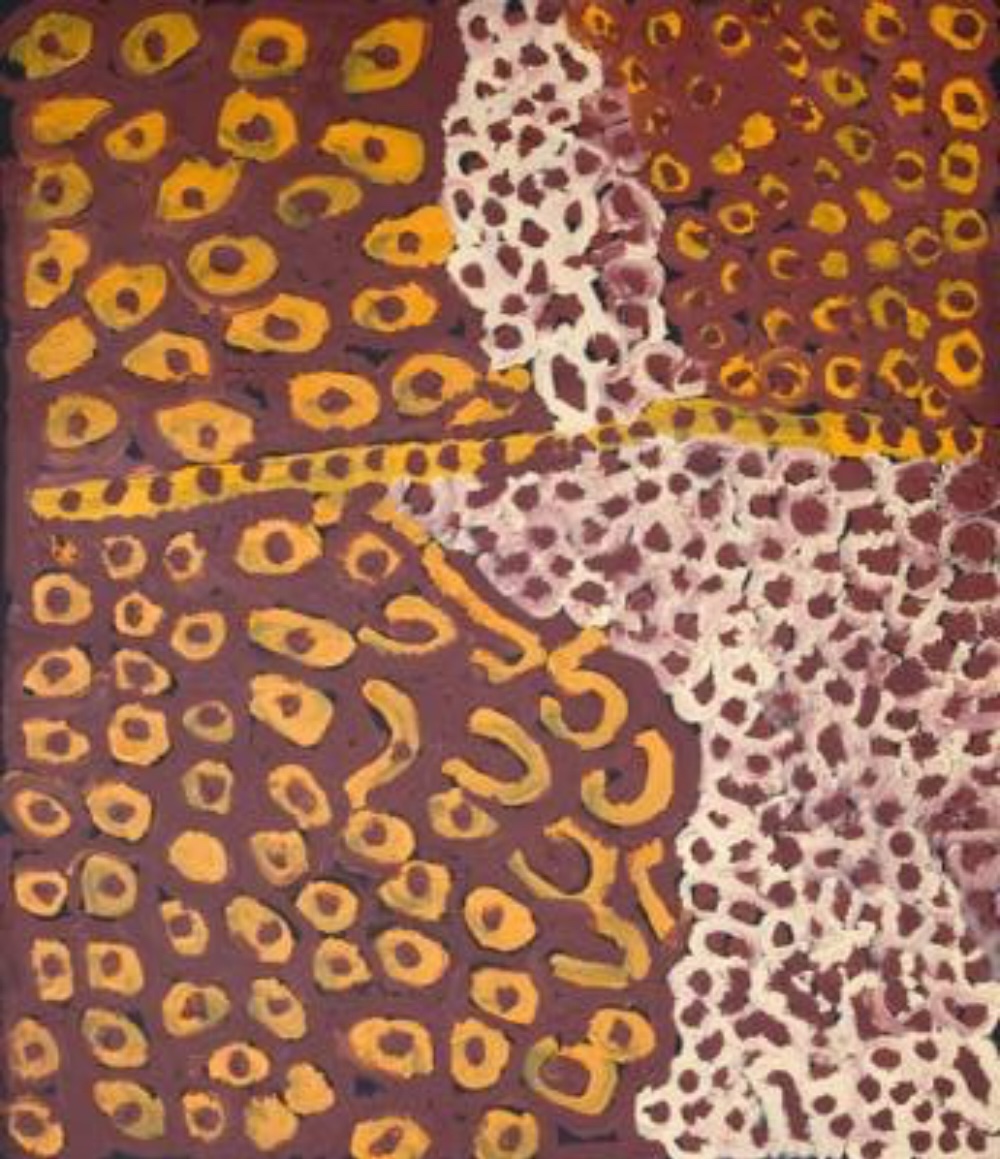
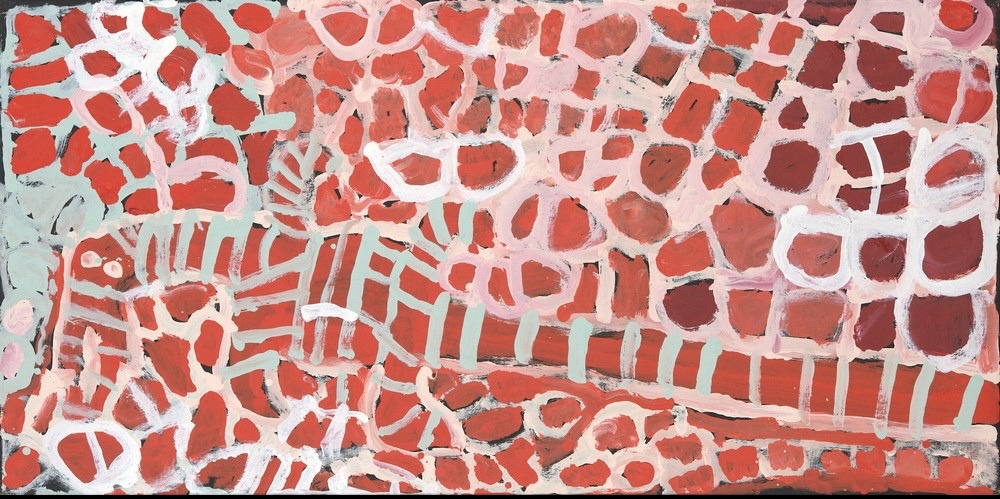
Some of Tjutjuna’s most engaging paintings depict Kungka Tjuta (Many Women).
These works concern young women sitting together, talking and practising milpatjunanyi, the traditional practice of telling stories through designs drawn in the sand.
Tjutjuna explained that the repeated circular markings represented impressions made by the women’s bottoms as they sat on the ground.
The women were discussing men, relationships and the possibility of marriage.
The story belongs near Kungka Malu, a large red hill close to Walytjatjara.
These paintings reveal Tjutjuna’s humour and his ability to transform familiar human interactions into exuberant compositions.
Wati Ngintaka – Perentie Lizard Man
Another important ancestral subject was Wati Ngintaka, the Perentie Lizard Man.
Tjutjuna painted this narrative in both his early experiments with acrylic painting and his later professional career.
His Wati Ngintaka Tjukurpa (2008), held by the National Gallery of Victoria, demonstrates his bold figurative approach to ancestral beings.
Mututa Tjukurpa – Bilby Woman
Tjutjuna also painted the ancestral Bilby Woman and her family.
According to the story documented by Ninuku Arts, Bilby Woman’s family consumed so many maku (witchetty grubs) that only small, immature grubs remained.
The Wati Mututa (Ant Men) became angry and pursued the family, eventually spearing them.
The story concerns the consequences of excessive consumption and the ancestral responsibilities governing the use of food resources.
Tjutjuna depicted this narrative in Mututa Tjukurpa (2010) and combined it with Spider Man in another painting acquired by the National Gallery of Victoria.
Harry Tjutjuna’s Importance and Legacy
Harry Tjutjuna combined the ceremonial authority of a senior Pitjantjatjara healer with an extraordinarily individual painting style. Emerging during the growth of APY Lands acrylic painting in the 2000s, he demonstrated how contemporary art could be visually experimental while transmitting ancestral Tjukurpa to younger generations.
His paintings entered the National Gallery of Australia, Art Gallery of South Australia, National Gallery of Victoria and Queensland Art Gallery. Important works include Spiderman Wati Wangka (2007), Wati Ngintaka Tjukurpa (2008), Wanka: Spider and Mututa Tjukurpa (2010) and Wanka (Spider) (2011). His daughter Margaret Richards continued the family’s traditions of painting and healing.
Tjutjuna died at Ernabella on 27 June 2019. His professional painting career was relatively brief, but he understood the urgency of preserving knowledge as older ceremonial leaders passed away.
As he explained in a statement recorded by Ninuku Arts:
“New generation got to learn Tjukurpa.”
When Tjutjuna painted Spider Man, he was painting himself, expressing his ancestral powers, identity and responsibilities to Country. Through his paintings, he passed something of himself to future generations.
Harry Tjutjuna Value and Auction results
Works Offered at Auction: 34
Sale Rate: 79%
Highest Sale: $8,000 AUD
Median Sale Price: $2,200 AUD
To view individual select artworks along with dimensions provenance and sales prices please ivsit the Harry Tjutjuna Value page (not yet constructed)
Public Collections
Abie Loy Kemarre’s work is represented in Australian and international collections including:
- Metropolitan Museum of Art, New York
- Art Gallery of South Australia, Adelaide
- National Gallery of Victoria, Melbourne
- University of Canberra Art Collection
- Seattle Art Museum, Seattle
- Musée des Confluences, Lyon
- Ishibashi Foundation / Bridgestone Museum of Art, Tokyo
- Adelaide University Art Collection
Further Reading
- Baldwin Spencer and Francis Gillen,The Native Tribes of Central Australia, Macmillan, 1899, particularly Chapters IV and VI.
- Bruce Johnson McLean,Harry Tjutjuna: Wanka (Spider), Queensland Art Gallery, Artlines, 2014.
- Vanessa Merlino,Harry Tjutjuna: Spider Man, in Clever Men: Harry Tjutjuna, Dickie Minyintiri and Tiger Palpatja, D’Lan Contemporary, 2024.
- Dr Diana James,Breaking Ground: Artists from the Desert Ranges, 2026.
- Ninuku Arts – Harry Tjutjuna.
All images featured in this article are presented strictly for educational and informational purposes.
This website may include copyrighted material for which specific authorization has not been obtained from the copyright owner.
All such images are presumed to be the intellectual property of the respective artist or their estate, and are used in accordance with principles of fair dealing or fair use under applicable copyright law.