Jack Karedada (also spelled Karadada): Master of the Wandjina on Bark
c. 1920–2003
Wunambal
Cape Voltaire (Wulangku), north-west Kimberley
Kalumburu
Wandjina Art / Kimberley Art
Bark painting
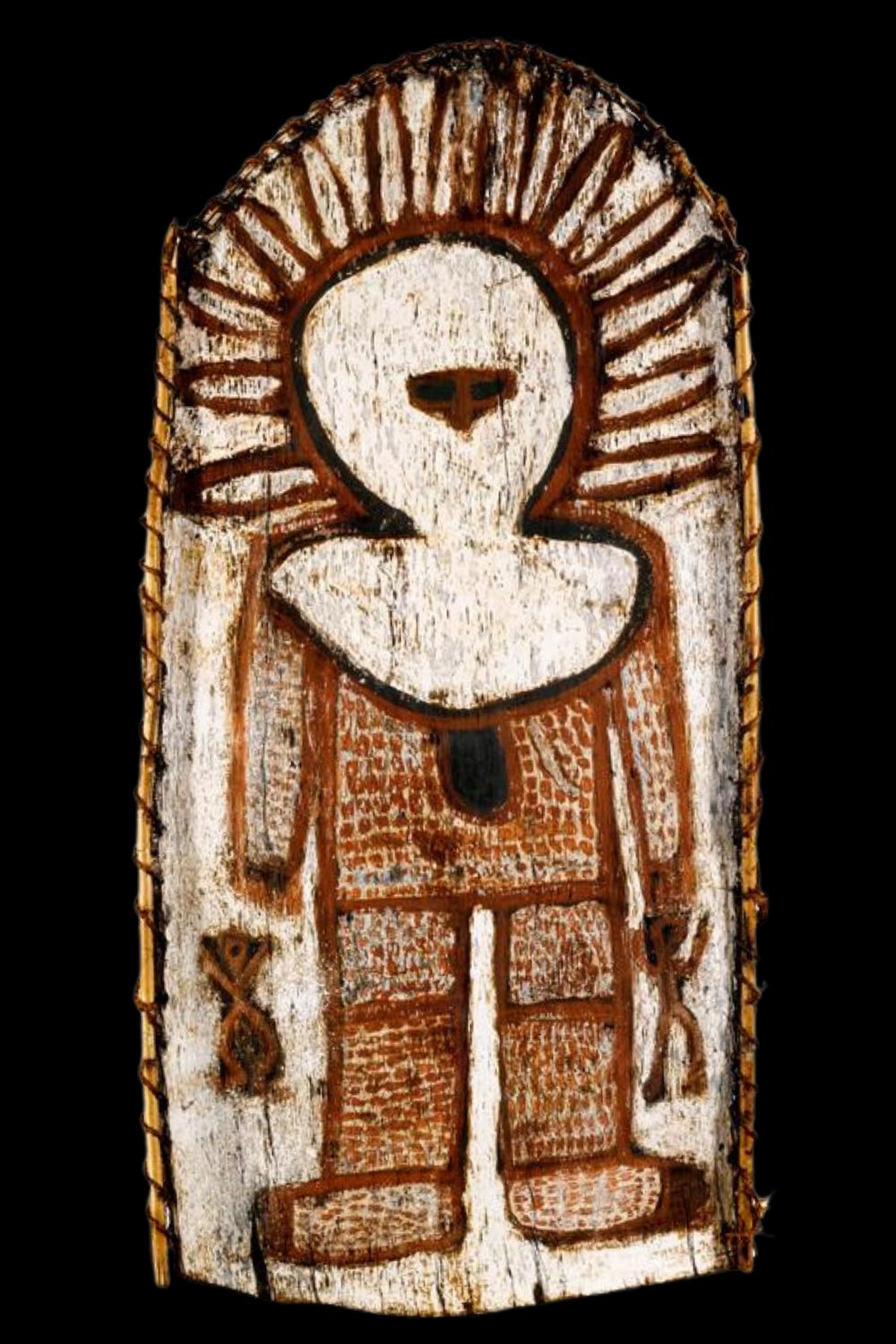
Jack Karedada, sometimes rendered Karadada, stands as one of the most important painters within the Wandjina tradition of Kimberley Rock Art. Working primarily from Kalumburu in the north-west Kimberley, he helped establish Wandjina bark painting as one of the defining movements within early contemporary Aboriginal art. His highly distinctive Wandjina figures, characterised by enclosed halos, small joined eyes, and compressed upper-body compositions, are now regarded among the most recognisable images produced during the pioneering period of Kimberley bark painting.
Born around 1920 and deceased in 2003, Jack belonged to the Wunambal-speaking peoples whose country extends between the Prince Regent River and the King Edward River. As an initiated elder and cultural custodian, he helped transform sacred Wandjina imagery from ancestral rock shelters onto portable bark paintings during the formative years of contemporary Kimberley Aboriginal art. Although little is documented about his early life, he likely lived within traditional cultural practice prior to relocating to the Kalumburu mission during the 1960s.
If you have a bark painting by Jack Karedada and are considering selling, clear images of the front and back, dimensions, and any known provenance can assist in assessing authenticity and market value. I am always interested in viewing works by this important Kimberley artist.
Style
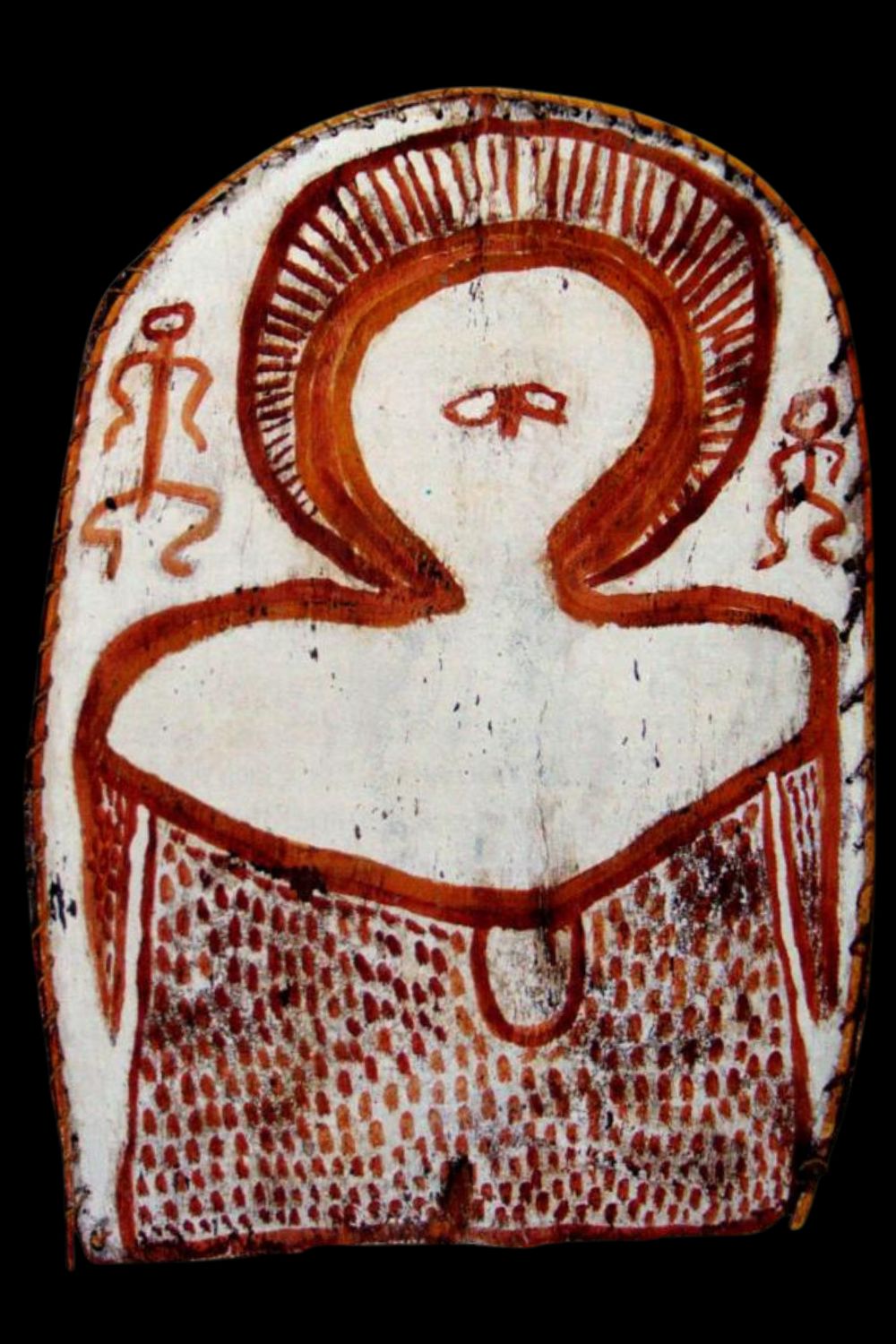
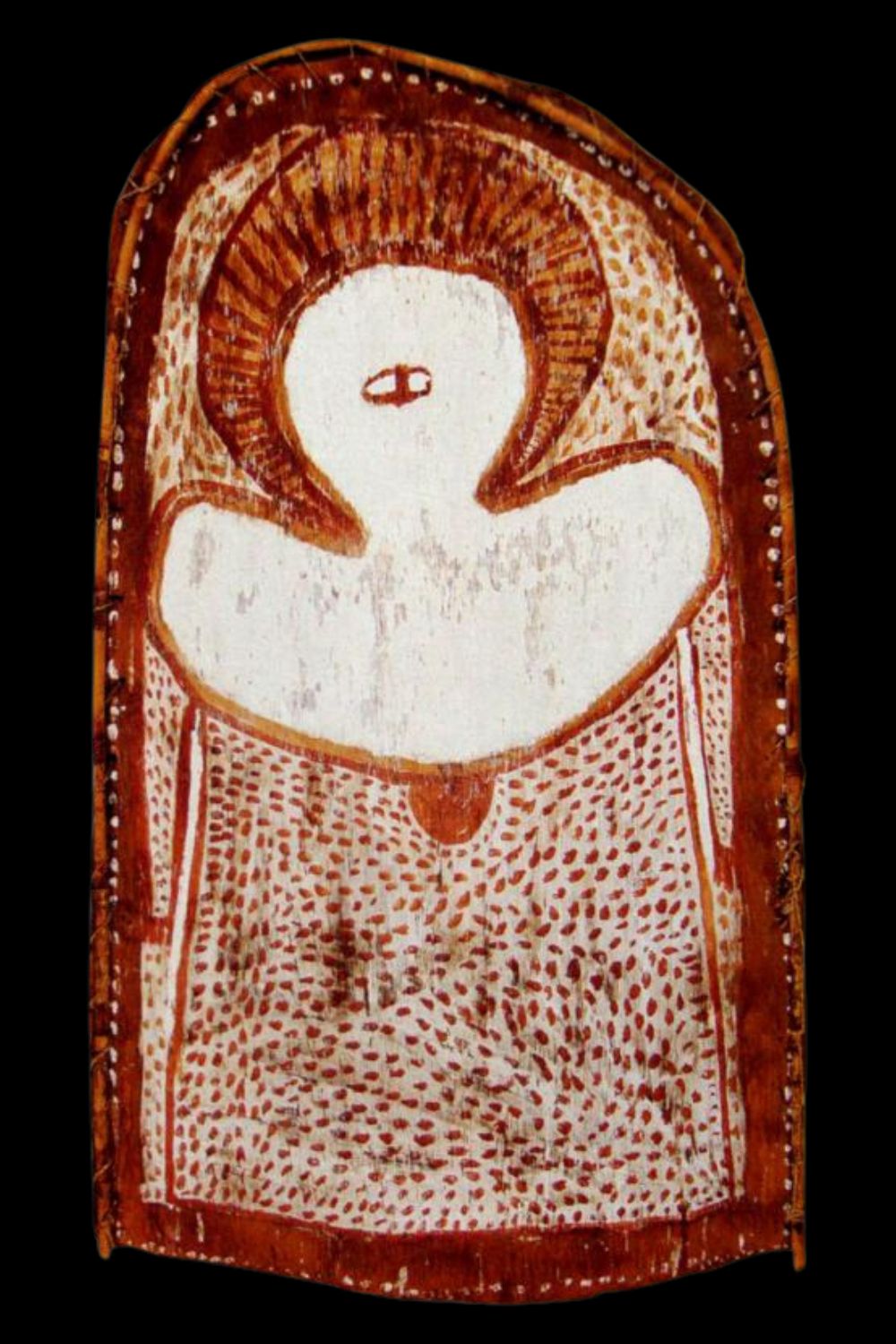
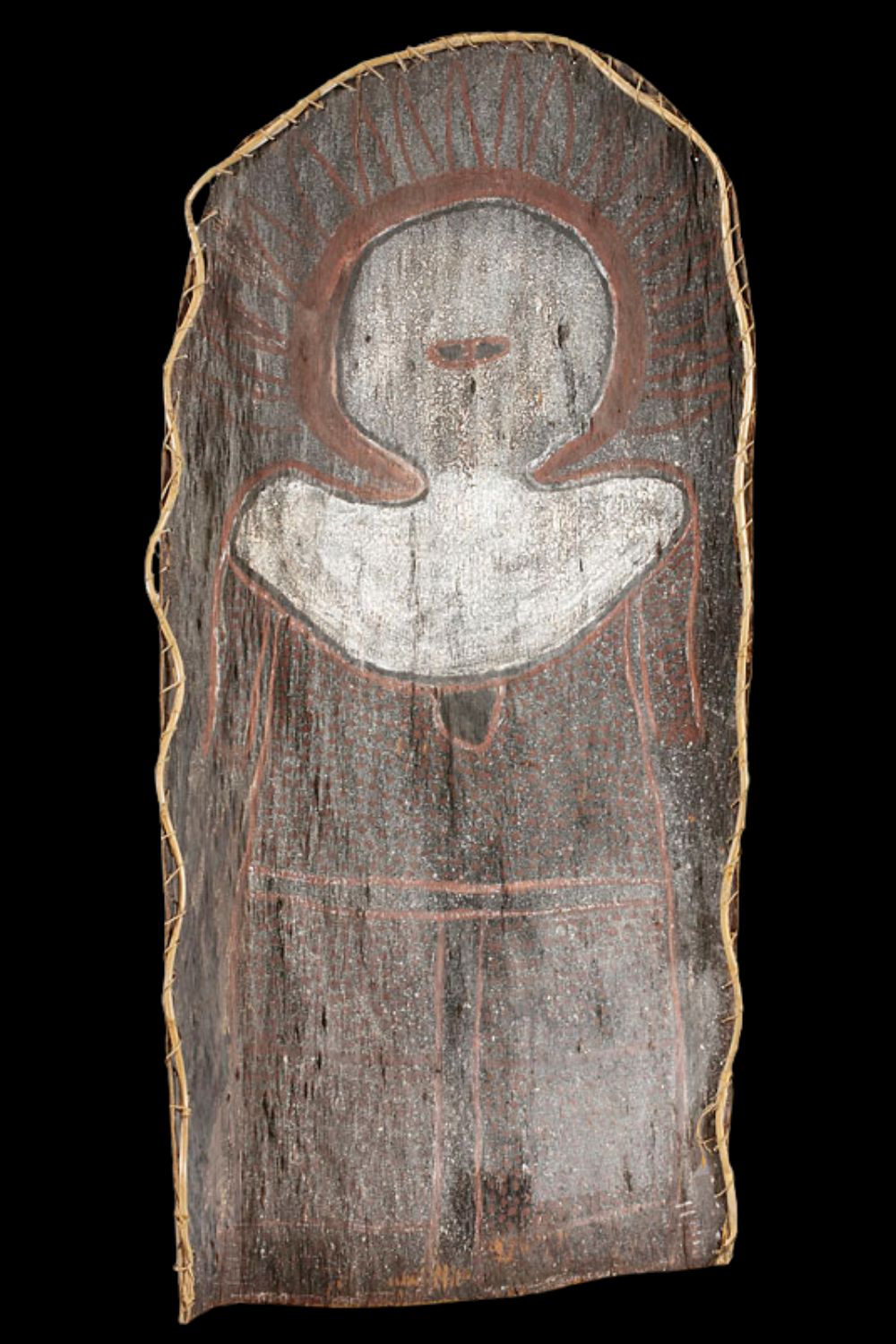
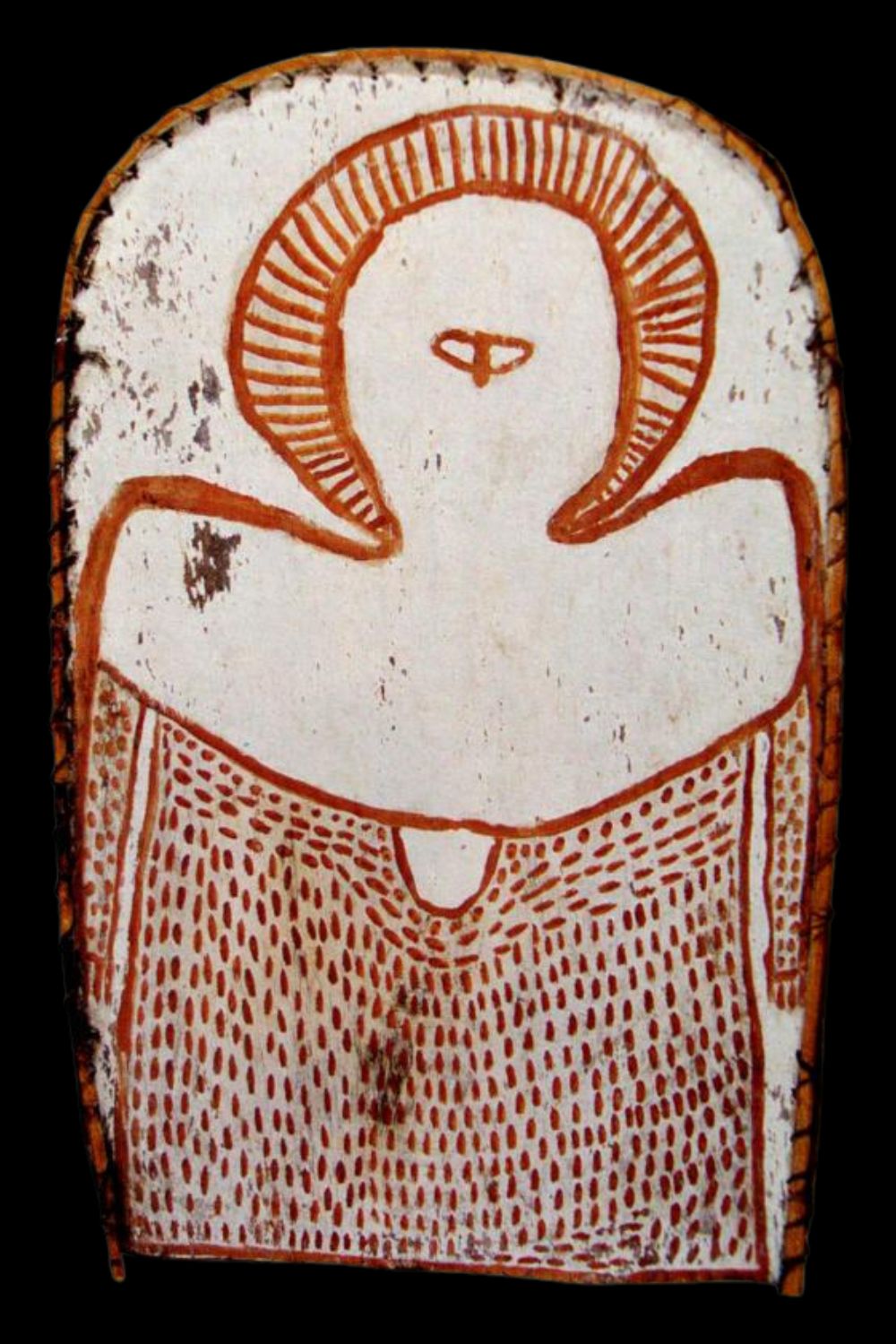
Jack Karedada’s Wandjina paintings are among the most recognisable works produced during the pioneering period of Kimberley bark painting. His figures possess a highly compressed and controlled structure that differs noticeably from many other Wandjina artists working around Kalumburu during the 1970s and 1980s.
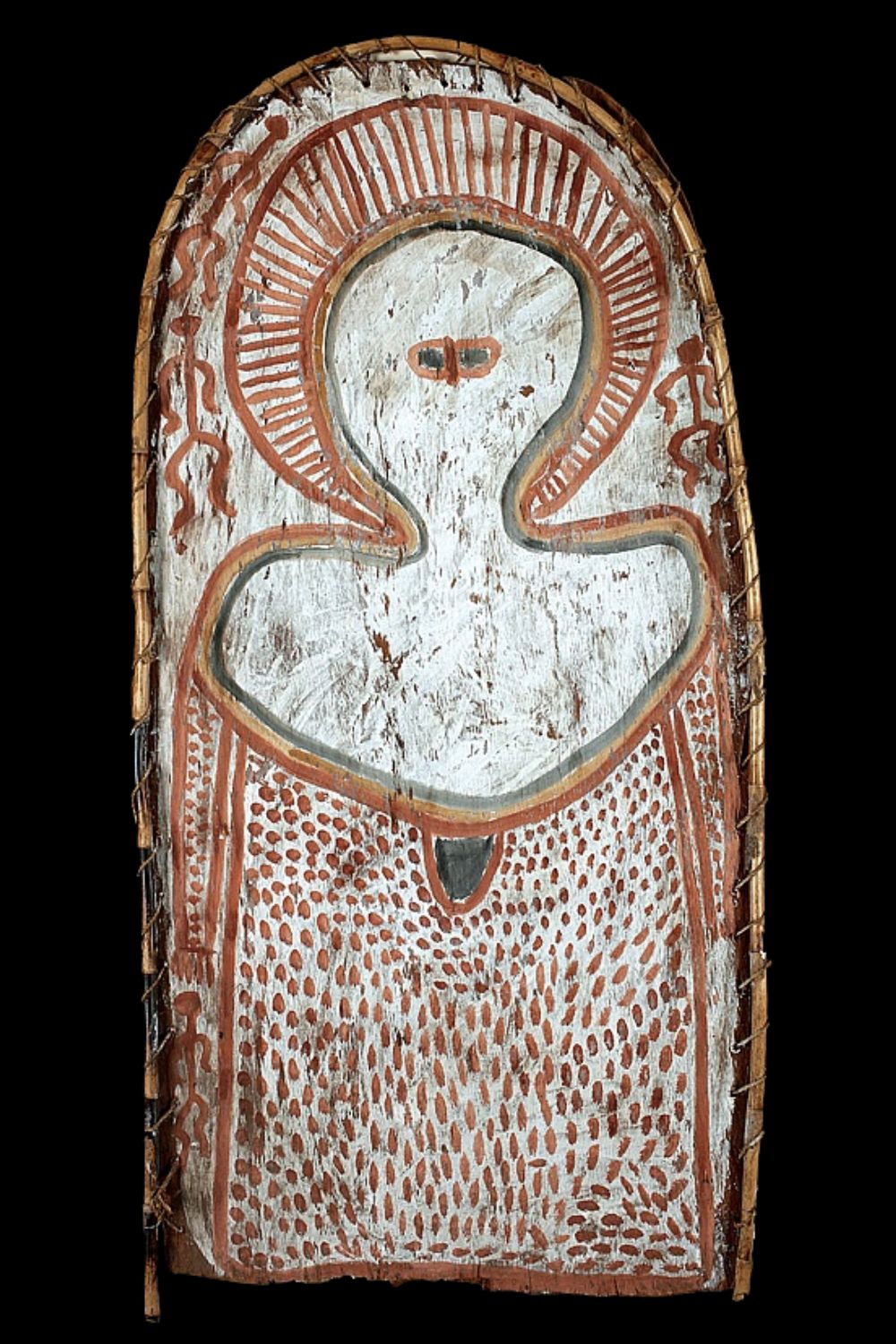
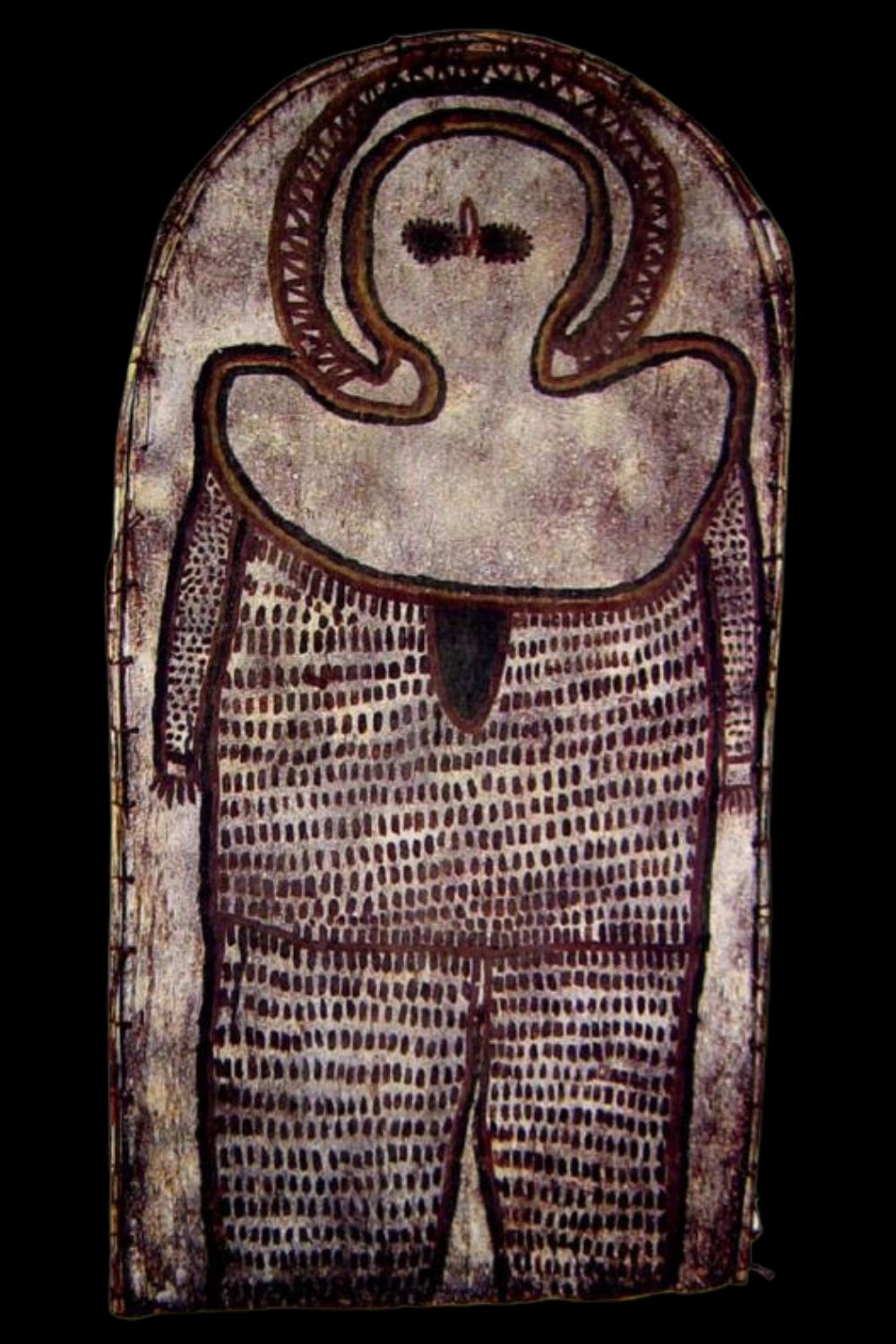
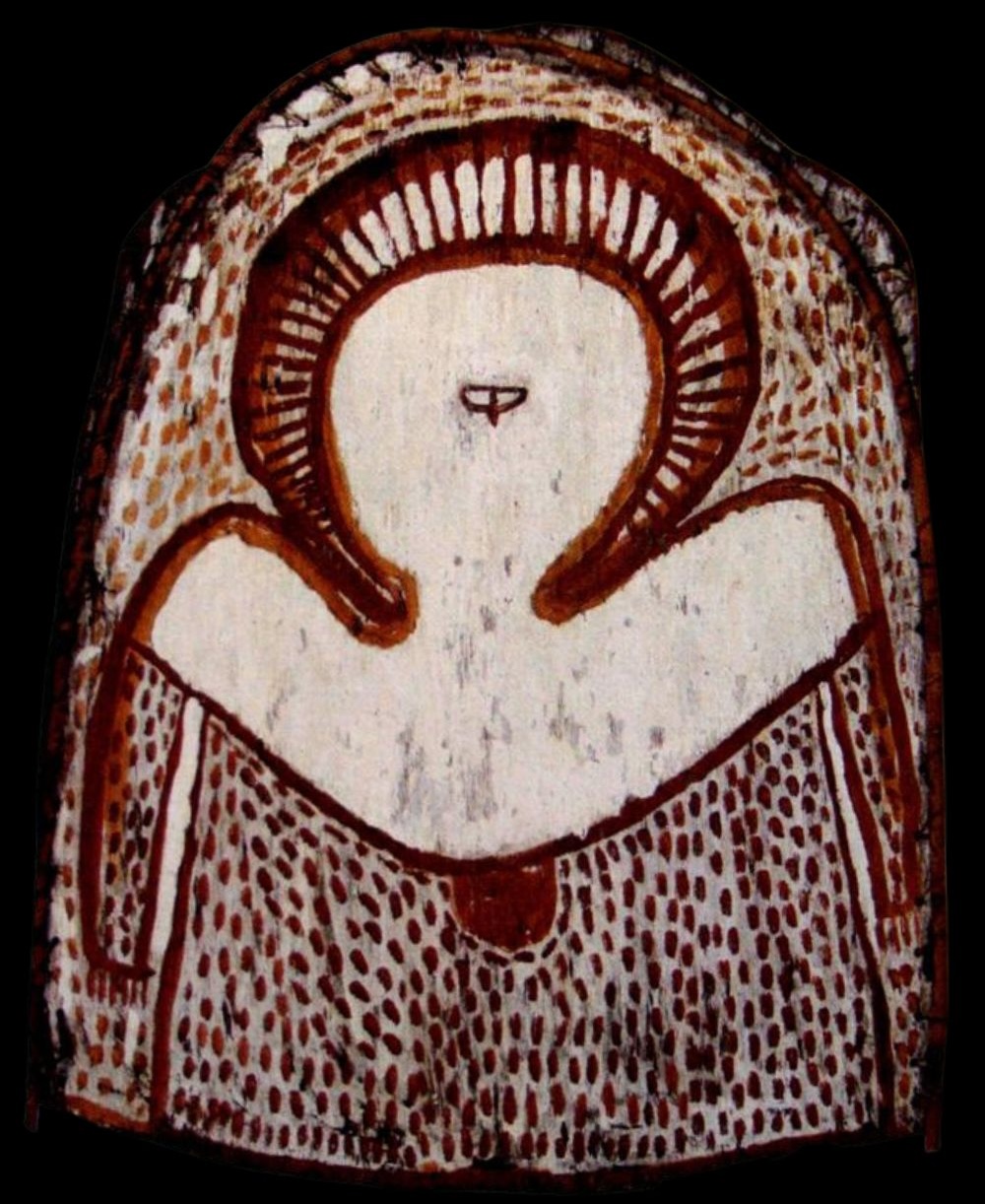
One of Jack Karedada’s most distinctive stylistic features is the treatment of the eyes. He commonly painted the eyes as two very small touching or joined forms separated only by a short vertical brush stroke representing the nose. Unlike the large dominating eyes seen in the works of some other Wandjina painters, Jack’s eyes are restrained and compact, contributing to the solemn and supernatural stillness of his figures. Mouths are generally absent or only minimally indicated.
Jack frequently depicted Wandjina figures from the waist upward, often omitting the legs entirely. This compressed upper-body composition is one of the clearest ways to distinguish his paintings from those of artists such as Alec Mingelmanganu, whose figures are often more expansive and monumental. His Wandjina are typically framed by enclosed halo forms created with a continuous brush stroke rather than free-ended radiating forms.
Many of Jack Karedada’s bark paintings are executed on arch-shaped sheets of bark framed with bentwood along the top and sides. Some works also include small bush spirit support figures positioned beside the Wandjina. Dense dotted infill, strong symmetry, and restrained facial features give his finest paintings a powerful spiritual presence closely connected to the ceremonial Wandjina paintings of the Kimberley rock shelters.
Compared with other members of the Karedada family, particularly Lily and Rosie Karedada, Jack’s paintings are generally rarer and more highly sought after by collectors of early Kimberley bark painting.
Jack Karedada Compared With Other Wandjina Artists
The closest stylistic comparison to Jack Karedada is Alec Mingelmanganu. Both artists commonly painted compressed frontal Wandjina figures that fill much of the bark surface and frequently used opposing arch-shaped eyes separated by a narrow nose. However, Jack Karedada’s eyes are usually considerably smaller and more restrained, while Alec’s Wandjina tend to possess far more exaggerated upward sweeping shoulders and a heavier monumental presence. Jack’s paintings generally feel more controlled compositionally, whereas Alec’s figures often appear physically too large for the bark itself.
Charlie Numbelmoore developed a very different Wandjina style characterised by large round eyes with fine radiating eyelashes and a more haunting facial expression. Charlie’s paintings often derive their power from the gaze of the Wandjina face itself, while Jack Karedada’s figures are more defined by their compressed structure, enclosed halo forms, and restrained facial features.
Lily Karedada, Jack’s wife, generally painted softer and more decorative Wandjina figures with rounded eyes and a gentler appearance. Although stylistically related, Lily’s paintings usually lack the severity and compressed formal structure that characterise Jack’s strongest works.
Mickey Bungkuni produced an earlier and more overtly ceremonial style of Wandjina painting. Unlike Jack Karedada’s enclosed halo forms, Mickey Bungkuni’s halos often resemble radiating feathered headdresses or ceremonial crowns extending dramatically around the head. His paintings frequently retain a rougher and more ethnographic quality closely connected to the earliest portable Wandjina bark paintings collected from the Kimberley.
For collectors and researchers, differences in eye structure, halo construction, body proportion, and compositional compression are often essential when attempting to identify early unsigned Wandjina bark paintings.
Art Historical Context
The late 1960s and early 1970s marked a pivotal moment: artists such as Alec Mingelmanganu, Charlie Numbulmoore, and Jack Karedada began painting age‑old Wandjina motifs on string bark—heralding a new chapter in Aboriginal art. These works quickly attracted attention through mission networks and exhibitions.
In 1975, Alec Mingelmanganu’s Wandjina bark, entered as “Australian Gothic” at the Derby Boab Festival Art Competition, garnered attention and kindled artistic activity at Kalumburu.
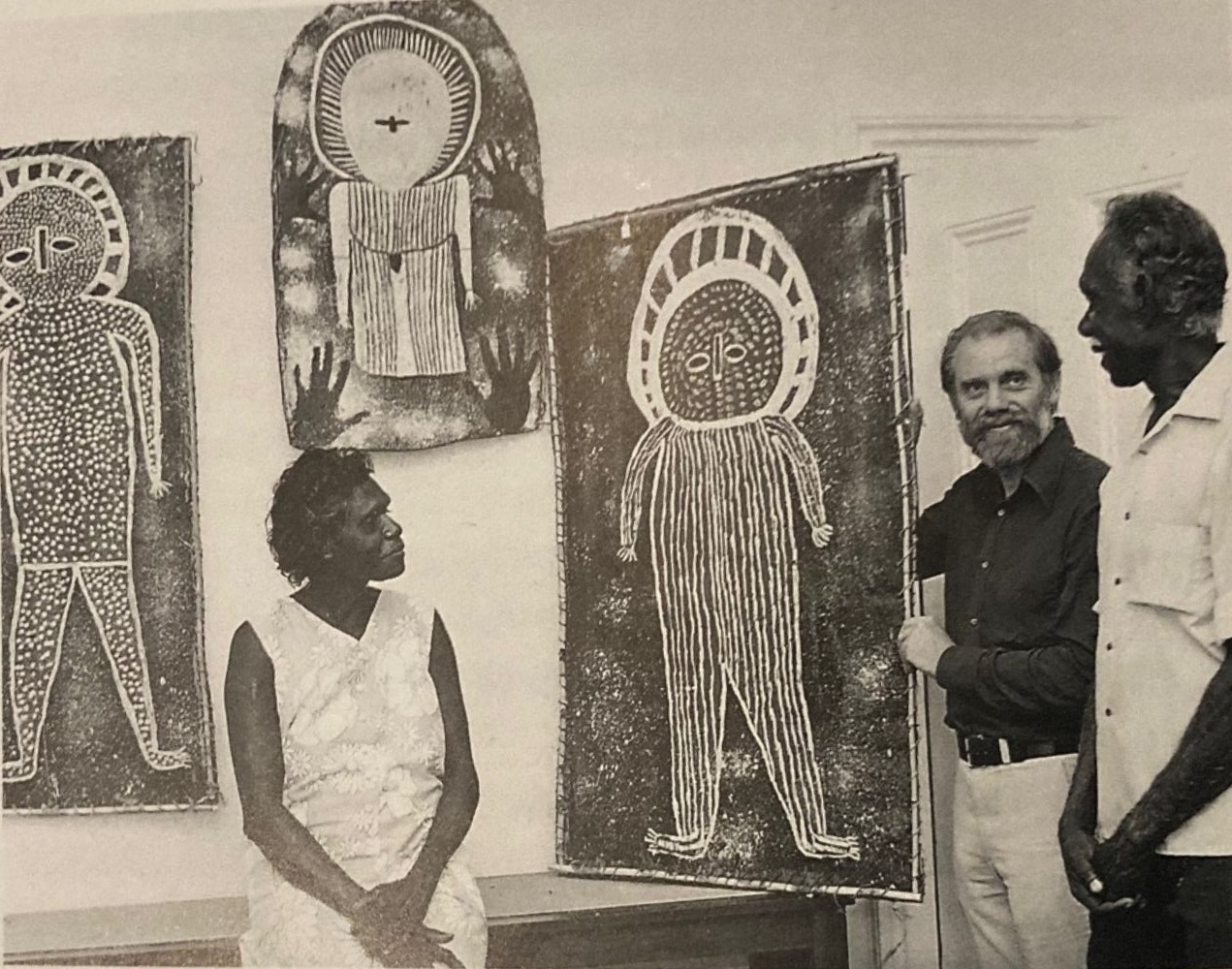
Shortly thereafter, the first exhibition of Wandjina bark paintings was held in Perth by Traditional Aboriginal Arts in Perth and included works by Jack and his wife Lily Karedada, introducing their powerful ancestral imagery to a wider audience.
Jack was a cultural pioneer alongside figures such as Charlie Numbulmoore, Wattie Karruwara, and Mickey Bungkuni, laying the foundations for Wandjina bark painting as both tradition and art market force.
Biography
Jack Karedada, sometimes spelled Karadada, was an Aboriginal Australian artist, believed to have been born around 1920. He was a member of the Wunambal-speaking peoples, based in the northwest Kimberley region between the Prince Regent River and the King Edward River. His family hailed from Cape Voltaire (Wulangku). Their clan totem was the butcherbird (“karadada”), which gave the family its name.
Very little is known about Jack Karedada’s early life but he likely lived a traditional lifestyle until the 1960’s when he moved to Kalumburu mission station.
According to Kim Akerman Prior to the 1970’s very few artists names or affiliations were recorded when paintings were collected with the exception of Charlie Numbelmoore, Wattie Karuwara and Mickey Bungkuni.
In 1974 Alec Mingelmanganu made a Wandjina on bark that was then discarded and picked up by Kim Akerman who entered it into the 1975 Derby Boab Week Art Show, where it won first prize. This caused a buzz of excitement in Kalumburu and catalysed other artists to paint Wandjina on bark.
In Mid-1970’s the first exhibition of art and artefacts from Kaluburu was held in Perth by Aboriginal traditional Arts and jack Karadada was one of the four artists who were invited to attend.
In 1979 Mary Macha held a series of arts and craft workshops throughout the Kimberley and introduced artists to european fixatives. Mary Macha selected artists that she though had a particular talent and encouraged them to paint. Jack karedada was one of these select artists.
Market Significance
Jack Karedada’s aboriginal bark paintings attract strong interest among collectors of Kimberley bark art. While the majority of his works sell in the range of US $1,300 to $15,000. One exceptional painting by Jack sold for over US $100,000, but this was an outlier. That particular piece had superb provenance, strong visual impact, and deep cultural significance. It should not be taken as the typical value of his works.
In general, Jack Karedada’s paintings are considered rare and desirable, especially compared to works by other members of the Karedada family. His position as a pioneer Wandjina painter and an initiated elder adds considerable cultural and market weight to his name.
Namarali and the Creation of Country
This work draws its title and subject from a foundational myth of the Worrorra people, whose ancestral territories span the dramatic coastline between the Prince Regent River and Doubtful Bay in the West Kimberley. At the heart of this cosmology is Namarali (also spelt Namarlee), one of the most senior and revered Wandjina ancestral beings. In this mythic narrative, Namarali, accompanied by other Wandjinas, sculpts the coastline through a pursuit and battle over a transformative being—the female Rock Cod.
One of the most significant ceremonial sites tied to this ancestral drama lies within the monumental rock shelter at Ngumbri (Raft Point). The anthropologist Ian Crawford recorded a version of this story, in which Namarali, in his relentless pursuit of the Rock Cod, confronts betrayal, mortal injury, and spiritual transfiguration. Speared fatally during a Wandjina conflict, Namarali is carried away by his kin, who prepare his final resting place on a ceremonial tree platform, marking the moment he established law for the treatment of the dead. His image, painted onto the rock face, consecrated the site and the ritual that would follow.
The Karedada family, whose ancestral lands lie at Cape Voltaire (Wulangku), hold direct cultural lineage to this mythology. Their clan’s primary totemic affiliation is with the butcherbird (karadada), from which their name is derived. Their patrilineal moiety affiliations include the spotted nightjar (wodoi) and the brolga (kurangkuli), while the reciprocal totems—owlet nightjar (Jiringgun) and bustard (banar)—are especially significant to female custodians such as Lily and Rosie Karedada.
In the hands of Jack Karedada, such narratives become more than images—they are law, memory, and ancestral truth rendered in ochre and bark.
I acknowledge Tim Klingender and Kim Akerman for the above information.
All images in this article are for educational purposes only.
This site may contain copyrighted material the use of which was not specified by the copyright owner.
Recommended Reading
Frequently Asked Questions About Jack Karedada
Why Are Jack Karedada Paintings Important?
Jack Karedada was one of the pioneering Wandjina painters who helped establish Kimberley bark painting as a major movement within early contemporary Aboriginal art. His highly distinctive style, combined with his role as an initiated cultural custodian, makes his paintings important both artistically and culturally.
Are Jack Karedada Paintings Rare?
Yes. Compared with many other Kimberley artists, authentic bark paintings by Jack Karedada are relatively scarce. Important early examples, particularly large bark paintings with strong composition and provenance, are highly sought after by collectors of Wandjina art.
Did Jack Karedada Only Paint Wandjina?
Jack Karedada is best known for his Wandjina paintings, which form the overwhelming majority of his recognised works. Some paintings also include small bush spirit support figures and related ceremonial imagery associated with Kimberley rock art traditions.
What Makes Jack Karedada Different From Other Wandjina Artists?
Jack Karedada’s paintings are particularly recognisable for their small joined eyes, enclosed halo forms, compressed upper-body compositions, and restrained facial features. His Wandjina figures often possess a controlled supernatural stillness that differs from the more monumental figures of Alec Mingelmanganu or the large staring eyes associated with Charlie Numbelmoore.
Can I Sell a Jack Karedada Bark Painting?
Yes. If you own a painting that you believe may be by Jack Karedada, clear images of the front and back, dimensions, and any known provenance can assist in assessing authenticity and market value. Early bark paintings in strong condition are especially sought after by collectors of Kimberley Aboriginal art.
.
Jack Karedada Bark Paintings Images
The following bark painting are not a complete list of works but give a further feel for the variety and style of this artist.