Ivan Namirrkki – Painting the Spirit of Country
1961–
Kuninjku
Kardbam clan
Kumurrulu, Western Arnhem Land, Northern Territory
Marrkolidjban / Kumurrulu / Maningrida
Kuninjku Art / Western Arnhem Land Art
Bark painting / Wooden sculpture
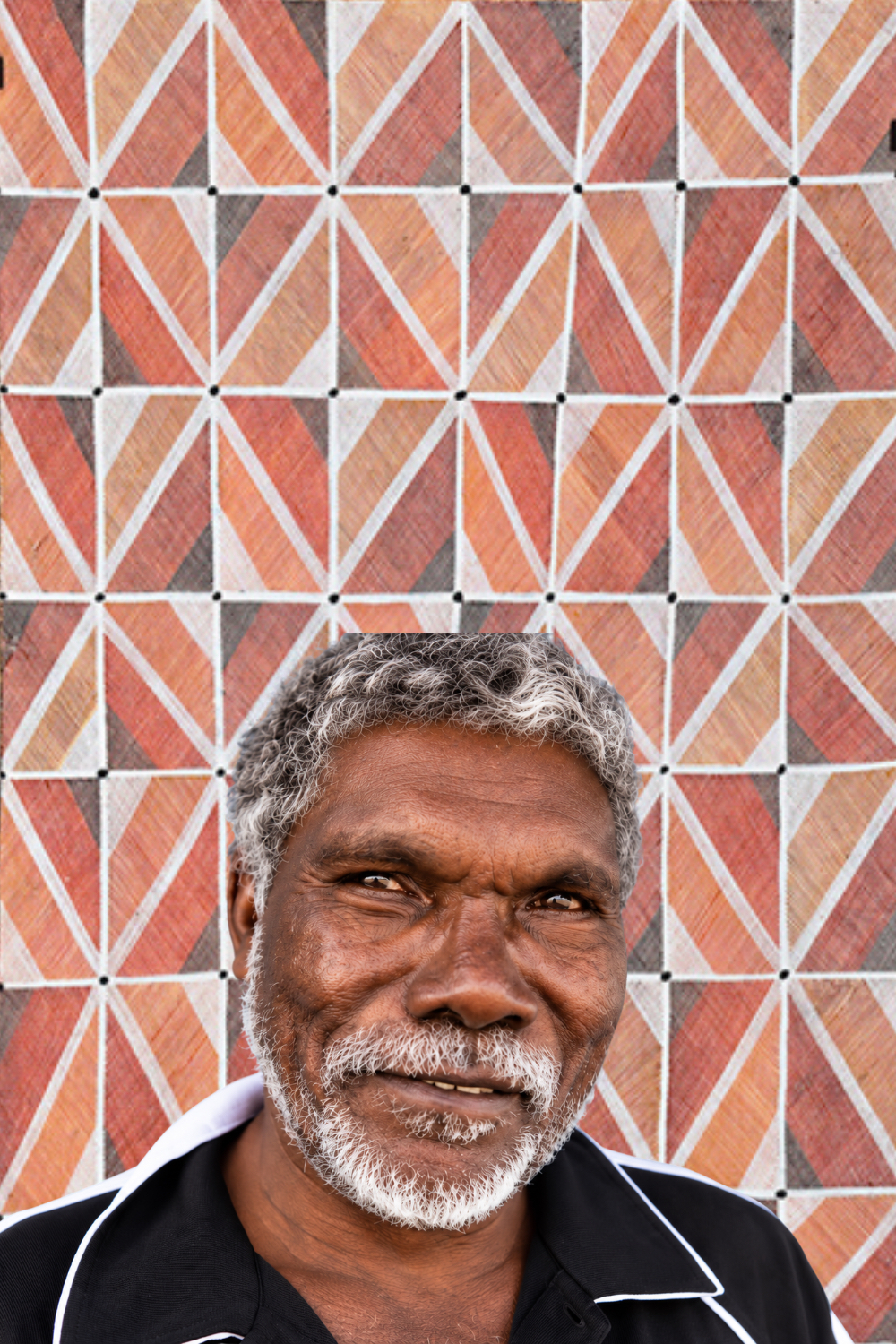
Ivan Namirrkki (born 1961) is an important Kuninjku Aboriginal artist from western Arnhem Land, recognised for his intricate geometric bark paintings depicting ancestral sites, sacred waterholes and the spiritual powers of Country.
The son of celebrated bark painter Peter Marralwanga, Namirrkki learned to paint ancestral beings before developing his distinctive style of symmetrical diamond patterns and fine rarrk (crosshatching).
His paintings range from figurative representations of Rainbow Serpents and spirit beings to complex geometric designs associated with Mardayin ceremonies.
Many of his works depict ancestral places around Kumurrulu, an outstation he established in fulfilment of a promise to his father. For Namirrkki, painting is closely connected to maintaining cultural knowledge and protecting Country.
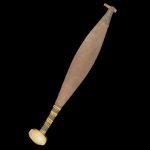
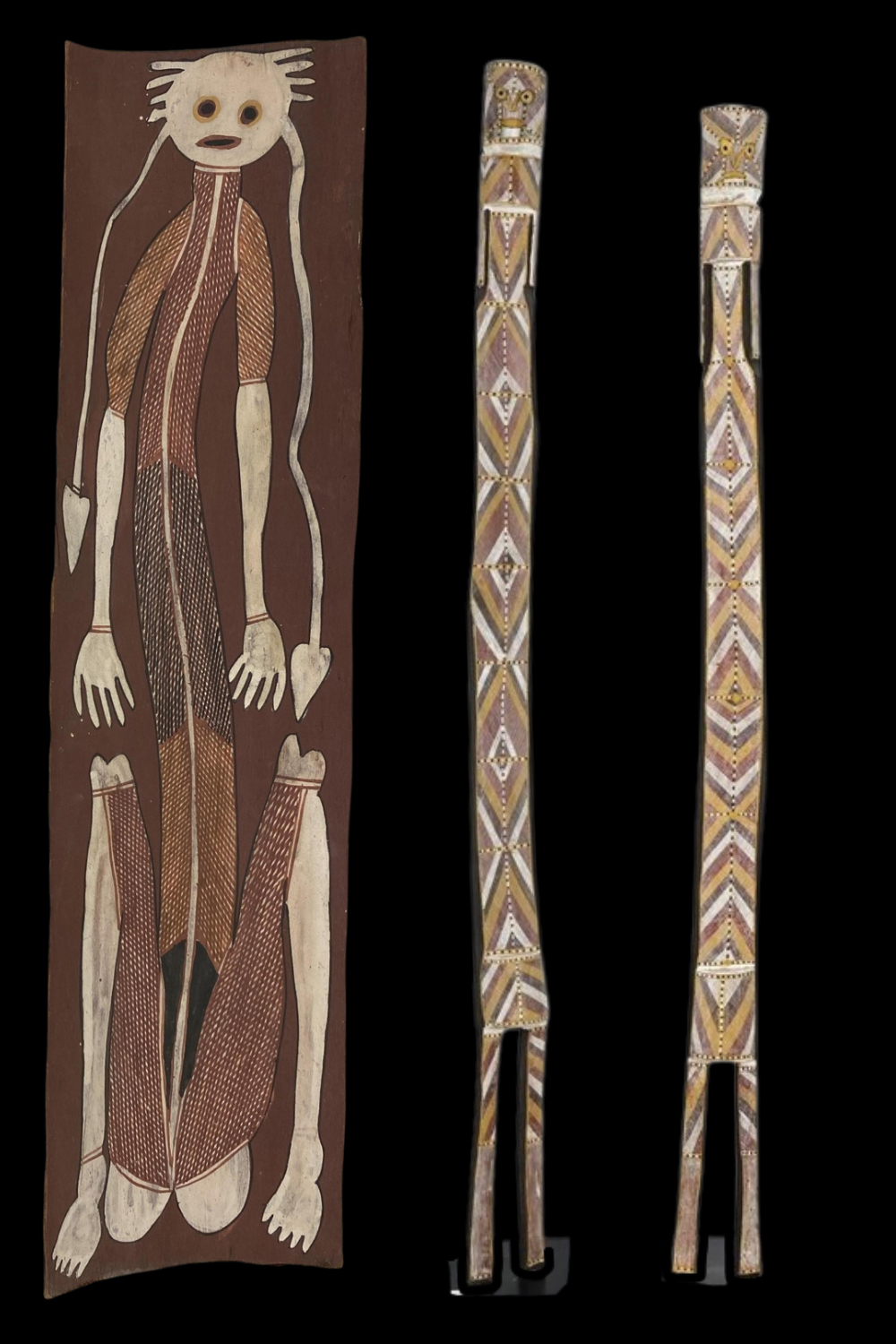
Namirrkki is also an accomplished sculptor, creating painted Lorrkon hollow-log memorial poles and carved wooden figures of Namorrorddo, a supernatural being associated with shooting stars and the night sky.
Ivan Namirrkki Biography
Ivan Louis Namirrkki was born in 1961 at Yidkuna billabong in Born Country, near Marrkolidjban in western Arnhem Land. His father, Peter Marralwanga, was a senior Kardbam clan leader and influential bark painter, while his mother, Mary-Rosie Dukkalwanga, belonged to the Kunumbidj clan.
As a baby, Ivan travelled with his parents to Maningrida, carried in a paperbark basket before the family crossed the Liverpool River by dugout canoe. After approximately ten years, they returned to Country, living briefly at Kurrukkurrh before settling at Marrkolidjban in 1973. The outstation became an important centre of Kuninjku bark painting, supporting both cultural traditions and the local economy.
Ivan learned to paint directly from his father, who taught him not only artistic techniques but also ancestral stories, sacred places and ceremonial responsibilities. Anthropologist Luke Taylor observed their close working relationship during the early 1980s.
Around 1981, father and son collaborated on a painting of Yawkyawk, a female freshwater spirit associated with Yelelban, now held in the Djomi Museum at Maningrida. In 1983, they produced Mandjabu and Nakorrkko Footprint, depicting an ancestral fish trap and footprints associated with Kardbam Country. These paintings demonstrate how Marralwanga passed cultural knowledge to his son through art.
Ivan began exhibiting in the early 1980s, contributing works to exhibitions organised by Mary Màcha in Perth in 1981 and 1983. He accompanied his father to the openings and subsequently sold paintings through Maningrida Arts & Culture, occasionally to collector Dorothy Bennett, and through Injalak Arts at Gunbalanya, where he also worked on paper. By the late 1980s, he had established an independent career in bark painting and wooden sculpture.
Following his father’s death in 1987, Ivan initially moved to Mankorlod, his traditional Kardbam clan estate. During the early 1990s, he established Kumurrulu, a smaller outstation in neighbouring Barrbinj Country, fulfilling a promise he had made to his father.
Peter had shown Ivan this Country as a young man and entrusted him with knowledge of important ancestral sites, particularly those associated with the Leech and Maggot ancestral beings. At Kumurrulu, Ivan continued hunting, fishing, managing fire and participating in ceremonies while teaching his children about Country.
These ancestral places subsequently became central subjects of his distinctive geometric bark paintings, connecting his artistic career with his inherited responsibility to care for Country.
Ivan Namirrkki Painting Style
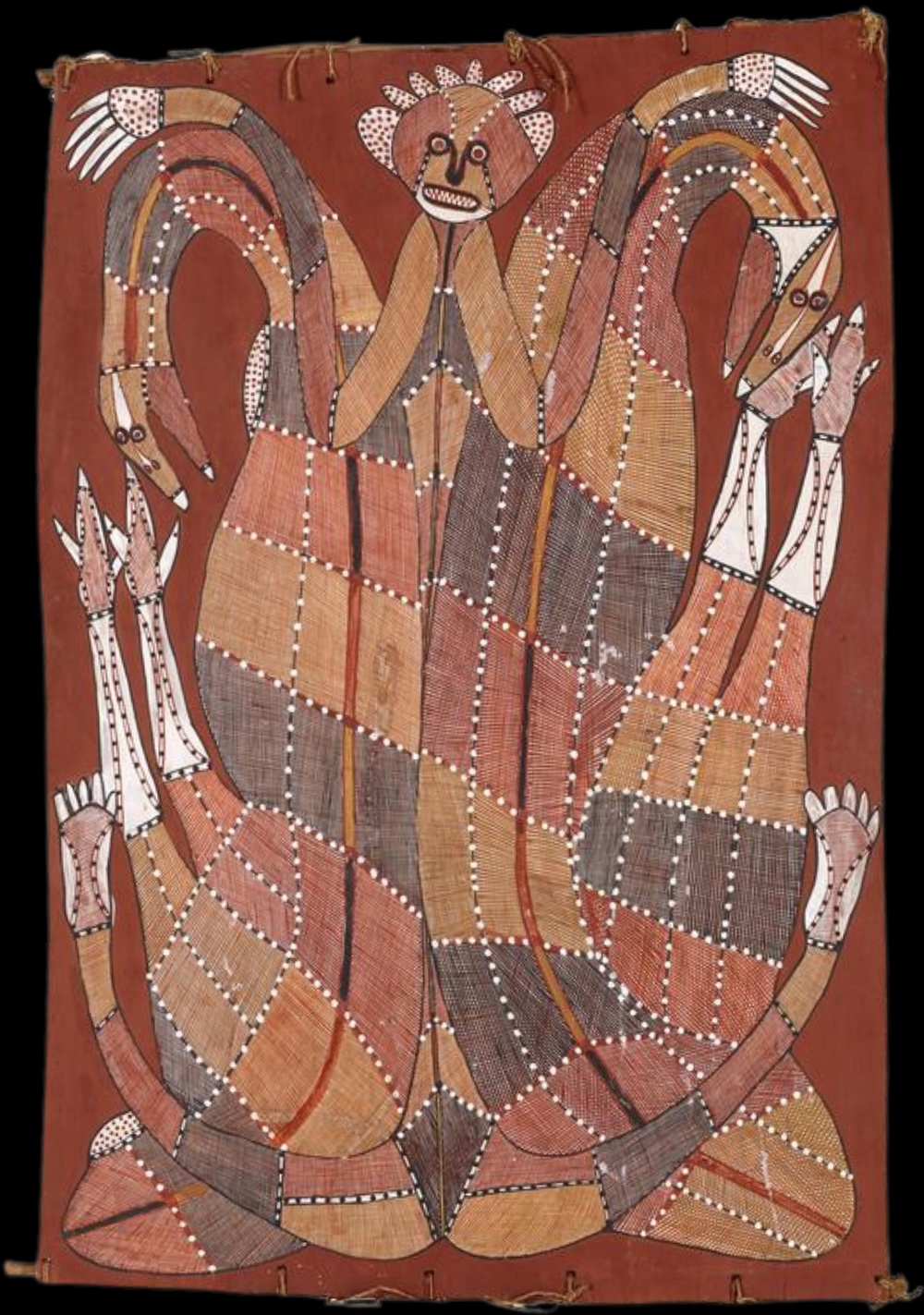
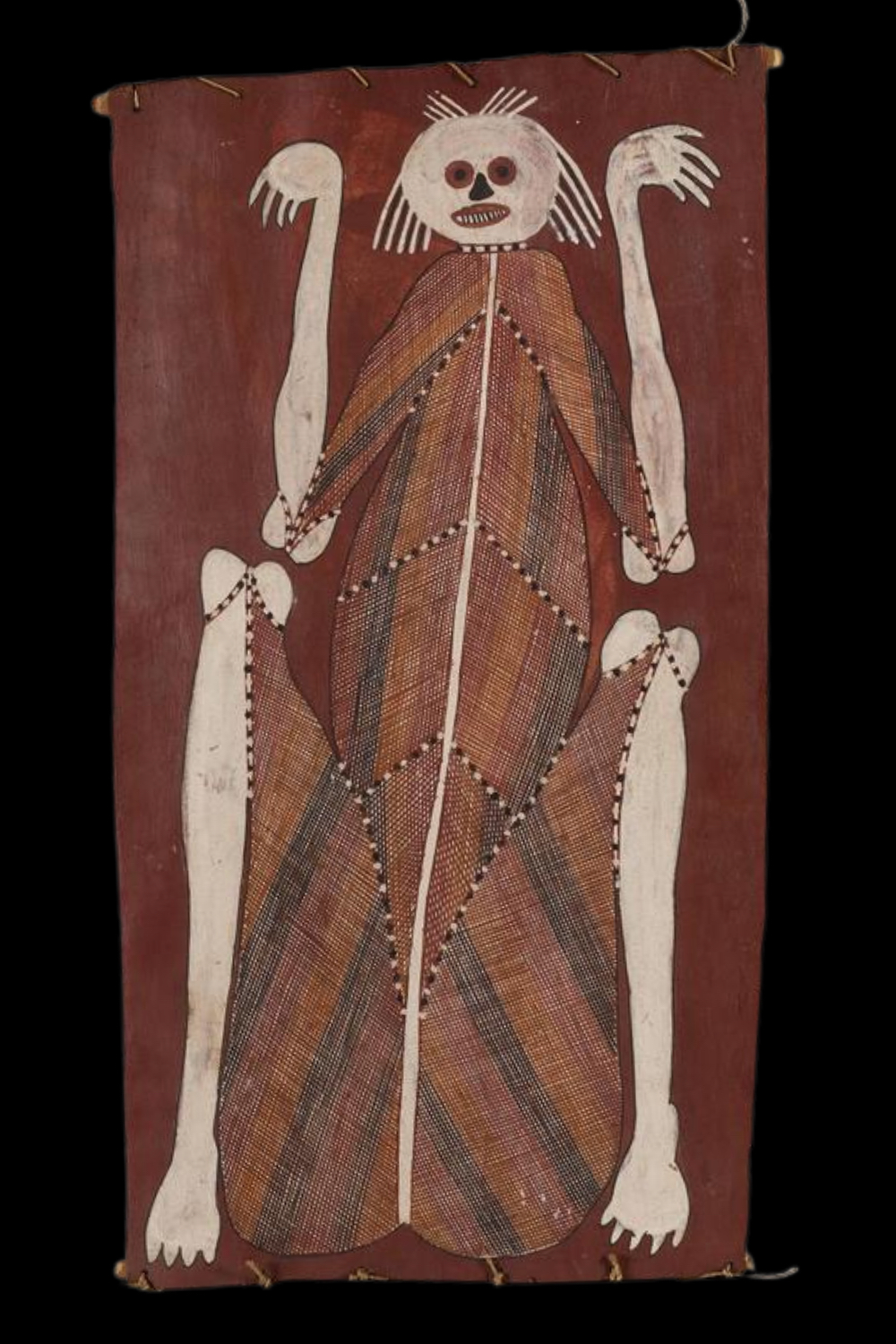
Ivan Namirrkki’s early bark paintings followed the figurative tradition taught by his father, Peter Marralwanga. He depicted Rainbow Serpents, crocodiles, goannas, kangaroos and supernatural beings, using contrasting ochres, fine crosshatching and dotting.
Although influenced by his father, Namirrkki developed a distinctive style. He favoured deep black backgrounds, more regularly organised bands of rarrk (crosshatching) and spirit figures with clearly defined facial features, including eyes, noses and mouths.
During the 1990s, he increasingly adopted geometric designs associated with Mardayin ceremonies, influenced partly by the growing recognition of John Mawurndjul and other Kuninjku artists.
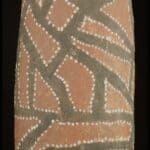
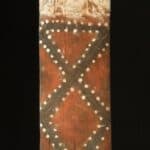
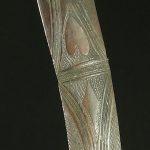
His mature paintings feature symmetrical arrangements of concentric diamonds filled with meticulously applied rarrk in red, yellow, white and black. A distinctive feature is the division of diamond centres into opposing black and white quarters. Repeated across the bark, these patterns produce shimmering optical effects while expressing relationships between ancestral places and sacred waterholes.
Namirrkki paints with natural earth pigments on stringybark. The materials themselves have ancestral significance: he associates white clay, known as delek, with Ngalyod, the Rainbow Serpent, while ochres and charcoal come from the Country represented in his paintings.
Although celebrated for his geometric compositions, Namirrkki continues to paint ancestral figures alongside these more abstract works.
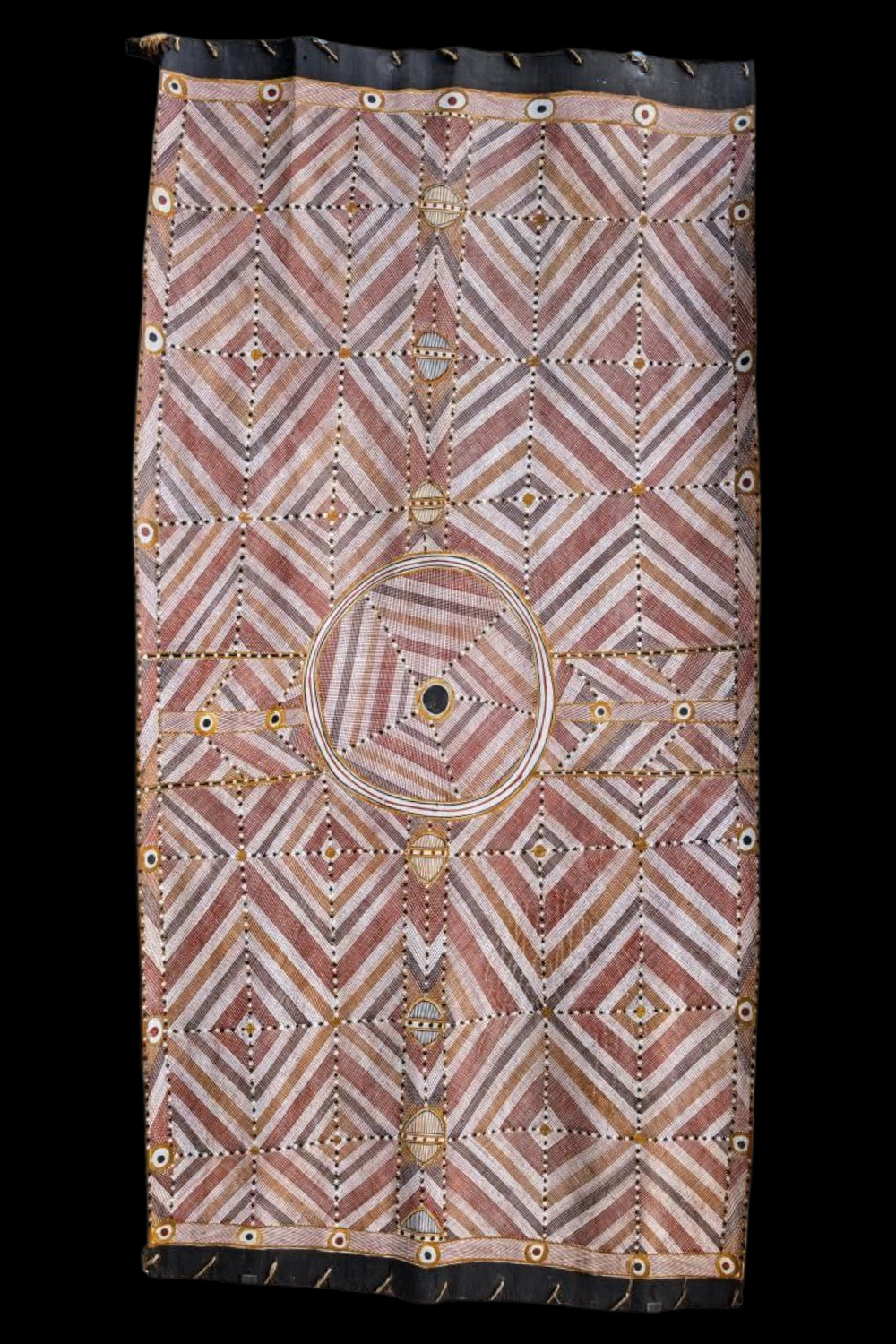
Ivan Namirrkki Painting Subjects
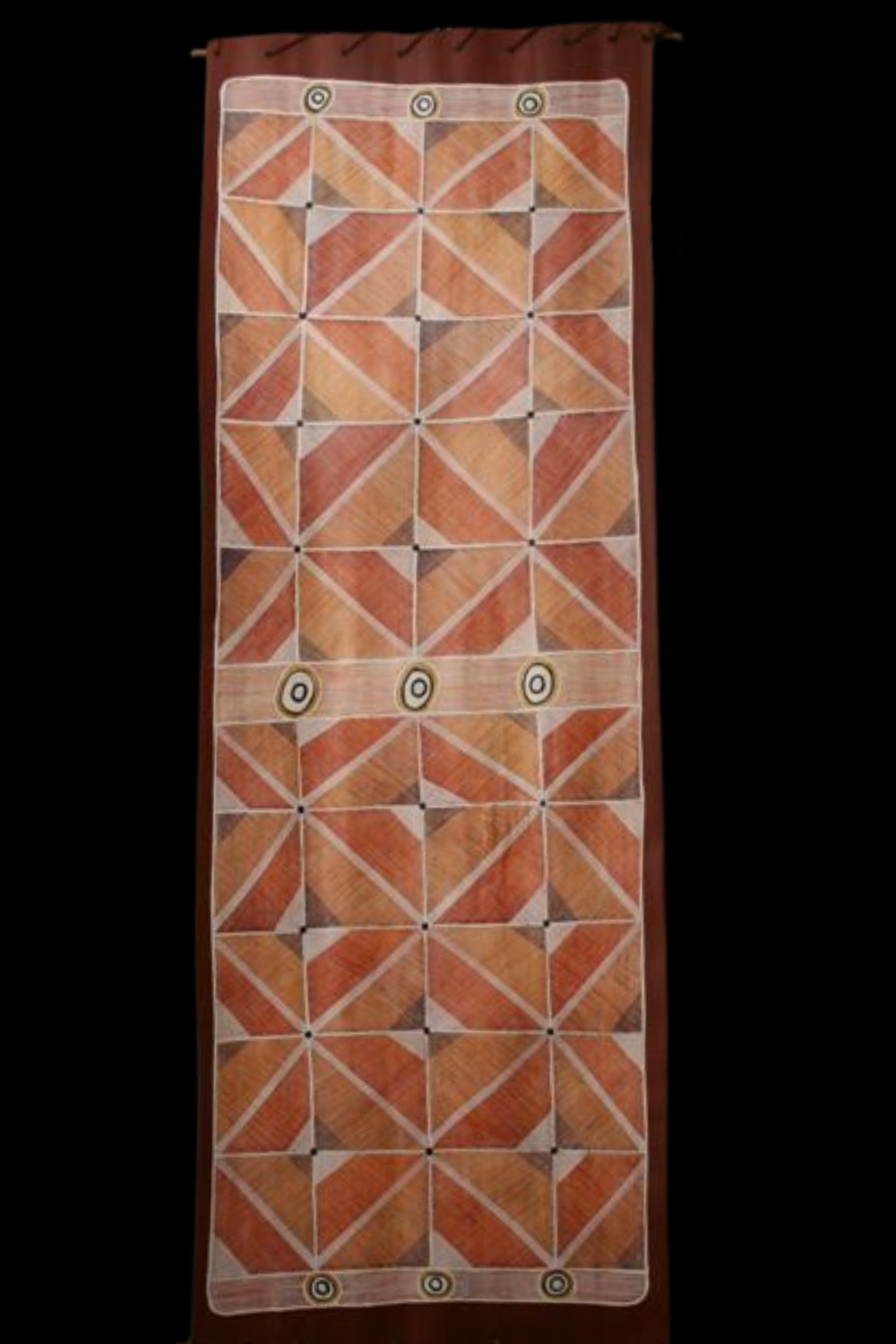
Baladj and Rolk – Leech and Maggot Dreaming
Among Namirrkki’s most significant subjects are the Leech and Maggot ancestral beings associated with Country around Kumurrulu.
Baladj, the Leech ancestral being, is associated with Yibaladjyikod, while Rolk, the Maggot ancestral being, is associated with Yirolk.
According to Kuninjku belief, these powerful beings helped form the landscape during the creation period before entering the earth at particular sacred places.
They remain spiritually present and capable of influencing the living world.
Namirrkki’s geometric paintings use intricate diamond patterns and crosshatching to express these ancestral sites and their relationships.
In his account recorded by Luke Taylor, Ivan explained that painting helps people recognise important places, remember their names and understand why they must be protected.
His paintings therefore express both ancestral knowledge and his continuing responsibility as a custodian.
Ngalyod – The Rainbow Serpent
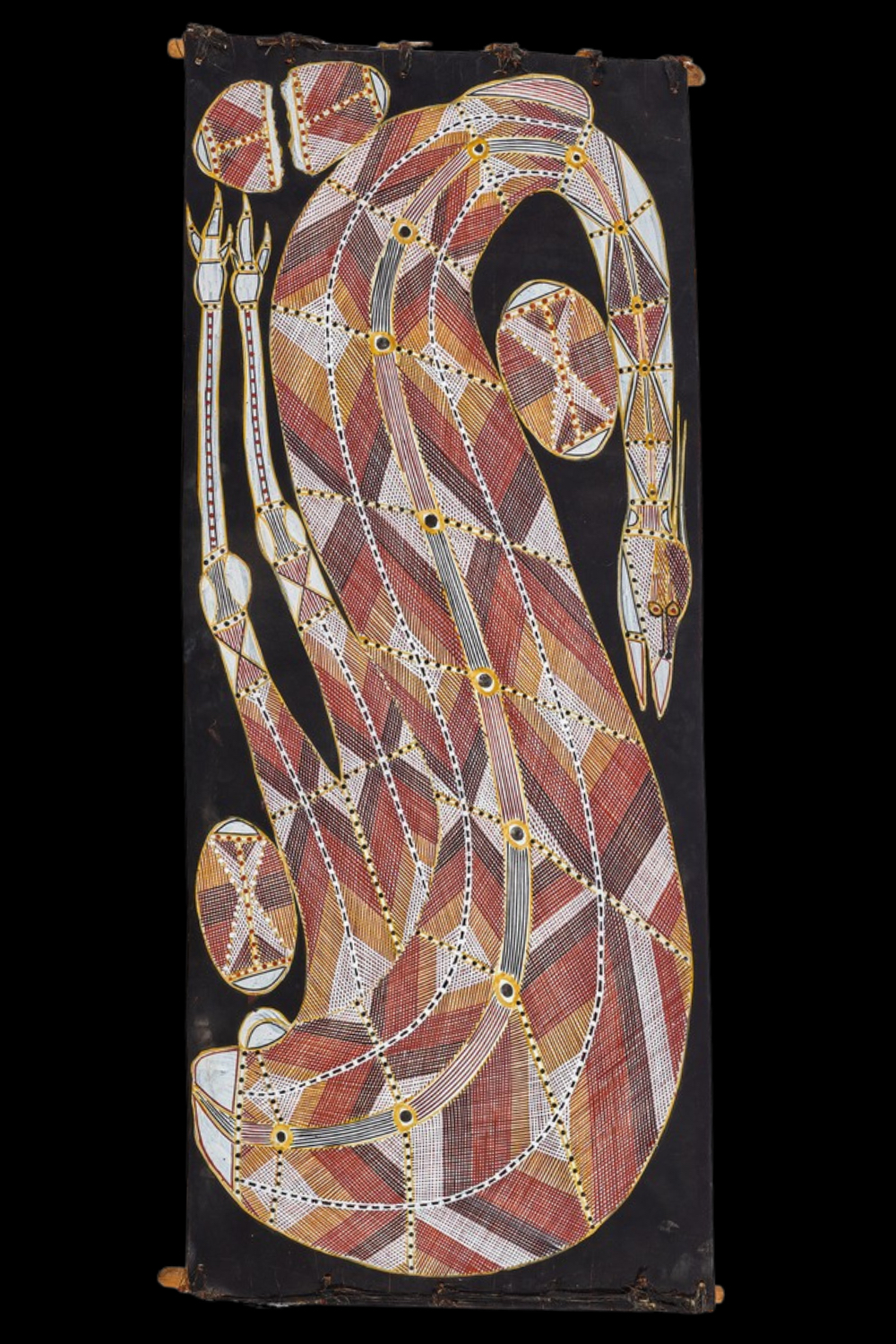
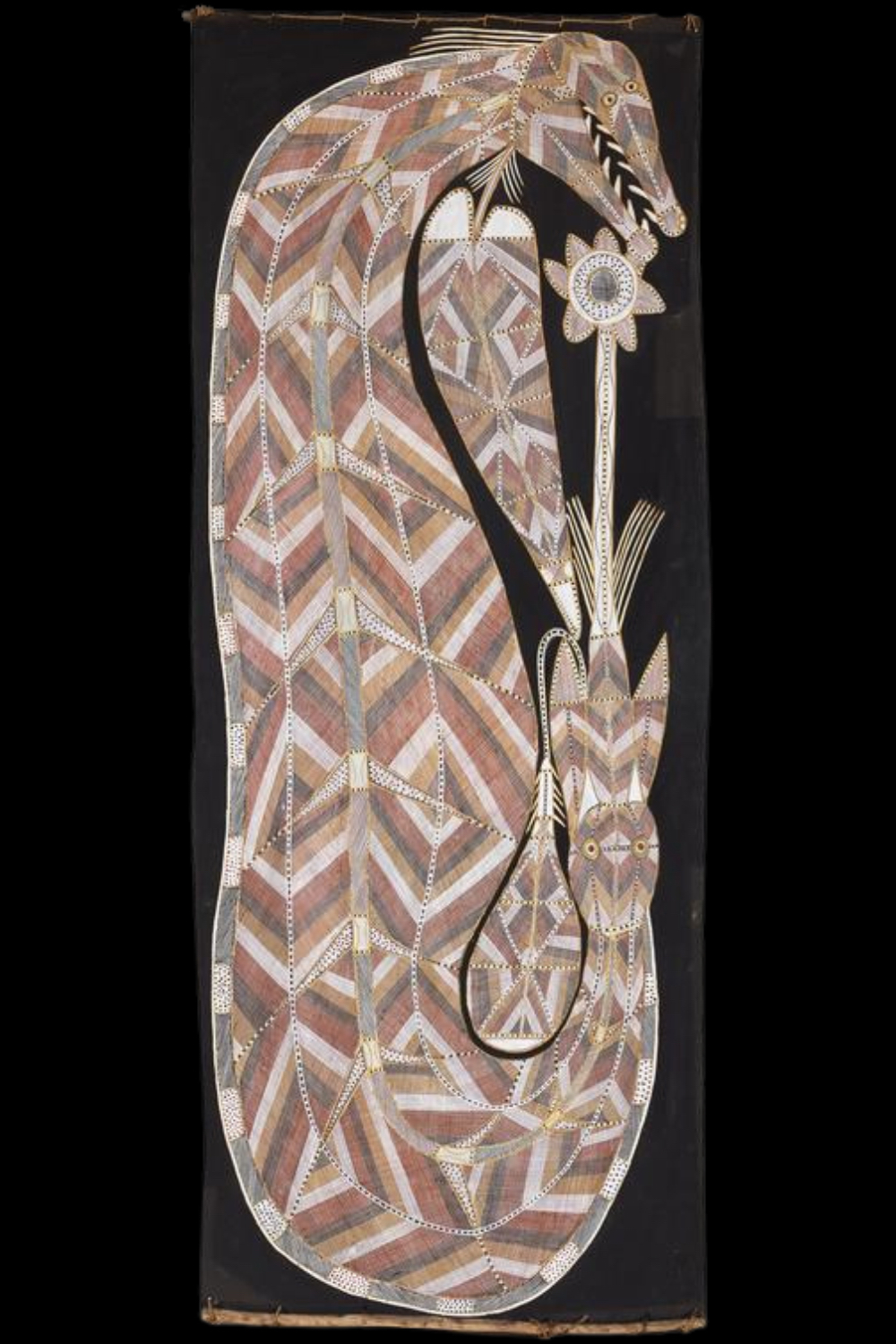
Ngalyod is one of the central ancestral beings of western Arnhem Land.
Associated with deep waterholes, underground water and seasonal rain, the Rainbow Serpent remains a powerful spiritual presence within Country.
Namirrkki frequently depicts Ngalyod as a curving or coiled serpent decorated with intricate crosshatching. Some paintings show the serpent surrounding or swallowing other ancestral beings.
His early representations reflect his father’s influence, although Ivan’s preference for black backgrounds and regularly patterned interiors gives them a distinctive appearance.
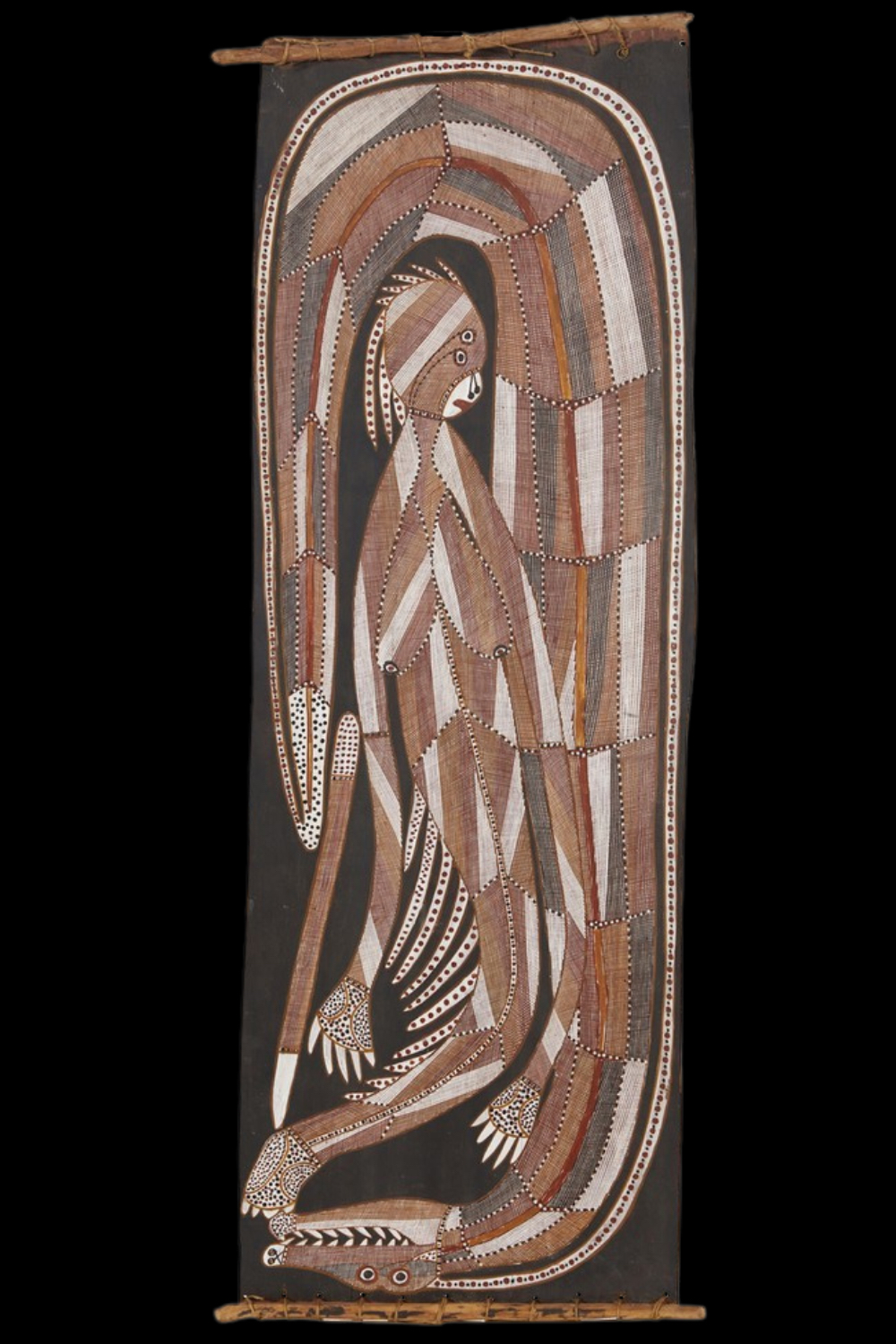
Yawkyawk – Freshwater Female Spirits
Yawkyawk are female freshwater spirits commonly represented with human upper bodies and fish-like tails.
They are associated with particular freshwater sites and ancestral transformations.
Namirrkki has painted Yawkyawk since his early apprenticeship, including the collaborative work associated with Yelelban.
In 2024, he participated alongside Owen Yalandja in the Water Spirits creative partnership, an international project focused on Yawkyawk paintings and their cultural significance.
Namorrorddo, Mimih and Other Spirits
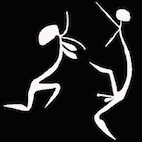
Namorrorddo is a supernatural being associated with shooting stars and the night sky.
It is among the ancestral subjects Ivan learned from his father and subsequently painted independently.
Namirrkki also makes carved wooden Mimih figures, representing the slender spirit beings associated with Arnhem Land’s rocky landscapes.
In 2002, Ivan and Crusoe Kurddal advised on the film Mimi, produced by Blackfella Films, which incorporated Ivan’s carved figures.
His other figurative subjects include Kalawan (Sand Monitor), Kinga (Estuarine Crocodile), kangaroos and freshwater animals.
Lorrkon – Hollow Log Memorial Poles
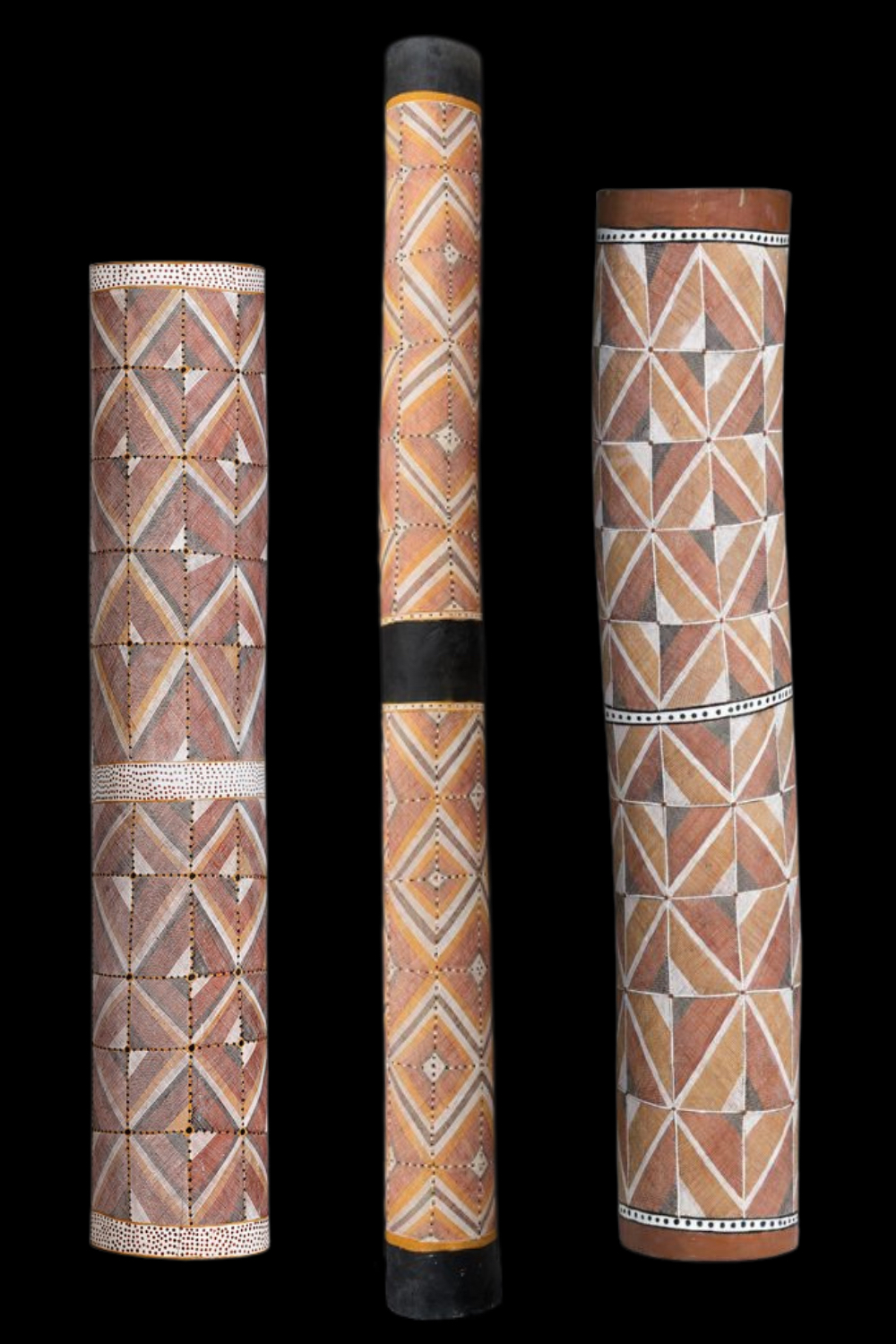
Ivan Namirrkki also creates Lorrkon, painted hollow-log memorial poles originating in the mortuary ceremonies of western Arnhem Land. Traditionally, the bones of the deceased were placed inside termite-hollowed stringybark logs decorated with clan designs and ceremonially erected in the ground. Namirrkki transforms these ceremonial forms into contemporary sculptures, covering their surfaces with intricate rarrk (crosshatching) and geometric designs associated with ancestral beings. His Lorrkon, Gungura (2005), representing the spiralling wind, is held by the National Gallery of Victoria. Like his bark paintings, these sculptures express relationships between ancestral power, ceremony and Country, continuing an artistic tradition practised by his father, Peter Marralwanga, and subsequent generations of the family.
Why Is Ivan Namirrkki Important?
Ivan Namirrkki is an important figure in the continuing development of Kuninjku bark painting.
He transformed the figurative painting techniques learned from his father into a distinctive geometric style while maintaining the ancestral significance of his subjects.
His career demonstrates the relationship between artistic innovation and inherited cultural responsibilities.
Namirrkki has also contributed to the transmission of knowledge between generations. His sons Elijah Namunjdja and Obed Namirrkki continue painting subjects associated with Kardbam and Barrbinj Country.
In 2026, Ivan co-authored Peter Marralwanga: Painter of the Djang of western Arnhem Land with anthropologist Luke Taylor, providing firsthand testimony about his father’s life, the family’s artistic history and the continuing significance of Country.
Ivan Namirrkki Exhibitions and Public Collections
Namirrkki has exhibited extensively in Australia, including solo exhibitions at Annandale Galleries, Sydney (1999), and Aboriginal and Pacific Arts Gallery, Sydney (2002).
He participated in the 2000 Biennale of Sydney and Crossing Country, the major 2004 exhibition of western Arnhem Land art at the Art Gallery of New South Wales.
In 2006, he was a finalist in the National Gallery of Victoria’s Clemenger Contemporary Art Prize.
His paintings and sculptures are represented in collections including:
- Art Gallery of New South Wales
- National Gallery of Victoria
- Art Gallery of South Australia
- Museum and Art Gallery of the Northern Territory
- Djomi Museum, Maningrida
- Artbank
- Charles Darwin University Art Collection
His works have also been collected privately, including by the Laverty and Kaplan-Levi collections.
Further Reading
Taylor, Luke, and Ivan Namirrkki (2026). Peter Marralwanga: Painter of the Djang of western Arnhem Land. ANU Press, Canberra. Particularly valuable are Chapters 3, 5 and 6, covering Ivan’s firsthand testimony, family history and artistic development.
Taylor, Luke (2012). Connections of Spirit: Kuninjku Attachments to Country. In Country, Native Title and Ecology, edited by Jessica K. Weir. ANU E Press. Examines Kuninjku relationships with Country, including Ivan’s responsibilities around Kumurrulu.
Art Gallery of New South Wales (2004). Crossing Country: The Alchemy of Western Arnhem Land Art. Artist statements and discussion of Namirrkki’s painting and sculpture.
Maningrida Arts & Culture. Ivan Namirrkki. Artist biography, exhibition history and collection information.
All images featured in this article are presented strictly for educational and informational purposes.
This website may include copyrighted material for which specific authorization has not been obtained from the copyright owner.
All such images are presumed to be the intellectual property of the respective artist or their estate, and are used in accordance with principles of fair dealing or fair use under applicable copyright law.
Aboriginal Weapons and Artifacts Articles