
What Is the Oldest Aboriginal Painting?
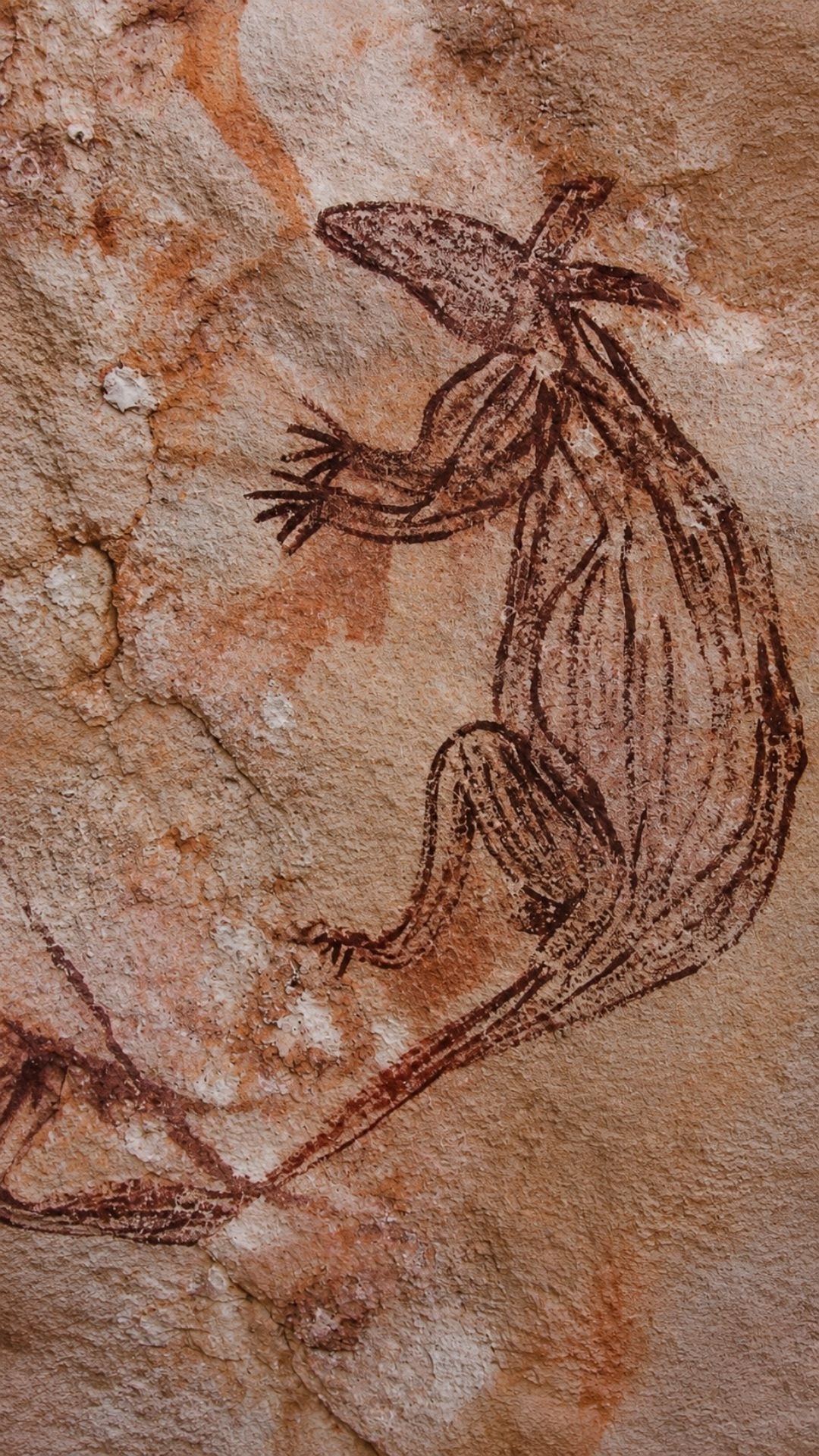
The oldest known Aboriginal painting to have been scientifically dated is a kangaroo painted on the ceiling of a rock shelter in the Kimberley region of Western Australia. Radiocarbon dating shows it was created between about 17,500 and 17,100 years ago, with a best estimate of around 17,300 years ago. The painting remains preserved in its original location and provides the earliest securely dated evidence of Aboriginal painting discovered so far.
The Oldest Scientifically Dated Aboriginal Painting
Unlike many famous works of prehistoric art, the Kimberley kangaroo was not dated by analysing the paint itself. Instead, scientists radiocarbon dated fossilised mud wasp nests attached to the rock surface. Some nests had formed before the kangaroo was painted and were covered by pigment, while others were built afterwards on top of the painting. This allowed researchers to determine that the artwork must have been created between the two sets of dates.
The kangaroo measures approximately two metres in length and is painted in a naturalistic style, carefully depicting the proportions and posture of the animal. It belongs to an early phase of Kimberley rock art that predates later artistic traditions in the region.
Why Is This Painting So Important?
The discovery transformed archaeologists’ understanding of Australia’s ancient art.
For decades, researchers knew that many Aboriginal rock art were extremely old, but accurately determining their age proved difficult because mineral pigments usually contain no organic material that can be radiocarbon dated. The Kimberley kangaroo became the first Aboriginal painting to be securely dated using radiocarbon evidence, providing an important chronological reference point for the history of Australian rock art.
Rather than simply showing that Aboriginal people painted 17,000 years ago, it demonstrates that a sophisticated artistic tradition already existed during the last Ice Age.
Could Older Aboriginal Paintings Exist?
Almost certainly.
The Kimberley kangaroo is the oldest Aboriginal painting that has been scientifically dated, not necessarily the first Aboriginal painting ever created.
Over thousands of years, many rock shelters have collapsed, paintings have weathered away, and Australia’s coastline has changed dramatically. At the end of the last Ice Age, sea levels rose by about 120 metres, flooding vast areas of the continental shelf where Aboriginal people once lived. Archaeologists consider it likely that many ancient campsites and rock art sites were lost beneath the sea, while countless surviving paintings remain undated because suitable material for scientific testing is unavailable.
Future discoveries may therefore push the history of Aboriginal painting even further back.
A Window into Ice Age Australia
When the Kimberley kangaroo was painted, Australia was a very different place. Sea levels were much lower, the coastline lay hundreds of kilometres farther offshore in many regions, and Aboriginal Australians had already lived on the continent for tens of thousands of years.
The painting shows that by around 17,300 years ago, Aboriginal artists had developed sophisticated techniques for representing animals on rock surfaces. Rather than marking the beginning of Aboriginal art, it represents a mature artistic tradition that had already been practised for many generations.
How Does It Compare with the World’s Oldest Art?
The Kimberley kangaroo is not the world’s oldest painting. Older cave paintings are known from Indonesia and Europe, including hand stencils in Sulawesi that are at least 67,800 years old.
However, Aboriginal Australia is widely recognised as preserving the world’s oldest continuous artistic tradition. While the oldest scientifically dated Aboriginal painting is about 17,300 years old, Aboriginal people continued creating rock art across the continent until European settlement, maintaining artistic traditions over an unparalleled span of time.
The Kimberley kangaroo therefore occupies a unique place in world archaeology. It is the earliest securely dated Aboriginal painting yet discovered and provides the first scientific anchor for understanding the deep history of Australia’s oldest surviving paintings.
Recommended Further Reading
- Finch, D., et al. (2021). Ancient Kimberley rock art dated to more than 17,000 years ago. Nature Human Behaviour. The landmark study that established the age of the Kimberley kangaroo using radiocarbon dating of fossilised mud wasp nests.
- Mulvaney, K. (2011). Murujuga Marni: Rock Art of the MacCluer and Kimberley Regions. A comprehensive overview of Kimberley rock art traditions, their chronology and cultural significance.
- Aubert, M., et al. (2024). A ‘Leang Karampuang’ cave art panel dated to at least 51,200 years ago. Nature. Demonstrates how uranium-series dating continues to transform our understanding of the world’s oldest figurative cave art.
- Taçon, P. S. C., & Chippindale, C. (eds.) (1998). The Archaeology of Rock-Art. Cambridge University Press. A foundational introduction to the archaeology, interpretation and dating of rock art worldwide.
- Watchman, A. (1993). Evidence of a 25,000-Year-Old Pictograph in Northern Australia. Geoarchaeology. An influential early paper exploring scientific methods for dating Australian rock paintings and the challenges involved.
- Bednarik, R. G. (2007). Rock Art Science: The Scientific Study of Palaeoart. A detailed examination of the methods used to record, analyse and date ancient rock art across the world.
All images in this article are for educational purposes only.
This site may contain copyrighted material the use of which was not specified by the copyright owner.