Nyurapayia Nampitjinpa (Mrs Bennett) – Painter of Punkilpirri
C1935–2013
Pintupi / Pitjantjatjara
Yumarra, near Docker River, Western Desert
Kintore (Walungurru) / Tjukurla
Western Desert Art / Papunya Art
Papunya Tula Artists / Yanda Aboriginal Art
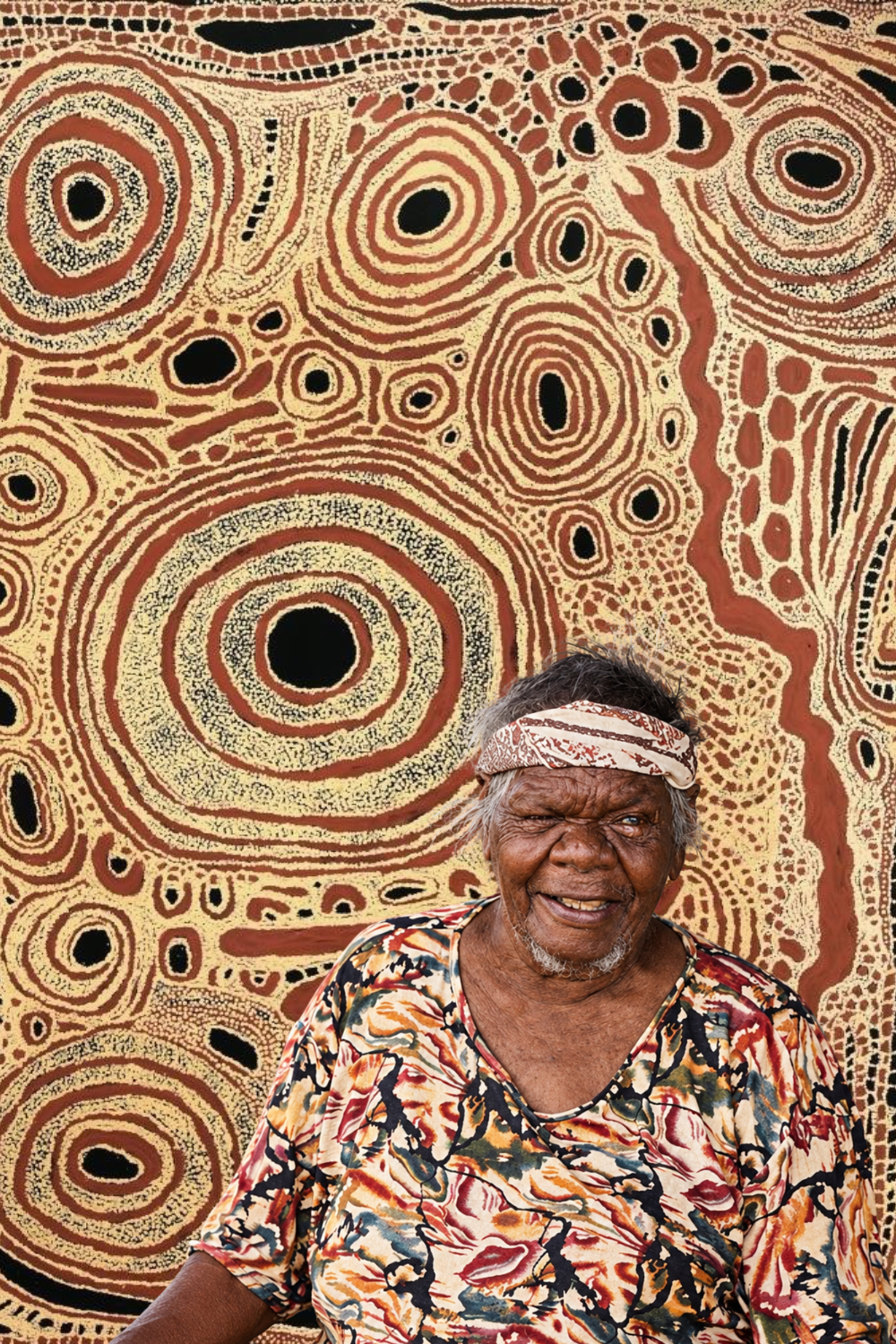
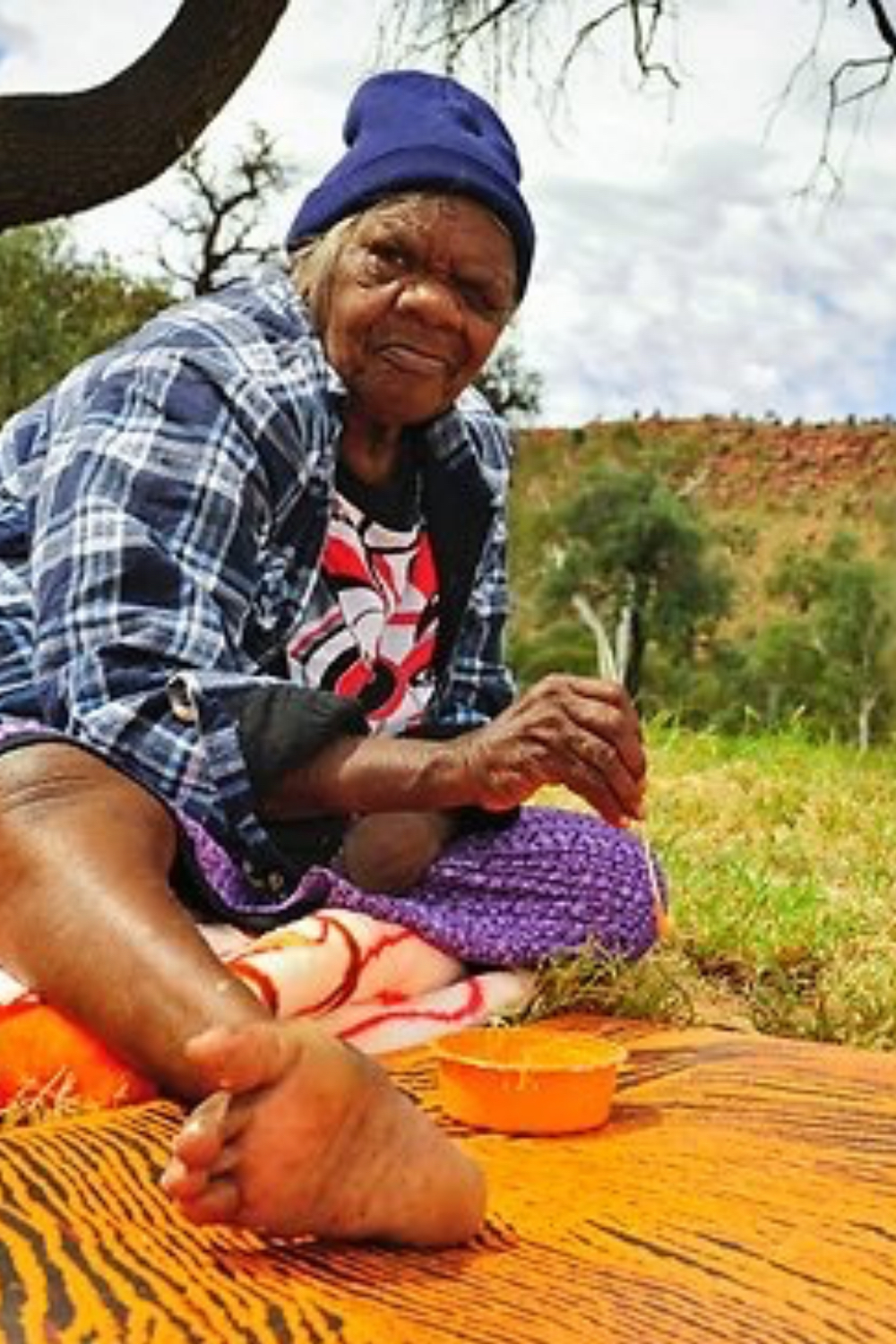
Nyurapayia Nampitjinpa (c. 1935–2013), widely known as Mrs Bennett, was a pioneering Pintupi/Pitjantjatjara painter, traditional healer and senior ceremonial woman whose paintings expressed her ancestral connections to Punkilpirri and Yumarra.
In 1994, she helped establish the influential Kintore Women’s Painting Camp alongside artists including Makinti Napanangka and Ningura Napurrula. She began painting for Papunya Tula Artists in 1996 and, alongside Naata Nungurrayi and Walangkura Napanangka, became an important figure in the development of Pintupi Art and the Kintore painting movement.
Her paintings draw upon her mother’s Dreaming stories associated with waterholes, sandhills, women’s ceremonies and ancestral journeys. Punkilpirri, a permanent waterhole in the Walter James Range where she spent much of her childhood, became the defining subject of her later work.
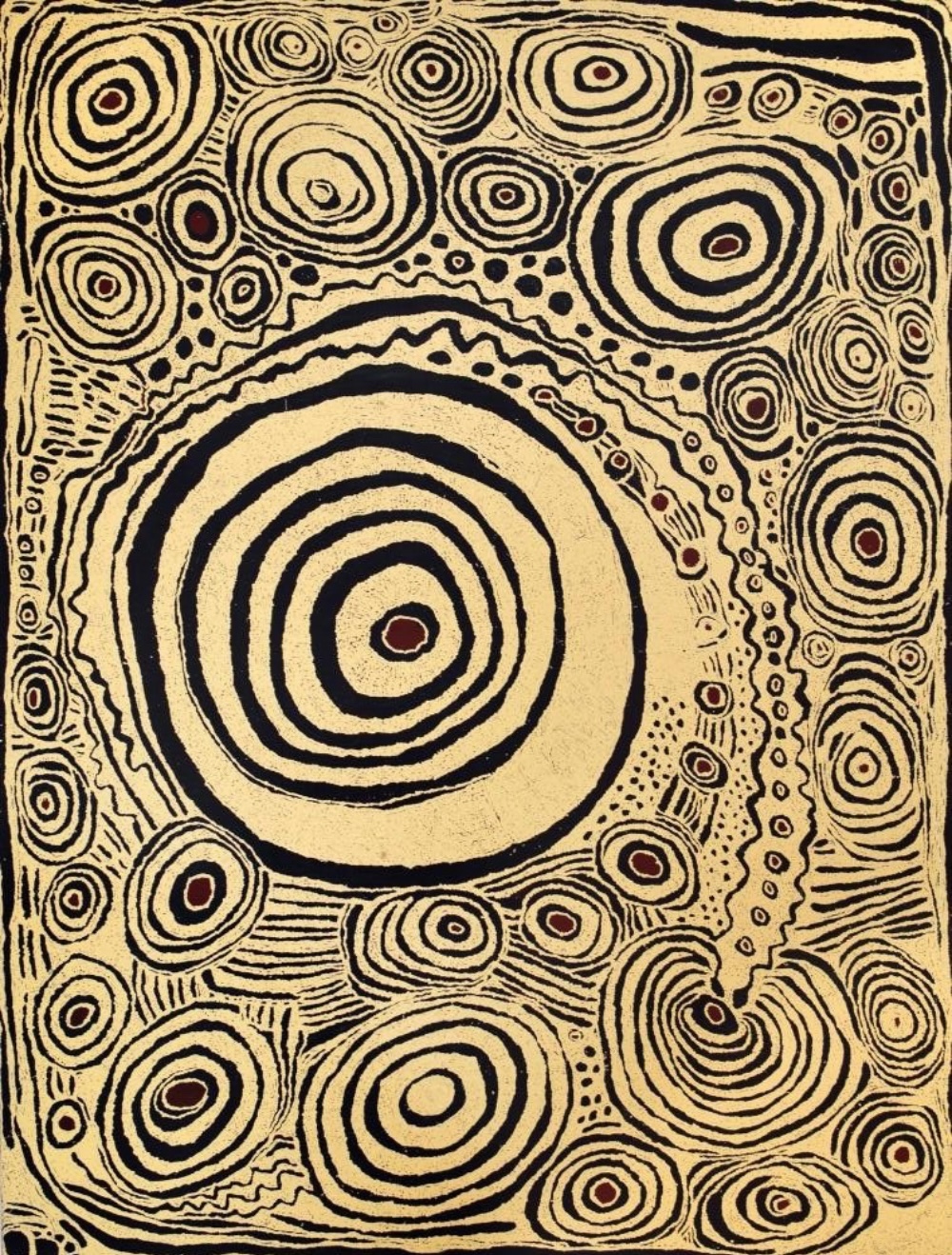
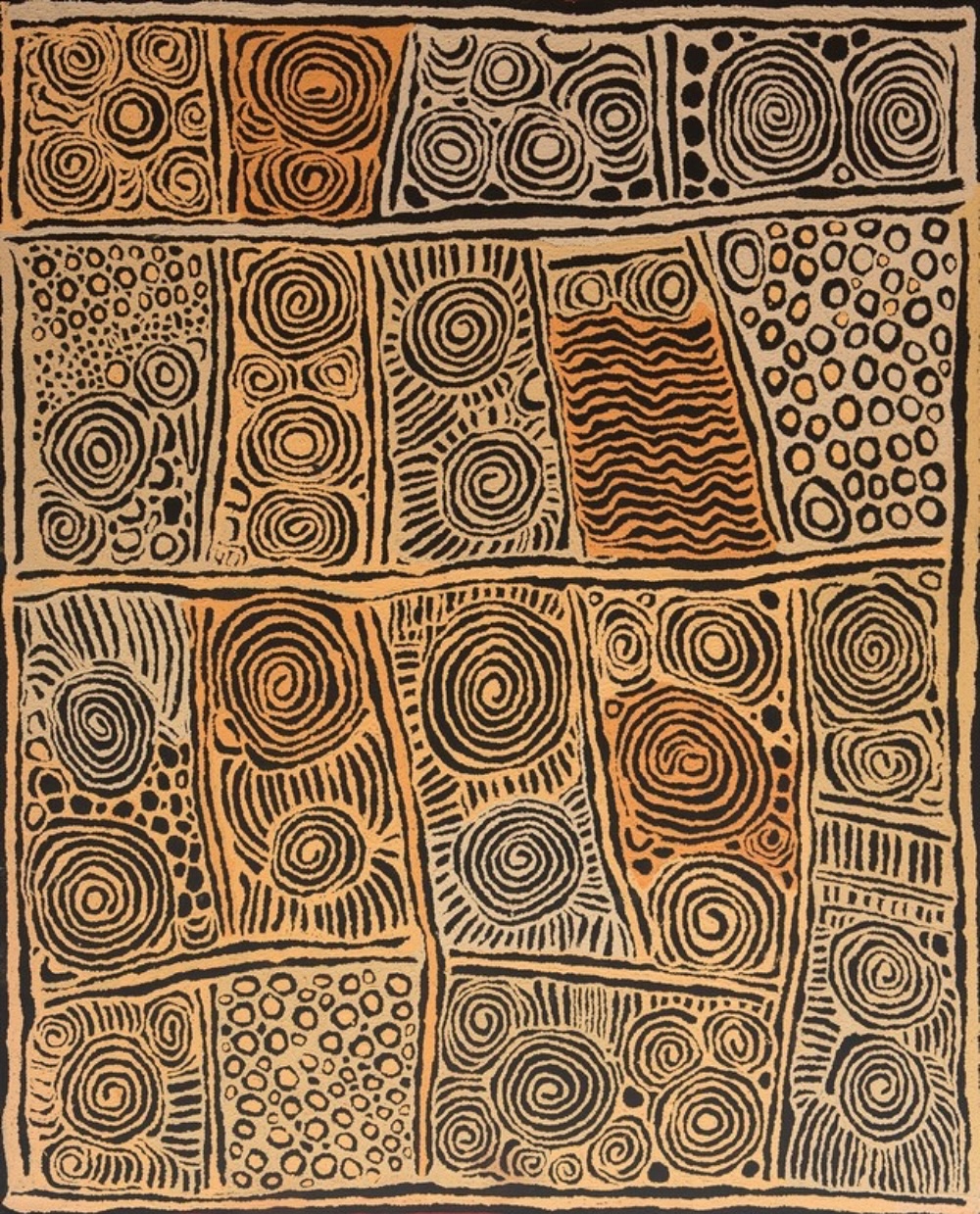
Nyurapayia developed a distinctive style of bold black outlines, concentric circles and intricate cream and ochre dotting. Her increasingly complex compositions transformed her knowledge of Country into some of the most recognisable paintings of the Kintore women’s movement.
Nyurapayia Nampitjinpa Biography
Childhood in the Western Desert
Nyurapayia was born around 1935 at Yumarra, near Docker River and the Northern Territory–Western Australian border.
She grew up travelling with her family between waterholes, sheltered rock formations and seasonal food-gathering places. Her childhood was spent largely beyond the European settlements gradually expanding into the Western Desert.
One of the most important places in her early life was Punkilpirri, a permanent waterhole among the rocky ranges northwest of Docker River. Here she learned the ancestral stories, songs and ceremonies associated with her Country.
According to accounts of her early life, Nyurapayia did not encounter Europeans until her teenage years. Her family subsequently experienced the changes brought by missions, government settlements and ration depots.
She later lived at Haasts Bluff, Kintore and Tjukurla, maintaining strong connections with the desert places where she had grown up.
Marriage, Family and Traditional Healing
Nyurapayia married John John Bennett Tjapangati. John John Bennett also contributed to the wider artistic life of Kintore. In 1999, he joined Turkey Tolson Tjupurrula and nine other Pintupi artists in creating the monumental Kintore Men’s Painting for the Western Desert Dialysis Appeal. The project raised funds to improve access to dialysis treatment for Aboriginal people living in remote Western Desert communities.
Both were respected ngangkari, traditional healers possessing specialised knowledge of spiritual and physical healing. John John worked alongside the Kintore Health Clinic, while Nyurapayia also reportedly assisted with traditional healing in the community.
Art historian Vivien Johnson described their marriage as an unusually strong partnership. John John was quiet and reserved, while Nyurapayia was remembered for her energy, confidence and expressive personality.
Their daughter, Dorcas Tinnimay Bennett, later became an artist at Warakurna. According to family recollections published by Warakurna Artists, Dorcas was born in 1956 at Wurturu rockhole near Docker River. The family subsequently travelled to Warburton Mission and lived in several Western Desert communities, including Amata and Areyonga.
Becoming an Artist
Although Nyurapayia achieved recognition through paintings made late in life, her artistic activity began considerably earlier.
During the late 1960s, anthropologist Richard A. Gould acquired wooden implements made by Nyurapayia while conducting fieldwork in the Warburton Ranges. These objects, now held by the American Museum of Natural History, demonstrate her knowledge of traditional material culture.
An acrylic painting attributed to 1988–1989 also appears in the Laverty Collection auction records. Its provenance suggests she may have experimented with acrylic painting before becoming a regular Papunya Tula artist, although the early date remains uncertain.
Her sustained professional painting career developed during the 1990s, when senior Kintore women began seeking greater opportunities to represent their own ancestral stories.
The Kintore Women’s Painting Movement and Papunya Tula
The Haasts Bluff/Kintore Women’s Painting Camp in 1994 marked a turning point in Nyurapayia’s career. The original Papunya painting movement, established in 1971, had been dominated by men, despite women’s extensive ceremonial knowledge and artistic traditions.
With the assistance of artist Marina Strocchi, senior women organised a collaborative painting camp in June 1994 near Kungka Kutjarra. Nyurapayia worked alongside Makinti Napanangka, Wintjiya Napaltjarri, Tjunkiya Napaltjarri and other senior women, creating large paintings based on their ancestral stories. The project helped establish women as independent painters within the Papunya Tula movement and led to the exhibition Minyma Tjukurrpa at Tandanya in Adelaide in 1995.
An important surviving work from this period is Ngurrapalangu (1994), a monumental collaborative painting created by Nyurapayia, Ningura Napurrula and six other women. Measuring 260.4 × 284.5 cm, it is now held by the National Gallery of Victoria. The painting demonstrates how the Kintore women worked collectively to translate their ancestral knowledge into large-scale acrylic paintings.
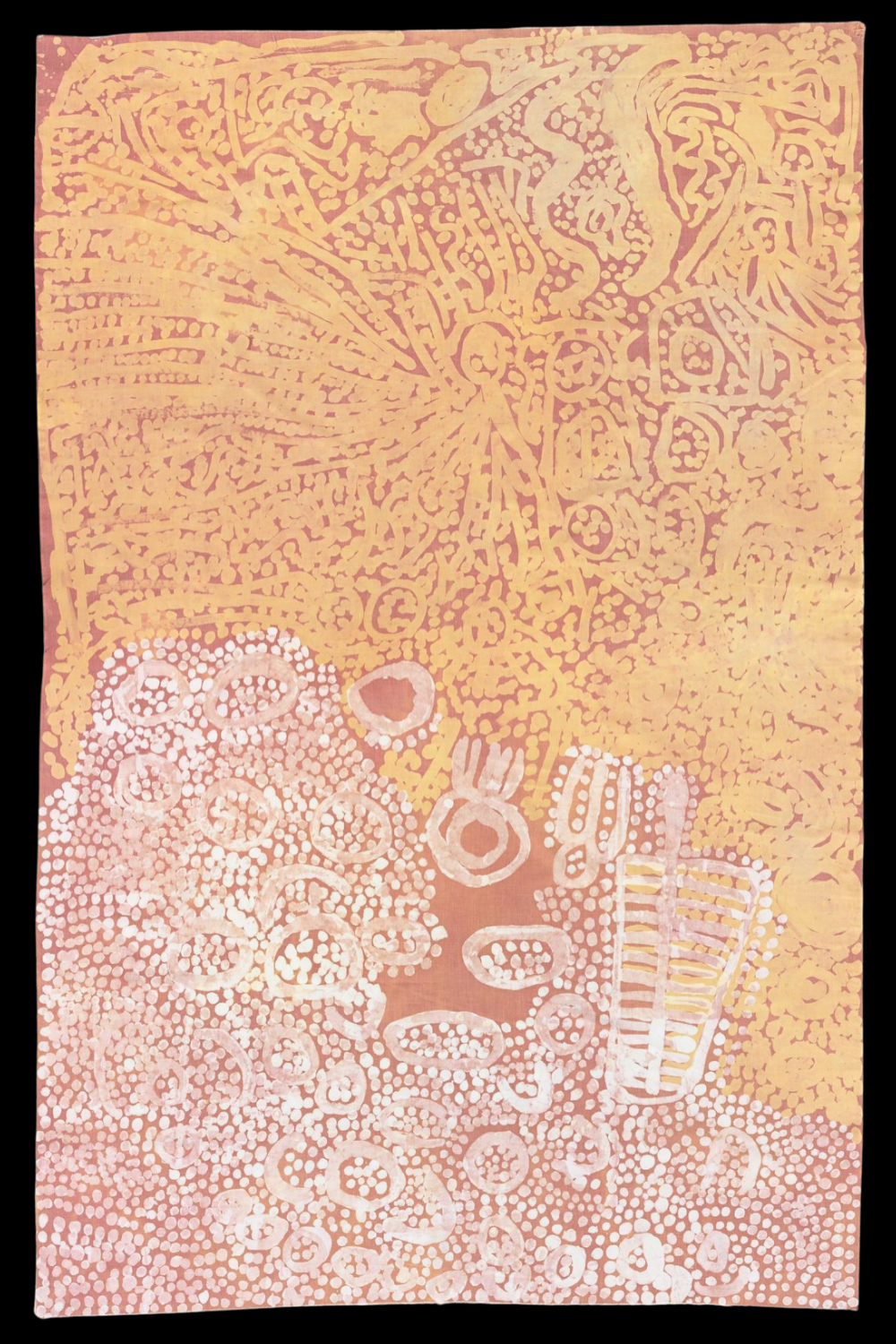
Nyurapayia also produced collaborative batiks (opposite) and, in 1995, painted Lulul Tjukurrpa (Lulul Dreaming) with Josephine Napurrurla. Both forms of work are represented in the National Gallery of Victoria.
She began painting regularly for Papunya Tula Artists in April 1996. That November, the company’s first women’s exhibition outside Alice Springs, held at Utopia Art Sydney, sold out. Her Women at Yulparitja (1996) entered the collection of John W. Kluge and is now held by the Kluge-Ruhe Aboriginal Art Collection.
In 2001, Australian Art Collector named Nyurapayia among Australia’s 50 most collectable artists. She subsequently worked with Christopher Simon of Yanda Aboriginal Art, producing increasingly large and intricate paintings that defined her mature style.
Nyurapayia Nampitjinpa Painting Style
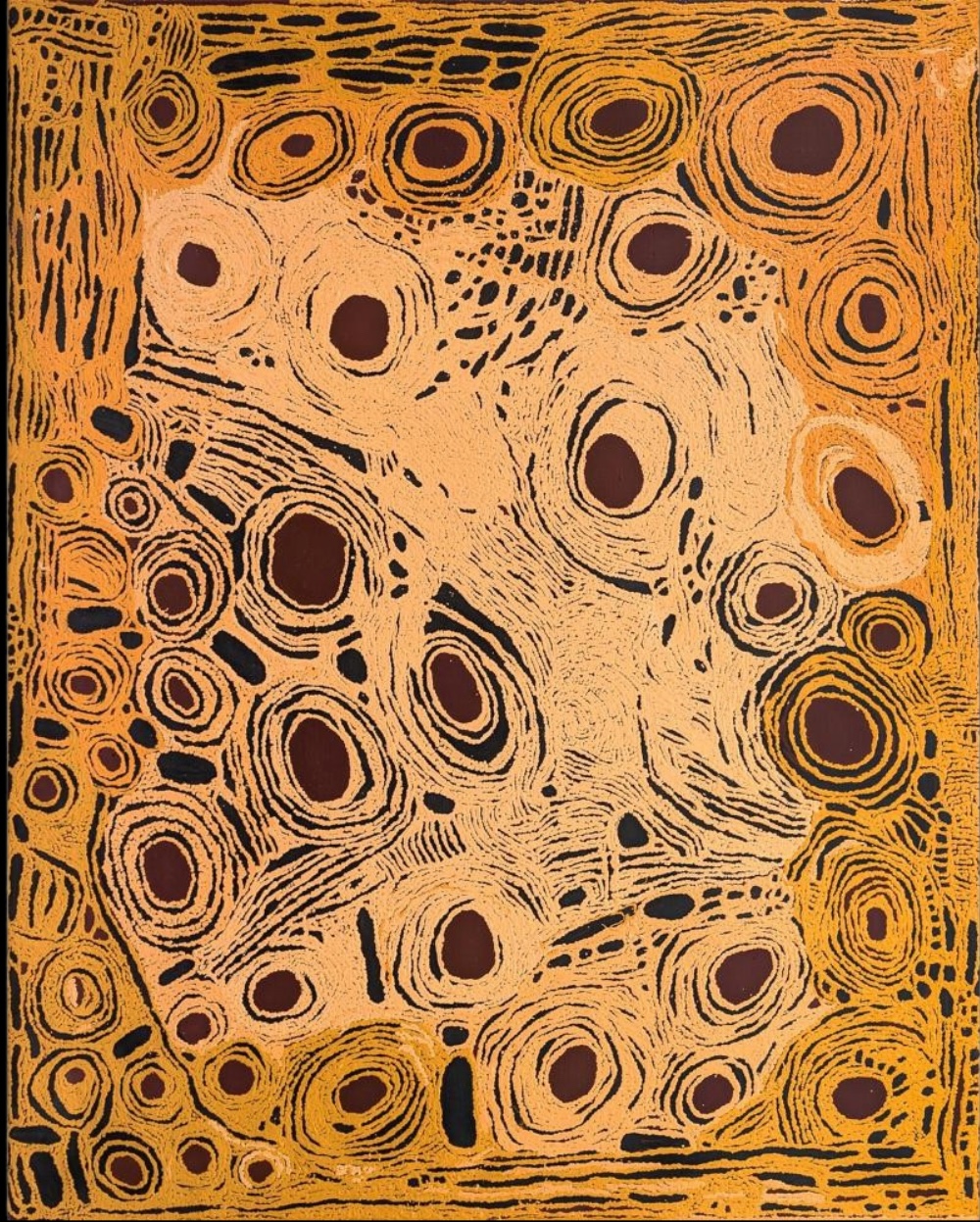
Nyurapayia developed a distinctive style within Western Desert Art. Her early paintings employed concentric circles, U-shaped figures, travelling lines and dotted fields. Over time, these evolved into elaborate compositions of irregular ovals, overlapping curves and interconnected shapes.
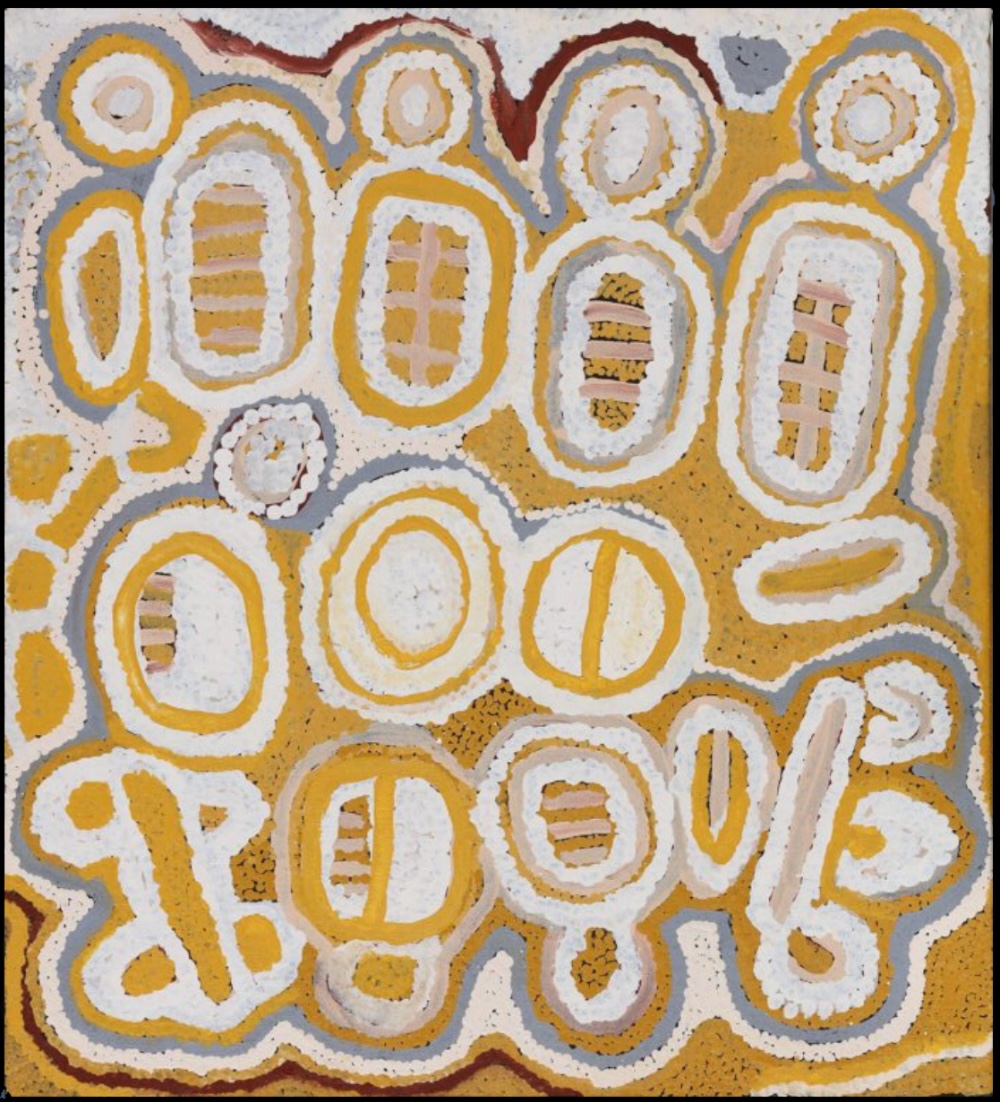
Her characteristic palette included black, white, cream, sandy yellow, ochre red and brown. Strong black outlines defined intricate forms, while thousands of fine dots created contrasting areas of colour and texture. Rather than simply producing uniform dotted backgrounds, she used dots to construct shapes, emphasise boundaries and create a sense of movement across the canvas.
Nyurapayia’s painting style also drew upon traditions of Aboriginal body painting. Curved lines and concentric patterns connect her paintings to designs associated with inma, ceremonial singing and dancing. Such designs form part of the wider visual traditions through which Western Desert women express their relationships with ancestral places and ceremonial responsibilities
Nyurapayia Nampitjinpa Painting Subjects
Punkilpirri – Her Ancestral Homeland
Punkilpirri was the defining subject of Nyurapayia’s mature painting career.
Also recorded as Punkilpiri, it is a permanent waterhole in the Walter James Range, northwest of Docker River.
Nyurapayia spent much of her childhood in this country, learning the locations of surrounding rockholes, hills and sheltered places. The site was especially important because of the ancestral stories and women’s ceremonies associated with it.
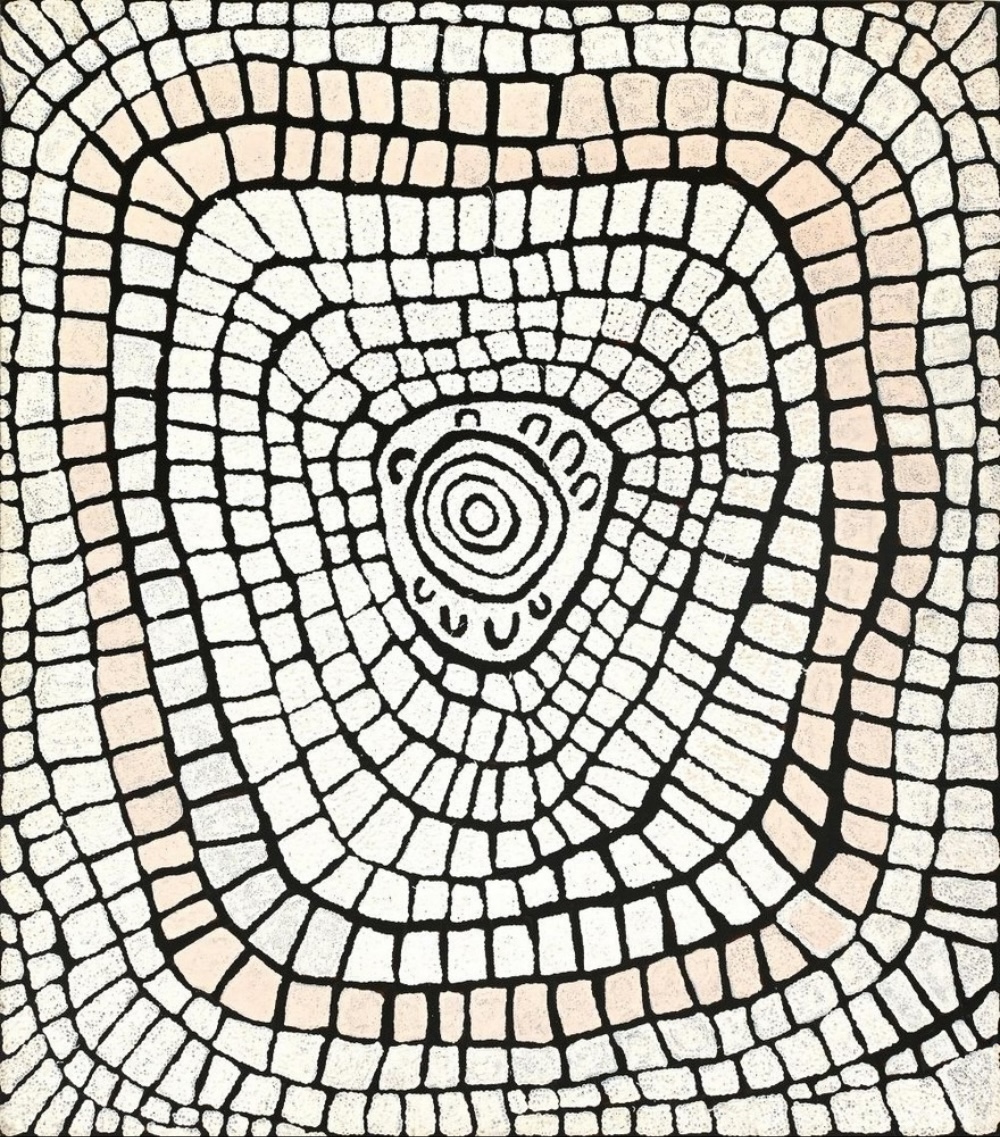
Her Punkilpirri paintings convey the relationships between water, rocky outcrops, sandhills and ancestral events. Rather than presenting conventional geographical maps, they express the significance of the site through the visual language of Western Desert painting.
Her monumental Punkilpirri (2008), measuring 182 × 242.5 cm, demonstrates the complexity of her later compositions.
Yumarra – Women’s Ancestral Journeys
Yumarra, the site of Nyurapayia’s birth, was another major subject throughout her career.
Her paintings of Yumarra frequently depict the journeys of ancestral women travelling between rockholes and ceremonial places.
Original Papunya Tula Artists certificates provide detailed explanations of these paintings.
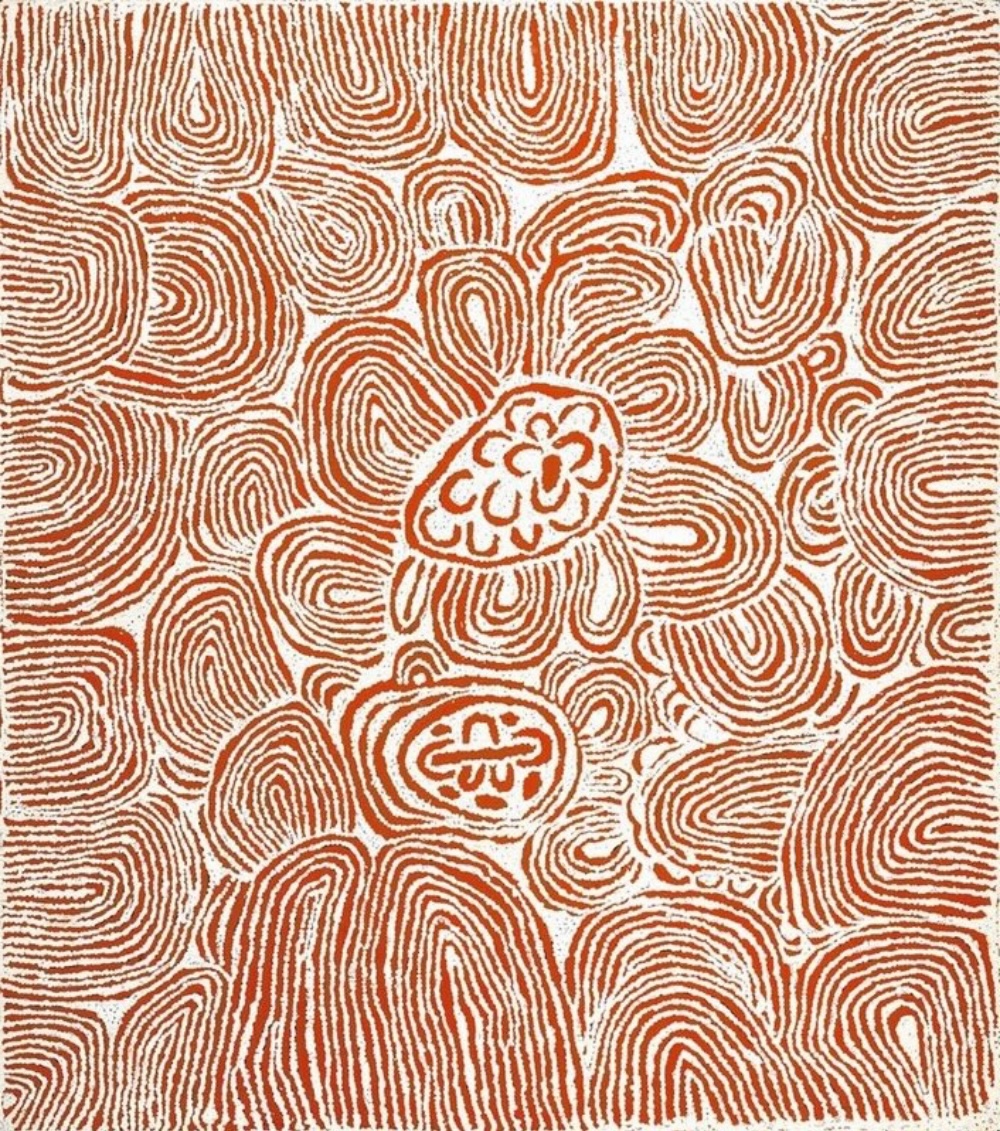
In Yumarra (2000), a group of ancestral women travel through hilly country between Yumarra, Punkilpirri, Tjukula and Tjalili.
U-shaped motifs represent the women, while roundels indicate rockholes and curved arcs can describe the surrounding sandhills.
During their travels, the women gathered tjamanpa, edible seeds from the mulga tree. They cleaned and roasted the seeds before grinding them into a nutritious paste.
Other paintings describe women gathering at Yumarra to sing and perform ceremonies before continuing their ancestral journey northwards.
The Yumarra paintings therefore combine knowledge of the landscape, traditional food gathering and ceremonial activities with the ancestral stories associated with specific waterholes.
Tjalili and Other Rockhole Sites
Nyurapayia also painted Tjalili, an ancestral rockhole associated with stories inherited through her mother.
Other subjects included Wantjunga, Pukara, Ngalkinginga, Munkara and Tjukurla Country.
These places formed part of an interconnected network of waterholes and ancestral sites across the Western Desert.
Although similar visual motifs appear in her paintings of different locations, their meanings depend upon the particular site and ancestral narrative being represented.
Women’s Dreaming and Gathering Bush Foods
Women’s ceremonies and traditional food gathering were recurring subjects in Nyurapayia’s painting.
An important early example is Women at Yulparitja (1996), held by the Kluge-Ruhe Aboriginal Art Collection at the University of Virginia.
This painting depicts ancestral women collecting maku, or witchetty grubs, in the Great Sandy Desert.
The women appear as U-shaped figures accompanied by digging sticks and circular wooden bowls.
Other works refer to desert raisins, quandongs and mulga seeds. These subjects reflect the knowledge of seasonal foods, ancestral journeys and ceremonial responsibilities passed between generations of Western Desert women.
Nyurapayia Nampitjinpa Value
Works Offered at Auction: 127
Sale Rate: 61%
Highest Sale: $60,000 AUD
Median Sale Price: $3,200 AUD
Why Nyurapayia Nampitjinpa Is Important
Nyurapayia belonged to the generation of Western Desert women whose artistic careers emerged from the Kintore women’s painting movement during the 1990s.
Alongside Makinti Napanangka, Ningura Napurrula and Wintjiya Napaltjarri, she helped establish women’s painting as an important part of contemporary Papunya art.
Her achievements were particularly remarkable because she developed her most distinctive paintings late in life, drawing upon decades of ceremonial experience and intimate knowledge of Country.
Writers Nicolas Rothwell and Ralph Hobbs emphasised the relationship between her artistic expression and her authority as a senior custodian of Western Desert Law.
Nyurapayia died on 28 January 2013, leaving a body of work that remains an important expression of women’s cultural knowledge and ancestral connections to the Western Desert.
Exhibitions and Public Collections
Nyurapayia Nampitjinpa exhibited in Australia and internationally. Important exhibitions and associated projects included:
- Minyma Tjukurrpa, Tandanya, Adelaide, 1995.
- Papunya Tula women’s exhibition, Utopia Art Sydney, 1996.
- Papunya Tula: Genesis and Genius, Art Gallery of New South Wales, 2000.
- Dreaming Their Way: Australian Aboriginal Women Painters, National Museum of Women in the Arts, Washington, 2006.
- Western Desert Sublime: The Craig Edwards Gift to the ANU, Drill Hall Gallery, Canberra, 2018. This exhibition also included paintings by Naata Nungurrayi, Ningura Napurrula, George Tjungurrayi and Warlimpirrnga Tjapaltjarri.
- Guardian Spirit: Painting from the Northern Interior, 2021 (posthumous).
Nyurapayia Nampitjinpa’s work is represented in major public collections, including:
Further Reading
Ken McGregor and Ralph Hobbs, The Art of Nyurapayia Nampitjinpa (Mrs Bennett), 2014.
An illustrated monograph examining her life, ceremonial knowledge and artistic development.
Vivien Johnson, Lives of the Papunya Tula Artists, 2008.
Biographical research on the artists associated with Papunya Tula.
Papunya Tula / Kluge-Ruhe – Nyurapayia Nampitjinpa
Research on her early artistic activity and participation in the women’s painting movement.
Ralph Hobbs, Guardian Spirit, 2021
First-hand recollections and photographs of her 2009 return to Punkilpirri.
National Gallery of Victoria – Nyurapayia Nampitjinpa
Collection records of her paintings and collaborative works.
All images featured in this article are presented strictly for educational and informational purposes.
This website may include copyrighted material for which specific authorization has not been obtained from the copyright owner.
All such images are presumed to be the intellectual property of the respective artist or their estate, and are used in accordance with principles of fair dealing or fair use under applicable copyright law.