
Brandy Tjungurrayi: Biography, Painting Style and Importance
- c.1930–2012
- Pintupi / Kukatja
- Nyilla, south of Jupiter Well Country
- Balgo / Kiwirrkurra, Western Australia
- Balgo Art / Papunya Tula / Western Desert Art
- Painting on canvas and linen / Printmaking
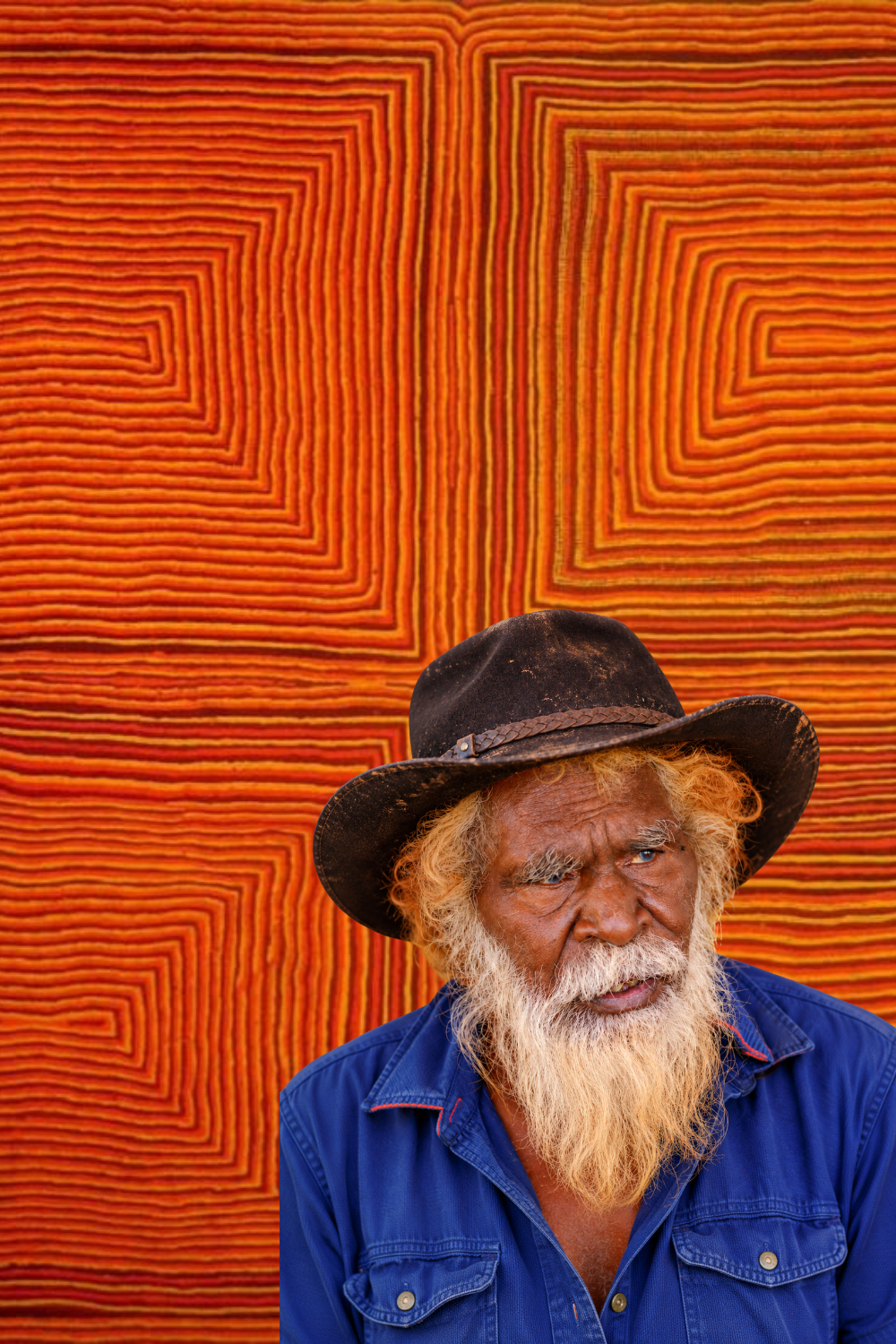
Brandy Tjungurrayi (c.1930–2012) was a senior Pintupi and Kukatja Law man, ceremonial leader and Western Desert artist who painted with both Warlayirti Artists at Balgo and Papunya Tula Artists at Kiwirrkurra. Born near Nyilla, south of Jupiter Well, he grew up travelling through the desert with his family before encountering European settlement during the 1950s.
Brandy belonged to an important family of Western Desert artists. His younger brother Patrick Tjungurrayi and sister Elizabeth Nyumi Nungurrayi were accomplished painters, while his relative Helicopter Joey Tjungurrayi shared his early experiences in the desert.
He began painting at Balgo in 1985, alongside a generation that included Eubena Nampitjin and Sunfly Tjampitjin. His subjects included the Tingari Cycle, ancestral waterholes, Emu Dreaming and Luurnpa Kingfisher Dreaming. His paintings range from boldly coloured Balgo compositions to the intricate linear designs of the Pintupi
As a senior custodian of men’s Law, Brandy held ceremonial responsibilities across the Western Desert. At Warlayirti Artists, he helped determine what cultural knowledge could appropriately be represented in paintings and continued teaching younger generations until shortly before his death in 2012.
Brandy Tjungurrayi Biography
Brandy was born around 1930 near Nyilla, south of Purtutjalpu (Jupiter Well). The National Museum of Australia identifies him as Manyjilyjarra and Kukatja; Warlayirti Artists records Pintupi and Kukatja affiliations.
He grew up travelling with his family through the Gibson and Great Sandy deserts, learning waterholes, hunting grounds and ceremonial sites. The waterholes south of Jupiter Well were associated with Luurnpa, the ancestral Sacred Kingfisher. Initiated at Nurrinpa, he became a senior custodian of Tingari Law. Much of this knowledge came from travelling through the same landscape he would later describe on canvas, rather than from maps or written accounts.
His younger brother was the artist Patrick Olodoodi Tjungurrayi and his sister the Balgo painter Elizabeth Nyumi Nungurrayi. Helicopter Joey Tjungurrayi and Charlie Wallabi Tjungurrayi were also relatives..
As a young man, Brandy walked north to the old Balgo Mission, following Canning Stock Route waterholes. In a 2008 National Museum interview he remembered walking from Natawalu through Tiru, Kulyayi and Katajilkarr, without European transport. At Balgo, Father Alphonse instructed him to return for his relatives, and he retraced the route to find them. His account is unusually personal evidence of how a desert family came to the mission: Brandy was not simply brought in by outsiders but made the journey himself, twice.
In 1958 he brought his family to Billiluna Station, where he worked branding cattle and acquired the name Brandy. He and his first wife, the artist Nowee Nangala (1945–1997), also recorded as Nowee Nanguri, tended goats and sheep at Balgo Mission and lived between Balgo and Christmas Creek.
Their five daughters became artists, including Frances, Theresa and Geraldine Nowee Napaltjarri. Nowee painted for Papunya Tula late in life; her Kayili (1996) appeared in Papunya Women at Utopia Art Sydney. Painting became a family practice as well as a way of recording inherited knowledge of Country.

In 1996 the family moved to Kiwirrkurra, nearer his childhood Country, although Brandy had painted for Papunya Tula by 1993. Following the 2001 Kiwirrkurra floods, he returned to Balgo with his second wife, Philomena Baadjo, and relatives.
At the National Museum’s 2010 Yiwarra Kuju: The Canning Stock Route opening, Brandy and Helicopter Joey examined a hooked boomerang collected near Natawalu in 1957 by pilot James Ferguson. They suggested it had belonged to Ngangu, an older leader of their family group. The encounter placed Brandy’s living memories alongside an object collected during the same period in which families were leaving the desert.
Brandy spent his final years painting and teaching at Balgo. He died on 29 May 2012, surrounded by family.
Brandy Tjungurrayi Painting Style and Dreamings
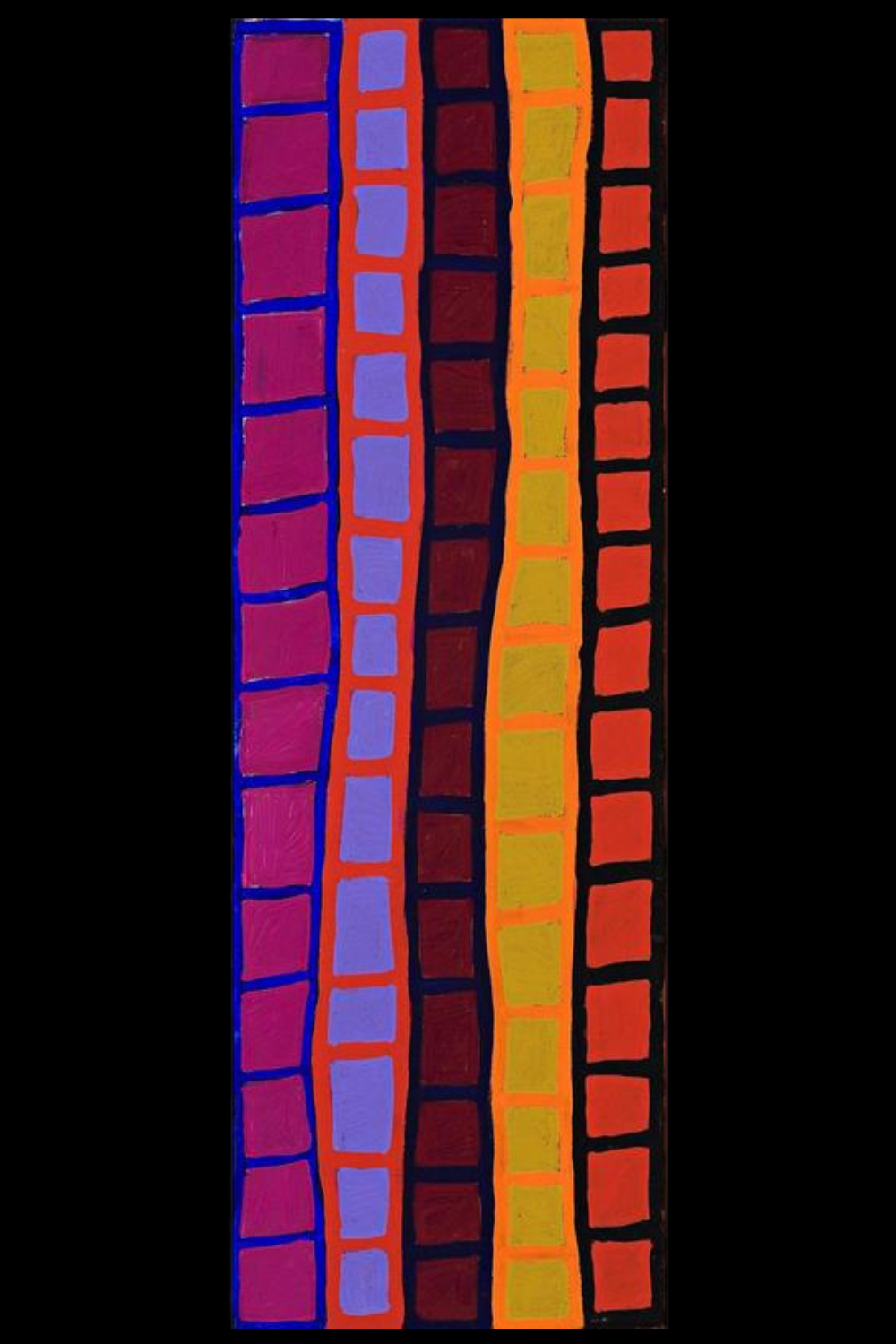
Brandy began painting at Balgo in 1985, before Warlayirti Artists was formally established in 1987. His early works used contrasting colours, geometric designs and repetition to represent ancestral Country.
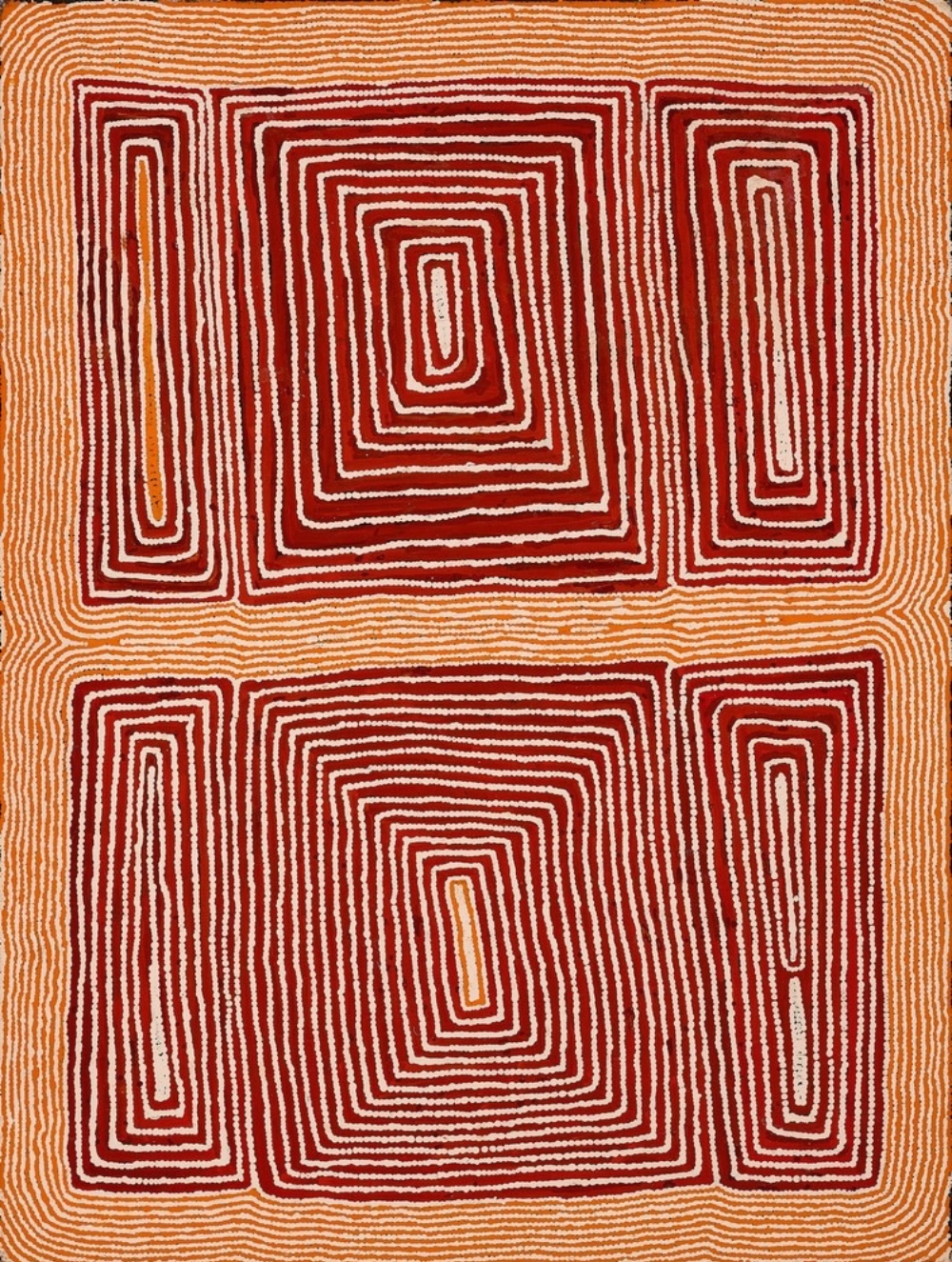
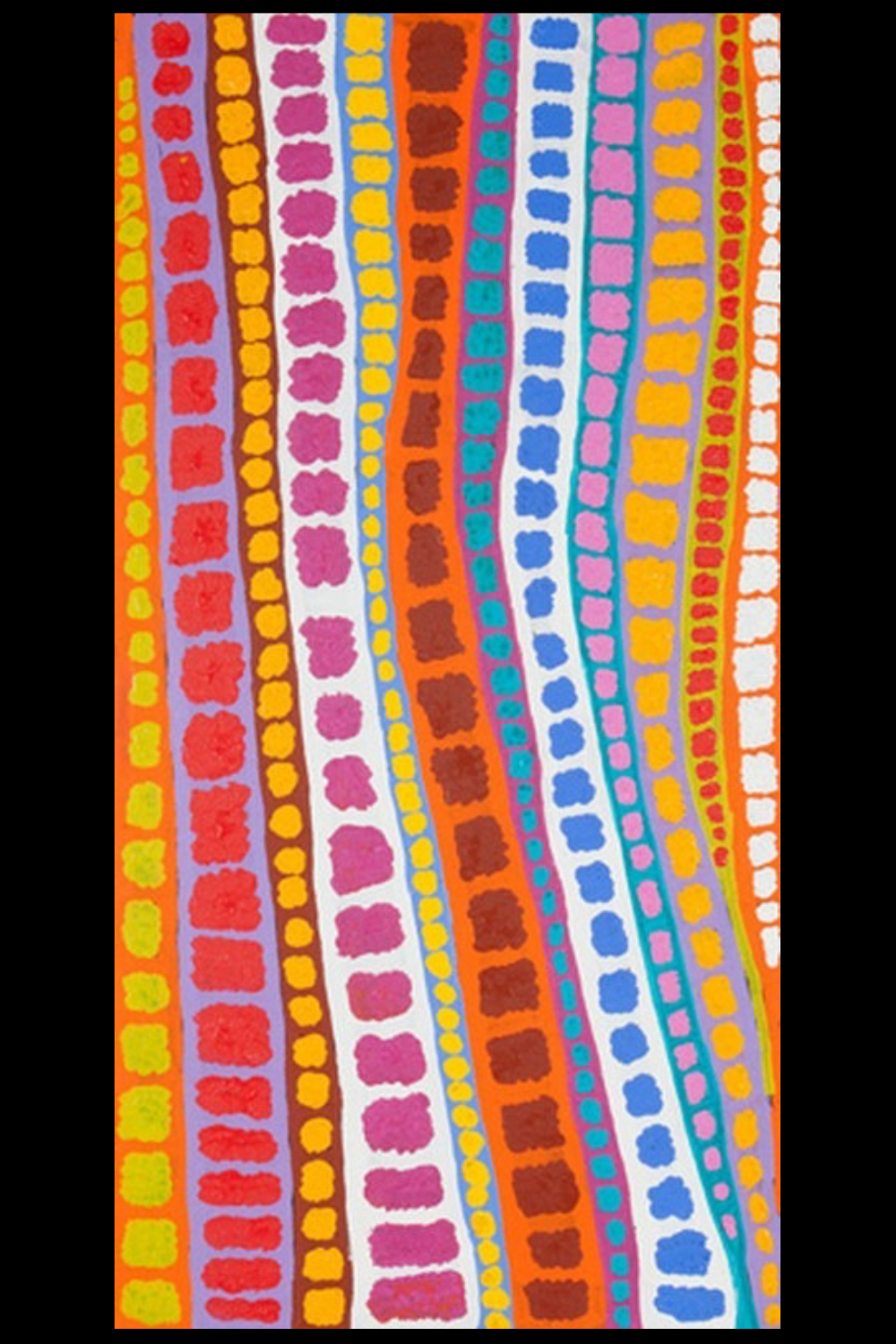
Kunarri Waterhole (1988), measuring 125.2 × 91 cm, uses strongly defined squares. The exhibition catalogue Balgo: Visions (2022) identifies the square as a significant element of his artistic vocabulary, subsequently taken up by his daughters.
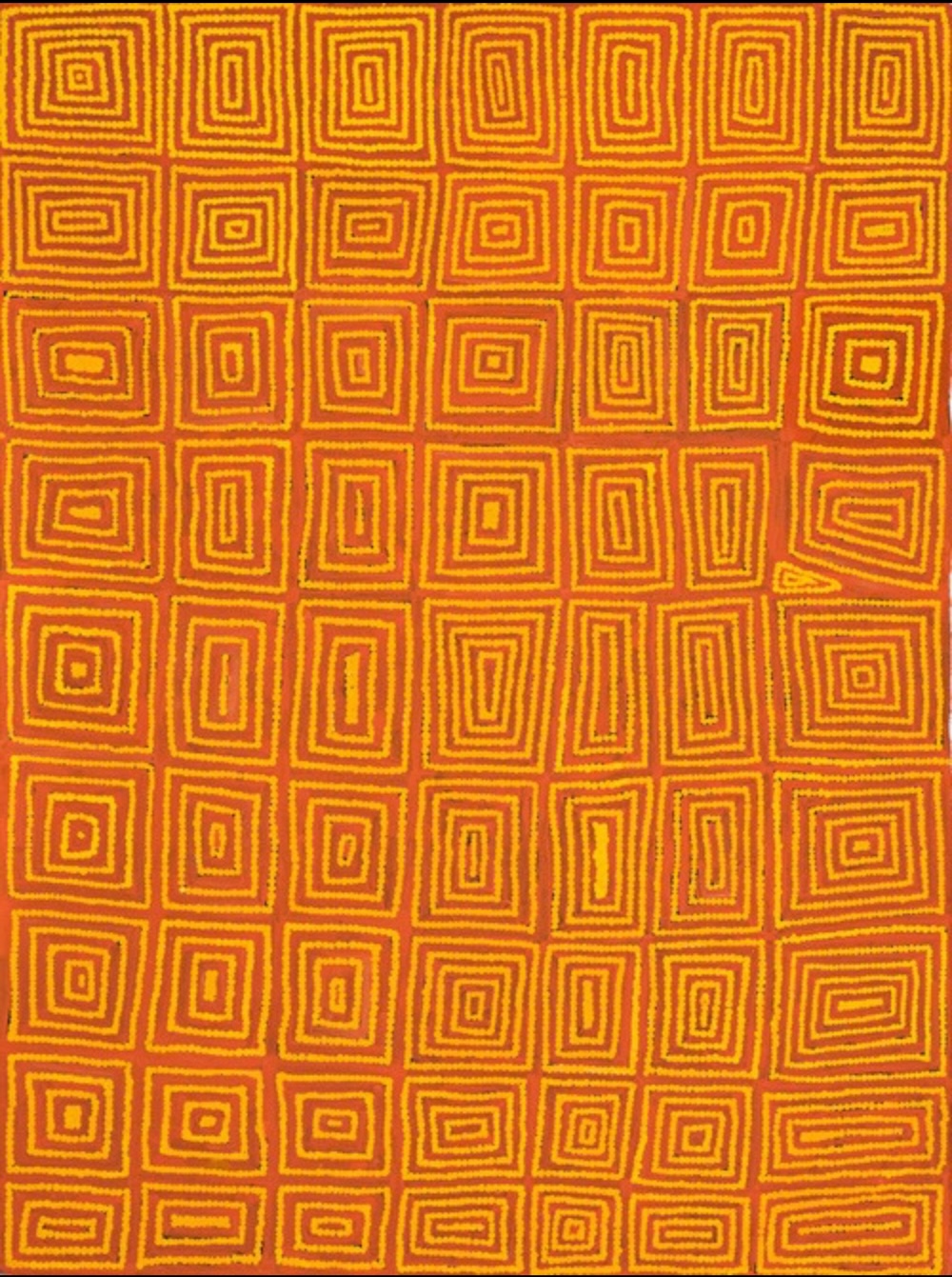
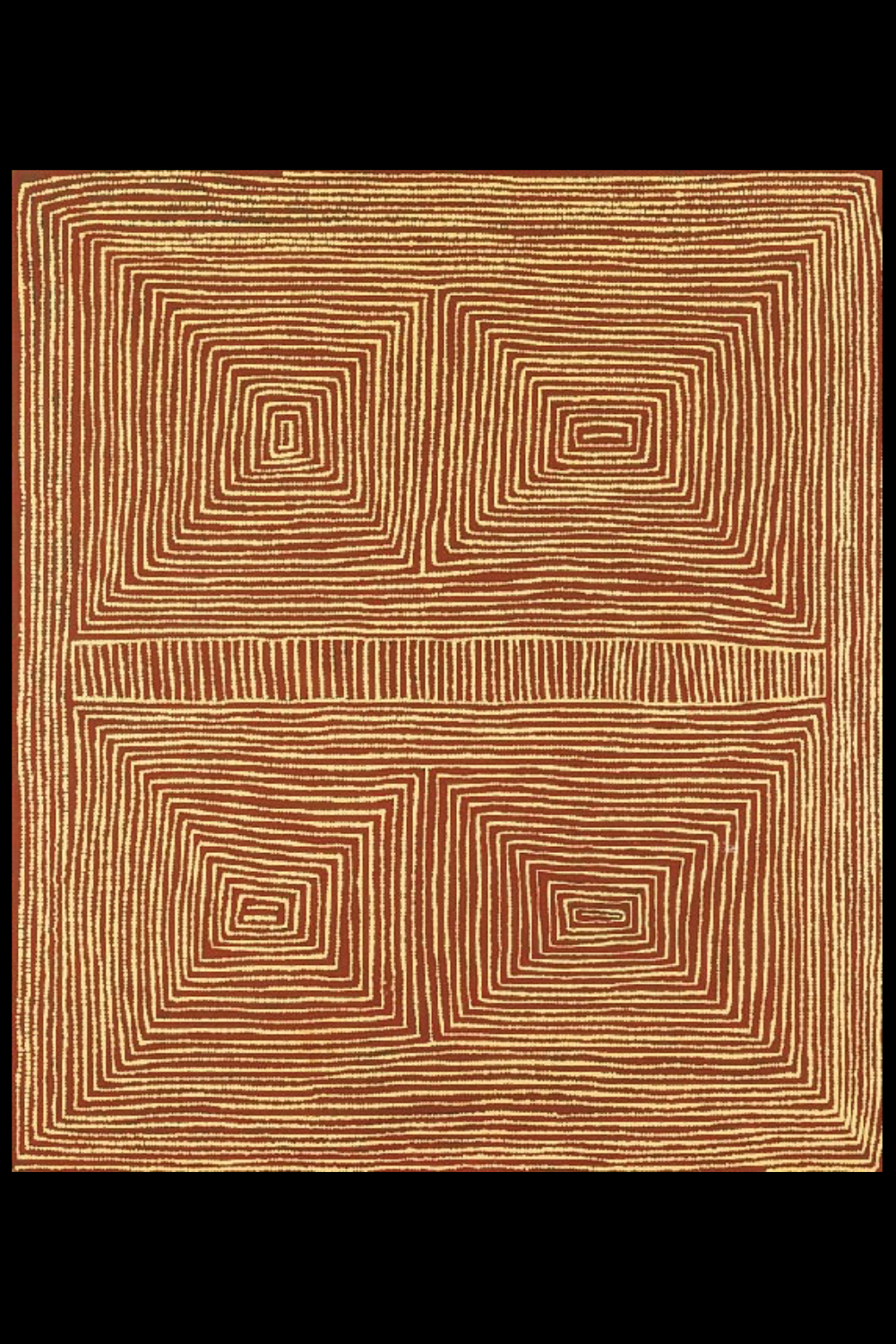
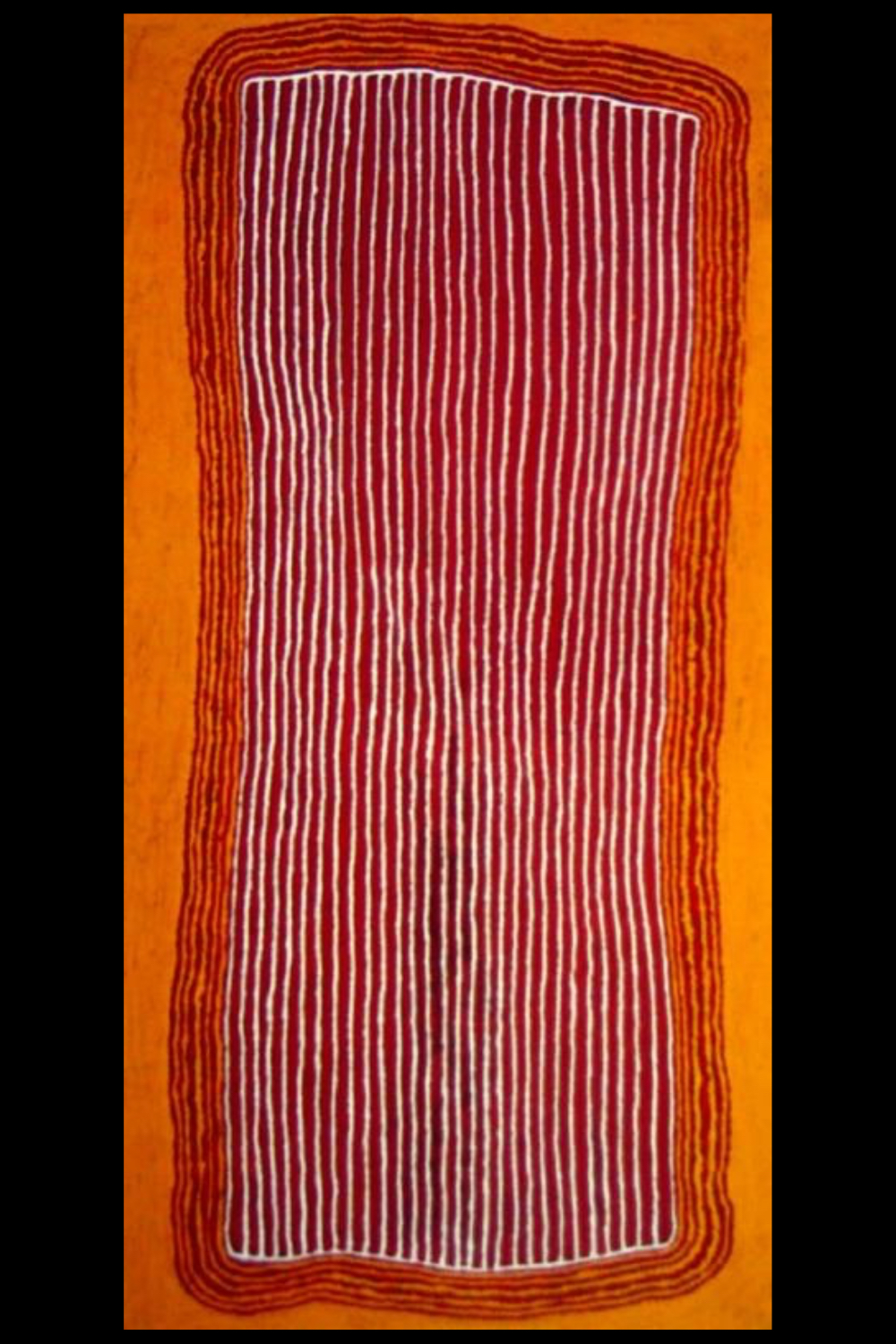
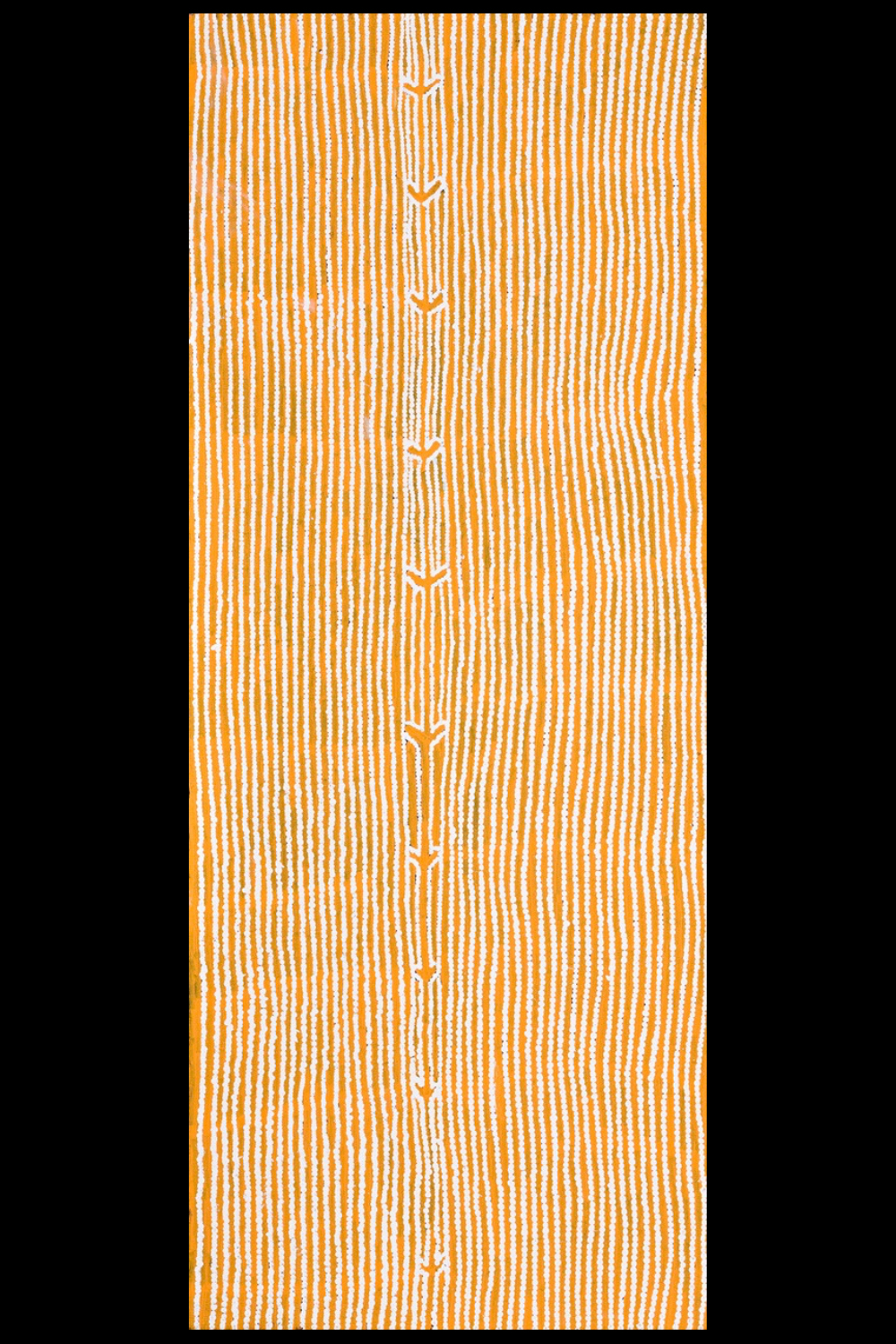
His Papunya Tula paintings of the 1990s often have restrained colours, tightly spaced dots and linear patterns arranged symmetrically around central points or within rectangles. Sometimes the dots become almost continuous bands. His Balgo works, by contrast, often employ vivid colour and emphatic geometric forms. The auction archive also records a richly coloured 1989 Artist’s Country, showing that his use of repeated blocks and patterned fields preceded his better-known works from Kiwirrkurra.
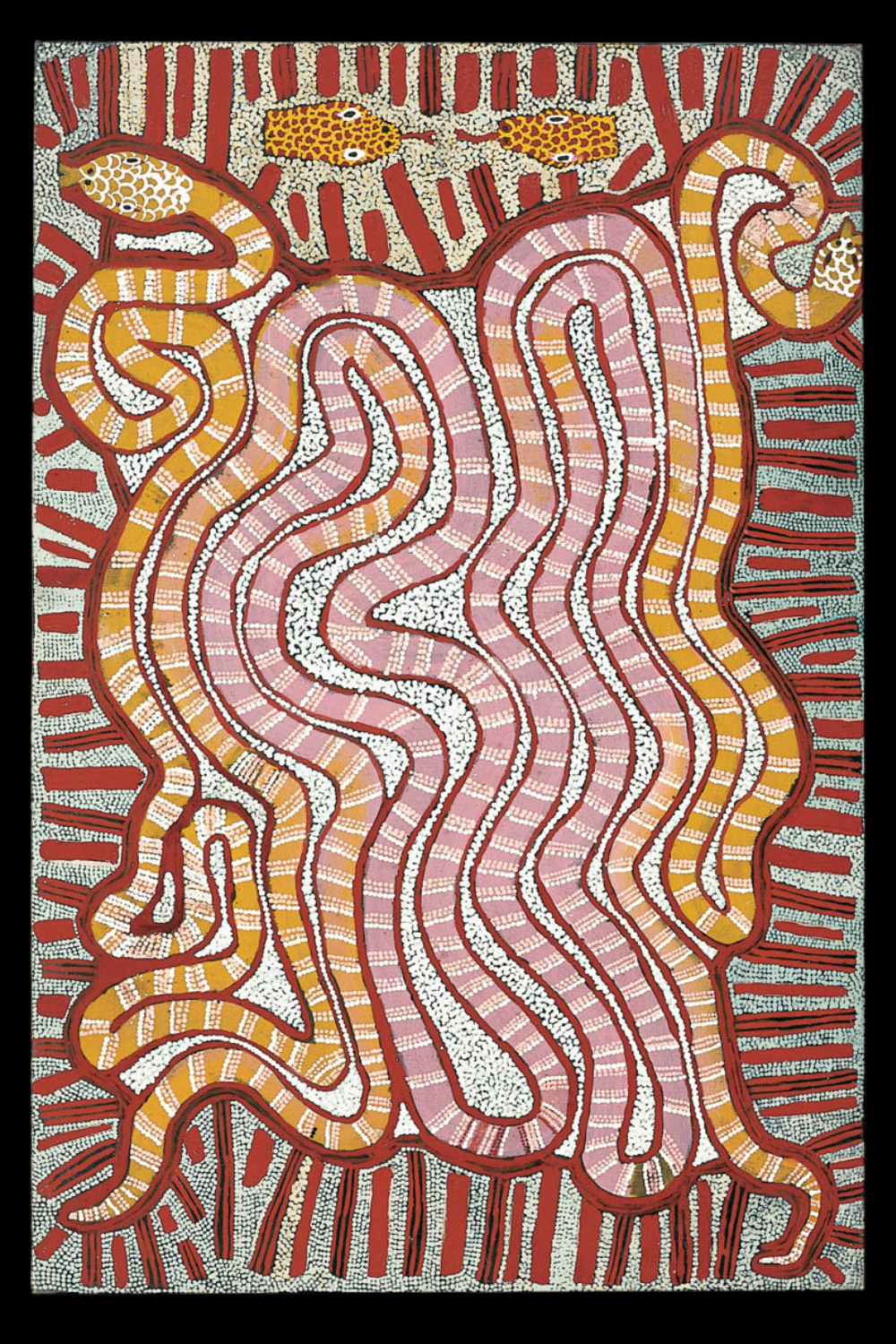
These approaches coexisted rather than forming a simple progression. In Pilkati – Snakes (1994), recognisable serpentine figures occupy a patterned field; his later Tingari compositions can be almost entirely geometric. He adjusted his visual language to particular subjects and sites. Even paintings of the same Country can use markedly different arrangements, so a recurring square, stripe or line should not be assigned a single meaning across all his works.
Brandy painted Country around Nyilla, Jupiter Well, Kiwirrkurra and the middle Canning Stock Route, including Tingari journeys, water sites, ancestral fire, bush foods, birds, snakes and ceremonial activities. Papunya Tula
The Tingari at Palal Palal
Palal Palal, west of Jupiter Well, was an important site in Brandy Tjungurrayi’s ancestral Country. A Papunya Tula certificate describes it as a place without water. During the Dreaming, Tingari men and women travelled there from Christmas Creek, rested, then continued to Ngarru before turning east towards Kiwirrkurra and Lake Mackay.
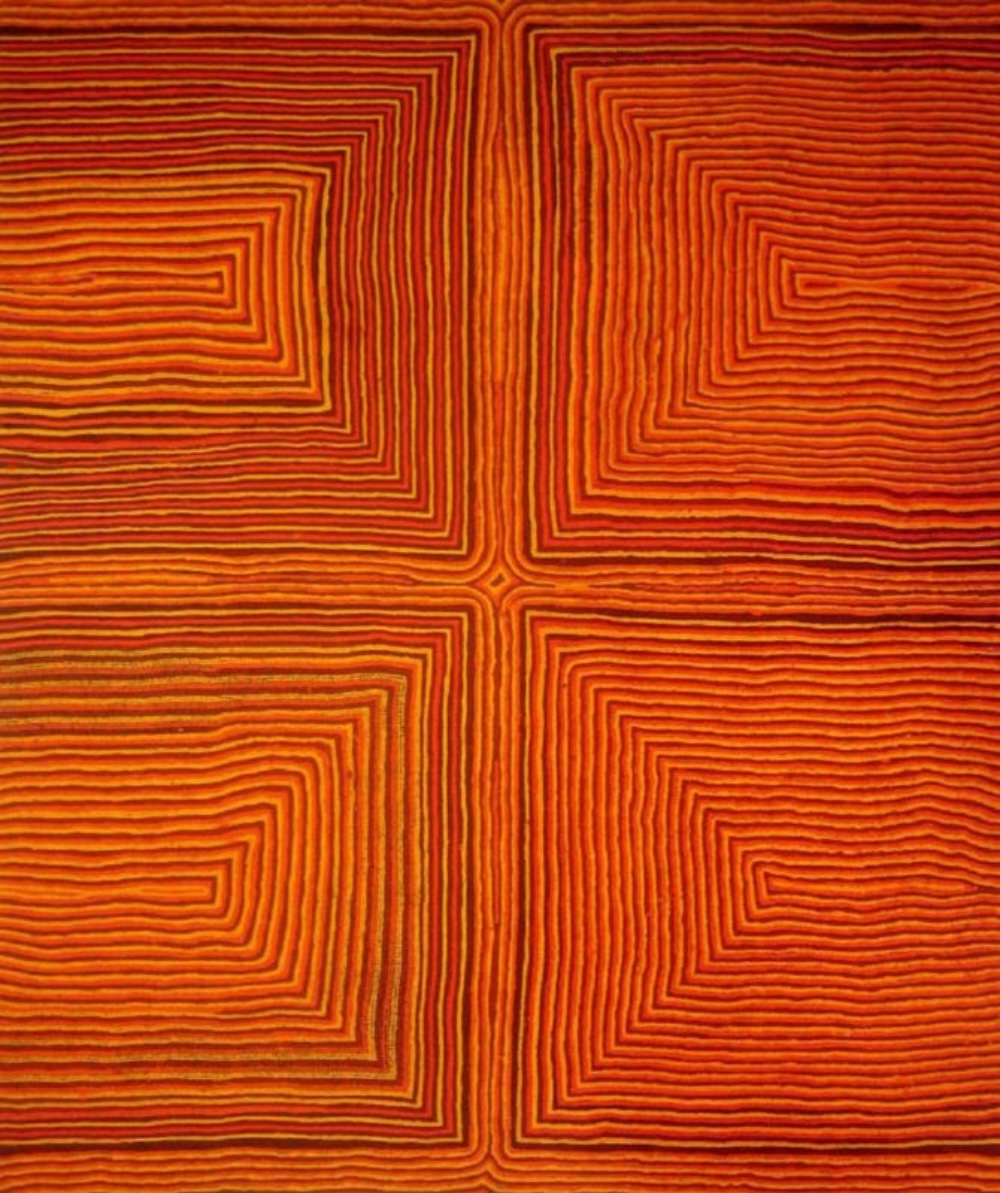
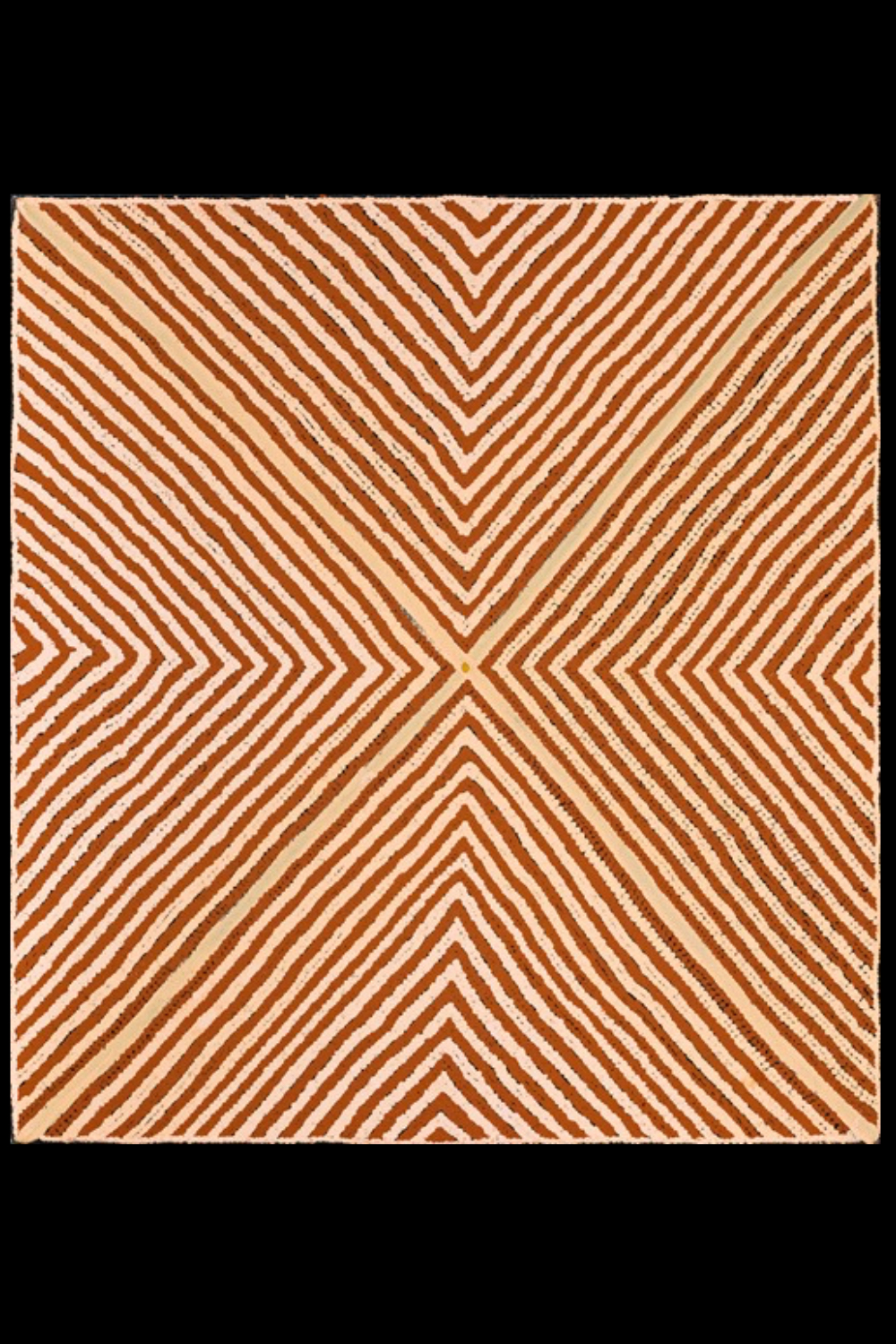
In Palal Palal (1999), Brandy represents this ancestral Country through four arrangements of closely spaced, angular lines. Bands of orange, ochre, yellow and deep red turn repeatedly inwards, creating nested geometric forms that converge towards the centre of the painting.
The narrow intervals between the lines produce a remarkable sense of depth and movement. Although the composition appears symmetrical, subtle variations in spacing and direction give each of its four sections an individual rhythm.
Rather than illustrating the ancestral travellers as figures, Brandy uses repeated geometric forms to evoke the Country through which they travelled. The painting communicates the significance of Palal Palal within the Tingari journey while leaving the more restricted ceremonial knowledge undisclosed.
Tingari Men Making Spears Near Jupiter Well
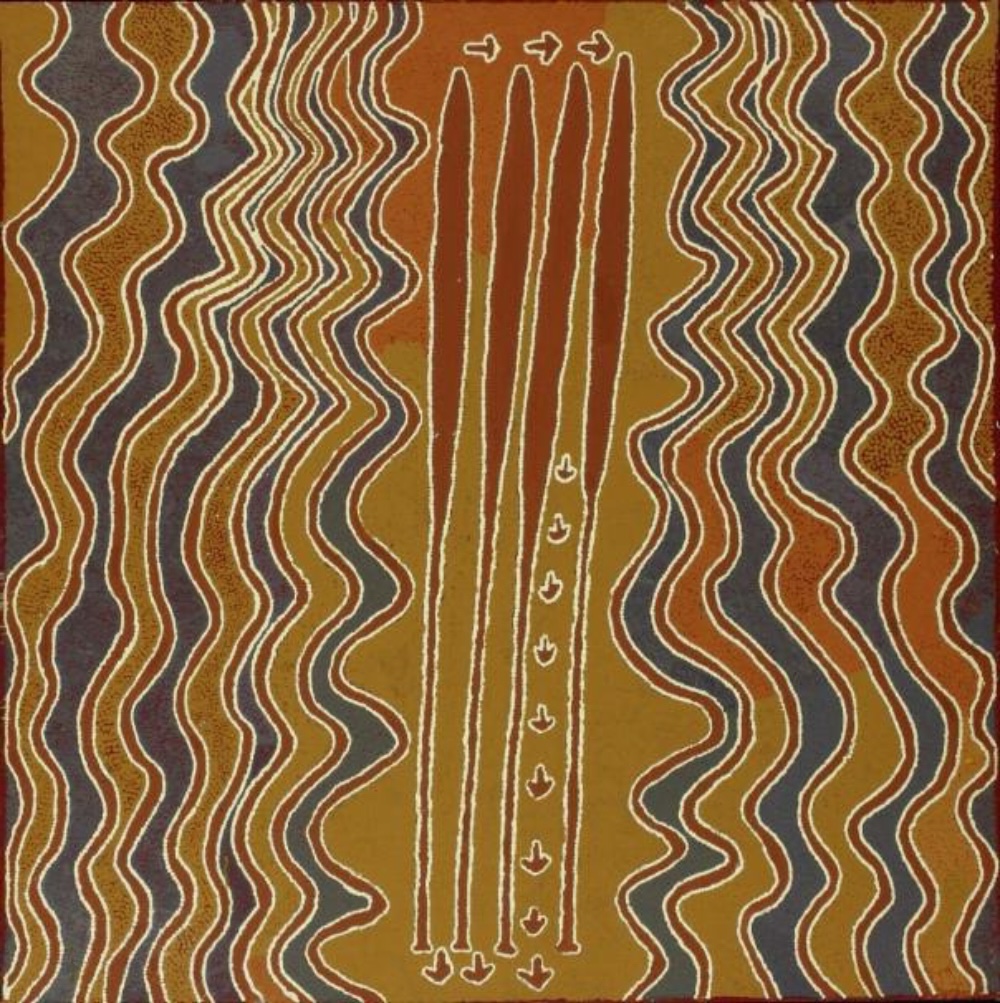
In Tingari Cycle Nearby Jupiter Well (1999), birds guide Tingari men to a site west of Jupiter Well. The leader’s footprints appear in the painting. The men gather timber, sit making spears and then travel east. The Papunya Tula certificate withholds further detail because the associated knowledge is restricted. Brandy could therefore identify actions and features in the work without disclosing the full ceremonial narrative.
Warraparti: The Woman and the Flying Boomerang
Warraparti (2002) depicts Country west of Kiwirrkurra. An ancestral woman carries a coolamon of Kurl Kurl seeds, gathered and ground for damper. Far away, men are fighting with boomerangs. One flies towards her; she ducks and spills her seeds. This specific event forms part of the site’s ancestral narrative. The story joins an everyday activity, preparing flour, to an unexpected encounter, and makes clear that the subject is more than an arrangement of decorative seed motifs.
Narroo: The Ancestral Fire Dreaming
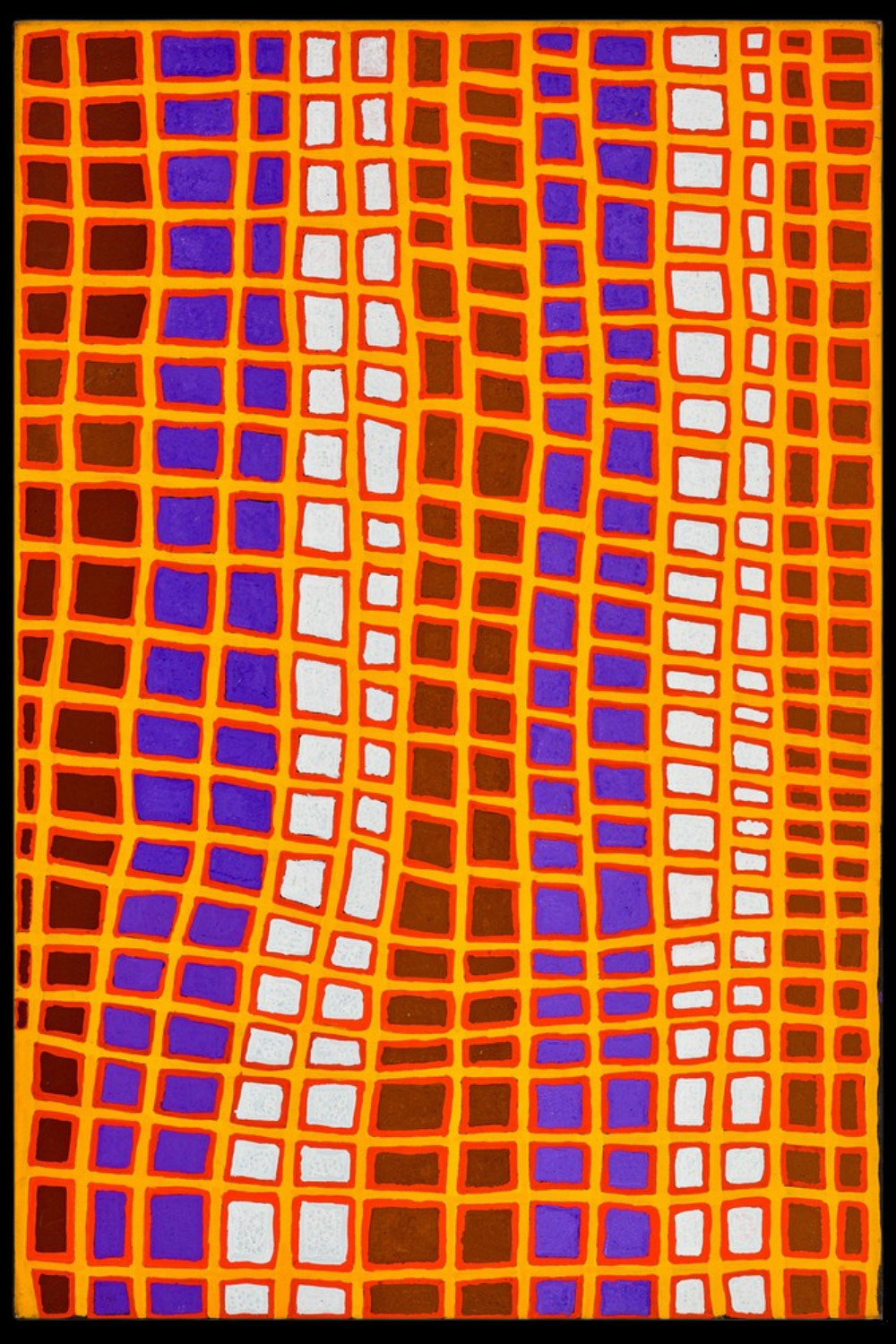
Narroo was especially important to Brandy. A Warlayirti certificate for Narroo (2007) recounts two Tingari men of the Tjapangati and Tjapaltjarri skin groups who painted themselves and covered their bodies with flowers to avoid being seen. They lit Country for the first time during the Dreaming, trapping and burning many people who sought refuge among high rocks.
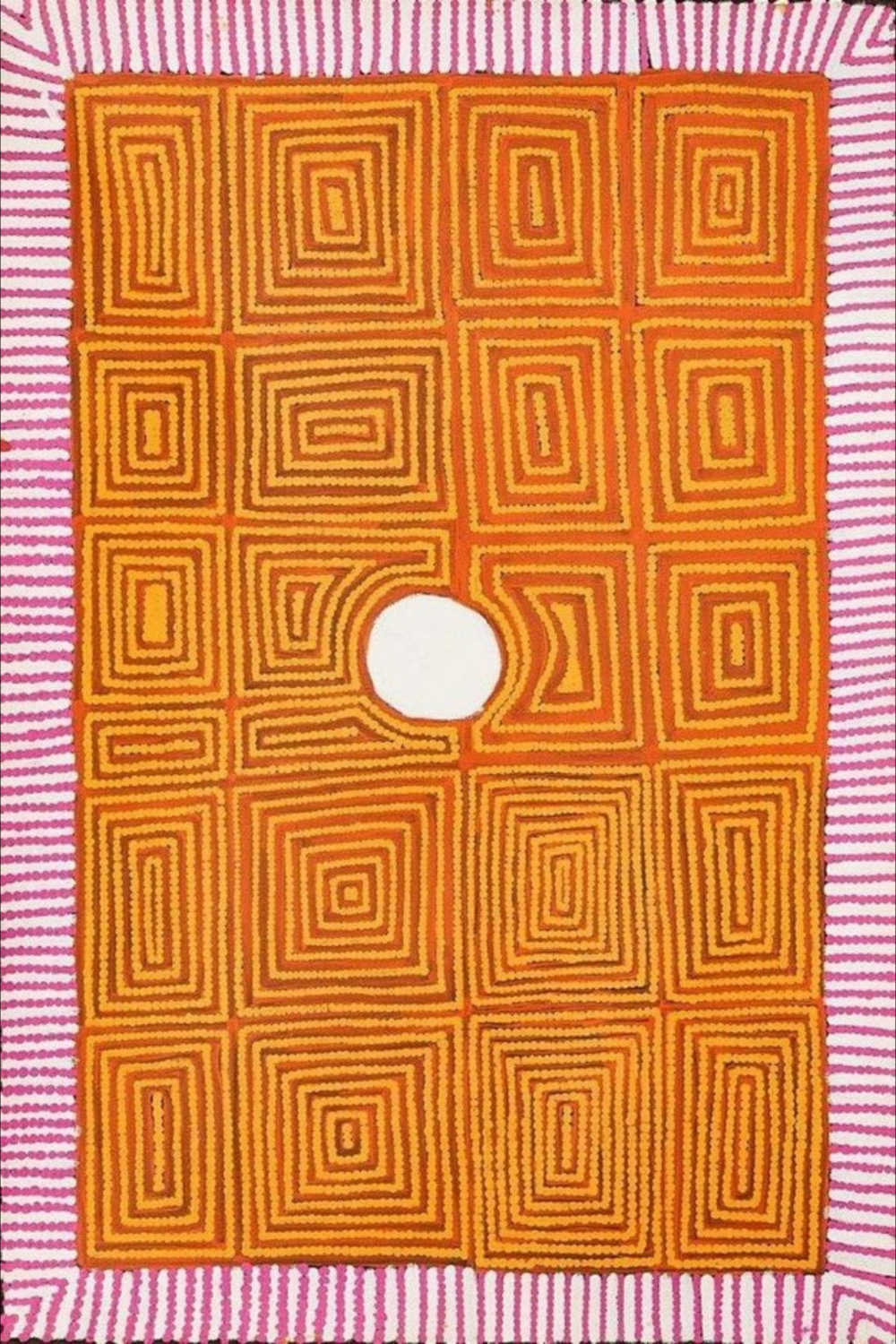
The painting’s lines represent those rocks and its squares the firelines. In Narroo (2002), however, squares signify kulparri, black bush seeds used for damper, with soakwaters running through the centre. The different paintings reveal distinct aspects of the same Country. They also show the danger of treating square forms as a universal symbol: here their documented interpretation changes with the painting and the story Brandy chose to tell.
Kulparri: Bush Seeds and the Sharing of Damper
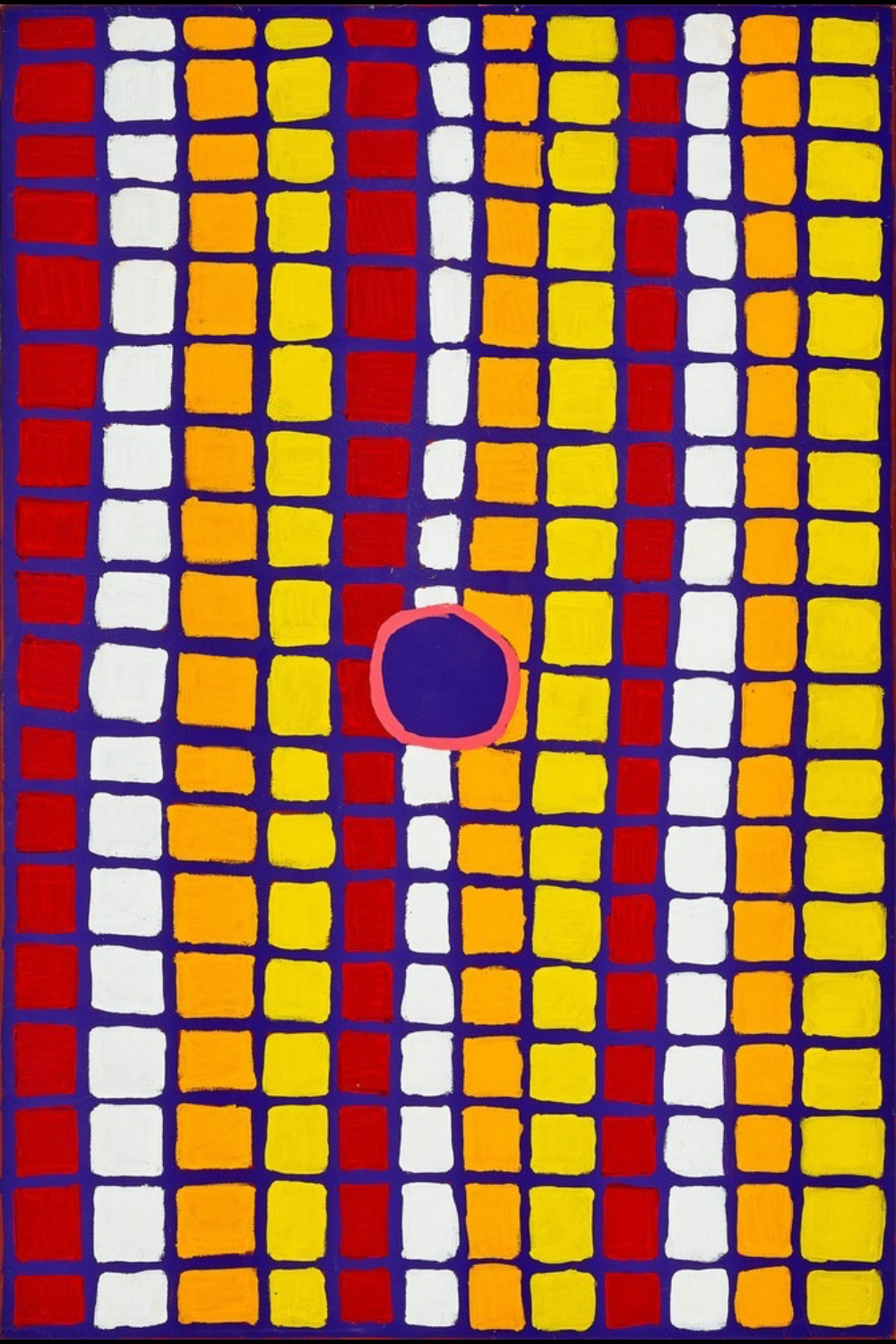
Kulparri (2002) depicts Brandy’s Country south of Balgo, where small black seeds were collected and ground into damper. The Warlayirti certificate identifies the central panels as seeds and a circle as the water used in preparation.
Its ancestral narrative concerns a quarrel over sharing food: a large woman fights with men before other women intervene and divide the damper. The Warlayirti painting is catalogue 921/02. Together with Warraparti, it shows how the collection, preparation and sharing of food appear within ancestral narratives, not merely as observations of desert life.
Brandy Tjungurrayi’s Artistic Legacy
Shortly before his death in 2012, Brandy was passing Narroo Tjukurrpa to his grandsons Shannon and Marcus Gibson. Days before he died, he worked with Warlayirti’s New Media Centre on a documentary teaching younger men to make traditional artefacts. These were practical skills learned in the bush, and he regarded their transmission as part of the same responsibility as handing on ceremonial knowledge.
His daughters continued the painting tradition. Frances Nowee began painting in the mid-1990s, while Geraldine Nowee began in 2002 after watching her parents paint, developing subjects including flowers, seeds and bush foods. His granddaughter Serena Nowee also became a Warlayirti artist. His influence was therefore visible both in the continuation of particular stories and in the patterned forms his descendants adapted to their own paintings.
Brandy lived through the transformation of desert life by missions and pastoralism, yet retained the authority to represent and protect his ancestral Country. His paintings and the knowledge he transmitted to descendants are inseparable parts of that legacy.
Brandy Tjungurrayi Value and Auction results
Works Offered at Auction: 48
Sale Rate: 63%
Highest Sale: $12,000 AUD
Median Sale Price: $2,000 AUD
Exhibitions and Collections
Brandy’s work was shown in Balgo exhibitions from the late 1980s. Kunarri Waterhole (1988) appeared in Paintings from Kukatja Country in Melbourne in 1990. His first solo exhibition was at William Mora Aboriginal Art, Melbourne, in 2000. He also contributed to Kiwirrkurra Men’s Painting, shown in Papunya Tula: Genesis and Genius at the Art Gallery of New South Wales.
In 2005 he made Pinti, an orange, yellow and black sugar-lift aquatint in Northern Editions’ Warlayirti Suite. Impressions entered the National Gallery of Australia and Art Gallery of South Australia.
Selected Exhibitions
- 1990 – Paintings from Kukatja Country: Balgo – Western Australia, Deutscher Brunswick Street, Melbourne.
- 2000 – Solo exhibition, William Mora Aboriginal Art, Melbourne.
- 2000 – Papunya Tula: Genesis and Genius, Art Gallery of New South Wales, collaborative Kiwirrkurra Men’s Painting.
- 2002 – Next Generation Aboriginal Art, Arthouse Gallery, Sydney.
- 2007 – Balgo 07, Gallery Gabrielle Pizzi, Melbourne.
- 2010 – Yiwarra Kuju: The Canning Stock Route, National Museum of Australia, Canberra.
- 2020 – Blue Chip XXII, Niagara Galleries, Melbourne.
- 2022 – Balgo: Visions, D’Lan Contemporary, Melbourne.
Selected Collections
- National Gallery of Australia, Canberra
- Art Gallery of South Australia, Adelaide
- National Museum of Australia, Canberra
- Shepparton Art Museum, Victoria
- William and Lucy Mora Collection, Melbourne
- Laverty Collection, Sydney
Further Reading
- National Museum of Australia. Kamara Brandy Tjungurrayi, Yiwarra Kuju: The Canning Stock Route.
- National Museum of Australia. Yiwarra Kuju education kit, 2010, p. 33.
- Warlayirti Artists. Brandy Tjungurrayi – Artist Biography.
- Clifford, Sally. Obituary: Brandy Tjungurrayi, Arts Backbone, vol. 12, no. 1, August 2012, p. 27.
- Johnson, Vivien. Lives of the Papunya Tula Artists. IAD Press, 2008, p. 374.
- D’Lan Contemporary. Balgo: Visions, 2022.
- National Film and Sound Archive. Painting Country: Kiwirrkurra, 2000.
- Deutscher and Hackett. The Collection of William and Lucy Mora, 21 July 2010, Lots 26, 27, 93, 151.
- Australian Art Sales Digest. Brandy Tjungurrayi: Works in Past Sales, 1989–2025.
Brandy Tjungurrayi Artwork images
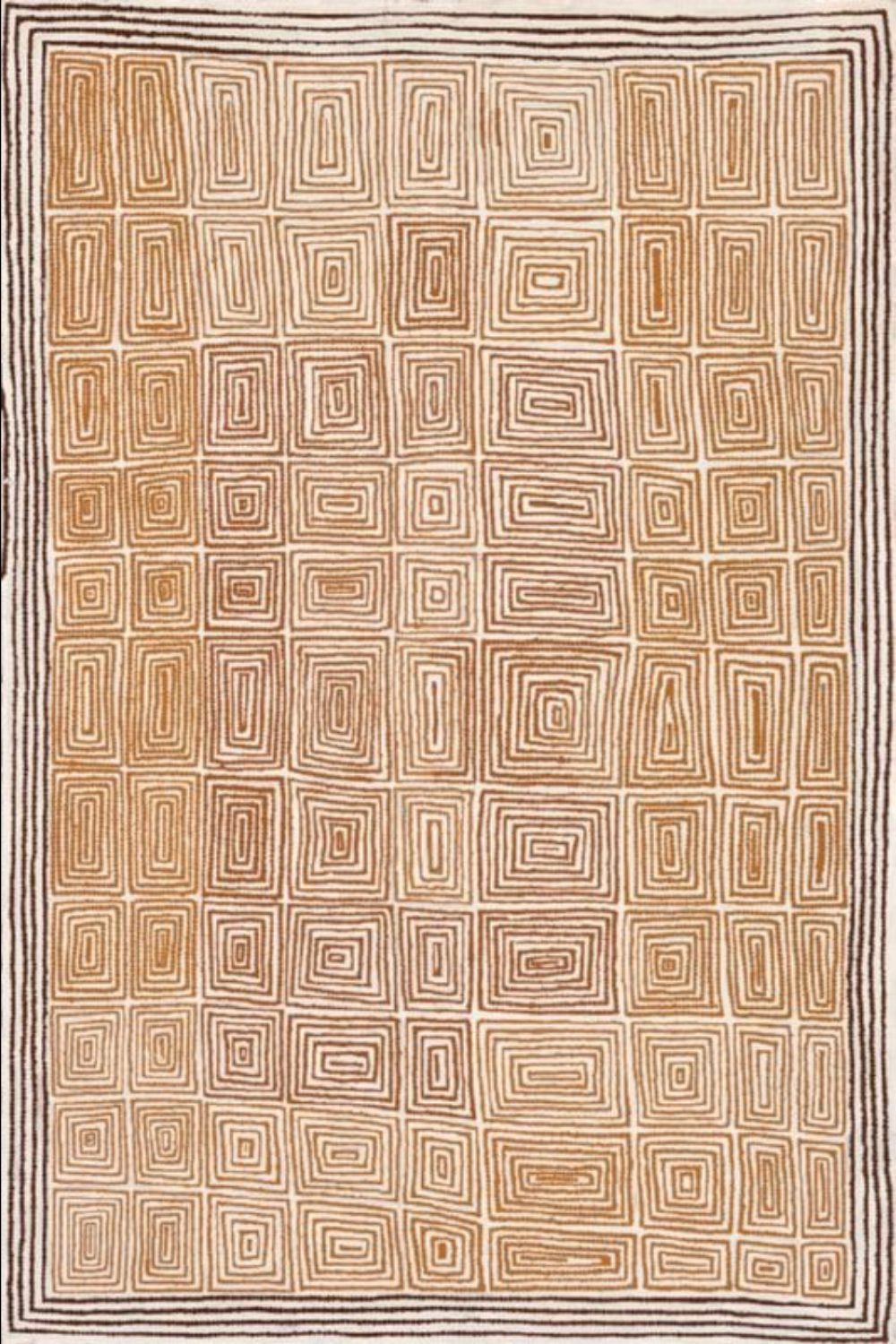
The following images are not intended to represent a complete catalogue of the artist’s work. Rather, they offer a representative selection illustrating the breadth of subjects, artistic styles and visual diversity of the artist’s oeuvre



All images featured in this article are presented strictly for educational and informational purposes.
This website may include copyrighted material for which specific authorization has not been obtained from the copyright owner.
All such images are presumed to be the intellectual property of the respective artist or their estate, and are used in accordance with principles of fair dealing or fair use under applicable copyright law.