
Bai Bai Napangarti: Biography, Painting Style and Importance
- c.1939–2020
- Kukatja / Ngarti
- Mangkayi (Stansmore Ranges) Country, near Yagga Yagga
- Balgo / Northern Great Sandy Desert
- Balgo Art / Western Desert Art
- Acrylic painting on canvas
Bai Bai Napangarti (also spelled Napangardi) was a pioneering figure in Balgo art, a senior Kukatja and Ngarti Law woman and one of the Western Desert’s most respected songwomen. Born at Mangkayi in the Stansmore Ranges of Western Australia, she began painting in 1986. Her representations of ancestral Country, waterholes, sandhills and women’s ceremonial traditions helped establish Balgo painting as a distinctive expression of Western Desert art.
Together with her husband, Sunfly Tjampitjin, she belonged to the first generation of artists associated with Warlayirti Artists. Working at Yagga Yagga, alongside fellow painter Tjumpo Tjapanangka, they developed distinctive styles relatively independently of the main Balgo painting community. Bai Bai also maintained a close friendship with Elizabeth Nyumi, another leading Balgo artist, who later cared for Bai Bai’s granddaughter Melissa Sunfly at Billiluna.
Bai Bai’s importance extended well beyond painting. As a leading songwoman and custodian of women’s Law, she passed extensive ceremonial knowledge to younger generations through song, dance, storytelling and painting. Her work is represented in major Australian and international collections, including the National Gallery of Victoria and the Kluge-Ruhe Aboriginal Art Collection.
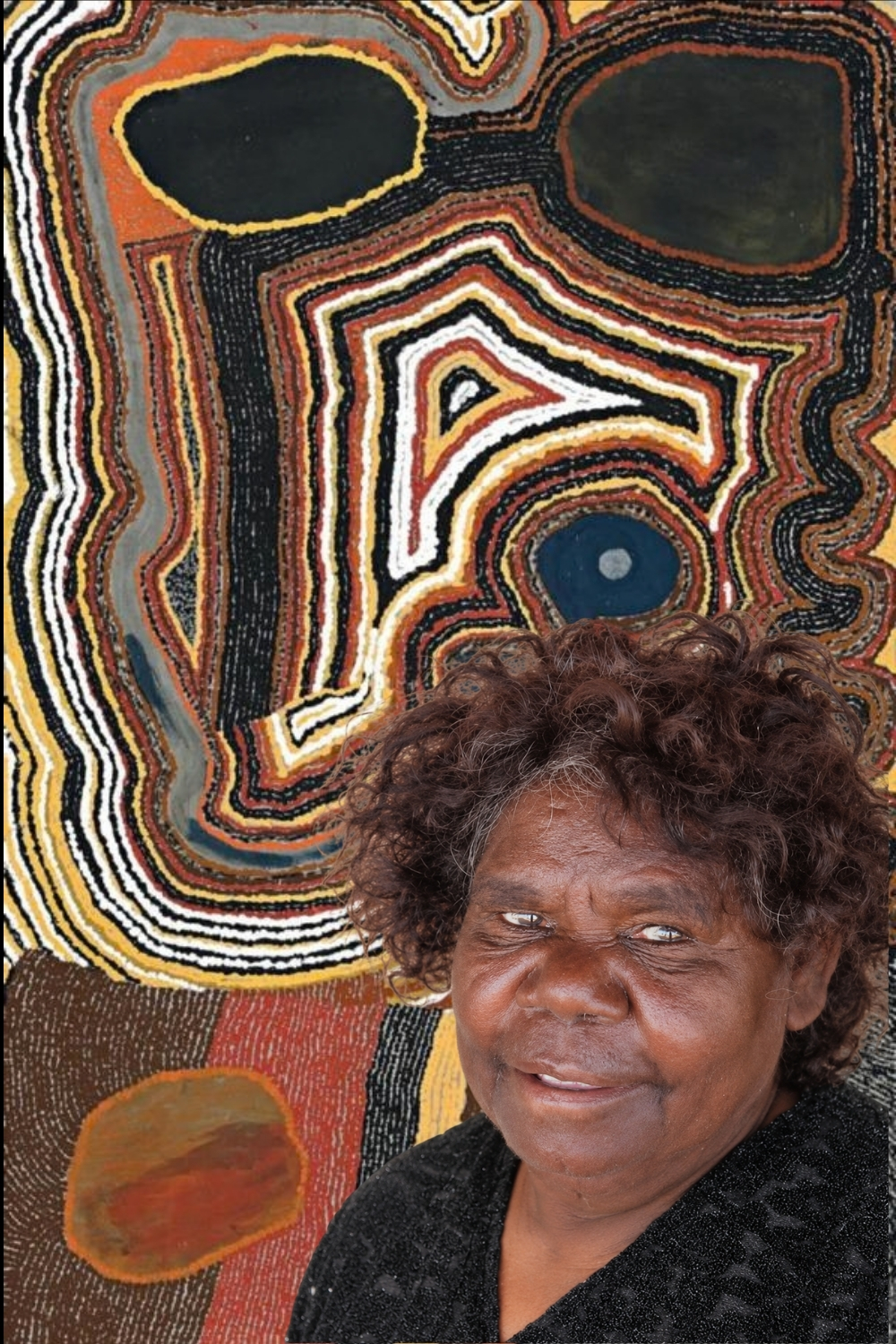
Bai Bai Napangarti Biography
Bai Bai Napangarti was born around 1939 on a hill at Mangkayi, near Tjawa Tjawa (Point Moody), in the Stansmore Ranges south of Balgo. Her family belonged to the Kukatja and Ngarti language groups, and she spent her childhood travelling through their ancestral Country in the northern Great Sandy Desert.
Her family’s memories included encounters with Europeans long before Bai Bai was born. Her mother recalled seeing three white men travelling north on camels, who initially behaved amicably and offered tobacco. Later encounters were remembered very differently, with Europeans threatening and attacking Aboriginal people.
Another family recollection concerns their first encounter with cattle. Unfamiliar with the introduced animals, they reportedly tested the meat on their dogs before deciding it was safe to eat. As a young girl, Bai Bai also participated in expeditions to obtain cattle near Gregory Salt Lake, experiences recorded in accounts of her early life.
Bai Bai grew up learning the locations of waterholes, the seasonal availability of bush foods and the ancestral narratives associated with particular places. Her grandmother, who was living at the old Balgo Mission, eventually travelled into the bush looking for the family, bringing flour and tea for them to taste.
Bai Bai later walked into the mission with her father and subsequently accompanied him to Lake Stretch Station. According to an account recorded by Art Mob, she fled the station with her aunties after witnessing a massacre along Sturt Creek. The precise circumstances and date of this reported event have not been independently established.
These experiences made Bai Bai part of a generation whose early lives were shaped by traditional desert society, but who also witnessed the arrival of pastoralism, missions and colonial violence.
Bai Bai married Sunfly Tjampitjin, an important Kukatja Law man and one of the earliest Balgo acrylic painters. They had four daughters and a son. Their daughter Pauline Sunfly became an accomplished artist, painting Country inherited through both parents.
Bai Bai and Sunfly spent considerable time at Yagga Yagga, where they maintained strong connections to their ancestral lands. Sunfly died in 1996, but Bai Bai continued painting and fulfilling her ceremonial responsibilities.
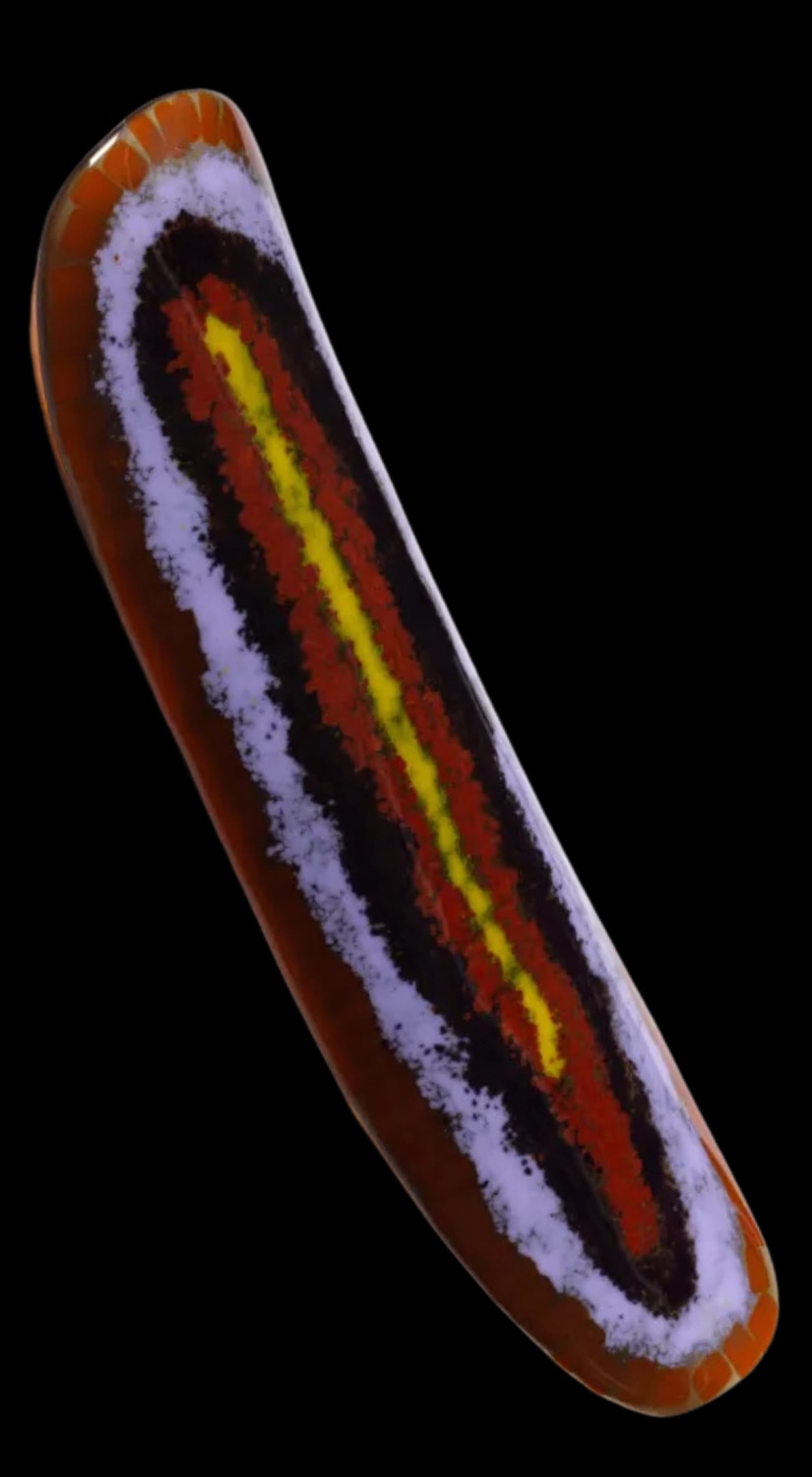
One of her most significant artistic contributions came in 2008, when her glass coolamon, Luwantja, became part of Australia’s historic National Apology to the Stolen Generations. On 13 February, following Prime Minister Kevin Rudd’s parliamentary apology, Lorraine Peeters, representing members of the Stolen Generations, presented the vessel to Rudd and Opposition Leader Brendan Nelson.
The coolamon contained a message thanking Parliament for the Apology and expressing hope for reconciliation. Traditionally used to carry food, water and children, its form recalled the importance of protecting children, while the glass symbolised the fragility and strength of relationships between Aboriginal and non-Aboriginal Australians. The work is now held in the Australian Parliament House Art Collection.
Bai Bai continued to be recognised as a senior cultural authority and painter until late in life. She died in 2020, leaving an artistic and ceremonial legacy continued by her children and grandchildren.
Bai Bai Napangarti Painting Style and Dreamings
Bai Bai Napangarti developed a distinctive approach to Western Desert painting while living and working at Yagga Yagga, south of Balgo. Her paintings principally depict the ancestral Country surrounding Mangkayi, the Stansmore Ranges and Yagga Yagga, including waterholes, sandhills, rock formations, creek systems, bush foods and places associated with ceremonial Law.
Unlike many artists working directly at Warlayirti Artists, Bai Bai and her husband Sunfly Tjampitjin initially painted in relative isolation, with canvases delivered to their community. Warlayirti Artists suggests that this independence contributed to the development of their individual styles, relatively unaffected by the dot-and-line conventions associated with Pintupi painting.
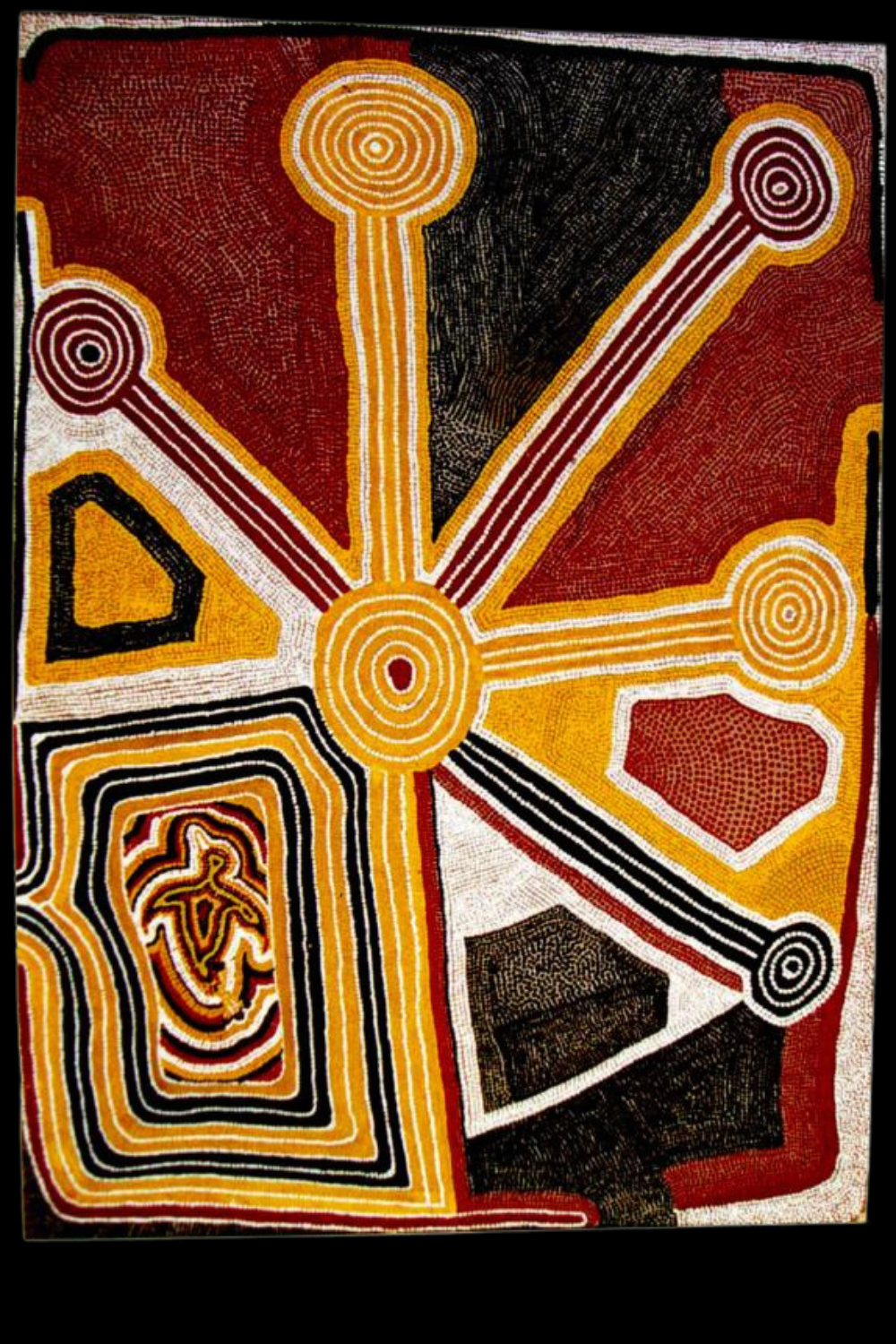
Bai Bai’s compositions combine strongly contrasting colours, rhythmic bands of dotting, concentric forms and bold geometric arrangements. These elements describe the physical geography of her Country while communicating the ancestral events responsible for particular landscape features.
In Kantawarra (2004), a central form represents a killiki (creek), while parallel lines in the upper section depict tali(sandhills). Lines in the lower section represent water flowing through the Country during the wet season.
In Tatijpuntja near Emil Springs (1997), long parallel bands describe sandhills, while a central soakwater marks the place where two ancestral men ate bush tomatoes and spat their seeds into one location, creating the water source.
Art historian Christine Watson connects the visual qualities of Balgo painting with ceremonial body painting and traditional sand drawing. She argues that repeated dotting and strongly outlined forms can communicate ancestral potency through their apparent movement and shimmering visual effects.
This relationship is particularly evident in Bai Bai’s paintings of ancestral ceremonies, where rhythmic patterns suggest the movement of dancers and ancestral beings through Country. Her paintings therefore communicate more than the appearance of the landscape. They express the ancestral events, ceremonial responsibilities and inherited knowledge that give particular places their cultural significance.
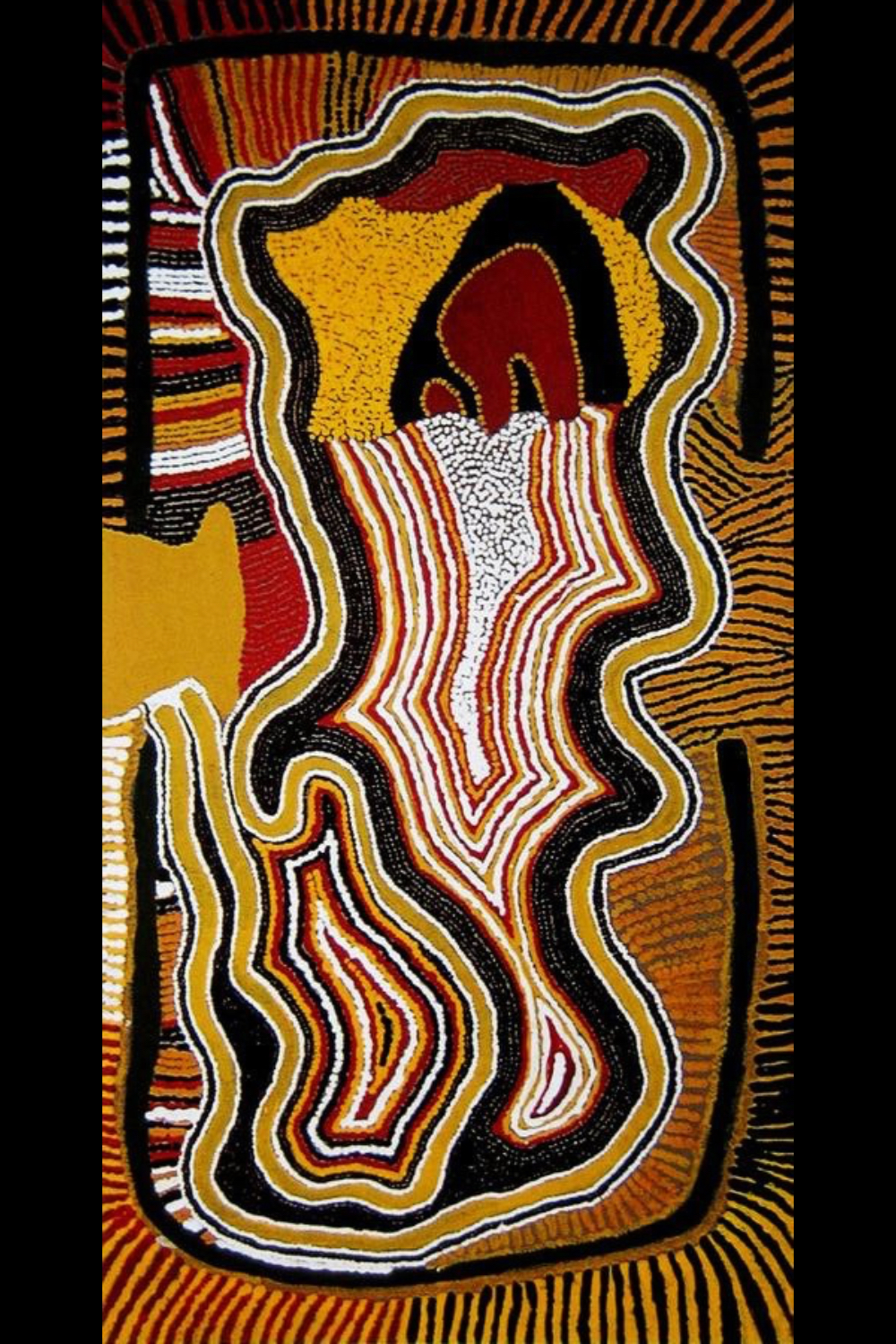
Hair String Dreaming at Yimurr
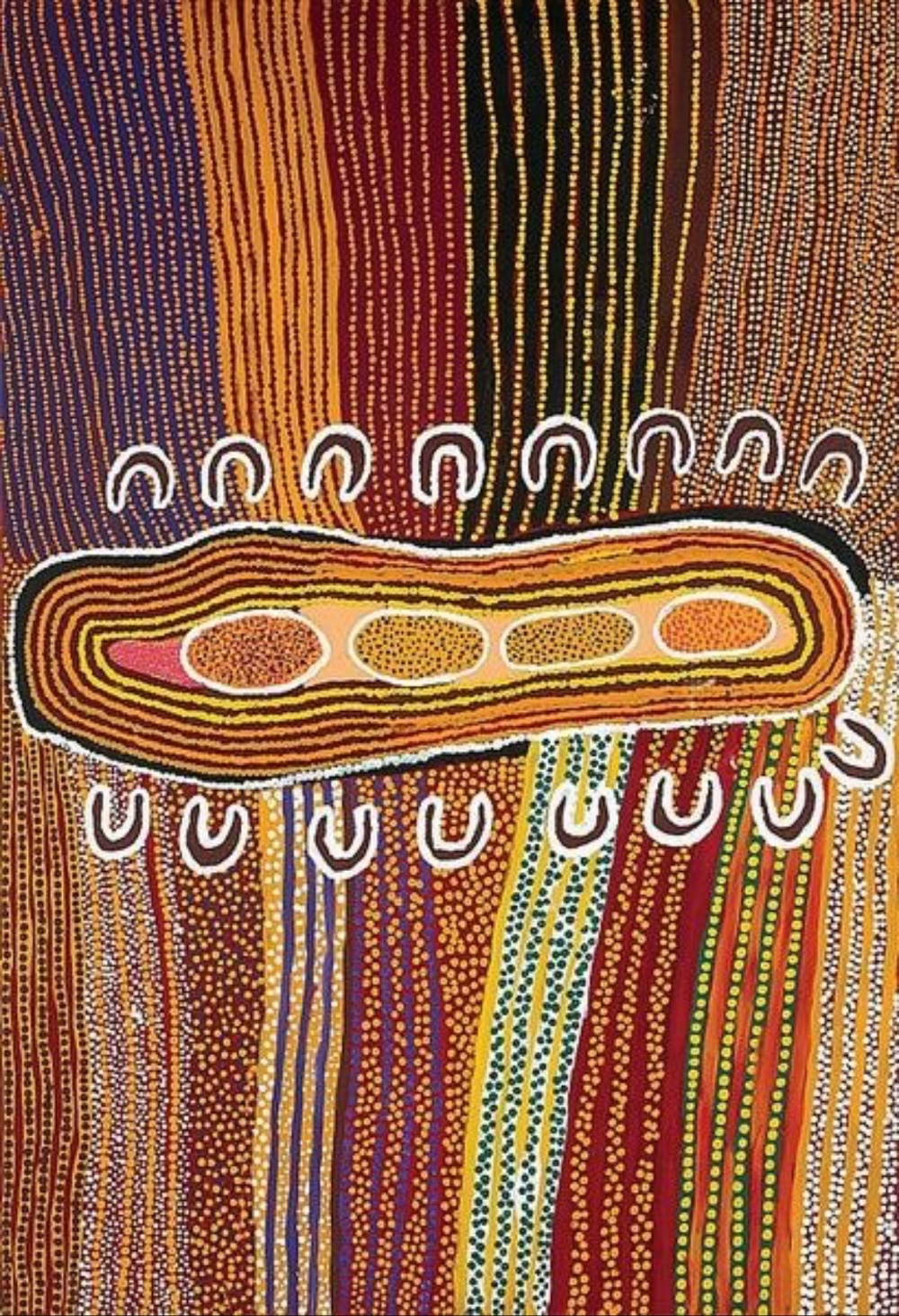
Hair String Dreaming at Yimurr (Stansmore Ranges), the Artist’s Father’s Country (1992) depicts an ancestral narrative associated with Yimurr, Country belonging to Bai Bai’s father.
During the Dreaming, an old man travelled through the region, camping at various places. While spinning human hair into a ceremonial belt, he saw a group of women approaching, singing and dancing. Frightened by their arrival, he hid inside a cave.
Christine Watson identifies the approaching women as the Seven Sisters. She draws particular attention to the painting’s kinetic energy, comparing its rhythmic forms with the stamping feet of ceremonial dancers.
The work demonstrates how Bai Bai could communicate an ancestral event through the movement of her painted marks, rather than simply illustrating the figures involved.
Bai Bai was recognised as a senior custodian of this Dreaming. The painting is illustrated in James Cowan’s Wirrimanu: Aboriginal Art from the Balgo Hills (1994), pages 80–81, and was exhibited at Cooee Aboriginal Art in Sydney in 1992.
Warnpuparta and the Crow Dreaming
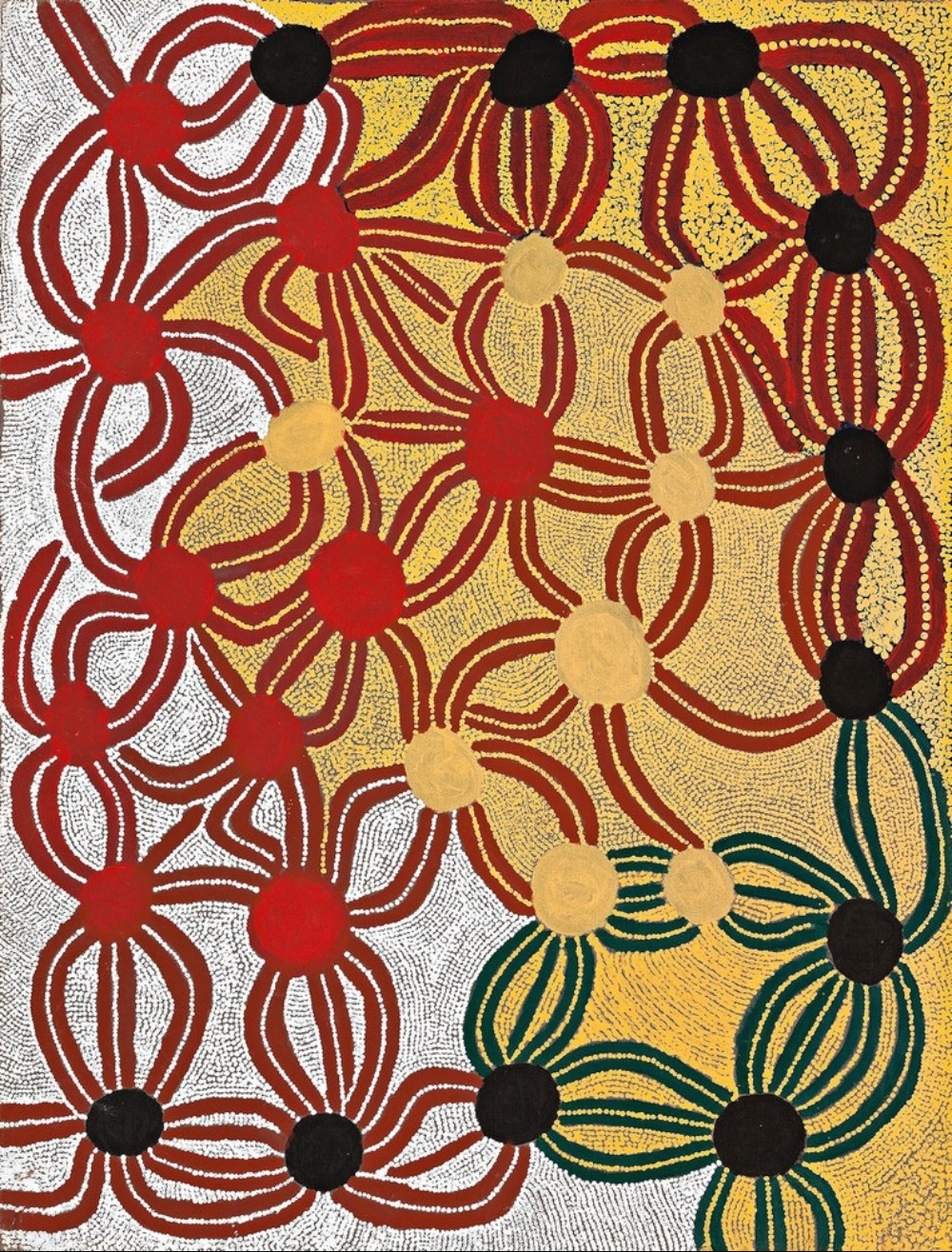
Warnpuparta (1990) represents Bai Bai’s grandfather’s Country and a Tingari narrative involving Karnka, the ancestral Crow.
According to the accompanying Warlayirti Artists documentation, Karnka travelled through the Country and encountered a dead kangaroo. After eating a large quantity of meat, he repeatedly defecated, leaving deposits that became unusual rock formations still visible in the landscape.
The narrative explains the ancestral origins of recognisable geographical features in Country Bai Bai had known since childhood.
Warnpuparta is illustrated in James Cowan’s Wirrimanu: Aboriginal Art from the Balgo Hills (1994), page 79.
Tjurnpul and Ancestral Women’s Ceremonies
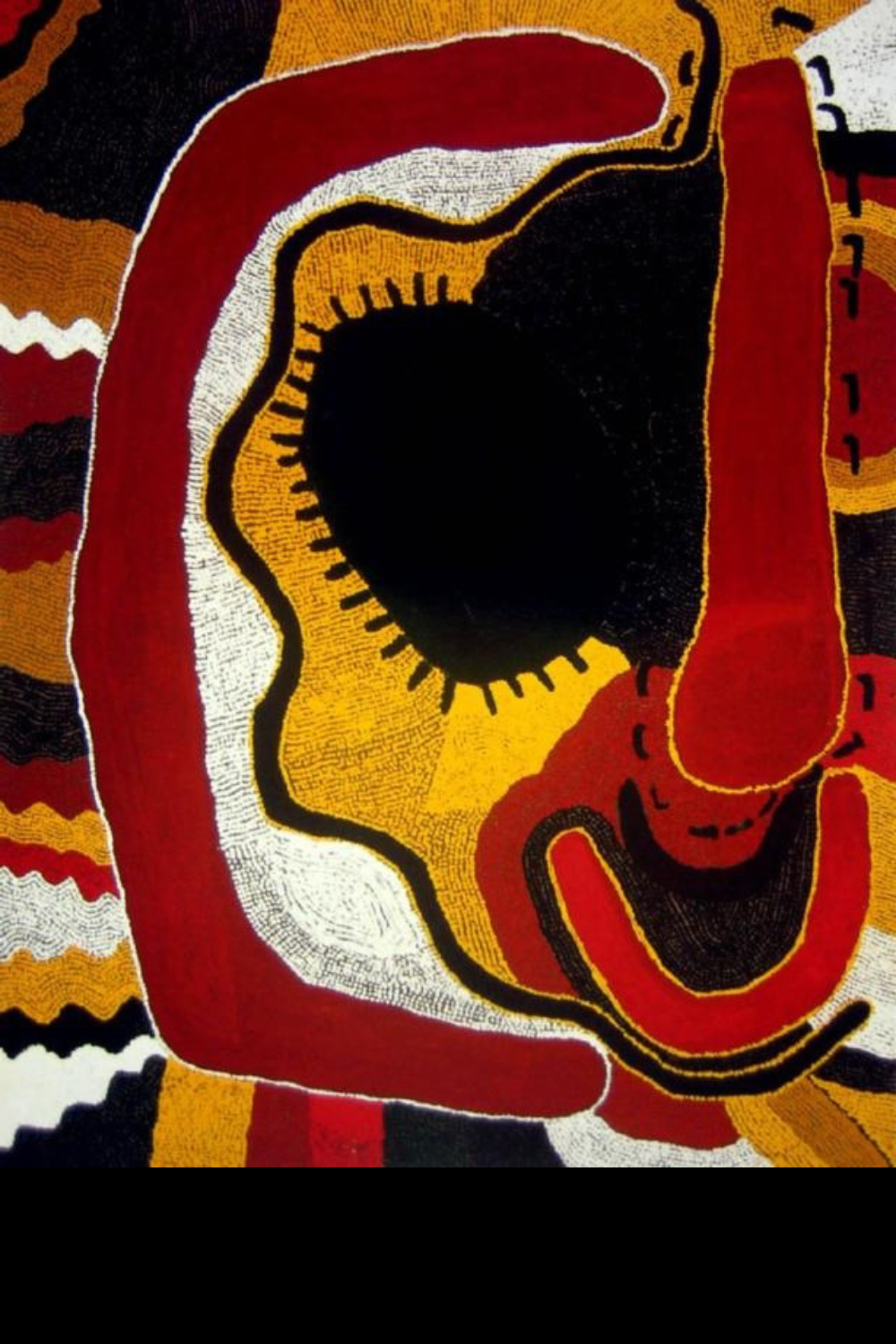
Tjurnpul (1990) depicts an ancestral narrative associated with a place for which Bai Bai held senior custodial responsibilities.
The Warlayirti Artists certificate describes an old man who lived in a cave, known as a pinki, and had many wives who travelled to him from Tjawu-tjawu.
Their activities are remembered through ceremonial songs and performances, and Bai Bai identified herself as a senior custodian of the associated Law.
The painting was exhibited in Dreamtime: The Darkness and the Light at Sammlung Essl in Vienna in 2001 and illustrated in the accompanying catalogue.
Bush Foods and Knowledge of Country
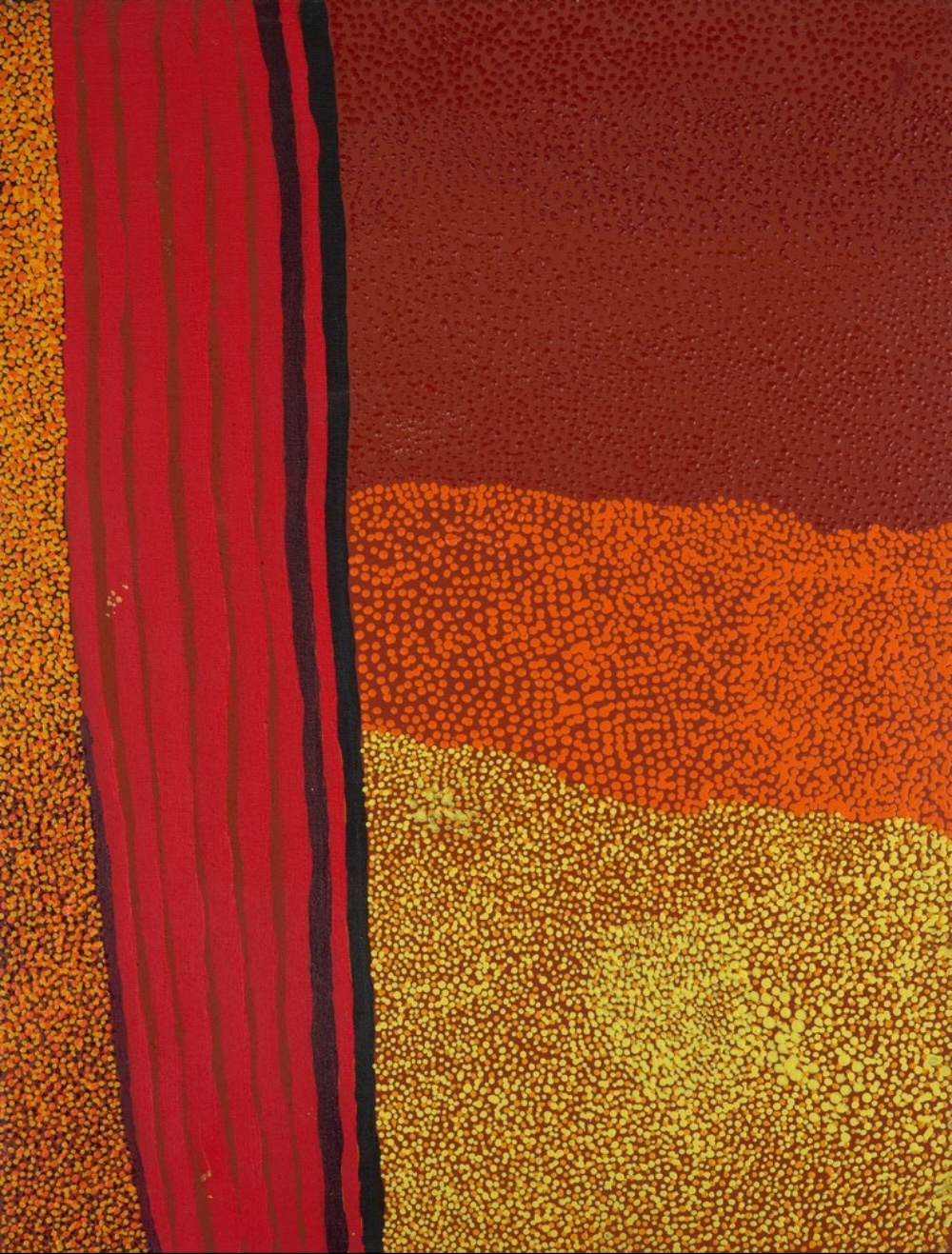
Bai Bai’s paintings also record detailed knowledge of the plants, water sources and natural resources of her Country.
In Mungai (2006), she depicted Country south of Balgo where women gathered foods including tjirrilpatja (bush carrots) and kantjilyi (bush raisins).
Wilbaringu (2000), held in the Museum and Art Gallery of the Northern Territory’s Telstra Collection, represents her father’s Country, including a hill where kumpulu seeds grow. U-shaped figures depict women gathering the seeds.
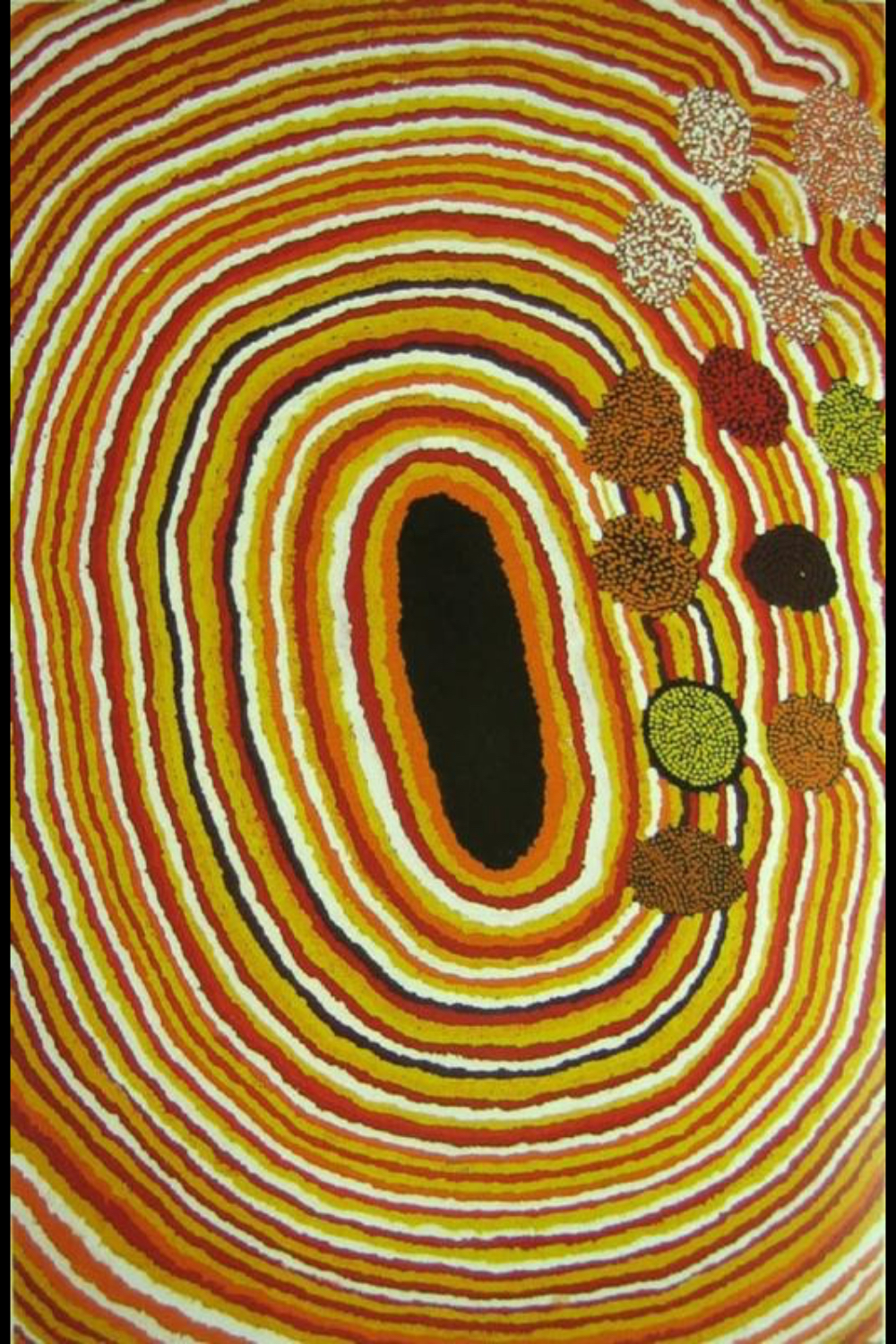
In Mulupuku (2008), the lines represent sandhills where native grasses flourish after rain. Women collect the seeds, wash them repeatedly and grind them into flour for making damper. Other areas of the composition describe the ground surrounding a swamp.
These paintings communicate practical knowledge of where food grows, how it is gathered and the particular places to which that knowledge belongs.
The Luurnpa Kingfisher Dreaming
Bai Bai was a traditional custodian of the Luurnpa, or ancestral Kingfisher, Dreaming, an important narrative associated with the Balgo region.
The story tells of a severe drought during which the Kukatja people were threatened by a lack of water. The ancestral Kingfisher revealed a water source, allowing the people to survive and establishing an enduring relationship between the people and their Country.
The narrative was published as Luurnpa, the Magical Kingfisher: A Dreaming Narrative (2002), belonging to Bai Bai Napangarti. The book was illustrated by students from Luurnpa Catholic School and adapted for younger readers.
A painting titled Kingfisher Dreaming, dating from 1989, is also documented in Sotheby’s auction records, demonstrating that Bai Bai represented this ancestral subject during the early years of her painting career.
Bai Bai Napangarti: Cultural Importance and Artistic Legacy
Bai Bai Napangarti was recognised as Balgo’s leading songwoman and one of its most senior custodians of women’s Law. She possessed an extensive repertoire of ceremonial songs and maintained responsibility for passing ancestral knowledge to younger generations through ceremony, storytelling, dance and painting.
Her involvement with the Manungka Manungka Women’s Association demonstrated this cultural leadership. In November 1993, fourteen senior Aboriginal Law women, founding members of the association, travelled to Sydney to exhibit paintings, conduct workshops and perform traditional songs and dances.
Bai Bai’s Mina Mina Dreaming (1993) was exhibited at Alexandria Town Hall and subsequently at Ballarat Art Gallery in March 1994. The painting was accompanied by an annotated diagram explaining its imagery and associated ancestral narrative.
She also participated in cultural exchanges, performing at the Shinju Matsuri Festival in Perth in 1989 and demonstrating traditional sand drawing in 2005. A long-serving member of the Kimberley Land Council, she remained actively involved in Aboriginal cultural and community affairs.
Her knowledge and experiences were recorded in Yarrtji: Six Women’s Stories from the Great Sandy Desert (1997), the oral-history recording On the Black Chair (2008) and documentaries including Kururralkatjanu – The Last Generation(2013) and Tjawa Tjawa (2015).
Bai Bai’s cultural responsibilities also shaped the lives of her children and grandchildren. Her granddaughter Melissa Sunfly was raised by Bai Bai at Yagga Yagga and accompanied her through Country around Mintirr, Ngantalara, Mangkayi and Tjirrirbarri. Bai Bai taught her traditional dancing, how to locate waterholes, and how to hunt and gather bush foods. Melissa later became an artist with Warlayirti Artists, painting ancestral Country and stories inherited from her grandparents.
Following Bai Bai’s death in 2020, her artistic legacy continued through three generations of her family. Her daughter Pauline Sunfly maintained the painting traditions inherited from both parents. In April 2022, Short St Gallery presented Mother, Daughter, exhibiting paintings from Bai Bai’s estate alongside Pauline’s work. Their individual interpretations of Mulupuku, depicting the same Country, bush foods and sandhill landscapes, demonstrated the continuity of knowledge between generations.
Her granddaughters Melissa and Sonya Sunfly also continued the family’s artistic traditions, drawing upon the ancestral knowledge passed down through their parents and grandparents.
Bai Bai’s importance extends beyond her achievements as a painter. Having grown up travelling her ancestral Country before permanent European settlement transformed the region, she carried knowledge of its waterholes, food sources, ceremonial sites and ancestral narratives throughout her life. Through painting, song, dance and family teaching, she passed much of that knowledge to succeeding generations, ensuring that her cultural legacy extended well beyond the artworks she left behind.
Bai Bai Napangarti Value and Auction results
Works Offered at Auction: 261
Sale Rate: 40%
Highest Sale: $15,000 AUD
Median Sale Price: $1,600 AUD
To view individual select artworks along with dimensions provenance and sales prices please ivsit the Bai Bai Napangarti Value page (not yet constructed)
Bai Bai Napangarti in Public Collections
Bai Bai Napangarti’s paintings are represented in major public art collections in Australia and overseas, reflecting her importance to the development of Balgo art and the wider Western Desert painting movement. Her works have been acquired by state galleries, museums and university collections, preserving important examples of her distinctive painting style and representations of ancestral Country.
Selected Public Collections
- National Gallery of Victoria, Melbourne
- Art Gallery of Western Australia, Perth
- Museum and Art Gallery of the Northern Territory, Darwin
- Berndt Museum of Anthropology, University of Western Australia, Perth
- Kluge-Ruhe Aboriginal Art Collection, University of Virginia, USA
- Shepparton Art Museum, Victoria
- Australian Parliament House Art Collection, Canberra
- Musée des Confluences, Lyon, France
Further Reading
- Cowan, James. Wirrimanu: Aboriginal Art from the Balgo Hills. Gordon and Breach, Sydney, 1994, pp. 79–81.
- Cowan, James. Balgo: New Directions. Craftsman House, Sydney, 1999.
- Peter, Sonja, and Pamela Lofts (eds). Yarrtji: Six Women’s Stories from the Great Sandy Desert. Aboriginal Studies Press, 1997.
- Ryan, Judith, and Geoffrey Bardon. Mythscapes: Aboriginal Art of the Desert. 1989.
- Eather, Michael. Dreamtime: The Darkness and the Light. Sammlung Essl, Vienna, 2001.
- Watson, Christine. Touching the Land: Towards an Aesthetic of Balgo Contemporary Painting.
- Warlayirti Artists. Bai Bai Napangardi — Artist Biography.
- Australian Parliament House. Apology to Australia’s Indigenous Peoples, Art Collections.
All images featured in this article are presented strictly for educational and informational purposes.
This website may include copyrighted material for which specific authorization has not been obtained from the copyright owner.
All such images are presumed to be the intellectual property of the respective artist or their estate, and are used in accordance with principles of fair dealing or fair use under applicable copyright law.