Abie Loy Kemarre: Biography, Painting Style and Importance
1972-
Eastern Anmatyerre
Iylenty (Mosquito Bore) Country, Utopia
Utopia / Central Australia
Utopia Art / Western Desert Art
Painting on canvas
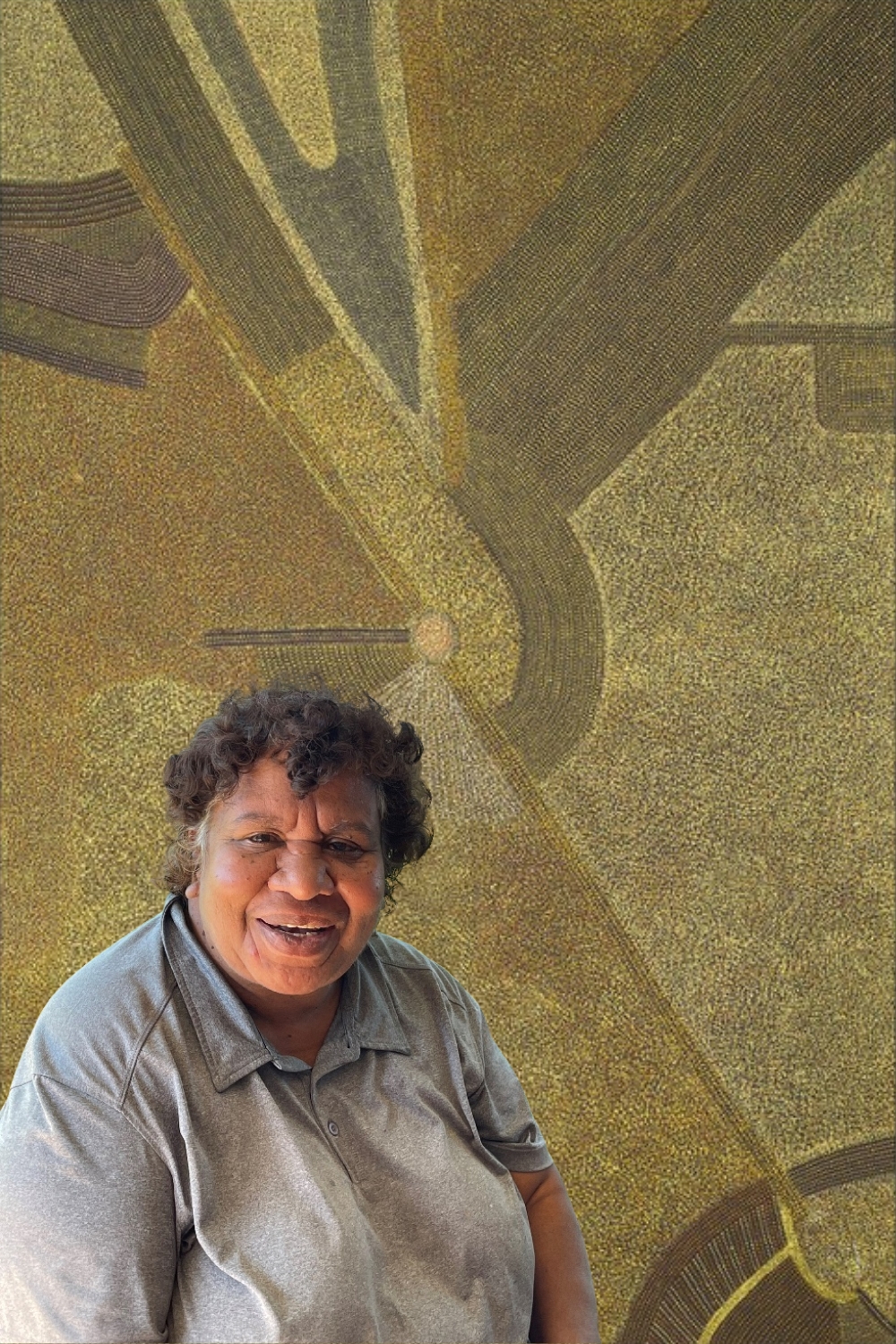
Abie Loy Kemarre (also recorded as Kemerre) is an Eastern Anmatyerre artist from the Utopia Art Movement in Central Australia, known for her Bush Hen Dreaming, Bush Leaf, Awelye and Country paintings. Born in 1972, she grew up at Iylenty (Mosquito Bore) within one of the most significant artistic families to emerge from the Utopia movement.
Her mother is artist Margaret Loy Pula and her grandmother and mentor was Kathleen Petyarre. Abie grew up while Kathleen and other senior Utopia women were working in batik and witnessed their transition from silk to painting on linen. By the 1990s she was developing a painting practice of her own.
Abie’s work ranges from early paintings structured around the journeys and places of Bush Hen Dreaming to densely layered Bush Leaf paintings, rhythmic Awelye and body-painting designs and increasingly bold interpretations of sandhills and Country.
What distinguishes her work is not one particular motif, but what she does with inherited subjects. Seeds, leaves, feathers, dots and ceremonial designs can be repeated and enlarged until they become expansive fields of colour and movement. This combination of cultural continuity and visual innovation has made Abie one of the significant artists of the generation that followed the pioneering Utopia painters.
Abie Loy Kemarre Biography
Abie Loy Kemarre was born in 1972 and is an Eastern Anmatyerre woman associated with Iylenty, also known as Mosquito Bore, in the Utopia region northeast of Alice Springs. She was the eldest of five children of Margaret Loy and Ray Loy.
Painting entered Abie’s life long before she established a professional career. She grew up during the Utopia batik movement of the late 1970s and 1980s, when women across the region were using wax-resist techniques to translate designs associated with Country, plants and ceremony onto silk.
Her grandmother Kathleen Petyarre became particularly important to her development. Abie learned silk work from Kathleen and watched as Kathleen and other senior Utopia artists began transferring their artistic practice from batik to painting on linen around the end of the 1980s.
Abie was still a teenager during this transition. Her later career therefore did not begin with a sudden introduction to painting: it developed from years spent watching, learning and working within the artistic environment of her family and community.
Around 1994 she began painting seriously under Kathleen’s guidance. Kathleen taught her the controlled fine dotting and mark-making that could create movement and optical depth while maintaining the underlying structure of a composition.
Abie nevertheless developed beyond the visual language of her teacher. Her early career was strongly associated with Bush Hen Dreaming, inherited through her grandfather, but her work subsequently expanded into Bush Leaf, Awelye and women’s body painting, sandhills and other representations of Country.
Bush Hen was already firmly established in her work by the mid-1990s. Surviving auction records document substantial examples from 1996, 1997 and 1998. A detailed account accompanying a 2002 painting identifies Artenya, west of Mosquito Bore, within the Dreaming geography and describes the Bush Hen travelling through Country in search of seeds, bush plums and bush tomatoes.
Over the following decades Abie’s paintings became increasingly varied and, in some bodies of work, increasingly abstract. Her work was exhibited throughout Australia and internationally, and paintings entered major institutional and private collections.
Abie Loy Kemarre Painting Style and Subjects
Abie Loy Kemarre’s paintings are distinguished by controlled repetition, fine mark-making, colour, rhythm and movement, but there is no single Abie Loy style. Her practice developed considerably over time, and different subjects produced markedly different kinds of paintings.
One of the keys to understanding her work is scale.
Metropolitan Museum of Art curator Maia Nuku has drawn attention to Abie’s ability to isolate something as small as a seed, leaf or feather and expand it across an entire canvas. Within the inherited framework of a Dreaming, Nuku identifies Abie’s individual creativity in her use of “rhythm, color, and technique.”
A minute element of Country can consequently become an immense painted field. Repetition does not simply decorate the surface: it changes the way the subject is experienced.
Bush Hen Dreaming
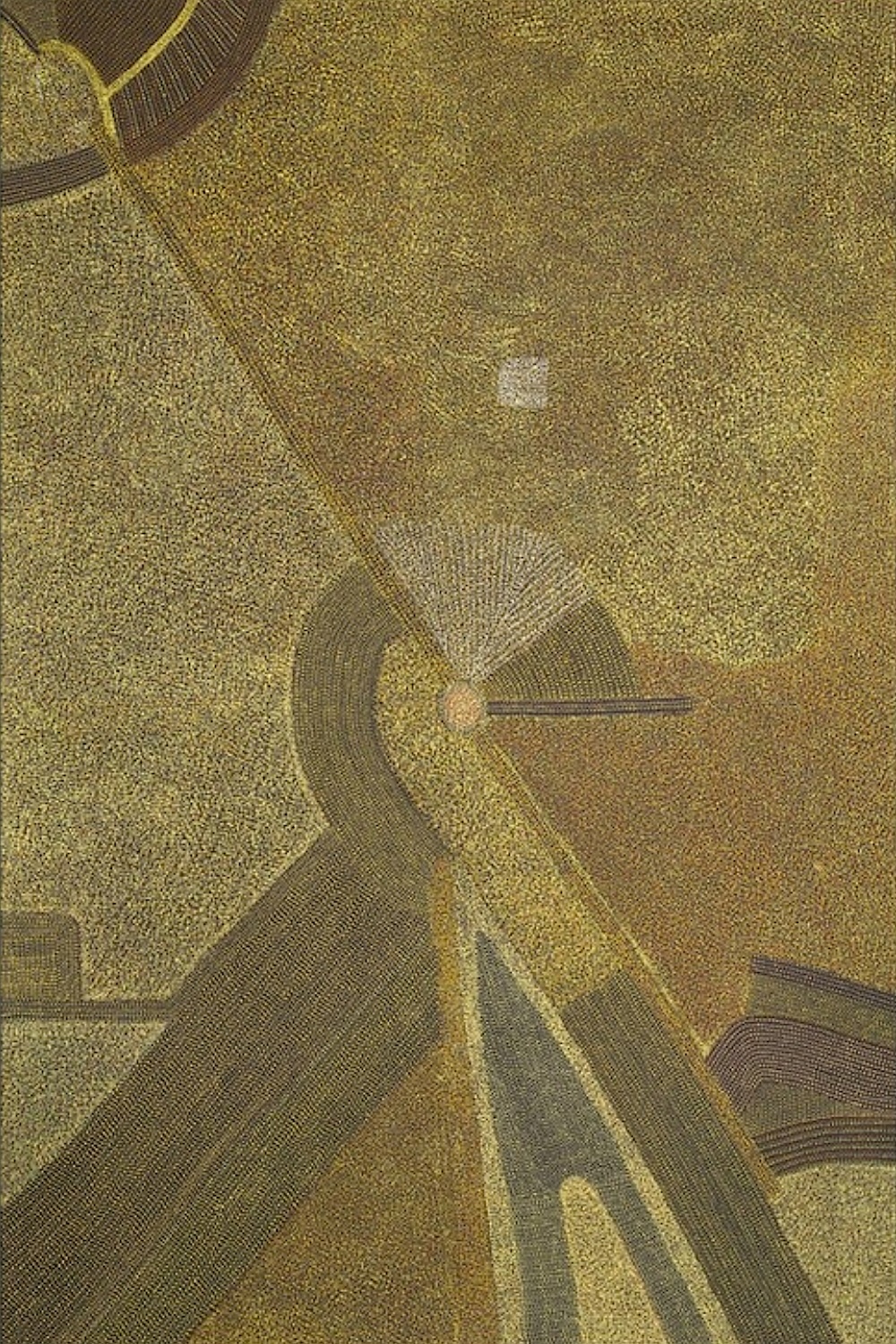
Bush Hen Dreaming is one of Abie’s earliest and most important subjects, inherited through her grandfather.
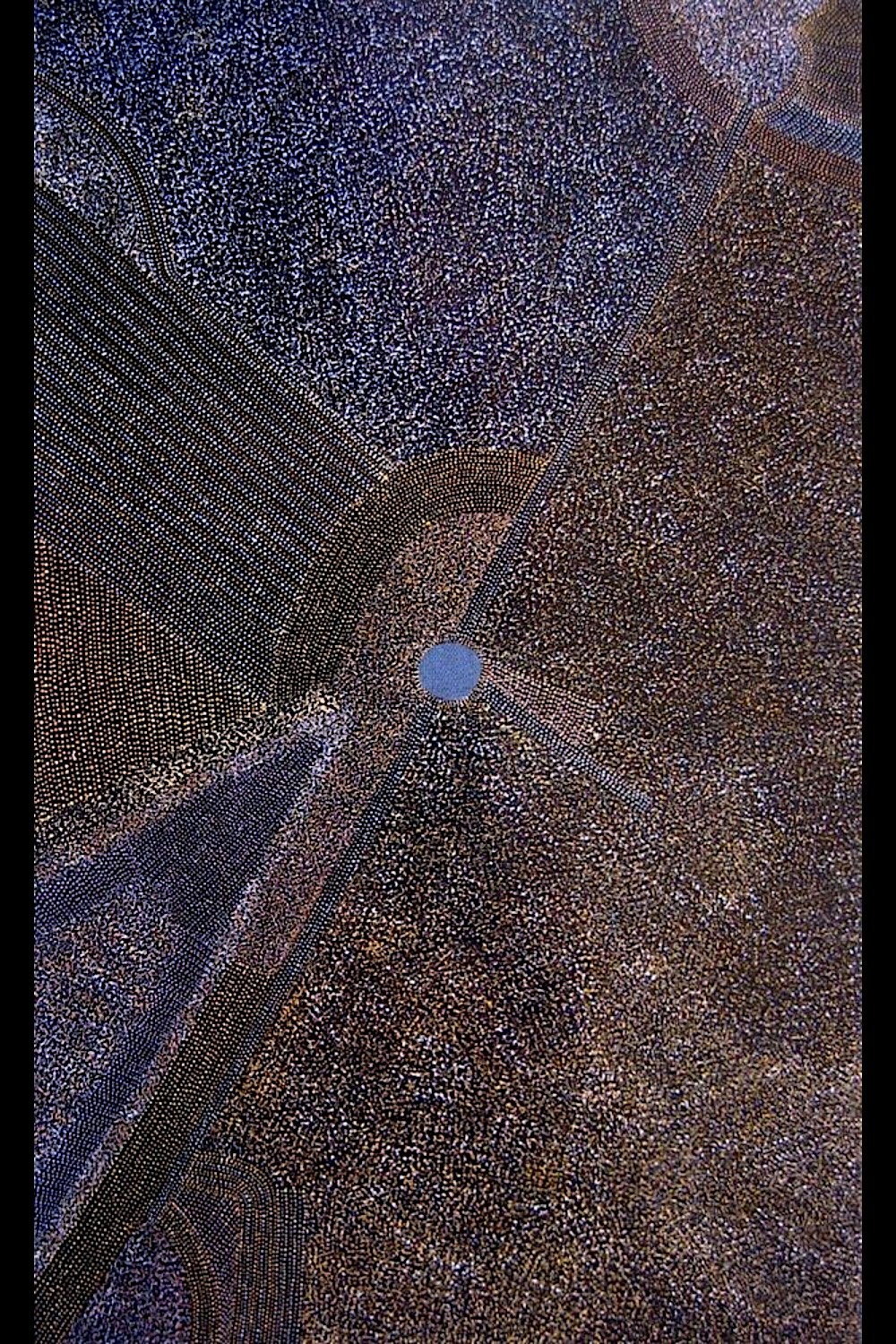
Her early paintings can have an almost cartographic structure, with pathways, ceremonial places and fine dotting suggesting the seeds and foods sought by the travelling Bush Hen.
A detailed account accompanying a 2002 Bush Hen Dreaming identifies Artenya, west of Mosquito Bore, and connects the ancestral journey with a dry waterhole, bush seeds, bush plums and bush tomatoes, as well as designs associated with women’s ceremony.
As Abie’s treatment developed, individual elements of the narrative became increasingly prominent. A feather, seed or other small motif could be repeated across the canvas until it became an expansive visual field, allowing the Dreaming to remain the foundation of paintings that appear increasingly abstract.
Bush Leaf and Bush Medicine
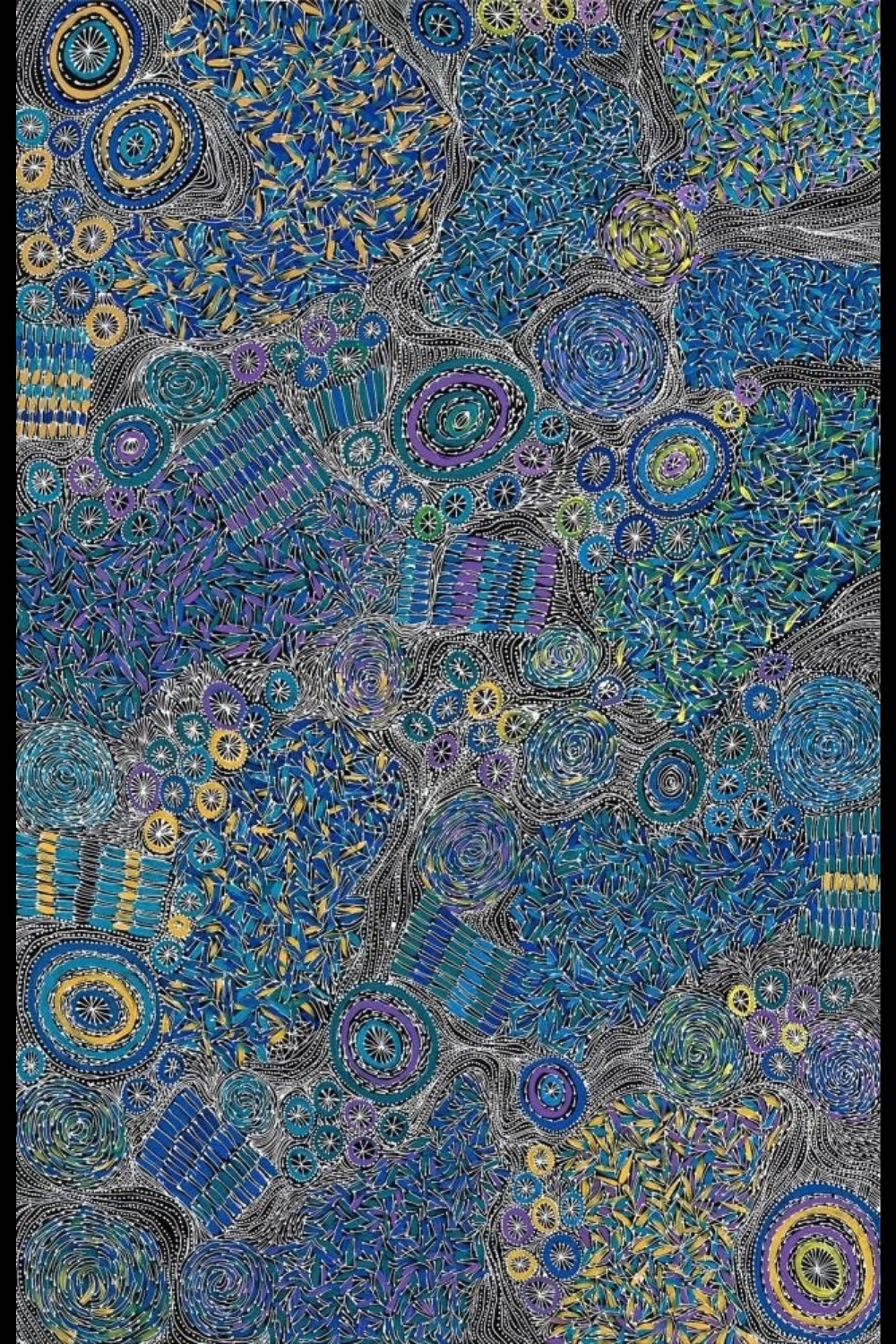
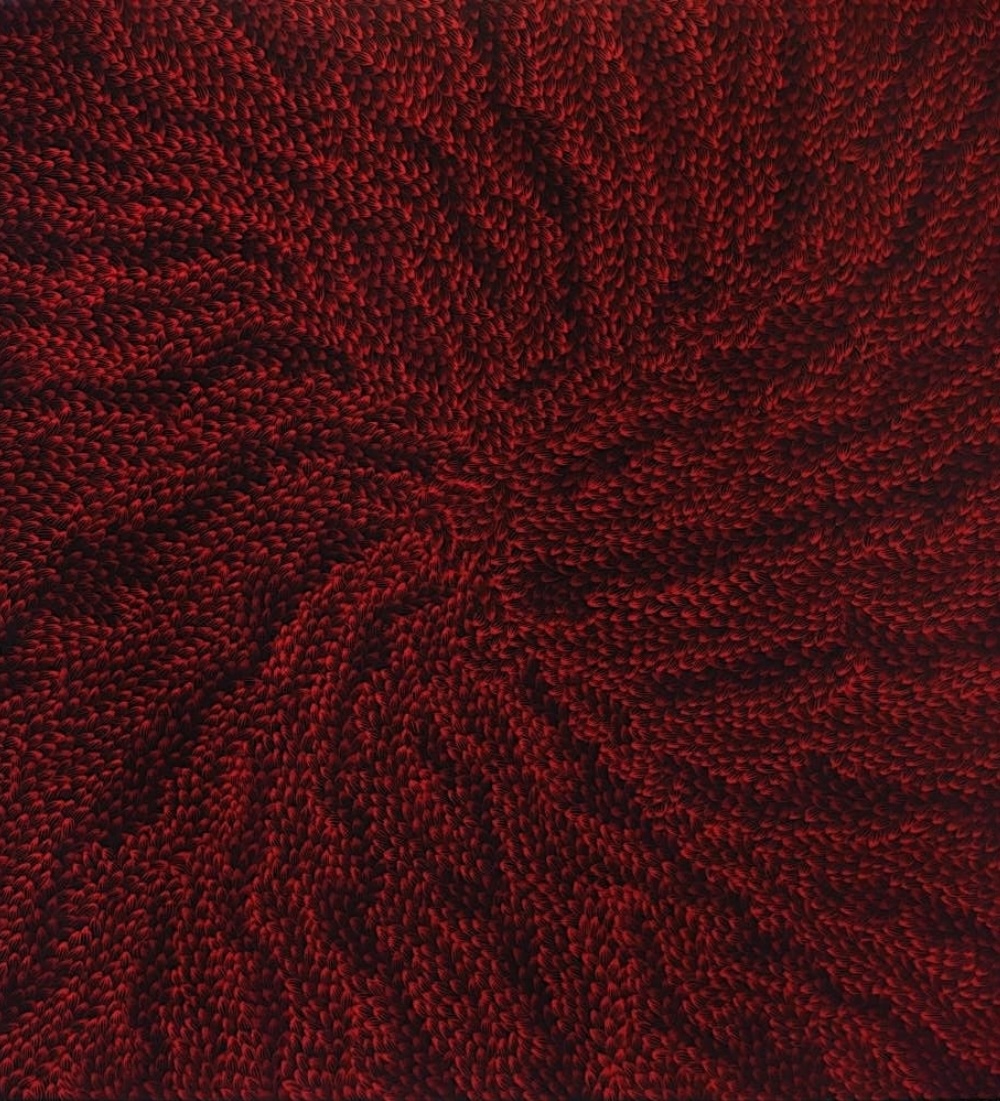
The Bush Leaf paintings became among Abie’s most immediately recognisable works.
Thousands of elongated marks overlap and change direction across the canvas. Rather than organising the painting around a dominant central image, Abie creates structure through density, repetition, colour and directional change. The resulting surface can appear to shimmer, undulate or flow.
The optical effect is striking, but the paintings remain grounded in a specific subject.
Documentation associated with Abie’s work places the bush leaf in swampy Country near sandhills associated with her grandfather and records its medicinal use for ailments including headaches, colds and sores. Other catalogue documentation identifies Bush Leaf among the Dreamings Abie has the authority to paint.
The accumulation of apparently abstract marks should therefore not be separated from Country. The individual leaf remains the basis of the painting even when repetition transforms it into a field that appears almost independent of representation.
Awelye and Women’s Body Painting
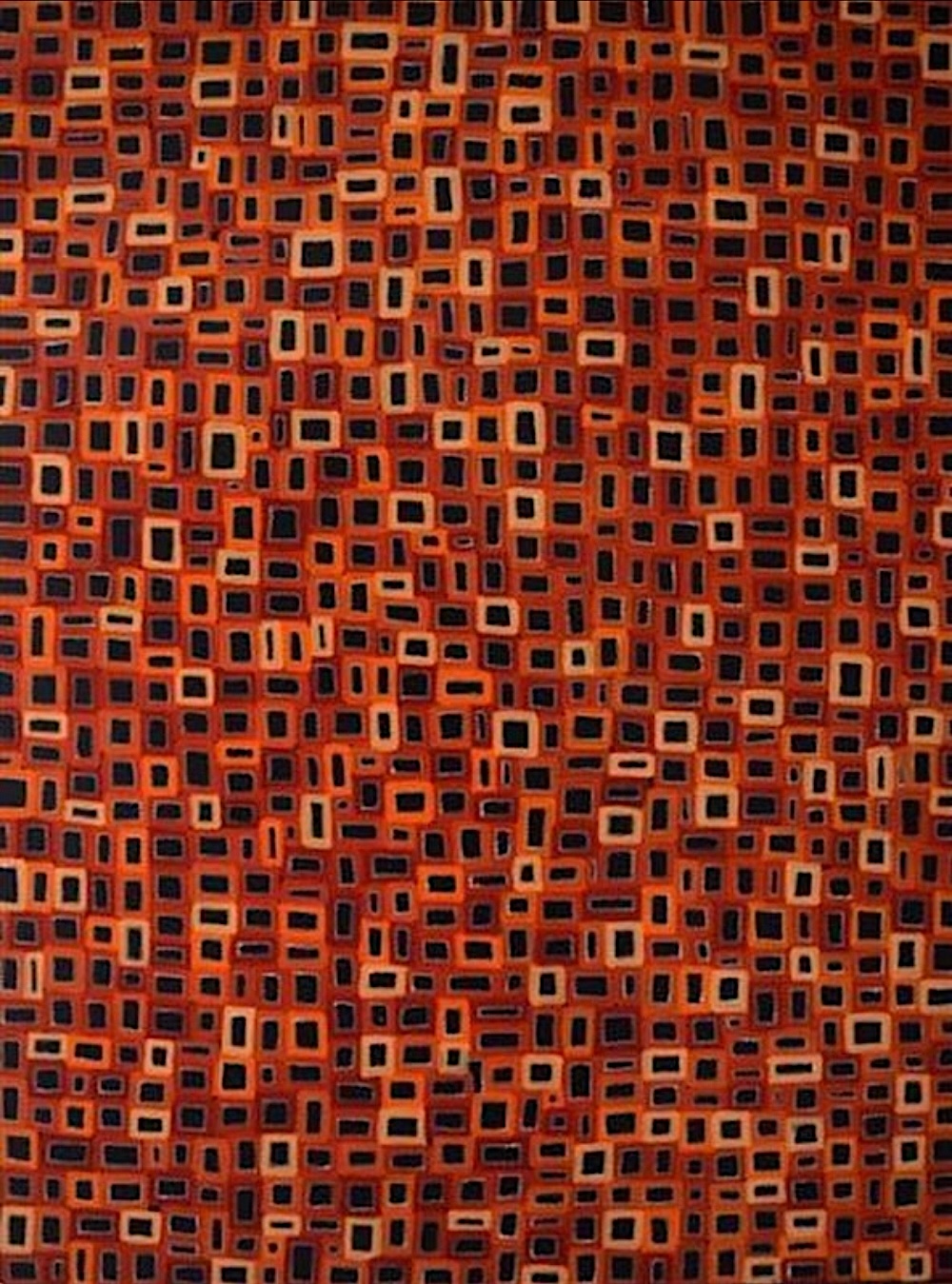
Abie’s Awelye and Body Painting works use a different visual vocabulary.
Parallel strokes, geometric arrangements and repeated areas of colour create rhythmic surfaces derived from women’s ceremonial body designs, connecting pattern with bodies, song, movement and ceremony.
Documentation for one painting links the designs specifically with Ahakeye, or Bush Plum, and describes designs painted across women’s upper bodies using red and yellow ochre, charcoal and ash while associated songs are sung.
These paintings show how visual knowledge expressed through body painting, ceremony, song and movement can also find form on canvas.
Abie returned to this subject throughout her career. A 2017 Women’s Body Painting, for example, represents women’s movement and chanting as Awelye designs are applied to the upper body.
Sandhills and Country
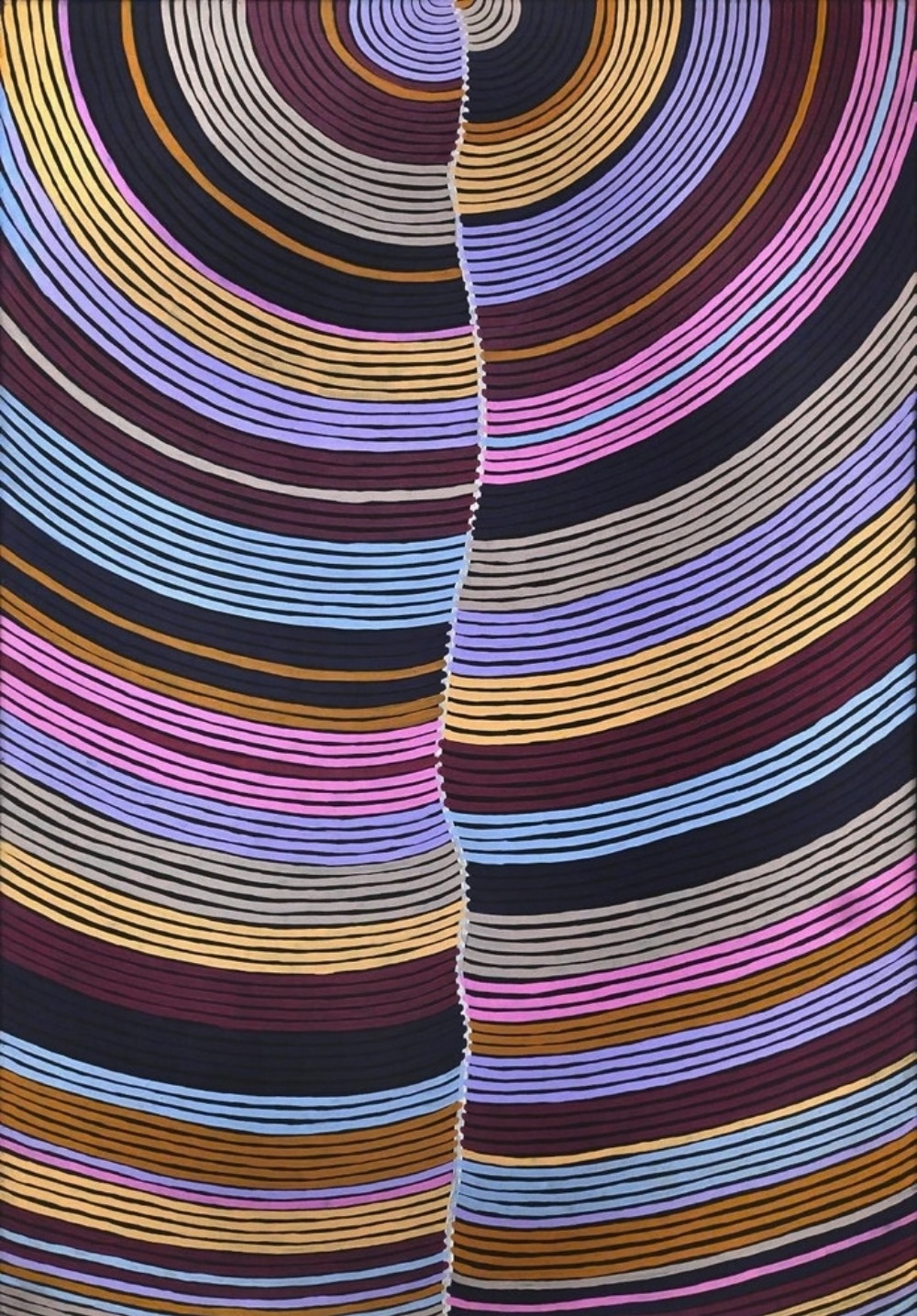
As Abie’s practice developed, sandhills and Country provided another direction. Broad parallel bands sweep across the canvas, creating larger movements of colour and line that contrast with the minute repeated marks of her Bush Leaf paintings.
These works demonstrate Abie’s movement towards bolder and increasingly abstract compositions. Bush Hen, Bush Leaf, Awelye and sandhills each presented different visual possibilities rather than being treated through a single established style.
A large Sand Hill Country painted in 2013 was exhibited at the Art Paris Art Fair at the Grand Palais. That same year French curator Stéphane Jacob published Abie Loy Kemarre | Abstraction Lyrique, reflecting growing international interest in the increasingly abstract character of her work.
Art writer Jane Raffan similarly argues that inherited signs and ceremonial imagery have “found new form” in Abie’s paintings, with abstraction and colour extending rather than abandoning their cultural foundations.
Why Is Abie Loy Kemarre Important?
Abie Loy Kemarre is important to Utopia art as a leading artist of the generation that followed its pioneering painters. She grew up within the batik movement, learned directly from her grandmother Kathleen Petyarre, and inherited cultural subjects she had the authority to paint.
Her achievement lies in what she did with that inheritance. From early Bush Hen compositions to densely layered Bush Leaf paintings, rhythmic Awelye and Body Painting works and increasingly abstract sandhills, Abie developed distinctly different visual approaches to inherited subjects.
Art writer Jane Raffan places Abie within the third generation of Utopia women painters, while the Metropolitan Museum of Art has recognised the innovative character of her interpretations of customary Dreaming narratives. Continuity in her work did not mean imitation.
Her reputation also became international. A monumental Bush Leaf Dreaming of 2010 was exhibited at Parcours des Mondes, Art Elysées and the Pavilion des Arts et du Design in Paris. Her work later received further attention in France and Switzerland for its abstraction and optical qualities.
Her paintings are held in major collections including the Metropolitan Museum of Art, which holds the monumental 2003 Bush Hen Dreaming – Bush Leaves. Works are also recorded in the National Gallery of Victoria and Art Gallery of South Australia.
The generational transition was particularly visible in 2006 when Abie and Kathleen Petyarre exhibited together—the former student and her grandmother and teacher now exhibiting as established artists side by side.
Abie inherited an established cultural and artistic tradition but developed a visual language recognisably her own, using scale, colour, line, repetition and abstraction to carry that inheritance forward.
Abie Loy Kemarre Value and Auction results
Works Offered at Auction: 261
Sale Rate: 40%
Highest Sale: $15,000 AUD
Median Sale Price: $1,600 AUD
To view individual select artworks along with dimensions provenance and sales prices please ivsit the Abie Loy Kemarre Value page (not yet constructed)
Public Collections
Abie Loy Kemarre’s work is represented in Australian and international collections including:
- Metropolitan Museum of Art, New York
- Art Gallery of South Australia, Adelaide
- National Gallery of Victoria, Melbourne
- University of Canberra Art Collection
- Seattle Art Museum, Seattle
- Musée des Confluences, Lyon
- Ishibashi Foundation / Bridgestone Museum of Art, Tokyo
- Adelaide University Art Collection
Further Reading
- Jane Raffan and Stéphane Jacob, Abie Loy Kemarre: Abstraction Lyrique, Éditions Arts d’Australie – Stéphane Jacob, Paris, 2013. Bilingual French-English monograph devoted to Abie Loy Kemarre, examining Bush Hen Dreaming, Bush Leaf, Sandhill Country, Awelye, abstraction and cultural continuity.
- Wally Caruana, Barbara Glowczewski, Pierre Grundmann, Stéphane Jacob, Jessica de Largy Healy and Arnaud Morvan, Aborigènes: Collections australiennes contemporaines du Musée des Confluences, Musée des Confluences / Fage Éditions, Lyon, 2008. Includes Abie’s work, with one of her paintings reproduced on the cover.
- Dreaming Their Way: Australian Aboriginal Women Painters, National Museum of Women in the Arts / Scala Publishers, 2006. Includes Abie Loy Kemarre alongside major Aboriginal women painters.
- Stéphane Jacob, Pierre Grundmann and Maia Ponsonnet, La peinture aborigène, Nouvelles Éditions Scala, 2012. Broader study of Aboriginal painting that includes Abie Loy Kemarre.
- David Cossey, Dreampower: Art of Contemporary Aboriginal Australia, Museum Art International, 1997. Includes Abie Loy Kemarre, pp. 26–28.
All images featured in this article are presented strictly for educational and informational purposes.
This website may include copyrighted material for which specific authorization has not been obtained from the copyright owner.
All such images are presumed to be the intellectual property of the respective artist or their estate, and are used in accordance with principles of fair dealing or fair use under applicable copyright law.