Tommy Lowry Tjapaltjarri
c. 1935–1987
Pintupi
Patjarr (Patja), Clutterbuck Hills, Gibson Desert
Papunya / Docker River / Kintore
Papunya Art / Western Desert Art
Original Papunya Tula Artists shareholder
Painting and wood carving
Tommy Lowry Tjapaltjarri (c.1935–1987), also known as Tommy Tichiwan Tjapaltjarri, Tommy Tjiyuwan Tjapaltjarri, and Tommy Larry Tjapaltjarri, was a senior Pintupi artist and one of the original shareholders of Papunya Tula Artists. These names all refer to the same artist and appear in museum records, exhibition catalogues and early Papunya documentation.
Born at Patjarr (Patja) in the Clutterbuck Hills of the Gibson Desert, Tommy was among the first generation of Pintupi artists to translate ceremonial designs into acrylic paintings during the birth of the Papunya Art movement in 1971.
Tommy Lowry Tjapaltjarri is one of the lesser-known artists of the Papunya movement. Like Charlie Ward, Don Ellis Tjapangka and Dinny Nolan Tjampitjinpa, his contribution to the birth of Western Desert Art has often been overshadowed by more widely recognised pioneers such as Kaapa Mbitjana Tjampitjinpa, Johnny Warangkula Tjupurrula and Anatjari Tjakamarra.
His works are recognised for their bold linear compositions, Tingari and Snake Dreaming subjects, and direct connection with the origins of contemporary Aboriginal art.
Today, early paintings by Tommy Lowry Tjapaltjarri are highly sought after because of their rarity, historical importance and distinctive style.
If you own a painting by Tommy Lowry Tjapaltjarri and would like to know what it is worth, or if you are considering selling it, please contact me. I am always interested in acquiring important early Papunya paintings.
Early Life
Tommy Lowry Tjapaltjarri was born around 1935 at Patjarr (Patja) in the Clutterbuck Hills, deep within the Gibson Desert of Western Australia. His traditional Country lies southwest of present-day Kintore and remained the source of the Dreaming stories he painted throughout his life.
Like many Pintupi people of his generation, Tommy spent his childhood living a traditional nomadic life before moving east as government settlement policies encouraged desert families into communities such as Papunya during the 1950s and 1960s.
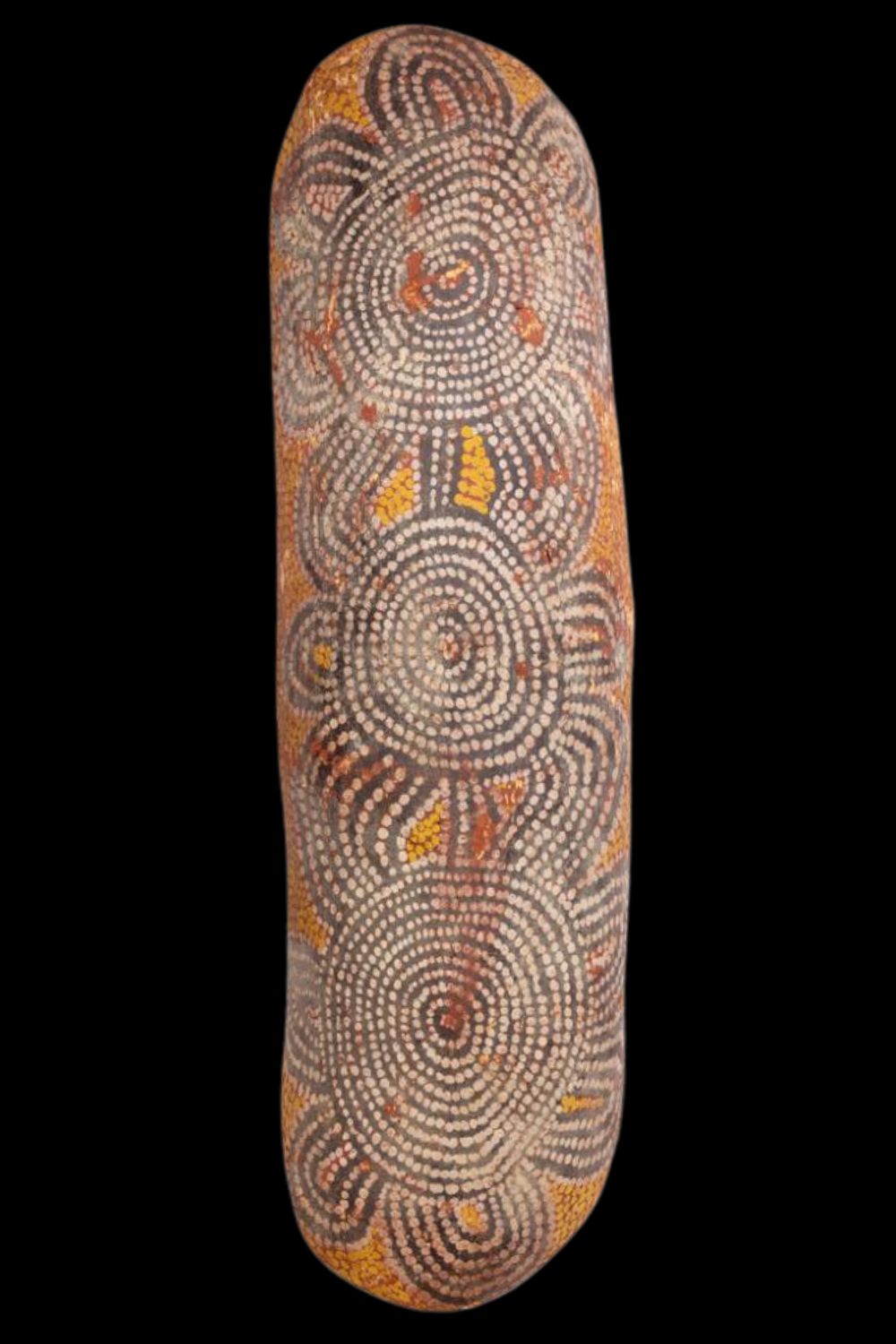
Before becoming known as a painter he was already respected as a wood carver, producing ceremonial objects and artefacts that reflected the same cultural knowledge later expressed in his paintings.
Papunya and the Birth of Contemporary Aboriginal Art
When Geoffrey Bardon introduced acrylic paints at Papunya in 1971, Tommy became one of the first Pintupi artists to experiment with the new medium.
In 1972 he became one of the original shareholders of Papunya Tula Artists Pty Ltd, Australia’s first Aboriginal-owned art company. This places him among the small group of artists who established what is now recognised internationally as the Western Desert Art movement.
Unlike artists such as Johnny Warangkula Tjupurrula, Kaapa Mbitjana Tjampitjinpa or Clifford Possum Tjapaltjarri, Tommy painted only intermittently during the early years of Papunya Tula. Company records frequently describe him as a carver rather than a painter, reflecting the fact that carving remained his principal occupation.
During much of the 1970s he lived at Docker River (Kaltukatjara) and generally painted only while visiting Papunya. As a result, comparatively few early Papunya Boards by Tommy Lowry survive.
Return to Kintore
The establishment of Kintore (Walungurru) in 1981 allowed many Pintupi families to return to their traditional lands.
Tommy moved back to Country and began painting more regularly for Papunya Tula during the early 1980s. Unfortunately, his renewed painting career was relatively brief, ending with his death in 1987.
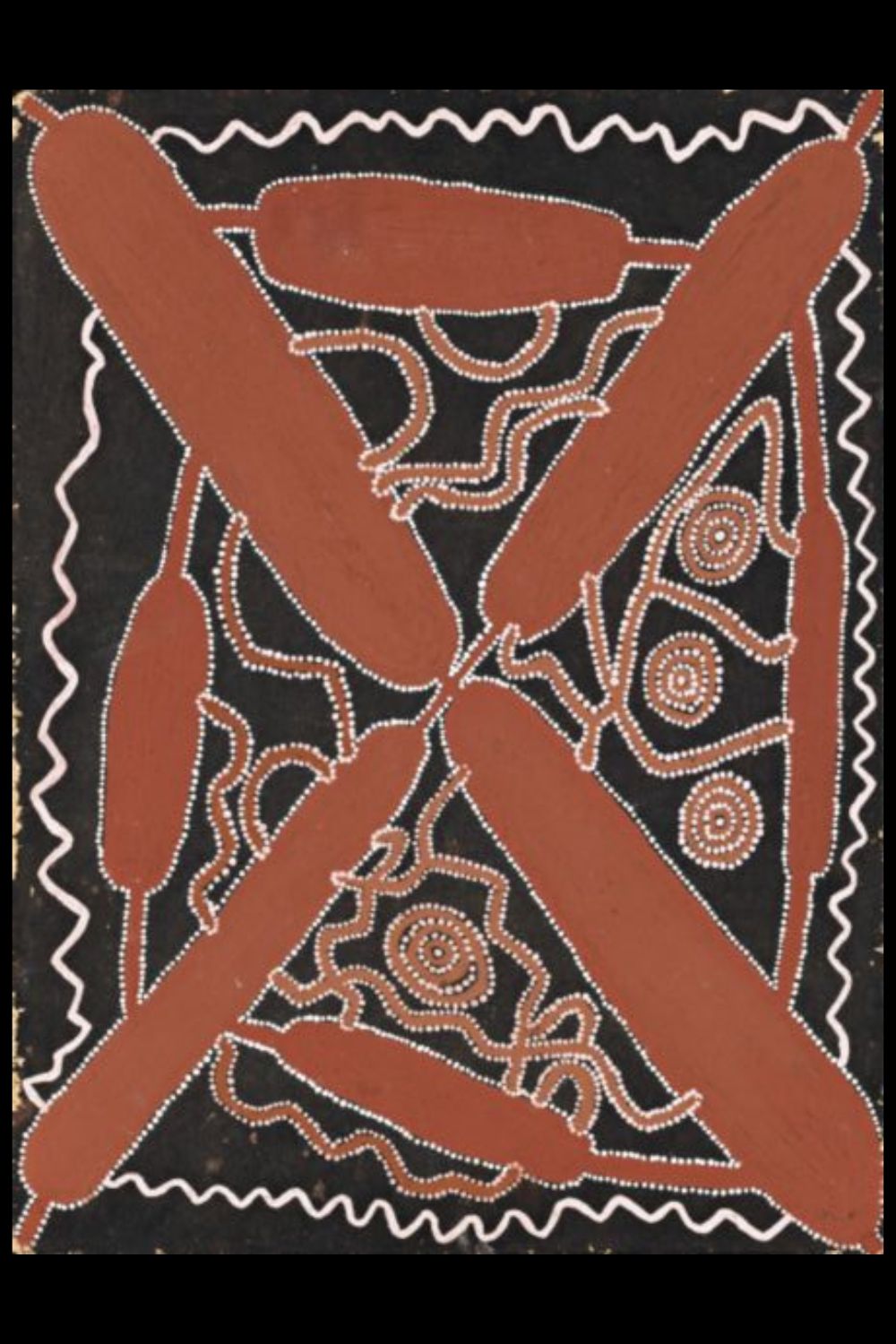
Tommy Lowry Tjapaltjarri’s Painting Style and Dreaming Stories
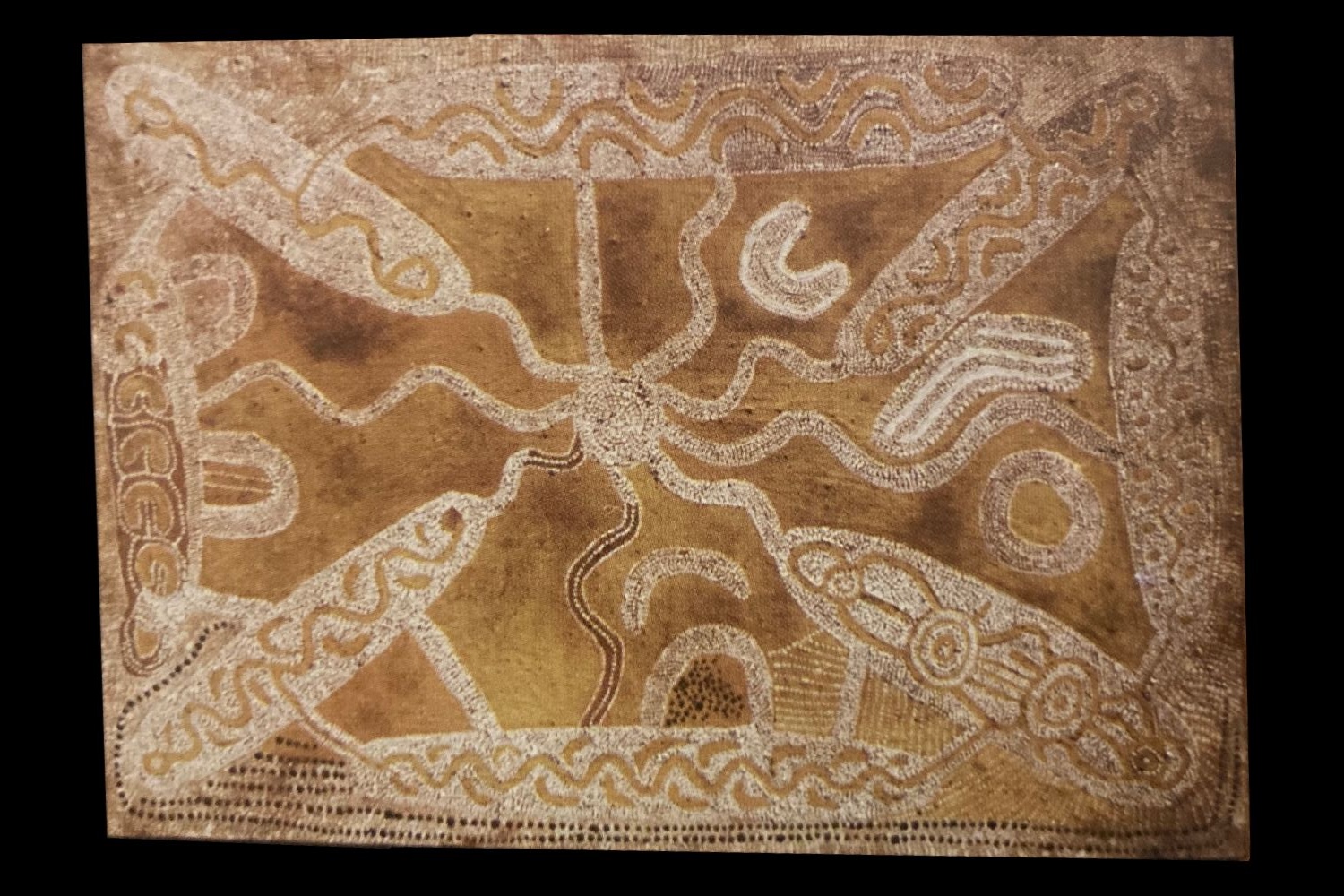
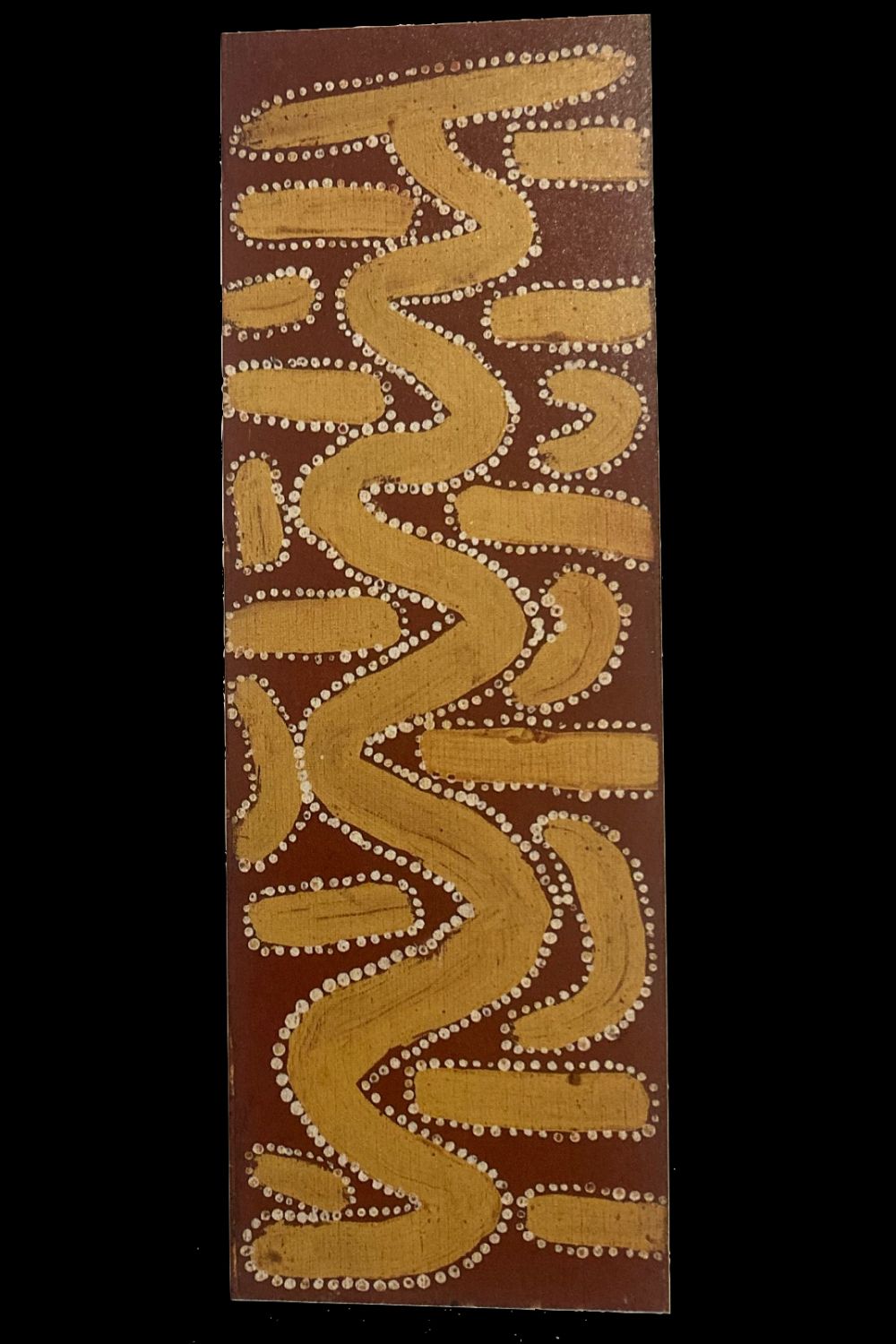
Tommy Lowry Tjapaltjarri developed a distinctive painting style characterised by long sweeping ancestral pathways, carefully placed ceremonial sites and restrained colour palettes. Rather than filling the surface with numerous symbolic elements, many of his compositions are organised around bold serpentine forms that guide the eye across the board. This economical use of imagery creates a strong sense of movement and gives his paintings a graphic clarity that distinguishes them from the denser, more layered works of artists such as Johnny Warangkula Tjupurrula or the intricate symbolic mapping of Clifford Possum Tjapaltjarri.
His paintings commonly feature:
- long sinuous pathways representing ancestral journeys
- Snake Dreaming imagery
- Tingari ceremonial routes
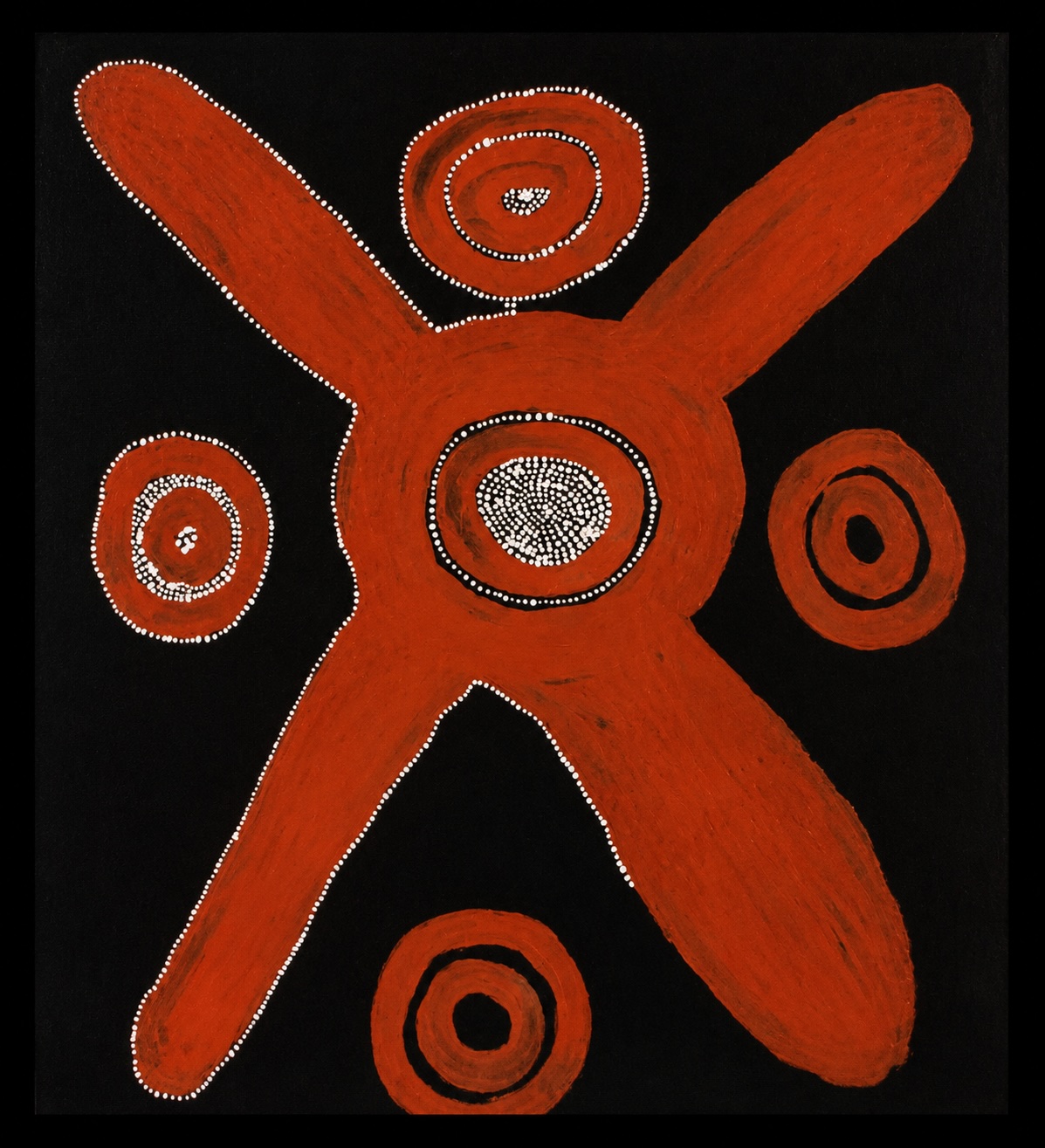
- concentric circles denoting important ceremonial sites
- broad flowing linear compositions
- dense white dot work
- restrained palettes of black, white and red ochre.
Most of Tommy Lowry’s known paintings relate to his traditional Country around Patjarr and nearby areas of the western Gibson Desert. Subjects recorded in museum collections include Tingari Dreaming, Snake Dreaming, Lightning and Rain Dreaming, ceremonial poles and sacred sites associated with ancestral journeys. Like many Pintupi artists, Tommy painted only the public aspects of these stories, while the deeper ceremonial knowledge remained protected within Pintupi cultural traditions.
Several of his surviving paintings, particularly those depicting Lightning and Rain Dreaming and Snake Dreaming, are among his most distinctive works. Their rhythmic winding lines, balanced arrangements of ceremonial sites and restrained use of symbolism create compositions that are both visually powerful and immediately associated with Tommy’s artistic vision. His emphasis on bold linear forms, rather than dense symbolic complexity, may also reflect his background as a respected traditional wood carver before he began painting at Papunya.
Tommy Lowry Tjapaltjarri Paintings for Sale and Artwork Value
Collectors occasionally encounter paintings by Tommy Lowry Tjapaltjarri under alternative names such as Tommy Tichiwan Tjapaltjarri or Tommy No. 4, particularly on early Papunya Boards dating from 1971–1973. Because his artistic output was relatively small and many works remain in museum or established private collections, authenticated paintings appear on the market far less frequently than those of many of his contemporaries.
Early Papunya Boards by Tommy Lowry Tjapaltjarri are valued for their rarity, historical significance and provenance. As one of the original shareholders of Papunya Tula Artists and a member of the first generation of Pintupi painters, his authenticated works from the early 1970s are especially sought after by collectors of Australian Indigenous art. Paintings with original Papunya Tula documentation, strong provenance or exhibition and publication histories generally attract the greatest interest.
If you own a painting by Tommy Lowry Tjapaltjarri and would like to know what it is worth, or if you are considering selling it, please contact me. I would be happy to review photographs of the front and back, the dimensions and any available provenance. I am always interested in acquiring important early Papunya paintings.
Legacy
Although Tommy Lowry Tjapaltjarri produced a relatively small body of work, his contribution to Australian art history is significant. As one of the founding Papunya Tula shareholders and a member of the first generation of Pintupi painters, he helped establish a movement that transformed Aboriginal art from a local initiative into one of Australia’s most influential artistic traditions.
His paintings remain highly sought after because they combine historical importance with a distinctive visual language unlike that of any other early Papunya artist. Their scarcity, combined with their direct connection to the origins of contemporary Aboriginal art, ensures they continue to be valued by collectors and museums alike.
All images in this article are for educational purposes only.
This site may contain copyrighted material the use of which was not specified by the copyright owner.