Charlie Ward Tjakamarra
Charlie Ward Tjakamarra (c. 1940–2005) was a Pintupi artist whose paintings form part of the internationally recognised Papunya movement. Best known for his later depictions of the Tingari Dreaming, his work reflects the ceremonial journeys, sacred sites and ancestral pathways that lie at the heart of Pintupi culture. Although he was not among the very first Papunya painters of 1971 like Kaapa Mbitjana or Johnny Warrangkula, Charlie Ward became an important contributor to the mature development of Western Desert Art during the 1980s and 1990s.
His paintings are characterised by finely structured compositions of concentric circles, travelling lines and ceremonial pathways that map the ancestral landscape rather than depict it in a European sense. Today his work is represented in public collections including the National Gallery of Victoria and is sought after by collectors of Papunya art.
If you own an early painting or papunya board by Charlie Ward Tjakamarra and would like to know its value or are considering selling it, please feel free to contact me.
Who was Charlie Ward Tjakamarra?
Charlie Ward Tjakamarra was a Pintupi man from the Western Desert of Central Australia. He painted with Papunya Tula Artists, the Aboriginal-owned company established in 1972 to support the artists who pioneered the contemporary Western Desert painting movement.
While the earliest Papunya painters began transferring ceremonial designs onto boards during 1971–1972, Charlie Ward belongs to the next generation of senior Pintupi artists who continued and refined this artistic tradition after many families returned to their traditional homelands west of Papunya.
Charlie like Don Ellis Tjapangka, George Tjangala or Tom Lowry, only painted in Papunya occassionally and was not a prolific painter like Uta Uta Tjangala or Timmy Payungka
His paintings preserve cultural knowledge through a sophisticated symbolic language rather than literal illustration.
Charlie Ward Tjakamarra’s Painting Style
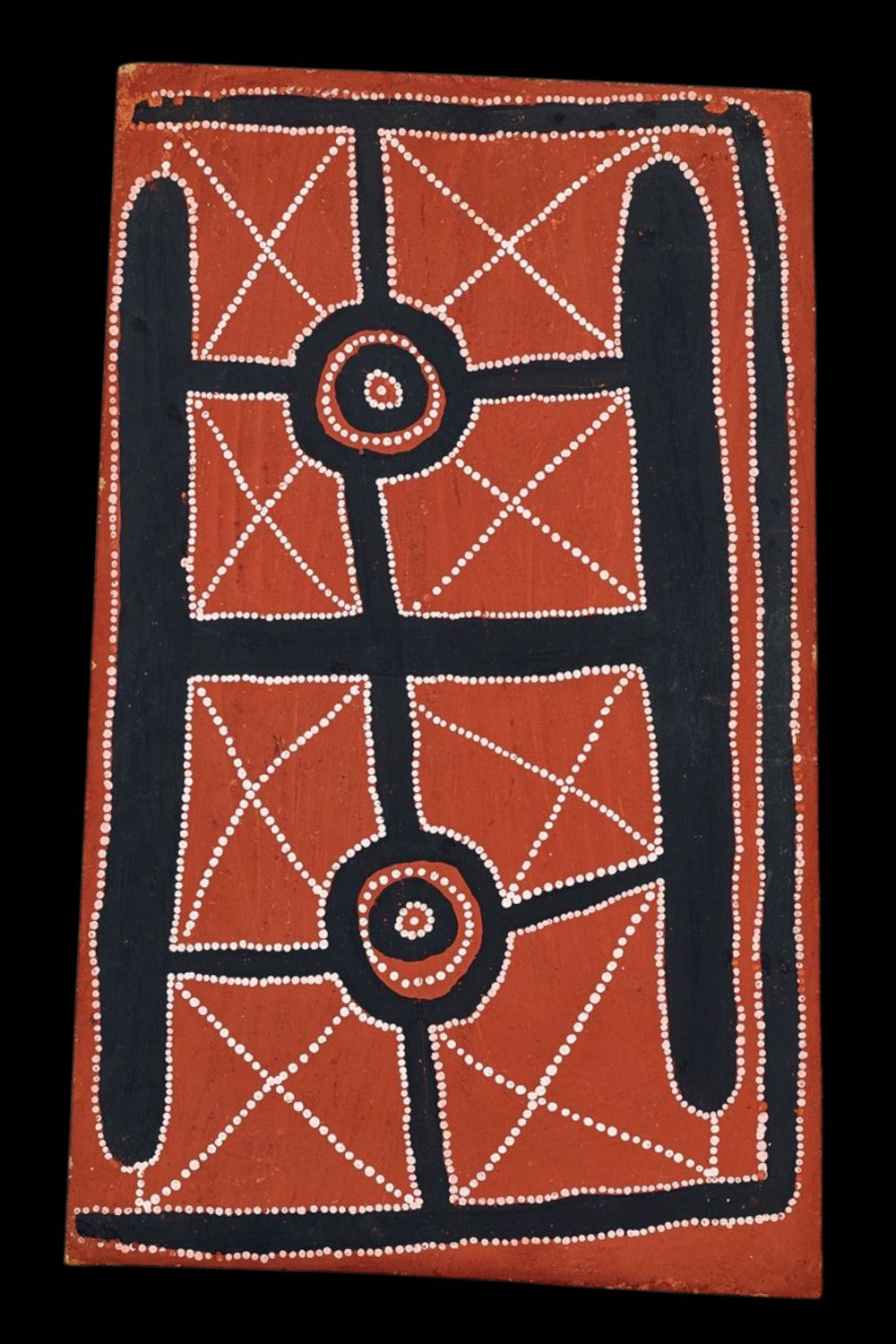
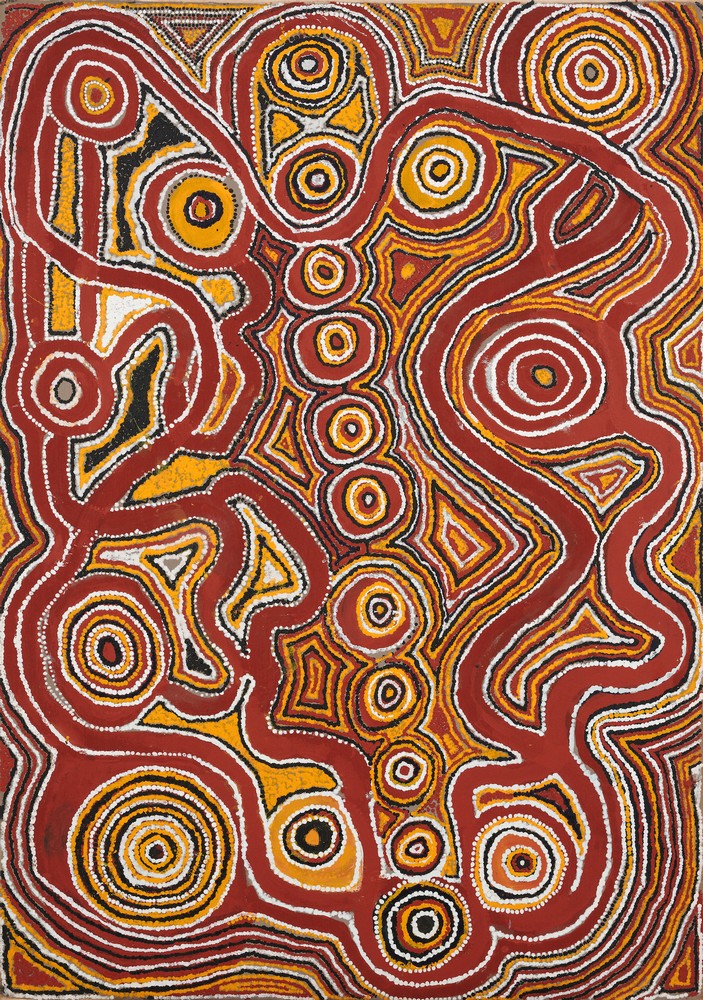
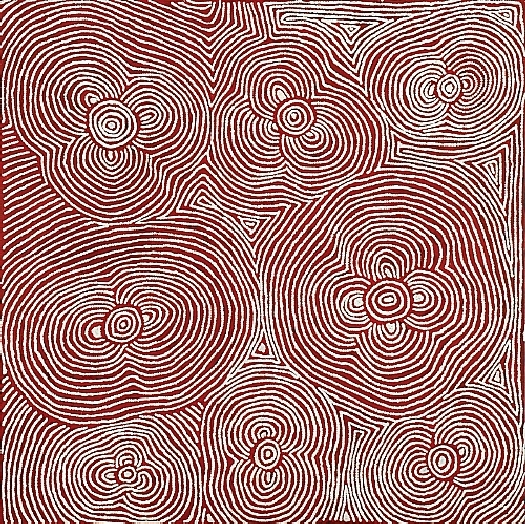
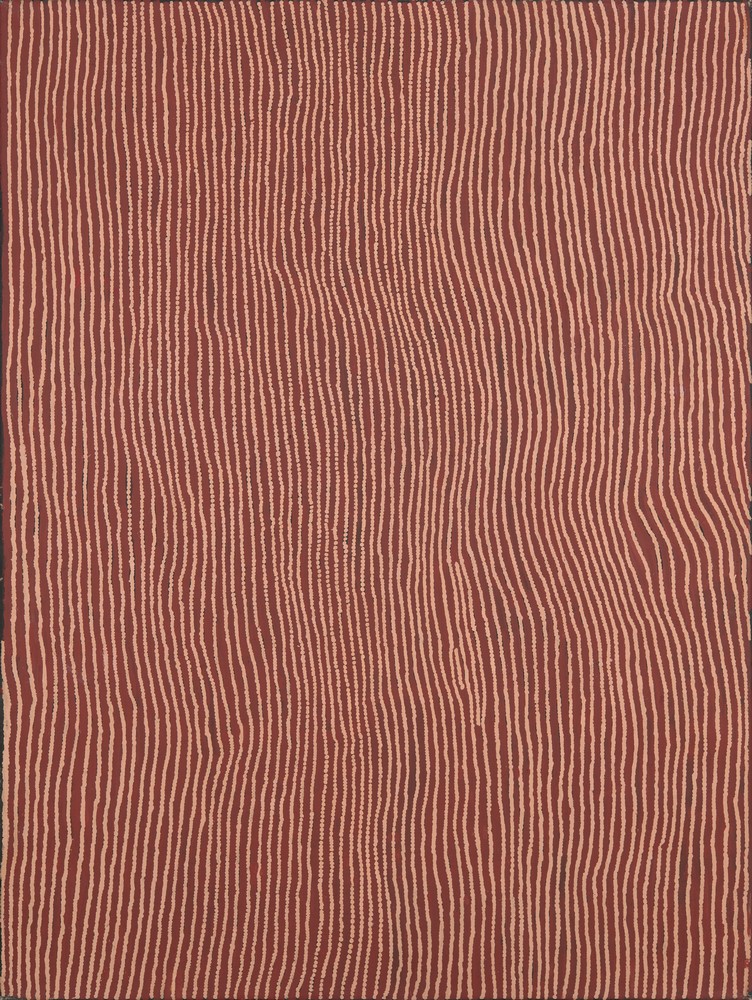
Charlie Ward Tjakamarra’s paintings evolved from the bold symbolic language of the early Papunya Boards into a highly distinctive linear style that became one of the hallmarks of late Pintupi painting. While his early works employ strong black pathways, concentric circles and geometric forms, his mature paintings reduce the landscape to thousands of finely painted parallel lines that flow across the canvas like sand ridges or the contours of Country.
His paintings commonly feature:
- finely painted parallel lines that create movement and rhythm across the surface
- concentric circles representing waterholes, ceremonial places and important ancestral sites
- Tingari journeys expressed through interconnected pathways rather than literal landscapes
- subtle undulations that evoke sand dunes, spinifex plains and the contours of the Western Desert
- carefully balanced compositions that alternate between open linear fields and concentrated ceremonial motifs
- restrained earth-coloured palettes of red ochre, brown, black, white and yellow, reflecting the colours of the desert.
Rather than depicting individual features of the landscape, Charlie Ward’s paintings present an aerial, conceptual view of Country in which movement, ceremony and geography merge into a single visual language. His later canvases are notable for their remarkable precision, with thousands of meticulously applied lines creating a quiet optical vibration that rewards close viewing. This gradual shift from the bold graphic forms of the early Papunya movement to elegant, almost minimalist abstractions reflects both his artistic confidence and the broader evolution of Western Desert Art during the 1980s and 1990s.
Tingari Dreaming
Charlie Ward Tjakamarra is best known for paintings relating to the Tingari Dreaming.
Tingari narratives describe the journeys of ancestral men who travelled across the Western Desert performing ceremonies, creating sacred sites and establishing Law. Their travels linked numerous places across Pintupi Country, and many contemporary paintings record portions of these journeys through symbolic imagery.
Because Tingari stories contain important ceremonial knowledge, artists generally paint only the publicly appropriate elements of these narratives.
Relationship with Yukultji Napangati
Charlie Ward Tjakamarra was married to the celebrated Papunya Tula artist Yukultji Napangati, one of the last members of the Pintupi Nine to emerge from the desert in 1984.
Some early paintings were completed with Yukultji’s assistance before she established her own internationally recognised artistic career. Both artists painted subjects connected with Pintupi Country and the Tingari tradition while developing distinctly individual styles.
Public Collections
Charlie Ward Tjakamarra’s paintings are represented in major Australian collections including:
- National Gallery of Victoria
- significant private collections in Australia and overseas.
Documented museum works include:
- Tingari Dreaming at Naru
- Fire Dreaming at Ngulyarma
- Tingari Men’s Bushfire at Ngarru, west of Jupiter Well
What Makes Charlie Ward Tjakamarra’s Paintings Valuable?
Collectors value Charlie Ward Tjakamarra’s paintings because they represent:
- authentic Papunya Tula Artists production
- important Pintupi cultural traditions
- classic Tingari iconography
- mature Western Desert painting
- increasing rarity following the artist’s death in 2005.
Values depend upon:
- size
- date
- provenance
- condition
- exhibition history
- whether the work was produced for Papunya Tula Artists.
Well-provenanced paintings generally attract the strongest collector interest.
How Much Are Charlie Ward Tjakamarra Paintings Worth?
Most paintings by Charlie Ward Tjakamarra sell through specialist Aboriginal art auctions or private dealers.
The value of an individual painting depends on:
- when it was painted
- whether it retains Papunya Tula documentation
- subject matter
- size
- condition
- provenance
- previous exhibition or publication history.
Rather than relying on auction averages, each work should be assessed individually.
Frequently Asked Questions
Was Charlie Ward Tjakamarra one of the original Papunya painters?
No. Current published evidence indicates he joined the Papunya Tula movement after the first generation of artists who began painting in 1971. His documented works mainly date from the late 1980s and 1990s.
What language group was Charlie Ward Tjakamarra?
He was a Pintupi artist from the Western Desert.
What Dreaming stories did he paint?
His best-known works depict Tingari Dreaming and associated ceremonial journeys, including paintings relating to Naru, Ngulyarma and Ngarru.
Did Charlie Ward Tjakamarra paint for Papunya Tula Artists?
Yes. His paintings were produced through Papunya Tula Artists, Australia’s first Aboriginal-owned art company.
Where can I see his paintings?
Examples are held by the National Gallery of Victoria and in numerous private collections.
All images in this article are for educational purposes only.
This site may contain copyrighted material the use of which was not specified by the copyright owner.